Archive

2025

Browsing

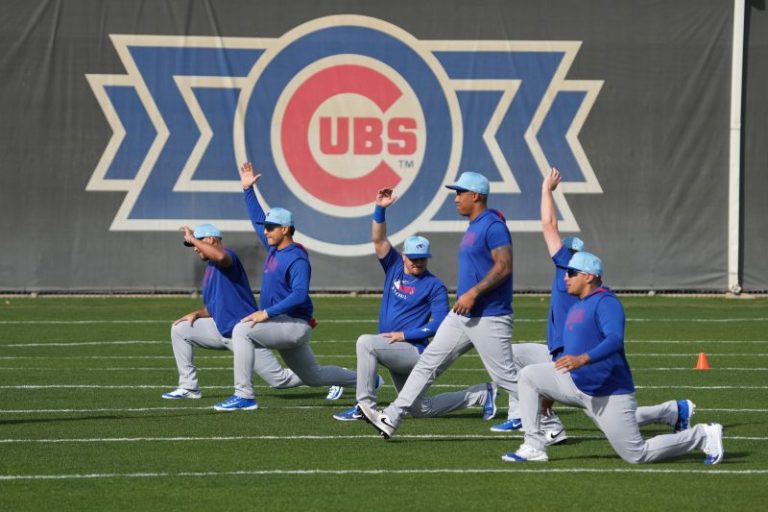
The week is finally here when the first pitchers and catchers start reporting to spring training, with the Chicago Cubs getting the fun started on Monday. It means the 2025 MLB season is suddenly approaching, and even the baseball teams picked to finish at the bottom of the standings can hold out hope this is the year they’re in the clubhouse that defies preseason expectations.

There’s plenty to catch up on after another eventful MLB offseason followed the Los Angeles Dodgers winning another World Series. Their potential dominance over the sport looms large, particularly after they acquired Japanese ace Roki Sasaki and signed two-time Cy Young winner Blake Snell, outfielders Teoscar Hernandez and Michael Conforto, relievers Tanner Scott and Kirby Yates to deals worth a combined $356 million this offseason. The Dodgers’ payroll is up to $380 million in 2025.

But the New York Mets (Juan Soto), New York Yankees (Max Fried), Chicago Cubs (Kyle Tucker), Arizona Diamondbacks (Corbin Burnes), San Francisco Giants (Willy Adames), and the Athletics (Luis Severino) were among the franchises that made big splashes of some kind in recent months with an eye on mounting a postseason run and perhaps keep Los Angeles from a World Series repeat.

The months-long journey begins this week when the first players show up in Florida and Arizona for spring training. Here’s a breakdown of when spring training workouts and games start for all 30 MLB teams this year, as well as the latest offseason hot stove rumors as organizations look to make last-minute roster adjustments:

Follow every MLB game: Latest MLB scores, stats, schedules and standings.

When does MLB spring training start?

(Pitchers and catchers report date, first full-squad workout)

Cactus League (Arizona)

Arizona Diamondbacks: Feb. 12, Feb. 17
Athletics: Feb. 12, Feb. 17
Chicago Cubs: Feb. 9, Feb. 14
Chicago White Sox: Feb. 12, Feb. 17
Cincinnati Reds: Feb. 12, Feb. 17
Cleveland Guardians: Feb. 13, Feb. 18
Colorado Rockies: Feb. 13, Feb. 18
Kansas City Royals: Feb. 12, Feb. 17
Los Angeles Dodgers: Feb. 11, Feb. 15
Los Angeles Angels: Feb. 12, Feb. 17
Milwaukee Brewers: Feb. 13, Feb. 18
San Diego Padres: Feb. 12, Feb. 17
San Francisco Giants: Feb. 12, Feb. 17
Seattle Mariners: Feb. 13, Feb. 18
Texas Rangers: Feb. 12, Feb. 17

Grapefruit League (Florida)

Atlanta Braves: Feb. 12, Feb. 18
Baltimore Orioles: Feb. 13, Feb. 18
Boston Red Sox: Feb. 12, Feb. 17
Detroit Tigers: Feb. 12, Feb. 17
Houston Astros: Feb. 13, Feb. 18
Miami Marlins: Feb. 12, Feb. 17
Minnesota Twins: Feb. 13, Feb. 17
New York Mets: Feb. 12, Feb. 17
New York Yankees: Feb. 12, Feb. 17
Philadelphia Phillies: Feb. 12, Feb. 17
Pittsburgh Pirates: Feb. 12, Feb. 17
St. Louis Cardinals: Feb. 12, Feb. 17
Tampa Bay Rays: Feb. 11, Feb. 16
Toronto Blue Jays: Feb. 13, Feb. 18
Washington Nationals: Feb. 12, Feb. 18

When do spring training games start?

The Cubs and Dodgers will kick off the spring training exhibition schedule on Thursday, Feb. 20, with a game at the Dodgers’ home park in Glendale, Arizona. The next day – Friday, Feb. 21 – will have five games on the schedule, with another Dodgers-Cubs matchup at the Cubs’ home park in Mesa, Arizona.

The Grapefruit League opener will have the New York Yankees hosting the Tampa Bay Rays at George Steinbrenner Field in Tampa. That’s also where the Rays are scheduled to play this regular season after their longtime home, Tropicana Field in St. Petersburg, suffered massive damage from Hurricane Milton last October.

Latest MLB rumors

Who’s going to sign Alex Bregman? The Detroit Tigers, Boston Red Sox and the Houston Astros have all made offers. The Chicago Cubs might. Nobody has met his asking price yet. But he’s the best player still available.
Dodgers manager Dave Roberts told ESPN he and the team have ‘just started talking’ about a contract extension. ‘I just love this organization, but yeah, you want to feel your value,’ he said.
Roberts also said reigning NL MVP Shohei Ohtani could be pitching as early as May after being limited to DH duties in 2024.
The Padres could be looking to make a roster move, perhaps for a starting pitcher, before the season begins, according to the San Diego Union-Tribune. Veteran reliever Robert Suarez is reportedly a player the team is willing to trade.
The Miami Marlins are also in the market for a veteran starter at a modest salary, according to the Miami Herald.
This post appeared first on USA TODAY

NEW ORLEANS – This one will stick with Patrick Mahomes.

Like, forever.

Just a whole lot of heartbreak and soul-searching for the Kansas City Chiefs and their fearless leader.

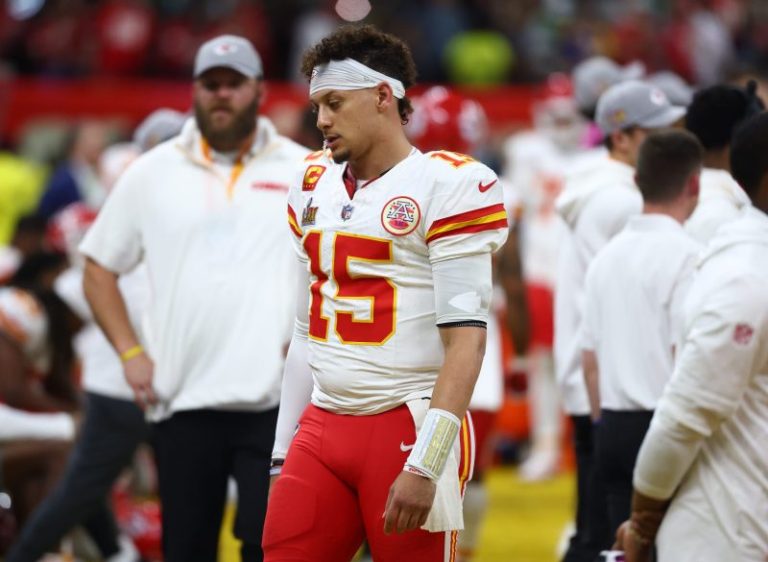
“I take ownership in the loss, probably more than any one in my career,” Mahomes said in the bowels of the Caesars Superdome while the Philadelphia Eagles could be heard celebrating their Super Bowl 59 triumph. “I put us in some bad spots.”

NFL STATS CENTRAL: The latest NFL scores, schedules, odds, stats and more.

What, did Superman leave his cape at home?

Mahomes was harassed, bruised, bullied and battered on Sunday night, which sums up what happens when you’ve absorbed a career-high six sacks. And when it’s 24-0 at the half and 40-22 at the finish, it’s pretty hard to pin it on one player.

Even one as magnificent as the Chiefs quarterback.

Then again, Mahomes knows. The two first-half interceptions were the last elements his team needed on a night when it was apparent his O-line was woefully overmatched. And if Mahomes, 29, is not bringing his A-game to the NFL’s biggest stage with all of that glory and history on the line, good luck, Chiefs.

The first pick was returned 38 yards for a touchdown by rookie Cooper DeJean. The second one, by Zack Baun on Mahomes’ next throw, gave the Eagles possession at the Chiefs’ 14-yard line.

Celebrate Eagles’Super Bowl win with our new book

“We didn’t start how we wanted to,” Mahomes said. “I take all the blame for that. Those early turnovers swung the momentum of the game. That’s 14 points I kind of gave them.

“Just didn’t play up to my standard.”

No argument here. Consider how the first nine drives went for the Chiefs: Punt. Punt. Punt. Interception. Punt. Interception. Punt. Punt. Turnover on downs.

No, that’s not Mahomes’ standard. Or maybe it was an imposter. That couldn’t have been the real Mahomes.

OK, it wasn’t, but it was. He’s human, capable of a bad day, even on the big stage. Admittedly, given the pressure of trying to seize a third straight crown, Mahomes kept pressing. And that sure didn’t work.

“I can’t make bad plays worse,” he said. “I think that’s something you saw today.”

Mahomes wound up passing for 257 yards and three touchdowns, with a respectable 95.4 efficiency rating. But those numbers kind of lie when juxtaposed against what really happened. In addition to the two picks, he committed another turnover off a strip-sack.

“There’s times when guys aren’t open, I need to throw the ball away or check it down and let guys make plays happen,” Mahomes said. “Sometimes, I get to where I want to make a big play to spark us. That’s something I’ve dealt with my entire career. If I don’t show I’ll take what’s there in the game, the defenses are going to stay in the coverages they’re in.”

Mahomes, a three-time Super Bowl MVP, admitted during the week that the one game that has kept him up at night was the Super Bowl 55 loss against the Tampa Bay Buccaneers four years ago, a 31-9 setback when he was sacked three times, hit nine times and intercepted twice.

If that one kept him up, this one might wake him up with nightmares.

“They both suck,” Mahomes said of the Super Bowl losses. “There’s no way around it. Anytime you lose the Super Bowl, it will stick with you the rest of your career. These are two losses that will motivate me to be even better the rest of my career. You only get so few of these. You have to capitalize on these.”

Mahomes, of course, started with the turnovers when he assessed the hard lessons he’ll take from Sunday. He said, “I can’t turn the ball over when it’s not going our way. I have to learn from that.”

Even deeper, he explained, will be learning to combat how defenses are scheming against him. The Eagles used a heavy dose of shell coverage on early downs – zone coverage with two high safeties – then supplemented that with man-to-man schemes on third downs. And with the deep, active defensive line manhandling Mahomes’ wall of protection, Eagles defensive coordinator Vic Fangio blitzed on just one, or maybe two of Kansas City’s 32 pass attempts.

“They were going to make me be a fundamental quarterback from the pocket and take what’s there,” Mahomes said. “That’s something I can get better at.”

While Mahomes struggled and the Eagles unleashed a different type of “Philly Special” on KC’s O-line, it didn’t help that the Chiefs had a non-existent rushing attack. When Mahomes is the leading rusher (four carries, 25 yards), you know that’s trouble. He ran for more yards than the three running backs combined.

On the other side, the Chiefs defense couldn’t contain Jalen Hurts when it mattered as the Eagles quarterback ran 11 times for 72 yards. And the Eagles stung KC for five big-play passes covering at least 20 yards, including Hurts’ 46-yard touchdown strike to DeVonta Smith.

Superman, it turns out, needed a lot more help.

Follow Jarrett Bell on social media @JarrettBell

This post appeared first on USA TODAY

Democratic lawmakers are fueling concerns of a partial government shutdown, warning they may withhold support for any plan in protest of President Donald Trump’s shakeup of the federal government. 

Left-wing leaders who have warned of the catastrophic consequences of government shutdowns in the past are now publicly signaling it could be a possibility – and they are already positioning to blame Republicans.

‘What leverage do we have? Republicans have repeatedly lectured America, they control the House, the Senate and the presidency. It’s their government,’ House Minority Leader Hakeem Jeffries, D-N.Y., told reporters when asked about what concessions he would seek in exchange for Democratic help to avert a partial shutdown. ‘We are in the governing season, and so we’re ready to work together on any issue. But I’m also confused about the leverage that we allegedly have in the face of such an overwhelming mandate that was given to Republicans by the American people, according to them.’

Meanwhile, Sen. Andy Kim, D-N.J., suggested a partial shutdown could even aid in stopping the work of Elon Musk’s Department of Government Efficiency, which Democrats have repeatedly raised alarms over. ‘This is on them. This is about whether or not they can get the votes. They are the majority. And if they cannot govern, then that’s for the American people to see,’ Kim told NBC News’ ‘Meet The Press,’ referring to Republicans.

‘I’ve worked through multiple government shutdowns. I will be the last person to want to get to that stage. But we are at a point where we are basically on the cusp of a constitutional crisis, seeing this administration taking steps that are so clearly illegal. And until we see a change in that behavior, we should not allow and condone that, nor should we assist in that.’

House Democratic Caucus Chairman Pete Aguilar, D-Calif., signaled one point of opposition was Trump and his allies’ support of allowing Trump to direct less federal spending than what was authorized by Congress, which Democrats argue runs afoul of the Constitution’s separation of powers.

‘We will meet with folks, and we will try to find common ground where it is possible. But what we will not do is engage in an effort that gives Donald Trump money to direct our federal government that he has no plan to utilize or implement,’ Aguilar said at a press conference last week. ‘If we’re going to pass law, we need to know that the law is followed. And it doesn’t appear that House Republicans are in a position to push back against Donald Trump to protect vital funding that supports our communities.’

Progressive Rep. Alexandria Ocasio-Cortez, D-N.Y., told CNN that Democrats should seek a ‘very high’ price in exchange for their votes.

In past fiscal standoffs, Democrats had used the specter of a government shutdown to force Republicans back to the negotiating table.

Jeffries said during the previous round of government funding talks in late December, ‘If the government shuts down, holiday travel will be impacted…Border security and border patrol agents will not be paid. TSA agents will not be paid. Small businesses will be hurt in every single community in this country.’

‘This reckless Republican-driven shutdown can be avoided if House Republicans will simply do what is right for the American people and stick with the bipartisan agreement that they themselves negotiated,’ Jeffries said at the time.

Government funding has long been a thorny issue within the House Republican conference. 

GOP leaders have relied on Democratic support to pass every federal funding bill that has been signed into law since taking the House majority in January 2023.

Despite now having the Senate majority as well, Republican leaders’ razor-thin margins mean House GOP lawmakers would need to vote nearly in lock-step to pass any one bill without Democrats.

The House has about 15 days left in session before the government funding deadline on March 14.

Democratic lawmakers have also previously painted shutdowns as ‘catastrophic’ for the economy and federal workforce.

Aguilar said during a January 2024 press conference, ‘House Democrats are in lock step that we need to avoid a government shutdown, which would be a disaster for our economy and a disaster for hardworking American families.’

This post appeared first on FOX NEWS

The National Institutes of Health (NIH) announced it would be cutting billions in overhead costs associated with federally funded research grants that go to various institutions, as part of a wider move by the Trump administration to slash wasteful spending.

The agency’s announcement unveiling the directive indicated that in fiscal year 2023, the NIH spent around $35 billion across roughly 50,000 grants that go to research institutions, such as universities and hospitals. Of that $35 billion, according to the announcement, $9 billion was allocated for ‘indirect costs’ that cover expenses related to depreciation on buildings, equipment, capital improvements, interest on debt associated with certain buildings, and operations and maintenance expenses.

When a grant is awarded, an additional percentage, on top of the allocated research funding, goes to the facility housing their work to cover these ‘indirect costs.’ According to the announcement, that percentage has historically been around 27 to 28% for each grant; however, the new directive is now imposing a 15% threshold, unless otherwise negotiated. 

‘Most private foundations that fund research provide substantially lower indirect costs than the federal government, and universities readily accept grants from these foundations. For example, a recent study found that the most common rate of indirect rate reimbursement by foundations was 0%, meaning many foundations do not fund indirect costs whatsoever,’ NIH’s announcement, released Friday evening, stated. ‘In addition, many of the nation’s largest funders of research—such as the Bill and Melinda Gates Foundation—have a maximum indirect rate of 15%. And in the case of the Gates Foundation, the maximum indirect costs rate is 10% for institutions of higher education.’

Some universities responded to the new, indirect cost cap with confusion and backlash.

The University of Wisconsin-Madison put out a statement arguing the new indirect cost cap will ‘significantly disrupt vital research activity and daily life-saving discoveries.’ It added that the move will also ‘have an inevitable impact on student opportunities to engage in research activities.’ 

At the University of Michigan, which currently has a negotiated indirect cost rate with the federal government of 56%, the school put out a statement emphasizing the ‘great deal of uncertainty’ over how the policy will be implemented. The school said it has begun investigating the implications of this new rule on its current grants.  

‘It seems like it is of a piece with the sort of slash-and-burn philosophy of the current administration,’ Dr. Francis P. Wilson, a Yale associate professor of medicine and public health, told the Yale Daily News. ‘It feels indiscriminate and abrupt, executed with little regard for the potential downstream consequences.’

The Trump administration’s Department of Government Efficiency, led by Elon Musk, applauded the move in a post on social media. ‘Amazing job by the NIH team,’ the group said in a post on social media. ‘Saved > $4B annually in excessive grant administrative costs.’

‘Can you believe that universities with tens of billions in endowments were siphoning off 60% of research award money for ‘overhead’?’ Musk also posted on social media. ‘What a ripoff!’

‘Contrary to the hysteria, redirecting billions of allocated NIH spending away from administrative bloat means there will be more money and resources available for legitimate scientific research, not less,’ added White House spokesperson Kush Desai in a statement to Fox News Digital.

The NIH declined to comment for this story. 

This post appeared first on FOX NEWS

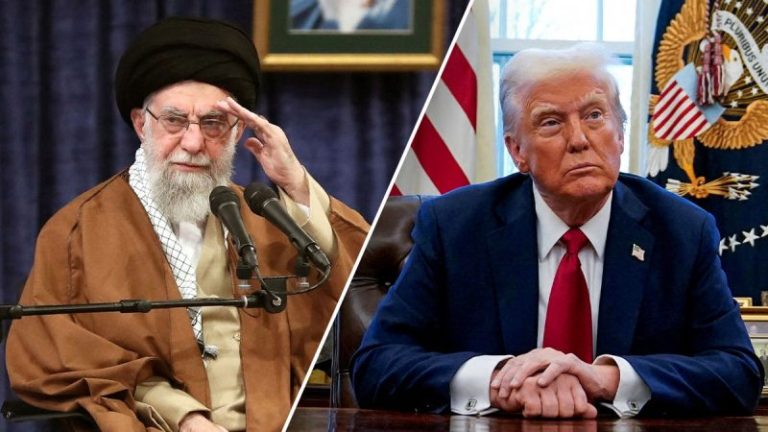
Iran’s assassination threats against Donald Trump have loomed over the president in recent days and are more serious than publicly reported, an upcoming book claims. 

Axios reporter Isaac Isenstadt’s upcoming book, ‘Revenge: The Inside Story of Trump’s Return to Power,’ claims that law enforcement officials warned Trump in 2024 that Iran had placed operatives in the U.S. with access to surface-to-air missiles and that Trump’s orbit worried Iran would try to take out ‘Trump Force One’ as it was taking off or landing while on the campaign trail. Isenstadt previewed his book in an Axios article published Sunday. 

The reported threats and concern of Iran’s threats against Trump hit a fever pitch in September 2024, when a second assassination attempt was thwarted at Trump International Golf Club in West Palm Beach, Florida, the book claims. Isenstadt reported that his book is based on his conversations with Trump’s ‘inner circle during his campaign.’ 

Fast-forward to Trump’s second presidency in 2025, the 47th president already has issued stern warnings against Iran. Trump said while signing an executive order imposing maximum pressure on Tehran earlier in February that he left special instructions if something were to happen to him. 

During his first term in the Oval Office, Trump withdrew from the Joint Comprehensive Plan of Action, also known as the Iran nuclear deal, and reapplied crippling economic sanctions on Iran, escalating tensions between Trump and the nation. 

‘That would be a terrible thing for them to do,’ Trump said on Feb. 4 of Iran potentially attempting to assassinate him. ‘If they did that, they would be obliterated. That would be the end.… There won’t be anything left.’

Trump survived two assassination attempts while on the campaign trail in 2024, including the Pennsylvania attempt that left him with an injury to his ear as suspect Thomas Crooks opened fire on the crowd of Trump supporters in July. The Pennsylvania attempt has not been connected to Iran. 

The suspect behind the Florida attempt, Ryan Wesley Routh, wrote a book in 2023 urging Iran to assassinate Trump, the Associated Press reported in September 2024. 

Following the second attempt in Florida, Isenstadt’s book, which will be released March 18, claims Trump’s team was on high alert, including his security detail putting Trump on a ‘Trump Force One’ decoy plane owned by Steve Witkoff to travel to an event shortly after the attempt. The co-chairs of the campaign at the time, current chief of staff Susie Wiles and Chris LaCivita, split up, with Wiles traveling with Trump on the decoy plane and LaCivita on Trump Force One. 

‘The boss ain’t riding with us today,’ LaCivita reportedly told staffers on the flight. ‘We had to put him into another plane. This is nothing but a sort of test for how things may happen in the future.’

Staffers on Trump Force One reportedly worried they would be ‘collateral damage’ if the plane had been taken down, the book alleges. 

Three aides told Isenstadt that the flight was packed with ‘gallows humor galore’ as staffers reportedly realized the severity of an alleged threat, dubbing the trip as the ‘Ghost Flight’ and remarking the alleged threat was ‘some serious s—.’

Fox News Digital reached out to the White House for comment on the excerpts from Isenstadt’s book, but did not immediately receive a reply. 

Trump’s campaign continued to face reported threats and scares following the second assassination attempt, including the Secret Service warning that a person might attempt to shoot at Trump’s motorcade after a Long Island rally on Sept. 18, 2024. In a separate incident, Secret Service agents shot a drone with an electromagnetic gun from a sunroof in one of the cars in Trump’s motorcade during a Pennsylvania campaign trip in September 2024, the book claimed. 

‘Don’t f—ing hang out the window and take photos, because you’re a f—ing target,’ LaCivita reportedly told longtime Trump advisor Dan Scavino during one trip on Trump Force One. 

Iranian President Masoud Pezeshkian said in January that his country ‘never’ plotted to assassinate Trump, adding ‘we never will.’ 

The Justice Department announced in November 2024 that it thwarted an Iranian attempt to assassinate Trump, charging an alleged Iranian government asset in the murder-for-hire plot. 

As for the two assassination attempts during the campaign cycle, Trump instructed the Secret Service to hand over ‘every bit of information’ related to the Florida and Pennsylvania incidents, he told the New York Post recently, arguing the Biden administration held back details. 

‘I want to find out about the two assassins,’ the president told the New York Post Friday. ‘Why did the one guy have six cellphones, and why did the other guy have [foreign] apps?’

‘I’m entitled to know. And they held it back long enough,’ he continued, referring to the Biden administration’s handling of information on the attempts. ‘No more excuses.’

Fox News Digital’s Alexandra Koch, Diana Stancy and Anders Hagstrom contributed to this report. 

This post appeared first on FOX NEWS

NEW ORLEANS – Move over, 2007 New York Giants. There is a new greatest defensive-line performance in Super Bowl history. 

Even though that Giants contingent helped defeat Tom Brady and the previously undefeated New England Patriots – with one of the league’s best statistical offenses of all time – in Super Bowl 42, their effort wasn’t as dominant compared to what the Philadelphia Eagles’ front did Sunday in Super Bowl 59 to defeat the Kansas City Chiefs, 40-22. 

Their six sacks was one more than the Giants recorded on Feb. 3, 2008. And it was tied for the second most by a team in Super Bowl history; four teams had seven sacks in what were all winning efforts, the most recent being the Los Angeles Rams’ victory over the Cincinnati Bengals three years ago. 

How the Eagles rattled Chiefs quarterback Patrick Mahomes was the most impressive part. 

They generated a 38.1% pressure rate without blitzing the three-time Super Bowl MVP once on his 42 dropbacks, according to Next Gen Stats. Philadelphia pressured him 16 times, and the six sacks he took were the most in a game in his career. Per TruMedia, it was Mahomes’ second-worst performance by EPA (expected points added) in a game in his career (-19.3).

NFL STATS CENTRAL: The latest NFL scores, schedules, odds, stats and more.

“We all believed in the dream, man,” defensive end Brandon Graham said. “Everybody bought into it.” 

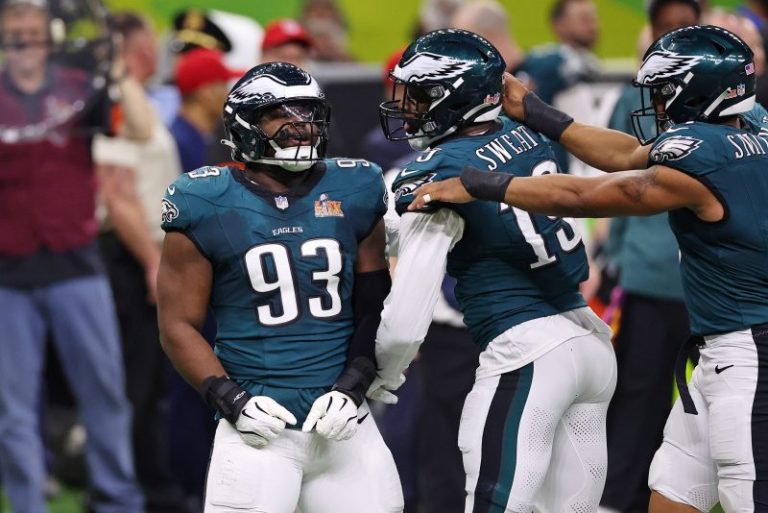
Edge rusher Josh Sweat led the way with 2½ sacks, while Milton Williams racked up a pair. Jordan Davis had one, while Jalyx Hunt contributed a half-sack. 

“They let me go crazy,” he said. “I don’t think I ever got more than two in a game.” 

That’s true. Sweat had sacked the quarterback twice in six regular-season games, and he had 1½ sacks two years ago against the New York Giants in the divisional round. But he had never reached this output. 

For Sweat, it was the culmination of a long journey to the game’s biggest stage. Once the top recruit in high school, he suffered a torn ACL his senior year before enrolling at Florida State. The Eagles drafted him in the fourth round of the 2018 draft (130th overall) and he was named to the Pro Bowl for the 2021 season. But a scary internal bleeding situation that required emergency surgery forced him to miss the team’s playoff game that year. He rebounded to have 11½ sacks as part of the team’s 2022 pass rush that constantly kept opposing quarterbacks under duress from all angles. Sweat finished this season with eight sacks.  

“Man, to have my biggest game of my career, in the biggest game of the season? I can’t explain. It’s beautiful. It’s amazing. I couldn’t be more happy,” Sweat told USA TODAY Sports. 

Because the Eagles kept getting home with four rushers, defensive coordinator Vince Fangio stayed in his traditional Cover 4 quarters scheme for most of the game. Philadelphia played zone coverage on all but two dropbacks, according to Next Gen Stats, and were in Cover 4 for 59.5% of them – the third-highest rate by a defense in a game since 2018.

Fangio is 66 years old, but he can become the Steve Spagnuolo of the NFC – the Kansas City Chiefs defensive coordinator has been credited with plenty of the team’s success during their dynasty – with Philadelphia. He currently has a roster that will continue to be one of the best of the league on that side of the ball, and general manager Howie Roseman will always make sure that’s the case. 

“We are just competing with each other out there, I think that is what it is,” Sweat said. “We want to out play each other and that’s what’s setting the bar for each of us. We just want the bragging rights. That’s how we push each other, we want to see who can get it done. The beauty of it is that Vic gives us the call, we don’t question it and it he puts us in the positions to make the plays. I don’t know how he does it, we just run it, and we bring in our technique and we get it done.”

If the pressure didn’t result in a sack, it aided a turnover, as was the case for rookie cornerback Cooper DeJean’s pick-six. Or the time Mahomes felt pressure to his left, was bumped and threw an errant pass over the middle intercepted by linebacker Zack Baun to put the offense back in business at the Kansas City 14-yard line. 

“When you win on a four-man rush and you can just cycle guys through, and they are still winning, you don’t have to blitz,” Baun said. “Great game-planning, great communication, we were all on the same page all game.”

Davis said the defensive line knew that if the players collectively did their jobs, everything else would take care of itself.

“Take a look around, we got a lot of dogs out here,” Davis said. “All the things that we’ve been through, people were doubting us.”

As the blowout mounted, Davis said the Eagles played like the score was tied at 0-0. It showed.

 “We didn’t give a damn. We didn’t care,” he said. “We just wanted to go out there and keep playing our game.” 

Communication, bond and brotherhood were reasons Davis cited as to why the front rushed cohesively against Mahomes. 

“Our ability to solve problems,” Davis said. “It all came together. We knew we had a mission on our mind. We had to go out there and execute. And we did that tonight.”

There is something to that fraternal affection that played a role in the pass rush’s explosion. 

“Just the love we have for each other, man,” Sweat said. “The way we (are) connected. The way we made sure we didn’t do anything to hurt the guy next to us. We just played together. And then whoever makes the play makes the play. We don’t care.”  

Chiefs center Creed Humphrey said the Eagles didn’t show anything they hadn’t seen on tape prior. It came down to them playing harder. 

“We knew it was a really good defense, we knew they had a ton of talent everywhere,” Humphrey said. 

From the Chiefs’ first third-down attempt of the game, Mahomes was on the run. Edge rusher Nolan Smith Jr. pressured him from the right and Mahomes tried to escape the pocket left. A pair of Eagles were there to pin him back further in his scramble, and the quarterback had to launch himself just to release the ball, which fell incomplete and was nearly intercepted. 

“They played great from start to finish. They got after it,” Mahomes said. “Defensive line played really well. The DBs played well to complement them and linebackers as well.” 

Mahomes said that he can force defenses to blitz by attacking their zone coverage the right way and that it’s an area of his game in which he needs to keep improving. 

“They were gonna make me be a fundamental quarterback from the pocket and take what’s there, and that’s stuff I have to get better at,’ Mahomes said.

Coming back from a torn triceps that would have ended his season had the Eagles not made it to the final game of the year, Graham thought topping the 2017 defense, the last unit that won the Super Bowl for Philadelphia (yet surrendered 33 points to Brady in that game), or the 2022 squad’s defense (which fell in the Super Bowl to Mahomes and the Chiefs) would be difficult. 

“This defense, boy, they showed up in a big way,” said Graham. “I’m thankful that everything we worked hard for, everything showed up. Now it’s time to go celebrate.”

In the locker room, Smith crashed Sweat’s scrum and wrapped him in a hug. 

Smith yelled: “I love you, Sweat! We love you, Sweat! You the best (expletive) edge rusher in the East! You taught me everything I know!” 

When the Eagles go down Broad Street during their championship parade, Smith won’t be the only one yelling that about Sweat – or the other members of the Eagles’ defensive line.

This post appeared first on USA TODAY

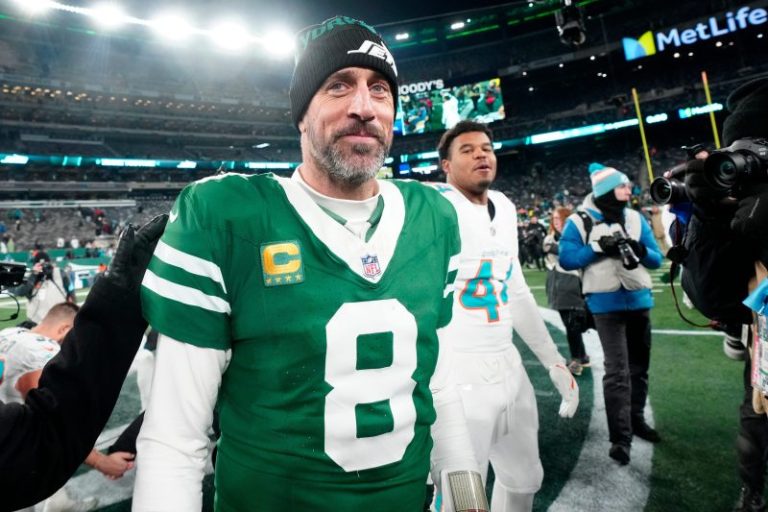
The New York Jets brought in Aaron Rodgers hoping he could take the team to a Super Bowl. The two sides are expected to part after failing to reach that goal in two seasons together.

The only question now is exactly how that will happen. Will the Jets’ new brain trust of head coach Aaron Glenn and general manager Darren Mougey try to find a willing trade partner to take on Rodgers’ services, or will they release him and allow him to traverse the free agent market on his own?

While getting compensation in return for Rodgers would be ideal, the Jets will also have to weigh the financial ramifications of trading him or releasing him without a post-June 1 designation.

Here’s what to know about Rodgers’ current contract and how much he could cost the Jets pending their method of departure.

All things Jets: Latest New York Jets news, schedule, roster, stats, injury updates and more.

Aaron Rodgers contract details

Rodgers in entering the final year of a three-year restructured contract extension he signed with the Jets after being traded to New York in 2023. Below are the details of that contract, per Spotrac.com.

Term: 3 years
Total value: $112.5 million
Average annual value (AAV): $37.5 million
Guaranteed money: $75 million

Rodgers’ deal with the Jets was designed to give the team maximum flexibility to build a contender around him. That’s why his AAV of $37.5 million was tied for 16th among quarterbacks for the 2024 NFL season.

It’s also part of the reason Rodgers’ contract had four void years attached to it. Void years are an accounting mechanism used by NFL teams to defray the cap hit of a player by prorating it over a longer period. So, while Rodgers is only officially signed with the Jets through the 2025 NFL season, his deal won’t come off the books in full until 2029.

As a result, Rodgers’ cap hit will max out at just $23.5 million in 2025 after being just $8.9 million and $17.2 million in his first two seasons with the team. However, the Jets will also absorb future cap hits totaling $63 million even after Rodgers’ contract expires.

Below is a look at the cap hit Rodgers is set to carry in each of his four void years, per Spotrac.com:

2026: $21 million
2027: $21 million
2028: $14 million
2029: $7 million

How Aaron Rodgers trade, release would impact Jets

The structure of Rodgers’ contract will slightly complicate the Jets’ plans to move on from him ahead of the 2025 NFL season. New York would absorb a $49 million dead-cap hit if they part ways, which is much larger than the $23.5 million salary cap hit Rodgers is carrying.

As a result, the Jets may prefer to split the cost of Rodgers’ dead-cap hit over two seasons. The NFL allows teams to do that if they either designate a player as a post-June 1 release or wait until after that date to trade him.

It would be next to impossible for the Jets to wait to trade Rodgers until after June 1. By that point, the NFL’s quarterback carousel would already have largely stopped spinning, with all the major free agents and draft prospects landing with new organizations.

As such, the Jets would likely have to absorb the full $49 million dead-cap hit if they are able to find a suitor for Rodgers via trade. That would result in a net decrease of $25.5 million in cap space.

That said, if the Jets are more worried about saving cap space as they look to navigate Year 1 of a rebuild under Glenn and Mougey, they may prefer simply to release him.

New York could designate Rodgers as a post-June 1 release regardless of when they part with him. That would allow the quarterback to become a free agent immediately while also allowing the Jets to split his costs over two seasons after the June 1 deadline.

In that case, Rodgers would see his 2025 cap hit drop to $14 million, creating $9.5 million in cap space for the Jets. He would then carry a $35 million dead-cap hit for 2026, per Spotrac.com.

What happens if Aaron Rodgers retires?

If Rodgers decides to retire, he will no longer earn any base salary or roster bonuses owed to him by the Jets. However, any prorated portion of bonuses already paid to him will continue to count against New York’s salary cap.

Rodgers has just a $2.5 million base salary remaining for 2025, but he would also forfeit his $35 million option bonus due to him for this season. The Jets aren’t likely to exercise that option bonus anyway as they plan to part with Rodgers, so the net savings New York would earn from him retiring would be minimal.

Jets cap space 2025

The Jets are set to have just over $20.95 million in cap space for 2025, per OverTheCap.com. That ranks just 19th in the NFL entering the offseason.

New York is expected to open up extra cap space quickly by parting with receiver Davante Adams, so that will provide the Jets more flexibility as they examine their options with Rodgers.

This post appeared first on USA TODAY

: Republicans are showcasing their ‘team effort’ as they aim to defend and expand their Senate majority in the 2026 midterm elections.

The National Republican Senatorial Committee (NRSC), the Senate GOP’s campaign arm, unveiled its new vice chair program as the panel held its annual winter meeting this past weekend in Palm Beach, Florida.

According to sources attending the event, who shared details first with Fox News Digital, the five vice chairs serving under NRSC Chair Sen. Tim Scott will operate as an informal board of directors, providing ideas, oversight and accountability as the committee works to expand its services and seeks to modernize and become more streamlined.

‘We’re one team. President Donald J. Trump and Senate Republicans are united to deliver for the American people and protect our Senate majority. The team effort is stronger than ever thanks to this tremendous group of Vice Chairs who have stepped up to raise the resources and build the organization needed to win,’ Scott said at the winter meeting.

Scott was named NRSC chair for the 2026 cycle soon after Republicans, in November’s elections, flipped four seats from blue to red to win back control of the Senate and hold a 53-47 majority in the chamber.

The five vice chairs, previously announced by Scott, are Sens. Jim Banks of Indiana, Marsha Blackburn of Tennessee, Katie Britt of Alabama, Bernie Moreno of Ohio and Pete Ricketts of Nebraska.

During a panel discussion this past weekend with Majority Whip Sen. John Barrasso of Wyoming, the vice chairs highlighted their pledge to help Scott protect incumbents facing difficult re-elections in the upcoming midterm elections, and to raise the resources needed to win.

‘Each of these Vice Chairs contributes their unique experiences and passions to the fight to defend our incumbents, raise resources, and recruit top tier talent in the seats we want to flip,’ Barasso emphasized.

Among the vice chairs’ duties going forward are holding regular meetings to discuss and review NRSC budget items, fundraising progress and relevant political updates, 

They also pledged to each raise $5 million for the committee, help with candidate recruitment and take part in a new incumbent protection program, in which each vice chair will be responsible for walking alongside four to five Senate Republicans up for re-election in 2026.

‘Failure isn’t an option, and that’s why I am committed to this role – to making sure the NRSC wins in battleground states and keeps the Majority so we can continue working with President Trump to turn Promises Made into Promises Kept,’ Britt said.

Blackburn emphasized that ‘I’m committed to working with our incumbents to develop aggressive new media strategies. We will deliver our message of prosperity and opportunity through as many platforms as possible and meet the American people where they are.’

Banks highlighted that ‘it’s critical we leverage every resource available to protect and expand our Senate majority. Senate Republicans and President Trump are unified. I’m ready to make sure we’re using every tool we have to win and continue delivering for the American people.’ 

Moreno stressed that ‘it’s essential we hold our majority in 2026 to ensure President Trump has allies for four full years in the Senate.’

Additionally, Ricketts pledged that the vice chairs ‘will ensure the NRSC has the resources necessary to protect and expand our majority.’ 

Senate Republicans enjoyed a very favorable map in the 2024 cycle as they won back control of the majority. An early read of the 2026 map shows they will continue to play offense in some states, but will be forced to play defense in others.

The GOP will target an open Democrat-held seat in battleground Michigan, where Sen. Gary Peters announced two weeks ago that he would not seek re-election in 2026. They will also target first-term Sen. Jon Ossoff in battleground Georgia and longtime Sen. Jeanne Shaheen in swing state New Hampshire.

However, Democrats plan to go on offense in blue-leaning Maine, where GOP Sen. Susan Collins is up for re-election, as well as in battleground North Carolina, where Republican Sen. Thom Tillis is also up in 2026.

This post appeared first on FOX NEWS

Unless you’re in the Southeast, you’re probably getting tired of how deep SEC basketball is.

If that annoys you, wait until you hear this: four SEC No. 1 seeds in the NCAA Tournament.

Is that even possible? It’s never happened since seeding began in 1979. The most is three, done by the ACC’s Virginia, Duke and North Carolina in 2019. But all of the top seeds hailing from the same conference? It’s not as ridiculous as it sounds.

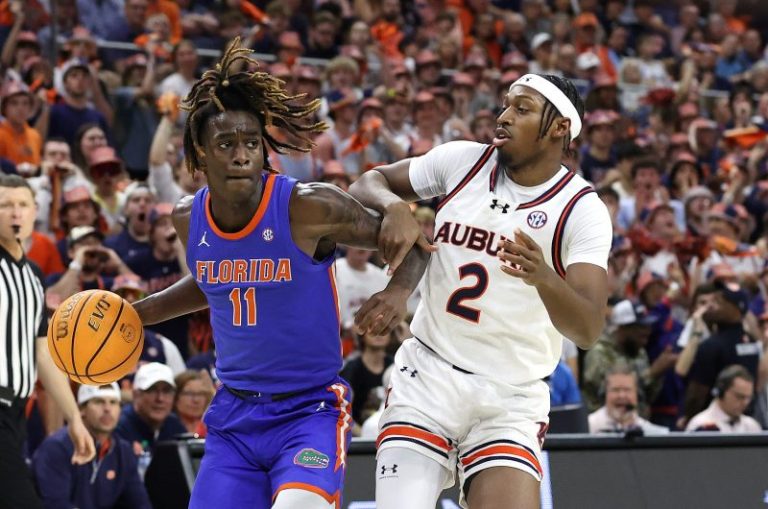
In the latest USA TODAY Sports Bracketology, Auburn, Alabama and Florida were the slated as No. 1 seeds. Given how elite Auburn has been, they are comfortable in holding a top seed. Alabama escaped Arkansas and Florida got arguably the best win of the season, handling Auburn in the raucous Neville Arena to end the Tigers’ 14-game win streak.

But there are fellow conference teams lurking right behind for a No. 1 spot. Tennessee, which looked like it was starting to spiral, has won three straight, including a complete dominance over Florida when it was missing two starters. Then there’s Texas A&M, winners of four of its last five and coming off a tough road victory over Missouri.

The resumes for all of the five aforementioned SEC teams are No. 1 seed worthy. Auburn is No. 1 in the NET rankings, with Tennessee at No. 4, Florida at No. 5, Alabama at No. 6 and Texas A&M at No. 13. All of the possible contenders have at least five Quad 1 victories with plenty of chances to add more.

All five No. 1 seed contenders comprise the top of the SEC, and at this rate, one of them will have to be the No. 5 in the SEC tournament and play in the second round in Nashville. But that team will have a chance of hearing their name called at the top of one region come Selection Sunday, as well as three other conference members.

Of course, all of this hinges on whether the lone non-ACC projected No. 1 seed can keep its spot (more on that later), but the impossible is plausible in what is continuing to be a remarkable year in the SEC, and it leads the top storylines from the past weekend of hoops.

A warning for Duke

That all-No. 1 seed SEC multiverse is dependent on whether Duke can maintain it’s strong season, and SEC commissioner Greg Sankey had to enjoy seeing what happened to the Blue Devils on Saturday.

Duke’s 16-game win streak came to an end after a valiant effort from Clemson in front of its home crowd to give the Tigers another signature win to boost their tournament resume. It was only the first conference loss for the Blue Devils, but it should serve as a warning: they can’t afford many of those if they want a No. 1 seed. It’s been well documented how the ACC isn’t what it usually is this year, giving Duke the easiest path toward a top spot.

But after Saturday’s loss, Duke doesn’t have any remaining Quad 1 opportunities in ACC play until the season finale against North Carolina, which is far from an impressive win at this point. It does have the matchup with Illinois on Feb. 22, but that team isn’t a strong looking as it was a few weeks ago. At the moment, Duke doesn’t have to worry about it’s spot, but any more conference losses and that security will fade away.

Arizona stays hot, sets up Big 12 showdown

In a matchup of the hottest teams in the Big 12, it’s the McKale magic that has Arizona continuing to raise its stock. The Wildcats won their sixth straight and avenged their only conference loss by taking down Texas Tech to move to 11-1 in the Big 12.

Tommy Lloyd continues a remarkable turnaround in Tucson with Arizona 13-1 since it fell into a 4-5 to start the campaign, and the Wildcats have become a team no one would like to play right now. Its last four games were all Quad 1 opportunities, and it capitalized on it to win seven of its last eight in such games.

Now No. 7 in the NET rankings, Arizona will host Houston on Saturday in what is a potential game of the year contender. Both teams have separated themselves as the Big 12’s elite, and it will be a solid measuring stick for whether these teams are national title worthy. Both the Wildcats and Cougars each have games it can’t look over prior to their meeting, but expect a magical environment inside the McKale Center on Saturday afternoon.

The curious case of Oregon

The two halves Oregon played on Saturday against Michigan State perfectly encapsulated how the season has gone for the Ducks. A near perfect start got them a 14-point lead on the road at halftime, but in the second half they fell apart to lose by 12 to the Spartans.

After starting the season with nine consecutive wins and then a 15-2 record, Oregon has struggled in the Big Ten are now on a five-game losing skid, are 5-8 in the conference and suddenly inching closer toward living on the bubble. It doesn’t make sense; to start the season, Oregon beat Texas A&M and Alabama and their seven Quad 1 victories are tied for third-most in the country. But those victories can only take it so far if it continues to lose.

In the first USA TODAY Sports Bracketology less than a month ago, Oregon was a No. 3 seed. Now, it’s a projected No. 8 and continuing to slide. The Ducks are in dangerous territory, just one game ahead of the cutline for the Big Ten tournament. The schedule does seem to get easier now, but Oregon will have to quickly put it together if it doesn’t want to waste all of those quality wins.

The Indiana job

There was plenty of hype for Indiana heading into season thanks to a highly regarded transfer haul, but once it was clear the Hoosiers weren’t going to able to succeed, it made sense for Mike Woodson to step away from his dismal tenure.

So who does Indiana get next?

It was too coincidental Indiana played Michigan on Saturday, going against the Wolverines’ new coach and former Indiana student Dusty May. After Michigan beat Indiana, May was asked about rumors of his interest in the Hoosiers’ coaching job and gave a not-so strong commitment to staying in Ann Arbor. But even if there is mutual interest in May returning to Bloomington, is it worth it?

Indiana has one of the most passionate fanbases in the country, filling up Assembly Hall no matter the record. That comes with high expectations and plenty of scrutiny for a place that hasn’t recaptured success, last appearing in the Final Four more than 20 years ago. Could May finally bring glory back? He has the track record to prove it, but it’ll be an uphill battle. It might be worth staying at Michigan − as crazy as it might seem − and let it be a warning for anyone else throwing their name in the ring: it’s not a job for the weak.

Watch out for this potential first time NCAA Tournament team

The reclassification process to Division I means no matter how good you are to start, you’ll have to wait a few years to make the tournament. After finally finishing the transition, UC San Diego is playing its best ball and trending toward making its first Division I tournament.

In a Big West clash against UC Irvine, the Tritons went up north and used a strong second half effort to get revenge on the Anteaters for an 18-point win. Now UC San Diego and UC Irvine are tied at the top of the Big West, and the Tritons have a compelling case to get the auto bid − and maybe even at large spot. UC San Diego is 2-1 in Quad 1 games and has a surprising NET ranking of 50. The resume is a strong one, and the Tritons could be punching a ticket to the big dance.

This post appeared first on USA TODAY

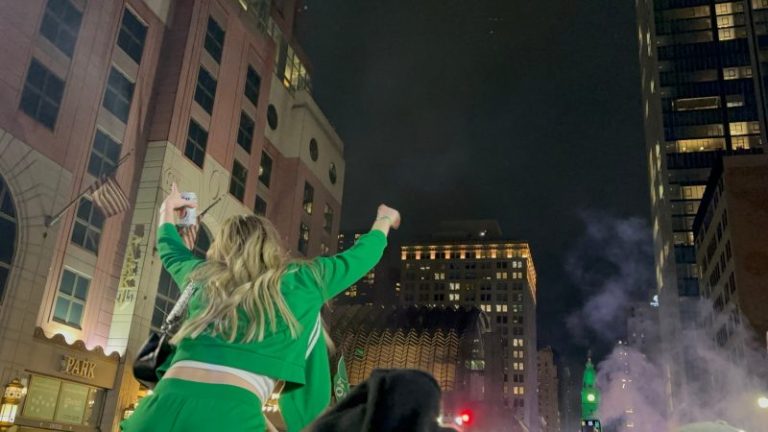
Some started fires. Others climbed garbage trucks and scaled light poles. Multitudes watched fireworks light up the night sky.

Philadelphia Eagles Fans took to the streets to celebrate in Eastern Pennsylvania Sunday night to celebrate their team’s 40-22 defeat of the Kansas City Chiefs in Super Bowl 59.

Following their team’s victory, photos show large crowds on streets surrounding City Hall cheering in the streets in the moments the team became two-time winning Super Bowl champions.

The team won its first big game during Super Bowl 52 in 2018 by beating the New England Patriots in Minneapolis. The game is known for the trick play ‘Philly Special’ that culminated in a touchdown for the victory.

See historic moments from Philadelphia Eagles fans celebrating:

Philadelphia police clash with some fans celebrating along city streets

Photos also show fires set by fans and other celebrators clashing with police in some photos.

NFL STATS CENTRAL: The latest NFL scores, schedules, odds, stats and more.

At some point, Philadelphia Police Department officials ordered the crowd to disperse, local emergency management officials reported.

It was not immediately known whether any arrests were made.

USA TODAY has reached out to police.

Natalie Neysa Alund is a senior reporter for USA TODAY. Reach her at nalund@usatoday.com and follow her on X @nataliealund.

This post appeared first on USA TODAY