Archive

2025

Browsing

This article was updated to indicate an exact time these channels may no longer be available on YouTube TV.

Paramount channels, that include CBS and CBS Sports, may no longer be available on subscription streaming service YouTube TV after negotiations failed to produce a content renewal. This will bring a significant change to the content available on the popular streaming option.

The YouTube Team has issued a statement indicating that both parties collaborated to reach a fair agreement. This agreement aimed to allow YouTube to retain the Paramount channels, which will feature major sporting events quickly approaching, such as March Madness and The Masters. However, these channels may no longer be available on YouTube TV after a deal was not reached.

The YouTube Team said in the statement, ‘Despite their good faith negotiations, they have not been successful yet. The reasons for the failed negotiations have not been disclosed.’

Here is what we know about the channels that may no longer be available on YouTube TV, as negotiations continue.

Need a break? Play the USA TODAY Daily Crossword Puzzle.

YouTube TV streaming update

After February 13, 2025, all Paramount channels, including CBS and CBS Sports, may no longer be available on YouTube TV. This also includes all existing Paramount content, including Paramount+ with SHOWTIME and BET+.

YouTube TV will provide an $8 credit to users if Paramount’s content is unavailable for a prolonged period. As of February 2024, YouTube TV has more than 8 million subscribers, according to CEO Neal Mohan.

However, viewers can still access these channels through other streaming services or traditional cable TV providers.

List of the channels that will go dark

Here is a list of Paramount channels that may no longer be available on YouTube TV as negotiations continue. CBS News affiliates will also no longer be available in selected areas. A comprehensive list can be found here.

CBS
CBS Sports
Nickelodeon
Comedy Central
MTV
TV Land
Paramount Network
CMT
VH1
BET

This post appeared first on USA TODAY

USAID’s green energy programs may have done more ‘harm’ to developing nations than anything else, according to a former official at the U.S. Agency for International Development.

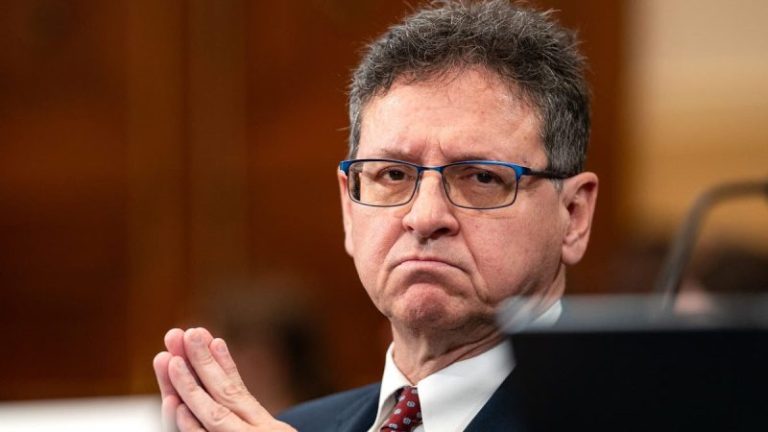
‘I can’t think of anything that’s harmed the developing world more than the climate agenda,’ said Max Primorac, a top USAID official under President Donald Trump’s first administration, when asked about programs that had run afoul of American interests throughout the world.   

‘The strong counter-China infrastructure that we developed over at USAID was simply dismantled by the next administration,’ he told lawmakers at a House Foreign Affairs Committee hearing entitled, ‘USAID Betrayal.’

‘[USAID] has pushed all of these countries, especially in Africa, to go green. Solar, wind, EV: who produces all of those materials? It’s China. Then, on top of it, we tell them, ‘No, you can’t develop your own fossil fuel industry because it’s, it’s anti-green.’ So, what happens? They can’t generate the revenues to create good jobs at home. They can’t generate the revenues in order to finance their own health, education and other needs.’

Primorac claimed that green energy infrastructure in developing countries ‘increases the price of energy.’ 

According to Primorac, 19 of the top 20 countries receiving USAID are part of China’s Belt and Road Initiative, securing aid from the CCP in exchange for influence. 

Primorac said that developing nations ‘want more trade, they want more investment,’ but ‘resentment’ is building in conservative countries who don’t want ‘woke things.’

The Trump administration, upon assuming office, instituted a 90-day pause on all foreign aid. Trump fired USAID’s inspector general Paul Martin this week after he wrote a report claiming Elon Musk and the Department of Government Efficiency (DOGE)’s efforts to dismantle USAID had prevented him from conducting oversight on unspent aid of up to $8.5 billion. Martin’s report claimed that about $500 million worth of food aid is at risk of spoiling as it sits in ports while USAID staff in other nations have been called back and placed on leave. 

USAID has now been placed under the purview of the State Department and is in the process of whittling down its staff from 10,000 to fewer than 300. 

Republican witnesses at the hearing largely agreed that foreign aid was important to fighting global disease outbreaks and securing U.S. interests throughout the world, but USAID’s reputation had been ‘tarnished’ by ‘mission creep,’ as former GOP Rep. Ted Yoho, Fla., said. 

But Yoho, who said he came to Congress to slash foreign aid before realizing its importance throughout the world, and Andrew Natsios, USAID administrator under President George W. Bush, warned that a blanket freeze on aid throughout the world would be detrimental. 

‘By pausing U.S. international assistance, a vacuum is created. China, Russia, or others are already moving in to fill those voids,’ said Yoho. 

‘Not being effectively present can be arguably worse than pausing a program. And all you have to do is look at South and Central America and look at how much we’ve ceded to China and their influence from Russia, China and Iran. That has to be dealt with immediately. That’s a national security threat.’ 

Natsios said he was ‘appalled’ by how the Biden administration had roped USAID into ‘culture wars.’ 

‘It’s a failure,’ he said. ‘All of the things I did at AID, I tried to do it in a way that would not alienate the Democratic Party when I left.’ 

But he noted that ‘woke’ programs were a ‘small percentage’ of the USAID budget, and the agency gives $1 billion per year to Christian NGOs. 

Republicans claim there is a waiver process, but aid advocates have said NGOs and charities do not know how to apply for the waiver, and if they receive one, no one at USAID is operating the payment systems that dole out funds. 

‘I’ve met with these Christian groups, even though they have the waivers, the Phoenix system is not operating,’ said Natsios, referring to the agency’s financial program. ‘Please do something about it.’ 

During the hearing, Republicans also pointed to USAID-funded NGOs that were conducting abortions, a program that sent millions of taxpayer dollars to dole out condoms in Afghanistan and Mozambique, $20 million for drag shows in Ecuador and $500,000 to promote atheism in Nepal. 

‘All of these programs gave USAID a black eye and that’s unfortunate,’ said Rep. Michael McCaul, R-Texas, a former chairman of the committee who claimed USAID ‘blew through’ his holds on their controversial programs.

Foreign Affairs Chairman Brian Mast agreed. ‘When done right, foreign aid can be one of the best tools. It can help strengthen our relationships with our allies and help countries realize America is the best for them,’ he said. 

He promised that more aid oversight was to come. 

‘We are going to bring in individuals who were responsible for putting these horrible policies in place and reveal all the receipts, videos – all of it – for the American people to see.’

This post appeared first on FOX NEWS

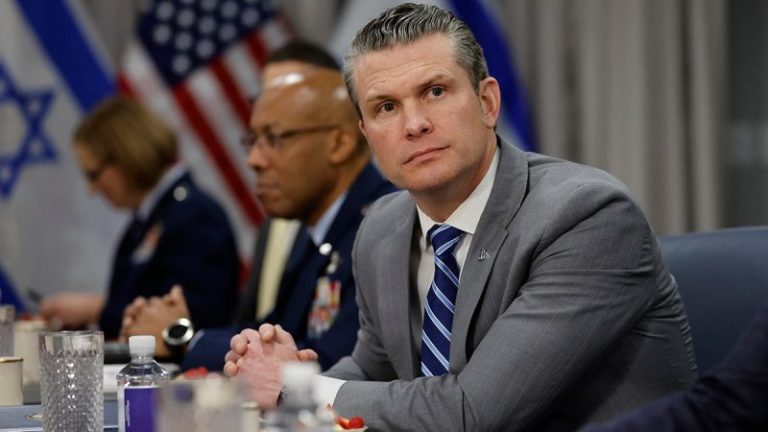
Secretary of Defense Pete Hegseth said that as the U.S. aims to ‘revive the warrior ethos,’ European members of NATO also should follow suit and bolster defense efforts. 

‘NATO should pursue these goals as well,’ Hegseth told NATO members in Brussels on Thursday. ‘NATO is a great alliance, the most successful defense alliance in history, but to endure for the future, our partners must do far more for Europe’s defense.’  

‘We must make NATO great again,’ he said.  

As of 2023, the U.S. spent 3.3% of its GDP on defense spending — totaling $880 billion, according to the nonpartisan Washington, D.C.-based Peterson Institute for International Economics. More than 50% of NATO funding comes from the U.S., while other allies, like the United Kingdom, France and Germany, have contributed between 4% and 8% to NATO funding in recent years. 

Hegseth urged European allies to bolster defense spending from 2% to 5% of gross domestic product, as President Donald Trump has long advocated. 

NATO comprises more than 30 countries and was originally formed in 1949 to halt the spread of the Soviet Union. 

Hegseth pointed to former President Dwight D. Eisenhower, who advocated for a strong relationship with European allies. But he noted that eventually Eisenhower felt that the U.S. was bearing the burden of deploying U.S. troops to Europe in 1959, according to the State Department’s Office of the Historian. Eisenhower reportedly told two of his generals that the Europeans were ‘making a sucker out of Uncle Sam.’ 

Hegseth said that he and Trump share sentiments similar to Eisenhower’s. 

‘This administration believes in alliances, deeply believes in alliances, but make no mistake, President Trump will not allow anyone to turn Uncle Sam into Uncle Sucker,’ Hegseth said.

‘We can talk all we want about values,’ Hegseth said. ‘Values are important, but you can’t shoot values, you can’t shoot flags, and you can’t shoot strong speeches. There is no replacement for hard power. As much as we may not want to like the world we live in, in some cases, there’s nothing like hard power.’

Hegseth’s comments come as the Trump administration navigates negotiations with Russia and Ukraine to end the conflict between the two countries. On Wednesday, Trump called both Russian President Vladimir Putin and Ukrainian President Volodymyr Zelenskyy, and Treasury Secretary Scott Bessent traveled to Kyiv.

Vice President JD Vance and Secretary of State Marco Rubio are slated to meet with Zelenskyy Friday at the Munich Security Conference.

Meanwhile, the Trump administration has come under scrutiny for the negotiations, fielding criticism that Ukraine is being pressured to give in to concessions after Hegseth said on Wednesday that it isn’t realistic for Ukraine to regain its pre-war borders with Russia. 

‘Putin is gonna pocket this and ask for more,’ Brett Bruen, director of global engagement under former President Barack Obama, told Fox News Digital. 

Michael McFaul, ambassador to Russia under the Obama administration, also shared concerns in a social media post on X on Wednesday, claiming that Trump was delivering Russia a ‘gift.’ 

But Hegseth said he rejected similar accusations. 

‘Any suggestion that President Trump is doing anything other than negotiating from a position of strength is, on its face, ahistorical and false,’ Hegseth said Thursday. 

Russia invaded Ukraine in February 2022, and Trump vowed on the campaign trail in 2024 that he would work to end the conflict if elected again. 

Fox News’ Emma Colton and Morgan Phillips contributed to this report. 

This post appeared first on FOX NEWS

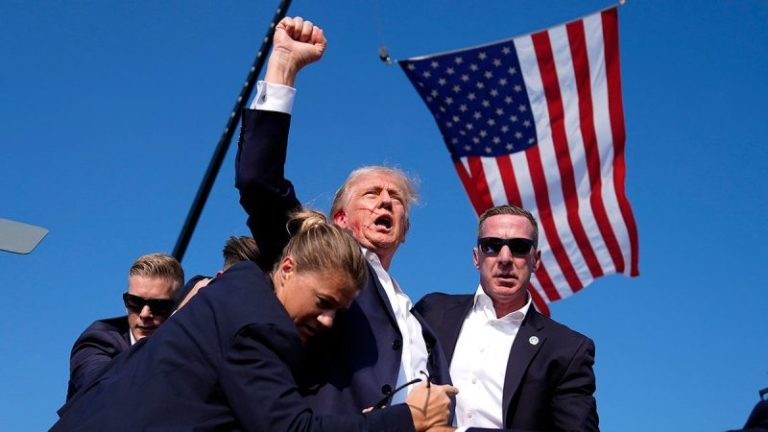
President Donald Trump met with Marc Fogel’s mother on July 13, 2024, in Butler, Pennsylvania, and vowed to bring her son home if elected, just before an assassination attempt nearly took his life. 

Rep. Mark Kelly, R-Pa., was there for the meeting between Trump and Malphine Fogel before the president took the stage. 

‘The president survived the assassination attempt on July 13 in Butler, and he fulfilled his commitment to Mrs. Fogel that he would get her son home,’ Kelly told Fox News Digital. ‘It is an incredible, providential story.’ 

During the rally, after his meeting with Fogel’s mother, Trump was showing off a chart highlighting how illegal immigration skyrocketed under the Biden-Harris administration. As he turned toward the chart, he was hit by a bullet that pierced the upper part of his right ear by the now-deceased would-be-assassin, Thomas Matthew Crooks. Trump credits the chart for saving his life. 

Kelly likened the situation to the classic movie ‘It’s a Wonderful Life.’ 

‘The theme of the movie was that George Bailey was very frustrated, but he was given a glimpse of life and what would have happened if he hadn’t been there – if he hadn’t been born,’ Kelly recalled. ‘And if I go back to July 13, this is all providential.’ 

‘Mrs. Fogel has a chance to talk to the president, and she talks about what is happening to Marc. The president vows to get him home,’ Kelly continued. ‘It is a take-off of ‘It’s a Wonderful Life’ and the opportunity, or the dilemma, that if you were never born, what would the consequences have been?’ 

‘If President Trump did not survive the assassination attempt on July 13, Marc Fogel wouldn’t be home today,’ Kelly said.  

Fogel, an American teacher from Western Pennsylvania, returned to the United States late Tuesday, after Trump secured his release. Fogel was arrested in 2021 at an airport in Russia for possession of medical marijuana and was sentenced to 14 years in a Russian prison. 

Kelly told Fox News Digital that ‘it is all about faith.’ 

‘Having been there and witnessed it, I think to myself, ‘Oh my goodness, that tiny fraction of an inch, or whatever it was, is the difference between Marc Fogel being home and Marc Fogel not being home,’’ he said. ‘Between making a promise to his mother and being able to keep it, as opposed to making a promise and never getting a chance to fulfill it.’ 

Malphine Fogel recalled the Butler meeting with Trump on Fox News Channel’s ‘America Newsroom.’ 

‘I met with President Trump, and he was just as cordial as he could be,’ she said. ‘He told me three different times, ‘If I get in,’ he said, ‘I’ll get him out’ and I really think he’s been instrumental.’ 

Malphine Fogel told Fox News that ‘it was a total surprise’ when she heard from her son from the Moscow airport. 

‘So, that meant that (they) had taken him out of the prison to Moscow…. The last week or so, for some crazy reason, I had a better feeling about things, but I hadn’t heard from him in a week, so I thought that was odd and when he called…  it was just a total shock,’ she said. 

Meanwhile, Kelly told Fox News Digital, ‘There is a certain time in people’s lives where you realize you don’t have forever, you have right now, and you need to get it done.’ 

‘Politically, there is no one on either side of the aisle that could look at what happened with Marc Fogel and not somehow say, this is truly providential – this is not a political move,’ Kelly said. ‘This doesn’t do anything for the president. He’s already elected. He did this to keep a promise to a mother in her mid 90s – the only thing she wanted to see before she died was her son one more time.’ 

Kelly added: ‘This is a promise made. Promise kept. It is truly providential. It is. It is a wonderful life.’ 

This post appeared first on FOX NEWS

Europe must reinstate harsh United Nations sanctions on Iran, U.S. lawmakers insisted in a new resolution that accused Tehran of repeated violations of the 2015 nuclear deal brokered by the Obama administration.  

The bipartisan legislation calls on the U.K., France and Germany to invoke ‘snapback’ sanctions on Iran through the UN Security Council immediately – and follow the U.S.’s lead under President Donald Trump’s ‘maximum pressure’ executive order to isolate Iran over its nuclear activity. 

‘Iran is the leading state sponsor of terrorism, and their actions have led to the murder of American servicemembers,’ said Sen. Pete Ricketts, R-Neb., the number two Republican on Senate Foreign Relations Committee and lead sponsor of the bill, which has 11 cosponsors in the Senate. 

‘Iran’s possession of a nuclear weapon would threaten our security and the security of our allies. Snapback sanctions are key to ensuring that President Trump’s maximum pressure campaign is successful.’ 

Reps. Claudia Tenney, R-N.Y., and Josh Gottheimer, D-N.J., issued companion legislation in the House. 

Under the 2015 Iran deal known as the Joint Comprehensive Plan of Action (JCPOA), Iran evaded U.N., U.S. and E.U. sanctions in exchange for promises not to pursue a nuclear weapon. But Iran eventually cut off independent inspectors’ access to its sites and resumed nuclear activities. 

A ‘snapback’ provision of the agreement said that any of the nations privy to the deal – China, France, Russia, the United Kingdom, U.S. or Germany – could demand the export controls, travel bans and asset freezes be reimposed. 

But the U.S. pulled out of the nuclear deal entirely under President Donald Trump’s first administration and imposed its own ‘maximum pressure’ sanctions regime. The Biden administration subsequently issued sanctions waivers and toyed with the idea of returning to a nuclear deal with Iran, but ultimately those efforts faltered.

Tenney urged the European nations to invoke the snapback sanctions before the deal expires in October 2025. 

‘Invoking snapback sanctions will restore all the UN sanctions on Iran that were lifted by the Obama administration’s failed Iran nuclear deal,’ she said. 

Iran is ‘dramatically’ accelerating enrichment of uranium to up to 60% purity, below the 90% needed for a nuclear weapon, according to U.N. nuclear watchdog Rafael Grossi. Western states have said there is no civilian use for 60% uranium. 

Britain, France and Germany told the U.N. Security Council in December they were ready to trigger the snapback of all international sanctions on Iran if necessary. 

Trump himself said he was ‘torn’ over a recent executive order that triggered harsh sanctions on Iran’s oil sector, adding that he was ‘unhappy to do it.’

‘Hopefully, we’re not going to have to use it very much,’ Trump told reporters.

But he reiterated, ‘We’re not going to let them get a nuclear weapon.’

Trump suggested first trying a ‘verified nuclear peace agreement’ over military escalation. ‘I would much rather do a deal that’s not gonna hurt them,’ the president told Fox News on Monday, adding that ‘I’d love to make a deal with them without bombing them.’

Iran viewed the president’s remarks as a threat and took negotiations off the table. 

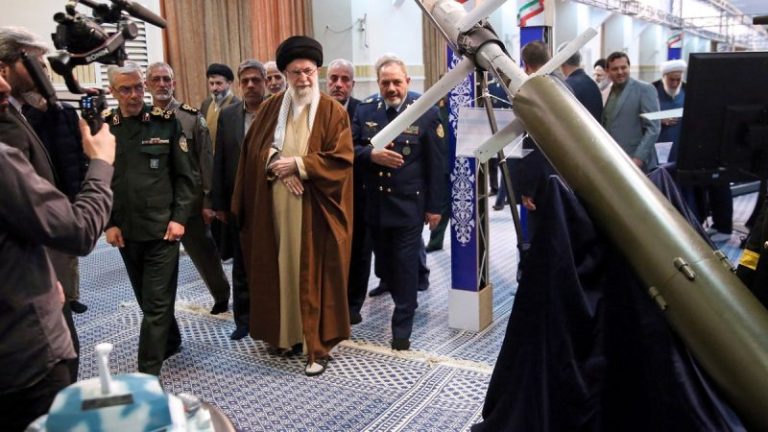
​​’No problem will be solved by negotiating with America,’ said Iran’s Ayatollah Ali Khameni, citing past ‘experience.’ 

He called for the country to further develop its military capabilities. 

‘We cannot be satisfied,’ Khamenei said. ‘Say that we previously set a limit for the accuracy of our missiles, but we now feel this limit is no longer enough. We have to go forward.’

‘Today, our defensive power is well known, our enemies are afraid of this. This is very important for our country,’ he said.

This post appeared first on FOX NEWS

When the Consumer Financial Protection Bureau made an appearance in the Heritage Foundation’s Project 2025 blueprint, the conservative group’s plan was simple: Abolish it entirely.

Now, with a Project 2025 co-author in charge of the bureau, that idea looks like a real possibility.

Over the weekend, Russ Vought, President Donald Trump’s pick to head the powerful Office of Management and Budget, took over as de facto head of the agency and subsequently ordered all nonessential work there to stop. Vought is one of more than 30 co-authors of Project 2025, the conservative policy blueprint for the Trump administration’s agenda, though he did not write the section on the CFPB.

“The Consumer Financial Protection Bureau is arguably the most powerful and unaccountable regulatory agency in existence,” the report states.

Whether the bureau is rendered toothless by its new leadership or abolished by congressional action, its emergence as a target for conservative ire has been years in the making, boosted most recently by technology executives including Elon Musk and venture capitalist Marc Andreessen. Created by Democrats, led by Sen. Elizabeth Warren, of Massachusetts, in the wake of the Great Recession, the CFPB lodged steady but largely unglamorous wins for consumers. 

Yet all the while, it faced a drumbeat of opposition from small-government conservatives and business interests who challenged not only its regulations and enforcement actions, but its very basis for existing. Consumer complaints about corporate misbehavior have by some measures reached all-time highs.       

“This is an agency that has an incredible amount of responsibility for regulating in the financial services sector,” said Julie Margetta Morgan, a former associate director at the bureau who started there in 2022 and resigned right after Trump’s second inauguration. She added, “There are a number of big bank lobbyists who have had it out for the CFPB from Day 1.”

But most recently, some in the tech world — including those who have become particularly influential with the Trump administration — have been its loudest critics.

Musk, who leads the administration’s Department of Government Efficiency (DOGE) effort, posted “RIP CFPB” on X on Sunday. Andreesen, co-founder of venture capital firm Andreesen Horowitz, said on a podcast last year that the agency had been “terrorizing financial institutions.” Part of his criticism has centered around “debanking,” something that the CFPB itself also tried to stop. (In 2021, the CFPB shuttered a lending startup backed by Andreessen Horowitz.) 

“The CFPB works for regular people that don’t run in Elon’s circle,” said one current CFPB employee, who was granted anonymity out of fear of reprisal. “Elon doesn’t know single mothers whose cars break down and are scammed by predatory car lenders. He doesn’t know what it’s like to be driven into debt by overdraft fees. He doesn’t have a mortgage he is struggling to pay off. So he can’t understand why the CFPB is so important to protect regular folks from being scammed.”

Compared with the vast resources historically commanded by the Justice Department’s antitrust division, not to mention the Federal Trade Commission — the agency traditionally tasked with enforcing consumer regulations — the CFPB’s remit was always relatively limited in scope. Notably, its annual budget has never exceeded $1 billion.  

It is thus perhaps not surprising that it never landed a proverbial knockout blow that would stick in the minds of the American public. Still, it steadily gained a favorable reputation. In 2015, Time magazine devoted a major feature to the bureau under the headline, “The Agency That’s Got Your Back.”   

Margetta Morgan, the former CFPB associate director, said eliminating medical debt from credit reports has been particularly significant.

“When CFPB started digging in on medical debt, it was astounding to see the extent to which consumers had inaccurate medical debt on their credit reports and then were being hounded by debt collectors over them,” she said. “I think the medical debt rulemaking was huge, and we saw that when we spoke to individual consumers.”

Yet as early as 2017, conservatives were charting a path to end the agency altogether. An article that year published by the Heritage Foundation — the group whose Project 2025 now appears, despite some Trump assurances to the contrary, to be driving much of his second administration’s rollout — laid out the case against the CFPB’s very existence.

“The Consumer Financial Protection Bureau is arguably the most powerful and unaccountable regulatory agency in existence,” the article’s authors wrote, arguing that its rulemaking ultimately restricted Americans’ access to credit while “eroding their financial independence” and posing concerns about due process and separation of powers. 

Instead, they said, consumers would enjoy the same protections if the agency’s powers were swept back into the Federal Trade Commission and if existing state and local laws were enforced, they said.   

One of the authors, Norbert Michel, today a vice president at the pro-free-market Cato Institute, told NBC News that assuming that malfeasance is taking place — something he said there is often disagreement about — enforcement powers already exist at multiple government agencies, not to mention at the state level, to address it.

“In one sense, you’ve given a new federal agency extreme discretionary power — and in other sense, done nothing new,” Michel said. “So somewhere in there you have an increase in government authority that’s not necessary.”

Still, the agency persisted and became particularly active under Rohit Chopra, a Biden appointee, who helped bring actions against many major lenders, as well as financial technology firms and loan servicing groups. 

Chopra’s largest action came against Wells Fargo, which paid a $1.7 billion penalty over accusations it improperly repossessed cars and froze customers’ accounts. Chopra also engineered a settlement with Navient, formerly among the nation’s largest student-loan servicers, over allegedly abusive practices.    

Yet it was the agency’s recent work around so-called financial technology enterprises that may have created the conditions for its demise. In 2023, it sought to subject large fintech players like PayPal and Venmo to the same supervisory examination process as banks.

Since that time, Musk has made clear he hopes to turn X into a payments platform. X recently announced a deal with Visa to begin processing payments. 

“You have Silicon Valley VCs not wanting any oversight of their businesses, many of which are premised on the idea that [financial technology] somehow is new and different and thus not subject to traditional consumer protections,” said another current CFPB employee who spoke on the condition of anonymity.

Last year, the Supreme Court heard the first challenge to the CFPB’s very existence — and decided in its favor, with Justice Clarence Thomas, viewed as among the court’s most conservative members, writing for the 7-2 majority that Congress had been clear in setting up its funding mechanism as a body of the Federal Reserve. 

That did not stop the chorus of voices calling for the agency to be reined in. Notably, the Heritage Foundation’s Project 2025 referred to the CFPB as little more than “a shakedown mechanism to provide unaccountable funding to leftist nonprofits politically aligned with those who spearheaded its creation.”

“The CFPB is a highly politicized, damaging, and utterly unaccountable federal agency,” Robert Bowes, an official in Trump’s first administration, wrote. “It is unconstitutional. Congress should abolish the CFPB.” Consumer protection functions, he said, should be returned to banking regulators and the Federal Trade Commission.

For consumer advocates, such an outcome would be cataclysmic for everyday Americans.  

“The CFPB protects real people from financial companies ripping them off,” said Erin Witte, director of consumer protection at the Consumer Federation of America, a nonprofit group. “If your car has been illegally repossessed by a bank, or if you’ve been the victim of a predatory student loan servicer, or ever had to pay junk fees, the CFPB steps up to make sure a company can’t rip you off.”

Its potential elimination, Witte said, will have “disastrous consequences” and should be “infuriating” to almost everyone.

This post appeared first on NBC NEWS

The YouTube Team has issued a statement indicating that both parties collaborated to reach a fair agreement. This agreement aimed to allow YouTube to retain the Paramount channels, which will feature major sporting events quickly approaching, such as March Madness and The Masters. However, these channels will no longer be available on YouTube TV after a deal was not reached.

The YouTube Team said in the statement, ‘Despite their good faith negotiations, they have not been successful yet. The reasons for the failed negotiations have not been disclosed.’

Here is what we know about the channels that will no longer be available on YouTube TV, as negotiations continue.

Need a break? Play the USA TODAY Daily Crossword Puzzle.

YouTube TV streaming update

After February 13, 2025, all Paramount channels, including CBS and CBS Sports, will no longer be available on YouTube TV. This also includes all existing Paramount content, including Paramount+ with SHOWTIME and BET+.

YouTube TV will provide an $8 credit to users if Paramount’s content is unavailable for a prolonged period. As of February 2024, YouTube TV has more than 8 million subscribers, according to CEO Neal Mohan.

However, viewers can still access these channels through other streaming services or traditional cable TV providers.

List of the channels that will go dark

Here is a list of Paramount channels that will no longer be available on YouTube TV as negotiations continue. CBS News affiliates will also no longer be available in selected areas. A comprehensive list can be found here.

CBS
CBS Sports
Nickelodeon
Comedy Central
MTV
TV Land
Paramount Network
CMT
VH1
BET

This post appeared first on USA TODAY

Paula Moltzan kept the U.S. women’s hot streak at the world championships going.

Moltzan won bronze in the giant slalom on Thursday, edging Norway’s Thea Louise Stjernesund by just 0.01 seconds for the first individual worlds medal of her career.

‘I’m trying to keep the tears away for now, but I’m really, really happy and proud of my entire team,’ Moltzan said.

It’s the fourth medal won in as many races for the U.S. women, matching their best showing ever at a world championships. Breezy Johnson won gold in the downhill, then paired with Mikaela Shiffrin to win the team combined. Lauren Macuga won bronze in the super-G.

This also is the first time since 1985 that three different U.S. women have won individual medals at the world championships.

And they might not be done yet. The slalom is Saturday, and Shiffrin has won a medal in the event at every world championships where she’s competed. That includes four consecutive golds from 2013 to 2019.

Moltzan posted the third-fastest time in the first GS run. She was slower in the second, but it was enough to keep her spot on the podium. Federica Brignone of Italy was first while Alice Robinson of New Zealand won the silver medal.

‘I don’t think it’s set in yet. To go two podiums in GS, back-to-back is something maybe I’ve been dreaming of my whole life,’ said Moltzan, who also was the bronze medalist in the last World Cup GS before worlds.

‘To do it on a really big stage feels pretty good.’

The bronze medal comes two days after Moltzan and Macuga finished fourth in the team combined. Macuga had the fastest downhill run, but Moltzan couldn’t keep pace in the slalom and they missed a bronze medal by 0.11 seconds.

Moltzan also was part of the U.S. team that was fourth in the mixed-gender team parallel race. Those finishes were in her mind Thursday, Moltzan said.

“It was extremely motivating,” said Moltzan, who also got a boost from having her parents in the crowd. “I’ll quote (parallel teammate) River Radamus, ‘There’s nothing worse than getting fourth on the big stage.’”

This post appeared first on USA TODAY

A D.C. federal judge sided with USAID workers Thursday, granting their request to extend a restraining order that prevents the Trump administration from effectively shutting down the foreign aid agency. 

U.S. District Judge Carl Nichols, a Trump appointee, said he would extend by one week the temporary restraining order, with plans to issue a final decision on a request to block President Donald Trump’s action on Feb. 21. 

His new order instructs the government to reinstate any USAID employees put on administrative leave and forbids the Trump administration from implementing any new administrative leave on USAID employees.

The hearing Thursday centered on the level of ‘irreparable harm’ alleged against Trump’s executive action in court. Nichols asked plaintiff’s attorneys detailed questions about the impact of a stop work order that placed virtually every USAID employee on leave. 

Karla Gilbride, representing the American Foreign Service Association and the American Federation of Government Employees, told the judge that USAID employees had suffered harm both due to their own safety concerns and concerns for their well-being.

‘These are not a few isolated incidents, this is an unprecedented dismantling of a congressionally created agency,’ she said. Plaintiffs ‘are being harmed by actions that are unconstitutional… This is a coordinated and unconstitutional effort to dismantle the agency.’

Meanwhile, the Justice Department attorney, Eric Hamilton told Nichols that the USAID grievances are a matter of ‘personnel nature,’ arguing that they should be handled via the Merit Systems Protection Board (MSPB) appeals process, rather than the federal court system.

Hamilton also pushed back on the claims of ‘irreparable harm,’ telling Nichols that the government is ‘committed to their safety.’

‘98% of those placed on administrative leave were in the US and the remaining were in developed nations like the UK,’ Hamilton said. 

He pointed to a Wednesday night ruling from U.S. District Judge George O’Toole in Massachusetts allowing the Trump administration’s deferred resignation program – colloquially known as the ‘fork in the road’ resignation offer – to stand, arguing that this action is similar.

Last week, Nichols granted a request from U.S. Agency for International Development employees to temporarily block the Trump administration’s order, which would have placed some 2,200 USAID employees on leave as of last Friday, and given all employees living abroad just 30 days to return to U.S. soil at government expense. 

The order also temporarily reinstated some 500 employees that had been placed on administrative leave by Trump. 

Nichols said in his decision last week that, barring court intervention, the abrupt order would cause ‘irreparable harm’ to employees affected by the withdrawal orders. 

He had paused the Trump administration’s plans through Friday, Feb. 14, which Nichols said would allow for ‘expedited’ arguments to help the court determine the legality of the actions. 

This post appeared first on FOX NEWS

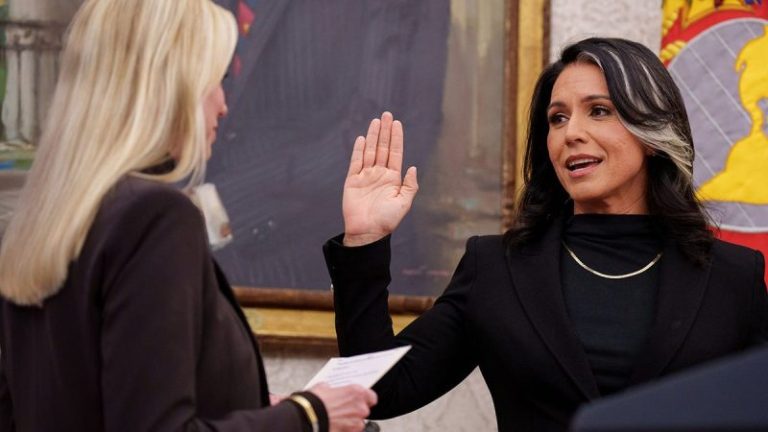
Sen. Ron Wyden, D-Ore., and Rep. Andy Biggs, R-Ariz., penned a letter to newly sworn-in Director of National Intelligence Tulsi Gabbard, warning that the United Kingdom’s reported new order demanding backdoor Apple data jeopardizes Americans.

The letter, obtained by Fox News Digital, referenced recent press reports that the U.K.’s home secretary ‘served Apple with a secret order last month, directing the company to weaken the security of its iCloud backup service to facilitate government spying.’ The directive reportedly requires the company to weaken the encryption of its iCloud backup service, giving the U.K. government the ‘blanket capability’ to access customers’ encrypted files. 

Reports further state that the order was issued under the U.K.’s Investigatory Powers Act 2016, commonly known as the ‘Snoopers’ Charter,’ which does not require a judge’s approval. 

‘Apple is reportedly gagged from acknowledging that it received such an order, and the company faces criminal penalties that prevent it from even confirming to the U.S. Congress the accuracy of these press reports,’ Wyden and Biggs note. 

The United Kingdom has been increasingly cracking down on British citizens for opposition commentary, especially online posts and memes opposing mass migration. As riots broke out in the U.K. last August after a mass stabbing at a Taylor Swift-themed dance event left three girls dead and others wounded, London’s Metropolitan Police chief warned that officials could also extradite and jail U.S. citizens for online posts about the unrest. 

The letter, however, described the threat of China, Russia and other adversaries spying on Americans.

Wyden, who sits on the Senate Intelligence Committee, and Biggs, who chairs a House Judiciary subcommittee on Crime and Federal Government Surveillance, asked Gabbard to ‘act decisively to protect the security of Americans’ communications from dangerous, shortsighted efforts by the United Kingdom (U.K.) that will undermine Americans’ privacy rights and expose them to espionage by China, Russia and other adversaries.’ 

The Washington Post was among the outlets to report about the U.K. order. 

‘These reported actions seriously threaten the privacy and security of both the American people and the U.S. government,’ Wyden and Biggs wrote. ‘Apple does not make different versions of its encryption software for each market; Apple customers in the U.K. use the same software as Americans. If Apple is forced to build a backdoor in its products, that backdoor will end up in Americans’ phones, tablets, and computers, undermining the security of Americans’ data, as well as of the countless federal, state and local government agencies that entrust sensitive data to Apple products.’ 

The letter also references a Chinese hacking operation known as ‘Salt Typhoon.’ Last year, the Biden White House admitted the Chinese hacked at least nine U.S. telecommunications companies. 

‘The Salt Typhoon hack of U.S. telephone carriers’ wiretapping systems last year – in which President Trump and Vice President Vance’s calls were tapped by China – provides a perfect example of the dangers of surveillance backdoors,’ the letter says. ‘They will inevitably be compromised by sophisticated foreign adversaries and exploited in ways harmful to U.S. national security. As the Cybersecurity and Infrastructure Security Agency (CISA) and the FBI confirmed last November, People’s Republic of China (PRC)-affiliated actors were involved in ‘copying of certain information that was subject to U.S. law enforcement requests pursuant to court orders.’’ 

‘While the U.K has been a trusted ally, the U.S. government must not permit what is effectively a foreign cyberattack waged through political means. If the U.K. does not immediately reverse this dangerous effort, we urge you to reevaluate U.S.-U.K. cybersecurity arrangements and programs as well as U.S. intelligence sharing with the U.K.,’ the letter says.

Citing a December 2023 report by the U.K. Parliament’s intelligence oversight committee, the letter states that the U.K. benefits greatly from a ‘mutual presumption towards unrestricted sharing of [Signals Intelligence]’ between the U.S. and U.K. and that ‘[t]he weight of advantage in the partnership with the [National Security Agency] is overwhelmingly in [the U.K.’s] favour.’ 

‘The bilateral U.S.-U.K. relationship must be built on trust. If the U.K. is secretly undermining one of the foundations of U.S. cybersecurity, that trust has been profoundly breached,’ Wyden and Biggs wrote. 

At her confirmation hearing, Gabbard stated that ‘backdoors lead down a dangerous path that can undermine Americans’ Fourth Amendment rights and civil liberties.’ In written responses to senators’ questions, she also said, ‘mandating mechanisms to bypass encryption or privacy technologies undermines user security, privacy, and trust and poses significant risks of exploitation by malicious actors.’

‘We urge you to put those words into action by giving the U.K. an ultimatum: back down from this dangerous attack on U.S. cybersecurity, or face serious consequences,’ Wyden and Biggs wrote.

The letter asks Gabbard specifically whether the Trump administration was made aware of the reported order, either by the U.K. or Apple, prior to the press reports and, if so, when and by whom. They also ask what the Trump administration’s understanding is of U.K. law ‘and the bilateral CLOUD Act agreement with regard to an exception to gag orders for notice to the U.S. government.’ Wyden and Biggs asked what the Trump administration’s understanding is ‘of its obligation to inform Congress and the American public about foreign government demands for U.S. companies to weaken the security of their products, pursuant to the CLOUD Act?’ The letter asked that unclassified answers be provided by March 3. 

Fox News Digital reached out to Apple and the White House regarding the letter, but neither immediately responded.

This post appeared first on FOX NEWS