Archive

2025

Browsing

Robert F. Kennedy Jr. was sworn in as the new secretary of Health and Human Services (HHS), hours after being confirmed in the Republican-controlled Senate Thursday by a close vote of 52-48 that was almost entirely along party lines.

Kennedy stood in the Oval Office alongside his wife, actress Cheryl Hines, and accompanied by his children, while he placed his hand on a Bible and swore the oath of office. Supreme Court Justice Neil Gorsuch swore in Kennedy.

After the ceremony, Kennedy told attendees about his first visit to the Oval Office. 

‘My first time in this Oval Office was in … 1962. I came here, and I had a meeting with my uncle who was president then, where we talked about the environment. He was involved very deeply, as we all know, in restoring physical fitness in this country.

‘For 20 years, I got on my knees every morning and prayed that God would put me in a position where I could end the childhood chronic disease epidemic in this country,’ Kennedy said.

‘On Aug. 23 of last year, God sent me President Trump. He’s kept every promise he’s made to me. He’s kept his word in every account and gone way beyond it. … I’m so grateful to you, Mr. President.’ 

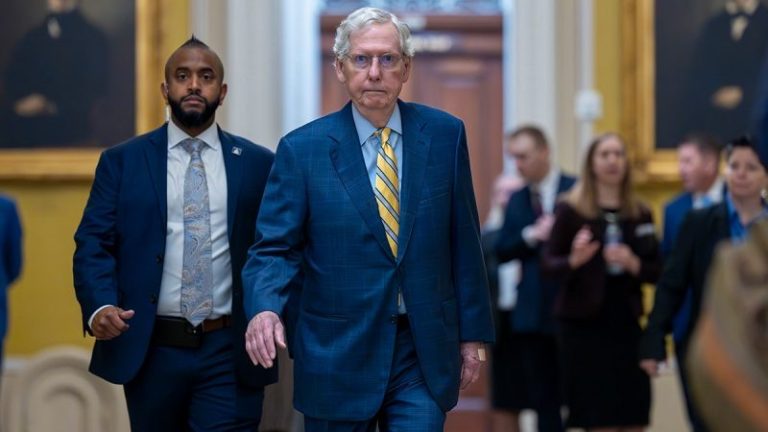
Sen. Mitch McConnell of Kentucky was the only Republican to vote against Kennedy’s nomination. McConnell, the former longtime GOP Senate leader, had polio as a child and is a major proponent of vaccines.

Kennedy, the well-known vaccine skeptic and environmental crusader who ran for the White House in 2024 before ending his bid and endorsing Trump, needed a simple majority to be confirmed by the Senate.

‘I’m a survivor of childhood polio. In my lifetime, I’ve watched vaccines save millions of lives from devastating diseases across America and around the world. I will not condone the re-litigation of proven cures, and neither will millions of Americans who credit their survival and quality of life to scientific miracles,’ McConnell said after the Kennedy vote.

Kennedy, whose outspoken views on Big Pharma and the food industry have also sparked controversy, has said he aims to shift the focus of the agencies he would oversee toward promotion of a healthy lifestyle, including overhauling dietary guidelines, taking aim at ultra-processed foods and getting to the root causes of chronic diseases.

The push is part of his ‘Make America Healthy Again’ campaign.

Trump regularly criticized Kennedy during his independent presidential bid, accusing him of being a ‘radical left liberal’ and a ‘Democrat plant.’

Kennedy fired back, claiming in a social media post that Trump’s jabs against him were ‘a barely coherent barrage of wild and inaccurate claims.’

However, Kennedy made major headlines again in August when he dropped his presidential bid and endorsed Trump. 

Kennedy had long identified as a Democrat and repeatedly invoked his late father, former Sen. Robert F. Kennedy, and his late uncle, former President John F. Kennedy, who were both assassinated in the 1960s. Kennedy in recent years built relationships with far-right leaders due in part to his high-profile vaccine skepticism.

Fox News Digital’s Paul Steinhauser contributed to this report

This post appeared first on FOX NEWS

The SEC helped rearrange conference alignment in a blow to the 12-team playoff’s vision. Now, it’s time for SEC boss Greg Sankey to slurp what he helped crumble.
Removing byes for conference champions would help SEC and Big Ten, but other conferences could throw up a short-term road block.
12-team CFP bracket format could stay the same for 2025 season, even though SEC hungry for change.

Or, what about this one? Self-made problems become the toughest to solve.

Sankey wants to reconfigure the 12-team College Football Playoff, which he helped create, after just one season.

Sankey’s modification wish list includes stripping away protection of first-round playoff byes for conference champions.

In such a universe, first-round byes would go to the top four teams in the final College Football Playoff committee rankings, with no built-in protections for conference champions. In theory, then, all four byes could go to teams from the same conference – say, Sankey’s SEC.

Sankey says this change became necessary because conference affiliation no longer looks how it did when commissioners, including Sankey, devised the 12-team playoff format.

Hmm, I wonder why conference alignment changed.

Ah, yes, it changed after Sankey steered the SEC’s plunder of Texas and Oklahoma, the Big 12’s top brands. The SEC’s heist started the realignment carousel’s ignition, and then the Big Ten sprang into action and raided the west coast. In turn, the Big 12 and ACC shopped the Pac-12’s discount rack, and that conference became an unrecognizable husk.

“It’s not the same reality that existed when the 12-team model developed, and I’ve opined what I believe is the need to adjust,” Sankey said on “The Paul Finebaum Show” last week.

“And, the seeding issues, particularly moving teams into the top four, need to be looked at deeply.”

Let’s not forget, Sankey already engineered a change to the 12-team playoff before its launch. Originally, the playoff had been devised for six automatic bids and six at-large bids. After the Pac-12 buckled, Sankey successfully spearheaded the switch to five automatic bids and seven at-large berths.

His latest effort to bend the bracket to the SEC’s desires encounters a roadblock, though.

Changing the playoff before next season would require unanimous approval from the other conference commissioners, plus Notre Dame. Sankey knows he’s unlikely to gain the full support necessary to trigger a change. Commissioners from leagues like the Big 12, Mountain West and ACC have little incentive to give up byes for conference champions.

PLAYOFF PICKS: Projecting next year’s field of 12 with some surprises

LOOKING AHEAD: Our way-too-early college football Top 25 for 2025

Big 12, ACC have little reason to rework College Football Playoff

The first-round bye carries more value than bracket positioning. It also triggers additional financial compensation to the league represented in the quarterfinals.

Conference commissioners aren’t in the business of turning down paydays.

“I do not have the appetite to give up any financial reward that comes with a bye,” Big 12 commissioner Brett Yormark recently told Yahoo! Sports.

As ACC commissioner Jim Phillips told Yahoo! Sports, earmarking byes for conference champions is “not some exotic structure.”

Indeed, a professional league might call that common sense.

If at-large playoff qualifiers become eligible for byes, college football would become America’s only sport in which a team could finish fourth in its conference standings and earn a playoff bye.

The commissioners reportedly will meet in Dallas later this month to discuss the playoff’s future. If even one rival conference commissioner tells Sankey, “No thanks, bucko. We like the playoff as is,” the format will remain the same next season.

In other words, grab a straw, SEC.

You too, Big Ten.

Those “Super Two” conferences puffed up during realignment by weakening other conferences, but now it’s time to grab a straw and slurp what they crumbled – for one more year, anyway.

SEC, Big Ten will get their way, but question is how soon?

Impeding the “Super Two” in their playoff revision would be a short-lived roadblock to the playoff becoming a de facto SEC-Big Ten Invitational. Starting with the 2026 season, unanimous commissioner approval no longer will be required to change the format. At that time, the SEC and Big Ten gain additional authority over the bracket. Hard to imagine that’ll be good for the ‘little guy’ conferences.

So, changes very likely are coming, but why should rival commissioners capitalate to Sankey and Tony Petitti, Sankey’s Big Ten cohort, any sooner than required?

If teams were seeded based off ranking this past season, Big Ten and SEC teams would have seized all the byes.

I don’t fault the SEC for snapping up Texas and Oklahoma and triggering realignment, and Sankey’s just doing his job by seeking an avenue to more byes for SEC teams. The SEC endured two consecutive seasons without advancing a team to the national championship game, so the conference could use a boost. But, the Big 12, ACC and others have no reason to fork it over.

Yormark and Phillips would be doing their jobs by telling Sankey to spend the next year slurping up the beautiful 12-team playoff vision that he helped crumble into realignment soup.

Blake Toppmeyer is the USA TODAY Network’s national college football columnist. Email him at BToppmeyer@gannett.com and follow him on X @btoppmeyer. Subscribe to read all of his columns.

This post appeared first on USA TODAY

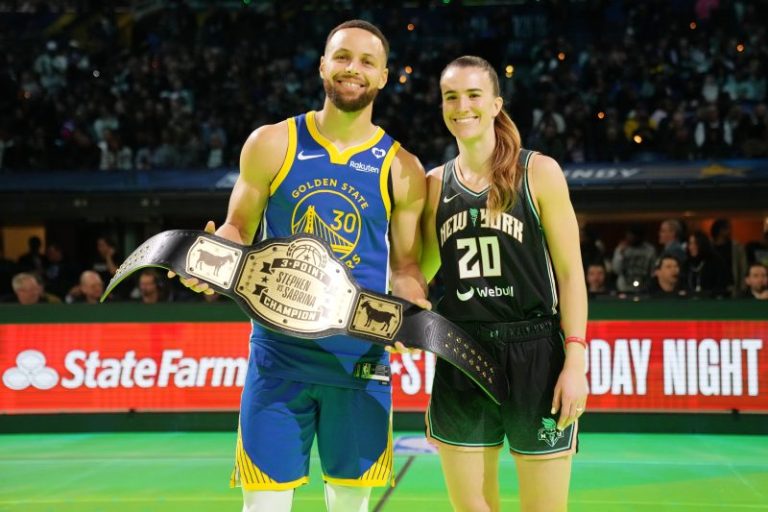
There will not be a 3-point contest between the NBA’s Steph Curry and the WNBA’s Sabrina Ionescu at this NBA All-Star Weekend Saturday or Sunday in San Francisco.

“We weren’t able to land on a plan we thought would raise the bar off of last year’s special moment,” NBA chief communications officer Mike Bass said. “We all agreed not to proceed and will instead keep the focus on All-Star Sunday’s new format.”

Last season at All-Star Weekend Indianapolis, Ionescu and Curry put on a 3-point show with Curry edging his friend 29-26, and there was talk the two players would return this season for another display of 3-point shooting.

Curry’s Warriors are the host, and Ionescu grew up in the Bay Area, and earlier this season, NBA commissioner Adam Silver indicated there would be similar event this year.

“I can’t remember if they’ve formally committed or informally committed but they know they’re going to be doing this again,” Silver told reporters in Mexico City earlier this season. “They are looking forward to it. I think as soon as they walked off the court after the competition last year, in fact they said we need more than one round to make it even fairer. So we’re going to be doing more things.

Earlier this month, Ionescu told USA TODAY Sports, “Whether it happens this year or in the future, we both have a lot of basketball left, so we’ll definitely get to it at some point. It’s kind of TBD on that. But I am excited to get to the Bay. Obviously I am from the Bay, so my whole family is very excited to be able to see me and welcome me home.’

All sides involved were still in talks this week about a format that would resonate and not be a repeat of Steph vs. Sabrina. They fell short of finding a way to elevate the format such as Curry and Ionescu teaming up against two-time 3-point champion Damian Lillard and WNBA All-Star Caitlin Clark.

Caitlin Clark, the Indiana Fever 2024 WNBA Rookie of the Year, did not participate in the WNBA’s 2024 All-Star 3-point contest and said in January she wanted her first 3-point contest as a professional to take place at the 2025 WNBA All-Star Weekend in Indianapolis.

Curry has won the NBA 3-point contest twice (2015, 2021) but is not in this year’s field.

This post appeared first on USA TODAY

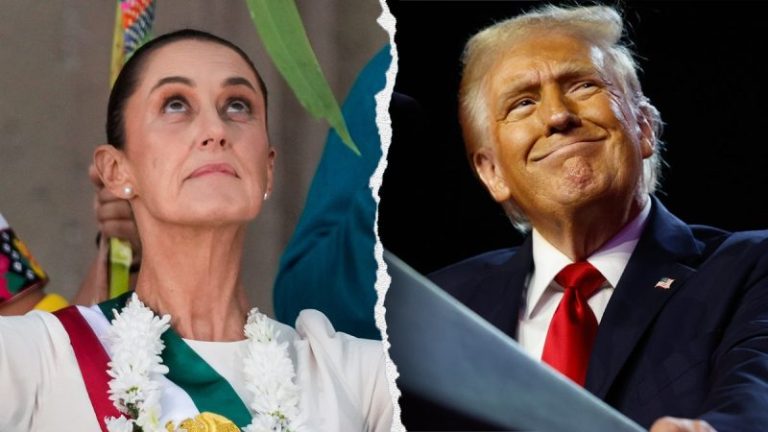
Mexican President Claudia Sheinbaum said Thursday her government was deciding whether to initiate a lawsuit against Google for renaming the Gulf of Mexico the Gulf of America on Google Maps. 

‘We are going to wait. We are already seeing, observing what this would mean from the perspective of legal advice, but we hope that they will make a revision,’ Sheinbaum said, according to Reuters. 

Fox News Digital has reached out to Google. 

Google renamed the body of water after President Donald Trump signed an executive order to change it. Now, Google Maps users in the United States will see ‘Gulf of America’ in the app, and users outside the U.S. and Mexico see both terms, the company said.

‘We’re going to be changing the name of the Gulf of Mexico to the Gulf of America, which has a beautiful ring. That covers a lot of territory,’ Trump said Tuesday. ‘The Gulf of America. What a beautiful name. And it’s appropriate.’

Sheinbaum has decried the move, saying the Gulf of Mexico name has long been recognized internationally.

‘All we are asking of Google is to look at the decree that the White House released and that President Donald Trump signed. You’ll see in that decree that it does not refer to the whole gulf,’ Sheinbaum said.

‘If necessary, we will file a civil suit,’ she added. ‘Our legal area is already looking into what that would mean, but we hope that (Google) reconsiders.’

Aside from Google, the Federal Aviation Administration (FAA) sent out a charting notice confirming that its systems were in the process of updating the name, in addition to updating the newly named Mount McKinley in Alaska, formerly known as Denali.

‘Please be advised that the FAA is in the process of updating our data and charts to show a name change from the Gulf of Mexico to the Gulf of America and a name change from Denali to Mount McKinley. This will be targeted for the next publication cycle,’ the notice said.

This post appeared first on FOX NEWS

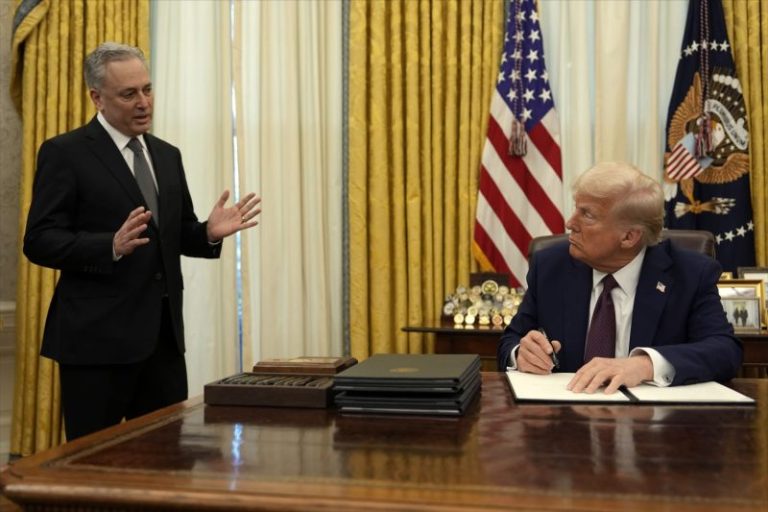
President Donald Trump floated a joint meeting with Chinese President Xi Jinping and Russian President Vladimir Putin, claiming he wants all countries to move toward denuclearization. 

Trump on Thursday told reporters he plans to advance these denuclearization talks once ‘we straighten it all out’ in the Middle East and Ukraine, comments that come as the U.S., Russia and Ukraine are actively pursuing negotiations to end the conflict between Russia and Ukraine. 

‘There’s no reason for us to be building brand new nuclear weapons, we already have so many,’ Trump said Thursday at the White House. ‘You could destroy the world 50 times over, 100 times over. And here we are building new nuclear weapons, and they’re building nuclear weapons.’

‘We’re all spending a lot of money that we could be spending on other things that are actually, hopefully, much more productive,’ he said.

The U.S. is projected to spend approximately $756 billion on nuclear weapons between 2023 and 2032, according to a Congressional Budget Office report released in 2023. 

Additionally, Trump said that he was aiming to schedule meetings with Xi and Putin early on in his second term and request that the countries cut their military budgets in half. The president said he believes ‘we can do that,’ and remained indifferent about whether he traveled to Xi or Putin, or if they visited the White House. 

Meanwhile, the U.S. has dramatically reduced its nuclear arsenal since the fall of the Berlin Wall in 1989. 

The U.S. maintains 3,748 nuclear warheads as of September 2023, a drop from the stockpile of 22,217 nuclear warheads in 1989, according to the Department of Energy. The agency reported the U.S. owned a maximum of 31,255 nuclear warheads in 1966. 

In comparison, Russia has an estimated stockpile of roughly 4,380 nuclear warheads, while China boasts an arsenal of roughly 600, according to the Federation of American Scientists. 

Trump’s remarks build on previous statements he made in January at the Davos World Economic Forum in Switzerland, where he signaled interest in talks on denuclearization with both Russia and China. 

‘Tremendous amounts of money are being spent on nuclear, and the destructive capability is something that we don’t even want to talk about today, because you don’t want to hear it,’ Trump said on Jan. 23. 

Previous talks between the U.S., Russia and China fell through in 2020 during Trump’s first administration after he refused to sign an extension of the 2010 New Strategic Arms Reduction Treaty with Russia to impose limits on each country’s nuclear arsenals. The treaty ultimately was renewed under the Biden administration and now expires in 2026, but Russia suspended its participation. 

On Thursday, Trump accused these negotiations of falling apart due what he called the ‘rigged election’ in 2020. 

Trump also said on Thursday that Putin wants peace after Russia invaded Ukraine in 2022, comments that followed back-to-back calls with the Russian leader and Ukrainian President Volodymyr Zelenskyy on Wednesday. Treasury Secretary Scott Bessent also traveled to Kyiv on Wednesday. 

Trump, who met with Zelenskyy in New York in September 2024, urged Putin to cease the war — or face sanctions — in a post on Truth Social on Jan. 22. 

‘Settle now, and STOP this ridiculous War! IT’S ONLY GOING TO GET WORSE,’ Trump wrote. If we don’t make a ‘deal’, and soon, I have no other choice but to put high levels of Taxes, Tariffs, and Sanctions on anything being sold by Russia to the United States, and various other participating countries.’

This post appeared first on FOX NEWS

Democratic Rep. Jim McGovern of Massachusetts blasted Elon Musk on Wednesday and argued that his DOGE efforts are undermining the ‘values’ of the United States, and promised to ‘fight’ against them. 

Elon Musk has probably never stepped into a public school, his kids will get private tutors, he doesn’t understand it, he has no idea what this is all about,’ McGovern, who represents the 2nd Congressional District of Massachusetts, told Fox News Digital after a rally against DOGE cuts to the Department of Education.  

‘Our teachers do an incredible job. They deserve to be respected. The Department of Education is more than just a line item,’ he continued. ‘It represents real people, and it represents our future. And so, yeah, I’m pissed.’

McGovern explained that ‘not a single’ Democrat protesting is upset about cutting fraud or waste, but said that education is not the place to start. 

‘I use colorful language because I can’t believe we’re at this moment, and I’m really pissed at my Republican colleagues who are sitting there twiddling their thumbs, afraid to say anything because they’re afraid they might get a primary challenge,’ the House Democrat continued. ‘But you know what? Being in Congress is about helping people, not screwing people. And it’s about time they grew a backbone and came out here and joined us and pushed back against this nonsense.’

McGovern argued that the Department of Education is ‘not a line item’ and that it ‘represents real people’ who could lose important funding for their children in schools. 

‘I’d like to start with the Department of Defense first, McGovern said, ‘where I can tell you there’s tons and tons of waste. They’ve never been audited successfully. All these other departments and agencies have been audited. But here’s the deal. This is not about rooting out fraud, waste, or abuse. This is about them shutting down important agencies of departments so they can have money to give billionaires and big corporations a tax break, and I’m just sick and tired of the well-off and the well-connected to this country, getting whatever the hell they want while everybody else gets screwed. We can’t stand for that.’

‘I mean, when is the last time Musk ever walked into a public school?’ McGovern said. ‘When’s the last time you walked into a supermarket? When’s the last time he actually talked to, like, real people? And as far as this DOGE thing, I don’t even know what kind of clearances Musk has or the young minions that he has around him.’

‘I don’t know what kind of clearances they have going through all this stuff. But we should be worried. They’re undermining our democracy here. They’re undermining, you know, our values. And as I said, if they want to fight, I’ll give them a goddamn fight. We’re ready for this fight.’

When asked whether he wants Musk to answer questions before Congress, McGovern said he’d like to see the Tesla and Space X CEO testify under oath.

‘I do, I want him to come before Congress. I want them to be sworn in. So he can’t lie. I mean, I saw that press conference, and It was the weirdest thing I’ve ever seen in my life. I mean, these guys, this is. You can’t make this stuff up.’

DOGE’s spending cuts have drawn the ire of numerous Democrats in recent weeks prompting rallies where lawmakers have pledged to fight Musk’s efforts.

The Department of Education, which Trump pledged to eliminate when he was on the campaign trail, has been a particularly heated subject, and Trump recently suggested that he still intends to get rid of it and send education decisions to the states.

‘Oh, I’d like it to be closed immediately. Look at the Department of Education. It’s a big con job,’ Trump said this week. ‘They ranked the top countries in the world. We’re ranked No. 40, but we’re ranked No. 1 in one department: cost per pupil. So, we spend more per pupil than any other country in the world, but we’re ranked No. 40.’

This post appeared first on FOX NEWS

Last week, White House crypto czar David Sacks held his first press conference to discuss the future of crypto policy coming out of the Trump administration.

While that will include stablecoin legislation and digital asset regulation, Sacks told CNBC that a top agenda idea is also evaluating “whether it’s feasible to create either a bitcoin reserve or some sort of digital asset stockpile.”

But will the momentum around bitcoin and other cryptocurrencies carry over to corporate America more broadly, appearing on balance sheets?

To date, companies with exposure to bitcoin in their business operations have been the first movers in this space, in many cases, to show their support and buy-in to the industry. According to the bitcoin tracking website Bitcointreasuries, 79 public companies currently hold bitcoin, with some of the largest holders being companies like Riot Platforms, Coinbase and Block. 

Strategy, the company formerly known as MicroStrategy, and its co-founder, Michael Saylor, have been the champion of this approach as the largest corporate holder of bitcoin. On its third-quarter earnings call earlier this month, the company said it holds 471,107 bitcoins on its balance sheet, about 2% of the total supply and worth roughly $45.2 billion.

Also on the list of crypto industry companies holding bitcoin on the balance sheet is Moonpay, a venture-backed financial technology company that builds payments infrastructure for crypto. The company has added bitcoin to its balance sheet equal to 5% of its operational cash, according to CEO Ivan Soto-Wright.

While Soto-Wright said some of the thought process is that “we’re only going to succeed if bitcoin succeeds,” he believes there is a growing argument to include bitcoin in any company’s treasury strategy.

“It’s really detached both from interest rates and equity market movements, so you could see it from that perspective,” he said. “You could also see it from the perspective of an inflation hedge .. in terms of large money movement, it’s incredibly efficient so you could argue it’s a better version of gold.” 

That is one of the arguments that Saylor has made, and one he repeated while making one of the most high-profile pushes to spur a major U.S. company to add bitcoin to its balance sheet, appearing at Microsoft’s annual meeting to speak on behalf of a shareholder proposal that called on the company’s board to evaluate holding bitcoin or other cryptocurrencies.

Saylor doubled down on that message at the ICR conference earlier this year, where in a presentation he said that companies can either “cling to the past” and continue to buy Treasury bonds, execute buybacks and dividends, or “embrace the future” by using bitcoin as digital capital.

“It works for any company,” Saylor said in the retail conference’s keynote speech. “We’re the people building with steel and they’re building with wood.”

At least in the short-term, it can look good, too. Tesla, one of the few non-crypto-focused companies to hold bitcoin on its balance sheet, showed the positive side of this in its most recent quarter when it marked a $600 million profit due to the appreciation of bitcoin. The Financial Accounting Standards Board adopted a new rule for 2025 that mandates that corporate digital asset holdings be marked to market each quarter. 

But so far, the message and broader movement has not spread much wider than the crypto industry. Just 0.55% of votes at Microsoft’s annual meeting supported the plan. Microsoft, as well as proxy advisors Glass Lewis and Institutional Shareholder Services, had all suggested shareholders reject the proposal ahead of the vote.

Microsoft said in an October proxy filing that its treasury and investment services team previously evaluated bitcoin and other cryptocurrencies to fund the company’s operations and reduce economic risk, adding that it “continues to monitor trends and developments related to cryptocurrencies to inform future decision making.”

At Microsoft’s annual meeting, CFO Amy Hood said: “it’s important to remember our criteria and our goals of our balance sheet and for the cash balances, importantly, is to preserve capital, to allow a lot of liquidity to be able to fund our operations and partnerships and investments .. liquidity is also a really important criteria for us, as well as generating income.”

The lack of adoption so far isn’t discouraging proponents of companies holding bitcoin on the balance sheet. Ethan Peck, the deputy director of the Free Enterprise Project, which is part of conservative think tank National Center for Public Policy Research, filed the shareholder proposal at Microsoft and said he plans to file similar proposals during the upcoming proxy season at other large companies. In all, it has been recently estimated that the S&P 500 universe of companies collectively holds over $3.5 trillion on balance sheets, though the figure changes quarter-to-quarter.

While Peck said he is not advocating for companies to take as aggressive of a stance as Strategy has, “Companies should consider holding a couple percent of bitcoin in order to negate or offset the base of your cash holdings because you’re losing your shareholders’ money.”

“The bond yields are not outpacing real inflation, so you’re losing money,” Peck said.

The performance of bitcoin over the past five years. Bitcoin has vastly outperformed cash equivalents, though with much greater volatility.

However, that debate is far from decided in corporate America, according to Markus Veith, who leads Grant Thornton’s digital asset practice, especially as bitcoin has reacted more in line with the broader stock market than inflation over the last year or so, and volatility is still high — something that Microsoft’s board also pointed out in its rejection of that shareholder proposal.

Veith said regulation might also be holding companies back. The SEC rescinded SAB 121 in January, a rule that required banks to classify cryptocurrencies as liabilities on their balance sheet, creating a capital requirement burden that kept many banks from providing custody for crypto assets.

That’s a change that could lead banks, including Goldman Sachs, to revisit the issue. CEO David Solomon told CNBC at Davos last month that “At the moment, from a regulatory perspective, we can’t own” bitcoin, but he added that the bank would revisit the issue if the rules changed. Much of Wall Street is also starting to at least cautiously sing a different tune, with Morgan Stanley CEO Ted Pick and Bank of America CEO Brian Moynihan both telling CNBC while at Davos last month that their institutions could allow broader adoption if the regulatory environment changes. 

But regulation can’t solve the issue of crypto’s extreme volatility, and the concern that there may be another downturn at some point. “What do you do if there’s going to be another crypto winter, and the price goes down and you’re sitting for a prolonged basis on a big stash of bitcoin and the price keeps going down? How do you explain that to your stakeholders, shareholders, or board? That’s probably what is hindering more companies from going into this space,” Veith said. 

The most recent CNBC CFO Council quarterly survey, taken in December, is a reflection of that risk assessment: 78% of the CFO respondents to the survey said bitcoin is a highly speculative asset class, while 7% said it is a credible store of value. Furthermore, 11% said it is a fraud, though that latter view has come down over time in the quarterly CFO survey.

As the Trump administration continues to embrace crypto, the crypto view from within corporate America could change more.

Asked if he thinks companies are reassessing the things they once assumed about crypto, Soto-Wright pointed to the overtures coming out of Washington, D.C., and the potential for a national reserve and additional regulation changes.

“If you look at the general trends, it’s becoming more adopted by institutions as there’s more circulation, as there are more products that come to market, and as it starts to develop its statute and stance as a truly diversified, uncorrelated financial instrument,” he said.

“I think you’ll start to see more and more companies recognize that in their treasury portfolio management strategy, this is another asset that is legitimized,” Soto-Wright said.

This post appeared first on NBC NEWS

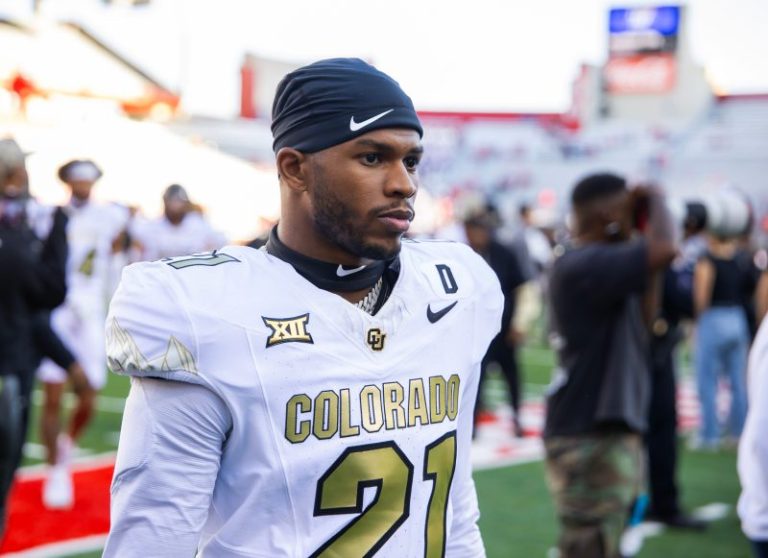
Four players under coach Deion Sanders at Colorado have been invited to the NFL Scouting Combine in Indianapolis later this month. But there’s one notable exclusion. Sanders’ middle son, Shilo, was not invited. As a safety, he was Colorado’s leading tackler in 2023 and third-leading tackler in 2024 despite missing three games with a broken forearm.

Colorado’s list of invitees otherwise includes:

∎ Heisman Trophy winner Travis Hunter, who was invited as a defensive back, though he still also hopes to play wide receiver in the NFL as well.

∎ Sanders’ youngest son, Shedeur, a quarterback who finished as the major-college leader in career completion percentage (71.8%).

∎ Receivers Jimmy Horn Jr. and LaJohntay Wester, two Florida natives and two of Shedeur Sanders’ favorite targets.

NFL STATS CENTRAL: The latest NFL scores, schedules, odds, stats and more.

Both Hunter and Shedeur Sanders are expected to be top picks in the NFL draft in April, which would be the first time the Buffaloes had any player drafted directly out of CU since 2021. Last year, the Buffs had one player invited to the combine – receiver Xavier Weaver.

Shilo Sanders, 25, was not expected to be an early-round draft pick but did participate in the East-West Shrine Bowl college all-star game last month in Texas. He recorded five tackles, tied for second on his team.

Also not invited for Colorado was wide receiver Will Sheppard, a Vanderbilt transfer who was third on the team in receiving with 48 catches for 621 yards. That ranked behind Hunter and Wester but ahead of Horn, who missed two games with injury.

The NFL announced a total of 329 prospects have been invited to attend this year’s combine from Feb. 24 through March 3. The NFL draft starts April 24 in Green Bay.

Follow reporter Brent Schrotenboer @Schrotenboer. Email: bschrotenb@usatoday.com

(This story was updated to add new information.)

This post appeared first on USA TODAY

The recent string of burglaries taking place at the professional athletes’ homes across the nation is being attributed to multiple South American gangs, according to officials.

Three Chilean men were charged in relation to the events that unfolded at Cincinnati Bengals quarterback Joe Burrow’s home on Dec. 9. The alleged burglars are accused of stealing nearly $300,000 worth of items from the quarterback’s residence.

Hamilton County Prosecutor Connie Pillich announced the charges on Wednesday.

Jordan Francisco Quiroga Sanchez, 22, Bastian Alejandro Orellana Morales, 23, and Sergio Andres Ortega Cabello, 38, have been indicted in Hamilton County on charges of engaging in a pattern of corrupt activity and burglary.

They were also indicted on federal charges in connection with the burglary of Burrow’s home.

NFL STATS CENTRAL: The latest NFL scores, schedules, odds, stats and more.

Prosecutors said they also arrested a fourth man, Alexander Esteban Huaiquil Chavez, with the trio. However, he was not connected to the burglary.

Sanchez, Morales and Cabello are in custody in Clark County and will not be released on bond, Hamilton County Sheriff Charmaine McGuffey said at the press conference. There is an immigration detainer on the men preventing them from leaving the country if they do post bond, Pillich said.

She added that they have created a specialized task force, which is overseen by the Ohio Organized Crime Investigations Commission, to deal with these high-profile crimes.

‘Trust me, this will not be the last case that comes out of this investigation,’ Ohio Attorney General Dave Yost said.

He warned residents to exercise caution and avoid provoking a confrontation if they catch someone breaking into their home. Yost added that he doesn’t know what the gang will do now since the investigation and indictment are now public.

It’s the latest chapter in a story that has swept the nation since at least the beginning of September 2024.

The FBI got involved in late December when the total was up to at least nine professional athletes, including Burrow, Kansas City Chiefs stars Patrick Mahomes and Travis Kelce, former Dallas Mavericks and current Los Angeles Lakers guard Luka Doncic and Minnesota Timberwolves guard Mike Conley, among others, according to a report from ABC News.

Burrow was not home during the break-in and was instead playing against the Dallas Cowboys on ‘Monday Night Football’ in Week 14 of the 2024 NFL regular season.

This post appeared first on USA TODAY

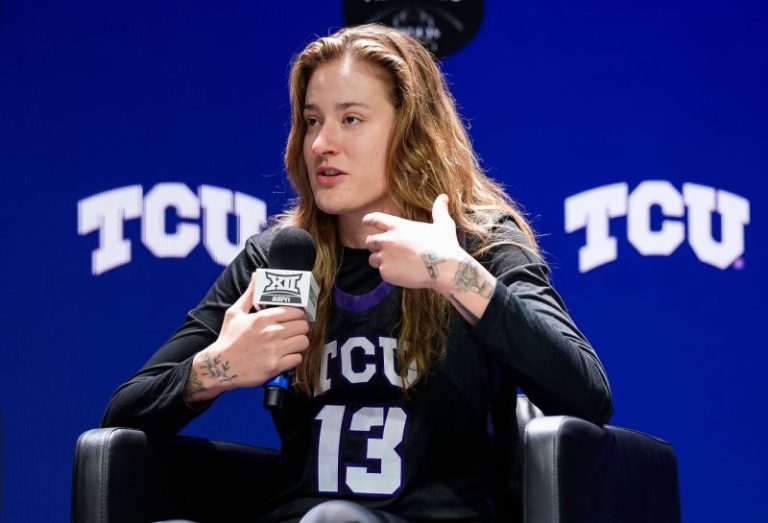
TCU center Sedona Prince, a women’s college basketball and social media star, has been the subject of several abuse allegations dating back to 2019.The most recent incident – an alleged altercation with a former girlfriend – happened last month, the Washington Post reported Wednesday.

According to the Post, a TCU student went to the Fort Worth, Texas, police department Jan. 18 to report Prince had assaulted her. The woman also said Prince asked her to sign a nondisclosure agreement.

Prince went to the police as well to report she had been assaulted and that she suffered a black eye. No charges have been filed.

Through her attorney, Prince denied all allegations against her and said she has never ‘abused anyone in her life, whether mentally, emotionally or physically.’

‘Unfortunately, others have decided to use Sedona as a launch point for their careers,’ the attorney, A. Boone Almanza said to the Washington Post. ‘In an effort to create some relationship privacy, Sedona has asked girlfriends to sign nondisclosure agreements because their personal, intimate moments should not be the subject of public discussion.’

Almanza did not immediately respond to USA TODAY Sports’ requests for comment.

‘The university is aware of the allegations involving one of our student-athletes and is looking into the matter. In accordance with federal privacy laws, the university does not comment on student conduct matters,’ TCU said in a statement, when asked by USA TODAY Sports if Prince was in good standing with the school and basketball team.

The Washington Post reported on three different abuse allegations against Prince, including one dating back to 2019, when a sexual misconduct lawsuit was dismissed months after it was filed. Another woman said Prince was abusive during a trip to Mexico, as detailed in videos she posted to TikTok and screenshots of text messages she shared with the Washington Post.

That incident in Mexico prompted an online petition for Prince’s removal from the TCU basketball team. That petition has more than 200,000 signatures.

Prince is averaging 17.6 points, nine rebounds, and 3.2 blocks this season for the Horned Frogs. Of the court, she is widely known for her activism in college basketball. During the 2021 NCAA tournament, while playing for Oregon, Prince made a viral TikTok video in which she asked for equality in how women players were treated compared to their male counterparts. She was also a plaintiff in two lawsuits against the NCAA.

This post appeared first on USA TODAY