Archive

2025

Browsing

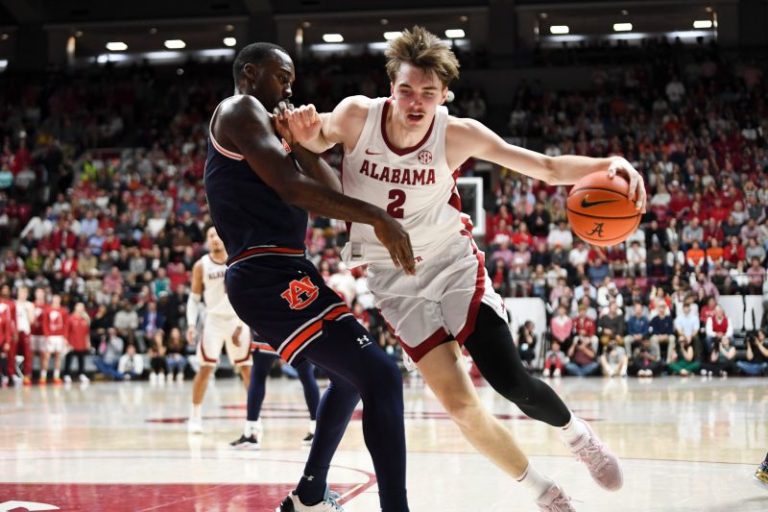
Bruce Pearl has told the story so many times it’s practically legend now, memorialized over 17 years as one of the great scenes in the history of college basketball. 

For one day in February of 2008, the city of Memphis was the center of the sports universe: The No. 1, undefeated Memphis Tigers vs. the No. 2 Tennessee Volunteers. Beale Street was an all-day party. Celebrities like Justin Timberlake and Priscilla Presley were in the crowd. Tickets were impossible to come by. And ESPN was hyping the game all week, building toward a prime time tip-off. 

But a couple hours before the game, Pearl – then the Tennessee coach – dipped into a bar near the stadium where the school was holding an alumni event. Surprising the attendees, who expected him to be sequestered away watching that last bit of film, Pearl burst out on stage and declared that his Vols were 40 minutes away from being the No. 1 team in the country. 

‘We’re going to kick their ass!’ he bellowed as the crowd roared. 

They did. Tennessee won, 66-62, taking the No. 1 ranking for the first time in school history as Pearl and Vols fans celebrated deep into the night. 

And then, exactly 72 hours later, Tennessee lost to Vanderbilt. A month after that, it got blown out by Louisville in the Sweet 16. And the Memphis team that lost its unbeaten season, its state championship and the No. 1 ranking that night didn’t lose again until overtime of the national championship game.

Now, more than a decade and a half later, Pearl is the main character in another No. 1 vs. No. 2 epic, another in-state rivalry and another pivot point on the road to a potential national championship. 

For all the times we’ve seen the Iron Bowl determine SEC and national titles on the football field, this is undoubtedly the high-water mark for a basketball game in the state of Alabama. 

‘Do we think we’re the best team in the country? I think we have a chance to be, but Auburn’s the best team in the country right now,’ Alabama coach Nate Oats said after his team’s 23-point win at Texas on Tuesday. ‘We’ve got to knock them out on Saturday if we want to claim that.’

Said Pearl during a Wednesday interview on SiriusXM radio: ‘They’re the deepest and most talented team in our league, and they’re playing great right now. I want to beat Alabama more than anybody else on our schedule because that’s our rival. I don’t take it personally.’

So the stage is set for the most memorable day in a basketball rivalry that dates back to 1924, has been played 170 times and might briefly surpass the intensity of a football rivalry that has resulted in political disputes, unthinkable endings, multiple coaches being fired and the death of trees.

It’s also a measure validation for two football-first athletic departments that spent the last decade ramping up investments in basketball; Auburn giving Pearl a second chance after being exiled for NCAA violations at Tennessee, Alabama making a winning bet on a former Michigan high school coach whose success at Buffalo in his first college job translated almost instantly to the SEC. 

BRACKETOLOGY: Michigan surges in NCAA tournament projection

STARTING FIVE: SEC, Big 12 lead biggest games of the weekend

At this point, there’s not much new or novel about either school contending for basketball titles. Pearl got Auburn to the Final Four in 2019; Oats did the same last year. One or the other (or sometimes both) has been ranked in each of their last seven meetings. It’s not Duke-North Carolina or Kentucky-Louisville, but it has that same hint of upstart energy from 2008 when Tennessee and Memphis were on a collision course for their one-of-a-kind meeting. 

But it’s both the brilliance of college basketball and the sport’s greatest fundamental flaw that these rare No. 1 vs. No. 2 games are usually remembered more for the hype and the stuff that happens around them – like Pearl’s surprise visit to the alumni party – than the actual results. 

Because in the end, there’s a pretty firm limit to how much these games actually mean. 

In 2008, that night was the apex of Tennessee’s season. Getting stopped cold in the Sweet 16 was, in the end, somewhat of a disappointing result for a team that had put so much energy into reaching the top of the sport. 

Similarly, there’s no result on Saturday that will change the fundamental dynamic that both Alabama and Auburn are among the six or seven teams that will enter the postseason as favorites to win it all. Heck, they’re even playing again in Auburn on March 8, maybe once more the week after that at the SEC tournament and – who knows – perhaps one final time in San Antonio the first weekend in April with everything on the line. 

This game? It’s a big one for all the obvious reasons, but it’s probably more of an appetizer than the main course for either of their seasons. 

Think of it this way: Last time we had a No. 1 vs. No. 2 matchup was November of 2021 when Gonzaga beat UCLA. Neither team reached the Elite Eight that season. 

Last time we had it in a conference game was Jan. 4, 2016 when No. 1 Kansas beat No. 2 Oklahoma in three overtimes. Fast-forward to March and it was the Sooners – not the Jayhawks – cutting down nets in celebration of a Final Four bid. 

And the last time we had it in a regular season game, between two schools who consider each other their biggest rival, was Feb. 5, 1998 when No. 2 North Carolina blew out No. 1 Duke 97-73. The Blue Devils got revenge three weeks later at home, but the Tar Heels won the rubber match in the ACC championship game. 

The point is, for all the pageantry around this weekend in Tuscaloosa and the impulse for both fan bases to either revel in their glory or despair on Saturday night, this isn’t the football Iron Bowl. The result won’t define either team’s season. There won’t be a Kick Six-type moment that echoes through the decades. 

What it will be, though, is a forever milestone in the history of a long basketball rivalry that has never seen these heights before. The winner will celebrate and the loser will hurt. But no matter which side comes out ahead Saturday, there’s a whole lot more to come. 

This post appeared first on USA TODAY

A busy week for Lionel Messi and Inter Miami concludes when the club plays its final preseason game on Friday night.

Inter Miami will face its in-state MLS rival Orlando City at 7:30 p.m. ET inside Raymond James Stadium in Tampa, Florida.

The match will be the fifth and final preseason match for Inter Miami this year.

Messi attended Super Bowl 59 in New Orleans last Sunday, debuting a new ad with Apple and MLS Season Pass after the game. Inter Miami’s newest home jersey is available worldwide and Messi’s drink has become the new hydration partner for Inter Miami this week.

Messi may have a light day at the office on Friday night with two games next week: Inter Miami begins its first-round matchup in the Concacaf Champions Cup on Tuesday against Sporting Kansas City, then begins the 2025 MLS season on Feb. 22 at home against New York City FC.

Here’s everything you need to know about Friday’s Inter Miami-Orlando City match, and stay tuned for live updates from USA TODAY Sports:

How to watch Inter Miami vs. Orlando City preseason game?

The match is available to live stream for free on MLS Season Pass via Apple TV.

How has Messi, Inter Miami fared this preseason?

Messi has scored two goals in four Inter Miami preseason games – all victories for the 2024 MLS Supporters’ Shield champions.

Messi scored a goal and had two assists in 62 minutes as Inter Miami beat Honduran giants Club Olimpia Deportivo 5-0 last Saturday in San Pedro Sula, Honduras.

Messi scored a header and played 66 minutes in the preseason opener against Mexican champions Club America in Las Vegas on Jan. 18. He played 72 minutes against Universitario in Peru on Jan. 29. Inter Miami won both games on penalty kicks.

Messi was also the catalyst behind two goals while playing 76 minutes in a 3-1 win against San Miguelito in Panama City last Sunday.

Inter Miami’s upcoming schedule

Here are the next three games Messi and Inter Miami will play:

Feb. 18: Sporting Kansas City vs. Inter Miami, Children’s Mercy Park in Kansas City, 8 p.m. ET (Concacaf Champions Cup)
Feb. 22: Inter Miami vs. New York City FC, Chase Stadium in Fort Lauderdale, Fla., 2:30 p.m. (MLS regular season opener)
Feb. 25: Inter Miami vs. Sporting Kansas City, Chase Stadium, 8 p.m. ET (Concacaf Champions Cup)

This post appeared first on USA TODAY

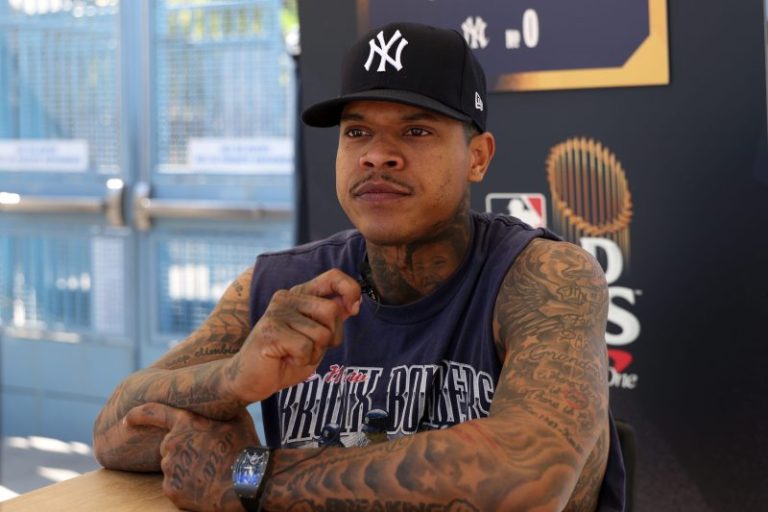
TAMPA, Fla. – After a two-day absence, Marcus Stroman arrived Friday morning at Yankees camp and repeatedly declared his intended role for 2025.

“I’m a starter. I won’t pitch in the bullpen,’’ said Stroman. “I’m a starter.’’

Currently, Stroman is the sixth man in a five-man Yankee rotation, and he chose – as was his collectively bargained right – not to report during the initial days of team workouts.

Stroman could have stayed away until Feb. 22, but even a 48-hour absence sends a message to management about his status.

Doesn’t it?

All things Yankees: Latest New York Yankees news, schedule, roster, stats, injury updates and more.

“No. Not at all,’’ Stroman said.

Twice in the previous two days, Yankees manager Aaron Boone termed the Stroman situation “a little bit awkward,’’ but asserted his rights under the CBA.

Stroman said he placed “a priority on getting my body ready; I don’t think there was a need for me to be here the last few days, given the climate.’’

The right-hander didn’t clearly identify that climate, but the math is clear. Unless the Yankees lose a starter to injury, there’s no calculus that puts Stroman in Boone’s rotation.

Boone said Friday that he doesn’t plan on using a six-man rotation, though he wouldn’t completely rule it out.

“I’m glad he’s here,’’ said Boone. “As I’ve maintained, he really is in a good frame of mind. And I think he’s ready to go physically, mentally.’’

To date, the Yankees’ inability to find a suitable trade for Stroman has created this early spring training headache.

Stroman’s contract is viewed as a hindrance; he’s due $18 million this season and would earn $18 million next year if he reaches 140 innings in 2025.

That almost certainly requires the Yankees to absorb a chunk of that potential 2026 salary in a deal.

“If I’m here, if I’m not here, I’m ready to roll,’’ said Stroman, who said he could throw “five or six innings’’ today, based on his offseason work, which includes throwing to live batters.

“I’m in incredible shape. My arm feels great,’’ said Stroman, 33, who struggled after a solid first half of 2024 as a Yankee and was frozen out of the Yanks’ postseason plans.

Last month, Stroman said he lost his Malibu home due to the fires that ravaged Southern California, and has spent time helping those impacted communities.

“I’m truly focused on today,’’ said Stroman, so the idea of what might happen if he’s still a Yankee in six weeks and there’s no rotation vacancy isn’t front of mind.

“I’m being completely honest, I haven’t even thought about tomorrow,’’ said Stroman. “There’s so many unpredictable.’’

Boone didn’t want to move the calendar past Valentine’s Day, either.

“Right now, the focus is getting him ready’’ as a starter, Boone said. “As things come our way, we’ll address them.’’

Boone said Stroman is “somebody I’ve got a lot of love and respect for,’’ and Stroman added his relationship with the manager and his teammates remains strong.

After taking his physical here Tuesday, “I told them I’d be in a few days after that,’’ said Stroman. “I have a lot of respect for Boonie, I think he’s an incredible manager.’’

This post appeared first on USA TODAY

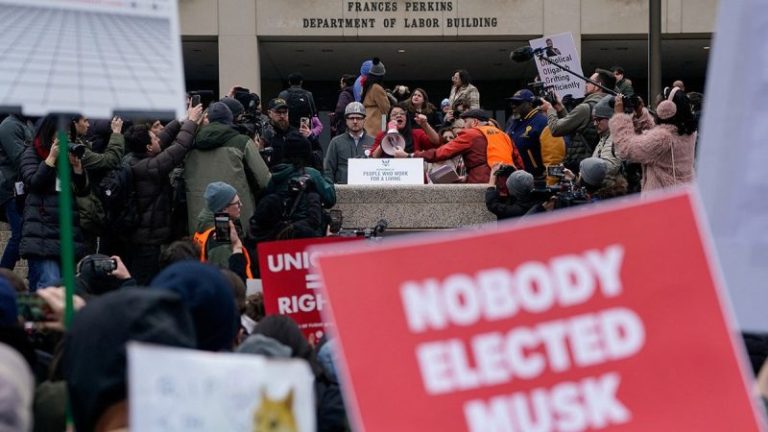
A federal judge on Friday indefinitely delayed a final ruling on the Labor Department’s request to block Elon Musk’s government efficiency team from accessing internal system data, telling both parties only that ‘you will hear from me,’ while declining to promise an exact time or date. 

The update from U.S. District Judge John Bates, a George W. Bush appointee, comes just one week after he rejected an earlier attempt from the Labor Department to issue a temporary restraining order to block DOGE access to internal system data, saying that the plaintiffs lacked standing and failed to show they would suffer sufficient harm as a result of the actions. 

In response, unions amended their complaint to broaden the scope of the lawsuit, adding the Department of Health and Human Services, the Department of Education, and the Consumer Financial Protection Bureau. 

Arguments on Friday stretched for more than three hours, with plaintiffs arguing that DOGE employees were accessing their information illegally, since DOGE is not technically a U.S. government agency.

‘There has been reporting that DOGE is directing the cuts of agency staff and contracts, not simply advising the president,’ one lawyer for the plaintiffs told Judge Bates, ‘The situation is extremely fluid and changing,’ plaintiffs argued.

They urged Judge Bates to grant a temporary request to block DOGE’s access to the information, which they said would ‘force the agency to implement a more thoughtful process.’

Meanwhile, the Justice Department argued in response that the DOGE personnel in question are ‘detailed’ U.S. government employees, who have access to the information under provisions of the Economy Act.

Judge Bates declined to rule from the bench, telling both sides only that ‘You will hear from me.’

The update will likely do little in the near-term to assuage concerns at the Labor Department and other federal agencies over DOGE’s access to sensitive internal data. 

Attorneys for Labor Department unions argued during last week’s hearing that, absent court intervention, DOGE could access protected agency information, including the financial and medical records of millions of Americans, as well as employee safety and workplace complaints.

Plaintiffs noted that Labor Department systems contain sensitive information about investigations into Musk-owned companies Tesla and SpaceX, as well as information about trade secrets of competing companies, plaintiffs noted – sparking concerns about Elon Musk’s possible access to the information.

Attorney Mark Samburg argued that DOGE access to this information could have a ‘chilling effect’ on new employees coming forward, due to fear of unlawful disclosure or retaliation.  

‘The sensitive information of millions of people is currently at imminent risk of unlawful disclosure,’ Samburg said.

Judge Bates suggested Friday that DOGE’s creation and its hierarchy were ‘odd,’ noting that it ‘was created in a way to get it out of OMB [Office of Management and Budget], and instead answering to the chief of staff of the president.’

DOGE ‘took great effort to avoid being an agency, but in this case, you’re an agency,’ he said of DOGE. ‘It just seems to strain credulity.’ 

This post appeared first on FOX NEWS

Fragrance brand Brown Girl Jane’s perfume bottles sit on shelves at Sephora near some of the most storied labels in the fashion and beauty world, including Prada and Dior.

For the Black-owned brand, getting a retailer to bet on it was just the start, Brown Girl Jane CEO and co-founder Malaika Jones said. She said Sephora has supported the company so it can better compete with well-known brands with huge marketing budgets and glossy celebrity endorsements.

Brown Girl Jane got a $100,000 grant last year to help grow its business through Sephora’s Accelerate program, which aims to boost founders who are people of color. Sephora spotlighted the fragrance brand in an email to customers in early February, putting it in front of potential shoppers who don’t know its name. Brown Girl Jane’s sales more than doubled after Sephora began carrying the company’s fragrances online and at select stores about a year ago.

Brown Girl Jane’s sales have more than doubled since the brand got picked up by Sephora last year. The beauty retailer took the 15 Percent Pledge, an effort to add more Black-owned brands to shelves.Courtesy Brown Girl Jane

While Sephora has put its weight behind its brand incubator, much larger retailers like Walmart and Target recently scaled back similar efforts focused on finding and funding more brands founded by people of color. Without that support from the retailers themselves, brands like Brown Girl Jane could face a tougher time getting on shelves — and succeeding once they get there.

“For small brands, but for any brands, really, it’s a constant fight for relevance and for visibility,” Jones said. “And so when you don’t have that commitment or even that understanding from the retailer side, it becomes quite difficult for small brands to survive — even when they’ve made it on shelves.”

When retailers launched supplier diversity programs — many of them in the months after police killed George Floyd in 2020 — top industry leaders including Walmart CEO Doug McMillon and Target CEO Brian Cornell spoke out about the institutional barriers that people of color face, including when financing their businesses. Now, as more retailers drop diversity, equity and inclusion programs, Black-owned brands may find it harder to clear those hurdles.

In January, Target dropped specific DEI pledges that it made four years ago after Floyd was murdered a short distance from its Minneapolis headquarters. Among those goals, the big-box retailer had committed to adding products from more than 500 Black-owned brands to its shelves or website and spending $2 billion with Black-owned businesses by 2025.

Late last year, Walmart confirmed that it was ending key diversity initiatives, including winding down the Center for Racial Equity, a nonprofit that the retailer started and funded with $100 million to tackle racial inequities. It had chosen finance as one of those focus areas, noting the gap in funding for Black entrepreneurs.

Gutting those efforts could jeopardize a valuable pathway for Black founders to build their businesses and reach the millions of shoppers who browse the websites and aisles at the nation’s largest and best-known retailers.

Not every major retailer has dropped DEI initiatives. Sephora, Costco and E.l.f. Beauty, among others, have reaffirmed their commitments. And the most prominent effort to increase the share of Black-owned brands on retail shelves, the 15 Percent Pledge, still has major backers.

Companies from Google to Ford and Tractor Supply have rolled back their initiatives to boost representation of people of color, women and LGBTQ+ people, as political backlash and pressure from conservative activists has intensified. The trend only accelerated after President Donald Trump issued an executive order banning DEI programs in the federal government and describing the efforts as “dangerous, demeaning, and immoral race- and sex-based preferences.”

It’s a sharp change from about five years ago, when companies released a wave of announcements committing to fighting inequity. They made bold pledges to add more diversity to their workforces and C-suites, seek out Black and minority vendors and donate to philanthropic causes that fought racism and supported expanded opportunities for marginalized groups.

Fear of litigation, activist investor scrutiny and political pressure has caused companies to backpedal or keep their initiatives below the radar, said Jon Solorzano, an attorney at Vinson & Elkins who advises companies on DEI.

One of those lawsuits targeted The Fearless Fund, an Atlanta-based venture capital fund dedicated to awarding grants to businesses founded by Black women to bridge a longstanding funding gap. Only 1.3% of the more than $345 billion raised by venture-backed startups in 2021 went to Black founders, according to Deloitte and Venture Forward’s 2023 report. About 2.4% went to startups led by female founders and 2.1% of that total went to startups led by Hispanic founders.

American Alliance for Equal Rights, a conservative group founded by Edward Blum, sued The Fearless Fund in 2023, accusing it of discriminating against non-Black business owners. Blum previously fought against race-based college admissions, a campaign that led to the Supreme Court’s ruling that affirmative action policies are unconstitutional — which some companies cited last year in ending their DEI initiatives.

As part of a settlement reached last year, The Fearless Fund shut down its grant program.

Solorzano said that lawsuit had a chilling effect and will “seriously undermine some of these [supplier] initiatives.” He said he expects more corporations to scrub numbers from their diversity programs, including supplier programs focused on increasing Black- and minority-owned brands on shelves.

Yet ending or scaling back efforts to seek out merchandise that reflects the diversity of U.S. consumers could put a company at risk, too, he said. Not only could companies face boycotts, but also they could miss out on fresher items and brands that help them stand apart from competitors.

Even as some retailers walk back diversity pledges, Sephora, Costco and E.l.f. Beauty, have doubled down on those efforts not as a feel-good move, but as a meaningful part of their business strategies.

Sephora, a 15 Percent Pledge member which is owned by LVMH, has increased the percentage of Black-owned brands on its shelves from 3% in 2020 to about 10% as of 2025, said Artemis Patrick, CEO of Sephora North America. In its hair category, 15% of the brands are Black-owned.

Shoppers walk by a Sephora store in San Diego.Kevin Carter / Getty Images

Sephora started Accelerate in 2016 with a focus on female founders. The six-month incubator helps mentor business owners, connects them to investors and gives them the opportunity to launch at Sephora.

The retailer pivoted the program in 2020 to focus on Black and other minority founders to address “the need of the evolving consumer and where we truly did feel like we had an assortment gap,” Patrick said.

So far, more than 33 Black- and minority-owned brands have gone through the incubator, she said.

“Our business is really good and the fact that we’ve been really focused on diversifying our assortment, I think there’s a strong correlation,” she said.

She added “it would be very strange in a beauty category to not be driving diversity in your assortment that meets the needs of your clients.”

At Costco’s annual meeting last month, 98% of shareholders rejected a proposal that requested a report on the risk of Costco maintaining diversity, equity and inclusion initiatives.

A Costco in Cranberry Township, Pa.Gene J. Puskar / AP file

In a proxy statement ahead of the meeting, the warehouse club’s board of directors said diversity benefits its business and helps it better serve a wide range of customers.

“Among other things, a diverse group of employees helps bring originality and creativity to our merchandise offerings, promoting the ‘treasure hunt’ that our customers value,” it wrote.

Costco’s board added that diversity across its suppliers “fosters creativity and innovation in the merchandise and services that we offer our members.”

Tarang Amin, CEO of popular Gen Z makeup brand E.l.f. Beauty, called the company’s diversity “a key competitive advantage in terms of our results” in an interview with CNN earlier this month. He said the company’s employees are 74% women, 76% Gen Z and millennial and over 44% diverse and “reflect the community we serve.”

Nearly five years ago, Aurora James challenged companies in an Instagram post to dedicate more of their shelf space to Black-owned businesses. That idea, which she proposed days after Floyd’s murder, started the 15 Percent Pledge.

“So many of your businesses are built on Black spending power,” she wrote at the time. “So many of your stores are set up in Black communities. So many of your posts seen on Black feeds. This is the least you can do for us. We represent 15% of the population and we need to represent 15% of your shelf space.”

Sephora was the first company to sign the pledge. About 22 companies are active participants in the pledge, including Macy’s and Nordstrom, according to the nonprofit. The 15 Percent Pledge has a directory of Black-owned brands on its website. It also awards grants to businesses and raises money to back Black-owned businesses through an annual gala, which drew celebrities, actors and business leaders including Kim Kardashian, Kelly Rowland and Jesse Williams earlier this month.

Some of the changes inspired by the pledge are visible on shelves.

Sephora has more than tripled the Black-owned brands on its shelves in the past five years. In the email to customers, it noted that number had spiked from eight to 30 since it took the Fifteen Percent Pledge in 2020.

Those brands include makeup, shampoos and more backed by small entrepreneurs and celebrities, including Fenty Beauty by Rihanna, Pattern by Tracee Ellis Ross and Sienna Naturals, which was co-founded by Hannah Diop and actress Issa Rae.

Nordstrom, which also signed on to the 15 Percent Pledge, has now added more Black-owned brands, too, including Buttah Skin, Briogeo and Honor the Gift.

And Macy’s, another 15 Percent Pledge participant, has had an accelerator for over a decade which was launched to support underrepresented brand owners and founders. The Workshop, which started in 2011, offers grant funding and education for companies seeking to make it on retailers’ shelves and websites.

James, who herself is a Black founder of a luxury brand called Brother Vellies, said she’s disheartened to see companies back away from supporting smaller Black- and minority-owned suppliers.

“The idea is not about giving preferential treatment,” she said. “The idea is about making sure that we cast our net wide enough that we’re not just looking at the obvious channels.”

By relying more on big conglomerates, retailers miss out on funding smaller U.S. business that create jobs and stimulate the local economy, she said.

“In a time when I think small business all across America is suffering, to specifically target groups of founders and say, ‘You can’t get access or opportunity,’ just feels like a blow to all small businesses across America,” she said.

She said the reversal of DEI by some companies show their commitments never ran deep.

“Target never took the pledge. Walmart never took the pledge,” she said. “I don’t think that they were ever really that serious about what they were doing.”

Not every company has stuck with the pledge. Gap did not renew with the group late last year — but said in a statement that it’s not backing away from DEI efforts. Over the past year, the company has gone through major changes as part of a turnaround led by Richard Dickson, its new CEO.

In a statement, the denim and apparel retailer, which also includes Old Navy and Athleta, said the pledge looked different for the company because it sells and manufacturers its own brands. It said it “joined the pledge with the goal of increasing our diverse access and pipeline programs, and we met and exceeded that goal.”

A Gap spokesman declined to share specific goals, but said they focused on recruiting talent from diverse backgrounds.

This week, Gap rolled out a limited-time initiative to support Black businesses by selling shirts and hoodies from six Black designers from Harlem’s Fashion Row online and in select stores.

Walmart and Target have downplayed concerns that they will start to carry fewer Black-owned brands. A Walmart spokesperson pointed to the company’s Supplier Inclusion Program, which focuses on adding products from smaller vendors. She said the company also works with banks and lenders to expedite payments for orders or connect suppliers to loans.

Even as Target phases out DEI goals for Black-owned businesses, the discounter will keep offering Black-owned and minority-owned brands, a spokesman said. On its website, it’s promoting its collection of Black History Month items. He said Target will offer its Forward Founders program two times per year, which is designed for early-stage consumer packaged goods companies across categories including beauty, food and pets.

When Target launched Forward Founders in 2021, the company said the program was “designed to help Black-owned businesses increase their potential for long-term success in retail.”

Since last year, Target’s website has said the program is “evolving” — noting that founders no longer fill out an application for programs and Target will reach out to them if they’re “a strategic fit.” A spokesman said the company’s changes to its DEI initiatives do not affect its programs to boost founders, but did not offer more detail.

Some Black founders have warned against boycotting Target and other retailers that have walked back DEI efforts, saying it could further hurt Black-owned businesses.

In an Instagram post, social media personality, actress, and entrepreneur Tabitha Brown said “it’s definitely heartbreaking to feel unsupported.” But Brown, who has an active contract with Target, encouraged shoppers to use their dollars strategically when shopping Target’s shelves.

She’s developed merchandise with Target, including a collection of clothing, swimwear and home decor. Target also carries Donna’s Recipe, a haircare brand she co-founded.

“You can still go into those stores, if you choose to, and buy specific brands that you want to support. And let the other things not get your money,” she said.

She said if sales of Black-owned brands fall, retailers will remove them from their shelves.

“And then what happens to all the businesses who worked so hard to get where they are?” she said.

Handbag designer Brandon Blackwood said he worries that it will be harder for the next founder like him to get picked up by a major retailer.

Brandon Blackwood’s brand took off in 2020 when he made a tote labeled with three words instead of a logo: “End Systemic Racism.” The bag went viral.Nico Daniels / Courtesy Brandon Blackwood

His brand took off in 2020 during the Black Lives Matter movement, after he made a tote decorated with three words instead of a logo: “End Systemic Racism.” The bag gained traction through social media.

Yet he said major retailers that picked up handbags from his brand at the time, including Neiman Marcus, Bloomingdale’s and Nordstrom, “helped put my product in front of a lot of people that wouldn’t necessarily have seen it.”

“That really helped us and that really helped our brand awareness,” he said.

If retailers drop supplier diversity initiatives, he said it will thin out choices for customers.

For Brown Girl Jane, winning the confidence and business of major retailers — and particularly, Sephora — has been game changing, said Jones, the company’s co-founder and CEO. The brand got picked up first by Nordstrom in 2021. Now, Macy’s, Saks Fifth Avenue and Bloomingdale’s also sell its fragrances.

Sephora is its the biggest wholesale deal so far: The beauty retailer carries some exclusive scents, including Carnivale, a fragrance that sells for $102 and blends together juicy mango, sandalwood and creamy vanilla.

Jones said the company’s annual revenue is now in the $5 million to $7 million range. Roughly half of the company’s sales come from wholesale.

She described getting picked up by Sephora last year as a “vote of confidence,” but said they’ve also been “the biggest champion and a true partner of the brand.”

And she said that customers of all races desire her brand — and others from Black founders. About 40% of Brown Girl Jane’s customers are white, she said.

By backing away from DEI, she said companies also send a message to their buyers that casting a wide net for new brands doesn’t matter.

“It’s one thing to say ‘Ok, yeah. They [buyers] can still find who they find,’” she said. “But we know that without intentionality, a lot of these brands are just going to be overlooked.”

This post appeared first on NBC NEWS

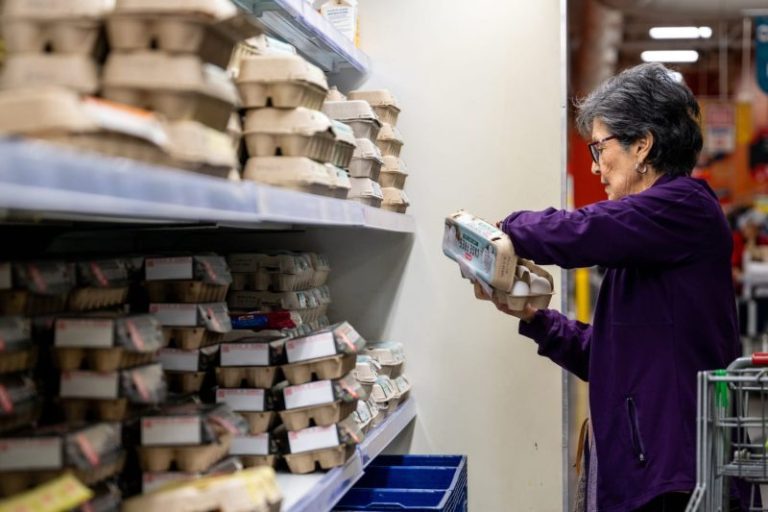
Egg rationing is here.

With prices rising rapidly and showing no signs of slowing anytime soon, some of the nation’s biggest grocery store chains — including Trader Joe’s, Walmart and Costco — have begun limiting the amount of eggs individual consumers can buy.

This time last year, the average price for a dozen eggs was around $3, according to the Bureau of Labor Statistics. By last month, it had risen to around $5.

And egg prices are expected to climb this year by 20.3 percent, according to the latest outlook from the U.S. Department of Agriculture. 

Market analysts blame the price hikes on the highly infectious bird flu that has decimated the chicken population and reduced egg supplies during the winter holiday season, when the demand is strong. More than 13 million hens have been lost or slaughtered since December as a result of the bird flu outbreak, according to the Agriculture Department’s latest Egg Markets Overview.

Trader Joe’s is dealing with the shortages by limiting the amount of eggs customers can buy.

“Due to ongoing issues with the supply of eggs, we are currently limiting egg purchases to one dozen per customer, per day, in all Trader Joe’s stores across the country,” a spokesperson said in a statement. “We hope these limits will help to ensure that as many of our customers who need eggs are able to purchase them when they visit Trader Joe’s.”

Walmart is limiting bulk buyers to two 60-count cartons per purchase “to help ensure more customers can have access to eggs,” a spokesperson said.

“Although supply is very tight, we’re working with suppliers to try and help meet customer demand, while striving to keep prices as low as possible.”

There are no restrictions on purchasers of smaller quantities of eggs, the spokesperson said.

At Sam’s Club, purchasers are allowed to buy two cartons of each brand of eggs on the shelves, a spokesperson said.

But at Kroger and Aldi there is a two dozen eggs per trip limit, while Whole Foods and Costco are capping egg purchases at three one-dozen cartons per person in select stores.

A sign asks customers to limit their purchases of eggs at a grocery store Monday in South Pasadena, Calif. Frederic J. Brown / AFP – Getty Images

Meanwhile, the White House found itself taking flak again from Democrats demanding that President Donald Trump fulfill his campaign promise to immediately start reducing the price of groceries.

“Over the last several weeks, you have done nothing to address these rising costs,” the Congressional Dads Caucus said in a letter Thursday to Trump. “Moreover, your flurry of executive actions has hampered the government’s response to effectively address the underlying causes of this crisis. Eggs are a basic necessity for families in our districts, and the financial burden caused by these surging prices must be resolved.”

In some areas of New York, “the average price of a dozen eggs has reached more than $8 in some stores,” said Tony Hernandez, spokesperson for Rep. Jimmy Gomez, D-Calif., who leads the group that fired off the letter.

In response to the harsh criticism from congressional Democrats, a White House spokesperson, Anna Kelly, blamed the egg crisis on the ‘Biden Administration’s slow and ineffective response to the bird flu outbreak, which began in 2022.’

“Moms and dads across the country gave President Trump a mandate to take every action to drive down costs, and he is delivering,’ Kelly said in emailed statement.

Trump and Brooke Rollins, who is the president’s pick to head the Agriculture Department, ‘will refocus the USDA’s Animal and Plant Health Inspection Service (APHIS) on its core mission: protecting the health of the United States’ plants, animals, and natural resources,’ Kelly wrote.

In New York City, some bodegas have taken to selling eggs one at a time because their customers can’t afford to shell out $10 or more to buy a dozen eggs, a price that is not unusual in the very expensive city.

“These people don’t have enough money to buy a dozen eggs, so I have to sell them separately,” Fernando Rodriguez, 62, owner of Pamela’s Green Deli in The Bronx, told the New York Post.

This post appeared first on NBC NEWS

While the debate over President Donald Trump’s cuts to facilities and administrative costs associated with federally funded research grants rages on, one expert in the field of medicine says he sees a clear way forward. 

Dr. David Skorton, president and CEO of the Association of American Medical Colleges, has had a wide-ranging career spanning government, higher education and medicine. He now runs a national association that oversees all Medical Doctorate-granting schools in the country, and about 500 academic health systems teaching hospitals. Skorton told Fox News Digital that while he does not agree with Trump’s blanket cuts, the current status quo needs changing. He cited over-regulation as a reason why facilities and administrative costs have gotten so ‘wildly expensive.’ 

He also said that transparency from research institutions could help create better awareness of how taxpayer dollars are being used to support those institutions that have become the bane of critics who say they are stockpiling taxpayer dollars for their own benefit. 

‘In some cases, more than one agency will develop regulations, and the researchers have to answer to all of those different agency regulations. We should be able to harmonize those things and come out with a more thoughtful approach to reducing some of the regulatory burden,’ Skorton said. He added that, in turn, researchers will be able to spend more time doing what they do best, research, which in the long run will mean greater results for the public.   

‘It would also mean that the costs would go down because the additional personnel, the additional things that are necessary to keep track of things for these regulations, that would also go down,’ Skorton pointed out.

Skorton said that the impact of reducing over-regulation will be two-fold: it will improve the current research environment and show that there is room for collaboration to reduce overhead costs while not threatening new research. In particular, he pointed to research involving human or animal subjects, which Skorton said is often riddled with regulatory requirements that, while important, could be streamlined.  

Skorton added that the AAMC was ‘very hungry’ to work with the administration on improving this framework, noting that ‘we’re not here to claim that the status quo is perfect, and we want to defend it, but the idea of very quickly knocking down the facilities and administrative costs to what felt like an arbitrary number to many of us, 15%, will cause research to be reduced.’

The AAMC president said there is an onus on research institutions as well to better educate folks about where their taxpayer dollars are going when they are utilized by federally funded research programs.

‘For every dollar that we get at universities, medical schools, et cetera, for research from the NIH or some other science agency, for every dollar another half dollar, roughly, is contributed by the institution,’ Skorton pointed out. ‘That’s something that maybe people don’t realize, and why would they, because we have to be more clear in making that visible, that we already contribute a lot to the research.’

Fox News Digital spoke to medical experts who have supported Trump’s blanket cut to administrative and facilities costs, and they argue that reducing this price burden on the federal government will increase the availability of new research grants, while getting rid of financial bloat that universities have been able to take advantage of at the taxpayers’ expense.

One of the doctors who shared their thoughts, Dr. Erika Schwartz, echoed calls for reform to the current structure, similar to Skorton.  

‘While infrastructure support is necessary, there’s room for more efficient cost management. A reformed funding model could redirect more resources to direct research activities while maintaining essential support services,’ Schwartz said. ‘This could potentially increase the number of funded research projects and accelerate medical breakthroughs, ultimately benefiting patients more directly.’

This post appeared first on FOX NEWS

A judge in Washington state has issued a temporary restraining order over President Trump’s executive order that withholds federal funding to health care providers who prescribe youth puberty blockers, cross-sex hormones or who perform surgeries for gender dysphoria. 

Judge Lauren King, in the Western Washington District Court, issued the order on Friday. 

It comes after a federal judge in Maryland issued a similar temporary retraining order this week. 

This post appeared first on FOX NEWS

Several states emboldened by President Donald Trump’s executive orders are moving to introduce bills banning transgender medical care for minors, and one legal expert believes it’s a ‘continuation’ of the success other states have achieved in the last several years fighting against the Biden administration.

‘You go back to 2020, when Idaho became the first state to pass a save women’s sports law, and in 2021, Arkansas was the first state to protect kids from dangerous gender transition, drugs and surgeries,’ Alliance Defending Freedom senior counsel Matt Sharp told Fox News Digital in an interview. ‘And since that time, we’ve had over 25 states pass both of those laws, plus other measures to protect women’s privacy and safety and schools or women’s shelters or correctional facilities.’

‘So, what we are seeing is truly the continuation of incredible work by state legislatures and others to address the concerns of gender ideology and make sure that women and children in their states are not being harmed by it,’ he said.

So far this year, several states have introduced or considered legislation to ban transgender medical procedures for minors. More than two dozen states already have laws in place restricting such procedures. 

Alabama recently passed a bill in the Senate aiming to legally define gender based on one’s biological sex, in line with Trump’s ‘two sexes’ declaration. Georgia’s state Senate also passed a bill this week that would cut state funding for transgender surgical treatments, extending to both minors and adults. The bill aims to block state funds for state employee and university health insurance plans, Medicaid, and the state’s prison system.

Some states are still rebelling against Trump’s orders. Kansas Gov. Laura Kelly, a Democrat, vetoed a bill this week that would have prohibited state funds from being used on gender transition treatments and procedures on minors and allow civil actions against healthcare providers conducting such treatments. 

Despite Trump’s executive orders, Democratic attorneys general from 15 states – California, Colorado, Connecticut, Delaware, Hawaii, Illinois, Maine, Maryland, Massachusetts, Nevada, New Jersey, New York, Rhode Island, Vermont and Wisconsin – issued a joint statement this month doubling down on their support for transgender procedures for minors.

The executive orders, signed in late January, include a reinstatement of the ban on transgender troops in the military, a ban on federal funding for sex changes for minors and a directive requiring federal agencies to recognize only ‘two sexes,’ male and female, in official standard of conduct.

‘What these executive orders represent is a 180-degree turn from that, rather than the federal government trying to push this dangerous ideology and being an adversary of states and their efforts to protect women and girls, you know, have an ally at the federal government,’ Sharp, who filed one of the first state cases against a Connecticut policy allowing men to compete in women’s sports in 2020, said.

Sharp described Trump’s executive orders as a ‘return to normalcy.’

‘What we saw starting a new Obama administration and continuing in the Biden administration, I think was trying to erase sex and replace it with the concept of gender identity,’ he said. ‘And I think Americans have seen that. They’ve seen the harm that’s caused to countless young women, to young children, pushed to do irreparable damage to their bodies through these gender transition drugs and surgeries to even families who have had their rights violated by policies that were hiding information, lying to parents about a child who was experiencing distress over their sex and gender.’

While the Trump White House has made its stance on gender-related issues clear, the U.S. Supreme Court will determine a critical ruling this summer on whether the 14th Amendment’s Equal Protection Clause, which guarantees equal treatment under the law for individuals in similar circumstances, prevents states from banning medical providers from offering puberty blockers and hormone treatments to children seeking transgender surgical procedures. 

This post appeared first on FOX NEWS

JUPITER, Fla. — An expected farewell has instead become a tired, circuitous and increasingly awkward goodbye. And for the St. Louis Cardinals, an organizational reset has instead left them in the strangest position as they aim for a changing of the guard in their executive branch.

Stuck in the middle, with a franchise player they can’t get rid of.

Thursday, Day 2 of spring training came and went and Nolan Arenado was still a Cardinal, with the likelihood lessening that outgoing president of baseball operations John Mozeliak can rid the club of his three years and $74 million remaining on his contract – at least with any dispatch.

Less than 24 hours after Alex Bregman’s stunning acceptance of a three-year, $120 million offer from the Boston Red Sox late Wednesday night, Mozeliak acknowledged it was likelier than not that Arenado will not only report to camp but stick on the Cardinals’ roster, even as he’ll attempt to fulfill his desire to be traded.

And that leaves the Cardinals in a tight spot.

Follow every MLB game: Latest MLB scores, stats, schedules and standings.

From manager Oliver Marmol to the rank-and-file members of the clubhouse, there is an avowed desire to tune out external developments and focus on the players here, or at least theoretically here.

And it’s more difficult to block out the proverbial noise when it directly impacts the beloved All-Star with the corner locker at Roger Dean Stadium, along with roughly four to six players who’d be affected by his departure – or return.

Mozeliak, charged with balancing payroll and pivoting toward a franchise transition, was foiled in December when Arenado turned down a trade to the Houston Astros. Now, he says it’s likely a deal might have to emerge from a group outside of Arenado’s five preferred destinations.

Yet perhaps Mozeliak has stumbled upon a motto for your 2025 Cardinals: Less miserable than it could’ve been.

‘I think it will be a little less awkward than I thought,’ Mozeliak said of an unexpected reunion between Arenado and the Cardinals. ‘He knows that we tried. He knows we had a deal that he didn’t accept. I’m not bitter. I don’t’ think he’ll be bitter. I think from a team standpoint, as a group, we can make this work.

‘Is it the perfect outcome? No. Could it have been much worse? Sure.’

Meanwhile, Cardinals camp continues apace, with the first full workout on Monday and Arenado expected to arrive sometime over the weekend, says Mozeliak.

With every passing day until a resolution – a deal, an all-clear, anything – the Cardinals’ camp will increasingly be defined by the man who definitely, probably, maybe not is a goner.

“He’s a pretty upbeat guy, so I think he’ll be happy no matter what. He’s always got a smile on his face,” veteran starter Miles Mikolas tells USA TODAY Sports. “But if there’s anyone I want playing third base when I’m on the mound, it’s him. I don’t think any pitcher will tell you different.

“That kind of defense, that kind of leadership –  there’s nobody else you want at third base. If for some reason he’s not there, it’ll be sad, but I know we’ve got guys capable of holding that position down as well.

“But I’ve come to really enjoy watching him play, and hopefully I get another season of that.”

Says outfielder Lars Nootbaar of an unlikely Arenado reunion: “For me, I’ll be excited. Because we get Nolan back. He’s my boy. He’s a lot of guys’ boy here. I’m excited to see him. I think he’s excited to see a lot of us, too.

“If he goes somewhere else, so be it. But at the end of the day, if he ends up here, we’re all going to be excited about it.”

Yet even the tease of an Arenado reunion was so far away from what the Cardinals telegraphed months ago.

Moving forward, using all their depth

It’s been five years since the Cardinals have advanced past the National League Division Series, 12 years since they reached the World Series, 14 since they won it. Yet despite their pedigree, the Cardinals never acted like more than a middle- or upper-middle class team, relying on a flow of player development to keep things stocked.

So after the Cardinals followed up their first last-place appearance since 1990 with an 83-79 campaign in 2024, the club announced a “reset,” as Mozeliak put it: He’d be handing over the reigns as baseball chief to former Boston Red Sox No. 1 Chaim Bloom.

Seemed sensical. While the Red Sox’s big league product withered under his watch, Bloom put together a developmental arm that left the club loaded with prospects after he was fired following the 2023 season.

Yet the Arenado saga has slowed that process. What’s left is a club with high-priced veterans like starter Sonny Gray and catcher-turned-DH Willson Contreras and some versatile, less-decorated pieces.

“That’s the way they made it seem like last year, that we’d make these dramatic changes, have one of the youngest rosters in the league, and we really haven’t done anything to this point,” says closer Ryan Helsley, who is entering his final year before free agency. “It’s pretty crazy to see, but we’ve got guys like Sonny and Willson who say they want to be here and help us win.

“It helps to have a few ‘old guys’ to help the younger ones show them the ropes.”

And it’s not like Mozeliak is averse to Arenado on the roster, even if it’s a significant drag on his ability to remake the franchise.

“He does make us a better team, if he’s Nolan, if he’s happy,’ says Mozeliak. ‘If the club’s doing really well, maybe he finds happiness here. Maybe he doesn’t. I don’t think either of us can speak to that until we really know.

‘We approached the offseason with a plan to do something with him. We tried. Here we are..”

Arenado had a list of five teams – Phillies, Mets, Dodgers, Padres, and Red Sox – to which he’d accept a trade. He nixed the Astros opportunity. Now, the third-base derby propelled Bregman to Boston – and Mozeliak says Arenado’s horizons must expand for a deal to get done.

‘I think it would have to open up a little more,’ he says. ‘I think we’ve exhausted the others.’

Will Cardinals trade Arenado?

That “reset” hasn’t yet arrived. And the Cardinals still have a residence in the NL Central, where 80-something wins just might win the division.

Sure, this isn’t the Arenado of 10-time Gold Glove, eight-time All-Star vintage. But he was still good enough for 2.5 WAR a year ago, even if his bat was simply league-average. And his skill set has drawn the attention of every contender with even a hint of need at third base – the Astros, Red Sox, Yankees, Cubs, Blue Jays and more.

Naturally, the ripple effect is most profound in Jupiter. A world without Arenado means shifting parts involving infielders Brendan Donovan and Nolan Gorman, with a downstream effect on the outfield, as well.

Donovan, a versatile 2.6-win player a year ago, said Thursday he’s ready to play wherever, which was music to manager Oliver Marmol’s ears.

“He’s a stud, man,” says Marmol.It’s always good when a player says he’ll do what’s best for the team and we have a lot of guys like that. For him to articulate that is awesome.

“We’ll have more clarity to that as camp goes.”

Yeah, about that: Marmol says the watchword has been communication – overcommunication, even, so that players, as Marmol put it, “aren’t reading about it, they’re hearing about it, from me or Mo.”

To that end, Mozeliak phoned Helsley’s representatives last fall to let them know that, even though the closer was entering his final year before free agency, the Cardinals would not actively shop him.

Yet there were no guarantees should the Cardinals receive an offer they can’t refuse.

“That doesn’t mean it’s a no,” says Helsley, “that there’s a small chance if they get an opportunity they like and feel like could help the team.

“But I feel like, for me, you just have to tune it out.”

That mentality could be even more necessary come summer, when Helsley,  Mikolas and starter Erick Fedde, all free agents to be, could look plenty marketable to contenders.

Along with their third baseman.

Then again, there’s always the chance the Cardinals mess around and win a few games, loiter on the verge of contention, further re-define what “reset” means.

‘If we see a little more offense out of this club, we do think we’ll surprise some people,’ says Mozeliak, whose club finished 22nd in runs scored. ‘We played a lot of one-run games last year. A lot of stress.’

Contending would more closely resemble the Cardinal way, such as it is now. Even if most of the roster awaits something resembling resolution with their most significant player.

“When you get drafted to the Cardinals and have that logo on your uniform, you know what’s expected of you,” says Helsley. “Even though we haven’t been to the pinnacle of where we want to be in the last 14 years, I don’t think the expectation changes regardless of who’s in this clubhouse.

“That’s always a given with Cardinals baseball”

The USA TODAY app gets you to the heart of the news — fastDownload for award-winning coverage, crosswords, audio storytelling, the eNewspaper and more.

This post appeared first on USA TODAY