Archive

2025

Browsing

The Department of Government Efficiency (DOGE) said it has uncovered that the U.S. government currently has more than 4 million active credit cards on its books.

‘The US government currently has ~4.6M active credit cards/accounts, which processed ~90M unique transactions for  ~$40B of spend[ing] in FY24,’ DOGE said in a post on X on Tuesday. 

Attached to the post was a breakdown of multiple federal agencies and their credit card use, with the Department of Defense leading the way in both the number of transactions (about 27.2 million), and number of individual accounts (roughly 2.4 million).

DOGE’s activities have come under increasing scrutiny over the last few weeks, with opponents arguing that President Donald Trump has given billionaire Elon Musk, who was tapped to head the department, too much power to shrink the size of the federal government.

The new department has also been at the center of numerous lawsuits, with opponents attempting to block Musk and the Trump administration from carrying out many of DOGE’s recommendations for cuts.

However, Trump has not wavered in his support from the efforts, publicly supporting DOGE’s work while also releasing a memo on Tuesday ordering government agencies to be ‘radically transparent’ with the American people about its spending.

The memo argues that the federal government ‘spends too much money on programs, contracts, and grants that do not promote the interests of the American people.’

‘For too long, taxpayers have subsidized ideological projects overseas and domestic organizations engaged in actions that undermine the national interest,’ the note continues. ‘The American people have seen their tax dollars used to fund the passion projects of unelected bureaucrats rather than to advance the national interest.’

‘The American people have a right to see how the Federal Government has wasted their hard-earned wages.’

Meanwhile, DOGE promised to update its efforts to streamline the government’s credit card usage within a week.

‘DOGE is working w/ the agencies to simplify the program and reduce admin costs – we will report back in 1 week,’ DOGE said on X.

This post appeared first on FOX NEWS

President Donald Trump’s second term in office presents a historic chance to reverse the Biden administration’s failed Iran policies and prevent Tehran from developing nuclear weapons, a new report from the Foundation for the Defense of Democracies (FDD) argues.

The report, titled ‘Detecting and Halting an Iranian Weaponization Effort,’ argues that the president should immediately muster the full weight of the U.S. national security establishment to confront this urgent threat.

‘The president made the right call in re-imposing maximum pressure. Now, he needs to ensure Iran can’t dash to nuclear weapons, drawing on the short timeline and technical know-how it possesses,’ Andrea Stricker, author of the FDD report, told Fox News Digital.

‘A nuclear-armed Iran would fundamentally upend security in the region and hinder the ability of the United States, Israel, and their partners to counter Tehran’s aggression out of fear of nuclear escalation,’ she said.

Srickler believes President Trump absolutely cannot tolerate a nuclear-armed Iran and must use all instruments of American power to stop this.

The FDD report recommends that the administration and allies should re-establish the threat of credible military force to deter Iran from breaking the nuclear threshold and, along with Israel, be prepared to target Iranian nuclear sites.

‘The United States or Israel should demonstrate their ability to eliminate any detected Iranian weaponization facilities and activities.’

U.S. intelligence learned recently that a secret team of Iranian scientists are working on a short-cut to the country’s path to develop a nuclear weapon. The revelations come as Iran’s position in the region has significantly weakened as Tehran became embroiled in conflict with Israel after Oct. 7. 

Then-President Joe Biden allowed Tehran’s nuclear program to progress largely unimpeded, the report said, and Iran now likely has the capability and know-how to produce nuclear weapons. Although Iran may lack confidence in the functionality of certain components, it may be able to detonate a crude nuclear device within six months from starting. 

‘An advancing Iranian weaponization capability, matched with Tehran’s enrichment of uranium to near-weapons-grade, limits the window of time in which the United States and its allies could intervene to stop an Iranian dash to nuclear weapons, known as a breakout,’ the report notes.

In a sign of the administration’s toughening position on Iran, Trump signed a memorandum reimposing the ‘maximum pressure’ policy, a hallmark of his first term administration’s crippling sanctions on Tehran.

It is ‘in the national interest to impose maximum pressure on the Iranian regime to end its nuclear threat, curtail its ballistic missile program, and stop its support for terrorist groups,’ the president’s executive order read.

Trump withdrew from the Joint Comprehensive Plan of Action, also known as the Iran nuclear deal, during his first term in 2018 and reapplied harsh economic sanctions. The Biden administration had initially looked at re-engaging with Iran on the nuclear issue upon taking office, but on-again-off-again talks went nowhere, complicated by Iran’s domestic politics and Iran’s role in supporting its terror groups in the region. 

Stricker says the clerical regime has an additional incentive to seek nuclear weapons to secure its hold on power with a more confrontational administration in Washington. It could also sprint for the bomb to bolster its offensive and defensive capabilities to deter further Israeli strikes against the regime itself, she warned.

In addition to the military threat, the report recommends the U.S. and Israel should cooperate on intelligence-related operations to detect and disrupt Iranian weaponization. It also suggests that the U.S. and Israel should work toward identifying key Iranian officials and nuclear scientists and to cultivate them as human intelligence sources. 

It additionally encourages the U.S. and other nations to urgently mobilize the International Atomic Energy Agency to strengthen inspections of weaponization activities in Iran.

A November 2024 report from the Office of the Director of National Intelligence said that Iran has enough fissile material to produce over a dozen nuclear weapons if it continues to enrich uranium. 

This post appeared first on FOX NEWS

President Donald Trump blasted Ukrainian President Volodymyr Zelenskyy as a ‘dictator without elections’ on Wednesday, after the U.S. left Ukraine out of initial peace talks with Russia this week. 

‘A Dictator without Elections, Zelenskyy better move fast or he is not going to have a Country left,’ Trump wrote on TRUTH Social. ‘In the meantime, we are successfully negotiating an end to the War with Russia, something all admit only ‘TRUMP,’ and the Trump Administration, can do. Biden never tried, Europe has failed to bring Peace, and Zelenskyy probably wants to keep the ‘gravy train’ going.’  

Trump added, ‘I love Ukraine, but Zelenskyy has done a terrible job, his Country is shattered, and MILLIONS have unnecessarily died – And so it continues…..’

Describing Zelenskyy as a ‘modestly successful comedian,’ Trump said the Ukrainian leader ‘managed to talk the United States of America into spending $350 Billion Dollars, to go into a War that couldn’t be won, that never had to start, but a War that he, without the U.S. and ‘TRUMP,’ will never be able to settle.’ Trump decried how the United States ‘has spent $200 Billion Dollars more than Europe, and Europe’s money is guaranteed, while the United States will get nothing back.’ 

‘Why didn’t Sleepy Joe Biden demand Equalization, in that this War is far more important to Europe than it is to us — We have a big, beautiful Ocean as separation,’ Trump posed of former President Joe Biden. ‘On top of this, Zelenskyy admits that half of the money we sent him is ‘MISSING.’ He refuses to have Elections, is very low in Ukrainian Polls, and the only thing he was good at was playing Biden ‘like a fiddle.’’ 

Zelenskyy criticized Trump earlier Wednesday in comments to reporters in Kyiv after canceling a trip to Saudi Arabia, where Secretary of State Marco Rubio, National Security Adviser Mike Waltz and Special Envoy Ambassador Steve Witkoff held talks with Russian counterparts earlier this week centered on negotiating an end to the three-year conflict with Ukraine. 

‘Unfortunately, President Trump – I have great respect for him as a leader of a nation that we have great respect for, the American people who always support us – unfortunately lives in this disinformation space,’ Zelensky said.

Nearly one year past the expiration of Zelenskyy’s first five-year term, the U.S. and Russia are in agreement that Ukrainians must go to the polls and decide whether to keep their head of state. 

Russia has insisted it will not sign a peace agreement until Ukraine agrees to hold elections, and the U.S. is now ‘floating’ the idea of a three-stage plan: ceasefire, then Ukrainian elections, then inking of a peace deal.

Zelenskyy’s term in office was supposed to end last May, with elections originally slated for April 2024. But the president’s aides have said elections will not be held until six months after the end of martial law. The Ukrainian constitution prohibits holding elections under martial law. With his popularity having plummeted nearly 40% since the war’s outbreak, Zelenskyy’s future could be in jeopardy if peace is reached and elections are triggered. 

Ukraine advocates say post-war elections would be a far better option, but elections offer Russia an opportunity to sow chaos. ‘The only person that benefits from elections before there’s a durable peace deal is Putin,’ Andrew D’Anieri, a fellow at the Atlantic Council’s Eurasia Center, previously told Fox News Digital. ‘The Kremlin loves elections, not in their own country, but elsewhere, because it provides an opportunity to destabilize things.’

Trump envoy Keith Kellog, a retired 3-star general, arrived in Kyiv to hold talks with Zelenskyy on Wednesday. Ukrainian officials have emphasized that any peace deal will require U.S. security guarantees in order to ensure Russia does not invade again.

‘We understand the need for security guarantees,’ Kellog told Ukrainian media. ‘It’s very clear to us the importance of the sovereignty of this nation and the independence of this nation as well… Part of my mission is to sit and listen.’ 

State Department spokeswoman Tammy Bruce released a statement after Rubio met with Russian Foreign Minister Sergei Lavrov in Ridyah on Tuesday. 

Fox News’ Morgan Phillips and Anders Hagstrom contributed to this report. This is a developing news story. Check back for updates.

This post appeared first on FOX NEWS

Coca-Cola is launching a prebiotic soda brand called Simply Pop, taking on upstarts Olipop and Poppi.

Starting in late February, consumers on the West Coast and in the Southeast will be able to try Coke’s iteration of the trendy drink.

Soda consumption has broadly fallen in the U.S. over the last two decades, hurt by health concerns and an increase in alternatives on the market, from cold brew to energy drinks to water. But in the last five years, sodas containing prebiotics have taken off, thanks to industry newcomers Olipop and Poppi.

Olipop recently raised $50 million at a valuation of $1.85 billion, the company announced Wednesday. And Poppi made its second straight Super Bowl appearance in this year’s game, shelling out up to $8 million to reach the game’s record audience.

Digestive health soft drinks have grown from a $197 million category in the U.S. in 2020 to one of roughly $440 million in 2024, according to Euromonitor International data. Still, it’s a fraction of the overall soda market, which is worth billions of dollars.

Simply Pop’s first product lineup leans fruity, in a nod to Coke’s Simply juice brand. Flavors include pineapple mango, lime, strawberry, fruit punch and citrus punch.

“We went out and really listened to consumers. They love this space, they’re really looking for stuff that tastes good, and that’s something we know how to deliver on at Simply and at Coke,” said Becca Kerr, CEO of Coke’s North American nutrition unit, which includes its Simply and Fairlife brands.

Simply Pop drinks have no added sugar and contain 25% to 30% real fruit juice, the company said. They also contain vitamin C and zinc, which can boost the immune system.

They also have six grams of prebiotic fiber — triple Poppi’s fiber content but less than Olipop’s nine grams.

Prebiotics have taken off thanks to claims that they can boost “gut health” by helping beneficial bacteria grow in the gut. Their health benefits haven’t been conclusively proven.

“We do see that there tends to be an appetite for these type of products with younger consumers, like millennial and Gen Z,” Kerr said. “We see an interest in these types of products from multicultural consumers.”

But health claims can prompt pushback. Poppi is in settlement talks over a lawsuit filed in late May that challenges the company’s marketing, arguing that Poppi’s products are not as healthy for the gut as advertised.

Coke has had the prebiotic soda category on its radar for several years, according to Kerr. Olipop CEO and co-founder Ben Goodwin told CNBC in 2023 that both Coke and PepsiCo had already approached the company about a potential sale. Pepsi is reported to be planning its own prebiotic soda launch in 2025.

While it’s a newcomer to the segment, Coke has some obvious advantages: more than 100 years dominating the soda category, marketing and distribution muscle, and $47 billion in revenue in 2024 — compared with the more than $400 million in sales that Olipop netted in 2024.

Still, Coke has failed before when trying to chase a drink trend. It pulled its Coke Spiced flavor off the shelves in 2024 just months after declaring it a permanent addition. And in 2023, it slashed distribution of its Aha sparkling water brand after the product failed to take off with consumers.

This post appeared first on NBC NEWS

The NFL is booking another trip to Brazil.

On Wednesday, the league announced they would return to São Paulo at Corinthians Arena on Friday night in Week 1 of the 2025 regular season, designating the Los Angeles Chargers as the home team.

The kickoff time and Chargers’ opponent for the game, set for Friday, Sept. 5, 2025, will be announced at the schedule release that’s expected in mid-May.

There are nine potential opponents for the Chargers to play in that game – Kansas City Chiefs, Las Vegas Raiders, Denver Broncos, Houston Texans, Indianapolis Colts, Philadelphia Eagles, Washington Commanders, Pittsburgh Steelers and Minnesota Vikings.

Given the Colts and Steelers are already slated for international play in 2025, it seems unlikely they would also be scheduled for this game.

NFL STATS CENTRAL: The latest NFL scores, schedules, odds, stats and more.

It marks the second consecutive year for a Brazilian contest, which saw the Philadelphia Eagles defeat the Green Bay Packers last season. The game was introduced ahead of the 2024 season as part of the NFL’s continued international expansion.

The announcement also ensures that the Week 1 schedule should, once again, mirror last year’s loaded slate that featured games on Thursday, Friday, Sunday and Monday in the opening week.

International games have only continued to grow in recent years, especially as an imbalanced 17-game schedule created an opportunity to use that extra home game for games overseas. With the NFC getting the ninth home game in 2024, three of the four international contests were hosted by teams from that conference.

That script has been flipped to the AFC in 2025, with the NFL’s sizeable international slate all designating teams from that conference as the home side.

Games are set to take place in London, Berlin and Brazil, with the new additions featuring Dublin and Madrid to the schedule in 2025. In 2026, the NFL will add Australia to the docket, already announcing the Los Angeles Rams as the home team.

This post appeared first on USA TODAY

BRADENTON, Fla. – Sure, it’s the season of eternal hope in Major League Baseball, but after the defending champions spent much of the winter commandeering talent and unlocking their vast resources, consternation is king.

From New York Yankees owner Hal Steinbrenner to legions of smaller-market fans insistent that the playing field must be leveled, the Los Angeles Dodgers are forcing the haters to cry foul, to insist that billion-dollar outlays each winter and establishing a beachhead for international talent is just a tad excessive.

Yet executives for rival teams faced with slaying the Dodgers know money doesn’t buy everything.

Championship parity has been well-chronicled since the Yankees’ run of three consecutive World Series titles ended in 2000; no one’s repeated since then.

Follow every MLB game: Latest MLB scores, stats, schedules and standings.

In this high-information era in baseball, however, the path to both the playoffs and a pennant can take many routes. And while the game’s past quarter century has vastly altered the industry, some combination of organizational intelligence and work environment, resources and ownership desire to win are likely the most important factors to success.

As the Dodgers aim for their 13th consecutive playoff berth this season, it’s evident that those factors are now unleashed with the full force of the game’s unbreakable machine.

“They’ve been one of the best-run organizations for forever,” Atlanta Braves general manager Alex Anthopoulos tells USA TODAY Sports. “They always have a great team. They make the playoffs every year. They’re going to be at the top end of the payroll structure, they draw 4 million fans a year. They just make good decisions.

“They’ve earned it. They’ve earned all of it. They’ve earned their World Series. I expect the large-market, well-run clubs with resources to do what they’re doing and get better.

“I don’t understand the concern or complaints. It doesn’t make any sense to me.”

So, what matters most for success? It helps to ask those that have seen all ends of the payroll spectrum.

Fix the alignment

David Stearns ascended to an assistant general manager role in Houston as the Astros were breaking the industry more than a decade ago, was tapped to run the show in small-market Milwaukee and now has an enviable position in New York: Spending Steve Cohen’s money.

Yet the Mets’ president of baseball operations hasn’t strayed from the nation-building practice he developed in Milwaukee, where the Brewers remain a consistent playoff participant three seasons after he stepped down from the top job there.

It absolutely doesn’t hurt when your boss finds $765 million to commit to Juan Soto. It also doesn’t much matter when the infrastructure can’t maximize that investment.

“What’s most important is alignment,” says Stearns when asked whether the money, the culture or the organizational commitment is key to franchise happiness. “From ownership through the front office through the clubhouse, coaches and players – that’s what we’re seeking.

“And ensuring that everyone is rowing in the same direction, has the same core principles – that is the most powerful of all. And all those other things – resources and aptitude – plays into that.”

The Mets have the potential to become Dodgers East, if only because the financial structure is in place thanks to their large market and Cohen’s estimated $21.5 billion net worth. Yet Stearns finds value looking back on what worked so well in Milwaukee, where the Brewers have made the playoffs six times in the past seven seasons.

“There are tremendous people there, at all levels of the organization there are just really, really talented,” he says. “Great coaches, great scouts, the front office is filled with people who one day will lead organizations if they want to and have a lot of success doing it.

“They have an ownership group that is extremely competitive and wants to do everything within their power to win. That is a big group of very skilled and talented people who work very well together, and they will continue to produce great results.”

In Milwaukee, Stearns navigated the financial parameters that come with working in the nation’s 38th-largest media market. In Houston, the Astros were on the leading edge of ruthless efficiency, with many of their practices adopted throughout the industry.

Yet in his new job, he’s not about to stand in front of the franchise owner and say, “Mr. Cohen, paying Juan Soto $765 million is simply not efficient!”

“I don’t view anything that Steve has done during his ownership tenure as irrational,” says Stearns, whose club will carry a payroll of around $320 million and owe tens of millions more in luxury tax penalties. “I think he’s operating with different levels of constraints than other organizations are. He has different priorities than other organizations.

“My job is to ensure we’re making decisions that allow us to compete continuously at a really high level for a long time. That doesn’t preclude spending money now. We just have to make sure that we’re also setting ourselves up well for the future.”

The vast majority of big league franchises will not have access to the revenues the Dodgers and Mets and Yankees and Red Sox enjoy. How, then, to close the gap?

Know thyself, for one.

Decide what to be and go be it

Ben Cherington took over the dying embers of the Red Sox’s mini-dynasty and worked the edges to produce a 2013 World Series title in Boston. His time with the Pirates has been more challenging, with the automatic constraint of owner Bob Nutting essentially sitting out the free agent market, even as Pittsburgh is ranked 27th in Nielsen market size while San Diego, say, ranks 30th.

Cherington draws some inspiration from across Lake Erie, where the Cleveland Guardians have identified one great thing that they do – acquiring and developing pitching – and reached the playoffs six of the past nine years, including the 2024 ALCS.

“Cleveland is a team I really respect,” says Cherington. “The teams that I perceive the most consistently successful, agnostic to resources, are the ones that are the most dogged about constant innovation and improvement in all aspects of team-building. But also, very clear about what they’re going to sell out to in those areas.

“They’re not trying to do a thousand new things a day. They’re confident in what they’re going to do. They sell out to that.”

Cherington says the Dodgers’ ability to replenish talent when employees leave for promotions makes them a model. And in a copycat industry, conviction and innovation can be separators.

“Those teams don’t put themselves in position where they’re chasing someone else’s tactic,” he says. “If you wait to see, ‘Oh, one team’s doing that. We’ve got to catch up to that,’ you’re going to be consistently chasing that.

“It’s, where do we zig where no one has yet? The good organizations are willing to do that.”

Culture clubs

And it doesn’t hurt when the front office isn’t a bad place to work. The Tampa Bay Rays have been outkicking their revenue streams for nearly 20 years and reached the postseason five consecutive years until 2024.

Sure, they lose talent beyond the players they can’t afford – three former Rays proteges are chief baseball officers across the big leagues. But many, many more stick around.

“I was there for 15 years. I worked with the same people for a long period of time,” says second-year Miami Marlins GM Peter Bendix. “They are phenomenal people and ultimately, this game is about that: Players are people. Front office people are people. Fans are people.

“It’s all about having people pull in the right direction, as one. It’s a really hard thing to achieve. You have 200-plus staff and 165-plus players to try to get everyone pulling in the right direction.

“But when you do, you can really unlock some incredible things.”

Like Stearns, current Rays GM Erik Neander cites “alignment, top to bottom,” as a crucial attribute, and what he calls “a shared, deep understanding of your situation.”

“Just knowing who you are,” he says. “Continuity – we’ve had unbelievable continuity without complacency.”

Neander and Bendix and incoming St. Louis GM Chaim Bloom all worked under former Rays GM Andrew Friedman, who now runs the show at Dodger Stadium. It’s been a meticulous buildup, now spanning more than a decade, but like an indomitable football team, the Dodgers are essentially unbeatable in all three phases of the game.

Only one has to do with owner Mark Walter’s checkbook.

“The constant there is Andrew Friedman,” says the Braves’ Anthopoulos, who worked as an assistant GM for Friedman in between chief baseball officer jobs in Toronto and Atlanta. “He did it in Tampa with no resources and he’s done it there.

“Management is what it comes down to. They have the best GM in the game. Put resources in it, it will likely increase your odds. But I competed against him with Tampa in the AL East. What’s the common denominator? Andrew Friedman.

“I expect them to be good as long as he’s there.”

He’s not the only one: When Shohei Ohtani signed his $700 million contract, his only opt-out clause was tied to whether Friedman or Walter, the owner, were no longer in their respective positions.

The signing of Japanese right-hander Rōki Sasaki best illustrates that the Dodgers are a destination regardless of cash flow, since Sasaki’s signing bonus was restricted to teams’ international signing pool.

But he chose L.A., as did countryman Yoshinobu Yamamoto when similar $325 million offers were available elsewhere. Of course, the money helped.

But the brainpower and desire to win are just as palpable.

“It’s really hard to get to the top of the mountain without all three of them in some combination,” says Baltimore Orioles executive vice president Mike Elias.

“Those guys have everything going for them right now.”

The USA TODAY app gets you to the heart of the news — fastDownload for award-winning coverage, crosswords, audio storytelling, the eNewspaper and more.

This post appeared first on USA TODAY

The Dallas Cowboys hired Klayton Adams to serve as the team’s offensive coordinator under new head coach Brian Schottenheimer.

Adams already knows exactly what he wants to see from Dallas’ offense in his first-ever stint as an NFL offensive coordinator.

‘The same thing that I want from every player on offense, and that is to create violence in the game,’ Adams told Cowboys.com. ‘Be aggressive, run, hit, I think that every decision that we make schematically needs to lean that direction.’

‘So if there’s gray area, what is going to allow these guys to play more free and run and hit and be violent?’

NFL STATS CENTRAL: The latest NFL scores, schedules, odds, stats and more.

Schottenheimer’s vision for the Cowboys offense will dictate part of that. The 51-year-old is set to call his own plays in his first-ever head coaching stint after Mike McCarthy handled those duties during their previous two seasons together.

As such, Adams knows it will be key for the duo to be on the same page as they look to get the most out of a Dallas offense that ranked 17th in yards and 21st in points per game during the 2024 NFL season.

‘Trying to mesh what the vision of what he wants is because he’s going to call the plays, and so I think it would be dumb on my part to try to force a lot of things on that call sheet that he doesn’t want to call or he doesn’t feel comfortable calling.’ Adams explained about his process of tailoring his offense to Schottenheimer’s preferences.

What might that look like? One would presume it be more run-heavy than Dallas’ offense was recently under McCarthy. The Cowboys ranked 14th and 24th in rushing attempts per game during the 2023 and 2024 seasons. Schottenheimer has coached five offenses that ranked top-seven in rushing attempts during his 14 years as an NFL offensive coordinator.

That should align with Adams’ tough-minded philosophy and his background as an offensive line coach. It’s also why the 42-year-old is enthusiastic about pairing up with Schottenheimer, even if it will take some time for them to get in sync.

‘We’re really excited. I’m very excited to work with him and just to continue to learn each other a little bit,’ Adams said. ‘We’re going to get out into some practices and talk through some things and I’m going to see some things differently, he’s going to see some things differently, and it’s going to be a growing process.’

This post appeared first on USA TODAY

As the SEC and Big Ten debate how to stack the College Football Playoff deck, their actions are as pathetic as they are unnecessary.
SEC, Big Ten are home to incredible football programs. Why should they need preordained CFP bids? Aren’t they good enough to earn the bids on merit?
SEC, Big Ten leaders reportedly considering an expanded playoff with bids preassigned to conferences.

If you’ve played Candyland or Go Fish with a toddler, you know they rig the rules to help them win. Maybe, they haven’t learned how to lose gracefully, or they’re accustomed to getting their way. Eventually, they grow up and realize nobody wants to play with a cheater, and, anyway, games are more fun if they’re not rigged.

The folks running the SEC and Big Ten apparently never learned that. They’re acting like 4-year-olds while steering the College Football Playoff’s future, debating how they can rig the bracket to reduce their chance of losing.

It’s weak, and it’s pathetic, and, if they keep it up, they might find that the audience grew tired of their immature gamesmanship and lost interest in the product.

The 12-team playoff – a postseason format forged from a mindset of fairness and created with painstaking compromise – will last for one more season.

After this 2025 season, control of the College Football Playoff shifts into the hands of the SEC and Big Ten. Those two conferences will reshape the playoff as they see fit. Petulance guides their actions.

The more pitiful development is how the bids in this reformatted playoff would be assigned. At least half of the bids within a 14- or 16-team playoff would be reserved for the SEC and Big Ten before the season even kicks off, in one format the conferences are exploring, according to reporting by Yahoo! Sports.

The idea within a 14-team format would work like this: Four automatic bids for the Big Ten, four for the SEC, two apiece for the ACC and Big 12, one for the Group of Five and one at-large bid. Call this the 4+4+2+2+1+1 format. Just rolls off the tongue, doesn’t it?

Or, in a 16-team format, tack on an additional two at-large bids for three at-large bids total.

Either format would reduce the CFP selection committee’s role in selecting the most deserving teams.

In other words, the SEC and Big Ten would begin the season knowing that, no matter how their teams fare, their two conferences would account for no fewer than 50% of the playoff bids.

And, so what if one of these conferences experienced a down year? No problemo, thanks to the built-in security blanket of preassigned bids.

What a farce.

As for teams in other conferences, well, they’d be playing Candyland against immature children demanding that their pieces be placed halfway to the finish line before the first card flips.

Stacking College Football Playoff deck unnecessary move

The incredible petulance of this plan is trumped by how unnecessary this is. The SEC and Big Ten don’t need to stack the deck to be fairly rewarded. They built the two best conferences, housing incredible programs, backed by enviable war chests. The product speaks for itself.

If a 16-team were in place last season, the SEC would have snagged six bids, based on the final College Football Playoff committee rankings, followed by the Big Ten (four), ACC (three), Big 12 (one), Group of Five (one), plus Notre Dame. In other words, bid distribution would have looked a lot like what the SEC and Big Ten mull preordaining.

The SEC and Big Ten fearing that the playoff selection committee would treat their teams unfairly without automatic bid protection bases itself in paranoia rather than reality. Historically, the committee smiles upon teams from those two leagues. The Big Ten and SEC teamed up to snag nearly 60% of the bids in the first 12-team playoff. Nothing wrong with that. They earned those spots on the field. Why are they so afraid they can’t earn a lion’s share of the bids in the future unless they jigger the rules?

Should SEC be rewarded for its history?

An SEC acolyte might argue the conference’s history supports it receiving postseason protections. An SEC team won the national championship 13 times in a 17-year span from the 2006 through 2022 seasons. Then, Big Ten teams won the last two national championships, and the Big Ten supplied half of the CFP semifinalists in two of the past three years.

The SEC’s run of dominance, in particular, proved impressive in its longevity, but the postseason in other sports rewards present success, not the history books. The MLB playoffs don’t reserve a spot for the Yankees just because they own 27 World Series titles.

They used to prove its elitism with performance rather than demanding postseason representation based on conference affiliation, before the season started.

Hijacking the playoff seems like a reckless way to build audience. If you’re a Texas Tech, Oklahoma State or Washington State fan, why passionately engage in a sport in which power- and money-hungry leaders disrupted rivalries via conference realignment, and now the SEC and Big Ten want to manipulate the playoff, too?

These two leagues successfully seized control after threatening to collect their toys and go start their own playoff, unless everyone agrees to play by their rules.

What a shame for college football’s playoff, because games played with a stacked deck quickly become stale, as anyone who’s played Candyland with a 4-year-old knows.

Blake Toppmeyer is the USA TODAY Network’s national college football columnist. Email him at BToppmeyer@gannett.com and follow him on X @btoppmeyer. Subscribe to read all of his columns.

This post appeared first on USA TODAY

President Donald Trump’s return to the White House appears to have sparked a change in tune on K Street, the heart of lobbyist influence in Washington, D.C., as several prominent lobbyist voices are now pledging to work with the new president after previously criticizing him.  

‘Manufacturers are ready to work with @realDonaldTrump to roll back the federal regulatory onslaught, unleash American energy and build on the success of the pro-growth Trump Tax Cuts,’ Jay Timmons, president and CEO of the National Association of Manufacturers (NAM), posted on X after Trump’s victory, adding in a press release that he congratulates Trump on ‘on his historic victory and strong performance across manufacturing intensive states.’

The praise of Trump comes after years of vigorously criticizing him, including after the January 6 riot, when he said that Trump ‘incited violence in an attempt to retain power, and any elected leader defending him is violating their oath to the Constitution and rejecting democracy in favor of anarchy.’

Additionally, Timmons called on then-Vice President Mike Pence to invoke the 25th Amendment and remove Trump from office.

‘What we saw on January 6th was absolutely one of the most horrifying things that any of us who love America could have ever witnessed,’ Timmons said.

Timmons also said that Trump’s handling of the coronavirus appeared to have been ‘weaponized, and it became a political tool.’

Timmons also had a long history of praising the Biden administration for its accomplishments, saying that he ‘built a substantial legacy’ in four years and celebrating Biden’s work on the coronavirus when he was elected by saying ‘it is fantastic to have a partner in the White House’, adding that ‘we felt like we were fighting this fight, frankly, all alone for the last year.’

In a statement to Fox News Digital, a NAM spokesperson said, ‘President Trump wants to grow manufacturing in the United States. The NAM is working with him to do that.’ 

Shortly after Biden announced he was dropping out of the presidential race, NAM put out a press release saying that Biden ‘Has Rallied the World to the Cause of Democracy.’ NAM would then invite Trump to call into their board meeting a little over a month before the presidential election, where he discussed taxes, energy, and regulations stifling the manufacturing industry.

Stephen Ubl, president and chief executive officer of PhRMA, also spoke out about January 6, calling it ‘appalling,’ and took issue with some aspects of Trump’s agenda items, including his executive order push to ‘Buy American,’ which Ubl said would create ‘even more barriers to innovation and efforts to develop a vaccine for COVID-19.’

Ubl’s company, along with other organizations, filed a lawsuit in 2020 ‘against the Trump administration’s new rules for lowering drug prices.’

Ubl, who has donated at least $15,000 to Democrats, has struck a more positive tone since Trump’s victory, posting on X that he is ‘committed to working with the Trump administration and the new Congress to make our health care system work better for patients while preserving our unique ecosystem that enables greater innovation and lower costs for patients.’ 

Ubl met with Trump at Mar-a-Lago in early December, and PhRMA donated funds to Trump’s inauguration. 

‘With President Trump now officially sworn into office, I look forward to working with his administration to address key challenges facing our industry and fighting for solutions to help patients access and afford the treatments they need,’ Ubl posted on X in January. 

Neil Bradley, the vice president of the Chamber of Commerce, said after January 6 that Trump’s words and actions ‘have no place in a free and Democratic society’ and the New York Times reported that he said the chamber is ‘evaluating how lawmakers voted last week during the electoral vote certification process and how they vote in the coming days when the House moves to impeach Mr. Trump when making decisions about donations.’

Bradley was also critical of President Trump’s decision to end DACA, saying in 2017 that it ‘runs contrary to the president’s goal of growing the U.S. economy.’

Bradley, a Democratic donor who donated to former GOP Rep. Liz Cheney after she voted to impeach Trump, said after Trump’s election that ‘his actions are a long overdue change in direction that will help unleash the American economy, resulting in more innovation and faster growing paychecks for American workers.’

Shortly after Trump’s victory, the Business Roundtable (BRT) put out a press release saying that it ‘congratulates President-elect Donald Trump on his election as the 47th President of the United States.’

‘We look forward to working with the incoming Trump Administration and all federal and state policymakers.’

Before Trump’s re-election, several members of the BRT were highly critical of Trump, including CEO Joshua Bolten, who called Trump unfit for office in 2016, before he joined BRT in 2017, and donated to prominent Trump critic Liz Cheney in 2021 and 2022. 

Bolten also donated to Trump critic and former GOP Rep. Adam Kinzinger in 2021 after he voted to impeach Trump. 

Kristen Silverberg, president and COO of BRT, signed a letter opposing Trump’s election in 2016, before she joined BRT in 2019, and donated several thousand dollars to Cheney’s re-election efforts after she voted to impeach Trump, FEC records show. 

Records also show that Silverberg donated multiple times to Nikki Haley’s presidential campaign against Trump in the Republican primary in 2023, as well as Chris Christie’s campaign in the same primary. 

BRT hosted President Trump twice during CEO Quarterly Meetings with Bolten and Silverberg at the helm, and the group also met with then-vice presidential candidate JD Vance during their Q3 2024 meeting with CEOs in September. 

The organization pointed to Bolten and Silverberg making no public anti-Trump statements since 2016 and said they have worked ‘closely’ with both Trump administrations on important policy initiatives. The organization also said that donations to Cheney, a former colleague, were for her reelection and not her anti-Trump efforts.

‘Business Roundtable worked with President Trump to advance tax reform and USMCA during his first term, and we look forward to working together in his second to continue advancing economic policies that expand opportunity for all Americans,’ BRT spokesperson Michael Steel told Fox News Digital. ‘Those policies include extending and strengthening the Tax Cuts and Jobs Act, securing major regulatory and permitting reforms, and ensuring a skilled U.S. workforce.’

This post appeared first on FOX NEWS

The Department of Health and Human Services (HHS) still employs more people than it did in 2019, despite ‘Democrat hysteria’ over recent cuts within the department’s agencies, Fox News Digital exclusively learned. 

A senior Trump administration official told Fox News Digital that there have been 6,000 departures from HHS since Jan. 20, Inauguration Day. The agency, however, still employs nearly 6,000 more people than it did in 2019, including more than 2,000 employees at the Food and Drug Administration (FDA) relative to 2019 numbers, and 1,200 employees at the Centers for Disease Control and Prevention (CDC). 

Hiring at HHS ballooned between fiscal year 2019 and 2024, the senior Trump administration official said, with 17% more full-time employees by 2024. Fifty percent of overall jobs in the U.S. that were created in 2024 were indirect or direct government jobs, the official added. 

‘Democrat hysteria about essential offices in HHS being culled — again, every operating division has either more or roughly stagnant headcount relative to’ fiscal year 2019, a senior Trump administration official told Fox News Digital. 

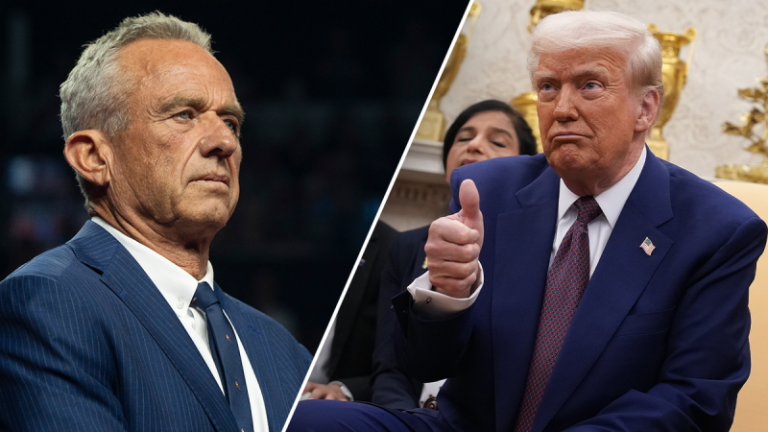
Robert F. Kennedy Jr. was confirmed and sworn-in as the nation’s 26th secretary of Health and Human Services on Thursday, when President Donald Trump also signed an executive order creating the Make America Healthy Again Commission, which is ‘investigating and addressing the root causes of America’s escalating health crisis.’ The commission initially will focus its investigations into childhood chronic diseases, such as autism. 

News reports spread shortly after Kennedy’s confirmation that widespread layoffs were headed to HHS employees, including within the CDC and FDA. The Trump administration is in the midst of working to streamline the federal government by cutting overspending and stamping out potential fraud or mismanagement, which has included mass layoffs at various agencies. 

The head of the FDA’s food division, Jim Jones, submitted his resignation letter Monday, according to various news reports, arguing the administration’s ‘indiscriminate firing’ of staff in his division will be a ‘roadblock to achieving the Secretary’s stated objectives of making America healthy again.’

‘I was looking forward to working to pursue the Department’s agenda of improving the health of Americans by reducing diet-related chronic disease and risks from chemicals in food,’ Jones said. ‘It has been increasingly clear that with the Trump Administration’s disdain for the very people necessary to implement your agenda, however, it would have been fruitless for me to continue in this role.’

Federal employees also staged a protest outside HHS in Washington, D.C., on Friday, while a cohort of academic unions around the country are rallying the science community to join another protest outside HHS on Wednesday, billed as a ‘National Day of Action.’

The Trump administration explained to Fox News Digital that those who were terminated over the weekend included probationary employees — who are individuals recently hired by the agency and still under consideration for long-term employment. 

‘Not people carrying longtime essential ‘institutional’ knowledge,’ the admin official said of those terminated. 

The recent HHS culling over the weekend did not include key personnel focused on emergency preparedness and response within the Administration for Strategy Preparedness and Response (ASPR), the CDC and other divisions of HHS, nor did it cull research scientists at the CDC or National Institutes of Health, or frontline healthcare providers at the Indian Health Service, employees working on Medicare and Medicaid at the Centers for Medicare and Medicaid Services, or those reviewing and approving drugs or conducting inspections at FDA. 

Additionally, employees working on refugee resettlement within the Administration of Children and Families were exempt from the weekend layoffs. 

‘Cuts we made at HHS over the weekend did not compromise health and safety of Americans,’ the admin official added.

Kennedy vowed during his Senate confirmation hearings that he would scrutinize the department’s previous modus operandi, remove potential financial conflicts and ensure tax dollars were spent on both bolstering healthy foods for Americans, and providing ‘unbiased’ scientific reports. 

‘We will make sure our tax dollars support healthy foods. We will scrutinize the chemical additives in our food supply. We will remove the financial conflicts of interest in our agencies,’ he told the Senate Finance Committee in describing his goals. ‘We will create an honest, unbiased, science-driven HHS, accountable to the president, to Congress, and to the American people.’

Both Kennedy and Trump pledged on the campaign trail to ‘Make America Healthy Again,’ including directing their focus on autism among youths in recent years. The recently minted MAHA commission will investigate chronic conditions for both adults and children, including those related to autism, which the White House said affects one in 36 children.

The commission is expected to publish ‘an assessment that summarizes what is known and what questions remain regarding the childhood chronic disease crisis, and include international comparisons,’ within 100 days of the commission’s founding. Within 180 days, it is expected to ‘produce a strategy, based on the findings of the assessment, to improve the health of America’s children,’ Fox Digital reported. 

Since Kennedy’s confirmation, state-level lawmakers have introduced a wave of bills aimed at advancing priorities championed by Kennedy and the MAHA movement, including prohibiting junk food like candy and soda from school lunches and other bills aimed at amending state vaccine rules. 

Fox News Digital’s Alec Schemmel contributed to this report. 

This post appeared first on FOX NEWS