Archive

2025

Browsing

President Donald Trump announced that Dan Bongino will serve as the next deputy director of the Federal Bureau of Investigation (FBI).

‘Great news for Law Enforcement and American Justice,’ Trump wrote in a post on Truth Social on Sunday night. ‘Dan Bongino, a man of incredible love and passion for our Country, has just been named the next DEPUTY DIRECTOR OF THE FBI, by the man who will be the best ever Director, Kash Patel.’

The president said Bongino has a Master’s Degree in Psychology from the City University of New York and an MBA from Penn State.

‘He was a member of the New York Police Department (New York’s Finest!), a highly respected Special Agent with the United States Secret Service, and is now one of the most successful Podcasters in the Country, something he is willing and prepared to give up in order to serve,’ Trump wrote. ‘Working with our great new United States Attorney General, Pam Bondi, and Director Patel, Fairness, Justice, Law and Order will be brought back to America, and quickly. Congratulations Dan!

‘Another aspect of the life of Dan Bongino that I think is very important. He has a great wife, Paula, and two wonderful daughters who truly love their dad,’ Trump later wrote. ‘What an incredible job Dan will do!!!’

Bongino is also a former Fox News host.

Shortly after the announcement, Bongino responded on X, saying, ‘Thank you Mr. President, Attorney General Bondi, and Director Patel.’

Patel was sworn in to serve as the ninth FBI director on Friday, after a narrow senate vote of 51-49.

Patel, a vociferous opponent of the investigations into Trump and one who served at the forefront of Trump’s 2020 election fraud claims, vowed during his confirmation hearing last month that he would not engage in political retribution against agents who worked on the classified documents case against Trump and other politically sensitive matters.

But his confirmation comes at a time when the FBI’s activities, leadership and personnel decisions are being closely scrutinized for signs of politicization or retaliation.

Patel held a number of national security roles during Trump’s first administration — chief of staff to acting Defense Secretary Chris Miller, senior advisor to the acting director of national intelligence and National Security Council official. 

This post appeared first on FOX NEWS

Notre Dame women’s basketball entered the day looking to lock up its second ACC regular season crown under Niele Ivey, and solidify its case for the top overall seed for March Madness.

The former, however, will have to wait at least another game.

In what was a back-and-forth contest between two of the league’s top teams, No. 12 NC State knocked off No. 1 Notre Dame in double overtime at Reynolds Coliseum on Sunday behind Zoe Brooks’ game-high 33 points on 9 of 20 shooting from the field.

NC State outscored Notre Dame 12-3 in the second overtime period, led by Brook’s five points. The Wolfpack held the Irish to 41% shooting from the field (26% 3-point shooting) on the day, compared to their own 46% shooting from the field (38% 3-point shooting).

It’s the first win for NC State against an AP No. 1 team since 2021 and the first win against an AP No. 1 team at home since 1978, when the Wolfpack beat Wayland Baptist, per ESPN. It’s also the third win over a No. 1 ranked opponent in the Wes Moore era at NC State, per the Wolfpack’s X (formerly Twitter) account.

Before Sunday, the Irish, the top overall projected seed in the NCAA Women’s Tournament, had been one of the hottest teams in the country, as they had won 19 straight games entering the day. It’s the third loss of the season for the Irish, and their first since Nov. 30 against Utah in the Cayman Island Classic.

To expound, it is the first loss for Notre Dame in ACC play since Thursday, Feb. 15, 2024 against who else but NC State. The Irish now hold a one-game lead over the Wolfpack in the ACC standings.

The Wolfpack took a brief three-point lead in the final minute of the game that was sparked by a layup from Madison Hayes. Notre Dame senior Sonia Citron then stopped an upset in regulation from happening, as the 6-foot-1 guard drained a 3-pointer from the top of the key as time expired to force overtime.

In the final second of the first overtime period, Notre Dame appeared to have drawn a foul as time expired. However, after an official review, it was determined the foul occurred after the buzzer, resulting in the Irish not having an opportunity there to win the game with a free throw and sending the game into an additional overtime period.

NC State locked in on defense in the second overtime period, as it held Notre Dame to just a 3-pointer from senior guard Olivia Miles. Notre Dame was 1-of-6 from the field in the second overtime frame alone, with three turnovers from Citron.

‘Great feeling. Great atmosphere. It’s a really big game (against the) No. 1 team in the country and I just had a lot of fun today,’ Brooks told ESPN’s Holly Rowe after the win.

She added: ‘We always play together. We are a sisterhood. We are a family. And we know when we play together, we can beat anybody in the country.’

Hannah Hidalgo led Notre Dame in scoring with 26 points on 8 of 26 shooting with five rebounds, three assists, two steals and a block. It is the 20th game this season that Hidalgo, a candidate for National Player of the Year, has finished with at least 20 points, and the 46th game in her two-year career at Notre Dame.

‘Me and Hannah have been playing on the same team for years. I love playing against her. Played against her in high school and now in college. It’s just great competing against her,’ said Brooks on competing against Hidalgo, who lives around 71 miles away from Brooks in New Jersey.

Citron and senior guard Olivia Miles added 23 and 22 points each for Notre Dame.

Notre Dame will close out the regular season against Florida State and Louisville before heading to Charlotte, North Carolina for the 2025 ACC Women’s Basketball Tournament. Meanwhile, NC State will finish with contests against Wake Forest and SMU before starting its journey of returning to the Final Four for the second consecutive season.

This post appeared first on USA TODAY

The Golden State Warriors honored Andre Iguodala on Sunday at the Chase Center following the 126-102 victory over the Dallas Mavericks.

The team raised a banner into the rafters that read ‘Andre Iguodala’ with a predominant No. 9 representing his jersey number.

The Warriors were holding the ceremony on the same day as the game against the Mavericks, which allowed Iguodala’s former teammate Klay Thompson to attend the ceremony. Thompson went to Dallas as a free agent in the summer of 2024, after spending 13 years with the Warriors.

Iguodala joined the Warriors in July 2013 after reportedly declining a five-year deal with the Denver Nuggets. He was eventually sent to Golden State as a part of a sign-and-trade deal that included the Nuggets and the Utah Jazz. 

He was named to the 2013-14 All-NBA Defensive first team after his first season with the Warriors before earning Finals MVP for his play against LeBron James and the Miami Heat as the Warriors won the 2015 championship. James had only made 38.1% of his shots against Iguodala, compared to the 44% James had when Iguodala was not on the court.

All things Warriors: Latest Golden State Warriors news, schedule, roster, stats, injury updates and more.

Former Warriors general manager Bob Myers and current Los Angeles Lakers general manager Rob Pelinka were present for the ceremony as was Mavericks GM Nico Harrison. Pelinka had served as Iguodala’s agent during his career.

Andre Iguodala thankful for those who impacted his career in Golden State

Iguodala spoke to the crowd during the ceremony and gave a nearly 15-minute speech to express his gratitude to those involved in helping him be successful during his eight years in Golden State.

‘It’s been a wild journey but a beautiful blessing,’ Iguodala said. ‘Everybody that’s on the floor here has made a huge impact on me but for me, this is bigger than just me.’

Stephen Curry reflects on relationship with Andre Iguodala

Golden State star Stephen Curry shared a similar sentiment to the importance of Iguodala deciding to join the Warriors, just months after playing against them in the playoffs.

“You were the first one to choose us and that meant the world for a team that was trying to figure it out,” Curry said.

Steve Kerr on Andre Iguodala’s impact with Warriors

Warriors head coach Steve Kerr shared a story during the ceremony about  Iguodala and how he helped compliment the star players on the roster, such as Curry, Thompson and Draymond Green.

The USA TODAY app gets you to the heart of the news — fastDownload for award-winning coverage, crosswords, audio storytelling, the eNewspaper and more.

This post appeared first on USA TODAY

The next time you’re driving your son or daughter to their game, and you see them engrossed in their phone, Larissa Mills wants you to remember something.

“The brain takes 22 minutes to go back to refocusing,” she tells USA TODAY Sports. “We’ve wasted an inning, a period, a half on poor decision-making skills. So why did you bother? Don’t even go on the ice, as far as I’m concerned.”

We focus so much on getting our kids ready to play through relentless practice and personal training outside the team. But do we underestimate the power of developing what’s inside of them?

Mills directs the London, Ontario-based Mental Game Academy. She holds degrees in sociology, psychology and education. She’s also a mother of three who has mined the mental side of thousands of athletes from the youth through professional levels in the United States and Canada.

And she has kept a close eye on you.

“Our children are on a phone from four to eight to 12 hours a day,” she says. “When are they learning their psychological skills? They’re not, and parents are on their phones for four to nine hours a day. So, when are parents connecting? When are children learning their self-identity? When are they learning how to cope and not get angry and pummel people?

“I just watched a hockey dad get off the ice and hit two refs, kids, 14 years old. And I just saw a fight in an arena two weeks ago.”

The Mental Game Academy helps athletes develop emotional and social awareness while getting us to understand how much of a stake we have in that process.

“Phones are one problem,” she says. “Parents not teaching mental skills is the other problem.”

“Mental game” can give anyone an edge, regardless of your age or athletic level. In some cases, it can propel you to the heights of collegiate and professional achievement. For younger athletes, it can unlock your full potential.

“People say kids have changed,” Mills says. “No, kids have not changed. We’ve lowered our standards. Let’s acknowledge that when we reduce behavioral issues, we raise the level of performance.”

She offers five ways we can help our kid athletes develop a powerful psychological game:

‘Dopamine makes us dopey’

Create phone routines to help calm our nervous system and make us confident.

Dopamine is a neurotransmitter that acts as a chemical messenger between the nerve cells and the rest of your brain. According to the Cleveland Clinic, high amounts of dopamine are released through experiences your body finds pleasurable. They can also stimulate addictive habits.

“Dopamine makes us dopey and slower, makes our brain feel like it’s in oil,” Mills says.

Phone use, she says, can surge dopamine and cortisol, a hormone released by our adrenal glands, resulting in lower confidence and sluggish decision-making.

Mills compares looking at your phone before a game to eating poutine, the heavy Canadian delicacy of French fries, cheese curds and brown gravy.

“That’s the same thing you’re doing when you tell your brain negative things, or you watch a phone before a game or practice,” she says. “You’re destroying your nervous system. … The symptoms from phone addiction are almost identical to those of anxiety.”

Children touch a phone, Mills has determined through American, Canadian, British and Australian resources, about 176 times per day.

We can’t entirely stop using our phones, which are our line of communication with our kids. Instead, choose a few times a day where, in short bursts of time, you return calls and answer your text messages.

For at least one hour a day, put your phones away and interact with your kids: Share a meal or take it outside.

‘I want you to control your phone,’ Mills says. ‘Don’t let the phone control you. The brain, if it gets zapped 176 times a day, this is where we get burnout from.

“Kids need to be bored and go play. Our brains are simply not designed to be on tech. They’re designed to talk and walk, so psychologically, we’re kind of stunting the development.”

Coach Steve: American kids got a D- in physical activity. What can we do about it?

Teach youth athletes: social media ‘tanks’ performance

Mills prohibits athletes under her care from using their phones two hours before a game or practice and one hour before bedtime.

How do phones and social media impact performance?

“It just tanks it,” she says.

Within 30 seconds of scrolling, Mills says, our brains can automatically rewire what we think is an enjoyable experience to one that is negative.

“Social media makes us compare ourselves to everyone else online,” she says. “This is an automatic. It’s called a defense mechanism. So then all of a sudden we’re like, ‘I’m not fast enough, I’m not good enough, I’m not smart enough, my stats aren’t good enough. Why is his reel getting more likes than mine?’ It just starts this spiraling-out-of-control emotion that kids don’t have the stoppers for.”

She hears from athletes who tell her decreasing their phone time to less than two hours a day helps them train harder but also helps them be more social. School is also easier.

“Of course it is, because your cognitive processing is moving three times faster than it was last week,” Mills says. “A volleyball coach called me yesterday and said, ‘Larissa, I don’t know what you did, but they’re all really aggressive now.’

“When we increase confidence, aggression and fearlessness take over.”

‘I am power’: Teach youth athletes effective self-talk

Staying mentally strong gets trickier when we’re all alone on a golf course or sitting in a dugout. What goes through our minds before we take our next stroke or throw our next pitch can fuel our performance.

Use the time to plan your attack. Remember when you sunk that same putt in practice. Visualize yourself poking an outside pitch to right field for a hit or driving an inside one to the left-center field gap.

See yourself throwing all of your pitches to the exact locations you want them.

“Once they’re ready, these kids are killing that,” Mills says. “The kids that are on their phones in the dugout, they’ll just come right back out and make a mistake. Their brain will be very, very unsettled.”

We know even the slightest amount of success can elevate kids’ confidence. Mills has her athletes create personal mantras we can repeat to ourselves that elevate it: I am power, I am speed, I am impactful.

Have your younger kids, or your Little League team, say them out loud in practice. With repetition, it can become your cognitive flow while playing.

‘No one can get in my head’

In order for athletes to perform, they must stop negative self-talk. It starts with what they hear from parents on the sidelines.

When we sense negative thoughts creeping in – from a teammate trying to get an edge during tryouts or an opponent trying to rattle us in a game – we are the ones responsible for fending off those thoughts. Be intentional and forceful to yourself about it.

“No one can get in my head,” we can tell ourselves. “You guys stay the hell out of my head.”

Social media can manufacture negativity, even in NHL players.

“Why are you looking online after your games?” Mills sometimes has to tell her higher-level athletes. “You make $10 million a year. Don’t compare yourselves. And all these idiots out there that want to be you are judging you, and they have no place to judge you. The only person who should be looking at you for feedback is you and your coach. That’s it. The rest of the world does not matter.”

But what if our parents are the voice of those thoughts? About 60% of the kids that come to see Mills and her associates say their parents negatively impact their sport.

“I cannot believe the amount of parents coaching from the sidelines and have ruined their kids’ experience,” she says. “They can’t hear you, and if they do hear you, what you actually do is sabotage them.

“It makes them play much worse, because now their brain is in yellow in their traffic light, and they’re like, ‘Oh crap, mom and dad are really concerned if I perform.’ Our instincts to pass the ball, kick the ball, shoot the ball, if we follow (them), we’re more likely to perform better than if we think about what a coach or a parent wants us to do.”

When we yell at them, they shut down even further. Instead, stick to confidence boosts.

“Once parents hear this conversation, the relationship usually gets better between parent and child,” Mills says.

Coach Steve: Ranking the worst behaved youth sports parents

Mastering performance means mastering control of your emotions

Mills specializes in untethering and empowering teens who have spent more than 18,000 hours on their phones by age 16.

“More kids today are just not able to be coached because they have the attention span of six seconds,” she says. “They don’t know how to track, they don’t know how to get feedback. They think criticism and feedback are yelling. They are not. And coaches are having a problem. They can’t use the D-word or the C-word, which is discipline or consequences.”

Adopting a phone regime for your kid is the first step. Then, we need to encourage them to converse with others in real time. Have them talk to the center and forwards they may not know very well but line up next to on the ice. Have them shake the hand of an opponent or referee and strike up a conversation.  

Have them accept constructive criticism from the coach, even if you loudly disagree with it from the bleachers.

“There are always weaknesses in teams,” says Mills, who coaches volleyball. “Who are you going to get to go offline, or who you’re going to get to horse collar? Don’t give into baiting. You have to be mentally strong and be able to do and see all that. But many kids just get baited, and they don’t think about the team. And so, they get called on the penalty.”

As Mills says, we need to be aggressive as athletes, but we naturally are when we’re more calm.

When we control ourselves, we not only help our teammates, but we set personal boundaries that can carry us throughout life.

Jeff Nelligan, a father of three sons and author of a book on sports parenting who has been a guest on Mills’ podcast, says this is perhaps her most poignant lesson.

“She is like an evangelist in talking about developing youths who are steadfast in following through on anything,” he says, “ones who are courteous and respectful, who are leaders.”

(This story was updated to add new information.)

Steve Borelli, aka Coach Steve, has been an editor and writer with USA TODAY since 1999. He spent 10 years coaching his two sons’ baseball and basketball teams. He and his wife, Colleen, are now sports parents for two high schoolers. His column is posted weekly. For his past columns, click here.

This post appeared first on USA TODAY

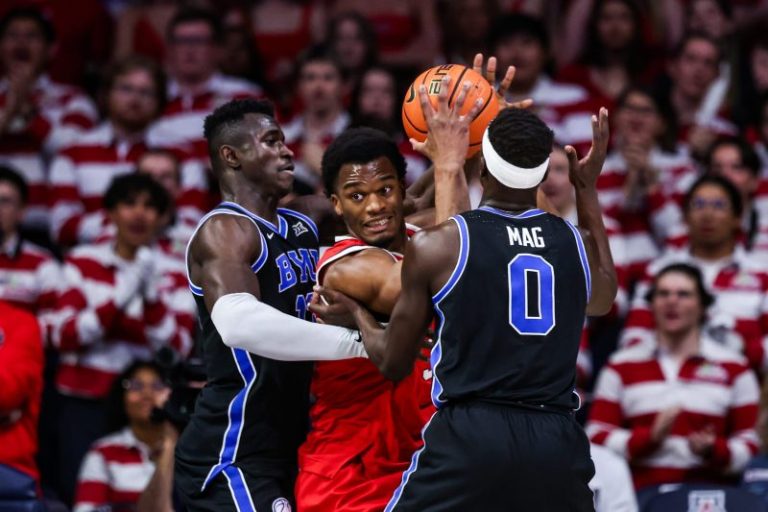
Arizona men’s basketball and BYU found themselves in a tightly-knit, tense game Saturday at the McKale Center, as the two Big 12 opponents fought for March Madness seedings.

The tensions escalated so much in the final seconds of the game that players from the Wildcats and Cougars had to be separated from each other in the postgame handshake line as a brawl began to break out on the court.

ESPN broadcaster Rich Hollenberg mentioned on the broadcast that Arizona guard Caleb Love had to be escorted away from the incident (and off the court) by one of the Wildcat’s managers.

‘Not sure. Honestly, I’d have to see it on the film. There’s a lot going on in that. At the end of the day, I think it’s just two really competitive groups in a hostile environment and sometimes that happens,’ BYU coach Kevin Young said postgame on the tensions of the game and the incident.

‘We’re not trying to start anything so I’ll have to see what happened on the film and address it with our team.’

The Cougars pulled off the top-20 upset with a pair of free throws from Richie Saunders with 3.2 seconds left, a result of a controversial foul on Wildcats’ forward Trey Townsend. The tensions between both teams started just a few seconds earlier when Love appeared to have drawn a foul on his made basket but officials did not call it.

Arizona coach Tommy Lloyd did not discuss the incident in his postgame news conference, as he was not asked about it by a member of the media. When asked about it during the player portion of Arizona’s postgame news conference, Love said it was ‘just talking.’

‘It was just talking. It was nothing crazy,’ Love said.

Arizona Athletic Director issues statement on postgame incident

That wasn’t the only postgame incident to have taken place at the McKale Center. Following the Wildcat’s loss to the Cougars, videos surfaced on X (formerly Twitter) of Arizona fans saying a derogatory chant toward BYU.

Arizona athletic director Desireé Reed-Francois issued an apology statement to BYU following the game on the department’s official X account, calling the chant ‘unacceptable.’

‘Following tonight’s men’s basketball game, it was brought to our attention that an unacceptable chant occurred. On behalf of the University of Arizona Athletic Department, we apologize to BYU, their student-athletes, coaches and fans. The chant is not reflective of who we are and should not have happened,’ Reed-Francois said.

With the loss and Texas Tech’s win over West Virginia, Arizona moved into a two-way tie for second place in the Big 12 standings at 12-4 in conference play. The Wildcats, who are 18-9 overall, return to action on Wednesday against Utah at 9 p.m. ET.

BYU (19-8, 10-6 in Big 12) will close out their two-game road trip to The Grand Canyon State on Wednesday against Arizona State at 9:30 p.m. ET.

This post appeared first on USA TODAY
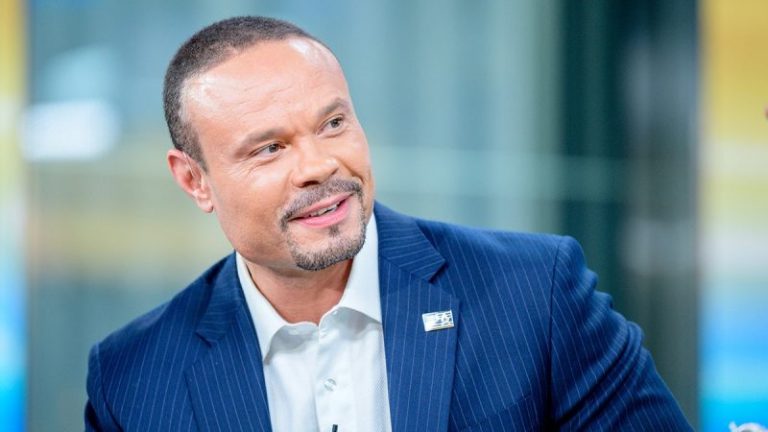
Good luck trying to catch Mikaela Shiffrin. Now or ever.

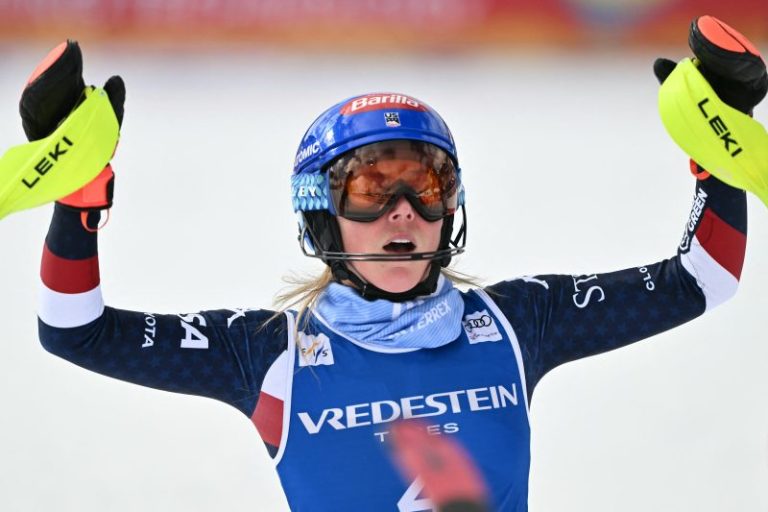
Shiffrin won her 100th World Cup race Sunday, less than three months after a crash in her first attempt at the milestone left her with a puncture wound in her abdomen and severe muscle trauma. It comes in her sixth race since returning from injury.

‘It certainly feels like I’ve been fighting a lot lately,’ Shiffrin said. ‘It’s been hard to find the right momentum and the right flow and to work through the injury and come back and compete with these women who are skiing so strong and so fast. I have wondered in the last weeks so many times whether it is the right thing to come back.

‘Today was just an amazing day in the middle of some really tough months,’ she added. ‘I’m very thankful for this day.’

When Shiffrin crossed the finish line of the slalom in Sestriere, Italy, she fell to the snow, overwhelmed by the moment and all it’s taken for her to get to it.

On Nov. 30, in her first opportunity to get her 100th win, Shiffrin crashed during the second run of a giant slalom race in Killington, Vermont. She was in the lead when she lost an edge, hitting one gate at full speed and somersaulting into another before coming to rest against the safety netting.

‘There’s a puncture and then basically whatever stabbed in there did a little dancey dance inside of my obliques and basically tore a cavern into my oblique muscles. That’s what’s causing bleeding and inflammation and just pain, in general,’ Shiffrin said in a Dec. 4 update.

‘This is another fairly ambiguous injury and really hard to put a timeline of when I’ll be either back on snow or back to racing,’ she added.

Shiffrin was bedridden for several weeks and needed surgery in mid-December to ward off an infection. She missed almost two months before returning to the World Cup circuit in Courchevel, France, on Jan. 30. She paired with Breezy Johnson to win the team combined at the world championships two weeks later, but said recovery would be an ongoing effort the rest of the season.

That was evident in the first two races in Sestriere, both giant slaloms. She looked tentative on the longer, faster courses and was so far off the pace Saturday that she didn’t even qualify for the second run.

Now look at her. Not only back on the podium, but the very top of it.

Shiffrin posted the fastest time in the first run, finishing 0.09 seconds ahead of Croatia’s Zrinka Ljutic, a three-time winner this season. She got out of the gate strong on the second run and was in control throughout, displaying the aggressively fluid style that’s become her trademark.

Though Shiffrin has said she’s still working on her endurance, she kept pushing until the very end. She finished 0.61 seconds ahead of Ljutic. U.S. teammate Paula Moltzan was third.

While her team and fans began celebrating, Shiffrin didn’t show emotion immediately – in part because she didn’t know where she’d finished.

‘I didn’t know if (the scoreboard) said fourth or first. One hundred times later, and I still can’t find the darned scoreboard,’ Shiffrin said with a laugh.

Once she realized she’d won, however, the emotions took hold. She fought tears in the finish area and in her post-race interview, and several times had to put her face in her hands. By the time she came back out for the victory ceremony, Shiffrin was all smiles. She also was sporting a new pair of gloves, ones that had ‘100’ emblazoned in gold on them.

The victory also was Shiffrin’s 155th time on a World Cup podium, tying Ingemar Stenmark’s record.

‘It takes time to get the mind in the right state, to take on ski racing and the full speed,’ Shiffrin said. ‘These top women, I can see how powerful they are and how secure they are, to take the speed from the course and to make it stronger. I’m not there.

‘The mountain ahead of me to climb is steep and long. If I get there – when I get there – it will be very sweet. But for now, I just have to take this day and be grateful for it because it’s a small moment in the middle of many tough moments that makes me feel that maybe I can be good again.’

Stenmark’s record of 86 career World Cup wins was once considered untouchable, standing for 30-plus years despite the best efforts of Lindsey Vonn, Marcel Hirscher, Hermann Maier and Alberto Tomba. But Shiffrin not only broke Stenmark’s mark, getting her 87th win in March 2023, she has blown past it.

She has not said how much longer she’ll ski but, at 29, she’s still in the prime of her career. And with the win rate she already has – at least five victories a season for the last 11 years, with the exception of the injury- and COVID-shortened 2020-21 season – Shiffrin joins Michael Phelps, LeBron James and Simone Biles on that rare list of athletes whose records truly are unbeatable.

Vonn, who came out of retirement this year, is the next-closest to Shiffrin with 82 wins. After that, the active skiers with the most World Cup wins are Lara Gut-Behrami with 46 and Marco Odermatt with 45.

‘I don’t know that it’s possible to dream about a milestone like this. It’s too big. It’s too long, it takes too much,’ Shiffrin said Sunday. ‘I always dreamed about good turns and step by step and try to be better tomorrow than I was today. That dream for me is big enough.’

Shiffrin, a two-time Olympic gold medalist, has never been driven by records or accolades. To the contrary, viewing her career through that limited prism has always made her uncomfortable. It’s the process that fuels her, that never-ending quest to get a little bit better every time she puts on skis or to see the work she’s been doing in training carry over to a race.

But she was determined to take a different view as she approached this 100th victory, trying to appreciate it because of the way others do. She’s also hoping to use the spotlight that comes with these milestones to bring attention to Share Winter, a foundation that brings winter sports to kids and communities that historically have not had access to them.

Shiffrin donated $10,000 to Share Winter for her 100th win, and challenged fans and sponsors to join her to get the total to $100,000. That would allow Share Winter to fund an entire season of skiing for 200 children.

‘One of the most beautiful things we can do as athletes is to share this passion and this love for the winter and the outdoors and the mountains with more of the world,’ Shiffrin said. ‘When you look around at the fans and everybody here cheering and enjoying the weather and the mountains and the sport, I wish there were even more people that understood the beauty of it.’

There are two more technical races, a GS and slalom in Are, Sweden, before the World Cup finals next month in Sun Valley, Idaho.

‘It’s step by step,’ Shiffrin said. ‘Also, to stand in the start gate and take the mentality of what I want to do (so it) is what I actually do, that’s not been totally connected. Today it was and that’s really – that feels good for the soul.’

(This story was updated with new information.)

This post appeared first on USA TODAY
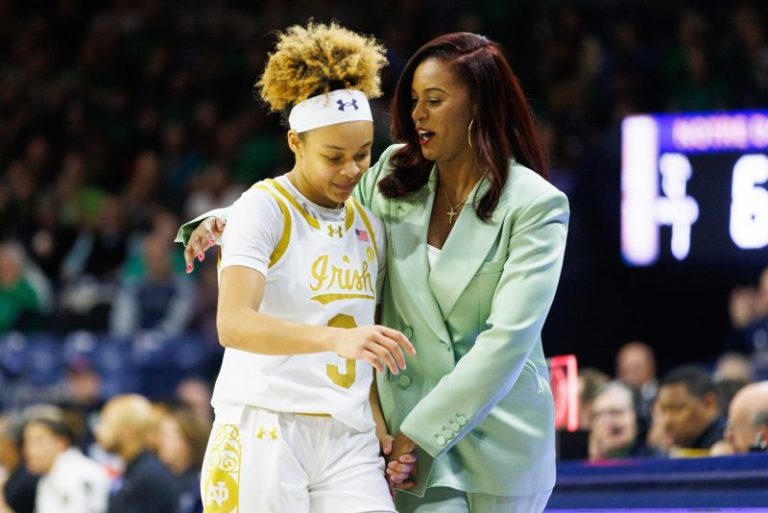
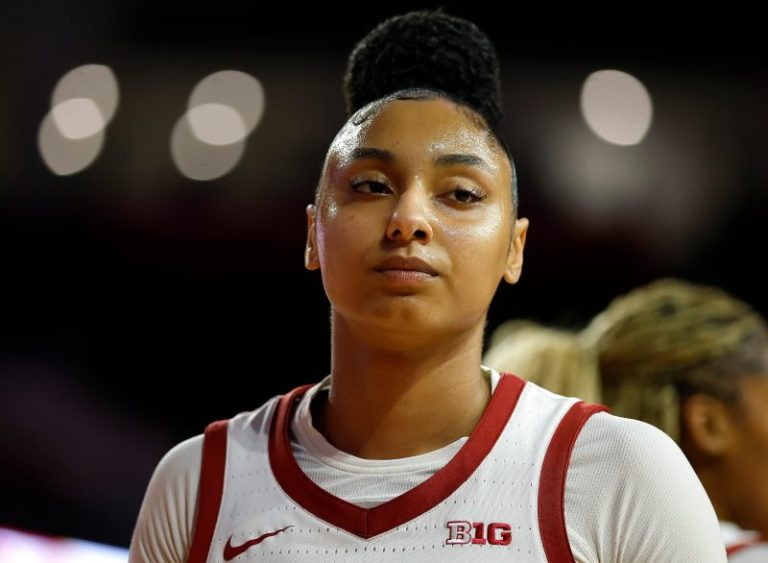
As March of her sophomore season approaches, JuJu Watkins continues to be one of the best players and brightest stars in women’s college basketball.

The USC guard has helped the Trojans to a 25-2 record and a No. 4 spot in the USA TODAY Sports Coaches Poll, with wins over the likes of UConn, Maryland and, most notably, rival UCLA on her team’s resume.

On Sunday, another challenge awaited in the form of an Illinois team that had won eight of its past nine games and was among the top handful of teams in the Big Ten standings.

Watkins, as she often does, excelled, finishing with 22 points in a 76-66 victory against the Fighting Illini that kept USC in contention for the No. 1 national ranking that became available following Notre Dame’s double-overtime loss Sunday at NC State.

Here’s a closer look at Watkins’ stats Sunday and her overall production this season:

JuJu Watkins points today

On USC’s senior day, Watkins was one of three players to finish with a game-high 22 points. She wasn’t particularly efficient offensively, making only 37.5% of her shots, but more than made up for that at the free-throw line, where she sank all 10 of her attempts.

She was a menace on the defensive end, as well, with a game-high four blocks.

Here’s how Watkins’ stats Sunday:

Points: 22
Rebounds: 5
Assists: 3
Shooting: 6-16 (0-4 3-point shooting)
Steals: 1
Blocks: 4
Turnovers: 1
Fouls: 1

JuJu Watkins stats

Watkins entered the game against Illinois as the No. 3 scorer in Division I, averaging 24.3 points per game. Though her scoring average is down from a year ago, her outing Sunday was her 22nd game this season with at least 20 points.

Here are Watkins’ statistical averages in her two seasons at USC:

2023-24: 27.1 points and 7.3 rebounds with 3.3 assists per game on 40.1% shooting, 2.3 steals and 1.6 blocks per game.
2024-25 (entering Sunday): 24.3 points and 6.9 rebounds with 3.6 assists per game on 42.9% shooting, 2.2 steals and 1.9 blocks per game.

This post appeared first on USA TODAY
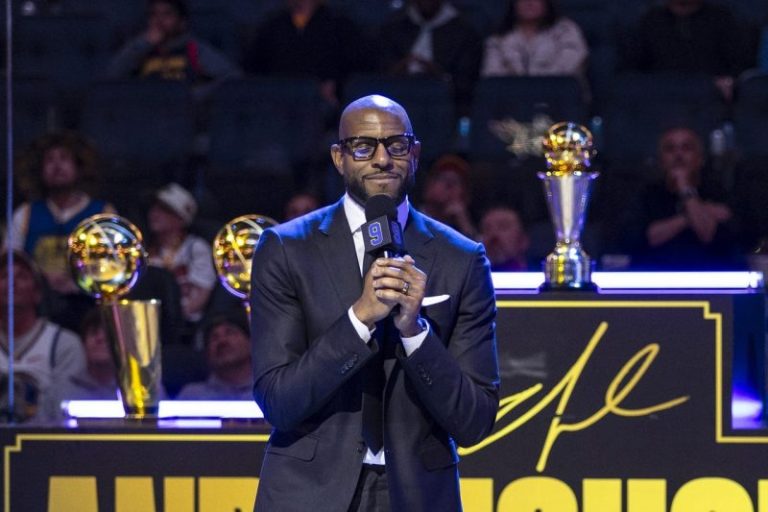
The countdown is on with Alex Ovechkin just 13 goals from overtaking Wayne Gretzky as the NHL’s career goal leader – a mark that once seemed unsurmountable and earned Gretzky the nickname The Great One.

The Great Eight, as the Washington Capital is sometimes called, began the season 41 goals behind Gretzky’s 894. But, perhaps, numbers fall short of conveying how dominant the two players’ careers have been.

From goals to points, our series of charts below — based on NHL and Hockey Reference data — show the gulf that Gretzky and Ovechkin have created between themselves and their contemporaries as they solidified their positions as two of the league’s greats.

Three NHL players scored more than 800 goals in their careers

It’s interesting to note in the chart below, how one player has stood out from others of their generations since the 1950s when Maurice Richard became the NHL’s first 400-goal scorer — and later first 500-goal scorer. A couple decades later Gordie Howe finished his 33-year career with 801 goals.

Unable to view our graphics? Click here to see them.

So how did Gretzky and Ovechkin get there?

Combine consistent all-star play with health and longevity, and their career milestones became more plausible. Gretzky lost a large portion of his 1992-93 season to a back injury, while Ovechkin lost 16 games this year to a broken leg. Otherwise, both stayed on the ice during the prime of their careers.

How many goals does Ovechkin have in his career

Both Ovechkin and Gretzky averaged about 49 goals per season, but some might say Ovechkin is still in the prime of his career, considering the relatively consistent trajectory of his scoring.

So who is better, Gretzky or Ovechkin? Here are a few more points to help you decide.

Whether it’s Jordan vs. LeBron or Brady vs. Mahomes, comparisons between great players of different eras can often be a fool’s errand. That said, a couple key differences in the eras:

Goalies’ gear covers more of the goal today

Only a few years separate Ovechkin and Gretzky, but like any other sport, hockey equipment evolved during these four-plus decades. Consider how different goalies’ pads and mitts were, below, during Gretzky’s and Ovechkin’s first seasons. To be fair, goalies wore more modern-day uniforms in Gretzky’s final seasons, and two years before Ovechkin entered the NHL, the length of goalie pads was limited to 38 inches.

NHL scoring at its highest levels in Gretzky era

Some will argue that Ovechkin is a greater goal scorer because scoring has become more challenging. Gretzky’s early years were played when the NHL averaged the highest average points per game. Of 25 players who scored 65 goals or more in a season, 19 were in Gretzky’s era. That includes four seasons where Gretzky scored 71 or more. Ovechkin tallied 65 once.

Gretzky has conceded that he may soon lose his scoring title in the coming months.

‘It’s just a matter of time, whether it’s late this year, early next year, whenever,’ Gretzky said about his record this past fall, according to the NHL. ‘I mean, he’s a great player. He’s a great goal scorer.’

But the measure of a great hockey player isn’t only how many goals they rack up. Consider how Ovechkin compares to his contemporaries on career points – goals and assists added together.

How many career points has Ovechkin earned

In his 20 years in the NHL, Gretzky’s play contributed to more goals for his teams than any player by far. In addition to leading the league in goals five times, he led the NHL in assists 16 times, leading to a career points record that may never be eclipsed.

The Pittsburgh Penguins’ Sidney Crosby joined the NHL in the 2005-06 season with Ovechkin. Crosby has assisted on nearly 50% more goals than Ovechkin has, putting him dozens of points ahead. Below, the top 50 players in career points. Only four have played this season:

How old is Alex Ovechkin and other milestones

Should Ovechkin run out of regular-season games this year, he’ll turn 40 in September with one more year on his current Capitals’ contract. In addition to the career goal record, he’ll have more chances to pile up career statistics. A couple of them:

Points: Ovechkin overtook Phil Esposito’s career points mark of 1,590 in early February, putting him 11th (1,593) in the category. Joe Sakic, 10th in points at 1,641, could be within reach next season.

Goalies scored on: Ovechkin already leads in this category with 179 goalies in his 20 years. Less than 9% of those who have played in the league have even scored 179 or more goals.

How many goals does Ovechkin have this year

How many empty net goals has Ovechkin made

After returning from his broken leg in late December, Ovechkin scored his 17th goal of the season in his first game back, collecting his 62nd empty-net goal of his career. He scored his 64th empty-netter Sunday.

Empty-net goals are a perk of playing for one of the top teams in the NHL for several years, and Ovechkin has taken advantage of empty nets more often than any player in league history, according to Statmuse. He topped Gretzky’s 56 empty netters last season when he tallied three.

Rounding the top five of empty-net goal scorers, according to Statmuse: Marian Hossa, 40, Brad Marchand, 38, and Sidney Crosby, 36.

This post appeared first on USA TODAY
March Madness is rapidly approaching, which means the 2025 WNBA draft is around the corner.

This year’s draft has been hailed as the Paige Bueckers sweepstakes, the UConn Huskies guard presumed to be the No. 1 overall pick. But Notre Dame guard Olivia Miles has played herself into the conversation for the top spot, as well.

Let’s take a look at how the first round could shake out as the women’s college basketball season heads toward the postseason.

It’s worth noting that UCLA’s Lauren Betts and UConn’s Azzi Fudd will not be included in this mock draft as both players are expected to return to college. Fudd has another year of eligibility after missing nearly the entire 2023-24 season due to an ACL injury, while Betts is expected to return and team up with younger sister Sienna Betts, who is committed to play at UCLA next season.

The Las Vegas Aces don’t have a 2025 first-round draft pick after their pick was rescinded by the WNBA for violating league rules regarding player benefits. All stats entering play Saturday.

2025 WNBA mock draft

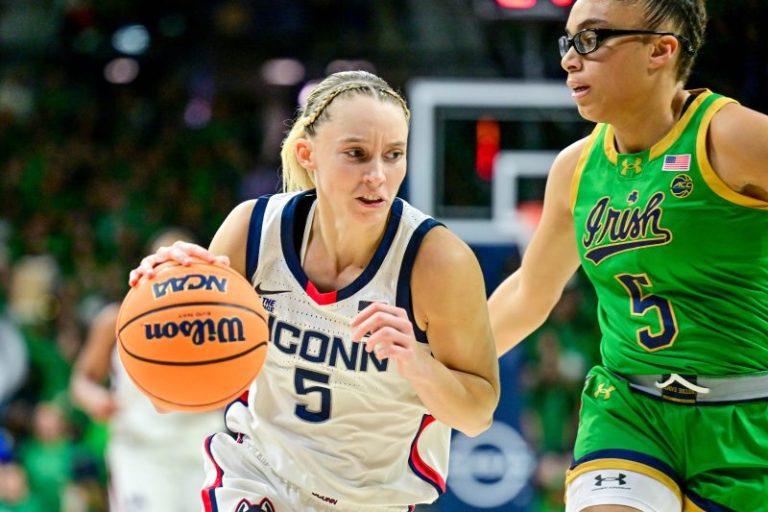
1. Dallas Wings: G Paige Bueckers (UConn)

After the Wings landed the 2025 No. 1 overall pick in the draft lottery, Dallas All-Star guard Arike Ogunbowale posted on social media, ‘I just fell to my knees. THANK YOU LORD!’ She has good reason to celebrate. It’s no surprise that Bueckers, considered a generational talent, is the first player off our board. She will bring her shot-making and playmaking abilities to the Wings. Bueckers is averaging 18.6 points, shooting 41% from 3, 4.5 rebounds and 4.6 assists this season.

2. Seattle Storm: G Olivia Miles (Notre Dame)

Goodbye Jewell Loyd, hello Olivia Miles. The Storm parted with Loyd in a three-team trade with the Las Vegas Aces and Los Angeles Sparks, but acquired the second overall pick from the Sparks and snag arguably the best playmaker and passer in the draft. Miles returned from a season-ending knee injury and didn’t miss a step, teaming up with Hannah Hidalgo to form the best backcourt duo in the country. Miles is averaging a career-high 16.6 points per game, 6.1 rebounds and 6.2 assists.

3. Chicago Sky: G Sonia Citron (Notre Dame)

Back-to-back Fighting Irish are off the board with Citron’s selection. The Sky are in need of a guard after losing last season’s top scorer with the departure of Chennedy Carter. Chicago added former Sky alum Courtney Vandersloot and Kia Nurse in free agency, but the Sky prioritize depth by drafting Citron, an efficient scorer and lockdown defender. Citron is averaging 13.8 points, 5.6 rebounds and 2.1 steals in 24 games this season.

4. Washington Mystics: F/C Dominique Malonga (France)

The French takeover doesn’t just apply to the NBA. Dominique Malonga will follow in the footsteps of fellow countryman Victor Wembanyama and be drafted to the pros. The 6-foot-6 center is the ultimate athlete that can do it all with her speed, length and explosiveness. She’s averaging 15.6 points, shooting 41.7% from 3, 9.4 rebounds and 1.6 blocks for France’s Lyon ASVEL Feminin. Did we mention that she’s only 19? The Mystics have been quiet in free agency, but new general manager Jamila Wideman and head coach Sydney Johnson will take a step toward building their future with Malonga.

5. Golden State Valkyries: G Aneesah Morrow (LSU)

Valkyries head coach Natalie Nakase told USA TODAY Sports she’s looking for an ‘ultra competitive,’ ‘high character,’ ‘never satisfied’ player that will help build the team’s culture in its inaugural season. Morrow checks all those boxes. She’s averaging 18.1 points, a league-high 14.4 rebounds and 2.5 steals, all while leading the NCAA in double-doubles with 24 in 27 games. Morrow’s versatility, rebounding abilities and relentless attitude will translate well to the league and she’d be a foundational piece for the establishing Valkyries.

6. Washington Mystics: F Kiki Iriafen (USC)

The Mystics are on the board again. Iriafen, a 6-foot-3 forward, would make an immediate impact in Washington. She’s averaging 18 points, shooting 50.6% from the field, 8.3 rebounds and 1.8 assists. When she’s not backing up opponents in the paint or cleaning up the glass with her physicality and explosiveness, Iriafen is a midrange master. The Mystics hope that Iriafen can help turn things around after missing the playoffs last season.

7. New York Liberty: G Georgia Amoore (Kentucky)

The defending champion Liberty are returning their entire starting lineup Breanna Stewart, Sabrina Ionescu, Jonquel Jones, Leonie Fiebich and Betnijah Laney-Hamilton. Although the Liberty have no urgent needs, they look to replace guard Courtney Vandersloot by drafting Georgia Amoore. Although undersized at 5-foot-6, Amoore is an elite facilitator and leads the SEC in assists per game (7.1). She’s averaging a career-high 19 points, shooting a career-high 43% from the field.

8.Connecticut Sun: F Ajša Sivka (Slovenia)

The Sun have had a rough offseason so far. Not only did Connecticut lose head coach Stephanie White, it also lost Alyssa Thomas, DeWanna Bonner, Dijonai Carrington, Tyasha Harris and Brionna Jones — its entire playoff starting lineup. (Marina Mabrey also requested a trade.) It’s not clear what direction the Sun are going as they begin their rebuild under new head coach Rachid Meziane, but Slovenian forward Ajsa Sivka is a solid draft-and-stash option who could benefit the Sun in the long run. The versatile wing is averaging 11 points, 3.1 rebounds, 2.9 assists, 2 steals, while shooting 42.2% from beyond the arc for Tarbes Gespe Bigorre.

9. Los Angeles Sparks: G Shyanne Sellers (Maryland)

The Sparks kicked off free agency by landing two-time WNBA champion Kelsey Plum, who will join Cameron Brinks, Rickea Jackson and Dearica Hamby in Los Angeles. The Sparks add another guard to the mix with Shyanne Sellers, who fits new coach Lynne Roberts’ up-tempo style of play, particularly from 3. Sellers is averaging 13.9 points per game, shooting 47.9% from the field and a career-high 42.9% from beyond the arc, 4.1 rebounds and 4.3 assists. Sellers is the first player in Maryland history to reach 1,500 points, 500 rebounds and 500 assists, highlighting her ability to do it all.

10. Chicago Sky: G Te-Hina Paopao (South Carolina)

The Sky are back on the board again in the first round. This time Chicago selects Te-Hina Paopao, reuniting her with former South Carolina teammate Kamilla Cardoso. Paopao can not only create a shot for her teammates and herself, she’s developed as a defender. Paopao is averaging 10.4 points, 2.6 rebounds and 2.8 assists, while shooting 47.1% from the field and 38.7% from 3.

11. Minnesota Lynx: C Sedona Prince (TCU)

The Lynx fell just short of the 2024 WNBA championship after losing a winner-take-all Game 5 to the New York Liberty in overtime. They add depth to their roster with 6-foot-7 center Sedona Prince. Prince is averaging 17.8 points, shooting a Big 12-leading 61.3% from the field, 9.1 rebounds and 3.1 blocks. Prince’s stellar on-court play, however, has been overshadowed by multiple abuse and sexual assault allegations, which many affect her draft stock.

12. Dallas Wings: G Saniya Rivers (NC State) 

The Wings already landed Paige Bueckers with the first overall pick and go for the best player on the board with the 12th pick. Rivers is averaging 12.2 points, 6.1 rebounds, 3.2 assists, 1.7 steals and 1.3 blocks this season and will bring her defensive edge to the Wings, who ranked dead-last in defensive rating last year.

The USA TODAY app gets you to the heart of the news — fastDownload for award-winning coverage, crosswords, audio storytelling, the eNewspaper and more.

This post appeared first on USA TODAY
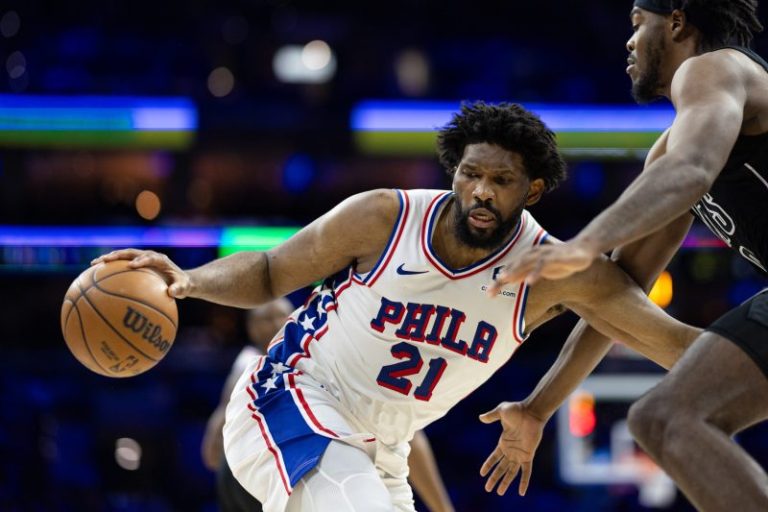
Philadelphia 76ers star Joel Embiid was benched for the final quarter of Saturday’s last-second loss to the Brooklyn Nets, with coach Nick Nurse admitting the former NBA MVP is ‘not himself.’

The Sixers rallied from a 17-point deficit, only to lose their seventh game in a row, 105-103 on a buzzer-beating tip-in by Brooklyn’s Nic Claxton.

Nurse defended his decision to keep Embiid on the bench after the two-time league scoring champion had tallied just 14 points in 31 minutes of action and missed all six of his 3-point attempts.

‘That group was just playing so well together and had good feel for the game at that point, and just wanted to let them roll with it,’ Nurse told reporters.

Embiid, who has been nagged by injuries all season, declined to comment after the game.

All things Sixers: Latest Philadelphia 76ers news, schedule, roster, stats, injury updates and more.

After signing a three-year, $193 million contract extension in September, Embiid said last week that his left knee is still bothering him a full year after undergoing surgery for a torn meniscus.

‘The way I was playing a year ago is not the way I’m playing right now,’ Embiid said last week after a loss to the Celtics. ‘I probably need to fix the problem, and then I’ll be back at that level.’

Saturday’s benching provided even further evidence.

‘He’s not himself, we all know that,’ Nurse said. ‘He’s not certainly the guy we’re used to seeing play at a super high level. But I commend him for giving us what he can.’

This post appeared first on USA TODAY