Archive

2025

Browsing

House Republicans are getting an update on the Trump administration’s probe of billionaire George Soros’ influence on local radio, a source familiar with planning told Fox News Digital.

The Republican Study Committee (RSC), the 175-strong caucus led by Rep. August Pfluger, R-Texas, is hosting Federal Communications Commission (FCC) Chairman Brendan Carr at its annual closed-door lunch on Wednesday.

The source familiar with the planning said Carr is expected to brief GOP lawmakers on the FCC’s investigation into Soros, including an investment firm he’s linked to purchasing over 200 Audacy radio stations nationwide.

Carr and Republicans are also expected to more widely discuss strategies for pushing back against media deemed to be biased against the GOP.

The RSC is the largest grouping of lawmakers within the House GOP and traditionally acts as an informal think tank for the conference.

It has also been a conduit for several top Trump administration officials to Capitol Hill so far this year.

Deputy Chief of Staff Stephen Miller addressed the RSC on immigration and President Donald Trump’s plan for executive action last month. Earlier in February, the group heard from Energy Secretary Chris Wright.

An investment firm linked to Soros, a left-wing businessman who has sunk billions of dollars into liberal causes, became the largest stakeholder in radio giant Audacy at the tail end of the Biden administration late last year.

The Soros Investment Fund acquired roughly 40% of Audacy’s debts after the company filed for Chapter 11 bankruptcy.

Republican lawmakers blasted the deal, including Rep. Chip Roy, R-Texas, and Sen. John Kennedy, R-La., both of whom called for intense scrutiny.

Carr signaled he wanted to set his sights on Soros late last year during an interview on ‘Mornings with Maria.’

‘There’s a petition for reconsideration pending at the FCC right now. And I want to take a very hard look at that,’ he said in late November.

Fox News Digital reached out to the FCC and Audacy for comment.

This post appeared first on FOX NEWS

As Egypt reportedly rejects President Donald Trump’s resettlement proposal, citing the need to protect the Palestinian cause and its national security while coordinating with Arab leaders on an alternative plan, voices from war-ravaged Gaza say they want out.

Gazans, desperate to escape, told Fox News Digital they support President Donald Trump’s relocation proposal – to turn Gaza into a ‘Riviera of the Middle East’ after emptying it of its more than 2 million Palestinians – though it remains unclear if they would be allowed to return. Many Gazans say they want to leave – if only the borders would open.

‘I will be living in tents for 10 years. Egypt was responsible for rebuilding Gaza after past wars – and you can still see some of the rubble from the Israeli military campaign in 2008. I’d rather leave and gain 10 years of life than wait for some plan to be implemented while I live in a tent,’ said Walid, a 29-year-old from Nuseirat Camp in northern Gaza, told Fox News Digital via WhatsApp in an interview facilitated by the Center for Peace Communications (CPC).

Walid, like many others, said that even before the war, Gazans were trying to leave – not because they wanted to abandon their homeland, but because they saw no future under Hamas rule.

Egypt, which has taken the lead in crafting a three- to four-year reconstruction plan, refuses to accept Palestinian refugees, keeping the Rafah crossing closed while preventing mass movement out of Gaza. Hamas, meanwhile, continues to exert military control while inflicting terror, despite being unable to provide basic governance, making life for civilians unbearable. 

A man standing before the rubble of his former home, interviewed and filmed by CPC, explained his desperation, ‘If I left today, I’d be better off. You want me to live in these ruins? If you brought a cat here, it would run away – let alone a person.’

A woman in Gaza, her face blurred, like so many others afraid of speaking up against Hamas, spoke of a suffocating existence, telling CPC, ‘People feel like prisoners. There’s no way to get out. That has created a state of frustration and despair.’

One man near Gaza’s coastline, standing against the stark contrast between the sea and the destruction behind him, said: ‘Three-quarters of those who returned from displacement camps went south again because there are no houses left. I won’t stay here because there will be disease. Our situation is miserable. Anyone who says otherwise is fooling themselves.’

Another man, also filmed near the sea by CPC, said, ‘Forgive my language, but even dogs can’t live in northern Gaza. There’s no water, no electricity, no infrastructure at all.’

Joseph Braude, founder of CPC, a nonprofit that supports peace activists seeking freedom from terrorist domination of their societies, said: ‘Gazans are trapped by Hamas in unlivable conditions. It is unconscionable for anyone to ignore the desperate pleas of the men, women and children who want to voluntarily leave Gaza. These Gazans support President Trump’s call to open the border so they can pursue a better life free of war and destruction. If Hamas opened the border, the world would see a mass exodus comparable to the fall of the Berlin Wall.’

With no homes left, no functioning government and no guarantee that war won’t erupt again, some Gazans are daring to voice their support for Trump’s proposal, which would allow them to relocate to other countries, including Egypt and Jordan, at least for the decade-long rebuilding process estimated by U.S. officials. This is despite the dangers of speaking out against Hamas.

Raji Sourani, a leading rights lawyer from Gaza, criticized Trump’s stance in an interview with the Associated Press, ‘This is the first time in history that a U.S. president speaks publicly and frankly about committing one of the most serious crimes,’ he said.

Walid dismissed the claim that Trump’s plan amounts to ‘ethnic cleansing,’ a phrase widely used in the international media. ‘Even those who are against the plan know Gaza won’t be empty. The ones pushing this propaganda are the same ones who supported Oct. 7. They try to spread slogans like ‘We are resisting, staying forever.’ But the people who are not involved in politics won’t oppose an idea that could finally end this war for them.’

Despite the widespread suffering, Hamas refuses to relinquish control. Mohamad, a displaced father in Gaza City, described a lawless society where Hamas fighters only appear when releasing hostages or suppressing dissent. Like many others, Mohamad is waiting for any corridor to open so he can escape.

‘If they open the gate, half of Gaza will leave,’ he told Fox News Digital. ‘The other half will stay, but not because they love Hamas. Some will stay because they still have a house, a job, or family members who can’t leave.’

As post-war plans for Gaza take shape, Mohamad’s question remains: ‘If Gazans want to leave, why won’t anyone let them?’


This post appeared first on FOX NEWS

The percentage of Americans identifying as LGBT has risen to record highs, especially among Generation Z, a new Gallup poll released on Thursday shows, but that trend could see a departure under President Donald Trump, according to one expert, as the administration pushes back against gender treatments for minors.

The poll found that 23% of Generation Z Americans, those born between 1997 and 2006, identify as lesbian, gay, bisexual or transgender. For comparison, 14.2% of millennials, those born between 1981 and 1996, identify the same way. Both groups identify as non-heterosexual compared to older generations, like Generation X and ‘Baby Boomers.’

The Gallup poll surveyed more than 14,000 U.S. adults last year – collected through phone interviews with adults 18 and older – and found that 9.3% identify as lesbian, gay, bisexual, transgender or another non-heterosexual identity. This marks a significant increase from 2020, when the figure was about half that, and a sharp rise from 2012, when Gallup first started tracking sexual orientation and gender identity, recording only 3.5%. 

‘The rate of LGBTQ+ identification is likely to continue to grow, given the generational shifts underway,’ Gallup senior editor and researcher Jeffrey M. Jones wrote in the study. 

‘One reason for higher LGBTQ+ identification among younger generations of adults is that they are much more likely to consider themselves bisexual than are older people,’ Jones wrote.

The study also found differences among those with political ideologies, as people identifying as LGBT were more likely to be female, liberal, White, and live in urban areas. Among them, 21% identified as liberal, 8% as moderate, and 3% as conservative. The rate of LGBT identification has nearly tripled over more than a decade, with a growing number of Americans in their teens, 20s and 30s identifying as bisexual, particularly more women compared to men, researchers noted.

However, Heritage Foundation senior legal fellow Sarah Parshall Perry said the findings are a snapshot in time – due to the ‘onslaught’ of the Biden administration’s rulings on sex and gender over the last four years– but will likely begin to reverse under the Trump administration’s crackdown on transgender medical procedures for minors.

‘I think now that we’re seeing this return to common sense, we are going to see fewer and fewer young people begin to identify as LGBTQ,’ Perry told Fox News Digital in an interview. ‘I would be very curious what the numbers look like four years into the future, after some of these policies have trickled down to the granular level.’

‘It was entirely unsurprising to me that it was the Generation Z who experienced the most precipitous increase, because they are the younger ones they are currently, right now, in the throes of sort of this battle between reality and cultural conformity,’ Perry said. ‘That’s exactly where these kids are, and I think it’s exactly why we’re seeing these level of increases.’

While the poll found 85.7% of respondents identified as straight, 5.2% identified as bisexual, 2.0% as gay, 1.4% as lesbian and 1.3% as transgender. Fewer than 1% of participants identified with other non-traditional LGBT labels, including pansexual, asexual or queer. Five percent of respondents declined to answer.

Trump has signed a slew of gender-related executive orders during his first 100 days in office which have already racked up multiple lawsuits. One of those orders, ‘Defending Women from Gender Ideology Extremism and Restoring Biological Truth to the Federal Government,’ mandates that federal agencies recognize gender strictly as male or female, based on biological sex, and prohibits the use of gender pronouns on federal documents. It also directs agencies to cease funding for transgender medical treatments for transgender federal inmates and to remove policies promoting radical ‘gender ideology.’

This post appeared first on FOX NEWS
NEWYou can now listen to Fox News articles!

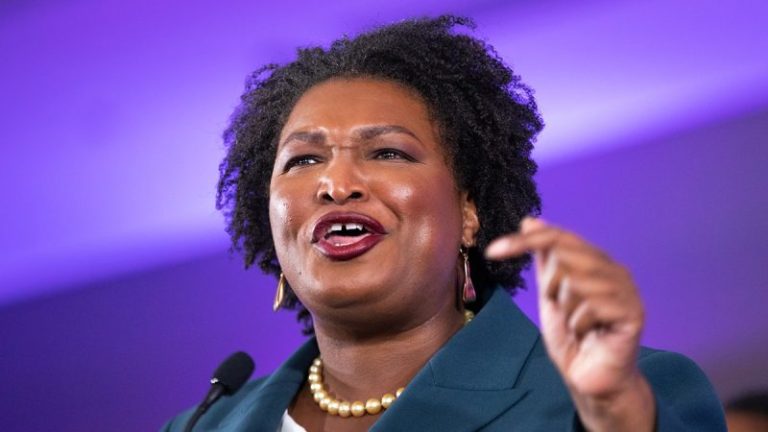
The outrage over $2 billion being handed to a Stacey Abrams-related start-up by the defeated Joe Biden administration is justified. But it is not surprising. Climate spending by the Biden White House was always political.

In 2022, President Joe Biden tapped long-time Democrat operative John Podesta to oversee the disbursement of $375 billon to climate-related initiatives – monies that were included in the dishonestly named ‘Inflation Reduction Act.’ Those funds were supposed to be spent on projects that would drive the country towards Democrats’ goal of a 40% reduction in carbon output below 2005 levels by 2030. 

In reality, the funds set up a gigantic slush fund within the White House, available to Podesta as he set about boosting Democrats’ prospects in 2024. When Podesta was appointed, Gina McCarthy, Biden’s domestic climate adviser, left the White House. Perhaps she declined to turn what was meant to be an important tool against climate change into a political magic wand.

The left-leaning media tried to prettify the Podesta appointment. The New York Times called him a ‘veteran Washington insider who spearheaded the Obama administration’s climate strategy,’ but also highlighted Podesta’s political credentials, which included serving as Bill Clinton’s chief of staff, Hillary Clinton’s 2016 campaign chair and founder of the Center for American Progress, a leftist think tank. Likely most relevant was that Podesta was brought in to ‘help salvage a difficult second term for President Barack Obama’; in 2022, with Biden’s approval ratings collapsing, Podesta was brought out of retirement for another rescue mission. 

In August 2024, the White House put out a fact sheet touting its accomplishments, citing in particular ‘over $265 billion in clean energy investments.’ But the purpose of those investments was not limited to cleaning up the air or reducing our dependence on fossil fuels. 

The White House reported that, ‘According to Treasury Department analysis…75% of private sector clean energy investments have flowed to counties with lower than median household incomes…’ 

They declared that, ‘the Inflation Reduction Act is the largest investment in environmental justice in history.’ Investments targeted communities ‘with below average wages, incomes, employment rates, and college graduation rates…’ 

Some of the recipient areas were purportedly chosen to offset damage done by closing coal mines, for instance, to replace jobs lost in the energy transition. But a map indicates that many toss-up states and counties were also teed up to receive benefits.

Are these counties heavily minority and therefore especially important to Democrats? Were they useful in picking up votes? Certainly, investing in Arizona, Nevada, Michigan and numerous other states cited on a map provided by the government suggests their ability to pick and choose. 

Did they do that? We cannot say for certain, but given Podesta’s hand on the tiller we would assume the beneficiaries of the IRA were carefully chosen for their political benefits. 

A project called Solar for All advances similar goals, part of Biden’s ‘Justice40 Initiative,’ which determined that 40% of certain federal climate and clean energy investments flow to ‘disadvantaged communities that are marginalized by underinvestment and overburdened by pollution.’ 

You get the point, as Podesta hoped that voters would as well. When the White House touted multi-billion-dollar solar investments including the Libra Solar Project in Nevada, a critical swing state, two months before last year’s election, it was not an accident.

Of course, it wasn’t just building out solar projects or handing out tax credits that Podesta orchestrated. The push for EVs arguably soured a great many autoworkers on Biden’s climate agenda, which required Detroit automakers to effectively abandon making profitable and popular cars in favor of turning out EVs. To compensate, and retain his endorsement from the UAW, critical in swing-state Michigan, the Biden White House scurried to prop up the industry. 

In July last year, the administration announced a $334.8 million investment to convert Stellantis’ Belvidere, Illinois Assembly Plant to build electric vehicles and components. So fragile was the EV project that the Department of Energy gave $1.7 billion to convert 11 auto plants in 8 states to keep them afloat. 

Despite their best efforts, the White House was unable to burn though $375 billion, which brings us to former Georgia State Rep. Democrat Stacey Abrams. Leaked video from Project Veritas revealed an adviser to the EPA saying that Biden’s apparatchiks were so worried that President Trump or Congress would demand the return of unspent monies that they shoveled what remained out the door, characterizing the frenzied dispersal of funds as throwing ‘gold bars off the Titanic.’

The EPA consultant, Brent Efron, says that typically his department had been putting ‘the proper processes in place to prevent fraud and prevent abuse,’ but were frantically tossing money to tribes, nonprofits and states ‘because it was harder if it was a government-run program, they could take the money away, if Trump won.’

One of those gold bars landed in the lap of a start-up organization tied to Stacey Abrams, the twice-failed candidate for Georgia governor and persistent election denier. The nonprofit, Power Forward Communities, was the brainchild of several left-wing pro-Biden groups; in 2023, it reported revenues of exactly $100. Abrams is senior counsel at Rewiring America, one of the founding groups, and has boasted of her support for the Power Forward initiative.  

Zeldin, in an interview about the funds, said, ‘When we learned about the Biden Administration’s scheme to quickly park $20 billion outside the agency, we suspected that some organizations were created out of thin air just to take advantage of this.’ It seems he was correct. 

Twenty billion dollars is an enormous amount of money. The fact that the Biden White House purposefully ‘hid’ and likely misused those funds and more, demands investigation. Zeldin said in a video posted on X, ‘The days of irresponsibly shoveling boatloads of cash to far-left activist groups in the name of environmental justice and climate equity are over.’ 

Let us hope so.

This post appeared first on FOX NEWS

Team USA star Matthew Tkachuk, who missed the end of Canada’s 4 Nations Final overtime win with an injury, said he is ‘feeling better’ and likes the team’s chances for redemption at the 2026 Winter Olympics.

There has been concern about how long Tkachuk might miss with the injury as his Florida Panthers finish the season and prepare for their Stanley Cup defense. He told Jimmy Fallon during an appearance Monday night on ‘The Tonight Show’ that he was better and ‘just recovering right now.’

The Panthers are expected to have an answer on Tuesday on the recovery timeline as Tkachuk got his final tests. When asked about a report that Tkachuk could miss the rest of the season, coach Paul Maurice disputed it. ‘He’ll play,’ he told reporters.

Tkachuk and brother Brady played a big role in the tournament. Both scored twice in the opener against Finland and opened the first Canada game with a fight — part of three fights in nine seconds.

‘I think myself and all the guys that were in this were so jacked up for it and I think that’s why you saw all the fights at the beginning of that game against Canada,’ Matthew Tkachuk said. ‘I think guys wanted to get our anger out of the way.’

But his time was limited after that because of a lower-body injury that kept him on the bench at the end of the Canada game, caused him to miss the Sweden game, and kept him out of the final after the middle of the second period.

Tkachuk said he enjoyed playing on the same team as his brother for the first time. He did note they played together in the All-Star Game, ‘but that’s fake.’

‘We grew up always competing against each other and dreaming eventually one day — he plays in Ottawa, I’m in Florida so we knew it was going to be tough in the regular season — but we always had the dream of playing with each other and it finally came true,’ Tkachuk said.

The Tkachuks will get a chance again in the 2026 Olympics, which features more teams than the U.S., Canada, Finland, and Sweden. Matthew Tkachuk noted that all the teams will be star-studded but he likes Team USA’s chances.

‘We got so close with this tournament and looking at next year being kind of our chance at redemption, I truly believe in our chances,’ he said. ‘Wearing the USA crest, there is nothing like it. We have so much pride in it and we’ll be ready to go.’

This post appeared first on USA TODAY

It has been less than a month since the Los Angeles Lakers shook the NBA world, trading for Dallas Mavericks’ young superstar Luka Doncic. Since that moment, Doncic has played in five games for the Lakers, averaging 19.0 points, 7.5 rebounds, and 5.8 assists.

That may not seem overwhelming, but Doncic may have finally found his groove on the West Coast in their most recent game against the Denver Nuggets. Doncic scored 32 points, giving Los Angeles a much-needed win. Now, Doncic will have the opportunity to enact revenge on the team that gave him up for an aging Anthony Davis when the Lakers host the Mavericks Tuesday night.

How to watch:

All things Lakers: Latest Los Angeles Lakers news, schedule, roster, stats, injury updates and more.

How to watch Mavericks vs. Lakers

Time:  10 p.m. ET
Location: Crypto.com Arena, in Los Angeles
TV: TNT, truTV

How to stream Mavericks vs. Lakers

The game can be streamed on Max, YouTube TV and Sling.

This post appeared first on USA TODAY

GOP Rep. Darrell Issa has introduced a bill aimed at preventing federal judges from issuing nationwide injunctions with the sole purpose of derailing a president’s political agenda, which Issa says has been the case since President Donald Trump was sworn in. 

The legislation, known as the No Rogue Rulings Act (NORRA), amends Chapter 85 of title 28, United 5 States Code by adding a ‘Limitation on authority to provide injunctive relief.’

‘Notwithstanding any other provision of law, no United States district court shall issue any order providing for injunctive relief, except in the case of such an order that is applicable only to limit the actions of a party to the case before such district court with respect to the party seeking injunctive relief from such district court,’ the legislation states. 

Dozens of activist and legal groups, elected officials, local jurisdictions and individuals have launched more than 50 lawsuits against the Trump administration since Jan. 20 in response to his more than 60 executive orders, as well as executive proclamations and memos, Fox News Digital reported earlier this month.

Issa says NORRA would limit the scope of nationwide injunctions by preventing federal judges from issuing injunctions that extend beyond parties directly involved in a case, while also ensuring that any injunction restricts only the specific parties requesting relief, regardless of whether the injunction involves outright enforcement of actions or policy actions. 

‘The founders could never have envisioned judges and part of the legislative branch teaming up to tie down the executive and disempower the people,’ Issa told Fox News Digital, adding that the current judge-shopping climate in the United States amounts to ‘judicial tyranny’ and a ‘weaponization of courts.’

Issa’s office told Fox News Digital they are optimistic that this is a bill that will pass through Congress with Republican support and be signed by President Trump, adding that the bill has ‘maximum momentum.’

‘Nowhere in our Constitution is a single federal judge given absolute power over the President or the people of the United States,’ Issa posted on X last week. 

Issa’s bill comes as the Trump administration has publicly pushed back against the flurry of injunctions from courts across the country. 

‘Many outlets in this room have been fear mongering the American people into believing there is a constitutional crisis taking place here at the White House,’ White House press secretary Karoline Leavitt said during a press briefing last week. ‘I’ve been hearing those words a lot lately, but in fact, the real constitutional crisis is taking place within our judicial branch, where district court judges in liberal districts across the country are abusing their power to unilaterally block President Trump’s basic executive authority.’

‘We believe these judges are acting as judicial activists rather than honest arbiters of the law and they have issued at least 12 injunctions against this administration in the past 14 days, often without citing any evidence or grounds for their lawsuits,’ she continued. ‘This is part of a larger concerted effort by Democrat activists, and nothing more than the continuation of the weaponization of justice against President Trump.’

This post appeared first on FOX NEWS

Russian President Vladimir Putin has said that Moscow is willing to consider cooperating with the U.S. in mining rare earth minerals both in Russia and parts of Russian-occupied Ukraine.

Putin, in an interview broadcast on Russian state television Monday, emphasized Russia’s vast deposits of rare-earth minerals and their importance for the Russian economy but said his nation needs to do more to capitalize on its resources. He also said he is open to making an energy deal with the U.S.

His comments come as the Trump administration seeks to recoup the cost of aid sent to Ukraine by gaining access to Ukraine’s rare earth minerals, such as titanium, iron, and uranium, as part of a peace deal.

‘Russia is one of the undisputed leaders in terms of reserves of these rare and rare-earth metals,’ Putin told state media correspondent Pavel Zarubin. ‘These are quite capital-intensive investments, capital-intensive projects. We would be happy to work together with any foreign partners, including American ones.’

Putin said that Russia would be willing to sell about 2 million tons of aluminum to the US market if the US lifted sanctions restricting the import of Russian metals. He said the move could help stabilize prices. 

He said that in 2017, Russia supplied about 15% of all American aluminum imports. Today, however, U.S. imports of Russian aluminum have dipped at least threefold due to sanctions. 

Putin also said a deal could be reached on Russian-occupied areas of Ukraine, which he referred to as ‘new territories.’

‘As for the new territories – the same applies: we are ready to attract foreign partners, and our so-called new historical territories, which have returned to the Russian Federation, also have certain reserves there,’ Putin said. ‘We are ready to work with our foreign partners, including American ones, there as well.’

Putin also said that he is also willing to negotiate with the U.S. on Russian energy.

‘There is much to think about here, as well as joint work on rare and rare-earth metals, and in other areas, including, for example, energy,’ Putin said.

His comments came on the third anniversary of Russia’s invasion of Ukraine. A war that has killed thousands of civilians and displaced millions.

President Donald Trump suggested the war could end within weeks and wants to make a deal on Ukraine’s rare earth minerals.

The president, from the Oval Office Monday, hinted at a potential meeting with Ukrainian President Volodymyr Zelenskyy to finalize an agreement for rights to access its natural resources in exchange for the United States billions of dollars in support for the country’s war against Russia.

‘In fact, he may come in this week or next week to sign the agreement, which would be nice, I’d love to meet him. Would meet at the Oval Office,’ Trump said. ‘The agreement is being worked on now.’ 

‘They are very close to a final deal,’ said the president, who was meeting French President Emmanuel Macron in the Oval Office on Monday. 

Trump said the deal is ‘very beneficial to their economy,’ while Treasury Secretary Scott Bessent added it is ‘very close.’ 

Trump’s comments come just after he posted on Truth Social that he was in ‘serious discussions’ with Putin about ending the Russia-Ukraine war. 

The president on Monday also predicted that the Russia-Ukraine war could end within weeks and that Putin would accept allowing European peacekeeping troops in Ukraine as part of a potential peace deal. 

Trump administration officials, including White House national security advisor Mike Waltz, Secretary of State Marco Rubio and Special Envoy to the Middle East Steve Witkoff, met in Riyadh, Saudi Arabia, recently with Russian Foreign Minister Sergey Lavrov and President Vladimir Putin’s foreign affairs advisor Yuri Ushakov to hash out ways to end the conflict. 

Ukraine was absent from the negotiations in Saudi Arabia, a move that irked Zelenskyy.

This post appeared first on FOX NEWS

House Republicans’ mammoth budget resolution survived its final hurdle late Monday night before heading for a chamber-wide vote.

The legislation passed the House Rules Committee on a party-line vote in a measure combining several bills that are expected to get a full House vote this week.

House GOP leaders aim to have it pass on Tuesday evening, Fox News Digital was told, but various concerns about spending cut levels could put that goal out of reach. Under the current margins, House Speaker Mike Johnson, R-La., can only lose one Republican vote to pass a bill without Democrats. 

Rep. Victoria Spartz, R-Ind., announced over the weekend that she is against the current text, while several other fiscal hawks suggested their support is still up in the air.

Two other conservatives, Reps. Tim Burchett, R-Tenn., and Thomas Massie, R-Ky., signaled they would oppose the resolution as well.

Some Republicans are worried about potentially damaging cuts to Medicaid and other federal benefit programs that their constituents rely on. Johnson met with some of those potential holdouts on Monday night for what he called a ‘very productive conversation.’

The speaker sounded optimistic when leaving the Capitol late on Monday, telling reporters, ‘We’re on track. We got the resolution through rules, and we’re expecting to vote tomorrow evening.’

The bill aims to increase spending on border security, the judiciary and defense by roughly $300 billion, while seeking at least $1.5 trillion to $2 trillion in spending cuts elsewhere.

As written, the bill also provides $4.5 trillion to extend President Donald Trump’s 2017 Tax Cuts and Jobs Act provisions, which expire at the end of this year.

An amendment negotiated by House Budget Committee Chairman Jodey Arrington, R-Texas, and conservatives on his panel would also force lawmakers to make $2 trillion in cuts, or else risk the $4.5 trillion for Trump’s tax cuts getting reduced by the difference. 

That agreement alarmed Republicans on the House Ways & Means Committee, like Rep. Nicole Malliotakis, R-N.Y.

‘I don’t think that is doable without affecting beneficiaries, and I’ve expressed that concern to leadership and in talking to some of my colleagues,’ Malliotakis told Fox News Digital last week.

Johnson met with Malliotakis and other members of the Congressional Hispanic Conference, a House GOP group, on Monday night to discuss their concerns about spending cuts in the bill. The New York Republican was more optimistic when leaving the meeting late on Monday night, telling reporters that GOP leaders had eased her concerns.

‘I’d say now I’ve shifted from undecided to lean yes,’ Malliotakis told reporters. ‘This is moving in the right direction.’

GOP lawmakers are working to pass a broad swath of Trump policies – from investments in defense and border security to eliminating taxes on tipped and overtime wages – via the budget reconciliation process. 

The mechanism allows the party in control of both houses of Congress to pass a tax and budget bill without help from the opposing party. To do so, it lowers the threshold for passage in the Senate from two-thirds to a simple majority, where the House already sits.

The Senate advanced a narrower version of the plan last week, which does not include Trump’s tax cut priorities. Because the president favors all the issues being wrapped up into one bill, however, it has been relegated to a de facto backup plan if the House fails to pass its plan on a reasonable timeline.

The House Rules Committee is the final gatekeeper for most pieces of legislation before a chamber-wide vote. 

The committee will normally debate a set of bills, not necessarily related ones, before setting terms for amendments and debate and advancing those terms out of committee as a single ‘rules package.’

House lawmakers will then vote on the rules package before the final reconciliation framework.

Once this bill passes the House, the relevant committees will get to work filling the framework out with detailed policy priorities, which will then be returned as a final bill that will need to face House passage again.

Johnson said at the Americans for Prosperity event on Monday that he wants that to happen sometime in April.

This post appeared first on FOX NEWS

The deadline for federal workers to respond to Elon Musk’s request to verify their weekly work output passed on Monday night, but the consequences of declining to respond remain vague.

Musk confirmed shortly before Monday’s deadline that federal workers would be given another chance to respond, and that failure to do so ‘will result in termination.’

Several government agencies, including those led by loyalists to President Donald Trump, told their employees not to respond to the original request from the Office of Personnel Management (OPM). While Musk himself suggested on social media that refusing to respond to the email would be ‘taken as a resignation,’ the actual email from OPM made no mention of such consequences.

‘Please reply to this email with approx. 5 bullets of what you accomplished last week and cc your manager,’ the OPM request read, making no threats of termination.

The FBI and Department of Defense, led by Trump allies Kash Patel and Pete Hegseth, also instructed their employees not to respond, citing the confidential nature of their work.

‘When and if further information is required, we will coordinate the responses. For now, please pause any responses,’ Patel wrote to FBI employees.

Trump argued there was no rift in his administration despite the conflicting orders, however.

‘They don’t mean that in any way combatively with Elon,’ he told reporters late last week. ‘Everyone thought it was a pretty ingenious idea.’

‘What he’s doing is saying, ‘Are you actually working?’’ Trump said in the Oval Office on Monday. ‘And then, if you don’t answer, like, you’re sort of semi-fired or you’re fired, because a lot of people aren’t answering because they don’t even exist.’

Musk nevertheless appeared angry at the lack of response to the request, turning to X to express his frustration just hours before the 11:59 p.m. Monday deadline.

‘The email request was utterly trivial, as the standard for passing the test was to type some words and press send!’ he wrote. ‘Yet so many failed even that inane test, urged on in some cases by their managers. Have you ever witnessed such INCOMPETENCE and CONTEMPT for how YOUR TAXES are being spent? Makes old Twitter look good. Didn’t think that was possible.’

Musk’s Department of Government Efficiency (DOGE) is in the midst of auditing various federal agencies in search of wasteful spending, corruption and mismanagement. 

DOGE’s work comes as President Donald Trump ordered the federal workforce to return to the office after five years of remote work stemming from the coronavirus pandemic, and has vowed to clean house of bad actors within the government and ax overspending.

This post appeared first on FOX NEWS