Archive

2025

Browsing

President Donald Trump on Tuesday signed an executive order directing the departments of the Treasury, Labor, and Health and Human Services to make healthcare prices transparent.

The order directs the departments to ‘rapidly implement and enforce’ the Trump healthcare price transparency regulations, which he claims were slowed by the Biden administration.

The departments will ensure hospitals and insurers disclose actual prices, not estimates, and take action to make prices comparable across hospitals and insurers, including prescription drug prices.

In addition, they will be required to update their enforcement policies to ensure hospitals and insurers are in compliance with requirements to make prices transparent.

‘When healthcare prices are hidden, large corporate entities like hospitals and insurance companies benefit at the expense of American patients,’ the White House wrote in a statement. ‘Price transparency will lower healthcare prices and help patients and employers get the best deal on healthcare.’

The executive order notes a number of concerns with current healthcare pricing, including that prices vary between hospitals in the same region.

‘One patient in Wisconsin saved $1,095 by shopping for two tests between two hospitals located within 30 minutes of one another,’ according to the statement.

The White House claims one economic analysis found Trump’s original price transparency rules, if fully implemented, could deliver savings of $80 billion for consumers, employers and insurers by 2025.

It added that employers will lower their healthcare costs by an average of 27% on 500 common services by better shopping for care.

‘They’ll be able to check them, compare them, go to different locations, so they can shop for the highest-quality care at the lowest cost,’ Trump wrote in the statement. ‘And this is about high-quality care. You’re also looking at that. You’re looking at comparisons between talents, which is very important. And, then, you’re also looking at cost. And, in some cases, you get the best doctor for the lowest cost. That’s a good thing.’

The White House said American patients are ‘fed up with the status quo,’ with 95% saying healthcare price transparency is an important priority. More than 50% said it should be a top priority of the government.

In his first term, Trump took historic action by mandating that hospitals and insurers make prices public.

A lawsuit was filed against the Biden administration in 2023, alleging it did not enforce the prescription drug transparency requirements. 

‘While the prior Administration failed to prioritize further implementation and enforcement of these requirements, President Trump is delivering on his promises to make the healthcare system more affordable and easier to navigate for patients,’ according to the statement.

Fox News Digital previously reported the administration’s tariffs on China will affect drug costs.

Consumers are more dependent on China for medications for anxiety and other psychiatric disorders, such as antidepressants.

This post appeared first on FOX NEWS

Republicans are mounting pressure on the Justice Department to advance the release of classified documents and records related to the assassination of President John F. Kennedy and other federal secrets. 

President Donald Trump signed an executive order in January for agencies to create plans to distribute the files, as well as documents pertaining to the assassinations of Sen. Robert F. Kennedy and Dr. Martin Luther King Jr.

But Rep. Anna Paulina Luna, R-Fla., who is leading the House Oversight Committee’s Task Force on the Declassification of Federal Secrets, is pushing the Department of Justice for answers on when that will happen — and so far, says she has faced silence. 

‘On Feb 11 & Feb 19, house oversight sent a letter to the DOJ asking for status on releasing the Epstein files as well as JFK etc.,’ Luna said in a post on X Monday. ‘The DOJ has not responded. Reaching out on X because we can’t seem to get a response from the AG. @AGPamBondi what is the status of the documents? These documents were ordered to be declassified.’

Luna sent a letter to Director of National Intelligence Tulsi Gabbard, Attorney General Pam Bondi, National Security Advisor Michael Waltz and White House Counsel David Warrington requesting a briefing by Thursday on plans for the release of the documents. 

The letter also requests details on when the declassified documents will become available to the task force and the public. 

Trump’s executive order instructed the Department of Justice to coordinate with Gabbard, Waltz and Warrington to establish a plan by Feb. 7 for the release of the JFK files, and to create a plan for the release of the MLK and Robert F. Kennedy files by March 9. 

Additionally, Luna is pushing the Justice Department to share details regarding Jeffrey Epstein’s client list. The American financier died in 2019 while awaiting trial on sex trafficking charges. 

Meanwhile, Bondi said Friday that Epstein’s client list was awaiting review, and that she was looking over the Kennedy and King files. 

‘It’s sitting on my desk right now to review,’ Bondi told ‘America Reports’ host John Roberts Friday about the Epstein files. ‘That’s been a directive by President Trump.’

A spokesperson for the Justice Department did not immediately respond to a request for comment from Fox News Digital. 

Luna’s office did not respond to a request for comment from Fox News Digital in response to Bondi’s statements. 

Luna isn’t the only Republican lawmaker pushing for the release of these documents. Sen. Marsha Blackburn, R-Tenn., also said Monday Democrats have undercut her efforts to ‘crack the Epstein trafficking ring wide open,’ and vowed that she would receive answers under newly confirmed FBI Director Kash Patel. 

‘The time for transparency is now,’ Blackburn said in a Monday post on X. 

Sen. Mike Lee, R-Utah, also said in a Monday X post that the documents belong to the American people, and ‘it’s about damn time they be given access to it!’ 

The Office for the Director of National Intelligence also did not immediately respond to a request for comment from Fox News Digital, but told the Associated Press that a plan has been submitted regarding the Kennedy files.

The White House did not immediately respond to a request for comment from Fox News Digital. However, Trump vowed on the campaign trail that he would declassify all JFK-related documents if he won the 2024 election.  

The House’s Task Force on the Declassification of Federal Secrets is scheduled to hold its first public hearing on March 26. 

Fox News’ Haley Chi-Sing contributed to this report. 

This post appeared first on FOX NEWS

The NFL scouting combine kicks off this week, but for teams, the majority of the work to evaluate players has already been completed.

For casual observers, the annual event in Indianapolis might serve as an introduction to some of the names that will come to define the next two months in the lead-up to the 2025 NFL draft. But the interviews, medical checks, testing and drills only serve as the finishing touches to the expansive looks that teams have already given to prospects. Still, there’s room for front offices and coaches to be swayed, so prospects will try to put their best foot forward when they hit the field at Lucas Oil Stadium.

Here are our pre-combine top 50 rankings for the 2025 NFL draft:

1. Travis Hunter, CB/WR, Colorado

Without hyperbole, football hasn’t seen a player like Hunter in quite some time. The Heisman Trophy winner was downright heroic in pulling double duty at cornerback and wide receiver, excelling at each spot despite a workload that would leave almost anyone else winded. While Hunter maintains he wants to keep that up, working primarily at one spot should serve not only his development but also assist with his stamina. His scintillating ball skills could make him a premier talent at either position, though cornerback seems to be the more reasonable attractive play for most teams at this point. He still has plenty to fine tune, but he’s one of the few legitimate game-breaking talents to come through the draft in recent years.

NFL STATS CENTRAL: The latest NFL scores, schedules, odds, stats and more.

2. Abdul Carter, DE, Penn State

If anyone else has a claim to the top spot at this point, it might be Carter. The 6-3, 250-pounder moved from linebacker to defensive end last season and unlocked something special. He gets off the line in an instant and slithers past blockers to close in on the ball carrier. Unlike many other edge rushers with his athleticism, he’s not afraid to get physical or work back inside. His bend and burst leave quarterbacks with little hope for escaping his clutches. As is typical for college edge rushers, he can improve with by expanding his set of pass-rush moves. But the overall package is that of an All-Pro talent.

3. Will Johnson, CB, Michigan

The comparisons to Pat Surtain II – the Denver Broncos cornerback and reigning NFL Defensive Player of the Year – are lofty but not outlandish. The 6-1, 203-pounder puts together the size, fluidity and instincts to handle any coverage assignment. Johnson isn’t a true burner and saw his 2024 season go sideways due to a toe injury, but he otherwise projects as a sticky corner who should could have excellent ball production.

4. Ashton Jeanty, RB, Boise State

As the debate about running back value rages on, Jeanty promises to be a fascinating litmus test. The Heisman Trophy runner-up strung together one of the most dominant seasons in college football history with 2,601 rushing yards and 29 touchdowns on the ground. A sublimely patient runner, he regularly slips past would-be tacklers in tight spaces and often manages to bounce off those who do make contact with him. The biggest thing holding his stock back might be the all-important question of how teams should properly invest at his position.

5. Cam Ward, QB, Miami (Fla.)

After backing out of his initial decision to declare for last year’s draft, Ward transferred to Miami and blossomed into college football’s most dynamic passer. The 6-2, 223-pounder dazzles with off-platform throws and operating out of structure. The biggest challenge for him, however, will be to take the easier gains in the short and intermediate areas rather than holding out for higher-difficulty throws that easily could become turnovers. Dialing back that mentality while still allowing Ward to embrace his playmaking streak could prove tricky for his future coaching staff, but his poise in the pocket and comfort working through his progressions should provide some level of assurance that he can grow in this area.

6. Tetairoa McMillan, WR, Arizona

The 6-5, 210-pounder has made a habit out of making the spectacular look routine. McMillan is content to pluck jump balls out of the air downfield, but he also thrives working underneath and immediately turning into a run-after-catch threat. Like many bigger receivers, he’ll face questions of whether he has the pure long speed to create separation downfield, but he has more than enough tools to overcome that potential shortcoming.

7. Tyler Warren, TE, Penn State

The Nittany Lions deployed the former high school quarterback creatively as the focal point of their offense, and it was easy to see why they did so. The 6-6, 261-pounder can do almost anything asked of him in the passing game, from hauling in contested catches to turning upfield and racking up yards after a quick throw. He has room to grow as a run blocker, but he has the disposition and skills to leave his imprint on every phase of the game.

8. Will Campbell, OT, LSU

Steadiness is the hallmark of three-year starter and consensus All-American’s play. Campbell stays composed and collected in pass protection, though he has some trouble with edge defenders comfortable working back inside. The 6-6, 320-pounder lacks ideal length for a blindside protector, but he should be a fixture of his future team’s offensive line, whether at tackle or guard.

9. Colston Loveland, TE, Michigan

A shoulder injury and shaky quarterback play obscured just what a threat Loveland can be as part of an NFL offense. The 6-5, 245-pounder should regularly create mismatches as an athletic target who is comfortable breaking free from slower defenders or boxing out smaller ones.

10. Mason Graham, DT, Michigan

As a square and squat interior disruptor, Graham will challenge some teams’ notions of what a defensive tackle should look like. But his ability to create havoc is readily evident, as he slips past guards thanks to his quick feet and crafty hand usage. He might not win in typical fashion for a defensive tackle and could need to generate a better bull rush, but he has several different answers for whatever offenses throw at him.

11. Josh Simmons, OT, Ohio State

His stock likely will be linked to his recovery from a season-ending knee injury he suffered in October. So long as teams are comfortable with his prognosis, however, the 6-5, 310-pounder checks many boxes of an upper-echelon pass protector, though he’s not as forceful as some of his blocking peers in this class.

12. Jalon Walker, LB, Georgia

At 6-2 and 245 pounds, he’ll require creative utilization from his future defensive coordinator, especially if he’s to be deployed off the edge. But his playmaking prowess is undeniable, as he can knife past blockers with his length and slippery style, and he’s a missile once he locks onto a ball carrier in space. He’s still developing as an off-ball linebacker, but he could become a major asset in coverage as well.

13. Walter Nolen, DT, Mississippi

The former No. 1 overall recruit didn’t fully find his form in his first two years at Texas A&M before transferring, but he broke out in his lone season in Oxford. Nolen excels at shooting the gap, though he’s also adept at pushing linemen backward. He’s too often guilty of taking himself out of plays with an overaggressive approach, but proper coaching should help him harness his attacking mentality.

14. Jahdae Barron, CB, Texas

The 5-11, 200-pounder probably won’t burn up the combine as one of the top athletes at his position. But in a game setting, the Thorpe Award winner has a preternatural sense for finding the football. He might not size up as a true outside corner to some, but he can be a versatile asset in coverage who thrives working downhill.

15. Armand Membou, OT, Missouri

At 6-3 and 322 pounds, he doesn’t look the part of a bookend tackle, and his frame could portend a move to guard. But Membou is equally comfortable pushing opponents around in the run game as he is keeping pass rushers at bay, though his build might leave him susceptible to being beaten by rangier defensive linemen.

16. Mike Green, DE/OLB, Marshall

The Football Bowl Subdivision leader in sacks (17 in 2024) employs a far more physical approach than one might expect from a 6-3, 251-pound edge rusher. He risks stalling out if he doesn’t continue to fill out his frame, but his relentless style and elasticity as a rusher should position him to make plenty of plays in the backfield.

17. James Pearce Jr., DE, Tennessee

His blistering initial burst off the line is often enough to give him a runway to the backfield, and he can leverage his rangy frame and formidable punch to take advantage of blockers who are thrown off balance by his speed. But it’s unclear whether he can hold up against the run and be an every-down defender, and his ability to finish off plays is still a concern.

18. Mykel Williams, DE, Georgia

Like Travon Walker before him, Williams represents a gamble on a package of outstanding traits that never coalesced into the fully dominant from many expected from him. The 6-5, 265-pounder can beat blockers in a variety of ways thanks to his rare combination of speed and power, though he likely will need to figure out additional moves for shedding opponents who do manage to lock in on him.

19. Tyler Booker, G, Alabama

There might not be a more powerful blocker in this year’s class, as the 6-5, 325-pounder looks to punish anyone in his path. He’s not the most fleet-footed lineman, but he should be coveted by any team looking to ramp up a physical rushing attack.

20. Derrick Harmon, DT, Oregon

Transferring from Michigan State paid off in a major way for Harmon, who had the most pressures of any interior defensive lineman last season with 55, according to Pro Football Focus. The 6-5, 310-pounder can create disruption from anywhere along the line, though his finishing touch is somewhat lacking.

21. Matthew Golden, WR, Texas

With Xavier Worthy and Adonai Mitchell off to the NFL, the Houston transfer stepped in and established himself as the Longhorns’ next standout pass-catching prospect. Golden enjoyed some of his best performances against top competition down the stretch in Texas’ College Football Playoff push. If he is able to beat press coverage consistently, he can challenge cornerbacks downfield with his acceleration or shake them on in- or out-breaking routes with his crisp footwork.

22. Jihaad Campbell, LB, Alabama

A former edge rusher, Campbell is still somewhat finding his way as an off-ball linebacker, as his recognition skills are underdeveloped. But a 6-3, 244-pound defender with extensive playmaking range, a proven track record as a blitzer and untapped coverage potential is the kind of project any defensive coordinator would gladly take on.

23. Shavon Revel Jr., CB, East Carolina

If not for a torn ACL suffered in September, he might be firmly entrenched as a first-rounder, as the 6-1, 188-pounder marries an ultra-competitive demeanor at the line of scrimmage with impressive recovery speed and improving ball skills. His health outlook will no doubt loom large in his evaluation, but if he can find the right fit with a defensive coordinator patient enough to bring him along – his style of play might make him prone to early penalties, and there will be a significant leap in quality of competition – he could be a highly productive starter.

24. Kelvin Banks, OT/G, Texas

The Outland Trophy winner is one of the more battle-tested prospects in this class after three years of starting experience. It remains to be seen whether teams will entrust the 6-4, 320-pounder to hang at tackle despite his suboptimal frame and balance, but he likely will still be highly valued even if he has to bump inside.

25. Emeka Egbuka, WR, Ohio State

The 6-1, 205-pounder is far from the most explosive pass catcher in this year’s class, but he routinely creates separation thanks to his savvy rather than his athleticism. He has an advanced feel for route-running and shedding coverage in tight quarters, which should help him become a fast favorite of his future quarterback as a high-volume underneath slot target.

26. Malaki Starks, S, Georgia

Starks has been a difference-maker ever since starting as a freshman in Athens, rising to the role of team leader for one of college football’s most dominant defenses. There are some volatile moments in coverage, as he too frequently takes the bait and can be shaken in man coverage by quicker receivers. But if he can iron out those issues, he could be a staple of any secondary as a versatile and heady playmaker.

27. Shedeur Sanders, QB, Colorado

Despite operating in a spotlight that might blind other passers, Sanders somehow managed to exceed outsized expectations by establishing himself as a precise and poised distributor. How he handles pressure at the next level could be one of the biggest determining factors in the trajectory of his career, but he could be a more than capable starter for an offense that asks him to conduct more often than create.

28. Luther Burden III, WR, Missouri

At a time when other receivers shined, his 2024 season went sideways, with the dynamic slot target averaging just 11.1 yards per game. Expanding his route tree in the pros could be the key to whether he remains primarily a threat on quick hitters underneath or becomes a more well-rounded target capable of threatening defenses downfield.

29. Shemar Stewart, DE, Texas A&M

There might not be a more imposing defensive prospect in this class than the 6-5, 281-pound edge rusher with a rapid burst off the line. Those impressive physical tools should allow Stewart to keep creating pressure consistently while helping shut down the run game, but it remains to be seen whether he can develop a reliable pass-rush plan and finishing touch after netting just 4 ½ sacks in college.

30. Kenneth Grant, DT, Michigan

Don’t pigeonhole the 6-3, 342-pounder as a mere space eater, even though he can command double teams and plug holes against the run. Grant is perhaps this class’ most athletic big man, though his nimble movements have yet to translate to much of anything in the pass rush.

31. Donovan Jackson, G, Ohio State

Shifting to left tackle during the Buckeyes’ title run helped highlight just how far the former five-star recruit has come in his career, as Jackson locked down an array of top-notch edge rushers. The 6-4, 320-pounder figures to move back inside at the next level, where his viselike grip should help him clamp down on defenders both in pass protection and the run game.

32. Nick Emmanwori, S, South Carolina

At 6-3 and 227 pounds with the speed of a cornerback, he seems perfectly suited to match up with tight ends and bigger receivers. Emmanwori is a bit wild when working downhill against the run and may lack the fluidity to stick in the slot, but his excellent ball skills and physical tools should prove plenty alluring to many teams.

33. Kaleb Johnson, RB, Iowa

Johnson single-handedly invigorated Iowa’s long dormant offense with his smooth running style, averaging 6.4 yards per carry. The 6-0, 225-pounder is patient yet decisive in his approach, snaking around would-be tacklers to find the open field. His limited comfort level in the passing game – particularly in protection – could box him in somewhat during the early portion of his career.

34. Donovan Ezeiruaku, DE/OLB, Boston College

After notching 16 ½ sacks last season, Ezeiruaku already seems to have a master’s degree in pass-rushing, as he has a full toolkit of moves he is prepared to wield at just the right moment. His 6-2, 247-pound build still will likely result in him being erased by bigger blockers, particularly in the run game, but he compensates for it by leveraging his length, agility and smarts.

35. Josh Conerly Jr., OT, Oregon

He ended up on the wrong end of a Senior Bowl viral highlight against Green, but that shouldn’t define Conerly’s pre-draft process. The 6-4, 315-pounder came into his own last season as a smooth mover, though he could be victimized by power rushers in the early going.

36. Landon Jackson, DE, Arkansas

The LSU transfer is the kind of player any offensive tackle hates to see lining up across from him, as the 6-7, 280-pounder boasts daunting length, an impressive arsenal of pass-rush moves and a never-say-die mentality. Jackson might be too big for his own good, however, as his rigidity severely limits him in several phases of the game.

37. TreVeyon Henderson, RB, Ohio State

Once he gets to the corner, watch out. The 5-10, 208-pounder can’t always fight his way through to daylight on inside runs, but Henderson has the burst to break long gains whenever he’s given a crease. Already a comfortable pass protector and reliable receiver, he should be a three-down option from Day 1.

38. Azareye’h Thomas, CB, Florida State

The Senior Bowl standout has given evaluators reason to go back and take a closer look at one of the few bright spots in a disappointing season for the Seminoles. The 6-1, 191-pounder has a strong claim to be the premier pest of this defensive class, as he regularly smothers receivers at the line of scrimmage with his length and hyperphysical approach. He might not generate a ton of plays on the ball and won’t be a fit for every scheme, but any team looking for an in-your-face coverage presence has to give him strong consideration.

39. Jack Sawyer, DE, Ohio State

One of the heroes of the Buckeyes’ title run, Sawyer is a pure punisher off the edge. It seems unlikely that he can diversify his pass rush beyond his current power-based approach, but he can overwhelm any blocker who lets up even momentarily, and he should be a force against the run.

40. Maxwell Hairston, CB, Kentucky

A 179-pound cornerback might be seen by some as a liability more than an asset at the line of scrimmage. While it remains to be seen whether Hairston can hold up against more physical receivers in the pros, he certainly has the disposition to hang with any wideout he finds himself across from, as he relishes working in close quarters.

41. Nic Scourton, DE, Texas A&M

The 6-4, 280-pounder can be a load for any lineman to handle, as he embraces contact with active hands, a high-energy approach and plenty of knowhow. Though his hustle and expansive set of pass-rush moves could take him a good distance, he might not have the upside of other edge rushers in the class given his mostly unremarkable physical traits.

42. Mason Taylor, TE, LSU

The son of Hall of Famer Jason Taylor has made a name for himself on the other side of the ball, proving to be a fluid pass catcher comfortable operating both in space and in traffic. He’s not as dynamic as the this year’s top tier of tight ends and is more likely to be a complementary piece than a go-to target, but he can still be a highly effective weapon for the right offense.

43. Jaxson Dart, QB, Mississippi

It’s hard to tell exactly what a team is getting in a signal-caller who feasted in a scheme that afforded him so many chunk gains off initial reads. But if he can hone his processing and clean up his footwork, Dart stands out as a particularly intriguing prospect to bring along slowly given his potential to beat defenses over the middle.

44. Xavier Watts, S, Notre Dame

With 13 interceptions over the last two seasons, the two-time consensus All-American – Notre Dame’s first since 1993 – has an unparalleled knack for finding the ball in coverage. Watts might not match other defensive backs in man coverage capabilities and versatility, but his instinctive style should translate to plenty more playmaking opportunities.

45. JT Tuimoloau, DE, Ohio State

His impact at the next level is likely to be measured more in pressures than sacks, but his disruption still comes in handy. The 6-5, 269-pound Tuimoloau lacks diversity as an edge rusher who relies almost entirely on his ability to push back opposing linemen, but his one trick is plenty good.

47. Grey Zabel, C, North Dakota State

After Graham Barton made the switch from collegiate left tackle to standout center as a rookie for the Tampa Bay Buccaneers, Zabel likely is looking at a similar trajectory. The 6-5, 318-pounder has experience at every other position along the line, but his superlative work at center during the Senior Bowl should have teams envisioning his long-term future there.

47. Tre Harris, WR, Mississippi

The 6-3, 210-pounder is far from a finished product as a pass catcher, with the overwhelming bulk of his experience coming on quick hits or deep shots. But his big-play ability downfield and after the catch should afford him a significant role early on even while he learns to become a more complete receiver.

48. Bradyn Swinson, DE, LSU

He hasn’t enjoyed the widespread recognition of some other edge rushers in this draft class, but that might soon change. The 6-4, 250-pounder is extremely explosive, with the speed-to-power move to jolt offensive linemen when he’s not simply dipping past them.

49. Carson Schwesinger, LB, UCLA

The walk-on who became an All-American is more than just a feel-good story. Schwesinger’s rapid recognition often enables him to find his way to the ball carrier faster than blockers can reach him, though he does have trouble disengaging opponents when they do beat him to the spot.

50. Omarion Hampton, RB, North Carolina

The 6-0, 220-pounder is perfectly content to run through defenders rather than around them, something he frequently did en route to racking up 30 rushing touchdowns over the last two years. Hampton might have to rely on that strength even more at the next level, however, as he isn’t elusive enough to force many missed tackles in the open field.

This post appeared first on USA TODAY

Sometimes the physical recovery is the easy part.

The puncture wound Mikaela Shiffrin suffered during a Nov. 30 crash tore a long, deep gash in her obliques, a not-insignificant muscle group for a ski racer. Surgery, rest and intense rehab got her well enough that she was able to return to the World Cup circuit just two months later.

The mental scars will take a little longer to heal.

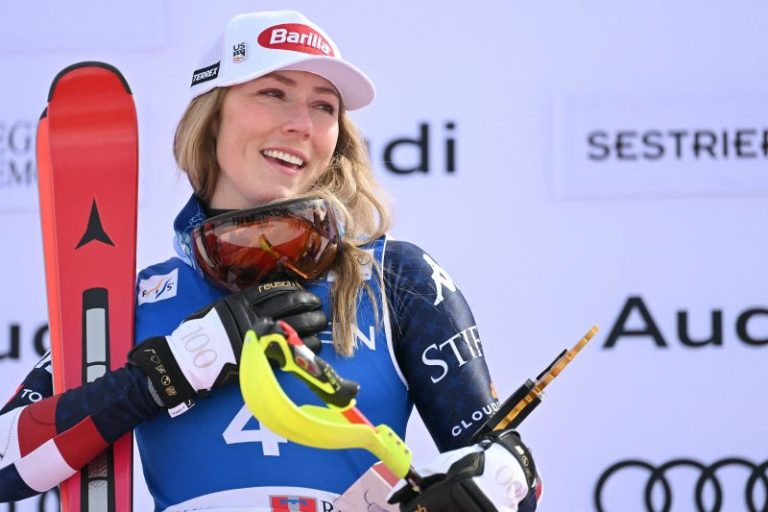
Though Shiffrin won a slalom in Sestriere, Italy, on Sunday — her 100th World Cup victory, for those keeping track — she acknowledges the comeback has not been easy. The psychological trauma from the crash has not only caused anxiety; it’s created something of a fun-house effect in her brain:

Shiffrin knows what she wants to do and how to make that happen. She just can’t get her body to go along with it.

“The way that I visualize skiing the (GS) course is correct — or I think correct. I visualize the right intensity, the right pace, the same way that I always have. But then when I go to actually do it, it’s like my body just needs an extra beat to do all of the moves that I need to do,” Shiffrin told USA TODAY Sports on Tuesday.

“(My psychologist said to) understand that this is temporary. It’s a little pocket of reality that you’re experiencing right now, that you’re just not quite 100% yourself or you’re not really feeling entirely yourself,” Shiffrin continued. “And it doesn’t mean you’re bad. It doesn’t mean you’re wrong.”

It means she’s still healing. And it will take more time.

Shiffrin experienced something similar after the sudden death of her father five years ago. She talked then of the overwhelming fatigue she felt and the apathy that resulted. What she’s feeling now might not be quite as extreme, but she knows it’s not something that can be wished away, no matter how badly she wants to be racing GS and super-G.

“I’m trying to wrap my head around it, and understand the validity in what it is,” Shiffrin said.

Shiffrin has always been introspective and unflinchingly honest, so it’s not a surprise she’s being open about her current struggles.

But she’s also talking about it because she knows other skiers have experienced this, too, and she wants them to know they’re not alone. To recognize it, and know what they’re going through is normal and not a reflection of their talent or skill.

Shiffrin said several other racers who’ve had horrific crashes, including Italy’s Sofia Goggia, Sweden’s Sara Hector and U.S. teammates Nina O’Brien and Jackie Wiles, have reached out in the last several weeks to share their experiences and how they got through them.

“The only thing for you to do is keep exposing yourself to it, because that’s the only way to reconnect your body and mind,” Shiffrin said.

Too often, though, athletes assume it’s something physical. That they’ve lost speed or their muscles just aren’t firing like they used to.

“They’re just thinking there’s something wrong with them. They’re just like, ‘I’m just slow. I’m just not a good skier,’ ‘ Shiffrin said.

But Shiffrin knows better. All she has to do is look at the record books. Or her wins in the team combined at the world championships earlier this month and last weekend’s World Cup.

Nearly back to her old self in slalom, she knows she’ll get back there in the other disciplines, too. She just needs to give herself the space and the grace to do it.

“The reason I didn’t race the GS at world championships is, at that point, it felt like I wouldn’t even feel comfortable actually just pushing out of the start to the first gate. And now the big improvement is that I want to push out of the start. I want to take on the turns and I want to ski the course faster,” she said. “I’m just still not quite connecting it.”

Shiffrin has almost two weeks before her next World Cup races, a giant slalom and slalom in Are, Sweden. Then she’ll travel to Sun Valley, Idaho, for the World Cup finals, which are March 22-27. It’s a rare opportunity for U.S. skiers to compete on home snow, and they’re eager for the attention it will bring to the sport in a non-Olympic year.

Skiing, like so many sports in the Winter Olympics, remains a niche sport for most Americans. Access to snow is one challenge, but the expense of it is a considerable hurdle, too. Shiffrin hopes to change that and used her 100th World Cup win to launch a fundraising effort for Share Winter, a foundation that brings winter sports to kids and communities that historically have not had access to them.

Shiffrin donated $10,000 and is challenging sponsors and fans to get the total to $100,000. That would enable 200 kids to be able to ski for an entire season.

“When you go see the videos that (Share Winter) shares of these kids going out and snowboarding for the first time, and they’re like, ‘Whoa! I crashed! And I got back up. It’s super fun!’ ‘ Shiffrin said.

“How many runs have I done in this sport? I’m completely desensitized to the thrill of it, actually,’ she said. ‘When you hear somebody just getting out there for the first time talking about that thrill, it’s pretty beautiful.”

A good perspective to have, perhaps now more than ever.

Follow USA TODAY Sports columnist Nancy Armour on social media @nrarmour.

This post appeared first on USA TODAY
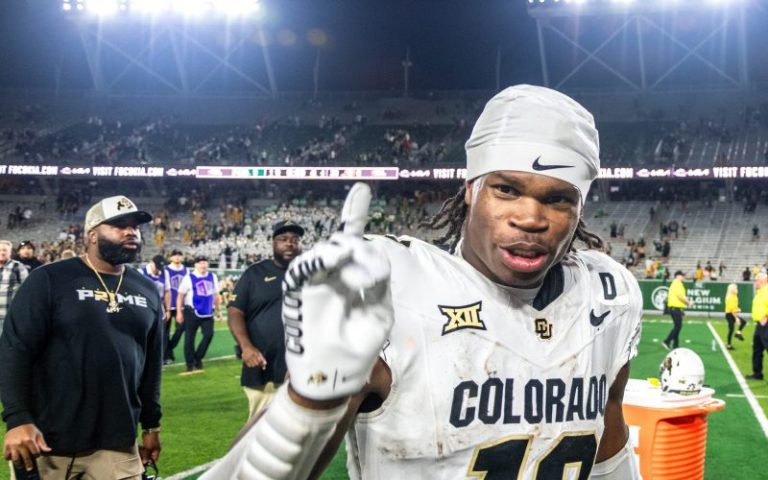
INDIANAPOLIS – The Tennessee Titans opted to trade the No. 1 pick the last time they owned the top selection in 2016. In possession of the No. 1 pick again, they haven’t closed the door on dealing the most coveted draft slot.  

Tennessee Titans general manager Mike Borgonzi revealed the team has fielded phone calls from inquiring teams.

“We’ve had some phone calls,” Borgonzi said. “I’ll keep those phone calls to the vest. But we’ve had some calls.”

The Titans are open to listening to teams inquiring about the No. 1 pick in the 2025 NFL draft, but there are some factors that could deter Tennessee from moving down. The Titans at 3-14 finished tied for the league’s worst record, they were 1-7 at home and ended on a six-game losing streak, which is tied with the Cleveland Browns as the NFL’s longest active losing streak.

Borgonzi believes this year’s draft contains just a fist full of generational players. The Titans could miss out on a player Borgonzi thinks is a generational talent if they elect to move down too far.

NFL STATS CENTRAL: The latest NFL scores, schedules, odds, stats and more.

“There’s a handful of players,” Borgonzi said. “Anytime at the top of the draft that you would deem generational talents, and we certainly feel that way this year as well.”

What traits do generational talents have?

“A rare skill set of talent, an impact player that can take the team to another level, whatever position it is,” Borgonzi said. “And then they also have the character makeup as well to go with it.”

One position the Titans must address this offseason is quarterback, whether in free agency or through the draft.

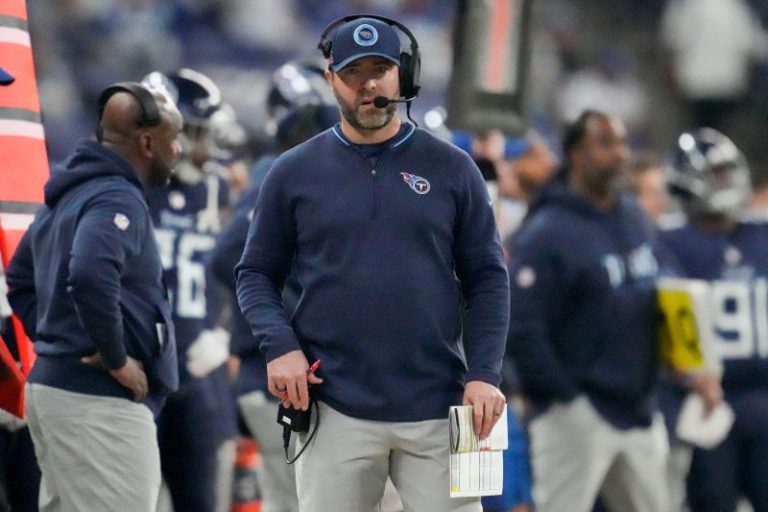
The Titans hired Borgonzi after he spent 16 years with the Kansas City Chiefs. He was on Kansas City’s staff when the team traded up to select Patrick Mahomes, No. 10 overall in the 2017 draft. Titans head coach Brian Callahan was a college football quarterback at UCLA and helped the Bengals evaluate Joe Burrow before Cincinnati picked Burrow No. 1 overall in the 2020 draft.

Both Borgonzi and Callahan know the characteristics of a franchise quarterback. Will Levis, who’s underwhelmed in 21 games, is the only quarterback currently under contract. He isn’t the long-term answer. The Titans don’t have a franchise quarterback in their building. The organization hasn’t had a 4,000-yard passer in a single season since Warren Moon crossed the barrier for two consecutive seasons from 1990-91.

Cam Ward and Shedeur Sanders are the consensus top two quarterbacks in this year’s draft class. Callahan declined to rank the two signal-callers. However, he believes Ward and Sanders are deserving of the top two QB distinction. The head coach hopes to have a quarterback in the building with a few traits that stand out.  

“Decision making, timing, accuracy and scouting quarterbacks is not an exact science. You can see over the years that there’s been really quality players that you think had it, that maybe didn’t show up when it actually came time. And then there’s ones that you weren’t sure if they did, and they show up and they play well,” Callahan said. “Those are things that we have to do our due diligence on and make sure that we’re trying to un-turn all the stones from the tape, from the person, from the workouts, all that stuff is a part of the process to try to make the best decision we can when it comes to evaluating quarterbacks in general.”

Follow USA TODAY Sports’ Tyler Dragon on X @TheTylerDragon.

This post appeared first on USA TODAY
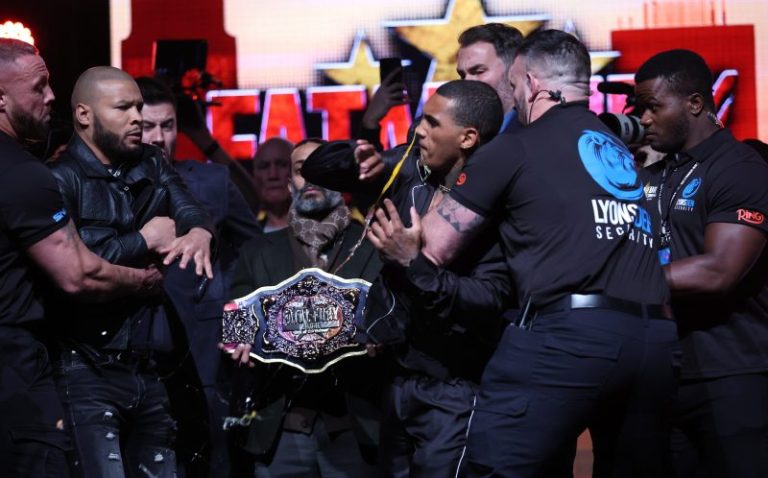
The anticipation for the upcoming fight between Chris Eubank Jr. and Conor Benn reached a boiling point when Eubank Jr. made a surprising move, slapping Benn in the face with an egg during their face-off on Tuesday in Manchester, England.

The upcoming fight between Eubank Jr. and Benn is not without its controversies. Eubank Jr. enters the ring with a record of 34 wins and three losses, with 25 of the victories coming by knockout. Benn, on the other hand, holds a spotless undefeated record of 23 wins, 14 of which were by knockout. This fight was originally scheduled for 2022 but had to be postponed after Benn tested positive for the performance-enhancing drug clomifene. However, the WBC cleared him to fight after determining that egg contamination ‘most likely’ caused the positive result.

This upcoming fight, scheduled for April 26 in London, is a second-generation battle that recalls the legendary clashes between Eubank Jr. and Benn’s fathers, Chris Eubank Sr. and Nigel Benn, in the 1990s.

World Boxing Council cleared Benn of any wrong doing

In February 2023, the World Boxing Council determined that Conor Benn’s ‘significantly increased consumption of eggs’ was a valid explanation for his failed drug tests in October 2022. The random test conducted by the Voluntary Anti-Doping Association (VADA) was positive for the banned substance clomiphene, which is a fertility drug.

This failed drug test was the reason the original date for the Benn-Eubank Jr. fight was called off.

When is the Chris Eubank Jr. vs. Conor Benn fight?

The boxing match between Chris Eubank Jr. and Conor Benn will take place at Tottenham Hotspur Stadium on April 26 in London, England. The fight will be broadcast live on DAZN.

We occasionally recommend interesting products and services. If you make a purchase by clicking one of the links, we may earn an affiliate fee. USA TODAY Network newsrooms operate independently, and this doesn’t influence our coverage.

This post appeared first on USA TODAY
Republicans are mounting pressure on the Justice Department to advance the release of classified documents and records related to the assassination of President John F. Kennedy and other federal secrets. 

President Donald Trump signed an executive order in January for agencies to create plans to distribute the files, as well as documents pertaining to the assassinations of Sen. Robert F. Kennedy and Dr. Martin Luther King Jr.

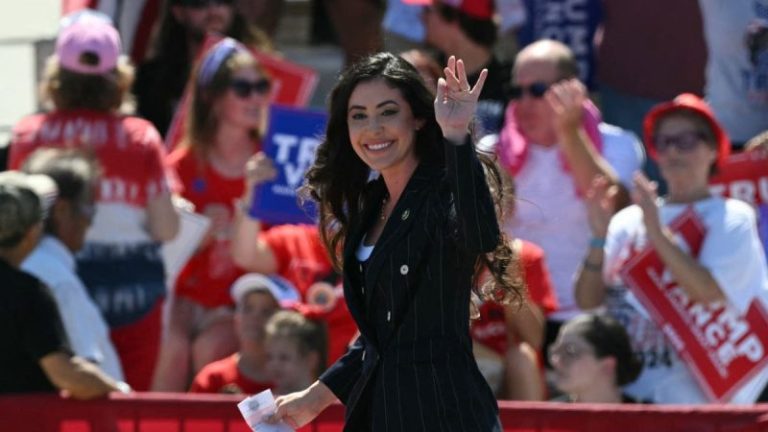
But Rep. Anna Paulina Luna, R-Fla., who is leading the House Oversight Committee’s Task Force on the Declassification of Federal Secrets, is pushing the Department of Justice for answers on when that will happen — and so far, says she has faced silence. 

‘On Feb 11 & Feb 19, house oversight sent a letter to the DOJ asking for status on releasing the Epstein files as well as JFK etc.,’ Luna said in a post on X Monday. ‘The DOJ has not responded. Reaching out on X because we can’t seem to get a response from the AG. @AGPamBondi what is the status of the documents? These documents were ordered to be declassified.’

Luna sent a letter to Director of National Intelligence Tulsi Gabbard, Attorney General Pam Bondi, National Security Advisor Michael Waltz and White House Counsel David Warrington requesting a briefing by Thursday on plans for the release of the documents. 

The letter also requests details on when the declassified documents will become available to the task force and the public. 

Trump’s executive order instructed the Department of Justice to coordinate with Gabbard, Waltz and Warrington to establish a plan by Feb. 7 for the release of the JFK files, and to create a plan for the release of the MLK and Robert F. Kennedy files by March 9. 

Additionally, Luna is pushing the Justice Department to share details regarding Jeffrey Epstein’s client list. The American financier died in 2019 while awaiting trial on sex trafficking charges. 

Meanwhile, Bondi said Friday that Epstein’s client list was awaiting review, and that she was looking over the Kennedy and King files. 

‘It’s sitting on my desk right now to review,’ Bondi told ‘America Reports’ host John Roberts Friday about the Epstein files. ‘That’s been a directive by President Trump.’

A spokesperson for the Justice Department did not immediately respond to a request for comment from Fox News Digital. 

Luna’s office did not respond to a request for comment from Fox News Digital in response to Bondi’s statements. 

Luna isn’t the only Republican lawmaker pushing for the release of these documents. Sen. Marsha Blackburn, R-Tenn., also said Monday Democrats have undercut her efforts to ‘crack the Epstein trafficking ring wide open,’ and vowed that she would receive answers under newly confirmed FBI Director Kash Patel. 

‘The time for transparency is now,’ Blackburn said in a Monday post on X. 

Sen. Mike Lee, R-Utah, also said in a Monday X post that the documents belong to the American people, and ‘it’s about damn time they be given access to it!’ 

The Office for the Director of National Intelligence also did not immediately respond to a request for comment from Fox News Digital, but told the Associated Press that a plan has been submitted regarding the Kennedy files.

The White House did not immediately respond to a request for comment from Fox News Digital. However, Trump vowed on the campaign trail that he would declassify all JFK-related documents if he won the 2024 election.  

The House’s Task Force on the Declassification of Federal Secrets is scheduled to hold its first public hearing on March 26. 

Fox News’ Haley Chi-Sing contributed to this report. 

This post appeared first on FOX NEWS

Ukrainian President Volodymyr Zelenskyy has agreed to a draft of a minerals deal with the White House, President Donald Trump said on Tuesday. 

Trump told reporters that the Ukrainian leader plans to travel to D.C. on Friday to meet with him after the officials agreed to the terms of the deal, which was first reported by Reuters. The U.S. president added that the two leaders are ‘just in the process of negotiating.’

‘We’ve pretty much negotiated our deal on earth [minerals] and various other things,’ Trump said. ‘We’ll be looking…. general security for Ukraine later on. I don’t think that’s going to be a problem. There are a lot of people that want to do it, and I spoke with Russia about it. They didn’t seem to have a problem with it. So I think they understand they’re not going back. And once we do this, they’re not going back.’

The pact, which would involve giving the U.S. access to natural resources in exchange for America’s support of Ukraine amid its war with Russia, was days in the making. Trump said on Friday that his administration was ‘pretty close’ to striking a deal, and on Monday, he hinted that a meeting between him and Zelenskyy was imminent.

‘It’ll be a deal with rare earths and various other things. And, he would like to come, as I understand it, here to sign it. And that would be great with me,’ Trump said. ‘I think they then have to get it approved by their council or whoever might approve it, but I’m sure that will happen.’

Since his Jan. 20 inauguration, Trump has prioritized recouping the cost of U.S. aid to Ukraine by gaining access to Ukrainian resources, including titanium, iron and uranium. U.S. aid to the war-torn country has totaled tens of billions of dollars since February 2022.

That commitment has led to tension between him and Zelenskyy, and Trump ridiculed the politician as a ‘modestly successful comedian’ in a Truth Social post last week.

‘A Dictator without Elections, Zelenskyy better move fast or he is not going to have a Country left,’ Trump’s post reads. ‘In the meantime, we are successfully negotiating an end to the War with Russia, something all admit only ‘TRUMP,’ and the Trump Administration, can do. Biden never tried, Europe has failed to bring Peace, and Zelenskyy probably wants to keep the ‘gravy train’ going.’

‘I love Ukraine, but Zelenskyy has done a terrible job, his Country is shattered, and MILLIONS have unnecessarily died – And so it continues…..’

U.S. Treasury Secretary Scott Bessent previously lauded the potential pact in a Sunday interview on ‘Sunday Morning Futures.’

‘The first part of this is a partnership between Ukraine and the U.S. that involves strategic minerals, energy and state-owned enterprises, where we set up a partnership, and we are only looking forward,’ Bessent said.

‘We make money if the Ukrainian people make money, and I believe that with the United States of America, our businesses are willing to come in and provide capital that we can accelerate the Ukrainian growth trajectory and take in substantial monies for the U.S. taxpayers and get the Ukrainian economy on a great growth trajectory.’

On Monday, Russian President Vladimir Putin said he was open to cooperating with the U.S. if Trump signals interest in mining minerals in Russia and Russian-occupied parts of Ukraine.

‘Russia is one of the undisputed leaders in terms of reserves of these rare and rare-earth metals,’ Putin said during an interview on Russian state television. ‘These are quite capital-intensive investments, capital-intensive projects. We would be happy to work together with any foreign partners, including American ones.’

Reuters and Fox News Digital’s Taylor Penley, Brooke Singman and Michael Dorgan contributed to this report.

This post appeared first on FOX NEWS

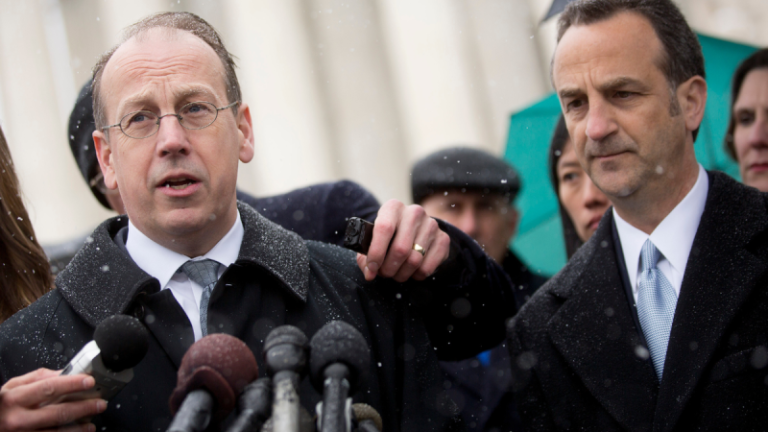
Paul Clement, a former solicitor general and previous potential Trump Supreme Court pick, was tapped by a federal judge Friday to weigh in on the motion to dismiss the corruption case against New York City Mayor Eric Adams. 

U.S. District Judge Dale Ho decided to adjourn the case against Adams until further notice, while also appointing Clement to serve as an independent party. 

Ho wrote that bringing in Clement was ‘appropriate’ in this case, ‘particularly so in light of the public importance of this case, which calls for careful deliberation.’

Former assistant U.S. attorney and Fox News contributor Andy McCarthy noted to Fox News Digital that it is ‘unusual’ for courts to entertain amicus briefs in criminal cases and ‘it is highly unusual to appoint an amicus to assist the court in the manner contemplated in the Adams case.’

Clement, a seasoned appellate lawyer who has argued more than 100 cases before the U.S. Supreme Court, served as solicitor general under the Bush administration from 2005-2008. He was notably on President Donald Trump’s short list of Supreme Court nominees during his first term. 

Before taking on the role of the federal government’s top appellate lawyer, Clement served as a deputy solicitor general.

Clement earned his bachelor’s degree from Georgetown University’s School of Foreign Service and a master’s in economics from Cambridge University. 

He went on to earn his law degree from Harvard Law School, where he was the Supreme Court editor of the Harvard Law Review. 

Following graduation, Clement clerked for Judge Laurence H. Silberman of the U.S. Court of Appeals for the D.C. Circuit as well as for Supreme Court Justice Antonin Scalia. 

He went into private practice after his clerkships, joining Kirkland & Ellis’ Washington, D.C., office. 

Clement also served as chief counsel of the U.S. Senate Subcommittee on the Constitution, Federalism and Property Rights before returning to private practice and working as a partner at King & Spalding in D.C., where he headed the firm’s appellate practice. 

Clement is currently a distinguished lecturer in law at the Georgetown University Law Center, where he initially served as an adjunct professor starting in 1998. He is also partner at Clement & Murphy in D.C.

Clement’s advocacy in the high court includes recently arguing Loper Bright v. Raimondo, which effectively overturned the Chevron doctrine. The doctrine previously gave deference to an agency’s interpretation of a federal regulation. Clement also litigated against the Obama administration, challenging the constitutionality of the Affordable Care Act.  

McCarthy said he thinks ‘very highly of Paul Clement, who is among the top appellate lawyers in the United States,’ saying the Adams case ‘calls for a faithful interpretation’ of federal law and ‘I can’t think of anyone better than Clement to give a judge impartial, solid advice on that issue.’

Ho’s decision to adjourn the case came just days after U.S. Acting Deputy Attorney General Emil Bove asked prosecutors to drop all corruption charges against the mayor.  

In the motion to dismiss, Bove said the legal proceedings against Adams were detracting from other Justice Department priorities, such as illegal immigration and violent crime. 

Ho appointed Clement to weigh in on the DOJ’s motion to drop the case. Among the questions posed to Clement, the court asks, ‘Under what circumstances, if leave is granted, dismissal should be with or without prejudice.’ 

‘The main point of the rule is to protect the defendant’s rights,’ McCarthy said. ‘The judge has no authority to order DOJ to persist in prosecuting Adams, or to appoint a ‘special prosecutor,’ but Clement is an excellent lawyer and can give Judge Ho good advice on whether to accept the plea with the ‘without prejudice’ term in it.’

Parties are expected to submit briefings by early March, with oral arguments expected shortly thereafter. 

The charges against Adams will remain intact until Ho agrees to dismiss them.

Fox News Digital’s Breanne Deppisch contributed to this report.

This post appeared first on FOX NEWS

Direct-to-consumer footwear brand Rothy’s just recorded its best year on record after the company appointed retail veteran Jenny Ming, one of the co-founders of Old Navy, as its CEO. 

Ming took the helm of the flats maker from co-founder Stephen Hawthornthwaite in January 2024. Under her direction, the company grew sales 17% to $211 million last year, its best volume year since it launched nearly a decade ago. 

Comparable sales at its stores grew 20% and it posted positive EBITDA for the full year, with margins above 10%. 

Rothy’s outperformed the U.S. footwear market, which was flat in 2024 compared with 2023, according to Circana. 

Rothy’s growth, which came from an expansion into wholesale and a focus on brick-and-mortar stores, comes as direct-to-consumer darlings find it harder than ever to survive with the pure-play models that once wowed investors at the turn of the decade. 

Once considered the future of the industry, these online-only businesses are now leaning into the retail fundamentals that have long been the building blocks of emerging brands. Wholesale partnerships are a critical customer acquisition tool, and stores still matter.

As these plucky startups contend with the challenges that come with an online-only business, the winners are adapting to a new reality where stores, wholesale partnerships and e-commerce all need to be part of the mix to ensure they can operate profitably. 

“A lot of people are like, why would you be on Amazon? Because people do a lot of searches on Amazon. If we weren’t there, and they type in Rothy’s, a competitor or somebody else would show up. So why wouldn’t we want to be there?” Ming told CNBC in an interview. “To me, it’s really thinking a little bit more holistically and broadly. What our customer would want from us is how we approach it … people shop very different today.” 

Channel diversification will never be a panacea for a business that’s inherently broken or doesn’t serve a market need. The footwear industry and specialty retail overall is more competitive than ever, and Rothy’s needs to continue its efforts to diversify, scale and expand into new categories to keep up its performance.

Soon after Rothy’s launched in 2016, it quickly made a name for itself with its ubiquitous Instagram and Facebook advertisements and an innovative approach on sustainable shoe manufacturing that included using recycled plastic to make machine washable products. By 2019, it was Meghan Markle’s flat of choice and it had developed a cult following. 

Buoyed by a record year for valuations and 0% interest rates, Brazilian footwear company Alpargatas took a 49.9% stake in Rothy’s in 2021 that resulted in a post-investment valuation of $1 billion. 

Rothy’s used the investment to build out a store fleet, but by that time, the company’s growth had stagnated and it was struggling to reach profitability. 

“Once we sort of emerged from the pandemic, you could see a lot of these digitally native brands now sort of saying, OK, now what, right? I need stores. It is so expensive to acquire customers online,” said Dayna Quanbeck, Rothy’s president. ”[With] an e-commerce model … all of your costs are variable, right? Where you really find scale and you really find profitability is where you can leverage your fixed costs, which is stores, really, and wholesale.”

Ming, who served as Old Navy’s president between 1996 and 2006 and later became the CEO of Charlotte Russe, joined Rothy’s board in 2022 and was later asked to take over as CEO. She said no at first, but later agreed to take the helm after she spent a few months consulting and saw the early innings of a transformation beginning to take shape. She immediately started focusing on improving profitability and generating sales momentum by making sure Rothy’s was selling the types of products that its customers wanted — and in the places they shopped. 

“I literally went line by line … looking at what we should spend, what we shouldn’t, you know, and rightsize marketing spend. There was things that, you know, we don’t need,” said Ming, citing office plants as one of the first things she cut. “But the main thing is, driving profitability is really in revenue. You have to be growing your sales in order to really be profitable, right?” 

That’s where Rothy’s new selling strategy came in. In 2024, it began testing with a select number of wholesale partners — Anthopologie, Bloomingdale’s, Amazon and toward the end of the year, Nordstrom.

At the same time, it continued growing its store fleet. Now, a business that drew about 99% of its revenue from its website does about 70% of sales online, with the rest balanced between stores and wholesalers. Combining profitable stores with strong wholesale partnerships, Rothy’s has been able to grow sales and become more profitable at the same time.

“If we were just digitally native forever and ever, you really just can’t get there with the cost of acquisition, with the cost of, you know, just showing up these days,” said Quanbeck. “Honestly, it’s impossible.” 

Looking ahead, Rothy’s is planning to build on its wholesale partnerships and has made stores, along with international expansion, a central part of its strategy. 

Quanbeck said it’s hard to sell customers on everything that makes the brand appealing without them being able to see it in person.

“But when you can walk into the store and you can see it visually, you have a great customer experience where we can really tell the story,” said Quanbeck “It’s additive. And we know that the lifetime value of those customers that engage with us IRL is really high.” 

Quanbeck and Ming, who are alumni of now-bankrupt Charlotte Russe, know all too well the perils of overexpanding unprofitable store fleets, and said they’re taking a balanced approach to brick-and-mortar. The 26 stores Rothy’s has are small and all are profitable and the company plans to open another eight to 10 doors this year, said Quanbeck.

Ming said Rothy’s won’t need hundreds of stores, but she’d like to see the fleet grow to 75, or perhaps even 100. 

“But we also want to make sure our wholesale partners is in the picture,” said Ming. “We’re going to be in [Nordstrom] in March … they have more stores than we will ever have, so they might be in markets that we might not decide to open a store but then we still have a partner for our customer to shop in.” 

When asked if Rothy’s will pursue an initial public offering or look to be acquired, Ming said the business isn’t there yet — and her team doesn’t need the distraction.

“We had a really great year but … I keep telling the team, one year doesn’t make it a trend,” said Ming. “So we’re really focused on this year. I think if we have another great year, you know, maybe a year or two, I think then we could really step back and say, ‘What next?’”

This post appeared first on NBC NEWS