Archive

2025

Browsing

A pro-life attorney alleged during a House hearing that the Biden administration’s Department of Justice (DOJ) led a ‘systematic campaign’ against pro-life protesters who were charged with violating the Freedom of Access to Clinic Entrances (FACE) Act and sentenced to several years in prison in 2020.

Peter Breen, the executive vice president and head of litigation at the Christian nonprofit law firm Thomas More Society, testified before the House Judiciary Subcommittee on Oversight on Tuesday about the Biden administration’s prosecution of 23 pro-life protesters, many of whom were part of a large-scale Washington, D.C., abortion clinic blockade. President Donald Trump pardoned all the activists in one of his first executive actions in January.

‘The Biden DOJ engaged in a systematic campaign to abuse the power of the federal government against pro-life advocates, while that same DOJ ignored hundreds of acts of vandalism and violence against pro-life churches, pregnancy help centers, and other advocates,’ Breen said.

The hearing, titled, ‘Entering the Golden Age: Ending the Weaponization of the Justice Department,’ included testimonies from Chris Swecker, former FBI assistant director of the Criminal Investigations Unit, Jonathan Fahey, a legal partner at Holtzman Vogel, and Brendan Ballou, a federal prosecutor.

The Thomas More Society represented several of the 23 pro-life activists who were imprisoned during the 2020 demonstrations and urged Trump during his first few days in office to pardon them.

‘They should not have been prosecuted,’ Trump said during the signing. ‘Many of them are elderly people. They should not have been prosecuted. This is a great honor to sign this.’

Breen said the Trump administration’s pardons sent a ‘powerful message.’ 

‘On behalf of our clients and the pro-life movement as whole, we are thankful to President Trump for his recent pardons and to the members of this House who supported that effort,’ he said. ‘Those pardons sent a powerful message to the country, and especially to the millions of Americans in the pro-life movement, that the federal government should not be weaponized against Americans because of their sincere beliefs in the sanctity of human life.’

Prosecutors from the DOJ’s Civil Rights Division and the U.S. attorney’s office for the District of Columbia argued the pro-life activists violated the 1994 FACE Act, a federal law that prohibits physical force, threats of force or intentionally damaging property to prevent someone from obtaining or providing abortion services.

‘Evidence presented at trial established that the defendants used force and physical obstruction to execute a clinic blockade that was organized by the group’s leaders,’ the Biden DOJ wrote in its announcement of several indictments. ‘The defendants’ forced entry into the clinic at the outset of the invasion resulted in injury to a clinic nurse. During the blockade, one patient had to climb through a receptionist window to access the clinic, while another laid in the hallway outside of the clinic in physical distress, unable to gain access to the clinic.’

However, the FACE Act is now a target of the pro-life movement, as opponents of the law say it infringes on the First Amendment, restricts the freedom to protest and unfairly targets anti-abortion activists.

‘Of course, we urge Congress to repeal the FACE Act, which is selectively and illegally enforced by pro-abortion presidential administrations,’ Breen said. ‘But in the immediate term, Congress has several other concrete steps it can take, working with the new Administration to define the proper scope of the laws and to defend the rights of pro-life Americans.’

House members and witnesses also spent much of the two-hour hearing discussing a Richmond FBI internal 2023 memo titled, ‘Interest of Racially or Ethnically Motivated Violent Extremists in Radical-Traditionalist Catholic Ideology Almost Certainly Presents New Mitigation Opportunities.’ 

Fox News Digital has reached out to the DOJ for comment.
This post appeared first on FOX NEWS

The Trump administration will direct heads of agencies across the federal government to prepare to initiate ‘large-scale reductions in force’ and develop reorganization plans by mid-March, Fox News Digital has learned. 

Fox News Digital exclusively obtained the memo that will be sent Wednesday to agency heads by Office of Management and Budget (OMB) Director Russell Vought and acting Director of the Office of Personnel Management (OPM) Charles Ezell. The memo directs them to prepare to eliminate roles and submit plans for reorganization by March 13. 

The memo states, however, that government positions ‘necessary to meet law enforcement, border security, national security, immigration enforcement, or public safety responsibilities’ are exempt from the order, as well as officials nominated and appointed to positions requiring presidential appointment or Senate confirmation, officials in the Executive Office of the President and U.S. Postal Service workers. 

The memo is titled ‘guidance on agency RIF and reorganization plans requested by implementing the president’s ‘Department of Government Efficiency’ workforce optimization initiative.’ 

‘The federal government is costly, inefficient, and deeply in debt,’ the memo states. ‘At the same time, it is not producing results for the American public.’ 

‘Instead, tax dollars are being siphoned off to fund unproductive and unnecessary programs that benefit radical interest groups while hurting hard-working American citizens,’ it continued. ‘The American people registered their verdict on the bloated, corrupt federal bureaucracy on November 5, 2024 by voting for President Trump and his promises to sweepingly reform the federal government.’ 

The memo points to the president’s February executive order, which directed agencies to ‘eliminate waste, bloat and insularity’ in order to ’empower American families, workers, taxpayers, and our system of Government itself.’ 

The memo provides guidance to agency heads about the reduction-in-force and reorganization plans, along with instructions for how those plans should be submitted to OMB and OPM. 

‘President Trump required that ‘Agency Heads shall promptly undertake preparations to initiate large-scale reductions in force, consistent with applicable law,’’ the memo states, noting that agencies have to submit reorganization plans ‘no later than March 13, 2025.’ 

The reorganization plans, according to the memo, should provide ‘better service for the American people; increased productivity; a significant reduction in the number of full-time equivalent positions by eliminating positions that are not required; a reduced real property footprint; and reduced budget topline.’ 

OMB and OPM directed agency heads to focus on ‘maximum elimination of functions that are not statutorily mandated while driving the highest-quality, most efficient delivery of their statutorily-required functions.’

OMB and OPM also directed agencies to consolidate areas of their organization charts that are ‘duplicative,’ and consolidate management layers ‘where unnecessary layers exist.’ 

They are also directing agencies to ‘maximally reduce the use of outside consultants and contractors.’ 

As for office space, the memo says agency heads should close or consolidate regional field offices and should align those closures or relocations of bureaus and offices with agency return-to-office actions ‘to avoid multiple relocation benefit costs for individual employees.’ 

The memo says ‘Phase 1’ of reorganization plans should be submitted by March 13, with ‘Phase 2’ being submitted by April 14. 

‘Phase 2 plans shall outline a positive vision for more productive, efficient agency operations going forward,’ the memo explains. ‘Phase 2 plans should be planned for implementation by September 30, 2025.’ 

This post appeared first on FOX NEWS

Home Depot on Tuesday topped Wall Street’s quarterly sales expectations, even as elevated interest rates and housing prices dampened consumer demand for large remodels and pricier projects.

For the full year ahead, the company said it expects total sales to grow by 2.8% and comparable sales, which take out the impact of one-time factors like store openings and calendar differences, to increase by about 1%. Home Depot projected adjusted earnings per share will decline about 2% compared with the prior year.

In an interview with CNBC, Chief Financial Officer Richard McPhail said “housing is still frozen by mortgage rates.” Yet he said Home Depot saw broad-based growth, as sales increased in about half of its merchandise categories and 15 of its 19 U.S. geographic regions.

Home Depot anticipates consumers will stop putting off projects as they gradually get used to higher interest rates, rather than waiting for them to fall, McPhail said. 

“They tell us their lives are moving on,” he said. “Their families are growing. They’re moving for a new job. They’re upsizing their home. They want to upgrade their standard of living. Home improvement always persists, and so the question, I think, will be around the mindset of whether long-term rates have gotten to a new normal.”

Here’s what the company reported for the fiscal fourth quarter compared with Wall Street’s estimates, according to a survey of analysts by LSEG:

Home Depot shares were up nearly 5% in midday trading. The company was holding an earnings call on Tuesday morning.

In the three-month period that ended Feb. 2, Home Depot’s net income climbed to $3.0 billion, or $3.02 per share, from $2.80 billion, or $2.82 per share, in the year-ago period. Revenue rose 14% from $34.79 billion in the year-ago period.

Comparable sales, a metric also known as same-store sales, increased 0.8% across the company. Those results ended eight consecutive quarters of falling comparable sales. They also exceeded analysts’ expectations of a decline of 1.7%, according to StreetAccount. Comparable sales in the U.S. increased 1.3% year over year.

Regions hit by hurricanes Helene and Milton contributed about 0.6% to comparable sales, McPhail said.

Customers spent more and visited Home Depot’s stores and website more in the quarter compared with the year-ago period. Transactions rose to 400.4 million, up nearly 8% from the year-ago period. The average ticket was $89.11 in the quarter, up slightly from $88.87 in the prior-year quarter.

Home Depot has faced a more difficult backdrop for selling supplies for home improvement projects. Sales growth slowed in 2023, after consumers’ huge appetite for home renovations during the Covid pandemic returned to more typical patterns. Inflation and a shift back to spending on services like vacations and restaurants also dinged consumer demand for larger projects and pricier items.

Since roughly the middle of 2023, Home Depot’s leaders have pinned the company’s problems on a tougher housing market. McPhail told CNBC that the same challenge persisted in the fourth quarter, as consumers still showed reluctance to splurge on bigger projects, such as redoing a kitchen or installing new flooring.

Mortgage rates have remained high, despite interest rate cuts by the Federal Reserve. The median price of a home sold in January was $396,900, up 4.8% from the year before and the highest price ever for the month of January, according to the National Association of Realtors.

Tougher weather also hurt the company’s sales in January, and that’s carried into February in some parts of the country, McPhail said.

“Where weather is good, we continue to see engagement,” he said. “Where weather is tough, projects get put on the shelf.”

Even so, he said Home Depot has focused on ways it can move the needle, such as opening new stores and investing in its e-commerce business. 

Online sales rose 9% in the fourth quarter compared with the year-ago period, McPhail said, the strongest quarter of the year for Home Depot’s digital business. He chalked that up to the company’s investments in faster deliveries, particularly with getting appliances and power tools to customers.

McPhail said Home Depot opened 12 new stores in 2024, and it plans to open 13 new locations in the coming year. 

Home Depot has also looked to home professionals as one of its major sales drivers. It bought SRS Distribution, a Texas-based company that sells supplies to professionals in the roofing, pool and landscaping businesses, for $18.25 billion last year. It marked the largest acquisition in the company’s history.

Some pro-heavy categories, such as roofing, drywall and lumber, saw sales increases in the quarter because of Home Depot’s push to serve contractors and other home pros better, McPhail said.

Shares of Home Depot closed Monday at $382.42. As of Monday’s close, the company’s shares have fallen about 2% so far this year. That trails behind the S&P 500′s approximately 2% gains during the same period.

This post appeared first on NBC NEWS

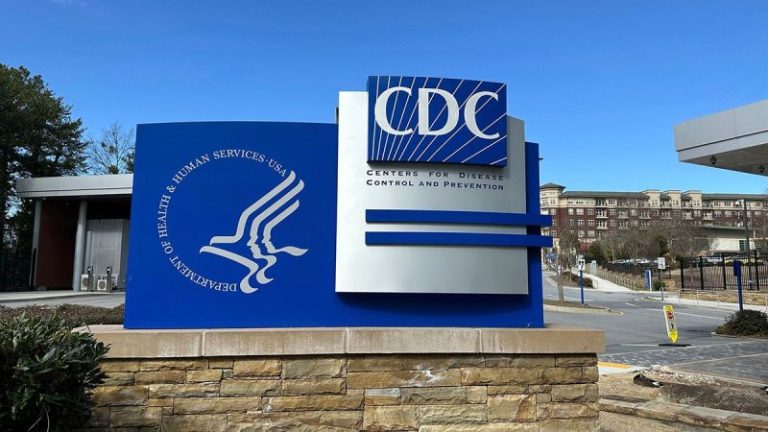
The Centers for Disease Control and Prevention (CDC) appeared to defy President Donald Trump’s executive order to withdraw the U.S. from the World Health Organization (WHO) after the U.S. agency said it would participate in a conference with the global organization.

The CDC confirmed this week that it will go ahead and partake in a biannual conference on the influenza vaccine led by the WHO.

‘CDC will be actively participating virtually at the WHO vaccine consultation meeting for the recommendation of viruses for 2025-26 Northern Hemisphere Vaccine this week,’ a CDC spokesperson told Fox News. 

The agency did not clarify if it received an exemption from Trump’s executive order, which required all officials to stop working with the WHO. 

Trump signed the executive order to withdraw the U.S. from the WHO just hours after taking office last month. The president cited reasons such as WHO’s ‘mishandling of the COVID-19 pandemic,’ the ‘failure to adopt urgently needed reforms,’ and ‘unfairly onerous payments’ forced on the U.S. 

Days after signing the order, Trump said during a Las Vegas rally that he was open to potentially rejoining the WHO if the global body were ‘to clean it up a bit.’

The WHO issued a statement shortly after Trump’s order, lamenting the president’s decision and expressing hope that the U.S. will rethink the move.

During Trump’s first term, in July 2020, he took steps to withdraw the U.S. from the WHO but his successor, former President Joe Biden, eventually reinstated the nation’s participation in the global health initiative. 

Fox News Digital’s Alex Schemmel contributed to this report.

This post appeared first on FOX NEWS

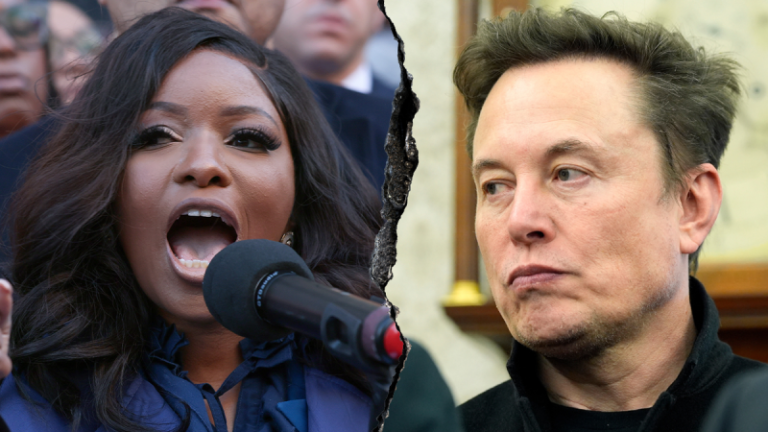
Texas Democratic Rep. Jasmine Crockett caused a social media firestorm after telling Department of Government Efficiency (DOGE) chief Elon Musk to ‘f— off’ in the latest example of her public opposition to the newly formed agency’s push to cut government waste and spending. 

‘F— off,’ Crockett told reporter Joe Gallina outside Capitol Hill on Tuesday when asked what she would tell Elon Musk if she could tell him anything.

Crockett’s reaction immediately drew blowback from conservatives on social media, who took issue with the liberal firebrand’s tone.

‘The face of the American left, ladies and gentlemen,’ conservative account Johnny MAGA posted on X.

‘Classy,’ conservative commentator Benny Johnson posted on X.

‘Jasmine Crocket = trash,’ comedian Tim Young posted on X.

‘Please make Jasmine Crockett the spokesperson of the Democrat Party,’ former GOP congressional candidate Kathleen Anderson posted on X.

‘Classy as ever…,’ Washington Examiner White House correspondent Paul Bedard posted on X.

Crockett’s office did not respond to a request for comment from Fox News Digital.

Many Democrats in Congress have been highly critical of Musk and DOGE, arguing that the billions in cuts the agency has announced are slashing important government resources and being done too quickly.

‘DOGE is pretty cruel. Let’s be blunt about that,’ Gov. Josh Green, D-Hawaii, said during a press conference last week with other Democratic governors. ‘These are people in our states that have worked long careers, very dedicated servants, and they’re getting kicked out of their lives.’

A recent poll, amplified by Musk on social media, suggests that a majority of the American people support DOGE’s mission.

The Harvard CAPS-Harris poll revealed a majority of Americans support reducing wasteful government spending. Most voters agree there should be a government agency dedicated to efficiency and that DOGE is helping to make major spending cuts, the nonprobability-based poll found. 

This post appeared first on FOX NEWS
NEWYou can now listen to Fox News articles!

Editor’s note: The following essay first appeared in Ciy Journal and on the author’s Substack.

For the past decade, the political Right has lamented ‘cancel culture.’ The idea was that the Left unfairly stoked race and gender hysteria to restrict the terms of debate and to cast anyone deemed in violation of the mandated terms into a state of social annihilation. Teenagers who sang along with rap songs have been denied entry into college. Political figures who failed to use the latest euphemisms found themselves cast into the void. 

Now, with the second Trump administration, the rules of social annihilation are seemingly being rewritten in real time. The presidential appointments of Robert F. Kennedy Jr. and Pete Hegseth might have been derailed, or not even attempted, in Trump’s first presidency. Yet, despite the salacious accusations against the two nominees, Senate Republicans held firm and confirmed both men.

Likewise, when left-wing journalists exposed a young DOGE staffer, Marko Elez, for pseudonymous social media posts, including ‘I was racist before it was cool’ and ‘normalize Indian hate,’ Elez resigned in what amounted to preemptive self-cancellation. Elez might have been ironically riding the ‘edge’ of the discourse, violating a taboo for a sense of thrill, but when his identity was revealed, he expected the old penalty. Then something different happened: Elez’s colleagues rallied to his support, with Vice President J. D. Vance arguing that ‘stupid social media activities should not ruin a kid’s life.’ What would have ended with a social death sentence five years ago instead became a short blip. The vice president rejected the calculus of left-wing cancel culture, demonstrating instead that forgiveness, loyalty, and a sense of proportion should be part of the decision-making process in such controversies. Elez was reinstated.

All of this is salutary, but in this period of renegotiation, the Right must take a deeper look at the dynamics of social cancellation and adopt a systematic method for moving forward. The Right’s longstanding proposal—to ‘cancel cancel culture’—might make for a good slogan, but it is not sufficient as a governing philosophy. The reality is that one cannot cancel cancel culture. Rules of etiquette, propriety, and acceptability will always exist; people who violate a society’s core taboos will always risk exclusion.

In other words, all cultures cancel. The question is, for what, and by whom.

Americans are tired of the narrow discourse and injustices of the past decade.

When the Left had power over the culture, it had a ready-made answer to the questions of values and power. It proposed intersectionality, critical race theory, and gender cultism as an operating ideology and guide for policing the discourse. If you violated the tenets of those theories in a work chat or a social media post, you placed yourself at risk of social consequences. The New York Times, The Atlantic, or Gawker could ruin a career or delete an individual from polite society by exposing an ideological faux pas. Even ostensibly right-wing institutions often buckled to their demands.

Now that the Right finds itself ascendant, it has the opportunity to provide a better answer to these questions. We should acknowledge that culture is a way for society to establish a particular hierarchy of values and to provide a way to police the boundaries. And then we should propose a new set of values that expands the range of acceptable discourse rightward and provides a method for adjudicating the limits. From the perspective of practical politics, this will determine how the Right can protect its own members from unjust cancellation attempts and how it can enforce just consequences on political opponents who violate the new terms.

A number of upcoming events will put the new rules to the test. The confirmations of RFK Jr. and Pete Hegseth dominated headlines, but there will be lower-profile test cases for deputy secretary and assistant secretary nominees, who are perhaps more vulnerable. The Left will try to use past provocative public statements by these nominees against them. Republican senators should resist the temptation to react within that framing; instead, they should maintain a sense of proportion and treat each case in its fullest context. Social media posts, often imbued with irony and hyperbole, should no longer be grounds for automatic social and professional annihilation.

Americans are tired of the narrow discourse and injustices of the past decade. If we can rewrite the rules of cancel culture, then the Trump presidency could mark a new era of cultural freedom. And the Right can shift from a posture of permanent defense to one of governing in the name of its own principles.

This post appeared first on FOX NEWS

The FBI is reportedly beginning an investigation into allegations that the agency, when headed by then-Director James Comey, launched a ‘honeypot’ operation to infiltrate the 2016 Trump campaign with two female agents.

The Washington Times reported that the agency is looking into an alleged 2015 operation, which was revealed by a whistleblower in a disclosure to the House Judiciary Committee last year and was said to involve two agents acting as ‘honeypots’ while traveling with the Trump team.

‘Honeypots’ typically refer to undercover agents who act romantically interested in a target in order to draw out information.

In the disclosure, a copy of which was obtained by Fox News Digital, the whistleblower is said to be an FBI employee and was involved in an ‘off-the-books’ investigation targeting then-presidential candidate Donald Trump. The whistleblower reportedly claimed that they knew Comey had ordered a probe into Trump and had ‘personally directed it’ shortly after Trump announced he was running for president. 

The whistleblower claimed two agents were inserted into the high levels of the campaign and were directed to act as ‘honeypots’ and travel with Trump and his campaign staff. However, the investigation was allegedly closed because a media outlet obtained a photograph of one of the agents and was about to publish it. The whistleblower said they observed one or more employees being directed to never discuss the operation with anyone, including those involved in the operation. 

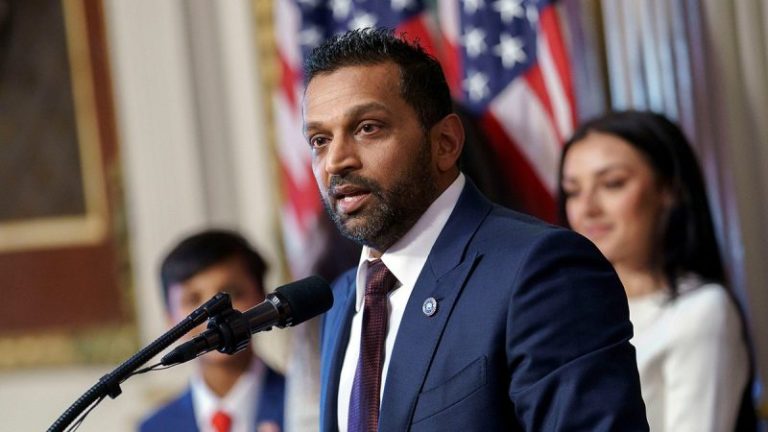
The Washington Times reported that the bureau, now headed by FBI Director Kash Patel, is looking for those employees. 

‘The FBI has no comment,’ the agency told Fox News Digital when reached for comment on Wednesday.

Patel was sworn in as FBI director last week and promised to rebuild trust in the FBI and end what he saw as the politicization of the agency.

‘The politicization of our justice system has eroded public trust — but that ends today,’ he told Fox News Digital. ‘Let good cops be cops,’ he said. ‘And rebuild trust in the FBI.’ 

‘Working alongside the dedicated men and women of the bureau and our partners, we will rebuild an FBI the American people can be proud of,’ he said.

Patel previously served as the chief investigator for the House Permanent Select Committee on Intelligence’s probe into Russian interference in the 2016 presidential election. Throughout his investigation, he led the effort to uncover FISA abuse and exposed the FBI and the DOJ’s unlawful actions before federal court to illegally surveil Americans, including members of the 2016 Trump campaign. 

The alleged honeypot investigation is said to be separate from a 2016 FBI investigation, known as ‘Crossfire Hurricane,’ which investigated whether the Trump campaign was colluding with Russia to influence the outcome of the election. 

Trump fired Comey in May 2017. Days later, Robert Mueller was appointed as special counsel to take over the ‘Crossfire Hurricane’ probe and investigate whether the Trump campaign had colluded with Russia to influence the 2016 election cycle. That investigation yielded no evidence of criminal conspiracy or coordination between the Trump campaign and Russia to influence the 2016 election.

This post appeared first on FOX NEWS

And just like that, the dynamic of the NCAA men’s tournament bubble has shifted.

For as long as a team can stay on the fringe of the field of 68, squads can quickly get themselves comfortably into the field or or suddenly seeing their hopes start to dwindle. Look at Brigham Young: last week the Cougars were a projected No. 11 seed, but after a dominant win against Kansas and defeating Arizona on the road, they have surged themselves into a comfortable spot. The same is true for Virginia Commonwealth, which won’t have to worry on Selection Sunday if it gets the Atlantic 10 automatic berth (the Rams are now in first place after beating George Mason.)

Those results have led to some major shuffling in the latest edition of the latest USA TODAY Sports Bracketology, with some teams now in shaky positions and others (sorry, Georgia) in an even bigger hole in securing a tournament spot.  

Here’s a look at the teams on the bubble of qualifying for this year’s March Madness, along with their resume and what’s ahead of them as they fight toward ensuring a spot in the field of 68.

Texas

Record: 16-11 (5-9). NET Ranking: 38. Quad 1 record: 4-8. Projected seed: No. 11.

Quality wins: vs. Missouri, vs. Texas A&M, vs. Kentucky.

Bad losses: at South Carolina.

Texas entered last week coming off a big home victory over Kentucky and looking like a team getting away from the bubble. But it was a disastrous follow-up with a poor showing against South Carolina that was previously winless in the SEC. With a combined Quad 1 and 2 record of 7-11, Texas can get away from the 11-seed line with wins against Arkansas and Georgia this week.

UP AND DOWN: What teams are rising and falling in the tournament bracket

Arkansas

Record: 16-11 (5-9). NET Ranking: 39. Quad 1 record: 4-9. Projected seed: No. 11.

Quality wins: vs. Michigan (neutral), at Kentucky, vs. Missouri.

Bad losses: at LSU.

The Razorbacks kept up with Auburn in a road loss before a big response Saturday against Missouri to get the fourth Quad 1 win of the season. The victory has Arkansas out of the First Four ahead of a favorable week with Texas and South Carolina on deck. Two more wins and they can breathe much easier.

Ohio State

Record: 15-13 (7-10). NET Ranking: 34. Quad 1 record: 5-9. Projected seed: No. 11 (First Four).

Quality wins: vs. Kentucky (neutral), at Purdue, vs. Maryland.

Bad losses: vs. Pittsburgh, vs. Northwestern.

A 15-13 record doesn’t sound like a tournament team, but a NET ranking of 34 buoyed by a strong strength of schedule is helping Ohio State make a case to make the field. However, a three-game skid that includes a home loss to Northwestern has them on shaky ground. After losing to UCLA on Sunday, the Buckeyes need to salvage the trip to Los Angeles with a win over Southern California on Wednesday to avoid falling further down the field.

Wake Forest 

Record: 19-8 (11-5). NET Ranking: 64. Quad 1 record: 2-6. Projected seed: No. 11 (First Four).

Quality wins: Michigan (neutral), North Carolina, at SMU.

Bad losses: vs. Florida State, at North Carolina State.

While other teams picked up key victories, Wake Forest fell apart late in a damaging loss at North Carolina State last weekend. The Demon Deacons, even with a lower NET than other bubble teams, are still in the field. Favorable contests against Virginia and Notre Dame at home are on the schedule this week. It’s an opportunity for Wake to solidify its spot or fall out of the field.

San Diego State

Record: 19-7 (12-5). NET Ranking: 49. Quad 1 record: 4-5. Projected seed: No. 11 (First Four).

Quality wins: vs. Creighton (neutral), vs. Houston (neutral).

Bad losses: vs. UNLV.

The Aztecs were unable to make the most of their last Quad 1 opportunity of the regular season, falling to Utah State. San Diego State led in the final three minutes, but went cold and the Aggies pulled away. However, San Diego State redeemed itself with a convincing victory over conference-leader New Mexico on Tuesday.

Oklahoma

Record: 17-10 (4-10) NET Ranking: 51. Quad 1 record: 5-8. Projected seed: No. 11 (First Four).

Quality wins: vs. Arizona (neutral), vs. Michigan (neutral), vs. Louisville (neutral), vs. Mississippi State.

Bad losses: vs. LSU.

Just when it looked like the ship was sinking in Oklahoma, the Sooners stayed afloat with a massive win against Mississippi State. Not only did it snap a five-game losing streak, it moved Oklahoma from out of the field to First Four territory. Good news, but the Sooners aren’t out of the woods yet. It’ll have a chance to keep moving upward with Kentucky visiting on Tuesday before a trip to Mississippi on Saturday.

North Carolina

Record: 18-11 (11-6). NET Ranking: 44. Quad 1 record: 1-10. Projected seed: First four out.

Quality wins: vs. UCLA (neutral), SMU.

Bad losses: vs. Stanford.

The Tar Heels are doing all they can do at the moment, handling business during a four-game win streak against less-than-stellar opposition. Still, North Carolina can’t expect to move into the projected field without another Quad 1 victory. Duke presents that opportunity in the final game of the regular season. Otherwise, they’ll need a run in the ACC tournament.

Xavier

Record: 18-10 (10-7). NET Ranking: 53. Quad 1 record: 1-9. Projected seed: First four out.

Quality wins: at Marquette, vs. Connecticut.

Bad losses: at TCU, at Georgetown.

Like North Carolina, Xavier is handling business against bad teams to stay in consideration. The Musketeers have won four in a row, but three of those victories are in the Quad 3 category. Saturday’s home game against Creighton is a prime opportunity for Xavier to impress and show the selection committee it has momentum at the right time.

Boise State

Record: 19-8 (11-5). NET Ranking: 45. Quad 1 record: 3-5. Projected seed: First four out.

Quality wins: vs. Clemson, vs. St. Mary’s (neutral).

Bad losses: vs. Boston College (neutral), vs. Washington State.

New to the bubble, Boise State could be the fourth Mountain West team to be in the projected field. The Broncos have won six of their last seven, with the lone loss at San Diego State. Wednesday is a big night for the Broncos to move up in the bubble with a visit from Utah State. A win and the combined Quad 1 and 2 record would be 7-6 and likely put them in the field.

Villanova

Record: 16-12 (9-8). NET Ranking: 50. Quad 1 record: 2-6. Projected seed: First four out.

Quality wins: vs. St. John’s, vs. Connecticut, vs. Marquette.

Bad losses: vs. Columbia, vs. Virginia (neutral), vs. Georgetown.

The roller coaster in Villanova continues as the Wildcats find themselves now back in consideration. After being unable to steal a road win against Connecticut, they responded with an impressive defeat of Marquette. Villanova has recent quality wins, but it is also weighed down by some awful losses earlier in the season. The Wildcats finish with Seton Hall, Butler and Georgetown. Three more wins would put them within striking range of the field entering the Big East tournament.

This post appeared first on USA TODAY

The NFL scouting combine doesn’t feature the same stakes for every prospect.

For the most in-demand players, the testing and on-field drills are essentially optional, as bowing out won’t deter teams at the top of the first round from taking one of the most highly-ranked candidates. But those with more volatile draft stock might enter the four-day session under the microscope, facing a key question or two about a physical shortcoming or problem from the previous season. And while the workouts are largely used to confirm or re-check existing evaluations, a subpar outing can heighten existing concerns.

Here are seven big-name prospects with something to prove at the combine this week:

RB Cam Skattebo, Arizona State

His gritty and determined style not only powered the Sun Devils’ surprising College Football Playoff run but also made the Sacramento State transfer one of the most captivating breakout stars of the college football season. Still, he’s a 5-foot-11, 215-pound downhill runner who relies on strong contact balance and leg drive to keep plays alive. So far, that formula has worked out extremely well for him. But it will be challenged at the NFL level, and teams will want to see how he measures up against a deep class of backs given how much a strong testing profile tends to matter at the position.

NFL STATS CENTRAL: The latest NFL scores, schedules, odds, stats and more.

RB Ollie Gordon II, Oklahoma State

The 2023 Doak Walker Award winner opted to return to Stillwater last season to follow up on a unanimous All-American campaign. Then, everything seemed to go awry, as he logged little more than half as many yards (880) as the year prior (1,732) while his supporting cast came apart at the seams. The 6-foot-1, 233-pounder still might be seen as an effective power back, but he’s been leapfrogged by several more dynamic ball-carriers. Respectable showings in the three-cone drill and 40-yard dash might assuage concerns that he lacks the elusiveness and big-play ability to be more than a short-yardage option. He also will have to answer for a July 2024 arrest, for which he was charged with one count of driving under the influence by a person under 21 and one count of transporting an open container of alcohol.

WR Tory Horton, Colorado State

After posting 167 catches for 2,267 yards in his previous two seasons, Horton had his 2024 campaign wiped out in October by a knee injury. His recovery progress will loom large in his evaluation, as the 6-foot-3, 185-pounder will try to show he hasn’t lost a significant amount of the speed or quickness that helped make him such a formidable threat in college. Teams also will likely have an eye on his weigh-in and bench press, as his strength remains a question mark as he prepares to regularly face more physical cornerbacks.

DT Deone Walker, Kentucky

He’s one of the rare prospects whose measured height at the Senior Bowl (6-7) was actually greater than his listed figure in college (6-6). But bigger isn’t always better, especially when it comes to defensive tackles who have trouble establishing proper leverage. The greater concern for Walker will be his weight and how he carries it, as the 340-pounder seemed to wear down later in games last season.

LB Jay Higgins, Iowa

The two-time All-American was everywhere for the Hawkeyes the last two seasons, posting nearly 200 tackles and five interceptions as the heartbeat of the defense. But a 5-foot-11, 226-pound linebacker with limitations when faced with shedding blocks or sticking with opponents in man coverage is a tough sell to NFL teams. Higgins has shown he can get by on his savvy and recognition, but he might need to demonstrate a little bit more to convince front offices he’s more than a special teams contributor and spot backup.

CB Nohl Williams, Cal

In snagging a Football Bowl Subdivision-leading seven interceptions last season, the consensus All-American established himself as one of college football’s premier ballhawks. Replicating those results at the next level, however, could be a significant stretch. The 6-foot-1, 200-pound Williams struggles to change directions quickly, which could relegate him to a zone scheme or even a move to safety unless he shows sufficient fluidity and recovery speed.

S Sebastian Castro, Iowa

Like former teammate Cooper DeJean, Castro enjoyed a highly active and productive career with the Hawkeyes. As a draft prospect, however, he’s a far cry from the NFL Defensive Rookie of the Year finalist. The 5-foot-11, 202-pounder might be stuck in no-man’s land, as his struggles to stay with quicker receivers in man coverage make him ill-suited for a nickel role while he also might lack the range to stick as a traditional safety. His best bet might be showing improved agility to convince a team he’s worth a try in the slot.

This post appeared first on USA TODAY

The House Oversight and Accountability Committee hearing on Tuesday was slated to discuss billions of dollars in government waste identified by the Government Accountability Office (GAO), but first devolved into chaos when one Democrat repeatedly referred to the leader of the Department of Government Efficiency (DOGE) as ‘President Musk’ and to President Donald Trump as the ‘grifter in chief.’ 

Chairman Rep. James Comer, R-Ky., kicked off the hearing by accusing Democrats of declining to participate with Republicans in their oversight plan. 

‘Instead of working together that the Democrats informed us that they have amendments to the plan but are refusing to discuss them with me in advance. They kept any changes. They wanted a secret,’ Comer said in opening remarks. ‘Democrats have rejected every opportunity offered to contribute to the oversight plan. So how am I supposed to incorporate secret opinions that they refuse to share? You may be asking yourself, ‘Why would the Democrats do that?’ Democrats say they want to participate in oversight, but if that were true, why would they decline multiple opportunities to actually engage in the plan for that oversight? Because they don’t want to participate. They want to stonewall and engage in theater.’ 

Comer further charged that Democrats ‘would rather hear themselves talk about President Trump and the evil Elon Musk than work together on actual oversight that the American people are demanding,’ adding that polling this week suggests ‘the American people overwhelmingly support the work President Trump and DOGE are doing.’ 

Ranking Member Gerry Connolly, D-Va., shot back, criticizing the Republicans’ oversight plan over what he deemed leniency toward the Trump administration. 

‘The sins of omission in this plan are damning,’ Connolly contended. ‘My amendment would restore the committee’s proper role as a watchdog, not a lapdog.’ 

Tensions across the aisle escalated when Rep. Maxwell Frost, D-Fla., addressed the committee. 

‘People like the grifter in chief Trump and President Musk are openly using their public offices to enrich themselves to the tune of billions of dollars,’ Frost charged. ‘So if we want to look at waste, fraud and abuse, which I’m down to do, why is there a complete silence on the other side of the aisle about looking at the complete grifter that is the President of the United States and the richest man on the earth…. Why don’t we investigate the real corruption?’

An objection was raised by Rep. Clay Higgins, R-La., and Comer called a point of order. Frost contended he could refer to Elon Musk as the president and Connolly asserted that the First Amendment had not been suspended. 

Comer asked Frost if he would like to ‘revise’ his remarks regarding the president, who is protected by House and committee rules of decorum, but Frost did not back down. 

‘I’ll say President Musk and grifter in chief Trump,’ Frost began, before another point of order was called.  

Committee members began to shout over one another, until Comer again gave Frost a chance to revise his statements.

‘President Musk and the President of the United States, Donald Trump, who is engaged in grifting of the American people, often use their public offices to enrich themselves,’ Frost said, until Comer stopped him. 

Addressing the motion against Frost for ‘disparaging the president,’ Comer told Frost, ‘If you’re willing to request unanimous consent to withdraw the disparaging comments about President Trump, I guess you can disparage Elon Musk if you want.’ 

‘I will withdraw grifter in chief,’ Frost said. ‘I will say the president’s grifting because you spent the last two years saying President Biden was corrupt.’ 

‘I can say that Trump is grifting. What I will withdraw is calling him grifter in chief,’ Frost added. 

Comer said Frost was barred from further participating in the hearing, but Connolly challenged the chair’s ruling and called for a vote. 

It was voted that Frost’s words should be taken down, and he was not permitted to speak for the rest of the hearing, but he interjected, ‘It’s despicable that this committee is going to silence me.’ 

‘Mr. Ranking Member, I’m going to have the sergeant remove him if he doesn’t refrain,’ Comer said. 

Rep. Melanie Stansbury, D-N.M., and other Democrats further shouted in defense of ‘free speech,’ before Comer again attempted to get the hearing back on course. 

‘We have a hearing on waste, fraud and abuse that hasn’t even begun,’ Comer said. ‘The organizational thing just normally lasts five or 10 minutes. We’ve been in here 35 minutes arguing over the same things…. We’ve got to get to business. If we want to eliminate waste, fraud and abuse, we’ve got witnesses waiting. We have tried to do this. The debate has gone on well beyond what was expected.’ 

After about 40 minutes of back and forth, the hearing went into recess. When it returned, the committee heard from GAO Comptroller General Gene Dodaro regarding the watchdog’s recommendations for DOGE.

Frost continued the feud online, writing in an X post, ‘James Comer can hide behind the Sergeant in Arms and try to have me removed, arrested, and silenced… But that’s not going to stop me from calling out Donald Trump’s grift and his bullsh–‘ 

‘These snowflakes are really pissed off about me saying President Musk and calling Trump the Grifter-in-Chief. I guess the truth can be tough for some people,’ he added from his campaign account. 

This post appeared first on FOX NEWS