Archive

2025

Browsing

A major agency within the Department of Health and Human Services (HHS) sent a memo to hospitals and medical providers in the U.S. this week reminding them of ‘the dangerous chemical and surgical mutilation of children, including interventions that cause sterilization,’ and vowed the agency would continue aligning its policies with President Donald Trump’s executive orders. 

The Centers for Medicare and Medicaid Services (CMS), which provides health coverage to more than 100 million people through Medicare, Medicaid and the Children’s Health Insurance Program, sent a memo Wednesday that was obtained by Fox News Digital reiterating ‘the program requirements of hospitals to serve all patients, especially children, with dignity and adherence to the highest standard of care that is informed by robust evidence and the utmost scientific integrity.’ The memo is effective immediately.

‘Other developed nations have taken decisive actions to prohibit or significantly limit these mutilation practices to ensure that children are protected from harmful, unscientific medical interventions,’ the memo adds. 

The notice also said ‘ CMS may begin taking steps in the future to align policy, including CMS-regulated provider requirements and agreements, with the highest-quality medical evidence in the treatment of the nation’s children in order to protect children from harmful, often irreversible mutilation, including sterilization practices.

‘In recent years, medical interventions for gender dysphoria in children have proliferated,’ the memo adds. ‘Initiated with an underdeveloped body of evidence and now known to cause long-term and irreparable harm to some children, CMS may begin taking steps in the future to adjust its policies to reflect this reality and the lack of medical evidence in support of these harmful treatments.’

Dr. Kurt Miceli, the medical director at the conservative medical activist group Do No Harm, told Fox News Digital the memo ‘did a nice job’ of highlighting medical data from other countries regarding ‘gender-affirming’ care for kids. 

‘And we really salute them for really looking at the data and being very clear that we need to protect children, really, from these irreversible harms that, unfortunately, we see from sex-change surgeries or hormonal therapies that are used,’ Miceli said.

The notice comes as the Trump administration has been moving to weed out ‘radical gender ideology’ across U.S. institutions and outlawed gender-transition treatments and surgeries for minors.

Many hospitals across the country are still conducting these procedures and ignoring Trump’s orders. 

Lawsuits are already underway challenging Trump’s other gender-related executive orders, too, which include booting transgender troops out of the military and banning biological men from women’s sports. HHS is also undergoing sweeping staffing changes due to Elon Musk’s DOGE layoffs. 

The CMS memo said its alert ‘is informed by a growing body of evidence and protective policies across the world’ and cited studies outlining the effects of gender-transition treatments for kids in England and Finland, as well as several from U.S. medical journals and the Mayo Clinic.

Between 2016 and 2020, nearly 3,700 children between the ages of 12 and 18 underwent surgery, with more than 3,200 having breast or chest surgery and more than 400 undergoing genital surgery, resulting in permanent changes to their reproductive organs, the memo states. More than 120,000 children between 6 and 17, from 2016 to 2020, were diagnosed with gender dysphoria, with more than 17,000 starting treatments like puberty blockers or cross-sex hormones. 

‘In several notable instances, research used to promote these harmful procedures on children contained obvious and significant methodological flaws or demonstrated outright scientific misconduct,’ the memo stated.

This post appeared first on FOX NEWS

A government watchdog fired by President Donald Trump in January has filed a legal brief arguing that Trump is well within his executive powers to fire him and the 16 other U.S. inspectors general ousted just four days into his second term.  

Eric Soskin, the former inspector general for the U.S. Department of Transportation, was appointed by Trump during his first presidential term. He was then fired just four days after Trump returned to the Oval Office, Jeff Beelaert, an attorney for Givens Pursley and a former Department of Justice official, told Fox News in an interview.

‘Eric was one of the fired inspectors general, and disagreed with his former IG colleagues. He wanted to make that clear in filing a brief,’ Beelaert said. 

Trump moved shortly after his inauguration to purge the government watchdogs from across 17 government agencies, prompting intense backlash, criticism and questions over the legality of the personnel decisions. 

The move prompted a lawsuit from eight of the ousted watchdogs, who asked the presiding judge in the case, U.S. District Judge Ana Reyes, to declare their firings illegal and to restore their agency positions.

These remedies are considered a long shot, and are unlikely to succeed next week when the plaintiffs appear in D.C. court for their next hearing. Even so, Soskin disagreed so strongly with their rationale that he not only declined to join their lawsuit, but also had lawyers file an amicus brief on his behalf supporting the administration’s ability to terminate his role.

Beelaert helped author that amicus brief on Soskin’s behalf, which outlined primary reasons that Trump does have the power to make these personnel decisions, under Article II of the Constitution, Supreme Court precedent and updates to federal policy.

The brief invokes the IGs ‘mistaken’ reliance on a 1930s-era precedent, Humphrey’s Executor, which protects agency firings in certain cases, and requires a 30-day notice period for any personnel decisions. Soskin’s lawyers argue that the reliance on this case is misguided and that the precedent applies solely to members of ‘multi-member, expert, balanced commissions’ that largely report to Congress, and are not at issue here.

‘Supreme Court precedent over the last five, ten years has almost all but rejected that idea that Congress can impose restrictions on the president’s removal authority,’ Beelaert said.

Other critics noted that Trump failed to give Congress a 30-day notice period before he terminated the government watchdogs — a formality but something that Trump supporters note is no longer required under the law.

In 2022, Congress updated its Inspector General Act of 1978, which formerly required a president to communicate to Congress any ‘reasons’ for terminations 30 days before any decision was made. That notice provision was amended in 2022 to require only a ‘substantive rationale, including detailed and case-specific reasons’ for terminations.

The White House Director of Presidential Personnel has claimed that the firings are in line with that requirement, which were a reflection of ‘changing priorities’ from within the administration. 

Senate Judiciary Committee Chairman Chuck Grassley, R-Iowa, suggested earlier this year that Congress should be given more information as to the reasons for the firings, though more recently he has declined to elaborate on the matter.

Plaintiffs challenging the firings are likely to face a tough time making their case next week in federal court.

U.S. District Judge Reyes, the presiding judge in the case, did not appear moved by the plaintiffs’ bid for emergency relief.

She declined to grant their earlier request for a temporary restraining order — a tough legal test that requires plaintiffs to prove ‘irreparable’ and immediate harm as a result of the actions — and told both parties during the hearing that, barring new or revelatory information, she is not inclined to rule in favor of plaintiffs at the larger preliminary injunction hearing scheduled for March 11.

‘At the end of the day, this drives home the idea that elections matter,’ Beelaert said. 

‘And of all the times that the president should have the removal of authority, it’s the start of the administration’ that should be most important, he said, noting that this is true for both political parties.

‘It doesn’t matter who serves in the White House. I think that any president, whether it’s President Trump, President Biden — it doesn’t matter,’ Beelaert said. ‘The president should be allowed to pick who is going to serve in his administration. And to me, that’s a bit lost in this debate. ‘

This post appeared first on FOX NEWS

President Donald Trump signaled that a nuclear deal with Iran could emerge in the near future, just over a month after his administration reinstated a ‘maximum pressure’ campaign against Tehran. 

Trump on Friday told reporters that the U.S. is ‘down to the final moments’ negotiating with Iran, and that he hoped military intervention would prove unnecessary. 

‘It’s an interesting time in the history of the world. But we have a situation with Iran that something is going to happen very soon, very, very soon,’ Trump told reporters in the Oval Office. ‘You’ll be talking about that pretty soon, I guess. Hopefully, we can have a peace deal. I’m not speaking out of strength or weakness, I’m just saying I’d rather see a peace deal than the other. But the other will solve the problem.’ 

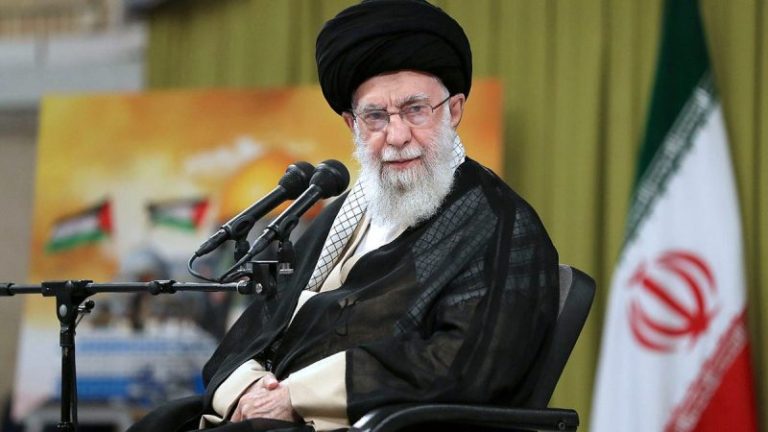
Trump revealed he sent a letter to Iran’s Supreme Leader Ayatollah Ali Khamenei pushing for Tehran to agree to a nuclear agreement — or face military consequences, according to a clip released Friday from an interview with FOX Business that is set to air Sunday. 

‘I would rather negotiate a deal,’ Trump told FOX Business. ‘I’m not sure that everybody agrees with me, but we can make a deal that would be just as good as if you won militarily.’ 

‘But the time is happening now, the time is coming up,’ he said. ‘Something is going to happen one way or the other. I hope that Iran, and I’ve written them a letter, saying I hope you’re going to negotiate because if we have to go in militarily, it’s going to be a terrible thing for them.’

Behnam Ben Taleblu, director of the Foundation for Defense of Democracies Iran program, said that it seemed Trump was ‘putting all options on the table, from good to bad.’ 

‘But the President should be careful,’ Ben Taleblu said in a statement. ‘Tehran has set a trap for him, hoping to lure him into endless diplomacy that is used to blunt maximum pressure and dampen the credibility of an American or Israeli military option while buying time to creep towards a nuclear weapon.’

Trump’s remarks also come days before the 18th anniversary of the abduction of retired FBI Special Agent Robert ‘Bob’ Levinson from Kish Island, Iran, on Sunday, which also marks National Hostage and Wrongful Detainee Day. 

The FBI has continued to offer up to a $5 million reward for information that leads to Levinson’s recovery, while the State Department has offered $20 million for such information, as well as details on those who are wanted for their alleged involvement in his disappearance. 

Trump told reporters in February he believes Iran is ‘close’ to developing a nuclear weapon, but that the U.S. would stop a ‘strong’ Tehran from obtaining one. He also signed an executive order instructing the Treasury Department to execute ‘maximum economic pressure’ upon Iran through a series of sanctions aimed at sinking Iran’s oil exports. 

‘They’re very strong right now, and we’re not going to let them get a nuclear weapon,’ Trump said Feb. 4. 

Trump’s first administration also adopted a ‘maximum pressure’ initiative against Tehran, issuing greater sanctions and harsher enforcement for violations.

This post appeared first on FOX NEWS
NEWYou can now listen to Fox News articles!

As I wrote earlier this week, after attending President Donald J. Trump’s address to the Joint Session of Congress, it occurred to me that the House Democrats have become like zombies.

Their members sat mute and motionless no matter what the president said or who he honored – including a young cancer survivor, a newly accepted West Point cadet, and an American who had been held hostage in Russia. Not one House Democrat exhibited any trace of human compassion or interest. It was a bit eerie.

As I thought more about this, a lot of other things began to make sense.

The House Democrats have evolved from being a relatively rough and tumble, argumentative, and rebellious bunch in the 1960s and 1970s into a tame, passive, robotic group today.

Of course, historically, the Democratic Party has had a deep tradition of machine politics going back to the founding of Tammany Hall in New York City in 1786. Virtually every major city run by Democrats today operates this way. Over the long-term, the Democratic system simply tends to breed conformity. But this zombie-ism is a new, more extreme phenomenon.

You can start to track it with Speaker Nancy Pelosi. Recall when Pelosi held up the nearly 1,000-page Affordable Care Act (Obamacare) and said, ‘we have to pass the bill so you can find out what is in it.’ At the time, I thought it was a foolish slip of the tongue. In hindsight, the Pelosi Speakership often involved Democratic members voting blindly as instructed by their elected leadership.

As Speaker in the first two years of Joe Biden’s presidency, Pelosi took full advantage of this blind loyalty to pass a slew of massive bills with no elected officials really knowing the details.

Democrat after Democrat voted for deeply unpopular policies which barred parents from knowing what their children were doing and learning in school, allowed men to play women’s sports, opposed tax cuts, left the southern border open, etc. For a long time, I could not figure out how House Democrats could so brazenly ignore the will of the American people. Now I get it. They were turning into zombies.

For a long time, I could not figure out how House Democrats could so brazenly ignore the will of the American people. Now I get it. They were turning into zombies.

Of course, Pelosi didn’t do it alone. The teachers’ and public employee unions kept people in line by threatening to fund primary opponents. The left-wing billionaires and activist groups also policed House Democratic members.

The propaganda media also gladly reminded Democrats of the party-movement line. From ‘The View,’ to MSNBC, to the New York Times, and the Washington Post, the signals went out. This is who we are. This is what we believe. Those who broke rank became ostracized and isolated. Just ask Sen. Joe Manchin, Health and Human Services Secretary Robert F. Kennedy Jr., or Director of National Intelligence Tulsi Gabbard.

Finally, there was sheer social pressure from other Democrats. Walking to vote and getting on an elevator with five or six hard-left-wing members could have a significant influence on whether someone voted against Democratic leadership. At a practical level, losing committee assignments and watching more obedient members get the better committees is a real lever of power. I encountered this in the 1980s when several southern Democrats voted with President Ronald Reagan. They suddenly found their committee assignments and proposed legislation in jeopardy.

The ultimate example of zombie behavior in the Democratic Party was the replacement of President Biden by Vice President Kamala Harris. President Biden had won every primary. He had a virtually unanimous delegation which would have dominated the Democratic National Convention. Vice President Harris had received zero votes. Yet within a few hours, the zombies took down Biden and elevated Harris.

In a party which had spent four years lecturing about democracy, this instant switch would only have been possible in a party of zombies. They did as they were told. Applauded when they were told. And lied to themselves when they were told.

It will be interesting to see how House Democrats deal with the challenges of a dynamic, creative, and aggressive Republican Party. I expect President Trump will cheerfully run circles around the House Democrat zombies just as he did Tuesday night.

This post appeared first on FOX NEWS

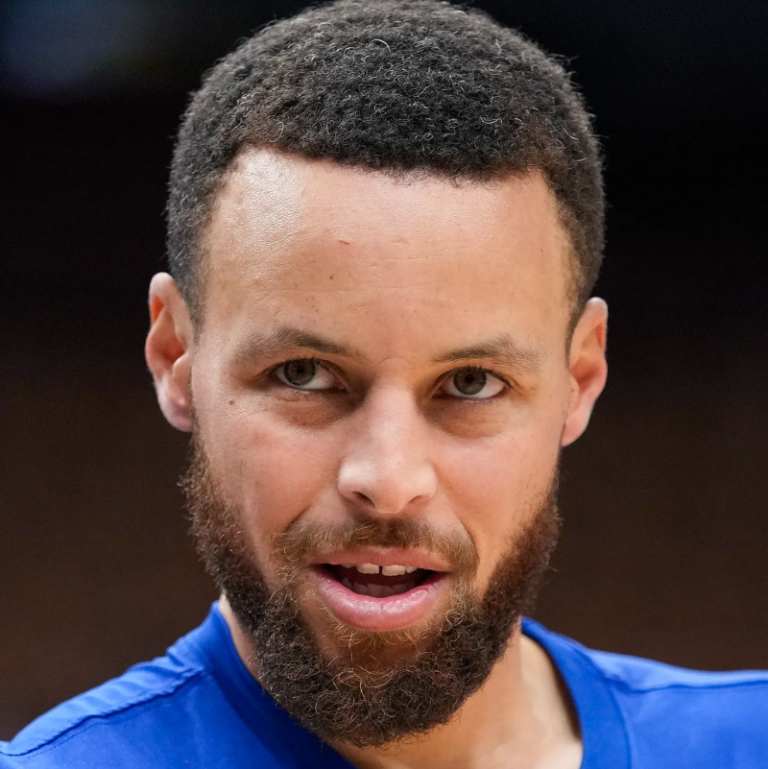
Steph Curry is one of the game’s all-time great shooters. Maybe the best of all-time.

And he added another incredible 3-pointer to his long list of legendary shots at the end of the second quarter in Golden State’s 121-119 victory over Brooklyn on Thursday.

Curry made a turnaround, slight fadeaway 38-foot 3-pointer from the edge of the halfcourt logo at the halftime buzzer, cutting Brooklyn’s lead to 60-55 and setting up the Warriors’ comeback victory after trailing 27-5.

The buzzer-beater was part of Curry’s 40-point effort, and his corner 3 with 1:01 remaining put Golden State ahead 119-109 and prompted Curry to display his “Night, night head on the pillow” gesture.

The Warriors are 35-38 and in sixth place in the Western Conference. They have won 13 of their past 18 games and are 9-2 since Jimmy Butler joined the lineup at the trade deadline. Butler scored 25 points in the road victory against the Nets and has helped the Warriors climb from 10th place to sixth in a month.

Follow NBA reporter Jeff Zillgitt on social media @JeffZillgitt

This post appeared first on USA TODAY

NFL free agency is about to get underway.

Teams are permitted to talk to free agents during the legal tampering period which begins March 10 at 12 p.m. ET. Free agents can officially sign with clubs when the new league years kicks off at 4 p.m. ET on March 12.

Several teams are expected to be aggressive during this year’s free agency period. There’s a plethora of rumors that happen this time of year in days and hours leading up to free agency.

Who’s going to be buyers or sellers? Here are three teams who are expected to be aggressive once free agency commences:

New England Patriots

The Patriots have an NFL-most $125.1 million in cap space, per Over the Cap. New Patriots head coach Mike Vrabel is armed with plenty of cap space to fill a roster with players who fit his offensive and defensive schemes.

New England already possesses a quarterback to build around in Drake Maye and a promising young cornerback in Christian Gonzalez, despite finishing last year with a 4-13 record.

Patriots executive Eliot Wolf told reporters at the NFL combine that he’s going to aggressively attempt to improve on what was a disappointing first year as the team’s vice president of player personnel.

“This year we have to do what’s necessary to improve the team,” Wolf said. “We need to continue to improve the roster, whether it’s weapons, whether it’s the line, whether it’s the defense. Just in all phases.”

The Patriots had the worst total offense in the AFC and ranked in the bottom half of the NFL in total defense last year. They need help on both sides of the football. New England hasn’t finished a season above .500 since 2021.

Washington Commanders

The Commanders are cognizant that they are in a fortuitous position: they have a star quarterback on a rookie contract.

NFL Offensive Rookie of the Year Jayden Daniels, combined with an ownership group willing to splurge makes Washington a desirable location for a lot of free agents.

The Commanders were already active this month when they agreed to acquire versatile wide receiver Deebo Samuel from the San Francisco 49ers. Don’t expect the Commanders to be complacent following the deal to land Samuel.

Washington re-signed veteran linebacker Bobby Wagner, but they still have nearly 30 pending free agents from last year’s club that advance to the NFC championship game, including Jeremy Chinn and Zach Ertz.

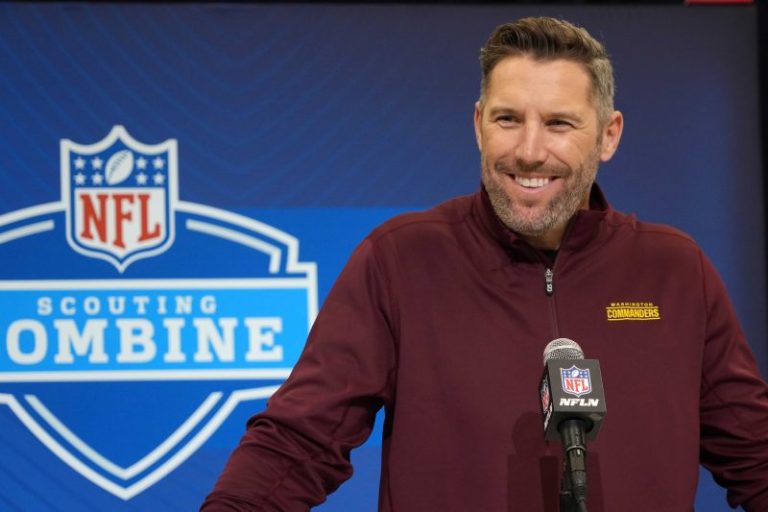
“We always want to build through the draft and we’ll continue to do that. But, we have 28 free agents. We have a lot of holes on our roster in terms of players who played really well for us last year,” Commanders general manager Adam Peters said at the combine (prior to re-signing Wagner). “We’ll be active in free agency because we have to be.”

The Commanders have money to be active. Washington has over $64 million is salary cap space, per Over the Cap.

Los Angeles Chargers

The Chargers saved over $25 million against their cap when they released Joey Bosa. The team’s decision to part ways with the veteran pass rusher is possibly an indication of the Chargers’ approach this offseason. The team is rebuilding its roster in Jim Harbaugh’s image.

Los Angeles boasts over $90 million in cap space, the second most in the NFL, via Over the Cap.

The Chargers will likely use some of that money to extend standout left tackle Rashawn Slater. And they will undoubtedly attempt to improve on a roster that finished 11-6 in the regular season, but ended in frustrating fashion during the wild-card round of the playoffs versus the Houston Texans.

“This year we have more flexibility to do more multi-year deals with some guys. I think the biggest pitch with LA is what we’ve done, and it’s LA. It’s beautiful,” Chargers general manager Joe Hortiz said at the NFL combine. “We have a great facility, an unbelievable organization (and) a great coaching staff. We’ll become a destination. I really believe that.”

Many anticipate Los Angeles to try to upgrade their skill position players around Justin Herbert. Herbert’s 227 passing yards per game average last season was the fewest of his career.

Top five teams with most cap space entering free agency (Over the Cap)

New England Patriots – $125.1
Los Angeles Chargers -$90.6
Las Vegas Raiders – $80.8
Arizona Cardinals – $77.9
Washington Commanders – $64.2

Follow USA TODAY Sports’ Tyler Dragon on X @TheTylerDragon.

This post appeared first on USA TODAY

The Tennessee Titans won’t officially be on the clock to make a decision with the No. 1 pick in this year’s NFL draft for nearly seven weeks. But time is still ticking for the organization to firm up a plan for its most vital asset in a rebuild.

With the NFL Scouting Combine now complete, the Titans will host visits with several prospects in the coming days, according to multiple reports. Penn State edge rusher Abdul Carter was first up Thursday, with Miami (Fla.) quarterback Cam Ward following Friday. Colorado quarterback Shedeur Sanders is on the schedule for next Monday, while his former Buffaloes two-way teammate, Travis Hunter, is set for a meeting later this month.

And looming over all this is the possibility that Tennessee goes an alternative route and trades out of the top spot.

‘We have to go through this process here,’ new Titans general manager Mike Borgonzi said at the combine. ‘So, this is like one touch point in the process. We’ve gone through the whole evaluation part. Now we’re finally getting to sit down and meet with these guys and talk with them. We’ll have pro days, we’ll have (top 30) visits. We have to go through the whole process really to make that decision.’

Borgonzi is charged with stabilizing a Titans franchise that has been in turmoil for nearly three years. In April 2022, after Tennessee earned the No. 1 seed in the AFC playoffs but was bounced by the Cincinnati Bengals in the divisional round, the team traded leading receiver A.J. Brown to the Philadelphia Eagles in a move that was heavily scrutinized. That December, general manager Jon Robinson was fired in what would be the first of several surprising dismissals, with Mike Vrabel’s firing in January 2024 further highlighting the disconnect among the coaching staff, front office and ownership.

Now, with Borgonzi taking over for general manager Ran Carthon, who was removed from his post after two seasons, the Titans will try to get on the same page after coach Brian Callahan’s first season was marred by self-inflicted mistakes, both on the field and in the composition of the roster.

‘I think (the players) are excited for the new process we have in place, player acquisition,’ Borgonzi said. ‘You can feel the want-to to be better, and they want to be a part of it. They want us to get this roster right and do something special.’

Free agency, which begins next week, will likely prove telling in the Titans’ approach to the draft, as the team must decide whether to bring in a veteran quarterback to compete with or replace incumbent starter Will Levis. But with that chapter yet to unfold, here’s a look at the Titans’ top options for the No. 1 pick, ranked from least to most appealing.

5. Draft Shedeur Sanders

In most drafts, the conversation around the No. 1 pick starts at quarterback – and it often ends there. The position has accounted for eight of the last 10 top selections, with the lone exceptions coming in 2017, when Myles Garrett was the consensus top overall choice, and 2022, when the Jacksonville Jaguars chose Travon Walker after taking Trevor Lawrence a year earlier.

And with Levis having tied for the NFL lead in turnovers last year with 18 despite starting just 12 games, Tennessee has made it clear that it expects to shift its outlook behind center in some form.

‘We have to solidify that position,’ Borgonzi said. ‘And we have Will on the roster right now, and he’s going to compete with whoever we bring in. We have one quarterback on the roster, so we’re bringing people in.’

In some respects, Sanders would mark a sharp pivot from the volatile Levis. The 6-foot-2, 212-pound passer has been widely lauded for his accuracy and poise in the face of consistent pressure, two facets in which Levis has failed to measure up in the early portion of his career. And despite many questioning whether Sanders has the arm strength to drive throws into tight windows downfield, Callahan has drawn a parallel to his past pupil – Cincinnati Bengals quarterback Joe Burrow – to explain that there were ways to compensate for that shortcoming.

At the combine, however, Callahan noted his belief that all passers who thrive in the NFL clear a certain bar for being able to exploit the entire field.

‘I think that there’s a requisite arm strength, right? You have to be able to make a certain amount of throws down the field, outside the numbers, tight windows, those things,’ Callahan said. ‘But then the other part of it is the ability to anticipate and to make the decision that puts the ball in the right window, those things all matter. So again, you don’t have to have the strongest arm in the entire draft. But there is a threshold, there’s a minimum requisite, I think is the best way to put it.’

Despite his success in two years as an FBS starter, Sanders makes for a somewhat unsure projection to the pros. His proclivity for exacerbating pressure by hanging onto the ball for too long necessitates a fine-tuning of his internal clock, especially if he’s left to operate behind a Tennessee front that Borgonzi and Callahan have acknowledged is one of the team’s most debilitating deficiencies. And in an era defined by the creative abilities of Patrick Mahomes, reigning NFL MVP Josh Allen and other quarterbacks, Sanders’ best fit seems to be in a timing-based offense in which everything around him is clicking at all times.

As the only candidate on this list who isn’t widely viewed as a lock to be a top-five pick, Sanders doesn’t seem to be a particularly likely or reasonable option for Tennessee – at least if the team holds firm in the top spot.

4. Draft Travis Hunter

It’s easy to understand why some thought of Hunter when Titans president of football operations Chad Brinker said in late January the team wouldn’t pass up on a ‘generational talent.’

‘Yeah, that’s very realistic,’ Callahan said of Hunter playing both cornerback and receiver in the NFL. ‘I think he’s a unique player, that there’s not a whole lot of other players you could compare what he’s done. There’s not many guys that have played that many snaps on both sides of the ball. And you watch his tape and you see his ability to play both at a very high level.’

Despite this, positional value might be one of the bigger question marks for Hunter in his case for the top spot. Callahan said that if the Titans were to take the multitalented star, they would likely start him out at cornerback and work in reps at receiver over time. No cornerback has ever been selected No. 1 overall. Given Tennessee’s abundance of needs and cornerback play famously being volatile, taking him at the top spot might not be the optimal use of resources.

3. Draft Abdul Carter

No one could fault the Titans for trying to ramp up their build with an elite player at a premium position.

In a draft deep on pass rushers, Carter has established himself as a cut above his peers and perhaps Hunter’s lone competition on many big boards for the title of the class’ top player. Upon moving from linebacker to defensive end full-time last season, he racked up 12 sacks and Big Ten Defensive Player of the Year honors. His standout, seven-pressure performance against Notre Dame in a College Football Playoff semifinal reinforced that the unanimous All-American had a strong case for the title of the most dominant defensive force in the Football Bowl Subdivision last season.

Carter sat out combine workouts and was later revealed to have a stress fracture upon which he elected not to have surgery. The Titans, however, already have a clear sense for his worth.

‘Abdul is a very good player,’ Borgonzi said at the combine. ‘I don’t want to go into many evaluations of the players, but there are certainly some players at the top that fit that description of generational talent.’

Tennessee ranked 12th in ESPN’s pass-rush win rate metric, but its edge rush could be due for additional investment. Former Pro Bowl outside linebacker Harold Landry III has been permitted to seek a trade after leading the team with nine sacks last year, while Arden Key is in the final year of his contract.

Still, for all the value a premier pass rusher can provide, look no further than Garrett for evidence of some limitations. The six-time Pro Bowl pick and Defensive Player of the Year winner has enjoyed just two playoff appearances for a Cleveland team dogged by extensive issues elsewhere.

2. Draft Cam Ward

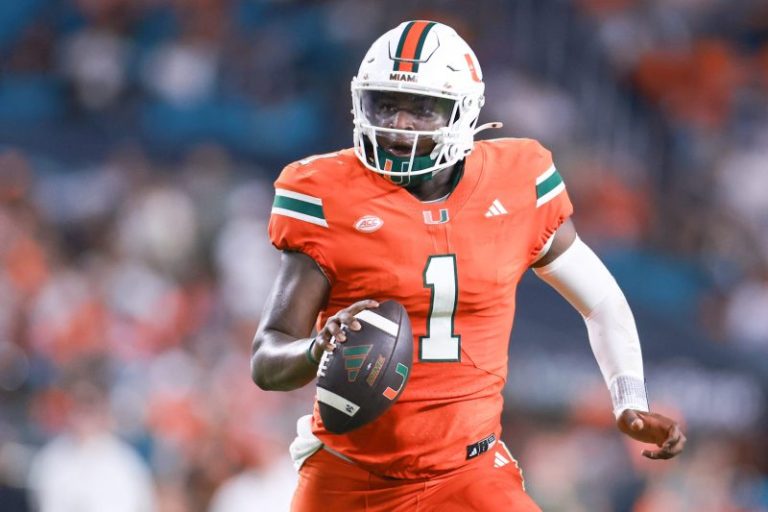
If the Titans have the conviction to make the selection, it would be hard to argue against Ward. After showing plenty of promise at Incarnate Word and Washington State, the 6-foot-2, 219-pound signal-caller reversed course on his decision to declare for last year’s draft and instead transferred to Miami, where he became one of college football’s biggest breakout stars last season.

Now, Ward appears to stand alone as the one quarterback who won’t escape the top three picks.

Taking on a signal-caller known for a daring, devil-may-care approach might seem like an odd solution for Callahan, especially given how open he was in 2024 about his dissatisfaction with Levis’ decision-making. Yet while Sanders’ skill set might more closely align with the coach’s emphasis on timing and precision, Callahan has also vowed not to let his own system interfere with pursuing the most gifted players.

‘So I would always say the player is going to come first, and it’s our job as coaches to fit what we do around that player,’ Callahan said. ‘Whether that’s an offensive lineman, a receiver, a quarterback, a pass rusher, whatever that looks like, our job is to fit the system to the talent. And I would never sacrifice scheme over talent at the end of the day as a general philosophy.’

Ward will almost assuredly be called on to dial back his big-game hunting for whichever team selects him. But as Jayden Daniels reinforced in his nearly unanimous NFL Offensive Rookie of the Year campaign, a quarterback capable of elevating his supporting cast is the most transformative player any team can add. Ward’s ability to attack defenses within structure while also extending and creating when things break down gives him unmatched upside in this class.

Yet the example of Daniels – as well as the diametrically opposed experience of No. 1 pick Caleb Williams – also highlights that any quarterback’s performance will be inextricably linked to his support system – or lack thereof. Even if Tennessee is convinced Ward is the right player to take over as its new offensive catalyst, it might not be set up properly to support him out of the gates.

1. Trade back

The Titans have been coy regarding the details of any discussions for a swap out of the top slot of the draft, but the team has made it clear it will listen to offers.

‘Anytime you have the No. 1 pick, it’s going to be a topic of conversation,’ Borgonzi said. ‘I would say we’ve had some phone calls. I would keep those phone calls to the vest, but we’ve had some phone calls.’

Tennessee has been in this position once before since the franchise relocated from Houston in 1997. When the team held the top choice in 2016, it moved the selection to the Los Angeles Rams in a blockbuster trade. Part of the pick package the Titans received in return was a second-rounder used to select Derrick Henry, the two-time NFL rushing champion who helped power three playoff appearances and two division titles from 2019-21.

Could Tennessee recoup similar value by moving back this year? It’s unclear. But with the quarterback-needy New York Giants hovering in the background as a potential trade partner, the Titans could have an enticing option to move back to No. 3 if a deal materializes. That would not only leave them still in range to secure either Carter or Hunter but also help them stock up on assets after parting with this year’s third-round pick last offseason to acquire cornerback L’Jarius Sneed.

And while the Titans might not receive a bounty comparable to the one they secured nearly a decade earlier – or the one the Chicago Bears landed two years ago from the Carolina Panthers – they could still set themselves up to help fulfill Borgonzi’s vision of building through the draft. And there’s no shortage of areas to address.

‘We have some young players we are excited about, but ultimately, probably the key points are: What are we going to do at the quarterback position?’ Callahan said. ‘And, on our two fronts, where do we keep adding players there? And, the receiver/linebacker positions, there are some holes we have to fill there.

‘I think there’s plenty of (holes), unfortunately.’

This post appeared first on USA TODAY

It looks like the game of musical chairs involving the best teams in the SEC and the top line of our NCAA men’s tournament bracket will continue all the way to Selection Sunday.

Florida returns to a No. 1 seed and Tennessee falls to the No. 2 line after the Gators’ road win against Alabama and the Volunteers’ loss at Mississippi. All three of the Gators, Volunteers and Crimson Tide have spent time at No. 1 in the past three weeks.

With two losses in a row and four losses in six games, the Tide have the hardest road back to a No. 1 seed. Alabama ends the regular season against Auburn, Florida takes on the Rebels and Tennessee hosts South Carolina.

Auburn, Houston and Duke are well-established top seeds. Michigan State is another option for a No. 1 should the Spartans close things out by winning the Big Ten tournament.

But the most likely fourth top seed will come out of the SEC, making the upcoming conference tournament a huge showdown for which team earns that coveted No. 1 landing spot.

Two SEC teams drop in our bracket. Mississippi State falls to a No. 8 after losing at home to Texas while Vanderbilt drops to the No. 9 line after losing to Arkansas.

The win in Starkville brings the Longhorns back into the field as a No. 12 seed in a play-in game opposite Xavier. Texas replaces Indiana to give the SEC a 13th tournament team.

Bracketology: NCAA Tournament bracket projection

Last four in

Boise State, Ohio State, Xavier, Texas.

First four out

Oklahoma, Indiana, North Carolina, Nebraska.

NCAA Tournament bids conference breakdown

Multi-bid leagues: SEC (13), Big Ten (9), Big 12 (8), Big East (5), Mountain West (4), ACC (3), West Coast (2).

This post appeared first on USA TODAY

Cam Ward’s declaration wasn’t anything new. A blip for NFL scouts, a sexy soundbite for everyone else. 

Pass on me at your peril.

“You’re the same team that’s got to play me for the rest of my career,” Ward told the Associated Press last month. “And I’ll remember that.”

That sounds good, and creates buzz-worthy talking points. Until you realize the last quarterback to say that and actually back it up was Aaron Rodgers nearly two decades ago.

And he made his statement after the fact, after 23 teams passed on him in the NFL draft ― before the Green Bay Packers selected the future first-ballot Hall of Famer.

No one is confusing Ward with Rodgers, and there’s very little oxygen given to other position players who make similar statements and back it up. 

USA TODAY Sports spoke with multiple NFL scouts about the upcoming draft, and got analysis of eight under the radar college football players with breakthrough potential. The scouts spoke on the condition of anonymity to protect their draft preparation. 

1. TE Harold Fannin Jr., Bowling Green

NFL combine measurements: 6-feet-4, 230 pounds.

Fannin had 117 catches – yes, 117 – in 2024, and 161 catches and 16 touchdowns over the last two seasons. He’s not your typical tight end, and some in the NFL see him as a receiver.

NFL scout: “He reminds me of Evan Engram. Really athletic, long and has a large catch radius. He’s not going to line up and move a pile, but he’s going to catch just about everything thrown at him. Offense in this league is third and medium, and how you can convert (third downs). He can get open and go get it. That has real value.”

2. QB Kyle McCord, Syracuse

NFL combine measurements: 6-3, 218.

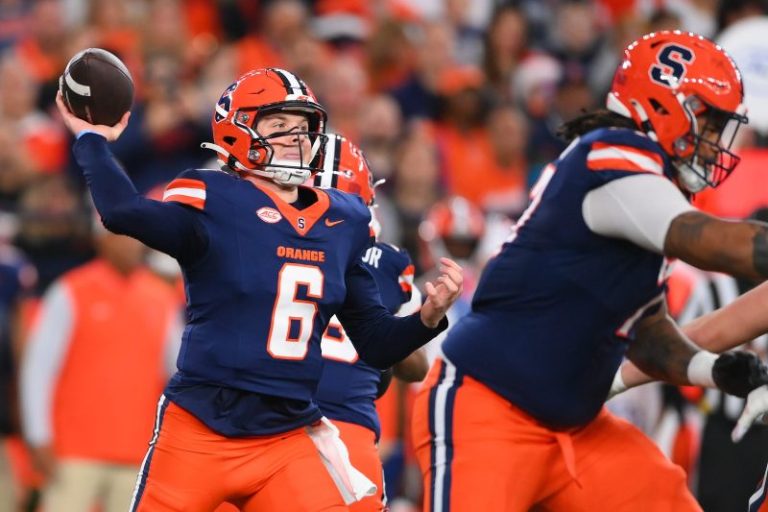
Showed range of throws and a better understanding of pass concepts in Year 2 as a starter, despite playing with a new team. The significant second-year jump in production (4,779 yards passing, 34 TDs) shows development and future potential. 

NFL scout: “He’s a big guy, a tough guy, and he’s surprisingly athletic. He can stand in there and make every throw. He’s far from a finished product, and he’s not stepping on the field and playing right away. But I like how he challenges defenses, how he doesn’t get rattled. He forces some stuff, but that can be coached. The tools are there. I can absolutely see him starting in this league.”

3. RB Dylan Sampson, Tennessee

NFL combine measurements: 5-8, 200.

Rushed for 1,492 yards and 22 touchdowns in his only season as a starter. Injured in the College Football Playoff first-round game against Ohio State, and the Tennessee offense wasn’t the same. Had 35 career touchdowns on 422 carries, or an average of a touchdown every 12 carries. 

NFL scout: “These one-shot players scare the hell out of me. There are two ways to look at it: you get your opportunity and make the most of it, or you’re in a money year with a chance to get to the NFL, and you crank it up. Then what happens once you arrive? He has some valuable skills, both in the run and pass games. He has the wiggle to make you miss, and surprising power in the isolation run game. He has really impressive inside vision, and a dangerous one cut. Plant the foot and accelerate. But does he have the size to take the pounding of a feature back?” 

4. TE Terrance Ferguson, Oregon

NFL combine measurements: 6-5, 247

Had career highs in catches (43), yards (591) and average per catch (13.7) in 2024, and had 16 career touchdown catches. A former blue-chip recruit who was a critical factor in the Oregon pass game for much of the last three seasons.

NFL scout: “Crazy athleticism. He’s long and has those athletic advantages, but needs to work on separation. It’s hard getting open in this league. You’re not taking those long steps like he takes and gaining separation. He’s not a guy who can hold the point of attack against an edge rusher, so forget that. But there are a few pass-catching tight ends in our league who can’t do that, either. It’s hard to ignore his ball skills and body control.”   

5. OT Ozzy Trapilo, Boston College

NFL combine measurements: 6-8, 316.

All-ACC first team in 2024, and second team in 2023, and had 36 career starts. Played both left and right tackle. 

NFL scout: “There are some who are turned off by the height because the taller you get at that position, the more you lack natural flexibility. My concern is the weight. He needs to fill out more, and be more of a factor in the run game. But the ceiling is attractive. He can play either (left or right) side., and knows how to use his length and hands.”     

6. G Wyatt Milum,, West Virginia

NFL combine measurements: 6-6, 313.

All-Big 12 first team in 2024, and second team in 2023, and had 43 career starts at tackle. 

NFL scout: “He’s not a tackle in this league. He’s just not long enough. But that doesn’t mean he can’t slide inside and use that toughness and ferocity. He’s a mauler, a big guy with some explosion in the run game. He can anchor. You’re not going to push him around or bull rush him. When I think about the interior in our league, he’s the type of guy you need. It takes a special kind of nasty to get in there and do that work.”  

7. DT Darius Alexander, Toledo

NFL combine measurements: 6-4, 305.

Had 42 career starts, with nine career sacks and 12 pass breakups. Had 22 career tackles for loss. 

NFL scout: “You watch the tape, and he’s capable of destruction. He’s a disrupter. But can he do it consistently? He has a strong lower body, and there were times when he was immovable in 1 or 3 technique. He’s a three (technique) in our league, but he’s also a three-down guy. Look at his length. He’s knocking down passes at the line of scrimmage because he understands timing in the pass rush. A lot of interior guys won’t embrace that. He had 12 career PBUs. Twelve. How often do you see that?” 

8. OLB/Edge Oluwafemi Oladejo, UCLA

NFL combine measurements: 6-3, 259.

A three-year starter, he had 180 career tackles and six sacks. 

NFL scout: “He got lost among (Laiatu) Latu and (Gabriel) Murphy in 2023. He moved outside on the edge last season, and there was dramatic change. He was just a guy in the middle the first two seasons, but he showed explosion last season, and the ability to use his hands to create separation. A completely different player. Has to get home with a greater frequency, but doesn’t lack the instincts to do so. It’s relative inexperience at the position, and the need for more reps. He has big upside.”

Matt Hayes is the senior national college football writer for USA TODAY Sports Network. Follow him on X at @MattHayesCFB.

This post appeared first on USA TODAY
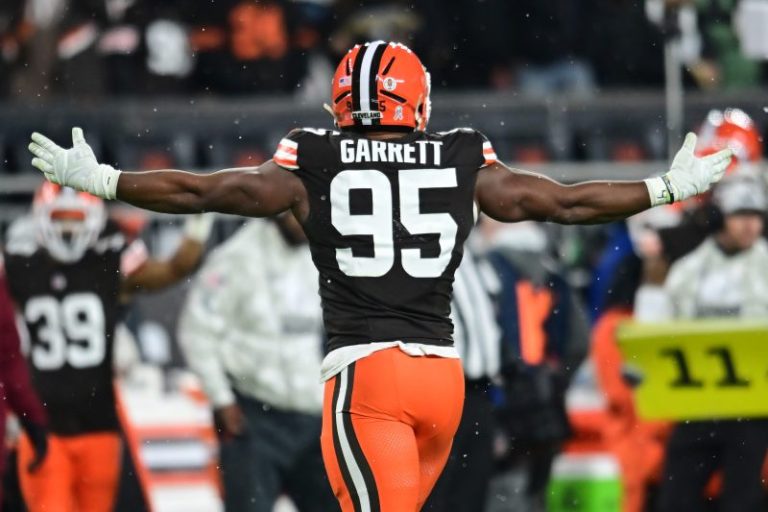
A new twist emerged in the standoff between star defensive end Myles Garrett and the Cleveland Browns Friday morning.

According to reporting from NFL Network, Garrett, who made a public trade request via written statement in February, asked for a meeting with Browns owner Jimmy Haslam, ostensibly to discuss that trade request. Haslam, the reports say, declined Garrett’s appeal for a meeting.

The Browns’ owner is placing his full trust in general manager Andrew Berry to handle Garrett’s trade request, according to NFL Network. In response to the request for a meeting, Haslam directed Garrett and his agent to speak with Berry instead.

Garrett is coming off of his second straight year as an All-Pro defensive end and fourth overall since Cleveland drafted him with the first overall pick in 2017. He has two years remaining on the five-year, $125 million contract he signed in 2020, but the Browns have already paid out his guaranteed money.

In Garrett’s trade request, he cited his desire to join a team that can compete for a Super Bowl as he enters his age-30 season.

‘While I’ve loved calling this city my home, my desire to win and compete on the biggest stages won’t allow me to be complacent,’ he wrote. ‘The goal was never to go from Cleveland to Canton, it has always been to compete for and win a Super Bowl.

‘With that in mind, I have requested to be traded from the Cleveland Browns.’

In the month since Garrett made his request, the message from the Browns has been the same: they have no plans to trade their biggest star. Most recently, Berry told reporters at the NFL combine in Indianapolis that the team ‘can’t imagine a situation where not having Myles as part of the organization is best for the Browns.’

The Browns have made the playoffs two times and won one playoff game since drafting Garrett eight years ago. Cleveland is coming off of a 3-14 record that earned the team the second overall pick in the 2025 NFL draft.

This post appeared first on USA TODAY