Archive

2025

Browsing

The Toronto Blue Jays are not hesitating to fortify the backbone of their success the past four seasons: Starting pitching.

On the same day they announced the signing of Dylan Cease to a $210 million contract, the club agreed to a three-year, $30 million deal with another right-handed starter, Cody Ponce, a person with direct knowledge of the deal confirmed to USA TODAY Sports. The person spoke on the condition of anonymity because the deal, first reported by The Athletic, is not yet official.

Who is Ponce, you ask?

Well, he’s the latest pitcher who started his career in the major leagues, only to reinvent themselves playing overseas and return a finished product, ready to cash in on a more lucrative deal. Ponce, 31, pitched in 20 games, including five starts, for the Pittsburgh Pirates in the 2020 and ’21 seasons, posting a 5.86 ERA.

Stuck in a perpetual swingman role even in the Pirates’ minor leagues, he ventured to Asia in 2022 and in three seasons in Japan’s top leagues, largely could not shake that inconsistency.

Yet a move to Hanwa of South Korea’s KBO seemed to flip the switch.

He dominated this past season for the Eagles, striking out 252 batters in 189⅔ innings, with a 1.89 ERA and a 17-1 record over 29 starts. He earned MVP honors for his performance. Ponce’s fastball now sits at 95 mph, a couple beats faster than his heater with the Pirates, and like so many major leaguers in recent years has added a split-finger pitch to his repertoire.

That will fit right in on the Blue Jays, whose rotation returnees in 2026 are splitter-happy veteran Kevin Gausman and rookie Trey Yesavage. Combined with Cease, that makes for a potentially dominant starting four, with veteran righty Jose Berrios – who sat out the Blue Jays’ World Series run with an elbow injury – leading a deep contingent of arms who could fill in the No. 5 spot, barring trade.

And it also backfills both current and expected future losses in the rotation. Chris Bassitt’s three-year deal with the club expired after the World Series, as did Max Scherzer’s one-year deal. Gausman’s $115 million pact is up after 2026.

Having taken care of their most significant winter need, the Blue Jays can now focus on retaining infielder Bo Bichette, their most significant free agent from their pennant-winning roster.

This post appeared first on USA TODAY

The penultimate College Football Playoff rankings serve as a table setter for Selection Sunday five days later with the majority of teams in at-large consideration not playing in conference championship games.

That means the fifth release of the season Tuesday, Dec. 2, was important in establishing a pecking order – both for seeds and for teams fighting to make the field.

The top of the rankings did not change with Ohio State and Indiana – the lone unbeatens in the Football Bowl Subdivision – leading as the Big Ten schools have since the first release. That will change in the final rankings on Sunday, Dec. 7, with the Buckeyes and Hoosiers set to meet in the conference title game.

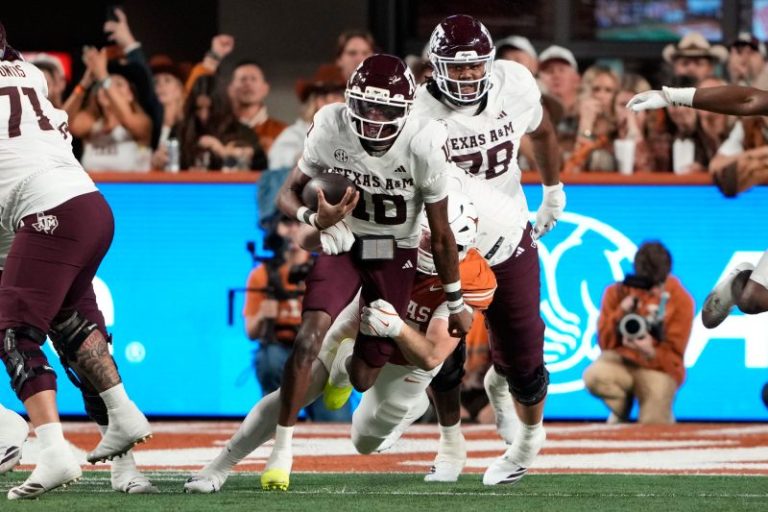
Who would follow the top two was the first question for the committee to answer. Last week’s No. 3 Texas A&M lost to Texas, knocking the Aggies out of the SEC title game. How far would A&M fall? The committee slotted it at No. 7, meaning a likely first-round home game with no opportunity to earn a bye to the quarterfinals.

Georgia slides up one place to third with Texas Tech and Oregon making equal improvements to round out the top five. The Bulldogs will face No. 9 Alabama in the SEC title game. Avenging their lone loss should put them in the No. 2 spot in the final rankings. The Red Raiders could also move up further and secure a first-round bye if they defeat No. 11 Brigham Young in the Big 12 title game. The Ducks have completed their regular season.

In addition to where Texas A&M landed, the other question for the committee was where to place Mississippi. The Rebels finished 11-1 with a defeat of Mississippi State in the Egg Bowl. But the departure of coach Lane Kiffin to LSU was needed to be considered as part of the criteria the committee must follow. Ultimately, Ole Miss was placed at No. 6. with Oklahoma, Alabama and Notre Dame rounding out the top 10.

After that group comes BYU, Miami, Texas, Vanderbilt and Utah. Each of these teams is outside the bubble and must hope for losses by teams playing ahead of them and a boost from the committee when the final rankings are revealed.

The fight for the Group of Five’s place in the field got more definition, too. Tulane remains in the rankings at No. 21 and will face No. 24 North Texas in the American title game. The winner looks assured of taking that spot.

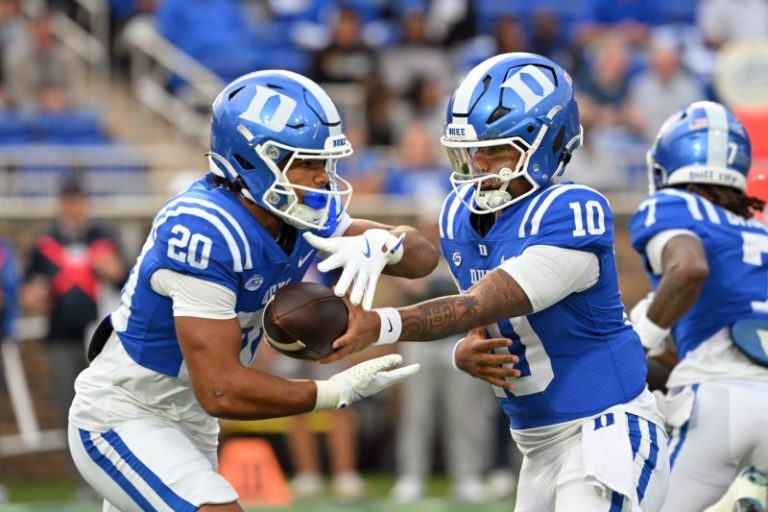
But another could go to No. 25 James Madison. Should the Dukes beat Troy for the Sun Belt championship, they could finish ahead of five-loss Duke if the Blue Devils defeat No. 17 Virginia in the ACC title game. Because the playoff rules state the five highest-ranked champions are in the field, it is possible for the ACC to get shut out in this scenario.

This is the final Tuesday ranking of the college football season. The College Football Playoff field is revealed in the final release on Sunday, Dec. 7.

CFP rankings Top 25

Ohio State (12-0)
Indiana (12-0)
Georgia (11-1)
Texas Tech (11-1)
Oregon (11-1)
Mississippi (11-1)
Texas A&M (11-1)
Oklahoma (10-2)
Alabama (10-2)
Notre Dame (10-2)
Brigham Young (11-1)
Miami (10-2)
Texas (9-3)
Vanderbilt (10-2)
Utah (10-2)
Southern California (9-3)
Virginia (10-2)
Arizona (9-3)
Michigan (9-3)
Tulane (10-2)
Houston (9-3)
Georgia Tech (9-3)
Iowa (8-4)
North Texas (11-1)
James Madison (11-1)

How the College Football Playoff would look based on rankings

First round

No. 12 Fifth-rated conference champion at No. 5 Oregon

No. 11 Fourth-rated conference champion at No. 6 Mississippi

No. 10 Notre Dame at No. 7 Texas A&M

No. 9 Alabama at No. 8 Oklahoma

Quarterfinals

No. 4 Texas Tech vs. Oregon-Fifth conference champion winner

No. 3 Georgia vs. Mississippi-Fourth conference champion winner

No. 2 Indiana vs. Notre Dame-Texas A&M winner

No. 1 Ohio State vs. Alabama-Oklahoma winner

What is the College Football Playoff schedule?

The schedule for first-round games taking place on campus sites will see No. 5 hosting No. 12, No. 6 facing No. 11, No. 7 meeting No. 10 and No. 8 squaring off with No. 9.

Winners of those games will advance to the quarterfinals with the Cotton Bowl hosting its matchup on Dec. 31. The other three games of the round will be played Jan. 1 with the Orange Bowl starting the day followed by the Rose Bowl and Sugar Bowl. The Fiesta Bowl and Peach Bowl will host the semifinals on Jan. 8 and Jan. 9, respectively.

The championship game will be played on Jan. 19 in Miami Gardens, Florida, at Hard Rock Stadium.

This post appeared first on USA TODAY

College Football Playoff structure allows 7-5 Duke to remain in the hunt for a bid, while better teams are out.
Conference expansion makes you wonder whether automatic bids should be part of CFP.
Committee catches a lot of heat, but it’s not responsible for playoff structure.

Tell me what’s wrong with this picture.

Unranked Duke, at 7-5, remains alive for the College Football Playoff, while 10-2 Vanderbilt is out.

Try explaining that to someone who doesn’t closely follow this sport.

Heck, try explaining that to someone who follows the sport but watched Duke lose to UConn, plus four other teams.

We could be headed toward a truly stupid CFP bracket, and I’m not blaming the committee.

The committee just ranks the teams. The committee didn’t create this system, a system wherein — and I want to reiterate this — a 7-5 Duke team is alive, and 10-2 Vanderbilt is out.

Five-loss Duke can still qualify for playoff. Yes, really.

The committee, by rule, is required to select five conference champions as automatic qualifiers.

If unranked Duke upsets No. 17 Virginia this weekend, it would be eligible for one of those auto bids.

Yes, Duke might need help to secure an auto bid — No. 25 James Madison probably needs to lose in the Sun Belt Championship — but, I repeat once more: Five-loss Duke is alive, and two-loss Vanderbilt is out.

Dumb.

Duke is alive. No. 13 Texas, which just upset previously undefeated Texas A&M, is out.

Dumb.

Duke could win the ACC and qualify with five losses, and the Big 12’s No. 11 Brigham Young probably would miss the playoff if it finishes 11-2, with both losses coming to No. 4 Texas Tech.

Dumb.

The playoff’s size is not the problem. And I could live with the committee’s rankings. The top 12 teams in these latest rankings would create a bang-up bracket. SEC boss Greg Sankey would squabble about Texas and Vanderbilt being omitted, but once the moaning stopped, the bracket would look pretty stout.

Imagine No. 12 Miami at No. 5 Oregon in Round 1. You in for that? I’d be in.

Trouble is, we’re not going to get that, because the ACC’s standings and tiebreaker application has Duke headed to the conference championship game instead of 10-2 Miami.

Duke is one of five teams tied for second in the ACC standings. The Blue Devils own the worst overall record of the tied teams, but the league’s tiebreaker rules have Duke headed to Charlotte.

So, a Duke team that lost to Illinois by 26 points could be playoff bound, while a Miami team that beat Notre Dame is vulnerable of getting sent to an also-ran bowl.

Dumb.

We’re not there yet. Virginia could save some sanity for this bracket by beating and eliminating Duke, winning the ACC, and snatching one of those auto bids.

Are automatic bids the enemy of a top-notch bracket?

I’ve previously shown support for this 12-team playoff model, but this screwy scenario of Duke being alive for the playoff in the first week of December, while undeniably better teams are out of the mix, makes me question whether any automatic bids are worth retaining, as the playoff’s future size and shape go under evaluation.

Or, should all bids just be awarded via at-large selection?

Why should we have auto bids, when conference champions aren’t necessarily even the best team in their own league? They might just happen to be the team that drew the easiest conference schedule, or they caught a good break from the tiebreaker rules.

When conferences were smaller, we could say with a straight face conference championship games generally produced the conference’s best team as champion.

Not anymore.

Conference expansion and the elimination of divisions disrupted the utopia of conferences crowning worthy champs.

The ACC swelled to 17 teams and nixed divisions in favor of a united standings. Duke’s win against California pushed it a step closer to winning the Atlantic Coast Conference.

Think about that for a moment.

Each ACC team played only eight conference games. Put differently, Duke could win a 17-team conference and become eligible for a playoff auto bid after facing less than half the teams in the conference.

That’s dumb.

Perhaps, the playoff would be better served with no more conference championship games. No more automatic bids.

Expand the regular season by one week, giving the committee one additional data point for every team in the first week of December. This wouldn’t lengthen the season. You’d just be swapping in a 13th regular-season game in place of conference championship weekend.

Then, rank the 12-best teams, and congratulate Duke on its bid to the Gator Bowl.

Blake Toppmeyer is the USA TODAY Network’s senior national college football columnist. Email him at BToppmeyer@gannett.com and follow him on X @btoppmeyer.

This post appeared first on USA TODAY

The 2026 World Cup will feature an expanded field of 48 teams.
Teams will be sorted into 12 groups of four during the official draw.
The World Cup draw is scheduled to take place on December 5 in Washington, D.C.
USA TODAY Sports will host a Q&A session on December 4 to discuss the upcoming tournament.

The anticipation is building for the 2026 World Cup and soon we’ll find out which teams are playing in the 12 groups.

Overall, there will be 48 teams in the upcoming World Cup, which equates to four teams in each group. What teams will be in each group?

That’s an answer we’ll get on Dec. 5 in Washington, D.C., when the draw is conducted.

USA TODAY Sports’s Jesse Yomtov is ready to answer your questions about the 2026 World Cup, the upcoming draw and the teams that have qualified thus far on Thursday, December 4 at 12 p.m. ET.

You can send in your questions in advance via the box below and of course come back on Dec. 4 to get your answers.

This post appeared first on USA TODAY

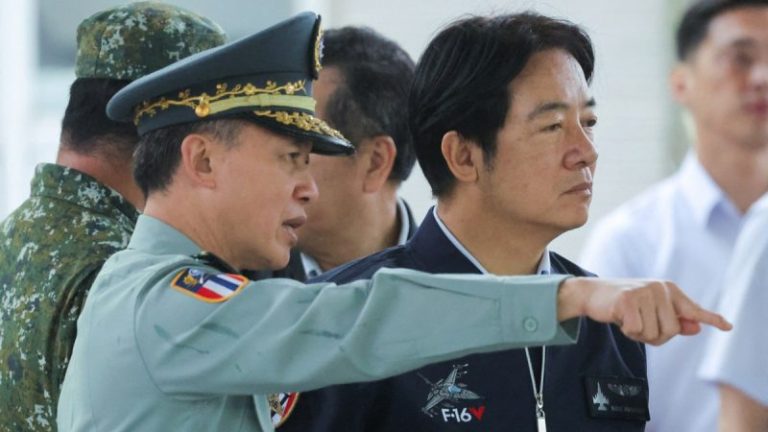
: Last week, Taiwan President William Lai unveiled a massive $40 billion supplemental defense procurement proposal, casting it as proof that the independently ruled, democratic island is serious about countering escalating military pressure from the People’s Republic of China (PRC). The PRC has not governed Taiwan for even a single day but claims it as its territory.

A State Department spokesperson told Fox News Digital that, ‘We welcome Taiwan’s announcement of a new $40 billion special defense procurement budget. Consistent with the Taiwan Relations Act and more than 45 years of commitment across multiple U.S. Administrations, the United States supports Taiwan’s acquisition of critical defense capabilities, commensurate with the threat it faces.’ 

The spokesperson also commended Taipei, ‘We also welcome the Lai administration’s recent commitments to increase defense spending to at least 3% of GDP by 2026 and 5% of GDP by 2030, which demonstrates resolve to strengthen Taiwan’s self-defense capabilities.’

The American Institute in Taiwan (AIT) – the de facto American embassy – responded very positively almost immediately after Lai’s proposal was announced. Courtney Donovan Smith, a political columnist for the Taipei Times, told Fox News Digital that the strong support from AIT, ‘Amounts to a public American stamp of approval.’

A day after Lai’s announcement, Taiwan’s Defense Minister, Wellington Koo, told the media that preliminary talks have already been held with the United States about the kinds of weapons it wants to buy as part of this budget that would run from 2026 to 2033. But Koo said he could not make any details of discussions public until Congress receives a formal notification.

Yet some in Taiwan expressed concern that the language from the administration was somewhat understated, and didn’t come from senior-enough officials. 

Those worried about what they perceive as a muted tone from the Trump administration wondered if the timing could be sensitive, coming shortly after President Trump and Chinese leader Xi Jinping agreed to a trade deal, and just days after Xi phoned Trump to reiterate Beijing’s claims over Taiwan, claims the U.S. ‘acknowledges’ but does not accept.

Even so, Taipei-based political risk analyst and Tamkang University assistant professor Ross Feingold told Fox News Digital that U.S. support fundamentally has not shifted and that when it comes to U.S. weapons sales to Taiwan, ‘If Taiwan is a willing buyer, the Trump administration is likely to be a willing seller.’

Also causing distress to the fragile egos of China’s communist leaders is Japan’s new Prime Minister Sanae Takaichi, a conservative who became Japan’s first female prime minister in October. She appeared to break long-standing Japanese strategic ambiguity over Taiwan when, asked on Nov. 7 in parliament whether a Chinese attack on Taiwan would qualify as ‘a situation threatening Japan’s survival.’

Takaichi didn’t deflect with a ‘I don’t comment on hypotheticals.’ Instead, she said, ‘If there are battleships and the use of force, no matter how you think about it, it could constitute a survival-threatening situation.’

Under Japan’s 2015 security law, that designation could allow Japanese military action in defense of an ally.

China predictably lashed out, immediately calling her remarks ‘egregious.’ A Chinese diplomat in Osaka escalated further, reposting coverage on X with a threat-like warning: ‘The dirty head that sticks itself in must be cut off.’

Kerry K. Gershaneck, a visiting scholar at National Chengchi University and a former U.S. Marine counterintelligence officer, told Fox News Digital that the U.S. needed to clearly denounce China for threats against Japan and the Japanese prime minister. Gershaneck warned that Asian allies remember past U.S. abandonment’ under what he called the ‘do not provoke China!’ policy of the Obama administration. ‘Unless high-level Washington officials signal stronger support, he said, ‘the Trump 47 administration risks going down in history as Barack Hussein Obama’s third term.’

Feingold noted that while Takaichi’s stance was enthusiastically received in Taiwan, the excitement ‘was unsustainable and not based on a formal policy decision by Japan to defend Taiwan.’

Following reports that President Trump phoned the Japanese prime minister and requested that she dial down talk about Taiwan, Japan’s Chief Cabinet Secretary Kihara Minoru issued a strong denial, saying Trump did not advise Takaichi to ‘temper the tone of her comments about Taiwan.’

While the geopolitical shifts grabbed headlines, Lai’s real challenge is domestic. Taiwan has a single-chamber legislature, and Lai’s Democratic Progressive Party does not have a majority.

Cheng Li-wun, the new chair of the main opposition Kuomintang (KMT), campaigned against boosting defense spending to 5% of GDP and has repeatedly argued Taiwan is ‘not an ATM’ for ‘unreasonable’ military budgets. The KMT supports renewed engagement with Beijing and acceptance of the ‘1992 Consensus,’ a proposed framework that allows both sides to claim there is ‘one China’ while interpreting the meaning differently. Lai rejects that position entirely, calling it a path toward subordination to China.

Bryce Barros, associate fellow at GLOBSEC and a former U.S. Senate national security advisor, told Fox News Digital that there are serious hurdles. ‘Opposition leaders have cited cuts to other essential services like healthcare, lack of details on how the budget will be paid for and concerns over more hostilities with China,’ he said. But Barros said the head of the de facto American embassy has called for bipartisan support for the bill, and he noted Lai needs only six opposition defections for the vote to pass.

Analysts also stress the proposal is not solely for U.S. weapons. Lai wants major investment in domestic defense manufacturing, including a ‘dome’ anti-missile system, which could help blunt accusations of excessive spending to curry favor with Washington. But the plan still faces a volatile parliament and certain retaliation from China.

This post appeared first on FOX NEWS

In March, President Donald Trump announced the Air Force’s new F-47 stealth fighter, built by Boeing.  So where is the Navy’s secret new carrier plane?

Fifteen years ago, the U.S. Navy read the signals from China and secretly started development of a long-range, stealthy plane to launch from aircraft carriers.  The Navy’s newest bird is more like a fighter-bomber, with the AI smarts to lead drones into combat and enough range to scare China.

Today that plane – known only as F/A-XX or fighter attack, experimental – is ready to go. Both Boeing and Northrop Grumman have flown test planes. Their prototypes are waiting in the wings; or rather, in discreet guarded hangars, most likely in Missouri and Florida. 

Yet, for some reason, the Pentagon isn’t in the mood to make the ‘downselect’ purchase decision. The delay is shocking and dangerous.

Congress wants the Navy plane so much they added nearly $1 billion to the budget to accelerate F/A-XX. ‘The U.S. Navy needs sixth-generation fighters. I’m concerned that any hesitancy on our part to proceed with the planned procurement of the sixth-gen fighters for the Navy will leave us dangerously outmatched in a China fight,’ Rep. Ken Calvert, R-Calif., the head of the House Appropriations Subcommittee on Defense, said on May 14. 

Of course, U.S. Navy F/A-18EFs have pounded Middle East targets during various air campaigns for almost three decades.  Just look at the damage they did to Houthi missile sites and weapons caches in Yemen during Operation Rough Rider this past spring.  But for the fierce fighting scenarios of the Pacific, the Navy pilots that fly from aircraft carriers need a new plane. 

All that President Trump has to do now is take this opportunity to pick the best plane for the Navy.

Here are six things to know about the Navy’s secretive project.

The Navy has not let us see photographs of the F/A-XX, obviously. Tantalizing concept art released over the summer reveals a smooth stealth shape, with a cockpit canopy similar to the F-35.  The diamond or delta-wing shape provides lift and range, especially at higher cruise altitudes. 

  In April, the Navy announced F/A-XX would have at least 25% more range than current fighters.  The range could be up to 1,000 miles, according to a top analyst’s estimate. Add in air refueling, longer-range missiles, and you have the ability to take the fight all across the Pacific.  I can tell you this: the Navy has been short of a true long-range fighter since the retirements of the A-6 Intruder and the F-14 Tomcat of TOPGUN fame, so range is a priority.

  While the F-35C excels with just one engine, the Navy preference has always been for two engines, due to all that flying over water. You won’t see the engines because they are tucked inside the plane to diminish heat signature. U.S. engine technology is far ahead of China’s, in areas like thermal management and overall thrust. 

Early stealth aircraft like the SR-71, F-117 and the B-2 sported flat black coatings to help absorb radar waves.  The current trend in stealth materials is an avian grey, like the B-21 Raider bomber now in production.  Fortunately, the U.S. is the world leader in aerospace-grade carbon fiber composites.

  Expect an impressive bomb bay for internal carriage of long-range missiles.  Current fighters like the Superhornet hang missiles from hard points under the wings.  To achieve stealth, the FA-XX will follow the path of the F-35C, and tuck missiles inside.  Sawtooth bomb bay doors help maintain the aircraft’s stealth profile.

Part of the Navy’s plan is to stock carriers with drone refuelers like the new MQ-25 Stingray to accompany the F/A-XX on its stealthy missions.  Since you ask, no, drones cannot do it all.  Naval strike demands payload to carry heavy bombs and missiles.  Plus, it turns out a pilot is pretty useful. The FA-XX can also control wingmen drones in the battlespace. With FA/XX, the Navy can target enemy ships, land bases, and radar sites.

Trump certainly understands the value of stealth after the B-2 bomber’s obliteration of Iran’s nuclear sites.  It’s unclear whether anyone has laid out for the president just how a massive risk the Pentagon is taking with naval aviation by slowing down F/A-XX.

Please note that China flew a stealthy demonstrator designed for carrier landings over a year ago.  On Nov. 7, China commissioned its third carrier, the Fujian, and is laying modules for a fourth carrier — designed to be bigger than the USS Gerald R. Ford and to run on nuclear power for the first time. In a few years, China may have six of its own carriers. That’s a serious threat.

Put simply, the Navy must have this long-range, stealthy fighter. The idea is to pair the FA/XX with long-range missiles so the carrier airwing regains the long-range punch they will need to maneuver and strike against China in the Pacific.

No one wants to say this, but without FA-XX, the carrier mission may diminish in the future.    

It’s past time for President Trump to make a decision. 

This post appeared first on FOX NEWS

The University of Colorado’s athletic department is projecting that it will run a $27 million deficit during the current fiscal year ending in June 2026, in addition to needing $11.9 million in institutional support from the university and $2.2 million from student fees, according to budget figures obtained by USA TODAY Sports.

Those numbers are not final. The athletic department is hoping to bring that deficit down by the end of June with revenue from donations, sponsorships and concerts at Folsom Field. But it has never reported a deficit that big before, which could potentially leave the athletic department in need of more than $41 million in subsidies from the university, including the institutional support and student fees.

It also comes at a critical time:

Athletic director Rick George announced recently he’s stepping down at the end of the fiscal year in June.
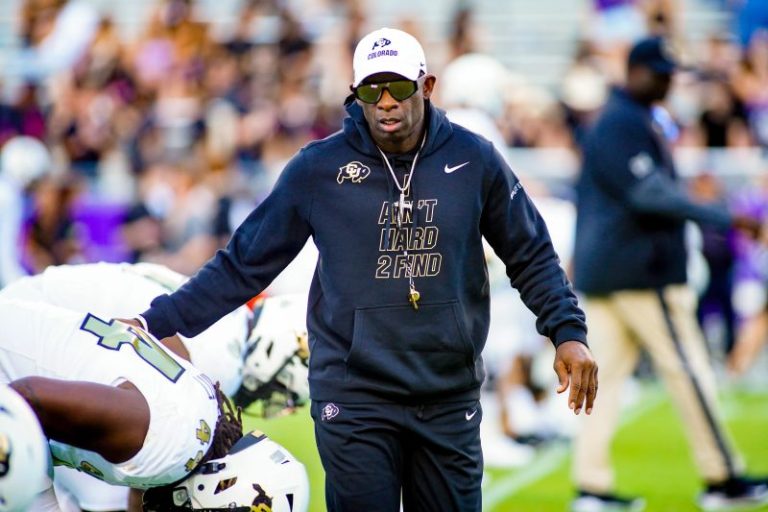
Colorado nearly doubled the pay of football coach Deion Sanders in March, giving him a new five-year contract worth more than $10 million annually. His team just finished 3-9 in 2025 as attendance started to wane after selling out his first season in 2023.
Like other major college sports programs, Colorado is committed to providing players with up to $20.5 million in annual benefits and direct payments under terms of the NCAA-House legal settlement. That cost is new this year, with the $20.5 million cap going up by 4% next year and the year after.

The latter two costs are the biggest reasons for the projected deficit — the $20.5 million for players and the $10 million per year for Sanders. Colorado previously told USA TODAY Sports in September it was “to be determined” how it would come up with the money to pay for those two big new costs.

Colorado says it won’t cut sports

The projected answer now is that it will run a deficit with the university as the potential backstop for funding.  Asked who would be paying for these expenses if not the university, spokesman Steve Hurlbert said, “The mechanics of that are still to be determined.”

The school said it will “not cut sports nor cut any resources for student-athletes” but will look to cut expenses.

Hurlbert also stressed tuition money and state funds will not be used to address the deficit.

However, some observers who are familiar with Colorado’s budget expressed skepticism about that claim because money is fungible. The money the university provides to athletics also is discretionary.

“This notion that they’re spending resources that otherwise couldn’t be spent on putting more kids through college or funding cancer research is just absurd,” said Jack Kroll, a former member of the university’s Board of Regents. “There’s no truth to that whatsoever.”

‘The university will have to fill the gap’

The projected revenue for fiscal year 2026 is $136.7 million with $163.7 million in expenses. The biggest expense is football at $60.4 million. The department is still finalizing its numbers for fiscal year 2025, which ended in June 2025, but said it expects a “balanced” budget of $141 million in revenues and expenses for that year, including $24 million in institutional support revenue from the Boulder campus and the university’s president’s office.

Colorado isn’t the only school facing these challenges. In fiscal 2024, at least 33 athletic departments received at least $30 million in university support, including Colorado ($31.9 million), Houston ($38.4 million), Arizona State ($51.7 million) and South Florida ($63.7 million), according to public records collected by USA TODAY Sports in conjunction with the Knight-Newhouse College Athletics Database at Syracuse University.

The House settlement added a potential new $20.5 million expense to their bills starting July 1, 2025.

At Colorado, last year the university projected a small but growing budget deficit for the campus starting in fiscal 2027. It even told faculty and staff to move forward by “being comfortable with being uncomfortable.” This has led to concerns about how football is paying for its big new expenses.

“With a lame-duck athletic director, a dismal football season, who-knows-what to happen with the (transfer) portal, donor fatigue, the distancing of football leadership from football alums — the prospects for making much of a dent in that deficit seem very slim,” said Roger Pielke, an emeritus professor at Colorado who previously taught sports governance in the CU athletics department. “That would mean that the university will have to fill the gap.”

Follow reporter Brent Schrotenboer @Schrotenboer. Email: bschrotenb@usatoday.com

This post appeared first on USA TODAY

The Department of Justice (DOJ) on Friday charged five men from across the U.S. with running an online ‘child exploitation enterprise’ called ‘Greggy’s Cult,’ that allegedly used Discord servers to terrorize, blackmail and coerce minors into ‘horrific acts of self-harm.’

The indictment unsealed by federal prosecutors charges five individuals with ‘conspiracy to produce child pornography, conspiracy to receive and distribute child pornography, and conspiracy to communicate interstate threats.’

Hector Bermudez, 29, of Queens, New York; Zachary Dosch, 26, of Albuquerque, New Mexico; Rumaldo Valdez, 22, of Honolulu, Hawaii; David Brilhante, 28, of San Diego, California; and Camden Rodriguez, 22, of Longmont, Colorado, were arrested Tuesday will be arraigned in the Eastern District of New York at a later date, according to the DOJ.

Prosecutors described a ‘nightmarish platform on the internet,’ alleging that ‘Greggy’s Cult’ carried out ‘depraved conduct’ that included ‘repeatedly encouraging victims to kill themselves or encouraging them to insert household objects into their genitals or anus.’

‘These five defendants allegedly targeted vulnerable children and others via online platforms – they exploited, threatened, and harassed them, and encouraged horrific acts of self-harm,’ FBI director Kash Patel said in a statement. ‘The FBI is sending a message to those individuals involved in criminal activity through violent online networks: you can’t hide in the shadows hovering over a keyboard – we will find and hold accountable those who participate in these illegal and heinous acts.’

The indictment stated that the defendants allegedly engaged in the ‘production and distribution of child sex abuse material’ between January 2020 and January 2021, and also participated in other forms of ‘exploitation and harassment’ of both minors and adults.

According to prosecutors, the defendants and other members of ‘Greggy’s Cult’ met on Discord servers and ‘directed minor victims, who had joined a video call on either Discord or another video conferencing platform, to engage in sexually explicit or other degrading conduct.’

The group is also accused of finding victims on gaming platforms such as Roblox and Counter-Strike: Global Offensive.

The cult members allegedly captured screenshots and screen recordings of the ‘sexually explicit conduct’ before sharing it to other Discord servers and with each other, according to the DOJ.

Attorney General Pam Bondi reacted to the indictment, stating that ‘no child should ever be terrorized or exploited online, and no online platform should give refuge to predators.’

‘The Department of Justice will continue to protect children, support survivors, and hold accountable anyone who preys on the vulnerable – online or offline – with every tool we have,’ Bondi added.

Prosecutors also accused the defendants of extorting their targets, alleging that they tried to frame the adult victims as pedophiles or send malware to minor victims, which was then used as ‘leverage to get the victims to engage in degrading acts on camera.’

The defendants were allegedly able to convince victims to commit acts of ‘degradation,’ including having them be ‘owned’ by a member of the cult to demonstrate loyalty, or writing the names of cult members on their bodies, which prosecutors referred to as ‘fansigning.’

Acting Assistant Attorney General Matthew Galeotti of the DOJ’s Criminal Division said in a statement that the defendants were charged with an ‘unspeakable act of coercing and blackmailing children and adults to engage in self-harm and other degrading acts.’

U.S. Attorney Joseph Nocella Jr. for the Eastern District of New York called the alleged conduct ‘monstrous,’ adding that children were ‘at times driven to the brink of suicide.’

The DOJ stated that ‘Greggy’s Cult’ formed before the emergence of the ‘764’ network, another online child-exploitation group that the FBI has launched an intensified effort to take down.

Members of ‘764’ allegedly use popular online platforms such as Discord, Telegram and Roblox to recruit and manipulate minors.

This post appeared first on FOX NEWS

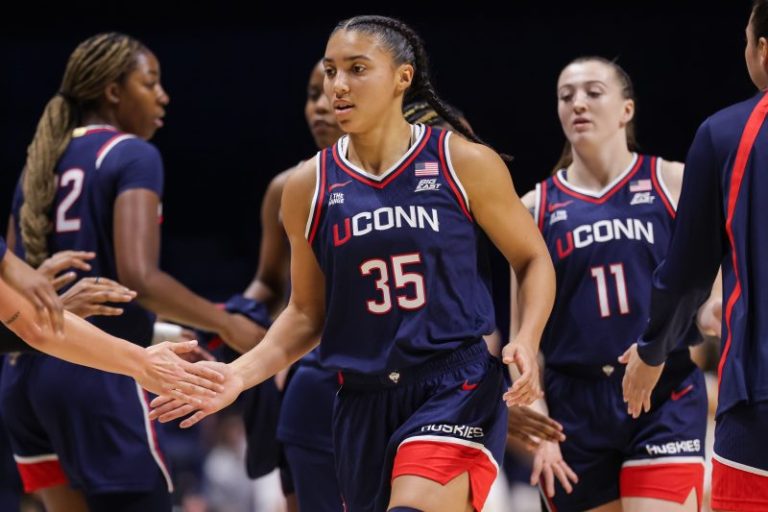
The UConn Huskies women’s basketball team can beat you many different ways, as evidenced by the defending champion’s wire-to-wire 85-51 win over the South Florida Bulls on Tuesday. 

The No. 1 Huskies can beat you with their balanced scoring and depth, finishing with four players in double-digits. Sophomore forward Sarah Strong led the way with 14 points and 10 rebounds in 25 minutes, followed by Blanca Quinonez (13 points), Azzi Fudd (10 points, two steals) and Ashlynn Shade (10 points).

UConn can also beat you on the defensive end. The Huskies held the Bulls to 51 points (their second-lowest total this season) and forced South Florida into 20 turnovers (tied for a season-high) at Yuengling Center in Tampa, Florida on Tuesday. The Huskies scored 26 points off the Bulls’ turnovers.

“There’s not a box they do not check,” ESPN analyst and former UConn star Rebecca Lobo on Tuesday. UConn head coach Geno Auriemma added he ‘didn’t have a whole lot to complain about’ after the impressive win.

The Huskies improve to 8-0 on the season and UConn is 35-0 all-time against South Florida with the win. The Bulls dropped their first home game and fall to 5-4 on the season.

USA TODAY Sports provided live updates and highlights from Tuesday’s matchup. Catch up below:

End of 3Q: Huskies 65, South Florida 29

South Florida turned in their best quarter of the game, scoring 13 points the frame. The Bulls are still trailing the UConn Huskies by 36 points heading into the fourth quarter.

UConn sophomore forward Sarah Strong has already recorded a double-double with 14 points and 10 rebounds, her fourth double-double in eight games. Strong is one of four UConn players in double-digits: Blanca Quinonez (13 points), Azzi Fudd (10 points) and Ashlynn Shade (10 points).

No Bulls players has reached double-digits yet. Senior forward L’or Mputu has a team-high eight points, while senior forward Carla Brito added five points.

Halftime: UConn 48, South Florida 16

UConn held South Florida to six points in the second quarter and have a 34-point halftime lead over the Bulls. Four different players have scored eight or more points for the Huskies, including Blanca Quinonez (13 points), Sarah Strong (10 points), Azzi Fudd (eight points) and Ashlynn Shade (six points).

The Huskies have shined from the 3-point line, shooting 8-of-16 from beyond the arc. And UConn’s defense has been impenetrable thus far. The Huskies have forced the Bulls into 12 turnovers, which the defending champions converted into 19 points.

Senior forward L’or Mputu has a team-high six points for South Florida, who is collectively shooting 6-of-27 (22%) from the field and 0-of-8 from the 3-point line. The Bulls are outrebounding the Huskies 20-17, including 6-2 offensive boards, but they must get some stops and make the most of their second chance opportunities to get back into the game.

End of Q1: UConn 29, South Florida 10

It’s raining 3-pointers in Tampa, Florida. Two days after UConn shot 50% from beyond the arc in the team’s 104-39 win over Xavier, the Huskies opened Tuesday’s game against South Florida shooting 5-of-8 (63%) from the 3-point line and 65% from the field. Blanca Quinonez (eight points) and Ashlynn Shade (six points) have each made two 3-pointers, while Sarah Strong (five points) made the other. Azzi Fudd added eight points.

The Bulls have not made a shot from beyond the arc (0-of-3) and are shooting a dismal 23% from the field. The Huskies pressure has also resulted in five Bulls turnovers. L’or Mputu has a team-high six points.

UConn has early lead after perfect start

UConn came out on a mission against South Florida on Tuesday. Ashlynn Shade got the Huskies on the board with a 3-pointer, one of four consecutive buckets made by the Huskies to build a quick 10-0 lead. 

The Huskies started out 4-of-4 from the field and 2-of-2 from the 3-point line, while the Bulls opened 0-of-3 from the field and 0-of-1 from 3. South Florida responded with a jolt of their own to come within eight points with 4:58 remaining in the first quarter.

UConn’s Azzi Fudd leads all scorers with six points in five minutes.

South Florida is already up to three turnovers. 

What time is UConn vs. Louisville?

The UConn Huskies travel to Tampa, Florida to take on the South Florida Bulls on Tuesday, Dec. 2 at 5:00 p.m. (2:00 p.m. PT) ET at the Yuengling Center.

UConn vs. South Florida: TV, streaming

Date: Tuesday, Dec. 2
Time: 5:00 p.m. ET (2:00 p.m. PT)
Location: Yuengling Center (Tampa, Florida)
TV: ESPN2
Stream: Fubo, ESPN Unlimited

UConn Huskies starting lineup

(2) KK Arnold
(12) Ashlynn Shade
(21) Sarah Strong
(22) Serah Williams
(35) Azzi Fudd

South Florida Bulls starting lineup

Head coach: Michele Woods-Baxter (interim)

(1) Katie Davidson
(11) Kirsten Lewis-Williams
(13) Stefanie Ingram
(21) L’or Mputu
(55) Carla Brito

UConn women’s basketball roster

UConn women’s basketball TV schedule

Here’s a look at the Huskies’ upcoming schedule:

South Florida women’s basketball roster

2026 WNBA mock draft: UConn’s Azzi Fudd vaults to No. 1 spot

When the 2026 WNBA draft kicks off on Monday, April 13, 2026, all eyes will turn to the Dallas Wings, who own the No. 1 overall pick. Unlike last year, when it was widely known Paige Bueckers was going to be the top pick, there isn’t a consensus No. 1 pick for 2026. 

Will it be Spain center Awa Fam? Will it be UConn Huskies guard Azzi Fudd? Could TCU Horned Frogs guard Olivia Miles or UCLA Bruins center Lauren Betts be the choice? Or will it be a selection that sends shockwaves through the basketball landscape? Check out Meghan Hall’s 2026 WNBA mock draft here.

From facing to fueling UConn: Kayleigh Heckel’s seamless transition

If you can’t beat ’em, join ’em. That may not be exactly how sophomore Kayleigh Heckel ended up playing for No. 1-ranked UConn, but it is true that she finished her freshman season at USC with a loss to the team she ended up joining after entering the transfer portal.

‘My last game at USC was against UConn,’ Heckel said in a video posted by UConn prior to the season. ‘The stakes were high, was the Elite Eight game, so excited to to be on this side now.’

South Florida longtime head coach hired by Dallas Wings

The Dallas Wings hired longtime University of South Florida head coach Jose Fernandez in October. Fernandez spent 25 seasons at the helm of the Bulls women’s basketball team before transitioning to the WNBA and will be succeed by interim head coach Michele Woods-Baxter at South Florida.

Fernandez will take over a Wings team that finished 10-34 last season, tied for last place in the WNBA standings with the Chicago Sky, despite a sensational Rookie of the Year campaign from the Wings 2025 No. 1 overall pick Paige Bueckers. Bueckers averaged 19.2 points, 5.4 assists, 3.9 rebounds and 1.6 steals while shooting 47.4% from the floor, 33.1% from the 3-point line and 88.8% from the free throw line.

The USA TODAY app gets you to the heart of the news — fastDownload for award-winning coverage, crosswords, audio storytelling, the eNewspaper and more.

This post appeared first on USA TODAY

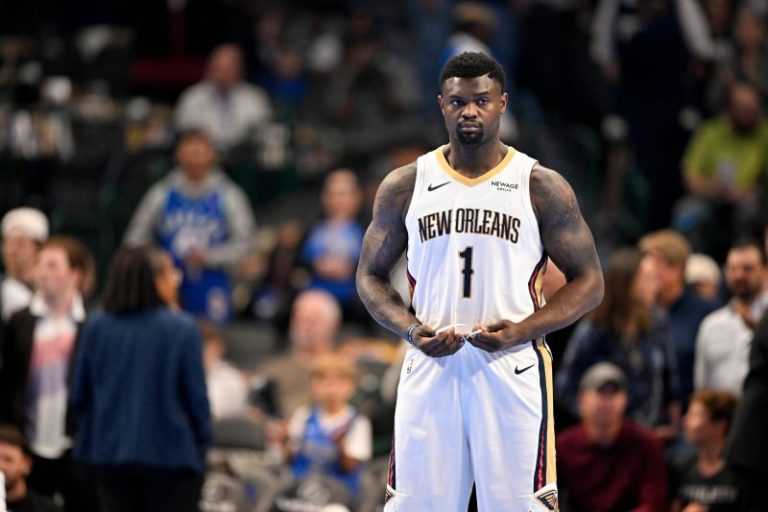
Williamson has already dealt with injuries during the 2025-26 season. On Nov. 19, he had just returned from a two-week absence while nursing a hamstring issue. He’d played in five of the Pelicans’ last seven games since his return, but Pels’ fans knew something was wrong in the air when he was sidelined for the team’s contest against the Los Angeles Lakers.

Williamson has performed well when healthy, averaging over 22 points in ten appearances this season. However, the former No. 1 overall pick has seen his career marred by constant injuries. He’s only played in more than 60 games twice over the course of his seven-year career.

Here’s everything we know about Williamson’s latest injury.

How did Williamson get injured?

Williamson suffered his adductor injury during the Pelicans’ Nov. 29 loss to the Golden State Warriors.

It is unclear when exactly he suffered the injury, but it was not expected to be serious at first. Williamson was forced to miss Sunday’s bout against the Los Angeles Lakers but was considered questionable to play Tuesday against the Minnesota Timberwolves until news of the severity of his injury was revealed.

How long will Williamson be out?

Williamson will miss at least the next three weeks before being re-evaluated by team officials.

The Pelicans have nine games scheduled in that window. The team has announced that they will provide updates on Williamson’s recovery as ‘appropriate.’

Zion Williamson injury history

Here is a list of injuries that Zion Williamson has suffered during his NBA career that have forced him to miss extended time.

Oct. 14, 2019 to Jan. 22, 2020: knee injury
Aug. 10, 2020 to Dec. 14, 2020: knee injury
May 8, 2021 to Oct. 4, 2022: foot injury
Jan. 4, 2023 to Oct. 10, 2023: hamstring injury
Apr. 17, 2024 to Oct. 6, 2024: hamstring injury
Nov. 8, 2024 to Jan. 7, 2025: hamstring injury
Mar. 21, 2025 to June 30, 2025: lower back injury
Nov. 3, 2025 to Nov. 19, 2025: hamstring injury
Nov. 29, 2025 to indefinite: adductor injury

This post appeared first on USA TODAY