Archive

2025

Browsing

The next time you hear someone, anyone, from college sports complain about a lack of revenue, laugh in their face. 

They’ll have you believe those mean, greedy players have sidetracked an amateur sports world of faithful and loyal do-gooders, and ransacked it for every dollar it’s worth.

If I had $1,000 for every time a college football coach declared the current world of college sports “unsustainable,” I could pay Luka Doncic’s contract extension. 

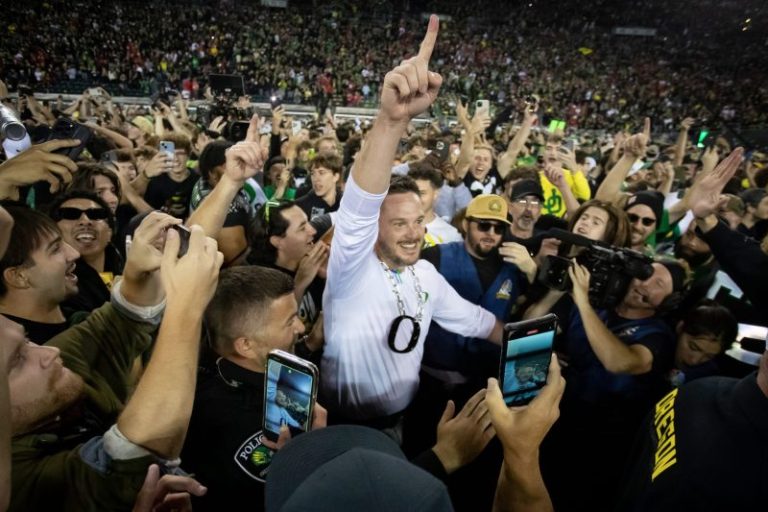
And speaking of extension, that’s where this story turns to the absurd. Late last week, Oregon decided to extend coach Dan Lanning, who was last seen on the big stage trailing 34-0 in the College Football Playoff Rose Bowl quarterfinal — as the nation’s No.1 ranked team. 

That’s nearly $11 million per over six years for Lanning – and $60.4 million guaranteed – who has lost too many games of significance as a head coach.

I don’t blame Lanning for his agent getting everything he can out of Oregon. I blame Oregon, and the 69 other Power Four schools that include Oregon State and Washington State, who have claimed poverty since the NCAA in 2021 decided to open up a can of NIL and free player movement — at the same damn time. 

(To this day, the dumbest move in a long, long line of dumb NCAA moves).

I blame the entire 70 schools that – are you ready for this? – will make an estimated $7.4 billion in fiscal year 2025-26, and as much as $10.5 billion by 2034-35, according to a declaration filed last week in support of the multi-billion dollar House settlement. 

And still can’t figure out how to pay players without claiming the world is coming to an end. 

SPRING POWER RANKINGS: Big Ten | SEC | ACC | Big 12

LOOKING AHEAD: Our way-too-early college football Top 25 for 2025

Without adding more games to a postseason that already is competing with the NFL for television eyes. Without eating one of its own (RIP, Pac-12), and leaving two others (ACC, Big 12) scrambling for crumbs. 

The NCAA and attorneys representing players are awaiting final approval of the House case settlement – which would officially approve, in essence, pay for play through NIL – from U.S. District Court judge Claudia Wilken. It should come as no surprise that Wilkin will hold a hearing on April 7, which just so happens to coincide with the Final Four national championship game. 

The very tournament the NCAA earns an average of $1.1 billion annually over the course of an eight-year contract with media rights partners CBS and Turner.

You can’t make this up, people.

The declaration filed last week by economics expert Dan Rascher – who has served as the NCAA’s numbers cruncher in just about every antitrust lawsuit against the association – admitted the exorbitant cash flow through the 70 Power conference schools. But here’s where it gets a little tricky, so stay with me. 

The House settlement player pool (see: salary cap) is based on a percentage of eight revenue streams, including but not limited to media rights, ticket sales and bowl/playoff games. But the settlement numbers aren’t based off the entire athletic department revenue.

For example, Texas’ total operating athletic revenue for the 2024 fiscal year was $331.9 million, but its figure for the eight categories used for the pool calculation was $172.1 million. Cincinnati’s pool calculation was $38.8 million.

Under the terms of the agreement, the total of the eight revenue streams from the 70 power conference schools is pooled together, and the players would receive a percentage of that revenue that is expected to be between $20-23 million per school for the first year after the settlement. That number is guaranteed to increase by at least 4% in each of the two years.

The goal of equalizing the number for all schools is to prevent programs like Texas from spend more money on players than smaller programs like Cincinnati. Remember, the $20-23 million is what schools are allowed to spend on players in all the men’s and women’s programs for the use of their NIL — if they choose to.

This takes us all the way back to Lanning and every other coach and assistant coach who signed mega deals this offseason. Steve Sarkisian got a pay raise to $10.8 million annually, and Bill Belichick got $10 million annually to become North Carolina football coach.

Jim Knowles got $3.1 million annually to leave Ohio State and become Penn State’s defensive coordinator, a salary greater than 74 FBS head coaches had last season.

Yet here we go again, coaches and athletic directors and conference commissioners complaining about an “unsustainable” environment in college athletics.

Imagine an association of 70 schools, who have willingly pulled away from the rest of college sports – with a combined budget of $7.4 billion for the academic year – making player salaries the financial boogeyman.

Maybe, just maybe, stop increasing debt service with “facility improvements.” Or if you simply must have new stadiums and arenas and ballparks, and new stand-alone football and basketball facilities because recruits just need that new bling, stop paying coaches to not coach.

Stop paying millions to high school players who have never taken a snap of college football. Stop paying general managers for a job that can (and should) be done by the head coach and athletic director.

Stop paying for a staff of 40, or millions upon millions in recruiting budgets. Stop paying for coaches to take a helicopter to a high school game, so he looks different from every other coach there — to impress a 17-year-old kid.

And college sports has no idea why it finds itself in this predicament.

Lanning is 3-4 vs. rivals Washington and Oregon State, 1-1 in conference championship games and 0-1 in CFP games. And just got $60 million — no matter what happens over the next six seasons.

There’s your unsustainable, everyone. 

And it’s nothing to laugh about.

Matt Hayes is the senior national college football writer for USA TODAY Sports Network. Follow him on X at @MattHayesCFB.
This post appeared first on USA TODAY

INDIANAPOLIS — Have fun with this, selection committee.

Chaos reigned in the major women’s conference tournaments, just as it did in the final weeks of the regular season. Three of the No. 1 seeds in the NCAA’s last projection lost, with Notre Dame not even getting to the ACC title game. Two of the No. 2 seeds also went down. Unranked teams wreaked havoc on the top 25.

It’s glorious! Just glorious. Except for those trying to determine the 68-team tournament field and their seeds, that is.

But this kind of mayhem is further sign of the growth of the women’s game. Gone are the days of one or two schools dominating. There’s at least six teams that can make a legitimate case for winning the national title, and just as many who have serious bracket-busting potential.

So, yeah, ought to be a fun week for the selection committee before the NCAA field is announced Sunday.

Here are the winners and losers from the major conference tournaments: 

WINNERS

Big Ten

USC and UCLA have drawn much of the attention in the Big Ten, and rightfully so. UCLA spent much of the season as the country’s No. 1 team and won the conference tournament Sunday while USC won the regular-season title.

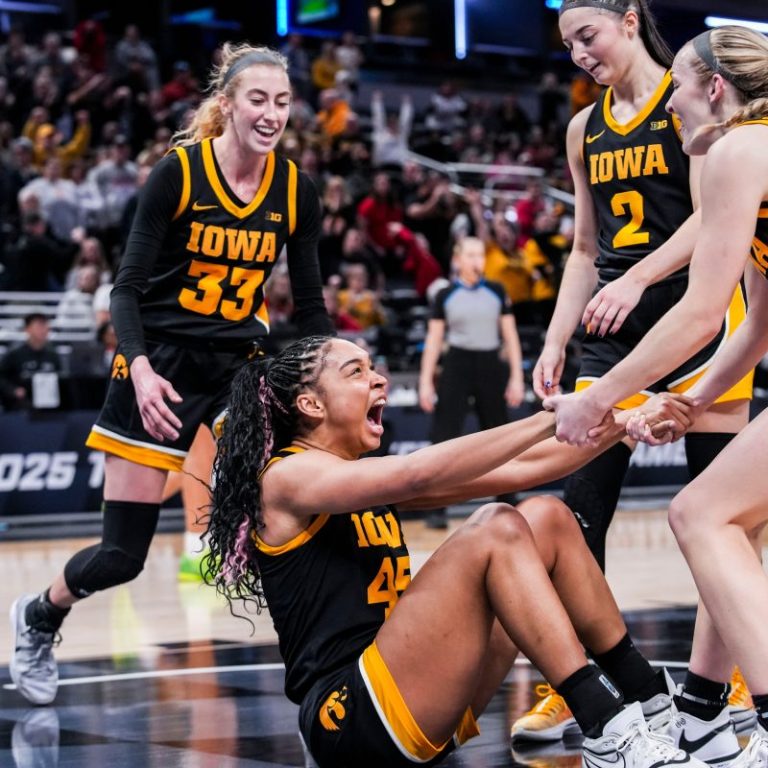
But don’t sleep on the rest of the conference. Particularly the teams in the second tier. The Big Ten could get a dozen teams in the NCAA tournament, and anyone drawing Michigan, Iowa, Nebraska or Indiana is not going to be happy.

“The fact that we have teams that are 10, 11, 12 seeds here who might be a better seed in the national tournament is wild,” USC coach Lindsay Gottlieb said after the Trojans held off Indiana 84-79 in the quarterfinals.

Michigan had USC on its heels for much of their semifinal game Saturday night. The Trojans ultimately prevailed, thanks to both Kiki Iriafen’s big third quarter and the Wolverines’ foul trouble, but Michigan showed it can play with anybody.

Iowa has won 10 of its last 13 games, and those three losses were by a total of 11 points and to ranked teams. Indiana gave USC a scare until JuJu Watkins did JuJu things. And Nebraska freshman Britt Prince showed she’s more than ready for the big time, matching her career-high with 24 against UCLA in the quarterfinals.

“The Big Ten has a lot of great teams, and I think just throughout the season we’ve gotten a lot better handling the really good teams. Especially the new additions,” Prince said after the Cornhuskers fell 85-74 in the quarterfinals.

“Being this close to UCLA, they’re one of the top teams in the country, and I think we showed how we can hang with them. I think that’s really important for us, and a big momentum booster heading into the rest of the season.”

Paige Bueckers

It takes a lot to set yourself apart at UConn, but Paige Bueckers has managed to do it.

Bueckers was named Most Outstanding Player of the Big East tournament Monday, making her the first player to win it three times. Bueckers had 24 points, eight rebounds, three assists, two blocks and two steals in UConn’s 70-50 win over Creighton.

‘You work entirely for this moment,’ Bueckers said.

Bueckers was the first to win national Player of the Year honors as a freshman, when she also led UConn to the Final Four. Injuries derailed her next two seasons, and she played just 17 games. But she has been outstanding the last two years, leading UConn back to the Final Four last year and putting them in position to make another deep run this year.

‘It was a dream since I was a kid, and it’s been everything I could dream of,’ Bueckers said of her UConn career. ‘I can’t be grateful enough.’

LSU

LSU caught a break when Aneesah Morrow’s injury wasn’t as bad as initially feared.

Morrow couldn’t put weight on her foot and had to be helped off the floor after getting hurt in the third quarter of LSU’s SEC tournament semifinal loss to Texas. But coach Kim Mulkey said afterward that Morrow had aggravated the foot sprain she’s been dealing with the last few weeks.

“She can go for the (NCAA) tournament. Everything is good,’ Mulkey said, adding that Morrow was lobbying the training staff to go back in the game against the Longhorns.

Morrow has often worn a walking boot since spraining her foot in the Feb. 16 game against Texas. But she’s continued to play, and the Tigers need her if they hope to make a run in the NCAA tournament. Morrow is LSU’s top rebounder, with 13.6 boards a game, and the Tigers’ second-leading scorer with 18.5 points a game.

Mulkey also said leading scorer Flau’jae Johnson, who missed the SEC tournament with a shin injury, will be ready for the NCAA tournament. 

Arkansas State and George Mason

What turnarounds Arkansas State and George Mason have made, resulting in first-ever trips to the NCAA tournament for each school.

Arkansas State was picked to finish 13th in the 14-team Sun Belt Conference. But it won 21 games and on Monday upset James Madison in overtime to win the Sun Belt tournament title. James Madison came into the championship game with a 20-game winning streak, including a perfect 18-0 record in conference play.

George Mason was winless in the Atlantic 10 four years ago. On Sunday, the Patriots beat St. Joseph’s to win the conference tournament. It also was George Mason’s 28th win, extending the program’s single-season record.

“We asked these players, four years ago, to believe in something that was nowhere near present,” Patriots coach Vanessa Blair-Lewis said, according to The Washington Post.

North Carolina

The whole state is dancing! OK, maybe not the whole state. But a whole lot of it.

There’s still a chance another North Carolina school could to join the party, too. North Carolina A&T won the regular-season Coastal Athletic Association title and is the top seed for this week’s conference tournament.

LOSERS

Notre Dame

Was it really only three weeks ago that the Irish were atop the rankings and in line for a No. 1 seed in the NCAA tournament? My, how times have changed.

Notre Dame skids into the NCAA tournament having lost three of its last five games, including a 61-56 loss to Duke in the ACC tournament semifinals. It was a season-low in points for the Fighting Irish.

“Defensively we’ve been lacking,” coach Niele Ivey said Saturday night. “Just having that intensity defensively is part of the reason for the last three losses, and that’s frustrating because that’s something we work on every day; it’s something we’ve been working towards the entire season.”

Saint Joseph’s

Despite 23 wins in the regular season, it was always going to be an uphill battle for Saint Joseph’s to make the NCAA tournament.

After finishing fourth in the Atlantic-10, with six losses, the Hawks needed to win the conference tournament. They came close, upsetting regular-season champ Richmond in the semifinals. But they lost to George Mason in Sunday’s final, and are projected among the first four teams left out.

Tennessee

Tennessee’s hopes of playing the early rounds at home ended in the SEC tournament.

The Lady Vols were a No. 3 seed in the NCAA’s last projection, which would have meant they’d host first- and second round games. (Unlike in the men’s tournament, which uses neutral sites for all games, the women play first- and second-round games at campus sites.)

But a loss to Georgia at home in the regular-season finale dropped Tennessee out of that group of top four seeds, and it needed to make a run in the SEC tournament to get back in there. That did not happen, with the Lady Vols losing to Vanderbilt in the second round.

Follow USA TODAY Sports columnist Nancy Armour on social media @nrarmour.

This post appeared first on USA TODAY

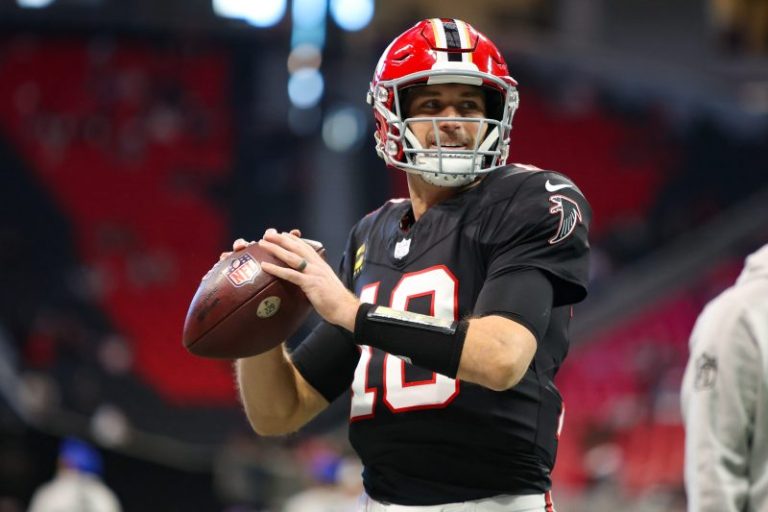
Kirk Cousins needs to take a seat on the bench and count his cash.

Sure, that’s counterintuitive for a competitive, 36-year-old quarterback whose clock is ticking to, well, bolster his resume with (maybe) a second career playoff victory.

But facts are facts. A year ago, the Atlanta Falcons christened the NFL’s free agency market by signing Cousins to a four-year, $180 million contract that guaranteed a whopping $100 million. In stripping Cousins of the starting job that now belongs to Michael Penix, Jr., the Falcons are still on the hook for all that money.

Yet they don’t owe him any special favors.

Never mind that Cousins met with Falcons owner Arthur Blank last week and apparently tried to lay the tracks for a ticket out of town.

The answer should be not here, not now. Not for what he’s already cost.

Memo to Falcons: Do what’s best for your team.

Barring a release or a trade, Cousins will become the most expensive backup quarterback in NFL history. That sounds less stunning when you consider in these times, with another record salary cap ($279.2 million), pretty much everything is the most.

Unless Falcons GM Terry Fontenot can get some crazy return in a trade package (yeah, right, at 3 million-to-1 odds), it makes more sense for them to hang on to the demoted quarterback for another year than to cut bait. That’s what’s best for the Falcons right now, even when considering results that saw Cousins tie for the league lead with 16 interceptions in 2024. It’s NFL Moneyball, silly.

Cousins – who faded as last season progressed with less-than-transparent shoulder and elbow injuries in the mix — is already guaranteed $27.5 million for the 2025 season. And if he’s still on the roster at the beginning of next week, he’s due another $10 million. Last year, he was paid $62.5 million. There’s your $100 mil.

If they part ways now with Cousins, they can save $10 million – and count $90 million for one stinking season.

So, $90M for one year or $100M for two years?

With the latter option, at least coach Raheem Morris & Co. will have a layer of insurance for a year against a Penix injury.

Besides, they already made the mistake of overpaying for an aging quarterback with limited mobility, and one coming off a torn Achilles tendon. That money has already been spent. So, the Falcons need to, well, learn from the exchange.

The issue with Cousins hardly compares with the case of Grady Jarrett, the veteran D-tackle who was cut by the Falcons on Monday. Jarrett was entering the final year of a three-year deal that averaged nearly $17 million per year. They’ll take a $4.125 million cap hit for the cut. Maybe if they weren’t so over-invested in Cousins, they wouldn’t had to cut their popular defensive leader. But they were.

Cousins, meanwhile, counts for about 15% against the Falcons’ cap ledger, according to Spotrac.com, while Penix counts for less than 2%. If there’s ever a time to have an expensive backup, it’s while the starting QB is playing on a rookie contract. It’s not like the Falcons can just flip the Cousins money to Penix.

NFLPA head Lloyd Howell on 18-game season: It’s just talk (for now).

Still, Cousins, who threw his 16 picks in 14 games (Baker Mayfield, meanwhile, threw his 16 INTs in 17 games and led the Bucs to another NFC South crown), knows there’s still a market for him as a potential starter or even a bridge quarterback. Look at Cleveland, Tennessee, Seattle, Indianapolis and New Orleans as possibilities. With the Falcons’ blessing, Cousins’ crafty agent, Mike McCartney, could surely swing some sort of deal. The Browns, saddled with the Deshaun Watson guaranteed cash ($230 million), would likely salivate for a chance to land Cousins for some basement-bargain price where the Falcons pay the bulk of the contract, ala the break the Steelers got last year when Denver was willing to pay big in ridding themselves of Wilson.

It’s just too bad for Cousins that it doesn’t make sense for the Falcons.

No need for pity. Remember, no one has worked the NFL market over the past decade like Cousins, who has made more than $400 million since his rookie deal paid all of $643,000 over his first four seasons.

He was franchise-tagged twice by Washington (totaling nearly $44 million), landed a fully-guaranteed, three-year, $84 million deal from the Vikings. He re-upped twice over three years in Minnesota ($66 million, $35 million). Then he got his most valuable contract yet from the Falcons, months after tearing at Achilles tendon.

Along the way, Cousins has won just one playoff game in his career and earned a reputation for being magnificently inconsistent.

The Falcons, desperate to become a contender, went with fool’s gold. They thought they were getting a difference-maker and it turned out they missed the playoffs (again) and couldn’t even get a full season from Cousins before turning to Penix.

Now it’s time to grin and bear it with Cousins. And time for Cousins to do likewise.

If not, it would go completely against the grain of his rep. Cousins doesn’t strike me as the type who would create a locker room distraction while serving as Penix’s backup. He’d surely have to swallow some more pride in being the good teammate and ready-in-case-of-emergency backup. But who knows? Maybe he handles it differently this time, having to take a back seat to a young quarterback while his career clock ticks.

Pete Carroll is 73 and can beat you in the 40-yard dash. But can he still coach?

Then again, at this point – and with more than $400 million already earned – it’s not about the money. Maybe it’s about feeling entitled to have another shot, ASAP. Certainly, aging QBs Aaron Rodgers and Russell Wilson can relate.

It’s striking, though, that Cousins’ deal with the Falcons included a no-trade clause. And now he wants the chance to trade places.

No, this Atlanta saga has not worked out. Shortly after the Cousins signing, the NFL opened an investigation into tampering, which spun out of the quarterback casually mentioning during his introductory press conference that he talked to Falcons staff members before the free agency period officially. Combined with apparent violations that involved fellow free agent signees Darnell Mooney and Charlie Woerner, it wound up costing Atlanta a fifth-round pick and $250,000 fine, on top of a $50,000 fine for Fontenot.

Then came the shocking move to draft Penix with the eighth pick overall, which Cousins didn’t know until the Falcons were on the clock. Months later, as Cousins fizzled, the Falcons worked the succession plan sooner than first envisioned.

A few weeks ago, Cousins maintained that he played with shoulder and elbow injuries last season. Funny, though, he was listed on the injury report just once, which is probably why Morris publicly pushed back on the quarterback’s claim – which would also subject the Falcons to more NFL scrutiny related to Cousins, this time linked to the injury policy.

Yes, it’s been a mess. And one way or another, it’s not over yet.

Follow Jarrett Bell on social media: @JarrettBell

This post appeared first on USA TODAY

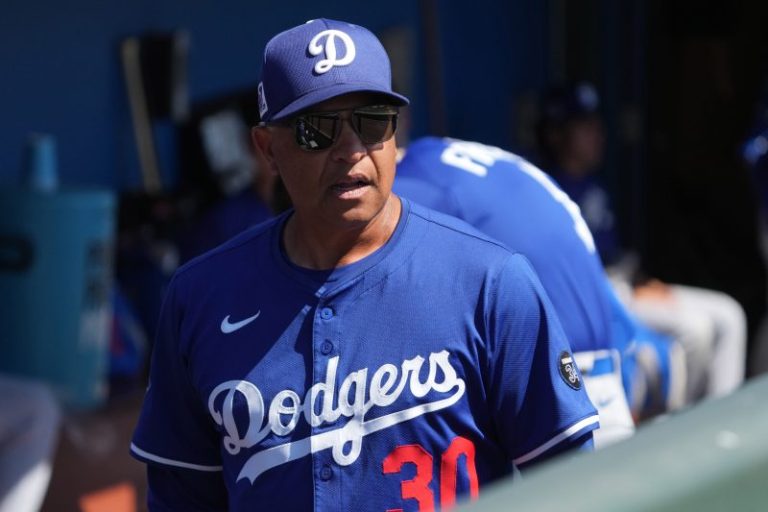
PHOENIX – Los Angeles Dodgers manager Dave Roberts privately worried about his job last fall, wondering if he would be fired if they suffered another first-round exit in October.

They were down two games to one to the San Diego Padres in the best-of-five NL Division Series.

They had no starter in Game 4, and were forced to go with a bullpen game. All-Star first baseman Freddie Freeman couldn’t play because of a badly sprained ankle. And shortstop Miguel Rojas, who injured his groin, tearfully had to inform Roberts that he couldn’t play either.

“I woke up that day feeling really bad, and I couldn’t play,’’ Rojas told USA TODAY Sports on Monday. “I told him, ‘Doc, I’m really sorry man, but I can’t play today. I can’t really walk.’ He texted me right back.

“’Miggy, we’re going to win the World Series this year, and we’re going to win it next year together.’ That was really special because we were one game away from not even making out of the NLDS, and he’s got the confidence on his team that we were going to win.’ You read the message, and you don’t believe it until it’s starting to happen.’’

The Dodgers, having to rely on an eight-reliever bullpen game in Game 4, won 8-0 at Petco Park, and again 2-0 in Game 5 at Dodger Stadium. They wound up winning 10 of their last 13 postseason games and cruised to the World Series title in five games over the New York Yankees. They relied on only three starters and used four bullpen games throughout the postseason.

And there was Roberts on Monday, signing a four-year, $32.4 million contract extension through 2029, a person with direct knowledge of the negotiations told USA TODAY Sports. The person spoke only on the condition of anonymity because the contract is scheduled to be announced Tuesday.

“I can’t talk about it so much, but obviously there’s some closure,’’ Roberts said. “I’m excited. This is the place where I always wanted to be. I just love what we’re doing. This is pretty special. …

“There’s obviously things off the field that are important. I try to make sure that my focus stays on the players, the game, the Dodgers organization. I think I’ve done a good job.

“But the other part of that stuff is just part of the job and I’m looking forward to some closure for sure.’’

Roberts was in the final year of his three-year contract extension that paid him $4 million this season and now doubles his contract, making him the highest-paid manager on an annual average value basis.

Roberts, who has won two World Series titles and has the highest winning percentage (.627) of any manager in MLB history outside the Negro Leagues, will be paid less overall than Chicago Cubs manager Craig Counsell’s five-year, $40 million contract of a year ago. But Counsell was a free agent. Roberts was not interested in testing the market for the potential of a larger contract.

“You guys all know this is where I want to be,’’ Roberts, 52, said this spring. “I just think it all comes down to value. And I think whatever anyone does, they want their value ….

“I do my job because I love baseball, I love the Dodgers and I love the players. But I do feel the body of work is pretty dang good.”

Indeed, Roberts, who was hired after the 2015 season to replace Don Mattingly, has led the Dodgers to four National League pennants, eight division titles and nine postseason berths in his nine years, winning 907 regular-season and postseason games.

The Dodgers have won at least 100 regular-season games in five of the last six full seasons. The only season they didn’t win the NL West under Roberts was in 2021 when they won 106 games, but finished second in the NL West race to the Giants with 107 victories.

“We’re all excited,’’ Dodgers third baseman Max Muncy said. “I couldn’t be happier for him. I already told him that dinner is on him.’’

Still, if they not gotten past the Padres in that first round, who knows what would have happened to Roberts’ job security?

“I do think that if we didn’t win that game it would have become very noisy,’’ Roberts said this spring. “A team that was obviously super-talented to lose three years in a row in the first round, albeit it takes all of us to win and lose, but I do think that calls for my job would have been heightened.”

We’ll never know for sure what would have happened to Roberts, but on Monday, his players appeared more genuinely excited for him than Roberts himself.

“He deserves this so much,’’ Rojas said. “He’s put in the time. He’s been through a lot, you know. He’s always mentioned how special it’s been for him to be the manager of this ballclub, and how special it is to be in front of this clubhouse and this franchise.

“He embodies what it means to be a good leader. And that’s what I really care about, the personality, the character and always communicating with everybody.

“That’s why I gave him a big hug today because I know how hard it’s been.’’

The Dodgers’ World Series title was their first in a full season since 1988, making Roberts only the third Dodgers manager to win more multiple World Series titles.

“It’s interesting where you don’t win a series and you can feel calls for your job,’’ Roberts said in February. “But you win the World Series and now people are saying you’re going to Cooperstown.”

The only active managers who have won multiple World Series titles are Bruce Bochy of the Texas Rangers (four) and the Cincinnati Reds’ Terry Francona (two), each of whom are considered locks for the Hall of Fame.

Roberts will be one of only seven managers this century who will have managed one team for at least 10 years, joining Mike Scioscia (2000-2018 with the Angels), Ron Gardenhire (2002-2014 with the Twins), Bochy (2007-2019 with the Giants), Joe Girardi (2008-2017 with the Yankees), Bob Melvin (2012-2021 with the A’s), Francona (2013-2023 with the Guardians) and Kevin Cash 2015-2025 with the Rays).

The Dodgers, who had only two managers in 43 years with Alston and Lasorda from 1954-1996, now continue the tradition with Roberts.

“It couldn’t happen,’’ Rojas said, “to a better person.’’

Follow Nightengale on X @Bnightengale

This post appeared first on USA TODAY

Florida Panthers defenseman Aaron Ekblad has been suspended for 20 games for violating the NHL’s performance-enhancing substances program, the league announced Monday.

That will cost him the final 18 games of the regular season and the first two games of the playoffs as the Panthers prepare to defend their Stanley Cup title.

He is being referred to the NHL/NHLPA Program for Substance Abuse and Behavioral Health for evaluation and possible treatment.

‘The news that I had failed a random drug test was a shock,’ Ekblad, 29, said in a statement released through the NHL Players’ Association. ‘Ultimately, I made a mistake by taking something to help me recover from recent injuries without first checking with proper medical and team personnel.’

PANTHERS: Brad Marchand bears no ill will after Bruins trade him

Ekblad, who missed eight games in January, has averaged a team-best 23:31 in ice time, and his 33 points lead Panthers defensemen. He had six points in 24 games during Florida’s playoff run in 2024.

His absence will give more ice time to newly acquired Seth Jones, a fellow right-shot defenseman. The Panthers had traded for Jones to boost their defense after Brandon Montour and Oliver Ekman-Larsson left in free agency last summer.

‘I have let my teammates, the Panthers organization and our great fans down,’ said Ekblad, who’s in the final year of his eight-year contract. ‘For that, I am truly sorry. I have accepted responsibility for my mistake and will be fully prepared to return to my team when my suspension is over. I have learned a hard lesson and cannot wait to be back with my teammates.”

This post appeared first on USA TODAY

Ukraine launched its largest-ever drone attack on Moscow on Tuesday as a senior delegation met with Secretary of State Marco Rubio and National Security Advisor Mike Waltz in Saudi Arabia for talks about ending the war with Russia. 

A total of 337 drones were shot down Tuesday over Russia, including 91 in the Moscow area and 126 in the Kursk region bordering Ukraine, Reuters reported, citing Russia’s defense ministry. 

Moscow-based meat producer Miratorg said two of its employees were killed by falling debris, while 18 other people – including three children – were injured after residential buildings were struck, officials told Reuters. 

Images taken in Russia showed damage to cars and apartment buildings in the wake of the attack, which temporarily shut down Moscow’s four airports. Russia reportedly launched a ballistic missile and 126 drones at Ukraine in response. 

Moscow Mayor Sergei Sobyanin said Ukraine’s drone attack was the biggest yet to target his city, according to Reuters. 

In Jeddah, Saudi Arabia, the U.S. and Ukrainian officials did not immediately comment on the drone attack. 

Ukrainian officials told the Associated Press on Tuesday that their country is ready to sign the mineral deal sought by President Donald Trump and will propose a ceasefire covering the Black Sea. 

The Ukrainian delegation in Saudi Arabia was expected to include Andriy Yermak, head of the presidential office, Andrii Sybiha, minister of foreign affairs, Pavlo Palisa, colonel of armed forces of Ukraine and an advisor to Ukrainian President Volodymyr Zelenskyy, as well as Defense Minister Rustem Umerov, who was not only involved in initial talks with Russia following its February 2022 invasion, but who also survived a poisoning attack after a peace meeting in March that year.  

Rubio told reporters Monday that ‘The important point in this meeting is to establish clearly their intentions, their desire, as they’ve said publicly now, numerous times, to reach a point where peace is possible,’ adding that he will need to be assured that Kyiv is prepared to make some hard decisions, like giving up territory seized by Russia, in order to end the three-year war. 

‘I wouldn’t prejudge tomorrow about whether or not we have a minerals deal,’ Rubio also said on board a flight to Saudi Arabia. ‘It’s an important topic, but it’s not the main topic on the agenda. 

Fox News’ Caitlin McFall contributed to this report. 

This post appeared first on FOX NEWS

The Department of Government Efficiency, led by Elon Musk, is likely subject to the Freedom of Information Act (FOIA), a federal judge ruled Monday, noting that the newly formed department had been run in ‘unusual secrecy.’

U.S. District Judge Christopher Cooper, an Obama appointee, sided with the government watchdog group Citizens for Responsibility and Ethics in rejecting the Trump administration’s argument that DOGE does not have to respond to public records requests.

The administration claimed that DOGE is an arm of the Executive Office of the President, making it not subject to FOIA requests, which allow the public to request access to records produced by government agencies that had not previously been disclosed.

Cooper ruled that DOGE exercises ‘substantial independent authority’ much greater than the other parts of the executive office that are usually exempt from the FOIA law.

The ruling could force DOGE to become more transparent about its role in the administration’s mass firings of the federal workforce, as well as its dismantling of government agencies and decisions to cancel contracts.

‘Canceling any government contract would seem to require substantial authority—and canceling them on this scale certainly does,’ Cooper wrote.

The judge said DOGE ‘appears to have the power not just to evaluate federal programs, but to drastically reshape and even eliminate them wholesale,’ which he said the department declined to refute.

Cooper also said its ‘operations thus far have been marked by unusual secrecy,’ citing reports about DOGE’s use of an outside server, its employees’ refusal to identify themselves to career officials and their use of the encrypted app Signal to communicate.

The watchdog filed the lawsuit on Feb. 20 after filing FOIA requests seeking further information on DOGE’s operations, including communications like internal government emails and memos.

The group had asked Cooper to order DOGE and the Office of Management and Budget to release the records by Monday, arguing that the public and Congress needed the information during the debate over government funding legislation that must be passed by Friday to avert a partial government shutdown, but the judge declined to set a Friday deadline to produce the records.

‘Unfortunately for CREW, it satisfies none of the factors entitling it to preliminary relief ordering production of its OMB requests by today’s date,’ Cooper wrote.

Instead, the judge ordered for the records to be produced on a ‘rolling basis as soon as practicable,’ saying voters and Congress deserve timely information on DOGE given the ‘unprecedented’ authority it was exercising to reshape the government.

This case is one of several lawsuits targeting the administration’s argument that DOGE is not subject to FOIA requests, but the other cases are still in earlier stages.

Reuters contributed to this report.

This post appeared first on FOX NEWS

President Donald Trump said Tuesday that he would purchase a Tesla car to support his senior advisor Elon Musk amid nationwide protests against the electric automaker.

Trump said ‘Radical Left Lunatics’ are attempting to boycott Tesla, which he called Musk’s ‘baby.’

‘To Republicans, Conservatives, and all great Americans, Elon Musk is ‘putting it on the line’ in order to help our Nation, and he is doing a FANTASTIC JOB!’ Trump wrote on Truth Social shortly after midnight on Tuesday. ‘But the Radical Left Lunatics, as they often do, are trying to illegally and collusively boycott Tesla, one of the World’s great automakers, and Elon’s ‘baby,’ in order to attack and do harm to Elon, and everything he stands for.’

‘They tried to do it to me at the 2024 Presidential Ballot Box, but how did that work out?’ Trump continued.

The president explained that he was going to purchase a car from Tesla to show his support for Musk.

‘In any event, I’m going to buy a brand new Tesla tomorrow morning as a show of confidence and support for Elon Musk, a truly great American,’ Trump wrote. ‘Why should he be punished for putting his tremendous skills to work in order to help MAKE AMERICA GREAT AGAIN???’

‘Thank you, President @realDonaldTrump!’ Musk responded on X.

Tesla car owners, dealerships and charging stations have been targeted nationwide by protesters and vandals over Musk’s involvement with the Trump administration’s newly formed Department of Government Efficiency (DOGE).

Protesters rallied outside Tesla dealerships on Saturday, holding signs denouncing Musk and DOGE, and cars and windows at an Oregon Tesla dealership were damaged by gunshots fired by protesters last week.

A man was also arrested after Molotov cocktails were thrown at a Tesla dealership in Salem, Oregon.

Additionally, several Tesla charging stations have been set on fire in Massachusetts, and the U.S. attorney’s office in Colorado charged a suspect after police say they found a number of explosives and concerning messages at a Tesla dealership.

Fox News’ Stepheny Price contributed to this report.

This post appeared first on FOX NEWS

President Donald Trump has been back in the Oval Office for 50 days, which has included a whirlwind of executive orders, a breakneck pace of gutting and rebuilding agencies within the federal government, and rolling out economic plans the president says will be a boon to U.S. workers and industry. 

‘To my fellow citizens, America is back,’ Trump declared in a joint speech before Congress March 4. 

‘Six weeks ago, I stood beneath the dome of this Capitol and proclaimed the dawn of the golden Age of America,’ he continued. ‘From that moment on, it has been nothing but swift and unrelenting action to usher in the greatest and most successful era in the history of our country. We have accomplished more in 43 days than most administrations accomplished in four years or eight years. And we are just getting started.’ 

Trump has signed at least 89 executive orders in his 50 days in office. Trump signed more executive orders in his first 50 days than any other president signed in their first year going back to the Carter administration in 1977, data compiled by Fox News show. 

Trump’s executive orders have been expansive, addressing issues ranging from ending the practice of biological males playing on girls sports teams, renaming the Gulf of Mexico to the Gulf of America, to establishing the Department of Government Efficiency (DOGE). 

Amid his executive order and action blitz, Trump and his administration have been hit with at least 102 lawsuits, including repeated lawsuits surrounding DOGE and its chair, Elon Musk. 

Musk and his DOGE team have been poring through various federal agencies in the search of government overspending, mismanagement and fraud, as well as slimming down the agencies overall through thousands of federal layoffs, including probationary employees who have not secured full-time employment. DOGE’s work has struck the ire of Democrats and federal employees who have staged repeated protests over the audits and firings in Washington, D.C., and across the U.S.

The president has meanwhile touted DOGE’s findings in public remarks, including rattling off a series of examples during his speech before a joint session of Congress. 

‘Forty-five million dollars for diversity, equity and inclusion scholarships in Burma,’ Trump said as he provided examples of federal waste March 4 after thanking Musk for his work. ‘Forty million to improve the social and economic inclusion of sedentary migrants. Nobody knows what that is. Eight million to promote LGBTQI+ in the African nation of Lesotho, which nobody has ever heard of. Sixty million dollars for indigenous peoples and Afro-Colombian empowerment in Central America. Sixty million. Eight million for making mice transgender.’

Trump’s speech marked his first before both chambers of Congress since his return to the Oval Office. Trump spoke for about an hour and 40 minutes, notching the longest address a president has delivered before a joint session of Congress, according to the American Presidency Project at the University of California at Santa Barbara. The longest speech on record previously was held by former President Bill Clinton, when he spoke for one hour and 28 minutes during his State of the Union Address in 2000. 

Immigration was a large focus of his address, as well as his first 50 days in office. His administration is touting in March that illegal border crossings have fallen to the lowest levels on record, cratering by 94% since February 2024 under the Biden administration, while massive deportation efforts between multiple law enforcement agencies have removed violent criminal illegal immigrants from the nation. 

Trump has also honored the American lives lost to illegal immigrant murders, including remembering Laken Riley and Jocelyn Nungaray during his speech on Capitol Hill. 

Trump signed the Laken Riley Act into law upon taking office in January, which directs Immigration and Customs Enforcement to detain illegal immigrants arrested or charged with theft-related crimes, or those accused of assaulting a police officer. He also named a National Wildlife Refuge after Jocelyn Nungaray, a 12-year-old girl from Texas who was sexually assaulted and murdered by two illegal immigrants in June 2024. 

Trump’s economic policies have also been rolled out at a fast and furious pace, including 25% tariffs on steel and aluminum imports, a 10% tariff on imports from China to help end the flow of deadly fentanyl into the U.S., as well as announcing a plan for reciprocal tariffs on foreign nations, which are set to take effect in April. 

Trump has championed that reciprocal tariffs will open the doors to foreign industries setting up shop in America to avoid the tax on imports to the U.S.

‘They can build a factory here, a plant or whatever it may be, here,’ Trump said of the reciprocal tariffs in February. ‘And that includes the medical, that includes cars, that includes chips and semiconductors. That includes everything. If you build here, you have no tariffs whatsoever. And I think that’s what’s going to happen. I think our country is going to be flooded with jobs.’

A handful of businesses and manufacturers, both U.S.-based and those abroad, have announced billions of dollars in investments since Trump took office, including Apple announcing a $500 billion investment in February that will generate 20,000 jobs in the United States and Saudi Arabia, pledging $600 billion in the U.S. over the next four years. 

Businesses also have pledged to increase U.S.-based production efforts since Trump took office, including auto company Stellantis announcing it will make its latest version of the Dodge Durango in Michigan, and will also reopen an assembly plant in Illinois — while Mercedes-Benz pledged to grow its U.S.-based vehicle production. 

On the international stage, Trump has secured the release of a handful of American hostages held abroad, including six who were held in Venezuela, two who were held in Afghanistan, one in Russia, one in Belarus and another American who was held in Hamas’ captivity. 

The administration also secured the arrest of the terrorist behind the 2021 Abbey Gate attack in Afghanistan, which killed 13 U.S. service members amid the U.S.’ disastrous withdrawal from the country under the Biden admin. 

Trump has met with world leaders at the White House since his return to the Oval Office, including Indian Prime Minister Narendra Modi, UK PM Keir Starmer, French President Emmanuel Macron, Japanese Prime Minister Ishiba Shigeru, Israeli Prime Minister Benjamin Netanyahu, Jordanian King Abdullah II bin al-Hussein and Ukraine President Volodymyr Zelenskyy. 

Trump met with Zelenskyy in a fiery meeting Feb. 28 as the two leaders looked to continue negotiations to end the Russia–Ukraine war, and also ink a deal to recoup the cost of U.S. aid sent to the war-torn country by gaining access to rare-earth minerals like titanium, iron and uranium in Ukraine. 

The deal was put on ice after Zelenskyy traded barbs with Vice President JD Vance and Trump during the meeting, culminating in Zelenskyy leaving the White House ahead of schedule as a planned press conference was canceled. U.S. leaders, including Secretary of State Marco Rubio, recently arrived in Saudi Arabia to speak with the Ukraine delegation to discuss possible peace agreements. 

War had also raged between Israel and Hamas ahead of Trump taking office, with his transition team earning credit for helping secure a ceasefire in the waning days of the Biden administration. Trump announced in February, when Netanyahu visited the White House, that he is looking into ‘long-term ownership position’ over the Gaza Strip in order to level it, rebuild it and ‘create an economic development’ that would prevent terrorists from gaining power in the area. 

Just ’50 days in office and he has already established himself as the most consequential President of our time,’ the White House said in a statement Monday celebrating Trump’s 50 days of accomplishments. ‘The winning never stops — and President Trump is just getting started.’ 

This post appeared first on FOX NEWS
NEWYou can now listen to Fox News articles!

Everyone supports cutting government spending, until someone actually begins to cut government spending. Then, all Hell breaks loose. 

Why? Because with a $6 trillion federal budget, far too many politicians and activists (and donors and universities and corporations) have their hands in the till. As Senator John Kennedy, R-La., has memorably said, when you start to cut the fat, the pigs will squeal.

On cue, Democrats are squealing. It turns out that they benefit from some of the wasteful spending being exposed by the Trump White House, as monies designated for addressing climate change, for instance, inappropriately flow to leftist think tanks and non-profits. 

Thanks to the work of Elon Musk’s Department of Government Efficiency (DOGE), Americans are getting a quick education on the ‘soft’ corruption corroding our government. It is not pretty. In his address to Congress, President Trump listed several idiotic expenditures of government monies; studies on transgender mice (which CNN and others wrongly claimed didn’t exist) received a lot of attention, and rightly so. Those disclosures   may be why a new Rasmussen poll shows two-thirds of the country agree that it’s time to ‘drain the swamp.’  

Democrats disagree; in an effort to undermine Elon Musk and President Donald Trump, they are fearmongering, warning voters that DOGE or Republicans in Congress are going to slash Medicaid benefits. President Trump is on record saying his government will not cut that program, but will investigate fraudulent payments.

House Democratic Minority Leader Hakeem Jeffries, recently said the GOP House spending bill would ‘set in motion the largest Medicaid cut in American history.’ New York Representative Mike Lawler disputed Jeffries’ claim, saying ‘show me where in the budget resolution it talks about specific cuts. It doesn’t.’ Lawler is correct, but Democrats insist that the plan’s $880 billion expected cut in spending from programs under the House Energy and Commerce Committee’s jurisdiction, like healthcare outlays, prove the program will be gutted. 

The truth is that simply rooting out fraudulent payments from Medicaid (and Medicare) would go a long way towards providing that sort of savings. Last year, the GAO reported ‘improper payments’ from federal Medicaid outlays amounted to $51.3 billion in 2023 (and Medicare’s improper payments totaled another $51 billion). The Medicaid figurewas significantly higher in prior years, and only fell because of ‘flexibilities granted to states during the COVID-19 public health emergency.’ In 2021, fraudulent payments totaled $103.4 billion and in 2022 totaled $83.1 billion. The GAO warns the improper payments rate is likely headed higher. 

Medicaid spending has more than doubled over the past decade, despite real median incomes expanding by 14% and the poverty rate plunging from 14% to 11.5%. There were 48.3 million Americans living in poverty in 2013 in the U.S.; by 2022 that number had dropped to 41.9 million. Given that Medicaid is mainly a program targeting low-income Americans, the numbers  do not make sense.

One reason that Medicaid has grown so rapidly is that President Obama and then President Joe Biden instituted changes that encouraged enrollment expansion. When Barack Obama took office in 2009, there were 51 million Americans receiving Medicaid; by the end of his presidency, there were 74 million, a rise of 45%. Obama encouraged greater participation by loosening work requirements for receiving Medicaid. President Trump allowed states to reimpose that demand during his first White House term; as a consequence, in part, the number of enrollees in Medicaid barely budged, rising from 74 to 76 million. Had it not been for the COVID outbreak, the number would likely have stagnated under Trump. 

President Biden, in the year before he expected to run for a second term, pushed through rules changes that significantly increased Medicaid’s enrollment and costs, according to the Centers for Medicare and Medicaid services. The CMS estimated the federal cost of Biden’s rules at between $68.5 billion and $134.8 billion over five years. One rule weakens the eligibility requirements of enrollees in part by mandating that state Medicaid programs discount pensions, annuities and retirement funds in determining income levels.

In addition, some states, like New York, have allowed illegal immigrants to receive Medicaid; that has boosted the numbers as well. 

Why do Democrats work to expand Medicaid? Because, like any other benefit, recipients often reward state officials for their supposed generosity, indifferent to the costs. Democrat-run New York, for example, spent $94.6 billion on Medicaid in fiscal 2023, or more than $4,800 for each resident; that was 82% above the national average. The state alone paid out $1,800 per capita on Medicaid, more than double the U.S. average of $835. 

Readying their opposition to trimming the program’s out-of-control outlays, Democrats invited Medicaid beneficiaries to attend Trump’s address to Congress, hoping to highlight their dependence on the program. During the speech, Democrats chanted and waved lollipop signs that said ‘SAVE MEDICAID;’ as it happened, their embarrassing shenanigans – and especially their sullen refusal to applaud a young cancer victim or a hostage brought home from Russia – drowned out their message.

They will not stop, however. Progressive mouthpiece Rep. Alexandria Ocasio-Cortez, D-N.Y., said on Instagram after the speech: ‘Trump not mentioning Medicaid at the State of the Union is the game. He doesn’t talk about it, what he fears, and he knows it’s dynamite.’ 

It actually may turn out to be dynamite, an explosive issue favoring Republicans. A new survey by pollster Scott Rasmussen reveals that ‘71% of voters support reducing growth of Medicaid spending by removing illegal immigrants and requiring able-bodied recipients to work. 88% of Republicans and 51% of Democrats back the proposal.’ 

If even a majority of Democrats agrees that Medicaid spending has to be curtailed, the mandate for reform is stark.  My view: cut spending that nearly everyone agrees is ‘unsustainable’ and let them squeal.

This post appeared first on FOX NEWS