Archive

2025

Browsing

Which team will ride with veteran quarterback Russell Wilson in 2025?

It certainly won’t be ‘Broncos Country,’ but there are a few intriguing landing spots for Wilson as he enters his 14th season in the NFL.

If Wilson doesn’t return to Pittsburgh, he’ll be joining his fourth career team. The 36-year-old spent his first 10 seasons in the NFL with the Seahawks, where he appeared in two Super Bowls and won one, before spending two years with the Broncos and one with the Steelers.

Wilson had a late start to the 2024 season when a calf injury kept him out of Pittsburgh’s early games. After taking over as the Steelers’ starter in Week 7, he led the team to a 6-5 record with 2,482 yards, 16 touchdowns and five interceptions to go with a 63.7% completion rate.

The pending free agent was also named to the Pro Bowl for a 10th time as an alternate for the AFC team after last season.

Russell Wilson landing spots

After the first wave of free agency and before the new league year starts, the following teams are some of the best landing spots for Wilson:

Pittsburgh Steelers

Staying in Pittsburgh could be the best option for Wilson. He’d get a chance at a second season in the same system – head coach Mike Tomlin and offensive coordinator Arthur Smith are still around – while (in theory) remaining healthy and with (also in theory) a better offense around him. The Steelers have already traded for wide receiver DK Metcalf and have the rest of the offseason to build up the offensive line and other areas of need in free agency and the draft.

At the time of writing, Wilson’s only competition for the starting quarterback job in Pittsburgh would be Skylar Thompson, whom the team signed to a reserve/future contract in January. His former competition, Justin Fields, has agreed to terms on a two-year, $40 million deal with the Jets. In addition, the Steelers don’t have many other quarterback options left on the free agent market at this early stage of free agency, which makes them a clear fit for Wilson.

New York Giants

Like the Steelers, the Giants don’t currently have much competition in-house for the starting quarterback job. New York cut starter Daniel Jones last year just one and a half years into a disastrous four-year, $160 million extension, and backup Drew Lock is also a pending free agent. The team did bring back Tommy DeVito on a one-year, minimum value deal, but there’s clear positional need at the most important position in sports.

Where the Giants differ from the Steelers is in their draft position. Big Blue is in a clear position to draft their quarterback of the future – if they so choose – with the No. 3 overall pick in the 2025 NFL draft. Would Wilson be fine knowing that he’s being brought in as a ‘bridge’ option that may not start the whole year? How does he feel about mentoring a guy like Miami (FL)’s Cam Ward or Colorado’s Shedeur Sanders? These are questions he and the Giants would have to talk through, but it’s not hard to envision the two sides coming to a deal as things currently stand.

Tennessee Titans

The Titans have a young quarterback already, but Will Levis’ performance in his second professional season left much to be desired. Tennessee currently holds the No. 1 overall pick in the 2025 NFL draft, so if it wants to take another shot at drafting a quarterback of the future, it can.

Regardless of whether the Titans plan to draft a quarterback or go another route – like, say, trading the top pick for future draft capital or taking a non-quarterback – they’re in a spot to bring in a veteran quarterback like Wilson. Either he’d provide more legit competition for Levis to earn the starting job, or he’d serve as a mentor to Levis and/or an even younger quarterback taken in this year’s draft. Tennessee may not be in the market for a veteran quarterback given its draft position, but the landing spot is clear if the team goes that route.

Cleveland Browns

Cleveland is in a very similar spot to Tennessee as things stand. The team’s gamble on paying quarterback Deshaun Watson what is still the biggest fully guaranteed contract in league history has been a disaster. The Browns have gone 9-10 in the 19 games Watson has started in three years, and the quarterback may miss the entire 2025 season after re-tearing his Achilles.

The Browns, like the Titans, hold one of the top picks in the 2025 NFL draft: No. 2 overall. They’ve already traded for a new backup quarterback in Kenny Pickett, but the starting job appears to remain up for grabs. Wilson could fit in as the mentor figure or bridge option for a Cleveland team that may decide to draft its next young quarterback come April. He has experience playing in the division and can take advantage of a solid offense around him, including receivers Jerry Jeudy and Cedric Tillman as well as running back Jerome Ford.


This post appeared first on USA TODAY

You can follow the latest free agency news from USA TODAY here.

NFL teams didn’t wait until the start of free agency to make dramatic moves, especially for big-name wide receivers. The Pittsburgh Steelers shipped a second-round pick to the Seattle Seahawks for two-time Pro Bowl wideout DK Metcalf and signed him to a new contract. The Los Angeles Rams handed out a two-year, $44 million contract to three-time All-Pro Davante Adams on the eve of free agency.

On day one of free agency, longtime Buccaneers wideout Chris Godwin agreed to a contract to return to Tampa Bay, taking yet another big name off the market.

One of the biggest names left on the market is longtime Rams wideout Cooper Kupp. Los Angeles was looking to trade him but are instead planning to release the Super Bowl 56 MVP at the start of the new league year.

Kupp will be 32 this upcoming season and missed 18 games over the last three seasons due to injury. But his mix of experience and production when on the field could make him a valuable piece for a contending team.

Here are five landing spots for the former All-Pro:

Cooper Kupp landing spots

Pittsburgh Steelers

Pittsburgh made the move to trade for Metcalf and gave him a big contract. There’s still uncertainty at quarterback but the franchise is making a push to contend in 2025. There are just four wide receivers on the active roster at time of publishing: Metcalf, George Pickens, Calvin Austin III and Roman Wilson. Metcalf and Pickens can stay on the outside and let Kupp work from the slot. Combined with a rising offensive line, that trio could make for a solid landing spot for a veteran or rookie quarterback.

Seattle Seahawks

Seattle moving on from Metcalf and longtime wideout Tyler Lockett signals a major change on offense. This team is likely pivoting offensive philosophy under new coordinator Klint Kubiak and new quarterback Sam Darnold in 2025.

At time of publishing, the Seahawks have Jake Bobo, Dareke Young and 2023 first-round pick Jaxon Smith-Njigba as their starting wide receivers. This is a team that went 10-7 in 2024 and missed the playoffs based on strength of schedule. Armed with five top 100 picks in the 2025 NFL draft, the Seahawks could bring Kupp in to shore up that position in a weaker wide receiver class. And it wouldn’t hurt to bring someone in with deep knowledge of division rival.

Los Angeles Chargers

The Chargers entered free agency among the league leaders in cap space but haven’t done much with it at time of publishing. The team’s biggest moves were to bring in running back Najee Harris and cornerback Donte Jackson.

There may be some positional crossover with second-year standout Ladd McConkey but the Chargers offense needs a boost at wide receiver. The Chargers have a lot of picks in the 2025 NFL draft but have prioritized other positions before and this year’s wide receiver class is down compared to years past. Bringing Kupp in wouldn’t break the bank and could give a veteran presence to the pass-catching group.

Baltimore Ravens

The Ravens haven’t made any major moves in free agency besides retaining left tackle Ronnie Stanley. That deal took up most of the cap space they had left and they’re likely shopping on low-cost veteran deals at this point.

Baltimore had one of the best offenses in the NFL last year but another proven piece in the passing game could only help the team get over the hump against the likes of Buffalo and Kansas City. Kupp could operate in the slot alongside Zay Flowers and Rashod Bateman to give quarterback Lamar Jackson another option in the passing game. The Ravens made a similar move by signing former Rams wide receiver Odell Beckham Jr. ahead of the 2023 NFL season so this would not be an unprecedented move.

New York Giants

The Giants are in win-now mode given coach Brian Daboll and general manager Joe Schoen are on the hot seat following a 3-14 performance in 2024. They handed out a three-year, $36 million contract to bring wide receiver Darius Slayton back but Kupp could be good insurance in case he doesn’t work out this season. The passing game flows through Malik Nabers and adding Kupp could provide another complimentary piece for a team under pressure to win more in 2025.

This post appeared first on USA TODAY

Democratic New York Rep. Tom Suozzi said Tuesday that there is a catastrophe brewing for the country’s aging population, and he wants to do something about it.

Alongside Republican Rep. John Moolenaar, Suozzi introduced the ‘Well-Being Insurance for Seniors to be at Home Act’ on Tuesday, which seeks to help more of the country’s increasingly older population obtain long-term home care insurance.

‘Currently, 10,000 Americans every day are turning 65-years-old,’ Suozzi told reporters during a press call on Tuesday, and, in five years, 6,000 Americans will turn 85 every day. Suozzi also noted that right now, only about 4% of seniors are covered by long-term care insurance.

‘One of the main causes of people becoming homeless — new homeless people — is turning 80 years old, because a lot of people are becoming destitute as they get old, and they face what are called, ‘Their inability to conduct daily activities of living,” Suozzi said. ‘And right now, very few people have long-term care insurance, and people will end up going into nursing homes. And not only can the nursing homes not handle this volume of people, but the Medicaid system will go bust, and two thirds of the people in America that are in nursing homes are paid for with Medicaid.’

In addition to the increasingly growing senior population in the U.S., Suozzi also cited societal factors that are making it harder for aging and disabled seniors to receive the at-home care they need. One is the fact that Americans are having fewer kids, so there will be fewer of them to take care of their aging or disabled parents. Another was the fact that kids are increasingly moving to other parts of the country away from their parents, again increasing the burden for seniors to figure things out on their own.

‘There’s a lot of people becoming senior citizens right now because the baby boomers, there’s less kids available to take care of them, and the kids that are alive don’t necessarily live where their parents live. So we’ve got this big perfect storm brewing, and Medicaid will never be able to solve this problem,’ according to Suozzi. ‘And nursing homes — there’s just not enough nursing homes. There’s not enough money to pay for the nursing homes for all these people. So my legislation is designed to try and encourage the private sector to create long-term care insurance that is affordable.’

Known by its acronym, WISH, Suozzi and Moolenaar’s new bill seeks to create a federal ‘Catastrophic Care Fund’ that will help cover some of the cost-burden of long-term care. The goal is to encourage private insurers to develop and market affordable and accessible long-term care insurance, which, overtime, they have ceased providing more broadly. The reason, Suozzi said, is it was just not profitable enough for them, as most seniors with long-term care insurance were outliving their expected life terms and costing insurance companies a lot of money as a result.

Suozzi likened his new plan to Medicare Part B, another similar cost-sharing program that has pushed insurers to incentivize customers to enroll. Seniors would be able to benefit from the newly created fund on a tiered basis, according to each person’s income level.

The Democrat lawmaker pointed out how the WISH Act will help reduce the cost burden of federal healthcare programs like Medicare and Medicaid, which can help pay for the fund. He also suggested a payment plan involving an increased income tax shared by both employees and employers, but Suozzi noted that plan was unlikely to get the GOP support necessary. Another potential payment option for the new long-term care fund could stem from reforms to Social Security, the congressman added.

Besides the ‘perfect storm’ that is brewing for seniors, a second storm is also brewing on Capitol Hill right now in regard to how to fund the federal government. Republicans are ramping up reconciliation efforts and, as part of that framework, they are looking for roughly $800 billion in Medicaid cuts. While the Wish Act could help lower the amount of necessary cuts during reconciliation, Suozzi said he feared it was too tight of a window to get enough lawmakers on board. 

‘I guess there’s an argument that it could go in there, if we could demonstrate between now and then that it’ll be a big savings in Medicaid,’ Suozzi told reporters. ‘I see this is taking the full term of getting people educated about the issue, getting more people interested in the issue, and getting senior advocacy groups and private insurers to advocate on behalf of this idea. So it’s not going to happen on its own. It will have to be part of something bigger, but not, I think, until we’ve educated people about the seriousness of the issue.’

This post appeared first on FOX NEWS

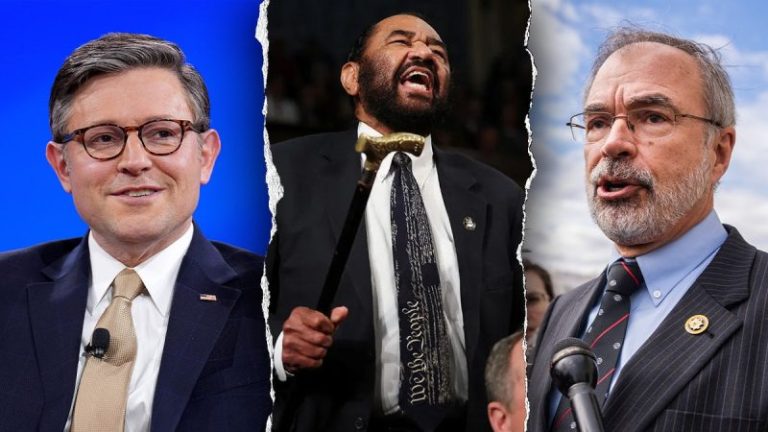
The House Freedom Caucus could force a vote on a bill to strip Rep. Al Green, D-Texas, of his committee assignments if Speaker Mike Johnson, R-La., does not announce a punishment for the Democrat that conservatives see as sufficient.

‘He will see what he deems appropriate, and then if that’s adequate, that’s fine,’ House Freedom Caucus Chair Andy Harris, R-Md., told Fox News Digital. ‘If not, then we likely will file our privileged resolution to strip him of his committees.’

Freedom Caucus members told Fox News Digital that the group was in touch with Johnson’s office about the issue.

The conservative caucus threatened to file a resolution to remove Green from all committees last week after his disruption during President Donald Trump’s speech to Congress. 

The protest got the Texas Democrat thrown out of the House chamber minutes after the address began.

‘We’re gonna ask what Mike Johnson wants to do moving forward. We talked about a lot of things, but different people had different thoughts. But I guess what weighed on our minds is, he said he’s going to do it again,’ Rep. Ralph Norman, R-S.C., told Fox News Digital. ‘My one thing, that kind of action needs consequences.’

Rep. Andrew Clyde, R-Ga., said, ‘There’s all sorts of options, and I don’t think any of them have been decided upon yet.’

Green was censured in a 224 to 198 vote on Thursday morning after repeatedly disrupting the beginning of Trump’s primetime speech.

He shouted, ‘You have no mandate to cut Medicaid!’ at Trump and shook his cane in the air as the president touted Republican victories in the House, Senate and White House. Speaker Mike Johnson, R-La., after giving a warning, had Green removed from the chamber

The 77-year-old Democrat was unrepentant, posting on X on Thursday afternoon, ‘Today, the House GOP censured me for speaking out for the American people against [Trump’s] plan to cut Medicaid. I accept the consequences of my actions, but I refuse to stay silent in the face of injustice.’

But members of the House Freedom Caucus want to go further, floating everything from fining Green to making good on their resolution threat.

Rep. Eric Burlison, R-Mo., told Fox News Digital he didn’t want to give the Green issue ‘any more oxygen’ but suggested a suitable punishment would be stripping the Texas lawmaker of any seniority privileges. 

‘No seniority on offices, no seniority on parking spots, on committees – all of that,’ Burlison described.

Meanwhile, Green’s House Democratic allies briefly plunged the House floor into chaos after the censure vote. They crowded Green as he stood ready for Johnson to read out the censure, another formal part of the process, and sang ‘We shall overcome.’

Johnson was forced to pause House floor proceedings after trying and failing multiple times to call the Democrats to order.,

Rep. Andy Ogles, R-Tenn., another Freedom Caucus member, filed a resolution in response to strip all the offending Democrats from their committees.

Harris and Clyde signaled the current discussions with leadership were focused on Green alone, however.

‘No one [else] waved a cane at the president and didn’t accept…having a censure resolution read without interruption,’ Harris said.

Clyde added, ‘And nobody else had to be thrown out.’

Johnson, for his part, confirmed in an interview on Fox News on Friday that he was in talks with the House Freedom Caucus on a punishment for Green.

‘I talked to Freedom Caucus members and other Republicans who are deeply concerned about this,’ Johnson told ‘Outnumbered.’ ‘They say we have to restore control one way or the other and there need to be real consequences, and it’s something that we’ll be looking at early next week.’

Green currently serves on the House Financial Services Committee, where he is the top Democrat on the subcommittee for oversight.

Fox News Digital reached out to representatives for Johnson and Green for comment but did not immediately hear back.

This post appeared first on FOX NEWS

Of course, Josh Allen is worth every nickel of his massive, six-year, $330 million contract extension in so many ways.

It begins with the premise that if they can back up the Brinks truck and pay it, the Buffalo Bills quarterback is certainly as deserving as anyone of a raise as the NFL opens a new league year with another record salary cap.

And boy, did he get that bump. The deal averages $55 million per year and has the biggest guarantee in NFL history at $250 million. That’s like the next-best thing to having an equity stake in the franchise.

Allen, 28, has earned it, too, given the first NFL MVP award he won a few weeks ago provided another sterling marker of his continued, multi-faceted progress. He has cut down on the turnovers that once dogged him, throwing just six picks in a season that saw him produce 40 TDs (28 passing, 12 rushes). Allen also took the Bills to another AFC title game, which fuels hope that he might eventually take them to the franchise’s first Super Bowl since their glorious 1990s. And you know how hope can sell in the NFL.

Yet on top of all that, the contract that Allen struck with the Bills on Sunday night represented a tentpole for stability.  As the new deal reflects, the Bills have some serious alignment with their franchise player, whose connection with the Bills Mafia and Western New York community is palatable.

No, Allen wasn’t going anywhere. The Bills weren’t going to let him get away. He had four years remaining on his previous contract. Four years! And the Bills tore it up for a new one.

That’s smart business from Buffalo’s brain trust, with GM Brandon Beane pushing the buttons. This marks the second big contract extension the Bills have struck with Allen that was done so early that it never even came close to any type of crisis stage.

The last time, in 2021, the Bills took care of Allen two years before his rookie deal expired, with a pact that guaranteed $150 million. Now there’s this one, which locks Allen up through the 2030 campaign, when he’ll be 34.

There are more than a few proven, marquee NFL stars – including quarterbacks – who might wish they had such low-stress contract negotiations.

Let’s take the cases of Lamar Jackson and Dak Prescott.

Jackson, the Baltimore Ravens star who earned first-team All-Pro honors and was runner-up to Allen in the MVP balloting, had an elongated contract saga that consumed much energy. Jackson didn’t get his extension (5 years, $260 million) until the team used a franchise tag on him in 2023. And last year, a cloud hung over the Dallas Cowboys during the entire offseason and preseason due to Dak Prescott’s uncertain contract status. Prescott ultimately signed a 4-year, $240 million deal that tops the NFL with a $60 million average, but it wasn’t finalized until the start of the regular season.

Buffalo has undoubtedly been strategic in keeping the peace with Allen. With the biggest piece in the franchise’s puzzle secured and settled, the Bills can manage the remainder of their cap moves with the most significant player locked in.

Within the past week, the Bills re-signed several key cogs. Greg Rousseau, the top edge rusher, got a 4-year, $80 million extension. Linebacker Terrell Bernard re-upped at 4 years, $50 million. And receiver Khalil Shakir is secured for 4 years, at $60.2 million.

Now, as the market officially opens on Wednesday, the Bills can proceed with the knowledge that their star quarterback didn’t need to top Prescott’s APY to agree to his new deal. In other words, Allen left something else on the table to build pieces around him – which just might include another quality receiver.

Allen’s deal, though, might really feel like a bargain in the coming years. The Bills, like every NFL team, will see the cap continue to rise in the coming years because, well, the cap – which has gone up over $50 million the past two years to $279.2 million per team – always goes up when there’s no pandemic. And with the prospects rather bullish that the NFL will strike a new media rights deal before the end of the decade, the Bills seem perfectly situated in not having to worry about the contract status of their best player until, maybe, after the media rights deal and other business matters are recalibrated.

In the meantime, the Bills are a couple of years away from opening their new stadium, which will provide another type of windfall for team owners Terry and Kim Pegula – all while the franchise’s most valuable commodity is locked up until 2030.

Unless, of course, they wind up tearing up Allen’s new deal before then.

After all, Allen just got his new deal without winning a championship. Now imagine the leverage he will have if he can finally take the Bills to the Super Bowl.

Follow Jarrett Bell on social media: @JarrettBell

This post appeared first on USA TODAY

The Philadelphia Eagles have formally accepted an invitation from President Donald Trump to celebrate their recent Super Bowl victory at the White House.

White House press secretary Karoline Leavitt said at a briefing Tuesday that Trump will welcome the team to Washington on April 28. The Eagles trounced the Kansas City Chiefs, 40-22, to win Super Bowl LIX in New Orleans last month.

‘We sent an invitation. They enthusiastically accepted. And you will see them here on April 28,’ Leavitt said.

The invitation − and the Eagles’ decision to accept it − had been expected over the past few weeks, as both sides had publicly indicated their willingness to move forward with the ceremonial White House visit. The team signaled on Feb. 24 that it would accept an invitation from Trump, if it received one. And Trump said the next day that ‘absolutely they’ll be extended that invitation.’

Keep up with your favorite teams: Sign up for USA TODAY’s Sports newsletter.

The Eagles’ ceremonial White House visit, which has long been a tradition for championship sports teams, had become a source of intrigue in large part because of the snafu between Trump and the Eagles after their previous Super Bowl win in 2018.

In the early part of his first term, Trump abruptly disinvited the Eagles on the eve of their planned visit following an NFL Network report that Philadelphia had planned to send a smaller contingent, of fewer than 10 players, to the ceremony. Then-White House press secretary Sarah Huckabee Sanders ripped the team at the time for what she said was an attempt to pull ‘a political stunt.’ The White House instead hosted a brief, awkward event the next day that it described as a celebration of America.

Trump has at times had a frosty relationship with the NFL and its players. During his first term, he repeatedly criticized players, sometimes in explicit terms, who kneeled during the national anthem to protest racial inequality. ‘Wouldn’t you love to see one of these NFL owners … say, ‘Get that son of a bitch off the field right now. Out. He’s fired,’ he said at a 2017 rally.

Only one of the four teams that won a Super Bowl during Trump’s first term in office made a trip to the White House: The New England Patriots in 2017. NBA teams, whose players are also predominantly Black, either were not invited to visit the White House or declined to attend. And, in a departure from precedent, several championship teams in women’s sports did not receive invitations during Trump’s first term.

Contact Tom Schad at tschad@usatoday.com or on social media @tomschad.bsky.social.

This post appeared first on USA TODAY

The Players Championship was dubbed golf’s fifth major and bestowed two-word status ‒ ‘The Players’ ‒ in clubhouses around the country long ago because of the loaded fields it annually draws, the gigantic purse available to the winner and the iconic ‘Island Green’ on the par-3 17th at TPC Sawgrass that gives the entire tournament an unforgettable backdrop. It’s also because of where the event annually falls on the calendar.

After a few months of build-up, the 2025 PGA Tour season is hitting its stride ahead of The Masters next month, and this year’s Players Championship got an off-course jolt when PGA Tour commissioner Jay Monahan gave a positive update on a potential merger with LIV Golf during his pre-tournament news conference. But once Thursday’s first round tees off, the focus will be one group.

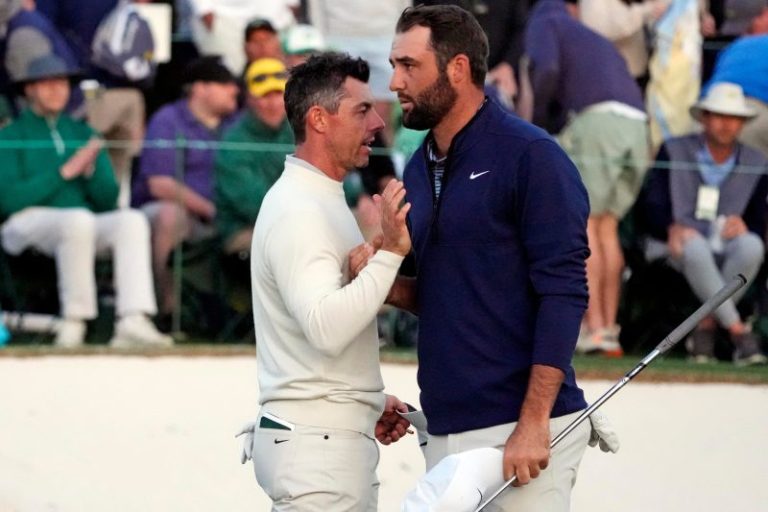
The PGA Tour will have the top three golfers in the current world rankings ‒ No. 1 Scottie Scheffler, No. 2 Rory McIlroy and No. 3 Xander Schauffele ‒ playing together during the first and second rounds of The Players Championship. Scheffler is going for an unprecedented three-peat after winning this tournament the past two years.

Here’s a look at Thursday’s tee times for the 144-golfer field, which features every member of the top 10 in the current world golf rankings, and how to watch the 2025 Players Championship:

Players Championship 2025 Thursday first-round tee times

All times Eastern

1st tee

7:40 a.m.: Chad Ramey, C.T. Pan, Vince Whaley
7:51 a.m.: Joel Dahmen, Patrick Rodgers, Chan Kim
8:02 a.m.: Beau Hossler, Mark Hubbard, Ben Silverman
8:13 a.m.: Rafael Campos, Davis Riley, Gary Woodland
8:24 a.m.: Joe Highsmith, Brian Campbell, Matt McCarty
8:35 a.m.: Patton Kizzire, Lucas Glover, Corey Conners
8:46 a.m.: Sahith Theegala, Matt Fitzpatrick, Will Zalatoris
8:57 a.m.: Davis Thompson, Stephan Jaeger, Tom Hoge
9:08 a.m.: Aaron Rai, Cam Davis, Christiaan Bezuidenhout
9:19 a.m.: Robert MacIntyre, Max Homa, Sungjae Im
9:30 a.m.: Nate Lashley, Will Gordon, Rico Hoey
9:41 a.m.: Alejandro Tosti, Isaiah Salinda, Aldrich Potgieter
12:45 p.m.: Doug Ghim, Ryan Fox, Sami Valimaki
12:56 p.m.: Andrew Putnam, Charley Hoffman, Denny McCarthy
1:07 p.m.: Daniel Berger, Min Woo Lee, Rasmus Hojgaard
1:18 p.m.: Harris English, Billy Horschel, Justin Rose
1:29 p.m.: Rory McIlroy, Scottie Scheffler, Xander Schauffele
1:40 p.m.: Collin Morikawa, Adam Scott, Tommy Fleetwood
1:51 p.m.: Keegan Bradley, Rickie Fowler, Patrick Cantlay
2:02 p.m.: Nick Dunlap, Akshay Bhatia, Tom Kim
2:13 p.m.: Harry Hall, Chris Gotterup, Si Woo Kim
2:24 p.m.: Jhonattan Vegas, Matt Kuchar, Adam Hadwin
2:35 p.m.: Sam Ryder, Greyson Sigg, Mac Meissner
2:46 p.m.: Max McGreevy, Ryan Gerard, Frankie Capan III

10th tee

7:40 a.m.: Lanto Griffin, Andrew Novak, David Lipsky
7:51 a.m.: Keith Mitchell, Justin Lower, Nicolai Hojgaard
8:02 a.m.: Michael Kim, Alex Smalley, Sam Stevens
8:13 a.m.: Maverick McNealy, Brian Harman, Tony Finau
8:24 a.m.: Ludvig Aberg, Hideki Matsuyama, Justin Thomas
8:35 a.m.: Russell Henley, Shane Lowry, Viktor Hovland
8:46 a.m.: Wyndham Clark, Jason Day, Jordan Spieth
8:57 a.m.: Thomas Detry, Sepp Straka, Nick Taylor
9:08 a.m.: J.T. Poston, Seamus Power, Mackenzie Hughes
9:19 a.m.: Chris Kirk, Luke List, Adam Svensson
9:30 a.m.: Bud Cauley, Matti Schmid, David Skinns
9:41 a.m.: Hayden Springer, Jesper Svensson, Will Chandler
12:45 p.m.: Henrik Norlander, Victor Perez, Ben Kohles
12:56 p.m.: Eric Cole, Ben Griffin, Max Greyserman
1:07 p.m.: J.J. Spaun, Jacob Bridgeman, Chandler Phillips
1:18 p.m.: Emiliano Grillo, Byeong Hun An, Adam Schenk
1:29 p.m.: Taylor Pendrith, Peter Malnati, Kurt Kitayama
1:40 p.m.: Brice Garnett, Matthieu Pavon, Camilo Villegas
1:51 p.m.: Austin Eckroat, Jake Knapp, Taylor Moore
2:02 p.m.: Nico Echavarria, Kevin Yu, Erik van Rooyen
2:13 p.m.: Karl Vilips, Sam Burns, Cameron Young
2:24 p.m.: K.H. Lee, Carson Young, Patrick Fishburn
2:35 p.m.: Trey Mullinax, Ryo Hisatsune, Laurie Canter
2:46 p.m.: Kris Ventura, Kevin Roy, Jackson Suber

How to watch 2025 Players Championship: TV, streaming for PGA Tour

The Players Championship will be carried live on TV by Golf Channel all four days. NBC will pick up live coverage of the third and final rounds. There is streaming coverage available on ESPN+, Peacock and Fubo, which is offering a free trial

Thursday, March 13

First round

7:30 a.m.-7 p.m. ET, ESPN+
1-7 p.m. ET, Golf Channel
1-7 p.m. ET, NBC Sports app

Friday, March 14

Second round

7:30 a.m.-7 p.m. ET, ESPN+
1-7 p.m. ET, Golf Channel
1-7 p.m. ET, NBC Sports app

Saturday, March 15

Third round

8 a.m.-7 p.m. ET, ESPN+
2-7 p.m. ET, NBC Sports app
2-7 p.m. ET, NBC and Peacock

Sunday, March 16

Final round

7:30 a.m.-6 p.m. ET, ESPN+
1-6 p.m. ET, NBC Sports app
1-6 p.m. ET, NBC and Peacock

Watch The Players Championship with Fubo

We occasionally recommend interesting products and services. If you make a purchase by clicking one of the links, we may earn an affiliate fee. USA TODAY Network newsrooms operate independently, and this doesn’t influence our coverage.

This post appeared first on USA TODAY

House Republicans passed a federal funding bill backed by President Donald Trump largely on their own Tuesday.

It also marked one of the rare occasions in recent memory that a majority of House Democrats voted against a bill that would prevent a government shutdown.

The bill passed largely along partisan lines. 

The measure, a short-term extension of fiscal year (FY) 2024 funding known as a continuing resolution (CR), will now head to the Senate. It must pass there and get to Trump’s desk before the end of Friday, March 14, to avert a partial shutdown.

In a major victory for Trump and House GOP leaders, however, several House Republicans who professed to never have voted for a CR supported the current bill.

Among them was Rep. Eric Burlison, R-Mo., who fully credited Trump with his decision to ‘barely’ support the bill.

‘The ‘barely’ is Donald Trump,’ Burlison said. ‘He is the difference maker. I would never support this language, but I do trust Donald Trump.’

Rep. Greg Steube, R-Fla., was in a similar boat. He told reporters, ‘I’ll be the first guy to tell you I don’t like CRs. I’ve never voted for one.’

‘But the Democrats aren’t going to help us. And the Democrats are just going to put any shutdown on the president, which obviously isn’t good for for the party,’ Steube said. ‘So I think it’s important that we give the party, the president and the conference time to come up with a good budget.’

It includes an additional $8 billion in defense dollars in an apparent bid to ease national security hawks’ concerns, while non-defense spending that Congress annually appropriates would decrease by about $13 billion.

There’s also an added $6 billion for healthcare for veterans.

The White House has requested additional spending in areas that were not present in the last government funding extension, known as ‘anomalies.’

Among the anomalies are some added funding for the Women, Infants and Children (WIC) federal benefits program, and nearly $1 billion to aid with Immigration and Customs Enforcement (ICE) deportations.

There is also some added funding for defense in a bid to ease national security hawks’ concerns, and about $13 billion in cuts to non-defense spending.

This post appeared first on FOX NEWS

European defense leaders are meeting in Paris this week to discuss their plans to provide Ukraine with security guarantees as the continent steps up after decades of relying on the U.S.

French President Emmanuel Macron led with an address to the Tuesday gathering of defense chiefs from 30 European and NATO countries after the U.S.’ new ‘America first’ policy direction jolted the Europeans into action. 

Macron said it was time to ‘move from concept to plan,’ and told French newspaper Le Figaro that France would boost its defense spending from 2% to 3.5% of GDP, amounting to around €30 billion annually. 

Details of any peacekeeping force are still widely in flux, but some officials said to expect a targeted deterrence force aimed at protecting key infrastructure rather than a wide blockade of the front lines. 

Europeans were dismayed last week when the U.S. announced it would pause all aid and intelligence sharing with Ukraine, but that pause was lifted Tuesday after Ukraine agreed to a 30-day ceasefire. All eyes are now on Russia to see if Russian President Vladimir Putin accepts the deal, which came after U.S.-brokered talks in Jeddah, Saudi Arabia, on Tuesday. 

The U.S. has insisted that it is Europe’s responsibility to offer military resources to help Ukraine deter Russia from invading again once a ceasefire is reached. President Donald Trump has flirted with the idea of not protecting European nations under NATO’s Article 5 if they refuse to meet their defense spending obligations under the treaty.

The new call for Europe’s defense was a welcome development for NATO’s eastern flank, where tiny nations have for years beaten out their larger European counterparts in defense spending as a percentage of their GDP. 

‘We should not be panicking about [Trump statements],’ said Giedrimas Jeglinskas, chairman of the Lithuanian parliament’s national security committee.

‘Europeans need to think about what sort of troops to put in Ukraine,’ he told Fox News Digital. ‘Europeans need to hold most of [our security] now. We need to show good will. Next to good will, you need to show numbers. How many troops can we generate, what sort of troops can we generate, what support we’re going to need from the U.S.’ 

‘I’m not going to provide security guarantees beyond very much,’ Trump had said at his first Cabinet meeting on Feb. 26. ‘We’re going to have Europe do that.’

The United States – NATO’s most militarily powerful member – wasn’t invited to the Paris talks because European nations wanted to show that they are able to shoulder a large part of the job of safeguarding Ukraine once a truce is in effect, a French military official told the Associated Press.

But Jeglinskas said Europe should acquiesce to U.S. demands to pour more into its own defenses as it needs the U.S. for air defenses like the Patriot missile. 

‘People who are complaining about the U.S. – there’s an abundance of that in Europe – yeah, show me the alternative. There’s nothing.’ 

Over the weekend, top Trump advisor Elon Musk posted on X that the U.S. ‘really should’ leave NATO. ‘Doesn’t make sense for America to pay for the defense of Europe,’ he wrote. 

‘It’s common sense, right,’ Trump told reporters of the NATO alliance last week. ‘If they don’t pay, I’m not going to defend them. No, I’m not going to defend them.’

Jeglinskas said that in his meetings behind closed doors, U.S. officials have expressed America’s commitment to Article 5 is ‘as strong as ever.’ 

‘Sometimes Trump goes way over to get people to come to a position of reality,’ said Jonathan Bass, foreign affairs expert and Argent LNG CEO. ‘The fact that he went so far to what they considered crazy, [the Europeans] actually took him seriously and did what they needed to do.’

Lithuania is currently spending 4% on defense and plans to bump that figure to 5-6% next year, which is why Defense Minister Dovile Šakalienė told reporters her nation plans to pay U.S. defense manufacturers ‘at least $8 billion’ more in ‘the coming years’ to boost defenses. 

Russian aggression that could extend beyond Ukraine, including potentially into Baltic States like Lithuania, ‘worries us,’ she said.

‘That’s why we are really pushing forward with our military capability plans, with our defense capacity-building, infrastructure and personnel and acquisitions, from weapons to ammo, building factories, defense industries.’

Europe has offered Ukraine around $139 billion in aid since the start of the war, while the U.S. has offered around $128 billion. 

But the European Union last week proposed an $841 billion plan to ‘rearm Europe,’ which included a $158 billion emergency loan proposal to arm European capacities in vulnerable areas like air defense and ammunition. The plan also calls for relaxing strict debt ceilings agreed to by the bloc for defense spending. 

‘This is a moment for Europe, and we are ready to step up,’ said European Commissioner Ursula von der Leyen last week. 

Šakalienė said ‘strengthening the northeastern flank’ of Europe was the ‘joint goal,’ which could mean stationing hypersonic missiles aimed at Russia in Baltic states like Lithuania.

The Associated Press contributed to this report. 

This post appeared first on FOX NEWS

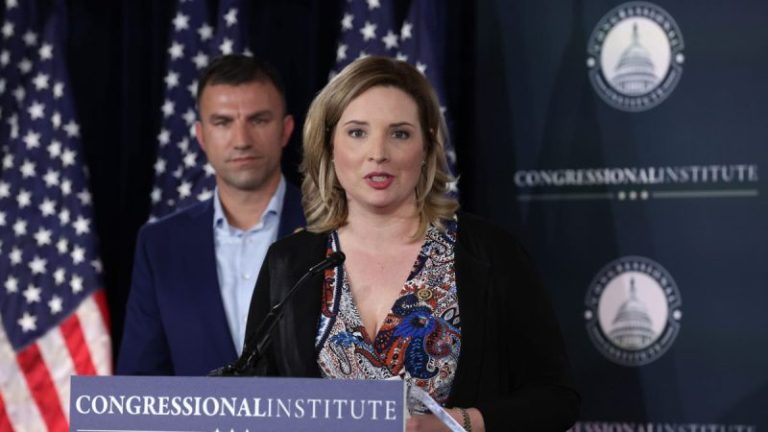
Rep. Ashley Hinson and Sen. Pete Ricketts are rolling out a bicameral bill with bipartisan support that would secure agriculture supply chains in the United States from vulnerabilities and potential Chinese Communist Party exploitation, Fox News Digital has learned. 

Hinson, R-Iowa, will introduce the Securing American Agriculture Act in the House of Representatives, while Ricketts, R-Neb., will introduce the measure in the Senate. 

The Securing American Agriculture Act would require the Department of Agriculture (USDA) to conduct an annual assessment to identify supply chain vulnerabilities, domestic production gaps and potential CCP exploitation. 

It also would direct the secretary of Agriculture to recommend ways to strengthen U.S. reliance and reduce China’s influence in the industry to mitigate potential threats. 

The bill would ensure that the USDA accurately accounts for U.S. dependence on China for critical agricultural inputs and guarantee access for American producers. 

‘China has intentionally captured a significant market share of America’s agricultural inputs — which is vital to our food supply chain — ceding leverage to our top adversary,’ Hinson told Fox News Digital Tuesday. ‘Iowa farmers have told me firsthand that if China decides to shut off U.S. access to these critical inputs, our food production would be in jeopardy. I’m proud to reintroduce this bipartisan bill that exposes and counters China’s grip on agricultural inputs to strengthen domestic manufacturing and food security.’ 

Hinson added: ‘Plain and simple: We should bring our agriculture supply chain home.’ 

And Ricketts told Fox News Digital Tuesday that ‘Communist China’s strategic control over crucial sectors of our food and agricultural supply chains poses a serious national security threat.’

‘Losing access to key inputs could reduce productivity, increase food prices and undermine food security,’ Ricketts told Fox News Digital. ‘My bill will bolster and protect these supply chains and reduce our reliance on foreign adversaries.’

The bill is also supported by House China Committee Ranking Member Raja Krishnamoorthi, D-Ill., who said the bipartisan bill is ‘a critical step forward in protecting our nation’s food supply and farmers from foreign adversaries, including the Chinese Communist Party, who threaten our agricultural security.’ 

‘America’s farmers are the backbone of our economy, and we must ensure they have the resources and safeguards needed to compete on a level playing field while securing our nation’s agricultural supply chains,’ Krishnamoorthi told Fox News Digital.

The bill is also supported by House China Committee Chairman John Moolenaar, R-Mich.; Rep, Jill Tokuda, D-Hawaii; Rep. Sharice Davids, D-Kansas; and Rep. Scott Franklin, R-Fla., among others. 

In the Senate, Democrat Sen. Elissa Slotkin; Republican Sens. James Risch, R-Idaho; Shelley Moore Capito, R-W.V.; Eric Schmitt, R-Mo.; Mike Crapo, R-Idaho; Cynthia Lummis, R-Wyo.; Sen. Deb Fischer, R-Neb.; and Senate Majority Whip John Barrasso, R-Wyo., also support the bill. 

Slotkin told Fox News Digital that ‘food security is national security.’ 

‘We need to treat threats to our food supply chain just like any other security risk,’ Slotkin said. ‘This legislation requires us to assess those risks so we can protect our food supply. Bottom line: We need to make sure America’s agriculture supply chain is secure and stays right here at home.’ 

This post appeared first on FOX NEWS