Archive

2025

Browsing

Alabama’s ranking suggests they may secure a playoff spot regardless of the SEC championship outcome.
James Madison entered the rankings, creating a potential path to the playoff for the Sun Belt champion.
The ACC faces a scenario where it could be left out of the playoff entirely if five-loss Duke wins the conference.

The penultimate College Football Playoff rankings set the stage for conference championship weekend and the last gasp of what has been an unpredictable regular season.

All eyes will be on the SEC, where No. 9 Alabama looks to beat No. 3 Georgia in a rematch of the Crimson Tide’s 24-21 win in Athens earlier this year.

An Alabama win and a No. 4 Texas Tech win against No. 11 Brigham Young could maintain the status quo and leave a chalky 12-team bracket. Even then, though, there will be plenty of controversy over the exclusion of No. 12 Miami despite the Hurricanes’ head-to-head win against No. 10 Notre Dame.

No. 1 Ohio State and No. 2 Indiana are set for an unbeaten clash in the Big Ten. And there’s trouble brewing in the ACC, where five-loss Duke looks to pull off an unexpected conference championship by beating No. 17 Virginia. That would be terrible news for the ACC, for reasons we’ll explain.

No. 25 James Madison, Alabama and the ACC lead the winners and losers from Tuesday night’s rankings:

Winners

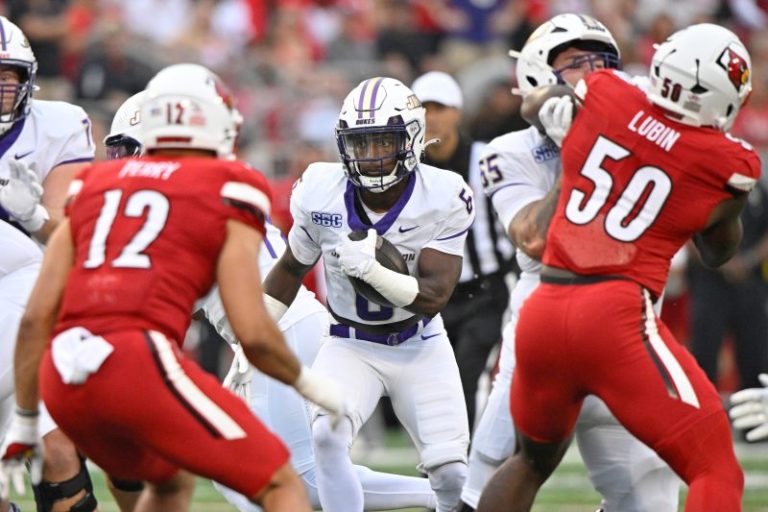
James Madison

Left for dead as a possible playoff team because of the success of the American, James Madison jumped into the rankings for the first time and suddenly has a second avenue to the tournament thanks to the possibility of chaos in the ACC. Remember, the committee picks the five best conference champions for automatic bids and doesn’t simply tap the Power Four winners and the best team from the Group of Five. In other words, the situation exists where two of the five highest-ranked conference winners come from the Group of Five in the American and the Sun Belt. The Dukes are heavy favorites in the matchup against Troy for the Sun Belt title.

Alabama

By moving up one spot and bumping back Notre Dame, the Crimson Tide can feel confident that they’re in the playoff regardless of what happens in the SEC championship, barring a lopsided, embarrassing blowout. That’s great news for Alabama and for the SEC, too, since No. 13 Texas and No. 14 Vanderbilt have no viable way into the tournament. Whether Alabama deserved this bump after playing average football for the past month is another question.

The American

Tulane rose four spots to No. 20 and North Texas debuted at No. 24, finalizing what we already suspected: The Group of Five’s automatic representative will be the American champion. The matchup has plenty of national impact, but one underlying theme to watch is the fact that both teams will be led by a coach set to take a new job: Jon Sumrall is leaving Tulane for Florida, while Eric Morris is going from North Texas to Oklahoma State.

Mississippi

Not only did the Rebels not drop after Lane Kiffin’s departure for LSU, they actually climbed one spot to No. 6. That tells us the committee still sees this as a team capable of winning the national championship even without Kiffin on the sidelines. Looking ahead to the bracket, to rise one spot secures a home game to start the playoff amid fears the committee would dock the Rebels for Kiffin’s absence and send them on the road in the opening round.

Losers

The ACC

The nightmare has Duke beating Virginia and Alabama either winning the SEC or playing well enough to hold onto that at-large spot, which could potentially keep the ACC out of the playoff altogether. Should the Tide hang on, that would likely prevent the Hurricanes from turning a late-season rebound into an at-large berth after dropping games to Louisville and SMU. This is not a far-fetched scenario: Duke could very well win the rematch against Virginia, Alabama could beat the Bulldogs a second time and JMU could put on a show to take home the Sun Belt. Even if leaving out a major conference would seem unlikely given how the format favors this group, the ACC has been seen all season as the weakest Power Four league.

Notre Dame

Notre Dame should be fine and should draw an at-large berth and a road game in the opening round. But being sent back to No. 10 means the Irish will be the team bumped out should BYU win the rematch with Texas Tech, which would still keep the Red Raiders in the field as an at-large pick. With the regular season complete, all Notre Dame can do is watch and hope for no surprises.

Utah

Since hitting a high of No. 12 two weeks ago, Utah has dropped three spots to No. 15 and no longer has any path to the playoff as an at-large pick. That was made official by closer-than-expected wins against Kansas State and Kansas that saw the Utes’ run defense allow a combined 762 yards. Utah has since been jumped by Miami, No. 13 Texas and No. 14 Vanderbilt.
This post appeared first on USA TODAY

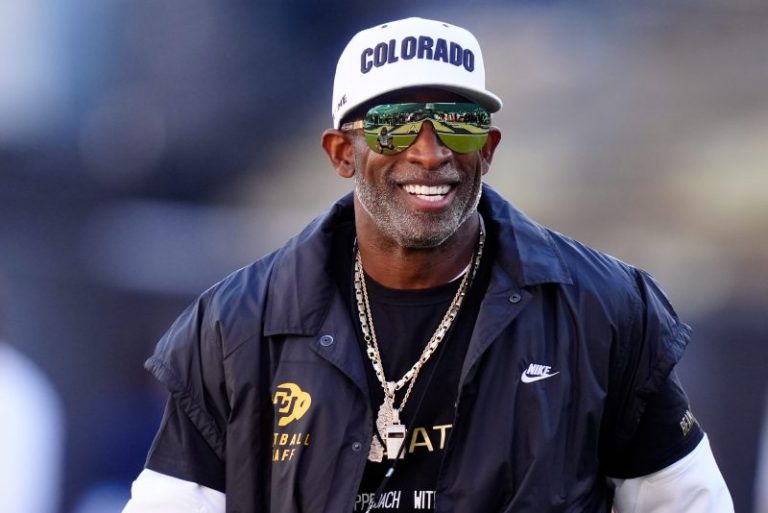
Colorado coach Deion Sanders is expected to sign a small high school recruiting class, ranking near the bottom of the Big 12.
Sanders defends his strategy of relying on the transfer portal over traditional high school recruiting.
Critics argue this approach hinders team chemistry and long-term development after a 3-9 season in 2025.

Colorado football coach Deion Sanders is expected to sign a recruiting class this week of only 10 high school players after some top recruits withdrew their commitment to play for him recently — dropping the Buffaloes to a 69th national ranking and 14th out of 16 teams in the Big 12 Conference, according to On3’s recruiting rankings for 2026, as of Dec. 2.

But signing such a small freshman class is all part of Sanders’ plan, according to him. He doesn’t make off-campus visits to high school recruits and was a pioneer in college football for relying on transfer players instead.

The question is whether this is the right strategy after his team finished 3-9 in 2025. Should he focus more on developing high school players and getting them to stick around in Boulder? Or is his strategy still sensible since players can transfer to a new school every year if they’re not happy with their playing time or compensation?

The debate rages on at the start of the football signing period on Wednesday, Dec. 3.

“Just to go into the (transfer) portal, it becomes like trying to build through free agency,’ former Colorado and NFL linebacker Chad Brown told USA TODAY Sports recently. ‘You can get it done in spots if you’ve got a hole that you need filled, but home-grown talent is always going to be the best to coach up and get up to speed with your offense and defense. 

‘If every year you’re trying to build a new team, you can’t ever get to layer two in your playbook. You’re always operating on the surface, and then these guys don’t get the chance to come together as a team.”

Deion Sanders sees it differently

The high school recruiting class Sanders is expected to sign includes four-star defensive back Preston Ashley and four-star linebacker Carson Crawford. But it’s only a precursor to his bigger roster moves coming when the transfer portal opens Jan. 2. That’s when Sanders will bring in players from other colleges, many of them backups looking for better playing time or income opportunities. Sanders pioneered the portal-heavy strategy during his first year in 2023, when he brought in 47 scholarship transfer players from other four-year colleges to fill a roster limited to 85 scholarship players.

“You want about 15 to 17 high school kids,” Sanders said at a news conference last week in Boulder.  “Why do you say that, coach?’ Well, check the statistics. You get 30. Are they gonna be here in two years? Statistically, check the statistics.”

USA TODAY Sports checked the statistics: He’s signed 43 total high school scholarship recruits during his first three seasons at Colorado, an average of 14 per year, compared to the 25 or 30 that some schools sign. Only 21 of those 43 were still on Colorado’s roster at the end of the 2025 season. The rest transferred out already or left for other reasons.

One was freshman four-star linebacker Mantrez Walker, who signed with Colorado out of high school last year and recently announced his decision to transfer out.

“In Mantrez’s case, he had a situation where his playing time was pretty limited this season and there were opportunities that he believes are going to be a better fit,” said Jacob Piasecki, co-founder of A&P Sports, the agency that represented Walker’s name, image and likeness (NIL) interests for compensation.

Piasecki told USA TODAY Sports it was more about Colorado’s plan for him, not NIL money, per se, but playing time and money are intertwined. “There’s definitely a correlation between how much they pay you and how much they play you,” Piasecki told USA TODAY Sports.

Why didn’t Deion Sanders’ recruiting strategy work in 2025?

Sanders said he mostly “hit” on his high school recruits but missed on his transfer portal recruits. His most high-profile transfer recruit last year was former Liberty quarterback Kaidon Salter, whose record as a starter for Colorado was 3-6 in 2025.

In previous years, Colorado “hit” on transfer recruits that included his quarterback son Shedeur (Jackson State), Heisman Trophy winner Travis Hunter (Jackson State), receiver Jimmy Horn Jr. (South Florida) and receiver LaJohntay Wester (Florida Atlantic). All four were drafted into the NFL in April after leading the Buffaloes to a 9-4 season in 2024.

“Nowadays, if kids aren’t playing by that spring of that second go-round, they out — they jump in the portal,” Deion Sanders said. “You got to figure out the strategy. What do you want to go? How do you want to get it? The strategy a year ago was the same strategy it was last year. And you hit on your portal guys. You hit on your freshman guys. This year, you hit on your freshmen, to me, some of them. And you missed on your portal. So that’s why we’ sitting where we sit. It’s not like you didn’t have a strategic plan. No, you had a strategic plan. You missed. Sometimes it happens. And I’m going to take responsibility. I’m not going to say we missed. I missed.”

The risk of Deion Sanders’ strategy

Sanders’ teams have been up and down since his arrival: a 3-0 start in 2023 followed by a 1-8 finish, then 9-4 in 2024, followed by five straight losses to end the 2025 season at 3-9. It’s arguable that trait is a symptom of the roster churn, with so many new players every year who have no prior chemistry.

By contrast, several top teams today were expected to sign around 25 to 30 high school recruits this week, including Southern California, Georgia and Ohio State. Those schools just hope they can hang on to those players beyond next year.

In Colorado’s case, Sanders also hopes to hang on to his own former high school recruits, including standout offensive tackle Jordan Seaton and quarterback Julian Lewis. Lewis has said he’s staying after redshirting in 2025. Seaton’s future isn’t clear.

“Buffs could have consistently brought in great players from the high school level, but instead, just don’t,” On3 recruiting analyst Josh Newberg recently said on social media site X.  “You’re not finding Jordan Seaton-type players in the portal.”

But Sanders did find NFL-caliber players in the portal before. In 2025, his best defensive player was safety Tawfiq Byard, a transfer from South Florida who led the team in tackles (84). He has two more years of college eligibility but could jump in the portal Jan. 2 just like the rest after the NCAA allowed unrestricted annual player transfers last year.

Follow reporter Brent Schrotenboer @Schrotenboer. Email: bschrotenb@usatoday.com

This post appeared first on USA TODAY

On Sunday, 12 teams will see their national championship hope live on when they hear their name called for the College Football Playoff.

A few days before that, the building blocks for those future championship dreams will be put into place.

The early signing period begins on Wednesday, Dec. 3 and continues through Friday, Dec. 5, with many of the top recruits from across the country putting pen to paper (and, in a rarity in 2025, paper into fax machines) to formalize their relationship with their new college home for the next three or four (or five) years. The three-day stretch has become the primary time for high-school prospects to sign with schools, effectively replacing the once-customary National Signing Day in February.

It will be a frenzied 72 hours, particularly on Wednesday, with hundreds of players signing with schools they’ve been committed to for weeks or months while others unveil their college decisions with news conferences, hats and, if the recent past has taught us anything, live animals.

USA TODAY Sports will be providing live updates from college football’s early signing period. Follow along.

Early signing period live updates

This section will be updated as recruits are announced as signees.

Early signing period: Player rankings for 2026 class

This section will be updated live as players sign.

Here’s the full list of the top 100 players in the 2026 class, according to 247Sports’ composite rankings:

5-star recruits

Jared Curtis (No. 1 QB), Vanderbilt commit
Lamar Brown (No. 1 athlete), LSU commit
Keisean Henderson (No. 2 QB), Houston commit
Jackson Cantwell (No. 1 OT), Miami commit
Zion Elee (No. 1 edge rusher), Maryland commit
Carter Meadows (No. 2 edge rusher), Michigan commit
Faizon Brandon (No. 3 QB), Tennessee commit
Savion Hiter (No. 1 RB), Michigan commit
Dia Bell (No. 4 QB), Texas commit
Chris Henry Jr. (No. 1 WR), Ohio State commit
Tristen Keys (No. 2 WR), Tennessee commit
Rodney Durham (No. 3 edge rusher), Notre Dame commit
Felix Ojo (No. 2 OT), Texas Tech commit
Ezavier Crowell (No. 2 RB), Alabama commit
LaDamion Guyton (No. 4 edge rusher), Texas Tech commit
Immanuel Iheanacho (No. 1 IOL), Oregon commit
Xavier Griffin (No. 1 LB), Alabama commit
Kendre Harrison (No. 1 TE), Oregon commit
Kodi Greene (No. 3 OT), Washington commit
Tyler Atkinson (No. 2 LB), Texas commit
Ian Premer (No. 2 TE), Notre Dame commit
Jalen Lott (No. 3 WR), Oregon commit
Mark Bowman (No. 3 TE), USC commit
Khary Adams (No. 1 CB), Notre Dame commit
Jorden Edmonds (No. 2 CB), Alabama commit
Anthony Jones (No. 5 edge rusher), Oregon commit
Kelvin Obot (No. 4 OT), Utah commit
Richard Wesley (No. 6 edge rusher), Texas commit
Richard Anderson (No. 1 DL), LSU commit
Bralan Womack (No. 1 S), Mississippi State commit
Joey O’Brien (No. 2 S), Notre Dame commit
Jireh Edwards (No. 3 S), Alabama commit
Ekene Ogboko (No. 5 OT), Georgia commit
Brandon Arrington (No. 2 athlete), signs with USC

4-star recruits

35. Kaiden Prothro (No. 4 TE), Georgia commit
36. Jett Washington (No. 4 S), Oregon commit
37. Darius Gray (No. 1 IOL), South Carolina commit
38. Ryder Lyons (No. 5 QB), BYU commit
39. Ethan Feaster (No. 4 WR), USC commit
40. Cederian Morgan (No. 5 WR), Alabama commit
41. Chauncey Kennon (No. 3 S), Florida State commit
42. Khary Wilder (No. 2 DL), Ohio State commit
43. KJ Edwards (No. 3 RB), Texas A&M commit
44. Luke Wafle (No. 7 edge rusher), USC commit
45. Salesi Moa (No. 3 athlete), Tennessee commit
46. Elbert Hill (No. 4 CB), USC commit
47. Davon Benjamin (No. 5 S), Oregon commit
48. Jaimeon Winfield (No. 3 DL), USC commit
49. Davian Groce (No. 6 WR), Florida commit
50. Cincere Johnson (No. 3 LB), Ohio State commit
51. Sam Greer (No. 6 OT), Ohio State commit
52. Jamarion Matthews (No. 4 DL), Alabama commit
53. Nolan Wilson (No. 5 DL), Alabama commit
54. Deuce Geralds (No. 6 DL), LSU commit
55. TJ White (No. 4 LB), Tennessee commit
56. Zyan Gibson (No. 5 CB), Alabama commit
57. Tony Cumberland (No. 7 DL), Oregon commit
58. Justice Fitzpatrick (No. 6 CB), Georgia commit
59. Somourian Wingo (No. 7 WR), Miami commit
60. Bryce Perry-Wright (No. 8 DL), Texas A&M commit
61. Naeem Burroughs (No. 8 WR), Clemson commit
62. Kevin Brown (No. 7 OT), West Virginia commit
63. Devin Jackson (No. 6 S), Oregon commit
64. Jay Timmons (No. 7 CB), Ohio State commit
65. Joel Wyatt (No. 4 athlete), Tennessee commit
66. Jermaine Bishop (No. 5 athlete), Texas commit
67. Trenton Henderson (No. 8 edge rusher), LSU commit
68. Bowe Bentley (No. 6 QB), Oklahoma commit
69. Jett Thomalla (No. 7 QB), Alabama commit
70. Calvin Russell (No. 9 WR), Syracuse commit
71. Blaine Bradford (No. 7 S), Ohio State commit
72. Jake Kreul (No. 9 edge rusher), Oklahoma commit
73. Keenyi Pepe (No. 8 OT), USC commit
74. Jonathan Hatton Jr. (No. 4 RB), Oklahoma commit
75. Caden Harris (No. 8 CB), Georgia commit
76. John Turntine III (No. 9 OT), Texas commit
77. Brian Bonner (No. 5 RB), Washington commit
78. Talanoa Ili (No. 5 LB), USC commit
79. Izayia Williams (No. 6 LB), Florida State commit
80. Tommy Tofi (No. 3 IOL), Oregon commit
81. Ayden Pouncey (No. 8 S), Notre Dame commit
82. J’Zavien Currence (No. 9 S), South Carolina commit
83. Brysten Martinez (No. 10 OT), LSU commit
84. Aaron Gregory (No. 10 WR), Texas A&M commit
85. Kentavion Anderson (No. 10 S), Clemson commit
86. Brayden Rouse (No. 7 LB), Tennessee commit
87. James Johnson (No. 9 DL), Texas commit
88. Jordan Smith (No. 11 S), Georgia commit
89. Jamarion Carlton (No. 10 DL), Texas commit
90. Gabriel Osenda (No. 11 OT), Tennessee commit
91. Aiden Harris (No. 11 DL), South Carolina commit
92. Craig Dandridge (No. 11 WR), Georgia commit
93. Havon Finney (No. 9 CB), LSU commit
94. Chase Campbell (No. 12 WR), Texas Tech commit
95. Jase Mathews (No. 13 WR), Auburn commit
96. Julian Walker (No. 10 edge rusher), Michigan commit
97. Jaquez Wilkes (No. 8 LB), Auburn commit
98. Pierre Dean (No. 11 edge rusher), Georgia commit
99. Derrek Cooper (No. 6 RB), Texas commit
100. Victor Singleton (No. 10 CB), Texas A&M commit

Early signing period: Team rankings 2026 class

This section will be updated live as class rankings shift

Here are the top 10 teams in the 2026 class rankings, according to 247Sports’ Composite rankings:

USC (34 commits)
Alabama (24 commits)
Notre Dame (27 commits)
Oregon (19 commits)
Ohio State (28 commits)
Georgia (28 commits)
Texas (24 commits)
Tennessee (24 commits)
Texas A&M (26 commits)
Miami (29 commits)

To see the full rankings, click here.

This post appeared first on USA TODAY

On about two dozen occasions, the Supreme Court had to step in during President Trump’s second term because many inferior courts refused to accept that he is the president. The justices must do so again, after lower courts invalidated the appointments of acting U.S. attorneys Alina Habba of the District of New Jersey and Lindsey Halligan of the Eastern District of Virginia.

The Senate has a tradition that is over a century old called the blue slip. Home-state senators have an extraordinary power: the ability to veto U.S. marshals, U.S. attorneys and U.S. district judges. In order for nominees to proceed, home-state senators must return a blue slip approving the nominations. Senators will never let this power go, so administrations have to bear the consequences. In New Jersey, leftist Senators Cory Booker and Andy Kim have refused to allow the nomination of Alina Habba to serve as U.S. attorney. Likewise, in Virginia, their fellow leftist Senators Tim Kaine and Mark Warner will not acquiesce to the nomination of Lindsey Halligan to serve as U.S. attorney. As such, Attorney General Pam Bondi appointed Habba and Halligan to 120-day terms to serve on an interim basis, as 28 U.S.C. § 546 allows. Halligan replaced another interim prosecutor, Eric Siebert, who departed shortly before his 120 days lapsed.

After 120 days have expired, leftists asserted that Bondi can make no more appointments; only district judges can. The Executive Branch, this argument goes, has no say whatsoever after 120 days. This result would lead to a scheme where leftist senators can block President Trump’s nominees. Then, courts composed mostly of leftist judges in these blue states can install leftist puppet U.S. attorneys, and the Executive Branch must grin and bear it, just as with the blue slip process.

The 120-day limit first appeared in a statute in 1986. During the years of Presidents Clinton and Bush, attorneys general made successive 120-day appointments under the statutory scheme in effect from 1986-2006, the same scheme as today. Yet, Clinton Judge Cameron Currie of South Carolina did not view this historical evidence as persuasive when she invalidated Halligan’s appointment. Halligan secured indictments against New York Attorney General Letitia James for mortgage fraud and former FBI Director James Comey for false statements to and obstruction of Congress concerning the Russiagate hoax.

Those indictments are, for the moment, invalid. Currie’s opinion drips with disdain for Halligan, noting Halligan’s lack of prosecutorial experience. This issue is irrelevant to the legal question. Halligan, under Currie’s analysis, could have had three decades of prosecutorial experience, and her appointment would still have violated the Constitution’s Appointments Clause. Currie also quoted another irrelevant piece of evidence: President Trump’s social media post demanding Bondi move faster on prosecutions. Whether Halligan’s appointment is valid has nothing to do with that post. Its inclusion thus has no valid legal purpose.

The Appointments Clause vests appointment power in a president, by and with the advice and consent of the Senate, for principal officers. Congress can also require the advice and consent process to apply to inferior officers, and it did so with respect to U.S. attorneys. As such, presidents nominate U.S. attorneys, and the Senate confirms them. When there are vacancies, attorneys general can fill them for 120 days at a time, and a separate part of Section 546 allows for district courts to make appointments after the 120 days have expired. The Constitution grants department heads and courts the power to appoint inferior officers. District judges, for example, appoint magistrate judges.

Section 546 does not vest the authority to appoint U.S. attorneys exclusively in district courts. Under the reading of the judges who have invalidated the appointments of Habba and Halligan, President Trump’s attorney general could not make a 120-day appointment, either. The text of Section 546 does not specify a 120-day appointment per president. When one president’s attorney general makes a 120-day appointment, these judges absurdly prevent any future president’s attorney general from doing so in that district. District judges, therefore, have all the power until the Senate confirms a nominee one of these years or decades.

Fortunately, the issue now is ripe for Supreme Court review. This week, a Third Circuit panel ruled that Habba’s appointment is invalid. The justices should decide the cases together, even though the Fourth Circuit has not ruled on the Halligan appeal. There is only one circuit with all states that have Republican senators: the Fifth. This district court control could continue into the terms of a President Vance.

The easiest way to correct the lower court’s error is for the Supreme Court to hold that Section 546 allows attorneys general to make more than one 120-day appointment. Alternatively, the justices could hold that Section 546’s stripping of appointment power from the Executive Branch with respect to its officials violates the separation of powers.

In the face of immense criticism from Democrat politicians, the leftist media, and academic elites, the justices have intervened time and again to thwart unlawful interference by resistance lower courts. Because of the Supreme Court’s intervention on issues ranging from the ability to fire Executive Branch employees to the ability of the president to revoke temporary protected status from illegal immigrants, President Trump has been able to do his job far more effectively.

Bondi, Solicitor General John Sauer, and their team of stellar lawyers have amassed a success rate of over 90% at the Supreme Court. The justices must restore Habba and Halligan to preserve the separation of powers and prevent U.S. attorneys from being servants of district courts instead of presidents.

This post appeared first on FOX NEWS

Over the course of the next three days, coaching staffs around the country will land commitments from players that they hope are the missing pieces to their national championship puzzle.

The December early signing period has become college football’s de facto signing day, as most, if not all, of the top recruits in the country will sign during the period so they can enroll with their respective programs in the spring semester. The early signing period runs from Wednesday, Dec. 3 through Friday, Dec. 5.

Lincoln Riley and USC football enter the early signing period with the top 2026 recruiting class, headlined by 247Sports’ Composite ranking’s No. 5 overall-ranked prospect, offensive tackle Keenyi Pepe. Defending national champion Ohio State, the top-ranked team in the latest College Football Playoff rankings, currently has the third-best class in the Big Ten, only behind the Trojans and Oregon.

Rankings of the team’s overall recruiting class are expected to change over the next couple of days, as staffs hope to flip commitments to their programs. One early winner of this is Clark Lea and Vanderbilt, which flipped the commitment of five-star quarterback Jared Curtis on Tuesday, Dec. 2 from Georgia.

College football recruiting team rankings 2025

This section will be updated throughout the early signing period. Last updated at 9 a.m. ET on Wednesday, Dec. 3.

1. USC (No. 1 Big Ten)

Top offensive recruit: No. 5 overall recruit Keenyi Pepe (No. 1 ranked OT)
Top defensive recruit: No. 54 overall recruit Jaimeon Winfield (No. 3 ranked DL)
Commits: 34
Five-stars: One
Four-stars: 20
Top 100 players: 8
Points: 304.15

2. Alabama (No. 1 SEC)

Top offensive recruit: No. 29 overall recruit Ezavier Crowell (No. 2 ranked RB)
Top defensive recruit: No. 13 overall recruit Xavier Griffin (No. 1 ranked EDGE)
Commits: 24
Five-stars: 4
Four-stars: 9
Top 100 players: 10
Points: 300.40

3. Notre Dame

Top offensive recruit: No. 21 overall recruit Ian Premer (No. 1 ranked TE)
Top defensive recruit: No. 8 overall recruit Rodney Dunham (No. 2 ranked EDGE)
Commits: 27
Five-stars: 4
Four-stars: 19
Top 100 players: 5
Points: 298.81

4. Oregon (No. 2 Big Ten)

Top offensive recruit: No. 25 overall recruit Immanuel Iheanacho (No. 2 ranked IOL)
Top defensive recruit: No. 19 overall recruit Antony Jones (No. 5 ranked EDGE)
Commits: 19
Five-stars: 4
Four-stars: 12
Top 100 players: 10
Points: 297.08

5. Ohio State (No. 3 Big Ten)

Top offensive recruit: No. 32 overall recruit Chris Henry Jr. (No. 3 ranked WR)
Top defensive recruit: No. 40 overall recruit Cincere Johnson (No. 3 ranked LB)
Commits: 28
Five-stars: 1
Four-stars: 21
Top 100 players: 6
Points: 295.31

6. Georgia (No. 2 SEC)

Top offensive recruit: No. 48 overall recruit Kaiden Prothro (No. 4 ranked TE)
Top defensive recruit: No. 28 overall recruit Valdin Sone (No. 2 ranked DL)
Commits: 28
Five-stars: 1
Four-stars: 21
Top 100 players:
Points: 293.75

7. Texas (No. 3 SEC)

Top offensive recruit: No. 16 overall recruit Jeremaine Bishop (No. 2 ranked ATH)
Top defensive recruit: No. 38 overall recruit Tyler Atkinson (No. 2 ranked LB)
Commits: 25
Five-stars: 3
Four-stars: 13
Top 100 players: 5
Points: 292.12

8. Tennessee (No. 4 SEC)

Top offensive recruit: No. 2 overall recruit Faizon Brandon (No. 2 ranked QB)
Top defensive recruit: No. 41 overall recruit TJ White (No. 4 ranked LB)
Commits: 24
Five-stars: 2
Four-stars: 12
Top 100 players: 7
Points: 289.65

9. Texas A&M (No. 5 SEC)

Top offensive recruit: No. 46 overall recruit KJ Edwards (No. 3 ranked RB)
Top defensive recruit: No. 26 overall recruit Tristan Givens (No. 6 ranked EDGE)
Commits: 26
Five-stars: 1
Four-stars: 22
Top 100 players: 4
Points: 284.11

10. Miami (No. 1 ACC)

Top offensive recruit: No. 7 overall recruit Jackson Cantwell (No. 2 ranked OT)
Top defensive recruit: No. 72 overall recruit Keshawn Stancil (No. 5 ranked DL)
Commits: 29
Five-stars: 1
Four-stars: 19
Top 100 players: 5
Points: 280.25

This post appeared first on USA TODAY

The day that culminates years of recruiting efforts has finally arrived on Wednesday, Dec. 3. The early national signing day will see most of the nation’s top prospects confirm their commitments with their letters of intent.

While the transfer portal has mitigated some of the importance of recruiting high school players, there’s still a strong correlation to having strong freshmen classes and success on the field. So landing elite recruits still has a great importance for teams.

Who stands to be the big winners? Will there be flips or delayed decision that have become synonymous with singing day? We will keep track of the highest-rated prospects, according to the 247Sports, composite as they make official where they will be playing next fall.

Where are the top 100 high school football recruits headed?

Jared Curtis, QB, 6-3, 225, Nashville Christian (Nashville, Tenn.) – Committed to Vanderbilt
Lamar Brown, ATH, 6-4, 285, University Lab (Baton Rouge, La. ) – Committed to LSU
Keisean Henderson, QB, 6-3, 185, Legacy the School of Sport Sciences (Spring, Texas) – Committed to Houston
Jackson Cantwell, OL, 6-7, 325, Nixa (Nixa, Mo.) – Committed to Miami
Zion Elee, Edge, 6-3, 220,  St. Frances Academy (Baltimore, Md.) Committed to Maryland
Carter Meadows, Edge, 6-6, 225, Gonzaga (Washington, D.C.) – Committed to Michigan
Faizon Brandon, QB, 6-3, 200, Grimsley (Greensboro, N.C. ) – Committed to Tennessee
Savion Hiter, RB, 5-11, 200, Louisa County (Mineral, Va.) – Committed to Michigan
Dia Bell, QB, 6-2, 215, American Heritage (Fort Lauderdale, Fla.) – Committed to Texas
Chris Henry Jr. WR, 6-5, 205, Mater Dei (Santa Ana, Calif.) – Committed to Ohio State
Tristen Keys, WR, 6-2, 180, Hattiesburg (Hattiesburg, Miss.) – Committed to Tennessee
Rodney Dunham, Edge, 6-4, 227, Myers Park (Charlotte, N.C.) – Committed to Notre Dame
Felix Ojo, OT, 6-6, 275, Mansfield Lake Ridge (Mansfield, Texas) – Committed to Texas Tech
Ezavier Crowell, RB, 5-11, 205, Jackson (Jackson, Ala.) – Committed to Alabama
LaDamion Guyton, Edge, 6-3, 225, Benedictine Military School (Savannah, Ga.) – Committed to Texas Tech
Immanuel Iheanacho, OL, 6-6, 345, Georgetown Preparatory (North Bethesda, Md.) – Committed to Oregon
Xavier Griffin, LB, 6-3, 200, Gainesville (Gainesville, Ga) – Committed to Alabama
Kendre Harrison, TE, 6-7, 243, Reidsville (Reidsville, N.C.) – Committed to Oregon
Kodi Greene, OT, 6-5, 320, Mater Dei (Santa Ana, Calif.) – Committed to Washington
 Tyler Atkinson, LB, 6-2, 210, Grayson (Loganville, Ga.) – Committed to Texas
Ian Premer, TE, 6-5, 220, Great Bend (Great Bend, Kan.) – Committed to Notre Dame
Jalen Lott, WR, 6-0, 176, Frisco Panther Creek (Frisco, Texas) – Committed to Oregon
Mark Bowman, TE, 6-4, 225, Mater Dei (Santa Ana, Calif.) – Committed to Southern California
Khary Adams, DB, 6-2, 175, Loyola Blakefield (Towson, Md.)  – Committed to Notre Dame
Jorden Edmonds, DB, 6-2, 175, Sprayberry (Marietta, Ga.) – Committed to Alabama
Anthony Jones, Edge, 6-3, 240, St. Paul’s Episcopal (Mobile, Ala.) – Committed to Oregon
Kelvin Obot, OT, 6-5, 265, Fruitland (Fruitland, Idaho) – Committed to Utah
Richard Wesley, Edge, 6-5, 250, Sierra Canyon (Chatsworth, Calif.) – Committed to Texas
Richard Anderson, DL, 6-4, 340, Edna Karr (New Orleans) – Committed to LSU
Bralan Womack, DB, 5-11, 195, Hartfield Academy (Flowood, Miss.) – Committed to Mississippi State
Joey O’Brien, DB, 6-3, 185, La Salle College (Glenside, Pa.) – Committed to Notre Dame
Jireh Edwards, DB, 6-2, 210, St. Frances Academy (Upper Marlboro, Md.) – Committed to Alabama
Ekene Ogboko, OL, 6-6, 280, South Garner (Durham, N.C.) – Committed to Georgia
Brandon Arrington, ATH, 6-2, 180, Mount Miguel (Spring Valley, Calif.) – Committed to Texas A&M
 Kaiden Prothro, TE, 6-6, 210, Bowdon (Bowdon, Ga.) – Committed to Georgia
 Jett Washington, DB, 6-5, 205, Bishop Gorman (Las Vegas) – Committed to Oregon
 Darius Gray, OL, 6-3, 285, St. Christopher’s School (Richmond, Va.) – Committed to South Carolina
Ryder Lyons, QB, 6-2, 220, Folsom (Folsom, Calif.) – Committed to Brigham Young
Ethan Feaster, WR, 6-1, 180, DeSoto (DeSoto, Texas) – Committed to Southern California
Cederian Morgan, WR, 6-4, 210, Benjamin Russell (Alexander City, Ala.) – Committed to Alabama
Chauncey Kennon, DB, 6-1, 175, Booker (Sarasota, Fla.) – Committed to Florida State
Khary Wilder, DL, 6-4, 250,  Junipero Serra (Gardena, Calif.) – Committed to Ohio State
KJ Edwards, RB, 5-10, 180, Carthage (Carthage, Texas) – Committed to Texas A&M
Luke Wafle, Edge, 6-5, 245, Hun School (Princeton, N.J.) – Committed to Southern Caifornia
Salesi Moa, ATH, 6-1, 190, Fremont (Ogden, Utah) – Committed to Tennessee
Elbert Hill, DB, 5-10, 175, Archbishop Hoban (Akron, Ohio) – Committed to Southern California
Davon Benjamin, DB, 5-11, 180 Oaks Christian (Westlake Village, Calif.) – Committed to Oregon
Jaimeon Winfield, 6-4, 310, Richardson (Richardson, Texas) – Committed to Southern California
Davian Groce, WR, 6-1, 190, Frisco Lone Star (Frisco, Texas) – Committed to Florida
Cincere Johnson, LB, 6-3, 222, Glenville (Cleveland, Ohio) – Committed to Ohio State
Sam Greer, OL, 6-7, 315, Archbishop Hoban (Akron, Ohio) – Committed to Ohio State
Jamarion Matthews, DL, 6-2, 240, Gainesville (Gainesville, Ga.) – Committed to Alabama
Nolan Wilson, DL, 6-4, 250, Picayune Memorial (Picayune, Miss.) – Committed to Alabama
Deuce Geralds, DL, 6-2, 275, Collins Hill (Suwanee, Ga.) – Committed to LSU
TJ White, LB, 6-1, 230, Jackson Academy (Jackson, Miss.) – Committed to Tennessee
Zyan Gibson, DB, 6-0, 174, Gadsden City (Gadsden, Ala.) – Committed to Alabama
Tony Cumberland, DL, 6-4, 285, Willamette (Eugene, Ore.) – Committed to Oregon
Justice Fitzpatrick, DB, 6-0, 185, St. Thomas Aquinas (Fort Lauderdale, Fla.) – Committed to Georgia
Somourian Wingo, WR, 6-2, 180, St. Augustine (St. Augustine, Fla.) – Committed to Miami
Bryce Perry-Wright, DL, 6-2, 250, Buford (Buford, Ga.) – Committed to Texas A&M
Naeem Burroughs, WR, 5-11, 175, The Bolles School (Jacksonville, Fla.) – Committed to Clemson
Kevin Brown, OL, 6-5, 270, Harrisburg (Harrisburg, Pa.) – Committed to West Virginia
Devin Jackson, DB, 6-2, 195, The First Academy (Orlando, Fla.) – Committed to Oregon
Jay Timmons, DB, 5-11, 185, Pine-Richland (Gibsonia, Pa.) – Committed to Ohio State
Joel Wyatt, ATH, 6-4, 195, Oakland (Murfreesboro, Tenn.) – Committed to Tennessee
Jermaine Bishop, ATH, 5-11, 155, Willis (Willis, Texas) – Committed to Texas
Trenton Henderson, Edge, 6-4, 225, Pine Forest (Pensacola, Fla.) – Committed to LSU
Bowe Bentley, QB, 6-2, 200, Celina (Celina, Texas) – Committed to Oklahoma
Jett Thomalla, QB, 6-3, 220, Millard South (Omaha, Neb.) – Committed to Alabama
Calvin Russell, WR, 6-5, 195, Northwestern (Miami) – Committed to Syracuse
Blaine Bradford, DB, 6-1, 207, Baton Rouge Catholic (Baton Rouge, La.) – Committed to Ohio State
Jake Kreul, Edge, 6-3, 230, IMG Academy (Bradenton, Fla.) – Committed to Oklahoma
Keenyi Pepe, OL, 6-7, 320, IMG Academy (Bradenton, Fla.) – Committed to Southern California
Jonathan Hatton Jr., RB, 6-0, 205, Cibolo Steele (Cibolo, Texas) – Committed to Oklahoma
Caden Harris, DB, 6-0, 160, Haywood (Brownsville, Tenn.) – Committed to Georgia
John Turntine III, OL, 6-4, 270, North Crowley (Fort Worth, Texas) – Committed to Texas
Brian Bonner, RB, 6-0, 185, Valencia (Valencia, Calif.) – Committed to Washington
Talanoa Ili, LB, 6-3, 215, Kahuku (Kahuku, Hawaii) – Committed to Southern Caliifornia
Izayia Williams, 6-1, 215, Tavares (Tavares, Fla.) – Committed to Florida State
Tommy Tofi, OL, 6-6, 330, Archbishop Riordan (San Francisco) – Committed to Oregon
Ayden Pouncey, DB, 6-2, 160, Winter Park (Winter Park, Fla.) – Committed to Notre Dame
J’Zavien Currence, DB, 6-3, 205, South Pointe (Rock Hill, S.C.) – Committed to South Carolina
Brysten Martinez, OL, 6-5, 300, East Ascension (Gonzales, La.) – Committed to LSU
Aaron Gregory, WR, 6-2, 177, Douglas County (Douglasville, Ga.) – Committed to Texas A&M
Kentavion Anderson, DB, 6-2, 190, Dorman (Roebuck, S.C.) – Committed to Clemson
Brayden Rouse, LB, 6-2, 210, Kell (Marietta, Ga.) – Committed to Tennessee
James Johnson, DL, 6-2, 285, Northwestern (Miami) – Committed to Texas
Jordan Smith, DB, 6-1, 185, Houston County (Warner Robins, Ga.) – Committed to Georgia
Jamarion Carlton, DL, 6-4, 260, Temple (Temple, Texas) – Committed to Texas
Gabriel Osenda, OT, 6-7, 330, Baylor School (Chattanooga, Tenn.) – Committed to Tennessee
Aiden Harris, DL, 6-3, 245, Weddington (Matthews, N.C.) – Committed to South Carolina
Craig Dandridge, WR, 6-0, 172, Cambridge (Alpharetta, Ga.) – Committed to Georgia
Havon Finney, DB, 6-2, 170, Sierra Canyon (Chatsworth, Calif.) – Committed to LSU
Chase Campbell, WR, 6-1, 180, Wolfforth Frenship (Wolfforth, Texas) – Committed to Texas Tech
Jase Mathews, WR, 6-1, 193, Greene County (Leakesville, Miss.) – Committed to Auburn
Julian Walker, Edge, 6-5, 252, Dutch Fork (Irmo, S.C.) – Committed to Michigan
Jaquez Wilkes, LB, 6-4, 220, Wadley (Wadley, Ala.) – Committed to Auburn
Pierre Dean, Edge, 6-3, 255, West Forsyth (Clemmons, N.C.) – Committed to Georgia
Derrek Cooper, RB, 6-1, 205, Chaminade-Madonna (Hollywood, Fla.) – Committed to Texas
Victor Singleton, DB, 5-11, Central Catholic (Toledo, Ohio) – Committed to Texas A&M

This post appeared first on USA TODAY

The 2026 NHL draft class has been exciting to track early on. 

The preseason favorite for the first overall pick, Gavin McKenna, has had a good but not great season in the NCAA as a freshman, which has opened the door for others to get into the battle for the top spot.

The race for first overall is five players deep. McKenna headlines the group, while others – Ivar Stenberg, Keaton Verhoeff, Tynan Lawrence and Mathis Preston – could be in the discussion. The 2026 NHL Draft has some excellent depth of talent, which hasn’t always been the case over the last few years.

Let’s look at where the top 10 for the 2026 NHL Draft stand as we enter the holiday season and begin to put the top draft-eligible talent in focus.

Top 10 NHL draft prospects

Height and weight information are according to NHL Central Scouting’s preliminary players to watch list.

1. Frolunda (Sweden) left wing Ivar Stenberg

Not many of this year’s draft prospects can combine intelligence with electric play as well as Stenberg. He is a great skater who works his tail off to pressure in all facets of the game. The 5-foot-11, 183-pound left wing plays a cerebral game, looking to make some incredible plays with the puck as a playmaker and goal scorer. He’s pacing to be the most productive draft-eligible player in Swedish pro history.

2. Muskegon (USHL) center Tynan Lawrence

The top center in the draft class dealt with injuries to start the season, but his recent return has him back in the conversation at the top. The 6-foot, 185-pound Lawrence plays with relentless speed and power. He has an excellent shot, only made more dangerous by his desire to drive to the net. He’s been a dominant two-way force everywhere from the USHL playoffs to the Hlinka Gretzky Cup. 

3. Penn State (NCAA) left wing Gavin McKenna

After dominating the WHL, McKenna jumped to college hockey, where he’s faced a greater challenge from the bigger, stronger competition. McKenna has been the No. 1 prospect for so long that it seems silly to doubt it, but between his less-than-stellar start and the performance of the prospects around him, his ranking has come into question. Regardless, the 5-foot-11, 170-pound left wing’s electric skill and ability to dictate the offense will make him a hot commodity.

4. North Dakota (NCAA) defenseman Keaton Verhoeff

The transition from the WHL to the NCAA hasn’t been all that difficult for Verhoeff. He is the whole package on the back end. Verhoeff’s size (6-foot-3, 208 pounds) and mobility give him a very solid base to build on. What makes him special is his puck-handling and his unfazed nature when dealing with pressure. Verhoeff is poised and confident at both ends of the ice. 

5. Spokane (WHL) right wing Mathis Preston

When the game is on the line, Preston is the kind of player you want to have the puck. The 5-foot-11, 177-pound forward has the seamless ability to break up ice with speed, use his skill to get himself into a scoring position and generate a grade-A chance. Preston’s pace is unrelenting, backing defenders down and using them as screens to get pucks on net. His playmaking ability is silky smooth, with high-level creativity.

6. Windsor (OHL) left wing Ethan Belchetz

Belchetz’s 6-foot-5, 228-pound size and skill combo is impressive. Not many players can deke around before barreling through a defender on the way to the net. He has a heavy release from distance and deft touch from in tight. He’s been one of the most challenging players in the OHL to defend this season. His mobility has always been his biggest concern, but he’s worked hard on developing his skating over the last year.

7. Djurgarden (Sweden) center Viggo Bjorck

There has been some buzz about Bjorck for a couple of years now because of how highly productive he’s been in Sweden, but NHL scouts are concerned that his 5-foot-9, 177-pound frame will impede his effectiveness at the next level. His ability to dangle around the ice and create space for himself is entertaining to watch. If he can handle the game at Sweden’s pro level, he should stay near the top of the draft. 

8. Jukurit (Finland) defenseman Alberts Smits

Smits is the most unknown of the top names in the 2026 draft class. He’s a bit of a development project, but his physical tools are incredible. He’s a very strong skater who can maneuver around the ice with ease. Smits plays with a confidence you want to see at both ends of the ice, closing space defensively and pushing the pace offensively. The 6-foot-3, 205-pound Latvian defender is all upside. 

9. Sault Ste. Marie (OHL) defenseman Chase Reid

In his second OHL season, Reid has already become one of the top-producing blueliners in the league. The 6-foot-2, 185-pound Greyhound’s well-rounded game allows him to make an impact all over the ice. Defensively, he makes excellent reads and uses his edgework to match the attacker’s footwork. Offensively, he’s an effective and efficient puck-mover who consistently finds teammates in excellent scoring positions. 

10. Blainville-Boisbriand (QMJHL) defenseman Xavier Villeneuve

Villeneuve is not only one of the most purely skilled blueliners in the QMJHL, but he’s also among the most entertaining players in the draft class. His puck-handling at the blueline is almost video game-like, with matching passing ability. Villeneuve plays the game with as much creativity and flair as anyone. If there is any player who gives off the same vibe as Montreal Canadiens star Lane Hutson, it’s the 5-foot-11, 162-pound Villeneuve.

This post appeared first on USA TODAY

The story of this Oklahoma City Thunder team is best told in numbers, and let’s start with this one.

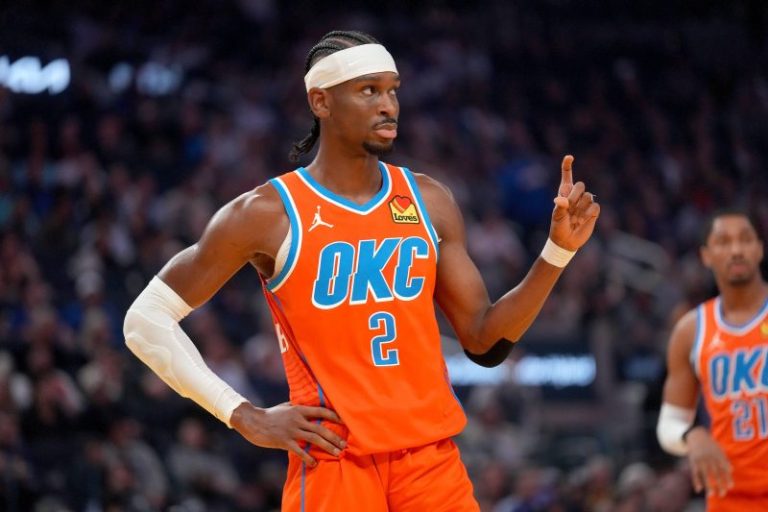
Late Tuesday night, with a 124-112 victory over the Golden State Warriors, the Thunder improved to 21-1, becoming just the third team in NBA history to record such a start or better.

Entering the night, they led the NBA in defensive rating, allowing just 103.6 points per 100 possessions … which was 7.0 fewer than the next closest team.

Entering the night, they led the league with a net rating of 15.3.

Reigning Most Valuable Player Shai Gilgeous-Alexander recorded his 94th consecutive 20-point game, trailing only Wilt Chamberlain (126). SGA ranks second in the league in scoring.

They are — far and away — the most dominant team in the NBA, with stars often resting in fourth quarters because games are so out of hand. But it’s one other number that Oklahoma City is chasing: 74.

Not only are the Thunder on pace to become the first team in 10 seasons to reach 70 wins, they pose a legitimate threat to eclipse the record-setting 73 victories the Warriors achieved in 2015-16. After all, a 70-win season would represent just a modest increase over last season, when they won 68.

To that point, OKC is already superbly locked in, its roster is balanced and deep and coaches and players are almost obsessively nerdy about basketball.

When asked before Tuesday’s game about how Oklahoma City could improve even with their near-unblemished record, coach Mark Daigneault made it clear the Thunder wouldn’t settle.

“I think the first thing is — and this isn’t blowing smoke — it’s like none of that matters tonight,” Daigneault said of his team’s early success. “All the stuff that we’ve done well to this point doesn’t carry over. Tonight’s a new opportunity. The better team tonight will win. That’s the competitive challenge, and that’s one of the beauties of our players: that competitive challenge turns them on.”

Jalen Williams, 24, was a first-time All-Star last season. Recovering from a torn ligament in his right wrist, he missed the first 19 games of this season. Williams is a righty. Unable to shoot with his right hand over the offseason, he became so bored and frustrated that he worked exclusively on his left, even developing an off-hand jumper.

But the Thunder are also built to smother and overwhelm opponents. They pick up full-court pressure just as easily as they clamp down in half-court sets. They emphasize efficiency, ranking second turnover percentage (12.4%) and first in turnovers forced (17.9 per game). They don’t score in runs or bursts; they score in avalanches that squeeze the life out of opponents.

Tuesday night, the Warriors went on a third-quarter run to close the margin from 22, eventually taking a four-point lead in the fourth (103-99). Oklahoma City responded by not pressing and ripping off a 25-9 run to close the game.

Granted, the Thunder have played the NBA’s easiest schedule thus far, and have the league’s toughest remaining slate, so it won’t be an easy path. Oklahoma City will have to evade the pitfalls of complacency.

Their lone loss was an aberration, a two-point defeat on Wednesday, Nov. 5 against the Portland Trail Blazers. For the Thunder to make history, they will not be able to let up.

Tuesday night’s opposing coach, Steve Kerr, knows all about that. He orchestrated that 2015-16 team’s run to 73 wins, surpassing the 1995-96 Bulls — a team in which Kerr was a player.

“Overall a team mindset of zero agendas,” Kerr said prior to the game when asked what it takes to get to 70 victories. “Just win every night. Obviously great talent, but I think high-IQ players. The two teams you’re referring to that I was part of, both had really, really high IQs individually and as a team. That’s what I see with OKC: really, really smart players, great coach, really connected. They’re on pace to shatter the record, it’s pretty remarkable what they’re doing.”

The scary part — for the rest of the NBA, that is — is that the Thunder are the sixth-youngest team in the league, with an average age of 24.53 entering the season. They are coming off an NBA championship; they know what it takes to get there and know how they can get even better.

“They have a deeper level of confidence now that they’ve won it all,” Kerr said. “Then the continuity is so powerful. All their actions that they’re running, they’re so comfortable with. They’ve expanded their offense a little bit; they have a little more motion than they did a year ago.”

The wild card, however, is that the more the Thunder win, the greater the pressure intensifies.

“These are all things that, in my experience, happen after the championship, after the first one,” Kerr said. “You just got a little different swagger, a little different belief.

“But, yeah, next year is the harder one.”

This post appeared first on USA TODAY

It turns out the hottest accessory at the 2025 NCAA college volleyball tournament is not knee braces, or finger tape that can be customized, but a special hair tie created to solve a prominent problems.

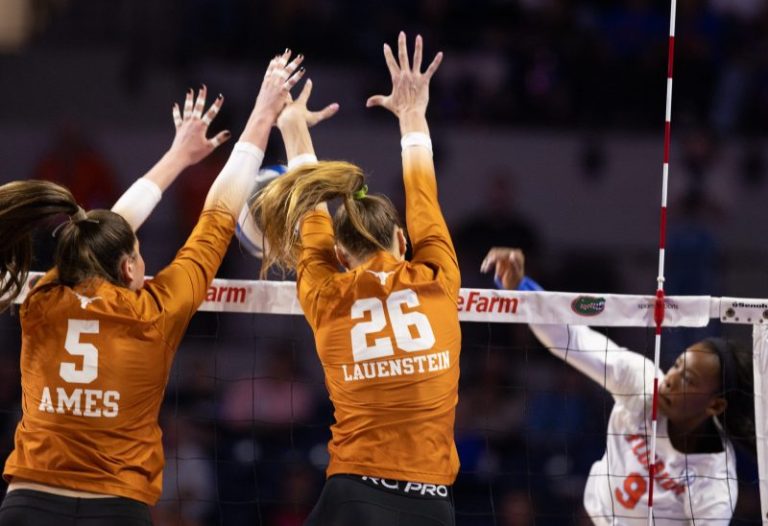
Texas volleyball head coach Jerritt Elliott, 57, created TIY hair bands, an acronym for ‘tie it yourself,’ after noticing a number of his players would interrupt practice to readjust their hair. The hair band features a 3-foot strand of elastic that can be tied at the ends and looped as many times as necessary to accommodate any hair pattern or hair style. The elastic is covered in neon-colored fabric sheath to provide a strong, yet soft hold.

‘Until I got to college and started using TIYs, it was definitely a struggle to find a good hair tie to use consistently,’ Pittsburgh junior Olivia Babcock told ESPN.

Elliot first hatched the idea in 2013, telling the outlet he’s ‘very entrepreneurial’ and known for his ‘wild brain.’ Elliot brought $80 worth of various hair ties on the market and found that one-size fit all bands weren’t secure for all athletes and could cause hair damage and headaches if tied too tight.

His solution? A 34-inch basic hair tie that, the company boasts, is two times stretchier and 13 times stronger than an average hair tie, the company boasts. A basic TIY is available for purchase for $8.50 and is comes in numerous colors, including ‘Euphoria’ pink, ‘Fairydust’ lavender, ‘Lioness’ yellow and ‘Sunset’ orange. Players can even match their hair ties to their school colors, like Louisville setter Nayelis Cabello, who opts for a red TIY similar to the school’s official Cardinal red.

‘I feel like it’s definitely made the process easier and made my hairstyles look cleaner,’ Cabello told ESPN. ‘And it matches my game-day outfit, so that makes it 10 times better.’

TIYs not only infiltrated the Texas women volleyball team, but the entire college volleyball ecosystem. TIYs even expanded beyond volleyball and have been spotted in college softball and college basketball.

Elliot has the Longhorns (23-3) positioned as a No. 1 seed in the 2025 NCAA Tournament, which Texas opens with a first-round matchup against Florida A&M (14-16) on Thursday. They look to win their first national championship since its back-to-back titles in 2022 and 2023. TIYs will surely be on display.

The USA TODAY app gets you to the heart of the news — fastDownload for award-winning coverage, crosswords, audio storytelling, the eNewspaper and more.

This post appeared first on USA TODAY

There was the Thanksgiving triple-header loaded with excitement, a Black Friday game that gave the NFC a new No. 1 seed, a massive upset of the NFL’s top team, a surging second-year quarterback taking over as MVP favorite and more interceptions from the league’s co-leaders in the stat.

In the middle of it all, as always, were the quarterbacks. One quarterback’s clutch performance on late downs earned him a bump in this week’s power rankings. Another dropped a bit after throwing as many interceptions in the first quarter of Week 13 as he had in the first 12 weeks of the season combined.

And those quarterbacks were just the ones that played each other (Bryce Young the former, Matthew Stafford the latter).

Here’s how all 32 starting signal-callers stack up in the Week 14 edition of quarterback power rankings:

NFL quarterback power rankings: Week 14

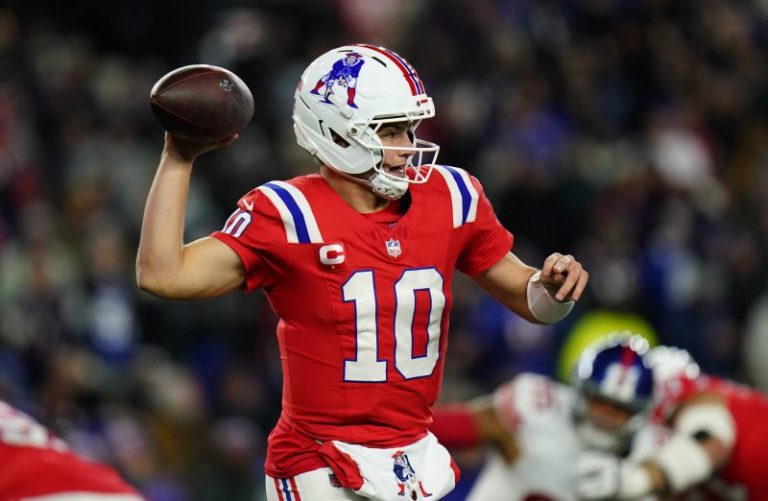
1. Drake Maye, New England Patriots

Maye leads the NFL in completion rate (71.5%), passing yards (3,412) and MVP odds (-120, per BetMGM Sportsbook). He’s led the Patriots to 10 straight wins and the current top spot in the AFC.

2. Matthew Stafford, Los Angeles Rams

Stafford threw two interceptions in Week 13, which matched his season total going into the game against the Panthers. Even with the shocking Rams’ loss, Stafford’s spot near the top of the power rankings remains unaffected as he continues to lead the NFL with 32 touchdown passes.

3. Josh Allen, Buffalo Bills

The reigning MVP and his offense kept things mostly on the ground against the Steelers in Week 13, but his six-touchdown game from two weeks prior still looms large in ranking considerations. Allen is fourth in the league in completion rate (69.4%) and yards per pass attempt (8.1).

4. Patrick Mahomes, Kansas City Chiefs

The Chiefs may continue to find themselves on the wrong end of one-score games, but Mahomes is still Mahomes-ing this season. ESPN analyst Ben Solak pointed out that the Chiefs’ quarterback leads the NFL in expected points added (EPA) on extended dropbacks (four seconds or longer) with 0.14. Every other quarterback is in the negatives on EPA on extended dropbacks, meaning Mahomes is still proving himself to be the best signal-caller in the league when it comes to improvising.

5. Jordan Love, Green Bay Packers

Love led all NFL quarterbacks in ESPN’s QBR efficiency metric and Pro Football Focus’ passing grade in Week 13. That should not be a surprise given his four touchdowns – a couple of them on terrific throws – and ability to avoid turnovers against a strong Lions defense.

6. Dak Prescott, Dallas Cowboys

Prescott is second in the NFL in pass attempts and first in the NFL in completions. It’s no wonder the Cowboys are so willing to lean on Prescott’s arm and their passing game, given the years that receivers George Pickens and CeeDee Lamb are having, along with tight end Jake Ferguson.

7. Justin Herbert, Los Angeles Chargers

It’s unclear whether Herbert will be able to play in Week 14 after undergoing surgery to treat a left-hand fracture. But his 75% completion rate in Week 13’s 31-14 win over the Raiders, despite the broken hand, deserves recognition. The Chargers’ quarterback is sixth in the NFL with his 21 touchdown passes and eighth with 2,842 passing yards.

8. Sam Darnold, Seattle Seahawks

Darnold’s chance at a ‘revenge game’ against the Vikings wasn’t great, featuring season-low marks in completion rate (53.8%) and passing yards (128). But the Seahawks’ new quarterback has led the team to a tie atop the NFC West with five weeks to play. Darnold also has the fifth-best success rate of any passer (51.3%), sixth-best completion rate (68.2%), seventh-most passing yards (2,913) and the most yards per attempt (9.0).

9. Jared Goff, Detroit Lions

Goff is up over 3,000 passing yards for the season and is tied for second in the NFL with 25 passing touchdowns through 13 weeks. The Lions’ struggles are not entirely Goff’s fault. Detroit’s last three losses were all by one score and all ended with the Lions’ opponent holding the ball last and needing a first down (or multiple) to secure the win.

10. Joe Burrow, Cincinnati Bengals

Burrow is the only Week 14 starting quarterback with an undefeated record. Much of that is owing to the Bengals’ quarterback missing Weeks 3-12 with a turf toe injury, but still. Burrow’s return heralded a potential Bengals miracle run to the playoffs, as the Bengals beat the Ravens in Baltimore. Cincinnati will need to run the table and have a lot of other factors swing their way, but the Bengals played like they had more energy in Week 13 with their quarterback back. We’ll see if it lasts.

11. Lamar Jackson, Baltimore Ravens

Jackson led the Ravens to four straight wins after he returned from injury but hit a major speed bump in Week 13’s loss to the Bengals. The Baltimore quarterback threw an interception and fumbled twice, and he’s still clearly playing hurt with all of his recent appearances on the Ravens’ weekly injury reports. Jackson’s league-leading 72.9% completion rate through five starts has not been a continued trend – he’s completed 56% of his pass attempts in the last four weeks.

12. Caleb Williams, Chicago Bears

Williams’ surge up the power rankings for recent performance stops short of the top 10 after a (reasonably) shaky performance on a very windy day in Philadelphia. He threw his first interception since Oct. 26 on Black Friday, but the second year has the Bears owning the NFC’s No. 1 seed as they enter Packers Week.

13. Baker Mayfield, Tampa Bay Buccaneers

After a very strong start to the 2025 season, Mayfield has trended down toward the middle of the pack thanks to injuries to Buccaneers receivers and lead running back Bucky Irving limiting Tampa Bay’s offense. The arrow is pointing back up for Mayfield with Irving and Chris Godwin back in Week 13. Their returns correlated with one of Mayfield’s best passing performances since early in the season.

14. Jalen Hurts, Philadelphia Eagles

Where Mayfield’s arrow is trending up, Hurts’ is trending down. The Eagles’ offense struggled in the middle third of the season. Philadelphia has scored 20+ points just once in the last four weeks, and that was the only game in that span when Hurts had a completion rate over 60%.

15. Daniel Jones, Indianapolis Colts

Jones fractured his fibula in a Week 12 practice, and the Colts have lost back-to-back games since. The former Giants quarterback is still fifth in the league in passing yards (3,041) and has mostly avoided turnovers this season, aside from the two very bad games to start November.

16. Brock Purdy, San Francisco 49ers

In each of the three games since Purdy’s return from an injury, the 49ers quarterback’s completion rate and passing yards total have declined. But San Francisco has won each of those games, so Purdy remains in just about the exact middle of the power rankings as he successfully executes head coach Kyle Shanahan’s offensive game plans.

17. C.J. Stroud, Houston Texans

Stroud returned after a three-game absence stemming from a stint in the NFL’s concussion protocol and had one of his best games en route to a massive divisional win over the Colts.

18. Trevor Lawrence, Jacksonville Jaguars

The Jaguars have won three straight games to take a share of the AFC South division lead in Week 13. Lawrence had a nice day against the Titans on Nov. 30, earning himself a 67.7 QBR and 79.6 PFF passing grade.

19. Bo Nix, Denver Broncos

Nix nearly matched a season-high with 321 passing yards against the Commanders on ‘Sunday Night Football.’ He also had an average depth of target of just five yards (fourth-lowest in Week 13) on his 45 pass attempts (third-highest in Week 13). To his credit, the Broncos’ second-year signal-caller was 5-of-9 with a touchdown and an interception on passes that traveled 10+ yards past the line of scrimmage.

20. Bryce Young, Carolina Panthers

Young played one of the most clutch games of his career in the Panthers’ shocking upset over the Rams in Week 13. The Panthers quarterback threw three touchdowns in the game. Each of them went for more than 30 yards, and each of them came on third or fourth down.

21. Jaxson Dart, New York Giants

Dart made his return from the NFL’s concussion protocol in Week 13, but it didn’t result in the Giants’ third win of the season. He did continue to avoid turnovers but did not avoid taking some big hits on a few rushing plays.

22. Jacoby Brissett, Arizona Cardinals

Brissett ranks highest among all (non-rookie) quarterbacks who started the season as backups. His 243.1 passing yards per game rank eighth in the NFL, and the Cardinals have been a top-10 team in dropback success rate (48.8%) since Week 6, when he took over behind center. It just hasn’t translated to many wins.

23. Tyrod Taylor, New York Jets

From Weeks 1-11, the Jets ranked 27th in dropback EPA (-0.056) and 29th in dropback success rate (43%). In Week 12, Taylor took over the starting role. Over the last two weeks, New York ranks 12th in dropback EPA (0.071) and 13th in dropback success rate (44.9%). In Week 13, Taylor’s 172-yard performance included a touchdown and the Jets’ third win of the season.

24. Tyler Shough, New Orleans Saints

Shough has flown under the radar since taking over as the Saints’ starter in Week 9, but he has played mostly solid football behind center in New Orleans. The second-round rookie’s first shot at a game-winning drive came up a yard short on a fourth-down QB sneak in Miami in Week 13.

25. Marcus Mariota, Washington Commanders

Mariota had his most productive start of the season against the Broncos on ‘Sunday Night Football’ with 294 yards and two touchdowns. His pass on a two-point conversion to complete the upset against Denver was batted down behind the line of scrimmage. It’s so far unclear how much longer Mariota’s starting stint in Washington will continue, with starter Jayden Daniels itching to return this season.

26. Cam Ward, Tennessee Titans

Ward has had some flashes of greatness with poise and excellent ball placement against some tough defenses this year. He’s also had some poor performances against more middling units this year. In other words, he’s been playing like a rookie quarterback amid a chaotic situation in Tennessee.

27. Kirk Cousins, Atlanta Falcons

Cousins’ performance in Week 13 was one of his better outings of the season, but he’s still a veteran backup quarterback, and the Falcons still lost to the Jets.

28. Aaron Rodgers, Pittsburgh Steelers

Rodgers turned 42 years old on Dec. 2. He has played like it this season – shying from contact, missing zip on his throws and unable to improvise in the pocket like he did in the past. Now, he’s playing with a broken wrist, and it’s limiting Pittsburgh’s offense.

29. Shedeur Sanders, Cleveland Browns

Sanders’ second career start was his first NFL appearance (he’s played in three games) without an interception. He also had a career-high 64% completion rate. But Sanders also held onto the ball for too long, lost yards on sacks he could have avoided by throwing the ball away and missed open receivers several times. In other words, he’s playing like a fifth-round rookie quarterback that began the season as the third-string option in Cleveland.

30. J.J. McCarthy, Minnesota Vikings

McCarthy didn’t play in Week 13 while dealing with a concussion, but he has struggled mightily in his de facto rookie season. He has 10 interceptions in six starts, and his 6.3% rate of throwing picks is the highest of all quarterbacks with at least four starts.

31. Tua Tagovailoa, Miami Dolphins

The Dolphins have won three straight games, but it has felt more like they’ve won despite Tagovailoa than because of him. The co-league leader in interceptions (14) got Miami down to New Orleans’ 29-yard line for a first down with about 20 seconds left in the first half in Week 13. Head coach Mike McDaniel had him wait 18 seconds to spike the ball and kick a first-half-ending field goal, rather than taking a shot at the end zone first. It spoke volumes about what the Dolphins think of their starting quarterback.

32. Geno Smith, Las Vegas Raiders

Smith has the second-highest pressure-to-sack ratio of any quarterback (26.6%), per PFF. He has the co-lead in interceptions (14) this season. He has the third-lowest average depth of target of Week 14 projected starters. The Raiders will likely have a top-five pick in the 2026 NFL Draft, and they will have to heavily consider drafting a new quarterback with that pick.

This post appeared first on USA TODAY