Archive

2025

Browsing

In an address full of nuance, Russian President Vladimir Putin  on Thursday thanked President Donald Trump for his efforts to end the hostilities in Ukraine, but said he wanted lasting peace over a 30-day ceasefire. 

‘The idea itself is correct, and we certainly support it,’ Putin said in a carefully worded message during a news conference in Moscow. ‘But there are issues that we need to discuss, and I think that we need to discuss it with our American colleagues and partners.’

‘We agree with the proposals to halt the fighting, but we proceed from the assumption that the ceasefire should lead to lasting peace and remove the root causes of the crisis,’ Putin added. 

Putin was careful not to directly say no to the 30-day ceasefire deal Ukraine agreed with earlier this week, but he also suggested there were too many variables to be discussed, like what happens to the Ukrainian troops in Russia’s Kursk region, which he said will be fully surrounded in the coming days.

The Kremlin chief also claimed a ceasefire would only benefit Ukraine as it would allow Kyiv to mobilize and rearm.

‘In these conditions, I believe it would be good for the Ukrainian side to secure a ceasefire for at least 30 days,’ Putin said.

The Russian president’s comments echoed ones issued by his top aide earlier in the day when Yuri Ushakov told a Russian reporter, ‘Our position about this is that it’s nothing other than a temporary breathing space for Ukrainian forces and nothing else.’ 

‘We believe that our goal is a long-term peaceful normalization – we are striving for this,’ he added. ‘Our concerns are known. No one needs steps that imitate peaceful actions in this situation.’

Ushakov, who met with national security advisor Mike Waltz and Secretary of State Marco Rubio last month in Saudi Arabia, said ultimately Putin would address Moscow’s position on the ceasefire during a press conference later on Thursday. 

The comments came after Ushakov said he spoke with Waltz and as special envoy Steve Witkoff landed in Moscow to further discuss the agreement. 

Reports on Thursday suggested Russia has put forward its own wishlist items to achieve an end to the fighting, but those demands remain unconfirmed. Previous demands included barring Ukraine from joining NATO and control over the five Ukrainian regions it has illegally seized – only one of which Russia fully occupies.

Ukraine on Tuesday agreed to the 30-day ceasefire following an hours-long meeting with Waltz and Rubio in Saudi Arabia, contingent on the Kremlin’s acceptance of the terms. 

The ceasefire was an attempt to get both sides to lay down their arms so that further negotiations on issues like territory, occupation status, the return of prisoners and the return of abducted Ukrainian children could then be hashed out. 

The State Department did not immediately respond to Fox News Digital’s questions. 

Russia ramped up its barrage of missile and drone attacks after the U.S. paused military aid and intelligence sharing after Trump suggested he didn’t believe Ukrainian President Volodymyr Zelenskyy was ‘serious’ about peace. 

The comments came following an Oval Office blow-up when Zelenskyy refused to sign a mineral deal without security guarantees from the U.S. 

Vice President JD Vance accused the Ukrainian president of being ‘disrespectful.’

But following the successful talks with Ukraine in Jeddah this week, the U.S. immediately lifted its aid and intelligence pause. 

‘Ukraine is committed to moving quickly toward peace, and we are prepared to do our part in creating all of the conditions for a reliable, durable, and decent peace,’ Zelenskyy said in a post on X Thursday. ‘I thank our teams for the fact that military aid and intelligence sharing resumed.

‘Ukraine was ready for an air and sea ceasefire, but the U.S. proposed extending it to land. Ukraine welcomes this proposal,’ he added.

Zelenskyy said Putin’s thus far silence on the ceasefire proposal ‘once again demonstrates that Russia seeks to prolong the war and postpone peace for as long as possible.’ 

‘We hope that U.S. pressure will be sufficient to compel Russia to end the war,’ he added. 

This post appeared first on FOX NEWS

President Donald Trump insisted that no one would be ‘expelled’ from Gaza, amid questions about his audacious plan to rebuild the war-torn strip. 

‘Nobody’s expelling any Palestinians,’ Trump told reporters at the White House on Thursday while meeting with Irish Prime Minister Micheál Martin.

Egypt, which led negotiations on an Arab-led plan to rebuild Gaza, welcomed the president’s comment. 

‘This position reflects an understanding of the need to prevent further deterioration of the humanitarian situation in Gaza and the importance of finding fair, sustainable solutions to the Palestinian issue,’ theEgyptian foreign ministry said.

In February, Trump proposed that the U.S. ‘take over’ war-torn Gaza.

‘The U.S. will take over the Gaza Strip, and we will do a job with it, too,’ Trump stated. ‘We’ll own it and be responsible for dismantling all of the dangerous, unexplored bombs and other weapons on the site.’

He had said at the time that Gaza’s population of about 2 million would be ‘permanently’ relocated. Asked whether that would be done by force, he claimed no Palestinians wanted to live among the rubble in Gaza. 

‘We’re moving them to a beautiful location where they have new homes, where they can live safely, where they’ll have doctors and medical and all of those things,’ he said while meeting with King Abdullah of Jordan last month. ‘And I think it’s going to be great.’

But finding a Middle Eastern nation willing to take in masses of Palestinian refugees has proven difficult. After receiving pushback from Egyptian and Jordanian leaders on his vision for a Gaza without Palestinians, Trump said he would not ‘force it.’ 

‘The way to do it is my plan. I think that’s the plan that really works. But I’m not forcing it. I’m just going to sit back and recommend it,’ he told Fox News in February.

Earlier this month, Arab leaders agreed on a $53 million Egyptian-led reconstruction plan, but the White House rejected it. National Security Council spokesman Brian Hughes said the Arab proposal ‘does not address the reality that Gaza is currently uninhabitable and residents cannot humanely live in a territory covered in debris and unexploded ordnance.’

Prime Minister Benjamin Netanyahu has described Trump’s plan as a ‘revolutionary, creative vision.’

But Hamas also welcomed Trump’s assurance that Palestinians would not be expelled.

‘If US President Trump’s statements represent a retreat from any idea of ​​displacing the people of the Gaza Strip, they are welcomed,’ Hamas spokesperson Hazem Qassem said in the statement.

‘We call for this position to be reinforced by obligating the Israeli occupation to implement all the terms of the ceasefire agreements,’ he added.

White House envoy Steve Witkoff is in Qatar for intensive talks on the next phase of the ceasefire agreement. Israel wants a two-month pause in fighting in exchange for about half of the remaining living hostages. Hamas is pushing for a full cessation of hostilities. 

This post appeared first on FOX NEWS

The White House said a lawsuit filed by a law firm with ties to the FBI’s Russia investigation during President Donald Trump’s first term – known among conservatives as the ‘Russia collusion hoax’ – is ‘absurd,’ after a federal judge blocked the Trump administration from cutting off the firm’s access to federal resources Wednesday. 

Perkins Coie, the firm that hired the company responsible for composing the so-called ‘Steele dossier’ released in 2017about Trump’s alleged connections to Russia that was used to obtain a surveillance warrant against former Trump campaign advisor Carter Page, filed a motion in a federal court in Washington Tuesday requesting a temporary restraining order to block the Trump administration from rescinding its access to federal resources. 

U.S. Judge Beryl Howell approved the request Wednesday afternoon. 

‘The Trump Administration is working efficiently to eliminate waste, fraud and abuse in the federal government,’ White House spokesman Harrison Fields said in a Wednesday evening statement to Fox News Digital. ‘It is absurd that a billion-dollar law firm is suing to retain its access to government perks and handouts.’

Perkins Coie and Attorney General Pam Bondi’s chief of staff, Chad Mizelle, appeared before U.S. Judge Beryl Howell Wednesday afternoon. 

Attorney Dane Butswinkas, who is representing Perkins Coie, said roughly a quarter of the firm’s revenue stems from clients with government contracts, and compared Trump’s order to ‘a tsunami waiting to hit the firm.’ 

Additionally, Howell said Wednesday that the order ‘sends little chills down my spine.’ 

Trump signed an executive order March 6 suspending security clearances for Perkins Coie employees until a further review evaluating its access to sensitive information is complete to determine if it aligns with national interests.

The order also pulled access to sensitive information facilities for Perkins Coie employees and limits the company’s access to government employees. The order also prevents the federal government from hiring Perkins Coie employees without specific authorization.

As a result, Perkins Coie’s lawsuit claims that the Trump administration’s executive order is an ‘affront to the Constitution and our adversarial system of justice’ and that the order means the firm’s ability to represent its clients is ‘under direct and imminent threat.’ 

Likewise, the lawsuit asserts the order violated procedural due process because it failed to give Perkins Coie the opportunity to contest accusations included in the executive order. 

‘The order violates core constitutional protections, including the rights to free speech and due process, and undermines all clients’ right to select counsel of their choice,’ a Perkins Coie spokesperson said in a Tuesday statement. ‘We were compelled to take this step to protect our firm and safeguard the interests of our clients.’

Attorneys general from states including California, Arizona, Massachusetts and Rhode Island filed an amicus brief Wednesday voicing support for Perkins Coie ‘to underscore the bedrock rule of law principles and free speech imperatives at issue in this case.’

‘Through official action, the President has attempted to exclude certain lawyers and certain viewpoints from reaching a court of law at all,’ the coalition of attorneys general wrote in the brief. ‘It is a menacing message to attorneys nationwide: unless they advance positions or represent clients favorable to the current administration, their livelihood may be at risk and their patriotism will be called into question.’

Perkins Coie represented Hillary Clinton’s campaign and the Democratic National Committee in the 2016 election and former President Joe Biden after Trump challenged Biden’s 2020 election win. 

Marc Elias, the former chair of the firm’s political law practice, hired opposition research firm Fusion GPS to conduct opposition research into presidential candidate Trump in April 2016 on behalf of Trump’s opponent, Clinton, and the Democratic National Committee.

Fusion GPS then hired former British intelligence officer Christopher Steele, who authored the so-called ‘Steele dossier.’ The document, which BuzzFeed News published in 2017, included shocking and mostly unverified allegations, including details that Trump engaged in sex acts with Russian prostitutes. 

Trump, who repeatedly denied the allegations included in the dossier, filed a lawsuit in September 2023 against Orbis Business Intelligence, a company Steele co-founded, claiming that the dossier led to personal and reputational damage. A judge tossed the case in February 2024. 

Meanwhile, Trump said Thursday it was an ‘honor’ to sign the executive order. 

‘What they’ve done, it’s just terrible,’ Trump said. ‘It’s weaponization. You could say weaponization against a political opponent, and it should never be allowed to happen again.’

Fox News’ Breanne Deppisch contributed to this report. 

This post appeared first on FOX NEWS

If the college basketball season was a court case, it’s time for teams on the bubble of the NCAA Tournament to make their closing arguments to the jury − or the selection committee.

Conference tournaments are in full swing across the country and teams that aren’t a lock to make March Madness have one last chance to prove why they should be dancing next week. Teams projected to be in need to maintain their spot, while teams on the outside of the field need to be very impressive in order to insert themselves in the bracket. Tournament fates could be determined every day leading up to Selection Sunday.

Several teams on the bubble of the USA TODAY Sports Bracketology are starting their conference tournament action on Wednesday, and the rest will begin on Thursday. Here’s a tracker of teams playing today and how their results affect their tournament outlook.

BRACKETOLOGY: Race for No. 1 seeds, bubble spots heats up

TOURNAMENT PREVIEWS: SEC | Big Ten | ACC | Big 12 | Big East

Ohio State’s loss to Iowa likely takes out Buckeyes

After hovering around the cutline for so long, Ohio State’s season will likely end in disappointment with its tournament hopes are all but dead after a loss to Iowa in the opening round of the Big Ten tournament. It was a back-and-forth contest for much of the night, but in the final minutes, sloppy mistakes by Ohio State led to a 7-0 run from the Hawkeyes.

Ohio State entered the week in the First Four territory but needed at least a win on Wednesday to keep its place. Instead, the Buckeyes get a Quad 2 loss, nearly a cardinal sin when it comes to conference tournaments.

For as ugly the 17-15 record is, teams with 15 losses have made the tournament before − as recently Florida in 2019. What’s helped the Buckeyes stay alive is their No. 37 NET ranking. But ending the season with a Quad 2 loss that gives a team a losing record in the category and in Quad 1? Expect the Buckeyes to be among the teams to not see their name in the bracket on Sunday.

Arkansas survives major scare from South Carolina

Nearly every Arkansas fan can’t deny they were sweating late in the second half against South Carolina, surviving a comeback attempt from the Gamecocks that could have put the team’s tournament chances in jeopardy.

Playing against a team it lost to less than two weeks ago, Arkansas came out of the gates like it wasn’t going to let it happen again. It ended the first half on an 11-0 run to take a 17-point lead at halftime, and led by 20 points early in the second half.

But as South Carolina has done so much this season, despite the conference-worst record, the Gamecocks didn’t quit. They went on a 12-0 run in a five minute span to close the deficit to one point and cause some stress for Arkansas. Luckily, the Hogs didn’t fold and won a tight 72-68 contest.

The Razorbacks weren’t exactly on the bubble entering this week − a No. 10 seed − after a strong regular season finish, but its tournament spot wasn’t solidified either. A second loss to South Carolina and a one-and-done appearance in the SEC tournament would’ve been disastrous. Instead, Arkansas holds on and has pretty much secured a tournament spot.

Texas uses defense to get past Vanderbilt

As a first four out team, Texas needed a win against Vanderbilt in the first round of the SEC tournament to retain any hope of making the field. The Longhorns played with intensity right out of the gate and it carried them to a 79-72 win over the Commodores.

Vanderbilt has one of the better scoring offenses in the country, but it was a struggle to find buckets in the first half while Texas dominated the post and controlled the boards. Texas led by 18 points with nine minutes left and was able to hang one.

The win gives keeps the Longhorns alive and gives them a sixth Quad 1 victory. A massive opportunity awaits in the second round Thursday against Texas A&M. Texas has beaten the Aggies before, and a second victory against its rival might be enough to its season.

Oklahoma’s late run too much for Georgia

The Sooners weren’t going to be another ‘last four in’ team to lose on Wednesday, overcoming a sluggish start to the second half against Georgia with a late run to take down the Bulldogs, 81-75.

Oklahoma was making it rain from downtown in the first half with 10 3-pointers in the first 20 minutes — a big reason why it led at halftime. But Georgia, which has played exceptionally well recently, came out of the break on the run to take a six-point lead and the momentum away. Instead of folding, freshman guard Jeremiah Fears put the Sooners on his back and was key in a 16-0 run that gave Oklahoma a 10-point lead with three minutes left. Georgia couldn’t recover. Fears ended the night with 29 points.

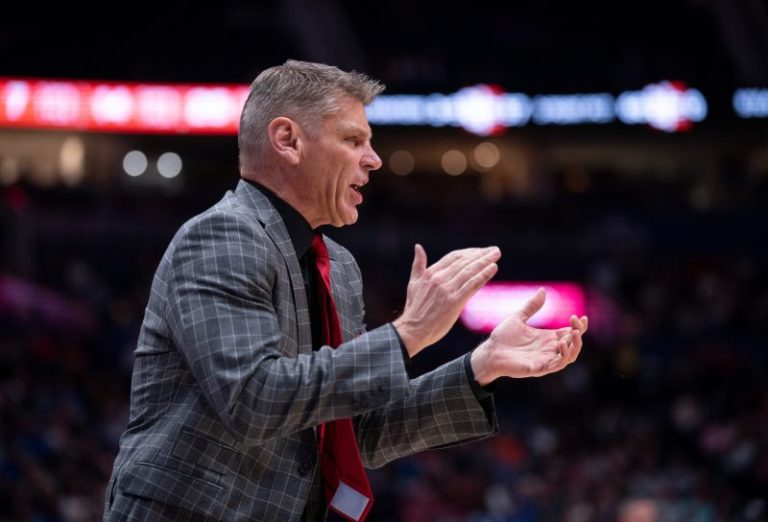
The win was the third straight Quad 1 victory for an Oklahoma team that has drastically improved its stock over the past 10 days, and has a case to move out of First Four territory. Beating Kentucky on Thursday would certainly do that, since it would give the Sooners eight Quad 1 wins. A note from Wednesday night: head coach Porter Moser wore shoes signed by Toby Keith for good luck. The kicks could be the charm to get the Sooners comfortably in the field.

North Carolina handles business to stay alive

A miracle run in the ACC tournament will be needed for North Carolina, and the Tar Heels got step one done with a comfortable takedown of Notre Dame. North Carolina never trailed in the contest and led by double-digits throughout the contest, leading by as much as 24 points.

One of the first four teams out, the win over the Fighting Irish won’t do much to boost the resume but was necessary to keep the door open. It must beat Wake Forest on Thursday, and a potential semifinal matchup against Duke on Friday will ultimately be its make-or-break game.

West Virginia suffers consequential loss

What started off as a great surprise season for West Virginia ended on a sour note with a loss to Big 12 cellar-dweller Colorado in the second round. The Mountaineers controlled much of the first half, but turnovers were an issue in the second half and a 15-0 run by the Buffaloes gave them a lead they would hold onto for a 67-60 win.

It’s a devastating loss for a West Virginia team that likely will fall to a double-digit seed in the tournament and inching closer to the bubble. Not only is the loss to Colorado a Quad 2 defeat, it’s now 10-13 in Quad 1 and 2 games. West Virginia should be in, but depending on other results, could end up being a No. 11 seed thanks to Wednesday’s disaster.

This post appeared first on USA TODAY

Oklahoma basketball coach Porter Moser is 4-0 when he wears a suit this season. The Sooners are also 1-0 when he wears a special pair of shoes.

Moser was honoring Keith, the diehard Sooners fan that died last February after a lengthy battle with cancer. The Moore native was as frequent on Oklahoma basketball baselines as he was Sooners football sidelines. He also was known for celebrating with Oklahoma softball after winning the national championship in 2023.

‘Toby Keith meant so much to Sooner Nation,’ Moser told SEC Network after the win on Thursday, not saying if he’d wear them throughout the remainder of the tournament.

For Oklahoma’s first season in the SEC, the Sooners started a new tradition of playing Keith’s hit song ‘Courtesy of The Red, White And Blue’ after the third quarter of home football games.

As of now, it seems Moser’s Keith-signed shoes might be Oklahoma’s good-luck charm throughout March Madness.

Here’s a look at Moser’s special shoes he wore for the Sooners’ win on Thursday night:

Porter Moser wears Toby Keith-signed shoes vs. Georgia

Here’s a shot of Moser’s camo, Keith-signed shoes he wore in Oklahoma’s first-round win over Georgia in the SEC tournament on Thursday:

This post appeared first on USA TODAY

The quest for college basketball history went south in Hawaii.

Back in November, Connecticut lost three times in as many games at the high-profile Maui Invitational — to Memphis, Colorado and Dayton — in a sneak peek at an adversity-filled season that has tested and taxed the two-time defending national champions.

“This year, our confidence got rattled so early in Maui, you know, I’ve had to build this team up,” coach Dan Hurley said in February.

Maybe the daunting responsibility of replacing one of the best teams of the expanded NCAA men’s tournament era has been too much for the Huskies to overcome. Maybe the pressure of becoming the first three-time champions since John Wooden’s UCLA in the 1970s has pulled and pulled on Hurley and the Huskies to the point where, like an overstretched rubber band, they’re unable to regain the form that made them an unstoppable juggernaut.

Time is running out to turn things around: UConn enters Thursday’s quarterfinals of the Big East tournament against Villanova with a shrinking runway until March Madness, and it’s becoming harder to envision how the Huskies flip the switch in time to make history — or if that switch exists at all for a young team with flaws that have bubbled to the surface throughout the regular season.

“I realized that I couldn’t coach this team as hard as I’ve coached some of my other teams,” Hurley said. “I don’t think any of us were prepared for the level of scrutiny throughout the year that’s come with the success we’ve had the last two years. I think that’s been heavy for all of us.”

BRACKETOLOGY: Race for No. 1 seeds, bubble spots heats up

TOURNAMENT PREVIEWS: SEC | Big Ten | ACC | Big 12 | Big East

Of the factors that have influenced this up-and-down year, none looms larger than the exodus of talent that left campus after last season.

All-America center Donovan Clingan and guard Stephon Castle declared for the NBA draft. Senior guards Tristen Newton and Cam Spencer graduated. That left the Huskies with just one returning starter, junior forward Alex Karaban, and another two players who averaged more than nine minutes per game in backup center Samson Johnson and backup guard Solo Ball.

With the added burden of being the leader, Karaban’s game has plateaued — he’s shooting worse from the field overall, from deep and from the line — while Ball has taken on a much bigger role, scoring a team-high 14.8 points per game. Five-star freshman forward Liam McNeeley is averaging 14.7 points per game but has battled injuries and shot just 39.5% from the field.

But a narrower look at the Huskies’ season reveals several inherent flaws: poor point guard play, an inability to control turnovers, a measurably weaker defense, untrustworthy depth and an absence of the killer instinct that came to define the past two national champions.

“We’ve got too many flaws,” Hurley said after last month’s 89-75 loss to St. John’s at Madison Square Garden. “Obviously, our quality is way off from what it’s been for a variety of reasons.”

The team’s weak production at point guard is seen most clearly in the two losses to the Red Storm, who twice harassed the Huskies into submission to quickly wrestle away control of the Big East in coach Rick Pitino’s second season.

A fifth-year senior who played in 76 games the past two years, Hassan Diarra has struggled in the transition to the starting lineup due in some part to a lingering knee injury that has worsened during conference play. With no backup option — freshman Ahmad Nowell has dealt with an ankle injury and Saint Mary’s transfer Aidan Mahaney has not lived up to expectations — Hurley has continued to lean on Diarra, who has scored in double figures just three times and averaged almost three turnovers per game since the beginning of February.

Unreliable point guard play is the primary culprit for a drastic drop in per-possession effectiveness. Last year’s team ranked 13th in the country in turnovers per game and 120th in turnover margin; this year’s squad has dropped to 147th nationally in turnovers and 259th in turnover margin.

These giveaways have weakened the Huskies’ defense, which has fallen to 68th in Division I in points allowed per game despite leading the country in blocks per game. While Clingan’s both-ends impact has been impossible to replace, Hurley has cobbled together some frontcourt value from Johnson and Michigan transfer Tarris Reed Jr., one of four players averaging in double figures in scoring.

“For us this year, with our defense, we can’t take everything away,” he said.

With no primary ballhandler in charge, the offense consistently gets bogged down in half-court sets and is unable to capitalize on fastbreak opportunities. UConn ranks 203rd nationally and sixth in the Big East with just 9.2 fastbreak points per game.

These issues have combined to form a team that has hiccupped through the regular season with fits and starts, undercutting extended stretches of solid-to-strong play with headscratching losses in Maui and during conference play to Villanova and Seton Hall.

“For this year, most of our losses have been just excruciating losses,” said Hurley.

The possibility that UConn regains last year’s form always seems within its grasp, even if this continued faith in the Huskies’ potential has much more to do with the past than the present. UConn hasn’t lost a tournament game in two years; last year’s team cut down the nets at the end of maybe the most dominant postseason run since expansion four decades ago. This is clearly a very different team.

Still, the Huskies won eight games in a row coming out of the Maui trip, including wins against potential tournament teams in Baylor, Texas, Gonzaga and Xavier. Overall, they have five Quad 1 wins, tied for the most in the Big East. And UConn is currently on a four-game win streak, highlighted by defeat of Marquette, to enter the Big East tournament at 22-9 overall, 14-6 in conference, and in range of a No. 6 seed in the NCAA field with a run to Saturday’s championship game.

Could the Huskies get hot at the right time and rekindle a run toward an historic three-peat?

“It’s probably the best we’ve felt all year,” Hurley said after an 81-50 rout of Seton Hall to end the regular season. “And it’s March, and UConn’s got a great history in March, that’s part of our confidence.”

This post appeared first on USA TODAY

Poland’s President Andrzej Duda has once again called on the U.S. to place nuclear weapons within its borders in a show of deterrence to Russia’s continued aggression just over the border in Ukraine.

A similar request was apparently made to the Biden administration in 2022, which was never agreed to, but Duda has not given up on the idea. This time he addressed his appeal to the Trump administration during an interview with the Financial Times that was published Thursday.

‘Russia did not even hesitate when they were relocating their nuclear weapons into Belarus,’ Duda told the Financial Times in reference to actions Russia took beginning in 2023, a year after it invaded Ukraine. ‘They didn’t ask anyone’s permission.’

The White House did not immediately respond to Fox News Digital’s questions about where President Donald Trump stands when it comes to this form of deterrence.

The Trump administration this week took steps to try and bring about an end to the war in Ukraine, which has been raging for more than three years following Russian President Vladimir Putin’s invasion. 

While Ukraine has agreed to the U.S.’s initial 30-day ceasefire contingent on Russia’s acceptance of the terms, Moscow has not, and it is unlikely that the Trump administration would take steps to jeopardize those negotiations by agreeing to put U.S. nukes in Poland – which shares a border with Russia and could be viewed as a threat by the Kremlin.

But Duda’s advisor on international affairs, Wojciech Kolarski, echoed the Polish president’s plea and, in a Thursday interview with Poland’s RMF FM radio, argued that as a NATO member who shares a border with Russia’s Kaliningrad region, as well as Ukraine and Belarus, the steps were important for Warsaw’s security.

But should the U.S. again refuse Poland’s request, there is another nuclear-armed nation in the NATO alliance that may be willing to assist in ‘nuclear sharing.’

Amid mounting concern in the European Union that the U.S. could withdraw forces from the bloc or become an unreliable defense partner in countering Russia, French President Emmanuel Macron opened discussions on a strategy that could help extend its nuclear deterrence to other EU nations.

While the specifics of that strategy remain unclear, including whether France has proposed actually dispersing nuclear arms to other nations, Poland has reportedly been in talks with France about the issue.

Russia has already called France’s strategy to re-evaluate its extension of nuclear deterrence ‘extremely confrontational.’

Despite Moscow’s objections, France’s defense concept is far from new as the U.S. deterrence umbrella during the Cold War was intended to ensure NATO allies would be protected under America’s nuclear power in case of a direct threat by another nuclear-armed nation, like Russia, China or North Korea.

While France is the EU’s only nuclear power, it has the third-largest nuclear stockpile when it comes to nuclear-armed nations in NATO, which also includes the U.S. and the U.K. 

The Associated Press contributed to this report.   

This post appeared first on FOX NEWS

Eastern European countries are eyeing an exit of the Ottawa Convention banning anti-personnel landmines so they can place lethal underground bombs along their border to prevent Russia from invading, Fox News Digital has learned. 

Poland is expected to withdraw from the treaty, together with Lithuania and Estonia, multiple eastern European officials predicted. Latvia and Finland are considering the idea as well. 

Polish Prime Minister Donald Tusk asked the Ministry of Defense to initiate withdrawal from the Ottawa Convention ‘and possibly the Dublin Convention,’ referring to both the treaty governing anti-personnel landmines and the use of cluster munitions. 

Pressure among the Baltic States, together with Poland and Finland, has swelled in recent months to stop adhering to the Canada-brokered treaty as a way to bolster defenses at a time when the U.S. has said it will not offer Ukraine security guarantees to prevent Russian President Vladimir Putin from once again invading and pushing west.

Lithuania pulled out of the treaty banning the use of cluster munitions recently, making it the first European Union nation to pull out of an international arms treaty. It’s now expected to pull out of Ottawa as well.

Russia and Ukraine both use cluster munitions and anti-personnel landmines in the current war. 

Lithuanian National Security Committee Chairman Giedrimas Jeglinskas said that the ‘threat assessment has changed dramatically’ since his nation joined the convention in 2003. Jeglinskas, who has led the charge to leave the treaty in Lithuania, said the nation had wanted to withdraw from the treaty for a long time, given it shares a border with Russian vassal state Belarus, but needed the agreement from other border nations, so Russia could not just ‘go around’ Belarus and through Poland or Latvia. 

‘We hold that Latvians and Estonians will move in the same direction,’ he said. 

Canada urged Eastern European states to remain in the treaty, but laid blame on Russia for their moves to withdraw. 

‘Support for the convention and universal adherence remain a priority for Canada,’ Global Affairs office spokesperson Brittany Fletcher told Fox News Digital. 

‘These debates are taking place as a result of Russia’s illegal invasion of Ukraine. Russia’s actions in the region are forcing states to act out of necessity, not by choice,’ the office said. ‘While we understand the need to consider all options … such measures need to be balanced with the long-term impacts, including impacts on civilians.’

Finland, meanwhile, has asked for ‘a couple weeks more’ to come to its own decision, according to the chairman. 

Estonia’s defense ministry said that its ‘military assessment has not changed’ on the treaty. ‘At the same time, this is a wider political question, on which a decision has not been made in Estonia,’ according to a defense ministry official.  

Latvia, meanwhile, has to consider the 1,700 Canadian troops stationed within its borders as part of the withdrawal. 

Finland began a report to assess the need and deterrent effect of anti-personnel land mines within its borders, which will be finalized in the spring and the Ministry of Defense will then make a recommendation to parliament on whether to leave, according to Finnish press counselor Riikka Hietajärvi.

Two other European officials said behind the scenes Finnish, Estonian and Latvian officials expressed an openness to the idea of leaving the treaty. 

For Lithuania to withdraw, the president needs to notify his defense council and then propose the withdrawal to parliament, where it needs a 60% vote.

Jeglinskas said he expects such a vote would pass without widespread dissent. ‘There might be some lone voices expressing their concern, but it should pass without issue.’ 

As of now, 164 nations are party to the agreement. No EU country has ever left the Ottawa Treaty.

The United Nations holds that the ‘number of casualties has sharply declined’ since the agreement and 40 million stockpiled mines have been destroyed. 

Tusk acknowledged that this is ‘not a pleasant’ decision but insisted that Poland must consider its current security needs. ‘Anything that can strengthen Poland’s defense will be implemented. We will use all available options,’ he stated.

The U.S. is not party to the treaty and in November the Biden administration began supplying Ukraine with anti-personnel mines. 

Critics of landmines argue that they are indiscriminate and can instantly kill and maim civilians who step into the wrong area. 

‘No matter what decision we make – and I think this decision is very, very clearly going towards withdrawal – it’s still a difficult decision,’ said Jeglinskas. ‘Just the situation … it just does not allow us the privilege to remain part of this coalition on anti-personnel mines, and it’s with a heavy heart, I would say that, that’s unfortunate, but that’s just the military reality.’ 

The Russian military has the supreme edge against any of its border states on their own, necessitating lethal deterrence like land mines, according to Hudson defense analyst Can Kasapoğlu.

‘The Russian military has the upper hand over the Polish armed forces, and it has a gigantic, gigantic upper hand over the entire Baltic nations. So for these nations to keep being a part of the Ottawa treaty and and ditching the landmines, for the sake of some international image, it doesn’t make sense.’ 

The anti-personnel mines would need to be combined with anti-tank mines and artillery and drones stationed along the border to effectively deter an enemy. ‘It forms a kill box that the Russians can’t evade.’ 

He said that such mines have advanced to self-destruct after a set period of time so that the fallout does not last for generations like in wars past. 

The new movement comes as Europe has moved at a rapid-fire pace to account to take charge of its own defense since President Donald Trump took office and brought along his critiques of Europe and the NATO alliance. 

The European Union last week proposed an $841 billion plan to ‘rearm Europe,’ and defense leaders met in Paris this week to discuss how to offer Ukraine security guarantees after the war. 

Ukraine has agreed to the U.S.-brokered terms of a 30-day ceasefire, but Russia has said it is still reviewing the details. Overnight, Russia struck the Black Sea port of Odesa with missiles, killing four and damaging a grain vessel. 

This post appeared first on FOX NEWS

China’s dominance over the U.S. in terms of shipbuilding is sending alarms through Capitol Hill, forthcoming legislation suggests.

A bipartisan group of military veterans now serving in the House of Representatives – Homeland Security Committee Chair Mark Green, R-Tenn., Rep. Jen Kiggans, R-Va., and Rep. Don Davis, D-N.C. – are rolling out a bill aimed at revitalizing the flailing U.S. commercial ship sector.

‘This is no drill. A fundamental pillar of America’s security, our naval supremacy, is under threat from Communist China,’ Green told Fox News Digital. 

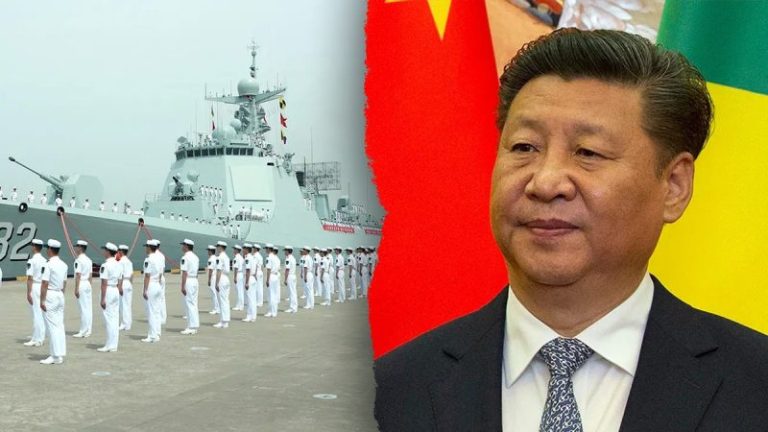
Green said China’s Navy was now the largest in the world, surpassing the U.S. with 350 estimated seafaring vessels, compared to 280.

‘China has used its fleet to erode freedom of navigation, harass civilian ships, and intimidate our allies,’ he said. ‘To maintain our strategic edge, we must invest ‘full speed ahead’ in our maritime industrial base – encompassing commercial shipbuilders, military shipyards, and every link in the supply chain.’

The bill would establish a National Commission on the Maritime Industrial Base, and mandate it to launch a probe into the status of American maritime industries, both military and commercial. 

The goal would be to develop policy and legislative recommendations to revitalize U.S. shipyards.

Kiggans said shipbuilding was the ‘backbone’ of her coastal Virginia district’s economy, in a statement to Fox News Digital.

‘However, due to workforce and supply chain issues, our maritime industrial base is struggling to keep pace with growing global threats. This Commission is a critical step toward identifying the challenges facing our shipyards and strengthening our ability to build and sustain a world-class fleet,’ she said.

Davis said, ‘We must collaborate to ensure that both the public and private sectors work together to find solutions that will strengthen our maritime industrial base. Shipbuilding is vital for our national security.’

U.S. competition with China has remained among the most bipartisan issues in Congress, even with the current hyper-partisan environment.

China has nearly 47% of the global market in shipbuilding, according to the U.S. Naval Institute.

South Korea and Japan are second and third, with roughly 29% and 17% of the market, respectively. The U.S. has 0.13% of the market.

A single Chinese shipbuilder managed more output by tonnage in 2024 alone than the U.S. has in its entirety since World War II, according to a report by the Center for Strategic and International Studies, which said China’s dominance in the sector was a national security risk.

This post appeared first on FOX NEWS

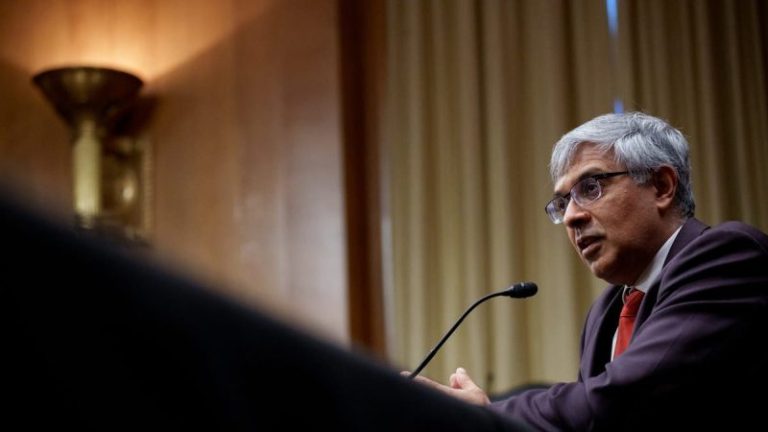
The Senate Committee on Health, Education, Labor and Pensions (HELP) voted Thursday morning to advance President Donald Trump’s pick to head the National Institutes of Health, Dr. Jay Bhattacharya. 

The vote was strictly along party lines, 12 votes in favor and 11 against, but with the committee having one extra Republican member in the majority, Bhattacharya sailed to the finish line with only GOP support. Bhattacharya now heads to the full Senate for an impending confirmation vote that will be the last hurdle before he becomes the next director of the NIH.   

Sen. Bernie Sanders, I-Vt., expressed concern Thursday, saying he feared Bhattacharya would not do enough to help lower the cost of prescription drugs. Sanders and other Democrats have also expressed concern over how Bhattacharya will approach medical research at the NIH, especially considering Trump just imposed a cap on facilities and administration costs associated with NIH research grants. 


A physician, Stanford professor of medicine and senior fellow at the university’s Institute for Economic Policy Research, Bhattacharya was a leading voice during the COVID-19 pandemic against lockdown measures and vaccine mandates. 

Bhattacharya was probed by the Senate HELP Committee roughly a week ago over various issues related to his potential role as NIH director; however, much of the hearing he was forced to defend the president’s decision to put a 15% cap on indirect research costs dispersed by the NIH.

Bhattacharya would not explicitly say he disagreed with the cuts, or that, if confirmed, he would step in to stop them. Rather, he said he would ‘follow the law,’ while also investigating the impact of the cuts and ensuring every NIH researcher doing work that advances the health outcomes of Americans has the resources necessary.

In addition to addressing questions about the Trump cuts, Bhattacharya also laid out what he called a new, decentralized vision for future research at NIH that he said will be aimed at embracing dissenting ideas and transparency, while focusing on research topics that have the best chance at directly benefiting health outcomes of Americans. Bhattacharya added that he wants to rid the agency’s research portfolio of other ‘frivolous’ efforts that he says do little to directly benefit health outcomes.

‘I think fundamentally what matters is: Do scientists have an idea that advances the scientific field they’re in?’ Bhattacharya said last week during his confirmation testimony. ‘Do they have an idea that ends up addressing the health needs of Americans?’

Bhattacharya was notably a co-author of the Great Barrington Declaration, a document published in October 2020 by a group of scientists advocating for an alternative approach to handling the COVID-19 pandemic. It argued largely against widespread lockdowns and promoted the efficacy of natural immunity to the virus for low-risk individuals, suggesting the vaccine may not be the best course of action for everyone.

Prior to his confirmation hearings, Bhattacharya, alongside several other scientists, including Trump’s pick to head the Food and Drug Administration, Dr. Marty Makary, launched a new research journal focused on spurring scientific discourse and combating ‘gatekeeping’ in the medical research community. The journal, titled the Journal of the Academy of Public Health (JAPH), aims to spur scientific discourse by publishing peer reviews of prominent studies from other journals that do not make their peer reviews publicly available. 

This post appeared first on FOX NEWS