Archive

2025

Browsing

Bart Torvik admits it’s all a little scary. 

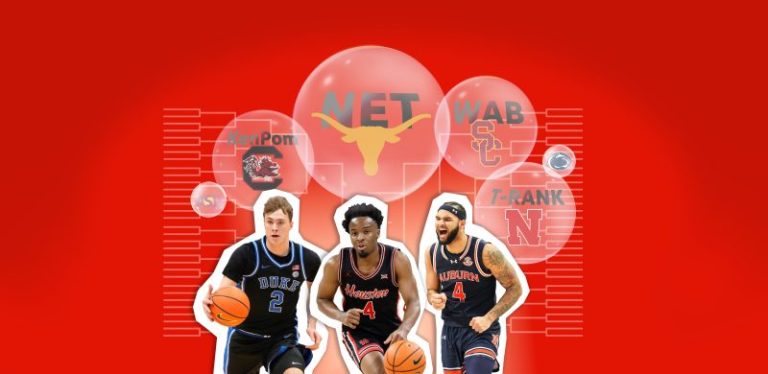
His name is an official part of March Madness for the first time this year because the college basketball advanced statistics and rankings website he created in 2014 – barttorvik.com – is one of seven metrics featured on NCAA Tournament men’s basketball selection committee team sheets in 2025.  

This started as a hobby. It’s still supposed to be. 

Torvik, 48, is an Evanston, Illinois-based personal injury and food borne illness attorney who began down this path as a Wisconsin basketball fan and avid kenpom.com user looking for a way to isolate a Big Ten team’s performance, adjusted for efficiency only in conference games. 

It’s grown into so much more. 

Torvik’s website generated three million pageviews last March, and Alabama coach Nate Oats mentioned him by name at a Final Four news conference. The website almost crashed on Selection Sunday the past two years. Unlike other popular college basketball metrics, Torvik neither charges money to subscribe to his website nor does he have corporate owners. He bought the server that runs the entire operation off Amazon. 

“I always had it in the back of my mind that I only have to be so accurate,” Torvik said. “Now, I feel more pressure.”

This sense of unease is part of an odd dynamic playing out as metrics take over the conversation in college basketball, particularly when it comes to the NCAA tournament selection process.

Phrases like NET, KenPom and Torvik have joined the vernacular of the sport over the past two decades, with fans, coaches, broadcasters and bracketologists alike placing significant stock on their rankings to differentiate between teams ahead of Selection Sunday. Meanwhile, a new metric with professional gambling roots is being introduced to the NCAA Tournament selection process this year and there’s hope among the analytics community it could bring more clarity to this complex endeavor. 

But for the moment, the men who created these mathematical formulas driving how college basketball’s postseason is discussed still don’t think it’s being talked about correctly most of the time.

A flawed NCAA Tournament selection process

They were from different walks of life and different parts of the country, all together on one screen. 

There was Torvik and Ken Pomeroy, the former meteorologist living in Salt Lake City who started his KenPom ratings in 2002 and watched them get so popular he made it his full-time job. There was Kevin Pauga, a Michigan State athletics administrator who created the KPI working for Spartans basketball coach Tom Izzo, as well as ESPN director of analytics Matt Morris and Alok Pattani, a Bay Area-based data science developer at Google who previously worked at ESPN. 

They were brought together by the NCAA for a virtual roundtable released Jan. 28 as part of the organization’s latest effort to offer more insight into the process behind picking the 68 teams in the men’s NCAA basketball tournament. 

These representatives of the seven metrics used by the NCAA tournament selection committee all agreed the NCAA improved the selection process by eliminating the Ratings Percentage Index (RPI), developing the NCAA Evaluation Tool (or NET) and embracing a variety of ratings systems, beginning with the 2018-19 season.

But they also agreed on this point: Only some of the seven metrics should actually be used to pick the 68 teams that make the NCAA tournament. 

Pomeroy said his rankings shouldn’t be used. Torvik said his rankings shouldn’t be used. Nobody said the NET should be used. Not even Pattani, who helped create the NET through the NCAA’s corporate partnership with Google. 

“It’s a little weird I’m on the team sheet,” Pomeroy admitted in an interview with USA TODAY Sports. “But I think everyone (on the selection committee) understands they’re not going through my rating system and picking the best teams. They understand my rating system is more predictive and you’re not picking teams based on how good they are in a predictive sense. You’re picking them based on their accomplishments.”

But fans nonetheless read and hear about most NCAA Tournament hopefuls in terms of their NET ranking around Selection Sunday, with the nuance of each ratings system often lost in the emotions of March Madness and whether a team is perceived to be ranked too high or too low.

The seven metrics on NCAA team sheets are technically divided into two categories. The NET, KenPom ratings, ESPN’s Basketball Power Index (BPI) and Torvik ratings are considered predictive rankings, or how good a team is based on its offensive and defensive efficiency, adjusted for opponent strength and location. ESPN’s strength of record, the Kevin Pauga Index (KPI) and wins above bubble (or WAB) are results-based rankings that judge how hard it was for a team to attain its resume.

Torvik and WAB are making their debut on NCAA Tournament team sheets, with particular interest being paid to the WAB because creator Seth Burn believes if selection committee members ‘just use that, they can simplify it quite a lot,’ he told USA Today Sports, ‘and it will guide them in who they should select.’

Though the general principles used to formulate these metrics are made public, the exact formulas used for them are not. It’s viewed as proprietary information, even though “most of them are pretty similar,” Morris told USA TODAY Sports. “They’re using a lot of the same input data. … We’ve converged to some degree.”  

Everybody in the NCAA-produced roundtable said results-based metrics are what should be used to choose teams for the NCAA tournament. Whether that’s the opinion of the selection committee remains nebulous. 

The 12 members of this year’s men’s NCAA tournament selection committee, which includes nine sitting athletic directors and three conference commissioners, either declined comment or did not respond when USA TODAY reached out asking how metrics would be used during the selection process.

“The committee has more information than ever before at its disposal,” NCAA director of media coordination/statistics David Worlock said in an interview. “As a staff, we’re trying to educate them on what all these numbers mean, how they’ve been used in the past, what’s truly important when evaluating a team.’

Worlock, who has worked with the selection committee since 2006, added the committee “is using the data more effectively, in my opinion, in recent years.”

The NCAA emphasizes the NET is just its primary sorting tool, not an end-all, be-all ranking. The selection process still revolves around the human element of 12 committee members casting a vote on each at-large team that makes the field and “it’s who did you play, where did you play, how did you do?” North Carolina athletic director Bubba Cunningham said earlier this week during a teleconference in his role as this year’s men’s NCAA tournament selection committee chairman.

‘And then ultimately, really good advice that I received from some of the other committee members over the years is when you get down toward the end of those last couple of teams, kind of take a step back from the metrics. Say ‘who is the better team?’ ”

Worlock acknowledged, however, the NET gets more attention from the public than other metrics because ‘it’s affiliated with the NCAA.’

“Some of the fault lies with the people in charge in that why are these ratings on the team sheets if they’re not being used, and I think the fact is they are used, especially the NET,” Torvik said. “People say the NET is a sorting tool, but it’s not completely true. … If you’re trying to do bracketology, you can’t just ignore a team’s NET. It does matter.”

How the NET changed NCAA bracketology

Another meeting of the minds happened in Indianapolis back in 2017. “A bit of a summit,” Worlock called it, with Pomeroy and Pauga, sports reporters, bracketologists, selection committee members and NCAA officials discussing how to modernize the metrics used to help the committee during the NCAA tournament selection process. 

KenPom’s ratings based on adjusted efficiency and points per possession had become increasingly popular with coaches and fans after former Butler coach Brad Stevens said he scouted upcoming opponents in the NCAA tournament using Pomeroy’s website during the program’s Final Four runs in 2010 and 2011. The NCAA was still using the outdated RPI, which relied on winning percentage and opponents’ winning percentage to calculate strength of schedule.

The NET was born from there as an attempt to fuse predictive and results-based elements together in a single metric. It was met with skepticism. Statistician Nate Silver, then working for ESPN’s 538 website, called the NET “the worst rankings I’ve ever seen in any sport, ever’ after its debut in November 2018.

But the NET quickly became the centerpiece for all bracketology discussions in recent years. Whereas teams were once tracked by wins and losses over the RPI top 50 or top 100 teams previously, the NET led to the four-quadrant system based on an opponent’s NET rating to differentiate the quality of wins. A team’s quad one and two wins, and quad three and four losses, are dissected each March. It’s not possible without the NET. 

The view of how that gets digested by the selection committee, and the potential flaws, varies even among the sport’s most entrenched figures.

“The people in this room go over all this stuff, they get confused and they rely and fall back on, ‘Well, they had six quad one wins,’” said former Syracuse coach Jim Boeheim, who’s currently working as an analyst for the ACC Network. “Well, you can’t just discount if you’re good in November and bad in March. You’re not gonna be good in the tournament.”

The NCAA tweaked the NET formula ahead of the 2020-21 season, with the most notable change being the use of statistics adjusted for efficiency instead of raw statistics from a given game. It also took out winning percentage and adjusted winning percentage, which were from the RPI. Pomeroy, Torvik, Pauga and ESPN have all also tweaked their formulas from the original form over the years. 

The NET does not include any preseason data or scoring margin (other predictive models do) and weighs every game the same, regardless of date. Though the NET includes a team value index component that’s results-driven, data has shown the metric tracks more closely to other predictive models, according to Worlock. 

“I think people figured out how to game the RPI so that became a phrase that people would use, that people were gaming it,” Worlock said. “You can game any predictive metric by winning a bunch of games by a lot of points.” 

Others in the statistics community are still coming to grips with the NET’s creation, implementation and imperfections. 

“I’m a little conflicted because I do think it’s great that they were looking to move beyond the RPI. It was time to do that,” Pomeroy said. “But at the same time, we weren’t really included in that process after that meeting. They went to Google and came up with a formula that’s almost entirely based on offensive and defensive efficiency, so you ultimately end up with a formula that’s similar to mine.”

Added Morris, who referred to the NET as “inferior” because it doesn’t include scoring margin: “If you wanted to use one of the metrics to make money in Vegas, you would not use the NET rating. Just to be blunt. It’s way better than RPI was, but it still misses out on some storylines.”

ESPN bracketologist Joe Lunardi told USA TODAY Sports the selection process is more “metric-dependent” than when he started projecting NCAA Tournament brackets in 1995. But he sees it as a reflection of the selection committee’s composition – “There used to be more basketball people on the committee way back,” is how Boeheim put it – and how much more is known about the process today.

“Are there outliers with the NET? Yes,” Lunardi said. “But fewer of them, and particularly if you cross-check them with the other popular metrics of the day, and I look at all of them. I’ve always looked at all of them. I’ve always aggregated them even before they were on the team sheets. I might weigh them differently year-to-year based on what way I think the wind is blowing.”

“If there’s a lasting legacy of bracketology, or me, or some of the early practitioners,” Lunardi added, “it is bringing to the public the process before the NCAA was either willing or able to do so.”

The proliferation of available data has helped transform bracketology from a seasonal niche to a year-round cottage industry. 

“Part of the reality here, it’s not that there’s all these people who are brilliant bracketologists,” said Pauga, who also has a separate business built around a platform and algorithm called Faktor that helps conferences put together schedules. “I’m not trying to undermine them in any way. It’s just the process is more scripted. It’s more predictable. You can just, because of the data and the public nature of the data, you can have a pretty good idea of where you’re at. The surprise on Selection Sunday is more about who you’re playing than who’s in the tournament.”

Did a gambler discover new ‘gold standard’ metric?

They weren’t sure Seth Burn was his real name. Only that it was in his social media handle. But Pomeroy, Torvik and Worlock all brought him up independently while discussing the other new metric approved by the NCAA Tournament selection committee for the first time this year. Some believe it could help solve this convoluted conversation that has accompanied the growing acceptance of statistical formulas. 

WAB, or wins above bubble, “shows how many more, or fewer, wins a team has against its schedule versus what a bubble team would expect to have against the same schedule,” the NCAA wrote in November. “The WAB metric uses NET as the basis for opponent strength, with the reference ‘bubble team’ being defined as a team ranked 45th in NET, based on a study of recent seasons.”

What the NCAA doesn’t mention is that the metric appears to have originated from a professional gambler in Bronxville, New York.

Burn, 47, stopped working as an accountant 10 years ago because he was so successful at betting on the NFL and college basketball. He’s a self-described math nerd who once used Pomeroy’s website to “crush over/unders” and realized he was “good at analyzing data and generating better projections than are publicly available,” Burn told USA TODAY Sports. 

Burn first mentioned WAB and the basis of its formula in a post on his personal blog on Feb. 1, 2015. A decade later, Pomeroy views WAB as a metric that’s “getting closer to the gold standard of selecting teams” and removing human bias from the equation. 

“It levels the playing field a little bit” for teams with fewer quad one opportunities, explained Worlock, noting certain members of previous selection committees have used WAB in the past to help determine the NCAA Tournament field. 

If it were up to Pomeroy, there would be just one metric to determine the teams that make the NCAA Tournament for men’s basketball each year. Burn thinks he already has one. He’s just not sure what this NCAA tournament selection committee will do.

So what might happen next is a little scary. 

“We’re going to know if they pick a team in the tournament ahead of a team from their very own metric that has a better resume,” Burn said. “If they do that, that’s going to be the tricky thing for them to explain. If they don’t do it, then we’ve achieved victory. Then WAB has won. That’s what I’m hoping for.”

Follow Mark Giannotto on social media @mgiannotto and email him at mgiannotto@gannett.com.
This post appeared first on USA TODAY

The NCAA men’s tournament bubble is in full effect with North Carolina, Texas, Indiana and Xavier among the teams pushing and shoving for position in our penultimate NCAA Tournament bracketology projection before Selection Sunday.

The Tar Heels’ postseason credentials were boosted by a 68-59 win in the ACC tournament against another bubble team in Wake Forest. UNC gets solidify its place in the field with a win against undermanned Duke in the semifinals. The Blue Devils advanced past Georgia Tech on Thursday but lost star freshman Cooper Flagg to an ankle injury.

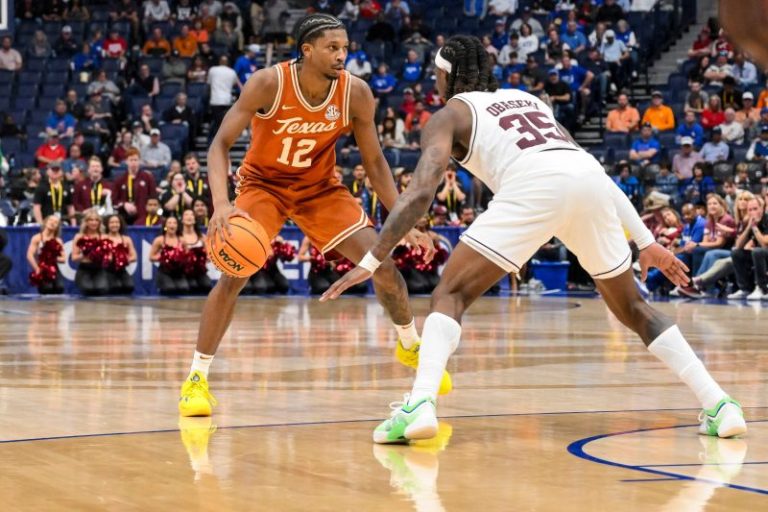
The Longhorns leaped back into the bracket by beating rival Texas A&M 94-89 in double overtime in second round of the SEC tournament. That gives the SEC 14 teams in our projected field, which would shatter the previous record for any conference in one tournament. The record is 11 set by the Big East in 2011.

Xavier did itself no favors by losing 89-87 to Marquette in the Big East tournament despite landing 38 points from junior guard Ryan Conwell. Still, the Musketeers are helped by late misfires from two Big Ten bubble teams.

First, Ohio State lost on Wednesday to lowly Iowa, eliminating the Buckeyes from our bracket. On Thursday, Indiana lost 72-59 to Oregon to potentially close the door on the Hoosiers’ tournament chances.

And two more bubble teams made moves toward the field in the Mountain West, beginning with Boise State. The 23-9 Broncos moved into our bracket after beating San Diego State 62-52 to reach the semifinals of the conference tournament

Later Thursday night, Colorado State beat Nevada 67-59 for an eighth win in a row. After finishing second in the MWC during the regular season, the Rams are one of the first teams out of the field but can punch their ticket by beating Utah State in the Mountain West semifinals.

Bracketology: NCAA Tournament field projection

Teams in bold have clinched berths

Last four in

San Diego State, Texas, North Carolina, Boise State.

First four out

Xavier, Colorado State, Indiana, Ohio State.

NCAA Tournament bids conference breakdown

Multi-bid leagues: SEC (14), Big Ten (8), Big 12 (8), Big East (4), ACC (4), Mountain West (4), West Coast (2).

All the players and the plays: Sign up for USA TODAY’s Sports newsletter.

This post appeared first on USA TODAY

This is shaping up to be another memorable edition of The Players Championship. Thursday’s first round yielded a leaderboard that features Rory McIlroy, Scottie Scheffler, Collin Morikawa and Rickie Fowler all in contention to challenge first-round leader J.J. Spaun (-9). But as Friday came and went, a new leader has emerged.

Min Woo Lee and Akshay Bhatia are tied atop the leaderboard at 11-under for the tournament through two rounds of play. Spaun is in third place at 10-under, while McIlroy of Northern Ireland is tied for fourth place with Morikawa and Alex Smalley at 9-under. 

But the drama on Friday revolved around this year’s cut line, as a collection of big names and past major winners will miss the weekend at TPC Sawgrass after a lackluster showing in the first and second round. Only the top 65 (and ties) will make the cut at The Players Championship, which features a 144-golfer field this year.

Here are the latest updates on the cut line at The Players Championship, who missed the cut this year and how to watch all the action on-course the rest of the tournament:

The Players Championship 2025 projected cut line

Last updated: 8 p.m. ET

The cut line for The Players Championship is set at 1-under as second round action wrapped up on Friday, per the PGA Tour’s official leaderboard.

Who could miss the 2025 Players Championship cut?

The cut line bounced from 1-under to 2-under at various times on Friday, but as the round ended, the projected cut line was set at 1-under. Although players like Xander Schauffele and Shane Lowry lived to play another game after finishing 1-under, the same cannot be said about some other big names. Only the top 65 golfers (and ties) make it to the weekend at TPC Sawgrass. Here are some notable golfers that missed the cut on Friday:

Justin Rose (E)
Hideki Matsuyama (E)
Sam Burns (+1)
Ludvig Aberg (+2)
Adam Scott (+2)
Viktor Hovland (+4)
Brian Harman (+6)
Matt Fitzpatrick (+6)
Max Homa (+7)
Tony Finau (+8)
Gary Woodland (+12)
Wyndham Clark (WD)

How to watch The Players Championship 2025: TV, streaming for PGA Tour

The Players Championship will be carried live on TV by the Golf Channel all four days. NBC will pick up live coverage of the third and final rounds. There is streaming coverage available on ESPN+, Peacock and Fubo, which is offering a free trial.

Saturday, March 15

Third round

8 a.m.-7 p.m. ET, ESPN+
2-7 p.m. ET, NBC Sports app
2-7 p.m. ET, NBC and Peacock

Sunday, March 16

Final round

7:30 a.m.-6 p.m. ET, ESPN+
1-6 p.m. ET, NBC Sports app
1-6 p.m. ET, NBC and Peacock

Watch The Players Championship with Fubo

We occasionally recommend interesting products and services. If you make a purchase by clicking one of the links, we may earn an affiliate fee. USA TODAY Network newsrooms operate independently, and this doesn’t influence our coverage.

This post appeared first on USA TODAY

Kennedy Center interim Director Richard Grenell is developing a ‘common sense’ plan to turn the center’s financials around and make it ‘prosperous again,’ as it grapples with $72 million of debt due to past leadership decisions.

‘The Kennedy Center is the premier arts institution in the United States,’ Grenell told Fox News Digital. ‘It deserves to have the public’s full support and a balance sheet that is solid.’

Sources familiar with the Kennedy Center’s current financials told Fox News Digital that it had been ‘budgeting to lose money.’

But Grenell brought in a new chief financial officer, Donna Arduin, who is tasked with improving what she has described as a ‘dire situation.’

‘The Kennedy Center’s previous business plan was made to leave the Center in the red and it did just that,’ Arduin told Fox News Digital. ‘The previous leadership were left with no other option than to pay employees’ salaries with monies supposed to be allocated for the debt reserves.’

Arduin told Fox News Digital that the ‘gross mismanagement created a dire situation that we were shocked to discover.’

In Fiscal Year 2025, the Kennedy Center is operating on a $234 million budget. Also, in FY25, the Kennedy Center had an operating deficit of $105.2 million dollars, which left a bottom-line deficit of $7.2 million dollars.

Sources familiar with the numbers told Fox News Digital that the gap was filled with Kennedy Center fundraising dollars–$91 million from annual fundraising, and $7 million from earnings on the endowments.

Sources familiar with the leadership team’s plans told Fox News Digital that the plan will focus on getting rid of debt, improving on ticket sales and fundraising, and growing the center’s endowments.

A source explained that the team will use the venue for profitable business events other than traditional shows and performances and will begin offering alternative programming.

‘There are a lot of opportunities and we are pursuing all of them,’ the source said.

The Kennedy Center has two affiliates—the National Symphony Orchestra and the Washington National Opera. The new leadership team is currently working on business plans with its affiliates to ensure the Kennedy Center has larger endowments and ‘greater sustainability.’

The official endowments combined total just $163 million, which new leadership told Fox News Digital is ‘not adequate for the size of this institution.’

Under the last leadership team, the Kennedy Center built ‘The REACH,’ an intimate theater at the Kennedy Center hosting concerts, comedy shows, and poetry readings. It also has a restaurant.

But sources familiar with the financials told Fox News Digital that former leadership took out a significant chunk of debt to build the venue—costing the center nearly $200 million.

‘There wasn’t a profitability plan for that,’ the source explained, noting that thus far, the space has been ‘underutilized,’ bringing in just $2 million per year.

‘America’s premier institution for the arts deserves better,’ Arduin said. ‘The new team has already written a responsible budget that will make us prosperous again.’

She added: ‘We are using common sense.’

President Trump in January fired the theater’s board of directors and announced he had been elected board chair by his new handpicked board. 

White House press secretary Karoline Leavitt told the Wall Street Journal in January: ‘The Kennedy Center learned the hard way that if you go woke, you will go broke. President Trump and the members of his newly-appointed board are devoted to rebuilding the Kennedy Center into a thriving and highly respected institution where all Americans, and visitors from around the world, can enjoy the arts with respect to America’s great history and traditions.’

Some groups who disagreed with the move decided to cancel shows at the center. 

Producers of Broadway’s ‘Hamilton’ pulled out of a planned run there next year.

‘Our show simply cannot, in good conscience, participate and be a part of this new culture that is being imposed on the Kennedy Center,’ producer Jeffrey Seller said earlier this month. 

The show was performed at the Kennedy Center during Trump’s first term in office. 

Grenell told Sean Hannity earlier this month that ‘everyone is welcome’ at the Kennedy Center. 

‘Look, the reality is, the Kennedy Center is open for business for everyone,’ Grenell told Hannity. ‘We just want an arts center that celebrates the arts — we want common-sense art.’ 

This post appeared first on FOX NEWS

Time is flying in this, the third century of baseball history.

We’re already at the quarter pole of the 2000s, a significant swath of the game’s lore already in the record books, and for some it still feels like yesterday that the New York Yankees were wrapping up a three-peat at Shea Stadium.

That was 25 years ago, and no franchise has won consecutive championships since. Yet a few mini-dynastys and major surprises have sprung since then. With the 2025 Major League Baseball season approaching, USA TODAY Sports ranks the 25 World Series champions from, shall we say, least-accomplished to greatest in this century:

25. 2006 St. Louis Cardinals

We’re not here to take the shine off anyone’s diamonds, but this group is an easy choice for No. 25. At 83 wins, they tote the lowest win total of this group.  Their postseason run was turbocharged by manager Tony La Russa’s derring-do on the last day of the season, when he held out Chris Carpenter hoping his team would either win or back in with a Houston loss. They did both – and Carpenter plowed through the playoffs. The World Series was rainy and grim and error-prone. Best forgotten, unless you wash down your toasted ravioli with a swig of Schlafly.

24. 2021 Atlanta Braves

It’s fitting that this seven-year run of Atlanta excellence netted a championship, but ironic that perhaps its most diminished team pulled it off. The Braves lost Ronald Acuña Jr. to a midseason knee injury, won just 88 games and then saw Game 1 World Series starter Charlie Morton succumb to a broken leg. They gutted through with a handful of bullpen games, Max Fried’s brilliance and a three-headed, bepearled monster in the outfield to replace Acuña.

23. 2011 St. Louis Cardinals

We mean no disrespect to the Gateway to the West. For real. It’s just that these Cardinals were 10 ½ games out of first on Sept. 5, won 90 games and needed some acts of nature to simply get in the playoffs. What they did have: Albert Pujols and Carpenter, who vanquished Roy Halladay and the Phillies in an epic NLDS Game 5 and made three World Series starts thanks to some timely rainouts.

22. 2000 New York Yankees

The Yankees’ three-peat hardly ended with a whimper. They were just a little tired, perhaps. These Bombers won just 87 games and were forced to an ALDS Game 5 by the low-payroll Oakland Athletics. Yet all the usual suspects turned up when they needed them, buttressed by David Justice, who hit 20 homers after a June trade from Cleveland and three more big ones in the postseason, earning ALCS MVP.

21. 2014 San Francisco Giants

Perhaps no franchise is tougher to slot in this exercise than the three-time champion Giants, whose whole was always grander than the sum of their parts. We’ll call this edition the weakest of their three even-year champions, simply because this was always a pitching-centric operation and Tim Hudson, 39, and Jake Peavy combined for a 9.22 ERA in four World Series starts. But the gallant Madison Bumgarner can cover up a lot of deficiencies, with help from a battle-tested bullpen.

20. 2003 Miami Marlins

Talk about a team that had everything and nothing: The only squad among this bunch that fired its manager (Jeff Torborg) midseason, drew just 1.3 million fans to its cavernous football stadium and had a closer eventually convicted of attempted murder in Venezuela. Yet these 91-win wild cards had an amazingly effective throwback duo of slap-and-run dudes in Juan Pierre and Luis Castillo combine for 7.9 WAR, a ready-made playoff ace in Josh Beckett and a 20-year-old hitting machine named Miguel Cabrera. Yes, this team took out the Aaron-Bleeping-Boone Yankees.

19. 2013 Boston Red Sox

No hate for these 97-game winners that rank the lowest among Boston’s four titlists. And salute to David Ortiz, who had perhaps his most epic postseason (.353, five homers, 1.206 OPS in 16 games), months after his ‘this is our (bleeping) city’ moment in the wake of the Boston Marathon bombing. Yet these were the Sox of Shane Victorino and Jonny Gomes, John Lackey and Mike Napoli, a salty veteran crew that got it done. Salute to them all, even if they’re less decorated than other squads who earned the right to pilot duck boats on the Charles.

18. 2023 Texas Rangers

Almost the epitome of the potent yet streaky squad that caught fire at the right time, Texas won just 90 games and had to fight through the wild-card series, yet proved there’s such a thing as performers built for the postseason. Namely, ace Nathan Eovaldi, slugging shortstop Corey Seager and manager Bruce Bochy, who added a fourth title to his Hall of Fame resume.

17. 2002 Anaheim Angels

They crafted the modern ideal of a playoff team: Make contact but also slug home runs, get by with nominal starting pitching and turn it over to a dominant bullpen. These wild-card Angels won 99 games, ended the Yankees’ streak of four straight AL pennants and stunned Barry Bonds’ Giants with a stirring Game 6 rally. Lackey, beginning a run of three championships with three franchises, won Game 7.

16. 2012 San Francisco Giants

The year Giants postseason devil magic was truly born. They lost All-Star center fielder Melky Cabrera to a PED suspension, trailed St. Louis 3-1 in the NLCS and trusted their season to shaky veteran Barry Zito in Game 5. But Zito and the Giants roared all the way back, and the lefty beat Justin Verlander in World Series Game 1, when Pablo Sandoval – Pablo Sandoval! – crushed three homers off the future Hall of Famer.

15. 2019 Washington Nationals

Not your average 93-win wild card, not with a pitching staff featuring future Hall of Famer Max Scherzer, World Series MVP Stephen Strasburg at the height of health and dominance and Patrick Corbin somehow justifying a $140 million contract with one great season. Oh, and this Juan Soto fellow graced the postseason stage for the first time, helping them overcome a 2-1 NLDS deficit and 3-2 World Series disadvantage to stun the Astros.

14. 2005 Chicago White Sox

Jon Garland, Freddy Garcia, Mark Buehrle and Jose Contreras – this version of El Duque had just turned 40 – won’t make anyone’s list of most dominant pitching quartet. But for two weeks in October, they couldn’t be stopped, pitching four consecutive complete games to shock the Angels in the ALCS and then sweeping aside Houston. A nice capstone for franchise stalwart Paul Konerko, who hit five playoff homers and won ALCS MVP honors.

13. 2022 Houston Astros

A true meld of the older-school Astros and the next generation, with Yordan Alvarez capping the run with a mammoth Game 6 World Series home run. Jeremy Peña deftly replaced Carlos Correa, winning ALCS and World Series MVP honors, and the pitching staff’s top-to-bottom dominance was exemplified by Cristian Javier running the opening leg on a four-man World Series no-hitter.

12. 2010 San Francisco Giants

They needed all 162 games to clinch the NL West with 92 wins, but Bochy’s first championship team was about to brew up something special. While their lineup of spare parts inspired the phrase “Torture” to describe Giants baseball, the last great year of Tim Lincecum – he struck out a major league-high 231 – dovetailed with the arrival of Buster Posey and the rise of Madison Bumgarner to inspire an 11-4 run through the playoffs. And no, we did not forget Matt Cain’s 21 ⅓ playoff innings with no earned runs allowed.

11. 2024 Los Angeles Dodgers

That attrition forced them to throw four bullpen games in this postseason run, stare down a 2-1 deficit in the NLDS and get taken to six games by the Mets in the NLCS tempts us to downgrade this group. But also: Shohei Ohtani. The sport’s only 50-50 man slammed three homers and drove in 10 runs through Game 1 of the World Series, before a Game 2 shoulder separation slowed his mojo. No worries: There’s always another Hall of Famer in L.A. to pick up the slack.

10. 2017 Houston Astros

They’d be a couple spots higher if not for The Scandal, which you may have heard about. Regardless, this was a squad, especially once they traded for Justin Verlander in August and saw him post a 1.06 ERA in five starts down the stretch and strike out 38 over 36 postseason innings.

9. 2007 Boston Red Sox

You can make an argument this group was more talented than the history-making 2004 squad. And can we really produce “remember when?” documentaries when nobody’s stopped talking about it?)Anyhow, these guys featured plenty of ’04 holdovers yet upgraded with Kevin Youkilis, Dustin Pedroia and Mike Lowell on the dirt and Beckett and Jon Lester ensuring Curt Schilling wouldn’t need to pitch until his sock turned red.

8. 2020 Los Angeles Dodgers

Fun fact: Only two teams in the wild-card era have first-half winning percentages higher than these Dodgers’ .717 mark in the COVID-shortened 60-game season: The 1998 Yankees and 2001 Mariners. The former is arguably the greatest team in that era and the latter won 116 games. Point is: These Dodgers would’ve made the playoffs, as they have the past 13 seasons. And these Dodgers had All-Star and Hall of Fame players performing at peak capability – from Mookie Betts to Corey Seager, Clayton Kershaw to Walker Buehler. With the rules the same for everyone, the Dodgers won more postseason games – 13 – than any champion to that point, 11 of them at a neutral site. Recognize.

7. 2015 Kansas City Royals

Shh, don’t tell any salary cap-loving owners that smaller-market teams can hit the gas and win it all. The Royals were one win – or 90 feet plus some extra-inning luck – shy of a championship in 2014, then came back and finished the job a year later. Like the Giants who vanquished them a year earlier, the Royals put the ball in play and played exceptional defense. They also had a taut bullpen and went for the jugular at the trade deadline, adding Johnny Cueto and Ben Zobrist. Ninety-five wins and an 11-5 postseason run – not bad for a Central Division club.

6. 2001 Arizona Diamondbacks

Game 7 of the ’01 World Series has been referred to as ‘The Last Night Of The Yankee Dynasty.’ It’s also a pretty neat coda to an era of, shall we say, anti-aging enhancement. Of the 17 everyday regulars on both teams, 12 were at least 32 years old. That just doesn’t happen anymore! Sure, these Diamondbacks were plenty flawed, but didn’t need too much more than a 1-2 starting pitching punch we won’t see again. Curt Schilling and Randy Johnson combined to win 43 regular season games and all four of Arizona’s Series games – named co-MVPs – with Johnson replacing Schilling in relief to win the epic Game 7. No, the manager wasn’t great, the back end of the rotation was shaky and the bullpen was terrible. But sometimes two horses beats a whole stable.

5. 2009 New York Yankees

Ah, remember when a $424.5 million outlay for three players was a “splurge?” So it was for the Yankees when they reeled in CC Sabathia, A.J. Burnett and Mark Teixeira after missing the 2008 playoffs. And goodness, it worked: The Yankees won 103 games, went 11-4 in the postseason and tamed a budding Phillies dynasty in the World Series. Just a perfect mix of old and new guard on this team, epitomized by Sabathia, Burnett and Pettitte starting every playoff game, often on three days’ rest. Alex Rodriguez clutched up, months after his exposure as a steroid scoundrel. And while Derek Jeter had long been derided as statuesque at shortstop, he produced a 6.6-WAR season, his best since 1999.

4. 2004 Boston Red Sox

Oh, yeah – these guys. As we mentioned, there might be a better Red Sox team deeper on the list, but it’s tough to match the star power, resiliency and overall thump of this club. Manny Ramirez clubbed 43 homers. Schilling and Pedro Martinez combined for 37 regular season wins. Keith Foulke was dynamite in the eighth and ninth innings. The bit parts – Bill Mueller, Mark Bellhorn, trade deadline pickup Orlando Cabrera and yes, even Dave Roberts – fit perfectly around this core. And oh, what a history-making core.

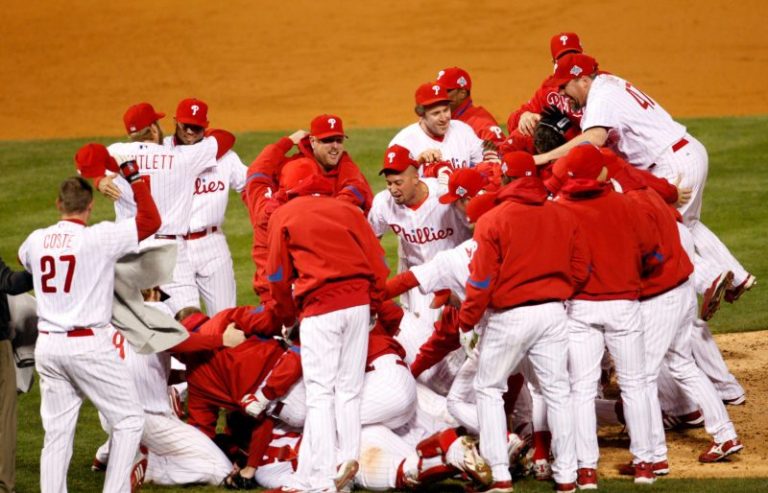
3. 2008 Philadelphia Phillies

Still kind of amazing these Phillies won just one World Series and two pennants. Yet the ’08 squad featured four of their most important pieces firing at peak performance. From Ryan Howard’s majors-leading 48 home runs to Chase Utley’s 9-WAR season and Jimmy Rollins stealing 47 bases –  this was the essence of that run. Cole Hamels won Game 1 of every playoff series while fashioning a 1.64 ERA, with Brad Lidge nearly perfect in nine ninth-inning playoff appearances, racking up seven saves.

2. 2016 Chicago Cubs

Nope, not a sentimental choice here. These Cubs won 103 games and were a stunning blend of brilliant youth and veteran smarts. At 24, Kris Bryant was never better, winning NL MVP, drilling 39 homers with a .939 OPS and leading the league with 7.3 WAR; Anthony Rizzo, 26, produced 5.8 WAR from first base and hit 32 homers. Veterans Lester and Lackey produced one more championship hurrah, while Jake Arrieta was only a little less nasty than his 2015 Cy Young campaign. The late-spring re-signing of Dexter Fowler and deadline add of closer Aroldis Chapman put the team over the top – even if World Series Game 7 brought some frightful moments before Bryant’s iconic, stumbling toss to Rizzo for the final out and their first championship in 108 years.

1. 2018 Boston Red Sox

This championship looked pretty good at the time and has only gotten better with age. Mookie Betts and J.D. Martinez finished first and fourth in MVP voting, and the latter’s signing in spring training proved a massive boon thanks to his own production (43 homers, 130 RBI) and lending his hitting expertise to Betts and others. Mookie will be in the Hall of Fame some day and this was his finest hour, leading the majors and setting career highs in WAR (a career-best 10.3), average (.346) and slugging (.640, thanks to 32 homers and 47 doubles). A rotation fronted by three current or future Cy Young winners – Chris Sale, Rick Porcello and David Price – provided the bedrock for a 108-win season, and the trio only grew more lethal in the postseason. That’s when rookie manager Alex Cora deployed them often in relief, papering over a bullpen he trusted only so much. The season ended appropriately, when Sale pitched the ninth inning of a Price start and unleashed a nasty backfoot slider to vanquish Manny Machado and the Dodgers. That capped an 11-3 postseason and 119-win campaign – the team of the century for what’s still the franchise of the century.

The USA TODAY app gets you to the heart of the news — fastDownload for award-winning coverage, crosswords, audio storytelling, the eNewspaper and more.

This post appeared first on USA TODAY

While the draft is viewed as the primary avenue for providing a long-term framework for franchises, the open market allows for teams to patch up problem areas with established veterans. Of course, doing so comes at a hefty price, as bidding wars are inevitable for top talent seeking a second or third contract. But with the salary cap continuing to rise, teams are willing to pay a premium for proven commodities. And even when many of the best players set to be available choose to re-sign, as many did this year, decision-makers will still find a way to throw money around for an instant upgrade.

Here are 10 teams who addressed pressing needs this year in free agency:

Chicago Bears: Interior offensive line

At the NFL Scouting Combine, new head coach Ben Johnson struck an optimistic tone as to the chances that Chicago could transform its ramshackle offensive line in the course of a few months.

‘Yeah, I think it’s been done before, right?’ Johnson said. ‘I think there were a number of teams that did that last year. The Panthers come to mind when they went out in free agency and got a couple top guards and really changed the dynamic of their offense. And you saw them clicking there in the second half of the season once they started to really jell.

‘So there’s no question you can change the dynamic of a room just like that.’

Turns out Johnson’s words were indicative of his team’s plan of attack. The Bears, however, didn’t even wait until free agency began to attack the problem from multiple vantage points.

Chicago opened with a rather quiet move, acquiring offensive guard Jonah Jackson from the Los Angeles Rams in a trade early last week. Jackson, whom Johnson oversaw from 2021-23 when he was offensive coordinator for the Detroit Lions, cost only a sixth-round pick. Then came the splash move: swinging a deal with the Kansas City Chiefs for two-time All-Pro left guard Joe Thuney. The Bears capped off the overhaul by securing Drew Dalman, the top free agent center, on a three-year, $42 million contract.

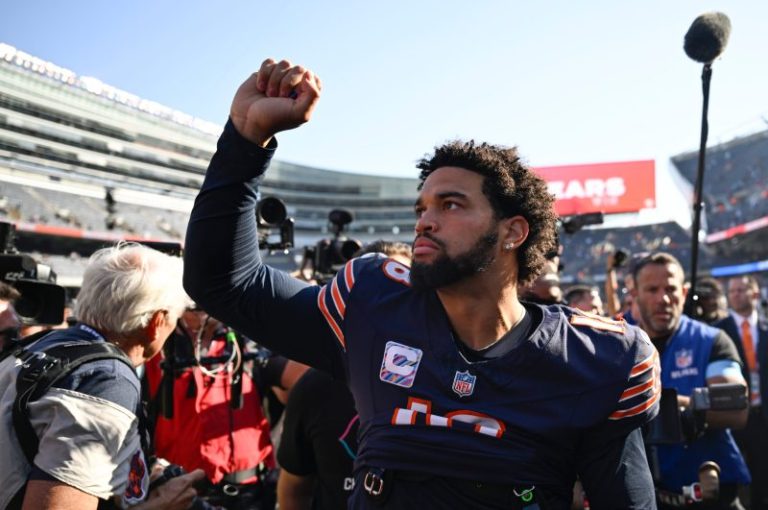
As Johnson indicated, bringing together an offensive line is not simply a matter of importing individual pieces, and it’s too early to tell how the additions will coalesce. But the changes at least give Caleb Williams a chance to escape the unrelenting onslaught of pressure he faced as a rookie, even if the burden is now on him to show he can speed up his internal clock after taking a league-worst 68 sacks in 2024. Chicago, meanwhile, no longer is boxed into forcing a selection on the interior with one of its top picks and enduring the growing pains of a first-year blocker.

Arizona Cardinals: Edge rusher

Credit Jonathan Gannon for generating pressure from a variety of sources in his second year at the helm, with 12 different players recording at least two sacks in 2024. But despite the coach’s creative solutions, Arizona couldn’t overcome an overall shortage of talent and investment in its front, finishing 28th in ESPN’s pass-rush win rate metric.

Nevertheless, this is a sea change for Sweat, who goes from the league’s most loaded pass-rush collection to perhaps its thinnest. Therein lies the risk for both sides. The 6-foot-5, 265-pounder will have to adjust to being the focal point of opposing game plans as opposed to just another consideration, while the Cardinals will be counting on Sweat to be more of a consistent threat than he was last season. But Gannon certainly knows how to get the most out of his marquee signing, as Sweat reached a career-high 11 sacks in 2021 in what was the coach’s first year as defensive coordinator for the Eagles.

With Sweat signed and Baron Browning having re-upped ahead of free agency, Arizona’s pass rush looks to be as formidable as it has been in years. But those moves don’t necessarily preclude further additions at some point in the draft.

Tennessee Titans: Offensive line

For the third consecutive offseason, the Titans tasked themselves with firming up their front.

Bringing in a new head coach in Brian Callahan last season to reimagine the offense didn’t make a massive difference. Neither did hiring Bill Callahan, Brian’s father and one of the most highly regarded offensive line coaches in recent NFL history. And yet another considerable addition to the line didn’t truly move the needle, either.

In 2024, the Titans’ protection issues once again repeatedly tripped up the offense en route to a 3-14 season. While Will Levis’ panic-button response to pressure exacerbated the problem, Tennessee ranked just 28th in pass-block win rate. An inability to stave off disruptive plays led the team to tie for first in turnovers (34) and fifth in sacks taken (52).

New general manager Mike Borgonzi extended the overhaul effort initiated last offseason by predecessor Ran Carthon. A four-year, $82 million deal handed to Dan Moore Jr. was one of the biggest early surprises, but the former Pittsburgh Steelers left tackle has shown a solid growth trajectory and largely been a capable pass protector – outside of some calamitous outings against Myles Garrett. His signing also allows JC Latham to move back to his more familiar position at right tackle.

The less heralded addition of offensive guard Kevin Zeitler on a one-year, $9 million deal could prove just as meaningful, as the 35-year-old figures to be a short-term salve after ranking fifth in pressure rate allowed among guards last season, according to Next Gen Stats.

Now, Tennessee looks to be situated nicely to onboard a new quarterback, whether that’s Cam Ward with the top pick, another rookie somewhere else in the draft or a bridge veteran option.

New York Giants: Secondary

In adding two-time Pro Bowl edge rusher Brian Burns to work with Dexter Lawrence and Kayvon Thibodeaux, the Giants bet big last offseason that their ability to create havoc in the passing game would carry the defense. Without proper support on the back end, however, that plan went awry, as New York ranked 29th in yards allowed per passing attempt (7.7) and 30th in completion rate (69.4%).

One year after letting Xavier McKinney walk, the Giants no longer are merely trying to scrape by in the secondary. Jevon Holland should pair nicely with Tyler Nubin and give the unit the deep-ball deterrent it missed last year, while Paulson Adebo provides a needed dose of playmaking for a group that recorded just five interceptions in 2024.

Of course, anxieties won’t be eased for Big Blue unless the quarterback quandary reaches a satisfying conclusion. But with Brian Daboll, Joe Schoen and the rest of the current regime being put on notice after co-owner John Mara opted against a teardown, the team should at least have confidence that its defense is more evenly assembled this time around.

Denver Broncos: Tight end

When Sean Payton voiced his intent this offseason to find a ‘joker’ – a dynamic all-purpose threat capable of creating mismatches in the passing game – it seemed unlikely that a 30-year-old tight end who averaged a meager 7.8 yards per catch last season would fit the bill. But in a free agency class light on starting-caliber options at the position, Evan Engram became the most viable candidate for the role after he was cut by the Jacksonville Jaguars.

Since Payton’s arrival, the tight end has essentially been a non-factor in Denver’s aerial attack, with no team posting fewer catches or receiving yards collectively at the position in the last two years. But with Bo Nix’s ascension butting up against the ceiling of the Broncos’ underwhelming skill-position group, a significant change was in order.

Engram was limited to just nine games last season due to hamstring and labrum injuries, and he likely won’t be the dynamic threat some envisioned at the start of the former first-rounder’s career. But he should remain a high-volume target in the short-to-intermediate game and help Nix keep things moving as a quick-hit, run-after-catch threat.

And with Denver potentially out of range for top tight end draft prospects Tyler Warren and Colston Loveland, Engram likely was the most reasonable choice to provide short-term relief.

Los Angeles Rams: Wide receiver

Settling the Matthew Stafford standoff allowed the Rams to avert a full-on identity shift, but the team did somewhat signal the start of a new era when Cooper Kupp broke the news in February that he was being pushed out the door. With no trade partner materializing, he was released this week. Before he was officially sent packing, however, the Rams had already identified their new complement for go-to receiver Puka Nacua in Davante Adams.

At 32, the six-time Pro Bowler might seem like an odd fit for a franchise embracing one of the league’s youngest rosters. But despite being weighed down by subpar supporting casts for the last two seasons, Adams could excel as one of the league’s most formidable No. 2 receivers. The Rams’ extensive use of condensed formations should serve his skill set extremely well, and he could be rejuvenated by operating in a precise, highly functional offense for the first time since he left the Green Bay Packers after the 2021 season.

Las Vegas Raiders: Quarterback

The Silver and Black were left without a chair in last offseason’s game of musical chairs at quarterback, as all six first-round passers were off the board by the time the Raiders were on the clock at No. 13. That dynamic seemed like it might play out yet again, as Stafford eschewed the possibility of joining the team to re-up with the Rams. But Las Vegas quickly pivoted to an option few saw as a possibility: Geno Smith, to whom the Seattle Seahawks had appeared committed before contract extension talks fell apart.

Detroit Lions: Cornerback

Last March, Detroit kicked off a drastic overhaul of its secondary by trading for Carlton Davis III and signing Amik Robertson. And with the team having selected Terrion Arnold in the first round of last year’s draft and Ennis Rakestraw Jr. in the second, the Lions should have been in a solid spot to weather Davis bolting for a three-year, $60 million deal with the New England Patriots. But leaving the fate of the pass defense in the hands of two unsteady second-year players – Arnold struggled with penalties early, while Rakestraw saw just 46 total defensive snaps – would be quite the gamble for a team that otherwise looks prepared to renew its push for the organization’s first Super Bowl appearance.

The void wouldn’t remain for long, however, as D.J. Reed agreed to a three-year, $48 million contract with the Lions soon after Davis struck his deal. Despite his small frame, the 5-foot-9, 188-pounder has proven to be a consistent performer on the outside. A willing tackler who embodies Dan Campbell’s tenacious mentality, Reed is well-suited for more man coverage responsibilities in Detroit’s scheme. With a savvy veteran presence to keep Arnold and Rakestraw from taking on too much, the Lions’ secondary should again allow the defense to counter the NFC’s elite. And it doesn’t hurt that Reed is a relative bargain when compared to Davis.

Minnesota Vikings: Interior offensive line

In pivoting from Sam Darnold to J.J. McCarthy at quarterback, the Vikings freed themselves up to be aggressive spenders thanks to the flexibility afforded by having a starting passer on a rookie contract. While defensive tackle also merited consideration here after the pricey pick-ups of Jonathan Allen (three years, $51 million) and Javon Hargrave (two years, $19 million), the interior offensive line is the area that demanded the most movement.

After rampant pressure spoiled the Vikings’ bid for the No. 1 seed in the NFC playoffs and again proved critical in the wild-card loss to the Rams, general manager Kwesi Adofo-Mensah got aggressive in free agency by bringing aboard offensive guard Will Fries on a five-year, $88 million deal. While that might appear to be a massive sum for someone who has never been selected to a Pro Bowl and played in just five games last season due to a broken tibia, it’s representative of the market for top pass protectors on the interior – which is a class to which Fries belongs. Center Ryan Kelly should further buttress the unit, which was able to dispense of underperforming former high draft picks in Garrett Bradbury and Ed Ingram.

Pittsburgh Steelers: Cornerback

The bulk of the buzz surrounding Pittsburgh’s offseason has been tied to one marquee move already made – trading for wide receiver DK Metcalf – and another yet to materialize – the signing of a starting quarterback. Yet while those two matters will continue to command the spotlight heading into the fall, the Steelers quietly took care of another glaring shortcoming with the addition of cornerback Darius Slay Jr.

A cap casualty of the Eagles following the team’s Super Bowl run, Slay stabilizes the spot opposite Joey Porter Jr. after a volatile year in coverage from Donte Jackson. Slay, 34, almost assuredly won’t match Jackson’s five interceptions last year, but he still had 13 passes defensed in 2024 and shores up what was unquestionably the weak spot of the league’s 25th-ranked pass defense. Brandin Echols also was added as a depth piece.

This post appeared first on USA TODAY

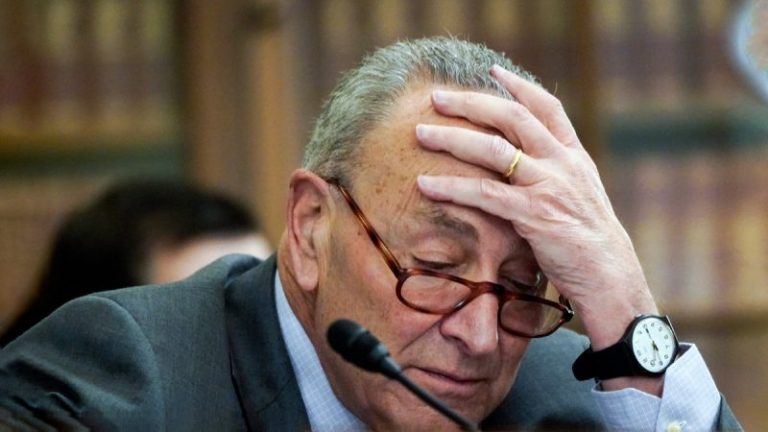
A government shutdown was averted just hours before the Friday 11:59 p.m. deadline after enough Democrats, including Senate Minority Leader Chuck Schumer, D-N.Y., helped Republicans defeat the filibuster. 

Senators voted 54-46 to pass the stopgap spending bill, which only needed 51 votes to be approved. Nearly all Republicans backed the measure, with only Sen. Rand Paul, R-Ky., opposing. All Democrats opposed it, with the exception of Sen. Jeanne Shaheen, D-N.H. Independent Sen. Angus King of Maine, who caucuses with the Democrats, also voted to pass the bill.

It now heads to President Donald Trump’s desk for a signature. 

The Senate earlier took a key procedural vote on a stopgap spending bill, which needed to meet a 60-vote threshold to move forward, also known as the legislative filibuster. 

House Republicans passed the short-term bill, called a continuing resolution, earlier in the week. The bill will keep spending levels the same as fiscal year (FY) 2024 until Oct. 1. 

If a spending bill was not passed by the Friday deadline, the government would enter into a partial shutdown.

During a partial government shutdown, federal agencies and non-essential services would be halted. However, government functions deemed ‘essential’ would continue. National security protocols, such as border patrol, law enforcement and disaster response, stay active during shutdowns, for example. 

The Friday evening vote to pass the six-month CR came after a critical procedural vote earlier in the afternoon. A handful of Senate Democrats provided the Republican majority with the necessary votes to overcome the filibuster and move forward with the stopgap spending bill. 

Deep divisions emerged within the Democratic Party over the past couple of days, with even House Minority Leader Hakeem Jeffries, D-N.Y., refusing to answer questions about whether he had confidence in Schumer. 

In one of several Senate caucus meetings, a senator yelled loud enough that it was heard outside of heavy, thick wooden doors. The voice was identified by the press as belonging to Sen. Kirsten Gillibrand, D-N.Y., but her office would not confirm. 

Prior to its passage, Sen. John Fetterman, D-Pa., criticized his fellow Democrats for their planned ‘no’ votes that risked a government shutdown. 

‘It wasn’t that long ago before we were lecturing that you can never shut the government down. So, that’s kind of inconsistent,’ he told reporters on Thursday.

Ahead of the final vote, 10 Democrats joined nearly all Republicans to overcome the legislative filibuster. Those senators were Senate Minority Leader Chuck Schumer, D-N.Y., Senate Minority Whip Dick Durbin, D-Ill., and Sens. Angus King, I-Maine, Brian Schatz, D-Hawaii, Catherine Cortez Masto, D-Nev., John Fetterman, D-Pa., Gary Peters, D-Mich., Maggie Hassan, D-N.H., Kirsten Gillibrand, D-N.Y., and Jeanne Shaheen, D-N.H.

The senators managed to beat the 60-vote threshold, with an ultimate margin of 62-38. 

This post appeared first on FOX NEWS

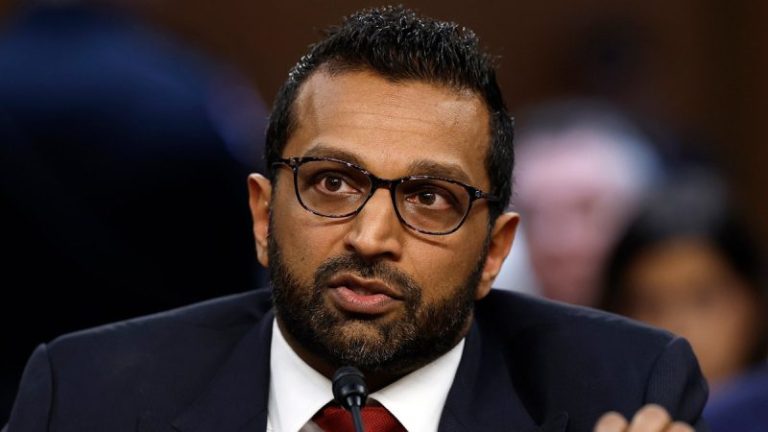
FBI Director Kash Patel on Friday revealed that the agency is investigating a recent spike in swatting incidents after several conservative media figures said they were targeted. 

‘I want to address the alarming rise in ‘Swatting’ incidents targeting media figures,’ Patel wrote Friday morning on his social media. ‘The FBI is aware of this dangerous trend, and my team and I are already taking action to investigate and hold those responsible accountable.’

The director stressed, ‘This isn’t about politics—weaponizing law enforcement against ANY American is not only morally reprehensible but also endangers lives, including those of our officers.’

Swatting is when a person attempts to send armed law enforcement to another person’s house over a fake incident, which has led to deadly consequences in the past. 

‘That will not be tolerated,’ Patel continued. ‘We are fully committed to working with local law enforcement to crack down on these crimes.’

He added that there would be more updates to come. 

Conservative podcaster Nick Sortor said Thursday on X that both his father and sister were swatted that same day. 

‘A dozen cops attempted to kick my dad’s door in at gunpoint,’ he wrote. ‘This is literal f—ing terrorism. And the FBI should treat it as such. Before calling in the swat, this dumbs— sent my sister an email calling me a Nazi, of course. So the motive is clear.’

Sortor said the person who called the police on his father claimed he was killing his ‘entire family, requiring them to intervene with deadly force.’ 

‘This is nothing short of attempted murder. They wanted the police to kill my father,’ he added. 

Conservative host Shawn Farash wrote on his X account that he and his wife were swatted Thursday night. 

‘We are totally safe,’ he assured his followers. ‘Thank you to everyone who checked in. We are going to do whatever is necessary to find out who is behind these coordinated attacks and hold them accountable to the fullest extent.’ 

An apparent swatting call at Georgia GOP Rep. Marjorie Taylor Greene’s home in December turned deadly following a car accident with police. 

Greene at the time said she had been swatted at least eight times before the fake bomb threat. 

In January, lawmakers introduced a bipartisan and bicameral bill to impose ‘strict penalties’ for people who make swatting calls, including up to 20 years in prison if someone is seriously injured or killed in an incident.

‘Having spent over 40 years in law enforcement, I’ve seen firsthand how swatting is a reckless and dangerous action that not only puts innocent lives at risk but wastes critical resources,’ Rep. Mike Ezell, R-Miss., said in a statement in January when introducing the bill in the House. 

‘Local and state law enforcement agencies are forced to divert their time, energy, and taxpayer dollars to respond to these false calls, taking them away from real emergencies. As someone who has been on the front lines, I understand the toll this takes on our officers and communities. That’s why I am proud to help introduce the Preserving Safe Communities by Ending Swatting Act — a vital step in protecting both our law enforcement officers and the communities they serve.’

Rep. Brandon Gill, R-Texas, wrote on Friday that he was ‘proud’ to cosponsor the bill. 

‘Multiple conservative influencers and pundits have had their homes swatted in the past several days,’ he wrote. ‘This is an extremely dangerous form of political terrorism. It’s liable to get somebody killed, and it must end now.’

This post appeared first on FOX NEWS

Curry, the Golden State Warriors superstar, not making a 3-pointer in a game seems preposterous today, given his astonishing proclivity for making an abundance of 3-pointers anywhere inside halfcourt.

On Thursday against the Sacramento Kings, Curry became the first player in NBA history to reach 4,000 made 3-pointers when he made his second 3 of the game with 8:19 to go in the third quarter.

Curry is the league’s all-time leader in made 3s. In his 16th season, Curry leads the NBA in 3s made per game (4.5) in 2024-25 and will make about 60 more by the end of the regular season.

Considered the greatest shooter of all-time, Curry will continue to add to that number this season, next season and likely the season after that, conjuring what was once an unfathomable number.

Can Steph Curry reach 5,000 made 3-pointers?

Curry, 36, has made at least 250 3s in each of his past five seasons, and made at least 212 3s in 12 of his past 13 seasons – the only time he didn’t was in his injury-shortened 2019-20 season that limited him to five games.

If Curry were to play 70 games per season for the next four seasons, he would hit 5,000. Does he want to play that long and can he remain healthy enough?

“I hope we have a lot to accomplish on the court and not ending the journey anytime soon,” Curry said at All-Star Weekend in San Francisco last month.

How Steph Curry changed game with his 3-point shooting

Curry and the evolution of modern offenses with spacing and shooters spread around the arc changed the game with 3-point shooting.

In Curry’s rookie season in 2009-10, teams attempted 18.1 3s and made 6.4 per game. This season, teams shoot 37.6 3s per game and make 13.5. Volume has doubled. Curry is one of five players who shoots at least 10 3s per game (Charlotte’s LaMelo Ball tops the list at 11.5 per game and Curry is next at 11.3), and another eight players attempt at least 9.0 3s per game.

Curry has made at least 300 3s in a season five times, including an NBA-record 402 in 2015-16. There were four teams in 2009-10 that did not make 400 3s in the season. Of the top-12 best single-season marks for 3s made in a season, Curry holds seven of those spots.

The Boston Celtics are on pace to set league records in 3s attempted per game (48.2) and 3s made in a season. Golden State made 1,363 3s in 2022-23, and the Celtics have 1,177 with 16 games remaining and are on pace to make 1,450.

A team needs to make 3s to win in today’s NBA.

“That impact is pretty surreal to me just because that’s the way that I’ve seen the game since I was a kid,” Curry said. “I love expanding my range, but even more, I love the work that goes into earning and deserving that confidence. … I don’t have any problem with guys and teams shooting a lot of 3s. Obviously, that’s the way that I play, and I love that factor in the game, but you’ve also got to put the work in behind the scenes to take full advantage of it.”

How many 3-pointers does Steph Curry have?

After the Warriors’ 130-104 victory against the Kings Thursday, Curry now has 4,000 3-pointers. He went 2-for-6 from 3-point range in the game.

Who are the NBA’s all-time 3-point leaders?

1. Steph Curry: 4,000

2. James Harden: 3,127

3. Ray Allen: 2,973

4. Damian Lillard: 2,792

5. Klay Thompson: 2,667

6. Reggie Miller: 2,560

7. LeBron James: 2,542

8. Kyle Korver: 2,450

9. Paul George: 2,349

10. Vince Carter: 2,290

Can anyone catch Steph Curry on all-time 3-point list?

Just like LeBron James’ scoring records, it will require a generational player with longevity to catch Curry on the all-time 3-point list. There is a caveat. The way teams and players shoot 3s, it is within the realm of possibility that some of the game’s younger players make a run at 4,000, and we’ll see what happens from there.

Boston’s Jayson Tatum, 27, has made 1,517 3s in eight seasons, and he has made at least 200 a season for four consecutive seasons. And 240 made 3s per season for 10 more seasons puts him in the 4,000 range.

Minnesota’s Anthony Edwards, 23, is another case study. He has made 262 3s this season and increased his attempts from 6.7 last season to 10.1 this season – and he has made at least 213 3s in three of his last five seasons. Let’s be generous and say Edwards makes 220 3s for 15 consecutive seasons – that puts him around 4,400.

James Harden and Damian Lillard are tremendous 3-point shooters but are too far behind at this point of their careers.

This story was updated with new information.

This post appeared first on USA TODAY

Senators voted to advance the House-passed stopgap spending bill on Friday as the deadline for a government shutdown inches closer. 

By a margin of 62-38, senators voted to advance the measure. Ten Democrats joined nearly all Republicans to overcome the filibuster. Senate Minority Leader Chuck Schumer, D-N.Y., Senate Minority Whip Dick Durbin, D-Ill., and Sens. Angus King, I-Maine, Brian Schatz, D-Hawaii, Catherine Cortez Masto, D-Nev., John Fetterman, D-Pa., Gary Peters, D-Mich., Maggie Hassan, D-N.H., Kirsten Gillibrand, D-N.Y., and Jeanne Shaheen, D-N.H., voted to move the bill forward, opposing the rest of their caucus colleagues. 

The House-passed short-term spending bill, known as a continuing resolution (CR), would keep spending levels the same as fiscal year (FY) 2024 until Oct. 1. However, if a spending bill is not passed by 11:59 p.m. on Friday, the government will enter into a partial shutdown.

Democrats in the Senate were embroiled in passionate disagreement this week over what to do when the measure eventually came for the key procedural vote. In order to reach the 60-vote threshold, Republicans needed some Democratic support, as the GOP majority is only 53 seats and Sen. Rand Paul, R-Ky., planned to vote against it. 

Amid tense caucus meetings leading up to the vote, Democrats were tight-lipped, unwilling to reveal details about the discussions. During one meeting on Thursday, a senator yelled so loudly that the press could hear through thick, heavy wooden meeting room doors. The voice was identified by the press as that of Gillibrand, but her office would not confirm. 

Several Democratic senators came out against the stopgap bill ahead of the procedural hurdle, sharing that they wouldn’t vote to advance it or vote for its passage. 

However, they faced criticism from staunch government shutdown opponent Fetterman, who joked about their ‘spicy’ social media videos about voting no. 

‘It wasn’t that long ago before we were lecturing that you can never shut the government down. So, that’s kind of inconsistent,’ he told reporters on Thursday. 

‘We can all agree that it’s not a great CR, but that’s where we are, and that’s the choice,’ he emphasized. 

Schumer had initially claimed on Wednesday that his caucus was unified, and pushed for an alternative CR that would last only a month. But the Republicans did not budge on the House-passed bill that lasts the rest of the fiscal year. 

By Thursday night, Schumer revealed he would vote to advance and pass the stopgap bill, rather than providing President Donald Trump and Elon Musk with the ‘gift’ of a government shutdown. 

This was met with significant frustration from Democrats across the country and division about what party leaders should do in such circumstances. 

House Democratic leaders released a late-night statement reiterating their opposition to the CR on Thursday, and Speaker Emerita Nancy Pelosi, D-Calif., shared her own on Friday, similarly slamming the bill. 

The former speaker called on Democratic senators to ‘listen to the women’ and move forward with ‘a four-week funding extension to keep government open and negotiate a bipartisan agreement.’

This post appeared first on FOX NEWS