Sometimes, a new product needs just a bit more preparation before it’s ready for rollout.
You might say that’s the case with USA TODAY Sports’ annual list of 100 Names to Know in Major League Baseball this year. Five of the top 10 players have had significant stints at the game’s highest level already, only to return to the minor leagues for a little more shine.
This year, they should be ready to sparkle on the diamond.
The list is topped by Tampa Bay Rays infielder Junior Caminero, who received big league looks each of the past two seasons yet remains eligible under our criteria – that he received more minor league plate appearances or innings pitched last year than his major league career total.
That’s why this list isn’t necessarily the top 100 prospects in the game, although dozens are on here. Rather, it’s a combination of both current role in the organization and future impact on the game.
That’s why a top prospect buried deep on this list may be heading it up in 2026. They are ranked in order of anticipated impact this season:
1. INF Junior Caminero, Rays
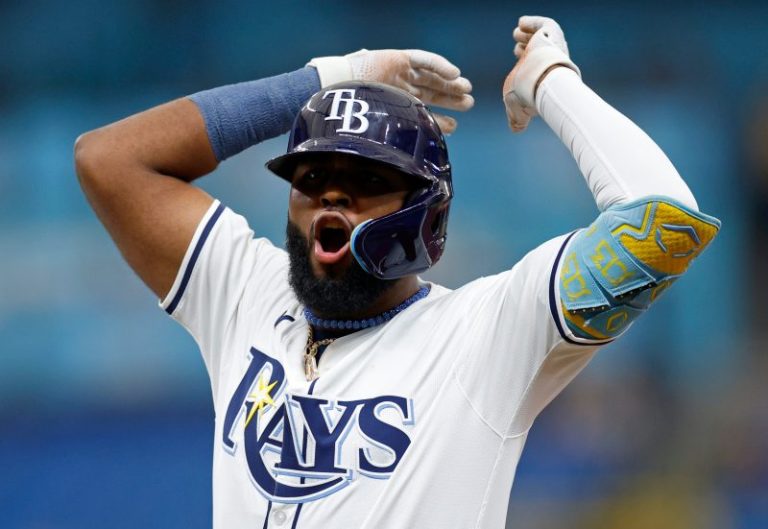
The Rays have meticulously integrated Caminero, 21, into their lineup and this season, it’s all systems go. A seven-game 2023 debut and 43-game cameo in 2024 mixed with trips to finishing school in Class AAA created a ready-made star with a .921 career minor league OPS set to bat in the middle of Tampa Bay’s lineup.
2. 2B Jackson Holliday, Orioles
After a much-anticipated debut fizzled into a 2-for-34 showing with 18 strikeouts, Holliday showed much better in his second stint with Baltimore, hitting five homers in 172 plate appearances and making better contact. At 21, he’s now stronger and steadier and seems primed for the big season many anticipated for him one year ago.
3. RHP Rōki Sasaki, Dodgers
It wasn’t a surprise that the Japanese phenom chose to sign with Los Angeles, but it’s left to be seen how the Dodgers will manage Sasaki’s workload in his first year stateside. Sasaki, 23, had a 2.10 ERA with 505 strikeouts in 64 NPB games since 2021, making his debut as a 19-year-old for the Chiba Lotte Marines.
4. INF Kristian Campbell, Red Sox
The minors’ fastest-rising prospect, Campbell began his first full season of pro ball in High-A and finished as USA TODAY Sports’ Minor League Player of the Year. Over 115 games at three minor league levels, Campbell, 22, hit a combined .330/.439/.558 with 20 homers and 24 stolen bases. He did all that while playing second base, shortstop, third base and all three outfield spots. Versatility could provide him a pathway the majors, perhaps for opening day. He’s split his time this spring between left field and second base, but he could easily force his way into everyday at-bats.
5. OF Dylan Crews, Nationals
After two seasons in the minors in which he played at every level, Crews, the second overall pick in 2023, looks ready to be a mainstay in the majors. He made his MLB debut last season and batted just .218 in 31 games, but the 23-year-old’s overall skill set is hard to match. Hitting the ball harder – he did so just 45% of the time last year – and in the air (56.4% groundball rate) would thrust him toward NL Rookie of the Year frontrunner status.
6. OF Jasson Dominguez, Yankees
“The sky’s the limit for him,’’ said captain Aaron Judge. We’ll get a chance to see him from opening day as the long-heralded Yankees prospect, 22, enters 2025 as the Yankees’ starting right fielder. The power and speed (.816 OPS, 102 steals in 353 minor league games) are apparent. He also has the plate discipline the Yankees covet.
7. OF Heston Kjerstad, Orioles
The loss of outfielder Anthony Santander to free agency is a big win for Kjerstad’s opportunity this season. He will compete for at-bats in the outfield and at DH and has a .351 OBP in 147 career major league plate appearances. Over his three seasons in the minors, over four levels, he hit .304 with 42 home runs, 153 RBI.
8. OF Roman Anthony, Red Sox
Just 20, Anthony is knocking on the door to the majors and could begin the season in Boston if starting right fielder Wilyer Abreu isn’t 100% healthy. Anthony finished last season at Class AAA Worcester (Mass.), hitting .344/.463/.519 in 35 games and making a strong case that he’s ready for the next level.
9. 3B Matt Shaw, Cubs
The Cubs’ trade of Isaac Paredes created an opportunity for Shaw – the 13th overall pick in the 2023 draft – to be the Cubs’ opening day third baseman. He’s shown steady improvement throughout his rise through the minors, posting a .395 on-base percentage and .534 slugging in 35 games last season after being promoted to Class AAA.
10. SS Jacob Wilson, Athletics
The sixth overall pick in 2023, Wilson, 22, hit .433 in 208 at-bats in the minors last season, flying through the minors to the Athletics lineup. He’s the opening day shortstop for the club’s first year in Sacramento.
11. C Drake Baldwin, Braves
Incumbent Sean Murphy suffered a cracked rib on a hit-by-pitch last month, so Baldwin, barring any late-spring signing of a veteran, is projected to be Atlanta’s opening day catcher. The arrival might certainly be accelerated but the pedigree is there, as Baldwin is a consensus top-50 prospect. The 23-year-old is coming off a strong 2024 season where he batted .298 with 12 home runs and an .891 OPS in Class AAA.
12. RHP Rhett Lowder, Reds
The seventh overall pick in 2023 out of Wake Forest, the 22-year-old right-hander rode the fast track to the majors last season – starting at High-A and ending with six starts in the majors. Lowder posted a sparkling 1.17 ERA over his 30 ⅔ innings with the Reds and is a serious candidate for the opening day rotation, despite some elbow soreness he experienced this offseason.
13. INF Connor Norby, Marlins
Acquired from the Orioles for Trevor Rogers, Norby hit seven homers with 17 RBI in 36 games for the Marlins and will be the team’s opening day third baseman. He’s got power (70 minor-league homers with an .860 OPS), will have a long leash and it wouldn’t be surprising to see him as Miami’s All-Star representative.
14. RHP Tomoyuki Sugano, Orioles
Sugano, 35, spent his entire 12-year career playing with the Yomiuri Giants in Japan before the Orioles signed him to a one-year, $13 million deal. He is a decorated pitcher from Japan: a two-time winner of the Sawamura Award – Japan’s Cy Young – a three-time Central League MVP and an eight-time All-Star. For now he has the inside track on a rotation slot after an impressive spring and an injury to right-hander Grayson Rodriguez.
15. RHP Jackson Jobe, Tigers
The game’s consensus top pitching prospect finished 2024 in the Tigers’ playoff bullpen and will end spring training on the bubble for one of their rotation spots. But Jobe, 22, will start many games in Detroit this year, toting a career 10.1 strikeouts per nine innings and 1.14 WHIP.
16. INF Luisangel Acuña Mets
The Jeff McNeil injury opens a path to regular playing time for Ronald’s brother, who had been competing for a bench role. The Mets weren’t expecting much offensively of Acuña when he was promoted at age 22 last season, but the 5-foot-8 infielder hit .308 with three homers and a .966 OPS in 39 at-bats, going on to play in nine postseason games.
17. OF Victor Scott, Cardinals
Blessed with exceptional speed, Scott made his MLB debut last season, but was overmatched at the plate (.179/.219/.283 slash line in 155 plate appearances) and couldn’t get on base enough to utilize his greatest asset. The 24-year-old has been much more successful at the plate this spring, even showing a little extra-base pop. He’s looking like the favorite for the Cardinals’ starting job in center field.
18. RHP Sean Burke, White Sox
After a three-start glimpse to end 2024, Burke, 25, will be the White Sox’s opening-day starter. A third-round pick in 2021, Burke’s ceiling may be mid-rotation starter, particularly if he cleans up command issues that saw him walk 4.9 batters per nine innings over four minor league seasons.
19. RHP Bubba Chandler, Pirates
The Pirates have the makings of an exciting young rotation if and when Chandler, 22, joins Paul Skenes and Jared Jones. It may not be long after he threw nearly 120 innings between Class AA and AAA last season. He can touch 100 mph with his fastball and is competing for a rotation spot this spring.
20. 1B/OF Jhonkensy Noel, Guardians
Things could be lighting up for “Big Christmas.” After his 13-homer debut and postseason hero turn, the club dealt first baseman Josh Naylor to Arizona, and now Noel will share first base with Kyle Manzardo. He should get at-bats in the outfield, too, where his big arm plays well; cutting his 31.8% strikeout rate would let his elite exit velocity – he clocked 115.4 mph on his second major league home run – play even more.
21. 3B Caleb Durbin, Brewers
Acquired from the Yankees in the Devin Williams trade, the speedy Durbin, 25, set an Arizona Fall League record with 29 stolen bases. He’s among the favorites to be Milwaukee’s starting third baseman.
22. INF Christian Moore, Angels
The eighth overall pick last year, Moore clubbed 34 homers in 72 games for Tennessee and then hit .347 in 20 minor-league games in his pro debut. Already knocking on the door to Anaheim, he needs to be added to the 40-man roster. If Moore isn’t in the majors on opening day, he won’t be down for long with the Angels in need of offense.
23. SS Carson Williams, Rays
He’s touched Class AAA for just four games in 2023, but Williams, 21, may not need much more of an internship. Williams projects as a potential 20-20 guy in the major leagues and has a .353 OPB and .821 OPS marks in his minor league career.
24. OF Emmanuel Rodriguez, Twins
No current vacancy at Target Field for Rodriguez, especially since the 22-year-old has never played more than 99 games in a minor league season due to various injuries. He should stick in center field and has a tantalizing combo of power and speed, and good health could get him to Minnesota sometime this season.
25. SS Colson Montgomery, White Sox
A consensus top 15 prospect as recently as 2024, Montgomery, 23, saw his star dim a bit after batting .213 with a .381 OPS in a full year at Class AAA. But opportunity has arrived on the South Side and Montgomery should soon get a long runway to establish himself as the everyday shortstop.
26. 1B/3B/OF Tyler Black, Brewers
The 33rd overall pick in 2021, Black, 24, appeared in 18 games last season for the Brewers, hitting just .204 with a .561 OPS. However, he has shown an excellent eye at the plate throughout his minor league career and he stole 47 bases at Class AA in 2023.
27. INF Hyeseong Kim, Dodgers
Los Angeles committed $12.5 million to the Korean import, but he’ll start the season in the minors. A left-handed hitter, the 26-year-old got some reps in center field before being optioned and should get called up early in the season if he can handle the bat at Class AAA.
28. RHP Zebby Matthews, Twins
Matthews, 24, is the ultimate control artist, walking just 22 batters in 205 ⅓ minor league innings. He got roughed up – a 6.69 ERA in nine starts – in the Twins rotation at the end of last year, but was at a career high for innings and came into camp touching 97 mph. Matthews should start the year as the Twins’ sixth rotation option and will figure into it soon.
29. SS Trey Sweeney, Tigers
What looked like a white flag trade – dealing veteran starter Jack Flaherty to the Dodgers – instead netted the Tigers their starting shortstop into the playoffs. And now Sweeney, 24, is ready to hold down the role full time. He didn’t hit much – four homers and a .642 OPS in a 36-game, 119-plate appearance debut – but has 20-steal potential and should catch the ball proficiently.
30. LHP Quinn Matthews, Cardinals
Team’s top pitching prospect, 24, moved through four minor-league levels last season, culminating with four starts at Class AAA. Will likely need more minor league experience and will need to be added to the 40-man roster before he gets the call to St. Louis.
31. 3B Jace Jung, Tigers
Jung, who made his MLB debut last year, entered camp as the favorite to be the opening day third baseman but was optioned after going 4-for-33 in Grapefruit League play. The 24-year-old will get some more seasoning and be back in the majors soon, but will really need to make the most of an opportunity when it presents itself.
32. OF Tirso Ornelas, Padres
Entering his ninth season with the organization, Ornelas, 24, is making a strong case to make the 26-man roster. A .297 hitter with 23 home runs last year in Class AAA El Paso, the hulking 6-foot-3 outfielder could be an early-season callup at the least.
33. 2B Nick Yorke, Pirates
Once a highly regarded Red Sox prospect, the Pirates acquired Yorke, 22, last year and he saw action in 11 games split between second base and outfield. He might’ve been a candidate for the starting left field job if the Pirates hadn’t signed veteran Tommy Pham.
34. SS Marcelo Mayer, Red Sox
The fourth overall pick in the 2021 draft, Mayer, 22, has battled injuries throughout his four seasons in the minors. As a result, his production has been uneven and his prospect status has dimmed somewhat. He’ll likely open the season at Class AAA Worcester, but be just a Trevor Story injury away from making his MLB debut.
35. INF Thomas Saggese, Cardinals
A fast-rising prospect who can play three infield positions, Saggese hit 20 homers at Class AAA Memphis last year and earned a late-season call-up. He raised his stock by putting up a 1.118 OPS over 82 plate appearances in the Arizona Fall League but will start the regular season at Class AAA Memphis.
36. OF Jordan Beck, Rockies
Beck, 23, has a chance to play right away and stick in the outfield at Coors Field on a team looking at a number of young players. His high strikeout rate (110 in 384 plate appearances in 2024 between the majors and minors) could hold him back from doing too much damage there.
37. RHP Michael McGreevy, Cardinals
Right-hander was a first-round pick in 2021 (18th overall) who was outstanding in his four appearances for the Cardinals. In 23 major league innings, he posted a 1.96 ERA with an 18:2 strikeout-to-walk ratio in 23 innings. McGreevy, 24, made the Cardinals sweat their opening-day rotation with a strong spring, but will be, likely, the first man up from Class AAA.
38. 1B Kyle Manzardo, Guardians
Manzardo debuted May 6 but couldn’t make much impact in 156 plate appearances, with a .234/.282/.421 line with five homers. Like Noel, Josh Naylor’s trade to Arizona opens up at least a part-time role and the 24-year-old must seize it.
39. 3B Coby Mayo, Orioles
Mayo, at 6 feet 5, 230 pounds, is one of the best power hitting prospects in baseball. He dominated Class AAA to begin 2024 but went 0-for-15 with 10 strikeouts after a major league call-up, and with sporadic opportunities had four hits in 41 at-bats with 22 strikeouts overall. He may have little choice but to adjust to that pattern; his 54 minor-league homers the past two seasons leave little to prove at that level, but a loaded Orioles infield likely leaves only spot chances to shine in Baltimore.
40. 2B Orelvis Martinez, Blue Jays
Martinez, 23, was suspended 80 games last June for violating MLB’s performance-enhancing drug policy, just two days after his big league debut. The international free agent was one of the best power-hitting infield prospects in the minor leagues. He hit 16 home runs in 63 games at Class AAA. Over the three previous seasons, he hit 86 home runs.
41. RHP Caden Dana, Angels
42. C Kyle Teel, White Sox
The Garrett Crochet trade ripped Teel from Boston’s Big Four prospects, making them a terrific troika and leaving Teel with opportunity, albeit in a moribund organization. The Top 50 prospect has hit at every minor league level, with a career .301/.404/.444 line. With just 28 games at Class AAA, all Teel needs is time, and a callup after midseason should be in the offing.
43. 1B Ben Rice, Yankees
We saw what Rice, 26, could do in a three-homer, seven-RBI game against Boston last season. He leveled off but showed how more of that power potential in spring training, which could land him an opening-day roster spot and at least a time share at DH and to give Paul Goldschmidt a rest at first base.
44. DH Will Wagner, Blue Jays
After a strong season in Class AAA and a promising big league debut, Wagner should impact the Blue Jays. In 24 plate appearances in the majors, he hit .305 with six doubles and two home runs. A left knee injury ended his season in mid-September, but he was playing second base on a regular basis and batting in the middle of Toronto’s lineup at the time of the injury. Wagner is the son of recently elected Hall of Famer Billy Wagner.
45. RHP Mason Montgomery, Rays
He converted to relief work in August, touched Tampa Bay in September and now Montgomery, 24, is poised to become a significant piece of the Rays bullpen. The lefty now touches 98 mph with a wipeout slider and could quickly move up the pecking order in the Rays’ bullpen.
46. RHP Jacob Misiorowski, Brewers
A 6-foot-7 right-hander with a triple-digit fastball, Misiorowski can strike out batters in bunches. However, his control (5.5 BB/9 in 2024) leaves a little to be desired and is what may keep him from being a starter in the majors. Moving up to Class AAA midway through last season, he began pitching out of the bullpen, where his fastball and overpowering slider formed a deadly combination.
47. C Samuel Basallo, Orioles
A consensus top 15 prospect, Basallo’s bat could force the Orioles to get him to Baltimore soon. The 20-year-old has impressed manager Brandon Hyde with his prodigious power displays and makeup this spring, after a 2024 season where he hit 19 homers and 25 doubles as a 19-year-old in Class AA and AAA.
48. RHP Kumar Rocker, Rangers
The two-time first-round pick from Vanderbilt made his long-awaited debut in September and appears on track to start the season in the rotation with injuries to Jon Gray and Cody Bradford. He has had two arm surgeries (shoulder and Tommy John) but has dominated the minors last season (1.96 ERA, 55 strikeouts in 36 ⅔ innings) with a 99-mph fastball, hard curveball, slider and changeup. Rocker, 25, still needs to prove his stuff plays across the majors.
49. RHP Andrew Painter, Phillies
Painter missed almost all of 2023 and 2024 due to Tommy John elbow surgery and since 2021 has thrown just 125 ⅓ innings. However, his return last year in the Arizona Fall League showed that he looked like his pre-injury dominant self, throwing between 97-100 mph. While the Phillies boast pitching depth now, he could certainly be a mid- to late-season callup to bolster their staff in any fashion.
50. C Adrian Del Castillo, D’backs
There’s not nearly as much doubt Del Castillo, 25, will hit in the major leagues as he will be able to adequately play his position. While he had an .893 OPS in a 25-game big league sample size in 2024 and pounded Class AAA pitching, he only threw out 2 of 29 runners who attempted to steal against him for Arizona. He’ll start in Class AAA and has gone to work on his throwing, transfers and footwork. “If I was going to bet on somebody, I’d bet on him,” bench coach Jeff Banister told the Arizona Republic.
51. OF Johnathan Rodriguez, Guardians
Rodriguez has hit 40 home runs over 165 games at Class AAA Columbus, so there’s clearly little to prove at that level. Rodriguez, 25, did reach Cleveland for 13 games early last season but for the moment, there’s no role for him. That could change if any number of platoon guys struggle with the Guardians.
52. RHP AJ Smith-Shawver, Braves
He received call-ups each of the past two seasons, but opportunity may never be better than now. With Spencer Strider still building back up from Tommy John surgery and expected No. 5 starter Ian Anderson struggling this spring, Smith-Shawver’s capable but not dominant Grapefruit League showing has kept the 22-year-old in the mix for a rotation spot. He’s struck out 12.1 batters per nine innings in 57 minor league starts.
53. OF Kevin Alcántara, Cubs
Nicknamed “The Jaguar,” the 6-foot-6 outfielder made it to the majors last September. While Alcántara’s power is still developing and the addition of Kyle Tucker boxed him out of a potential everyday role for now, the 22-year-old could become a valuable bench option and part-timer in 2025.
54. C/OF, Dalton Rushing, Dodgers
Hit 26 homers with 85 RBI in Classes AA and AAA last season and spent time in left field with his pathway behind the plate to Los Angeles obviously blocked by Will Smith. The Dodgers’ outfield alignment could be fluid this year and his ability to fill in at catcher and first base will work to the 24-year-old’s advantage.
55. OF Justyn-Henry Malloy, Tigers
Injuries to Parker Meadows and Matt Vierling likely won’t nudge Malloy, 25, to Detroit for Opening Day, but he’s for now the lone minor league outfielder on the 40-man roster and got a 230-plate appearance look last year, during which he hit eight homers but struck out 37% of the time. Will be up at points this season.
56. Jordan Lawlar, INF, D’backs
Lawlar, the sixth overall pick in the 2021 draft, should have a spot in the team’s future if he proves himself over more than a handful of games in Class AAA. The question is where he will play this season, with Geraldo Perdomo established at his primary position (shortstop) and Ketel Marte (second base) and Eugenio Suarez (third) manning the two other spots Lawlar has played in the minors. If Lawlar, 22, continues to hit (1.030 OPS in 12 Class AAA games during an injury-shortened season) he could force himself into at least a time share.
57. RHP Thomas Harrington, Pirates
Another of Pittsburgh’s exciting young pitchers, Harrington, 23, made it all the way to Class AAA last season, pitching to a 3.33 ERA in eight starts. That’s where he’ll likely open 2025 since he hasn’t yet been added to the 40-man roster.
58. LHP Doug Nikhazy, Guardians
Nikhazy, 24, struck out a batter an inning in 24 starts at Class AA and AAA last season and nearly snagged a spot in Cleveland’s opening-day bullpen. But his present and future is as a starter, and after a stretch-out period in Columbus, will be poised should any openings arise in Cleveland.
59. RHP Cade Horton, Cubs
The Cubs’ top pitching prospect was shut down last season due to a sprained shoulder but the seventh overall pick in 2022 has looked sharp this spring. Horton, 23, isn’t on the 40-man roster and is a bit further back in the queue itching to get to the majors, but he should be up at some point in 2025.
60. OF Rece Hinds, Reds
Big-time power prospect made an instant impact in his MLB debut last season, hitting five home runs in his first six games. However, Hinds, 24, has some gaping holes in his swing, with just a 58% contact rate at Class AAA Louisville last season.
61. 2B Luke Keaschall, Twins
The second-round pick in 2023 has made a speedy rise through Minnesota’s system, hardly slowed by August Tommy John surgery. Keaschall, 22, had 15 homers and 23 steals at high A and AA last year, and owns a .419 career OBP. A call-up this season is well within reach, particularly with any injury disruption on the Twins infield.
62. LHP Shinnosuke Ogasawara, Nationals
Ogasawara, 27, signed as an international free-agent in January. He had been pitching in Nippon Professional Baseball since 2016. The Nats were hoping he could be a ready-made starter coming from Japan, but he has had a tough spring and will likely need more time to develop. While the Nats signed him with the intent of him being a starter, he has a 50-50 shot, at best, to make the rotation and could convert to a reliever.
63. RHP Jake Bloss, Blue Jays
Bloss was traded with Will Wagner by the Astros as a part of the Yusei Kikuchi deal last July. He opened the season in High-A in 2024, but blew through three levels to reach the big leagues. In three MLB starts, he went 0-1 with a 6.94 ERA. He projects to be a quality No. 5 starter ready to contribute in 2025.
64. C/1B Moisés Ballesteros, Cubs
Hit 19 homers between Class AA and AAA with an .826 OPS and while defensive limitations may force a move to first base, the 21-year-old’s bat will play in the majors.
65. LHP Carson Whisenhunt, Giants
The 24-year-old is said to have one of the best changeups in the minors. Was knocked around in Class AAA (5.93 ERA in 25 starts) last season and is somewhat buried in San Francisco’s depth chart, but the lefty should make it to the majors at some point in 2025.
66. 3B Ignacio (Nacho) Alvarez, Braves
Alvarez is a right-handed hitter that has well-above-average contact skills. But his first stint in the majors produced a 3-for-30 performance in eight games before returning to the minors. Alvarez will most likely begin at Class AAA, where he hit 10 homers with an .864 OPS in 64 games last season.
67. RHP Brandon Sproat, Mets
The Mets rotation has been dinged by injuries in spring training but the club’s top prospect sitting in Class AAA is a big reason they’re confident about pitching depth. “This is a guy that, stuff-wise, is right there with anybody,” manager Carlos Mendoza said of Sproat, who had a 3.40 ERA with 131 strikeouts across three levels last season.
68. RH Trey Yesavage, Blue Jays
Yesavage, 21, has yet to make his professional debut, but he should be quick to the majors. The 20th overall pick last season was a combined 18-2 his final two seasons at East Carolina, with a 2.61 ERA, 1.000 WHIP and 13.3 strikeouts per nine innings.
69. 2B Juan Brito, Guardians
After Andrés Giménez’s trade to Toronto, Brito, 23, had a path to the second base job in Cleveland, but got off to a 1-for-19 start in Cactus League play and has minor-league options, which others competing for the job do not. Still, the organization’s seventh-ranked prospect is coming off a breakout Class AAA performance, with 21 homers and an .807 OPS, and the long-term job is still very much in play.
70. OF Chandler Simpson, Rays
He has just one career home run in 1,041 career minor league plate appearances – yet might be the fastest player in baseball. Simpson, 24, was clocked at 30.4 mph sprint speed this spring and stole 104 bases at Class AA and A in 2024, batting .355. Will his no-power game translate to the AL East? It will be fun to watch when the Rays decide to find out.
71. Bradley Blalock, RHP, Rockies
The Rockies are always looking for arms, and Blalock did enough this spring to warrant a hard look early this season after a six-start stint in Colorado last season. Blalock, 24, has cut down on his walk rate this spring after issuing 19 in 29 ⅔ innings for the Rockies last season. He’ll have to keep up his improved strikeout rate, too, to be effective at Coors Field.
72. OF Denzel Clarke, Athletics
Clarke, who turns 25 in May, tore up the Arizona Fall League, hitting .382 with 30 hits, 13 RBI and nine steals in 19 games but is yet to play in Class AAA. Already on the 40-man roster and a stellar defender in center, Clarke should play his way to Sacramento.
73. Cam Smith, 3B/OF, Astros
Smith, a first-round draft pick last season, came to Houston as a prized portion of the Kyle Tucker offseason trade. Smith, 22, was tearing it up at the plate in spring training and making a push to make the roster early in the season, if not by opening day. Over 32 minor league games last season, he has a 1.004 OPS with seven homers, 20 runs and 24 RBI.
74. SS/2B Cole Young, Mariners
The first-round pick in 2022 reached Class AA for 124 games last season, hitting .271 with a .759 OPS. He’ll start in Class AAA and look to get a call-up at some point. Young, 21, progressed most defensively last season, according to MLB Pipeline, though he won’t help Seattle much in the needed pop department.
75. INF Ronny Mauricio, Mets
Still recovering from ACL surgery in January 2024, Mauricio has had some setbacks and is yet to appear in a spring training game. Assuming he gets back on the field, the 23-year-old could be a versatile bench option for the Mets down the stretch and into October.
76. OF Alan Roden, Blue Jays
Roden, 25, a third-round pick in 2022, had a slash line of .293/.391/.475 with 16 home runs and 75 RBI in 126 games between Class AA and AAA in 2024. Roden has backed that up with a strong spring, with eight hits and two homers in his first 17 at-bats.
77. LHP Noah Schultz, White Sox
The White Sox have perhaps the two best lefty starter prospects in the game, and Schultz, 21, should be ready to roll by year’s end. Gotta love this combo – a 0.95 WHIP and 12 strikeouts per nine innings in his minor league career. Yet his season high in innings is just 88 1/3, and with Chicago in rebuild mode, Schultz figures to spend almost all of this season at Class AAA.
78. Spencer Jones, OF, Yankees
The 2022 first-round draft pick may not quite be ready for the Bronx, but he’s getting close. He has hit 20 homers with 88 RBI and .783 OPS over two stints in Class AA. The Yankees will see what the 6-foot-6 Jones can do in Class AAA. He could be a midseason injury to a regular away from making his debut.
79. RHP Hurston Waldrep, Braves
After a quick ascent through the minors, Waldrep struggled in both starts after a promotion to Atlanta. Yet he did post a 3.47 ERA across four levels in his first pro season. The 23-year-old is projected to be a big league starter, but could contribute more quickly as a mid-leverage reliever.
80. Greg Jones, OF/INF, Rockies
Jones, 27, will start the season in Class AAA. He has an .807 OPS in 137 games there and played right and center field and second base last season. He could get an extended big-league look if he continues to produce.
81. C Edgar Quero, White Sox
Quero has played almost the same number of Class AAA games – 28 to 26 – as fellow top catching prospect Kyle Teel – and their journey to the South Side will be interesting to watch. Quero, who turns 22 next month, is a year younger than Teel yet beginning his fifth professional season, toting an .849 career OPS.
82. RHP Chayce McDermott, Orioles
McDermott got a spot start in the majors last year, the culmination of two-plus years of progress after a 2022 trade from Minnesota. He struck out 144 in 100 innings at Class AAA last year but also walked 60. A lat injury at the start of spring training will delay his chance to impact the big league rotation.
83. C/1B Agustín Ramírez, Marlins
Has to make some major improvements defensively if he’s going to stick behind the plate, but Ramirez had 25 homers with 93 RBI and 22 steals last season. His bat should earn him playing time in Miami, be at catcher, first base or designated hitter.
84. RHP Gunnar Hoglund, Athletics
Acquired in the 2022 Matt Chapman trade, Hoglund is now three years removed from Tommy John surgery. While his velocity may not get back to where it was, Hoglund, 25, has improved his secondary pitches and could be one of the Athletics’ first call-ups when the need for a starter arises.
85. RHP Cade Cavalli, Nationals
When healthy, Cavalli has one of the top fastballs in the organization. But injuries have plagued him. He had Tommy John surgery in 2023 and experienced a dead arm and made just three minor league starts in 2024. Cavalli, 26, won’t figure in the big league plans until he can string together good health and clean starts at Class AAA.
86. INF Alex Freeland, Dodgers
The 23-year-old Freeland hit 18 homers with 31 steals and a .387 OBP across three levels last season but without a spot on the 40-man roster, finds himself behind Hyeseong Kim in line to get to Dodger Stadium.
87. 2B/3B/SS Jesús Bastidas, Astros
Bastidas, 26, tied for the most home runs in the Astros organization last season (25) to go along with 89 RBI, 15 steals and a .784 OPS for Class AAA Sugar Land. The former Yankees prospect’s speed and positional versatility also could him a leg up within the organization and make him, along with his power, a good candidate for a call-up.
88. LHP Sam Aldegheri, Angels
Acquired from the Phillies last summer, the Italian-born 23-year-old has four pitches in his arsenal and played his way to the majors at the end of 2024, striking out 134 in 19 minor-league starts.
89. 2B Javier Vaz, Royals
At 5-foot-6, the 24-year-old Vaz could be construed as a modern Jose Altuve, even if he doesn’t develop Hall of Fame hitting credentials. What he will do is hit the ball: Vaz struck out just 9.6% of the time at two levels last season and offers multi-position versatility. He’s in the right organization to value his skill set.
90. RHP Chase Dollander, Rockies
The team’s consensus top prospect and ninth overall pick in 2023 has reached as high as Class AA, where he made nine starts last season (2.63 ERA). His heavy strikeout stuff should play if he can duplicate it at Coors Field. He could get there by the early to mid-summer.
91. RHP Grant Holman, Athletics
The former starter pitched his way to the majors in 2024 with a miniscule 0.55 ERA in 40 minor-league games. Holman, 24, is set to begin the campaign in the Athletics bullpen and could earn a higher-leverage role as the season goes on.
92. INF Ben Williamson, Mariners
Williamson, 24, needs to produce over a larger sample size in the high minors to get to the majors. He has played his most minor league games at third base, but has also shortstop and second base. He did well enough at spring training to warrant a big-league look this season when he proves himself in Class AAA.
93. OF Robert Hassell III, Nationals
Originally drafted by the Padres, Hassell was shipped to the Nats as part of the Juan Soto trade in August 2022. He reached Class AAA in 2024 but went 8-for-64 with 17 strikeouts at Rochester. But after a third stint in the Arizona Fall League, the 23-year-old appears to have regained his footing. He’s on the 40-man roster and should get an opportunity if he can continue to hit in Class AAA.
94. OF Jacob Melton, Astros
Melton, a second-round pick in 2022, has played all three outfield positions in the minors while hitting 42 homers, driving in 122 runs, scoring 153 runs and stealing 81 bases over 227 games. His production and outfield versatility make him an intriguing option for Houston at some point this season. If Melton, 24, plays well at Class AAA, he won’t have much left to prove in the minors.
95. 2B Travis Bazzana, Guardians
How quickly will the reigning 1/1 reach the big leagues? Bazzana played in just 27 games after the July draft and didn’t do the Arizona Fall League, and his first full pro season will have a lot of boxes to check. But the career .360 hitter at Oregon State is advanced offensively, and the team that drafted him is certainly deficient in that area.
96. LHP Hagen Smith, White Sox
The first lefty taken in the July draft – fifth overall – may not be long for the minors. Both Smith and fellow top prospect Noah Schultz lasted deep into camp. Smith, the Arkansas product, made three Class A starts after the draft and will likely start at AA, one year after striking out 17.3 batters per nine innings as a Razorback.
97. 1B Tré Morgan, Rays
A third-round pick out of LSU in 2023, Morgan, 22, dominated at three levels in his first full pro season, with a .324/.408/.483 line from low A to Class AA and elite control of the strike zone. Power might be the last thing to develop, but Morgan is taking outfield reps to increase versatility and perhaps shorten his path to St. Petersburg.
98. C Jeferson Quero, Brewers
Quero, 22, missed all of last season after tearing his labrum in the opener and needing surgery to repair it. He’s still not all the way back to full health but should be able to DH for the Brewers’ Class AAA team in Nashville when the regular season begins. An excellent defender, Quero could be ready to replace Eric Haase as the backup to William Contreras by midseason.
99. Abimelec Ortiz, 1B, Rangers
Ortiz, 23, has big power that he has shown across all levels of the minor leagues. He was challenged more last season in Class AA, with his OPS dropping more than 200 points from Class A. He still needs to play Class AAA ball, and he’ll start there and be in position for a call-up later in the season should a need for a left-handed bat arise.
100. 3B Brady House, Nationals
House, the No. 11 overall pick in 2021, might still be one year away from holding down the hot corner in Washington. The Nationals signed Paul DeJong to play third, but House could accelerate his case by improving his strikeout-to-walk ratio, which was nearly 5:1 in 2024.
The USA TODAY app gets you to the heart of the news — fast. Download for award-winning coverage, crosswords, audio storytelling, the eNewspaper and more.
This post appeared first on USA TODAY