Archive

2025

Browsing

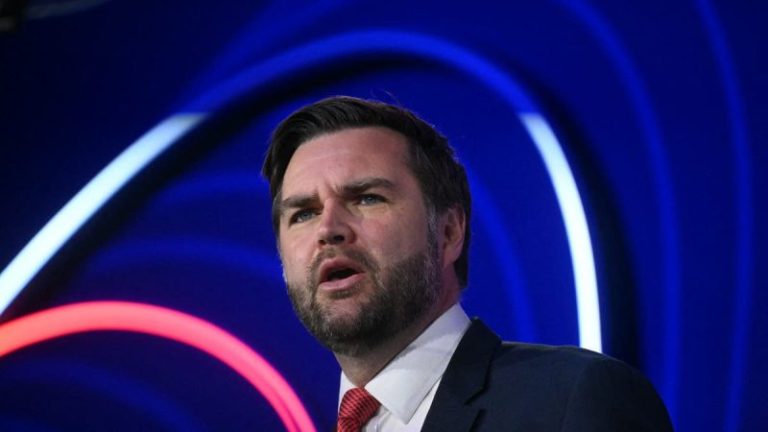
WASHINGTON — Vice President JD Vance knocked recent globalization efforts that use ‘cheap labor as a crutch’ while simultaneously hampering innovation on the global scale during a Tuesday tech and artificial intelligence speech. 

‘Our workers, the populists, on the one hand, the tech optimists on the other, have been failed by this government,’ he said. ‘Not just the government of the last administration, but the government in some ways of the last 40 years, because there were two conceits that our leadership class had when it came to globalization.’

Vance explained that recent globalization efforts falsely assumed that world leaders could ‘separate the making of things from the design of things,’ citing the belief was that poorer nations would create goods such as cellphones, while wealthier nations would move ‘further up the value chain.’

‘Now, we assume that other nations will always trail us in the value chain, but it turns out that as they got better at the low end of the value chain, they also started catching up on the higher end. We were squeezed from both ends. Now, that was the first conceit of globalization,’ he said. 

Vance said the efforts have led to an addiction to cheap labor that has halted innovation. 

‘Cheap labor is fundamentally a crutch, and it’s a crutch that inhibits innovation,’ he said. ‘I might even say that it’s a drug that too many American firms got addicted to. Now, if you can make a product more cheaply, it’s far too easy to do that rather than to innovate. And whether we were offshoring factories to cheap labor economies or importing cheap labor through our immigration system, cheap labor became the drug of Western economies.

‘And I’d say that if you look in nearly every country, from Canada to the UK that imported large amounts of cheap labor, you’ve seen productivity stagnate,’ he said. ‘And I don’t think that’s that’s not a total happenstance. I think that the connection is very direct.’ 

Vance argued that ‘innovation is key to winning the worldwide manufacturing competition, to giving our workers a fair deal and to reclaiming our heritage via America’s great industrial comeback.’

The American Dynamism Summit is an annual tech summit hosted by venture capital firm Andreessen Horowitz. The event, which is in its third year, acts as a bridge between California’s Silicon Valley and Washington, D.C. 

Vance headlined the event at the Waldorf Astoria and was joined by other notable speakers during the summit, such as Interior Secretary Doug Burgum, General Bryan P. Fenton, who serves as U.S. Special Operations Command commander, and Democratic New York Rep. Ritchie Torres. 

Vance also spoke out against industry and world leaders who are championing strict regulations on AI due to concerns over the tech, saying their worries are based ‘on a faulty premise.’ 

‘This idea that tech-forward people and the populists are somehow inevitably going to come to a loggerheads is wrong,’ he said. ‘I think the reality is that in any dynamic society, technology is going to advance.’ 

The vice president compared the rise of AI to the proliferation of ATMs in the 1970s, which sparked concern that bank tellers would be obliterated, similarly to how some workers are concerned AI could push them out of their jobs.  

‘I think there’s too much fear that AI will simply replace jobs rather than augmenting so many of the things that we do now,’ he said. ‘In the 1970s, if you go back a little ways, many feared that the automated teller machine, what we call the ATM, would replace bank tellers. In reality, the advent of the ATM made bank tellers more productive, and you have more people today working in customer service in the financial sector than you had when the ATM was created.’ 

‘Now they’re doing slightly different jobs, of course. Yes, they’re doing more interesting tasks also,’ he continued. ‘And importantly, they’re making more money than they were in the 1970s.’

Vance attended a separate tech summit in February in Paris, called the AI Action Summit, where he railed against Europe’s ‘trepidation’ of artificial intelligence, and regulation of it as hampering the future of innovation and jobs. 

‘Now, at this moment, we face the extraordinary prospect of a new industrial revolution, one on par with the invention of the steam engine or Bessemer steel,’ he said in the Paris speech. ‘But it will never come to pass if overregulation deters innovators from taking the risks necessary to advance the ball, nor will it occur if we allow AI to become dominated by massive players looking to use the tech to censor or control users’ thoughts.

‘And as AI creates new jobs and industries, our government, businesses and labor organizations have an obligation to work together to empower the workers not just of the United States but … all over the world,’ he added. ‘To that end, for all major AI policy decisions coming from the federal government, the Trump Administration will guarantee American workers a seat at the table, and we’re very proud of that.’ 

President Donald Trump announced a massive artificial intelligence infrastructure plan on his second day in office in January, explaining that tech firms Softbank, OpenAI and Oracle joined forces for a project called Stargate, which is working to build U.S.-based data centers to power artificial intelligence. There was an initial $100 billion investment in the project, with plans to expand to $500 billion across the next four years. 

Trump additionally signed an executive order on his third day in office called, ‘Removing Barriers to American Leadership in Artificial Intelligence.’ The executive order rescinded previous Biden-era AI policies that Trump said ‘established unnecessarily burdensome requirements for companies developing and deploying AI’ that handcuffed the private sector. 

‘American development of AI systems must be free from ideological bias or engineered social agendas,’ the White House said of the executive order. ‘With the right government policies, the United States can solidify its position as the leader in AI and secure a brighter future for all Americans.’ 

 Fox News Digital’s Diana Stancy contributed to this report. 
This post appeared first on FOX NEWS

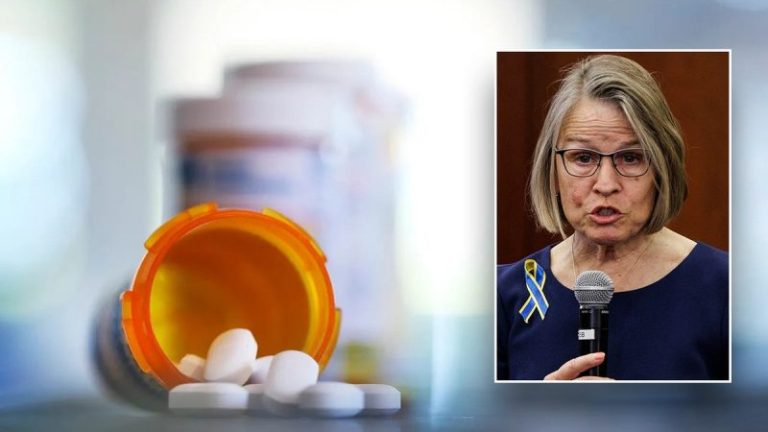
A bipartisan group of lawmakers is pushing to reform the incentive structure for Pharmacy Benefit Managers (PBMs), arguing that it drives up patient costs by encouraging them to favor higher-priced drugs while withholding potential savings.

Led by physician and GOP Iowa Rep. Mariannette Miller-Meeks, the group introduced the ‘Delinking Revenue from Unfair Gouging (DRUG) Act’ on Tuesday, requiring that PBMs in the commercial market only charge a flat fee for their services related to a specific prescription drug, versus letting them continue to charge a percentage of the drug price. 

PBMs are third-party intermediaries between insurance companies, drug manufacturers and pharmacies that serve to control drug prices and access. The current incentive structure for PBMs, according to the DRUG Act’s sponsors, encourages them to drive up the list price of drugs to increase profits.    

‘Pharmacy benefit managers (PBMs) have excessive influence over the prices patients pay at the pharmacy counter,’ said Miller-Meeks. ‘Local Iowa pharmacies are closing due to greedy PBM practices, impacting proximity and access to medications for Iowans. The DRUG Act will put downward pressure on prescription drug prices and insurance premiums by removing the incentive for PBMs to drive up the list price of medications.’

According to the Iowa Pharmacy Association, PBMs have been using opaque reimbursement models that often pay back pharmacies less than the list cost of a drug and the services provided to dispense it. 

As a result of these practices, pharmacies in Iowa and across the country have been forced to close, the association said in a January report. Twenty-nine Iowa pharmacies and 2,300 pharmacies nationwide closed their doors in 2024, according to the association.  

While PBMs have played important roles in making drugs more widely available, through decades of mergers and acquisitions, the three largest PBMs now manage nearly 80% of all prescriptions filled in the U.S., according to a 2024 report from the Federal Trade Commission. 

The DRUG Act’s reforms serve to address this anti-competitiveness, which the bill’s sponsors say will also help lower costs.

‘Pharmacy Benefit Managers (PBMs) contribute to high drug costs because they are incentivized to steer patients towards drugs that are more profitable for PBMs, but may be less clinically effective for consumers,’ said Rep. Nannette Barragán, D-Calif., one of the bill’s co-sponsors. ‘This broken system disproportionately harms low-income individuals, seniors, and those with chronic illnesses who rely on life-saving prescriptions to manage their health.’

Rep. Donald Norcross, D-N.J., another co-sponsor of the DRUG Act, said families in his district ‘are crying out for relief from high prescription drug prices.’

‘Americans deserve access to quality health care and affordable prescription drugs,’ Norcross said. ‘The DRUG Act reins in prescription drug prices by removing the incentive for pharmacy benefit managers to drive up costs, increasing transparency and prioritizing patients over profits.’

This post appeared first on FOX NEWS

The White House maintains that President Donald Trump does not use an autopen to sign legally binding documents like pardons — after Trump accused former President Joe Biden of having used the mechanical device to sign such documents. 

A White House official confirmed to Fox News Digital Tuesday that the Trump administration’s official policy during both his terms has beento use Trump’s hand signature on every legally operational or binding document. 

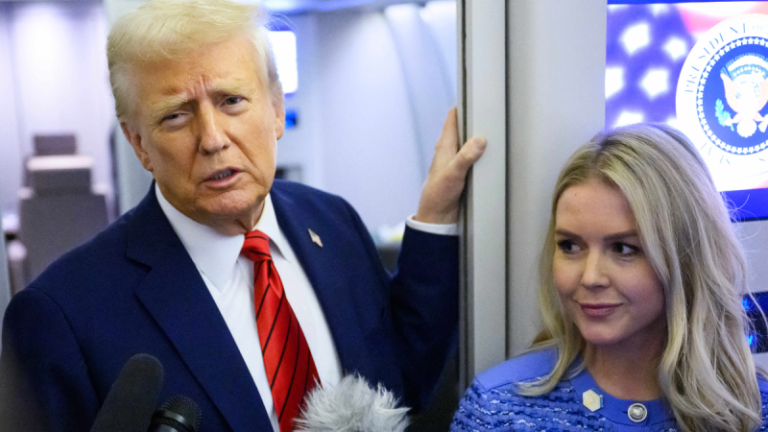
Trump told reporters on Air Force One Sunday that while he uses an autopen for correspondence, it’s shameful to use one when signing documents such as pardons. 

‘We may use it, as an example, to send some young person a letter because it’s nice,’ Trump said. ‘You know, we get thousands and thousands of letters, letters of support for young people, from people that aren’t feeling well, etcetera. But to sign pardons and all of the things that he signed with an autopen is disgraceful.’

Trump also claimed on Sunday that the courts must decide whether Biden’s use of an autopen for executive orders and pardons means they are void. 

An autopen is a device that physically holds a pen and is programmed to replicate a person’s signature. The Justice Department’s Office of Legal Counsel determined in 2005 that the president is permitted to use an autopen to sign bills into law, and the U.S. Court of Appeals for the Fourth Circuit issued a ruling in February that said the absence of ‘a writing does not equate to proof that a commutation did not occur.’

‘The constitutional text is thus silent as to any particular form the President’s clemency act must take to be effective,’ the circuit court said in its opinion. 

Trump raised the issue of Biden utilizing an autopen to sign pardons — including some for lawmakers who served on the House Select Committee to investigate the Jan. 6 Capitol riot — in a social media post on Sunday. Trump claimed in the post that the pardons were ‘VOID’ and accused Biden of not having knowledge of their signing. 

‘In other words, Joe Biden did not sign them but, more importantly, he did not know anything about them! The necessary Pardoning Documents were not explained to, or approved by, Biden. He knew nothing about them, and the people that did may have committed a crime,’ Trump said in his post. 

A spokesperson for Biden did not provide comment on the record to Fox News Digital. 

On March 6, the Oversight Project with conservative think-tank The Heritage Foundation released a report claiming that it conducted an analysis of Biden documents, and found that a majority of documents signed during his administration used an autopen. 

‘Our findings suggest widespread use of an autopen to sign clemency warrants throughout the Biden Presidency,’ the Oversight Project said in a memo released March 17. ‘This apparent use raises concerns about: whether President Biden personally authorized each official act; whether or which unelected staff controlled the autopen device; and whether they acted with his approval.’ 

On Trump’s inauguration day, Biden signed pardons for the former chair of the Joint Chiefs of Staff, retired Gen. Mark Milley, whom Trump has accused of committing treason, as well as those involved in the Jan. 6 Select Committee investigation that conducted a probe into the attack.

Trump historically has railed against the select committee, and was indicted in August 2023 for attempting to overturn the 2020 election results that culminated in the attack on the Capitol. However, special counsel Jack Smith dropped the case against Trump in November 2024 after Trump won the presidential election.

The Associated Press contributed to this report. 

This post appeared first on FOX NEWS

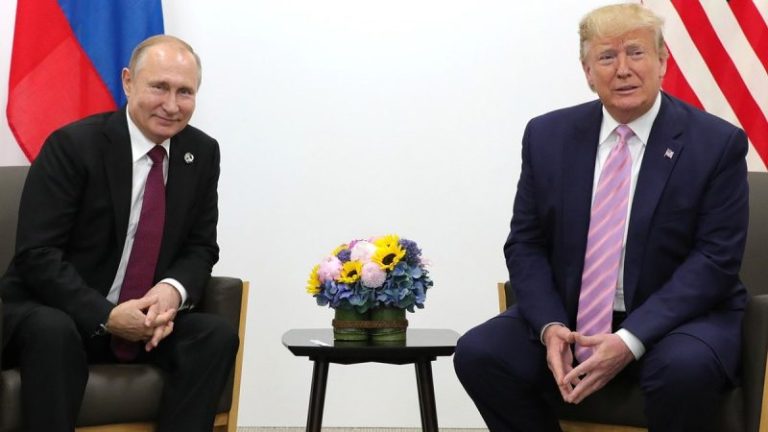
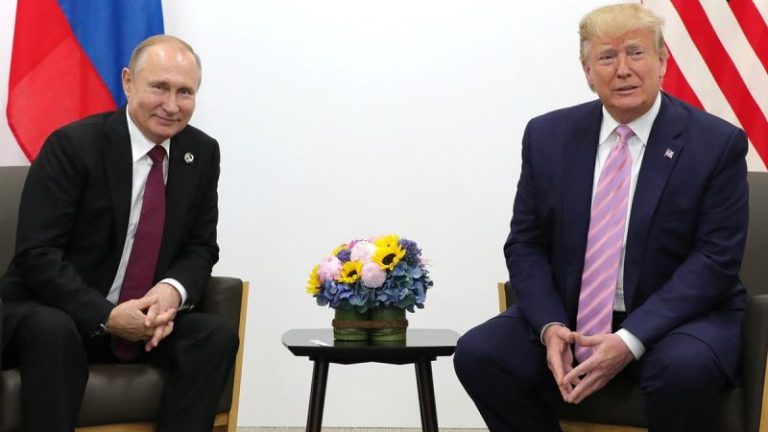
President Donald Trump spoke with Russian President Vladimir Putin for at least 90 minutes Tuesday about ending the war in Ukraine, the White House said, noting that the two leaders agreed that ‘negotiations will begin immediately in the Middle East.’

The two leaders also agreed to a ceasefire against energy infrastructure, both sides said. Trump described the call as ‘very good and productive’ on Truth Social.

‘Many elements of a Contract for Peace were discussed, including the fact that thousands of soldiers are being killed, and both President Putin and President Zelenskyy would like to see it end,’ Trump wrote on social media. ‘That process is now in full force and effect, and we will, hopefully, for the sake of Humanity, get the job done!’

The call began at 10 a.m. ET, according to White House spokesman Dan Scavino. The White House then said around 12:52 p.m. that the call was over, though it would not say initially exactly when each side hung up.

‘Today, President Trump and President Putin spoke about the need for peace and a ceasefire in the Ukraine war. Both leaders agreed this conflict needs to end with a lasting peace,’ the White House said in a statement after the call. ‘They also stressed the need for improved bilateral relations between the United States and Russia. The blood and treasure that both Ukraine and Russia have been spending in this war would be better spent on the needs of their people.
 
‘This conflict should never have started and should have been ended long ago with sincere and good faith peace efforts. The leaders agreed that the movement to peace will begin with an energy and infrastructure ceasefire, as well as technical negotiations on implementation of a maritime ceasefire in the Black Sea, full ceasefire and permanent peace,’ it continued. ‘These negotiations will begin immediately in the Middle East.’

‘The leaders spoke broadly about the Middle East as a region of potential cooperation to prevent future conflicts. They further discussed the need to stop proliferation of strategic weapons and will engage with others to ensure the broadest possible application. The two leaders shared the view that Iran should never be in a position to destroy Israel,’ the White House also said. ‘The two leaders agreed that a future with an improved bilateral relationship between the United States and Russia has huge upside. This includes enormous economic deals and geopolitical stability when peace has been achieved.’

During the call, Putin said a complete cessation of military aid to Ukraine was a key condition for ending the war, Russia’s state-run TASS news agency reported, citing the Kremlin.

Putin backed the idea from Trump of a mutual 30-day pause of strikes on energy infrastructure and gave that command to his military, according to TASS. It also reported that Russia will return 23 seriously wounded Ukrainian soldiers to Kyiv as a gesture of goodwill. 

Trump said last night that ‘Many elements of a Final Agreement’ to end the Ukraine war ‘have been agreed to, but much remains.’ 

State Department spokesperson Tammy Bruce said Monday that ‘the ball is now in Russia’s court’ to accept a U.S.-proposed ceasefire deal that Ukraine agreed to last week.

The U.S.-backed proposal, which includes an immediate 30-day ceasefire and guaranteed resumption of U.S. military aid and intelligence to Ukraine, was finalized during diplomatic talks in Saudi Arabia last week.

The last time Trump and Putin spoke was in mid-February. 

‘I just had a lengthy and highly productive phone call with President Vladimir Putin of Russia. We discussed Ukraine, the Middle East, Energy, Artificial Intelligence, the power of the Dollar, and various other subjects,’ Trump said at the time. 

‘We both reflected on the Great History of our Nations, and the fact that we fought so successfully together in World War II, remembering, that Russia lost tens of millions of people, and we, likewise, lost so many!’ Trump continued.  

‘We each talked about the strengths of our respective Nations, and the great benefit that we will someday have in working together. But first, as we both agreed, we want to stop the millions of deaths taking place in the War with Russia/Ukraine,’ he also said. 

Fox News’ Alec Schemmel and James Levinson contributed to this report.

This post appeared first on FOX NEWS

PUNTACANA, Dominican Republic – A key witness in the March 6 disappearance of University of Pittsburgh student Sudiksha Konanki from a Dominican Republic resort arrived in court for a hearing on Tuesday afternoon in his bid to go home.

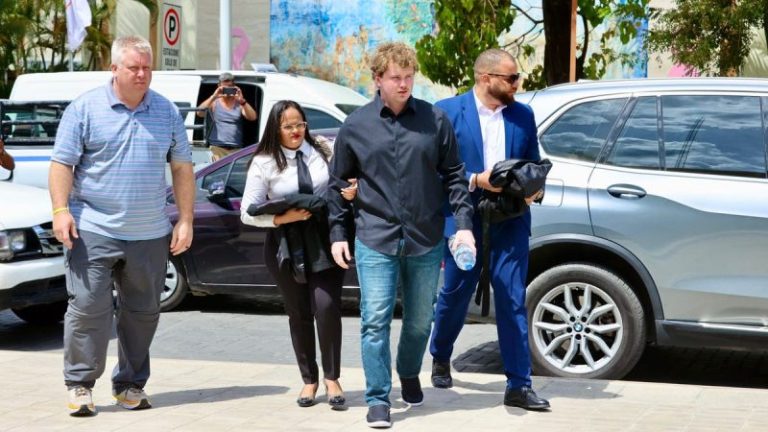
Joshua Riibe arrived in court in the Dominican Republic, where he has been held in the disappearance of Konanki, 20, who has been missing since the early morning hours of March 6. Riibe has not been named a suspect in the case, which has been considered a missing person case and not a criminal one.

He appeared with his father as prosecutors argued that the witness’ freedom has not been limited while he has been held in the Dominican after his passport was confiscated, and he has the right to walk around the RIU Republica resort without issue.

Lawyers and prosecutors screamed at each other during a very heated hearing on Tuesday after Riibe’s counsel submitted photos of him surrounded by police and patrol cars.

Riibe is not paying for lodging; the RIU allowing him to remain there for free.

His lawyer, meanwhile, said the prosecutor is playing with the court and the public opinion. His lawyer claimed that Riibe always has police around for his safety, but today that haven’t taken care of him. 

The 22-year-old Iowa man and his father also had the opportunity to testify Tuesday.

‘Ever since my passport was taken, it’s very rare I’m alone.’

— Joshua Riibe

Riibe said on Sunday, he woke up and went to get breakfast, and when he returned to his hotel room, police ‘showed showed up saying that they were p—ed we didn’t tell them.’

He added that police eat with him, and officers went ‘crazy’ when he and his father went to the American embassy.

‘So we had to wait in the lobby for the tourist police to arrive to get escorted,’ he said. ‘That same day, I had another meeting, and when we grabbed lunch, the police [were] there. The issue is that we only have [one] method of communication, so every time they need us, we have to be in the room. I can’t go anywhere. I really want to be home. Hug my family and friends.’

Ribbe also said he ‘hugged’ Konanki’s parents before they left the Dominican and returned home to Virginia.

‘I understand there is an investigation, and I’ve cooperated, but haven’t been allowed to leave,’ he told the court on Tuesday. ‘When Sudiksha’s parents left, they said goodbye and even hugged me. She thanked me for saving her daughter the first time. All I’ve been doing is waiting in my hotel room to be interviewed but at this point. I just want to be home.’

Meanwhile, Dominican authorities returned Riibe’s friend’s passport on Tuesday afternoon.

Konanki went swimming in the ocean with the witness, identified as 22-year-old Riibe of Iowa, outside the RIU Republica resort in Punta Cana after drinking at a hotel bar. She has yet to be located.

Riibe has been detained in the Dominican since then and filed a writ of habeas corpus on Monday, challenging his de facto detention in the country. He arrived in court for a hearing Tuesday in which a judge will rule on whether he can return home, sources said.

The State Department confirmed to Fox News Digital earlier on Tuesday that it was assisting a witness in University of Pittsburgh student Sudiksha Konanki’s March 6 disappearance from the Dominican Republic.

‘We take seriously our commitment to assist U.S. citizens abroad and are providing consular assistance,’ the State Department said in a statement when asked about Riibe’s Monday filing of a writ of habeas corpus. ‘Due to privacy considerations, we have no further comment.’

Konanki had gone to the beach with a group of seven other friends after a night of drinking. Six of her friends returned to the RIU Republica around 6 a.m., leaving the 20-year-old student alone with Riibe, who was also on spring break at the RIU Republica and is believed to be one of the last people to see her alive.

Riibe, who is considered a witness in Konanki’s disappearance, apparently told Dominican authorities that while they were swimming, a large wave crashed over them, according to a translated transcript of his interview to police shared with Fox News. 

He said he tried to help her and last saw her wading through knee-deep water. He then began vomiting up seawater and noticed that Konanki was no longer in sight and assumed she had returned to her hotel room. Riibe said he fell asleep in a beach chair before eventually returning to his room. 

Hotel surveillance footage shows Riibe returning to his hotel room around 9 a.m. on March 6.

Konanki’s parents, Subbarayudu and SreeDevi Konanki, are not disputing Riibe’s account of what happened, according to a letter they sent to Dominican police on Monday. Her father had previously asked police to investigate all possibilities.

‘Following an extensive search, Dominican authorities have concluded that Sudiksha is believed to have drowned,’ her parents wrote in a letter to La Policia Nacional, the country’s national police force, Monday night. ‘Her clothes were discovered on a beach near where she was last seen. The individual last seen with her is cooperating with the investigation, and no evidence of foul play has been found.’

They said they made the request after ‘much deliberation’ and thanked supporters for the international search effort.

The Loudoun County Sheriff’s Office in Virginia, where Konanki is from, issued a statement sharing her family’s belief that she drowned.

‘While a final decision to make such a declaration rests with authorities in the Dominican Republic, we will support the Konanki family in every way possible as we continue to review the evidence and information made available to us in the course of this investigation,’ the sheriff’s office said.

Riibe, a senior at St. Cloud State University in Minnesota who has not been accused of a crime but is considered a crucial witness in the case, has been held under surveillance at the resort since Konanki was reported missing.

His family has called his continued required presence in the country ‘irregular.’

Riibe is not accused of a crime, but authorities confiscated his passport while investigating his account of what happened.

Fox News’ Mara Robles contributed to this report.

This post appeared first on FOX NEWS

There appears to be a new sports power couple.

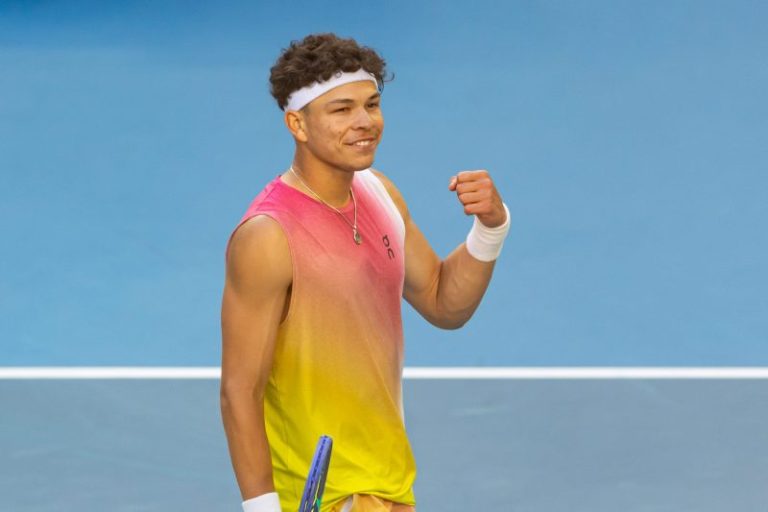
Tennis star Ben Shelton went Instagram official with his relationship with United States National Team and Washington Spirit forward Trinity Rodman.

‘I been focused, but I’m steady climbin’, I’m nowhere near my peak,’ Shelton said in the post.

Shelton, 22, won the men’s singles title at the NCAA Division I Tennis Championships in 2022 while at the University of Florida and is currently ranked 14th in the ATP standings and has reached the semifinals of two major championships, including the 2025 Australian Open, where he lost to Jannik Sinner in straight sets.

Rodman, also 22, is the daughter of Naismith Basketball Hall of Famer Dennis Rodman. At 18, she was at the time the youngest player ever to be drafted into the National Women’s Soccer League and was named the league’s Rookie of the Year in 2021.

She scored three goals during the 2024 Paris Olympics, helping the United States win the gold medal.

This post appeared first on USA TODAY

Alabama basketball received some good news regarding one of its key players heading into the men’s NCAA Tournament.

Nate Oats on Monday provided a positive update on Grant Nelson’s injury during his ‘Hey Coach’ radio show on the Crimson Tide Sports Network. The sixth-year Crimson Tide coach said that, while Nelson is questionable for its first-round game vs. Robert Morris, Alabama ‘dodged one’ with the senior forward.

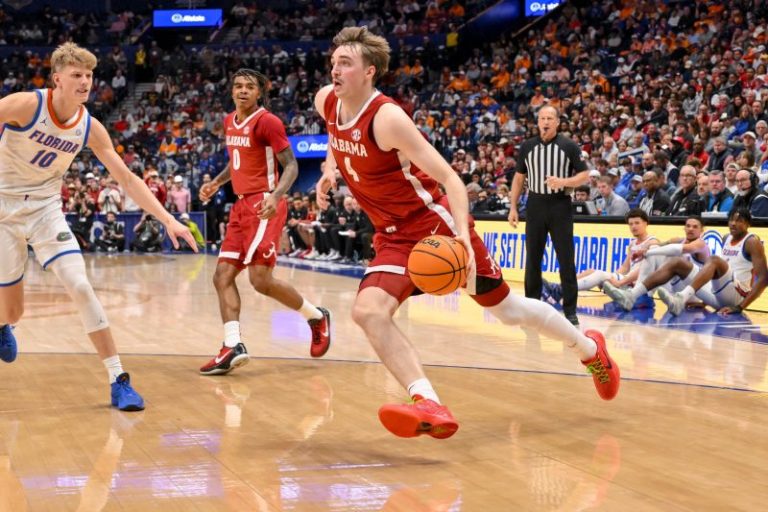
Nelson missed the entire second half of Alabama’s SEC tournament semifinal loss to Florida on Saturday due to an apparent left leg injury that he sustained in the first half.

The Devils Lake, North Dakota native leads Alabama in rebounds and blocks per game at 7.6 and 1.2, respectively, while ranking second on the team in scoring at 11.8 points per game, only behind All-American guard Mark Sears.

Alabama, the No. 2 seed in the East Region, will open its 2025 NCAA Tournament slate on Friday, March 21 at 12:40 p.m. ET against No. 15 seed Robert Morris at Rocket Arena in Cleveland. The Crimson Tide are looking to make it back to the Final Four after making it for the first time in program history last season.

Here’s the latest on Nelson and his status for the NCAA Tournament:

Will Grant Nelson play in the NCAA Tournament? Status for Alabama forward in March Madness

Yes, Nelson is expected to return and play in the NCAA Tournament, though when he actually returns to the Crimson Tide is still to be determined. Oats on Monday said it’s more likely for him to return in the second round than the first round, should Alabama win its first-round game.

‘Not sure he’ll be ready by Friday,’ Oats said. ‘We’re hoping at a minimum that he’d be ready by Sunday with the possibility of maybe Friday.’

He added: ‘We dodged one. It wasn’t anything too serious with his knee, but for sure will be questionable for Friday.’

Grant Nelson injury update

Nelson sustained an apparent left leg injury in the first half of Alabama’s SEC semifinal against Florida on Saturday, March 15.

The injury for the 6-foot-11 forward came near the 3:40 mark of the first half. As previously reported by The Tuscaloosa News, part of the USA TODAY Network, Nelson attempted to push through the injury and continue playing before exiting the floor ‘in visible pain.’

He was looked at by Alabama’s medical staff during halftime, and then later ruled out for the remainder of the contest due to injury. In the lead-up to the Selection Sunday bracket reveal show, CBS Sports college basketball insider Jon Rothstein reported that Nelson would spend Monday visiting a knee specialist.

What is Grant Nelson’s injury?

Oats told reporters in Nashville following Alabama’s loss to Florida on Saturday that Nelson is dealing with a left leg injury and didn’t believe it to be an ACL injury.

‘He got that knee injury and I’m not exactly sure what it is,’ Oats said on Saturday. ‘They’re not thinking it’s anything with an ACL or anything like that.

‘Got evaluated by the team doctor at halftime. Let us know in the second half he wasn’t going to be able to go.’

Grant Nelson stats

Here’s a look at Nelson’s stats this season:

Points: 11.8
Rebounds: 7.6
Assists: 4.0
Blocks: 1.2
Shooting: 52.8%
3-point shooting: 27.4%

The USA TODAY app gets you to the heart of the news — fastDownload for award-winning coverage, crosswords, audio storytelling, the eNewspaper and more.

This post appeared first on USA TODAY

Cinderella, get ready to have a ball. Talking about you, Drake. You too, Yale.
Colorado State enters March Madness piping hot.
Looking for longshot upset potential? Then take Lipscomb.

Cinderella, get ready to have a ball. This is your moment.

This NCAA Tournament features four particularly strong No. 1 seeds, but I also spy some underdogs equipped to do damage.

Come the Final Four, expect a lot of chalk. In the meantime, I anticipate a delicious dose of chaos. There’s no shortage of Nos. 10, 11, 12 and even 13 seeds that can inflict pain.

I can’t propose an upset from the Nos. 15 or 16 seeds. Although not impossible in a tournament known for unpredictability, the top seeds are too strong this year. Also, I didn’t include any No. 9 seeds as Cinderellas. First-round triumphs by a No. 9 seed hardly qualify as upsets.

From the 10- through 14-seed line, here are my teams that offer top Cinderella potential:

(10) New Mexico

First-round opponent: (7) Marquette

The Lobos’ Donovan Dent stands out as one of the nation’s best point guards, regardless of conference. He scores as well as he distributes. New Mexico plays stingy defense, and it owns non-conference wins against tournament qualifiers UCLA and VCU. The Lobos are good enough to win multiple NCAA Tournament games.

(10) Utah State

First-round opponent: (7) UCLA

The Aggies are especially efficient offensively, and they average nine 3-pointers per game. Teams that can get hot from the perimeter offer enticing upset potential. Utah State’s non-conference win list includes Iowa and Saint Mary’s. Top player Ian Martinez scored 21 points in last year’s first-round takedown of TCU.

REGIONAL PREDICTIONS: East | West | Midwest | South

(11) Drake

First-round opponent: (6) Missouri

Drake will be a popular Cinderella in bracket pools, and trendy upsets too often don’t pan out. Still, I can’t resist a team that defends and rebounds as well as Drake, which beat tournament qualifier Vanderbilt. Four Drake starters, including star guard Bennett Stirtz, smoothly transitioned from Division II after previously playing for coach Ben McCollum at Northwest Missouri State. If Drake dictates the deliberate tempo it prefers, that could bother Missouri.

(11) VCU

First-round opponent: (6) Brigham Young

BYU’s slick-shooting offense meets VCU’s dogged defense in another 6-vs-11 matchup paring teams with contrasting styles. The Rams are no stranger to facing high-major programs. They beat Boston College and Miami. They’ve won 12 of their last 13 games. Coach Ryan Odom engineered the first upset by a No. 16 seed in March Madness history, when Maryland-Baltimore County stunned No. 1 Virginia in 2018.

(12) UC-San Diego

First-round opponent: (5) Michigan

Five years ago, the Tritons won 30 games in their final Division II season. They needed just a handful of years to take over the Big West. They average nearly 11 3s per game – that’s a recipe for an upset – and four starters average in double figures scoring. The committee considers UC-San Diego the best No. 12 seed. Duke is the only team with more victories than the Tritons’ 30.

(12) Colorado State

First-round opponent: (5) Memphis

If you like hot squads, you’ll love the Rams, winners of 10 straight. Most of those results came in convincing fashion. Colorado State went 10-7 against ‘Quad 1’ and ‘Quad 2’ opponents. Fifth-year senior Nique Clifford supplies efficient scoring and reliable rebounding. The Mountain West qualified four teams, so it says something that Colorado State won the conference tournament.

(13) Yale

First-round opponent: (4) Texas A&M

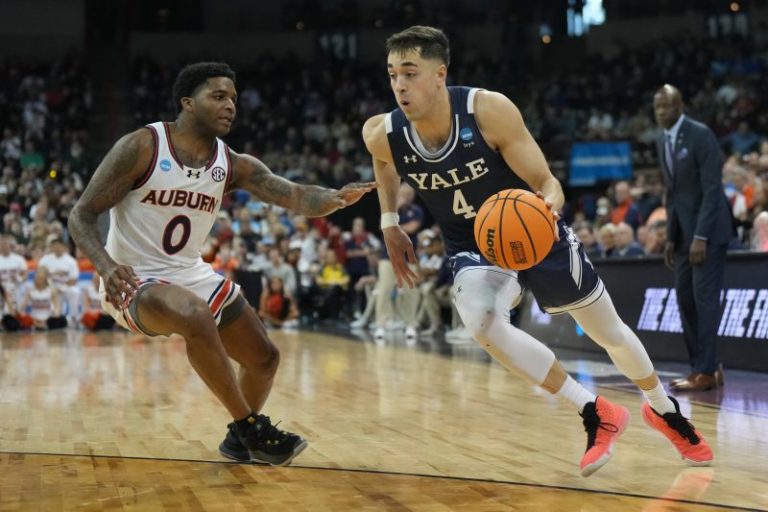
No need to question Yale’s basketball IQ, and the Bulldogs shouldn’t be intimidated after playing Purdue to a close game this season. Star guard John Poulakidas is back after scoring 28 points in last season’s first-round upset of Auburn. Yale shoots at a high clip from 3-point range, and the Bulldogs won’t shy away from Texas A&M’s physicality.

(14) Lipscomb

First-round opponent: (3) Iowa State

The 3-point shot remains college basketball’s great equalizer, and Lipscomb averages nearly 10 triples per game. Lipscomb also shoots free throws better than all but two teams in the bracket. Jacob Ognacevic has scored at least 20 points in eight of his past nine games. A Lipscomb upset would be the longest-shot on this list, but what’s March without a little madness?

Blake Toppmeyer is a columnist for the USA TODAY Network. Email him at BToppmeyer@gannett.com and follow him on X @btoppmeyer. Subscribe to read all of his columns.

This post appeared first on USA TODAY

President Donald Trump is now speaking with Russian President Vladimir Putin about ending the war in Ukraine, the White House said.

The call, which began at 10 a.m. ET, is ‘going well, and still in progress,’ White House spokesman Dan Scavino said at 10:54 a.m. ET. He added at 11:32 a.m. that it is still ongoing.

It comes after Trump said last night that ‘Many elements of a Final Agreement have been agreed to, but much remains.’ 

‘Thousands of young soldiers, and others, are being killed. Each week brings 2,500 soldier deaths, from both sides, and it must end NOW. I look very much forward to the call with President Putin,’ Trump wrote on his Truth Social account. 

Kremlin spokesperson Dmitry Peskov said Tuesday that the two leaders would speak about the war in Ukraine but that there are a ‘large number of questions’ regarding normalizing U.S.-Russia relations, according to The Associated Press. 

State Department spokesperson Tammy Bruce said Monday that ‘the ball is now in Russia’s court’ to accept a U.S.-proposed ceasefire deal that Ukraine agreed to last week.

The U.S.-backed proposal, which includes an immediate 30-day ceasefire and guaranteed resumption of U.S. military aid and intelligence to Ukraine, was finalized during diplomatic talks in Saudi Arabia last week.

‘Ukraine expressed readiness to accept the U.S. proposal to enact an immediate interim 30-day ceasefire to the Russia-Ukraine conflict. The ball is now in Russia’s court,’ Bruce said during a State Department briefing.

The last time Trump and Putin spoke was in mid-February. 

‘I just had a lengthy and highly productive phone call with President Vladimir Putin of Russia. We discussed Ukraine, the Middle East, Energy, Artificial Intelligence, the power of the Dollar, and various other subjects,’ Trump said at the time. 

‘We both reflected on the Great History of our Nations, and the fact that we fought so successfully together in World War II, remembering, that Russia lost tens of millions of people, and we, likewise, lost so many!’ Trump continued.  

‘We each talked about the strengths of our respective Nations, and the great benefit that we will someday have in working together. But first, as we both agreed, we want to stop the millions of deaths taking place in the War with Russia/Ukraine,’ he also said. 

This is a developing story. Please check back for updates. 

Fox News’ Alec Schemmel contributed to this report.

This post appeared first on FOX NEWS

The Justice Department is cracking down on Palestinian militant group Hamas with a new task force aimed at providing justice to the victims of Hamas’ Oct. 7, 2023 attack on Israel. 

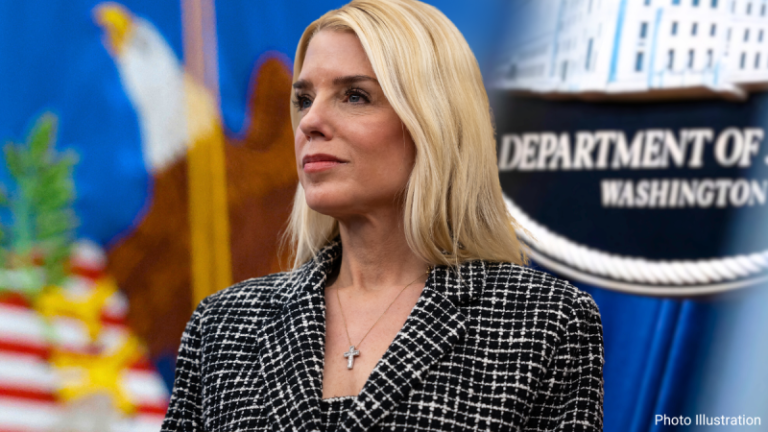
Attorney General Pam Bondi said the group, known as Joint Task Force October 7, would focus on identifying, charging and prosecuting those who conducted the 2023 attacks, which took the lives of roughly 1,200 people — including 47 U.S. citizens. Hamas also took more than 250 people hostage, including eight U.S. citizens. 

Specifically, the task force will investigate acts of terrorism and civil rights violations by those who have provided support to and financially backed Hamas, other related Iranian proxies, and antisemitism from these groups. 

‘The barbaric Hamas terrorists will not win — and there will be consequences,’ Bondi said in a Monday statement.  

A senior counterterrorism prosecutor from the Justice Department’s National Security Division will lead the task force, along with a senior FBI special agent serving as the task force commander, and an FBI intelligence analyst as deputy task force commander, according to the Department of Justice. 

FBI agents, analysts, forensic accountants, data scientists and linguists will all serve on the task force and will work on investigating and prosecuting domestic and extraterritorial terrorism cases. Likewise, the FBI will start to embed agents within Israel’s National Bureau of Counter Terror Financing and will coordinate with foreign counterparts with the FBI’s Legal Attaché office in Israel under the task force. 

The task force’s efforts will expand upon the Justice Department’s ongoing investigations into those involved in the Oct. 7 attack and advance the agency’s efforts to hold ‘Hamas supporters accountable,’ the Justice Department said in a news release. 

The Justice Department’s announcement of the new task force coincides with the arrest of anti-Israel activist Mahmoud Khalil, who played a major role in the protests against Israel at Columbia University. U.S. Immigration and Customs Enforcement (ICE) agents took Khalil, a Palestinian raised in Syria and a permanent U.S. resident, into custody on March 9. 

The Department of Homeland Security said that Khalil ‘led activities aligned to Hamas, a designated terrorist organization,’ and Secretary of State Marco Rubio said that the administration would revoke the green cards of any Hamas supporters in the U.S. and deport them.

White House officials told Fox News Digital following Khalil’s arrest that the Justice Department, the Department of Homeland Security and State Department are investigating Khalil as a possible national security threat. The investigation has detected ‘antisemitic and hateful’ posts on Khalil’s social media, and determined he organized multiple antisemitic protests on Columbia’s campus, the officials said. 

Meanwhile, Khalil’s attorneys have challenged the Trump administration’s actions and filed motions asserting that ICE violated Khalil’s constitutional rights. 

This post appeared first on FOX NEWS