Archive

2025

Browsing

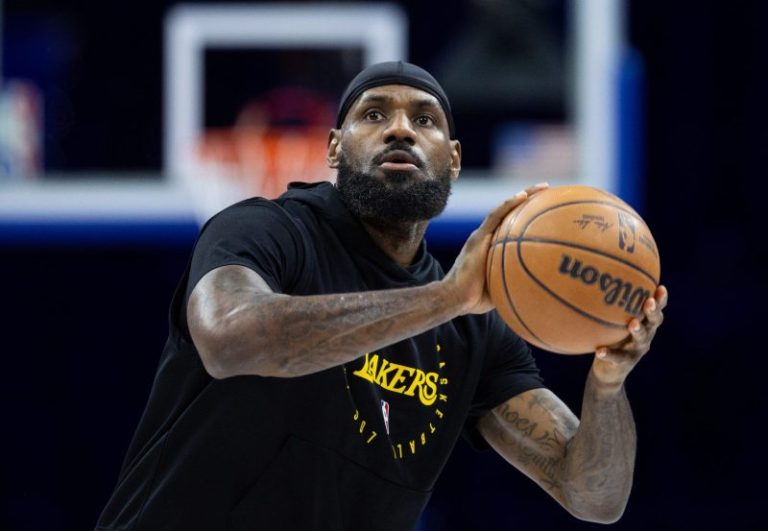
LOS ANGELES — LeBron James did not play for the Los Angeles Lakers against the Denver Nuggets at Crypto.Com Arena on Wednesday.

James is continuing to miss time after he had suffered a strained left groin muscle against the Boston Celtics on March 8. His injury led to him leaving the team’s road trip early to begin his recovery process at home.

Even without James, the Lakers had managed to win back-to-back games after they had lost four games in a row on the road.

Dorian Finney-Smith has served as a replacement in the starting lineup in place of James.

LeBron James injury update

James is still considered day-to-day, Lakers coach JJ Redick said Wednesday. 

The star has now missed the Lakers’ last six games. Their last four opponents were from the Western Conference. 

James had 22 points, 14 rebounds and nine assists in 35 minutes of play against the Celtics before the injury.

When is the Lakers’ next game?

The Lakers will host the Milwaukee Bucks on Thursday and the Chicago Bulls on Saturday before playing the next four games on the road.

LeBron James stats

LeBron James is averaging 25.0 points, 8.5 assists and 8.2 rebounds in 58 games.

This post appeared first on USA TODAY

American University star forward Matt Rogers was forced out of the team’s game against Mount St. Mary’s in the First Four with an apparent knee injury.

Rogers, who is the Eagles’ top scorer, was able to walk off under his own power when he was hurt earlier in the contest on Wednesday.

He returned briefly to the game and appeared to aggravate the injury with 5:28 remaining in the first half. He required some assistance getting off the floor.

The graduate student was getting his first taste of NCAA tournament action on Wednesday night. Here’s the latest on the Matt Rogers injury:

Matt Rogers injury update

He departed the game for a second time with 5:28 left in the first half after twisting his knee while defending a drive to the basket.

The team had him working out on the exercise bike after he initially came out of the game. Rogers returned with 7:54 remaining in the opening half before the knee gave out again.

A finalist for the 2024-25 Lou Henson National Player of the Year Award – given to the top mid-major player in college basketball – the Patriot League Tournament MVP has spent all five seasons with the Eagles.

He ranks sixth in program history for points scored (1,849) and ninth in rebounds (758), while playing in a program-record 136 games. Rogers averaged 17.0 points and 5.6 rebounds this season.

Rogers’ absence was noticeable for American University, as Mount St. Mary’s finished the first half with a 10-point lead.

This post appeared first on USA TODAY

The first round of the men’s NCAA Tournament is nearly here, which means fans are set to flip between numerous TV channels while alternating between the best matchups of every hour.

TNT will air first and second-round games in 2025, with TV coverage shifting to CBS and TBS exclusively for the Sweet 16 and beyond.

Here’s what channel TNT is on for numerous of the most popular TV providers for the 2025 NCAA Tournament:

What channel is TNT on?

DirecTV: Channel 245
Dish Network: Channel 138
Verizon Fios: Channel 51/551
Spectrum: Varies by location
Xfinity: Varies by location
AT&T U-verse: Varies by location

TNT March Madness games in 2025

All times Eastern. Second-round games’ TV channels are TBA.

Thursday, March 20

First round: (3) Wisconsin vs. (14) Montana | 1:30 p.m. | TNT (Sling TV)
First round: (6) BYU vs. (11) VCU | 4:05 p.m. | TNT (Sling TV)
First round: (2) Tennessee vs. (15) Wofford | 6:50 p.m. | TNT (Sling TV)
First round: (7) UCLA vs. (10) Utah State | 9:25 p.m. | TNT (Sling TV)

Friday, March 21

First round: (3) Iowa State vs. (14) Lipscomb | 1:30 p.m. | TNT (Sling TV)
First round: (6) Ole Miss vs. (11) North Carolina | 4:05 p.m. | TNT (Sling TV)
First round: (1) Florida vs. (16) Norfolk State | 6:50 p.m. | TNT (Sling TV)
First round: (8) UConn vs. (9) Oklahoma | 9:25 p.m. | TNT (Sling TV)

We occasionally recommend interesting products and services. If you make a purchase by clicking one of the links, we may earn an affiliate fee. USA TODAY Network newsrooms operate independently, and this doesn’t influence our coverage.

This post appeared first on USA TODAY

One of the most compelling stories of March Madness began on Valentine’s Day.

That morning, Adam Strom learned he’d been fired as head coach of the women’s basketball team at Haskell Indian Nations University.

He was one of almost 40 employees to be terminated at the federally run university in Lawrence, Kansas. About two dozen Native Americans working as federal employees elsewhere were fired, too.

The abrupt action was part of the massive layoffs being carried out by the Department of Government Efficiency (DOGE), led by Elon Musk and empowered by President Donald Trump. It’s unlikely either man knew about the Haskell women’s basketball team, their coach, or what might happen next.

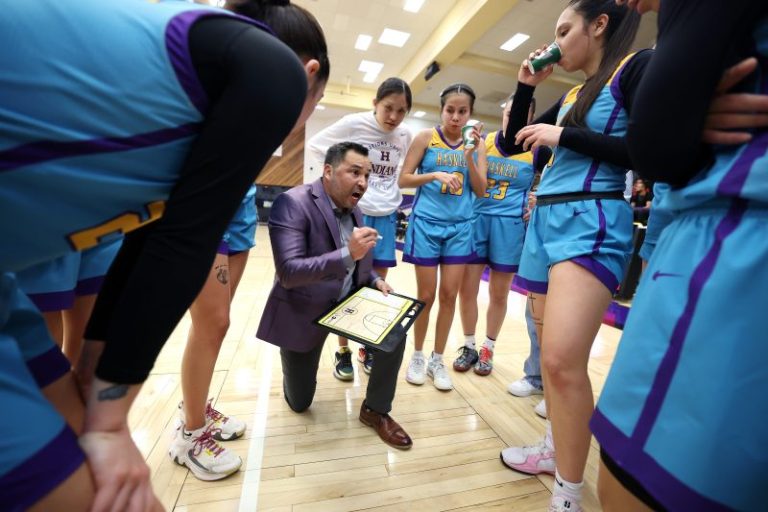
The same day Strom got fired, he offered to coach his team for free. Stripped of his salary of about $80,000 a year, he stayed on as the volunteer head coach of the Fighting Indians ‒ and part of what he sees as a bigger mission.

“We’re not just playing for the name across our chest or on our back,’’ Strom told USA TODAY Sports, referring to the team’s jerseys. “We’re playing for our ethnic background. … We’re playing for Indian Country.’’

Haskell, which competes in the National Association of Intercollegiate Athletics (NAIA), opened the season 2-10. That tested the relationship between the players and their coach.

Before the second semester started, the players agreed to stay on campus for three weeks to participate in individual workouts and extra practices. ‘A change occurred,” Strom said.

The Fighting Indians won 11 of their next 15 games on the way to the championship game of the Continental Athletic Conference tournament.

On March 2, Haskell beat North Mexico College for the conference title in signature fashion. They fell behind and fought back for a 57-52 victory, which secured a berth in the NAIA tournament and allowed an unemployed coach and his players to cut down the nets.

How Haskell fought back

A week after Haskell won the conference championship, a group of tribal nations and Native American students sued the Trump administration over the firings that cost Strom and other Native Americans their jobs.

The lawsuit was filed by the Native American Rights Fund. The group’s staff attorney, Jacqueline De Leon, was well aware of the Fighting Indians and their coach.

“I’ve been really inspired by the basketball team as a symbol for the university of resistance and of resilience,’’ she said. ‘And I think that what it shows is that Native people will rise when faced in really difficult circumstances.”

On Feb. 28, about 40 Haskell students gathered at the state capitol in Topeka to protest. Haskell’s athletes wrote a letter to Trump, asking him to rehire the fired employees that included instructors, cafeteria workers and maintenance workers.

Mahpiya Irving, a senior guard on the women’s basketball team, said two of her instructors were fired.

“At first they replaced them with other faculty and we had to start over pretty much,’’ Irving told USA TODAY Sports. “I’m not graduating until the fall, but I was still nervous.’’

Despite the stress, she said Strom kept the team focused on preparing for the six-team conference tournament.

Haskell, which as the No. 2 seed got a bye into the semifinals, beat Washington Adventist 88-61. Then came the victory over New Mexico College that set Haskell up for a first-round matchup in the NAIA tournament against the defending national champions, Dordt University of Sioux Center, Iowa.

Who is Adam Strom?

During each water break at Haskell’s practices, Strom asks one of his players to say “water’’ in their native language.

For Lish Spoonhunter, a sophomore forward from the Arapaho tribe, it’s “nec.’’ For Star Her Many Horses, a senior guard from the Lakota tribe, it’s “mni.’’ For Lilly Smith, a junior guard from the Comanche tribe, it’s “paa.’’  

For Strom, the fourth-year Haskell coach from Yakama Nation, it’s ‘’chúush’’ – and a chance to blend basketball with Native American history.

Jim Thorpe and Billy Mills, both Olympic medalists and two of the most celebrated Native American athletes, attended Haskell, a school with about 900 students. It opened in 1884 as a boarding school, and a remant of hardship is an on-campus cemetery. It includes 103 marked graves, the last body buried in 1913, according to Haskell’s website.

Native American schools are chronically underfunded, and the recent layoffs of 25% of the school’s staff underscored that issue. That stirred protest over the mistreatment and injustice Native Americans have suffered in the United States for hundreds of years.

It’s not lost on the women’s basketball team, according to Strom, who with pride noted his team’s combined grade-point average is 3.3.

“We take the floor with 100% tribal-affiliated student-athletes,’’ said Strom, adding his players are aware of “generational trauma, historical trauma, things that Native Americans endure today and have for the last 400 years.’’

Strom participates in Bilingual Basketball, a program started in 2021 to “use basketball as a conduit to build more equitable communities.’’ He also holds summer basketball camps and coaches an Amateur Athletic Union team. And does most of it for free, according to his wife, Relyn.

“Just whatever anyone needs, he’ll do it,’’ Relyn Strom said. “Sometimes I’m like, ‘You need to get compensated for your time.’ But he’s like, ‘Nope, I’m doing this because this is what I need to do.’ ’’

A contract worker during his first three years at Haskell, Strom reapplied last summer to be a federal employee. It took about two months, during which he did not get paid, according to his wife.

“And I’m like, ‘OK, it’s going to work out,’ ’’ Relyn Strom said.

Five months later, still a probationary employee, he was fired.

Valentine’s Day at Haskell

Strom brought donuts to practice for his players on Valentine’s Day. Later that morning, he drove to drop off flowers and gifts for his wife, a principal at Robinson Middle School in Topeka.

On his way back to Haskell, Strom said, he got a call from the school’s athletics director.

Come straight to the office were the instructions, Strom said. That’s where he got the news of his firing. He did not share it with his players until after their game the following night because he did not want to disrupt Senior Night.

The next week, the Fighting Indians gathered for their first practice since they learned about the dismissals. The players were subdued but grateful Strom would finish out the season.

Irving, Haskell’s captain, said of Strom, “He just shows how dedicated he is and just how passionate he is about the game. I really like that about him because he makes me enjoy it more.’’

But Strom said his twin sons, who played for the men’s basketball team at Haskell this year, handled it differently.

“They were equally frustrated, disgusted, hurt, let down,’’ Strom said. “Without a better way to say it, they know that their father … is probably more dedicated, more committed to the women’s basketball program than to the family during the season.’’

Season ends for ‘true winners’

On March 10, as he was preparing for Dordt, Strom learned he was one of 15 employees at Haskell who had been rehired.

But he declined to speak more about the matter, saying it’s a sensitive issue.

Haskell’s president, Francis Arpan, did not return phone messages left by USA TODAY Sports seeking comment. Zach Wilkerson, Haskell’s athletics director, told USA TODAY Sports he could not comment without approval from the Bureau of Indian Affairs (BIE).

“Haskell Indian Nations University remains focused on providing quality education and supporting its students,’’ the BIE said in a statement provided to USA TODAY Sports. “We do not comment on personnel matters.”

De Leon, the attorney at the Native American Rights Fund, said there are no guarantees the employees rehired will keep their jobs after the spring semester ends.

Last week, Strom seemed focused not on his future at Haskell, but on his team’s game against Dordt (27-2) in Sioux Center, Iowa.

The Fighting Indians rolled in on a charter bus Thursday and kept rolling when the game started Friday. Haskell quieted the crowd by opening a 21-16 lead and at the end of the first quarter led mighty Dordt, 23-21.

Soon after, Dordt’s taller and stronger players began to wear down the Fighting Indians and pulled away for a 95-80 victory.

Thus ended an inspiring season.

“Regardless of the outcome,’’ Strom said later, “we were true winners.’’

This post appeared first on USA TODAY

Wednesday marks exactly one week since the start of the NFL’s 2025 league year – and the official start of free agency and go-ahead point for teams to execute trades. It’s already been an eventful month, several players re-signing, getting cut or being conditionally dealt ahead of the football new year. And while the fates of some notable ones remain in limbo – free agent QBs Aaron Rodgers and Russell Wilson and Bengals All-Pro DE Trey Hendrickson among them – this seemed like a (fairly) fair point to grade every club’s approach to free agency in 2025 … or, at least, 30 of the 32 teams (which are listed below alphabetically):

Arizona Cardinals: B-

Their main move was signing de facto Super Bowl MVP Josh Sweat (4 years, $76.1 million) to bolster a 21st-ranked defense, which also imports DT Dalvin Tomlinson (2 years, $29 million) and retains OLB Baron Browning (2 years, $15 million). Jacoby Brissett (2 years, $12.5 million) solidifies the quarterback depth behind Kyler Murray. And with so much salary cap space remaining, GM Monti Ossenfort can get busy rewarding core Cards like TE Trey McBride soon enough.

Atlanta Falcons: D-

The newest reason to pan last year’s bizarre decision to sign QB Kirk Cousins and then draft QB Michael Penix Jr. in the first round is the level of rigidity Cousins’ contract brings to cap management. Longtime LT Jake Matthews’ extension (2 years, $45 million) brought relief, but GM Terry Fontenot hasn’t been able to do much beyond adding OLB Leonard Floyd (1 year, $10 million) and LB Divine Deablo (2 years, $14 million) while retaining CB Mike Hughes (3 years, $18 million). Meanwhile, former defensive mainstay Grady Jarrett and promising C Drew Dalman defected to Chicago. And now Fontenot is still basically stuck with Cousins and his no-trade clause given the alternative is a $75 million dead cap hit to cut him.

Baltimore Ravens: A

GM Eric DeCosta didn’t have a ton of cap room but managed to check off his top priority – re-signing Pro Bowl LT Ronnie Stanley (3 years, $60 million) – while keeping All-Pro FB Patrick Ricard and adding WR3 DeAndre Hopkins and highly capable QB2 Cooper Rush on team-friendly deals. Baltimore didn’t lose anyone who wasn’t eminently replaceable, is well positioned to make another Super Bowl run and can start mulling extensions for players like All-Pro S Kyle Hamilton and TE Isaiah Likely and perhaps an eventual adjustment for QB Lamar Jackson. It is notable that there’s no contingency plan in place for embattled Justin Tucker, but his status can be readily addressed once the NFL completes its investigation of the sordid complaints against one of the league’s all-time greatest kickers.

Buffalo Bills: A-

QB Josh Allen set them up nicely by replacing his existing contract with a six-year, $330 million extension (with a record $250 million guaranteed) – which, yes, was a favor to the Bills given the reigning MVP could have demanded something topping the $60 million annually that Cowboys Dak Prescott pulls down. DE Greg Rousseau became the centerpiece on the defensive side with a four-year, $80 million extension of his own. WR Khalil Shakir, Allen’s security blanket, was also deservedly rewarded (4 years, $53.1 million), however LB Terrel Bernard’s deal (4 years, $42.1 million) might be a slight overpay (but the defense has been caught short at his position before).

Despite taking care of so many of his own, GM Brandon Beane also brought in reinforcements. A defense that faded in the second half of last season added DEs Joey Bosa (1 year, $12.6 million) and Michael Hoecht (3 years, $21 million), providing juice and depth to the pass rush that Von Miller (released) no longer could. WR Mack Hollins will be missed – especially in the locker room – but Josh Palmer (3 years, $29 million) brings a field-stretching option that was lacking. About all that’s left for Beane to do is lock up RB James Cook and CB Christian Benford, who can be free agents in 2026. All things considered, the Mafia can definitively expect another AFC East crown in 2025 … and maybe a whole lot more.

Carolina Panthers: C+

You’d be forgiven for missing the news, but their secondary got a lot of attention CB Jaycee Horn (4 years, $100 million) handsomely rewarded while S Tre’von Moehrig (3 years, $51 million was lured to Charlotte with a very strong deal relative to his position. GM Dan Morgan just missed out on DT Milton Williams but the fallback plan produced DTs Tershawn Wharton (3 years, $45.1 million) and Bobby Brown (3 years, $21 million) plus OLB Patrick Jones (2 years, $15 million). And while QB Bryce Young might have to wait on the draft for help, RB Rico Dowdle should make a nice splash as the new third-down back.

Chicago Bears: A

Though it might not have been readily apparent a year ago, GM Ryan Poles and the organization didn’t put enough around QB Caleb Williams to precipitate a truly successful rookie campaign. The hiring of rookie HC Ben Johnson was the first step toward remedying that, and then Poles began proactively progressing toward what Johnson enjoyed in Detroit – namely fortifying the offensive line by trading for Gs Joe Thuney, an All-Pro, and Jonah Jackson before signing highly regarded Dalman (3 years, $42 million). Poles didn’t stop there, leveling up the other line with two-time Pro Bowler Jarrett (3 years, $42.8 million) and an up-and-coming pass rusher, Dayo Odeyingbo (3 years, $48 million) to play opposite Montez Sweat. Williams will get additional help from the draft, but the supporting cast should already be at a point where there are no more excuses for the young passer … or Poles, for that matter.

Cincinnati Bengals: B-

Their stars are (mostly) locked up, the team’s usually spendthrift ownership heeding the “advice” of QB Joe Burrow to secure the futures of WRs Ja’Marr Chase and Tee Higgins in recent days. That means – in terms of average annual salary – Cincy has the second-highest-paid quarterback in Burrow ($55 million per year), the top-paid non-QB in Chase ($40.3 million per year) and the No. 9 wideout in Higgins ($28.8 million per year). However compensating that trio at or near the top of their respective markets – not to mention three years and $25.5 million to keep TE Mike Gesicki – doesn’t leave much for the rest of the roster, including vastly underpaid Hendrickson, who’s been permitted to seek a trade the Bengals don’t seem all that interested in consummating.

An otherwise suspect defense that lost Hendrickson’s wingman, Sam Hubbard, to retirement has paid DTs B.J. Hill (3 years, $33 million) and T.J. Slaton (2 years, $14.1 million) among minor deals not likely to lead to much impact. Big picture, good on the Bengals for paying their superstars. Bigger picture, by waiting so long to do that, a team that failed to make the playoffs in 2024 is more or less running it back with the same nucleus – assuming Hendrickson stays – and hoping to fill the gaps on defense and elsewhere on cheap deals, unproven players and rookies. Might be good enough to win 10 or 11 games … but seems like a stretch to hope for much more, especially in this conference.

Cleveland Browns: C-

They solved their second-most pressing problem, mollifying All-Pro DE Myles Garrett with a four-year, $160 million extension that negated his desire for a trade. (And Garrett doubtless appreciates the arrival of DT Maliek Collins on a two-year, $20 million pact.) But their most pressing problem – quarterback – remains, recently obtained Kenny Pickett currently the nominal starter. Otherwise, little of note. So … yeah, hope will have to wait for a team that went 3-14 in 2024.

Dallas Cowboys: D

They got off to a nice start, extending DT Osa Odighizuwa for four years and $80 million without having to franchise him … and then Jerry Jones and Co. reverted to form. DE DeMarcus Lawrence and DB Jourdan Lewis left in frustration. Dallas downgraded from DE Chauncey Golston to bring back Dante Fowler Jr. and let promising (and fresh) Dowdle go, opting instead for a dubious RB tandem of Javonte Williams and Miles Sanders. Trades for former first-round LB Kenneth Murray and CB Kaiir Elam were borderline bizarre if not all that costly for players who likely otherwise would’ve been cut. And after letting Rush, who’d bailed this team out more than once when Prescott was shelved, get to Baltimore, the QB2 post currently belongs to … Will Grier, who hasn’t played in the regular season since 2019. And while KR/WR KaVontae Turpin (3 years, $18 million) is now the league’s top-paid special teamer, LB Micah Parsons seems destined to wait for his second contract … until Jones is likely obligated to pay him more than what Chase just got from Cincinnati.

Denver Broncos: B-

If a trio of players with significant injury histories – TE Evan Engram (2 years, $23 million), LB Dre Greenlaw (3 years, $31.5 million contract) and S Talanoa Hufanga (3 years, $45 million) – can remain on the field, this team could be even scarier, especially with a seventh-ranked defense that also kept DT D.J. Jones (3 years, $39 million). Though Engram is effectively a wideout, still a good chance HC Sean Payton continues to target his coveted offensive “Joker” in the draft.

Detroit Lions: B

They haven’t been especially active, their most prominent move the signing of CB D.J. Reed (3 years, $48 million), who’s arguably an upgrade over departed Carlton Davis III. Otherwise, GM Brad Holmes mostly focused on re-signing his own (lower-level) guys – LB Derrick Barnes (3 years, $24 million), DT Levi Onwuzurike, WR Tim Patrick, swing OT Dan Skipper and DE Marcus Davenport, among others – rather than hunting white whales like Garrett. Holmes also stabilized the depth behind QB Jared Goff by adding Kyle Allen, a seasoned backup. Last season’s No. 1 NFC playoff seed simply needs to stay healthy in 2025 while adapting to its new coordinators, but the roster is in perfectly shine shape to make another run at the franchise’s first Super Bowl appearance.

Green Bay Packers: B

A year after scoring big with RB Josh Jacobs and S Xavier McKinney, GM Brian Gutekunst made another pair of targeted free agency forays by signing G Aaron Banks (4 years, $77 million) and CB Nate Hobbs (4 years, $48 million) – a move that could influence the future of former Pro Bowl CB Jaire Alexander. Gutekunst also retained a key pickup during the 2024 campaign by locking up K Brandon McManus (3 years, $15.3 million) and, just Tuesday, brought in former Chiefs Super Bowl hero Mecole Hardman for receiving depth and special teams help. Not necessarily headline-grabbing signings, but certainly the types that have helped this organization run and perform so smoothly for so long. And if the Pack doesn’t care about No. 1 receiver types like DK Metcalf, then why should we?

Houston Texans: C-

GM Nick Caserio has a plan … just not fully clear what it is to the outside world. A team changing its offense offloaded its best blocker, Pro Bowl LT Laremy Tunsil – and after QB C.J. Stroud was sacked 52 times in his second NFL season. And it’s not like the two-time-defending AFC South champs have done nothing, trading for WR Christian Kirk and S C.J. Gardner-Johnson while locking CB Derek Stingley into a market-setting, three-year, $90 million extension. But a year after loading up around Stroud, seems Caserio has mostly pivoted to fleshing out the depth chart and hoping the draft brings needed answers in the trenches.

Indianapolis Colts: C-

Big gains in the secondary with CB Charvarius Ward (3 years, $54 million) and S Cam Bynum (4 years, $60 million). Big losses in the trenches with Odeyingbo and OL Will Fries and Ryan Kelly departing. But the most notable development is the arrival of Daniel Jones into the quarterback room and what that might mean for him and incumbent Anthony Richardson – or if either actually provides any measure of stability.

Jacksonville Jaguars: B

They’ve largely flown under the radar, rookie GM James Gladstone’s most notable moves perhaps the trade of Kirk and release of Engram. But the Jags did upgrade the secondary with Lewis (3 years, $30 million) and S Eric Murray (3 years, $19.5 million). Gladstone also gave QB Trevor Lawrence another deep threat in WR Dyami Brown (1 year, $10 million), improved his protection with the arrivals of G Patrick Mekari (3 years, $37.5 million) and C Robert Hainsey (3 years, $21 million). Lawrence even got him a new sounding board in veteran QB2 Nick Mullens. Certainly seems more shrewd than sexy, which is just fine.

Kansas City Chiefs: B-

So they owe QB Patrick Mahomes (another) debt of gratitude, his latest restructure saving the AFC champions about $50 million. Yet despite that breathing room, the left side of an O-line that got overrun in the Super Bowl exported Thuney and couldn’t do better – for now anyway – than a two-year, $30 million gamble on new LT Jaylon Moore, who’s started 12 times in four NFL seasons. CB Kristian Fulton (2 years, $20 million) addresses an area of need, and Mahomes will surely be glad to see franchised G Trey Smith, WRs Hollywood Brown and JuJu Smith-Schuster plus RB Kareem Hunt return. And re-signing LB Nick Bolton (3 years, $45 million) softens the departures of Wharton and S Justin Reid. Still, even with TE Travis Kelce and WR Rashee Rice also returning, K.C. seems to have a major issue with blockers coming off a season when Mahomes was sacked a career-high 36 times, which doesn’t include six more in Super Bowl 59 (the most he’d ever absorbed in an NFL game). Worrisome development.

Las Vegas Raiders: B-

Their most consequential move was a Garrett-lite extension (3 years, $106.5 million) for DE Maxx Crosby, who’s been and will remain the face of this franchise for the foreseeable future. The second-most consequential move was the trade for QB Geno Smith. After that? They hung on to DE Malcolm Koonce (1 year, $12 million) and added DB Jeremy Chinn (2 years, $16.3 million) … which hardly offsets the losses of Moehrig, Hobbs and others. Will the Raiders be more competitive in 2025? Probably. Will they get out of last place in the AFC West? Almost certainly not.

Los Angeles Chargers: D+

They brought back OLB Khalil Mack for $18 million in 2025, yet let Bosa go. That began something of a pattern for the Bolts, who also lost quality players like Fulton and Palmer and instead spent on the likes of OL Mekhi Becton (2 years, $20 million) and CB Donte Jackson (2 years, $13 million) while doing even cheaper one-year flyers on RB Najee Harris and WR Mike Williams, who was cut by this team a year ago. There’s still no bona fide No. 1 wideout here, and outside corner is suddenly an area of concern despite the arrival of Jackson.

Los Angeles Rams: A-

Difficult as the Cooper Kupp divorce was for all parties, hard to argue the reigning NFC West champions didn’t upgrade at the position with the arrival of three-time All-Pro Davante Adams (2 years, $44 million). He and DT Poona Ford (3 years, $27.6 million) were the main imports after GM Les Snead sorted out the business of keeping WR3 Tutu Atwell (1 year, $10 million) and LT Alaric Jackson (3 years, $56.3 million) … which all paled to figuring out a 2025 arrangement that worked for QB Matthew Stafford.

Miami Dolphins: D+

A team so heavily invested in its passing game and pass rush – understandable priorities, though OLBs Bradley Chubb and Jaelan Phillips must return to their pre-injury form in 2025 – continues to let other young stars get away, budding S Jevón Holland leaving a year after DT Christian Wilkins bolted. G James Daniels (3 years, $24 million), who tore his Achilles last season, should contribute. However hoping QB Zach Wilson (1 year, $6 million) can save the day if Tua Tagovailoa goes down again is a pipe dream for a boom-or-bust team that already needs a lot of breaks to go its way.

Minnesota Vikings: B+

GM Kwesi Adofo-Mensah and reigning Coach of the Year Kevin O’Connell made the very intentional decision to move on from Pro Bowl QB Sam Darnold in order to turn this high-performing operation over to 2024 first-round QB J.J. McCarthy and use the money saved to supercharge the roster around him. Offensively, that’s meant the addition of interior beef by signing ex-Colts Fries (5 years, $87.7 million) and Kelly (2 years, $18 million). Aaron Jones (2 years, $20 million) returns, while Jordan Mason comes via a nifty trade with the Niners as tailback insurance.

But most of the Vikes’ money was poured into their defense. DTs Jonathan Allen (3 years, $51 million) and Javon Hargrave (2 years, $30 million) will provide more pocket push for Brian Flores’ blitz-heavy scheme. On the back end, longtime S Harrison Smith remains, emergent CB Byron Murphy (3 years, $54 million) re-signs, and CB Isaiah Rodgers arrives.

An NFL Network report issued Wednesday morning poured water on the speculative smoke that McCarthy could be joined by four-time league MVP Aaron Rodgers in the quarterback room. Still, with Darnold and Daniel Jones relocating, more depth is still needed here behind center.

New England Patriots: B

Matters turned out better defensively, Milton Williams – considered perhaps the crown jewel of a thin free agent crop – lured by a four-year, $104 million offer ($63 million guaranteed). He was joined by LB Robert Spillane, OLB Harold Landry and Davis, who all got three-year deals worth more than $130 million in sum – decidedly handsome paydays for a trio with all of one Pro Bowl nod on their collective résumés.

Did a talent-deficient club spend exorbitantly to improve modestly? Probably. But that’s basically the name of the free agency game at the moment … and the Patriots still have nearly $100 million in the cap bank – though, in retrospect, that leaves the question as to whether Wolf and Vrabel should have thrown more loot at the offensive players they coveted.

New Orleans Saints: B

First off, like anyone who relentlessly manages credit card debt, they once again managed to kick their bills into the high-yield salary cap future, thanks in part to a restructure with QB Derek Carr. That allowed longtime GM Mickey Loomis to actually add Reid (3 years, $31.5 million), a Louisiana guy to his core, while keeping DE Chase Young (3 years, $51 million) and TE Juwan Johnson (3 years, $30.8 million) while bringing in DT Davon Godchaux via trade with New England. Given the cap gymnastics involved, not a bad result – even if CB Paulson Adebo got away.

New York Giants: I (incomplete)

In a word – strange. They heavily reinvested in an eighth-ranked pass defense, securing Golston (3 years, $19.5 million), Holland for three years and $45.3 million (after letting Xavier McKinney go last year) and Adebo for even more (3 years, $54 million). WR Darius Slayton re-upped for three years, too ($36 million) … which seems like a lot for a guy who’s never had more than 50 catches or as many as 800 yards in a season. But nothing is more mysterious than the quarterback position, Tommy DeVito the only one on the roster. The Giants will almost certainly add a big-name veteran (Rodgers? Wilson? Jameis Winston?) and could take a passer very early in the draft. But given the position’s importance and the dominos yet to fall, we’ll withhold a final grade … for now.

New York Jets: C+

Quite an exodus of talent and experience – Rodgers, Adams and Reed included – but that shouldn’t be surprising for an organization resetting its culture under rookie HC Aaron Glenn. Justin Fields, the new QB1, is the kind of boom-or-bust signing who can expedite this rebuild either by performing spectacularly – which he’s shown capable of – or failing spectacularly and setting this team at or near the top of the 2026 draft board, which should have more blue-chip quarterback options than this year’s. LB Jamien Sherwood, 25, got quite a commitment to stay (3 years, $45 million), but first-year GM Darren Mougey might have overspent on CB Brandon Stephens (3 years, $36 million) and S Andre Cisco (1 year, $10 million).

Philadelphia Eagles: B+

EVP/GM Howie Roseman’s abbreviated offseason began by voluntarily sweetening RB Saquon Barkley’s contract, something he later did for RT Lane Johnson – those are also nice recruiting pitches to players everywhere – before he did an un-Roseman thing and broke the bank for an off-ball linebacker, Defensive Player of the Year finalist Zack Baun (3 years, $51 million). His presence became even more key following Nakobe Dean’s serious playoff knee injury. Otherwise? Roseman had to let several guys go – Milton Williams, Sweat, Becton, CBs Darius Slay and Isaiah Rodgers, DE Brandon Graham (retirement) and Gardner-Johnson, who was traded.

Meanwhile, Philly added players with fairly proven NFL track records – LBs Azeez Ojulari and Josh Uche, CB Adoree’ Jackson, TE Harrison Bryant and RB AJ Dillon – at minimal cost and swung a nice trade, getting QB Dorian Thompson-Robinson, perhaps a better fit as Jalen Hurts’ backup than Pickett was. And who knows what else might happen with TE Dallas Goedert and DE Bryce Huff available, per reports. Never count Roseman out for something more – even though he already has plenty.

Pittsburgh Steelers: I-

San Francisco 49ers: D

The exodus has been profound: Banks, Collins, Floyd, Greenlaw, Hargrave, Hufanga, Moore, Deebo Samuel and Ward. They couldn’t get Bosa to team up with little bro. They did sign a promising backup in QB Mac Jones (2 years, $7 million) … yet he’s still making more money, despite all of the departures, than yet-to-be-paid QB1 Brock Purdy. There’s still a lot of talent here, but the Niners will be counting heavily on their youngsters and cheaper depth … maybe too much.

Seattle Seahawks: A-

This year’s team will be largely unrecognizable from the one that won 10 games last season, losing the NFC West (and a playoff bid) on a tiebreaker. The biggest change is swapping in Darnold (3 years, $100.5 million) for Geno Smith, who was dealt along with Metcalf. Signing on Darnold’s heels were Kupp (3 years, $45 million) and DeMarcus Lawrence (3 years, $32.5 million), while LB Ernest Jones IV ($28.5 million) and DT Jarran Reed ($22 million) also stuck around on three-year pacts. Those deals followed a purge that included, in addition to Smith and Metcalf, WR Tyler Lockett, S Rayshawn Jenkins, DL Dre’Mont Jones and several others. GM John Schneider’s wheeling and dealing has netted extra draft picks in Rounds 2 and 3, meaning this roster will be increasingly tailored to second-year HC Mike Macdonald’s vision – which is decidedly different from what he saw in 2024.

Tampa Bay Buccaneers: B+

It says a lot about the culture GM Jason Licht has built that players consistently re-sign here – WR Chris Godwin (3 years, $66 million) the latest to do so when he could’ve taken a much bigger bag elsewhere. LB Lavonte David (1 year, $9 million) and G Ben Bredeson (3 years, $22 million) also stayed. And there was still room to bring in a player the caliber of OLB Haason Reddick on a $14 million bid for the upcoming season.

Tennessee Titans: C

A defense that ranked second overall last season but was repeatedly put in bad spots by turnovers got help in the form of Dre’Mont Jones (1 year, $10 million), LB Cody Barton (3 years, $21 million) and DE Sebastian Joseph-Day (1 year, $6.5 million). But rookie GM Mike Borgonzi’s most noteworthy move was to sign graybeard G Kevin Zeitler (1 year, $9 million), 35, and (over?)paying LT Dan Moore (4 years, $82 million). Given career backup Brandon Allen is the only quarterback to join Will Levis on the depth chart, sure seems like the Titans might be positioning themselves to draft a QB1.

Washington Commanders: B+

Rather than overextend himself in a seller’s market, GM Adam Peters got creative to address his primary needs – trading for Tunsil and Samuel, the latter costing a mere fifth-rounder. The NFC runners-up brought back key players and locker room leaders like LB Bobby Wagner, TE Zach Ertz and QB2 Marcus Mariota – though Peters did raise some eyes by shelling out $45 million over three years for DT Javon Kinlaw, whom he knew from San Francisco and clearly thinks can replace departed Jonathan Allen. Is it enough to get over the Super Bowl hump for the first time in 34 years? Stay tuned, but the possibilities currently seem pretty endless for a franchise helmed by blossoming superstar QB Jayden Daniels.

All NFL news on and off the field. Sign up for USA TODAY’s 4th and Monday newsletter.

This post appeared first on USA TODAY

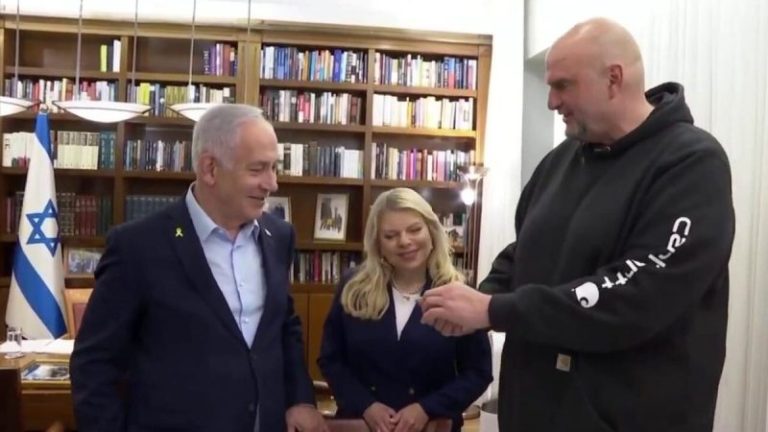
Sen. John Fetterman, D-Penn., was gifted a silver-plated beeper during a visit with Israeli Prime Minister Benjamin Netanyahu after the lawmaker praised Israel’s covert operation in which it detonated pagers last year worn by Hezbollah terrorists in Lebanon. 

Fetterman repeatedly has voiced support for Israel while breaking with the Democratic Party, which has been critical of Israel’s military operations in Gaza, and has demanded that Hamas return all the hostages the terror group took on Oct. 7, 2023. 

He was visiting Netanyahu’s office in Jerusalem this week when he reiterated his support for the Jewish state. 

‘Hamas does not want peace. I unapologetically, 100% stand with Israel, and demand the release of all remaining hostages,’ he wrote Tuesday on X. ‘Sending this from Israel.’

During an exchange of gifts, Fetterman gave Netanyahu a framed news article about an effort to memorialize Netanyahu’s brother, the fallen Israeli soldier Yoni Netanyahu, in Philadelphia, where Netanyahu lived as a teenager, the Jewish Telegraphic Agency reported.

The fallen prime minister’s brother is considered a hero in Israel after he was killed in the 1976 Israeli raid in Entebbe, Uganda during the rescue of 102 hostages taken by German and Palestinian terrorists in a plane hijacking.

Netanyahu then reciprocated with his gift.

‘What can I give a man who has everything? How about giving him a beeper?’ Netanyahu said. ‘This is a silver-plated beeper. The real beeper is, like, one-tenth the weight. It’s nothing, but it changes history.’

The beeper references Israel’s September 2024 operation in which it detonated pagers used by members of Hezbollah in Lebanon, killings dozens of people. 

‘When that story broke, I was like, ‘Oh, I love it, I love it.’ And now, it’s like, thank you for this,’ Fetterman responded. 

The operation came before Israel killed Hassan Nasrallah, Hezbollah’s leader, and weeks ahead of an Israeli ground invasion of Lebanon. That conflict ended in a ceasefire in late November.

In February, Netanyahu also gifted a gold-plated pager to President Donald Trump. 

This post appeared first on FOX NEWS

When America tunes in to the NCAA men’s basketball tournament on Thursday, the dominance of schools in the Football Bowl Subdivision – and particularly the four power conferences – will be immediately noticeable. 

Of the 37 at-large bids handed out by the selection committee this year, only five went to leagues that don’t sponsor football: Four to the Big East and one to the West Coast Conference. 

It’s not an anomaly. Over the past five NCAA tournaments, a combined 28 at-large bids went to non-FBS leagues. The five before that, the number was 38. 

But the decline may not be permanent. If the House vs. NCAA settlement is approved in April as expected, opening the door to revenue-sharing with athletes, the game will change once again. 

And this time, it might work in favor of schools and conferences that care more about basketball than football. 

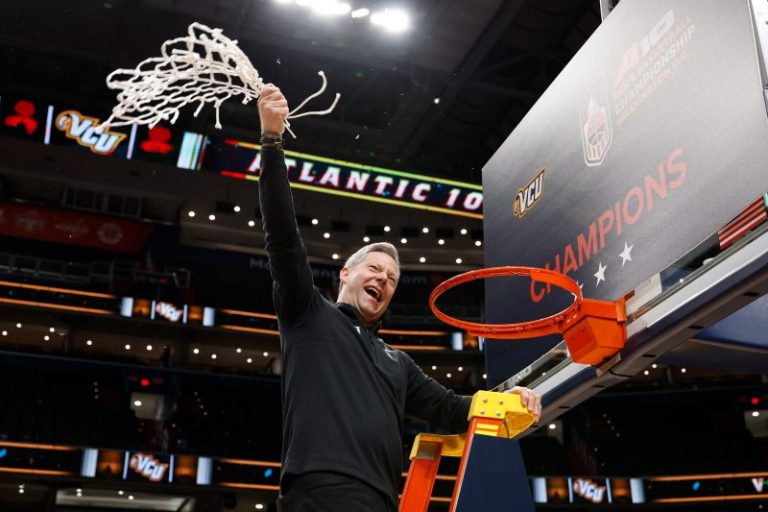
“I really look at where we’re positioned as a huge advantage,” said VCU athletics director Ed McLaughlin, whose school is the Atlantic 10’s only representative in the field this year.

It’s easy to understand why. 

Though nobody can pin down the exact numbers yet, the House settlement will essentially establish a salary cap of more than $20 million going to athletes, which schools can divide up however they choose. 

Naturally, big-time football programs will absorb most of that money at schools where football is the main driver of revenue. Georgia, for instance, has already announced that it will direct 75 percent to football, 15 percent to men’s basketball, 5 percent to women’s basketball and 5 percent to other sports. 

So if the cap ends up at $22 million and Georgia spends up to the cap, that would be $3.3 million for men’s basketball. 

VCU, and a number of other basketball-centric schools that don’t have to financially support a football program, will be positioned to spend more if they choose.

“We fully anticipate the revenue-sharing number for us next year to be between $4 (million) and $5 million,” McLaughlin said. “I think we are positioned from strength as this goes forward because we can share revenue with our men’s and women’s basketball, student-athletes at an incredibly high competitive level, to make sure we are a top 25 program. We will never get to the bigger cap, and that’s OK. But we will certainly be able to invest in a high level for the programs that matter financially the most to us.”

Is it romantic? Not in the least. But college sports crossed that rubicon years ago, and the NIL-based system of paying players has been chaotic and opaque. 

NIL, of course, won’t go away. But if the new system is implemented and enforced as it’s designed, the booster collectives will be phased out, with a third-party clearinghouse approving so-called “true NIL” deals for players to endorse products or companies.

As always in college sports, schools will be looking for loopholes and other ways to create a recruiting advantage. Even though it might appear on paper that SEC schools are paying men’s basketball players less than some schools in the Big East or A-10, a lot of coaches suspect that rich schools with big fan bases will find ways to eliminate that gap. 

Still, it’s potentially a great dynamic for schools whose athletic departments rely on success in men’s basketball to pay the bills.

For the last 20 years or so, administrators at those schools have seen the separation between haves and have-nots generally work against them because they don’t have big-time football and the tens of millions in media revenue it brings to the power conferences. 

A small number of schools like Gonzaga have been able to maintain national relevance without big-time football, but they generally find that any success is hard to maintain. Over time, whether it’s coaching salary, recruiting budget or facilities, they simply get out-spent. 

Revenue-sharing, at least in theory, changes the equation a little bit because the amount of money committed to player acquisition will be the ultimate barometer of administrative commitment to a program. One head coach currently in a power conference, who spoke to USA TODAY Sports on the condition of anonymity because of the sensitivity of the topic, shared a lament about his recruiting budget for next year and suggested he’d be better off at one of the better A-10 schools. 

“The Daytons, the VCUs, they’ve always been good jobs,” a person connected to multiple coaching searches told USA TODAY Sports on the condition of anonymity because they were not authorized to speak publicly on behalf of their clients.

“But they’ll have money to compete with the so-called blue bloods. Schools like Florida State or Miami, they’re not going to resource basketball at that level. There are coaches in the Big Ten saying, ‘Hey, I think football’s going to swallow up all my money and I may need to get out.’ ‘

New frontier in recruiting wars

At the moment, it’s still a bit of a guessing game how much each school will put into its men’s basketball roster. While a handful of schools have announced percentages, most are still budgeting or keeping it private, at least until the settlement gets approved. 

Greg Christopher, the Xavier athletics director, said he does not expect the conversion from an NIL-based payment system to revenue-sharing will dramatically change the amount of money Big East schools have been investing in their men’s basketball rosters.

Based on his conversations with colleagues in the four autonomy conferences, the Big East has been competitive with the football schools in NIL and will remain so under revenue-sharing.

“I sense top to bottom that we’re probably directionally in the same bucket,” Christopher said. “I haven’t heard of anybody being (an outlier) one way or another. But we have sat around a table and talked through that basketball is our highest priority from a revenue-sharing standpoint.

‘It’s probably a little early for us to get down to a Xavier-specific number, but I would say that from what I’ve heard this year for NIL purposes in our league, the bandwidth is generally in that $3 (million)-$5 million range.”

It will be interesting to watch whether that holds true as the settlement gets implemented or whether schools – especially those that play in 17,000-seat arenas like Creighton or Marquette – can generate enough revenue to kick a couple more million into the player pool and try to gain an edge. 

It’s a whole new frontier in the recruiting wars, and schools without football are likely going to spend 90 or 95 percent of their revenue-sharing budget on men’s basketball, based on conversations with coaches and administrators across the spectrum. The hope, at least in leagues like the Big East and A-10, is that it will translate to more NCAA Tournament bids. 

But in other leagues, it could cause issues and lead to more conference realignment if some schools opt in to revenue-sharing and others don’t. If schools that aren’t offering revenue-sharing drag down a conference’s power ratings to the point where it has no chance of multiple NCAA Tournament bids, can that league stay together? 

That’s one reason why American Athletic Conference commissioner Tim Pernetti became the first to announce a minimum standard for his league, requiring every school except Army and Navy to provide a total of $10 million spread over the next three years.

It wouldn’t be shocking if other leagues did something similar because of how clear the competitive implications will be.

“You want everyone in your league to be trying to win at a high level because all the sudden, what happens is your numbers are naturally just going to be better overall and you’re going to be more competitive nationally,” VCU coach Ryan Odom said. 

Given what VCU is prepared to commit to men’s basketball, that shouldn’t be an issue for the Rams and other schools in the A-10 that are making huge fundraising pushes, as we saw recently with Steph Curry’s $10 million donation to Davidson. 

Despite the financial model changing again, schools that are truly committed to basketball should have the resources to compete at the highest level, even without football revenue backing them up. 

“Our basketball focus in some ways has allowed us, schools in the Big East, to punch above their weight in some ways for a long time,” Christopher said. “I think that will remain true to some degree.

‘We don’t have football, so we don’t have the expenses that come with that. We also don’t have $70 million in annual media-rights revenue. But if the governor is ultimately the (revenue-sharing cap) and not having to feed football and all that comes with that, it does help us prioritize our basketball programs.”

This post appeared first on USA TODAY
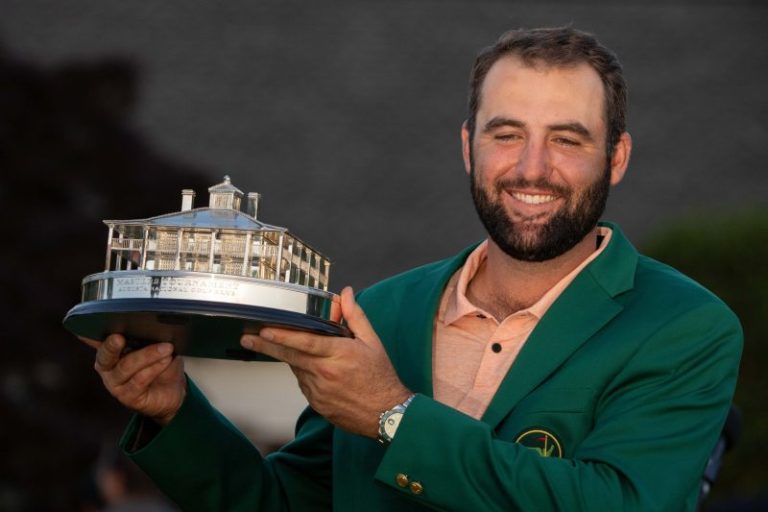
Two-time Masters champion Scottie Scheffler has chosen a menu close to his heart, much like the one he presented two years ago when he first won the Masters in 2022. The menu features some of Scheffler’s childhood favorites, including his father’s meatballs and a ravioli dish he enjoyed growing up.

The appetizer menu includes cheeseburger sliders served ‘Scottie-style’ and Firecracker shrimp to kick off the evening. For the first course, guests will enjoy a Texas-style chili courtesy of Coach Randy Smith’s famous recipe.

The main course offers a choice between a wood-fired cowboy ribeye or blackened redfish; both served in true Texas fashion alongside traditional sides, including macaroni and cheese. To top off the evening, the dessert will be a warm chocolate chip skillet cookie paired with vanilla bean ice cream, all in honor of Scheffler.

When is the 2025 Masters Tournament?

The 89th edition of the Masters Tournament, the first major golf event of the year, will be held from Thursday, April 10, to Sunday, April 13, at Augusta National Golf Club in Augusta, Georgia. Both CBS and ESPN will provide coverage of this prestigious tournament.

Dates: Thursday, April 10 – Sunday, April 13
Time: First tee on Thursday will happen at 8 a.m. ET
Where: August National Golf Club in Augusta, Georgia
TV: CBS, ESPN
Stream: Paramount+, Fubo, which offers a free trial subscription for new users

Watch the 2025 Masters with Fubo

We occasionally recommend interesting products and services. If you make a purchase by clicking one of the links, we may earn an affiliate fee. USA TODAY Network newsrooms operate independently, and this doesn’t influence our coverage.

This post appeared first on USA TODAY
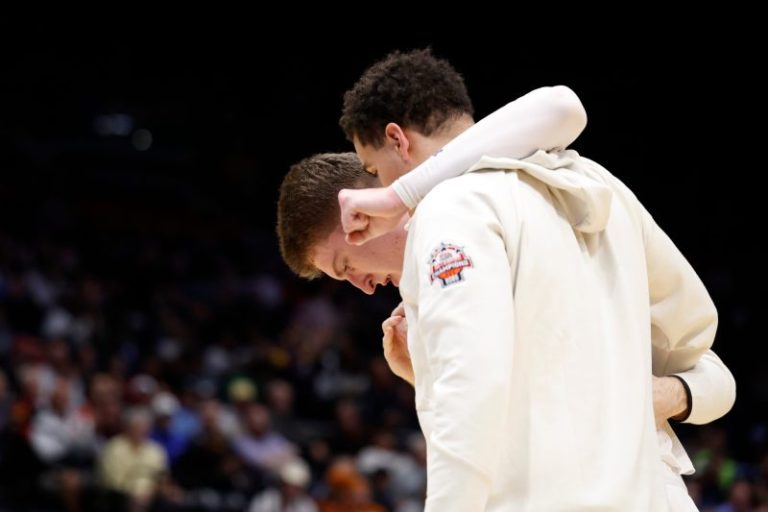
They’re the very reason we call it March Madness. They happen every year, those early upsets that shred the most well-conceived brackets. And, they always leave us asking the big question: “Why didn’t we see that coming?” Well, sometimes we did, but picking the right upsets in the round of 64 can be the difference between winning a piece of your pool or contributing to someone else’s beer fund. We’re here to help.

Once again, we’ll stick to the NCAA record book’s definition of an upset as a team beating an opponent seeded five or more places higher. This means the 7-10 and 8-9 games are essentially tossups. Even so, there seems to be a lot of potential for chaos this year, thanks to a significant number of accomplished teams from outside the so-called power conferences. Here are a half dozen such teams to keep an eye on as the first round unfolds. There might be other agents of chaos coming from outside this list – did anyone have Oakland taking down Kentucky last year? But we think these double-digit seeds have the best chance to make noise.

No. 12 Colorado State over No. 5 Memphis

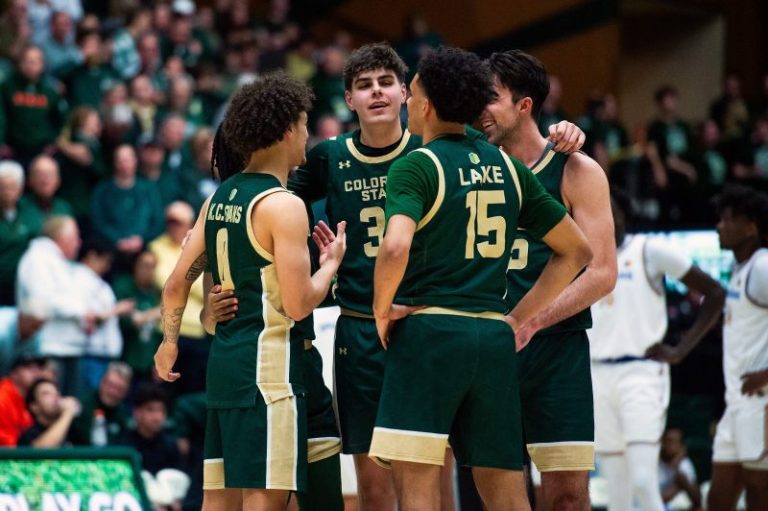
Comparing conferences isn’t always a valid predictor of success in this event, but there’s an argument that CSU’s finishing kick in the Mountain West was better preparation than the Tigers’ run through the one-bid American. The Rams enter on a 10-game winning streak, and if you don’t know about Nique Clifford yet, you soon will. Memphis also has talent and has won eight in a row itself, but even the books have CSU as a slight favorite.

No. 11 Drake over No. 6 Missouri

The Bulldogs, winners of 30 games and repeat champs of the Missouri Valley despite a coaching change and roster makeover, will be another popular upset choice. Drake’s top dog is Bennett Stirtz, a do-it-all floor leader like CSU’s Clifford who is ready for his moment on the big stage.

REGIONAL BREAKDOWNS: East | West | Midwest | South

BOLD PREDICTIONS: 10 potentially surprising results in men’s tournament

No. 13 Yale over No. 4 Texas A&M

Another pesky bunch of Bulldogs, this one from the Ivy League, will look to take down an SEC squad in the round of 64 for a second consecutive year. This season’s Yale team does not have big man Danny Wolf, who is now at Michigan, but it does have sharpshooter John Poulakidas and numerous other guys capable of getting hot from the arc. The Bulldogs won’t be overawed after beating Auburn last season.

No. 11 Virginia Commonwealth over No. 6 Brigham Young

And here we have another group of Rams, representing another program that has made noise in March in the not-too-distant past. VCU paced the Atlantic 10 for much of the season and even briefly cracked the top 25 thanks to experienced hands like scoring guard Joe Bamisile and versatile forward Jack Clark. BYU, which was also playing its best basketball during the latter half of the campaign, is a tough draw for the Rams. The game will almost certainly feature a slew of three-point shots.

No. 12 UC San Diego over No. 5 Michigan

Among March Madness newcomers, the Tritons might be best equipped to pull off a win. The driving force for UCSD is Aniwaniwa Tait-Jones, the team’s top scorer and facilitator who also crashes the boards. They will be at a considerable size disadvantage against the Big Ten champion Wolverines, but Michigan is coming off short rest after winning the final contest on Selection Sunday.

No. 13 Akron over No. 4 Arizona

The Zips might be the longest of the long shots on this list of candidates. Their three-point shooting can be spotty, and they needed to erase an 18-point deficit in the MAC championship game against the Miami RedHawks just to get here. But the Wildcats’ NCAA tournament history can be described as feast or famine, with four Final Four appearances and a national championship but also some notable flameouts.

This post appeared first on USA TODAY
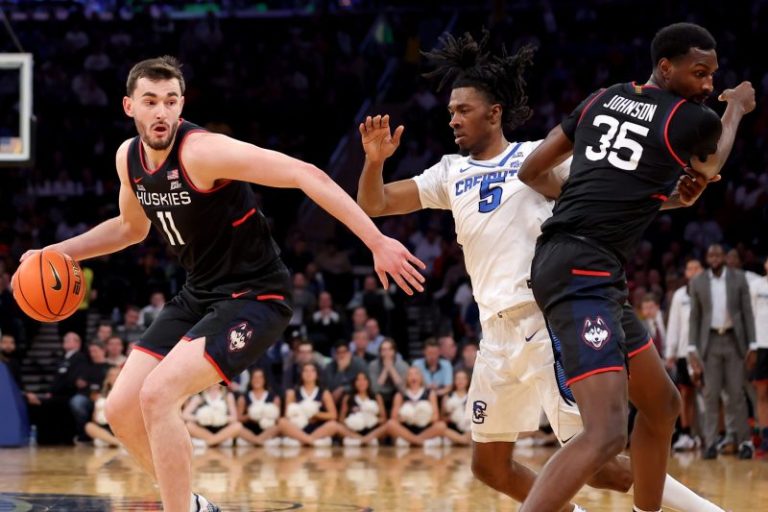
Hurry! There’s still time to get your NCAA Tournament brackets submitted. Even better, there’s still time to start a pool in your office or among your friends.

While March Madness is one of the greatest times to be a sports fan, it can be made even better by adding that element of competition among your compatriots. Of course, the best way to make your mark in any survivor pool is to win. However, if you can’t win, you might as well go down with a stellar name that makes your counterparts smile, laugh or laud your wit.

Here are our favorite bracket names from around the internet as we approach the Round of 64:

Best March Madness bracket names

General college basketball bracket names

Fade this Bracket − a little self-deprecation never hurt anybody, and it adds a sense of irony to your victory should your bracket do well. At the very least, it prompts people to have very little faith in your bracket, so even if you struggle, you can say you called it.
16 Seed Moneyline Lock − everyone loves backing an underdog. Maybe don’t put money on a No. 16 seed, but basing your bracket around that could be fun. Plus, it would make for a great story if a 16 seed did wind up upsetting a No. 1 seed.
Hope This Bracket Finds You Well − works great in an office setting. Fortunately though, unlike most emails, the bracket should actually find your colleagues well for the most part.

College/mascot-inspired names

Auburn Notice − Auburn is a good team to back this year, boasting arguably the best player in college basketball this year in Johni Broome. Throwing in a reference to an underrated TV show is also a huge plus.
UCan’t Beat Me − A name like this sets the tone early. It’s confident and references the reigning back-to-back champs. It’s tough to beat (no pun intended).
Remembering the Pac-12 − nothing beats a trip down memory lane, and with this being the first year of college basketball without the beloved conference. Will they rebuild? Who knows? But as it stands, it’s fun to look back.
Big Blue’s Due − you can never go wrong with a rhyme, and given Kentucky’s strength this year, they could very well be due for a championship.

Player-inspired names

Bring Out the Broomes − Johni Broome has been arguably the best player in the toughest conference, so if you’re backing Auburn and plan to sweep up the competition, this is the name for you.
Run It Up The Flagg Pole − Although Flagg’s status for Duke’s first March Madness game is still up in the air, he’s an undeniable talent that no one would mock you for basing your bracket around.

March Madness lore-inspired names

Sister Jean Blessed this Bracket − In remembrance of one of the greatest Cinderella runs of all-time, a blessing from Sister Jean would almost certainly win you your pool
Striking Gohlke − Just last year, Jack Gohlke stunned basketball fans leading Oakland to a win over Kentucky in the opening round. If they can win against impossible odds, your bracket can do well too.
UMBC You Later − UMBC was the first No. 16 seed to ever take down a No. 1 seed. This bracket name lets your colleagues know that you’re rooting for chaos.

This post appeared first on USA TODAY