Archive

2025

Browsing

Israeli troops re-imposed a blockade of the northern capital of Gaza City on Thursday, less than a day after once again deploying troops into the Gaza Strip.

Israel continued with its bombardment of Gaza as well, killing 85 Palestinians from Wednesday into Thursday, according to the Hamas-run Gaza health ministry. Israel maintained the blockade of Gaza City for much of the war prior to the January ceasefire, which collapsed earlier this week.

The Israeli Defense Forces (IDF) warned residents not to use the main road to travel north into Gaza City.

The IDF is also conducting further ground operations in the northern town of Beit Lahiya. Most of the Palestinian deaths over the past 24 hours have centered on the town.

Hamas launched a handful of rockets into Israel on Thursday, resulting in no casualties.

The total death toll in Gaza since Tuesday has risen to 592, according to the health ministry. The death toll has not been independently verified.

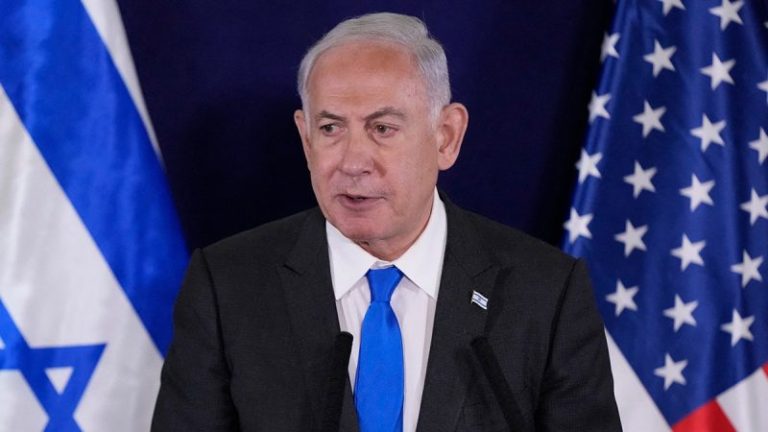
In addition to the blockade at Gaza City, IDF troops are also deployed to the Netzarim corridor, a key section of Gaza that essentially cuts the strip in half. Israeli Prime Minister Benjamin Netanyahu has maintained that Israel will continue its military operations until every hostage has been returned from Hamas custody.

‘Hamas refused offer after offer to release our hostages. In the past two weeks, Israel did not initiate any military action, in the hope that Hamas would change course. Well, that didn’t happen. While Israel accepted the offer of President Trump’s special envoy Steve Witkoff, Hamas flatly refused to do so,’ Netanyahu said in a video shared to X on Tuesday. ‘This is why I authorized yesterday, the renewal of military action against Hamas.’

‘Israel does not target Palestinian civilians. We target Hamas terrorists,’ he declared. ‘And when these terrorists embed themselves in civilian areas, when they use civilians as human shields, they’re the ones who are responsible for all unintended casualties.’

This post appeared first on FOX NEWS

President Donald Trump accused former President Joe Biden on Sunday of using an autopen to sign important documents — including pardons on including some for lawmakers who served on the House Select Committee to investigate the Jan. 6 Capitol riot.

Trump claimed that Biden’s more than 8,000 pardons were void and that Biden did not know what documents he was signing through the automated device, calling into question Biden’s mental sharpness while in office and whether he personally approved all official actions. 

What is an autopen, and how does it work?

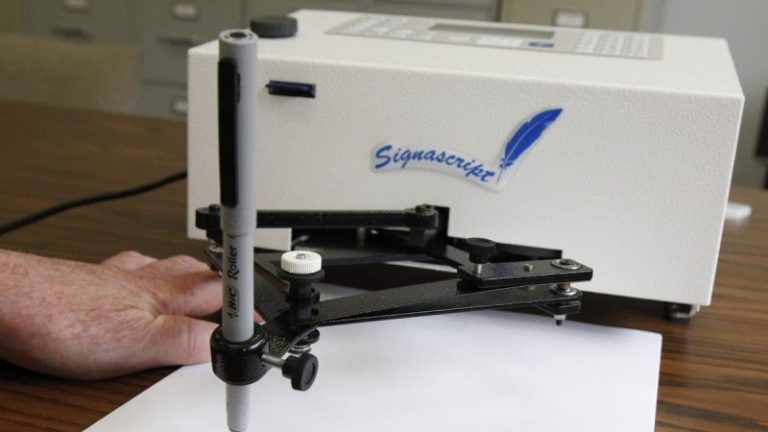
An autopen is a device that physically holds a pen and is programmed to replicate a person’s signature. It is not a stamp or a digitized print of someone’s signature, and various autopen machines have the capability to hold different types of pens, ranging from ballpoint to permanent marker, according to descriptions of autopen machines available for purchase. 

Modern machines allow someone to save a signature on a smart card or USB flash drive, and then transfer it to the machine. To activate the device, one inserts the pen and then either presses a button or uses a foot pedal to create the signature. 

Other autopen machines have the capacity to write full-length letters for mass, handwritten mail campaigns, where one can select various fonts and input data to determine spacing, size, angle, among other things. 

Use of an autopen is common for lawmakers and other figures like celebrities, who may be required to sign a large swath of documents at one time. For example, former President Barack Obama signed off on an aide using an autopen machine in 2011 to reauthorize the Patriot Act, while he was abroad in France and unable to physically sign it himself. 

That episode marked the first known incident of a president signing legislation with an autopen, even though other presidents like Lyndon B. Johnson were photographed with the machine and reportedly used it to sign correspondence after the machine’s invention during World War II. 

A White House official confirmed to Fox News Digital Tuesday that Trump uses his hand signature on every legally operational or binding document, in keeping with his administration’s official policy during both terms. However, Trump admitted he uses one for letters. 

Trump told reporters on Air Force One Sunday that although he employs an autopen for correspondence, it is ‘disgraceful’ to use one when signing documents such as pardons.

However, the Justice Department’s Office of Legal Counsel determined in 2005 that the president is authorized to use an autopen to sign bills into law. More recently, the U.S. Court of Appeals for the Fourth Circuit issued a ruling in February that said the absence of ‘a writing does not equate to proof that a commutation did not occur.’

‘The constitutional text is thus silent as to any particular form the President’s clemency act must take to be effective,’ the circuit court said in its opinion.

Despite Trump’s concerns over the validity of Biden’s pardons due to the alleged use of an autopen, constitutional scholar Jonathan Turley told Fox News Digital that the odds of successfully legally challenging them in court are ‘vanishingly low.’ 

‘Presidents are allowed to use the autopen and courts will not presume a dead-hand conspiracy,’ Turley said. 

A spokesperson for Biden did not provide comment on the record to Fox News Digital. 

Trump’s attacks on Biden over the use of an autopen come after the Oversight Project with conservative think-tank The Heritage Foundation released a report March 6 claiming that it conducted an analysis of Biden documents, and found that a majority of documents signed during his administration used an autopen.

‘This apparent use raises concerns about: whether President Biden personally authorized each official act; whether or which unelected staff controlled the autopen device; and whether they acted with his approval,’ the Oversight Project said in a report released Monday. 

The Associated Press and Fox News’ Emma Colton contributed to this report. 

This post appeared first on FOX NEWS

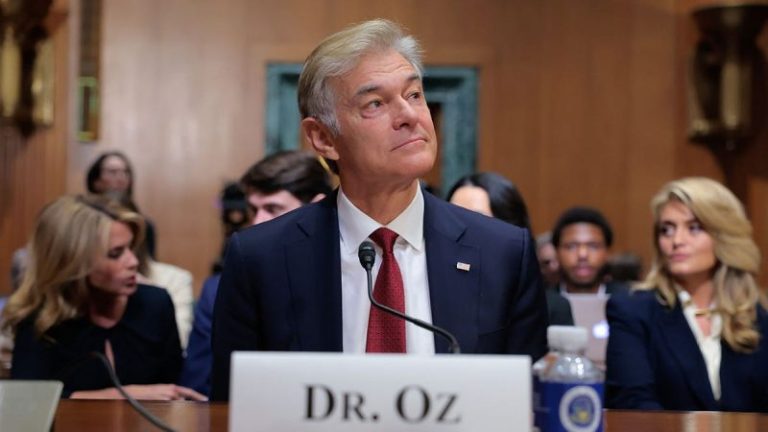
Sen. Josh Hawley, R-Mo., said he was ‘skeptical’ of Dr. Mehmet Oz’s views, particularly on transgender procedures for minors and abortion, and released a series of questions Wednesday that he plans to ask President Donald Trump’s nominee to lead the Centers for Medicare and Medicaid Services (CMS) during his road to confirmation. 

‘I’ve been reading up on Dr. Oz – I see he’s praised trans surgeries for minors and supported hormone treatments & puberty blockers for kids in the past,’ Hawley wrote on X on Wednesday. ‘And has also criticized state laws protecting life. I hope he’s changed his views to match President Trump! We need the Trump agenda at CMS.’ 

In a series of written questions for Oz, Hawley asked the former heart surgeon and TV personality if his views have changed since hosting a television show. 

Hawley noted that Oz had on his show ‘various transgender advocates as well as a surgeon who performed transgender surgery’ and ‘also invited children to discuss switching genders and praised parents for helping their children ‘transition’.’  

‘Do you support President Trump’s position that gender transition procedures for minors should be banned?’ one question directed at Oz and shared by Hawley’s press office asked. 

The senator also asked if Trump’s nominee supported the president’s executive order barring biological men from competing in women’s sports. 

‘Do you believe that CMS has a role in promoting or supporting gender transition surgery in any way?’ Hawley asked. 

The senator asked Oz if he would commit to never issuing a National Coverage Determination at CMS for ‘gender reassignment surgery’ or equivalent procedures, including the use of hormone and puberty blockers, in line with Trump’s policies. He also asked if Oz would support Trump’s efforts to halt federal funding to hospitals that provide so-called ‘gender-affirming care’ to minors.

Hawley noted Oz had stated in the past that he did not want to ‘interfere’ with doctors prescribing puberty blockers for minor children and asked if that was still his position. 

‘Do you believe the Dobbs decision overturning Roe v. Wade, which every Justice appointed by President Trump supported, was correctly decided?’ Hawley asked. 

The senator questioned whether Oz’s position has changed since he in 2019 opposed state limitations on abortion related to fetal heartbeat by describing it as ‘little electrical exchanges in the cell that no one would hear or think about as a heart.’ 

In 2019, Oz predicted a state would face a ‘big sucking sound of business leaving’ over its pro-life law, the senator noted, asking Trump’s nominee to answer if he would allow his decisions as head of CMS to be ‘influenced by corporate preferences.’ 

Oz testified last week that CMS would abide by the Hyde Amendment, which bars federal taxpayer dollars from funding abortions.

‘As a physician, I’ve been in the room when there’s some difficult conversations happening. I don’t want the federal government involved with that at all,’ Oz stated in 2022, according to Hawley’s office. The senator cited how Oz also said he did not want the federal government ‘impinging’ on actions the states may make regarding abortion.

‘But many federal laws and regulations implicate life issues,’ Hawley said. ‘President Trump’s administration has opposed federal funding for abortion, for example, at home and abroad. Will you support the President’s position and commit to upholding existing laws that prevent federal funds from being used for abortions?’ 

Hawley asked Oz if he would uphold protections for conscience rights related to abortion, including under the Weldon, Church and Coats-Snowe Amendments. 

The senator noted that CMS under Trump approved waivers allowing states to exclude abortion-performing clinics from the Medicaid program and asked Oz if he would support the president’s policy and back similar waivers if he is confirmed by the Senate. Hawley questioned whether Oz would ‘support action at the federal level to directly exclude abortion providers from the Medicaid program.’ 

‘The Biden administration issued guidance via CMS suggesting that the Emergency Medical Treatment and Active Labor Act (EMTALA) required hospitals to perform abortions, overriding state laws,’ Hawley noted. The senator asked Oz if he would return to the Trump policy and ‘clarify that EMTALA does not mandate abortions.’ 

Finally, Hawley noted that CMS under Trump required separate billing plans that covered abortion in Affordable Care Act (ACA) marketing plans and the Biden administration eliminated that requirement. He asked if Oz would support returning Trump’s policy of ‘transparent billing practices and ensure that consumers pay properly separate charges for abortion.’ 

The 64-year-old was a respected heart surgeon who turned into a popular TV pitchman. He sold everything from supplements to private health insurance plans on ‘The Dr. Oz Show,’ which ran for 13 seasons and helped him amass a fortune.

If confirmed, Oz will oversee health insurance for about 150 million Americans enrolled in Medicare, Medicaid or ACA coverage. As CMS administrator, he could wield significant power over most health companies operating in the U.S., because he can make decisions about who and what is covered by Medicare and Medicaid.

Oz faced over two and a half hours of questioning Friday before the Republican-controlled Senate Finance Committee, which has yet to vote on whether to forward his nomination to the full Senate for consideration. Hawley is not a Finance Committee member and did not question Oz during the hearing last week.

The Associated Press contributed to this report. 

This post appeared first on FOX NEWS

Hamas has claimed responsibility for rockets fired at Israel on Thursday.

‘This launch is the resistance’s first response to the zionist entity’s violation of the ceasefire, which resulted over 710 martyrs in the last three days. It also comes after the IOF’s renewed ground invasion into Beit Lahia this morning, and the failure of the mediators and the world to curb the IOF’s aggression,’ according to reports.

Strikes launched by Israel killed at least 58 Palestinians throughout the Gaza Strip overnight and into Thursday, according to hospitals via the Associated Press.

The Jewish State resumed attacks across Gaza earlier this week, breaking a ceasefire, which reportedly killed over 400 Palestinians – mostly women and children – on Tuesday, according to the Hamas-run Gaza health ministry.

Israel’s military indicated that it intercepted a missile fired by Yemen’s Iran-backed Houthi rebels early Thursday before it entered Israel’s airspace, the AP reported.

‘Hamas refused offer after offer to release our hostages. In the past two weeks, Israel did not initiate any military action, in the hope that Hamas would change course. Well, that didn’t happen. While Israel accepted the offer of President Trump’s special envoy Steve Witkoff, Hamas flatly refused to do so,’ Israeli Prime Minister Benjamin Netanyahu said in a video shared to X on Tuesday. ‘This is why I authorized yesterday, the renewal of military action against Hamas.’

‘Israel does not target Palestinian civilians. We target Hamas terrorists,’ he declared. ‘And when these terrorists embed themselves in civilian areas, when they use civilians as human shields, they’re the ones who are responsible for all unintended casualties.’

Israel launched its war on Hamas in response to the terrorist group’s heinous attack on Oct. 7, 2023.


Sen. John Fetterman, D-Pa., a staunch supporter of Israel, continued to express his support while visiting the foreign nation this week.

‘Hamas does not want peace. I unapologetically, 100% stand with Israel, and demand the release of all remaining hostages. Sending this from Israel,’ Fetterman said on X on Tuesday.


Rep. Jared Moskowitz, D-Fla., said on X on Wednesday, ‘Hamas could end this war right now if it released the hostages held in Gaza. It could’ve done so months ago, but instead it’s brought devastation by prolonging this conflict. America must lead the world in pressuring Hamas to end this war and bring the hostages home.’

This post appeared first on FOX NEWS

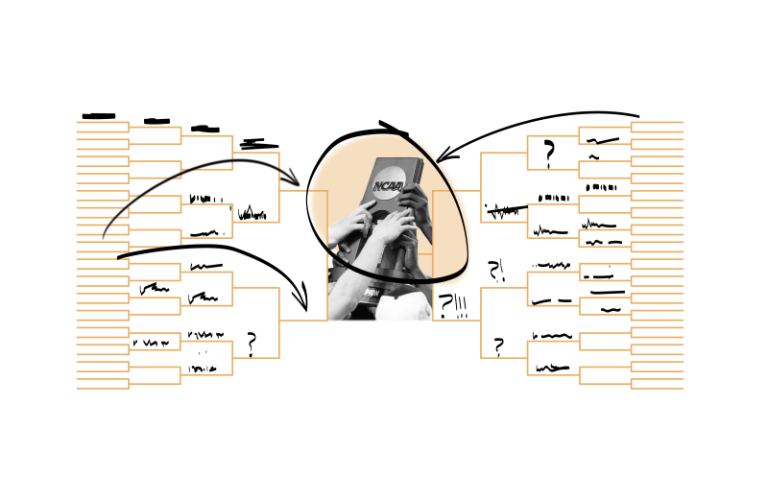
Don’t let that page of 68 school names intimidate you. Everyone who wants to build a winning NCAA men’s tournament bracket is in the same boat: Pick a bunch of favorites, play a few hunches and cross your fingers.

Regardless of how much research you do, your odds of picking all 63 games – not including the four play-in games – correctly are impossibly large. Perhaps that’s why we’ll give you $1 million to do it.

So your bracket doesn’t need to be perfect. Just a little lucky.

Printable 2025 NCAA March Madness bracket

We’ll give you a few trends based on 39 years of history since the tournament grew to 64 teams. Our tips will get you started, but you’ll still need to make a few guesses – educated or not – along the way.

Below is a different way to look at the traditional NCAA Tournament bracket. The first round comes down to four sets of these eight pairings. These 2,496 squares below represent all the teams – not counting the play-in teams – that have competed in the tournament since 1985.

1a. NCAA Tournament first-round winners are usually the top seeds

Unable to view our graphics? Click here to see them.

If you just pick the highest-seeded team throughout the tournament, your odds improve significantly – especially through the first few rounds. That makes the No. 1 and 2 seeds especially good bets in almost every tournament.

The NCAA has hosted its own online bracket contest during the past 10 tournaments. They’ve found that players get two-thirds of their picks right when they based their picks on ‘likely outcomes.’ That method improves your odds of a perfect bracket to 1 in 120.2 billion. 

That’s 70 million times better than coin flipping, but likely outcomes probably won’t be enough to win among your friends and co-workers.

1b. Lowest-seeded teams might not be a good bet to upset

The 15th- and 16th-seeded teams have won a combined 13 times in the past 39 years, or once every three years. So the odds are stacked against those eight lowest-seeded teams again this year because of No. 15 Princeton’s and No. 16 Fairleigh Dickinson’s wins in the 2023 tournament.

Perhaps we’re either seeing the start of a new trend, or, more likely, you can feel relatively confident picking all the No. 1 and 2 seeds. If you do want to take a flier (which you’ll need to do to win), maybe try a few seeds up. On average, a 13 seed knocks off a 4 seed about once per tournament.

Which seeds have the best records in the round of 32

Not unsurprisingly, 47% or more of the 4 seeds or higher make it through to the Sweet 16. What might be surprising: If a 10, 11 and 12 seed wins their first-round game, they have a 40% chance of moving on to the Sweet 16.

3. How many upsets you should pick in you NCAA Tournament bracket

The guessing game begins here in Step 3 where you’ll likely differentiate your bracket from everyone one else’s.

On average between 1985 and 2024, there’ve been 8.5 upsets per tournament, or just about 13% of the 63 games, according to the NCAA. That said, some years are bound to break brackets. Both 2021 and 2022 had 14 total upsets.

The NCAA’s upset numbers don’t include the 8 vs. 9 games. That’s probably the best time to consider flipping a coin to make your picks. That said, the 9 seeds currently have a six-game edge on the 8s, so that might argue for a majority of 8-seed winners this year.

Upset rates for the first four rounds of the NCAA Tournament

While the 39-year average is just over eight upsets per year, upsets have become a bit more commonplace. In nine of the past 13 years, lower seeds have won at least 10 games, according to the NCAA. There were 10 upsets in 2023 and nine in 2024.

4. Picking the Final Four gets more challenging

Since 2011, at least one No. 7 seed or lower has made in the Final Four – except for 2019. Even that tournament would have required some creative guessing. The eventual champion Virginia was a No. 1 seed, but the other three included No. 2 Michigan State, No. 3 Texas Tech and No. 5 Auburn. 

Also, just picking all the No. 1 seeds to make the Final Four is less likely now than a No. 16 seed toppling a No. 1 seed, which has happened twice. All four No. 1 seeds made the Final Four only once: 2008.

5. A No. 1 seed is still the best choice for the tournament champion

Maybe you shouldn’t have four No. 1s in your Final Four, but they’ve piled up more than two dozen championships in nearly four decades, including nine of the past 12 tournaments. Since 2005, a No. 1 seed has won at least every other year.

Perhaps Connecticut will bring home its third consecutive championship this year?

Last season the Huskies were a heavily favored No. 1 seed, unlike 2023 when they started at No. 4. They have an even tougher road this year as an 8 seed. Should they win, Connecticut would be only the second 8 seed to win the tournament since 1985. The other schools that have won men’s basketball NCAA Championships:

Schools that have won the NCAA men’s tournament

What’s the longest a bracket has ever stayed perfect?

According to the NCAA, an Ohio man correctly predicted the entire 2019 men’s NCAA tournament into the Sweet 16, which set the record for the longest verified March Madness bracket win streak at 49 games. (The NCAA began tracking brackets from major online platforms, including their Men and Women’s Bracket Challenge Game, ESPN, CBS and Yahoo, since 2016.) Read more about perfect March Madness brackets here.

This post appeared first on USA TODAY

The NCAA men’s and women’s basketball tournaments are just about ready to get underway with all teams eyeing a spot in their respective Final Fours.

The men will play for the national championship on April 5-7 at the Alamodome in San Antonio, Texas. The women are pointing toward their national championship, April 4-6 at Amalie Arena in Tampa, Florida.

As of Selection Sunday, we know who the top seeds are. But which teams are the oddsmakers favoring? If they’re not the same teams, which ones could be profitable if one were to place a wager? Let’s take a closer look:

Men’s March Madness national championship odds

Odds courtesy of BetMGM as of Wednesday, March 19

With questions surrounding star forward Cooper Flagg’s health, the Duke Blue Devils are no longer the odds-on favorite to win the national title. Duke has fallen behind SEC rivals Auburn and Florida, according to BetMGM.com.

T1. Auburn -135
T1. Florida -135
3. Duke -130
4. Houston +120
5. Tennessee +225
6. St. John’s +400
7. Alabama +425
T8. Iowa State +500
T8. Michigan State +500
10. Texas Tech +600

Women’s March Madness national championship odds

Odds courtesy of BetMGM as of Wednesday, March 19

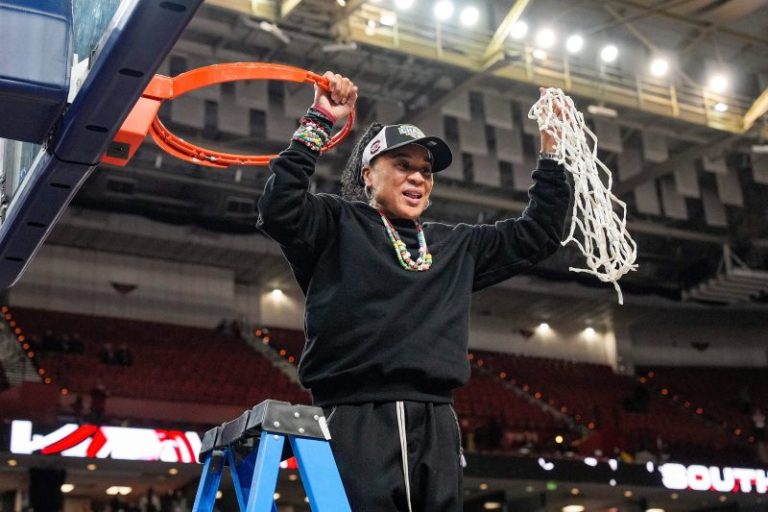
Defending champion South Carolina is the present favorite on the women’s side with Connecticut close behind. Then there’s a bit of a drop-off in the betting to the next tier.

1. South Carolina +220
2. Connecticut +240
3. UCLA +525
T4. Texas +700
T4. USC +750
6. Notre Dame +900
7. NC State +3500
T8. LSU +5000
T8. Duke +5000
T8. TCU +5000

We occasionally recommend interesting products and services. If you make a purchase by clicking one of the links, we may earn an affiliate fee. USA TODAY Network newsrooms operate independently, and this doesn’t influence our coverage.

Gambling involves risk. Please only gamble with funds that you can comfortably afford to lose.  While we do our utmost to offer good advice and information we cannot be held responsible for any loss that may be incurred as a result of gambling.  We do our best to make sure all the information that we provide on this site is correct. However, from time to time mistakes will be made and we will not be held liable. Please check any stats or information if you are unsure how accurate they are. No guarantees are made with regards to results or financial gain. All forms of betting carry financial risk and it is up to the individual to make bets with or without the assistance of information provided on this site and we cannot be held responsible for any loss that may be incurred as a result of following the betting tips provided on this site.  Past performances do not guarantee success in the future and betting odds fluctuate from one minute to the next. The material contained on this site is intended to inform, entertain and educate the reader and in no way represents an inducement to gamble legally or illegally or any sort of professional advice.

Gannett may earn revenue from sports betting operators for audience referrals to betting services. Sports betting operators have no influence over nor are any such revenues in any way dependent on or linked to the newsrooms or news coverage. Terms apply, see operator site for Terms and Conditions. If you or someone you know has a gambling problem, help is available. Call the National Council on Problem Gambling 24/7 at 1-800-GAMBLER (NJ, OH), 1-800-522-4700 (CO), 1-800-BETS-OFF (IA), 1-800-9-WITH-IT (IN). Must be 21 or older to gamble. Sports betting and gambling are not legal in all locations. Be sure to comply with laws applicable where you reside. It is your sole responsibility to act in accordance with your local laws.

This post appeared first on USA TODAY

You’ve filled out your March Madness NCAA Tournament brackets.

Now, it’s time to enjoy the games.

And pay attention to who might be playing in the NBA next season.

The NCAA Tournament is loaded with NBA prospects – the projected No. 1 pick, multiple lottery picks, first-rounders and second-rounders. From big conferences and mid-major conferences. Freshmen, sophomores, juniors, seniors and post-grads are represented.

And there is international appeal. V.J. Edgecombe (Baylor), Egor Demin (BYU), Kasparas Jackucionis (Illinois) and Khaman Maluach (Duke) play for teams competing in the NCAA Tournament. They were born outside of the USA – and they are projected lottery picks in USA TODAY Sports’ latest 2025 NBA mock draft.

Here are some of the NBA prospects to watch in Thursday’s NCAA Tournament games:

Ryan Kalkbrenner, Creighton

Senior, center, 7-1, 270, 23
2024-25 stats: 19.4 ppg, 8.8 rpg, 2.7 bpg, 1.5 apg, 65.5% FG, 33.3% 3PT, 68.2% FT
Projected pick:Late first round, early second round

Another player who can be a modern-day NBA big man: runs the court well, knows how to run the pick-and-roll as the screener, finishes at the rim, posts up when necessary and can step out and hit 3-pointers though his attempts are limited. Gets offensive rebounds and a solid shot-blocker.

First-round matchup:No. 8 Louisville vs. No. 9 Creighton, 12:15 p.m. ET, CBS

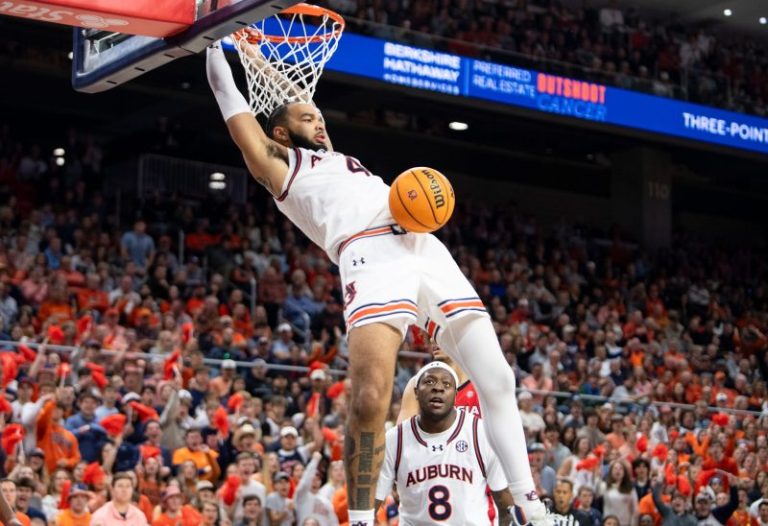
Johni Broome, Auburn

Senior, forward-center, 6-10, 240, 22
2024-25 stats: 18.9 ppg, 10.6 rpg, 3.1 apg, 2.3 bpg, 51.3% FG, 28.9% 3PT, 60.7% FT
Projected pick:late first round, early second round

A powerful and physical forward, Broome is a double-double machine in points and rebounds but also has a penchant for assists – 31 points, 14 rebounds against Georgia; 19 points, 14 rebounds, six assists and two blocks against Alabama; 21 points, 20 rebounds, six assists, three blocks against Ohio State. He is in the running for college player of the year, and in two SEC tournament contests, Broome averaged 23 points and 11 rebounds and shot 63% from the field.

First-round matchup: No. 1 Auburn vs. No. 16 Alabama State, 2:50 p.m. ET, CBS

Egor Demin, BYU

Freshman, forward, 6-9, 190, 19
2024-25 stats: 10.3 ppg, 5.4 apg, 3.8 rpg, 1.2 spg, 41% FG, 27.1% 3PT, 67.5% FT
Projected pick: mid- to late lottery

The Russian is a playmaker who can make quick decisions and facilitate for others. Demin is the size of a wing player but has guard-like skills. On defense, he uses his length to his advantage while forcing turnovers and being active in passing lanes. His shooting efficiency is a concern. Demin had difficulty with his offense as the season progressed. He had just three points with four turnovers, three assists and three rebounds in a Big 12 conference tournament victory against Iowa State and six points on 2-for-9 shooting (1-for-7 on 3s) with four assists and five turnovers in a conference tournament loss to Houston.

First-round matchup:No. 6 Brigham Young vs. No. 11 Virginia Commonwealth, 4:05 p.m. ET, TNT

John Tonge, Wisconsin

Sixth-year, guard, 6-5, 218, 24
2024-25 stats: 19.6 ppg, 5.4 rpg, 1.8 apg, 46.9% FG, 39.1% 3PT, 90.8% FT
Projected pick: late second round

Tonge was a handful in the Big Ten with his size, ability to take contact and shooting. He scored 32 points against Michigan State and 26 against UCLA on 16-of-24 shooting in the conference tournament but had just nine points on 1-for-14 shooting against Michigan in the conference tournament championship game.

First-round matchup:No. 3 Wisconsin vs. No. 14 Montana, 1:30 p.m. ET, TNT

Asa Newell, Georgia

Freshman, forward, 6-11, 220, 19
2024-25 stats: 15.3 ppg, 6.8 rpg, 1.0 spg, 1.0 bpg, 54.1% FG, 29.9% 3PT, 74.4% FT
Projected pick: mid- to late lottery in first round

Based off of his size, Newell wouldn’t appear to be as quick and fluid as he is, which should make him an instant threat in pick-and-roll situations. He was one of the lone bright spots for the Bulldogs in a loss against No. 1 Auburn with a team-high 20 points. His scoring dipped at the end of the regular season. However, he had 21 points and 17 rebounds in an SEC tournament loss to Oklahoma.

First-round matchup:No. 8 Gonzaga vs. No. 9 Georgia, 4:35 p.m. ET, TBS

Chaz Lanier, Tennessee

Fifth year, guard, 6-5, 207, 23
2024-25 stats: 17.7 ppg, 3.8 rpg, 1.0 apg, 43.5% FG, 40% 3PT, 73.5% FT
Projected pick: early, mid- second round

Lanier’s scoring dropped in the SEC tournament, but he had efficient offensive games down the stretch of the regular season, scoring 30 points on 18 shots against Texas A&M and 23 points on 15 shots against Texas. He shot 41.8% on 3s in Tennessee’s final six regular-season games.

First-round matchup:No. 2 Tennessee vs. No. 15 Wofford, 6:50 p.m. ET, TNT

Boogie Fland, Arkansas

Freshman, guard, 6-2, 175, 18
2024-25 stats: 15.1 ppg, 5.7 apg, 3.4 rpg, 1.5 spg, 39.1% FG, 36.5% 3PT, 83.9% FT
Projected pick: Late first round, early second round

Fland is an aggressive defender, can hit mid-range shots, makes 3s off the dribble and on catch-and-shoots and attacks the rim. He is getting more comfortable reading defenses and finding advantages with the pass. Fland sustained a thumb injury Jan. 11 and hasn’t played since Jan. 18, undergoing surgery on Jan. 22. However, Razorbacks coach John Calipari said this week Fland has been cleared to play and has resumed full basketball-related activities.

First-round matchup: No. 7 Kansas vs. No. 10 Arkansas, 7:10 p.m. ET, CBS

Adou Thiero, Arkansas

Junior, forward, 6-8, 220, 21
2024-25 stats: 15.6 ppg, 6.0 rpg, 1.9 apg, 1.7 spg, 54.8% FG, 26.2% 3PT, 68.8% FT
Projected pick: late first round, early second round

Thiero hasn’t played since Feb. 22 (hyperextended left knee) and will miss the first game of the NCAA Tournament. A quick and athletic leaper, Thiero likes to run the court for easy transition buckets. He is solid off the dribble and attacks his defender on the way to the rim. Thiero gets his hands into passing lanes for deflections and steals. He will need to improve his outside shot.

First-round matchup:No. 7 Kansas vs. No. 10 Arkansas, 7:10 p.m. ET, CBS

Danny Wolf, Michigan

Junior, forward-center, 7-0, 250, 21
2024-25 stats: 12.9 ppg, 9.7 rpg, 3.7 apg, 1.4 bpg, 50% FG, 34.4% 3PT, 60% FT
Projected pick: mid- to late first round

The Yale transfer is shooting up draft boards thanks to his fluid scoring and play-making portfolio in the package of a 7-foot stretch big. Wolf has played point guard at times this season for the Wolverines just like he’s played center. His handles make him a threat as the initiator in pick-and-roll actions and his range should translate to the NBA.

First-round matchup:No. 5 Michigan vs. No. 12 UC San Diego, 10 p.m. ET, TBS

Darrion Williams, Texas Tech

Junior, guard, 6-6, 225, 22
2024-25 stats: 14.3 ppg, 5.2 rpg, 3.7 apg, 1.2 spg, 44.1% FG, 36.5% 3PT, 84.2% FT
Projected pick: early to mid-second round

Williams has a right leg injury, missed Texas Tech’s Big 12 semifinal game against Arizona and his status is unclear. In the quarterfinals against Baylor, Williams had 14 points (4-for-6 on 3s) and eight rebounds.

First-round matchup: No. 3 Texas Tech vs. No. 14 UNC Wilmington, 10:10 p.m. ET, truTV

This post appeared first on USA TODAY

Across the 2025 women’s March Madness bracket, there are potential Cinderella teams lurking, waiting, hoping they can pull off an NCAA Tournament run. But which teams have the best chance at doing so? Which underdogs should we watch closely?

To help you answer that, here are seven potential Cinderella teams our USA TODAY Sports Network experts are keeping their eyes on.

Stream women’s NCAA Tournament games on Fubo

Women’s March Madness Cinderella picks

No. 13 Grand Canyon

It’ll be tough sledding for the Lopes (32-2) but they are an experienced group, and Molly Miller is one of the top up-and-coming coaches. — Maxwell Donaldson, Gadsden Times

What coach Molly Miller has done with the program is remarkable. Trinity San Antonio and Alyssa Durazo-Frescas are some dangerous shooters. — Jenna Ortiz, Arizona Republic

No. 12 Green Bay

No. 10 Harvard

No. 7 Vanderbilt

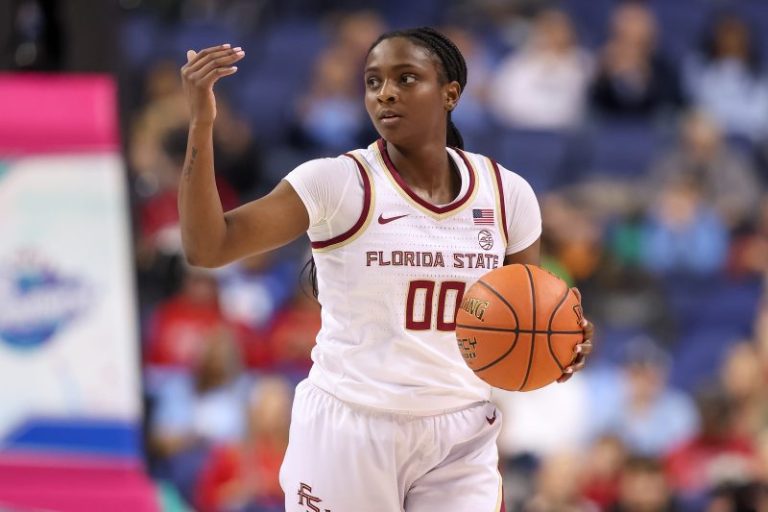
No. 6 Florida State

No. 6 Michigan

No. 5 Tennessee

Women’s March Madness schedule

First Four: March 19-20
First round: March 21-22
Second round: March 23-24
Sweet 16: March 28-29
Elite Eight: March 30-31
Final Four: Friday, April 4 (both semifinals; first game begins at 7 p.m. ET)
NCAA championship: Sunday, April 6 (Game scheduled for 3 p.m. ET)

Where to watch Women’s March Madness

All games will be televised on the ESPN family of networks, which includes ABC, ESPN, ESPN2, ESPNU, and ESPNews. Games can be streamed on Fubo, which is offering a free trial to new subscribers.

This post appeared first on USA TODAY

The 2025 NCAA women’s Tournament features Dawn Staley and No. 1 seed South Carolina looking to repeat as March Madness champions.

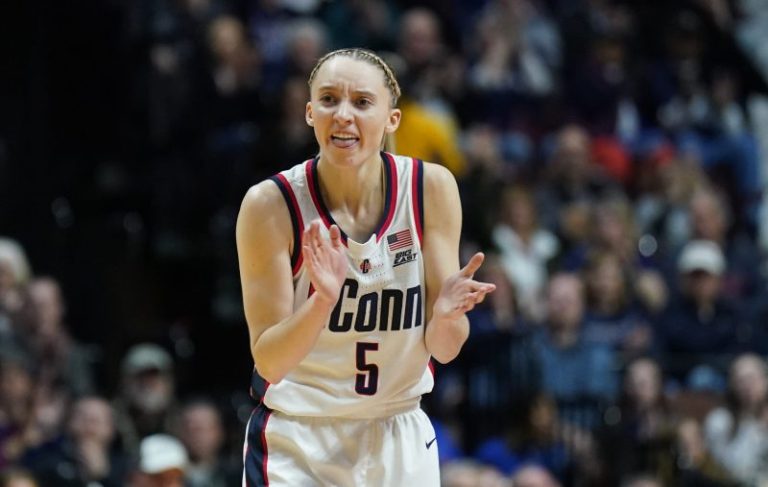
Meanwhile, JuJu Watkins and USC are aiming for the Trojans’ first title since 1984; Lauren Betts and UCLA are going for the Bruins’ first national championship; Madison Booker and Texas are vying to end a 39-year championship drought; and Paige Bueckers and second-seeded UConn are trying to pull down Geno Auriemma’s 12th national title and first since 2016.

Here is who our USA TODAY Sports Network experts picked to win the national championship.

Women’s March Madness bracket predictions

Nancy Armour, USA TODAY: UConn over Duke
Jordan Mendoza, USA TODAY: USC over South Carolina
Cydney Henderson, USA TODAY: South Carolina over UCLA
Cora Hall, Knoxville News Sentinel: South Carolina over UConn
Lulu Kesin, Greenville News: South Carolina over UConn
Meghan Hall, For The Win: South Carolina over USC
Mike Sykes, For The Win: UConn over South Carolina
Cory Diaz, The Daily Advertiser: UConn over Notre Dame
Maxwell Donaldson, Gadsden Times: UConn over South Carolina
Jenna Ortiz, Arizona Republic: UConn over South Carolina

Stream women’s NCAA Tournament games on Fubo

Women’s March Madness schedule

First Four: March 19-20
First round: March 21-22
Second round: March 23-24
Sweet 16: March 28-29
Elite Eight: March 30-31
Final Four: Friday, April 4 (both semifinals; first game begins at 7 p.m. ET)
NCAA championship: Sunday, April 6 (Game scheduled for 3 p.m. ET)

Where to watch Women’s March Madness

All games will be televised on the ESPN family of networks, which includes ABC, ESPN, ESPN2, ESPNU, and ESPNews. Games can be streamed on Fubo, which is offering a free trial to new subscribers.

This post appeared first on USA TODAY
Who is your favorite player in the 2025 women’s NCAA Tournament? There’s so much talent across the March Madness bracket to make any hoops head pumped about the action ahead.

So we asked our USA TODAY Sports Network experts to weigh in. Some players on this list – Hello, Paige Bueckers – are unsurprising. Others are also walking buckets, like Harvard’s Harmoni Turner and Florida State’s Ta’Niya Latson. All are exhilarating hoopers on a mission this March.

So, here are our favorite players in the women’s bracket.

Women’s March Madness favorites: Best players in NCAA Tournament

Paige Bueckers, UConn

Stream women’s NCAA Tournament games on Fubo

Harmoni Turner, Harvard

Kennedy Smith, USC

Ta’Niya Latson, Florida State

Sonia Citron, Notre Dame

Hailey Van Lith, TCU

Women’s March Madness schedule

First Four: March 19-20
First round: March 21-22
Second round: March 23-24
Sweet 16: March 28-29
Elite Eight: March 30-31
Final Four: Friday, April 4 (both semifinals; first game begins at 7 p.m. ET)
NCAA championship: Sunday, April 6 (Game scheduled for 3 p.m. ET)

Where to watch Women’s March Madness

All games will be televised on the ESPN family of networks, which includes ABC, ESPN, ESPN2, ESPNU, and ESPNews. Games can be streamed on Fubo, which is offering a free trial to new subscribers.

This post appeared first on USA TODAY