Archive

2025

Browsing

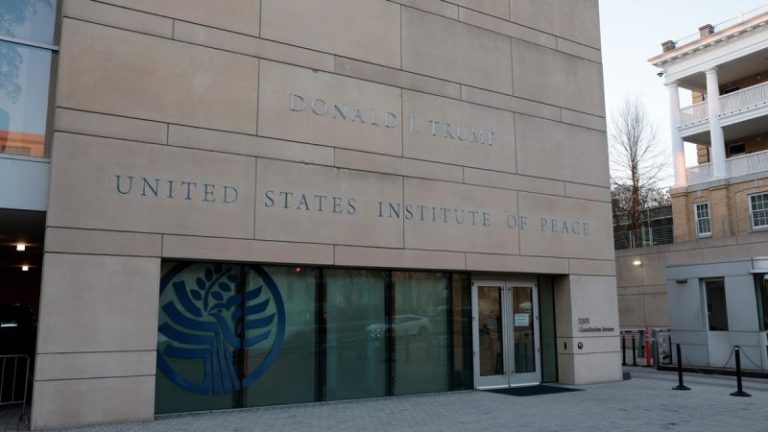
The U.S. Institute of Peace has been formally rebranded as the Donald J. Trump Institute of Peace, marking the latest step in the president’s months-long effort to dismantle the congressionally created agency.

The name change comes after a turbulent year for the organization, which the Trump administration has sought to shut down while shifting its authority to the Department of Government Efficiency (DOGE).

The institute has been fighting the move in federal court, but layoffs proceeded after an appeals court stayed a lower-court ruling that temporarily blocked the administration’s plan.

The agency’s website briefly went offline Wednesday morning before returning with promotion for Trump’s upcoming peace-agreement ceremony between the Democratic Republic of Congo and Rwanda.

White House spokesperson Anna Kelly defended the renaming, telling Fox News Digital the former institute had been ‘a bloated, useless entity that blew $50 million per year while delivering no peace.’

‘Now, the Donald J. Trump Institute of Peace, which is both beautifully and aptly named after a President who ended eight wars in less than a year, will stand as a powerful reminder of what strong leadership can accomplish for global stability,’ Kelly said. 

She added Trump ‘ended eight wars in less than a year,’ framing the institute’s new name as recognition of his ‘peace through strength’ approach.

‘Congratulations, world!’ Kelly said.

Secretary Marco Rubio echoed that sentiment in a post responding to the announcement.

‘President Trump will be remembered by history as the President of Peace,’ Rubio wrote. ‘It’s time our State Department display that.’

The U.S. Institute of Peace was created by Congress in 1984 as a nonpartisan organization supporting conflict-prevention and peace-building efforts abroad. The dismantling and rebranding into a Trump-named entity represents one of the most sweeping agency overhauls of Trump’s second term.

Earlier this year, U.S. District Judge Beryl Howell ruled that the administration’s shutdown effort was unlawful. But the ruling was stayed on appeal, clearing the way for terminations to move forward in July as the administration restructured the agency and continued transferring functions elsewhere.

The institute did not immediately respond to Axios’ request for comment on the rebranding or the status of its ongoing legal challenge.

The State Department did not immediately respond to Fox News Digital’s request for comment.

This post appeared first on FOX NEWS

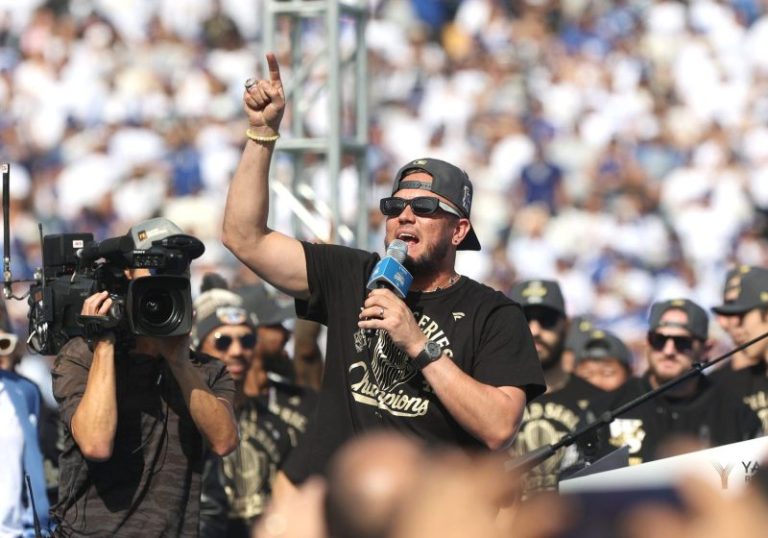
Miguel Rojas is expected back with the Los Angeles Dodgers for the final year of his career.

He’s said to have reached a one-year deal with the team worth $5.5 million, according to El Extrabase.

Rojas played a key role in helping the Dodgers secure back-to-back World Series in October.

Rojas proved to be a difference-maker in the World Series, producing a game-tying home run in the ninth inning of Game 7. He also made a crucial play at second base, throwing out the Toronto Blue Jays’ potential winning run at the plate.

He did become a free agent after the season, but continued to express his interest in returning to Los Angeles.

The Venezuelan recorded 76 hits, seven home runs, 27 RBIs and 35 runs in 290 at-bats during the regular season. 

In the playoffs, he had five hits, three runs, a home run and two RBIs in 18 at-bats.

Several members of the team have praised Rojas for his leadership, and he is likely to hold a role with the team after the 2026 season.

This post appeared first on USA TODAY

Siena men’s lacrosse coach Liam Gleason died on Wednesday, Dec. 3, the school announced. He was 41.

Gleason was hospitalized Sunday, Nov. 30, following what school officials called a ‘serious accident’ at his home. The Saints coach turned 41 on Friday, Nov. 28. A celebration of Gleason’s life and a funeral service will be held on Saturday, Dec. 6, at 11 a.m. ET inside the UHY Center on the Siena University campus.

‘A sudden, senseless loss carries a kind of pain that defies understanding,’ Siena President Chuck Seifert said in a statement released by the school. ‘It’s hard to imagine anyone more universally loved and admired than Liam. Our community was blessed by Coach Gleason’s life.’ 

Gleason, who led the Saints to an MAAC championship and an NCAA Tournament berth last season, was a coach for Siena for seven seasons.

‘The Siena community is devastated by this unspeakable tragedy,’ vice president and director of athletics John D’Argenio said in a statement. ‘As one Siena family, we give our support, prayers, and love to Jaclyn, Kennedy, Penn, Tate, and the entire Gleason family, as well as our men’s lacrosse student athletes and alumni, and those whom Liam touched while both a coach and player at UAlbany. Liam was an amazing human being, a great teammate in the department, and made Siena a better place.’

MAAC commissioner Travis Tellitochi issued a statement on the MAAC X account (formerly Twitter) with a dedication to Gleason.

Gleason is survived by his wife, Jaclyn, and three children – daughter Kennedy, and sons Penn and Tate.

A GoFundMe page established to help Gleason’s family had raised over $500,000 as of 7 p.m. ET on Wednesday.

This post appeared first on USA TODAY

Darius Slay didn’t need to wait long to learn his landing spot.

One day after the Pittsburgh Steelers placed the six-time Pro Bowl cornerback on waivers, Slay was claimed by the Buffalo Bills.

Slay, 34, was a healthy scratch for the Steelers’ loss to the Bills on Sunday, with coach Mike Tomlin indicating the team had wanted to see what cornerback Asante Samuel Jr. could do after the team signed him in mid-November.

He started nine games for Pittsburgh this season but saw his role reduced in the two losses previous to him being made inactive.

In Buffalo, he joins a secondary allowing a league-low 163.2 passing yards per game as well as a 59.5% completion rate. Slay will provide depth behind starting outside corners Christian Benford and Tre’Davious White for a potential playoff run.

This post appeared first on USA TODAY

The WNBA’s latest offer includes a max salary of $1 million. The average salary would be $500,000 with a minimum of $225,000.
The league is reportedly offering a revenue sharing component which is not tied to the proposed $5 million salary cap.
A combine for players entering the WNBA draft and shorter rookie deals are also reportedly on the table.

With all the back and forth in the ongoing negotiations between the WNBA and WNBPA, it can be hard to keep up on all the changes.

Both sides agreed to a six-week extension to hammer out their differences on November 30. They now have until Jan. 9 to reach a new deal for the 2026 season and beyond while avoiding (for now) the possibility of a lockout or strike.Within days of the WNBA and WNBPA agreeing to extend the current CBA, the league reportedly offered a new proposal, which included an updated max player salary. The league’s latest offer is a maximum guaranteed base salary of $1 million, with projected revenue sharing raising max players’ total earnings to $1.2 million. However, the WNBPA reportedly plans to reject the WNBA’s latest offer over concerns with the league’s ‘math.’

As negotiations continue, here are some answer to questions surrounding the process, including new reporting from The Athletic that addresses multiple topics discussed by the WNBA and WNBPA.

What is the WNBA offering in terms of salary cap and player salaries?

The league’s latest proposal would reportedly raise the salary cap to $5 million a season per team, with increasing the cap over the length of the CBA that will be tied to revenue growth. The minimum player salary would rise to more than $225,000 and the average salary to $500,000. As previously mentioned, the max player salary would be worth more than $1.2 million. Under the current CBA, the salary cap is $1.5 million a season per team. Additionally, the minimum player salary is around $66,000, with the maximum salary worth just north of $249,000.

What have the WNBA and WNBPA said about revenue sharing?

Revenue sharing has become the most debated topic between the two sides and a serious point of contention for the players’ association. Many specifics surrounding revenue sharing have been vague.

In the WNBA’s latest salary proposal, The Athletic reported Wednesday, players would receive less than 15% of league revenue. The WNBA’s revenue projection, according to the report, has that percentage decreasing over the life of the CBA. (Under the current CBA, WNBA players receive 9.3% of league revenue.)

The latest proposal does include a portion of revenue being shared 50-50. But what is being shared and how it works is unclear. The revenue-sharing component would not need to fit under the salary cap, which may explain how the league can propose a $5 million cap with an average salary of $500,000.

How would the WNBA’s latest offer affect rookies?

Among the many points of emphasis in the CBA, the impact on rookies has become increasingly important. In recent rounds of the negotiations, the league reportedly introduced a draft combine. In essence, to be draft eligible, invited players would be required to participate in the combine. The base rookie contract of any players invited who opts not to participate would be reduced by 50%.

Current rookie-scale contracts have also been discussed. The players’ association expressed a desire to reduce the length of rookie deals from four years to three, allowing players to reach free agency earlier and at a younger age.

Will the WNBA season be longer or shorter under the latest proposal?

Under the current CBA, training camp is allowed to start as early as April 1, but no more than 30 days before the season starts. In recent seasons, including 2025, training camps have opened in late April, with the season beginning in mid-May. (The 2025 WNBA season started on May 16, with training camp opening April 28.)

The WNBA has reportedly proposed increasing the length of the season, which would include an earlier start date with camps opening as early as March. If the date is moved up, it would directly interfere with the end of the women’s college basketball season, the WNBA draft and other leagues like Unrivaled and Project B.

An earlier start date could also affect the the league’s expansion teams, the Toronto Tempo and Portland Fire. Neither team can hold an expansion draft, explore free agency or otherwise build its roster until a CBA is ratified. If that doesn’t happen until January (in accordance with the latest six-week extension timeline), teams would have roughly two months to build a team before a suggested March start.

Additionally, with WNBA expanding to 15 teams this season and 18 teams by 2030, adding franchises in Cleveland (2028), Detroit (2029), and Philadelphia (2030), the season is bound to get longer. When the league began in 1997, it played a 28-game season. It has steadily increased the number as it has grown, going from 40 games in 2024 to 44 when it added the Golden State Valkyries in 2025.

What other points are the WNBA and players’ union debating?

Here are other key items the two sides are reportedly continuing to work through:

Team-provided housing: Front Office Sports reported the league’s latest offer no longer includes team housing or housing stipends.
Parental leave: The WNBA’s most recent proposal would give non-birthing parents one week of paid parental leave.
Facility standards: The players’ association has proposed team facility requirements including private practice spaces, locker rooms and training rooms.
Retirement benefits: The discussion has included players receiving a one-time retirement payment with a required number of years of service. The players’ union is also seeking medical benefits for uninsured retired players.
Core designation: The WNBPA proposed eliminating the core designation. Much like the franchise tag in the NFL, it ties a player to team instead of letting them become a free agent.

This post appeared first on USA TODAY

Republicans in the U.S. House of Representatives pulled a bill scheduled for a final vote on Wednesday, Dec. 3 that would have allowed the NCAA and its newly-formed College Sports Commission to create and enforce national rules that have been under legal dispute in recent years.

The SCORE Act (Student Compensation And Opportunity Through Rights and Endorsements) sought to provide more regulation and calm the chaotic environment created by the introduction of name, image and likeness (NIL) compensation, revenue sharing and the transfer portal to college sports. It passed a procedural vote on Tuesday, 210-209, but the legislation drew bipartisan backlash as a final vote neared.

Rep. Chip Roy (R-Texas) and the Congressional Black Caucus were among the vocal critics, and issues with how the bill infringed on athletes’ rights inspired competing legislation from House Democrats earlier this week. The move to pull the SCORE Act by House GOP leaders about two hours before it was originally slated for a final vote was seen as a sign it no longer had enough support to pass.

‘The SCORE Act was pulled from consideration because it simply didn’t have the votes, a clear sign that Members on both sides saw it for what it was: a gift to the NCAA and the Power Two conferences at the expense of athletes. This bill would have imposed new restrictions on athletesm, while doing nothing to address the real instability in college athletics.,’ Rep. Lori Trahan (D-Mass.) wrote in a social media post after the vote was scuttled.

The proposed bill, which was introduced in July by members of both parties with backing from leaders of three House committees, would permit the NCAA to set a cap on how much schools can spend on NIL deals and parameters for the manner in which athletes transfer, so long as they can transfer at least once and be immediately eligible.

Other aspects of the proposed bill would put into law the fair-market-value assessment of athletes’ NIL deals with entities other than schools provided under the House vs. NCAA settlement and allow universities to prevent athletes from having NIL deals that conflict with school sponsorship deals. The bill also notably prevents athletes from becoming employees of their universities and shields the NCAA, the Commission, conferences and schools from antitrust and state-court lawsuits that could come from rules.

The NCAA has lobbied for Congressional antitrust provisions throughout the past decade as its regulations over athlete compensation and transfer eligibility were challenged and eventually changed by state legislatures and lawsuits.

‘The SCORE Act (college sports) is well-intended but falls short and is not ready for prime time. I will vote no,’ Roy wrote in a lengthy social media post explaining his position and decrying the current state of college sports. ‘Putting aside the process problems (we should have been able to amend) … there are lots of legitimate concerns and questions.’

The House vote on Wednesday was slated to occur the same week Trahan (D-Mass.), a former Division-I volleyball player, also announced plans to introduce a competing bill modeled after a recent Senate proposal with federal standards for NIL rights and the pooling of media rights, in addition to the creation of a bipartisan Commission to Stabilize College Sports with a two-year timeline to develop recommendations for an enduring governance model. 

‘Despite years of intense lobbying from the most powerful institutions in college athletics, Congress is increasingly divided on how to address the challenges threatening the industry,’ Trahan said in a news release that proved prophetic a couple days later.

This post appeared first on USA TODAY
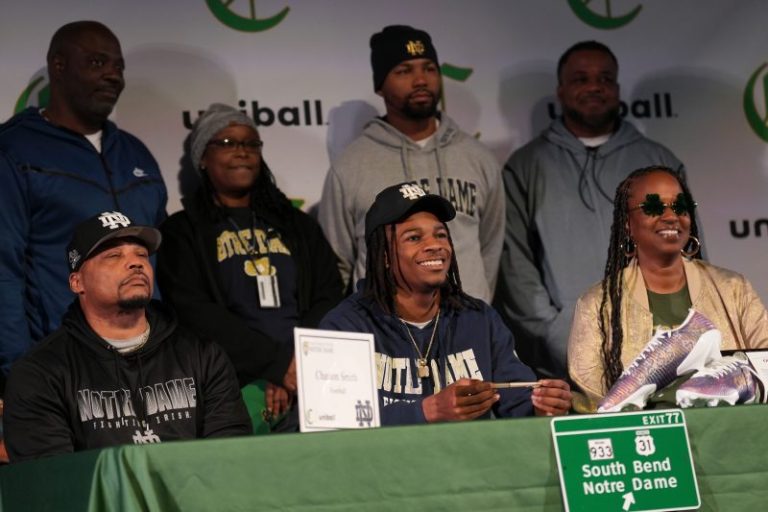
Once one of the biggest days on the college football calendar, the vibe around national signing day has changed with the advent of the transfer portal.

Three years ago, Colorado coach Deion Sanders drew widespread skepticism and even criticism for essentially ignoring high school prospects in favor of signing dozens of college transfers. That’s become increasingly common, especially for coaches looking to turn over most of a roster in a single offseason.

But there’s always room for traditional, old-school recruits — as long as you can keep them, which is another question in this era of rampant player movement.

Programs that shined on signing day include Southern California, Oregon, Alabama, Notre Dame and Georgia. The SEC and Big Ten continued to lap the rest of the Power Four by dominating the top 25 classes, according to the composite team rankings compiled by 247Sports.

Vanderbilt, USC and Penn State lead signing day’s biggest winners and losers:

Winners

Vanderbilt

The red-hot Commodores made headlines this week after flipping local quarterback Jared Curtis away from his verbal commitment to Georgia. The top prospect at his position in this class, Curtis committed to the Bulldogs in May but took an unofficial visit to Vanderbilt in late October. He’s the highest-rated signee in modern program history and the heir apparent to Diego Pavia, potentially as soon as next season.

Southern California

USC signed the nation’s top class, according to 247Sports, winning multiple battles for elite prospects against some of the top programs in the Power Four. That includes a late win against Ohio State for wide receiver Kayden Dixon-Wyatt. The Trojans’ 35-member class is heavy on linemen, with seven signings to the offensive front — including five-star offensive tackle Keenyi Pepe — and eight on defense. USC is the first non-SEC school to finish first in 247Sports’ composite team rankings since Miami in 2008.

Big Ten and SEC

The Big Ten has three of the top six classes in USC, Oregon and Ohio State. Also in the top 15 are Michigan and Washington, while Iowa, Illinois and Minnesota round out the top 25. But the conference is bested by the SEC, which has five of the top nine classes, led by Alabama at No. 3, and 11 of the top 27. Already very noticeable, the talent gap between these two conferences and the rest of the Power Four is set to expand in the near future.

West Virginia

The Mountaineers signed a class of 40 as coach Rich Rodriguez looks to beef up the talent level and depth heading into his second season. WVU closed with a bang, first flipping legacy offensive tackle recruit Kevin Brown away from Penn State and then coming out of almost nowhere to nab talented athlete Matt Sieg, who could play on both sides of the ball. Eleven new defensive backs will help improve one of the nation’s weakest pass defenses.

Losers

Penn State

Penn State’s class was always going to suffer for James Franklin’s midseason firing. But the long and drawn-out process to find his replacement and Franklin’s move to Virginia Tech has put a huge dent in the Nittany Lions’ group, which as of Wednesday afternoon ranked last in the Big Ten. As expected, Franklin poached multiple members of his former class, including several highly rated prospects. The best might be four-star running back Messiah Mickens. While the next Penn State coach can make up ground in the transfer portal, to have a class this small and unimpactful will create a roster imbalance that may take one or two additional cycles to correct.

Baylor

Baylor lost several verbal commitments in the weeks leading into signing day even after announcing that coach Dave Aranda would return in 2026. One late flip was longtime offensive tackle commitment Kole Seaton, who instead will sign with Oklahoma State. The Bears also lost four-star receiver Jordan Clay to Washington, four-star defensive lineman Jamarion Carlton to Texas and four-star defensive back Jamarion Vincent to Michigan. Baylor had previously lost four-star safety Jordan Deck to the Wolverines. When the dust cleared as of Wednesday afternoon, this class ranked outside the top 75 nationally and near the bottom of the Big 12.

Syracuse

Fran Brown was still able to sign a solid class that should end up among the top five or six in the ACC despite Syracuse taking a nosedive to the bottom of the conference standings. That’s a testament to Brown’s recruiting chops, which have never been in doubt. But while able to hang onto commitments such as wide receiver Amare Gough and defensive lineman Kamron Wilson, the Orange stumbled to the finish line after offensive lineman Steven Pickard flipped to Florida State and star receiver recruit Calvin Russell backed off his commitment on signing day. Russell seems likely to end up at Miami.

North Carolina

Signing a top 20 class sounds good until you look a little closer at the UNC haul. While there are some very nice pieces in quarterback Travis Burgess and defensive lineman Trashawn Ruffin, among a few others, Bill Belichick and the Tar Heels signed just two of the top 25 in-state prospects, fewer than Georgia, Notre Dame and South Carolina. The number of flyers in this class is concerning given how badly Belichick and general manager Michael Lombardi botched the evaluation process and roster management heading into Belichick’s debut season.

This post appeared first on USA TODAY
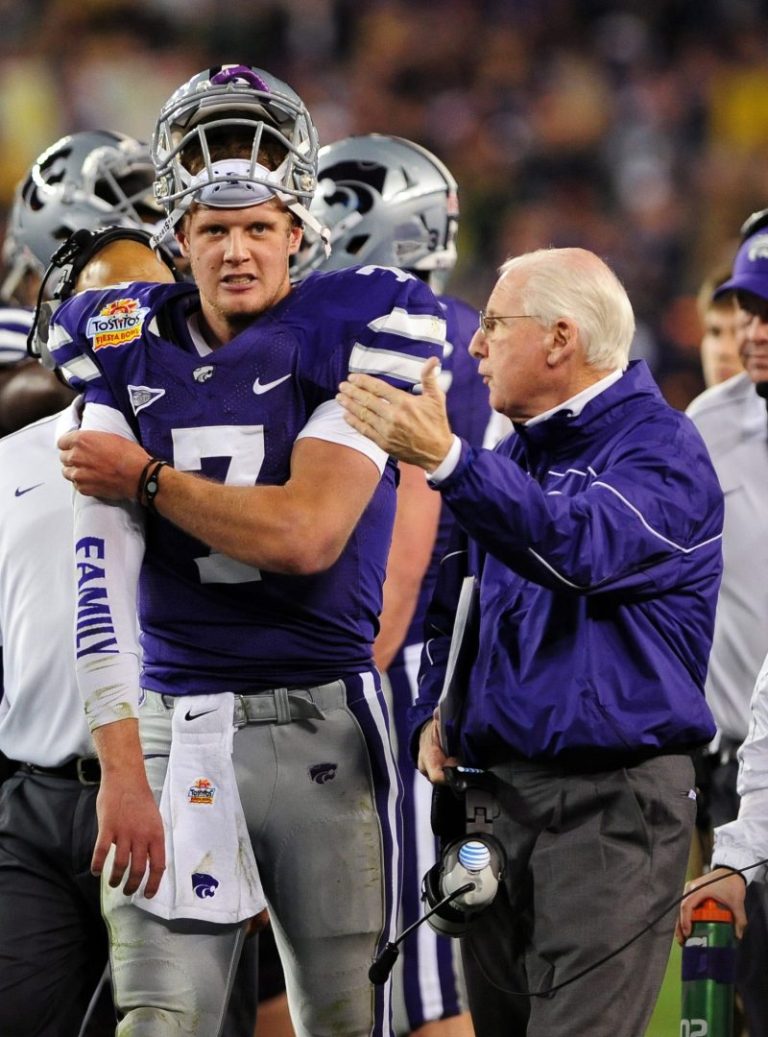
The former Kansas State football coach has been reported to be a potential frontrunner for the Wildcats’ head coaching role, as Chris Klieman is reportedly considering retirement after seven seasons in Manhattan, Kansas.

Klein ― currently the Texas A&M offensive coordinator ― played at Kansas State from 2009 to 2012, placing third in the Heisman Trophy race during his standout 2012 season. Klieman had a 54-34 record with Kansas since taking over the job in 2019.

Here’s what you need to know about Klein’s, including his coaching record:

Who is Collin Klein?

Klein is a former Kansas State football standout. Most notably, he finished third in Heisman Trophy voting for the Wildcats during his 2012 campaign, in which he finished 197-of-304 (64.8%) passing for 2,641 yards, 16 touchdowns and nine interceptions, while also rushing 207 times for 920 yards and 23 touchdowns.

He led the Wildcats to two 11-win seasons and a Big 12 Championship during his time as a starter. He finished his collegiate career with 4,724 passing yards and 30 passing touchdowns while adding 2,485 rushing yards and 56 scores.

Klein began his coaching career as a defensive quality control coach and graduate assistant at his alma mater during the 2014-15 seasons. He took a job as the quarterbacks coach at Northern Iowa in 2016 before returning in the same role at Kansas State in 2017. He stayed with the Wildcats through the 2023 season before joining Mike Elko as the offensive coordinator in 2024 at Texas A&M.

Collin Klein age

Monken was born on Sept. 19, 1989, in Loveland, Colorado. He is currently 36 years old.

Collin Klein coaching record

The 2026 season with Kansas State football will be the first for Klein as a head coach for a football program.

2026 (Kansas State): 0-0, 0-0 Big 12

Collin Klein coaching career

Here’s a look at Klein’s coaching career:

Head coach unless otherwise specified. Assistant role listed in parentheses

2014-15: Kansas State (Defensive quality control coach, graduate assistant)
2016: Northern Iowa (Quarterbacks coach)
2017: Kansas State (Quarterbacks coach)
2018: Kansas State (Co-offensive coordinator/quarterbacks coach)
2019-21: Kansas State (Quarterbacks coach)
2022-23: Kansas State (Offensive coordinator/quarterbacks coach)
2024-25: Texas A&M (Offensive coordinator/quarterbacks coach)
2026: Kansas State

Collin Klein stats

Here’s a look at Klein’s stats during his collegiate career with Kansas State:

2009: 1-for-1 passing (100%) for 27 yards; one rush for -8 yards; six receptions for 38 yards and a touchdown
2010: 11-of-18 passing (61.1%) for 138 yards and a touchdown; 76 rushes for 432 yards and six touchdowns
2011: 161-281 (57.3%) for 1,918 yards, 13 touchdowns and six interceptions; 317 rushes for 1,141 yards and 27 touchdowns
2012: 197-304 (64.8%) for 2,641 yards, 16 touchdowns and nine interceptions; 207 rushes for 920 yards and 23 touchdowns

This post appeared first on USA TODAY

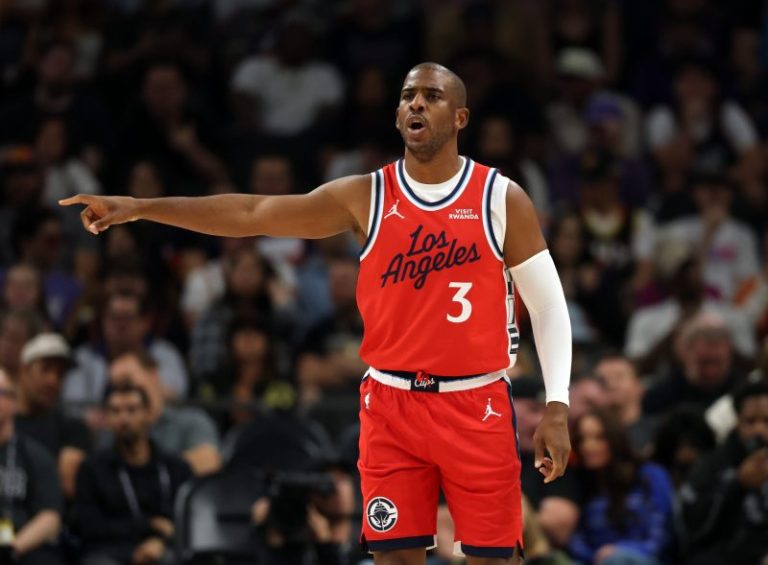
The Los Angeles Clippers stunned the NBA – and Chris Paul – in the wee hours of the night following Tuesday’s action on the court. The franchise elected to abruptly part ways with the 40-year-old point guard, who is also considered one of the greatest players in franchise history and previously announced this would be his final NBA season before retirement.

Paul posted on Instagram around 3 a.m. ET on Wednesday, Dec. 3 that he was being sent home following the Clippers’ road loss to the Miami Heat. It was the team’s fifth consecutive loss, and 14th defeat over the past 16 games, after the Clippers (5-16) entered this season as a potential Western Conference contender.

The decision could mean Los Angeles waives Paul and pays out his $3.6 million salary, or the team could try to trade him after Dec. 15. There’s also a possibility of a buyout. But Paul’s immediate future is now up in the air, with a variety of options for how this might unfold.

Paul said prior to signing with the Clippers this season that he wanted to be near Los Angeles where his family lives after playing for the Houston Rockets, Oklahoma City Thunder, Phoenix Suns, Golden State Warriors and San Antonio Spurs since 2017. The market for him could be complicated by Paul’s age and diminishing returns, as well as the league’s luxury tax and salary cap rules. He was averaging career lows in minutes, points and assists while shooting a career-worst 32.1% from the field for the Clippers.

There are teams who currently have open roster spots, though. Here’s a breakdown of some potential landing spots for Paul after the Clippers’ shocking move to send him home in the midst of the 2025-26 season:

Los Angeles Lakers

This would represent an ideal ending for Paul. He can stay in Los Angeles with his family and he finally gets to play alongside his good friend, LeBron James, in the NBA for the first time as they chase a title together the rest of the season. The Lakers also have an open roster spot but are not allowed to sign a new player until next month.

The problem, of course, is the Lakers don’t necessarily need a pass-first lead guard who isn’t the best defensive option at this juncture, playing with a ball-dominant star such as Luka Doncic (who also isn’t a great defensive player). The story would likely be better than the on-court production, with Paul finally ending up on the Lakers almost 15 years after former NBA commissioner David Stern famously vetoed a trade that would have sent Paul from the New Orleans Hornets to the Lakers.

Minnesota Timberwolves

The Timberwolves are already relying on one of the league’s oldest players at point guard with Mike Conley, so why not add another veteran to the mix? Rob Dillingham, the team’s 2024 first-round pick, isn’t developing quickly enough for a group that’s coming off consecutive Western Conference finals appearances. Conley and Paul (or the version of Paul that played in San Antonio last year), former rivals when the Grizzlies once faced the Clippers in memorable playoff series a decade ago, could make a run together in support of Anthony Edwards.

Houston Rockets

The Rockets are lacking a veteran point guard after the offseason injury to Fred VanVleet. Second-year guard Reed Sheppard has improved as this season has gone along, but Houston doesn’t have a true point guard option behind him. Paul could be a serviceable insurance policy for the rest of the season if he can return closer to the level of play he showed in San Antonio last year, and if he’s willing to leave Southern California to return to one of his former teams. Like the Lakers, they wouldn’t be able to sign Paul until next month.

Boston Celtics

The Celtics never replaced guard Jrue Holliday after trading him during the offseason, instead using Derrick White and Payton Pritchard as the team’s primary ballhandlers during a start to the 2025-26 season that has been better than anticipated with Jayson Tatum out. If Tatum returns near the end of the season, would the Celtics want a veteran point guard option for the postseason push and the playoffs?

Atlanta Hawks

The Hawks are playing well with Trae Young injured thanks to young star Jalen Johnson and a much-improved defense. Atlanta also has an open roster spot and currently sits beneath the NBA’s luxury tax. Importing a veteran to guide this group through the wide-open Eastern Conference isn’t the worst idea, especially as trade rumors swirl around Young in his absence.

Milwaukee Bucks

The Bucks are desperate to keep Giannis Antetokounmpo happy. Would the infusion of a veteran such as Paul keep him appeased in the midst of a rough patch for Milwaukee? It didn’t work with Damian Lillard and Ryan Rollins has been a pleasant surprise at point guard for the Bucks this season. But having Paul on the roster to support Rollins and guard Kevin Porter Jr. could potentially be helpful.

Oklahoma City Thunder

This is maybe the most far-fetched option because the Thunder don’t have a need for Paul, even as they deal with some injuries at the moment. But this would be more about doing Paul a solid and allowing him to pursue an elusive first NBA championship before he retires with a star (Shai Gilgeous-Alexander) he helped mentor in Oklahoma City once before.

The couch

An unfortunate, but realistic, scenario is that Paul has already played his final NBA game, especially if he’s not willing to leave Southern California. It would make what the Clippers decided to do particularly ruthless. The reality is Father Time had caught up to Paul and it was becoming clear during the first month of this season. There are still glimpses of his past greatness here and there – an eight-assist game on Nov, 22, for instance – but there might not be enough anymore to justify trading for him, or even signing him off the scrap heap.

This post appeared first on USA TODAY
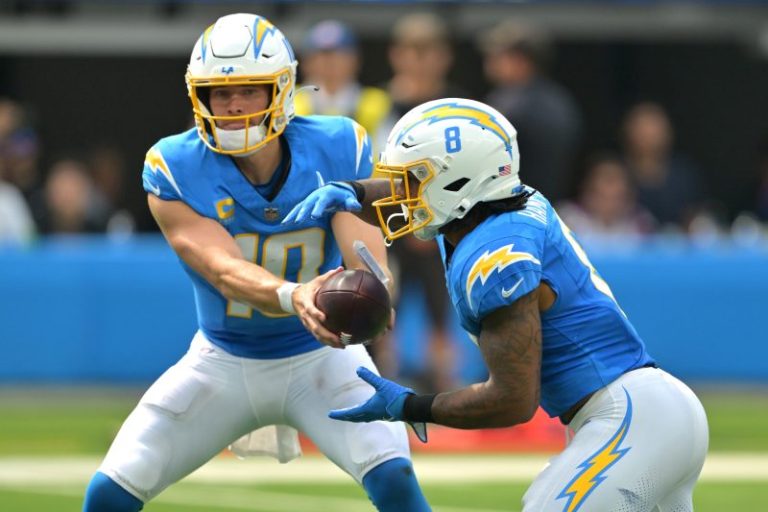
The Los Angeles Chargers improved to 8-4 with their 31-14 blowout win over the Las Vegas Raiders in Week 13.

They remain in the thick of the AFC playoff picture and may have reinforcements on the way ahead of their Week 14 ‘Monday Night Football’ matchup against the reigning Super Bowl champion Philadelphia Eagles.

Rookie running back Omarion Hampton has missed seven straight games after suffering an ankle injury in Week 5 but recently returned to practice.

Hampton was the top running back for Los Angeles at the time of his injury, and a playmaker Justin Herbert and Jim Harbaugh could lean on. Hampton had accumulated a team-high 314 rushing yards before his injury.

The Chargers are in contention, but they’ll hope their rookie can give their offense an element it’s been missing for much of the season. The No. 22 overall pick was leading all rookies in scrimmage yards with 380 before his injury in Week 5.

Here’s the latest on the Chargers running back:

When will Omarion Hampton return?

The rookie running back had his 21-day practice window opened in Week 13.

Hampton returned to practice after the Chargers’ bye and logged three limited practices before being ruled out of Week 13.

The Chargers will have two more weeks to activate him back onto the 53-man roster. On Wednesday, Dec. 3, Harbaugh was asked about Hampton’s potential return for Week 14. “That question will be answered as the week unfolds. But what can I tell you, he’s on track and looking good,” per NFL Network.

Hampton was seen practicing in a yellow, non-contact jersey on Wednesday.

Earlier this week, Harbaugh told reporters, ‘We opened his window, and we certainly wouldn’t have done that – his 21-day window – if he wasn’t close. Again, feel like he’s been on track and let the week play out,’ Harbaugh said on Monday, Dec. 1.

Hampton was placed on injured reserve after Week 5, which required him to be sidelined for at least four games. The earliest Hampton was able to return from IR was Week 10.

The Chargers host the Eagles on Monday. It remains to be seen whether Hampton will be activated for the matchup, but all signs point to a positive outcome this week.

Last week, offensive coordinator Greg Roman said he planned on using both Kimani Vidal and Hampton in a ‘1-2 punch’ shared backfield when the rookie returns.

Chargers RB depth chart

Omarion Hampton (IR)
Najee Harris (IR – season-ending)
Kimani Vidal
Hassan Haskins (IR)
Trayveon Williams (practice squad)
Jaret Paterson (practice squad)

Kimani Vidal has stepped up and led the backfield. He leads the backfield with 121 rushing attempts for 543 yards and three touchdowns. Vidal rumbled for 126 yards in the Chargers’ win over the Raiders, and 124 of those 126 rushing yards came after contact. He also netted a league-high 11 missed tackles forced.

The team recently placed Haskins on IR, further thinning the room. Trayveon Williams was called up from the practice squad for the Chargers’ Week 11 game against the Jaguars and was forced into action when Vidal suffered a thigh injury.

In Week 13, Los Angeles elevated Jaret Paterson from the practice squad who chipped in behind Vidal.

The team eagerly awaits the return of their first-round rookie with the running back room thin.

The Chargers host the Philadelphia Eagles on ‘Monday Night Football’ in Week 14.

All the players and the plays: Sign up for USA TODAY’s 4th and Monday newsletter for exclusive NFL analysis.

This post appeared first on USA TODAY