Archive

2025

Browsing

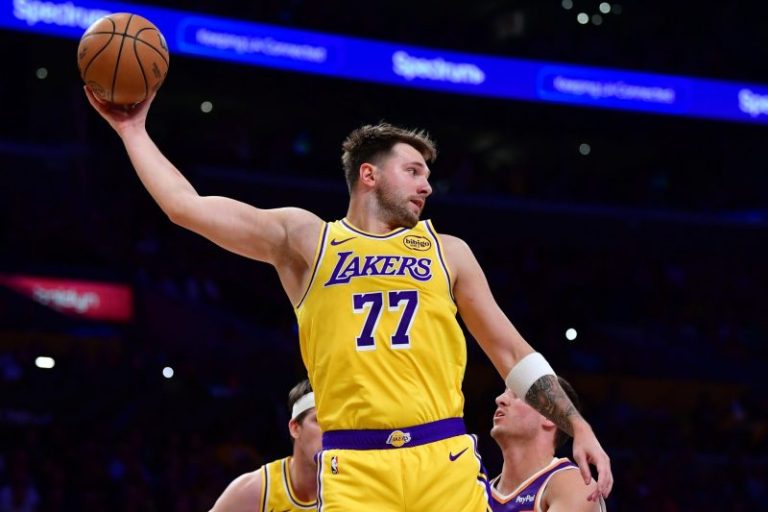
Los Angeles Lakers guard Luka Dončić has been ruled out for Thursday’s road game against the Toronto Raptors.

Dončić was ruled out on Wednesday’s status report for ‘personal’ reasons, but no other information was provided.

He played in the Lakers’ 125-108 loss to the Phoenix Suns on Monday, a loss that snapped a seven-game win streak. Dončić produced a double-double with 38 points and 11 rebounds in 32 minutes of play.

The Slovenian has played in 16 of the Lakers’ 20 games this season. He’s averaging 35.3 points, 8.9 rebounds and 8.9 assists per game.

When did Luka Doncic last play in Toronto?

Doncic has not played in Toronto since Dec. 7, 2024, while he was still a member of the Dallas Mavericks.

When do Lakers play Raptors?

The Lakers will play the Raptors in Toronto at 7:30 p.m. ET on Thursday, Dec. 4. The game will air on Spectrum SportsNet (Los Angeles) and SportsNet (Toronto).

This post appeared first on USA TODAY

Here we go again.

After a resounding 99–1 defeat in the Senate earlier this year, the Big Tech oligarchs are hard at work doing what they do best: trying to sneak a massive corporate giveaway into must-pass legislation in the dead of night. This time, they’re targeting the National Defense Authorization Act, a bill essential to our military and national security, as the vehicle for decade-long AI amnesty. Or another must-pass bill, if the NDAA doesn’t work for them. Or even a legally questionable executive order, as their Hail Mary.

They tried this in July. And now, led once again by Sen. Ted Cruz, R-Tex., they want to ram through a federal takeover of AI with zero meaningful rules or even guardrails. They call it ‘federal preemption.’ But let’s be blunt: federal preemption with no federal rules is not governance. It’s amnesty. Total, blanket, corporate amnesty for trillion-dollar Big Tech monopolists who have spent decades crushing competition, shuttering small businesses, canceling conservatives and harming children.

If their idea is so great, why are they terrified of public debate? Why are they running from votes? Why do they only try to pass this through 9,000-page must-pass bills in the dead of night?

Because they know the truth: If the American people ever saw what’s really in these proposals, the answer would be the same as last time: Hell. No.

Big Tech already showed us exactly what it does with immunity. Section 230 created a legal shield for Google, Amazon, Facebook and Apple. These trillion-dollar monopolists used their government-granted amnesty to censor conservatives, manipulate elections, destroy competition and turn the Internet into a surveillance empire. Now they want the same deal for AI. But bigger. And more dangerous.

This ‘AI amnesty’ blocks states from protecting their own citizens. No state rules. No local safeguards. And absolutely no federal guardrails. A total vacuum, and the perfect playground for tech oligarchs who want to scrape every work of American creativity, censor every voice they dislike, experiment on children’s developing minds with unsafe AI tools and plant data centers wherever they please while working-class families foot the energy bill.

Big Tech insists this is necessary to ‘compete with China.’ That is nonsense. These companies spent years doing China’s bidding. Google killed America’s Project Maven, our drone AI program, because its woke employees protested helping the U.S. military. At the same time, Google was running Project Dragonfly, a censorship system built for the Chinese Communist Party. They wouldn’t help our troops, but they were happy to help the CCP censor its own citizens.

And now these same companies claim they’re our last defense against China? Please.

Their real concern isn’t China. It’s profit. They want carte blanche to steal every copyright in America, train their machines on it and cash in, all without paying a dime to the creators whose work built this country’s entertainment, journalism and cultural industries. They want to replace America’s creative economy with a copy-paste machine. And they want Congress to bless it.

The American people deserve better, and President Trump consistently demonstrates the leadership needed to stop this scam. When Big Tech and its lobbyists pressured him to accept AI amnesty earlier this year, he stood firm. He refused to sell out the American people to Silicon Valley. And that courage helped kill the deal 99–1.

The American people understand what’s at stake. We know Big Tech can’t be trusted, not with our data, not with our elections, and certainly not with artificial intelligence. We know we can’t ‘steal like China to compete against China,’ nor can we become digital sharecroppers on our own soil just to pad corporate profits.

If Congress wants to discuss federal preemption, fine. But it must get done through regular order. Public hearings. Public debate. Up-or-down votes. And only after legislation is drafted that protects the people Big Tech has targeted for years: conservatives, children, creators and communities. The 4 Cs must get protection in any AI deal.

Conservatives must finally gain protection from the censorship that these monopolists weaponized for decades. We must protect children from predatory AI systems, including chatbots that have advised depressed minors to kill themselves – and their parents. Or AI teddy bears – Pedo Bears – that speak in sexually explicit terms to kids. Creators deserve protection from the copyright theft that Big Tech openly admits it needs to train its models. And we must safeguard our communities from data centers that raise energy costs, drain water supplies and bulldoze residential neighborhoods, so Silicon Valley can build another server farm.

These are not radical demands. These are basic, commonsense protections in a free society. But Big Tech insists that any safeguards, any at all, will ‘slow innovation,’ ‘harm national security,’ ‘hurt competitiveness’ or even ‘help China.’ Those talking points are as dishonest as they are insulting.

Big Tech executives think they can buy Congress, hide behind fake national-security arguments and bully America into agreeing to their terms. They thought they could get away with it last time. They were wrong. With President Trump’s leadership, with grassroots conservatives mobilized, and with the sunlight of exposure, we beat them. And we will beat them again.

But only if Congress hears loud and clear: No AI amnesty. Not in the NDAA. Not in any other must-pass legislation. Not in an executive order. Not ever.

The Big Tech oligarchs spent hundreds of millions of dollars chasing Trump out of office in 2020. They’ve censored, silenced, de-platformed and canceled Trump, his aides and his allies. If we give these Big Tech oligarchs AI amnesty, it’s only so they can continue to censor conservatives, prey on children, drive-up electricity and water bills in communities and rip off creators.

If the tech oligarchs want a debate, they can step into the arena. They can defend their ideas in the open. They can answer for the children harmed, the conservatives censored, the creators robbed and the communities exploited. They can stop hiding behind lobbyists and must-pass bills and make their case like everyone else.

Until then, Congress must reject any attempt to slide this corporate giveaway into the NDAA, any other must-pass legislation or any executive order. No shortcuts. No back-room tricks. No surrender to the Silicon Valley oligarchy.

The stakes are too high. The consequences are too great. And the American people are watching.

Hell no to AI amnesty. Protect our children. Protect our creators. Protect our communities. Protect our country.

This post appeared first on FOX NEWS

On a day where big questions arose about Giannis Antetokounmpo’s future with the Milwaukee Bucks, the team is now holding its breath about his immediate health.

The Bucks superstar exited Milwaukee’s contest against the Detroit Pistons in the first quarter and was ruled out for the game with what the team called a ‘right calf strain.’

Antetokounmpo went down suddenly while heading back up the court after feeding AJ Green for a layup. The two-time MVP headed back to the locker room and the Bucks ruled him out for the game a short time later.

He scored two points and had a rebound and an assist in just 3 minutes of play.

Despite Antetokounmpo’s early exit, the Bucks defeated the East-best Pistons, 113-109.

Giannis Antetokounmpo injury update

Bucks coach Doc Rivers told reporters during his postgame availability that Antetokounmpo was getting an MRI ‘right now.’ He was hopeful the team would know more about Antetokounmpo’s status soon but added the team believed it was not an Achilles injury.

The USA TODAY app gets you to the heart of the news — fastDownload for award-winning coverage, crosswords, audio storytelling, the eNewspaper and more.

This post appeared first on USA TODAY

The seeds are set, now its time to get the NCAA Division I volleyball tournament started. The first round will take place Thursday, Dec. 4, and Friday, Dec. 5, at school sites across the country.

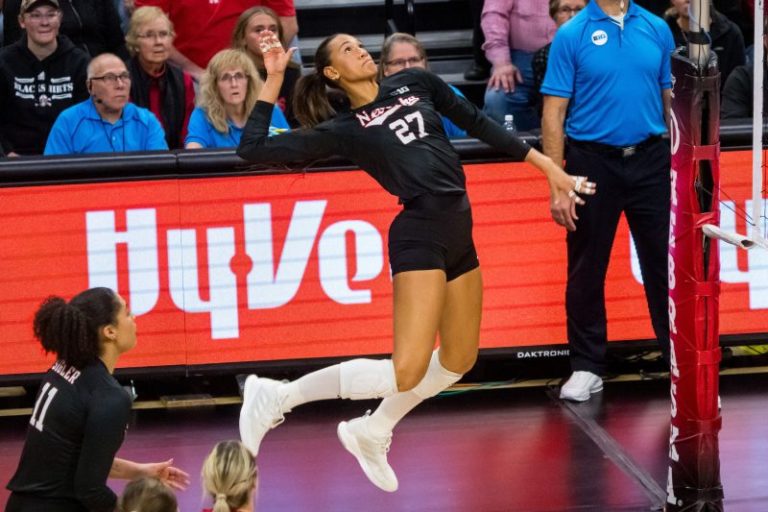
Sixty-four teams are vying for the title with the No. 1 overall seed going to undefeated Nebraska, which is 30-0. The Cornhuskers, who are in their first season under coach Dani Busboom Kelly, won the last of their five national titles in 2017.

Kentucky, Texas, and Pitt are the other No. 1 seeds. The Wildcats have lost two matches, the Longhorns three and the Panthers four this season.

Defending champion Penn State finished 18-12 and is a No. 8 seed in the Austin region. The Nittany Lions face South Florida (17-12) in the first round on Friday.

The 2025 NCAA volleyball Final Four will be held at the T-Mobile Center in Kansas City, Missouri. It’s the third time since 2010 that the venue, formerly known as the Sprint Center, has hosted the volleyball national championship.

Here’s everything you need to know about the NCAA volleyball tournament:

How to watch NCAA volleyball tournament

Streaming: ESPN+ ∣ Fubo (free trial)

The 2025 NCAA volleyball tournament will air across the ESPN and ABC family of networks. All first- and second-round games can be found streaming on ESPN+, ESPN’s subscription streaming service, and Fubo, which offers a free trial to potential subscribers.

Watch the 2025 NCAA volleyball tournament live with Fubo (free trial)

What time is NCAA volleyball tournament?

Date: Thursday, Dec. 4 and Friday, Dec. 5
Start time: 32 matches, beginning at 3 p.m. ET Thursday. The last match starts at 10 p.m. ET Friday. Match-by-match times below.

NCAA volleyball first-round matchups, game times

Lexington bracket

No. 1 Kentucky (25-2) vs. Wofford (17-13), 7 p.m. ET, Thursday
No. 8 UCLA (18-12) vs. Georgia Tech (16-13), 4:30 p.m. ET, Thursday
No. 5 BYU (22-8) vs. Cal Poly (25-7), 8 p.m. ET, Thursday
No. 4 USC (24-6) vs. Princeton (18-6), 10:30 p.m. ET, Thursday
No. 3 Creighton (25-5) vs. Northern Colorado (17-15), 8 p.m. ET, Thursday
No. 6 Northern Iowa (25-5) vs. Utah (15-14), 5:30 p.m. ET, Thursday
No. 7 Tennessee (20-7) vs. Utah State (23-7), 6:30 p.m. ET, Thursday
No. 2 Arizona State (26-3) vs. Coppin State (23-11), 9 p.m. ET, Thursday

Austin bracket

No. 1 Texas (23-3) vs. Florida A&M (14-16), 8 p.m. ET, Friday
No. 8 Penn State (18-12) vs. South Florida (17-12), 5:30 p.m. ET, Friday
No. 5 Colorado (22-8) vs. American (24-4), 3 p.m. ET, Thursday
No. 4 Indiana (23-7) vs. Toledo (23-10), 5:30 p.m. ET, Thursday
No. 3 Wisconsin (24-4) vs. Eastern Illinois (24-7), 8 p.m. ET, Thursday
No. 6 UTEP (25-4) vs. North Carolina (21-8), 5:30 p.m. ET, Thursday
No. 7 South Dakota State (23-4) vs. Arizona (16-12), 7:30 p.m. ET, Friday
No. 2 Stanford (27-4) vs. Utah Valley (16-10), 10 p.m. ET, Friday

Pittsburgh bracket

No. 1 Pitt (26-4) vs. UMBC (13-11), 6:30 p.m. ET, Friday
No. 8 Xavier (26-4) vs. Michigan (21-10), 4 p.m. ET, Friday
No. 5 Iowa State (22-7) vs. St. Thomas (21-9), 5:30 p.m. ET, Friday
No. 4 Minnesota (22-9) vs. Fairfield (25-5), 8 p.m. ET, Friday
No. 3 Purdue (24-6) vs. Wright State (21-10), 7 p.m. ET, Thursday
No. 6 Baylor (17-9) vs. Arkansas State (22-8), 4:30 p.m. ET, Thursday
No. 7 Rice (21-9) vs. Florida (15-11), 5 p.m. ET, Friday
No. 2 SMU (25-5) vs. Central Arkansas (18-11), 7:30 p.m. ET, Friday

Lincoln bracket

No. 1 Nebraska (30-0) vs. LIU (20-8), 8 p.m. ET, Friday
No. 8 San Diego (25-4) vs. Kansas State (17-3), 5:30 p.m. ET, Friday
No. 5 Miami (26-5) vs. Tulsa (25-6), 5 p.m. ET, Thursday
No. 4 Kansas (22-10) vs. High Point (18-9), 7:30 p.m. ET, Thursday
No. 3 Texas A&M (23-4) vs. Campbell (23-6), 7:30 p.m. ET, Friday
No. 6 TCU (20-10) vs. Stephen F. Austin (23-7), 5 p.m. ET, Friday
No. 7 Western Kentucky (27-5) vs. Marquette (17-10), 4 p.m. ET, Friday
No. 2 Louisville (24-6) vs. Loyola Chicago (17-15), 6:30 p.m. ET, Friday

NCAA volleyball tournament rounds

Second round: Dec. 5-6
Regionals: Dec. 11 and 13 or Dec. 12 and 14
Semifinals: Thursday, Dec. 18
National championship: 3:30 p.m. ET on Sunday, Dec. 21

All games on ESPN Unlimited, ESPN, ABC

NCAA volleyball tournament automatic qualifiers

Here’s a look at the 31 teams that earned automatic berths to the 2025 NCAA volleyball tournament by virtue of winning their conferences:

ACC: Stanford
American: Tulsa
American East: UMBC
Atlantic Sun: Central Arkansas
Atlantic 10: Loyola Chicago
Big East: Creighton
Big Sky: Northern Colorado
Big South: High Point
Big Ten: Nebraska
Big 12: Arizona State
Big West: Cal Poly
CAA: Campbell
Conference USA: Western Kentucky
Horizon: Wright State
Ivy: Princeton
MAAC: Fairfield
MAC: Toledo
MEAC: Coppin State
Missouri Valley: Northern Iowa
Mountain West: Utah State
NEC: LIU
Ohio Valley: Eastern Illinois
Patriot: American
SEC: Kentucky
SoCon: Wofford
Southland: Stephen F. Austin
SWAC: Florida A&M
Summit: St. Thomas
Sun Belt: Arkansas State
WAC: Utah Valley
WCC: San Diego

When is the NCAA volleyball Final Four in 2025?

Dates: Thursday, Dec. 18 and Sunday, Dec. 21

The two semifinal matches in the Final Four of the 2025 NCAA volleyball tournament will take place on Thursday, Dec. 18 and will be followed three days later by the national championship game on Sunday, Dec. 21.

NCAA volleyball tournament champions

Penn State is the reigning NCAA volleyball champion, having defeated Louisville in four sets last year in the national title game. It was the Nittany Lions’ eighth volleyball championship since 1999.

Here’s a look at the past 10 NCAA volleyball champions:

2024: Penn State
2023: Texas
2022: Texas
2021: Wisconsin
2020: Kentucky
2019: Stanford
2018: Stanford
2017: Nebraska
2016: Stanford
2015: Nebraska

For the full list of champions, click here.

This post appeared first on USA TODAY

Firing a coach in-season isn’t ideal — for many reasons. It means your season has gone south and likely your recruiting class with it. How do you retain commits and continue to recruit with so much uncertainty?

Just look at Penn State.

The Nittany Lions still have no coach after firing James Franklin in mid-October. And so when the early signing period opened Wednesday, Dec. 3, Penn State added just two players — putting their class at 150th nationally per 247Sports rankings. Right next to South Dakota State and Princeton.

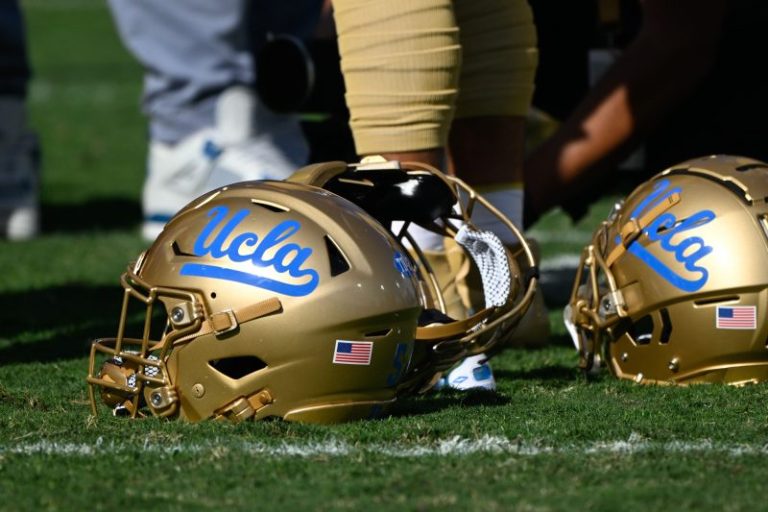
UCLA fired coach Deshaun Foster in September — just three games into the season — and went the rest of the regular season without a permanent coach. Despite uncertainty beyond 2025, the Bruins stayed afloat in recruiting. UCLA was able to keep players committed, and opened the early signing period with the No. 71-ranked class. Modest, but not bad for a team whose new coach will be coaching another team this weekend.

UCLA will hire James Madison coach Bob Chesney, with a deal expected after the Sun Belt championship game on Friday, Dec. 5. But Chesney hasn’t done any official work for the Bruins yet, so how did the Bruins keep recruiting momentum?

That’s where general manager Khary Darlington comes in. He and his staff and assistant coaches continued to hit the recruiting trails even though they didn’t know who the next coach would be — or if they’d be retained.

The motto with the support staff was ‘straighten your back and let’s get out there and do the job.’ Even through the doubt about UCLA’s future, Darlington said the staff fed off the momentum of each other and fully bought into the vision it was trying to create. It was the extra boost they needed to keep forging ahead.

‘Having the conversations after the coaching change, I don’t know if I can clearly articulate how difficult some of these conversations were,’ Darlington told reporters Dec. 3.

There were players that re-opened their recruitment following Foster’s departure, and Darlington said some players still committed wanted to see what their options were. He said rather than ‘trying to handcuff people and not acknowledging what their experience is,’ Darlington and his staff took the approach of honesty and giving recruits space to explore every scenario. Ultimately, he believes that paid off.

‘Rather than convincing people not to waiver, we encourage them and respected them. We encourage them to go through their process and told them that we will respect whatever that process was,’ he said. ‘I think that is what I guess you could say what our secret sauce was.’

As a result, UCLA ended the first day of the early signing period with 12 players signed, and a few more expected in the coming days.

Not having a coach did hurt the Bruins though. Two of their top recruits, four-stars Micah Smith (Illinois) and Carter Gooden (Tennessee), flipped. Still, 12 players isn’t too bad.

That doesn’t include four-star defensive lineman Anthony Jones from Irvine, California. Jones was one of the several players who de-committed after Foster was fired. He committed back to the Bruins in November and intends on signing his national letter of intent in February.

Darlington said ‘there was a lot of appreciation’ within the staff for pulling Wednesday off. It was an emotionally taxing adventure, but there’s belief UCLA is set up well for its next regime.

Not something every under-construction team can say.

‘Just the mere fact that we were able to land the amount of players that we have landed, have our staff be as motivated as they were throughout the entire process and finish strong the way that we did is encouraging,’ Darlington said.

This post appeared first on USA TODAY

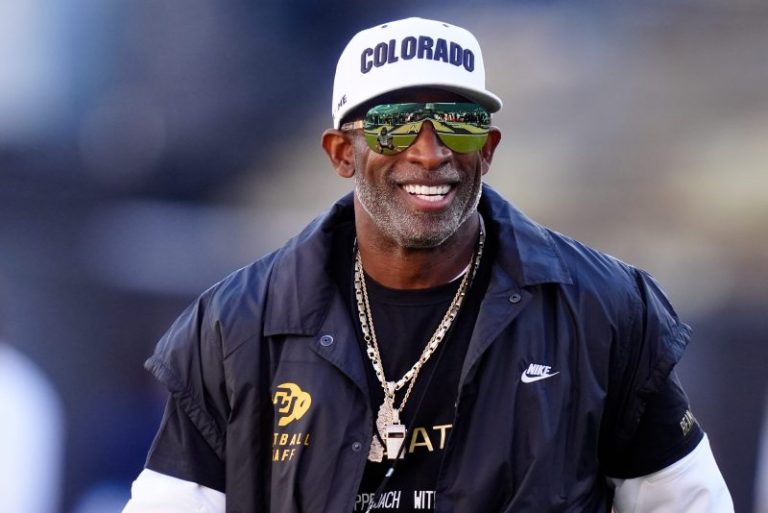
Colorado coach Deion Sanders signed a small high school recruiting class, ranking near the bottom of the Big 12.
Sanders defends his strategy of relying on the transfer portal over traditional high school recruiting.
Critics argue this approach hinders team chemistry and long-term development after a 3-9 season in 2025.

Colorado football coach Deion Sanders signed only nine high school players to his 2026 recruiting class Wednesday after some top recruits withdrew their commitment to play for him recently — dropping the Buffaloes to 16th out of 16 teams in the Big 12 Conference, according to the recruiting rankings of 247Sports’ and On3, as of Dec. 3.

But signing such a small freshman class is all part of Sanders’ plan, according to him. He doesn’t make off-campus visits to high school recruits and was a pioneer in college football for relying on transfer players instead.

The question is whether this is the right strategy after his team finished 3-9 in 2025. Should he focus more on developing high school players and getting them to stick around in Boulder? Or is his strategy still sensible since players can transfer to a new school every year if they’re not happy with their playing time or compensation?

The debate rages on at the start of the football signing period on Dec. 3.

“Just to go into the (transfer) portal, it becomes like trying to build through free agency,’ former Colorado and NFL linebacker Chad Brown told USA TODAY Sports recently. ‘You can get it done in spots if you’ve got a hole that you need filled, but home-grown talent is always going to be the best to coach up and get up to speed with your offense and defense. 

‘If every year you’re trying to build a new team, you can’t ever get to layer two in your playbook. You’re always operating on the surface, and then these guys don’t get the chance to come together as a team.”

Deion Sanders sees it differently

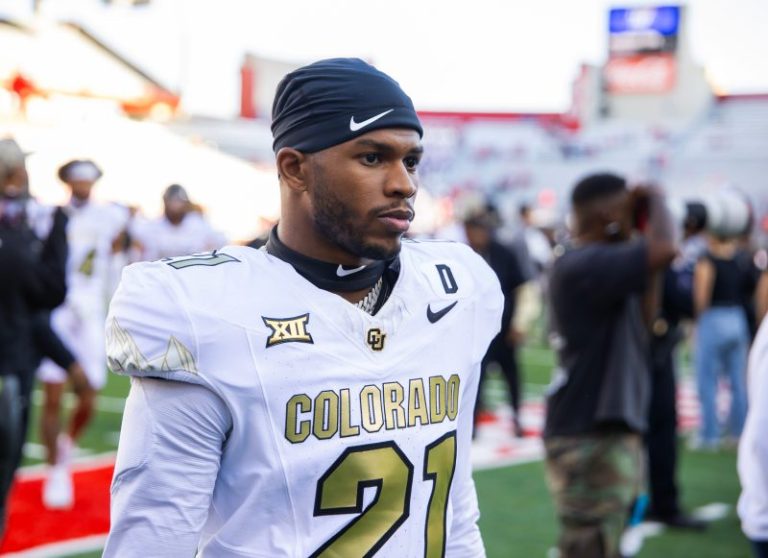
The high school recruiting class Sanders signed included four-star defensive back Preston Ashley and four-star linebacker Carson Crawford. Colorado still could sign more players in the next day or two and move up in the subjective rankings after confirming nine high school signees as of Dec. 3, plus Ventura College defensive lineman Domata Peko Jr., son of the Colorado assistant coach and former NFL star.

But these signings are only a precursor to his bigger roster moves coming when the transfer portal opens Jan. 2. That’s when Sanders will bring in players from other colleges, many of them backups looking for better playing time or income opportunities. Sanders pioneered the portal-heavy strategy during his first year in 2023, when he brought in 47 scholarship transfer players from other four-year colleges to fill a roster limited to 85 scholarship players.

“You want about 15 to 17 high school kids,” Sanders said at a news conference last week in Boulder.  “Why do you say that, coach?’ Well, check the statistics. You get 30. Are they gonna be here in two years? Statistically, check the statistics.”

USA TODAY Sports checked the statistics: He’s signed 43 total high school scholarship recruits during his first three seasons at Colorado, an average of 14 per year, compared to the 25 or 30 that some schools sign. Only 21 of those 43 were still on Colorado’s roster at the end of the 2025 season. The rest transferred out already or left for other reasons.

One was freshman four-star linebacker Mantrez Walker, who signed with Colorado out of high school last year and recently announced his decision to transfer out.

“In Mantrez’s case, he had a situation where his playing time was pretty limited this season and there were opportunities that he believes are going to be a better fit,” said Jacob Piasecki, co-founder of A&P Sports, the agency that represented Walker’s name, image and likeness (NIL) interests for compensation.

Piasecki told USA TODAY Sports it was more about Colorado’s plan for him, not NIL money, per se, but playing time and money are intertwined. “There’s definitely a correlation between how much they pay you and how much they play you,” Piasecki told USA TODAY Sports.

Why didn’t Deion Sanders’ recruiting strategy work in 2025?

Sanders said he mostly “hit” on his high school recruits but missed on his transfer portal recruits. His most high-profile transfer recruit last year was former Liberty quarterback Kaidon Salter, whose record as a starter for Colorado was 3-6 in 2025.

In previous years, Colorado “hit” on transfer recruits that included his quarterback son Shedeur (Jackson State), Heisman Trophy winner Travis Hunter (Jackson State), receiver Jimmy Horn Jr. (South Florida) and receiver LaJohntay Wester (Florida Atlantic). All four were drafted into the NFL in April after leading the Buffaloes to a 9-4 season in 2024.

“Nowadays, if kids aren’t playing by that spring of that second go-round, they out — they jump in the portal,” Deion Sanders said. “You got to figure out the strategy. What do you want to go? How do you want to get it? The strategy a year ago was the same strategy it was last year. And you hit on your portal guys. You hit on your freshman guys. This year, you hit on your freshmen, to me, some of them. And you missed on your portal. So that’s why we’ sitting where we sit. It’s not like you didn’t have a strategic plan. No, you had a strategic plan. You missed. Sometimes it happens. And I’m going to take responsibility. I’m not going to say we missed. I missed.”

The risk of Deion Sanders’ strategy

Sanders’ teams have been up and down since his arrival: a 3-0 start in 2023 followed by a 1-8 finish, then 9-4 in 2024, followed by five straight losses to end the 2025 season at 3-9. It’s arguable that trait is a symptom of the roster churn, with so many new players every year who have no prior chemistry.

By contrast, several top teams today were expected to sign around 25 to 30 high school recruits this week, including Southern California, Georgia and Ohio State. Those schools just hope they can hang on to those players beyond next year.

In Colorado’s case, Sanders also hopes to hang on to his own former high school recruits, including standout offensive tackle Jordan Seaton and quarterback Julian Lewis. Lewis has said he’s staying after redshirting in 2025. Seaton’s future isn’t clear.

“Buffs could have consistently brought in great players from the high school level, but instead, just don’t,” On3 recruiting analyst Josh Newberg recently said on social media site X.  “You’re not finding Jordan Seaton-type players in the portal.”

But Sanders did find NFL-caliber players in the portal before. In 2025, his best defensive player was safety Tawfiq Byard, a transfer from South Florida who led the team in tackles (84). He has two more years of college eligibility but could jump in the portal Jan. 2 just like the rest after the NCAA allowed unrestricted annual player transfers last year.

Follow reporter Brent Schrotenboer @Schrotenboer. Email: bschrotenb@usatoday.com

This post appeared first on USA TODAY

Absent direct military action, President Donald Trump is running low on options amid his standoff with Venezuelan President Nicolás Maduro, according to experts.

Strikes near Venezuelan waters aimed at drug traffickers, sanctions and a $50 million bounty have so far been unsuccessful in forcing Maduro, whom the U.S. has designated as a leader of the Tren de Aragua drug cartel, to step down from power.

After repeated threats, adversaries may now view a lack of direct military action as a sign of weakness from the U.S. But Maduro is in an equally difficult position — his own military capabilities are dwarfed in comparison to Trump’s, and experts say China and Russia lack the will to directly challenge the U.S. in its own hemisphere.

Meanwhile, the clock is ticking: Trump’s unprecedented military buildup in the Caribbean — including sending the world’s largest aircraft carrier to the region — is taking away resources from other theaters.

Katherine Thompson, a senior fellow in defense and foreign policy studies at the libertarian think tank the Cato Institute, said that there are very few tools left at Trump’s disposal to oust Maduro, aside from a targeted strike against the Venezuelan leader or a land invasion. 

While the White House has not directly said that it is seeking regime change, recent media reports indicate that Trump and Maduro have spoken about the Venezuelan leader departing his post.

Thompson noted that previous efforts to squeeze out Maduro, including imposing sanctions on Venezuela and backing opposition leader Juan Guaidó during Trump’s first term, have proven unsuccessful. 

‘It does not seem like there is — outside of the military option — anything new on the table that hasn’t really been tried,’ Thompson said.

Even so, Thompson cast doubt on whether military action would prove successful. 

‘If the offer on the table from the Trump administration is we’re going to potentially execute an invasion unless you talk to us, perhaps that’s a strong enough diplomatic, strategic move that gets Maduro to capitulate,’ Thompson said. ‘But it just doesn’t seem like we’re picking up that many signals from the Maduro regime that that is going to be palatable.’ 

Meanwhile, Thompson said that adversaries like Russia and China are probably confused about why the Trump administration has fixated on the Maduro regime, which doesn’t jeopardize U.S. interests as much as other actors, when the Trump administration has adopted an ‘American First’ mantra. 

‘I imagine for them, it’s probably a bit puzzling, if they’re looking at it through a real, brass tacks, realist lens, why this administration would be prioritizing ousting the Maduro regime, as opposed to conflicts in other theaters,’ Thompson said.

As a result, the Trump administration’s actions focusing on Venezuela likely leave a bit of ‘befuddlement’ on the part of Russia and China about how serious the U.S. is about putting American interests first, Thompson said.

She added that China may be wondering if the U.S. diverting resources, such as directing the aircraft carrier USS Gerald R. Ford to the Caribbean, could provide an opportunity for it to invade Taiwan if the U.S. is tied up with operations in Venezuela. Multiple U.S. officials have said they believe China will be capable of invading Taiwan by 2027. 

Will Russia and China back Venezuela? 

While there may be greater interest from China to take action within its own theater, experts agreed it was unlikely that Russia or China would actually get involved and back Venezuela should military operations between the U.S. and Caracas escalate — even though Moscow and Beijing are strategic allies with Venezuela. 

Some analysts said Maduro would find himself largely isolated if Trump launched military strikes against Venezuela. Russia, still consumed by its war in Ukraine, is unlikely to offer anything beyond denunciations of U.S. action, and China, despite years of deep economic engagement with Caracas, is also expected to stop well short of military involvement, they said. 

From Moscow’s perspective, there is both ideological and strategic discomfort with an American intervention — but little appetite or capability to counter it.

‘Moscow opposes unilateral U.S. military intervention, especially when aimed at toppling a friendly authoritarian regime. That said, Russia lacks the will and ability to stop U.S. intervention in this part of the world should Trump decide to go that route,’ said John Hardie, a Russian military analyst at the Foundation for Defense of Democracies (FDD).

Hardie said Russia is watching Washington’s internal debate carefully. 

‘Analysts in Moscow interpret the internal debate in Washington over Venezuela as evidence that although Republican views on foreign policy are shifting, the more traditional, hawkish camp still retains influence,’ Hardie said. ‘This whole episode probably also reinforces Russian views of Trump as unpredictable and impulsive, though I suspect Moscow is glad to see Trump prioritizing the Western Hemisphere over other regions more central to Russian interests.’

China’s likely response would mirror its recent behavior in other conflicts. Beijing has major financial stakes in Venezuela but has shown little willingness to risk confrontation with the United States, especially in the Western Hemisphere.

Jack Burnham, a China analyst at FDD, said Maduro should take note of how China behaved during the 12-Day War, when Iran came under intense U.S.- and Israeli-led strikes.

‘If Maduro is expecting support from China, he should have had his expectations corrected by Tehran’s recent experience under fire,’ Burnham said. ‘Despite China providing key war-related materials to Iran prior to the 12 Day War, once the conflict escalated, Beijing stood down, content to stand on the sidelines and offer statements.’

Burnham said that same pattern would likely apply now: ‘If American military action accelerates, look for Beijing to engage in a war of words rather than send badly needed supplies to Caracas.’

Trump’s crusade against drugs

The Trump administration has beefed up its military presence off the coast of Venezuela and has adopted a hard-line approach to address the flow of drugs into the U.S. For example, it designated drug cartel groups like Tren de Aragua, Sinaloa and others as foreign terrorist organizations in February.

The Trump administration has repeatedly said it does not recognize Maduro as a legitimate head of state, but instead, a leader of a drug cartel. In August, the Trump administration upped the reward for information leading to Maduro’s arrest to $50 million, labeling him ‘one of the largest narco-traffickers in the world.’

On Sunday, Trump confirmed that he spoke to Maduro over the phone last week, after the New York Times reported that the two had talked, but declined to provide specifics on what they discussed. However, The Miami Herald reported on Sunday that Trump gave Maduro an ultimatum, guaranteeing the Venezuelan leader and his family safety — if he resigned immediately. 

The White House did not provide comment when asked if the Trump administration is pushing a regime change, and whether Maduro had been offered any incentives to step down. However, the officials said all options are on the table to mitigate the influx of drugs into the U.S. 

‘President Trump has been clear in his message to Maduro: stop sending drugs and criminals to our country,’ White House spokesperson Anna Kelly said in a statement to Fox News Digital on Tuesday. ‘The President is prepared to use every element of American power to stop drugs from flooding in to our country.’

The White House did not respond to a request for comment from Fox News Digital on The Miami Herald’s report. 

Additionally, the New York Post reported on Tuesday that U.S. officials are discussing potentially sending Maduro to Qatar, although officials familiar with Qatar’s role in the negotiations said Maduro will not head there. It’s unclear where Maduro would flee to, and no countries have confirmed they will accept him. 

Trump’s reported negotiation with Maduro comes as the strikes in the Caribbean are facing heightened scrutiny from the legal community and lawmakers.

While lawmakers have questioned the legality of the strikes since the beginning, the attacks have come under renewed scrutiny after the Washington Post reported on Friday that Secretary of War Pete Hegseth verbally ordered everyone onboard the alleged drug boat to be killed in a Sept. 2 operation. The Post reported that a second strike was conducted to take out the remaining survivors on the boat. 

On Monday, the White House confirmed that a second strike had occurred, but disputed that Hegseth ever gave an initial order to ensure that everyone on board was killed when asked specifically about Hegseth’s instructions.

The White House also said Monday that Hegseth had authorized Adm. Frank ‘Mitch’ Bradley to conduct the strikes, and that Bradley was the one who ordered and directed the second one. 

At the time of the Sept. 2 strike, Bradley was serving as the commander of Joint Special Operations Command, which falls under U.S. Special Operations Command. He is now the head of U.S. Special Operations Command. 

According to Hegseth, carrying out a subsequent strike on the alleged drug boat was the right call. 

‘Admiral Bradley made the correct decision to ultimately sink the boat and eliminate the threat,’ Hegseth said Tuesday. 

Altogether, the Trump administration has conducted more than 20 strikes against alleged drug boats in Latin American waters, and has enhanced its military presence in the Caribbean to align with Trump’s goal to crack down on drugs entering the U.S.

The last confirmed strike occurred on Nov. 15. Hegseth said Tuesday that although there has been a pause in strikes in the Caribbean because alleged drug boats are becoming harder to find, the Trump administration’s crusade against drugs will continue. 

‘We’ve only just begun striking narco-boats and putting narco-terrorists at the bottom of the ocean because they’ve been poisoning the American people,’ Hegseth said Tuesday. 

This post appeared first on FOX NEWS

The NBA season is well underway and the Milwaukee Bucks are limping into the middle of the season. Sure, star forward Giannis Antetokounmpo has been sidelined with a groin injury, but if the rumor mill is to be believed, the team could be without him again rather soon.

Sitting at 9-13, Bucks could be forced to face an unfortunate reality this season: the Greek Freak might leave town. On Tuesday, Dec. 2, Antetokounmpo scrubbed his social media profiles clean of almost all references to the Bucks. While ESPN’s Shams Charania has reported that Antetokounmpo and his agent are in talks with the Bucks regarding his future with the club, that hasn’t stopped fans from speculating where Antetokounmpo could land in a potential trade. After all, Charania also reported that they believe the Antetokounmpo situation will resolve itself within the next few weeks.

Here are the latest rumors regarding Antetokounmpo’s future in Milwaukee:

What do we know about the Antetokounmpo situation?

We know that Antetokounmpo was unhappy with the Bucks’ organization. He deleted all mentions of the Bucks from his social media pages on Tuesday, Dec. 2.

Futhermore, a recent interview with ESPN’s Brian Windhorst revealed that Antetokounmpo had asked to be traded to the New York Knicks during the most recent offseason.

However, Windhorst also assured listeners that Giannis was not moved and that the team has no plans to move him.

Antetokounmpo is signed with Milwaukee through the 2027-28 season, but Windhorst seems confident that Antetokounmpo could be moved before the start of next season.

Bucks coach Doc Rivers said Wednesday that Antetokounmpo has not requested a trade.

‘There have been no conversations,’ Rivers said. ‘I want to make it clear for, I would say one more time, but for the 50th time it clearly is not getting to one network … Giannis has never asked to be traded. Ever. I can’t make that more clear.’

Possible destinations for Antetokounmpo

The New York Knicks are the obvious destination. Windhorst mentioned that Antetokounmpo had asked to be traded there during the offseason.

Brooklyn Nets: lots of draft capital to trade
San Antonio Spurs: win-now mode
Houston Rockets: young talent to trade
Atlanta Hawks: young talent to trade
Los Angeles Lakers: win-now mode

Latest Antetokounmpo trade rumors

Outside of his interest in the Knicks, very little is known about Antetokounmpo’s potential suitors, but it is likely every team will at least touch base with the Bucks regarding the future Hall of Famer.

Other outlets have pointed at the Houston Rockets as a team that could provide the best possible NBA-ready talent, with players such as Amen Thompson, Reed Sheppard, and/or Jabari Smith Jr. (although his poison pill contract would make that difficult). Although the Rockets went out of their way to build a team centered around offseason acquisition Kevin Durant, a pairing with Antetokounmpo would obviously be a massive addition for a team looking to compete with the Oklahoma City Thunder. Still, reports have yet to emerge detailing Houston’s potential interest in The Greek Freak.

That said, the decision might ultimately come down to Antetokounmpo himself. According to ESPN’s Brian Windhorst, the Bucks might not make Antetokounmpo available to the entire league, instead opting to let Antetokounmpo pick a team with whom the organization will eventually work out a deal with. If that is the case, it might be only a matter of time before we see Antetokounmpo in Knickerbocker orange.

When is the NBA trade deadline?

This season’s trade deadline is set for Thursday, Feb. 5 at 3 p.m. ET.

This post appeared first on USA TODAY

Shilo Sanders’ attorney has asked a court to dismiss a complaint from his bankruptcy trustee.
The trustee alleges Sanders made unauthorized transfers of about $250,000 from his NIL earnings.
The bankruptcy case stems from an $11.89 million court judgment against Sanders from 2022.

An attorney for Shilo Sanders has fired back at the trustee who is handling Sanders’ bankruptcy case and has asked the bankruptcy court to dismiss the trustee’s complaint against Sanders more than two years after the former Colorado football player filed a Chapter 7 petition with more than $11 million in debt.

In October, the trustee had filed a complaint against Sanders, son of Colorado coach Deion Sanders, claiming Shilo Sanders violated bankruptcy law by making unauthorized transfers of approximately $250,000.

Sanders’ attorney, Keri Riley, recently responded to this in a court filing by essentially saying the trustee got it all wrong. The issue relates to Shilo Sanders’ earnings from his name, image and likeness (NIL) through two companies he created called Big 21 LLC and Headache Gang LLC:

Was some of that money the property of the bankruptcy estate, which is managed by the trustee? Or was it property of Shilo and his companies?

A judge will have to decide whether the trustee, David Wadsworth, has sufficiently pleaded his case in his attempt to recover money from Sanders, 25. But it’s only one part of the larger bankruptcy case involving Sanders, which remains pending.

What is latest in Shilo Sanders bankruptcy case?

Sanders filed for bankruptcy in October 2023 in an effort to get out of more than $11 million in debt, almost all of it stemming from a court judgment against in 2022. But one of the prices of trying to get out of debt in bankruptcy court is that a trustee is put in charge of rounding up the debtor’s non-exempt assets for the bankruptcy estate, to be sold and divided among the creditors. This generally includes assets a debtor earned before filing for bankruptcy, not after.

Sanders’ attorney says these earnings came after he filed his petition for bankruptcy and the companies are distinct from the bankruptcy estate. She argued the earnings were not subject to collection by the trustee “under any theory” and the trustee took no action to manage the Big 21 company.

“All of the funds paid into, and subsequently out of Big 21 post-petition were post-petition earnings of the Debtor,” Shilo Sanders’ attorney said in the recent court filing obtained by USA TODAY Sports. “The Trustee acknowledges in the Complaint that the Debtor was earning money from NIL Deals both pre- and post-petition. As evidenced by the allegations in the Complaint, the NIL Deals were and are the Debtor’s primary source of income…. While the estate is entitled to ‘proceeds’ or ‘profits’ from the assets of the estate, the (law) expressly excludes ‘earnings from services performed by an individual debtor after the commencement of the case.’”

What does it mean for Shilo Sanders’ bankruptcy case?

If the judge grants the motion to dismiss the trustee’s complaint, he doesn’t have to give back the money in question. If the judge doesn’t grant it, the trustee’s complaint can proceed to trial on that issue.

A law professor at Texas, Angela Littwin, described the trustee’s complaint against Sanders as a “big deal” but also questioned why the trustee didn’t file his complaint until now.

“Any revenue related to Sanders’ work that is entirely post-petition belongs to his fresh start,” Littwin told USA TODAY Sports. On the other hand, if Sanders made improper transfers, it’s a problem.

“Bankruptcy provides debtors with significant relief,” Littwin said. “Debtors need to earn this relief by being 100% above board.”

It’s only one part of the Shilo Sanders proceedings

Besides the trustee’s complaint against Sanders, two other complaints remain pending against Sanders in bankruptcy court. The larger bankruptcy matter of rounding up and dividing his assets for creditors also remains pending.

Separately, a law firm has sued Sanders alleging he owes it more than $164,000 in unpaid bills related to the bankruptcy case and the lawsuit that led to it.

Almost all of Sanders’ debt is owed to one man — John Darjean, a former security guard from Sanders’ school in Dallas. Darjean sued Sanders in 2016, alleging he caused him permanent and severe injuries when tried to confiscate his phone in 2015, when Sanders was 15. Sanders claimed self-defense in court proceedings but didn’t show up for the trial in Texas in 2022, leading to a default judgment against him of $11.89 million.

After Darjean moved to collect on that debt, Sanders filed for bankruptcy to try to get out of it. Darjean is seeking to get paid the full judgment and filed the other two complaints against Sanders that argue that Sanders shouldn’t be allowed to discharge the debt owed to him.

Shilo Sanders is the middle son of Deion Sanders. He was waived by the NFL’s Tampa Bay Buccaneers before the season and is not currently playing football. His younger brother Shedeur Sanders is quarterback of the Cleveland Browns.

Follow reporter Brent Schrotenboer @Schrotenboer. Email: bschrotenb@usatoday.com

This post appeared first on USA TODAY

The Los Angeles Clippers continue to struggle after a 5-16 start that has been filled with off-court distractions.

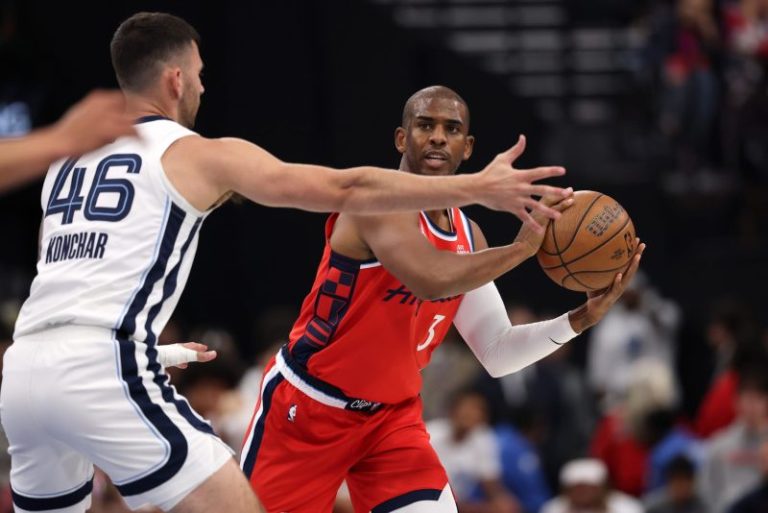
The latest situation involving the team happened early Wednesday morning while the team was in Atlanta and Chris Paul shared on Instagram that he’s been “sent home.”

Clippers coach Tyronn Lue shared his thoughts on Paul’s departure ahead of Wednesday’s road game against the Atlanta Hawks.

“It just didn’t work out like we thought it would,” Lue said. “I don’t like it for CP, but it wasn’t a good fit. We understood that.”

The Clippers have lost eight of the last nine games, including five straight entering Wednesday.

“I don’t think we are 5-16 because of CP’s play,” Lue said. “I just don’t think it was a good fit for what he was looking for. It is what it is.”

Paul and Lue were said not to be on speaking terms for several weeks, according to ESPN.

The veteran guard was coming off the bench for L.A., playing just 16 of the first 21 games and averaging just 2.9 points and 3.3 assists per game in 14.3 minutes.

“Do I want CP to go out like this? No. I have a lot of respect for him and he’s been a friend of mine over the years,” Paul said. “You don’t want to see a great go out like this, but I’m sure he will find something because he’s a great player.”

Paul spent six seasons with the franchise from 2011-2017, reaching the All-Star game in each of those seasons.

He is the Clippers’ all-leader in total assists (4,076) and steals (2.1) per game.

This post appeared first on USA TODAY