Archive

2025

Browsing

Delegations from Russian and Ukraine on Tuesday agreed to a ceasefire in the Black Sea following talks with Trump administration officials this week in Saudi Arabia.

‘The United States and Russia have agreed to ensure safe navigation, eliminate the use of force, and prevent the use of commercial vessels for military purposes in the Black Sea,’ the White House said in a statement following talks in Jeddah.

Similarly, just moments later, Ukrainian Defense Minister Rustem Umerov, who is leading the delegation confirmed that ‘All parties have agreed to ensure safe navigation, eliminate the use of force, and prevent the use of commercial vessels for military purposes in the Black Sea.’

Though he also emphasized that ‘all movement by Russia of its military vessels outside of [the] eastern part of the Black Sea will constitute violation of the spirit of this agreement, will be regarded as violation of the commitment to ensure safe navigation of the Black Sea and threat to the national security of Ukraine.’

‘In this case, Ukraine will have full right to exercise [the] right to self-defense,’ he added in a readout following talks in Riyadh.

Though the Kremlin also reportedly suggested on Tuesday it may not be willing to fully enforce the ceasefire until it is admitted back into the SWIFT international banking system – calling into question the actual success of the talks. 

This is a breaking news story. Check back for updates. 

This post appeared first on FOX NEWS

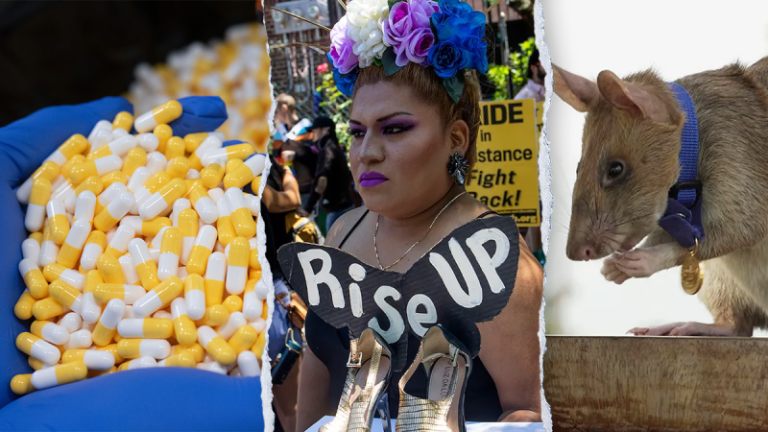
President Donald Trump’s National Institute of Health on Friday quietly cut over $1 million in federally funded research evaluating if rats going through hormone therapy were more likely to overdose on a popular party drug. 

The DEI-funded NIH grant was first exposed in December 2024 by the White Coat Waste Project, a nonprofit organization that researches and reveals the misuse of taxpayer dollars for animal testing. The nonprofit last year revealed over $10 million in taxpayer money was spent on research creating ‘transgender animals.’

As Trump and Elon Musk’s Department of Government Efficiency (DOGE) expose and cut mismanaged federal funds, the Trump administration has now cut ten ‘transgender animal’ research grants unveiled by the White Coat Waste Project. 

‘This is a great victory for taxpayers and animals,’ Anthony Bellotti, president and founder of White Coat Waste Project, said. ‘We’re proud that our blockbuster investigation has prompted the Trump administration to slash millions in DEI funds and other wasteful spending earmarked for creating transgender lab animals through sterilization, hormone therapies, and invasive surgeries and then subjecting them to drug overdoses, open wounds, electroshocks, and other painful and deadly experiments.’

‘Despite the mainstream media’s shameful misinformation campaign, transgender animal experiments are real – and really wasteful,’ Bellotti added. ‘The solution is simple: Stop the money. Stop the madness!’

The University of Pacific Stockton was granted over $1 million for the project, ‘GHB Toxicokinetics: Role of sex hormone dependent monocarboxylate transporter regulation and potential for altered overdose risk in transgender men and women,’ running from April 1, 2020, through March 31, 2025. DOGE cut the program early on March 21.

The grant was funded by the NIH’s Support of Competitive Research (SCORE) Program, which aims to increase research at institutions that have ‘an explicitly stated mission or historical track records in graduating students from groups nationally underrepresented in biomedical research.’

The White Coat Waste Project obtained the project’s grant application through the Freedom of Information Act (FOIA), which revealed plans to castrate male rats and inject them with estrogen, remove female rats’ ovaries and inject them with testosterone, and then inject the rats with Gamma-Hydroxybutyrate (GHB). GHB is used as a recreational party drug and is associated with ‘chemsex’ for its euphoric and sedative effects.

The project set out to ‘characterize GHB toxicokinetics and toxicity in the absence of sex hormones and in response to sex and cross-sex hormone therapy in males and females’ to determine if hormone replacement increased overdose risk in transgender men and women.

The White Coat Waste Project has worked with legislators to inform the public and received recognition from the president in the process. The nonprofit testified before the House Oversight Committee last month during the hearing, ‘Transgender Lab Rats and Poisoned Puppies: Oversight of Taxpayer-Funded Animal Cruelty.’

While delivering opening remarks on the misuse of taxpayer money funding ‘gender-affirming care’ for animals, Rep. Nancy Mace, R-S.C., mentioned the latest ‘transgender animal’ research funding cut by the Trump administration. 

‘We spent over $1 million to find out if female rats receiving testosterone therapy were more likely to overdose on a date rape drug,’ Mace said last month. 

‘At our House Oversight Committee hearing last month, we exposed cruel, taxpayer-funded transgender animal experiments,’ Mace told Fox News Digital in a statement. 

‘We uncovered how NIH wasted over a million dollars studying whether female rats – after having their ovaries removed and being injected with testosterone to mimic transgender men – were more likely to overdose on a date rape drug. President Trump and the Department of Government Efficiency are now shutting down these appalling and inhumane experiments the Biden administration chose to fund with your hard-earned tax dollars,’ Mace added. 

Senate DOGE Caucus Chair Sen. Joni Ernst, R-Iowa, celebrated the $1 million in federal funding cut for transgender research on animals, thanking Trump and DOGE for eliminating this ‘wacky pseudoscience.’

‘Since last year, I’ve exposed how the Biden administration got caught in the woke mousetrap and wasted millions of tax dollars on transgender animal experiments,’ Ernst said. ‘I’m grateful that President Trump and DOGE are eliminating this wacky pseudoscience. Together, we are ending the silly science and ensuring that all studies funded by tax dollars are squeaky clean.’

This post appeared first on FOX NEWS

President Donald Trump revealed that a staffer with national security advisor Mike Waltz’s office included the editor-in-chief of the Atlantic in a Signal group chat with senior Trump officials who were discussing plans for an upcoming strike on Houthi rebels in Yemen.

‘It was one of Michael’s people on the phone.A staffer had his number on there,’ Trump told NBC in a phone interview when asked how Jeffrey Goldberg, the Atlantic’s editor-in-chief, was added to the high-profile chat.

The president added that Goldberg’s inclusion in the group chat had ‘no impact at all’ on the strike in Yemen. 

Goldberg published an article on Monday detailing how he was added to a Signal group chat on March 11, reportedly dubbed ‘Houthi PC Small Group,’ which included high-profile government officials, including Waltz, Secretary of Defense Pete Hegseth, CIA Director John Ratcliffe, White House chief of staff Susie Wiles, Secretary of State Marco Rubio, Vice President JD Vance and others. 

Signal is an encrypted messaging app that operates similarly to texting or making phone calls, but with additional security measures that help ensure communications are kept private to those included in the correspondence. 

Those in the group reportedly discussed targeting the Iran-backed terrorist group, the Houthis, in Yemen, including timing. 

‘According to the lengthy Hegseth text, the first detonations in Yemen would be felt two hours hence, at 1:45 p.m. eastern time,’ Goldberg wrote in his first-hand account of the chat. ‘So I waited in my car in a supermarket parking lot. If this Signal chat was real, I reasoned, Houthi targets would soon be bombed. At about 1:55, I checked X and searched Yemen. Explosions were then being heard across Sanaa, the capital city.’

The inclusion of a journalist in the group chat has sparked outrage from Democrats, with some calling on Hegseth and Waltz to resign from their security roles, and others demanding they testify before Congress on the matter. 

Trump defended Waltz during his interview with NBC on Tuesday. 

‘Michael Waltz has learned a lesson, and he’s a good man,’ Trump said in the phone interview. 

Trump separately defended Waltz in comment to Fox News on Tuesday, saying the national security advisor will not be fired over the incident. 

‘He’s not getting fired,’ Trump told Fox News. The president said the incident was a ‘mistake,’ though there was ‘nothing important’ in the Signal text thread. 

White House Communications Director Steven Cheung summed up the Atlantic story in an X post as ‘nothing more than a section of the NatSec establishment community running the same, tired gameplay from years past.’

‘From the ‘Russia, Russia, Russia’ hoax of the first term to the fake documents case of the last four years… at every turn anti-Trump forces have tried to weaponize innocuous actions and turn them into faux outrage that Fake News outlets can use to peddle misinformation,’ he continued. 

White House press secretary Karoline Leavitt added in a social media post on Tuesday that ‘No ‘war plans’ were discussed’ in the group chat, and that ‘no classified material was sent to the thread.’

‘Jeffrey Goldberg is well-known for his sensationalist spin. Here are the facts about his latest story,’ she posted to X. ‘The White House Counsel’s Office has provided guidance on a number of different platforms for President Trump’s top officials to communicate as safely and efficiently as possible.’

‘As the National Security Council stated, the White House is looking into how Goldberg’s number was inadvertently added to the thread. Thanks to the strong and decisive leadership of President Trump, and everyone in the group, the Houthi strikes were successful and effective. Terrorists were killed and that’s what matters most to President Trump,’ she added. 

Fox News Digital reached out to the White House for additional comment on the matter, but did not immediately receive a reply. 

Fox News’ David Rutz, Danielle Wallace and Peter Doocy contributed to this report. 

This post appeared first on FOX NEWS

There appears to be little appetite within the House GOP to pursue the impeachment of judges who have blocked President Donald Trump’s agenda.

Republican lawmakers are instead coalescing around a bill led by Rep. Darrell Issa, R-Calif., to limit the ability of U.S. district court judges to issue nationwide injunctions, which is due for a House floor vote next week.

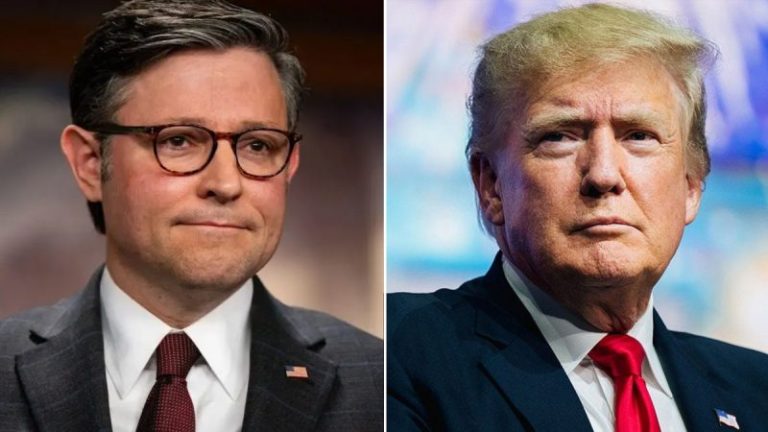
One House GOP lawmaker at Tuesday morning’s closed-door Republican conference meeting said House Speaker Mike Johnson, R-La., signaled that Issa’s bill would be a more effective message against who they view as ‘activist’ judges.

‘There was some innuendo there that, you know, impeachment has been reserved for judges with high crimes and misdemeanors, not because you disagree with his decisions,’ the lawmaker said of Johnson’s message. 

House GOP Policy Conference Chair Kevin Hern, R-Okla., said, ‘I don’t think so,’ when asked if impeachment was a realistic effort. ‘I think it’s probably a mixed bag out there right now,’ he said, adding that Issa’s bill was the best option he could see.

Johnson himself did not directly comment on impeachment when asked during his weekly press conference on Tuesday, but he said the House Judiciary Committee was ‘looking at alternatives.’

‘One of the bills that I really like, that’s already been through committee, was authored by Representative Darrell Issa. And that would limit the scope of federal injunctions,’ Johnson said. ‘It would be, in my view, a dramatic improvement on that.’

Several conservatives have introduced resolutions to impeach various judges who have blocked Trump’s agenda. 

One such effort that has garnered significant attention is a resolution by Rep. Brandon Gill, R-Texas, to impeach U.S. District Judge James Boasberg. Boasberg is currently locked in a legal showdown with the Department of Justice over the Trump administration’s deportation of suspected Tren De Aragua gang members under the Alien Enemies Act.

Trump previously called for Boasberg’s impeachment but has said little on the specific issue since then. 

He has been adamant that Republicans should take on activist judges, however, and Fox News Digital was told last week that he was in favor of Issa’s bill.

Conservatives could attempt to force House GOP leaders to act by classifying their impeachment legislation as a ‘privileged resolution,’ meaning the House must hold at least a chamber-wide procedural vote on the measure within two legislative days.

Gill told Fox News Digital on Tuesday morning that he had no current plans to make his resolution privileged, and he was supportive of Johnson and House Judiciary Chairman Jim Jordan, R-Ohio, in handling the matter.

‘I don’t think we should take anything off the table. But right now, we’re working with leadership. Johnson’s doing a great job, and so is [Rep. Chip Roy, R-Texas] and Jim Jordan on the Judiciary Committee,’ Gill said.

Support for his resolution has continued to grow, however. Three Republicans signed on to formally support Gill’s push on Monday.

Rep. Andy Ogles, R-Tenn., who has introduced his own impeachment resolution, told Fox News Digital, ‘I think we should hold impeachment regardless of what the Senate does or doesn’t do…we should do the people’s work, which is impeach those bastards.’

However, even people who said they would back impeachment are skeptical it will pass.

‘It’s kind of a futile exercise, because we don’t have the votes in the Senate [to remove a judge],’ a conservative House GOP lawmaker said Monday night. ‘It’s more of a ‘Hey, stay in your lane, you’re not the president.’ And I think if anything, let’s put some pressure on the Supreme Court to take up one of these injunctions.’

That conservative added that they would ‘absolutely’ vote for impeachment if it came to the floor.

Rep. Abe Hamadeh, R-Ariz., who co-signed Gill’s resolution, told Fox News Digital on Monday night that he would support both impeachment and Issa’s bill moving to the House floor, but he was skeptical of the former succeeding.

‘I think impeachment obviously is unlikely because of the Senate…but it signals that, you know, these judges are out of control and not following the law,’ Hamadeh explained. ‘I think it’s the smart approach to do both right now, but it seems like the solution, [the No Rogue Rulings Act], that’s likely to get broad support.’

Additionally, with House Republicans’ razor-thin majority, it is not clear that an impeachment resolution would even succeed.

‘We shouldn’t lower the standard for impeachment, but we should – ‘we’ meaning Congress – should provide a remedy for district court judges who totally overreach,’ Rep. Nick LaLota, R-N.Y., said.

Another House Republican who declined to be named said they were ‘totally opposed’ to impeachment.

‘That’s what the appeals process is for,’ they said.

The House Judiciary Committee is holding a hearing early next week on activist judges, and that’s expected to be followed by a House-wide vote on Issa’s bill.

This post appeared first on FOX NEWS

A federal judge from New Jersey temporarily blocked the Trump administration from separating two transgender service members from the Air Force. 

The ruling is the second instance when a federal judge has ruled against the Trump administration as it seeks to implement its ban against transgender people from serving in the military. 

U.S. District Judge Christine O’Hearn, an appointee of former President Joe Biden, issued a temporary, 14-day restraining order on Monday to prevent the Trump administration from executing its order and from ousting Master Sgt. Logan Ireland and Staff Sgt. Nicholas Bear Bade from the service. 

Specifically, O’Hearn said Ireland and Bade demonstrated that their separation from service would negatively impact their careers, as well as their reputations. 

O’Hearn also said that their ‘involuntary loss of decorated military status, military healthcare, and the ability to serve their country under a policy they have faithfully abided by for years cannot be repaired by monetary damages.’ 

‘The loss of military service under the stigma of a policy that targets gender identity is not merely a loss of employment; it is a profound disruption of personal dignity, medical continuity, and public service,’ O’Hearn said in the ruling Monday. 


The Pentagon referred Fox News Digital to the Justice Department for comment. The Justice Department told Fox News Digital that it has ‘vigorously defended’ Trump’s executive orders, including the Defending Women Executive order that stipulates there are only two sexes: male and female. 

‘This is the latest example of an activist judge attempting to seize power at the expense of the American people, who overwhelmingly voted to elect President Trump,’ a Justice Department spokesperson said. 

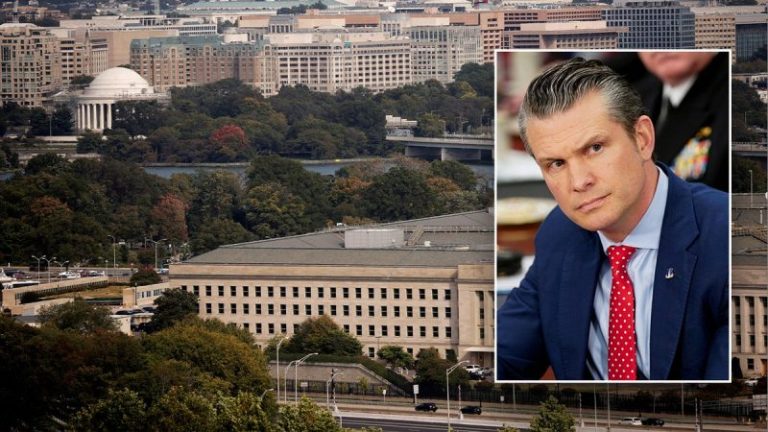
In January, Trump signed an executive order barring transgender individuals from serving in the military, prompting Defense Secretary Pete Hegseth to follow up in February with orders directing each service branch to begin separating transgender troops within 30 days.

O’Hearn’s ruling comes after U.S. District Judge Ana Reyes of Washington, D.C., blocked the Trump administration from implementing its ban on March 19. Reyes said in her opinion that the Trump administration’s order was ‘soaked in animus’ and discriminated based on a person’s transgender status. 

‘Indeed, the cruel irony is that thousands of transgender servicemembers have sacrificed — some risking their lives – to ensure for others the very equal protection rights the Military Ban seeks to deny them,’ Reyes wrote in the decision. 

Trump has signed more than 90 executive orders since returning to the White House in January, spurring more than 125 lawsuits against his administration.

The Associated Press contributed to this report. 

This post appeared first on FOX NEWS

Now that we’re down to 16 teams in the NCAA men’s basketball tournament, the time has come to try and figure out which has the best chance of cutting down the nets in San Antonio in less than two weeks. The short answer? Anyone could. But that wouldn’t make for a very interesting article, would it?

That admission is necessary, however, before we embark on this exercise of ranking the remaining participants. The fact is, all the teams still in the field are more than capable of winning any game on any given day. They’re all members of major power conferences, after all, and they’ve all won their fair share of such contests to get to this point. We therefore base our power rankings upon each team’s accomplishments to date while also taking into consideration its path forward through the regionals.

We should add that while we did have the two eventual finalists at the top of our list a year ago, the upper tier of this season’s Sweet 16 looks a bit more crowded. But with all that in mind, here’s our attempt to put them in order of championship likelihood.

No. 1 Florida

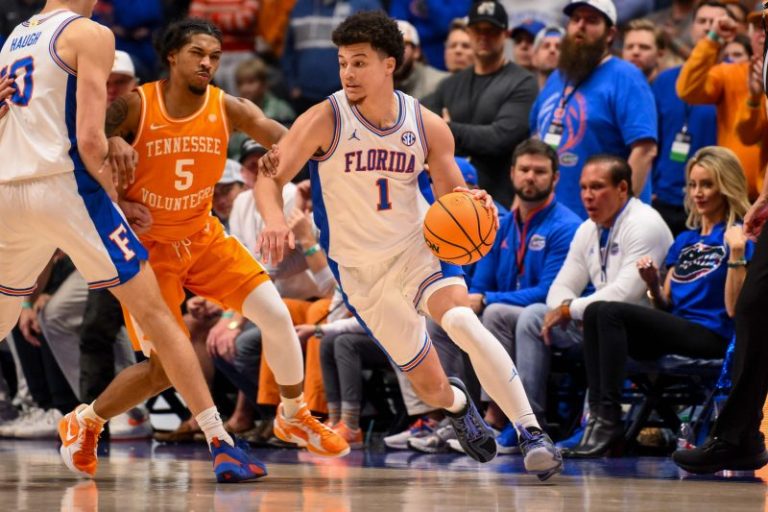
Our expert (snort) bracket has the Gators winning the whole thing. We’ll stick to that, though they needed everything in the tank to get past two-time defending champ Connecticut in the second round. Now that they’ve made it to San Francisco, they match up favorably with the rest of the teams in the region.

No. 2 Duke

Bearing in mind what we said above about Florida, however, it’s difficult to envision anyone in the field beating the Blue Devils if they maintain this level of play. The hot shooting of Tyrese Proctor has to be especially scary for future opponents who already have to contend with Cooper Flagg and Kon Knueppel.

FRESH VIEW: Five new NCAA men’s tournament takes and Final Four picks

No. 3 Houston

The Cougars have the stingiest scoring defense in the nation, let alone the remaining tournament field. They’ll need to be locked in at that end when they arrive in Indianapolis, where they’ll be playing de facto road games against Purdue and whichever SEC squad emerges from the other side. But this is a rugged group that has enough offense to sustain itself and draws inspiration from last year’s early exit.

Keep track of the madness: Sign up for USA TODAY’s Sports newsletter.

No. 4 Auburn

The committee designated Auburn the top overall seed but did the Tigers no favors with this loaded region. On the plus side they’ll be in their own back yard in Atlanta, but Big Ten tournament champ Michigan is playing as well as anyone, and after that a possible date with Tom Izzo and Michigan State could be in the offing.

No. 5 Michigan State

Speaking of the Spartans, we’ll put them atop the list of non-No. 1 seeds since they have arguably the most depth of any team still alive and size to deal with bigger teams. Should they get by Ole Miss, they’ll face either a familiar foe in the Wolverines or an Auburn squad that might have peaked too soon.

No. 6 Kentucky

Yes, Tennessee is seeded higher in this region, but the Wildcats swept the Volunteers in the regular season. We’ll therefore put them higher in the pecking order until Tennessee proves otherwise. The return of veteran point guard Lamont Butler has helped the Wildcats’ already formidable offense operate more smoothly through the first two rounds.

No. 7 Tennessee

With that said, however, the Volunteers have also improved their shooting in the postseason. If they find a way to get over the hump against the Wildcats, their imposing defense would give them a good chance against either Houston or Purdue. A lot will depend on the play of point guard Zakai Zeigler.

No. 8 Michigan

Did we mention the South region is loaded? That No. 5 seed before Michigan’s name might be more a function of the Big Ten tournament final’s late placement on the Selection Sunday schedule, as it can on occasion prevent the committee from adjusting the bracket on short notice. But the ‘play the hand you’re dealt’ approach has served the Wolverines well thus far, and they’ll be well prepared for this date with Auburn.

No. 9 Texas Tech

The Red Raiders are banged up, but they still enter Thursday’s contest against Arkansas as slight favorites. They’ll likely face an uphill climb advancing further, especially if Florida awaits in the Elite Eight, but as the only Big 12 squad to claim a win against Houston they can’t be counted out.

No. 10 Alabama

A No. 2 seed that reach the Final Four a year ago should probably be higher on the list. But this year’s version of the Crimson Tide is more prone to defensive lapses, a trait that could send them packing as early as their next contest against a high-scoring Brigham Young team. They found a way in the regional rounds last year to put it all together. Perhaps, Mark Sears and Grant Nelson can turn back the clock.

No. 11 Purdue

The Boilermakers are an interesting case. On the one hand they’re an experienced group familiar with the pressures of March, but they’ve had to rework their system with a literally large piece of last year’s puzzle gone. A cold spell from the arc or a spate of turnovers would be fatal against any of the remaining teams in their region, but they’ll have a significant portion of the Indianapolis crowd in their corner.

No. 12 Brigham Young

We have the Cougars above a couple of the 4 seeds on this list, and we still might have them too low. They’ve won 11 of their last 12, and Richie Saunders has emerged as one of the stars of the tournament. BYU will have no fear about running with high-scoring Alabama, but a probable date with Duke in the subsequent round could be the end of the line.

No. 13 Arizona

Of the six Sweet 16 teams that also reached this point last season, we give the Wildcats the shortest odds of advancing farther simply because of their next assignment. Granted they’re playing considerably better than they were in November when they managed only 55 points on their home floor against Duke, but the Blue Devils will still pose matchup problems across the entire lineup.

No. 14 Maryland

No. 15 Arkansas

While one underestimates any team coached by John Calipari at one’s peril, there is nevertheless a reason that Arkansas is a 10 seed, namely that two-digit number in the loss column. The Razorbacks earned enough wins in the SEC to squeak into the field, but they aren’t likely to string many more together to go much farther. Should they find a way to get by Texas Tech, however, it is worth noting that they played Florida to an eight-point game in January.

No. 16 Mississippi

Somebody has to bring up the rear in a rankings list. The Rebels get the honor for a couple of reasons. They’ve undeniably impressed in March but just as undeniably benefitted from facing a short-handed Iowa State. Should they find a way to get by Michigan State, they’d likely encounter an Auburn squad that has already beaten them three times.

This post appeared first on USA TODAY

Sen. Ron Wyden, D-Ore., called for national security advisor Mike Waltz and Secretary of Defense Pete Hegseth to resign Tuesday following an apparent national security breach. 

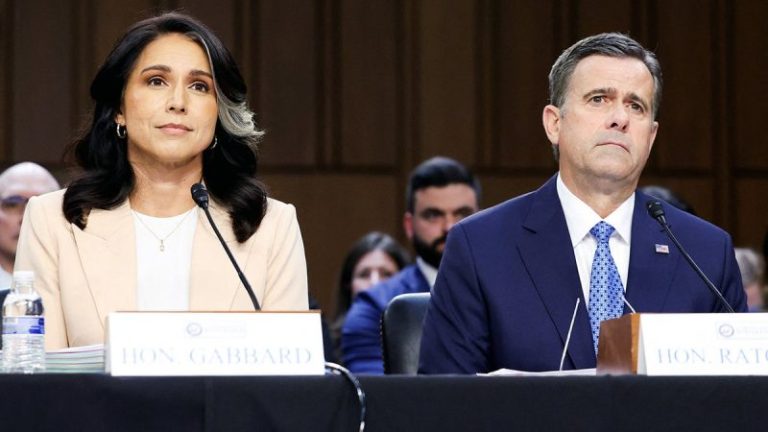
The demand came after Director of National Intelligence Tulsi Gabbard vowed during a Senate Intelligence Committee hearing that there was ‘no classified material’ shared in a Signal text chat that an editor from The Atlantic said he had access to. The U.S. operation against the Houthis in Yemen was reportedly discussed in the chat between senior Cabinet officials. 

‘Obviously, my colleagues and I feel very strongly about the war planning meeting over unclassified phones. Obviously reckless, obviously dangerous, both the mishandling of classified information and the deliberate destruction of federal records or potential crimes that ought to be investigated immediately,’ Wyden said. ‘And I want to make clear that I’m of the view that there ought to be resignation starting with the National Security Advisor and the Secretary of Defense.’

Earlier, Sen. Mark Warner, D-Va., grilled Gabbard over the nature of the texts.

‘Director Gabbard, did you participate in the group chat with Secretary of Defense and other Trump senior officials discussing the Yemen war plans?’ the committee vice chairman asked her.

‘I don’t want to get into the specifics,’ she responded, noting that the matter is ‘currently under review by the National Security Council.’

‘There was no classified material that was shared in that,’ Gabbard also said.

‘So then if there [was] no classified material, share it with the committee,’ Warner shot back. ‘You can’t have it both ways. These are important jobs. This is our national security. Bobbing and weaving and trying to, you know, filibuster your answer. So please answer the question. Director Gabbard, if this was a rank-and-file intelligence officer who did this kind of careless behavior, what would you do with them?’

‘Senator, I’ll reiterate that there was no classified material that was shared in that,’ she said.

Earlier, Warner said ‘If this was the case of a military officer, or an intelligence officer, and they had this kind of behavior, they would be fired.’

CIA Director John Ratcliffe and FBI Director Kash Patel appeared alongside Gabbard on Tuesday.

Ratcliffe confirmed he was the person bearing his name in the group chat.

‘To be clear, the use of Signal message, and end to end encryption applications is permissible and was in this case, used permissibly, at least to my understanding, and in [a] lawful manner,’ he told Wyden.

Patel, when asked by Warner if the FBI has launched an investigation into the chat, said he was briefed on the matter ‘late last night’ and ‘this morning, I don’t have an update.’ 

Fox News’ Danielle Wallace contributed to this report.

This post appeared first on FOX NEWS

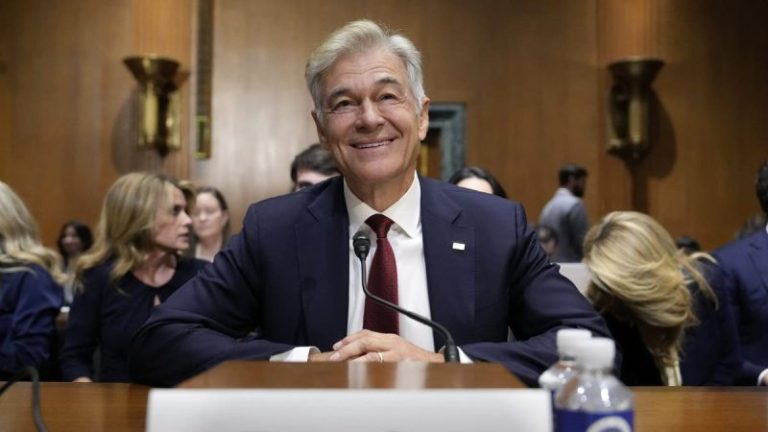
The Senate Committee on Finance is set to vote later Tuesday afternoon on whether to advance President Donald Trump’s pick to lead the Centers for Medicare and Medicaid Services, Dr. Mehmet Oz, to a full Senate confirmation vote. 

The vote follows two hearings by the committee that probed Oz over his plans for the federal healthcare programs, his views on abortion, potential conflicts of interest in the healthcare industry and more.   

If confirmed, Oz would be in charge of nearly $1.5 trillion in federal healthcare spending. Medicare, a federal healthcare program for seniors aged 65 and up, currently provides coverage for about 65 million Americans, according to the Center for Medicare Advocacy. Medicaid, which assists people with low incomes, covers roughly 72 million Americans, according to Medicaid.gov.

A former heart surgeon who saw his fame rise through his appearances on daytime TV and 13 seasons of ‘The Dr Oz Show,’ Oz later transitioned into politics, launching an unsuccessful bid for Pennsylvania’s open Senate seat in 2022. He ultimately lost to John Fetterman, then the state’s lieutenant governor. 

Oz graduated from Harvard and received medical and business degrees from the University of Pennsylvania.

As the administrator of CMS, Oz would make decisions related to how the government covers procedures, hospital stays and medication within the federal healthcare programs, as well as the reimbursement rates at which healthcare providers get paid for their services.

Earlier this month, Trump’s pick to lead the NIH and FDA, Dr. Jay Bhattacharya and Dr. Marty Makary, respectively, were also approved in committee and are awaiting full confirmation votes in the Senate. 

Around the same time that Bhattacharya and Makary won committee approval, Trump withdrew his nomination of former Florida Rep. David Weldon to run the CDC, over fears he did not have the GOP support to clear full confirmation. 

On Monday, the Trump administration named Susan Monarez, acting director of the CDC, as its new nominee.

This post appeared first on FOX NEWS

It’s pretty easy to spot the serious contenders and the highly likely basement dwellers in Major League Baseball. Yet for a handful teams, it’s hard to say whether hope springs eternal – or infernal.

More volatile than a day trader, October could bring them a surprise playoff appearance or the grim realization they took a significant step back this season. And their performances will be notable, given that they may complicate the paths of the bluer bloods across the majors – or end up as so much roadkill.

With that, USA TODAY Sports breaks down four of the most volatile teams for 2025:

Houston Astros: Retreating or reloading?

The trendline was already unsettling enough – from 106-win World Series champions to 90-win ALCS losers to 88-win two-and-outs in 2024. And then the Astros moved on from third baseman Alex Bregman and traded Silver Slugger outfielder Kyle Tucker.

Not exactly the formula to reverse two years of slippage.

But the Astros have the wherewithal to win a ninth consecutive full-season AL West title. It’s just that their confidence involves a little more projection than expectation.

For all their superstar position players over the years, pitching has always been the Astros’ bedrock. And they’ll enjoy one more season of lefty Framber Valdez, who has received Cy Young Award votes the past three seasons. No-hit wonder Ronel Blanco, who ended up eating 167 innings with a 2.80 ERA, and Hunter Brown (170 IP, 3.49 ERA) buttress that foundation.

The intriguing question is whether right-hander Spencer Arrighetti can continue the 15-start run that closed his 2024 season, when he posted a 3.40 ERA and 3.78 FIP. No pitcher on the staff has more upside.

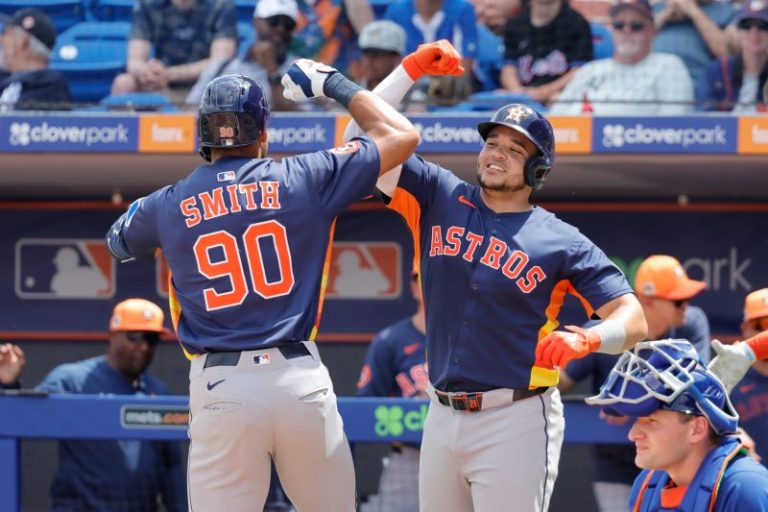
As for the offense? Cam Smith, the centerpiece of the Tucker trade, had a dominant spring and floored the Astros with both his power and veteran mien. Yordan Alvarez remains arguably the greatest hitter on earth. Isaac Paredes may not replicate Bregman, but, as he joins his fourth team in five years, should benefit from now-Daikin Park’s configuration.

Win range: 82 to 91

Washington Nationals: Youth wasted on the young?

Throw out veteran sluggers Josh Bell and Nathaniel Lowe and stopgap third baseman Paul DeJong, and the Nationals’ starting lineup features dudes ages 22, 23, 24, 24, 25 and 26.

Let’s exclude veteran starter Trevor Williams for the moment and consider that the four other fellows in Washington’s rotation are 25, 26, 27 and 28.

Given that the major leagues are increasingly a young man’s game, this bodes particularly well for the Nats, yes?

Probably.

A meticulous rebuilding project has yielded significant results. And 2025 will prove to be a pivotal year for the process.

That starts in the outfield corners, where James Wood (22) and Dylan Crews (23) debuted in 2024. Wood’s 6-foot-6 frame produces stunning exit velocity once his long levers extend, with a 92.8 mph average and a 111.6 mph peak. He produced a .781 OPS in 336 plate appearances.

Crews, the No. 2 overall pick in 2023, wasn’t quite the instant smash, with a .218/.288/.353 line in 31 games. But his five-tool ability and defensive acumen create enough value already, and the Nationals expect greater plate discipline and a significant improvement on his 8.3% walk rate from his rookie cameo.

Along with Jacob Young, who should have won a Gold Glove, they form a possibly unmatched defensive outfield.

Meanwhile, the rotation surprised in its ability to gobble innings. Jake Irvin ranked fifth in the NL in innings pitched in his first full year as a starter, while MacKenzie Gore posted a 3.90 ERA over 166 innings. If Gore can clean up his peripherals and pitch efficiency, an ace may be in the making.

Trouble is, it will be rough sledding in the NL East, which produced three playoff teams last season. Thirty-nine games against the Braves, Phillies and Mets vs. 13 against the Marlins is a tough baseline from which to launch for a team that won 71 games the past two seasons.

Especially when development often isn’t linear. So, paint these Nats as legit spoilers, or still a year or two away.

Win range: 71 to 80

San Francisco Giants: Can JV help them join the NL’s varsity?

In the past three seasons, Justin Verlander has won a Cy Young Award, signed with the New York Mets for $43 million a year, got traded and produced the worst ERA – 5.48 – of his career.

So who’s to say what the future Hall of Famer might do at the age of 42?

Verlander epitomizes the Choose Your Own Adventure vibe of these Giants. He’ll pair with Logan Webb and fellow former Cy Young winner Robbie Ray to give them a veteran foundation atop the rotation.

He looked great this spring, one year after a neck injury and other maladies limited him to 17 starts. Equally curious is how well Jordan Hicks fares in his second year returning to the rotation, and the ability of young arms Hayden Birdsong and Landen Roupp to shore up the back end.

A year ago, the Giants were 17-20 and treading water in the NL West when center fielder Jung Hoo Lee suffered a season-ending torn labrum in his left shoulder. They finished 80-82, with Lee’s absence leaving plenty of what-ifs regarding their record and Lee’s further assimilation to the big leagues.

This year, he’s in the middle of a potentially potent 2-3-4 in the lineup with $182 million free agent Willy Adames and now-cornerstone Matt Chapman. Yet several question marks – if not holes – remain in a lineup that ranked 19th and 17th in OPS and runs.

Since winning 107 games in 2021, the Giants won 81, 79 and 80 the next three seasons. A fourth, similar output seems likely – but enough upside and risk exist for any scenario to seem possible.

Win range: 77 to 87

Toronto Blue Jays: Bye bye, birdies?

Take two franchise cornerstones entering their final years before free agency. Mix in a 40-year-old future Hall of Famer capable of dominating opposing batters so long as his thumb doesn’t hurt like hell.

Throw in a dash of promising but utterly unproven young players competing in the game’s toughest division and you have a fascinating and thoroughly befuddling Blue Jays squad.

They’re still confident they have a shot at retaining Vladimir Guerrero Jr. despite missing a soft deadline to extend him. They hope Bo Bichette bounces back from a .225/.277/.322 injury-plagued season to create a prosperous salary drive for himself.

And it looks like Max Scherzer, signed to a one-year deal, will break in the rotation after a nagging thumb condition dogged him this spring.

Beyond that, things can go in so many different directions.

Such as Alan Roden, who opened eyes and then cemented a roster spot with a nifty spring performance that leaves him in position to get significant at-bats in left field. Will Wagner, Nathan Lukes, Davis Schneider – they’ll all get a chunk of time at some point, and only Schneider has more than a year of service time.

Is it a bad sign Kevin Gausman’s strikeouts per nine innings shrank from an AL-leading 11.5 to 8.1? Can Chris Bassitt, 36, reverse a career-worst 4.16 ERA? Is Bowden Francis really that guy who was virtually unhittable his final five starts of the year?

And how does all this stack up against the Yankees, the Orioles, the revived Red Sox, the ever-present Rays?

Win range: 78 to 88.

The USA TODAY app gets you to the heart of the news — fastDownload for award-winning coverage, crosswords, audio storytelling, the eNewspaper and more.

This post appeared first on USA TODAY

It’s good to be seeded No. 1 in March Madness. Quite good.

Four conferences combined to supply every team in this men’s Sweet 16. That’s a first. One conference, the SEC, advanced seven teams into the Sweet 16. That’s also a first.

What’s not a first? Four No. 1 seeds running strong into the NCAA Tournament’s second week.

Nearly 40% of the Final Four spots have been claimed by No. 1 seeds in the past 39 tournaments, since the tournament expanded to include at least 64 teams. No. 1 seeds make the Final Four nearly twice as frequently as a No. 2 seed, and nearly four times as often as a No. 3 seed.

We’re seeing that math unfold. All four No. 1 seeds reached the Sweet 16. One No. 2 seed, St. John’s, has been eliminated, along with two No. 3 seeds: Iowa State and Wisconsin.

Only once, in 2008, did No. 1 seeds claim all four Final Four spots. Considering the overall strength of this bracket’s top seeds, it would come as no great shock if that history repeats.

Here’s my assessment of the top threats remaining to the No. 1 seeds, within each region:

Auburn’s top threat: No. 5 Michigan

Region: South

When they’ll meet: Sweet 16

Auburn beat Creighton 82-70 in the second round despite receiving just eight points from national player of the year candidate Johni Broome. Creighton’s Ryan Kalkbrenner won the big-man battle. The Tigers prevailing is a compliment to Tahaad Pettiford scoring 23 points off the bench.

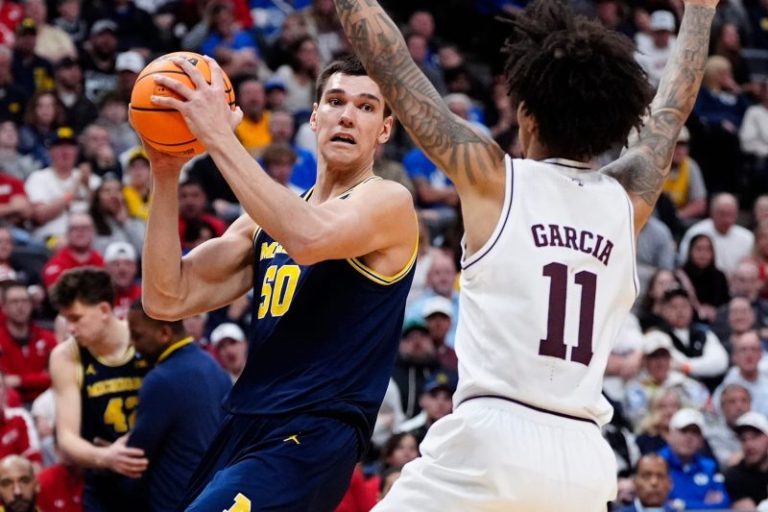
Auburn proved it’s more than Broome, but a vintage performance from the senior forward would be mighty helpful when the Tigers play Michigan on Friday. The Wolverines start two centers, Vladislav Goldin and Danny Wolf, who stand at least 6-feet-10 inches tall. You might remember Goldin from Florida Atlantic’s 2023 run to the Final Four. You might remember Wolf from Yale’s upset of Auburn last season.

Auburn landed in a brutal region despite earning the No. 1 overall seed. This next matchup comes against an opponent that got hot in the Big Ten Tournament and stayed hot last week. The Wolverines will try to corral Broome with their 167 inches of starting frontcourt.

Florida’s top threat: No. 3 Texas Tech

Region: West

When they’d meet: Elite Eight

Houston lost to exactly one Big 12 team this season: Texas Tech toppled the Cougars in overtime in February. The Red Raiders pulled it off without their best player, JT Toppin, who was ejected four minutes into that win.

So it’s not hyperbole to say the Red Raiders can play with anybody. They’re elite on offense, with no shortage of players who can reach double-figures scoring. Kerwin Walton, a bench player, scored 27 points in Texas Tech’s first-round win against North Carolina-Wilmington. Two nights later, Walton didn’t score at all, and Darrion Williams, who had a quiet first round, went off for 28 points against Drake.

Toppin scored 25 points in four of his last six games. He’d be the best big man in a matchup with Florida, and the Red Raiders feature a nice collection of guards, too, who could try to keep up with Florida’s dynamite backup.

Give the Gators truth serum, and they’d probably tell you they wouldn’t mind seeing Arkansas upset Texas Tech in the Sweet 16 to set up an all-SEC Elite Eight matchup, if Florida first beats Maryland. The Gators already beat Arkansas by 12 this season, and the Razorbacks lack the scoring punch to keep up with Florida. The Red Raiders ooze scoring weapons.

Duke’s top threat: No. 2 Alabama

Region: East

When they’d meet: Elite Eight

Seventy-five points. That’s the magic number required to beat the Blue Devils. Duke allowed at least 75 points to just four opponents. Three of those four – Kentucky, Kansas and Clemson – beat Duke. Only against Auburn did Duke prevail when allowing at least 75 points.

Alabama could score 75 points against Duke, because Alabama can score 75 points against anybody. The Crimson Tide averaged 85 points in their two NCAA Tournament wins. They last failed to reach 75 in a 74-64 loss to Mississippi – on Jan. 14. That’s more than two months ago.

Alabama treats defense as an optional endeavor, and it twice lost games when eclipsing 90 points. Duke scores plenty, as well, so Alabama piling up points would not guarantee an upset, but Alabama’s scoring potential at least would give it a chance against sizzling Duke.

Duke’s next opponent, Arizona, scored just 55 points in a November loss to the Blue Devils. Alabama might have its hands full with high-scoring Brigham Young in the Sweet 16. Survive that test, and Duke-Alabama would be appropriately billed as an Elite Eight thriller.

Houston’s top threat: No. 2 Tennessee

Region: Midwest

When they’d meet: Elite Eight

Purdue’s high-scoring standout, Trey Kaufmann-Renn, gives the Boilermakers hope of upsetting Houston in the Sweet 16. Better chance, though, that the Cougars roll into the Elite Eight, where they could meet Tennessee in what would be a clash of elite defenses.

The Cougars are armed with better scorers, and they shoot well from 3-point range, but Tennessee – like a lot of Rick Barnes’ teams – is just remarkably stingy.

The Vols make scoring difficult against even elite opponents. They held Alabama to 76 points earlier this season, a paltry output by the Tide’s standards. Tennessee limited Florida to 44 points in a takedown of the Gators. Auburn beat Tennessee in an ugly game despite scoring 53 points.

Tennessee’s slick-shooting guard, Chaz Lanier, has been swishing his jumpers. Pair a dialed-in Lanier with Tennessee’s defense, and the Vols finally could have a recipe for their first Final Four in program history.

Final Four prediction

The lack of Sweet 16 Cinderellas means the No. 1 seeds won’t enjoy any gimme matchups from here forward. However, there is no weak link among the No. 1 seeds, and I favor each top seed to survive and advance to the Final Four.

Blake Toppmeyer is a columnist for the USA TODAY Network. Email him at BToppmeyer@gannett.com and follow him on X @btoppmeyer. Subscribe to read all of his columns.

This post appeared first on USA TODAY