Archive

2025

Browsing

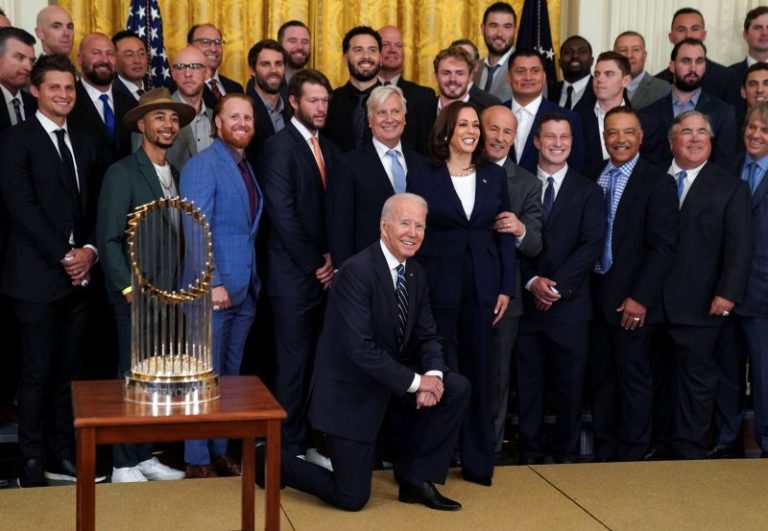
The Los Angeles Dodgers will have another stop to make in the naion’s capital next month before they begin a series with the Washington Nationals: the White House.

The Dodgers on Tuesday announced they have accepted an invitation to the White House to celebrate the World Series title they won last November over the New York Yankees.

‘It’s certainly a huge honor to get the invitation to the White House,’ Dodgers manager Dave Roberts said before the team’s exhibition game against the Los Angeles Angels. ‘It allows us to celebrate our 2024 championship. To my understanding, every World Series champion gets that honor, so it’s a great honor for all of us.’

This will be the second trip to the White House in four years for Roberts and many of the Dodgers players. The team was honored during Joe Biden’s presidency after they won the title the end of the COVID-19-shortened 2020 season.

The announcement comes on the heels of the Department of Defense temporarily removing an article from its official website lauding the accomplishments of former Dodgers star Jackie Robinson’s military service.

The article was apparently taken down as part of the Trump Administration’s directive to eliminate diversity, equity and inclusion initiatives. But after a brief public outcry, the page was restored.

Roberts, a frequently vocal supporter of diversity efforts in Major League Baseball, said he was unaware of the controversy and it did not play a factor in the team’s decision.

‘I respect the position,’ Roberts said. ‘It’s the highest office in our country, certainly in the world, so, looking forward to it.’

This post appeared first on USA TODAY

Despite its relatively short existence, the UFL has already forged what it has characterized as a positive relationship with the NFL.

The NFL has worked collaboratively with many of the recent spring-league start-ups to test new rules that could potentially enhance the game. This process has helped the NFL discover its dynamic kickoff, which debuted during the 2024 season, and has also allowed the league to assess data on onside kick alternatives and technological innovations to improve its broadcasts.

While the current relationship between the UFL and NFL is mutually beneficial, many are curious as to whether they could eventually expand their partnership. After all, the NFL is the lone major North American sport not to have a minor-league system, so could the league eventually consider loaning some of its back-end roster candidates to the UFL?

‘Boy, I would love that,’ UFL executive vice president Daryl Johnston told USA TODAY in a phone interview.

Could UFL, NFL teams ever share players?

Johnston was quick to clarify there had not been any discussions about a potential path for the UFL and NFL to share players. However, he opined that such an arrangement could benefit both parties.

Why? Because it would allow players more time to get live, on-field reps, which he believes is key in player development.

‘With the restriction in [practice] time at the collegiate level, the restriction in [practice] time at the professional level, sometimes the detail and the time on task is not enough for these guys to really understand,’ Johnston said.

Johnston believes NFL coaches would agree with his assessment, citing a 2019 conversation he had with Philadelphia Eagles offensive line coach Jeff Stoutland in 2019 as evidence.

At the time, Johnston was the general manager of the San Antonio Commanders, a member of the short-lived Alliance of American Football (AAF). He and Stoutland were discussing Eagles offensive tackle Jordan Mailata, who was a rugby star before the Eagles selected him in the seventh round of the 2018 NFL draft.

‘The greatest thing in the world would be for Jordan to come down to you and be able to play football and see it at game speed,’ Johnston recounted Stoutland saying.

That’s why Johnston believes the NFL and UFL creating a partnership would be ‘tremendous’ for both leagues. It would add an influx of talent to the spring league while enabling NFL teams to get fringe roster prospects in need of more seasoning – like Mailata in 2019 – live game reps in major roles.

Houston Roughnecks head coach CJ Johnson agrees with Johnston and is confident such a deal will happen sooner rather than later.

‘I guarantee you it’s coming right down the pipe,’ Johnson told USA TODAY of a UFL and NFL player-sharing partnership in a phone interview.

Johnson’s belief stems from the 63-year-old’s communications with NFL personnel. He noted that he has ‘a lot of contacts’ from his 12 NFL seasons with the New Orleans Saints and Chicago Bears and the tone of his discussions with them changed markedly entering his third spring-league season.

‘They are on board with helping us with players,’ Johnson said. ‘Players that they probably want to take an extra look at, [I] call my buddies and they always tell me.’

‘They’ve been phenomenal,’ Johnson added. ‘The first year, not so much. The second year was a click better. But this year, that’s the thing: the partnership with the NFL and the spring league is going really well.’

So, while nothing is imminent for a UFL and NFL player sharing program, the spring league remains hopeful it could be a part of its long-term future.

‘I definitely think the timing is getting to that point where it could be a really, really good fit and a win-win for both sides,’ Johnston said. ‘So hopefully, that’s a conversation we can get on the table here in the near future.’

This post appeared first on USA TODAY

The Atlantic published Wednesday what it described as the ‘attack plans’ at the center of a Signal text chain leak involving senior officials in the Trump administration.

Secretary of Defense Pete Hegseth and national security adviser Mike Waltz have faced calls to resign following revelations that the outlet’s editor-in-chief Jeffrey Goldberg was inadvertently added to a private group chat earlier this month in which Hegseth, Waltz, Vice President JD Vance and other top administration officials reportedly discussed impending airstrikes on Yemen’s Houthi rebels. Hegseth has said ‘nobody was texting war plans’ and Director of National Intelligence Tulsi Gabbard vowed during a Senate Intelligence Committee hearing Tuesday that there was ‘no classified material’ in the messages.

‘TEAM UPDATE: TIME NOW (1144et): Weather is FAVORABLE. Just CONFIRMED w/CENTCOM we are a GO for mission launch. 1215et: F-18s LAUNCH (1st strike package). 1345: ‘Trigger Based’ F-18 1st Strike Window Starts (Target Terrorist is @ his Known Location so SHOULD BE ON TIME – also, Strike Drones Launch (MQ-9s),’ Hegseth apparently wrote in a screenshot of a text message released Wednesday by The Atlantic. 

‘1410: More F-18s LAUNCH (2nd strike package). 1415: Strike Drones on Target (THIS IS WHEN THE FIRST BOMBS WILL DEFINITELY DROP, pending earlier ‘Trigger Based’ targets). 1536 F-18 2nd Strike Starts – also, first sea-based Tomahawks launched,’ Hegseth reportedly continued, before adding ‘Godspeed to our Warriors.’

Waltz later allegedly wrote ‘The first target – their top missile guy – we had positive ID of him walking into his girlfriend’s building and it’s now collapsed,’ according to The Atlantic. 

‘Excellent,’ read a message in response attributed to Vance.

The Atlantic said in its report Wednesday – titled ‘Here Are the Attack Plans That Trump’s Advisers Shared on Signal’ – that ‘the statements by Hegseth, Gabbard, Ratcliffe, and Trump – combined with the assertions made by numerous administration officials that we are lying about the content of the Signal texts – have led us to believe that people should see the texts in order to reach their own conclusions.’

‘There is a clear public interest in disclosing the sort of information that Trump advisers included in nonsecure communications channels, especially because senior administration figures are attempting to downplay the significance of the messages that were shared,’ wrote the Atlantic’s Goldberg and reporter Shane Harris. 

‘Experts have repeatedly told us that use of a Signal chat for such sensitive discussions poses a threat to national security. As a case in point, Goldberg received information on the attacks two hours before the scheduled start of the bombing of Houthi positions. If this information – particularly the exact times American aircraft were taking off for Yemen – had fallen into the wrong hands in that crucial two-hour period, American pilots and other American personnel could have been exposed to even greater danger than they ordinarily would face,’ they also said.

Vance responded to the report Wednesday by declaring that ‘It’s very clear Goldberg oversold what he had. 

‘But one thing in particular really stands out. Remember when he was attacking Ratcliffe for blowing the cover for a CIA agent? Turns out Ratcliffe was simply naming his chief of staff,’ he added.

The Atlantic report said ‘A CIA spokesperson asked us to withhold the name of John Ratcliffe’s chief of staff, which Ratcliffe had shared in the Signal chain, because CIA intelligence officers are traditionally not publicly identified.’

Waltz wrote on X ‘No locations. No sources & methods. NO WAR PLANS. Foreign partners had already been notified that strikes were imminent. BOTTOM LINE: President Trump is protecting America and our interests.’

White House Deputy Chief of Staff Taylor Budowich said in response to the report that ‘The Atlantic has already abandoned their bulls— ‘war plans’ narrative, and in releasing the full chat , they concede they LIED to perpetuate yet ANOTHER hoax on the American people. What scumbags!’

‘The Atlantic has conceded: these were NOT ‘war plans,’’ White House Press Secretary Karoline Leavitt added. ‘This entire story was another hoax written by a Trump-hater who is well-known for his sensationalist spin.’

Some Congressional Democrats have been calling for Hegseth’s ouster since the text chain leak was first reported.

House Minority Leader Hakeem Jeffries, the highest-ranking Democrat to do so, wrote a letter to President Donald Trump yesterday demanding that Hegseth be ‘fired immediately.’ 

‘The so-called Secretary of Defense recklessly and casually disclosed highly sensitive war plans — including the timing of a pending attack, possible strike targets and the weapons to be used –during an unclassified national security group chat that inexplicably included a reporter. His behavior shocks the conscience, risked American lives and likely violated the law,’ Jeffries wrote.

Pressed by a reporter yesterday about the matter, Hegseth claimed he has everything under control.

‘Nobody’s texting war plans,’ he said. ‘I know exactly what I’m doing, exactly what we’re directing, and I’m really proud of what we accomplished, the successful missions that night and going forward.’

Fox News’ Landon Mion contributed to this report.

This post appeared first on FOX NEWS

: Senate Judiciary Chairman Chuck Grassley, R-Iowa, will hold a hearing next week on federal judges’ use of nationwide orders to throttle the Trump administration’s actions, which will take place back to back with an identical hearing in the lower chamber. 

In an exclusive statement to Fox News Digital, Grassley said, ‘District judges’ abuse of nationwide injunctions has hobbled the executive branch and raised serious questions regarding the lower courts’ appropriate jurisdictional realm.’

‘Since the courts and the executive branch are on an unsustainable collision course, Congress must step in and provide clarity,’ he explained. ‘Our hearings will explore legislative solutions to bring the balance of power back in check.’

The hearing is slated to take place on April 2, one day after the House’s hearing. 

‘We plan to have hearings starting next Tuesday on this broad subject,’ House Judiciary Committee Chairman Jim Jordan, R-Ohio, told ‘Fox & Friends’ on Wednesday morning.

It will be titled ‘Rule by District Judges II: Exploring Legislative Solutions to the Bipartisan Problem of Universal Injunctions.’

Specifically, the committee will look at both the constitutional and policy issues that are raised by judges issuing nationwide injunctions, particularly the uptick brought on by the Trump administration. It will further examine what harm the wide-ranging orders have posed to each branch of government, and what kind of solutions are on the table for Congress. 

The Senate Judiciary Committee’s Republican majority has invited witnesses Samuel Bray and Jesse Panuccio to testify at the hearing. 

Bray is the John N. Matthews Professor of Law at Notre Dame and is an expert on nationwide injunctions. He has written and testified on the subject extensively. He notably penned a Harvard Law Review article, ‘Multiple Chancellors: Reforming the National Injunction.’

Panuccio is a partner at Boies Schiller Flexner and was previously the acting associate attorney general at the Department of Justice (DOJ), as well as the chairman of the DOJ’s Regulatory Reform Task Force and vice chairman of the DOJ’s Task Force on Market Integrity and Consumer Fraud. He also spent time as Florida Gov. Rick Scott’s general counsel.

This is not the first time lawmakers have expressed concerns over the ability of federal judges to stop actions nationwide in their tracks. At a hearing in 2020, led by former committee Chairman Lindsey Graham, R-S.C., it was discussed at length by bipartisan senators. 

Several Republicans have already introduced bills in the House and Senate aimed at restricting the ability of federal judges to kneecap the administration. The president has expressed interest in one such measure, led by Rep. Darrell Issa, R-Calif., Fox News Digital reported last week. 

According to two sources familiar with the discussions, top White House aides told senior Capitol Hill staff members last week, ‘the president wants this.’ They also said the White House felt that time was of the essence when it comes to the judicial issue and Trump wants Congress to expedite the matter. 

While the hearings have been promptly scheduled for next week, there is no word on whether legislation on the issue will be brought to the Senate floor. 

The office of Senate Majority Leader John Thune, R-S.D., did not provide comment to Fox News Digital when asked if he had ideas for policy regarding the injunctions, or whether he believed Congress needed to act. 

When asked by Fox News earlier this week about calls to impeach judges, Thune noted that Grassley was examining the issue and said, ‘At the end of the day, there is a process, and there’s an appeals process. And, you know, I suspect that’s ultimately how it’s going to be ended.’

During a floor speech Tuesday, Senate Majority Whip John Barrasso, R-Wyo., said, ‘When partisan, unelected district court judges try to micromanage the president of the United States, it isn’t judicial review. It isn’t checks and balances. It is purely partisan politics – and it is wrong.’ 

But the No. 2 Republican didn’t call for any specific legislation on the subject. 

Critics of the GOP’s cautious approach toward federal judges’ wide-ranging orders include Gov. Ron DeSantis, R-Fla., who asked why bills weren’t already teed up at the start of the Congress. 

‘Congress has the authority to strip jurisdiction of the federal courts to decide these cases in the first place,’ the governor said on X earlier this month. 

‘The sabotaging of President Trump’s agenda by ‘resistance’ judges was predictable – why no jurisdiction-stripping bills tee’d up at the onset of this Congress?’ he asked. 

This post appeared first on FOX NEWS

Sen. Josh Hawley asked FBI Director Kash Patel Wednesday to look into alleged Biden-era abuses against Christians, urging Patel in a new letter to crack down on what the Missouri Republican described as First Amendment violations he said were carried out under the Biden administration.

In the letter, previewed exclusively by Fox News Digital, the Missouri Republican asked Patel to investigate alleged abuses against pro-life activists and Christians. He also urged Patel to release by April 30 information compiled by the FBI’s Richmond, Virginia, field office – including a memo that labeled certain traditionalist Catholics as potential ‘security risks’ – and to address possible violations of the FACE Act, which Hawley said targeted pro-life protesters.

‘I trust that, under your leadership, this misconduct will end. But those responsible must be held accountable,’ Hawley said in the letter. 

‘Transparency and accountability will be paramount in restoring Americans’ faith in the Bureau,’ he added. ‘Getting to the bottom of the Biden Administration’s violations of religious liberty is an excellent place to start.’

The letter from Hawley, who chairs the Senate Judiciary Subcommittee on Crime and Counterterrorism, is not the first time he has used his post to urge Patel to protect against Christian persecution. 

Hawley’s letter calls on the FBI to share with his office by the end of April a list of 22 memos and documents compiled by the FBI Richmond Field Office and related to the alleged FACE Act abuses, including all emails, memoranda, directives and policy guidance, sent to or from the FBI director, deputy director, or any other senior official regarding the enforcement of the FACE Act under the Biden Administration. 

Hawley also urged Patel to share all documents – including communications with state and local law enforcement agencies – that discuss how the Richmond Field Office memorandum or similar FBI policies were implemented or considered for enforcement at the state or local level.

Hawley zeroed in on these issues during Patel’s confirmation hearing earlier this year.

‘Do you think it’s appropriate for the FBI to single out and target people of faith in order to discourage the exercise of their First Amendment rights?’ he asked Patel in January. 

Patel vowed in response that he would ‘fully utilize, if confirmed, the investigative powers of the FBI to give you the information you require and also to hold those accountable who violated the sacred trust placed upon the FBI.’

This post appeared first on FOX NEWS

The leak of Houthi strike plans by the Trump administration to a journalist was not the result of a hack but an apparent human error. Still, it sparked debate over whether the nation’s most powerful government officials should communicate sensitive military information on a non-government platform. 

Jeffrey Goldberg, editor-in-chief of The Atlantic, wrote on Monday that he was added to a group chat on Signal on March 11 by National Security Advisor Mike Waltz titled ‘Houthi PC small group.’ His article details a leaked conversation between the nation’s top government officials, including the vice president, secretary of defense, director of the CIA and others, in which the sensitive details of a planned strike on Houthi terrorists in Yemen were reportedly discussed. 

The report shocked Washington and led to accusations from Democrats and others that President Donald Trump’s team endangered national security and possibly violated the law by using Signal, a messaging app. Signal’s platform is encrypted, but that doesn’t mean it is not susceptible to hacks, experts told Fox News Digital.

Encryption means that only the sender and the receiver of a message should be able to review it; not even Signal itself can pull its contents. But even without viewing a message’s contents, some metadata might be attainable.

‘Knowing who has spoken with whom at what time and for what duration is already very useful intelligence,’ said Vahid Behzadan, cybersecurity professor and researcher at the University of New Haven. 

‘If a phone is infected with spyware, messages can be intercepted before or after encryption.’

‘Screenshots or photos are not protected by Signal itself … and if previews are enabled by users in the app, sensitive info could appear on a locked screen,’ he said. 

Government officials and journalists often use Signal to communicate sensitive information for fear that emails and text communications on official government cellphones could fall under the Freedom of Information Act, meaning they could be made public. However, transmitting controlled but unclassified information on Signal is explicitly banned by Defense Department policy.

In February, Google’s Threat Intelligence Group warned of ‘increasing efforts from several Russia-aligned actors to compromise Signal accounts used by individuals of interest to Russia’s intelligence services.’ 

‘While this emerging operational interest has likely been sparked by wartime demands to gain access to sensitive government and military communications in the context of Russia’s re-invasion of Ukraine, we anticipate the tactics and methods used to target Signal will grow in prevalence in the near-term and proliferate to additional threat actors and regions outside the Ukrainian theater of war,’ Google said. 

Google warned that Signal could obtain access to all of a target’s information on their phone while their device is unlocked. 

‘As reflected in wide-ranging efforts to compromise Signal accounts, this threat to secure messaging applications is not limited to remote cyber operations such as phishing and malware delivery, but also critically includes close-access operations where a threat actor can secure brief access to a target’s unlocked device.’

At first, Goldberg said, he worried that the Signal chat was fake. 

But shortly thereafter, top names in the administration, Vice President JD Vance, Secretary of State Marco Rubio, Defense Secretary Pete Hegseth, Director of National Intelligence Tulsi Gabbard, CIA Director John Ratcliffe, and Treasury Secretary Scott Bessent, began naming their points of contact for the impending offensive campaign in Yemen against the Houthis, according to The Atlantic. 

The group then reportedly began to use the chat for coordinating messaging plans as the administration moved closer to its offensive campaign, which was made public on March 14. 

The Trump administration has insisted no one shared classified information in the ‘Houthi PC small group’ chat. 

Ratcliffe said he’d been briefed by the agency about the ‘permissible work use’ of Signal. 

But Goldberg said the chat ‘contained operational details of forthcoming strikes on Iran-backed Houthi rebels in Yemen, including information about targets, weapons the U.S. would be deploying, and attack sequencing.’ He redacted some of the information he deemed potentially sensitive, including the name of a CIA agent who Ratcliffe had named to run point on the strikes.

Ratcliffe said it was not improper for him to share the officer’s name because he was not under active cover.

Both Ratcliffe and Gabbard said they could not recall whether specific weapons systems or specific targets had been mentioned in the Signal chat during a Senate worldwide threats hearing on Tuesday. 

When asked whether Hegseth had declassified information about the Houthi operations before sharing it in the chat, they referred senators to the Defense Department. 

Rep. Don Bacon, R-Neb., a national security hawk, isn’t buying that the chat did not reveal classified information. 

‘I will guarantee you 99.99% with confidence Russia and China are monitoring those two phones,’ Bacon said of the chat. 

‘This is a gross error, and it’s intentional. They intentionally put highly classified information on an unclassified device. I would have lost my security clearance in the Air Force for this and for a lot less.’

Matthew Shoemaker, a former defense intelligence official, said sharing classified information on Signal would violate Title 18 of U.S. Code 793, which bans gathering, transmitting or losing defense information. The punishment for such a crime carries up to 10 years in prison.

‘They had to physically remove it from a classified system and then put it on an unclassified system,’ he said. ‘Any uniformed officer would immediately be relieved of command.’

‘It’s hard to believe this is the first time they’ve been doing this. It’s likely just the first time they’ve been caught.’ 

On top of it all, Shoemaker said, White House envoy Steve Witkoff, who was a part of the chat, was in Russia on Russian-operated cell networks at the time the strike information was being communicated to him.

‘Given the Russian GRU’s past activity breaking into Signal, it’s highly likely the Russians saw everything.’

He said that any conversations about the timing of the strike, assets used or weapons is all strike package information that is ‘highly classified, likely at the top secret level.’

‘I’m sure the targeting intelligence officers would be very surprised to learn their work is actually unclassified, if what Pete Hegseth is saying were true.’

The threat of hacking the chat would depend on whether officials were using their government phones with extra layers of encryption or personal devices, according to James Robbins, dean of academics at the Institute of World Politics and former advisor to the late Defense Secretary Donald Rumsfeld.

‘I think we can assume that any government-issued phone to somebody at a Cabinet level would have all kinds of safeguards preinstalled,’ he said. 

He said the fact that Witkoff was in Russia did not mean he ‘was plugging into a Russian Wi-Fi.’ 

‘Things get communicated from our foreign embassies and foreign locations all the time. That doesn’t mean it goes over a foreign network.’

This post appeared first on FOX NEWS

A federal judge in Washington, D.C., temporarily blocked the shutdown of a U.S.-funded radio network. 

U.S. District Judge Royce Lamberth, who was appointed by former President Ronald Reagan, granted a temporary restraining order on the shutdown of Radio Free Europe/Radio Liberty (RFE/RL), a non-profit news organization originally founded in the 1950s by the Central Intelligence Agency to broadcast behind the Iron Curtain during the Cold War. 

Congress later began funding RFE/RL in the 1970s to promote democracy across the globe. 

The judge found Kari Lake, the longtime Arizona broadcaster and unsuccessful gubernatorial and Senate candidate tapped to oversee the U.S. Agency for Global Media, likely violated federal law in moving to slash RFE/RFL’s funding in line with President Donald Trump’s agenda to eliminate government waste. 

The U.S. Agency for Global Media houses Radio Free Europe and Asia, as well as Voice of America and Radio Marti in Cuba. 

‘RFE/RL has, for decades, operated as one of the organizations that Congress has statutorily designated to carry out this policy,’ Lamberth wrote. ‘The leadership of USAGM cannot, with one sentence of reasoning offering virtually no explanation, force RFE/RL to shut down—even if the President has told them to do so.’

Trump signed an executive order earlier this month aimed at dismantling U.S.-funded media organizations. A senior White House official told Fox News Digital at the time that Voice of America ‘has been out of step with America for years.’

‘It serves as the Voice for Radical America and has pushed divisive propaganda for years now,’ the official said. 

The executive order, which targets seven offices, including the U.S. Agency for Global Media, said ‘non-statutory components and functions of the following governmental entities shall be eliminated to the maximum extent consistent with applicable law, and such entities shall reduce the performance of their statutory functions and associated personnel to the minimum presence and function required by law.’ 

RFE/RFL sued in federal court, saying that the administration immediately froze nearly $7.5 million in funding already appropriated by Congress. The Justice Department wrote in court documents on Monday that the disbursement was underway and proof of payment would come by Wednesday. 

Voice of America Director Michael Abramowitz wrote on X that ‘virtually’ the whole 1300-person staff was placed on leave. 

In a court hearing Monday, Justice Department lawyer Abby Stout argued that RFE/RL has no grounds for a restraining order given the U.S. government would disburse the nearly $7.5 million. The plaintiff’s lawyer, Thomas Brugato, said the disbursement was only a temporary fix and the non-profit could expect widespread layoffs and to close by April if funding doesn’t continue.

‘It’s really a Band-Aid,’ Brugato said in court, according to The Hill. 

In his order, Lamberth said RFE/RL ‘was originally conceived of in the 1950s as a vehicle for providing trustworthy, locally relevant news to audiences subject to communist propaganda.’ 

‘Since its inception, RFE/RL has continued to expand, responding to threats to democracy and media freedom across the globe,’ the judge wrote, later concluding, ‘The Court concludes, in keeping with Congress’s longstanding determination, that the continued operation of RFE/RL is in the public interest.’

Separately, a lawsuit was brought Friday by Voice of America reporters, Reporters Without Borders and a handful of unions in U.S. District Court in New York against the U.S. Agency for Global Media and Kari Lake over efforts to shut them down. 

Fox News’ Emma Colton contributed to this report.

This post appeared first on FOX NEWS
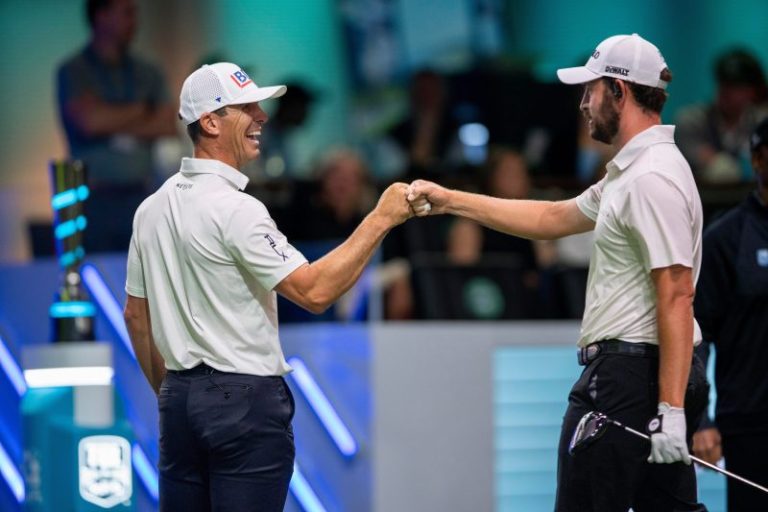
There are three types of sports fans out there. Those who enjoy the TGL, those who don’t and those who have never heard of it.

TGL, or Tomorrow’s Golf League, just wrapped up its inaugural season with Atlanta Drive GC capturing the first SoFi Cup. The indoor golf league, founded in part by Tiger Woods and Rory McIlroy, combines simulator play with live-action chipping and putting. Players tee off and take fairway shots that are tracked and launched into a simulator environment before they head to a rotating green that adjusts slopes based on the hole.

The first season was, in large part, a mixed bag. There were issues with the technology as well as a midseason rule change, but there was also a great deal of entertainment and drama to watch.

Let’s break down the winners and losers of TGL’s inaugural season:

Loser: The broadcast

The ESPN broadcast never found its identity and was, at times, hard to watch. That had nothing to do with the product, but instead, the issues lay with the often cringy and forced input from play-by-play man Matt Barrie and in-arena reporter Marty Smith.

Monday’s Match 1 of the Finals was a prime example. Smith gave us a candidate for awkward interview of the year when he asked New York Golf Club’s Matt Fitzpatrick, who was a healthy scratch, “What is more nerve-wracking, watching these guys try to win a championship or winning a major championship?”

Seriously, Marty? We hope you were kidding. Let’s not pretend TGL is anything like the U.S. Open, which Fitzpatrick won in 2022. Yes, TGL is competitive and there is money at stake but it’s more show and entertainment than serious sporting fare — and that’s something we all need to understand for the product to work. ESPN trying to convince the audience that it’s watching serious golf only works to alienate those who know the difference.

OK, but what worked on the broadcast? Hot mics. It was great to listen live to players’ reactions to shots as well as real-time discussion of Hammer strategy, etc. Let’s keep that going in 2026.

Winner: Lovers of fun

If you don’t see the potential in the TGL product, you either don’t like golf or don’t like fun. Granted there were a lot of issues in the inaugural season, but the ceiling for TGL is undoubtedly high. They found an effective way to integrate technology with live action, creating a hybrid sport with seemingly limitless possibilities.

I mean, we’re hitting golf balls over pools of lava here. It’s not The Masters, and it’s not supposed to be. It’s fun and whimsical but still competitive and dramatic. The players who embraced the uniqueness of the product and weren’t afraid to put on a show shone brightly.

TGL needs to lean more into the fun in 2026. Embrace it!

Loser: Overtime rules

The overtime format is not good. A closest-to-the-pin contest to determine a match is not nearly exciting enough. TGL (and ESPN) will defend this by saying it is their version of penalty kicks in soccer, but that doesn’t ring true. If they really wanted to go that route, we should be putting.

My solution: If a match is tied after 15 holes, have the rotating green create random configurations ― from among the holes they previously played in the match ― for players to attempt 20-foot putts in a shootout format. Teams choose the order of putters. Player 1 from Team 1 putts, then Player 1 from Team 2. All three players putt in a three-round shootout — or putt-out, if you will. If it is still tied after all three players have putted, teams can then send whichever player(s) they want until a winner is decided (think T.J. Oshie at the Sochi Olympics).

Why is this better? The match should end with either a ball going in the hole or missing the hole. It’s that simple. It’s the same dramatic recipe that works for penalty kicks in soccer and shootouts in hockey.

Winner: Hammer strategy

The midseason change to the Hammer rule was a huge win for TGL. For those who aren’t familiar, each team starts a match with three Hammers. A team can throw a Hammer before any shot, as long as the opposing player isn’t already standing over the ball. The opposing team then has a choice. If they accept the Hammer, the hole is worth 2 points instead of 1. If they decline, the hole is then conceded to the Hammer-throwing team and 1 point is awarded. If a Hammer is thrown before an opening tee shot, it must be accepted.

This injects a metric ton of strategy and gamesmanship into the match, and it was interesting to see some dueling philosophies on how Hammers should be deployed. Some teams opted to use them when in an overwhelmingly favorable position, such as after hitting a tee shot within 5 feet of the hole while their opponent found the greenside bunker.

Others thought this was a waste since it would typically result in a declined Hammer and only 1 point awarded when the Hammer-throwing team would have almost certainly won the hole anyway. Another strategy was saving Hammers for a potential comeback if a team was trailing by multiple points late in the match. Another was throwing a Hammer before an opponent’s high-stress put for added pressure.

Whichever strategy you like best, there’s no denying it spices up the match.

Loser: Hammer rules

There is still one major issue with the Hammer. While I generally like the constant presence of strategy and the ability to keep a match within reach, there is one fatal flaw with the system.

As a viewer, a team declining the Hammer is the absolute worst. It can be understandable from a strategy perspective, but it feels so deflating when a team concedes the hole after a Hammer is thrown. You can feel the air leave the arena. It is anticlimactic and frankly disappointing. We wanted to see what would happen! We need more action and drama, not less.

A possible solution: Make it so teams cannot decline Hammers, but with a scoring shift. If the Hammer-throwing team wins the hole, they get 2 points. But if the other team wins, they ‘Flip the Hammer’ and get 3 points. The only downside here is the possibility of teams using their Hammers to snowball leads on their opponent, who can’t decline them. In that case, let’s make pre-tee shot Hammers worth 3 points regardless, to keep comeback hopes alive.

Winner: The players (some of them)

I say some of them because TGL brought out the excited side in some guys (Billy Horschel, Tom Kim) and the seemingly uninterested in others (Lucas Glover, Cameron Young). The product needs lively personalities to thrive. With all due respect to Patrick Cantlay ― he’s actually my pick to win The Masters next month — the stoic guys just aren’t bringing enough energy to the match.

We need more personalities like Justin Thomas, Shane Lowry and Min Woo Lee (aka Dr. Chipinski). They are clearly having a great time playing to the crowd and living and dying with every shot. If you’re not fist-pumping a 30-foot putt, don’t let the door hit you on the way out. Fist-pumping should be mandatory.

TGL is letting golf fans get a look at some entertaining personalities we typically don’t see on the buttoned-up PGA Tour, and we need more of that.

Loser: Player diversity

It’s a no-brainer for the TGL to add some LPGA players and other individuals whose personalities would gel with the product. Nelly Korda and Tiger Woods competing on the same putting green? That’s worth the price of admission. Atlanta Drive owner Arthur Blank has said they’re open to adding top female players, which is good. It’s the perfect environment for cross-gender competition.

And then there’s the LIV question. Let’s be honest: Bryson DeChambeau would be perfect for TGL. He’s great on camera and, if we’re telling the truth, TGL really isn’t that different from YouTube golf. TGL needs players who are there to have a good time and be entertaining while playing golf. That’s DeChambeau to a tee. Have things smoothed enough between LIV and the PGA Tour to make this happen?

The good news: TGL expansion is happening sooner rather than later, according to a report from The Palm Beach Post. Let’s do it!

Other thoughts

Teams routinely concede putts within 10 feet to their opponent. That needs to stop. The pace of play is good enough to let them putt it out.
Genuine question: Can we put the players on an incline or decline depending on where they’re playing the ball? If the tee shot winds up on a downhill lie, can we manipulate the in-arena shot area to match the slope so the player is now hitting the second shot below their feet?
On that note, why don’t we have wind factors that change from hole to hole (for simulator shots)? Maybe it’s the Wii Sports aficionado in me, but this seems like a pretty easy addition that would add some difficulty.
More holes will almost certainly be added for 2026, which is good. While I was generally in favor of how the holes were configured, we lacked variety down the stretch this season.
The TGL Final should be one match, not a best-of-three played over multiple days. We don’t need to drag it out. Give us 15 holes for the championship and call it a season.
A final note on the broadcast: Let’s get Jupiter Links’ Kevin Kisner out of the arena and into the booth. His performances at SoFi Center this season were, to put it nicely, pedestrian. But he was great on the hot mic and would help the broadcast as an analyst who understands what TGL is trying to do.
This is a smaller thing, but team identities feel awkward when all the matches are played at the same venue in Florida. I understand the limitations — and I’m sure this was done to attract investors and team owners ― but I can’t help but feel the ‘Boston vs. New York’ angles feel disingenuous.

This post appeared first on USA TODAY

The All-American alum officially came home last week, an announcement more about reminiscing than restructuring. 

But don’t get it twisted. 

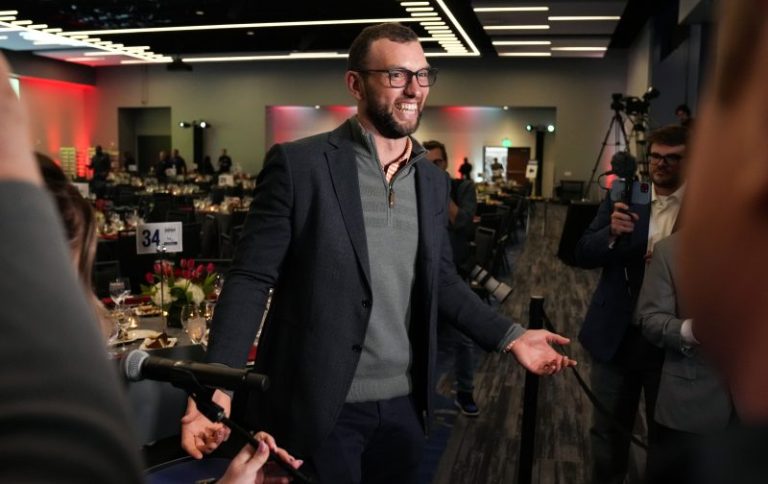
After more than 30 years in the NFL, Ron Rivera is the new general manager at his beloved alma mater California for the same reason Stanford named retired NFL legend and Cardinal alum Andrew Luck in November as its general manager.

These two bastions of academia, left for dead after the fall of the Pac-12 and the reorganization at the Big Ten and Pac-12, may finally be serious about football.

With so much on the line in this ever-changing new frontier, we’re about to see just how committed the lovable eggheads are to embracing big boy football. 

“Just because I’m here doesn’t mean anything,” Rivera said last week when he was named Cal’s first general manager. “The thing that means, is we’ve got work to do.”

It starts with personnel and coaching decisions, it ends with the all-encompassing heavy lift of financial commitment. Both are critical to the process, and work off each other.

Rivera has a coach (Justin Wilcox) who hasn’t had a winning season since 2019. Luck just fired coach Troy Taylor, who won six games in two seasons and was twice investigated by the university for, among other things, bullying and belittling female staffers. 

If you think Rivera and Luck don’t have to power to push drastic change, take a glance at the org chart. Rivera reports to the California chancellor, not the athletic director. Luck reports to the Stanford president, not the former athletic director, current interim athletic director or anyone else who will be hired permanently. 

The magnitude of the Rivera and Luck hires and their power is striking, and the reverberations they send throughout athletic departments all over college sports can’t be denied. A new level of hierarchy has been implemented, and it’s already playing out with the firing of Taylor.

But that hierarchy still begins and ends at the chancellor and presidential level. It’s easy to talk about change and demanding excellence, and declaring nothing is off the table when it comes to football — the front porch of every athletic department. 

If Cal and Stanford truly want to win big in the new era of college football, if they want to rise to the top of a winnable Power conference and be a fixture in the tournament postseason, it’s going to take money. 

Not the scraps they’ve been given by the ACC, so the ACC could remain a viable power conference and Stanford and Cal could remain at the adult table. But real, tangible financial support from the billions in endowments at each school.

Who needs the Big Ten and their fat media rights deal when you’re sitting on a mountain of generational money, the likes of which the Big Ten dreams about?  

The Stanford endowment, according to the school, is worth $37.6 billion as of August 2024, and the California endowment is worth $29.5 billion as of June 2024. Each can be used, in part, for collegiate athletics.

To put that in perspective, Cal and Stanford each receive $25 million annually from the ACC media rights deal, while Big Ten schools receive double that. But under the terms of the new shared revenue plan with players for FBS schools beginning July 1, every school works within the same salary pool. 

In other words, all FBS schools who choose to participate in revenue sharing have an estimated $20 million-$23 million cap (the total number is still being ironed out). The only way to move beyond the cap legally is with private NIL deals.

You want to compete with Ohio State and Michigan, and Georgia and Texas? Open that endowment wallet to fund the revenue share pool, and allow cash earmarked from boosters for other purposes to move directly to NIL deals. 

Tailgates at The Farm and Strawberry Canyon suddenly go from wine and cheese to bourbon and barbecue. 

Now you’re competing, now you have a legitimate chance to change the way each university thinks about football. Now you’re just as dangerous recruiting high school prospects, and talent in the transfer portal, as any Big Ten or SEC school.

Money is the great equalizer. There is no louder voice in the room.

All it takes is the right coach to pull it all together. Like, I don’t know, Jim Harbaugh. Or Jeff Tedford. 

Get those rare coaches who fit, who embrace the campuses and all they stand for, give them financial backing and tell them to go win championships. Then watch it unfold.

“This is the No.1 public institution in the world,” Rivera said. “We exude excellence academically. Why can’t we do it athletically?”

Open the endowments, and let Rivera and Luck cook.

Then become more than the lovable eggheads.

Matt Hayes is the senior national college football writer for USA TODAY Sports Network. Follow him on X at @MattHayesCFB.

This post appeared first on USA TODAY

This story was updated with new information

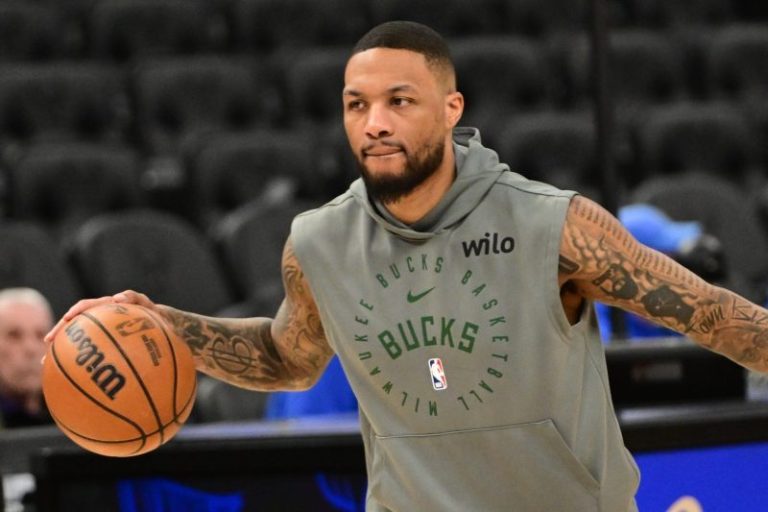
Damian Lillard will miss time for the Milwaukee Bucks, less than a month before the NBA playoffs begin.

He was listed as out on the team’s injury report for Wednesday’s game against the Denver Nuggets with a right calf strain in the early afternoon.

Lillard was later diagnosed with deep vein thrombosis (a blood clot) in his right calf, the Bucks announced Tuesday night. A timetable for a possible return this season has not been reported.

The veteran guard is ‘on blood-thinning medication, which has stabilized the DVT,’ the Bucks said.

Lillard will continue with regular testing.

‘Damian’s health is our No. 1 priority,’ Bucks GM Jon Horst said in the team’s statement. ‘We will support him as he moves through this weekly process of strict criteria to ensure that it is safe for him to return to play.

‘Doctors have indicated that his situation is very unlikely to occur again. We are thankful that this was identified and medicated quickly, which helps with the recovery.’

The Bucks are fifth in the Eastern Conference standings with a 40-31 record as of Tuesday evening.

Damian Lillard shares reaction

“It’s unfortunate that something outside of my control would come up,” Lillard said. “Along with the Bucks’ medical staff, our priorities are to protect my health and safety.

‘As much as I love basketball, I need to be there for my kids and my family. I’m grateful the Bucks acted quickly on this. They’ve been supportive and proactive throughout this process. I look forward to moving past this and continuing my career.”

What is deep vein thrombosis?

DVT can cause pain or swelling in the leg, but sometimes, there may not be any noticeable symptoms present.

The main cause for DVT is damage to a vein from surgery or inflammation and damage caused by infection or injury.

What other NBA players have had deep vein thrombosis?

This post appeared first on USA TODAY