Archive

2025

Browsing

Duke enters Final Four as a worthy favorite, but how can you ignore Houston’s experience, defense and grit? Beware the upset!
March Madness delivered less madness, but that gives way to what could be epic Final Four.
Rick Barnes will retain spot on one particular college basketball Mount Rushmore, but either Kelvin Sampson or Bruce Pearl could be preparing for an exit off list.

Auburn, Florida, Houston and Duke proved better than their peers throughout the regular season. They earned uncontroversial No. 1 seeds.

Once March Madness begins, it operates under no duty to respect regular-season results.

This became one of those rare tournaments, though, in which the nation’s four best teams turned back Cinderella, tamed the madness and supplied a Final Four that will be a two-round showcase of the nation’s elite.

All four No. 1 seeds advanced to the Final Four for just the second time in tournament history. With apology to the defeated underdogs, I relish these matchups that offer the foundation for an epic Final Four, following a somewhat mundane tournament – at least by March Madness’ riveting standards.

Here are five burning thoughts and predictions before the Final Four begins Saturday in San Antonio:

SEC lives up to its reputation during March Madness

After the SEC qualified an NCAA-record 14 teams, the tournament would help settle the debate of whether the SEC delivered the greatest season ever for a conference. And while debate continues, know this: The SEC lived up to its reputation for being far and away the best conference this season, if not all-time.

The SEC started shakily, but after cutting loose six teams before the second round, the SEC’s cream rose to the top and proved mighty sweet. By comparison, the Big Ten went 8-0 in the first round, then faded badly before the home stretch. Big Ten teams finished 13-8, with only Michigan State reaching the Elite Eight and none making the Final Four.

In defense of the Big Ten, it could have been much worse. (See the Big East for details.)

The SEC takes a 21-12 record into the Final Four. Never mind the losses. After qualifying 14 teams, it became guaranteed the SEC would produce a minimum of 13 losses.

The SEC accounted for seven Sweet 16 spots, then supplied half of the Elite Eight and half of the Final Four. That’s success.

The tournament performance elevates the SEC past the 2011 Big East, which earned 11 NCAA bids but produced a modest 13-10 record, although UConn won the national championship.

So, the SEC becomes the conference GOAT?

Well, the 1985 Big East still deserves a loud word in this conversation. It qualified six of nine teams for the inaugural 64-team tournament, then dominated the event. The ’85 Big East remains the only conference to supply three Final Four teams, and No. 8 Villanova beat No. 1 Georgetown in the national championship. The Big East supplied an 18-5 record in that tournament.

At the very least, this tournament cemented that the SEC deserves a seat at a small table honoring the best seasons ever by a conference – and perhaps the head seat at that table.

A certain Mount Rushmore might soon require an update

Before the tournament tipped, I honored Gonzaga’s Mark Few, Houston’s Kelvin Sampson, Auburn’s Bruce Pearl and Tennessee’s Rick Barnes on my Mount Rushmore of best active coaches without a national championship.

This will not rank as one of Few’s best teams, and Gonzaga bowed out the second round.

Barnes delivered another solid season, a lofty NCAA seed, and a tournament in which his Vols couldn’t supply an NCAA Tournament upset to reach an elusive Final Four. Consider that the Barnes special.

The Vols underachieved in March Madness under Barnes from 2018-23, before back-to-back Elite Eight finishes in which they played to their No. 2 seeding.

Houston outplayed Tennessee from start to finish Sunday. Barnes has only once ever beaten a better-seeded team in the NCAA Tournament, back in 2002 at Texas, when his sixth-seeded Longhorns upset No. 3 Mississippi State to reach the Sweet 16.

Tennessee joins Xavier, Missouri and Brigham Young on the Mount Rushmore of best programs to never reach a Final Four, with Creighton also under consideration for that distinction.

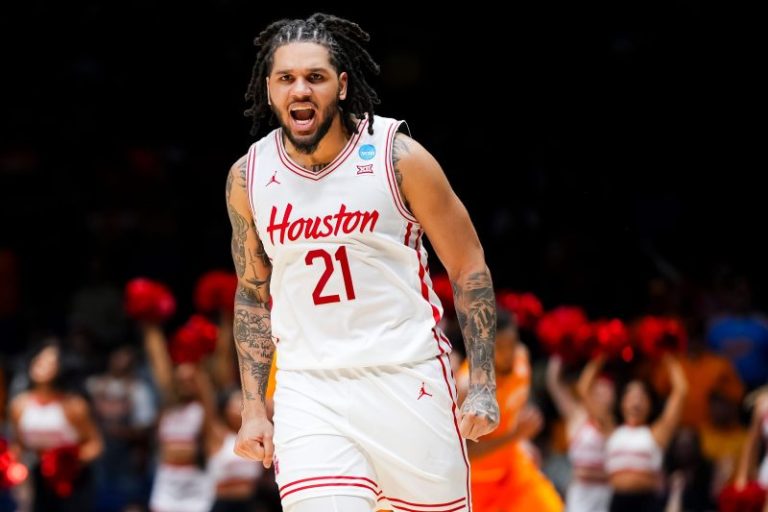
Sampson has reiterated his credentials as a linchpin member of my Mount Rushmore of best coaches without a championship. His experienced Cougars are dogged on defense and sharp shooters on offense. Sampson’s inbounds play that produced the winning basket against Purdue in the Sweet 16 provided a coaching masterclass.

Pearl has Auburn playing with the spirit of an underdog, but the talent of a frontrunner. That’s a dangerous combination.

With two members of my Mount Rushmore alive in the Final Four, Oregon’s Dana Altman might need to prepare his résumé for consideration, because I might soon need to replace Sampson or Pearl, after one hangs a championship banner.

Duke a worthy Final Four frontrunner

Oddsmakers like Duke to win the championship. If you’ve watched Duke play in this tournament, you know that’s based on more than Duke’s blue blood.

Duke keeps performing like the juggernaut analytics guru Ken Pomeroy says it is. Cooper Flagg looks the part of national player of the year. Kon Knueppel and Tyrese Proctor join Flagg to form a three-headed monster nobody’s come close to stopping.

Duke has lost just once since November. The other team with that distinction? Houston, its next opponent.

Build a balanced team to make a Final Four

It’s no secret how to make a Final Four: Build a team that can win in multiple ways, that’s comfortable winning in the 60s or the 80s. Each of these Final Four teams ranks in the top 10 nationally of Pomeroy’s metrics for both offensive and defensive efficiency.

By comparison, the teams that lost in the Elite Eight were markedly better at one end of the court than the other. That showed when the competition ratcheted up.

National championship prediction: Houston beats Florida

I predicted this outcome on Selection Sunday, and I’m not fading it now, not after how strong Houston looked while smashing Tennessee. I could make compelling cases for Duke, Auburn or Florida winning the crown, so why am I picking Houston?

I gravitate to experience in the NCAA Tournament, and I’m further pulled toward playmaking guards. Houston and Florida are filled with experience and shot-making guards.

Florida’s Walton Clayton Jr. is a clutch bucket waiting to happen. Nobody defends better than Houston, and the Cougars go five-deep with players who can score in double figures.

I’m tempted to flip my pick to Florida, because of how well Clayton is playing, but I’m riding with Houston’s defense, its experience and Sampson’s coaching.

Blake Toppmeyer is a columnist for the USA TODAY Network. Email him at BToppmeyer@gannett.com and follow him on X @btoppmeyer. Subscribe to read all of his columns.

This post appeared first on USA TODAY

Boston College star winger Ryan Leonard signed an entry-level contract with the Washington Capitals on Monday and will join the Eastern Conference’s top team for their playoff run.

Leonard, 20, a finalist for the Hobey Baker Award (top men’s Division I college hockey player), became available after the top-seeded Eagles were eliminated on Sunday by defending champion Denver in the second round of NCAA hockey tournament.

The Capitals are in Boston on Tuesday to face the Bruins. Leonard will wear No. 9.

The Capitals were relatively quiet at the trade deadline – adding Anthony Beauvillier – because Leonard was a possibility to join the team after his Boston College season was over.

Capitals owner Ted Leonsis called Leonard a winner.

‘Patience is a virtue and we have all watched Ryan in awe during his time at BC,’ he posted on X, formerly Twitter. ‘Shades of when Tom Wilson and John Carlson joined the Caps late in the season and for the playoffs!’

Here’s what to know about the signing of Ryan Leonard:

When was Ryan Leonard drafted?

The Capitals drafted Leonard in the first round (eighth overall) in 2023 after he had played two seasons for U.S. National Team Development Program in the United States Hockey League.

Ryan Leonard stats

Leonard played two seasons at Boston College, recording 61 goals and 48 assists in 78 games. He led NCAA Division I this season with 30 goals and nine game-winning goals.

He also won back-to-back gold medals with Team USA at the world junior hockey championship. He was captain of the most recent team and was named tournament MVP and top forward. He had 10 points in seven games, including two assists in the gold medal game.

Ryan Leonard height, weight

Ryan Leonard is 6-0, 200 pounds.

Ryan Leonard contract

He signed the standard three-year entry-level deal worth $950,000 a season with the opportunity to earn performance bonuses.

Recent Capitals moves

Washington has been busy since January, signing goalies Logan Thompson (six years, $35.1 million) and Charlie Lindgren (three years, $9 million) and defensemen Jakob Chychrun (eight years, $72 million) and Dylan McIlrath (two years, $1.6 million) to contract extensions.

This post appeared first on USA TODAY

The road to Tampa is almost complete for the marquee event of the women’s NCAA Tournament.

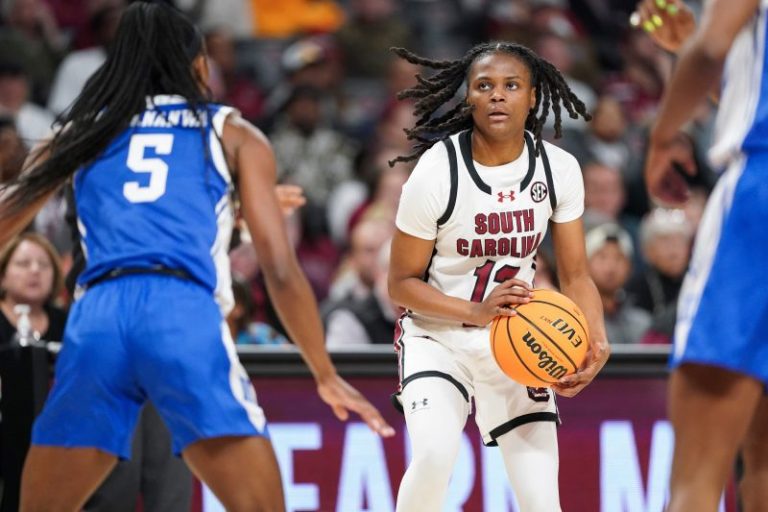
Two of the top overall seeds in the field have already locked up their spots in Tampa, Florida for the Final Four in No. 1 overall seed UCLA and defending national champion South Carolina. Dawn Staley is looking to become the first coach since UConn’s Geno Auriemma to lead a program to back-to-back national championship titles.

The two final spots in the Final Four will be clinched by the end of Monday night. First, Hailey Van Lith looks to lead No. 2 seed TCU past No. 1 seed Texas for the Horned Frogs’ first Final Four appearance. Then, Paige Bueckers looks to send No. 2 seed UConn back to the Final Four when the Huskies go up against a USC team without JuJu Watkins.

The 2025 women’s NCAA Tournament has been fairly chalky, with each of the four Elite Eight matchups featuring a No. 1, 2 or 3 seed. If Texas and USC win their Elite Eight games on Monday, it will be the fifth time in the history of the tournament that all four No. 1 seeds will make it to the Final Four.

Here’s a closer look at the 2025 Final Four, including which teams are in it, the schedule, location and how to watch:

Who’s in the women’s Final Four?

UCLA and South Carolina on Sunday punched their tickets to the Final Four of the women’s NCAA Tournament with Elite Eight victories over LSU and Duke, respectively.

The final two spots in the Final Four will be locked up on Monday between the winners of No. 1 seed USC and No. 2 seed UConn and No. 1 seed Texas and No. 2 seed TCU.

Here’s where the Final Four field stands right now:

Regional 1 Spokane: No. 1 seed UCLA
Regional 2 Birmingham: No. 1 seed South Carolina
Regional 3 Birmingham: TBD
Regional 4 Spokane: TBD

Women’s Final Four schedule

Here’s the game schedule for the 2025 women’s Final Four:

Friday, April 4

Game 1: 7 p.m. ET | ESPN | Fubo (free trial)
Game 2: 9:30 p.m. ET | ESPN | Fubo (free trial)

Watch women’s NCAA Tournament Final Four with Fubo (free trial)

Where to watch women’s Final Four

TV channel: ESPN
Streaming options: Women’s March Madness app | ESPN app | Fubo (free trial)

The Final Four of the women’s NCAA Tournament will be broadcast nationally on ESPN. Streaming options for the national semifinal doubleheader include the Women’s March Madness Live and ESPN apps (both with a TV login) and Fubo, which carries the ESPN family of networks and offers a free trial to new subscribers.

Where is women’s Final Four?

Location: Amalie Arena (Tampa, Fla.)

The 2025 women’s Final Four will be held at Amalie Arena, the home of the NHL’s Tampa Bay Lightning, in Tampa, Florida. It is the fourth time the Final Four will take place in Tampa, and the first since 2019.

This post appeared first on USA TODAY

It was 2014 and then Dallas Mavericks owner Mark Cuban made a prediction that caused waves across the sports world. Cuban said that because of the NFL’s greed, the league would implode in 10 years. He went on to use a colorful quote to make this point, a quote that is remembered to this day.

Cuban’s words resonated because, well, this was Mark Cuban. He was, and is, highly respected for his intellect and business acumen.

What Cuban said then, and now to USA TODAY Sports, is a window into the NFL’s almost confounding popularity that stretches across all parts of American society, and how that popularity doesn’t seemingly fit predictive patterns.

In other words, Cuban applied normal thought processes to the NFL, but the league would become so big, nothing normal seems to apply.

Cuban’s remarks 11 years ago were sparked then by a one-year deal with CBS and the NFL Network to air games on Thursday night. The league had been airing Thursday night games limitedly for years but this move indicated the Thursday slate was becoming a permanent fixture.

‘They’re trying to take over every night of TV,’ Cuban said in 2014. ‘Initially, it’ll be, ‘Yeah, they’re the biggest-rating thing that there is.’ OK, Thursday, that’s great, regardless of whether it impacts (the NBA) during that period when we cross over. Then if it gets Saturday, now you’re impacting colleges. Now it’s on four days a week.

‘It’s all football. At some point, the people get sick of it.’

But that wasn’t the juicy quote. It was this:

‘I think the NFL is 10 years away from an implosion. I’m just telling you: Pigs get fat, hogs get slaughtered. And they’re getting hoggy.

‘Just watch. Pigs get fat, hogs get slaughtered. When you try to take it too far, people turn the other way. I’m just telling you, when you’ve got a good thing and you get greedy, it always, always, always, always, always turns on you. That’s rule No. 1 of business.’

Cuban compared the NFL then to ‘Who Wants to Be a Millionaire’ after the game show’s rating declined following its expansion to five days a week.

‘They put it on every night,’ Cuban said. ‘Not 100 percent analogous, but they handled it the same. I’m just telling you, pigs get fat, hogs get slaughtered.’

Cuban wasn’t alone in this prediction. I thought the same at several points over the past decade. Heck, I wrote a book on the possibility. There were people inside the league office then who expressed similar concerns about the NFL being too present on television. They didn’t think the league would crater but there were concerns about saturation.

Give Cuban a ton of credit for being willing to look back at his own words. He didn’t run from it.

So what does Cuban think happened? Why was his prediction wrong? He explained in an email to USA TODAY Sports.

‘I thought that they would saturate every night of the week and that would destabilize their partners,’ Cuban said. ‘There is still uncertainty when your biggest revenue source is legacy media, but without question they are the number one viewing option.’

Again, makes sense. Normally, there is such a thing as too much of something. That just doesn’t seem to be the case (for now) with the NFL.

‘The other thing I didn’t realize then,’ Cuban said, ‘is that it seems like there is an inverse relationship between the actual amount of playing time a sport has and their TV ratings.’

He was asked to explain further.

‘There is only about 15 minutes of actual playing time in a college or NFL football game,’ Cuban said. ‘The rest is down time. The more downtime, the better the ratings. The less, the worse. Look at any sport.’

He added: ‘Baseball shortened the game and ratings went up. (NBA Commissioner) Adam (Silver) wants to discuss shortening NBA games. College (basketball) games are 40 minutes and they can often outrate NBA games.’

Yes, 11 years ago, Cuban was wrong.

But so were others. Meanwhile, the NFL keeps dominating.

This post appeared first on USA TODAY

BOSTON — The 2025 world figure skating championships in Boston have come to a close, and they couldn’t have gone much better for the hosts.

Team USA won world titles in three of the four disciplines − men’s singles, women’s singles and ice dance − and seemed to clearly enjoy having home-ice advantage at what were the first world championships held on U.S. soil since 2016. The crowds at TD Garden were strong, and there were plenty of U.S. skaters who had stellar performances even if they didn’t land on the podium.

Now, of course, the focus will start to shift to the 2026 Winter Olympics in Milan-Cortina. Many of the skaters at worlds said they’ve already started to think about their music for next winter or otherwise begin their preparation for the Games.

And so, as the world championships end and figure skating’s offseason nears, here are six takeaways from the past week − and what they mean for Milan-Cortina.

It’s hard to see anyone beating Ilia Malinin

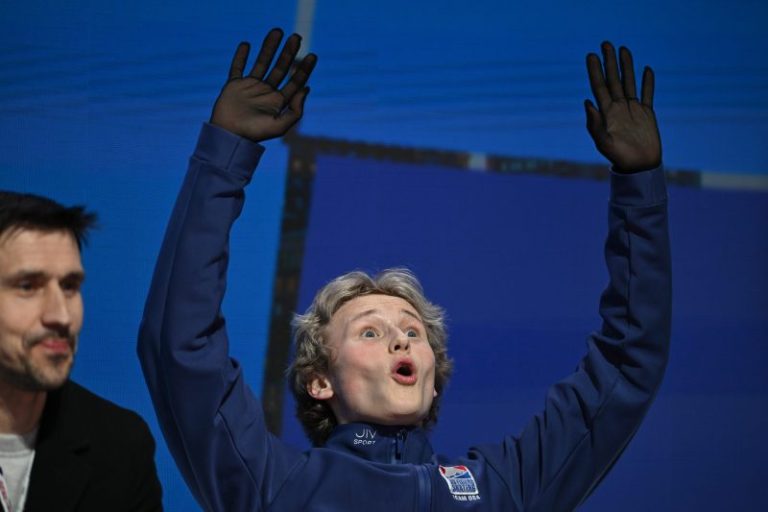
Ilia Malinin won his second consecutive world championship by a 31-point margin. From a technical standpoint, he is truly in a class by himself. It’s not just that the 20-year-old is the only person on Earth who can land a quad axel. It’s also the number of quads and combinations that he weaves into his free skate, which give him a massive point advantage over the field before he ever steps onto the ice.

Malinin’s goal is to land seven quads in a free skate. On Saturday, he did ‘only’ six − but that was still two more than anyone else. And looking purely at the base values for Malinin’s two programs last week, he had a cushion of about 13 points over the rest of the field. That means that, all else being equal, he could’ve fallen twice and still won. Malinin just has such a large cushion in difficulty that it’s hard to see anyone beating him in Milan.

The quads are only going to get bigger

In 1999, Timothy Goebel became the first skater in history to land three quadruple jumps in the same program. On Saturday night alone, five men matched that feat − including Malinin, who hit six quads. Reigning Olympic gold medalist Nathan Chen said this isn’t exactly surprising. The only surprising thing, he said, is how quickly the quad figures are going up.

‘If you look at the way the point system is structured, if you throw down big jumps and land them, you get big points,’ he said.

Chen was the first skater to land five quads in a program, as well as the first to hit six. Malinin has set a goal of seven, but it feels like the technical expansion isn’t going to stop there. Could we see another skater, maybe world silver medalist Mikhail Shaidorov, try for six quads to narrow the gap with Malinin in Milan? How long will it be until Malinin starts going for eight? And will we see quads, likely from Russia, on the women’s side too?

Alysa Liu has a legit shot at an individual Olympic medal

If there was a revelatory performance at worlds, it was probably Alysa Liu’s. Her journey from retiring at 16 to winning a world championship at 19 is a remarkable story, but this isn’t just a feel-good one-off. She has a very realistic shot at making the Olympic podium in women’s singles. It’s a feat no American woman has achieved since Sasha Cohen at the 2006 Games, which were also held in Italy less than a year after Liu was born.

Liu’s carefree post-retirement mindset is the sort of approach that can help insulate a skater from the noise and pressure of the Olympic cycle. The Japanese women proved once again at worlds that they will be in the mix. As will Russia’s lone entry. As will the other two American women who make the Olympic team, likely Amber Glenn and Isabeau Levito. But at this point, Liu has to feel good about her chances.

The Olympic team event could be a two-country race

Since the introduction of the team figure skating competition at the Winter Olympics in 2014, there have generally been only five countries jockeying for podium spots: Canada, Italy, Japan, Russia and the U.S. But in 2026, it might just be Japan and the U.S. who have a real shot at gold.

While Russian skaters will have a path to compete as neutrals in Milan (more on that later), the country will be barred from team competition under the International Skating Union’s current rules. Canada and Italy, meanwhile, each showed some glaring weaknesses at this week’s world championships. Nothing is certain, of course. One of the most overused cliches in skating is that ice is slippery, and anything can happen. But it would hardly be a shock if Japan and the U.S. are going head-to-head for team gold 10 months from now.

The U.S. ice dance pipeline is as strong as ever

After their free dance, Chock and Bates credited the teams of Tanith White/Ben Agosto and Meryl Davis/Charlie White for laying the foundation for their success. The fifth-place finishers, Christina Carreira and Anthony Ponomarenko, are coached by former U.S. Olympic ice dancer Madison Hubbell, among others. And the ninth-place finishers, Caroline Green and Michael Parsons, are coached by the Whites − and, at least recently, ex-U.S. ice dancer Jean-Luc Baker.

It all points to a strong pipeline that should keep the U.S. on the podium in ice dance long after 2026, which is expected to be Chock and Bates’ final season of competition.

Don’t forget about Russia

Russia was not at the world championships and has been barred from international figure skating for nearly three years, so it’s easy to forget about them as the Olympics near. But the ISU has announced that the country will be permitted to enter one skater or team in each of the four disciplines at a qualifying event in Beijing this fall. And, given the country’s figure skating pedigree, they seem almost certain to qualify in all four events.

There is often a little bit of intrigue around the Russian contingent, as there was in 2022 with Kamila Valieva. But that intrigue will only be amplified in 2026, given the lack of international opportunities to see the Russians’ top skaters. Even with just a handful of participants, the Russians − er, I mean Individual Neutral Athletes − will certainly make some noise in Milan. It’s not such much a question of whether they reach the podium as it is where they place and in which event(s).

Contact Tom Schad at tschad@usatoday.com or on social media @tomschad.bsky.social.

This post appeared first on USA TODAY

Correction: A previous version of this story had the incorrect winner of the game between Auburn and Florida.

The stage is set for the Final Four of the NCAA men’s tournament in San Antonio, Texas.

This year’s national semifinals will feature a star-studded cast — and a chalky, historic one at that. For just the first time since 2008 and just the second time in NCAA Tournament history, the Final Four will be all No. 1 seeds: Florida, Duke, Houston and Auburn.

In Saturday’s first game, Florida will face Auburn for the second time this season. The Gators took the regular-season meeting, winning 90-81 in early February. It’ll be the Blue Devils and Cougars in the second matchup.

The Gators booked their spot with a memorable Elite Eight comeback against No. 3 Texas Tech. Duke was dominant in shutting down No. 2 Alabama’s top-ranked offense. Houston bullied No. 2 Tennessee and Auburn pulled away from No. 2 Michigan State.

It was a bittersweet second weekend for the SEC, which had visions of sending four teams to the Alamodome but will settle instead for only half the field. This is the fifth time the conference has put multiple teams into the Final Four.

The biggest winner of the weekend has to be the Blue Devils, who are the team to beat after bulldozing through the East region to reach the semifinals for the first time under third-year coach Jon Scheyer.

Duke and the SEC lead the tournament winners and losers heading into the Final Four:

Winners

Duke

The Blue Devils’ 85-65 win against Alabama was a defensive masterclass. After setting a tournament record with 25 makes from behind the arc in the Sweet 16 against No. 6 Brigham Young, the Crimson Tide went just 8 of 32 from 3-point range against Duke, which was superb at closing out on defenders around the perimeter. This performance offset a less-than-stellar game from the Duke offense, which was bogged down behind an uncharacteristically weak game from freshman forward Cooper Flagg. After putting on a clinic in the Sweet 16 against No. 4 Arizona, Flagg finished with just 16 points on 6 of 16 shooting. But teammates such as freshman guard Kon Knueppel stepped up to erase the sour taste of last year’s Elite Eight upset against North Carolina State. Even when not at their best, the Blue Devils resemble a powerhouse — and that has to be an intimidating thought for the rest of the Final Four to consider.

Jon Scheyer

The former Duke guard and Mike Krzyzewski assistant has delivered in the wake of a coaching legend unlike few in the history of the sport. The way this year’s roster was constructed speaks to Scheyer’s grasp of how to build a winner in college basketball’s current environment: The Blue Devils have combined a transcendent freshman class with key veteran transfers such as Mason Gillis, Sion James and Maliq Brown. This blend has Duke surging into the Final Four.

The SEC

That the Volunteers and Tide couldn’t get through the Elite Eight doesn’t change the fact that the SEC is not only the best conference in college basketball this season – that’s been settled for months – but one of the most dominant single-season leagues in NCAA history. Yeah, getting even three teams into the Final Four would’ve felt like a coronation; that’s something only one conference, the Big East in 1985 has ever achieved. Still, to have multiple SEC teams in the semifinals is a fitting way to end this season.

Houston

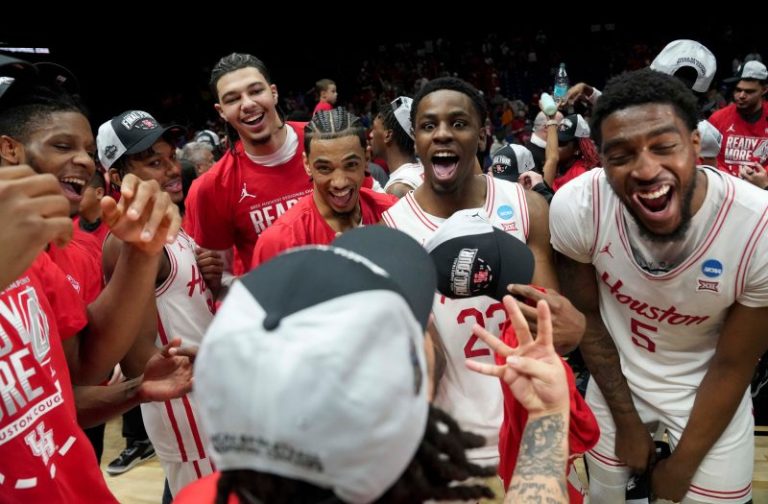
It wasn’t the easiest road to the Elite Eight for the Big 12 regular-season and tournament champions. The Cougars struggled to put away No. 8 Gonzaga in the second round, winning 81-76 after the Bulldogs missed the potential game-tying 3-pointer with three seconds left, and then needed a bucket off an inbounds play with under a second remaining to beat No. 4 Purdue 62-60. But things came much, much easier in the Elite Eight against Tennessee. Houston’s defense delivered once again by limiting the Volunteers to just 15 points in the first half and 28.8% shooting overall to win 69-50 and reach the Final Four for the second time under coach Kelvin Sampson.

Auburn

It seems like all good news for the tournament’s top-overall seed. After surviving a stiff test in the Sweet 16 from No. 5 Michigan to win 78-65, Auburn held off the Spartans’ late offensive surge and pulled out a 70-64 win. That sends coach Bruce Pearl and the Tigers back to the Final Four for the first time since 2019 and second time overall. Auburn also seems to have dodged a bullet after star forward Johni Broome suffered an apparent arm injury with 10:37 to play. After being taken into the locker room for observation, Broome checked back in at the 5:29 mark and immediately pulled down a rebound and made a 3-pointer to push Auburn’s lead to 60-48. He finished with a game-high 25 points and 14 rebounds. Broome makes Auburn go; taking him out of the equation in San Antonio would’ve drastically cut down on the Tigers’ chances of winning the first championship in program history.

Losers

Texas Tech

The Red Raiders rode the tournament rollercoaster: Two days after shocking No. 10 Arkansas by climbing out of a 16-point hole and then winning in overtime to reach the Elite Eight, Texas Tech coughed up a 75-66 lead with three minutes to play and lost 84-79 to the Gators. Walter Clayton Jr. and Thomas Haugh combined for 50 points for Florida, including multiple key makes down the stretch, as Tech failed to seal the deal and reach the second Final Four in program history.

The Big Ten

With Michigan State losing to Auburn, the Big Ten will fail to put a team in the semifinals for the fourth time in the past five tournaments. That’s part of an even larger drought that hangs over the league: No team from the Big Ten has won the national championship since the Spartans in 2000. Another three teams failed to advance past the Sweet 16 in Purdue, Michigan and No. 4 Maryland, which fell 87-71 to Florida.

Rick Barnes

For the second year in a row, Tennessee’s season ended in the regional final. Yes, this is a trend under coach Rick Barnes, who made the Final Four at Texas in 2003 but has gone 0-4 in the Elite Eight since. While Barnes’ work at Tennessee has been terrific overall — he’s steadily built the program into an annual championship contender — Sunday’s loss to the Cougars might be the most painful of his tenure in Knoxville. The Volunteers missed their first 14 attempts from deep, trailed by as many as 22 points in the first half, scored just three fastbreak points and were outscored 30-14 in the paint.

This post appeared first on USA TODAY

The Pittsburgh Steelers’ courtship of quarterback Aaron Rodgers continued over the weekend.

NFL Network’s Mike Garafolo reported Monday morning that Rodgers had a throwing session with new Steelers wide receiver DK Metcalf at UCLA in recent days.

Pittsburgh acquired Metcalf in a trade with the Seahawks earlier in the offseason, adding another pass-catching weapon to its offense to pair with fellow receiver George Pickens and tight end Pat Freiermuth. He’s already putting in the work to recruit his new team’s potential new starting quarterback.

The news broke one day after ESPN reported on the current state of the Steelers’ pursuit of Aaron Rodgers.

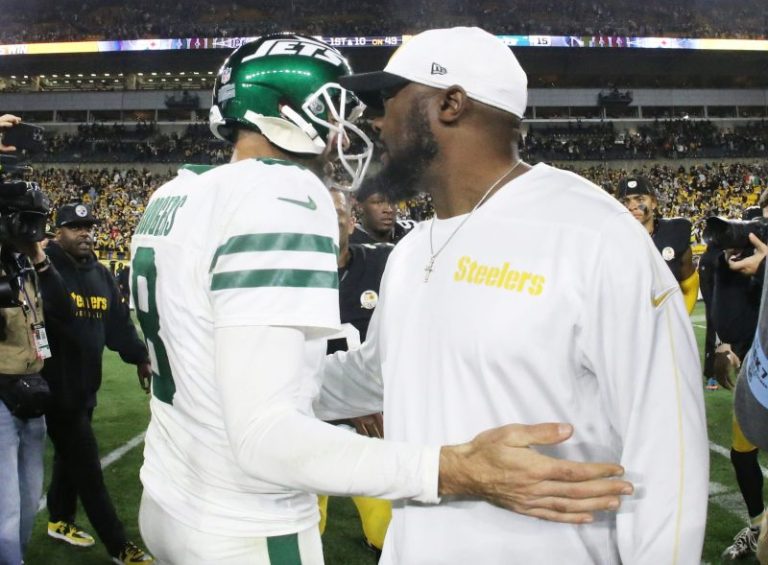
Head coach Mike Tomlin told reporters at the annual league meetings that the team is ‘still evaluating the acquisition of a guy at the position, whether it’s free agency and/or the draft, and so we’re doing our due diligence communicating with some free agents.’

Tomlin also shared that Pittsburgh is remaining patient with Rodgers and giving him time to make a decision.

‘I don’t know that we’ve approached it from a deadline perspective,’ he said. ‘Certainly, as I mentioned, you’d like to have settled circumstances, but deadlines don’t often bring that to a head.’

Rodgers spent nearly six hours at the Steelers’ team facility on March 21, though he ultimately left the building without signing a new contract.

Pittsburgh retained none of their three quarterbacks from the 2024 season. Russell Wilson (Giants), Justin Fields (Jets) and Kyle Allen (Lions) all signed elsewhere after hitting free agency this offseason.

At the time of writing, the Steelers have two quarterbacks on their depth chart: Mason Rudolph, whom the team signed to a two-year deal earlier this month, and Skylar Thompson, who received a reserve/future contract from the Steelers in January.

This post appeared first on USA TODAY

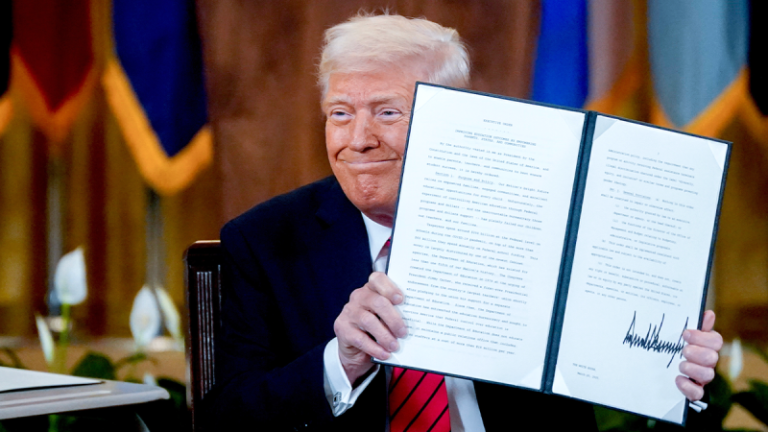
President Donald Trump is expected to sign an executive order to protect Americans from ‘exploitive ticket scalping’ in the concert and entertainment industry, Fox News Digital has learned. 

The president’s executive order will direct the Federal Trade Commission to work with the attorney general to ensure that competition laws are enforced in the concert and entertainment industry. 

The order will also enforce the Better Online Ticket Sales (BOTS) act and promote its enforcement by state consumer protection authorities. 

The president’s order will also ensure price transparency at all stages of the ticket-purchasing process, including through the secondary ticketing market; and will evaluate, and, if appropriate, take enforcement action to prevent ‘unfair, deceptive, and anti-competitive conduct’ in the secondary ticketing market.

The president’s order will also direct the attorney general and Treasury secretary to ensure that ticket scalpers are operating in full compliance with the Internal Revenue Code and other laws. 

Under the order, the Treasury Department, DOJ, and the FTC will also deliver a report within 180 days summarizing the actions taken to address the issue of unfair practices in live concert and entertainment industry and will recommend additional regulations or legislation needed to protect consumers. 

The order comes after President Trump, on the campaign trail, vowed to work to combat high ticket prices. While campaigning, the president described the current system where fans are priced out as ‘very unfortunate.’ 

A White House official told Fox News Digital that the president is ‘committed to making arts and entertainment that enrich Americans’ lives as accessible as possible.’ 

The official said that America’s live concert and entertainment industry has a total nationwide economic impact of $132.6 billion and supports 913,000 jobs. 

‘But it has become blighted by unscrupulous middle-men who impose egregious fees on fans with no benefit to artists,’ a White House official said. 

‘Ticket scalpers use bots and other unfair means to acquire large quantities of face-value tickets, then re-sell them at an enormous markup on the secondary market, price-gouging consumers and depriving fans of the opportunity to see their favorite artists without incurring extraordinary expenses,’ a White House official said. ‘By some reports, fans have paid as much as 70 times the face value of a ticket price to obtain a ticket.’ 

The official added that when this occurs, the artists ‘do not receive any additional profit—it goes solely to the scalper and the ticketing agency.’ 
This is a developing story. Please check back for updates. 
 

This post appeared first on FOX NEWS

President Donald Trump on Monday touted the success of the U.S.’s two-week-long offensive against the Houthis in Yemen and issued a clear message: ‘Stop shooting at U.S. ships, and we will stop shooting at you.’

The Trump administration launched its operations earlier this month after the Houthi terrorist group once again renewed its threats against Israeli vessels earlier this month after Jerusalem cut off humanitarian aid headed for the Gaza Strip.

‘The Iran-backed Houthi Terrorists have been decimated by the relentless strikes over the past two weeks,’ Trump said in a post on his social media outlet Truth Social on Monday afternoon. ‘Many of their Fighters and Leaders are no longer with us.’ 

‘We hit them every day and night – Harder and harder,’ he added.

Trump said their capabilities that enable the Houthis to target shipping in the region are ‘being rapidly destroyed.’

The terrorist network, backed by Iran, began escalating its attacks on Western ships in the Red Sea following the Oct. 7, 2023, Hamas attacks on Israel. Notably, security experts have pointed out the Houthi attacks are not indiscriminate as they do not routinely target Chinese or Saudi Arabian vessels. 

Trump also issued a message to Iran on Monday and warned if the attacks do not stop, Washington will come for Tehran next. 

‘Our attacks will continue until they are no longer a threat to Freedom of Navigation,’ Trump said. ‘Otherwise, we have only just begun, and the real pain is yet to come, for both the Houthis and their sponsors in Iran.’

Trump has increased his threats issued against Iran in recent days, warning of direct military repercussions not only if it doesn’t stop arming terrorist networks, but if it continues with its nuclear ambitions. 

U.S. Central Command has not released an update about the Houthi leaders allegedly killed in the strikes or the most recent operations. 

According to Houthi representatives, three people were killed in an overnight strike around the Houthi-controlled capital of Sanaa — which the terrorist network has held its grip on since 2014, reported the Associated Press.

The strike, which apparently carried on into Monday morning, came just three days after the previous attack on Friday, which was reported to have been more ‘intense’ than previous aerial campaigns and was carried out over several locations in and around Sanaa.

This post appeared first on FOX NEWS

A group of influential conservatives and lawmakers is warning the Trump administration that the U.S. does not have the tactical nuclear weapons to fight China if war breaks out in the Indo-Pacific. 

A 13-minute video obtained by Fox News Digital and set for release Thursday by the Heritage Foundation argues the U.S. nuclear arsenal is outdated, with the newest weapons nearly 40 years old – about as modern as a grandpa’s vintage Corvette.

Military experts across Washington have begun gaming out the potential scenario if China invades Taiwan and the U.S. comes to the island democracy’s aid. 

The video opens by putting forth a scenario where China may launch a tactical nuclear weapon to destroy the U.S. Air Force Base at Guam, killing 3,000, in ‘an attempt to change the tide of the battle in their favor.’ 

The president wants to respond in kind by targeting a similar Chinese target with our own tactical nuclear weapon. There’s only one problem with all this: we probably couldn’t do such a mission if we tried.’ 

The video argues the U.S. has abandoned its buildup of tactical nuclear weapons, which are forceful but smaller and more targeted in their destruction than earth-shattering strategic nuclear weapons. 

Since the end of the Cold War, according to Bob Peters, strategic deterrence fellow at Heritage, the U.S. has ‘dramatically reduced the number of nuclear weapons around the world, signed multiple arms control agreements with the Soviet Union and the Russian Federation, and today has an arsenal that is roughly 85% smaller than the ones it fielded at the height of the Cold War.’

The U.S. removed naval and land-based tactical nuclear weapons from Korea in 1991 and retired the nuclear variants of the Tomahawk cruise missile that were stationed across the Pacific. 

‘We had Russia, we thought, under control with the breakup of the Soviet Union. We always thought China would be an economic threat,’ Sen. Deb Fischer, R-Neb., a top member on the Armed Services Committee, said in the clip. 

But now, China has tripled its nuclear arsenal over the past five years, and plans to go from 500 to 1,000 warheads by 2030. 

The newest nuclear weapon in the U.S. arsenal is now over 35 years old, Peters points out, and many are decades older, ‘meant to be retired and replaced in the 1980s.’ 

‘Like a 1975 Cadillac bought by our grandfather, we’ve been keeping America’s strategic deterrence on life support,’ said Peters. 

Rep. Chip Roy, R-Texas, blamed it on a decades-long focus on the Middle East, at the expense of containing threats in the Indo-Pacific region.

‘Part of this is a hangover from what I call endless wars, where, instead of having that strong deterrence, we got involved with, you know, a quarter-century of endless conflict that caused a great toll, both in terms of blood and treasure.’ 

China has not only been building up its strategic and tactical nuclear weapons, but its anti-ship nuclear capabilities and its fractional orbital bombardment systems, space-based platforms that can drop munitions, including nuclear ones, from space onto the Earth’s surface. 

‘At the same time, China’s building nuclear-capable long-range hypersonic missiles that could in time be able to deliver nuclear weapons to the American homeland with little to no notice,’ Peters warned. 

The video argues that the U.S. has too few tactical nuclear weapons when compared with China – weapons that would offer a forceful response but avoid population-decimating strategic nukes. 

‘Right now, we’re preaching about arms control but building nothing,’ the video states.  ‘We must modernize the existing strategic arsenal and replace the decades-old warheads and missiles that were meant to be retired in the 1980s and 1990s.’

‘We need a much stronger but modern Navy,’ said Roy. ‘Not built on what K Street contractors are saying they need to be, but rather, what do we actually need?’

‘The world is really watching both allies and adversaries. Is the United States going to accept decline and live in a world in which the Chinese, the Russians, perhaps the Iran regime and the North Koreans can successfully coerce the United States of America to prevent us from moving in the world on terms that benefit the American people in our prosperity and freedom?’ said Rebecca Heinrichs, senior fellow with Heritage. 

‘The United States must field the military capabilities that will convince the Chinese leadership that today is not the day to pick a fight with the United States or its allies,’ said Adm. Charles Richard, former head of U.S. Strategic Command. 

This post appeared first on FOX NEWS