Archive

2025

Browsing

Professional wrestling legend Mick Foley says he’s cutting ties with World Wrestling Entertainment over the organization’s support of Donald Trump, citing the president’s ‘incredibly cruel comments in the wake of Rob Reiner’s death’ as the ‘final straw.’

In a post on Instagram, Foley said he no longer wishes to represent ‘a company that coddles a man so seemingly void of compassion as he marches our country toward autocracy.’

As a result, Foley said he would no longer represent WWE or make any appearances for the company as long as Trump remains in office.

Disgraced WWE co-founder Vince McMahon is a known long-time friend of Trump, though he’s no longer directly affiliated with the company. McMahon’s wife, Linda, is currently Trump’s Secretary of Education. And their son-in-law, WWE Chief Content Officer Paul ‘Triple-H’ Levesque, is part of the president’s ‘fitness council.’

Foley − who also wrestled under the aliases Mankind, Cactus Jack and Dude Love − was inducted into the WWE Hall of Fame in 2013, part of the class that included Trump.

This post appeared first on USA TODAY
Nearly two months into Major League Baseball’s free agency period, plenty of elite talent remains ‒ though the overall depth available has been significantly hollowed out.

Most significantly, a run on relievers ‒ often the last class of players to come off the board ‒ has left clubs scrambling to fill key roles in their bullpen, even as top-shelf sluggers like Kyle Tucker and Bo Bichette remain very much available.

Who’s left on the free agency market? USA TODAY Sports ranks the top remaining free agents and breaks down who’s already signed:

Ages on April 1, 2026:

1. Kyle Tucker (29, OF, Cubs)

He brings not the international superstar vibes that top free agents Juan Soto and Shohei Ohtani took to the market in previous winters. He’s also never hit more than 30 homers in a season (he did it twice) and was limited to 78 and 136 games by injury the past two seasons. Yet he’s the one legitimate aircraft carrier in this class, and will benefit from a likely bicoastal bidding war.

2. Bo Bichette (28, SS, Blue Jays)

Bichette’s sterling World Series performance on, essentially, one leg spoke to both his grit and significant skill set. Posted a .311/.357/.483 line before getting hurt. And if he’s better suited to second base in the future, consider that he’s hitting the market two years earlier than Marcus Semien, and that worked out OK for Texas.

3. Alex Bregman (31, 3B, Red Sox)

Run free, child, unencumbered by all qualifying offers. It’s no coincidence the Red Sox made the playoffs for the first time in four years with Bregman aboard, and he can take that ‘winner’ brand along with an .821 OPS back to the market. Will suitors be mildly scared off by his 114 games played? Or intrigued by the 3.5 WAR he racked up in that time?

4. Framber Valdez (32, LHP, Astros)

Not sure if he’ll sniff the Max Fried rent district for lefty starters but it never hurts when you’re literally one of two on the market. Valdez is consistently right around 200 innings, has a championship pedigree and suppresses the home run ball. Not an ideal conclusion to his Houston era, but it’s also easy enough to hand him the ball and set your alarm clock for September.

5. Cody Bellinger (30, OF/1B, Yankees)

Bellinger topped the 150-game mark for the first time since 2019 and had an excellent season his one year in the Bronx – producing 5.1 WAR, hitting 29 homers and playing typically sound defense. Given his health history, there will be some risk wagering on a hale Bellinger for the next five-plus years – but his overall skill set will be difficult to ignore.

6. Zac Gallen (30, RHP, Diamondbacks)

He led the NL in WHIP (0.91) and the majors in fewest hits per nine innings (5.9) in 2022, but regressed to 1.26 and 8.3/8.1 the past two seasons. He was much better once the trade deadline passed, posting a 3.32 ERA in his last 11 starts.

7. Ranger Suárez (30, LHP, Phillies)

If you have designs on making a playoff run, Suárez can be an invaluable cog. He’s never approached 200 innings as a starter and doesn’t miss bats the way they like nowadays. Yet in 11 postseason appearances, he’s posted a 1.48 ERA and 1.06 WHIP while serving as starter, bulk guy and anything else.

8. Lucas Giolito (31, RHP, Red Sox)

Giolito finally turned the page on a pair of injury-ravaged seasons to make 26 starts and post a 3.41 ERA, enough to comfortably decline his $19 million player option. Giolito completed at least six innings in 15 of his 26 starts, though he missed a playoff outing with elbow soreness.

9. Eugenio Suárez (34, 3B, Mariners)

Forty-nine home runs at age 34: What kind of a price do you put on that? Suarez, a free agent for the first time in his career, is about to find out. Suitors know what they’re getting: Punishing power, a ton of strikeouts, suboptimal defense at third but off the charts on the clubhouse affability index.

10. Chris Bassitt (37, RHP, Blue Jays)

A little high for the reliable righty? Well, consider that there are so few Chris Bassitts out there and this one just completed a three-year, $63 million deal with numbing consistency: 32 starts a year, a 3.89 ERA, nearly six innings per start. He topped that off with a selfless stint in the playoff bullpen, where he gave up one earned run in seven appearances.

11. Max Scherzer (41, RHP, Blue Jays)

He indicated after World Series Game 7 that he hadn’t thrown his final pitch, and he posted often enough in 2025 that the standard one year, $15.5 million deal should still be waiting for him.

12. Justin Verlander (43, RHP, Giants)

Those videos of Verlander and Scherzer playing bridge in the nursing home are gonna be wild 40 or so years from now. For now, though, they’ve got innings in their arms and for Verlander’s sake, hopefully he can find a home that’s both pitcher-friendly but also not totally lacking in run support: His 3.85 ERA resulted in a 4-11 record as he sits on 266 wins.

13. Michael King (30, RHP, Padres)

Another fascinating case. King has been outstanding more often than not as a starter, and when healthy, for the Padres, posting a 3.10 ERA in 45 starts. But injuries at the start and end of this season limited him to 15 starts. Someone will be getting a very good pitcher, just with a few unknowns attached.

14. J.T. Realmuto (35, C, Phillies)

What’s the going rate for a highly skilled glue guy these days? Realmuto has been integral to the Phillies’ success in recent years, but he’s now a decade into a career as a big league catcher. His OPS and adjusted OPS sagged to career-worst marks of .700 and 91 last season, even as he caught a major-league high 132 games. Seems likely player and team will find a price agreeable to both.

15. Luis Arráez (28, INF/DH, Padres)

Let the Arráez Rorshach tests begin. Do you see a singles hitter with a league average OPS? Or a magician with elite bat-to-ball skills? A three-time batting champion with three teams? Or a guy who can never justify his lack of slug despite all those one-baggers. Be interesting to see what the market thinks.

16. Nick Martinez (35, RHP, Reds)

More invaluable than his peripherals indicate, Martinez took the ball 82 times over two years in Cincy, including 42 starts, and amassed 6.3 WAR and a steady 3.83 ERA.

17. Jose Quintana (37, LHP, Brewers)

Can we at least spare this man the indignity of nosing around for a job in March?

18. Paul Goldschmidt (38, 1B, Yankees)

Until further notice, he remains a decent right-handed platoon option at first, the Yankees eminently pleased at the 1.2 WAR and clubhouse gravitas he provided.

19. Tyler Mahle (31, RHP, Rangers)

Mahle nearly made very good on the second year of his deal in Texas coming off Tommy John surgery, but his ’25 campaign was interrupted by a three-month IL stint with shoulder fatigue. But he was very good in the 16 starts he did make, posting a 2.18 ERA and 2.2 WAR.

20. Harrison Bader (31, OF, Phillies)

The man simply seems to get better and more valuable with age. He received $6.25 million from Minnesota last winter, and after a July trade to Philadelphia was perhaps their most valuable player down the stretch.

21. Rhys Hoskins (33, 1B/DH, Brewers)

A bumpy couple of years in Milwaukee, where injuries and the emergence of Andrew Vaughn cut Hoskins out of the fun this past season. He struck out more than once per game as a Brewer but did salvage league-average OPS thanks to his power.

22. Ryan O’Hearn (32, 1B/OF, Padres)

O’Hearn earned his first All-Star nod and then kept hitting after a trade from Baltimore to San Diego, racking up career highs in hits (133) and homers (17). A reliable platoon bat and positive clubhouse presence.

23. Zack Littell (30, RHP, Reds)

Littell completed the transition from swingman to full-fledged starter the past two seasons and this year reached 186 ⅔ innings with Tampa Bay and Cincinnati. Just 130 strikeouts might give suitors pause to believe he can repeat it, but Littell has proven himself as a reliable innings-eater.

24. Seranthony Dominguez (31, RHP, Blue Jays)

Durable and relatively dependable, Dominguez cut his home runs per nine in half this year (1.5 to .7) and landed a high-leverage spot in a playoff bullpen after a trade to Toronto.

25. Tomoyuki Sugano (36, RHP, Orioles)

A tale of three seasons for Sugano, who started strongly, faded badly and then made a mini-comeback to land almost exactly on the definition of ‘quality start’: A 10-10 record and 4.64 ERA. Probably did enough to land another job stateside in 2026.

26. Michael Conforto (33, OF, Dodgers)

Will that beautiful left-handed swing again prove irresistible to a suitor? The Dodgers gambled $17 million that they could turn him into a weapon and he batted .199 and did not make the playoff rosters.

27. Michael Lorenzen (34, RHP, Royals)

A bit of a backslide for Lorenzen, whose ERA rose from 3.31 to 4.64, even as his strikeout rate rose to 8.1. Coming off three consecutive years with at least 26 starts.

28. Marcell Ozuna (35, DH, Braves)

Last call for the full-time DH? The Braves couldn’t get rid of Ozuna at the trade deadline and now he’ll take his 21 homers to the market. Hit 40 and 39 homers in 2023-24, finishing fourth in NL MVP voting in ’24.

29. Isiah Kiner-Falefa (31, INF, Blue Jays)

Simple though his role may be, there’s simply not many IKFs out there, tasked with catching the ball, running the bases well and possessing the ability to fill in anywhere on the infield.

30. Austin Hays (30, OF, Reds)

Cincy was a solid fit for Hays, who smacked 15 homers in 380 at-bats. Still adept in a right-handed platoon role.

31. Shawn Armstrong (35, RHP, Rangers)

Set career bests in appearances (71), strikeouts (74 in 74 innings) and adjusted ERA (159).

32. Patrick Corbin (36, LHP, Rangers)

Can still eat innings – 155 of ‘em in 2025 – and now with a little less pain, as he shaved his ERA from 5.62 his final year in Washington to 4.40 in Texas.

33. David Robertson (40, RHP, Phillies)

Used to be only Roger Clemens could get away with chilling out for a few months and then hopping aboard a playoff train. Robertson did so to some success in Philly; will he be up for the long haul next spring?

34. Tommy Kahnle (36, RHP, Tigers)

Leaving New York – where he’d posted a 2.38 ERA his past two seasons – was tricky for Kahnle, whose 4.43 ERA was his worst since 2018.

35. Daniel Coulombe (36, LHP, Rangers)

Was better before he got caught up in the Twins fire sale (1.16 ERA in Minnesota, 5.25 in 15 appearances in Texas) but on balance remains one of the most reliable and versatile lefty relief options available.

36. Jakob Junis (33, RHP, Guardians)

All he does is get outs, though the itinerant swingman did see some WHIP inflation (1.230) this past season.

37. Walker Buehler (31, RHP, Phillies)

The arm is too good to give up on, even if the Red Sox had little choice but to do so after posting a 5.45 ERA and 5.89 FIP in 22 starts there. He fared a little better in a two-start look-see with Philadelphia, but he’ll clearly be in a short-term incentive-laden situation in 2025.

38. Jon Gray (34, RHP, Rangers)

His 2025 was a wash, as a fractured wrist in spring training and shoulder neuritis limited him to six appearances.

39. Tyler Anderson (36, LHP, Angels)

Seemed like a quick three years in Anaheim, mercifully, where Anderson posted a good year, not-so-good and a so-so season. He’s coming off the last of those, the biggest bugaboo a career worst 1.8 homers per nine.

40. Sean Newcomb (32, LHP, Athletics)

A useful campaign with Boston and then in Yolo County, as Newcomb gave up five home runs in 92 ⅓ innings with a 2.73 ERA. Lefty swingmen never die.

41. Miles Mikolas (37, RHP, Cardinals)

A bit of will-he or won’t-he involved with Mikolas, who may retire, though he’s never one to leave any innings on the table. Last year, he ate up 156 ⅓ of them, with a 4.84 ERA.

42. Victor Caratini (32, C, Astros)

A fairly deluxe backup catcher, with a league-average OPS, 12 homers and well-regarded behind the plate.

43. Miguel Andujar (30, INF, Reds)

A nifty revival for the 2018 Rookie of the Year runner-up, as he posted an .822 OPS with the A’s and Reds and positioned himself as a versatile righty platoon bat going forward.

44. Justin Wilson (38, LHP, Red Sox)

About as close to a LOOGY as one can get in this three-batter minimum era, as Wilson tossed 48 1/3 innings in 61 appearances, holding lefties to a .212 average.

45. Mitch Garver (35, C/DH, Mariners)

The bat continues to fade, but Garver did catch 43 games backing up the Big Dumper in Seattle.

46. Scott Barlow (33, RHP, Reds)

A throw-till-you-blow guy and well, Barlow hasn’t blown yet, his 75 appearances always a value to a team needing innings.

47. Martin Perez (34, LHP, White Sox)

Declined the player portion of his mutual option after a flexor strain limited him to 10 starts in 2025.

48. Starling Marte (37, OF, Mets)

His four years of meritorious, if injury-plagued, service in Flushing are over. But Marte should still retain some value as an extra outfielder.

49. Andrew McCutchen (39, OF, Pirates)

He’s not so sure about that open invitation to return to Pittsburgh, but has indicated he’ll run it back one more time, somewhere, in 2026.

50. Brent Suter (36, LHP, Reds)

If only for the post-clinch dance moves. For real, though, Suter never pitched more than 3 ⅔ innings last season but appeared in 1 through 9 at some point. Anytime, anywhere.

Free agent signings, with pre-winter rankings:

5. Pete Alonso (31, 1B/DH, Mets)

SIGNED: Five years, $155 million with Orioles, Dec. 10.

7. Kyle Schwarber (33, DH, Phillies)

SIGNED: Five years, $150 million with Phillies, Dec. 9.

8. Dylan Cease (30, RHP, Padres)

SIGNED: Seven years, $210 million with Blue Jays, Nov. 26.

10. Edwin Diaz (32, RHP, Mets)

SIGNED: Three years, $69 million with Dodgers, Dec. 9.

12. Josh Naylor (28, 1B, Mariners)

SIGNED: Five years, $92.5 million with Mariners, Nov. 16.

13. Shota Imanaga (30, LHP, Cubs)

SIGNED: Accepted $22.025 million qualifying offer from Cubs, Nov. 18.

15. Trent Grisham (29, OF, Yankees)

SIGNED: Accepted $22.025 million qualifying offer from Yankees, Nov. 18.

18. Merrill Kelly (37, RHP, Rangers)

SIGNED: Two years, $40 million, with Diamondbacks.

19. Ha-Seong Kim (30, SS, Braves)

SIGNED: One year, $20 million with Braves, Dec. 15.

20. Robert Suarez (34, RHP, Padres)

SIGNED: Three years, $45 million with Braves, Dec. 11.

12. Gleyber Torres (29, INF, Tigers)

SIGNED: Accepted $22.025 million qualifying offer from Tigers, Nov. 18.

26. Raisel Iglesias (35, RHP, Braves)

SIGNED: One year, $16 million with Atlanta, Nov. 19.

32. Mike Yastrzemski (35, OF, Royals)

SIGNED: Two years, $23 million with Atlanta, Dec. 10.

33. Devin Williams (31, RHP, Yankees)

SIGNED: Three years, $51 million with Mets, Dec. 1.

34. Emilio Pagán (34, RHP, Reds)

SIGNED: Two years, $20 million with Reds, Dec. 3.

38. Tyler Rogers (34, RHP, Mets)

SIGNED: Three years, $37 million with Blue Jays, Dec. 12.

39. Jorge Polanco (32, INF, Mariners)

SIGNED: Two years, $40 million with Mets, Dec. 13.

42. Kyle Finnegan (34, RHP, Tigers)

SIGNED: Two years, $19 million with Tigers, Dec. 9.

45. Brad Keller (30, RHP, Cubs)

SIGNED: Two years, $22 million with Phillies, Dec. 17.

47. Steven Matz (34, LHP, Red Sox)

SIGNED: Two years, $15 million with Rays, Dec. 8.

48. Ryan Helsley (31, RHP, Mets)

SIGNED: Two years, $28 million with Orioles, Nov. 30.

49. Drew Pomeranz (37, LHP, Cubs)

SIGNED: One year, $4 million with Angels, Dec. 16.

52. Danny Jansen (30, C, Brewers)

SIGNED: Two years, $14.5 million with Rangers, Dec. 13.

53. Phil Maton (33, RHP, Rangers)

SIGNED: Two years, $14.5 million with Cubs, Nov. 25.

54. Josh Bell (33, 1B/DH, Nationals)

SIGNED: One year, $7 million with Twins, Dec. 15.

56. Caleb Thielbar (39, LHP, Cubs)

SIGNED: One year, $4.5 million with Cubs, Dec. 16.

60. Luke Weaver (32, RHP, Yankees)

SIGNED: Two years, $22 million with Mets, Dec. 17.

67. Mike Soroka (28, RHP, Cubs)

SIGNED: One year, $7.5 million with Diamondbacks, Dec. 8.

This post appeared first on USA TODAY
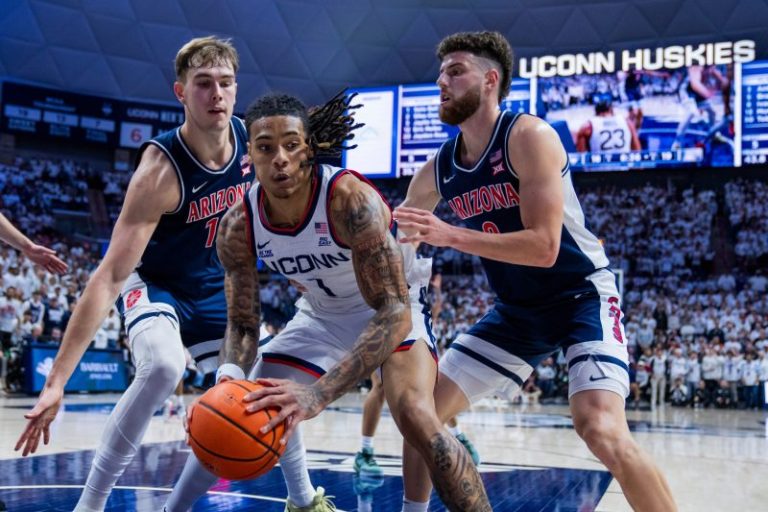
For the 48 nations participating in next year’s World Cup, it will be a lucrative windfall whether they win a game or hoist the trophy for winning the tournament.

The FIFA Council approved the financial contribution each nation will receive, with a record $727 million distributed to participating teams. The Council also announced Wednesday, Dec. 17, the launch of a FIFA U-15 festival-style tournament open to all 211 FIFA members in 2026, as well as a post-conflict recovery fund to help nations that have experienced conflict.

For compensation, the largest share of the distributed money ($655 million) goes directly to the teams as prize money, a 50% increase from the funds awarded during the 2022 World Cup in Qatar.

‘The FIFA World Cup 2026 will also be groundbreaking in terms of its financial contribution to the global football community,’ FIFA President Gianni Infantino said in a statement.

Each nation is guaranteed $10.5 million for participating, including $1.5 million to cover preparation costs.

2026 World Cup prize money breakdown

Champions: $50 million
Runners-up: $33 million
3rd place: $29 million
4th place: $27 million
5th-8th place: $19 million
9th-16th place: $15 million
17th- 32nd place: $11 million
33rd-48th place: $9 million

This post appeared first on USA TODAY
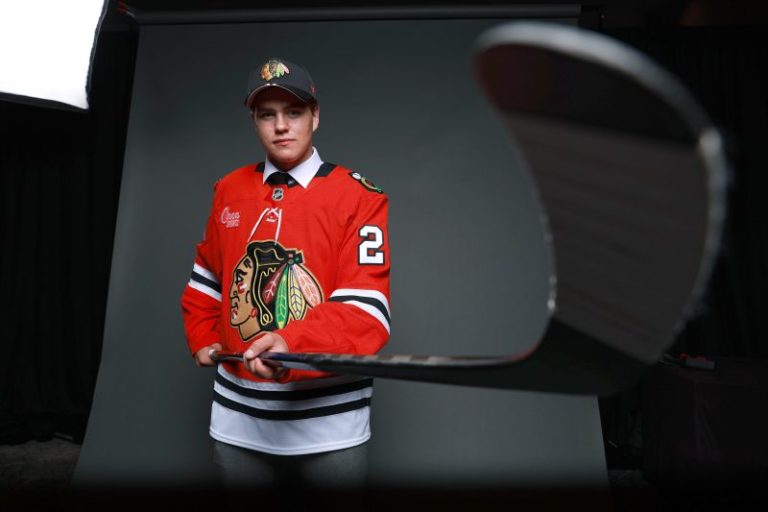
The 2025 NCAA women’s college volleyball tournament is down to the Final Four with Kentucky, Pittsburgh, Wisconsin and Texas A&M advancing to the semifinals, but it’s never too early to look ahead to next season.

As the NCAA crowns a national champion this weekend, some of the biggest names in the sport have entered the transfer portal in search of a new home for the 2026 season. Penn State setter Izzy Starck is among the hundreds of players entering the portal after the defending champion Nittany Lions were ousted in the second round of the tournament.

Here are the best players available in the transfer portal, as of Wednesday:

NCAA women’s volleyball transfer portal

Izzy Starck, Penn State, So.: The 2024 AVCA National Freshman of the Year and second-team All-American appeared in four games for Penn State before stepping away for the season to prioritize her mental health. The 6-foot-1 setter said her hiatus wasn’t a ‘goodbye forever,’ but her time at Penn State has officially come to an end. Starck averaged 10.89 assists per set her freshman season.

Ayden Ames, Texas, So.: The 6-4 middle blocker averaged 1.52 kills and 1.11 blocks per set with a .368 hitting percentage. She recorded a career-best eight total blocks in the first round of the NCAA tournament vs. Florida A&M on Dec. 5 before Texas was upset by Wisconsin in the Elite Eight.

Jovana Zelenovic, Kansas, Fr.: The 6-7 hitter from Serbia was named to the All-Big 12 first team after leading the Jayhawks in kills (375) and service aces (46) with a .276 hitting percentage. Zelenovic was named the AVCA Central Region Freshman of the Year and was unanimously voted to the Big 12’s All-Rookie Team.

Natalie Ring, Marquette, Sr.: The 6-1 outside hitter set career highs in kills (497) and kills per set (4.60), ranked 17th nationally, while hitting .274. She was unanimously named to the All-Big East first team and selected for the 2025 AVCA third team.

Jaela Auguste, Florida, So.: The 6-2 middle blocker was named to the All-SEC first team after averaging 2.69 kills per set and 106 total blocks. The 2024 SEC Freshman of the Year hit .344 her sophomore season and was named to the 2025 AVCA third team.

Alex Bower, BYU, So.: The 5-11 setter was named to the All-Big 12 first team after recording a team-high 10.63 assists per set and 1,265 total assists this season, which ranks 10th in the nation. Bower isn’t the only Cougar to hit the transfer portal: Big 12 Freshman of the Year Suli Davis has committed to SMU.

Kaia Castle, Ohio State, Fr.: The 6-4 middle blocker led the team with 91 blocks and 0.88 per set. She broke the Buckeye’s single-match block record with 15 blocks vs. Troy on Sept. 21.

Katie Dalton, Kansas, Sr.: The 6-1 setter led the Jayhawks with 780 assists and 8.76 assists per set. She recorded 55 assists vs. Iowa State on Oct. 10. She was named to the All-Big 12 second team.

Zoe Humphrey, Tennessee, Fr.: The 6-2 middle blocker was named to the SEC All-Freshman Team after recording 75 kills on .381 hitting and 68 blocks. She had a career-high eight blocks against South Carolina on Sept. 26.

Gabi Placide, Ole Miss, Jr.: The 6-0 outside hitter averaged 4.48 kills per set for Ole Miss this season, which ranks 23rd in the nation. She started her collegiate career at Northern Colorado before transferring to Ole Miss.

Marina Crownover, Missouri, Jr: The 5-11 setter led the Tigers in assists (965) and assists per set (9.37) this season, adding 231 digs and 31 service aces. She recorded a season-high 54 assists vs. Auburn on Oct. 12.

NCAA women’s volleyball transfer portal: Players on the move

There’s already movement in the transfer portal. Here’s some players who have committed to a new team, as of Wednesday Dec. 17:

BYU freshman outside hitter Suli Davis is transferring to SMU after leading all rookies nationally in total kills (541) and kills per set (4.55). She recorded a career-high 28 kills against both Utah on Nov. 14 Arizona on Nov. 19.
Florida redshirt junior setter Alexis Stucky is transferring to Penn State after racking up 1,062 assists and 10.31 assists per set this season.
Tennessee sophomore outside hitter Paityn Chapman is transferring to Illinois after averaging 165 kills and 2.46 kills per set with a .297 hitting percentage with the Lady Vols.
Arizona sophomore setter Avery Scoggins is transferring to Vanderbilt after recording 1,190 assists and 10.62 assists per set this season, which both rank in the top 20 in the nation.
Marquette freshman setter Isabela Haggard is transferring to Baylor after recording 997 assists and 257 digs in her rookie campaign. She was named the co-Big East Freshman of the Year

The USA TODAY app gets you to the heart of the news — fastDownload for award-winning coverage, crosswords, audio storytelling, the eNewspaper and more.

This post appeared first on USA TODAY
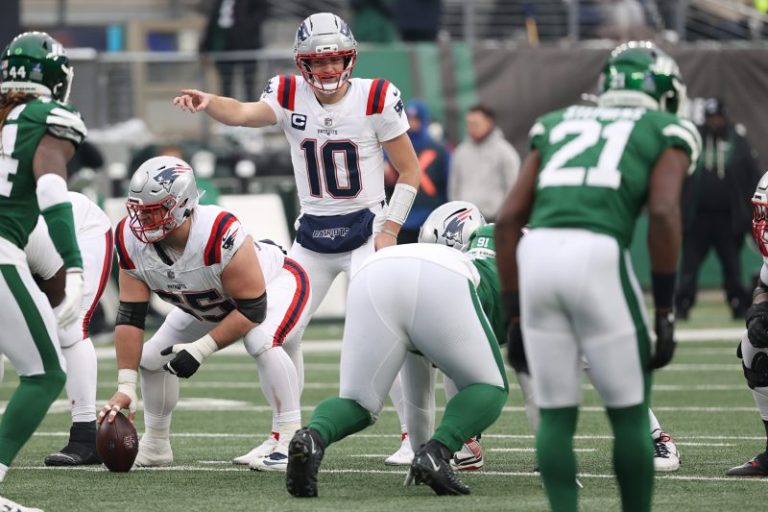
For the New York Knicks, the NBA Cup is nice.

The $530,933 each player pockets will fatten bank accounts. The franchise that hasn’t won an NBA championship in 52 years got to outlast all other 29 teams for a trophy. They got, as center Karl-Anthony Towns told reporters after the game, the chance to wear “this dope-ass shirt on with the Knicks saying we’re champions.”

But if this is the lone hardware the Knicks end up with at season’s end, it won’t be nearly enough.

New York crashed the glass, outhustled San Antonio and sprinted past the upstart Spurs, 124-113, to claim the 2025 NBA Cup title on Tuesday, Dec. 16, but the Knicks are built for more.

They should contend in the Eastern Conference and beyond, and their offseason move to fire former coach Tom Thibodeaux — after New York reached its first conference finals in 25 seasons — indicated that there is no other outcome to be tolerated from this build other than an NBA Finals trophy.

“Of course, if you win the Cup, you feel like you have to validate why we got here and got ourselves in this position to win,” Towns said.

The Knicks overcame an 11-point deficit and a slow shooting night from star point guard Jalen Brunson. They launched a 15-3 run to start the fourth quarter and limited Spurs star phenom Victor Wembanyama to just 2 points on 0-of-4 shooting in the final period — New York entered down by five. The Knicks didn’t let Wembanyama, all 7-foot-5 of him, record a single rebound in the fourth.

The irony in all this is that this was a game that counted, but didn’t, really.

Yes, the Knicks will claim this title, but all statistics recorded in the game won’t count toward season totals. It’s fairly representative of the state of the Knicks: this is an accomplishment to be cherished and celebrated, but it’s the one that has eluded New York that actually counts.

“I’m very excited,” Brunson told reporters after the game. “It was a goal of ours that we get to check off. It’s an important stepping stone for us. We can still learn from this game and get better as well. I’m very thankful for the opportunity that we presented ourselves … we found a way to win.”

The Knicks are currently 18-7, which ranks second in a wide-open Eastern Conference. Established teams from previous seasons like the Celtics (Jayson Tatum) and Pacers (Tyrese Haliburton) are facing significant injuries to star players. Teams like the Cavaliers and Bucks have sputtered to start the season.

The Pistons (21-5) and Magic (15-11) appear to be the top threats.

But the Knicks could also be at an inflection point, with rumors swirling about the future of star forward Giannis Antetokounmpo in Milwaukee. Antetokounmpo reportedly prefers the Knicks as a destination, and his addition would bolster championship aspirations.

Regardless, this roster is balanced and complete. Towns can stretch the floor with his range. Brunson is a consistent threat to score. OG Anunoby, who scored a game-high 28 points on Tuesday night, is also a defensive stopper — and one who switched onto shifty Spurs guard De’Aaron Fox late in Tuesday’s game.

“A game like this, an environment like this, you don’t really see around the NBA too often,” Brunson said. “We’ve got to take advantage of the experience that we got here.”

The Knicks will need more from their bench down the stretch. Backup guard Tyler Kolek provided massive minutes and recorded 14 points, 5 rebounds and 5 assists in the victory.

These are valuable experiences for young players like Kolek; while the NBA Cup doesn’t carry the same stakes as the NBA playoffs, it’s a heightened environment, nonetheless.

It’s now incumbent on coach Mike Brown and the rest of the staff to use this NBA Cup championship as a catalyst to spark further development.

“We going to celebrate this one tonight,” Towns said. “We’re going to hold this Cup championship dear to our heart, but now it’s time to work on the second one.”

He didn’t say it by name, but there was no doubt which title Towns was talking about.

This post appeared first on USA TODAY
The Senate sent a colossal defense package to President Donald Trump’s desk on Wednesday, checking off one of the last remaining items of the year in the process.

Lawmakers banded together to pass the National Defense Authorization Act (NDAA), a roughly $901 billion package crammed to the brim with defense policy that unlocks funding for several of the Trump administration’s national defense priorities.

The measure passed through the upper chamber on a 77-20 bipartisan vote. It’s a perennial legislative exercise lawmakers undertake, and one that normally comes and goes with little fuss, given that Congress typically bookends the year with it.

But this year, the NDAA hit some snags in the House that threatened its survival. And while the drama was not as fiery in the Senate, there were still lingering issues with certain provisions that gave lawmakers heartburn.

Bipartisan frustration erupted over a provision that would roll back some safety standards in the Washington, D.C., airspace. It comes on the heels of the collision between a Black Hawk helicopter and passenger jet near Ronald Reagan Washington National Airport earlier this year that killed 67 people.

Senate Commerce Committee Chair Ted Cruz, R-Texas, sought an amendment to the package that would have stripped the provision and instead included his ROTOR Act that would mandate technology in aircraft to boost awareness of air traffic.

But any amendment to the package would have sent it back to the House. Cruz instead plans to tack on his legislation to spending bills down the line.

‘I’m seeking a vote on the ROTOR Act as part of any appropriations measure before the current continuing resolution expires at the end of next month,’ Cruz said.

Other provisions, like a requirement for the Pentagon to release the unedited footage of boat strikes in the Caribbean in exchange for fully funding the Department of War’s travel fund, raised eyebrows but didn’t slow down the package’s success.

That provision comes as lawmakers demand more transparency in the Trump administration’s strikes against alleged drug boats, and in particular, as they seek the release of the footage from a Sept. 2 double-strike on a vessel.

Secretary of War Pete Hegseth and Secretary of State Marco Rubio briefed all senators on the strikes this week. Senate Republicans left largely satisfied, while Senate Democrats charged that Hegseth wouldn’t show the unedited footage to every lawmaker in the upper chamber.

‘He refused,’ Senate Minority Leader Chuck Schumer, D-N.Y., said. ‘The administration came to this briefing empty-handed. That’s the major question that we face, and if they can’t be transparent on this, how can you trust their transparency on all the other issues swirling about in the Caribbean.’

Still, the package is filled with several provisions that both sides agree to, including guarantees for Ukrainian assistance, and repeals of the 1991 and 2002 authorizations of use of military force (AUMFs) for the Gulf War and Iraq War, respectively, among several others.

With the NDAA now headed for Trump’s signature, the Senate still has more on its agenda before fleeing Washington until the new year.

Senate Republicans want to ram through nearly 100 of Trump’s nominees, and both sides are eyeing a five-bill spending package that could alleviate some concerns heading into the looming Jan. 30 deadline to fund the government.

‘This defense authorization act, although it doesn’t have as much in there for defense as a lot of us would like, is a step in the right direction,’ Senate Majority Leader John Thune, R-S.D., said. ‘And I think the defense appropriations bill, which hopefully we’ll vote on later this week, is another example of the investment that we need to be making, to ensure that in a dangerous world, we are prepared to defend America and American interests.’

This post appeared first on FOX NEWS

Four moderate House Republicans are rebelling against Speaker Mike Johnson, R-La., to join his Democratic counterpart in forcing a vote on enhanced Obamacare subsidies set to expire at the end of this year.

Reps. Brian Fitzpatrick, R-Pa., Ryan Mackenzie, R-Pa., Rob Bresnahan, R-Pa., and Mike Lawler, R-N.Y., all joined a discharge petition by House Minority Leader Hakeem Jeffries, D-N.Y., on his push for a three-year extension of the subsidies.

A discharge petition is a mechanism for overriding the will of House leaders to get a chamber-wide vote on specific legislation, provided it has support from a majority of lawmakers.

In this case, the four House Republicans’ signatures put Jeffries’ petition at 218 — clinching the critical majority threshold.

‘I’ve always supported bipartisan solutions that would bring about healthcare affordability in this country,’ Mackenzie told Fox News Digital on Wednesday of his decision. ‘Leader Jeffries and the Democrats have refused to sign onto either of those bipartisan solutions. And so at this point, our leadership is not calling up a bill to extend the [Obamacare] tax credits.’

He called for a vote on the Democrat-led solution as well as two bipartisan bills offering one and two-year extensions, respectively, with reforms.

It comes despite Johnson warning Republicans earlier on Wednesday not to support Jeffries’ petition, arguing it was not the best way to legislate.

Johnson told CNBC’s ‘Squawk Box’ that it was effectively ‘doing an end-run around the majority party, the speaker or the regular process is not the best way to make law.’

The House is expected to vote on a bill that Republicans say is aimed at lowering healthcare costs for all Americans, without extending the subsidies — which they argue are part of a deeply flawed public healthcare system.

Moderate Republicans offered several amendments to the legislation aimed at extending the Obamacare subsidies during a House Rules Committee meeting to advance the bill on Tuesday, but all were rejected by their fellow GOP lawmakers on the panel.

‘While I have been working for a bipartisan compromise with reforms, the failure of leadership to allow a vote on the floor left me with no choice but to sign the Democrats’ discharge petition,’ Lawler said in a statement on X.

‘The speaker should immediately bring it to the floor for an up-or-down vote and let the House do the work of the American people.’

Because of the timing constraints of a discharge petition, the earliest the House could consider the Jeffries bill would be early next year.

This post appeared first on FOX NEWS

It has been more than two decades since an expansion franchise was awarded in the NBA, and commissioner Adam Silver says that a decision will be made next season on whether the league will end up at 32 teams.

Silver laid out the league’s possible expansion plans at a press conference before the NBA Cup final on Tuesday, Dec. 16, and the league could be looking to add its first new teams, since the Charlotte Bobcats became the 30th franchise in 2004.

‘I’d say in terms of domestic expansion, that is something we’re continuing to look at,’ Silver said. ‘It’s not a secret we’re looking at this market in Las Vegas. We are looking at Seattle. We’ve looked at other markets, as well. I’d say I want to be sensitive there about this notion that we’re somehow teasing these markets, because I know we’ve been talking about it for a while.

‘As I’ve said before, domestic expansion, as opposed to doing a new league in Europe, is selling equity in this current league. If you own 1/30 of this league, now you own 1/32 if you add two teams. So it’s a much more difficult economic analysis. In many ways, it requires predicting the future.’

Seattle and Las Vegas have long been considered the favorites to get teams should the league expand. Seattle has been without a team since the SuperSonics moved to Oklahoma City before the 2008-09 season, and Vegas has hosted a portion of the Summer League since 2004 and all three years of the NBA Cup finals. Silver says he is confident that Las Vegas could support an NBA team.

‘I think Seattle and Las Vegas are two incredible cities,’ Silver said. ‘Obviously we had a team in Seattle that had great success. We have a WNBA team here in Las Vegas in the Aces. We’ve been playing the summer league here for 20 years. We’re playing our Cup games here, so we’re very familiar with this market.’

This post appeared first on USA TODAY
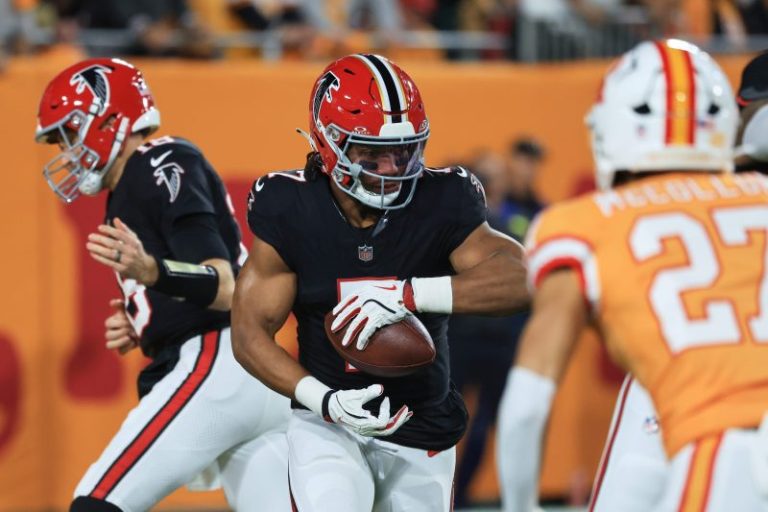
Would you look at that. Everybody’s so happy, and committed, no less. 

Except there’s one teeny-weeny problem with Alabama coach Kalen DeBoer and Crimson Tide athletic director Greg Byrne this week expressing their undying love for each other and the Alabama program.

The loud and proud on the periphery with more power than you’d think — the influential and wildly supportive Alabama fan base — still isn’t feeling it.

In fact, we’ve reached a critical crossroads moment for a fan base that has been spoiled by Nick Saban’s greatness, and doesn’t mind admitting it. They see the commitment from DeBoer and Byrne, despite DeBoer’s name surfacing with the Michigan coaching search.

The problem is the results.

And wouldn’t you know it, here comes the main culprit: Oklahoma. 

Two years ago, Alabama needed a win over the worst Oklahoma team in more than three decades to clinch a College Football Playoff spot — and lost by 21.

A year later in the rematch in Tuscaloosa — in a game that can only be described as the second-ugliest in DeBoer’s two seasons (the first being the first loss to OU) — Alabama allowed a team with barely 200 yards off offense take a critical November win.

Two season-defining games, two collapses from Alabama, and by proxy, DeBoer.

So when Alabama arrives in Norman on Friday evening for another shot at Oklahoma in the first round of the CFP, there’s much more at stake than moving onto the quarterfinals against No.1 Indiana. 

The buy-in with DeBoer from the Alabama faithful is beginning to wane. Lose to the Sooners again, and it will quickly become legitimate anxiety.

Then who cares if DeBoer decides to leave for Ann Arbor?

“Just feel completely supported,” DeBoer said earlier this week. “Just all the things that we continue to build on. Love the progress.”

I ask you, who among us really believes the 100,000-plus who pack Bryant-Denny Stadium are satiated by “progress”?

They bathed annually in the luxury of Saban for 17 years. Six national championships since 2009, nine national title game appearances, and eight CFP appearances in the 10 years of its existence.

You think they care about progress?

This, everyone, is the blessing and curse of the Saban experience. Unprecedented success, unrealistic expectations. 

They can put up with a defense that’s not like the early years, when Saban and then-defensive coordinator Kirby Smart were overwhelming the sport with a roster full of high-round NFL draft picks. The defense had fallen off in the final years under Saban, anyway, since Smart left for Georgia and impact recruits along the defensive line followed.

What the Alabama fans can’t put up with is an offense that doesn’t produce. You can’t go from Jalen Hurts, to Tua Tagovailoa, to Mac Jones, to Bryce Young, to who knows what on a weekly basis from the most important position on the field.

Ty Simpson can’t look like the Heisman Trophy leader one week, and struggle to complete 50% of his throws the next. You can’t have a quarterback with arguably the best receiving corps in the nation struggle for much of November. 

Especially if the head coach is an offensive savant, who has developed elite players at quarterback everywhere he has coached.

You better believe Alabama fans see a team that misfired much of November, and frankly, was given a pass to the CFP because there’s no way the SEC team with the best regular season record can’t make the CFP (who knows why, but that’s another story for another time).

We’ve reached critical mass here, and nothing DeBoer and Byrne say can do anything about it. This is about wins and losses now, and heaven help DeBoer if Friday night ends with another poor performance (and loss) to the Sooners. 

Three games against Oklahoma, three games as the betting favorite. Three games with the better roster.

It’s not that hard to see where this goes from here if Alabama can’t find a way to beat Oklahoma. No amount of public declarations of support will make it any easier for a fan base that includes deep-pocket boosters — who can and have wielded influence.

How do you think Saban got to Alabama in the first place, after publicly declaring he was staying in the NFL and wouldn’t be the Alabama coach? 

DeBoer was asked earlier this week about Oklahoma players celebrating last month on the Alabama logo, taking pictures after the 23-21 victory and later singing ‘Sweet Home Alabama’ and ‘Dixieland Delight’ in the postgame locker room. An insulting move that further underscored the distance between You Know Who. 

DeBoer said he wasn’t aware of it, then later admitted he had seen “something” about the incident.

“They’ve obviously got the better side of things the last two times we played,” DeBoer said. “And that’s really where our focus is at.”

Saban often spoke of deeds, not words. Anyone can say anything, but it’s always about results. 

Now more than ever for DeBoer.

This post appeared first on USA TODAY
The big business of youth sports has reached the U.S. Congress. A House subcommittee says it has created a “crisis” for kids and their parents.

“The youth sports industry generates more than $40 billion in annual revenue,” Rep. Kevin Kiley (R-CA), the chair of the subcommittee on Early Childhood, Elementary, and Secondary Education, said to open a hearing on Tuesday, Dec. 16, entitled “Benched: The Crisis in American Youth Sports and Its cost to Our Future.”

“But this revenue comes at a steep cost to families,” Kiley said. “Parents are told that only year-round travel teams, private coaching and early specialization will keep their child competitive and maybe even earn them a scholarship. That false promise has created a spending surge that prices out the average family while pushing kids as young as eight into high-cost, high-pressure programs that simply aren’t necessary for long term development.”

Kiley said more than 60 million kids participate in youth sports in the U.S., and he doubled down on the 63% participation target set through the Healthy People 2030 program administered by the government.

We are somewhere around 55 percent of kids ages 6 to 17, a participation rate that lags behind the pre-pandemic level of 2019 (61%).

“Public funding absolutely is crucial to making sure that we have community-based, nonprofit-based and school-based programs,” said Katherine Van Dyck, a senior legal fellow for the American Economics Liberties Project and a witness at Tuesday’s hearing. “Because when we don’t have those, what we have left is these really high-cost monopolistic entities that aren’t interested in growing their programs to make them affordable and accessible to everybody.

“They’re interested in protecting their monopoly and driving cost up. That’s why we see a $40 billion industry that is growing according to investment firms, but it’s growing as participation is going down. What does that tell us? It tells us that they are jacking up prices and that they are solely focused on profit. …

“Our children deserve better than a childhood for sale to the highest bidder.”

While experts and Congress members pushed to the national forefront many of the issues that consume sports parents, they also offered potential changes to the system. Here are some highlights of the hearing:

Why is a Congressional subcommittee saying we have a youth sports ‘crisis’?

Several statistics used by Kiley, other members of the House subcommittee on Early Childhood, Elementary, and Secondary Education, and witnesses at the hearing have been mentioned in this space.

Seventy percent of kids quit organized sports by age 13.
The average U.S. sports family spent more than $1,000 on its child’s primary sport in 2024. [Travel sports can cost families upwards of $3,000 per year or more.]
Private equity firms are helping to fuel spending, along with a feeling of pressure among parents that playing for select teams and specializing early leads to playing in college.
An increasingly fewer number of kids have access to affordable opportunities to learn important life skills and to try new things, leading to obesity and excessive screen time.

“What we are witnessing is more than a drop in sports participation,” Kiley said. “It is the loss of one of the most effective tools we have to combat rising isolation and mental health challenges in our children. When children lose regular in-person team activities, they lose daily opportunities to build confidence, belonging, and real world social connection.”

How can kids and their parents better navigate youth sports?

My personal experience with travel and club teams at the high school level is that they don’t promise you the chance to play in college as much as give the opportunity to play in front of college coaches.

While we can look at sports as an outlet for getting a scholarship and helping us to get into a college or university, we need to understand the odds and can be more realistic about our kids’ chances.

“I think parents need to begin at the end,” says John O’Sullivan, chief executive officer of the Changing the Game Project, which helps use sports as a recreational but life developmental tool.  “What do you want out of sport? They want a healthy, functioning, high-character human being. Sign up for sporting programs, and find coaches and find leagues that support that mission. The purpose is to develop a great human being, and then maybe if you have the luck and the genetics, you do well. And you get a scholarship. Maybe you play it the next level, but it’s really about human development first.”

According to 2024 NCAA data, supplemented by data from the National Federation of State High School Associations, about 6% of high school athletes play collegiately (a lower percentage play Division 1), while less than 1% of NCAA athletes are drafted into a professional sport.

Perhaps filling the disconnect of perception requires us to reprioritize why we play sports. 

“A kid standing over a putt, a kid about to take a penalty kick, a kid about to take a free throw that matters, those are life skills you can teach in real time,” Steve Boyle, the co-founder and executive director of 2-4-1 Sports, an organization that helps kids try out multiple sports, testified Tuesday. “I was a school counselor, and so I would always be told, ‘Hey, you gotta go in and do a lesson on anxiety, or anger management, or conflict resolution.’

“It was a heck of a lesson. You know how much impact it had? None. The next day, it was gone. We wouldn’t teach piano once and say, ‘Good luck, have at it. Now you’re good at it.’ You have to continue to teach these skills and use the opportunity of sports when those emotions are happening in real time, to say, ‘All right, this is how you can deal with this right here in a safe and fun place, so that when you’re about to road rage or lose it on somebody, you’ve developed those skills in such ways.’ Sports is the best opportunity to do that, and we miss out on so many kids if we don’t give them access to sports.”

Boyle and his wife, Kerry, started 2-4-1 Sports in 2006 after their 9-year-old daughter was told trying other sports wasn’t an option if she wanted to play for a local travel team. Still, many parents fear of missing out on such opportunities.

Kiley, the subcommittee’s chair, says he played basketball and soccer growing up. He didn’t make his high school freshman basketball team or varsity soccer team (though he played tennis) and spoke of an “inherent winnowing process in a lot of sports.”

He asked O’Sullivan, who has spent five decades as an athlete or coach to youth and collegiate athletes, how we maintain opportunities for young people of different skill levels?

“I think it’s, again, this education around what is the purpose of sport,” O’Sullivan replied. “Parents ask me all the time, ‘How does my kid make the elite team? And I think that’s the worst word in sports is ‘elite’ for little kids. We have to keep as many kids as possible, as long as possible, in the best environment possible. The countries that do it best in sport development, they keep those kids. They’re not making cuts at six or seven years old. They’re not forming competitive teams.”

STATE OF PLAY REPORT: Do immigration raids threaten the rise of youth sports?

What are some solutions to the youth sports ‘crisis?’

Van Dyck, an anti-monopoly and consumer advocate, said the 2008 financial crisis and the recession that followed proved devastating to parks and recreation budgets while COVID-19 delivered another crushing blow.

“Parks and Rec budgets were slashed, and that really did leave a void, where private equity firms came in and filled it with high cost, flashy, elite club teams,” she says. “And by filling that void, they were then able to continue to build their flywheel, where they gained control of the venues, and the governing bodies, and the apparel companies, and that flywheel also builds a moat that the community groups that my colleagues here are talking about can’t compete with. They can’t penetrate it because these private equity companies aren’t just capturing the teams and the leagues, they’re capturing the players.”

Robert “Bobby” Scott (D-VA), the ranking member of the House’s Committee on Education & Workforce – under which Kiley’s Childhood, Elementary, and Secondary Education is a subcommittee – then responded to her: “Well, it seems to me that we gotta get Parks and Rec and the public schools back involved so those opportunities are gonna be there.”

Fewer P.E. classes are being offered in U.S. schools due to budget cuts, according to Aspen Sports & Society Program’s State of Play 2025. 

“My P.E. colleagues would say there’s more to physical education than just sport,” says Boyle, who played Division 1 basketball at Manhattan College. “I don’t think it has to be either/or. I think that schools can work in a way that teach fundamental sports skills so that kids have some confidence to perhaps do some sports outside of school time. I think there’s an opportunity here to create some consistency around how it’s being delivered and to recognize the value of sport.”

Tom Farrey, executive director of Aspen Sports & Society, testified Tuesday that we need to take a more deliberate look at the structure of school-based sports.

“One of the problems we have here is there’ll be 80 kids who try out for the boys’ basketball team,” he said. “And 15 will make it, and nine will get playing time, and we structurally push aside kids because of our traditional structure of school-based sports.

“But there are models out there where they’re creating multiple teams. You might have two freshman teams, or three J.V. teams. We need to move to an environment where the supply of experiences meets the demand for them. And that’s partly a function of schools rethinking their model.”

Farrey also suggested we can require all youth sports organizations to register with the U.S. Center for SafeSport and get their coaches trained in abuse prevention and pass background checks.

He also suggested redirecting federal sports betting taxes to close youth sports gaps, especially for low income youth, and educating states on ways to prioritize access to community sports.

What does the hearing mean for American sports families?

It appealed to several members of the House subcommittee, both about their own childhoods and the needs of constituents.

“In the district I represent, I have a lot of urban areas – Portland and Beaverton areas – but I also have a lot of very rural areas as well,” said Suzanne Bonamici (D-OR), the subcommittee’s ranking member. “So even with something like school bus drivers, if there’s a bus, it’s gonna take students somewhere. School bus driver employment is down 10%. What’s gonna happen for students who are hoping to engage in these extracurricular activities if they don’t have that vital transportation, especially in rural areas? Many kids are going to be left out.”

Kiley, the subcommittee chair from California, said he hoped the hearing would amplify the work within youth sports the witnesses are doing, and even institute change.

He identified a few areas “where we could see improvement.”

“One is just programmatic in terms of having more offerings for students to continue to be involved, regardless of skill level, having maybe more robust P.E. programs in schools,” he said. “The second is financial, removing the barriers to entry that have gotten just exorbitant in many communities across the country.

“The third, I think, is cultural, just trying to re-establish a culture that is supportive of play and competition, and giving kids these opportunities from an early age. I do have to say, a few witnesses mentioned the experience of COVID, where we took this opportunity away from many kids. In my state, we were the last to allow youth sports to continue again. I took part in what we called ‘let them play rallies’ with kids across our state. And that was a period where the interests of young people were not the highest priority when it came to policy, and this was one manifestation of it, and we really must never make that mistake again.

“That’s a broader issue, but on this specific issue of youth sports, I think we’ve had a lot of bipartisan agreement.”

Borelli, aka Coach Steve, has been an editor and writer with USA TODAY since 1999. He spent 10 years coaching his two sons’ baseball and basketball teams. He and his wife, Colleen, are now sports parents for two high schoolers. His Coach Steve column is posted weekly. For his past columns, click here.

This post appeared first on USA TODAY