Archive

2025

Browsing

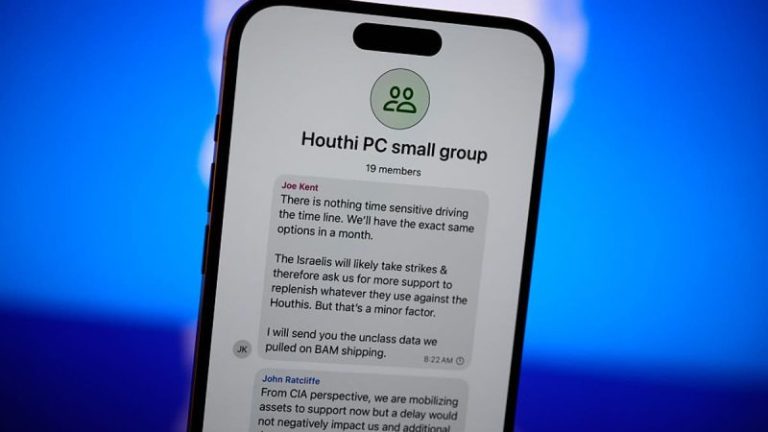
The White House is clapping back against media reports alleging intelligence officials have been using the end-to-end encrypted messaging app Signal to send classified information, describing the allegations as ‘false’ in a statement to Fox News Digital. 

The statement from National Security Council (NSC) spokesman Brian Hughes comes after Politico published a report suggesting Trump National Security Advisor Mike Waltz and his team have used the app frequently to discuss sensitive communications on a variety of different issues. 

‘This is a clear attempt by some in media and the Democrats to obscure the simple truth: The President and his national security team are delivering for the nation by confronting our adversaries and standing with our allies to bring peace through strength,’ Hughes said in a statement to Fox News Digital.

Hughes added that Signal is ‘an approved’ messaging app, particularly as it pertains to unclassified info, ‘and any claim NSC officials are sending classified information over these channels is false.’

Questions have circulated about the Trump administration’s use of Signal since The Atlantic’s Jeffrey Goldberg released his exposé alleging he was accidentally invited by Waltz to a sensitive group chat on the encrypted messaging app. Critics of the Trump administration have said the messages included ‘war plans’ for an attack on Houthi rebels in Yemen.

There have also been debates over whether the information discussed in the chat uncovered by Goldberg was classified information or contained ‘war plans.’  

Media reports from The Wall Street Journal, Politico and The Washington Post have claimed Waltz and his team have frequently used Signal and other public messaging platforms to discuss sensitive topics and official government business. 

‘Using Signal to send unclassified information is appropriate, and these same facts have been reported multiple times in the last few days,’ Hughes said, noting there are federal agencies that ‘automatically install’ Signal on government devices.

‘Some in NSC, like those in the media and many areas across the federal government, use the Signal app,’ Hughes added. ‘All communications are a reflection of a thoughtful dialog of those committed to the effective implementation of the president’s agenda.’

In December, before President Trump took over the White House from Joe Biden, the Cybersecurity and Infrastructure Security Agency called on senior government and political officials to switch to end-to-end encrypted messaging platforms like Signal.

Still, critics of the Trump administration are demanding answers. On Tuesday, Democrats on the House Oversight Committee sent letters to ‘non-principal agency officials’ who were part of the original Signal group chat that accidentally included Goldberg. 

The letters call for the individuals, who Democrats say may have ‘firsthand knowledgeconcerning the discussion of sensitive and/or classified national security information on Signal,’ to appear before Congress for transcribed interviews.

Rep. Gerry Connolly, D-Va., ranking member of the House Oversight Committee, sent another letter to Waltz Tuesday as well, demanding he and his staff stop using Google’s Gmail for official government business after The Washington Post published a report claiming members of the president’s National Security Council were using personal Gmail accounts to discuss official business. 

The letter to Waltz demanded he turn over all communications relating to official government business that he or his staff sent over Signal or other ‘unauthorized messaging and email applications and platforms.’

Waltz has taken responsibility for the leaked Signal chat that Goldberg accidentally accessed, but he also insisted ‘no classified information’ was ever discussed in the messaging thread.   

This post appeared first on FOX NEWS

United Airlines plans to add daily flights to Vietnam and Thailand in October, further expanding the network for the U.S. carrier that already has the most Asia service.

In the expansion, United is using a tactic that’s unusual in its network: Its airplanes from Los Angeles and San Francisco that are headed for Hong Kong will then go on to the two new destinations. The Bangkok and Ho Chi Minh City, Vietnam, service is set to begin on Oct. 26.

On Oct. 25, United plans to add a second daily nonstop flight from San Francisco to Manila, Philippines, and on Dec. 11, it will launch nonstops from San Francisco to Adelaide, Australia, which will operate three days a week.

The carrier has aggressively been adding far-flung destinations not served by rivals to its routes, like Nuuk, Greenland, and Bilbao, Spain, which start later this year. Getting the mix right is especially important as carriers seek to grow their lucrative loyalty programs and need attractive destinations to keep customers spending.

Bangkok, in particular, “is in even more demand now given the popularity of ‘White Lotus,’” Patrick Quayle, United’s senior vice president of network and global alliances, said of the HBO show.

He said the carrier isn’t planning on cutting any international routes for its upcoming winter schedule.

This post appeared first on NBC NEWS

The Los Angeles Dodgers, the defending World Series champions, have become the Evil Empire on the West Coast.

Despite the moaning and groaning you’ve heard about all the star players the Dodgers have signed to monster contracts over the last two seasons, they don’t have the highest team payroll heading into the 2025 major league season.

That distinction belongs to the New York Mets, according to MLB’s present-day calculations, obtained by USA TODAY Sports.

The Dodgers, thanks to heavily deferred contracts to Shohei Ohtani and most of their biggest stars, have an opening-day payroll of $321.3 million, second to the Mets’ payroll of $323.1.

The Dodgers’ secret is the deferred payments that dramatically lower the present-day value of the contracts, led by Ohtani’s 10-year, $700 million contact, which also lowers their luxury-tax commitment and penalties.

Ohtani is deferring $68 million of his $70 million annual salary, lowering his present-day value.

The wave of deferred contracts throughout baseball leaves Juan Soto of the New York Mets as baseball’s highest-paid player. He signed a record 15-year, $765 million contract in December with no deferrals. His salary is calculated at $61.875 this year by MLB, easily the highest in baseball history

Here’s a look at the team-by-team payrolls, based on opening day rosters, injured list and restricted list. The figures, compiled by USA TODAY, are calculated by the MLB Labor Relations Department of the present-day value of contracts including deferrals and signing bonuses.

The figures by MLB and distributed to all teams are intended to reflect the cash obligations in any given year.

2025 MLB team payrolls

(In present-day value calculated by MLB)

New York Mets, $323,099,999
Los Angeles Dodgers, $321,287,291
New York Yankees, $293,488,972
Philadelphia Phillies, $284,210,820
Toronto Blue Jays, $239,642,532
Texas Rangers, $220,541,332
Houston Astros, $220,217,813
Atlanta Braves, $214,836,398
San Diego Padres,  208,909,333
Chicago Cubs, $196,288,250
Arizona Diamondbacks, $195,294,235
Boston Red Sox, $193,629,093
Los Angeles Angels, $190,508,096
San Francisco Giants, $173,019,524
Baltimore Orioles, $162,314,278
Seattle Mariners,  $146,793,414
Detroit Tigers, $143,193,033
Minnesota Twins, $142,762,022
St. Louis Cardinals, $141,455,581
Kansas City Royals, $130,001,503
Colorado Rockies, $120,693,976
Cincinnati Reds, $115,466,833
Milwaukee Brewers, $115,136,227
Washington Nationals, $107,653,761
Cleveland Guardians, $100,522,729
Pittsburgh Pirates, $87,645,246
Chicago White Sox, $82,279,825
Tampa Bay Rays, $79,216,312
Athletics, $73,118,981
Miami Marlins, $67,412,619

The USA TODAY app gets you to the heart of the news — fastDownload for award-winning coverage, crosswords, audio storytelling, the eNewspaper and more.

This post appeared first on USA TODAY

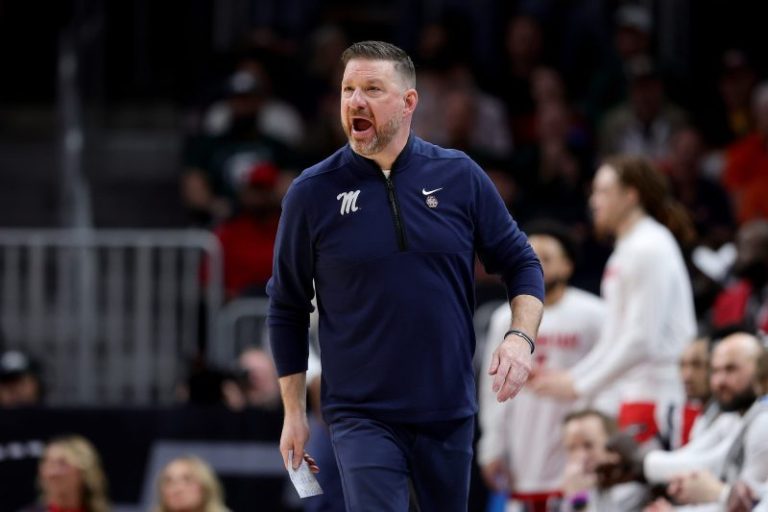
Ole Miss athletic director Keith Carter appeared to confirm the news by posting a picture to social media of him and Beard with the caption, ‘why stop now?’ shortly after the reports surfaced.

Beard, who was most notably connected to the opening at Texas A&M left by Buzz Williams, appears to be sticking around at Ole Miss after leading it to its first ever Sweet 16 appearance this season. He has a 44-24 record in two seasons with the Rebels.

The 52-year-old coach has won at every spot in his Division I head coaching career, leading Arkansas-Little Rock to a first-round win in the 2016 NCAA Tournament before taking the job at Texas Tech, which he led to a national championship in 2019 before falling to Virginia. He has a 280-121 career record as a Division I head coach.

Controversy struck when Beard was hired by Texas in 2021, however, as he was arrested for alleged domestic violence against his then-fiancé. He was suspended for nearly a month in late 2022 before being fired midway through his second season in 2023. The charge was eventually dismissed as his fiancé didn’t wish to prosecute him.

Beard has taken quite the path to being a college head coach, starting his career as a graduate assistant at Texas from 1991-95 before serving as an assistant at Incarnate Word, Abilene Christian and North Texas, all schools in Texas.

He then coached at junior colleges Fort Scott and Seminole State before becoming an assistant at Texas Tech, a job he held from 2001-11. Before becoming a Division I head coach for the first time at Arkansas-Little Rock, he served as the head coach of the South Carolina Warriors, a semi-pro team, and as a Division III and Division II head coach at McMurry and Angelo State, respectively.

After two seasons at Little Rock, he was then hired by Texas Tech, where he spent 2016-21 before leaving for Texas, where he was fired midway through his second season in 2023. Beard took the Ole Miss job ahead of the 2023-24 season.

With Ole Miss committing more resources to its basketball program, Beard looks to keep the momentum rolling in Oxford.

This post appeared first on USA TODAY

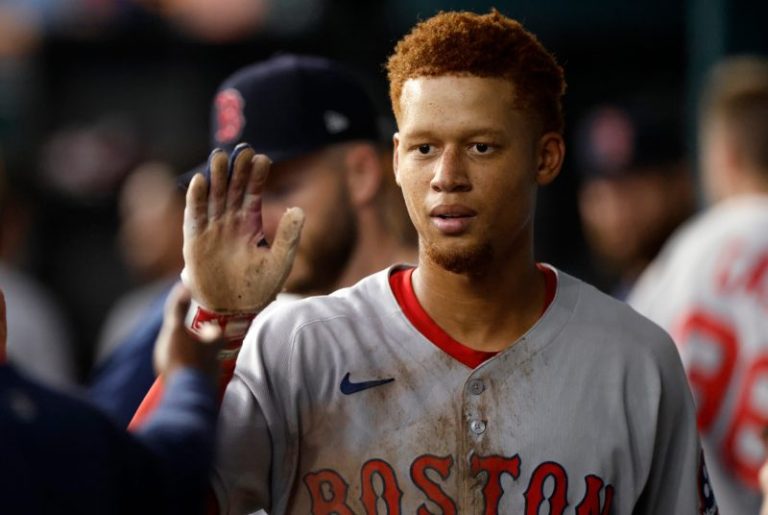
After only five games in the major leagues, the Boston Red Sox have agreed to a long-term contract with top prospect Kristian Campbell.

The deal, which includes a signing bonus of $2 million, is for $60 million over eight years from 2025 to 2032 − with a pair of team options in 2033 and 2034 that could raise the value to as much as $96 million, according to a person with direct knowledge of the situation.

The person spoke to USA TODAY Sports on the condition of anonymity because the deal hadn’t yet been announced.

Campbell, 22, made the Red Sox’s opening day roster this season after starting the 2024 season at High-A. His rapid rise to the majors came after he destroyed three levels of minor-league pitching a year ago to a combined .330/.439/.558 slash line with 20 home runs and 24 stolen bases − a performance that earned him USA TODAY Minor League Player of the Year honors.

‘I think the sky’s the limit for him,’ said Red Sox third baseman Alex Bregman.

A fourth-round draft pick in 2023, Campbell has shown considerable versatility in his limited time as a professional, playing primarily at second base or shortstop, but also seeing time at all three outfield positions. That may have been one of the reasons he made the major league roster this spring, despite hitting just .167 in 48 at-bats.

In five games so far this season with Boston, Campbell is hitting .375/.500/.688 with a home run, two doubles and four walks in 20 plate appearances. He’s played four games at second base and one in left field.

It’s the second extension the Red Sox have handed out this week. On Monday, pitcher Garrett Crochet and the Red Sox agreed on a six-year, $170 million contract extension. Heading into the season, the Red Sox current payroll ranks 12th in the majors at $193.6 million, according to figures compiled by USA TODAY.

This post appeared first on USA TODAY

The person requested anonymity because they were not authorized to speak publicly about Taylor’s plans.

This paves the way for Alex Rodriguez and Marc Lore and investors Eric Schmidt and Mike Bloomberg to become 100% owners of the NBA and WNBA franchises in the state.

The arbitration ruling stated that Rodriguez and Lore, who agreed to buy the team for $1.5 billion in 2021, did not violate terms of the purchase agreement, which Taylor alleged. The Timberwolves/Lynx have been valued at just above $3 billion by Forbes and Sportico.

The NBA needs to approve the sale, and at All-Star Weekend in February NBA commissioner Adam Silver said, “I will say standing here today, I don’t see any reason why it won’t be approved, but again, we need to follow the process.”

Rodriguez, the former MLB star, and Lore, a billionaire entrepreneur, had already been approved as partial owners.

It was an unusual purchase agreement.  Rodriguez and Lore planned to buy the team in three installments – 20%, 20% and another 40% last spring to become majority owners while Taylor helped guide them as owners and stewards of the franchises until the deal was completed.

A year ago, Taylor called off the sale, saying in a statement: “the closing was required to occur within 90 days following the exercise notice issued by Lore and Rodriguez. That 90-day period expired on March 27, 2024. Under certain circumstances, the buyer could have been entitled to a limited extension. However, those circumstances did not occur. … The Timberwolves and Lynx are no longer for sale.’

Rodriguez and Lore claimed Taylor had seller’s remorse. Taylor agreed to sell 80% of the team to Rodriguez and Lore at a $1.5 billion valuation. The insinuation from the Rodriguez-Lore camp: Taylor could make millions more by selling at the higher valuation.

Taylor bought the Timberwolves in 1994 for approximately $94 million and later added the Lynx.

As part of the purchase agreement, both sides agreed to arbitration in a dispute that sometimes turned petty.

The USA TODAY app gets you to the heart of the news — fastDownload for award-winning coverage, crosswords, audio storytelling, the eNewspaper and more.

This post appeared first on USA TODAY

Memphis Grizzlies guard Ja Morant is under scrutiny for a gesture he made at the Golden State Warriors bench that could be construed as a person mimicking the shooting of a gun, late in the Warriors’ 134-125 victory Tuesday.

The gesture is also very similar to one several NBA players do after making a 3-point shot. However, neither Morant nor the Grizzlies had just made a shot. Golden State’s Jimmy Butler had just made the second of two free throws giving the Warriors a 132-125 lead with 20.8 seconds left, and Memphis called timeout. As both teams headed to their respective benches, Morant made the gesture at Golden State’s bench.

Golden State’s Buddy Hield made a similar gesture from the bench just before Butler made the second free throw. Hield and Morant were both given technical fouls, and NBA executive Vice President and head of Basketball Operations Joe Dumars and his staff are likely to review the interaction.

Atlanta’s Dyson Daniels does a similar gesture after making 3-pointers and was not fined for making the gesture toward New Orleans’ bench during a game earlier this season. Other players have been fined for mimicking gun gestures, including Gerald Green and Josh Jackson.

Morant’s involvement draws closer scrutiny because he has been suspended twice by the league for showing a handgun on social media.

Morant was suspended 25 games without pay for conduct detrimental to the league in 2023. “Morant posed with a firearm in a car during a live-streamed video on May 13, less than two months after he was suspended eight games without pay for the live streaming of a video on March 4 in which he displayed a firearm while in an intoxicated state at a Denver area nightclub,” the league said in a statement on June 16, 2023.

NBA commissioner Adam Silver said at the time: “Ja Morant’s decision to once again wield a firearm on social media is alarming and disconcerting given his similar conduct in March for which he was already suspended eight games. The potential for other young people to emulate Ja’s conduct is particularly concerning.  Under these circumstances, we believe a suspension of 25 games is appropriate and makes clear that engaging in reckless and irresponsible behavior with guns will not be tolerated.”

This post appeared first on USA TODAY

John Vella, an offensive lineman who played eight seasons in the NFL and won a Super Bowl with the Oakland Raiders, has died at the age of 74.

The Raiders announced his passing on social media. No cause of death was given.

‘The Raiders Family mourns the passing of John Vella, a standout on the dominant Raider offensive lines of the 1970s and a starter on Oakland’s Super Bowl XI Championship team,’ the team said in a statement. ‘The prayers of the entire Raider Nation are with the Vella family at this time.’

The Raiders selected Vella in the second round of the 1972 draft out of Southern California. He played in 92 career games (48 starts), all but eight of those games coming with the Raiders. He finished out his career in Minnesota in 1980.

Vella started 14 games at right tackle during the 1976 season, culminating with three starts in the postseason as the Raiders defeated the Vikings 32-14 in Super Bowl XI.

The USA TODAY app gets you to the heart of the news — fastDownload for award-winning coverage, crosswords, audio storytelling, the eNewspaper and more.

This post appeared first on USA TODAY

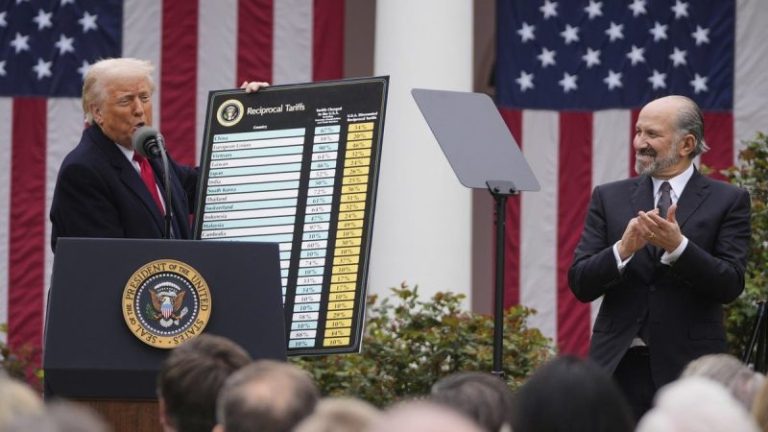
President Donald Trump announced sweeping tariffs on U.S. trading partners throughout the world Wednesday, saying the U.S. would add a 10% minimum baseline tax on all products coming in.

The Trump administration has identified what it has called the ‘Dirty 15’ as the 15 nations with the largest trade deficit with the U.S., meaning the trade partnerships by which Washington imports more from countries than those nations import from the U.S.

But the White House has also flagged what it describes as other ‘unfair’ trading practices, chiefly implemented through tariffs on U.S. goods. 

CHINA

Washington and Beijing have been in a trade war since the first Trump administration when the first-term president imposed 25% tariffs on $50 billion in Chinese goods starting in April 2018.

Beijing responded the next day by slapping reciprocal tariffs on 106 U.S. products worth $50 billion, mostly targeting U.S. agricultural products worth some $16.5 billion.

The tariff war would continue with repeated back-and-forth escalating tariffs before some tariff relief was agreed upon beginning in January 2020.

By January 2021, the U.S.-China Business Council (USCBC) found that the U.S. had lost nearly a quarter of a million jobs.

The Biden administration and China largely maintained the status quo established during Trump’s initial trade war. 

But Trump threatened to hit Beijing with 60% tariffs on the campaign trail and, by February 2025, just weeks after his inauguration, he slapped China with a blanket 20% tariff on all Chinese imports.

Beijing again responded with up to 15% tariffs on more than $33 billion in U.S. agricultural products, including U.S.-grown chicken, wheat, corn and cotton.

China’s trade deficit with the U.S. is $295.4 billion. 

EUROPEAN UNION

The European Union, which is no stranger to Trump’s tariff war, is bracing for a much bigger battle this time around after enduring metal trade spats during his first term. 

Trump has already announced a 25% tariff on steel and aluminum imports, which directly hits the European Union, the U.S.’s largest trading partner, along with a 25% tariff on imported cars, which will affect nations like Germany. 

The EU said it could impose retaliatory tariffs on the U.S. of up to $28 billion. 

The U.S. had a trade deficit of $235.6 billion with the European Union in 2024, which Trump has called ‘an atrocity.’

But it is not only the difference in trade agreements that has irked the president.

Last month, the White House said specific levies charged by various trading partners are making it ‘virtually impossible’ for U.S. products to be exported, including a 50% tax on American dairy products sold by EU nations. 

But expert Andrew Hale, a senior policy analyst in trade policy with the Heritage Foundation, explained that the dairy industry in particular has massive barriers stopping Europe from being able to lower prices to match American products.

‘They have a very, very protected agricultural market,’ Hale said, highlighting Europe’s strict husbandry practices. ‘Europeans would not be able to compete.’

Hale explained that norms like overcrowding and poor conditions frequently found in the U.S.’s poultry, dairy and pork industries in mass farming are barred in Europe. 

Animal spacing regulations and bans related to hormone injections have required a completely different type of farming that favors quality treatment of the animals versus mass production, which makes European meats and dairy products more expensive than American products and makes it unlikely that the EU drops this tax.

CANADA

The White House has also taken aim at Canada, which is expected to see more tariffs fired at it Wednesday and said it has a 300% tariff on American butter and cheese.

Hale explained that while this is technically true, it is a tariff rate-quota that was negotiated during the first Trump administration under the revised NAFTA agreement, which became the United States Mexico Canada (USMCA), and one which has never been implemented.

The massive tariff would only be used if U.S. exports exceed negotiated tariff rate quotas. Otherwise, daily sales to Canada face no tariffs under the USMCA.

Canada and the U.S. in recent weeks have entered into a tariff war after Trump announced a blanket 25% tariff on 25% on Canadian goods and 10% on its energy.

Ottawa, in return, imposed 25% reciprocal tariffs on $30 billion in U.S. goods, mostly targeting the agriculture sector. 

It has threatened to hit the U.S. with tariffs on $95 billion in U.S. imports if Trump imposes more taxes on the country’s northern neighbor.

HOW IT ENDS

‘Everyone needs to do what Israel has just done, bring down zero tariffs against the U.S. And then we can have absolute free trade,’ Hale said. ‘That’s fair, and we can all have market access.

‘When you have stupid tariffs, like tariffing stuff you don’t grow and make, that’s just basically being unfair.’

This post appeared first on FOX NEWS

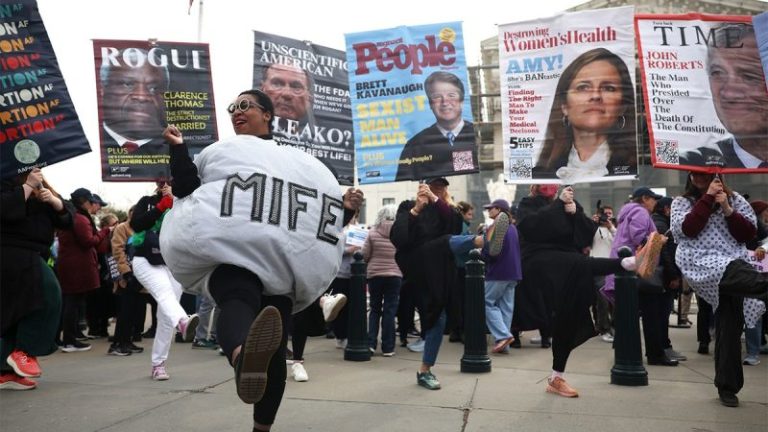
The Supreme Court appeared divided Wednesday over whether a state can block Medicaid funding for Planned Parenthood clinics, in a technical interpretation over healthcare choices that has become a larger political fight over abortion access.

In nearly two hours of oral arguments, the court’s conservative majority offered measured support for South Carolina’s position.

The specific issue is whether low-income Medicaid patients can sue in order to choose their own qualified healthcare provider. The federal-state program has shared responsibility for funding and administering it, through private healthcare providers.

Federal law bans taxpayer money from going to fund almost all abortions, but Planned Parenthood also provides a range of other medical services with and without Medicaid subsidies, including gynecological care and cancer screenings.

Blocking the provider from Medicaid networks could effectively defund it. Given the divisive underlying issue of abortion, groups on both sides rallied outside the high court ahead of the arguments. 

The state’s governor in 2018 signed an executive order blocking Medicaid funding for the state’s two Planned Parenthood clinics, saying it amounted to taxpayers subsidizing abortions. 

Courts have put that order on hold, leading to the current case. 

South Carolina now bans abortion around six weeks of pregnancy, or when cardiac activity is detected, with limited exceptions. 

The key provision in the 1965 Medicaid Act guarantees patients a ‘free choice of provider’ that is willing and qualified. 

Much of the court session dealt with whether Planned Parenthood was a ‘qualified provider’ under the Medicaid law, and whether individual patients have an unambiguous ‘right’ to sue to see their provider of choice, under its specific language.

‘It seems a little bit odd to think that a problem that motivated Congress to pass this provision was that states were limiting the choices people had,’ said Justice Sonia Sotomayor. ‘It seems hard to understand that states didn’t understand that they had to give individuals the right to choose a provider.’

‘The state has an obligation to ensure that a person… has a right to choose their doctor,’ added Justice Elena Kagan. ‘It’s impossible to even say the thing without using the word ‘right.”

But some conservative justices questioned how to interpret a provision that does not contain the word ‘right.’

‘One can imagine a statute written as an individual benefit that’s mandatory on the states but isn’t right-creating’ for the patient, said Justice Neil Gorsuch. ‘I mean, that’s an imaginable scenario.’ 

Justice Samuel Alito added it was ‘something that’s quite extraordinary’ to give individuals that right to sue under the Constitution’s spending clause. 

The votes of Chief Justice John Roberts and Justice Amy Coney Barrett could be key: They asked tough questions of both sides.

Barrett offered a hypothetical of the right of a patient to go to court over their doctor accused of medical malpractice. ‘Does it make sense in that circumstance for Congress to want plaintiffs to be able to sue?’ she asked.

Planned Parenthood says its future is at stake, noting nearly $700 million – about a third of its overall nationwide revenue – originates from Medicaid reimbursements, and government grants and contracts.

But the group notes just $90,000 in Medicaid funding goes to Planned Parenthood facilities every year in South Carolina, which is comparatively small to the state’s total Medicaid spending.

Julie Edwards, a South Carolina resident, sued along with Planned Parenthood South Atlantic, which operates two clinics in Columbia and Charleston. She has type-1 diabetes and associated medical complications and wanted to choose the Columbia clinic for its range of services, including reproductive care. 

A federal appeals court ruled against the state in 2024, concluding the ‘free choice of provider’ provision ‘specifies an entitlement given to each Medicaid beneficiary: to choose one’s preferred qualified provider without state interference.’

In a 2023 Supreme Court opinion involving care for nursing home residents, the justices concluded that a different law from Medicaid gives individuals the right to sue. 

A year earlier, the high court overturned its Roe v. Wade precedent of a nationwide right to abortion.

Several states – including Texas, Missouri and Arkansas – have already done what South Carolina wants to do by cutting Medicaid funding to Planned Parenthood and more could follow if South Carolina prevails. 

‘The people in this state do not want their tax money to go to that organization,’ said Republican South Carolina Gov. Henry McMaster, who attended the oral argument. ‘I believe the decision of this court will be that the people of South Carolina have the right to make this decision for themselves, for our state. Other states may make a different decision, but not ours. South Carolina stands for the right to life, and we’ll do whatever is necessary to protect that.’

The Trump Justice Department is supporting the state, and abortion rights groups say the issue is about patient choice.

‘Our health centers serve an irreplaceable role in the state’s healthcare system, providing birth control and cancer screenings to people who can’t afford those services anywhere else,’ said Paige Johnson, interim president and CEO of Planned Parenthood South Atlantic. ‘Government officials should never block people from getting healthcare or be able to decide which doctor you can or cannot see.’ 

One concern raised by healthcare advocates is finding gynecological and family planning services in states with limited facilities. Low-income women often have greater difficulty traveling long distances to get such quality care, a requirement for Medicaid providers.

Justice Brett Kavanaugh said he would make it his mission to bring as much clarity over when patients can go to court, which he called a 45-year ‘odyssey.’

Much of the public arguments dealt with whether a ‘right’ to sue was a magic word to automatically decide the matter.

‘I’m not allergic to magic words, because magic words – if they represent the principle – will provide the clarity that will avoid the litigation that is a huge waste of resources for states, courts, providers, beneficiaries.’

The case is Medina (SC DOH) v. Planned Parenthood South Atlantic (23-1275). A ruling is likely by early summer.

This post appeared first on FOX NEWS