Archive

2025

Browsing

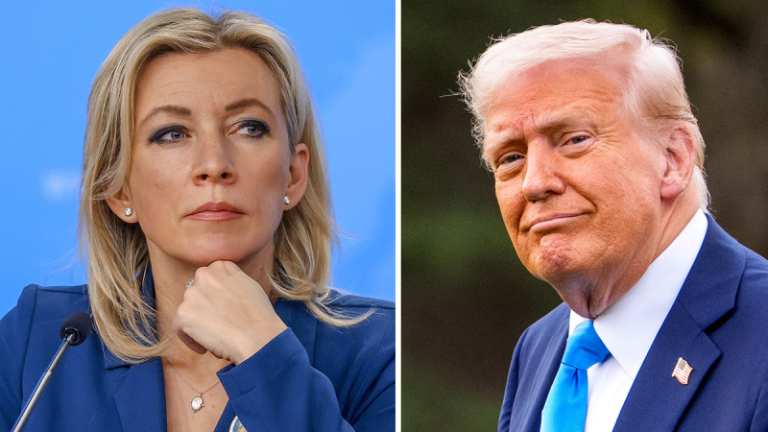
Russia is pushing back against President Donald Trump’s threats to bomb Iran, calling them ‘illegal and unacceptable.’ 

Trump in recent days has increased his threats against Iran and warned that there could be direct conflict if the Islamic Republic doesn’t stop arming the Houthi terrorist group or halt its nuclear program. Russia, meanwhile, said Thursday that it’s committed to finding solutions to Iran’s nuclear program that respects its rights to peaceful nuclear energy, according to Reuters. 

‘The use of military force by Iran’s opponents in the context of the settlement is illegal and unacceptable,’ Russian Foreign Ministry spokesperson Maria Zakharova was quoted by the news agency as saying. 

‘Threats from outside to bomb Iran’s nuclear infrastructure facilities will inevitably lead to an irreversible global catastrophe. These threats are simply unacceptable,’ she reportedly added. 

Rebekah Koffler, a former DIA intelligence officer specializing in Russia’s war-fighting strategy and Putin’s thinking, told Fox News Digital Thursday that ‘Russia’s statement is consistent with the diplomatic posture that it’s trying to project of being Iran’s strategic partner.

‘In reality, Russia and Iran are not natural allies. They share a very turbulent history and there’s plenty of distrust in the relationship. The Russians don’t trust Iranians to have a fully operational militarized nuclear capability,’ she continued. ‘But they would never admit it in public. At one point, during the Obama administration, Moscow was siding with Washington in terms of economic sanctions on Iran and complied with Washington’s request not to sell S-300s air defense missiles to Tehran. 

‘Putin is angling to serve as a broker between the Trump administration and the Iranian government on the nuclear issue,’ she also said. 

Trump’s overtures via a letter to Iran’s supreme leader, Ali Khamenei, to jump-start talks on dismantling Tehran’s illicit nuclear weapons program, were met with rejection on Sunday. 

Trump told NBC the day before, ‘If they don’t make a deal, there will be bombing.’ 

‘But there’s a chance that if they don’t make a deal, that I will do secondary tariffs on them like I did four years ago,’ he added. 

Secondary ‘tariffs,’ or sanctions, would mean slapping financial penalties on any country that does business with Iran. 

Iran’s President Masoud Pezeshkian said on Sunday, ‘We don’t avoid talks; it’s the breach of promises that has caused issues for us so far,’ according to the Associated Press. He added, ‘They must prove that they can build trust.’  

Iran is enriching uranium to 60%, just shy of the 90% weapons-grade. Experts say it could have a nuclear weapon within weeks if it were to take the final steps to building one. Fox News Digital reported in late March that Iran’s regime has enriched enough uranium to manufacture six nuclear weapons, according to a U.N. atomic agency report. 

Fox News’ Benjamin Weinthal, Caitlin McFall and Morgan Phillips contributed to this report.

This post appeared first on FOX NEWS

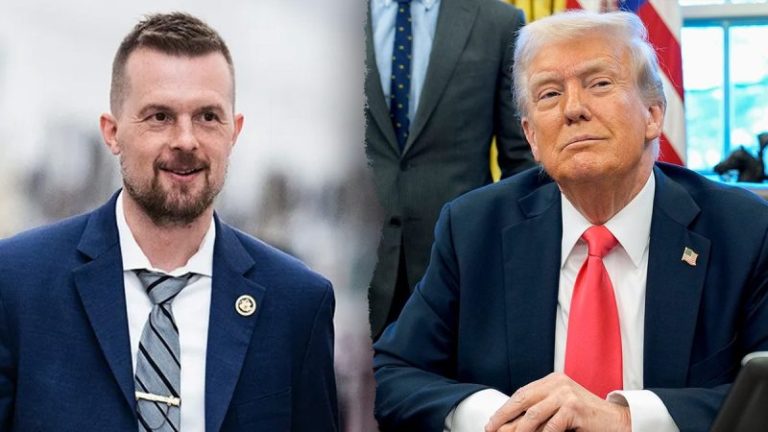
A moderate Democrat is expressing cautious optimism at President Donald Trump’s stance on tariffs in a stark departure from most of his party’s infuriated reaction.

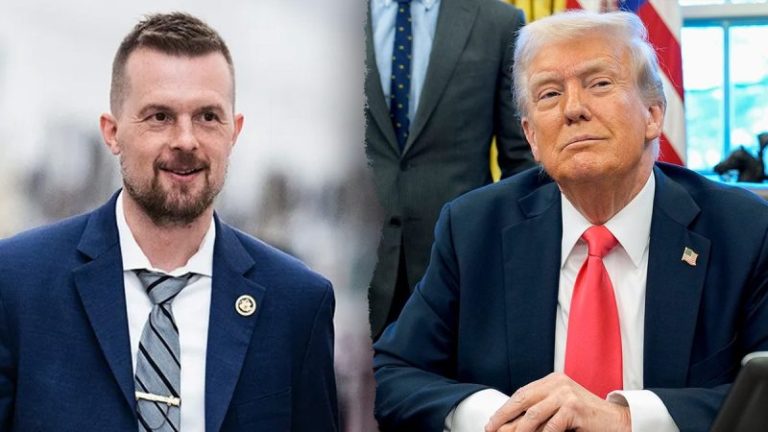
Rep. Jared Golden, D-Maine, pointed out in a lengthy statement that he himself proposed a 10% blanket tariff on U.S. imports earlier this year and said he was happy Trump’s baseline policy was the same– and even publicly pledged to work with Trump on enshrining it in federal law in a subsequent interview with Fox News Digital.

‘What I can say now is I’m pleased the president is building his tariff agenda on the foundation of a universal 10% tariff like the one I proposed in the BUILT USA Act. This ring fence around the American economy is a good start to erasing our unsustainable trade deficits,’ Golden said in his statement.

‘I’m eager to work with the president to fix the broken ‘free trade’ system that made multinational corporations rich but ruined manufacturing communities across the country. But tariffs must be paired with policies that prioritize American families’ prosperity.’

He noted, however, that Trump ‘introduced a number of new tariff policies’ alongside the 10% universal tax, and that he would need time to review the policies in detail before weighing in on them further.

‘We need to make sure that the new approach benefits working people — that means supporting unions, the trades and apprenticeship programs, cutting regulations that hold back production, unleashing American energy and using tariff revenue to support domestic manufacturers that create good-paying jobs for Americans,’ he said.

‘Tariffs are a first step in rewriting a rigged trade system, but they cannot be the last one.’

He told Fox News Digital in a brief interview Thursday that he was open to working with Trump on codifying the 10% tariffs measure in federal law.

‘I’m really glad that he included that in his kind of broader strategy that he rolled out yesterday. And on the reciprocal tariffs, I would assume that he wants flexibility, he probably likes doing that through an executive order,’ Golden said. ‘But I’m of the mind that the 10% global tariff is something that should be part of a longer-term strategy for the U.S. And so, you know, I’m hoping that I can help the president get some members of Congress to support doing that in a bill and maybe put it on his desk.’

‘I think that the president and his team would have to do some heavy lifting to make sure that the House Republicans supported it, but if they didn’t have a lot of defections, you know, could I find some like-minded Democrats for a 10% global tariff? I think so.’

While it’s far from a full embrace of Trump’s tariff plan, Golden’s comments are still more optimistic than those of his fellow Democratic lawmakers.

‘I have always said that when used strategically, tariffs are a critical tool,’ Rep. Debbie Dingell, D-Mich., told Axios. ‘However, the key word is ‘strategically.’ I’m concerned about the chaotic and immediate implementation of these wide-reaching tariffs.’

Meanwhile, Rep. Gregory Meeks, D-N.Y., the top Democrat on the House Foreign Affairs Committee, pledged to force a vote targeting the new national emergency Trump is using to justify the 10% blanket tariff.

‘I’ll soon introduce a privileged resolution to force a vote on ending the made up national emergency Trump is using to justify these taxes. Republicans can’t keep ducking this — it’s time they show whether they support the economic pain Trump is inflicting on their constituents,’ Meeks said in a statement.

Golden has been known to break from his party on several key occasions. 

Maine’s 2nd Congressional District, which he has represented since January 2019, was won by Trump by roughly 10% in 2024.

Trump’s plan involves a 10% blanket tariff on all imports into the U.S., as well as tariffs of up to 50% on both adversaries and allies.

It also introduces some level of reciprocal tariffs on countries that tax U.S. exports, though in most cases, the U.S. rate is lower than the foreign country’s.

‘April 2, 2025, will forever be remembered as the day American industry was reborn. The day America’s destiny was reclaimed. And the day that we began to make America wealthy again,’ Trump said in remarks announcing his plan Wednesday.

This post appeared first on FOX NEWS

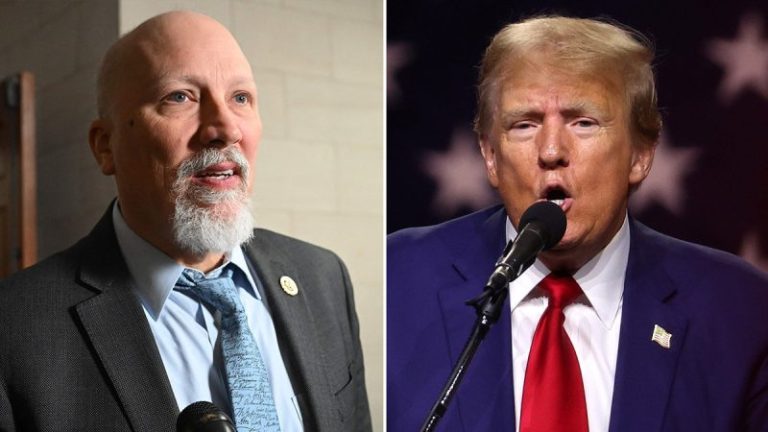
A key House Republican lawmaker is moving to bring more manufacturing back to the U.S. after President Donald Trump unveiled sweeping tax penalties on imports.

Rep. Chip Roy, R-Texas, policy chair of the House Freedom Caucus, introduced a bill Thursday aimed at providing tax incentives to companies that move their supply chains to the U.S. – so long as their output levels stay consistent in the move.

Roy told Fox News Digital he specifically had China in mind when crafting the legislation.

‘China is angling to surpass the United States as the world’s leading superpower, both politically and economically. If we want to preserve our strength and freedom as a nation, we cannot rely on adversaries like the Chinese Communist Party (CCP) to keep our shelves stocked and our economy prosperous,’ Roy said.

‘There is no time to waste. Congress must act swiftly and collaborate with the Trump administration to revise the tax code to incentivize the reshoring of foreign manufacturing to the United States. The BEAT CHINA Act will do just that, and I look forward to working with House leadership on this important matter.’

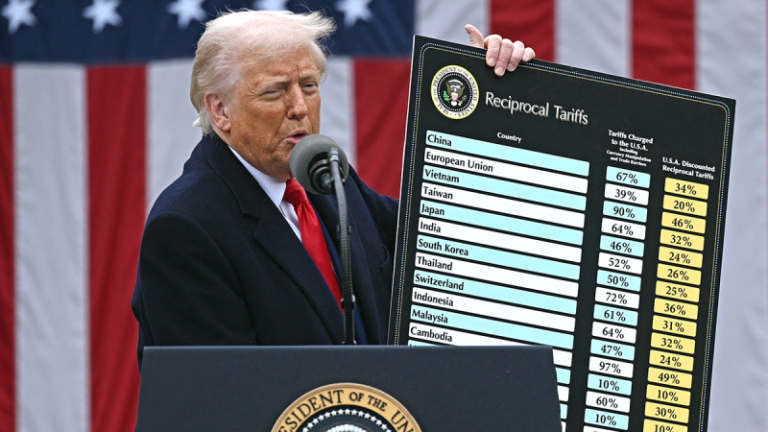
Trump’s plan involves a 10% blanket tariff on all imports into the U.S., as well as reciprocal tariffs ranging between 10% and nearly 50% on both adversaries and allies – though in most cases, the U.S. rate is lower than the foreign country’s.

‘April 2, 2025, will forever be remembered as the day American industry was reborn. The day America’s destiny was reclaimed. And the day that we began to make America wealthy again,’ Trump said in remarks announcing his plan Wednesday.

The plan levies a 34% reciprocal tariff against China specifically, compared to the 67% in tariffs that Beijing has slapped on Washington, according to White House data.

Roy’s legislation would affect leases and purchases of commercial space, making companies eligible for bonus depreciation by making non-residential real property purchases by qualifying manufacturers considered 20-year property instead of 39-year property.

It would also allow companies to exclude gains earned from selling off assets in their country of origin from gross taxable income, among other provisions.

This post appeared first on FOX NEWS

From the college diamond in Knoxville, to the 11th pick in the draft, to a lightning-quick debut, a trip to the operating table for a new elbow ligament, a hopeless situation with Major League Baseball’s worst team and finally, a trade that united his elite stuff with a team that could do something with it, Crochet has seen some things in his baseball career.

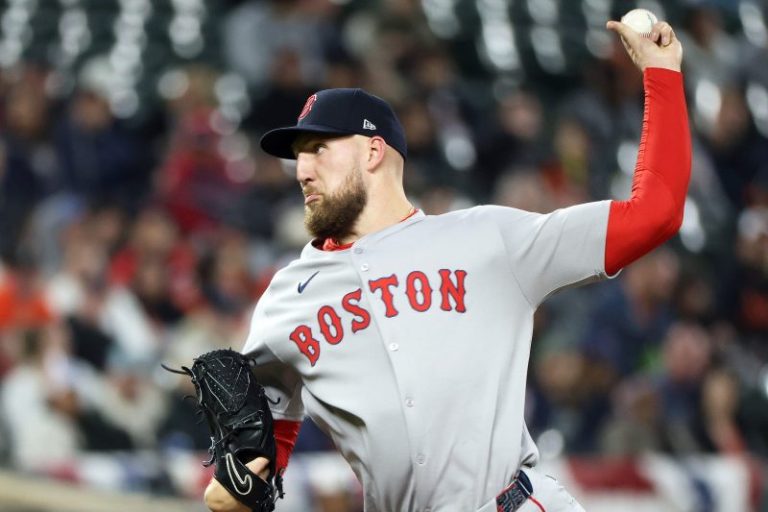
So when he took the mound Wednesday night at Camden Yards, barely a day after agreeing to a six-year, $170 million contract extension with the Boston Red Sox, Crochet enjoyed a freedom so unfamiliar that he couldn’t place the most recent time he felt it.

“I can’t think of the last time I played baseball for pride,” Crochet said after dominating a very good Baltimore Orioles lineup in a 3-0 conquest, his first win as a Red Sox. “In college, you’re playing to get drafted. Once you’re in the big leagues, you’re playing to stay in the big leagues.

“To have the security and feel like I’m playing to truly just win ballgames, it takes a lot of the riff-raff out of it.”

And suddenly, the skies on the horizon are looking very bright for Crochet and the Red Sox.

Sure, they’ve won just two of their first six games – both wins started by Crochet – but the events of the past 48 hours further cemented the Red Sox’s newfound aggression of playing both for now and the future, of procuring good players, putting their faith in them and then rewarding them with long-term security.

First, Crochet: With nearly two full years before free agency, the Red Sox and his representatives agreed on a six-year, $170 million extension Monday night, with a chance to opt out after the 2030 season.

Then, second baseman Kristian Campbell: He’s been a major leaguer for just six games but on Wednesday agreed to an eight-year, $60 million contract that gives him some cash up front and ties him to Boston through at least 2032, with two club options that can raise the value to $96 million.

All that comes on the heels of the bold trade that landed Crochet from the 121-loss Chicago White Sox, followed by the early-spring signing of Alex Bregman to a three-year, $120 million deal. The quick strikes come after five years of stasis, a span that roughly began with the unthinkable trade of Mookie Betts and flattened out after the past three years produced two 78-84 seasons and last year’s 81-81 campaign.

All the while, they lost championship stalwarts like Xander Bogaerts and Nathan Eovaldi, and become an utter non-destination, never really in the running for Japanese stars like Yoshinobu Yamamoto and Rōki Sasaki, and just courtesy players in the big-time Juan Soto sweepstakes.

Now?

Well, they’re not quite the Sox who won three championships in 10 years from 2004-2013 while sporting a payroll that typically ran second only to the Yankees. But the days of trying to cobble a playoff winner out of a 26-man aggregate of mediocrity are over, with general manager Craig Breslow committed to deploying the young talent his predecessor, Chaim Bloom, accrued while supplementing aggressively in the trade and free agent markets.

“It’s important. It’s huge,” says Red Sox manager Alex Cora, who led the club to a 2018 World Series title but had just one playoff squad in the years since.

“I told Bres congratulations, because it’s not easy. It takes two to tango, right? We’ve been able to secure some guys in this organization now that are going to be huge for us. It’s a good business decision, a good business model, too.

“Hopefully, we can continue that and secure more players.”

But the biggest get is already in place.

‘He’s a big boy’

At 6-foot-6 and 245 pounds, there’s really only one figure Crochet can cut on a mound: He’s freaking intimidating.

That elite extension on the mound that produces a 97 mph fastball and a deceptive delivery prompted the White Sox to draft him 11th overall in 2020, and bring him to the majors as a reliever a few months later in that pandemic-shortened season.

But Tommy John surgery would soon follow, wiping out his 2022 season, and when he came back, he was still dabbling in the bullpen, until the White Sox threw him in the rotation to start 2024.

Wise move.

Crochet made the All-Star Game and was a walking trade rumor thereafter, Chicago eventually pulling him off the market since suitors weren’t exactly sure what he could offer down the stretch in his first full year as a starter.

Yet Crochet was the biggest trade prize of the winter and Boston paid a premium to get him, with a package centered on elite catching prospect Kyle Teel and recent first-round pick Braden Montgomery.

They’d have Crochet for two seasons, but with one major surgery behind him and a desire to stay in Boston, team and player sniffed each other out for most of the spring. A comfort level was achieved. An Opening Day deadline to land an extension was set.

The sides were close. As Crochet readied for his second consecutive opening-day start, and first as a Red Sox, there was a growing sensation the sides might reach an accord.

It was a done deal by Crochet’s second turn through the rotation.

“There was really good dialogue leading up to Opening Day which made us feel pushing past the deadline was the right call,” says Crochet. “Becoming comfortable in a new organization is something that doesn’t come naturally.

“Once we got over to Fort Myers (in spring training), I think it really did. It came very organically and something me and my wife were really excited for.”

In Crochet’s first start as a University of Tennessee freshman, he pitched eight innings. He hadn’t seen the eighth inning as a starter since, at least until Wednesday.

That’s when Crochet subdued the Orioles so thoroughly, Cora went against his usual early-season instincts and let Crochet pitch the eighth inning after needing just 82 pitches to get through seven innings.

He’d need just 10 pitches to finish his masterpiece: Eight innings, four hits, eight strikeouts and one walk, retiring 11 in a row at that point.

This was like nothing Boston had seen since Chris Sale pitched them to the 2018 Series title.

“It’s electric. It’s on the attack, always,” says shortstop Trevor Story of the view from his infield perch. “Even the way he comes out on the mound, he’s a big boy and he’s coming right at you.”

It was the greatest game on Crochet’s resume, a sample size that’s small yet portends devastation for future opponents.

In 34 career starts beginning with 2024 Opening Day, he has 221 strikeouts to just 36 walks, a 3.40 ERA and nearly 13 strikeouts per nine innings. He did not pitch to his expectations in the 2025 opener at Texas.

Wednesday was different.

“It wasn’t so much the contract as much as my first one not going the way I wanted,” he says. “I felt like I was pitching on my heels.

“Today was more of a statement to myself: Who do I want to be this year? Who am I as a pitcher and a person? Someone who could be in the zone and win or lose with their best stuff.”

Meanwhile, the Red Sox are gathering forces around him.

A quick learner, a quicker payday

Like Crochet, Campbell’s agents were making progress on a long-term extension during the club’s trip to Texas. Yet this was so different: Campbell, 22, spent his spring training simply hoping to make the team and was less than two years removed from getting drafted in the fourth round out of Georgia Tech.

Yet he has so impressed the Red Sox both in skill level and his uncanny ability to improve that it basically went like this: You’re our second baseman. How about you stick around the next decade?

“It means a lot. They developed me from Day One,” Campbell said Wednesday, a couple hours after the contract was finalized. “As soon as I got drafted, they’ve been working with me every day. I’ve learned something new every day. They’ve helped me become the player I am today. So it means a lot to me that I’m with the Red Sox for a long time.

“It definitely is crazy. But it’s amazing. My family is very excited. They developed me. They put their trust in me.”

Yet Campbell gave them plenty of reasons for that faith.

Training with the Red Sox’s hitting group has increased his maximum exit velocity from 106 mph at Georgia Tech to 113. Diligent training with weighted bats cranked his bat speed up to an average of 74.4 mph, in the 85th percentile of all major leaguers in this early part of the year.

The results have matched the metrics.

He has three multi-hit games in his last five, doubling twice on Wednesday, and has a team-leading eight hits in six games. Meanwhile, he’s drawn rave reviews from Red Sox veterans and Cora for his work at second base, showing off-the-chart growth across spring training, which began with him on the backfields with Cora, the old middle infielder showing the kid how to move around the second base bag.

“Think about everything that was going on – trying to make a team, and then all this (contract) stuff happened,” says Cora. “It’s not easy. His teammates – he calls them friends, actually – have helped him to slow it down and we’re very happy he’s going to be a part of this. “

A visual learner, Cora calls Campbell. A burgeoning baseball genius, his teammates say.

 “He does so many things really well on the baseball field,” says Bregman, who can opt out of his contract after this season. “He’s only going to get better. Obviously, he’s young but he has a very advanced knowledge of the strike zone, swings at good pitches to hit.

“He hits the ball really hard. He’s continuing to get better ever since the first day I’ve seen him. From talking to people around the organization, that’s the way it’s been since he’s gotten here.”

Says Story: “It feels like he doubles every time.”

Campbell was part of the Red Sox’s big four of prospects, with Teel used as Crochet trade bait, outfielder Roman Anthony expected to be the best of the bunch and shortstop Marcelo Mayer lurking should any injuries befall the infield.

Yet it’s the overall organizational commitment that portends particularly good things.

‘That’s the reason he’s here’

Perhaps Crochet will be remembered as the pied piper of a Boston renaissance.

It was his acquisition that signaled the Red Sox meant business. Then, they showed Bregman the money when he festered on the free agent market, and very well could try re-upping him on a longer term come winter.

And now, certainty with Crochet.

“We’re in a good spot,” says Cora. “When you start getting deals like that, it means a lot – not only for the players but the fan base, right?

Along with potential acquisitions down the road.

“It shows again how willing ownership is to try and win. It’s exciting,” says Bregman. “You want to be in an organization that wants to win. They’ve proven that, obviously this offseason and now early in the season as well.

“Now it’s up to us to go win some games.”

Every fifth day, their odds should be outstanding.

“That’s the reason he’s here. That’s the reason we committed to him,” says Cora. “He’s a big guy. He has a presence out there. But he knows how to pitch.”

The USA TODAY app gets you to the heart of the news — fastDownload for award-winning coverage, crosswords, audio storytelling, the eNewspaper and more.

This post appeared first on USA TODAY

World leaders reacted to the sweeping tariffs President Donald Trump released this week impacting essentially every U.S. trading partner. 

The White House has implemented a flat 10% tariff on apparently all imports, though some nations saw drastically higher taxes slapped on their U.S. exports – including Vietnam, which was issued a 46% tariff one day after it slashed its tariffs on U.S. imports.

However, no nation was handed a higher import tax than China, which Trump revealed will have an additional 34% blanket tariff on its exports to the U.S. on top of the 20% tariff the president implemented earlier this year. This brings the total tariffs on Chinese goods imported into the U.S. to 54% – just shy of the 60% Trump pledged on the campaign trail.

CHINA – 54% tariffs

‘China firmly opposes this and will take countermeasures to safeguard its own rights and interests,’ China’s Commerce Ministry reportedly said in a statement. ‘There are no winners in trade wars, and there is no way out for protectionism.’

Chinese Foreign Ministry spokesman Guo Jiakun also warned that ‘Protectionism has no exit ramp’ and urged Washington to ‘correct its wrong practices and resolve economic and trade differences with other countries — including China — through fair, respectful and reciprocal consultations.’ 

EUROPEAN UNION – 20% tariffs

The EU, which was hit with a blanket 20% tariff on top of the 25% tariffs on steel and aluminum as well as car exports to the U.S., which are expected to severely impact European nations, pledged to strike back at Trump’s tariff war.

‘I know that many of you feel let down by our oldest ally,’ European Commission President Ursula von der Leyen said in a video posted to X. ‘Uncertainty will spiral and trigger the rise of further protectionism. The consequences will be dire for millions of people around the globe.’

The EU chief said the bloc was already finalizing countermeasures to Trump’s tariffs on steel and pledged to take similar actions to protect the pharmaceutical and auto industries ‘if negotiations fail.’

‘We must brace for the impact this will inevitably have. Europe has everything it needs to make it through this storm,’ von der Leyen added, noting the EU is the single largest market on the planet, which she said serves as Europe’s ‘safe harbor in tumultuous times.’

‘If you take on one of us, you take on all of us,’ she added. ‘Our unity is our strength.’

UNITED KINGDOM -10%

Leaders in the U.K. have repeatedly said they would not immediately respond to the blanket tariff – which coupled with the steel and auto tariffs, could have a significant impact on its economy – though London is taking steps to see which tariffs could be implemented that would have the least negative effect on its own businesses. 

British Trade Secretary Jonathan Reynolds reportedly told members of Parliament on Thursday that the U.K. will ‘not hesitate to act’ if an agreement with Washington to circumvent the tariff war cannot be met, reported Politico.

‘We will seek the views of U.K. stakeholders over four weeks until 1st May 2025 on products that could potentially be included in any U.K. tariff response,’ Reynolds said in a statement. ‘This exercise will also give businesses the chance to have their say, and influence the design of any possible U.K. response.’

CANADA – 25% tariffs

Canadian Prime Minister Mark Carney said Trump’s tariffs will ‘fundamentally change the international trading system’ and pledged to ‘fight’ back through ‘countermeasures.’

‘We’re in a situation where there’s going to be an impact on the U.S. economy, which will build with time,’ he added. ‘In our judgment, it will be negative on the U.S. economy that will have an impact on us.’

‘In a crisis, it’s important to come together,’ Carney said. ‘It’s essential to act with purpose and with force, and that’s what we will do.’

MEXICO – 25% tariffs

Mexican President Claudia Sheinbaum said she will ‘announce a comprehensive program’ to address Trump’s tariffs but will not engage in a ‘tit-for-tat on tariffs.’

Sheinbaum said she plans to ‘strengthen the economy under any circumstance.’ 

JAPAN – 24%

Japanese Prime Minister Shigeru Ishiba said, ‘We’re putting all options on the table in considering the most effective response.’

‘Japan is a country that is making the largest amount of investment to the United States,’ he reportedly told his Parliament. ‘We wonder if it makes sense for (Washington) to apply uniform tariffs to all countries. That is a point we’ve been making and will continue to do so. 

‘We need to consider what’s best for Japan’s national interest,’ he added, without detailing what specific steps Tokyo could take.

AUSTRALIA – 10%

Though Australia was among the nations hit with some of the lowest tariffs issued by the White House on Wednesday, Australian Prime Minister Anthony Albanese called them ‘totally unwarranted.’

‘President Trump referred to reciprocal tariffs. A reciprocal tariff would be zero, not 10%,’ he said at a press event. ‘The administration’s tariffs have no basis in logic, and they go against the basis of our two nation’s partnership.’

‘This is not the act of a friend,’ Albanese said.

Albanese pointed out that Americans will pay the heaviest price for the tariffs and said therefore he will not put reciprocal tariffs back on the U.S. 

‘We will not join the race to the bottom,’ he added, but pledged to continue to fight to have the tariffs removed. 

This post appeared first on FOX NEWS

Before Elon Musk waded into the political arena with the Department of Government Efficiency (DOGE), becoming a key target of Democrats in Congress and on the campaign trail, he was once considered an ally of former President Barack Obama and other Democrats.

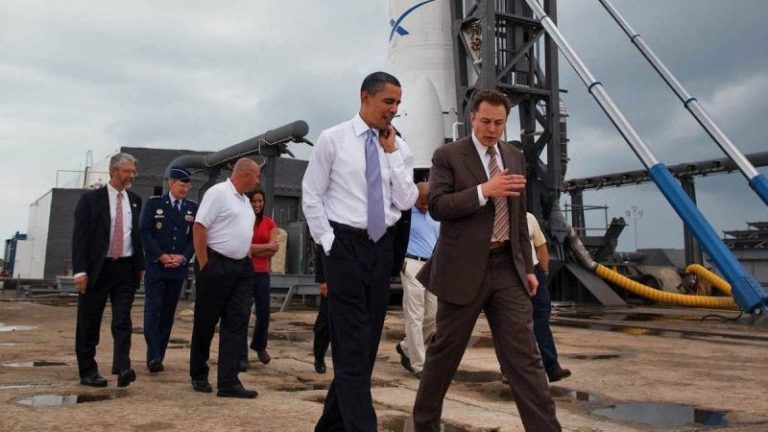
On April 15, 2010, Elon Musk was pictured with President Barack Obama while the president visited Cape Canaveral, Florida, Kennedy Space Center, while touring the ‘SpaceX launch pad.’ Now, SpaceX is one of the leaders in space travel, and it was mostly recently credited for bringing NASA astronauts stuck on the International Space Station back home.

‘By the mid-2030s, I believe we can send humans to orbit Mars and return them safely to Earth.  And a landing on Mars will follow. And I expect to be around to see it,’ Obama said at the time, according to a news release. 

‘But I want to repeat – I want to repeat this: Critical to deep space exploration will be the development of breakthrough propulsion systems and other advanced technologies.  So I’m challenging NASA to break through these barriers.  And we’ll give you the resources to break through these barriers.  And I know you will, with ingenuity and intensity, because that’s what you’ve always done,’ he added. 

The billionaire and advisor to President Donald Trump recently shared a 2011 clip from Obama expressing the need to crack down on excess government spending. 

‘Obama sounds exactly like [DOGE]!!’ Musk posted on March 13. 

In 2022, Musk said he pulled away from the Democratic Party, and he quickly rose to prominence beyond the business world and into the political arena after his purchase of X, formerly known as Twitter, and his support for Trump in 2024.

‘In the past, I voted Democrat because they were (mostly) the kindness party. But they have become the party of division & hate, so I can no longer support them and will vote Republican,’ Musk famously tweeted in May 2022. He donated to Obama multiple times during his 2008 and 2012 campaigns, according to Federal Election Commission records, further emphasizing the change over time of where he has placed his resources.

In recent months, Musk has faced an onslaught of vile attacks from left-wing activists and Democratic lawmakers comparing him to the late Nazi dictator Adolf Hitler. In February, ‘Squad’ member Rep. Ayanna Pressley, D-Mass., referred to Musk as a ‘Nazi nepo baby, a godless lawless billionaire, who no one elected.’ 

Former left-wing Rep. Jamaal Bowman, D-N.Y., said Musk is ‘incompetent. He’s a thief. He’s a Nazi. And people don’t trust him.’ This attack prompted Musk to say, ‘I’ve had enough. Lawsuit inbound.’

In addition to verbal attacks against Musk, there have been at least ’80 incidents of arson or vandalism against Tesla vehicles and 10 incidents of vandalism against Tesla dealerships, charging stations and facilities throughout the U.S. and Canada,’ according to a resolution introduced by Rep. Lauren Boebert, R-Colo.

In Tuesday’s special elections, Musk played a key role in the financial backing and rallying for Republican Wisconsin Supreme Court candidate Brad Schmiel, who lost to Democrat Susan Crawford. Meanwhile, Musk’s proximity to the president because of DOGE has led the two to be lumped together on the campaign trail.

‘Donald Trump and Elon Musk were crushed in Wisconsin. Keep the pressure on,’ House Minority Leader Hakeem Jefferies, D-N.Y., posted to X on Tuesday night. 

Obama’s office declined to comment for this story.

This post appeared first on FOX NEWS

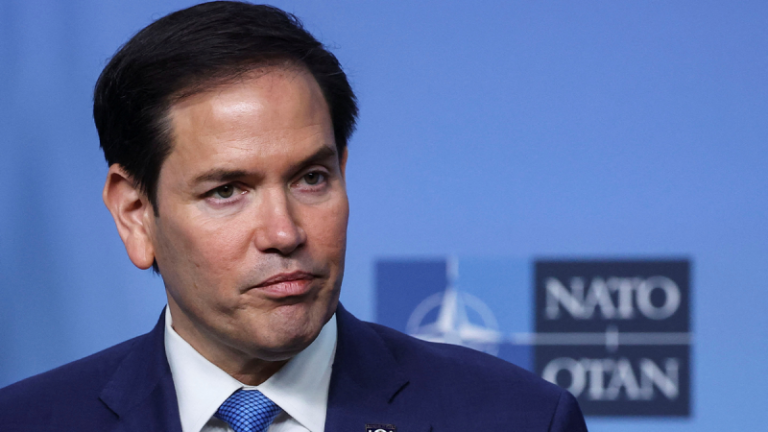
Secretary of State Marco Rubio on Thursday said NATO nations must provide a ‘realistic pathway’ to ramp up their defense spending to hit a 5% threshold – including the U.S.

‘I understand there’s domestic politics, after decades of building up vast social safety nets that maybe don’t want to take away from that and invest more in national security,’ Rubio said while speaking at a NATO foreign ministers event in Brussels. ‘But the events of the last few years… full-scale ground war in the heart of Europe as a reminder that hard power is still necessary as a deterrent.

‘We do want to leave here with an understanding that we are on a pathway, a realistic pathway to every single one of the members committee, and fulfilling a promise to reach up to 5% of spending,’ Rubio said, adding that ‘the United States will have to increase its percentage.’

While the majority of the 32 NATO members currently spend 2% of their nation’s GDP per previous NATO commitments, eight nations – Croatia, Portugal, Italy, Canada, Belgium, Luxembourg, Slovenia and Spain – have yet to meet their defense spending pledges.

Only Poland spends over 4% of its GDP on defense, while four other nations spend over 3% – Estonia, the U.S., Latvia and Greece. 

Despite the severe spending increases this will demand from all NATO nations, Rubio’s push is unlikely to be met with serious opposition as NATO Secretary-General Mark Rutte, and other NATO allies, have increasingly called for more defense spending. 

Washington in 2024 spent 3.38% of its GDP on defense, which equated to more than $967 billion, according to NATO figures released in July.

The U.S. closed out 2024 with a GDP of over $29.7 billion, which means it is on track to spend $1 trillion on defense in 2025 if it maintains the current expenditure rate of 3.38%. 

Rubio did not detail what timeframe he expected to see nations increase their defense spending to hit the 5% threshold, though if the U.S. did it in 2025, that would mean allocating nearly $1.49 trillion for defense – a figure that is higher than the current total spent by the entire NATO alliance, which collectively spent $1.47 trillion in 2024.

‘As we speak right now, the United States is as active in NATO as it has ever been,’ Rubio said. ‘Some of this hysteria and hyperbole that I see in the global media and some domestic media in the United States about NATO is unwarranted. 

‘The United States president [has] made clear. He supports NATO. We’re going to remain in NATO,’ he reaffirmed. 

Rubio said the only way NATO nations can truly deter aggressor nations like Russia and China is by collectively increasing each NATO nation’s capabilities to contribute to the alliance’s collective defense. 

‘We understand that’s a tradeoff,’ Rubio said. ‘We have to do it every single year in our country – I assure you that we also have domestic needs.

‘But we’ve prioritized defense because of the role we’ve played in the world, and we want our partners to do the same,’ Rubio confirmed.

This post appeared first on FOX NEWS

A moderate Democrat is expressing cautious optimism at President Donald Trump’s stance on tariffs in a stark departure from most of his party’s infuriated reaction.

Rep. Jared Golden, D-Maine, pointed out in a lengthy statement that he himself proposed a 10% blanket tariff on U.S. imports earlier this year and said he was happy Trump’s baseline policy was the same.

‘What I can say now is I’m pleased the president is building his tariff agenda on the foundation of a universal 10% tariff like the one I proposed in the BUILT USA Act. This ring fence around the American economy is a good start to erasing our unsustainable trade deficits,’ Golden said.

‘I’m eager to work with the president to fix the broken ‘free trade’ system that made multinational corporations rich but ruined manufacturing communities across the country. But tariffs must be paired with policies that prioritize American families’ prosperity.’

He noted, however, that Trump ‘introduced a number of new tariff policies’ alongside the 10% universal tax, and that he would need time to review the policies in detail before weighing in on them further.

Golden also said tariffs ‘must be paired with policies that prioritize American families’ prosperity.’

‘We need to make sure that the new approach benefits working people – that means supporting unions, the trades and apprenticeship programs, cutting regulations that hold back production, unleashing American energy and using tariff revenue to support domestic manufacturers that create good-paying jobs for Americans,’ he said.

‘Tariffs are a first step in rewriting a rigged trade system, but they cannot be the last one.’

While it’s far from a full embrace of Trump’s tariff plan, Golden’s comments are still more optimistic than those of his fellow Democratic lawmakers.

‘I have always said that when used strategically, tariffs are a critical tool,’ Rep. Debbie Dingell, D-Mich., told Axios. ‘However, the key word is ‘strategically.’ I’m concerned about the chaotic and immediate implementation of these wide-reaching tariffs.’

Meanwhile, Rep. Gregory Meeks, D-N.Y., the top Democrat on the House Foreign Affairs Committee, pledged to force a vote targeting the new national emergency Trump is using to justify the 10% blanket tariff.

‘I’ll soon introduce a privileged resolution to force a vote on ending the made up national emergency Trump is using to justify these taxes. Republicans can’t keep ducking this – it’s time they show whether they support the economic pain Trump is inflicting on their constituents,’ Meeks said in a statement.

Golden has been known to break from his party on several key occasions. 

Maine’s 2nd Congressional District, which he has represented since January 2019, was won by Trump by roughly 10% in 2024.

Fox News Digital reached out to Golden’s office for further comment but did not hear back by press time.

Trump’s plan involves a 10% blanket tariff on all imports into the U.S., as well as tariffs of up to 50% on both adversaries and allies.

It also introduces some level of reciprocal tariffs on countries that tax U.S. exports, though in most cases, the U.S. rate is lower than the foreign country’s.

‘April 2, 2025, will forever be remembered as the day American industry was reborn. The day America’s destiny was reclaimed. And the day that we began to make America wealthy again,’ Trump said in remarks announcing his plan Wednesday.

This post appeared first on FOX NEWS

The Trump administration is slashing millions of dollars in DEI grants from a library and museum system as part of its overall Department of Government Efficiency (DOGE) push to rid the government of waste, fraud and abuse.

The administration is cutting $15 million from the Institute of Museum and Library Services (IMLS) in the form of diversity, equity and inclusion (DEI) grants in a move the agency says is aligned with both DOGE and President Donald Trump’s executive orders aimed at eliminating DEI from the federal government. 

The grants include $6.7 million to the California State Library to enhance equitable library programs and $4 million to the Washington State Library for diverse staff development and incarcerated support. 

A $1.5M DEI grant to the Connecticut State Library system to ‘integrate social justice, diversity, equity, and inclusion’ into their daily operations is also being cut along with $700,000 for a Washington, D.C.-based nonprofit to study ‘post-pandemic DEI practices’ in American children’s museums that would formulate ‘enhanced equity-focused strategies.’

Additionally, a DEI grant of $265,000 going to Queens College in New York to conduct a research project on why ‘BIPOC’ teens read Japanese comic books will be cut along with $250,000 to fund the ‘Gay Ohio History Initiative’ to erect 10 ‘LGBTQ+ historical markers’ will be cut.

‘In keeping with the vision of the President’s executive orders, we are taking action to end taxpayer funding for discriminatory DEI initiatives in our nation’s museums and libraries,’ Acting IMLS Director Keith Sonderling told Fox News Digital in a statement.

‘Our cultural institutions should bring Americans together—not promote divisive ideologies. Moving forward, we must champion programs that uphold our founding ideals and reaffirm that the American Dream is within reach for all, through hard work and determination, not identity politics.’

The grant cuts come after IMLS reportedly cut 80% of its staff in a move aimed at slashing the bloated federal government while saving taxpayers additional millions. 

A recent study by the American Academy of Arts & Sciences found that federal funds represent only 0.3% of the total operating revenue for public libraries. The vast majority of funding comes from state and local sources.

The Institute of Museum and Library Services was one of seven government agencies targeted in Trump’s ‘Continuing the Reduction of the Federal Bureaucracy’ executive order last month.

Trump’s DOGE efforts have saved the American taxpayer $140 billion, according to its website, which represents almost $900 saved per taxpayer.

The Trump administration says it has slashed hundreds of millions of dollars in DEI contracts, including at least $100 million at the Department of Education. 

This post appeared first on FOX NEWS

President Donald Trump’s administration is moving to reclassify federal workers at two agencies in order to more easily fire them, Reuters reported Thursday.

The efforts are reportedly taking place at the National Oceanic and Atmospheric Administration (NOAA) and the Department of Energy (DOE). Trump had announced plans during his earliest days in office to recategorize tens of thousands of federal workers, arguing many of them oppose his policies.

‘I understand that there is a lot of concern and uncertainty about Schedule Policy/Career and want to provide the best information currently available,’ acting assistant administrator Emily Menashes wrote in an email to affected employees at the NOAA on Tuesday.

Most federal workers have protections requiring that they only be fired for cause. Trump signed an executive order on his first day in office creating a new classification of worker that can be fired at will, however.

In their new category, NOAA employees would remain career staff, not political appointees, but would be expected to support the administration’s agenda, an email to some NOAA staff said.

The DOE and the White House did not respond to a request for comment from Fox News Digital. The NOAA declined to comment.

The reported effort comes as Trump has already sought to fire tens of thousands of federal workers, many of whom have sued to keep their jobs.

At least one federal judge has ordered Trump’s administration to reinstate federal probationary workers that were fired in recent mass layoffs.

U.S. District Court Judge James Bredar issued an order on Tuesday directing 18 federal agencies to ‘undo’ the ‘purported terminations’ of thousands of probationary federal workers before Tuesday, April 8, though the order only applies to states whose attorneys general brought the case.

The states impacted by Wednesday’s ruling include Arizona, California, Colorado, Connecticut, Delaware, Hawaii, Illinois, Maryland, Massachusetts, Michigan, Minnesota, Nevada, New Jersey, New Mexico, New York, Oregon, Rhode Island, Vermont, Wisconsin and the District of Columbia.

Since Trump entered office, he has faced a slew of nationwide injunctions to halt actions of his administration. So far in his new term, the courts have hit him with roughly 15 wide-ranging orders, more than former Presidents George W. Bush, Barack Obama and Joe Biden received during their entire tenures.

Former House Speaker Newt Gingrich condemned the wave of injunctions as a ‘judicial coup d’etat’ during testimony before a House Judiciary subcommittee on Tuesday.

The former lawmaker highlighted that the vast majority of judges filing injunctions or restraining orders against Trump’s executive actions have been appointed by Democrats.

Reuters contributed to this report.

This post appeared first on FOX NEWS