Archive

2025

Browsing

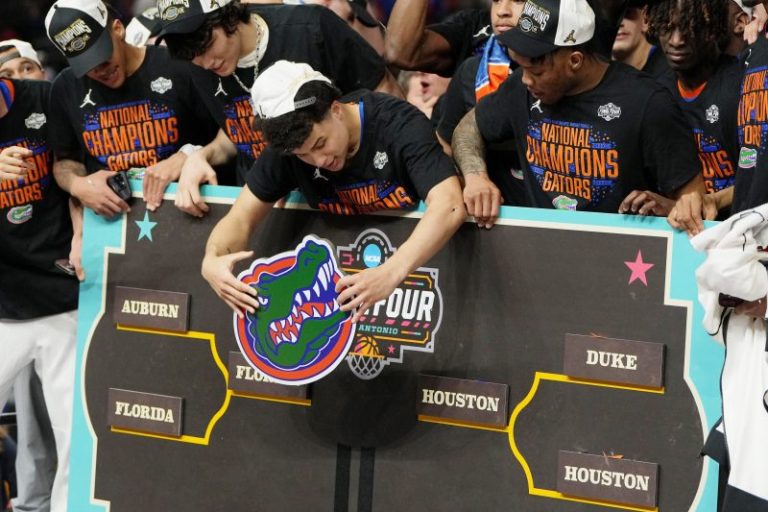
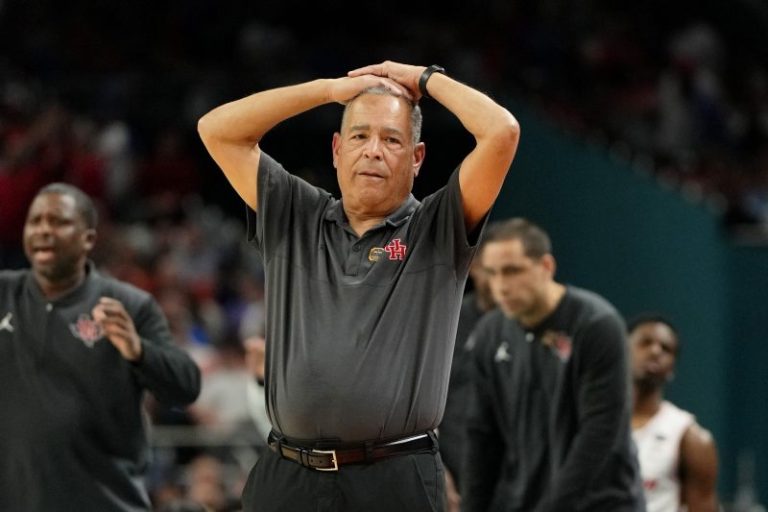
Florida is back on the top of men’s college basketball, and it came with a gut-punching ending for Houston.

In the winding seconds of Monday’s NCAA Tournament national championship game, the Gators blitzed multiple Cougars ball-handlers on Houston’s final possession and it led to a costly turnover by Emanuel Sharp at half-court that resulted in a steal by Florida’s Alex Condon.

A swarm of Florida and Houston players went for the ball after Sharp let the ball bounce after attempting a 3-point shot. Condon then gobbled it up and held on for the Gators’ 65-63 victory at the Alamodome in San Antonio.

Buy Florida championship book, gear

Florida caused four turnovers on defense in the last 2:05 of the second half, while holding Houston scoreless in that same span. Like they had in the past two games in the Elite Eight vs. Texas Tech and the Final Four vs. Auburn, the Gators overcame a 12-point deficit in the second half to cut down the nets Monday.

With the win, Florida claimed its third national championship title in program history while Gators coach Todd Golden became the youngest coach since Jim Valvano to lead a team to a national title at 39 years old.

Here’s what you need to know on why Sharp was unable to touch the ball:

Why was Houston’s Emanuel Sharp unable to touch ball in national championship game?

Sharp was unable to touch the ball at the end of the national championship because he violated Rule 9, Section 5 Article 7 of the men’s college basketball rule book as he walked with the ball.

‘It is traveling when a player falls to the playing court while holding the ball without maintaining a pivot foot.’

Since Sharp jumped up in the air on the play on his shot attempt, he had to drop the ball and become essentially a non-existent player on the court for the Cougars. As noted by CBS’ Ian Eagle and Bill Rafferty in the broadcast, Sharp was called for a walk on the court.

‘He walked. He can’t touch it,’ Rafferty said.

The USA TODAY app gets you to the heart of the news — fast. Download for award-winning coverage, crosswords, audio storytelling, the eNewspaper and more.

This post appeared first on USA TODAY

U.S. District Judge Claudia Wilken all but said Monday that she will not grant final approval to a proposed settlement of three athlete-compensation antitrust cases against the NCAA and the Power Five conferences unless the parties make changes to the agreement.

In a rapid-fire conclusion to the hearing, Wilken told the parties: ‘See what you can do about all these issues. Basically, I think it’s a good settlement — don’t quote me on that — but it is worth pursuing (how) to fix” the issues she raised.

This appears to create a situation similar to what occurred at the preliminary-hearing stage, when Wilken also sought changes. The parties made some slight revisions, and Wilken granted initial approval.

The presumptive agreement’s pillars are the payment of $2.8 billion in damages by the NCAA and the conferences that would go to current and former athletes — and their lawyers — over 10 years, and Division I schools would be able to start paying athletes directly for use of their name, image and likeness (NIL) starting July 1, subject to a per-school cap that would increase over time and be based on a percentage of certain athletics revenues.

However, during a daylong hearing in Oakland, California, Wilken raised concerns about a variety of issues connected to those two deal points, including:

●Team-by-team roster limits that would go into effect, in combination with the end of the NCAA’s current system of team-by-team scholarship limits. Wilken appears to want the roster limits phased in so current athletes would not immediately lose roster spots.

●The due-process legality of an arrangement under which future college athletes would be bound by the terms of the agreement, which is set up to run for 10 years, although athletes in each new class would have the opportunity to raise objections in court.

●The justification for a setup under which athletes’ name, image and likeness deals with entities other than their school that have a value of more than $600 would be subject to a review process to assess their legitimacy within the marketplace and such a deal with an athlete advances what is being termed by the NCAA and the conferences as “a valid business purpose.”

Lawyers for the principals hastily agreed to confer about next steps and to report in one week to Wilken, who suggested that to “fix everything,” the parties would “need to do some redrafting.”

Wilken heard from lawyers representing the principals and from more than a dozen parties who are objecting to the settlements. Representing the plaintiffs are Steve Berman and Jeff Kessler. They are the attorneys who led the Alston case against the NCAA that eventually resulted in a unanimous Supreme Court ruling in favor of the athletes. Representing the NCAA and the conferences is Rakesh Kilaru, an outside attorney based in Washington, D.C.

Read what happened in Monday’s hearing and what Judge Wilken wants addressed:

Hearing concludes. Wilken all but says she will not grant final approval without changes

In a rapid-fire conlusion to today’s hearing, Judge Wilken told the parties: ‘See what you can do about all these issues. Basically, I think it’s a good settlement ‒ don’t quote me on that ‒ but it is worth pursuing (how) to fix them.’

With Wilken concerned about the building’s impending closure for the day, the principals and the objectors’ lawyers agreed that the principals would get back to Wilken in a week with word of how they can address the issues raised. From there, the objectors would have one day to respond to any new changes to the deal.

Wilken’s concerns with rules around athlete NIL deals with third parties

Judge Wilken says she needs a ‘pro-competitve justification’ for the proposed system under the settlement that would set up a more stringent evaluation by the NCAA and conferences of the athletes’ NIL deals that are worth more than $600. That is, how would this promote competition for athletes’ NIL services and how would it not hurt athletes.

Kilaru says these evaluations are necessary to prevent circumvention of the schools’ annual cap on direct NIL payments to athletes and that it’s part of the overall agreement.

Wilken reponds: ‘Each thing (in the agreement) needs to be reasonable.’

Judge Wilken keeps pounding concerns about future college athletes’ rights

Judge Wilken asks NCAA lawyer Rakesh Kilaru about due process issues for future college athletes.

He rejects her idea of having the possibility of different rules for different class-years of athletes.

‘We need a 10-year agreement,’ he says. ‘There’s got to be the same rules for everyone. We need the 10 years. (Without that), there won’t be stability, there won’t be a deal.’

Wilken responds: ‘Go over it again with your people. … There are rules. … It may be technical, but there are rules’ in the law concerning due process.

Judge Wilken’s idea on dealing with roster limits

Judge Wilken returns to the issue of roster limits, saying: ‘My idea is this grandfathering.’ (That is, allowing current athletes to keep their roster spots.) ‘It’s not that many people. It’s not that much money.’ She added that it would be a ‘goodwill’ move that would resolve a lot of ‘sturm und drang.’

Wilken suggests that NCAA/conferences lawyer Rakesh Kilaru respond: ‘I’ll talk to my client and get back to you.’

Kilaru, instead, pushes back.

He says ‘independent of the settlement,’ a coach could cut an athlete at any point and could renege on a roster-spot commitment to a high school recruit, as long as an athletic scholarship commitment is honored.

Kilaru continues that roster limits are part of the overall settlement, and the issue before Wilken today is whether the ‘overall setttlement is reasonable.’ He adds that the roster limits, in combination with the lifting of all scholarship limits increases competition and opportunity for athletes ‒ it’s a benefit for them. He adds that the roster limits were not reached arbitrarily but were based on the total number of athletes who actually participate in competitions in the various sports over the course of a season.

In addition he said the roster-limits issue affects ‘a small number of folks’ compared to the ‘hundreds of thousands’ covered by the settlement.

Judge Wilken pressing lawyers about claims of future college athletes

Judge Wilken is asking questions about how future college athletes’ interests would be represented under the 10-year settlement being proposed. Plaintiffs’ lawyer Jeff Kessler explains that incoming athletes annually would be presented with a notice of an opportunity to raise objections with a court and they would be advised to consult with a lawyer or a parent. This would allow athletes and/or a judge to respond to changes in circumstances in college sports, Kessler said, and this would mean future athletes’ rights are not being bargained away at present.

‘We think this is totally consistent with due process,’ Kessler says.

Judge Wilken still seems reluctant on this issue and whether there are legal precedents.

‘I understand the question,’ Kessler says. He thinks the annual review would cover the problem.

As this discussion continues, Rakesh Kilaru ‒ attorney for the NCAA and the conferences ‒ reiterates that future college athletes will be able to come before a court in the same way that current and former athletes have been able to come before the court today with objections.

‘I think it’s going to be difficult for them to say, ‘That’s a problem,’,’ because of the benefits that would be provided, Kilaru said.

Wilken still wants to know what happens if she or another judge decides that a future objector has a sufficient problem to merit a change in the agreement.

Kessler says a judge would then be allowed to terminate the settlement.

Judge Wilken asks about approving one settlement while leaving others

Judge Wilken is interested in approving parts of the universal, multi-case settlements ‒ but NCAA lawyer Rakesh Kilaru says NCAA and the conferences will not be interested in a partial settlement. They want full approval or not.

Scheduled presentations done; now questions from Judge Wilken

All of the scheduled presentations by lawyers for the principals and objectors are complete. We now move to a part of the hearing in which Judge Wilken will be asking questions.

What’s the role of the College Football Playoff in settlement?

A lawyer repesenting Florida State quarteback Thomas Castellanos as an objector raised questions about the role of the entity operating as the College Football Playoff’s role in the settlement. The argument is that it is not clear in the proposed settlement whether the CFP is being released from liability. Judge Wilken says she will ask the principals’ lawyers about this.

Remember, the CFP operates separately from the NCAA. The NCAA has some oversight of ‒ but no role in ‒ the operation of the Bowl Subdivision football’s postseason. The NCAA does not collect any of the revenue from the CFP or from bowl games.

Possible impediment to Judge Wilken’s final approval

Another objector group’s lawyer, Andrew Ellis, started making a presentation, and Judge Wilken immediately re-directed him toward the issues of the legality of the settlement as it pertains to future college athletes, since the proposed settlement would be in place for 10 years.

Wilken: ‘Can you have a class of future people who aren’t known yet? Can you release claims for things that haven’t occurred yet?’

Ellis responds that, in his view, the only way to achieve this would be for there to be a separate set of lawyers working to represent those interests, rather than the curremt situation in which the plaintiffs’ lawyers are representing current college athletes, former college athletes and future college athletes.

If Wilken accepts this view, it would be a major impediment to her granting final approval.

Hearing breaks for lunch

The hearing is going into a pre-planned lunch break that is scheduled to last an hour.

When the hearing resumes, Judge Wilken is first set to hear from three more lawyers representing objectors. It appears that she will then give lawyers for the principals some rebuttal time and follow that by having more detailed questions for the lawyers.

Judge Wilken again skeptical of Title IX argument

Objectors’ lawyer Leigh Ernst Friestedt is representing four female athletes, including lacrossse star Charlotte North.

She argued against how little of the damages would go to women, but Judge Wilken again says: ‘We can’t solve all these problems retrospectively. It’s too bad, but …’

The argument from the objectors here is that had schools been allowed to make NIL payments to athletes, absent the NCAA’s restrictions, those payments would have been subject to Title IX’s gender-equity requirements.

Former Washington football player also critical of settlement

Ben Burr-Kirven, who was an All-American linebacker at Washington, followed Dunne and was critical about damages, as well.

He said his damages award would be significantly lower than those of players who had less renown and lessser accomplishments on the field. He said the damages methodology is not clear and/or illogical.

He alleged that the plaintiffs’ lawyers ‘want to get their fees and move on.’ He said, they need to ‘go back and do the work.’

Olivia Dunne, viral LSU gymnast, speaks

The LSU gymast, appearing remotely via Zoom, describes herself, in part, as ‘a businesswoman.’

She then proceeded a deliver a blistering critique of the settlement, saying that the amount of damages she would be awarded under the settlement ‘doesn’t come close to recognizing the value I lost.’

She called this ‘not just a personal detail, but a warning sign.’

She said she attempted to get this fixed through the portal that gives information to athletes about their damages payments, but had no success.

She also had concerns about submitting that information due to her deals’ non-disclosure requirements.

‘I knew the numbers were wrong. I had the proof,’ she said.

She said the plaintiffs’ lawyers who are overseeing damages distributions are ‘receiving hundreds of millions’ in fees and costs from the settlement (as much as $775 million over 10 years, based on their filings with the court) ‘and they don’t know the data being received.’

High school athlete: ‘No one can explain why roster limits are good’

Gracelyn Laudermilch, a high school runner from Pennsylvania, says she is appearing today without an attorney because there is no one repesenting her interests in the settlement.

As she wrote in her filed objection, she says she had made a decision among several colleges, informed the coach and then was told there would not be a sport for her. She did not identify the school.

‘No one can explain why roster limits are good for anyone,’ she says.

Addressing Wilken she says, emotionally: ‘Our futures are in your hands.’

The first athlete to speak: Utah swimmer

Utah swimmer Gannon Flynn speaking about roster limits says that because of proposed roster limits, athletes already are being told to ‘transfer or quit outright.’

He calls the proposed limits ‘cruel.’

Citing participation data collected by the U.S. Department of Education, Flynn says that more than 5,300 athletes will lose their roster spots under the proposed roster limits.

He says this is not taking into account teams that could get dropped ‒ and he cites recent decisions by Cal Poly to drop swimming and Virginia to drop diving.

What’s at stake today

Here is what’s at stake in today’s hearing:

An arranagement that would include nearly $2.8 billion in damages that would go to current and former athletes — and their lawyers — over 10 years. The arrangement also would allow Division I schools to start paying athletes directly for use of their name, image and likeness (NIL) starting July 1, subject to a per-school cap that would increase over time and be based on a percentage of certain athletics revenues.

The proposed allocation of the damages would heavily favor football and men’s basketball players because of modeling done by an economics expert for the plaintiffs who determined that those athletes had the greatest value in the marketplace while the NCAA had restrictions on athlete NIL activities.

This will be challenged by objectors today, based on Title IX, the federal gender equity law. Among other reasons, the objectors say that since this money would have come from the schools, it is subject to Title IX requirements.

However, those two elements would be just part of a comprehensive reshaping of college sports that would occur under the settlement.

Among other changes:

●NCAA leaders would seek to engineer rules changes eliminating longstanding, sport-by-sport scholarship limits and replacing them with a new set of roster-size limits. In the first academic year after final approval of the settlement, the roster limit in football, for example, would be 105. Some FBS programs have had many more than that. Rosters in other sports at some schools also stand to be reduced. This is likely to be a target of objectors today.

●While athletes would continue to have the ability to make NIL deals with entities other than their schools, the settlement would allow the NCAA and the power conferences to institute rules designed to give the power conferences — through a new entity they are creating — greater enforcement oversight of those arrangements. This, too, is likely to come up today.

We are underway

All lawyers and objectors have made appearances and Judge Wilken has taken the bench.

No ruling today

Judge Wilken says she will not be ruling from the bench today. This is not a surprise.

What will be addressed today

Judge Wilken runs down issues she will be considering today and beyond in her decision to approve.

And the list is lengthy: Claims of future college athletes, third-party NIL agreements, roster limits (although Wilken says there ‘may be a workaround to this problem’), an existing cap on payments being replaced by another cap.

She says she does not see see this as a Title IX case or as being the correct vehicle for determining whether there should be a collective bargaining agreement for college athletes.

Plaintiffs talk about risk of no settlement

Plaintiffs’ lawyer Steve Berman says that more than 88,000 athletes have submitted claims ‒ about 30% of those eligible.

He also says that a risk of not settling or the settlement being rejected is that Congress will act to give the defendants immunity from what he says would be $10 billion in risk from the House case and billions more from the other cases that would be part of a settlement.

Berman says that Sen. Ted Cruz (R-Texas) is prepared to introduce a bill that would provide this immunity. However, Cruz has not gone beyond a discussion draft that would provide more limited protection for schools.

Plaintiffs make case about support for settlement

Plaintiffs’ lawyer Jeff Kessler adds to Berman’s report on claims from athletes, saying that more than 30,000 more athletes have updated address information, so he says a total of more than 118,000 athletes have expressed support. ‘There is huge support for this settlement’ in the college sports community. He says this is the largest amount of participation in a settlement that he has seen in his lengthy career as an antitrust litigator.

Judge’s questions about future

Judge Wilken, as she did during preliminary approval hearing, raises concern about appropriateness of the settlement setting terms for future college athletes and the ability of those athletes to raise objections ‒ or, as she put it ‘the 10-year-old playing kickball on the asphalt who would not be aware’ of the settlement.

Judge’s skepticism about roster limits

NCAA lawayer Rakesh Kilaru, arguing in favor of the settlement, extols the virtues of scholarship limits being eliminated in favor of roster limits. Wilken cuts him off and says: ‘That’s small comfort (to) the ones who don’t get the roster spot or the scholarship.’ She expresses particular concern for athletes who have made school choices based on having roster spots available, ‘and then being told unceremoniously they wouldn’t have one.’

Kilaru says it’s the settlement as a whole that’s at issues. He says ‘you wouldn’t have the revenue sharing’ thorugh school NIL deals with athletes without the roster limits.

Judge asks about phase-in for roster limits

As NCAA lawyer Kilaru continues talking about merits of no scholarship limit vs. roster limts, Wilken asks whether there ‘could be an interregnum period’ and could be phased in until current athletes graduate. Kilaru responds that is not part of the settlement deal that required not only negotiation with plaintiffs but to get the schools to agree to it.

Objectors begin making their cases

Steve Molo, a lawyer for a group of objectors, says he is not here to ‘blow up the settlement, but it needs to be fair.’ And he argues it isn’t, with regard to the start of roster limits.

In a free market, he says, schools should have as many players as they want.

Wilken: ‘Why?’ Isn’t there a competitive advantage problem?

Molo: We haven’t seen that effect so far.

Wilken: Do you want scholarship limits or roster limits?

Molo: ‘I want neither.’

Wilken again raises the prospect of a phase-in. But she says the issues isn’t athlete disappointment ‒ but rather whether the roster limit is an antitrust violation as it pertains to current athletes, as opposed to future athletes who would know these rules.

Title IX arguments and cap arguments not getting traction

Molo tries to make case for Title IX being applicable to the damages distibution and the idea that one salary cap would be replaced by another with schools’ NIL payments to athletes being limited to 22% of certain revenues.

Wilken says the new cap proposed by the settlement needs to be judged based on the balance of risks and rewards of the settlement compared to continued litigation.

Judge Wilken having trouble following next objection

Up next for the objectors is a group represented by Michael Hausfeld, who was the lead attorney for plaintiffs in the Ed O’Bannon litigation ‒ another case overseen at the district court level by Judge Wilken.

Hausfeld also makes an argument against the cap that would be placed on schools’ NIL/revenue-sharing payments to athletes. He is also attempting to make an argument against the rules that the NCAA and conferences plan to impose regarding their evaluation of the appropriate market value of NIL deals with non-school entities. These are the deals that currently are being made through collectives.

Wilken says she is having trouble following his point, however.

Another objector on roster limits

Attorney Laura Reathaford, who notes that she is representing her daughter’s objection to the settlement, says of the roster limits: ‘This is a harm argument.’ She says injunctions such as the one that would set the stage for the NCAA’s rules going forward on roster limits should ‘prevent harm. This injunction is creating harm.’

Judge Wilken remarks that in a case covering 390,000 people it’s difficult to have a situation where no one is getting harmed.

Reathaford argues ‘that is completely not allowed,’ and cites several prior cases that she says backs up her contention.

Wilken asks for a solution.

Reathaford says she likes the ‘grandfathering’ idea that Wilken has mentioned earlier in the hearing.

Judge Wilken calls for recess

Judge Wilken takes 10-minute recess. She says that when hearing resumes, she will be calling the athletes who are objecting and appearing today on their own, without a lawyer. Among these athletes is Livvy Dunne, an LSU gymnast and renown social-media influencer.

This post appeared first on USA TODAY

WASHINGTON — Winning the World Series and earning the celebratory trip to the White House to see the president still isn’t getting old for the Los Angeles Dodgers, even as they’ve won two championships in the past five years.

Manager Dave Roberts, for instance, particularly enjoyed his first peek at the Oval Office, which Dodgers players and staff rolled through, single file, after getting feted by President Donald Trump.

‘I actually got a chance to take a photo in front of the Declaration of Independence,’ Roberts said Monday of the national treasure hanging in the Oval Office.

‘For myself, who’s a History major, that’s a picture I’m going to cherish for a long time.’

History, such as it is these days, was wedged into virtually every minute before and after the Dodgers were toasted in the East Room.

With Trump holding steady on controversial tariffs that have roiled global markets, the Dow Jones Industrial Index was down 709 points, or nearly 2%, as the Dodgers’ ceremony concluded around noon. About an hour after regaling the Dodgers, Trump took a meeting with Israeli Prime Minister Benjamin Netanyahu, to talk both tariffs and, as Trump put it, the significant ‘help’ afforded the ally in its war in Gaza.

And as the Dodgers got ready to stretch and warm up for their Monday night game at Nationals Park, the Supreme Court sided with Trump lawyers and placed on hold a judge’s order that the Trump administration must bring back to the United States a Maryland father it had mistakenly deported to El Salvador.

Unprecedented times, indeed.

Trump and his administration’s part in policies that a significant portion of the Dodgers fan base finds odious – and even resulted in the scrubbing of Dodgers trailblazer Jackie Robinson’s accomplishments from a government web site – made this trip a loaded proposition.

Yet unlike 2019, when current Dodgers superstar Mookie Betts and roughly half the 2018 champion Boston Red Sox skipped a trip to Trump’s White House, the Dodgers – save injured star Freddie Freeman – were all present and accounted for.

Even those who had chafed against Trump in the past.

‘They don’t agree with the decision to go,’ says Dodgers playoff hero Kiké Hernández of disillusioned fans, ‘but they have the right to have an opinion.’

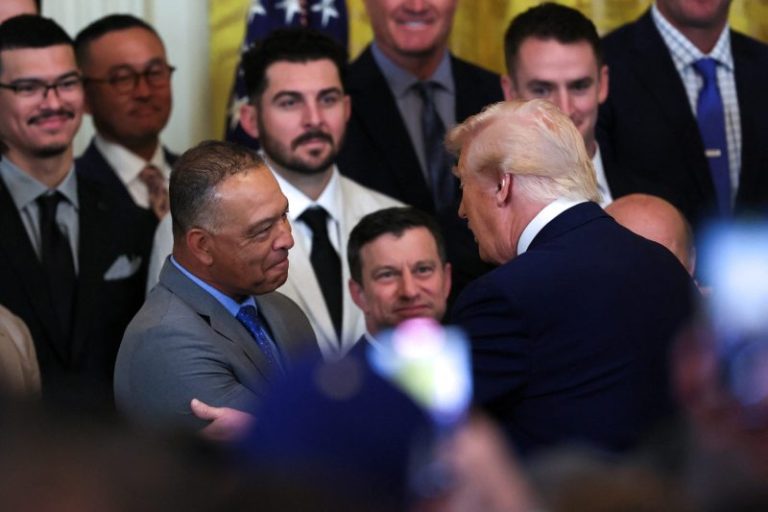
Hernández had criticized Trump after his treatment of Puerto Rico in his first term. He was among the handful of Dodgers Trump made a point to depart the dais and shake hands during the 25-minute ceremony.

So, too, was Betts, whom Trump lauded for his ability; the president seemed to hold that handshake a beat longer than those with Hernández, Max Muncy and, of course, the great Shohei Ohtani.

‘A nice touch,’ says Betts. ‘He kind of recognized a lot of us in that situation and I think it kind of shows it wasn’t just one man that won that 2024 World Series. It was a collective unit.’

Betts on Friday confirmed his attendance on the White House trip and told reporters then he was in a no-win situation that ‘comes with the territory, being Black in America in a situation like this. It’s a tough spot to be in. No matter what I choose, somebody is gonna be pissed.’

Monday, he stressed the solidarity with teammates.

‘As long as I’m there with the boys and they’re with me, no matter where we are, we have to celebrate this accomplishment. It was good,’ says Betts. ‘These are the stories we’ll get to tell when we’re done playing. Years from now we’ll call each other, see each other and talk about this.

‘These are essentially the people we kind of do life with. You definitely have to be there with them and have fun with them no matter where you are.’

Trump certainly lapped it up, laying out details of the Dodgers’ playoff run while interspersing his freestyle comments in between, often remarking on being surrounded by such physical talent.

‘These are the best-looking people I’ve ever seen,’ he said after shaking Clayton Kershaw’s hand.

After his remarks, Trump enjoyed a moment with Ohtani in the Oval Office, calling him ‘an amazing athlete and person.’ Ohtani, perhaps the globe’s most talented and well-known athlete, seemed similarly awestruck in the throes of power.

:It’s a tremendous honor to be visiting the White House, to be able to meet with the highest power in this country,’ Ohtani said via club translator Will Ireton after he fell a double short of the cycle in the Dodgers’ 6-4 loss. ‘I am in this country because of the opportunity I was given.

‘So I’m very grateful that I’m here getting to play baseball every day.’

Kershaw, the future Hall of Famer, was tasked with reading prepared comments on behalf of the players, a slightly awkward spot for him since injuries prevented him from pitching in the playoff drive. Freeman, their Game 1 grand slam hero, was the intended speaker, but he was back in California rehabbing his ankle injury, so it was left to the franchise scion.

‘I know there’s been a lot of stuff about should the Dodgers go and all this stuff,’ Kershaw said Monday afternoon. ‘But at the end of the day, getting to go to the White House, getting to see the Oval Office, getting to meet the President of the United States, that’s stuff that you can’t lose sight of, no matter what you believe.

‘I was super honored to get to go today. It was an incredible opportunity and I’m glad we got to be a part of it.’

By evening, the Dodgers were back to the business of baseball, even if they and their owners might’ve been lighter in the pocket with the stock market’s wild roller-coaster ride. History, as Roberts well knows, will render a verdict on this swath of time.

With that in mind, was an Oval Office trip worth it?

‘Coming out of it I think we all felt really good about it,’ Roberts said. ‘We wanted to go there to again recognize our ’24 team. There’s a lot of people in our organization that were there that have different backgrounds, different races, genders and all that stuff, and we were all there.

‘I thought it was a really good experience.’

This post appeared first on USA TODAY
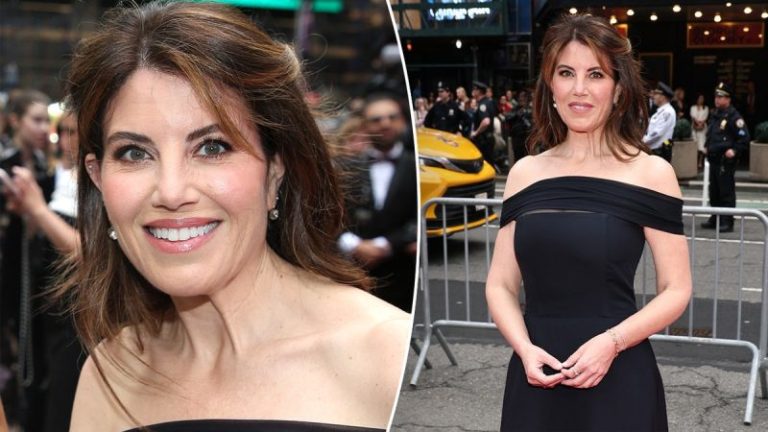
Monica Lewinsky has been welcomed with open arms by the Hollywood elite decades after her affair scandal with then President Bill Clinton in the ’90s.

Lewinsky, who has been in the public eye since 2017, attended George Clooney’s star-studded Broadway premiere of ‘Good Night, and Good Luck’ in New York City on April 3.

While smiling for pictures before the event, Lewinsky wore a strapless, asymmetrical black gown that had ruffle detailing at the bottom. She paired her look with black heels and styled her hair down.

Several A-listers attended Clooney’s big Broadway premiere. Cindy Crawford attended the show with her husband, Rande Gerber, and daughter Kaia.

Hugh Jackman, Uma Thurman, Jennifer Lopez and Julianna Margulies were also photographed at the event. 

Nearly three decades ago, Lewinsky, who was a former White House intern while Clinton was president, had an affair with the former president. Clinton subsequently had an impeachment trial that came about in December 1998.

The president was 49 at the time of the incident. Lewinsky was 22. Following the scandal, Clinton was acquitted. After a few public appearances in an attempt to reinvent herself, Lewinsky disappeared from the spotlight in the mid-2000s.

In 2017, Lewinsky emerged back into the limelight and began writing for Vanity Fair. Now, according to its website, she is a contributing editor. 

‘She is an anti-bullying social activist, global public speaker, and producer with her company, Alt Ending Productions,’ the outlet states. 

Her latest story for the outlet was on March 31, and before that was an article published before the 2024 presidential election.

In January, Lewinsky launched her own podcast, ‘Reclaiming with Monica Lewinsky.’ 

The synopsis of her show states, ‘Every week, I’ll draw from my own unique experiences (like say, surviving a global scandal at 24 years old), and delve into the personal and often messy ways people find their way back to themselves.’

Since launching, Lewinsky has had Olivia Munn, ‘Wicked’ director Jon M. Chu and Tony Hawk on her podcast.

At the 2025 Vanity Fair Oscar party, Lewinsky posed with Munn and her husband, John Mulaney, for a photo.

A month after launching her own podcast, Lewinsky was a guest on the ‘Call Her Daddy’ podcast, which was then topping the charts.

During the appearance in February, podcast host Alex Cooper asked Lewinsky how she thought the media should have covered her scandal in the ’90s.

‘I think that the right way to handle a situation like that would have been to probably say it was nobody’s business and to resign, or to find a way of staying in office that was not lying and not throwing a young person who is just starting out in the world under the bus,’ Lewinsky said.

Beyond her own life falling apart, Lewinsky explained how her scandal affected women everywhere.

‘I think there was so much collateral damage for women of my generation to watch a young woman be pilloried on a world stage, to be torn apart for my sexuality, for my mistakes, for my everything,’ Lewinsky said.

‘I think there was so much collateral damage for women of my generation to watch a young woman be pilloried on a world stage, to be torn apart for my sexuality, for my mistakes, for my everything.’

— Monica Lewinsky

In 2021, Lewinsky told People magazine that she has found the courage to examine what occurred ‘between the most powerful man in the world and an unpaid intern less than half his age.’

‘For me, at 22, there was this combination of the awe of being at the White House, the awe of the presidency and the awe of this man who had an amazing energy and charisma was paying attention to me,’ she explained. ‘I was enamored with him, like many others. He had a charisma to him, and it was a lethal charm, and I was intoxicated.’

‘I think there are a lot of people who might find themselves in these situations,’ she continued. ‘It might be a professor or a boss, your immediate supervisor at your job. We think we’re on his terra firma in our early 20s, and yet we’re really on this quicksand. [You think], I’m an adult now. It didn’t matter that I couldn’t get a rental car without a parental signature.’

At the time, Lewinsky was a producer of ’15 Minutes of Shame’ on HBO Max, which explored cancel culture. Lewinsky insisted she no longer needed an apology from Clinton.

‘If I had been asked five years ago, there would have been a part of me that needed something, that still wanted something,’ she said. ‘Not any kind of relationship, but a sense of closure or maybe understanding. And I feel incredibly grateful not to need any of that.’

Lewinsky told the outlet at the time that she hoped her story would spark discussion about the dynamics between men in power and those without it.

‘As we all came to see, it wasn’t just about losing a job but about the power to be believed, the power to be inoculated from the press, the power to have others smear someone’s reputation in all the ways that work, the power to understand consequence having held many important jobs where this was my first out of college,’ she said.

This post appeared first on FOX NEWS

Hamish McKenzie, the co-founder of Substack, is suddenly speaking out.

‘We are living through the most significant media disruption since the printing press, and it explains everything from why you can’t stand your neighbor to our current political tumult.’

Today, he says on his site, ‘we live in a more chaotic environment, where the narrative frenzy of social media has given rise to political movements that gain power through exploiting attention of any kind, positive or negative, from moral panics to fulminating podium-thumpers. We’ve gone from ‘Ask not what your country can do for you’ to dunk tweets and death-by-emoji.’

Obviously, it’s in McKenzie’s interest to portray a media revolution with him as the chief rebel. When Substack launched in 2017, it was viewed as an intriguing experiment, an outlet largely for those who didn’t have one.

But in the Trump era, with his constant cable appearances and Truth Social posts, there’s little question that we’re submerged in a toxic environment. The president gets this, which is why he’s done a number of podcast interviews. 

He went on Joe Rogan and Kamala, uh, did not. 

Now, with big-name journalists giving up prime television gigs in favor of the site’s independence, we are living in the Substack Era. What was once viewed as the Holy Grail – an anchoring or hosting job on a major network – is now dismissed as old-school legacy media with too many corporate constraints.

Take my former Fox colleague Chris Wallace. He left for CNN (actually CNN-plus, which was euthanized in three weeks) and then launched a Saturday talk show. But Chris recently announced he’s leaving the network to go independent, which undoubtedly includes Substack.

Another ex-Fox colleague, Megyn Kelly, had a similar experience. Having been dropped by NBC after a bad experience there, she started a daily show and video podcast on Sirius XM, and now has 3.2 million subscribers on YouTube.

Chuck Todd, having been eased out of his ‘Meet the Press’ job, was given an online streaming show. But not long ago he announced he was leaving NBC to go independent. 

When Dan Abrams gave up his NewsNation show after three years, he said: ‘As much as I love this show and the mission of this network, I just can’t continue to give this show the attention it needs and deserves with all of my other professional commitments.’ The Mediaite founder later announced that he is concentrating on creating a YouTube channel for the site, working with other media folks.

McKenzie’s great insight is that he could connect writers and podcasters directly to their audience, with Substack taking a cut. They can opt for a revenue-sharing agreement. Now you might ask, what if you’re not a famous former anchor or commentator?

Turns out that niche sites do really well. They can work at other jobs at the same time. Many users report a six-figure income. 

This is especially striking in that most Substack people let you read their sites for free, or a shortened version, with the full column and special features available only for paying subscribers. The hope is that some of the freeloaders will become subscribers over time.

Not everyone winds up at Substack voluntarily. Chris Cillizza, the former Washington Post columnist, is quite candid in saying he came to Substack after being laid off at CNN. He found himself with little to do after dropping the kids at school.

‘I started this Substack — selfishly — to help me grapple with my changed life. To give me a platform where I could express myself — hopefully to an audience — about the world of politics, yes, but also how I was navigating a new reality.’

He has slowly built a following and chats with Todd once a week, which is something that Substackers do.

Casandra Campbell of Really Good Business Ideas analyzed the 29 most popular Substacks.

The first two are Letters from an American (hundreds of thousands of paid subscribers for political history) and Broken Palate. Michael Moore was No. 3, and the only other names I recognized were former candidate Allen West, the Bulwark, and ex-Labor Secretary Robert Reich.

The others had names like Dr. Mercola’s Censored Library, DeLa Soul, The Pragmatic Engineer and The Cryptonite Weekly Rap.

‘Our political culture now mirrors chaos media culture,’ McKenzie says. ‘Opponents are not just to be argued against, but humiliated.’ Good luck changing that.

Look, I subscribe to several Substack accounts. I’d like to subscribe to more but, with fees ranging from $5 to $40 a month, it gets expensive. So I read others for free and ponder whether to upgrade.

I don’t agree that this is the biggest deal since the Gutenberg press, around 1440, but it’s having an impact on the media and political culture. Substack is hot, and there are competitors, mainly because journalists and politicos crave a connection that goes beyond the craziness of the Trump age. 

This post appeared first on FOX NEWS

Florida basketball is the last team standing in the 2024-25 men’s college basketball season.

Led by Will Richard’s team-high 18 points, clutch shots from Walter Clayton Jr. down the stretch and a stop on the final possession of the game, the top-seeded Gators defeated No. 1 Houston 65-63 in the NCAA Tournament national championship game on Monday in San Antonio at the Alamodome.

It’s the third time that the Gators have cut down the nets in program history, moving them into the top 10 among all Division I programs for most championship titles.

The Gators’ win was historic for third-year coach Todd Golden, who at 39 years old became the youngest coach since NC State’s Jim Valvano in 1983 to hoist the national championship trophy.

The SEC’s 13-year national championship drought also came to an end on Monday with Florida’s win over Houston. The Gators are the first SEC program to win the men’s NCAA Tournament since John Calipari led Kentucky to the national championship in 2012.

Here’s what you need to know on where the Gators’ win Monday rank among most national championship titles in college basketball:

Who has the most March Madness national titles?

UCLA holds the record among Division I men’s college basketball programs for most March Madness national championship titles at 11.

March Madness champions history

Florida on Monday won its third March Madness national championship, moving the Gators into a tie for eighth with Villanova. It’s the first national championship for Florida since they went back-to-back in 2006 and 2007 under former coach Billy Donovan.

Here is a full list of how many teams have won the national championship since 1939, the first NCAA Tournament:

1. UCLA: 11
2. Kentucky: Eight
T-3. North Carolina: Six
T-3. Connecticut: Six
T-5. Duke: Five
T-5. Indiana: Five
7. Kansas: Four
T-8. Villanova: Three
T-8. Florida: Three
T-10. Cincinnati: Two
T-10. Louisville: Two *
T-10. Michigan State: Two
T-10. N.C. State: Two
T-10. Oklahoma State: Two
T-10. San Francisco: Two

* Does not include Louisville’s 2013 national championship, which was vacated by the NCAA

This post appeared first on USA TODAY
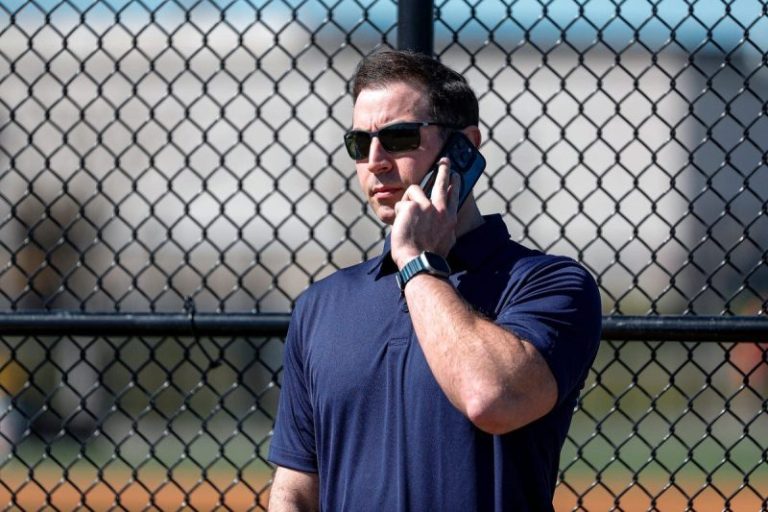
Menzin was expected to be fired by the organization after allegedly sending unsolicited lewd photos to colleagues in recent years, according to a report by the Athletic.

‘Upon being made aware of the allegations as to Sam Menzin’s conduct, the Club promptly completed an investigation,’ the Tigers said in a statement to the Detroit Free Press, part of the USA TODAY Network. ‘Before the Club could terminate Mr. Menzin, he resigned.’

The Tigers declined to elaborate on what they were investigating.

‘This type of behavior is contrary to our standards and has absolutely no place within our organization,’ the Tigers’ statement continued. ‘We have a positive and safe culture for our colleagues and will continue to emphasize respect, inclusion, and professionalism.”

Who is Sam Menzin?

Menzin, 34, officially joined the Detroit Tigers while Dave Dombrowski served as team president. Menzin worked his way up through the ranks and became the Tigers’ director of baseball operations and pro scouting in 2015.

In 2021, Menzin was named Vice President and Assistant General Manager.

What were the allegations against Sam Menzin?

Menzin reportedly sent unsolicited lewd photos via Snapchat, an app where images are viewed and then auto-deleted, according to two women who spoke to The Athletic. These women told the sports media outlet that Menzin sent photos on several occasions, dating back to at least 2017. A third woman, who works in baseball but not for the Tigers, told The Athletic she also received unsolicited photos from Menzin around 2018-19.

The Tigers reportedly were not made aware of the allegations until recently, according to a person who spoke to the Detroit Free Press on the condition of anonymity because they weren’t authorized to speak publicly.

This post appeared first on USA TODAY
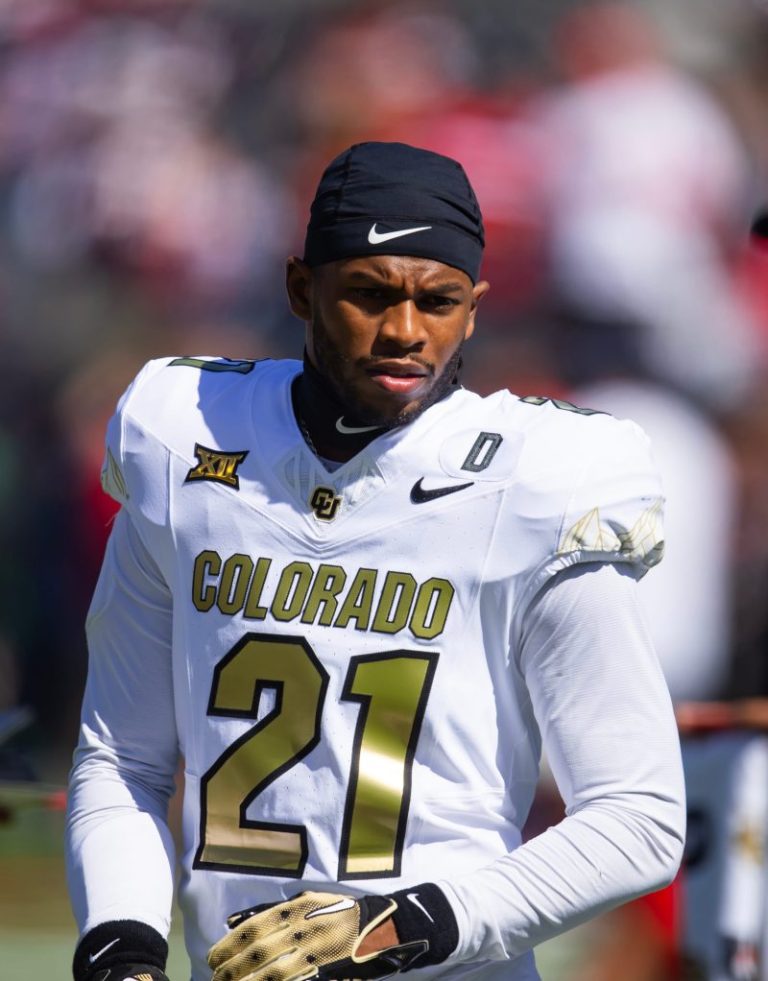
Mercedes-Benz has backed down from its attempt to repossess the car of Colorado football safety Shilo Sanders.

The company’s financial services arm filed a document in court Monday saying it has withdrawn its motion for relief from the bankruptcy court where Sanders is trying to free himself of more than $11 million in debt.

It didn’t say why, but Shilo’s father and coach, Deion Sanders, said Friday that Shilo had fulfilled his financial obligations while acknowledging there was a “disruption in the payments process.” The company could have decided to drop it if he recently paid what he owed.

The issue came to a head last week when Mercedes-Benz Financial Services filed documents in court that accused Shilo of defaulting on his monthly payments for his $135,000 car. It said he was $6,877 past due and wanted the court’s permission to repossess the car that he agreed to buy in May 2023.

Bankruptcy case remains pending

Shilo Sanders, 25, filed for Chapter 7 bankruptcy about five months later, in October 2023, which triggered an automatic stay or hold on debt collection against him by his creditors. Mercedes-Benz asked the court for relief from this stay on April 1 so it could get the car back. Even after filing for bankruptcy, Sanders had continued to make payments on it in 2024 but stopped doing so from December to January, according to the company’s court filing.

“Debtor (Sanders) indicated an intent to retain the motor vehicle and reaffirm the obligation,” the company said in its motion filed April 1.

By withdrawing its request, the company ends a brief sideshow in a larger bankruptcy case that remains pending and in dispute.

Debt stems from disputed incident in 2015

Almost all of Shilo’s debt is owed to a security guard at his former school in Dallas, John Darjean, who is fighting to collect all that he is owed.

It stems from an incident in 2015, when Darjean said Shilo severely injured him when he tried to confiscate Shilo’s phone at school. Shilo has said it was in self-defense. But Darjean sued Shilo and both of his parents for damages. Then after both parents were dropped from the case by early 2019, Shilo was the sole remaining defendant when he went off to college at South Carolina that year.

About a year later, in 2020, Shilo dropped his attorneys in the case because he was “unwilling or unable to continue funding” his defense, according to his attorneys then.

Then when the case finally went to trial in 2022, he didn’t show up for it. The judge heard evidence in the case without him there and issued a $11.89 million default judgment against Shilo, all owed to Darjean.

By filing for bankruptcy, his goal is to have the debt discharged so he can get a “fresh start in life, free from the oppressive burden of his debts,” as his attorney wrote.

If Shilo succeeds, he will emerge with relatively little financial damage. But if the debt is not discharged by the court, Darjean could pursue debt collection against him in the future.

Shilo recently has been preparing for the NFL draft and on Friday ran the 40-yard dash in 4.52 seconds – a good time for a safety prospect. He was Colorado’s leading tackler in 2023 and third-leading tackler in 2024 despite missing three games with a broken forearm.

Follow reporter Brent Schrotenboer @Schrotenboer. Email: bschrotenb@usatoday.com

This post appeared first on USA TODAY
The Department of Government Efficiency (DOGE) announced $51 million in cuts from the U.S. African Development Foundation, which included hundreds of thousands of dollars for marketing shea butter and pineapple juice, as well as mango drying facilities.

DOGE made the announcement on X, highlighting several initiatives the money was put toward.

For instance, $229,296 was used to market 100% organic shea butter in Burkina Faso; $246,217 was spent on mango drying facilities in the Ivory Coast; and $239,738 was spent on marketing pineapple juice in Benin.

The department also said $99,566 was spent to increase yogurt production in Uganda; $84,059 was spent on a business incubator for spa and wellness entrepreneurs in Nigeria; $50,000 was spent to train farmers how to grow dragon fruit in Senegal; and $48,406 was spent on a WhatsApp marketing chatbot in Kenya.

DOGE, led by Elon Musk, is a temporary organization within the White House created via executive order earlier this year.

President Donald Trump tasked the organization with optimizing the federal government, streamlining operations and slashing spending and gave the agency 18 months to do it.

Late last month, DOGE shared that it had terminated 113 contracts valued at $4.7 billion, including a U.S. Department of Agriculture (USDA) consulting contract valued at $145,000 for Peru climate change activities.

The funding that was canceled also included $10 million for ‘gender equity in the Mexican workplace,’ $12.2 million for ‘worker empowerment in South America’ and $6.25 million for ‘improving respect for workers’ rights in agricultural supply chains’ in the countries of Honduras, Guatemala and El Salvador.

The department has canceled numerous diversity, equity and inclusion (DEI) initiatives at federal agencies, consulting contracts, leases for underused federal buildings and duplicate agencies and programs.

As of Monday, DOGE claims on its site that it has saved Americans $140 billion, or about $870 per taxpayer.

This post appeared first on FOX NEWS

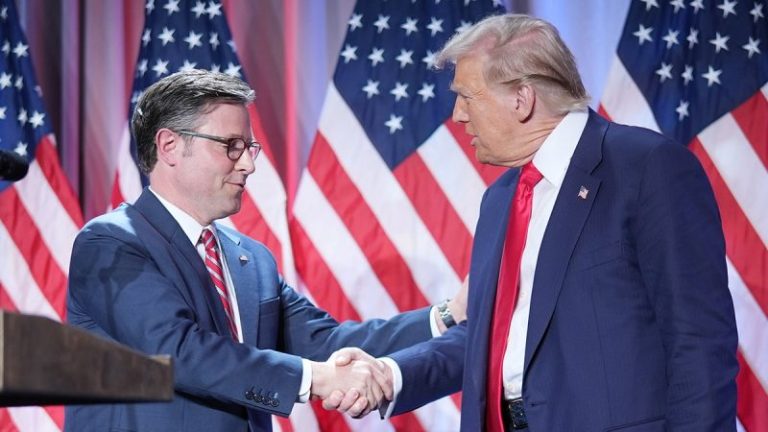
Two key bills backed by President Donald Trump are set to get a vote this week after advancing through the House Rules Committee on Monday evening.

The No Rogue Rulings Act (NORRA Act) by Rep. Darrell Issa, R-Calif., would limit district court judges’ ability to issue orders blocking Trump policies nationwide. The Safeguarding American Voter Eligibility (SAVE) Act by Rep. Chip Roy, R-Texas, is aimed at requiring proof of citizenship in the voting registration process.

The former legislation is a response to Trump’s ongoing standoff with judges paralyzing his agenda, while the latter is a bill that the president and his allies have long pushed for.

Issa’s bill is slated to get a vote on Tuesday afternoon, while Roy’s is expected on the House floor Thursday morning.

That’s provided they pass a procedural hurdle known as a ‘rule vote.’ A simple majority of House lawmakers is needed to pass a ‘rule’ to allow for debate and eventual House-wide votes on legislation.

The House Rules Committee, the final gatekeeper before most legislation reaches the entire chamber, advanced a ‘rule’ combining Issa and Roy’s bills with two financial regulatory measures that are also due for a vote this week if the rule passes.

Both pieces of legislation were slated to get House votes last week, but a showdown over an unrelated measure on proxy voting for new parents in Congress wound up paralyzing the chamber floor on Tuesday afternoon, less than 24 hours after the House’s first votes of the week.

‘The Committee on Rules made efforts to protect this body from a take-it-or-leave-it, all-or-nothing proposal to impose proxy voting, which, while limited, would take us down the slippery slope and return us to the rampant abuse of unlimited proxy voting for members on both sides of the aisle that we witnessed when the Democrats imposed the practice during the COVID era, yet the body felt otherwise,’ House Rules Committee Chair Virginia Foxx, R-N.C., said at the outset of Monday’s meeting.

Rep. Jim McGovern, D-Mass., the top Democrat on the committee, said during his opening statement, ‘A supposedly pro-family party worked to block a simple, commonsense policy that supports working moms in Congress. It was a move that was unprecedented, and thankfully, a majority of members in our chamber pushed back.’

‘When he lost the vote, Speaker Johnson sent everyone home, blaming the few Republicans who had the guts to take a stand for family values,’ McGovern said.

With the matter resolved, both the rule vote and both measures themselves are expected to pass with little drama.

It’s likely a different matter in the Senate, however, where both bills would need help from at least some Democrats to meet the body’s 60-vote threshold for advancement.

This post appeared first on FOX NEWS