Archive

2025

Browsing

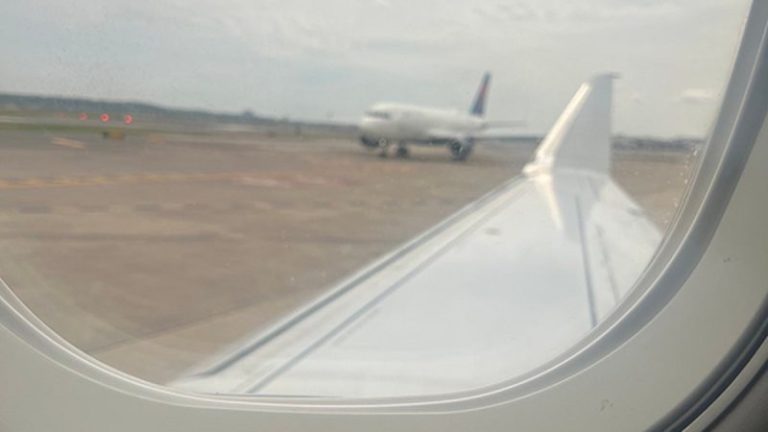
Several U.S. lawmakers on Thursday said they were aboard an aircraft awaiting takeoff at Ronald Reagan Washington National Airport (DCA) when another plane ‘bumped’ into its wing.

Rep. Nick LaLota, R-N.Y., wrote in a post on X that no one onboard was injured.

‘Serving in Congress has come with some once in a lifetime experiences… like just now while stationary on the runway at DCA, another plane just bumped into our wing,’ LaLota wrote.

The Federal Aviation Administration (FAA) confirmed in a preliminary statement that the wingtip of American Airlines Flight 5490 struck American Airlines Flight 4522 on a taxiway at DCA at around 12:45 p.m. local time.

The two planes involved in the wing clip included a Bombardier CRJ 900 headed to Charleston International Airport in South Carolina and an Embraer E175 headed to JFK International Airport in New York. 

The Metropolitan Washington Airport Authority also confirmed the incident in a statement.

‘There is no effect on flight operations at Reagan National Airport, as both aircraft have returned to gates and no injuries were reported,’ the statement said.

LaLota said that Rep. Grace Meng, D-N.Y., who was also onboard the plane, was handing out snacks to passengers as they waited to return to the gate.

‘Glad my colleagues and I are okay! We are safely waiting on the tarmac, but we may need more snacks,’ Meng wrote in her own post on X. ‘I’m grateful no one was hurt today, but this incident underscores this urgent need [to] restore all FAA jobs that keep our runways safe.’

Rep. Josh Gottheimer, D-N.J., was also on the plane when a second aircraft apparently clipped its wing.

‘While waiting to take off on the runway at DCA just now, another plane struck our wing,’ Gottheimer wrote. ‘Thankfully, everyone is safe.’

The Democrat added: ‘Just a reminder: Recent cuts to the FAA weaken our skies and public safety.’

The FAA said the agency will investigate the incident.

Fox News’ Grady Trimble and Ashley Cozzolino contributed to this report.

This post appeared first on FOX NEWS

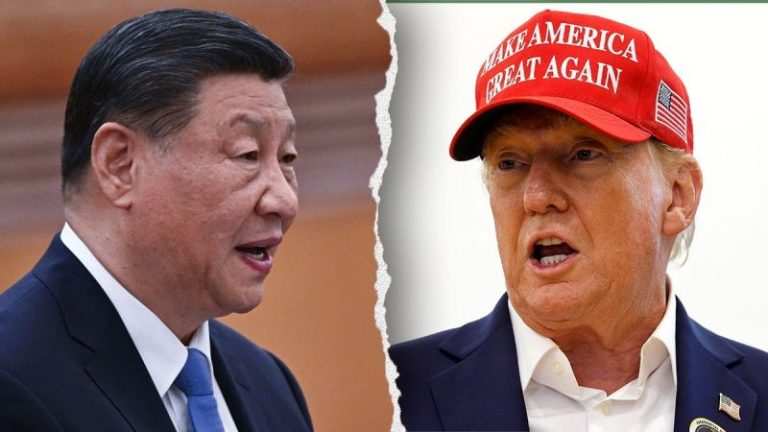
A bipartisan duo of House lawmakers is moving to ensure the U.S. government is free from Chinese-made technology after President Donald Trump hiked tariffs against Beijing.

Rep. Pat Fallon, R-Texas, is leading the Securing America’s Federal Equipment (SAFE) Supply Chains Act alongside Rep. Ro Khanna, D-Calif.

It would impose new guardrails on the technology the U.S. government is able to purchase by forcing a federal agency or office to only purchase it from ‘original equipment manufacturers’ or ‘authorized resellers,’ according to the bill text obtained by Fox News Digital.

The bill targets U.S. government technology purchased through the ‘gray market,’ an alternative channel for purchasing and selling genuine goods without the authorization of the manufacturer.

Fallon said his bill ‘dovetails’ with Trump’s hawkish stance on China.

‘With the rising threat posed by Chinese aggression, not only in the Indo-Pacific, but here at home by means of artificial intelligence and cyberattacks, it’s critical that the Department of Defense secure its vital infrastructure,’ Fallon explained to Fox News Digital. 

‘In order to do so, we must ensure that the U.S. military only purchases electronic equipment from approved vendors that are free from adversarial, particularly [Chinese Communist Party], influence.’

He praised Trump’s ‘bold leadership’ in the U.S. ‘breaking its dependency on Communist China.’

‘The SAFE Supply Chains Act dovetails with this endeavor and is in the best interest of U.S. national security,’ he said.

The White House said Thursday it had imposed 145% in new tariffs on China, up from the 125% Trump announced the day before.

While hiking rates on China, Trump said he would reduce tariffs on other countries that did not retaliate against the U.S. to his baseline of 10%.

‘Look, for years we’ve been ripped off and taken advantage of by China — and others, in all fairness — but by China, there’s a big one. And it’s just one of those things,’ Trump said Wednesday.

Fallon’s bill has a counterpart in the Senate led by senators John Cornyn, R-Texas, and Gary Peters, D-Mich.

This post appeared first on FOX NEWS

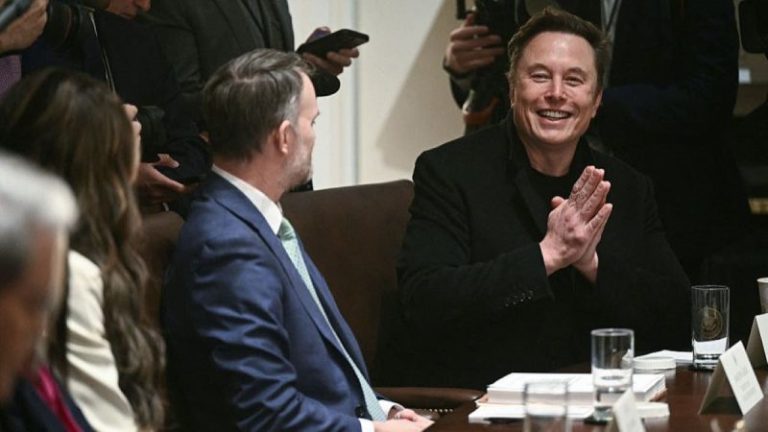
DOGE Chief Elon Musk says the organization is set to save the U.S. government more than $150 billion in cuts to waste and fraud in FY 2026.

Musk made the comment during a public Cabinet meeting with President Donald Trump on Thursday. 

‘We anticipate savings in FY 26 from reduction of waste and fraud by $150 billion. And, I mean, and some of it is just absurd. Like people getting unemployment insurance who haven’t been born yet,’ Musk said.

‘People ask me how are you going to find waste and fraud in a government? I’m like, well, actually, just go in any direction. That’s how you find it. It’s very common. It’s, as a military would say, a target-rich environment,’ he continued.

‘So, I think we’re doing a lot of good, and in excellent collaboration with the Cabinet, to achieve these savings. And it will actually result in better services for the American people. And then we’re going to be spending their tax dollars in a way that is sensible and fair and good,’ he added.

Thursday’s Cabinet meeting comes less than a day after DOGE announced the cancelation of 108 ‘wasteful contracts’ on Wednesday.

DOGE said the contacts had a ceiling value of $250 million and a savings of $70 million. 

The problem contracts included a $14,000 commitment by the Department of Health and Human Services for an ‘executive transformational leadership training program.’

Another was a $5.2 million contract with the U.S. Office of Personnel Management, the human resources agency for the federal government, to ‘provide strategic advisory and assistance to improve and transform current processes and organizational systems.’

This post appeared first on FOX NEWS

— The Food and Drug Administration is phasing out an animal testing requirement for antibody therapies and other drugs in favor of testing on materials that mimic human organs, the FDA announced on Thursday. 

‘For too long, drug manufacturers have performed additional animal testing of drugs that have data in broad human use internationally. This initiative marks a paradigm shift in drug evaluation and holds promise to accelerate cures and meaningful treatments for Americans while reducing animal use,’ FDA Commissioner Martin A. Makary, said in comment provided to Fox News Digital. 

 ‘By leveraging AI-based computational modeling, human organ model-based lab testing, and real-world human data, we can get safer treatments to patients faster and more reliably, while also reducing R&D costs and drug prices. It is a win-win for public health and ethics.’ 

The phase-out focuses on ending animal testing in regard to researching monoclonal antibody therapies, which are lab-made proteins meant to stimulate the immune system to fight diseases such as cancer, as well as other drugs, according to the press release. 

Instead, the FDA will encourage testing on ‘organoids,’ which are artificially grown masses of cells, according to the FDA’s press release obtained by Fox Digital. 

‘The FDA will promote the use of lab-grown human ‘organoids’ and organ-on-a-chip systems that mimic human organs – such as liver, heart, and immune organs – to test drug safety. These experiments can reveal toxic effects that could easily go undetected in animals, providing a more direct window into human responses,’ the press release says. 

The FDA will also encourage the use of AI while testing drugs, including building computer modeling that can predict a drug’s behavior, Fox Digital learned. 

The phase-out will include updating its guidelines to recognize research conducted on organoids and through AI.

‘Companies that submit strong safety data from non-animal tests may receive streamlined review, as the need for certain animal studies is eliminated, which would incentivize investment in modernized testing platforms,’ the FDA explained in its press release. 

The FDA is slated to also work with fellow federal agencies, such as the National Institutes of Health, the National Toxicology Program and the Department of Veterans Affairs, to ‘accelerate the validation’ of the new testing standards and will hold a public workshop later this year to further discuss the matter. 

‘For patients, it means a more efficient pipeline for novel treatments. It also means an added margin of safety, since human-based test systems may better predict real-world outcomes. For animal welfare, it represents a major step toward ending the use of laboratory animals in drug testing. Thousands of animals, including dogs and primates, could eventually be spared each year as these new methods take root,’ Makary said. 

This post appeared first on FOX NEWS

A Mexican drug lord was released from custody after being convicted in the 1985 killing of Drug Enforcement Administration agent Enrique ‘Kiki’ Camarena. 

Ernesto ‘Don Neto’ Fonseca Carrillo, one of the co-founders of the Guadalajara Cartel, was freed last weekend after completing his 40-year sentence, a federal agent confirmed to the Associated Press. 

Fonseca, 94, had been serving the remainder of his sentence under home confinement outside Mexico City since being moved from prison in 2016. The DEA did not immediately respond to a request for comment Thursday from Fox News Digital. 

Rafael Caro Quintero, another Guadalajara Cartel co-founder who also was convicted in the murder, was one of 29 cartel figures Mexico sent to the United States in February. It’s unclear if the U.S. is now looking to bring Fonseca into custody. 

At the time of his murder, the DEA and Camarena had been utilizing a series of wiretaps to make sizeable drug busts inside Mexico. 

In February 1985, as Camarena left to meet his wife for lunch outside the U.S. consulate in Guadalajara, he was surrounded by officers from the DFS, a Mexican intelligence agency that no longer exists. 

‘Back in the middle 1980s, the DFS, their main role was to protect the drug lords,’ former DEA agent Hector Berrellez, who led the investigation into Camarena’s murder, told Fox News in 2013. 

The DFS agents then took Camarena, blindfolded and held at gunpoint, to one of Caro Quintero’s haciendas nearby. 

For more than 30 hours, Caro-Quintero and others interrogated Camarena and crushed his skull, jaw, nose and cheekbones with a tire iron. They broke his ribs, drilled a hole in his head and tortured him with a cattle prod. As Camarena lay dying, Caro-Quintero ordered a cartel doctor to keep the U.S. agent alive. 

The 37-year-old’s body was found dumped on a nearby ranch about a month later. 

In 2013, Caro Quintero walked free after serving 28 years in prison.  He was released after a court overturned his 40-year sentence for the kidnapping and killing of Camarena. 

Caro Quintero was arrested again by Mexican forces in July 2022 after he allegedly returned to drug trafficking. 

Fox News’ Greg Wehner, William La Jeunesse, Lee Ross and the Associated Press contributed to this report. 

This post appeared first on FOX NEWS

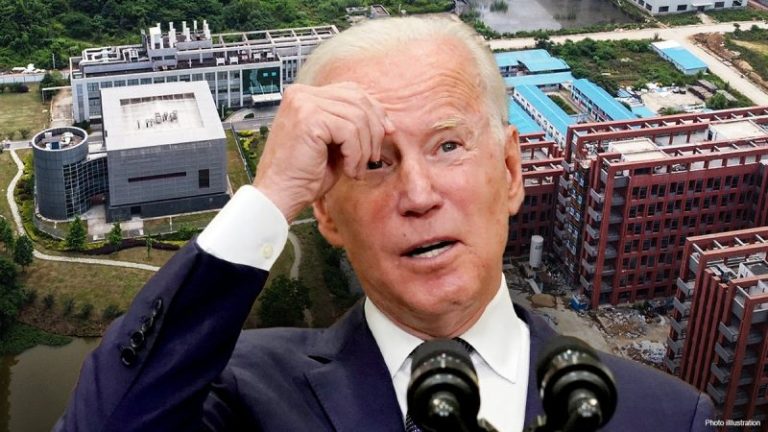
A 2022 Defense Department report long withheld by the Biden administration has recently surfaced and reveals that seven U.S. service members showed COVID-19-like symptoms after having competed in the World Military Games in Wuhan, China, months before the deadly virus first broke out in the U.S.

The explosive disclosure suggests that the virus was circulating in Wuhan months before China disclosed it to the world in December 2019. The games took place in October 2019, two months earlier. 

It also challenges the Biden administration’s public claims in 2021 that there was no evidence that any American participants contracted the virus at those games. The CIA, FBI and Energy Department have all now suggested that the COVID-19 virus pandemic may have originated via a lab leak from the city’s Wuhan Institute of Virology.

The 2022 report was legally required to be released publicly online more than two years ago ‘in a searchable format,’ but it only became available some time in late March, when the Trump administration uploaded it to a Defense Department website, The Washington Free Beacon reported. 

The outlet reported that the Biden administration did send copies of the report to the House and Senate Armed Services Committees in December 2022, but the report was never made available online by the administration. 

The report found that of the 263 U.S. delegation that traveled to the event, seven U.S. members showed COVID-19-like symptoms between Oct. 18, 2019 and Jan. 21, 2020. All symptoms were resolved within six days and could be attributed to other respiratory illnesses​.

The report also found that there were no significant outbreaks of COVID-19-like symptoms at Defense Department facilities after the athletes returned, although service members were not tested for COVID-19 or antibodies as testing was not available at that early stage of the pandemic.

However, Washington was one of the earliest states to show a spike in COVID-19, and the U.S. team used chartered flights to and from the games via Seattle-Tacoma International Airport, Prospect reported.

Then-Pentagon spokesperson John Kirby told the Washington Post in June 2021 that the military had ‘no knowledge’ of any COVID-19 infections among the troops that participated in those games.

The Pentagon, during Trump’s first term, said in June 2020 that there was no reason to test members as the event was held ‘prior to the reported outbreak,’ Prospect reported. 

Other international athletes reported having come down with COVID-19-like symptoms, the Daily Mail reported in June 2021. 

The games have long been suspected as being a ‘super spreader’ event which took place close to the Wuhan Institute of Virology. The U.S.-based EcoHealth Alliance, partially funded by the U.S. National Institutes of Health was conducting gain of function research there. 

‘Many of the athletes said ​Wuhan looked like a ‘ghost town’ in October‚ two months before China reported the first case of coronavirus there,’ the New York Post reported.

Former Rep. Mike Gallagher, R-Wis., in 2021 said that those months were critical and could have helped the United States understand the disease and ‘shut down travel earlier in order to stop the spread and ultimately save potentially millions of lives.’

READ THE REPORT BELOW: APP USERS CLICK HERE

This post appeared first on FOX NEWS

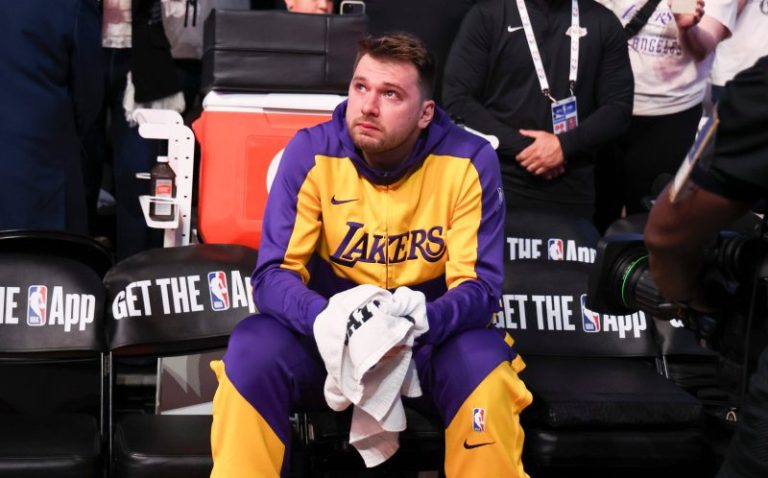
Wednesday’s matchup between the Dallas Mavericks and the Los Angeles Lakers marked Dončić’s first game in Dallas since being traded away on Feb. 2 in a blockbuster deal that landed Anthony Davis in Dallas. Ahead of the matchup, the Mavericks honored Dončić with a video tribute that brought the five-time All-Star to tears.

Dončić’s eyes grew glossy as he tried to keep his composure during the tribute. He repeatedly wiped his eyes with a towel and had to look away from the jumbotron at one point as he was overcome by emotion.

The ESPN broadcast showed Dallas Mavericks legend Dirk Nowitzki applauding in the crowd. Following the video, Dončić shared an embrace with Markieff Morris, who was also traded from Dallas to Los Angeles. Dončić hugged the rest of his Lakers teammates, including LeBron James, before the Lakers huddled together ahead of tipoff.

Dončić predicted his return would be emotional for him.

“Of course it’s going to be a lot of emotion for me. I really don’t know what to expect,’ Dončić told reporters Tuesday night following the Lakers’ 126-99 loss against the Oklahoma City Thunder. ‘I don’t know what I’m going to feel, honestly. I’m looking forward to being back in Dallas, obviously, with the fans, seeing my teammates — ex-teammates. It’s going to be very emotional for me, for sure.’

When the game tipped off, Dallas fans showcased their enduring love for Dončić and cheered every time he touched the ball. On the other side of the spectrum, the Mavericks fanbase also chanted ‘Fire Nico,’ referring to Mavericks general manager Nico Harrison, who brokered the blockbuster trade. Harrison was spotted watching the beginning of the game from the tunnel instead of a seat.

Earlier Wednesday, a protest mural that features a navy Mavericks hat with a piece of duct tape over the logo that reads, ‘FIRE NICO,’ popped up in downtown Dallas ahead of Dončić’s return.

This story was updated with new information.

The USA TODAY app gets you to the heart of the news — fastDownload for award-winning coverage, crosswords, audio storytelling, the eNewspaper and more.

This post appeared first on USA TODAY

AUGUSTA, Ga. – Every year since the world could see the place on television, this little town near the border of Georgia and South Carolina has been the epicenter of our retreat out of a long winter and into spring.

That’s always been the secret sauce of the Masters. Not the exclusivity of the club, nor the difficulty of the course, nor really the fact that it’s the only major championship in golf anchored to one place every year.

Mostly, it’s the visuals, the colors, perfectly green fairways framed by the towering pines and flowers that pop off the television screen like an invitation to once again start going outside. As always, every inch of this place is spectacular.

“A colder-than-normal January has been conducive to a near-perfect early spring bloom of Azaleas and other flowering ornamentals,” Augusta National chairman Fred Ridley said Wednesday. “One of our guests last week referred to the course as a beautiful painting, and I could not agree more.”

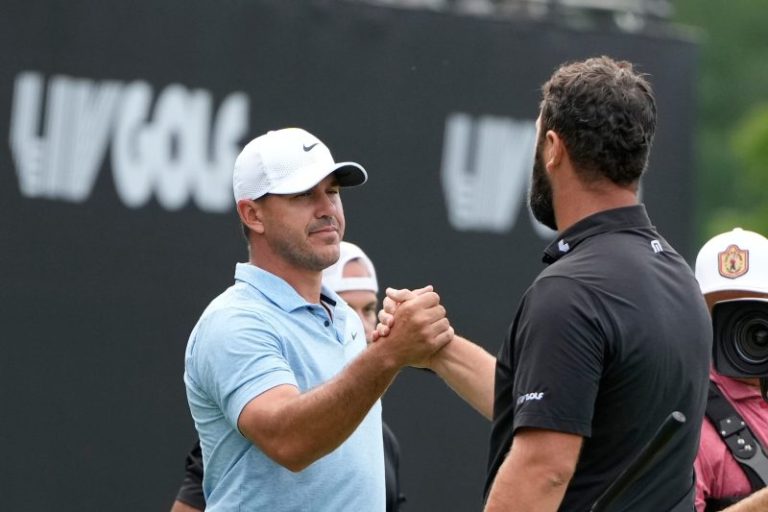
But the biggest golf tournament in the world has only grown in prestige over the past four years – not that it needed any help. The still unresolved fight between the PGA Tour and LIV, still simmering for a third straight Masters, has only made this tournament more powerful and elevated its place atop the sport’s food chain.

The sad reality is that it’s been nine months since Xander Schauffele won the Open Championship at Royal Troon. That’s nine months since all the best players in the world were in the same tournament. Nine months since we saw Rory McIlroy go against Brooks Koepka in a significant event, nine months since Scottie Scheffler has had a chance to close out a tournament with Bryson DeChambeau breathing down his neck.

Nearly two years since the so-called framework agreement that was supposed to bring the two sides into some type of merger agreement and almost three months since president Donald Trump’s inauguration – an event that inspired hope of reconciliation given his ties to the game and extensive business with the Saudi government – everyone is still waiting.

“I think at some point if the players get all together, I think we could figure it out,” DeChambeau said. “But it’s a lot more complicated, obviously, than we all think.”

At this point, it’s almost boring to talk about. LIV does its thing, paying huge sums to Jon Rahm, Phil Mickelson and a handful of others to play unserious golf while drawing pathetic television audiences. (Even on the main FOX network last week, LIV Miami drew less than one-third of the 1.746 million viewers watching the final round of the Valero Texas Open.)

But LIV’s intrusion into the sport has undeniably made the PGA Tour a significantly lesser product, too, and not just on the margins. The Tour’s so-called “Signature Event” structure, in which eight tournaments are elevated above the others, means the top players have even less incentive to play a full schedule and so there are rarely fields packed with stars – a split within a split. Aside from The Players, has there even been a single must-see tournament yet this year?

That’s golf now: Weaker, less interesting, rarely relevant to the average sports fan outside of the four majors. Round and round we go, with little to suggest a solution is coming that would reunite the best players and give fans – not to mention the companies paying huge sums to sponsor most of these tournaments – a reason to keep spending their cash on professional golf.

“When I think about reunification,” Ridley said, “I think about the having more players – all of the great players of the game – playing against each other more than just a few times a year. I’m not really in a position to say what form that should take as far as how the two organizations should come together, what legal structure that may be or what the financial aspects of that may be. But sometimes if you start kind of at eye level, and that is to encourage cooperation and trying to figure out a way to get something done, regardless of what the structure of it is, to where everyone can play together again.”

For the broader good of the game, Ridley is of course correct.

But as long as the split endures, the Masters benefits more than anyone.

Why? Well, most golf fans could probably tell you that McIlroy comes into the Masters with as good of a chance as he’s ever had, having won twice already this year including The Players. They could probably tell you how Scheffler, the defending champion here and No. 1 player in the world, has been struggling by his standards but flashed a hot putter last weekend that makes him extra dangerous this week. And they could probably tell you that Schauffele, who won two majors last year, has been way off form to start this season and is yet to record a top-10 finish.

And the LIV guys? When the final major championship ends in July, they simply disappear into the ether. Yes, they are playing tournaments. Some of those tournaments even draw good crowds, particularly in an Australian market that deserves more world class golf than it gets. But if you know a single thing about how Patrick Reed, Rahm, Koepka, Dustin Johnson, Cam Smith and the rest have been faring lately on the LIV tour, you are in the minority of the minority of golf fans.

Now in its fourth season, there’s enough of a sample size to make the following statement: Whatever you think about the concept of LIV or who’s paying its bills, the results over there simply do not matter to very many people. Nothing has broken through. Nobody’s really watching

 In fact, in four years, you can argue the only player-related LIV storyline that has been elevated to any relevance is a highly online argument between real people and social media trolls over whether four-time LIV winner Joaquin Niemann is one of the top-10 players in the world. (Given that he’s never finished better than 16th at any major, I think we all know the answer to that one.)

Point being, for all the significant players who took the LIV payday, the Masters is when they come out of the mothballs. Has Koepka or Rahm played well lately? Who knows. Who cares. When Masters week begins, it’s like reuniting with a friend who spent the last year in western Mongolia without Internet or cell phone service. We’re just happy to see them again.

“When you look back at whenever LIV started and this whole debacle started, no one really complained,” Collin Morikawa said. “You just…we enjoyed it. But then this all happened, and you take things for granted. You look back and you’re like, man, we had it pretty good. These weeks are special now. You don’t take them lightly.”

Make no mistake, the Masters is a colossus whether LIV exists or not. To golfers and hardcore fans, it’s special because it’s a major. To the common sports viewer who watches this tournament and maybe a few others, it’s the visual effects – the sparkling white sand, the vividly pink flowers, the perfectly mowed grass − that inspire imagination and awe.

But the PGA Tour-LIV split has made this week something different, even a level above what the Masters was before. Golf fans just don’t get many tournaments like this anymore. That’s a sad commentary on the state of the game but another layer of mystique for a 365-acre tract of Georgia land that was already the biggest thing in the sport.

This post appeared first on USA TODAY

WASHINGTON – A few hours before the Los Angeles Dodgers concluded their three-game series at Nationals Park Wednesday, a stadium TV tuned to Major League Baseball’s official network displayed two hosts running through a series of burning questions.

Between discussions of torpedo bats and sustainable starts came a question that might have startled the casual viewer.

“Are the Dodgers not a superteam?”

The hot topic seemed to affirm that the most expensive team in baseball history exists not as one of 30 big league franchises but rather as a vessel created to produce discourse, which will then be met with further discourse. That a superteam could exist in a sport that required the Dodgers to use 60 players to win the 2024 World Series – yet perhaps it actually isn’t the 2025 Dodgers since they’d lost four out of five games, dropping their record to 9-4.

Which is still a 112-win pace.

Such is life with roughly $390 million in salary commitments, a World Series title to defend and spring rumblings that this squad of Shohei Ohtani and Mookie Betts and nine or so viable starting pitchers would be the ones to break the major league record of 116 regular-season wins, perhaps threaten 120.

Yet this early season has already hatched a series of suboptimal events, from a freak aggravation of first baseman Freddie Freeman’s ankle injury, to $182 million lefty Blake Snell’s shoulder irritation sending him to the injured list, conjuring visions that come playoff time, this nearly half-billion dollar commitment to excellence will once again be trotting out bullpen games or fringe starters.

And after the squad dropped its first two games in D.C., with a trip to the White House followed by dismal performances in 45-degree temperatures, the great expectations breeded not panic but rather one of the mini-bursts of urgency that sustain great teams through long seasons.

So the Dodgers greeted their road trip finale with both urgency and pluck, snagging a four-run lead before the Washington Nationals could record an out, giving it right back as fill-in starter Landon Knack struggled, and finally cobbling together a two-run, go-ahead rally in the seventh inning for a 6-5 victory that salvaged the final game of the series.

The Dodgers are 10-4 now, technically tied for second in the National League West even as the standings are secondary this time of year. Yet even hiccups can look calamitous when near-perfection is the expectation.

“It comes with the character of the group,” says longtime utilityman Kiké Hernández, who finished his caretaking of first base while Freeman mends with a game-saving play in the ninth inning. “You have a lot of very seasoned people in this locker room. It’s realizing we have another 148 to go.

“And you know when you’re expected to win 162 games in a season, and you lose four in a week, then it could feel like the world is ending. But at the end of the day, we have 148 more. At some point, we were going to play (lousy) baseball, and it seemed like this was the week we did that.”

Wednesday, the temperature topped the 50-degree mark, practically balmy after 46- and 45-degree nights here, along with a rain-drenched slog in losing their final game at Philadelphia. And it only gets sunnier: The Dodgers are headed home, and Freeman – who tweaked his surgically-repaired ankle slipping in the shower – will be back in the lineup Friday against the Chicago Cubs.

Yet the club learned a lot about itself in this detour toward mediocrity.

Foot up on the gas

It’s been a quarter-century since the New York Yankees became the last club to repeat as World Series champions. The Dodgers seem about as primed as any club since to do so, what with Snell, Japanese pitching phenom Rōki Sasaki and All-Star relievers Tanner Scott and Kirby Yates refreshing the mix over the winter.

But personnel, despite the superteam expectations, only goes so far. And after the Dodgers began this trip unbeaten only to lose series to both the Phillies and Nationals while breaking down in every phase of the game, manager Dave Roberts was not having any complacency.

“We don’t want to get swept by these guys,” Roberts said before Wednesday’s series finale. “That wouldn’t be a good thing. I think our guys have a good look today. There’s a sense of pride, right? To not only win a series but potentially get swept by anyone isn’t a good feeling.

“I expect us to perform today.”

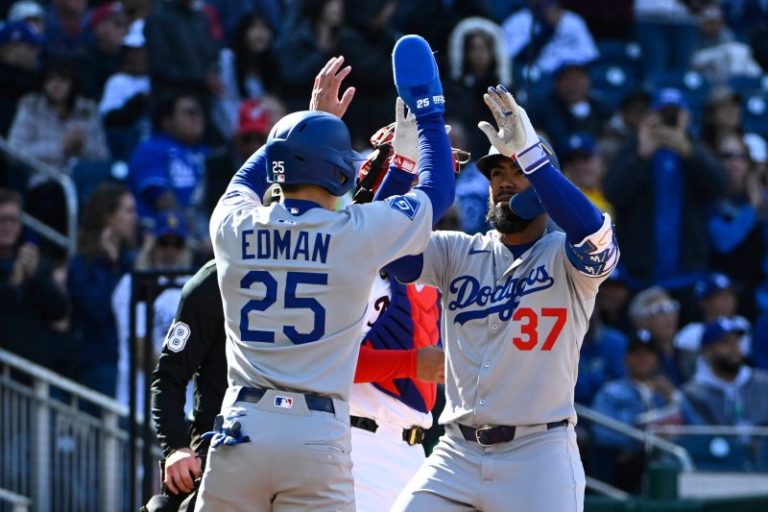
It’s almost like they heard him: Ohtani and Betts reached base ahead of Tommy Edman’s two-run triple, and Teoscar Hernández’s two-run homer created a 4-0 lead.

Knack gave it all back – plus one more – which forced the Dodgers to scrape together their winning rally, with Teoscar Hernández providing the winning margin with a soft single to right in the seventh.

Did they feel Roberts’ urgency?

“Not really,” says Teoscar Hernández.

Hey, no shade toward the manager. It’s just that the Dodgers know what they need.

“Those are the at-bats you want to win games,” he says. “It’s not always gonna be the big swings that are going to score runs. We’re going to score a lot of runs by the walks, by not getting into double plays, by getting the lucky hits I get in that situation.”

Run prevention doesn’t hurt, either. Kiké Hernández was one of the Dodgers’ original utility heroes and in Freeman’s absence, took his 5-foot-10 frame to first base, an odd sight on an ostensibly bulletproof team. Hernández is hitting just .103 on the young season, but saved Wednesday’s game with a diving stop in the bottom of the ninth and two runners on, turning a potential game-tying hit into a forceout, thanks largely to his veteran infield instincts.

“I just can’t think of many who make that play right there,” says Roberts. “I think we’d probably still be playing if he didn’t make that play.”

Still, the Dodgers are seeking a higher gear.

‘We have a lot of things to clean up’

It had been about 15 hours since the Dodgers struck out 15 times against a casting call of Washington relievers and Roberts was still annoyed.

Looking back on the club’s 8-0 start, he mused that they didn’t strike out that many times in games against the reigning Cy Young Award winners, fanning six times in a start against the Detroit Tigers’ Tarik Skubal and seven times against the Atlanta Braves and Chris Sale.

“I just don’t think 15 strikeouts with our ballclub should happen,” says Roberts, perhaps unaware that a pair of clubs had at least 18 strikeouts on Opening Day. “I don’t think we’ll see that again this year.”

Bad team at-bats, Roberts called them. The sentiment was not lost on the clubhouse.

“We have a lot of things to clean up,” says Kiké Hernández. “We’ve been having a lot of quick innings. I didn’t think we’ve really ran any starting pitchers out of the game early, which is something we pride ourselves in as a unit. We’ve gotten to some early, but we let them settle down and cruise through the rest of the game.

“There’s a lot of six-inning outings against us, and that’s got to change.”

Yeah, talk about high standards: They’re winning games but not kicking the opposing pitcher’s posterior quickly enough. Yet Hernández had a point: It was 4-0 before Nationals starter Jake Irvin could record an out. He somehow left with a 5-4 lead after six innings.

If style points are a concern, Freeman’s return should help significantly. The three starting pitchers on the IL – Snell, Tony Gonsolin and a fellow named Clayton Kershaw – will figure in at some point.

And despite all this, they’re still playing .714 ball – now on a 116-win pace. Hey, it’s not 162, but it’ll do.

And at the least, they survived the first cold spell of the season.

“Hopefully,” says Kiké Hernández, “L.A. is a little warmer than this.”

This post appeared first on USA TODAY

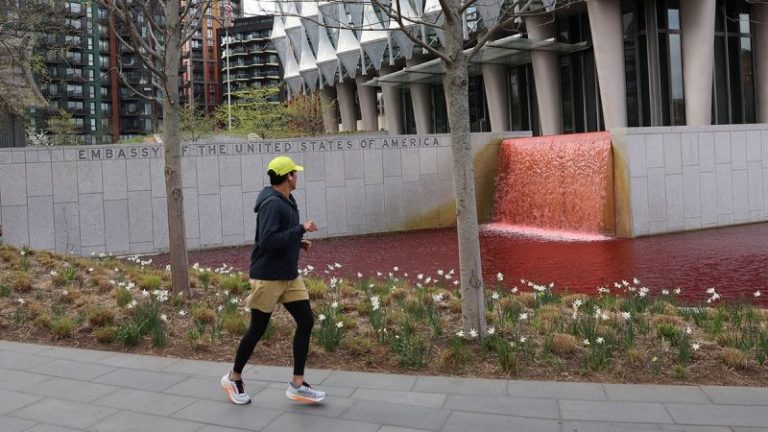
Greenpeace’s United Kingdom leader and five other activists reportedly were arrested Thursday after tossing hundreds of liters of ‘blood-red dye’ into a pond at the U.S. embassy in London in a protest against the war in Gaza. 

The environmental group said the action was to ‘highlight the death and devastation caused in Gaza as a direct result of the US’ continued sale of weapons to Israel.’ 

‘Twelve activists tipped the non-toxic, biodegradable dye from containers emblazoned with the words ‘Stop Arming Israel’ into the large pond located in front of the embassy building in Nine Elms, south-west London,’ Greenpeace said in a statement. ‘The containers were delivered to the Embassy on bicycles with trailers disguised as delivery bikes.’ 

Greenpeace later said Will McCallum, the co-executive director of Greenpeace UK, was one of six people taken into custody.  

He was charged with suspicion of conspiracy to cause criminal damage, which carries a maximum sentence of 10 years in prison, according to the organization. The others reportedly received similar charges. 

‘At 07:30hrs on Thursday, 10 April, officers on duty at the US Embassy in Nine Elms became aware of a group of Greenpeace protesters putting red dye into the pond at the side of the building. The group made off, but officers responded quickly and carried out a search of the area,’ a Metropolitan Police spokesperson told Fox News Digital. ‘Six people have so far been arrested nearby on suspicion of criminal damage and conspiracy to cause criminal damage.

‘The pond is accessible via a public footpath. There was no breach or attempted breach of the secure perimeter of the site,’ the spokesperson added.

The U.S. State Department did not immediately respond Thursday to a request for comment from Fox News Digital. 

Footage released by Greenpeace UK purportedly showed the activists dumping the dye into the pond at the American embassy Thursday. 

‘We’ve turned the embassy pond blood-red because U.S. weapons continue to fuel an indiscriminate war that’s seen bombs dropped on schools and hospitals, entire neighborhoods blasted to rubble, and tens of thousands of Palestinian lives obliterated,’ Areeba Hamid, co-executive director at Greenpeace UK, said in a statement. 

‘The ceasefire Trump claimed credit for has collapsed and full-scale war is back. If Trump has any real interest in stopping the war, he should listen to the majority of Americans and stop arming Israel now,’ she added. ‘And the UK government should do the same.’ 

This post appeared first on FOX NEWS