Archive

2025

Browsing

AUGUSTA, Ga. – If Rory McIlroy is ever truly in position to win one of these things on a Sunday afternoon, make sure you’ve taken your medication, keep your cup full of whatever helps you relax, take deep breaths every few minutes and grip your rosary beads tight.

Here’s the reality of the situation: Augusta National is in his head. It’s lodged in the deepest, darkest places of his psyche. It draws out his worst instincts in the wrong moments. He’s tried everything to figure it out. And once again, it appears McIlroy will be back next year answering all the same questions that have hounded him for more than a decade at the Masters.

McIlroy came to Augusta on Monday as the main character, the popular pick, the guy whose form this year suggested he was ready to take the big step into a green jacket and finally complete the career Grand Slam. He put in the work in the offseason to tidy up his wedge game and develop some lower-trajectory shots that might come in handy around this place. He even went to see Jack Nicklaus last week to talk about how he was going to play the course, literally shot by shot.

“I think it’s about time that Rory won,” Nicklaus said. “He’s got all the shots. He’s got all the game. He certainly is as talented as anybody in the game. But if you look, go back and see his history the last few years, he gets to a place a lot of times and an 8 or 7 pops up, and that keeps you from getting where he needs to go.”

That was Thursday morning. And by Thursday evening, you have to wonder: What was it all for?

Because even though McIlroy isn’t necessarily out of contention after shooting an even-par 72, it was arguably, pound for pound, the most disappointing Masters round of his career.

Of course, that’s just conjecture. It would have been good to get McIlroy’s thoughts on the matter, but he went straight from the 18th green to the scoring office to the practice range and out of this place before answering any questions from the media. Which is absolutely his right, but it’s also becoming a little bit of a trend toward unprofessionalism after big disappointments. He did the same thing last year at Pinehurst after a letting the U.S. Open slip away to Bryson DeChambeau.

Whatever. That’s not the most important story here.

The more pressing issue is that McIlroy was absolutely cruising toward a 67 or 66 on Thursday – at worst. He was pounding the driver, controlling the irons, scrambling when necessary. It was beautiful golf. And when he walked off the 13th green after a tap-in birdie that got him to 4-under par, it looked like McIlroy might even have a chance to catch first-round leader Justin Rose at 7-under.

And then, inexplicably and for no obvious reason, it went completely the other direction.

After failing to convert a nine-foot birdie putt on No. 14, McIlroy stood in the middle of the 15th fairway with a 4-iron from 241 yards away. His shot was on line, landing close to pin high, but took a firm bounce and bounded long of the green. Still, it seemed like a straightforward situation: Cozy a delicate chip down the hill, walk away with no worse than a par.

There’s no other way to describe what happened next: It was a complete disaster. A self-immolation. An unnecessary mistake someone of his experience on this course should not make. From the moment McIlroy made contact with the ball, it was obvious he had carried it too far on the green, hit it too hard and that it wasn’t going to stop until it had trundled all the way off the front edge and into the pond.

It was, in a word, stunning. And it’s the shot that so many players knew they had to be defensive about because the 15th green is one of four at Augusta National that was rebuilt this year, making it firmer to begin with. Then when you factor in the greens getting a little dry and crusty late in the afternoon, plus a tough pin placement, it’s a truly treacherous place on the course – which makes it all the more confounding that McIlroy played the shot so aggressively.  

“You can easily hit a nice pitch on that green and it just rolls in the water, which I’m sure a lot of guys did today,” said Viktor Hovland, who was playing one group in front of McIlroy and almost certainly did not see what was happening behind him. “You don’t have to be far off to make a double.”

Which is exactly the score McIlroy recorded after a mediocre pitch from the other side of the pond. As Nicklaus alluded to, it was one of those big numbers popping up at the wrong time.

Still, better to have that happen early in the tournament rather than late, right? And it only took McIlroy back to 2-under. Even if he finished with a 70, which seemed like the worst he could shoot given the way he was playing, he’d be right there on the first page of the leaderboard.

But by the time McIlroy walked to the 16th tee, his entire mood had changed. About an hour earlier, he was chatting it up with Akshay Bhatia coming down the 10th fairway and waving to fans, walking with that trademark Rory strut you see when things are going well.

Now, he was sullen, his lips pursed. And he didn’t really hit a good shot the rest of the day.

On No. 17, McIlroy flared his 3-wood a little bit to the right off the tee, making the approach slightly more difficult. But he blew his approach way long, hit another terrible chip 28 feet past the hole and three-putted for another double bogey.

It was the kind of breakdown where you have to wonder whether McIlroy actually has what it takes to win here. Because Thursday’s collapse over the final four holes wasn’t about the golf shots. It was about what’s between his ears. It was about having the discipline and focus to not make the obvious mistake. It was about checking out instead of fighting back when he did something really dumb and costly.

McIlroy is a great champion, probably the best golfer of his generation and the owner of four major titles. He’s so good, with so much time still left in his prime, he’ll probably find his way to a fifth or even a sixth at some point – even though the drought now stretches back to 2014.

But the mental challenge of Augusta and the precise decision-making it requires on every single shot is obviously something he still fights, even at this stage when he’s got all the experience he needs and he’s playing some of the best golf of his career.

“There’s no golf course that suits a man better than (Augusta) does for Rory,” Gary Player said Thursday.

But that’s obviously not true. This place torments him. And it appears that will continue for at least another year.

This post appeared first on USA TODAY

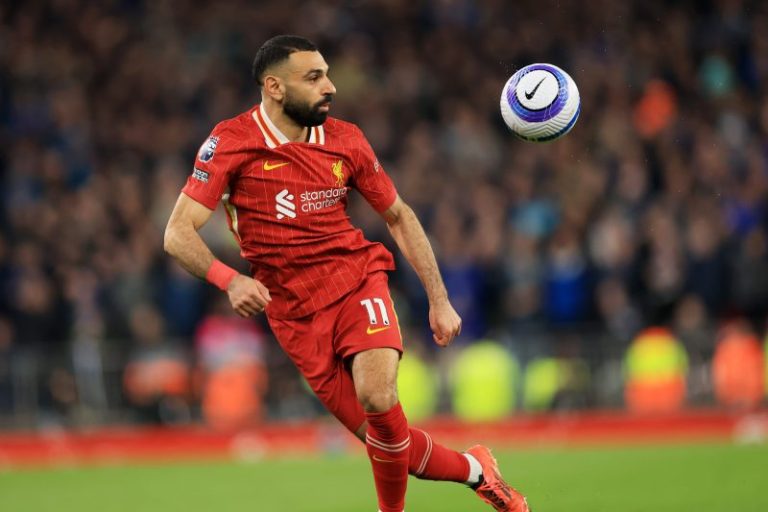
Liverpool forward Mohamed Salah has ended months of speculation about his future by signing a two-year contract extension at Anfield, the Premier League leaders said on Friday.

The 32-year-old, who joined the club in 2017 from AS Roma, could have left for free in the summer with his contract previously set to expire in June.

‘I’m very excited. We have a great team now. Before also we had a great team. But I signed because I think we have a chance to win other trophies and enjoy my football,’ Salah told the club website.

‘It’s great, I had my best years here. I played eight years, hopefully it’s going to be 10. Enjoying my life here, enjoying my football.’

He paid tribute to the club’s fans, and pledged to keep working hard to bring them results.

‘Keep supporting us and we’ll give it our best, and hopefully in the future we’re going to win more trophies.’

In his eight years at the club Liverpool have won a Premier League title – likely to win a second this year – as well as one Champions League crown, an FA Cup, two League Cups, the UEFA Super Cup and FIFA Club World Cup.

He has been a stand-out performer for Liverpool this season, scoring 32 goals in all competitions and leads the race for the Premier League’s Golden Boot with 27 goals.

Liverpool are 11 points clear of second-placed Arsenal with seven games left to play.

‘It’s not going to be easy at all because Arsenal are also catching up. We’ll give it our all and hopefully in the end we can win it,’ Salah said.

Mo Salah new contract

British media had reported on Wednesday that Liverpool had made a breakthrough in negotiations over a new deal for the Egypt international after months of deadlock.

‘My family also feels at home, we enjoy every moment in this city and every moment in the club,’ Salah said.

‘It’s a special moment always when we play at Anfield. There is no place like that. The warmth you feel inside, the song before the game. Every time I score a goal and they sing my song, it is something special, and the story will continue.’

Salah, winner of the Premier League’s Golden Boot three times, is also Liverpool’s third-highest goalscorer of all time with 243 goals in 394 games. ‘But I’m more proud when we win team trophies,’ he said.

‘When you win something with the team and are scoring goals and you are involved, that’s what people remember. Just individual awards without winning anything doesn’t feel great.’

Premier League standings

Salah was reported to be the subject of interest from the big-money Saudi Pro League but is widely seen as key to Liverpool’s hopes of consistently winning silverware given his own form over the years.

Liverpool’s last title came during the COVID-19-affected 2019–20 season, and Salah said he is hopeful of winning it more than ever this year, as his side were not able to celebrate it the way they wanted.

‘Probably because last time we didn’t celebrate it the way we wanted… we are closer than ever now that we can win it in a special way.

‘The Premier League is very tricky… It’s the hardest and the weirdest league in the world.

‘We have to just stay humble and do our job properly and be ready to suffer, because that’s what it will take to win the Premier League.’

Liverpool manager Arne Slot said he had known for a while that Salah would be extending his deal but understands the relief Liverpool fans have felt after the announcement.

‘For the fans, it was a pleasant surprise. But I knew for a bit longer that things were heading in the right direction,’ he told reporters in a news conference ahead of Sunday’s Premier League home game against West Ham United.

‘He has shown at this club for so many years in a row how much of a value he is for the club and the team. Like all our fans and his teammates, we are very happy that he has extended for two more years.

‘And hopefully, he can show on Sunday again how important he has been for us all season.’

Liverpool captain Virgil van Dijk, who is out of contract at the end of the season, is also being tipped to extend his stay on Merseyside, while full back Trent Alexander-Arnold has been linked with a move to Real Madrid.

The USA TODAY app gets you to the heart of the news — fastDownload for award-winning coverage, crosswords, audio storytelling, the eNewspaper and more.

This post appeared first on USA TODAY

In the unchecked world of artificial intelligence (AI), possibilities are endless.

Years after Apple broke through with Siri, Amazon’s Alexa and Google Home have continued to push on. People drive around in cars that are essentially computers on wheels. Ovens are now Bluetooth compatible, doorbells double as security cameras and televisions are smarter than we are.

Ads appear for items that we are only just beginning to think about, and surveillance is at an all-time high.

The overreliance on technology and its impact on communication has blurred lines – not like Robin Thicke and Pharrell Williams though. It begs the question, how much is too much?

That’s a story for a different day, but there is a positive takeaway. At the end of the day, AI is certainly artificial in terms of intelligence. With the NFL draft approaching in just a few weeks, we wanted to get a look at how Grok, X’s AI chatbot, would predict the first round.

The mock draft, especially in this case, is appropriately named. Four quarterbacks snuck into the top-10 and there were more than a few reaches throughout.

Welcome to the robot revolution. Here’s a look at Grok’s 2025 NFL first-round mock draft.

2025 NFL mock draft: First-round AI picks

1. Tennessee Titans: Cam Ward, QB, Miami (FL)

Grok has taken notice of the Titans’ quarterback need, saying, ‘Will Levis has been inconsistent,’ before electing to make Ward the top pick in the draft. The Miami quarterback is widely considered to be the best at the position in this draft, so it comes as no surprise that Ward heads to the Music City in Grok’s imaginary eyes.

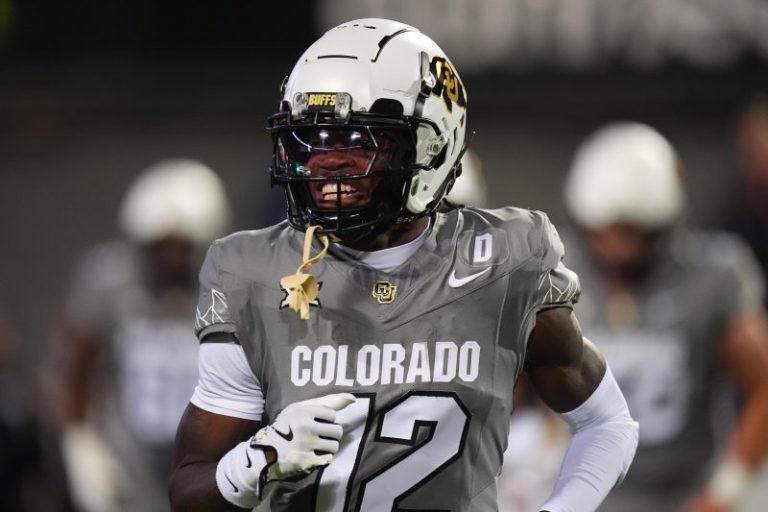
2. Cleveland Browns: Travis Hunter, WR/CB, Colorado

Hunter is easily the most interesting player in this class as he tries to play both sides of the ball. While Grok takes a trip down easy street with this pick, it’s not for the right reason. It acknowledged the uncertain quarterback situation in Cleveland but used Deshaun Watson’s contract as the reason to pivot elsewhere. Watson’s ability to play this season is in doubt after tearing his Achilles again. Still, Grok is on a roll to start.

3. New York Giants: Shedeur Sanders, QB, Colorado

Grok isn’t falling for the Giants’ tricks following their signing of Russell Wilson and Jameis Winston, instead predicting the G-Men will bring Deion Sanders’ son to the Big Apple. It’s another pick that makes sense, especially after factoring in the job security for Brian Daboll and Joe Schoen. Both could be given a pink slip if the Giants struggle again, so expect them to swing for the fences with nothing left to lose – besides their jobs, of course.

4. New England Patriots: Will Campbell, OT, LSU

Campbell went from being a short-armed man at the NFL combine to suddenly having acceptable arm length at his pro day. Grok is buying some stock in the offensive lineman who either has a great stretching routine or a taffy puller at home. Regardless, those concerns are now a thing of the past and make Campbell a fit on a team with a young quarterback to protect in Drake Maye.

5. Jacksonville Jaguars: Mason Graham, DT, Michigan

Grok continues to play it safe, predicting Graham to land with the Jaguars. Jacksonville’s defense needs some reinforcements and they land a player with a high floor who doesn’t carry much risk.

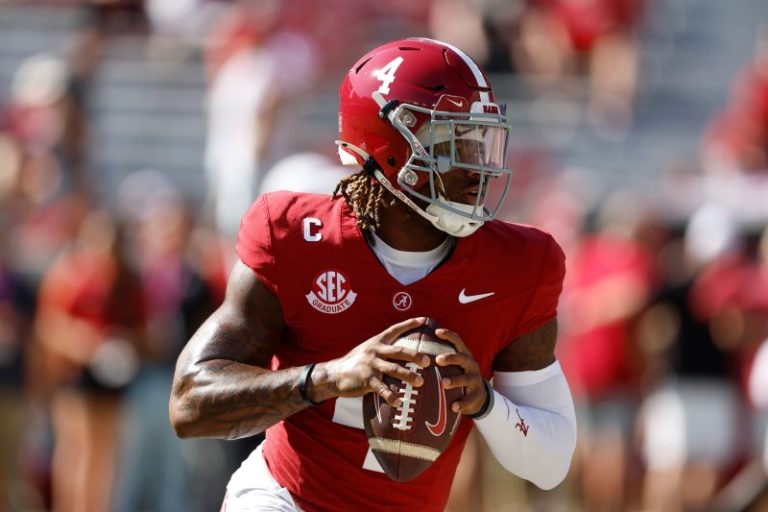
6. Las Vegas Raiders: Jalen Milroe, QB, Alabama

Now let’s get funky, apparently. Milroe hasn’t been thought of as a first-round pick, but he did notably accept an invite to the green room for the draft. That must’ve been enough for Grok, who says the Raiders will let Milroe develop behind Geno Smith. There is no question he has the traits, but it’s a shocking pick at No. 6. Anyway, the Raiders will choose to take a dynamic dual-threat prospect rather than fill other glaring needs. Bold strategy, Grok.

7. New York Jets: Kelvin Banks Jr., OT, Texas

Another offensive lineman sneaks into the top-10, with Grok calling for the Jets to continue investing in their offensive line. Opting for Banks is a bit of a surprise this early, but at least the logic of building the trenches lines up. Aaron Glenn saw how an offensive line significantly improved the Detroit Lions. He could use the same formula to build a team in New York.

8. Carolina Panthers: James Pearce Jr., EDGE, Tennessee

Conventional wisdom suggests that the Panthers will continue to work on improving their offense led by Bryce Young. Grok decided to avoid making a conventional pick with any wisdom here, opting to improve Carolina’s defense with Pearce. The pick is a real head-scratcher, but passing on Abdul Carter, who plays the same position, would lead to an uprising in the Queen City.

9. New Orleans Saints: Jaxson Dart, QB, Ole Miss

‘It’s a weak quarterback class,’ they say. When we zig, Grok is busy zagging. The bot managed to sneak four quarterbacks into the top-10, this time sending Dart to the Big Easy. It’s an interesting landing spot for Dart, who has been rising up draft boards all offseason. Paired with new head coach Kellen Moore, a new era would be underway for the Saints.

10. Chicago Bears: Tetairoa McMillan, WR, Arizona

The Bears continue their offseason remodel by drafting McMillan. Grok says that adding a third weapon for Caleb Williams on offense will help with his development. Keenan Allen is currently a free agent, meaning there is plenty of room for McMillan to fit in alongside DJ Moore and Rome Odunze.

11. San Francisco 49ers: Armand Membou, OT, Missouri

The 49ers need some offensive line help, especially at the tackle spot. Grok found a landing spot for Membou in the Bay Area and that scenario would probably make for some happy Niner fans. Membou is considered to be arguably the top offensive lineman in the class and they would likely pounce if he slipped to them outside the top-10. In the current scenario, however, San Francisco continued the trend of passing on Penn State’s Carter.

12. Dallas Cowboys: Ashton Jeanty, RB, Boise State

Grok has taken notice of the Cowboys’ issues at running back, calling it the ‘most pressing need’ for the team in the draft. After calling the Dallas offense ‘anemic’ in 2024, the frisky robot picked Jeanty for ‘America’s Team.’ It seems unlikely that Jeanty will reach this point, but the Cowboys should be thrilled with this result if it comes to fruition. Landing one of arguably the top three talents in the class is enough reason to punt on other needs.

13. Miami Dolphins: Malaki Starks, S, Georgia

Starks fits in seamlessly in a Dolphins defense that lost Jevon Holland to free agency. This felt like a prime landing spot for Jahdae Barron given the Texas star’s versatility and seemingly more important position. Starks is a luxury pick, but Grok argues it’s a worthy selection with the Dolphins having nine more picks throughout the draft.

14. Indianapolis Colts: Tyler Warren, TE, Penn State

The Colts are entering a make-or-break year for Anthony Richardson. They need to improve their weapons on offense and notably have a massive hole at tight end. Grok believes Warren would represent a ‘perfect safety valve’ for Richardson while doubling as a ‘Dallas Clark reboot in Shane Steichen’s offense.’

15. Atlanta Falcons: Abdul Carter, EDGE, Penn State

Carter shockingly plummeted down the board, but he landed safely in Atlanta. The Falcons pick up arguably the best player in the draft at No. 15 while filling its biggest need and is the second straight Nittany Lion to find an NFL home. Grok called Carter a ‘top-10 lock based on talent,’ but he ultimately fell because of the earlier run on quarterbacks and offensive lineman. Needless to say, Grok now has a lot of fans in the Peach State.

16. Arizona Cardinals: Mykel Williams, EDGE, Georgia

The run on edge rushers is here, apparently. Williams joins a pass rush that just added Josh Sweat in free agency, with the chatbot saying the Cardinals will opt for high-upside, impact players thanks to their minimal collection of picks. An offensive lineman would’ve also made sense, but Williams figures to be another Georgia Bulldog to wreak havoc as a pass-rusher at the next level.

17. Cincinnati Bengals: Kenneth Grant, DT, Michigan

It would’ve made sense to continue the run on edge rushers here given the uncertainty surrounding Trey Hendrickson’s future in Cincinnati, but the Bengals instead opt to add interior reinforcements. Regardless, he takes up plenty of space and possesses plenty of athleticism with some potential pass-rush upside to make this an interesting pick, even if it’s not the one we’d expect.

18. Seattle Seahawks: Tyler Booker, OG, Alabama

Some things never change and that includes the Seahawks need for offensive line help. However, Mike Macdonald and crew want to avoid continuing that mistake going forward, which they accomplish by taking Booker. He helps build the interior of the line, which is a significant need if they want to keep Sam Darnold standing. Grok called the need ‘priority one’ and likes the physicality that Booker would bring to the Pacific Northwest.

19. Tampa Bay Buccaneers: Jalon Walker, LB/Edge, Georgia

Much like Carter earlier, Walker slid down the board thanks to Grok’s projection of a run on quarterbacks and other edge rushers. The Buccaneers have a clear need at the position and jump at the chance to take the former Georgia Bulldog. Head coach Todd Bowles would love to land someone with Walker’s versatility here, even if it’s unlikely he gets this far.

20. Denver Broncos: Omarion Hampton, RB, North Carolina

Denver’s running game was mostly nonexistent in 2024, meaning that is a need to be addressed at the draft. The Broncos ignored the position in a weak free-agent class but strike in Round 1 by taking Hampton here. Grok likes Hampton’s fit in Sean Payton’s scheme and the balance he’d provide to the offense.

21. Pittsburgh Steelers: Walter Nolen, DT, Ole Miss

With the law firm of Grant and Graham off the board, the Steelers elect to pivot to Nolen to fill their need at defensive tackle. Pittsburgh is an interesting team that wants to contend but doesn’t have a quarterback. They’re stuck playing the waiting game for Aaron Rodgers, but it’s another ‘Aaron’ that’s on Grok’s fictitious mind here. The robot mentions Nolen has been called ‘the next Aaron Donald,’ making him an excellent piece for the Steelers defense.

22. Los Angeles Chargers: Colston Loveland, TE, Michigan

Jim Harbaugh lands himself another Michigan man by filling the Chargers’ need at tight end with Loveland. There are other needs for Harbaugh’s squad, but you can only do so much with one pick. The Chargers’ loss in the playoffs proved that Ladd McConkey can’t be the only pass-catcher to fear in this offense. Loveland is a great fit and an even better value with this pick. Well done, Grok.

23. Green Bay Packers: Jahdae Barron, CB, Texas

24. Minnesota Vikings: Tyleik Williams, DT, Ohio State

Despite adding Jonathan Allen and Javon Hargrave this offseason, the Vikings are still on the hunt for defensive line help. As the Eagles proved last season, you can never have too much of a good thing and Grok is all-in on adding to that position group here. Williams is a reach at this spot, but perhaps the all-knowing AI knows something we don’t.

25. Houston Texans: Aireontae Ersery, OT, Minnesota

Heads have been scratched all offseason in Houston, but the itchy feeling isn’t going away yet. The Texans traded away their best offensive lineman, Laremy Tunsil, and simply haven’t done enough to make the team better. Offensive line remains a huge need and Grok understood that with the Ersery selection. If nothing else, they have to protect C.J. Stroud going forward.

26. Los Angeles Rams: Shavon Revel Jr., CB, East Carolina

Cornerback has been a need for the Rams since Jalen Ramsey left and Sean McVay’s team now fills it by taking Revel at 26. Grok said the cornerback is a Day 1 starter and a steal for the Rams.

27. Baltimore Ravens: Donovan Ezeiruaku, EDGE, Boston College

Ezeiruaku finds himself a home in Baltimore and steps right in as a pro-ready pass-rusher. Grok highlighted the senior’s motor and seamless fit in John Harbaugh’s team as someone who will ‘Play like a Raven.’

28. Detroit Lions: Will Johnson, CB, Michigan

In Grok’s estimation, Johnson will be in for a long evening. Provided he’s wearing something comfortable and in the presence of good company, it will all be worth it for the former Michigan Wolverine. The cornerback stays in the state and joins the Super Bowl contending-Lions, filling a need at cornerback. He is one of the best in the class but experienced quite the fall in this exercise.

29. Washington Commanders: Shemar Stewart, EDGE, Texas A&M

The Commanders are the beneficiary of another draft fall, pouncing on the potential that Stewart offers off the edge. Washington went into the Detroit pick likely feeling good about filling their needs with Johnson or Stewart, but Dan Quinn’s defense would get a much-needed injection of youth and potential in their pass rush with the Texas A&M product.

30. Buffalo Bills: Emeka Egbuka, WR, Ohio State

The Bills didn’t skip a beat after trading away Stefon Diggs last offseason and dive into the receiver market in this draft for some reinforcements. Egbuka is only the second receiver off the board for Grok but steps in as a pro-ready option for Josh Allen and company. Primarily a slot receiver, it’s an interesting fit considering the presence of Khalil Shakir, but like ranch and bleu cheese, both players can apparently coexist in Buffalo.

31. Kansas City Chiefs: Josh Conerly Jr., OT, Oregon

The Chiefs were eyeing a three-peat in Super Bowl 59. Instead they took a trip down memory lane to relive Super Bowl 55. As a result, the Chiefs are, once again, forced to rebuild the offensive line. That brings them to Conerly with the penultimate pick of the first round. Kansas City couldn’t keep Patrick Mahomes upright in the Super Bowl. Grok is making sure that will be addressed heading into next season.

32. Philadelphia Eagles: Princely Umanmielen, EDGE, Ole Miss

For Grok’s grand finale, it is picking Umanmielen to land in Philadelphia. The Super Bowl champions secure more help on the edge, which became a priority after watching Sweat leave for Arizona. The Eagles love to flex their depth and this is arguably the biggest reason for their postseason success. Grok couldn’t resist one more reach on paper, but this is a draft that doesn’t rely as heavily on ’round grades,’ meaning we could see some surprises throughout.

This post appeared first on USA TODAY

They say a bad day on the links is preferable to a good day at work, but what if golf is your work?

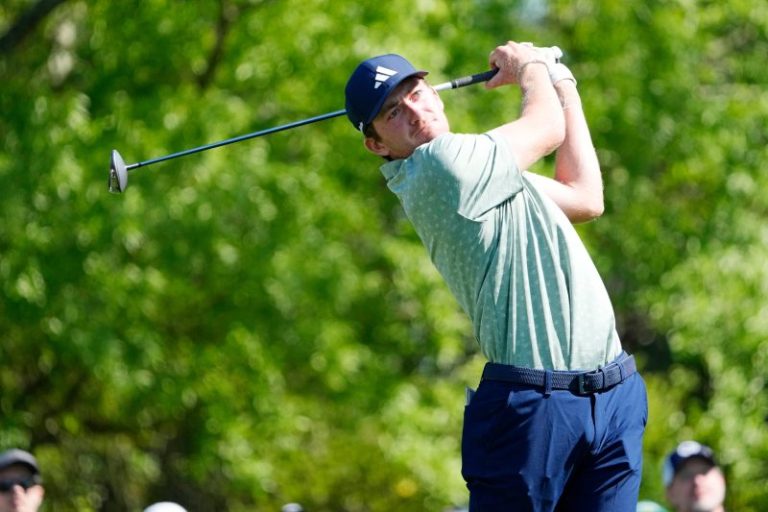
Nick Dunlap, whose job is as a professional golfer, had a no good, very bad day at work Thursday during the opening round of the Master Tournament.

Dunlap shot a brutal 18 over par at Augusta National Golf Club – bad enough to not only put him squarely in last place on the leaderboard, but 11 strokes away from anyone else.

The dismal feat helped etch the 2024 PGA Tour Rookie of the Year a regrettable places in Masters history. Dunlap became just the 11th golfer to fail to break 90 in the first round of the famed major tournament and the first player who has failed to break 90 in 10 years.

Naturally, social media had jokes.

Who is Nick Dunlap?

Dunlap, 21, is a two-time winner on the PGA Tour and considered one of the top young players in professional golf.

The former University of Alabama golfer turned pro in 2024 after a stunning PGA Tour victory at The American Express. His win in January 2024 made him the first amateur in 33 years – and only the third since 1956 – to win on the PGA Tour, going back to Phil Mickelson in 1991.

 He was also the youngest amateur to win a PGA Tour event since 1910.

The Huntsville, Alabama-native then picked up his second career PGA Tour victory in July 2024 at the Barracuda Championship.

What happened during Dunlap’s historically bad Masters round?

It’s a rarity for golfers in the prime of their professional career to fail to break 90 in the first round of the Masters Tournament.

Dunlap on Thursday recorded seven bogeys, four doubles and a triple bogey. The highlight of his day came when he holed a 14-foot putt on No. 16 to avoid a triple bogey on an otherwise dismal day.

While Dunlap will tee off again Friday, he faces a near-impossible challenge making the cut to continue playing in the third and fourth round of the Masters. After Friday, only the top 50 players (plus ties) will move on to play again Saturday and Sunday. Heading into Friday’s action, Dunlap was 15 strokes behind the projected cut line of +3.

Dunlap is now among only four players who have shot 90 or above during a Masters round since 2000. That includes Ben Crenshaw (91, 2015), Tommy Aaron (92, 2000) and Doug Ford (94, 2000).

Every par and putt: Sign up for USA TODAY’s Sports newsletter for more Masters updates.

The worst unofficial first round score in Masters history belongs to Billy Casper, who shot 106 in the opening round of the 2005 Masters, but, perhaps wisely, did not sign his scorecard, excluding it from an official place in the record books.

Social media users react to Nick Dunlap’s Masters round

While a dismal round for a professional golfer, Dunlap’s Thursday performance was perfectly average for many hobbyist golfers who hit the links on the weekend. For that reason, news of Dunlap’s score prompted plenty of ‘one of us’ jokes on social media.

But Dylan Dethier, a writer for Golf Magazine, gave Dunlap some credit for finishing the round and not withdrawing.

Users commenting on a post shared by Ways to Golf had plenty of humorous insights to shared, with one person dubbing Dunlap ‘The People’s Champion,’ and another noting ‘this shows you that an average golfer would shoot 180.’

Worst first round scores in Masters Tournament history

94 – Doug Ford (2000)
92 – Tommy Aaron (2003)
92 – Horton Smith (1962)
91 – Ben Crenshaw (2015)
91 – Horton Smith (1963)
91 – Chick Evans* (1960)
91 – Fred McLeod (1955)
90 – Nick Dunlap (2025)
90 – Chick Evans* (1959)
90 – Jock Hutchison (1956)
90 – Frank Souchak* (1954)

*indicates amateur status

This post appeared first on USA TODAY

The 89th Masters Tournament began today, with the world’s best golfers taking on the picturesque Augusta National Golf Club in pursuit of the coveted green jacket. 

Defending champion and World No. 1-ranked player Scottie Scheffler led the field into the first major championship of the 2025 golf season after outlasting Ludvig Aberg by four strokes to claim the title a year ago.

Who will win it this year? Well, if Thursday is any indication then Justin Rose won’t have any issues taking home his first green jacket. Rose shot a 7-under 65 to lead the fied by three strokes. He’s followed Scheffler, Corey Conners, and Ludvig Aberg at 4-under.

Rory McIlroy looked like he was going to compete for a top spot before an untimely double bogey on 15. Still, despite the misstep, McIlroy ranks just outside the top-20 heading into Friday’s action. At the other end of the spectrum, there are some notable names that could be in danger of missing the cut without some improvement in the second round.

Here are the highlights and results from Thursday’s Masters action:

Masters 2025 leaderboard

1. Justin Rose -7 (Finished)
T2. Corey Conners -4 (F)
T2. Scottie Scheffler -4 (F)
T2. Ludvig Aberg -4 (F)
T5. Tyrell Hatton -3 (F)
T5. Bryson DeChambeau -3 (F)

You can get the latest leaderboard updates and tee times here.

Bryson DeChambeau birdies three of four to move to 4-under

DeChambeau has come on strong in the back nine. After a bogey on 12, DeChambeau has bounced back to birdie 13, 15, and 16. Unfortunately, his tee shot on 17 wound up in the pines off the fairway, so his streak might come to an end just as soon as it began.

Rory McIlroy lands in the water on 15

Looking to get closer to leader Justin Rose, McIlroy took a risk, attempting to chip onto a downhill green on Hole 15. Less than an hour prior, Patrick Cantlay attempted the same shot, but ended up finding the water not once, but twice. McIlroy clearly didn’t learn from his peers’ mistake.

Prior to the shot, the broadcasters even noted that it was much better to leave that shot very short, but McIlroy’s ball just kept rolling and by the time it passed the hole, it was already in the water. McIlroy wound up with a double bogey to move to 2-under.

Justin Rose finishes with a bogey

After a terrific 17 holes, Justin Rose finished Round 1 with his worst hole of the day, which still was not bad. Rose’s tee shot found its way into the bushes off 18, and although he spent considerable time debating whether or not he could go through the trees or perhaps come back on hole 10, Rose eventually decided to just punch his ball back onto the fairway.

Rose’s birdie shot was a great on, landing in the middle left of the green, but it was still a considerable distance from the cup. Rose could not make the par putt, but had a tap-in for bogey. Rose finishes the day at three strokes up on the rest of the field.

Justin Rose with eighth birdie of the day

It’s been all Justin Rose all day. The 16th hole is no cakewalk either. Par 3’s are notoriously much more nerve-racking considering the smaller margin of error. However, that didn’t both Rose clearly. Rose laid a beautiful tee shot into the middle of the green, setting himself up for an easy two-putt. Of course, he didn’t need two putts. Rose nailed the long birdie putt to put himself four strokes up on the rest of the field.

Justin Rose hits 7-under

Rose moves to three shots ahead on the leaderboard, absolutely dominating Round 1 at Augusta. Rose sunk his seventh birdie of the day thanks to a mid-length putt on 15. Rose has been phenomenal with his putter all day, but such a commanding lead on Day 1 could lead to major disappointment if he is unable to hold it throughout the weekend.

Rory McIlroy with a masterclass out of the bunker

As the day marches on, Rory McIlroy has gotten better and better, hitting back-to-back birdies on 8 and 9 to enter the back nine at 3-under, tied for fourth.

Clearly, the turn did not affect his momentum. McIlroy parred Hole 10 thanks to a terrific approach from the bunker, leaving the ball less than two feet from the green. Although he only scored a par on the hole, the result could have been much worse. As it stands, McIlroy remains top-5 on the leaderboard.

Scottie Scheffler nails 40-foot putt on 16

The reigning Masters champion is looking strong in the first round yet again. After seven consecutive pars, Scheffler needed something to break his way in order to gain some ground on the leaders. On 16, he got exactly that with a huge birdie to move to -4 on the day.

Scheffler is still two strokes off the leader, Justin Rose, but 16 holes with no bogeys is always a huge plus.

Nick Dunlap at +15 through 16

While we’ve seen a few stellar performances, Nick Dunlap is having the opposite. Through 15 holes, Dunlap sits at 13-over, six strokes behind second-to-last place Noah Kent.

Dunlap has not hit a birdie all day, hitting bogeys on 1, 3, 4, 9, 13, and 14. He’s hit double bogeys on 11, 12, and 16, as well as a triple on 5.

For those wondering, he’s still a long ways off from the worst round in Masters history. That distinction belongs to Charles Kunkle, who shot a 23-over 95 in 1956.

Fred Couples holes out from 191 yards for eagle

Perennial fan favorite Fred Couples provided a glimpse of his old magic during Thursday’s opening round.

The 1992 champion eagled the par=4 14th hole by knocking it in with a fairway wood from 191 yards out.

Couples, 65, had two birdies and three bogeys on his card for an opening-round 71 — one under par.

Collin Morikawa eagle on 13 to tie for Masters lead

The first Amen Corner eagle of the 2025 Masters belongs to Collin Morikawa.

After a 300-yard drive on the 545-yard par 5, Morikawa hit the green from 196 yards out, giving himself a 35-foot putt for the eagle.

Knocking it in to a rousing roar from the patrons, Morikawa jumped from 1-under to 3-under par – moving him into a four-way tie for first with Scottie Scheffler, Tyrrell Hatton and Justin Rose.

Davis Martin and Michael Kim were the first to complete their opening rounds in red figures. They have the clubhouse lead at 1-under 71.

Would golf benefit from a shot clock?

The first round of the 2025 Masters has started, and there have been suggestions for improving the game. ESPN host Scott Van Pelt joined The Dan Patrick Show to preview the 89th edition of the tournament and discussed the potential introduction of a shot clock in golf.

“The bottom line is, yeah, golf would benefit greatly if there were sort of a clock that we knew when it started and when it hits zero, you get a warning and then you get a penalty,’ Van Pelt said. ‘Because the game does take a long time to get moving.’ — Elizabeth Flores

Scottie Scheffler … from way downtown

Look out everyone, the defending champ isn’t giving up his green jacket without a fight.

Scottie Scheffler showed he means business from the get-go on Thursday morning, by birdieing two of his first four holes. The second one was a thing of beauty on the par-3 fourth.

After hitting his tee shot 62 feet from the hole, Scheffler rammed the birdie putt in the hole – the first time he’s ever birdied No. 4 in his Masters career – to move up the leaderboard.

Nicolai Højgaard bounces back from rough start

Denmark’s Nicolai Højgaard didn’t play the first two holes very well in Thursday’s opening round, digging himself into an early hole with a bogey and double-bogey.

But he righted the ship with birdies on Nos. 3, 4, 5, 7 and 8 to get back into red figures and tie for the lead at 2 under par.

In his Masters debut last year, Højgaard was inside the top six after each of the first three rounds – and briefly led the tournament on Saturday – before finishing in a tie for 16th.

Five bold Masters predictions

As the Masters gets underway, columnist Dan Wolken offers up five bold predictions for how this week will turn out. Among them:

This year will produce the lowest (real) winning score since 2015
The winner of the Masters will eagle No. 13 on Sunday
There will be a first-time Masters winner this year

Check out more bold predictions and Wolken’s thoughts from Augusta.

Ken Griffey Jr. working as Masters photographer

AUGUSTA, Ga. — Ken Griffey Jr. has come out of retirement — sort of.

The Kid, donning a camera around his neck, was among a group of credentialed photographers during the Honorary Starter ceremony to kick off the 89th Masters.

Griffey is working this week for Masters.com. It’s his first time covering the tournament. — Doug Stutsman, Golfweek

Food at the Masters

The traditional Augusta National staples will all cost the same as they did last year. In fact, the price of the egg salad and pimento cheese sandwiches hasn’t gone up since 2002.

Egg Salad: $1.50
Pimento Cheese: $1.50
Masters Club: $3.00
Pork Bar-B-Que: $3.00
Savory Tomato Pie: $3.00
Georgia Peach Ice Cream Sandwich: $3.00

Beverages, too, remain the same as last year.

Soft drinks: $2.00
Iced tea/bottled water: $2.00
Beer/wine: $6.00

Augusta National also serves a special wheat ale called ‘Crow’s Nest,’ which replaced Blue Moon ale in 2021 and also sells for $6.00.

Masters again spotlights LIV-PGA feud

Make no mistake, the Masters is a colossus whether LIV exists or not. To golfers and hardcore fans, it’s special because it’s a major. To the common sports viewer who watches this tournament and maybe a few others, it’s the visual effects – the sparkling white sand, the vividly pink flowers, the perfectly mowed grass − that inspire imagination and awe.

But the PGA Tour-LIV split has made this week something different, even a level above what the Masters was before. Golf fans just don’t get many tournaments like this anymore. That’s a sad commentary on the state of the game but another layer of mystique for a 365-acre tract of Georgia land that was already the biggest thing in the sport. — Dan Wolken

Masters first round is underway

Davis Riley and Patton Kizzire were first off the tee at Augusta National as the opening twosome in the 95th Masters.

Riley made par on the 445-yard par-4 hole. Kizzire carded a bogey.

The patrons get their first look at a former champion when Mike Weir (2003) tees off in the third group at 8:02 a.m.

Nicklaus, Player, Watson hit ceremonial tee shots

The Masters has a long history of reverence for the game of golf. That’s why three of the greatest players to ever tee it up at Augusta officially got this year’s tournament underway by hitting the ceremonial first tee shots.

For the fourth consecutive year, honorary starters Gary Player, Jack Nicklaus and Tom Watson took their turns on the tee, much to the delight of the adoring patrons. The threesome combined for a total of 11 green jackets during their playing careers.

‘Ladies and gentlemen, the 2025 Masters Tournament is officially underway,’ Augusta National chairman Fred Ridley said after Watson hit the last tee shot. ‘Enjoy the tournament.’

Where to watch the Masters: TV channel, streaming Thursday

TV coverage of the Masters begins at 3 p.m. ET on ESPN with coverage live via streaming on Masters.com, the Masters app and Fubo, which is offering a free trial. Select holes and groups will also be available via ESPN+.

TV channel: ESPN (starting at 2 p.m. ET)
Live stream: Masters.com, ESPN+ and Fubo (Fubo offers a free trial subscription)

Watch the 2025 Masters from Augusta with Fubo

Masters tee times today

Notable tee times. For a full list of tee times, you can find Thursday’s here.

All times Eastern

Zach Johnson: 8:13 a.m.
Collin Morikawa: 9:47 a.m.
Phil Mickelson: 9:58 a.m.
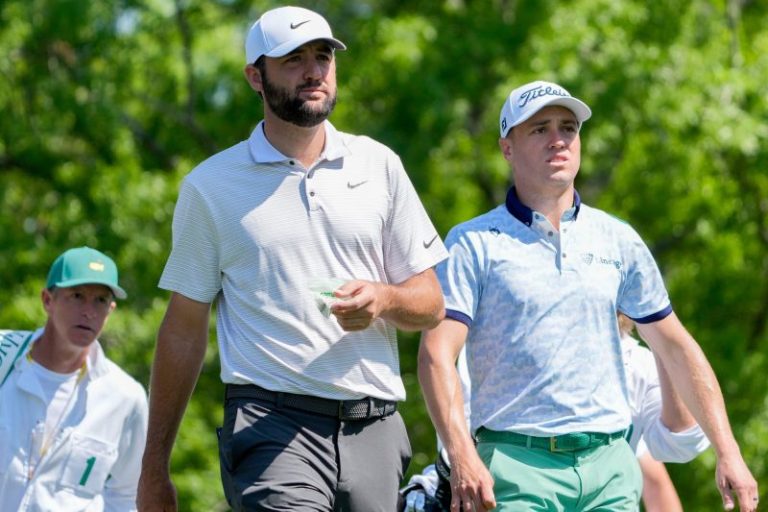
Scottie Scheffler, Justin Thomas: 10:15 a.m.
Jordan Spieth: 10:26 a.m.
Bubba Watson: 11:21 a.m.
Max Homa: 12 p.m.
Dustin Johnson: 12:11 p.m.
Patrick Cantlay: 12:33 p.m.
Brooks Koepka: 12:50 p.m.
Adam Scott: 1:01 p.m.
Xander Schauffele: 1:01 p.m.
Rory McIlroy: 1:12 p.m.
Hideki Matsuyama: 1:23 p.m.
Bryson DeChambeau: 1:23 p.m.
Jon Rahm: 1:34 p.m.

Masters weather forecast: Latest updates for Thursday at Augusta

Things are expected to be much different come Thursday night, however, as there’s a chance of showers. The National Weather Service projects a 50% chance of rain.

The NWS also says that Thursday night rain is only expected to be between a tenth and a quarter of an inch. — Austin Curtright

Masters predictions and picks

Mark Giannotto, USA TODAY: Collin Morikawa

‘Morikawa currently ranks second behind only McIlroy in strokes gained tee-to-green in 2025. It’s perhaps gone under the radar because Morikawa is searching for his first win in more than 18 months and fell short again with a chance to win this year’s Arnold Palmer Invitational. But he has three top-10 finishes in five starts this season, in addition to winning the PGA Championship and British Open previously. Maybe he’s ready to prove his mettle at The Masters.’

DraftKings Network: Xander Schauffele

‘Schauffele started this season late due to a rib injury and, after looking rusty in his first two starts, came alive at the Valspar Championship … gaining an eye-popping 11.2 strokes on approach at the Copperhead Course. This number set a career-high for Schauffele … The 31-year-old is notorious for playing his best golf at major championships and Schauffele is a very intriguing early bet at this number.’

BetMGM: Ludvig Aberg

‘Aberg came extremely close to ending the Masters debutant winless run last April, ultimately settling for a runner-up finish. Illness plagued Aberg in late January through February, but a win at the Genesis should give hope to those considering backing Aberg at the Masters. That week, Aberg gained 10 strokes tee-to-green, the third-best output of his entire career.’

Masters odds: Favorites at Augusta

All odds via BetMGM on Wednesday, April 9.

Scottie Scheffler: +450
Rory McIlroy: +650
Collin Morikawa: +1400
Jon Rahm: +1400
Bryson DeChambeau: +1600
Ludvig Aberg: +2000
Justin Thomas: +2200
Xander Schauffele: +2200
Joaquin Niemann: +3000

Masters predictions: Sleeper picks at Augusta

Experts from Golfweek and the USA TODAY Network have thoughts on longshots who could make some noise this weekend.

Adam Schupak, Golfweek: Will Zalatoris (+5000)
Beth Ann Nichols, Golfweek: Corey Conners (+5000)
Cameron Jourdan, Golfweek: Corey Conners (+5000)
David Dusek, Golfweek: Sepp Straka (+5500)
Jason Lusk, Golfweek: Shane Lowry (+3300)
Tim Schmitt, Golfweek: Sergio García (+6600)
Will Cheney, Augusta Chronicle: Akshay Bhatia (+6600)
Dan Spears, USA TODAY Network: Tom Kim (+10000)
Todd Kelly, Golfweek: Nick Taylor (+30000)

Masters location: Where is Augusta National?

The Masters is played every year at Augusta National Golf Club, widely considered one of the top courses in the sport. Augusta National is located in Augusta, Georgia, which sits on the state’s eastern border with South Carolina.

Of the PGA Tour’s four majors, only the Masters has been played at the same course every time, with the 2025 tournament the 89th edition. — Jason Anderson

How many courses are at Augusta National?

Augusta National Golf Club has just two courses (or one-and-a-half, depending on how you look at it). The Masters will take place on the club’s legendary 18 holes, while Wednesday’s Par 3 competition takes place at the nine-hole Par 3 course. — Jason Anderson

How to become a member at Augusta National Golf Club

If you’d like to land a membership at Augusta National Golf Club, you’d better start networking. There is no application process, with membership an invite-only process. The club has a long history of privacy, and while many reports have listed the total number of members around 300, there is no exact number confirmed by Augusta National.

Once you secure the remarkably exclusive invitation, you’d better make sure you can afford to actually accept it. A range of reports over the last 15 years have placed the initiation fee at somewhere between $40,000 and $300,000, while annual dues are estimated to run between $4,000 and $30,000. — Jason Anderson

This post appeared first on USA TODAY

The 2025 Masters are in full swing now, with the first round complete and second-round action set to tee off Friday morning from Augusta National Golf Club. There’s plenty of attention being paid to Justin Rose, Scottie Scheffler, Bryson DeChambeau and the other golfers in contention at the first major of the year. But the projected cut line and what golfers make (or miss) the weekend is its own compelling storyline.

Only the top 50 golfers on the 2025 Masters leaderboard at the end of the second round, including ties, make the cut for the third and final rounds on Saturday and Sunday. There were 95 golfers in this year’s field when Thursday’s first round began. Phil Mickelson and Billy Horschel are among the notable names in danger of missing this year’s Masters cut after the opening 18 holes at Augusta National, but the projected cut line remains a moving target with more golf left to be played.

Projected cut line

Before the start of the second round Friday morning, with The Masters first round complete, the predictive model used by Datagolf.com projected +3 to be the most likely cut line for the 2025 tournament (39.5% chance). The website determined there was a 29.6% chance it moves down to +4 and a 18.5% chance it moves up to +2. The top 50 cut line would be +2 based on the current leaderboard.

Here’s where the cut line fell in the most recent Masters tournaments:

2024: +6
2023: +3
2022: +4
2021: +3
2020: E
2019: +3
2018: +5

Masters 2025 leaderboard

Here’s where the 2025 Masters leaderboards stands with Thursday’s first round complete. Click here for a complete and updated leaderboard.

1. Justin Rose: -7 (F)
T2. Corey Conners: -4 (F)
T2. Scottie Scheffler: -4 (F)
T2. Ludvig Åberg: -4 (F)
T5. Bryson DeChambeau: -3 (F)
T5. Tyrrell Hatton: -3 (F)
T7. Aaron Rai: -2 (F)
T7. Harris English: -2 (F)
T7. Jason Day: -2 (F)
T7. Akshay Bhatia: -2 (F)

Masters 2025 cut line: Golfers to watch

Will Zalatoris +2 (F)
Charl Schwartzel +2 (F)
Max Homa +2 (F)
Patrick Cantlay +2 (F)
Dustin Johnson +2 (F)
Brooks Koepka +2 (F)
Keegan Bradley +2 (F)
Tony Finau +3 (F)
Phil Mickelson: +3 (F)
Jon Rahm: +3 (F)
Wyndham Clark +4 (F)
Adam Scott +4 (F)
Billy Horschel: +5 (F)
Sepp Straka +6 (F)
Russell Henley: +7 (F)

Watch the 2025 Masters with Fubo

How to watch 2025 Masters: TV, streaming for golf’s first major

Live coverage of this year’s Masters tournament will be split by ESPN and CBS, with the first and second rounds broadcast on ESPN and the final two rounds on CBS.

Friday, April 11

TV: ESPN
Time: 3:30-7 p.m. ET
Streaming: ESPN+, Masters.com, the Masters YouTube page and Fubo, which offers a free trial subscription for new users. Live streaming coverage begins at 8:45 a.m. ET.

Saturday, Apil 12 – Sunday, April 13

TV: CBS, Paramount+
Time: 12-7 p.m. ET (12-2 p.m. streaming on Paramount+, 2-7 p.m. on both CBS and Paramount+ )
Streaming: Paramount+, Masters.com, the Masters YouTube page and Fubo, which offers a free trial subscription for new users. Live streaming coverage begins at 10:15 a.m. ET.

This post appeared first on USA TODAY

House Republicans passed a key hurdle to move forward President Donald Trump’s ‘big, beautiful’ tax agenda on Thursday without the support of a single Democrat, prompting the National Republican Congressional Committee (NRCC) to launch ads against over a dozen vulnerable Democrat incumbents.

‘The National Republican Congressional Committee (NRCC) launched a paid digital advertising campaign targeting 25 vulnerable House Democrats for voting against the budget resolution, leading to higher taxes for Americans by slashing the child tax credit in half and making families pay thousands more,’ the NRCC said in a press release on Friday morning.

The paid digital ad campaign will target 25 House Democrats identified as vulnerable heading into next year’s midterms. The list of Democrats targeted includes: (CA-09) Josh Harder, (CA-13) Adam Gray, (CA-27) George Whitesides, (CA-45) Derek Tran, (CA-47) Dave Min, (FL-09) Darren Soto, (FL-23) Jared Moskowitz, (IN-01) Frank Mrvan, (ME-02) Jared Golden, (MI-08) Kristen McDonald Rivet, (NC-01) Don Davis, (NJ-09) Nellie Pou, (NM-02) Gabe Vasquez, (NV-01) Dina Titus, (NV-03) Susie Lee, (NV-04) Steven Horsford, (NY-03) Tom Suozzi, (NY-04) Laura Gillen, (NY-19) Josh Riley, (OH-09) Marcy Kaptur, (OH-13) Emilia Sykes, (TX-28) Henry Cuellar, (TX-34) Vicente Gonzalez, (VA-07) Eugene Vindman and (WA-03) Marie Gluesenkamp Perez.

‘Once again, House Democrats made their priorities crystal clear: They’re taking a wrecking ball to America’s economy and sticking the working class with higher taxes just to ram their radical agenda down the throats of all Americans,’ NRCC spokesperson Mike Marinella told Fox News Digital. 

‘Voters will consistently be reminded of this betrayal all the way through next Fall.’

The NRCC ad campaign makes the case that by voting against the resolution, Democrats are supporting raising taxes on Americans at every income level and supporting the lowering of key tax credits. 

In a statement to Fox News Digital, Democratic Congressional Campaign Committee (DCCC) spokesperson Viet Shelton said, ‘This is what happens when the same people who want to eliminate the Department of Education write political ads.’

‘If they actually read the bill, they would realize their budget takes away health care, cuts off food assistance, and raises costs to pay for massive tax breaks for the ultra-wealthy while sticking working families with the bill. The Republican budget is exhibit A of their failure to make life affordable for Americans.’

While the party in power, which clearly is the Republicans, traditionally faces serious political headwinds in the midterm elections, the NRCC chair told Fox News last month he is optimistic.

Rep. Richard Hudson, R-N.C., emphasized in an interview on Fox News’ ‘Fox and Friends’ that 13 of the 26 House Democrats they are targeting are in districts that ‘were carried by President Donald Trump in the last election.’

Hudson characterized the upcoming midterms as an ‘opportunity election for House Republicans.’

Additionally, Hudson, who is steering the House GOP’s campaign arm for a second straight cycle, added, ‘We are bullish. Republicans are on offense thanks to Donald Trump.’

The Cook Political Report unveiled its first rankings for the next midterm elections in February and listed 10 Democrat-held seats and eight Republican-controlled seats as toss-ups. 

Courtney Rice, communications director for the rival DCCC, emphasized that ‘voters will hold House Republicans accountable for failing to lower costs while fostering a culture of corruption that benefits their billionaire backers.’

‘The political environment is in Democrats’ favor heading into 2026 — and with stellar candidates who are focused on delivering for their districts, House Democrats are poised to take back the majority in 2026,’ Rice predicted.

Fox News Digital’s Paul Steinhauser and Liz Elkind contributed to this report.

This post appeared first on FOX NEWS

In two weeks, the 2025 NFL draft will kick off with Round 1 from Green Bay, Wisconsin. The Packers’ home will welcome the rest of the league for three days of draft action that could provide another crop of future stars for the league.

A few attributes set this draft class apart from many others seen in recent years. For one, there aren’t many blue-chip talents outside of the top two prospects. Teams picking late in the top 10 may get a less-talented prospect than the same position a year ago. But this class makes up for it with impressive depth in the middle rounds. Players selected at No. 15 and No. 55 overall likely won’t be much different from a talent perspective.

Overall, this is a great class for teams needing help at defensive line, running back, tight end or guard. There aren’t many high-end cornerbacks or wide receivers but both positions have easily a dozen prospects worth developing into starting players.

That makes decisions tough for a big board but we’ve done our best with these rankings. Here’s the top 101 players in the 2025 NFL draft:

NFL draft big board: Top 101 players

1. Travis Hunter, CB/WR, Colorado

A true unicorn in modern NFL draft history. Legitimate No. 1 corner and wide receiver prospect with length, athleticism, playmaking, and football IQ to be a difference-maker at either position sooner than later. Will likely start out on defense due to adjustment needed at wide receiver for the NFL game.

2. Abdul Carter, Edge, Penn State

Position rank: 1

Carter has elite traits as a former off-ball linebacker still learning the position. He’s a long, explosive athlete who could become a double-digit sack threat within his rookie contract. A creative defensive coordinator will love deploying him in multiple ways.

3. Ashton Jeanty, RB, Boise State

Position rank: 1

Generational contact balance is Jeanty’s calling card. He’s a true bell-cow running back who churns out yards and wears down defenses with his vision, patience and low center of gravity. He started his football career as a wide receiver and can showcase that more in the NFL.

4. Will Campell, OT, LSU

Position rank: 1

Campbell’s arms and wingspan are shorter than desired but he is a rare athlete at the position with the footwork, heavy hands, attitude and play strength to potentially stick at tackle in the NFL. High character player who commanded respect in the locker room.

5. Mason Graham, DT, Michigan

Position rank: 1

Graham’s low leverage and wrestling background make him a nightmare in the middle against the run. He weighed in lighter and measured in with short arms at the combine, which could limit his ceiling in the NFL, but there’s too much outstanding film for him to fall very far in this class.

6. Malaki Starks, S, Georgia

Position rank: 1

Starks’ versatility, football IQ and commitment against the run make him a top talent, regardless of position. He didn’t test well at the combine but his flashes for one of the best defenses in the country is undeniable.

7. Armand Membou, OT, Missouri

Position rank: 2

Membou’s a rare athlete in the same caliber as Tristan Wirfs, based on his combine numbers. He has the elite tools teams look for and the attitude to finish blocks, but needs some refinement with his hand usage. There will be some concerns that he only lined up on the right side in college.

8. Will Johnson, CB, Michigan

Position rank: 1

Johnson’s 2023 tape was outstanding and he projects as an ideal outside cornerback in the NFL with a mix of athleticism, ball skills and technique. He dropped off in 2024 and suffered a season-ending injury that may have teams concerned about when to take him.

9. Mykel Williams, Edge, Georgia

Position rank: 2

Williams played hurt in 2024 but had outstanding flashes, especially against Texas. His comically long arms, big frame and power will endear him to evaluators, but he needs to refine his technique.

10. Shemar Stewart, Edge, Texas A&M

Position rank: 3

Stewart is a rare athlete for the position with a long, explosive frame that lit up the NFL combine, but the college production wasn’t there. He often got pressures but had just 4.5 sacks in his college career. NFL teams draft on traits, though, and he has a lot to like.

11. Jahdae Barron, CB, Texas

Position rank: 2

Barron was a versatile piece on the Longhorns’ defense who lined up all over the secondary. His ball skills, attitude, and football IQ are among the best in the class. He tested much better than expected at the combine. Teams may look past him due to his smaller frame (5-foot-11) and shorter arms, which could keep him at nickel-only in the NFL.

12. Jalon Walker, LB/Edge, Georgia

Walker legitimately could line up as an edge rusher or off-ball linebacker in the NFL with his elite athleticism, burst and long frame. It’ll be up to an NFL team to judge how best to use him.

13. Tyler Warren, TE, Penn State

Position rank: 1

Warren won the John Mackey Award in 2024 for good reason as Penn State used him all over the formation. He’s a playmaker with surprising athleticism for his 6-foot-6, 260-pound frame with the demeanor to block in the run game, as well.

14. Tetairoa McMillan, WR, Arizona

Position rank: 1

McMillan isn’t a deep threat but wins with his outstanding catch radius at 6-foot-4, route running and body control. He’s a fluid athlete who compares well to Atlanta Falcons wide receiver Drake London.

15. Kelvin Banks Jr., OT, Texas

Position rank: 3

Banks is a very good pass blocker already with his feet and hand usage. He boasts a big frame at 6-foot-5 and 315 pounds with long arms. He could end up at guard if teams are concerned about his balance and ability to deal with power rushers.

16. Cam Ward, QB, Miami

Position rank: 1

Ward’s electric playmaking gives him a high ceiling in the NFL, but he’ll need to iron out his risk-taking. His arm is one of the strongest in the class and he consistently improved at each stop in college.

17. Colston Loveland, TE, Michigan

Position rank: 2

Loveland’s mix of size (6-foot-6, 248 pounds) and athleticism fit better in the NFL than in college. He’s an experienced route runner who can create mismatches against defenses. He likely won’t be a plus blocker one-on-one in the run game but has the floor to contribute in that way.

18. Matthew Golden, WR, Texas

Position rank: 2

Golden’s combine performance has him in a new tier among the wide receiver class. He’s an ideal No. 2 wideout in an offense thanks to his speed, route running, verticality and ball tracking on deep passes.

19. Mike Green, Edge, Marshall

Position rank: 4

Green put up ridiculous numbers at Marshall with his fluid athleticism, pass-rush moves, awareness and bend. He’s less effective against the run but his violent playing style affects the play even if he doesn’t finish it. He may fall due to off-field concerns.

20. Josh Simmons, OT, Ohio State

Position rank: 4

Simmons would’ve been a top-10 pick if not for a knee injury in 2024. Prior to that, he had exceptionally clean tape in the Big Ten. His body control and footwork at an athletic 6-foot-5 give him the tools to be a long-term starter in the NFL.

21. Emeka Egbuka, WR, Ohio State

Position rank: 3

Egbuka is yet another impressive slot receiver prospect from Columbus. His crisp route running, after-catch potential and reliable hands are reminiscent of fellow Buckeye Jaxon Smith-Njigba.

22. Walter Nolen, DT, Ole Miss

Position rank: 2

Nolen’s size (6-foot-4, 300 pounds) and burst off the ball make him a tough matchup one-on-one. He needs to refine his technique to maximize his tools but he’s got plenty of upside.

23. Luther Burden III, WR, Missouri

Position rank: 4

Burden projects as a playmaking slot receiver with the burst to get chunk yards after catch. He’s built like a running back with reliable hands but lacks experience on the outside. A creative offensive play-caller will enjoy getting him the ball in space and he has immediate potential as a returner.

24. James Pearce Jr., Edge, Tennessee

Position rank: 5

Pearce was one of the most productive edge rushers in the SEC behind his ridiculous burst, length and athleticism. His lean frame may struggle against the run setting the edge but the effort to chase down runners is there. Character questions may drop him down the board.

25. Nick Emmanwori, S, South Carolina

Position rank: 2

Emmanwori is built like a linebacker but is one of the best athletes in the class. He’s excellent in zone coverage with good ball skills and is a reliable tackler against the run. He’ll need to reel in some of his physicality in the NFL to avoid penalties but brings experience all over the formation.

26. Shavon Revel Jr., CB, East Carolina

Position rank: 3

Revel had his final year cut short but offers a rare mix of elite speed and a long frame. Despite his leaner frame, Revel dishes out hard hits in run defense. He’ll need to rein in his grabby tendencies in coverage at the NFL level.

27. Jihaad Campbell, LB, Alabama

Position rank: 1

Campbell is an ideal modern linebacker with a mix of size (6-foot-3, 233 pounds), speed and explosiveness. He played off-ball at Alabama but teams may use him more at edge in the NFL. In either case, he’s a thumping hitter in run defense with coverage skills. There are concerns about a shoulder injury that could drop him down the order.

28. Shedeur Sanders, QB, Colorado

Position rank: 2

Sanders has the highest floor of any passer in the class thanks to his accuracy, timing, poise and toughness. His physical traits are average and will limit his ceiling in the NFL but he could be a day one starter and provide a great baseline for an offense needing quarterback stability.

29. Derrick Harmon, DT, Oregon

Position rank: 3

Harmon’s built big with a 6-foot-4 frame and nearly 35-inch long arms. That means he could realistically line up at multiple spots on the line in the NFL with the burst, strength and power to be a difference maker. But he can be tight moving side-to-side and his pad level is high at times.

30. Donovan Ezeiruaku, Edge, Boston College

Position rank: 6

Ezeirauku is the most NFL-ready pass rusher in a deep edge class. He’s slightly undersized at 6-foot-2 and 248 pounds but his long arms and bend give him an advantage. He’ll be a contributor immediately who doesn’t rely solely on physical gifts to win off the edge.

31. Omarion Hampton, RB, North Carolina

Position rank: 2

Hampton is next-best in a deep running back class thanks to his mix of size, speed, explosiveness, footwork and vision. He’s a proven receiver out of the backfield as well. He took on a lot of contact in college and he will likely have to change that attitude to last in the NFL.

32. Nic Scourton, Edge, Texas A&M

Position rank: 7

Scourton’s not as athletic as teammate Shemar Stewart but he was far more productive thanks to his high motor and variety of NFL-ready pass rush moves. He won’t overpower blockers but will set the edge and hustle hard in against the run.

33. Donovan Jackson, OL, Ohio State

Position rank: 1

Jackson was a career guard at Ohio State before Josh Simmons’ injury forced him out to tackle. He was more than capable at it as the Buckeyes won a national title. His movement skills and length at 6-foot-4 and 315 pounds means he could potentially make it at tackle in the NFL. If not, he’d likely be the top guard in the class.

34. Kenneth Grant, DT, Michigan

Position rank: 4

Mason Graham gets the headlines but Grant is an impressive athlete given his long, 331-pound frame. He has the tools to be a pass rusher but didn’t put it together yet in college. If he can improve his consistency and develop better pass-rush technique, he could be a plus starter sooner than later.

35. Josh Conerly Jr., OL, Oregon

Position rank: 2

Conerly’s measurables at the combine (6-foot-5, 311 pounds) and 2023 tape show he could stay at tackle in the NFL. His 2024 tape wasn’t as good but he still is one of the more athletic players at the position. He may end up at guard with the experience to kick out to tackle in a pinch.

36. Azareye’h Thomas, CB, Florida State

Position rank: 4

Thomas is all about tools with a 6-foot-2, 197-pound frame and very long arms. He excels in press coverage with his imposing size and physicality with fluid movement skills. His ball skills were lacking slightly compared to the rest of the class and he’ll need to improve his body control and discipline in coverage.

37. Tyleik Williams, DT, Ohio State

Position rank: 5

Williams is built to play the run well already at 6-foot-3 and 334 pounds with violent hands and good feet. He’s an explosive athlete with pass-rush upside but he’s yet to fully unlock that. He needs to improve his consistency and hand usage in pass-rush scenarios to maximize his power and burst.

38. Grey Zabel, IOL, North Dakota State

Position rank: 1

Zabel played tackle in college but projects best inside at either guard or center. He’s a mauler off the line with great reaction against defenders thanks to his mobility, even when engaged in blocks. He’s built a bit leaner at 6-foot-6 and 312 pounds but his impressive athleticism should be an asset on the interior.

39. Quinshon Judkins, RB, Ohio State

Position rank: 3

Judkins’ explosiveness was on full display at the combine after showing up in his 2024 tape. He forces missed tackles with his burst and strong frame and he’s a proven receiver out of the backfield. His lack of top speed may drop him down some boards as he isn’t likely a home-run hitter in the NFL.

40. Jonah Savaiinaea, OL, Arizona

Position rank: 3

Savaiinaea’s strong showing at the combine and arm length in a 6-foot-4, 324-pound frame lend credence that he could potentially line up at tackle in the NFL given his experience in college and heavy anchor. His foot speed may ultimately hold him back, though, and make him a career guard. Still, his size and burst should be a major asset, especially in the run game.

41. Maxwell Hairston, CB, Kentucky

Position rank: 4

Hairston’s blazing 4.28-second 40-yard dash at the combine bodes well for him in the NFL considering his smaller stature at 5-foot-11 and 183 pounds. His ball skills (six INTs, 10 passes defensed in two years) are impressive and he can fit in man or zone schemes. He may get bullied by bigger receivers at times, though.

42. TreVeyon Henderson, RB, Ohio State

Position rank: 4

Henderson’s speed on the outside makes him a burner but there are concerns about his durability after injuries in 2022 and 2023 as the lead back at Ohio State. He’s a capable pass-catcher with an impressive zero fumbles in his college career, as well.

43. Trey Amos, CB, Ole Miss

Position rank: 6

Amos is a long cornerback with the size (6-foot-1, 195 pounds) and foot speed to excel in press as well as zone coverage. His length comes up big on contested catches and his reaction is ideal for his size. He’s lacking as a tackler and can be aggressive sometimes in coverage, which could result in more flags at the NFL level.

44. Jayden Higgins, WR, Iowa State

Position rank: 5

Higgins is a big-bodied receiver with an excellent mix of speed and jump-ball ability in his long frame. He ran a limited route tree at Iowa State but can create mismatches by using his imposing frame, body control and natural hands. He’s not a burner and not a proven creator after the catch.

45. Darius Alexander, DT, Toledo

Position rank: 6

Alexander’s performances at the Senior Bowl and combine have improved his NFL outlook. He’s a loose mover at 6-foot-4 and 305 pounds with some of the longest arms in the class. His twitchy athleticism and length means he can move around the line depending on the scheme. If he can improve his consistency and pad level, he could be one of the better DTs in a loaded class.

46. Aireontae Ersery, OL, Minnesota

Position rank: 4

Ersery’s big frame (6-foot-6, 331 pounds) boasts power and quickness to stick in the NFL. His movement skills laterally bode well for tackle at the NFL considering his shorter arms but he needs to improve his balance, hand placement and timing to stick at tackle. If not, he’ll be a mountain of a guard.

47. Benjamin Morrison, CB, Notre Dame

Position rank: 7

Morrison had his 2024 season cut short with a hip injury but offers ideal size, good technique in zone coverage and fantastic ball skills at outside corner. His linear speed is impressive but doesn’t translate well in the open field. He needs to improve in man coverage and run support.

48. Elijah Arroyo, TE, Miami

Position rank: 3

Arroyo is an impressive athlete at 6-foot-5 and 250 pounds but knee injuries affected two of his college seasons. His soft hands and awareness on routes will translate well to the NFL. He’s a threat after the catch but not a tackle-breaker due to his high-cut frame. Medicals may take him off the board for multiple teams.

49. Landon Jackson, Edge, Arkansas

Position rank: 8

Jackson’s combine performance pushed him to fringe first-round status after a remarkable showing in the jumps for his size (6-foot-6, 264 pounds). His high motor and unusual movement can create problems for blockers. His lack of bend will limit him at the NFL level but he’ll make up for it as a starting-caliber player.

50. Xavier Watts, S, Notre Dame

Position rank: 3

Watts moved to safety for his last two years in college and thrived with 13 interceptions in that span. His background as a wide receiver helps his ball skills and route recognition. He’s a good athlete with good size at 6-foot and 204 pounds. His instincts and allergy to penalties make up for his lack of proven man-coverage ability and top-end speed.

51. Carson Schwesinger, LB, UCLA

Position rank: 2

Schwesinger cut his teeth as a special teams star before taking his speed and feel to a starting linebacker role in 2024. He finds the ball consistently (double-digit tackles in nine of 10 starts), hits hard and reaches full speed quickly. His inexperience as a starter may drop him down boards.

52. Mason Taylor, TE, LSU

Position rank: 4

Son of Hall of Fame defensive end Jason Taylor, Mason Taylor’s got great size (6-foot-4, 251 pounds) and very reliable hands. Fluid athlete with great body control. Limited as a blocker and needs to improve his breaks in the NFL.

53. Kaleb Johnson, RB, Iowa

Position rank: 5

Bruising, powerful one-cut runner who plays like a mix of Derrick Henry and DeMarco Murray. Won’t make defenders miss in the open field but uses his patience, vision, power and foot speed to make the most of his opportunities.

54. Jaylin Noel, WR, Iowa State

Position rank: 6

Outstanding performance at the NFL combine showed his potential at the next level. He’s a smaller player (5-foot-10, 194 pounds) but pulls away from defenders with his speed. He’s a smooth route runner who can separate from defenders consistently. He’ll need to improve his drops and plan against press coverage.

55. Kevin Winston Jr., S, Penn State

Position rank: 4

A knee injury cut short his 2024 season but he ran well at his pro day to ease concerns about that. He has ideal size at 6-foot-1 and 213 pounds with length and great speed for run defense. His high-cut frame may hinder him in pass coverage and he needs to develop his play recognition, but the traits are there.

56. Kyle Kennard, Edge, South Carolina

Position rank: 9

Great burst and twitch off the line with good size (6-foot-4, 262 pounds) and long arms. Led the SEC in sacks in 2024 with 11.5 and runs hot with explosive hands. He needs to improve setting the edge in run defense but has the size to do that at the NFL level.

57. Cameron Williams, OT, Texas

Position rank: 5

Impressive size at 6-foot-6 and 334 pounds with an 85-inch wingspan and elite athleticism. Williams is a lot of projection at this point. His rare tools are worth developing to better his hand usage, anchor and discipline (18 penalties in 16 starts). In time, Williams could be one of the best tackles in this class.

58. Tyler Booker, IOL, Alabama

Position rank: 2

Mountain of a guard at 6-foot-4 and 326 pounds and an 84¼-inch wingspan. That size means he can anchor in pass protection extremely well and dominate in run blocking. He lacks foot speed and speed in general, which could hurt him against NFL-level athletes and limit which offenses he would fit best in. But he’s a starting-caliber guard as a rookie and one of the better ones in the class.

59. Jordan Burch, Edge, Oregon

Position rank: 10

Size at 6-foot-4 and 280 pounds to line up inside or on the edge in the NFL. Good length with burst out of the stance and ideal body control. He wins with power but has the athletic tools to do more with development. Needs to improve his block shedding and can be a versatile force with time.

60. Darien Porter, CB, Iowa State

Position rank: 8

Outlier length at 6-foot-3 with an 80-inch wingspan and elite speed (4.3-second 40-yard dash). Age will take him down the board for some teams but his background as a wide receiver gives him the ball production and upside as a starter. Started for just one season (2024) and put up three interceptions and five passes defensed.

61. T.J. Sanders, DT, South Carolina

Position rank: 8

Ideal burst off the line and strength that keeps him off the ground in run defense. At 6-foot-3 and 305 pounds with an 80-inch wingspan, Sanders has surprising power that can get him off blocks in the run game. His tools provide good projections as a pass rusher, but they’ll need some development.

62. Alfred Collins, DT, Texas

Position rank: 9

Massive defensive tackle (6-foot-5, 332 pounds, 85-inch wingspan) with a game built on power. Collins can eat up blocks in the trenches in the run with his heavy hands. His tall frame can sometimes leave him vulnerable to double-teams but has the tools to make another leap after improving a lot in 2024. Improved hand usage could also unlock his potential in the NFL.

63. Wyatt Milum, IOL, West Virginia

Position rank: 3

Four-year starter at left tackle for West Virginia but projects best at guard due to his lack of length (32⅝-inch arms). Athletic with powerful hands and the right mix of competitiveness and experience in run blocking. Will need to improve as a pass protector but has a high floor with lots of experience.

64. J.T. Tuimoloau, Edge, Ohio State

Position rank: 11

Very long, flexible player off the edge who faced a lot of double-teams in college. He lacks any elite calling cards besides his length but has a high floor as a twitchy, high-motor, agile defender who excelled at batting passes. He needs some refinement to his technique, specifically coming out of his stance too high and timing his hands correctly.

65. Danny Stutsman, LB, Oklahoma

Position rank: 3

Big linebacker at 6-foot-3 and 236 pounds with solid speed (4.52-second 40-yard dash). Thundering hitter in run defense who will be a standout in that role immediately. That gives him a high floor but he will need to improve in coverage to reach his ceiling. He’s shown flashes in coverage, though, with good tape prior to 2024.

66. Princely Umanmielen, Edge, Ole Miss

Position rank: 12

Impressive length (82⅜-inch wingspan) for his size (6-foot-4, 241 pounds). Ideal acceleration, flexibility and body control, which he combines with good rush awareness to set himself up at the point of attack. Productive in 2024 with 10.5 sacks. Lacks the size to set the edge or take on blocks in the run game but has the tools to be a designated pass rusher early on.

67. Tyler Shough, QB, Louisville

Position rank: 3

Age may take him off the board for teams (he’ll turn 26 as a rookie) but Shough offers a mix of size (6-foot-5, 224 pounds) and impressive mobility (4.63-second 40-yard dash). His arm strength and mobility means he can fire passes off at multiple angles and access all levels of the field at will. Injuries are a concern but none were soft-tissue. He needs to take fewer risks as a passer, too, but offers lots of upside.

68. Tate Ratledge, IOL, Georgia

Position rank: 4

A taller guard prospect at 6-foot-6 and 312 pounds but uses his upper and lower body well to move defenders. His mix of power and control when blocking gives him a great foundation for run blocking in the NFL. As a pass protector, he anchors well but needs to improve his hand usage to stick as a starter. He should contend for a starting role as a rookie.

69. Deone Walker, DT, Kentucky

Position rank: 9

Outlier size at 6-foot-7 and 328 pounds with 34-inch arms. Walker is mostly projection at this point but he has a tantalizing mix of size, speed, strength and footwork. His agility and balance are rare for a player his size. There’s simply few players built like him to ever enter the league and that’s worth developing. His ceiling is high but his floor may be low given his inconsistency and unrefined technique.

70. Jalen Royals, WR, Utah State

Position rank: 7

Good mix of size (6-foot, 205 pounds), fluid athleticism and body control. He’s effective after the catch with short-area quickness and long speed to outrun defenders. He ran a lot of quick-game concepts at Utah State so he’ll need to expand his route tree at the NFL level. Could be a WR2 midway through his rookie contract.

71. Josaiah Stewart, Edge, Michigan

Position rank: 13

Short but compact build at 6-foot-1 and 249 pounds. Explosive off the edge and needs very little time to generate effective speed-to-power moves. Good hand usage for his development. His size may ultimately hold him back for some teams but he can be a high-energy rotational edge rusher at the very least as a rookie.

72. Ozzy Trapilo, OT, Boston College

Position rank: 6

NFL bloodlines (his father played in the NFL) with a huge frame at 6-foot-8, 319 pounds and an 82-inch wingspan. Pass protection is his strong suit at this point with good awareness, hand placement and positioning. His smooth athleticism and footwork help him against longer edge rushers. He needs to improve in the run game but can become a reliable starter early on in his rookie contract.

73. Jaxson Dart, QB, Ole Miss

Position rank: 4

Dart thrived in Ole Miss’ system that schemed open lots of throws via play-action and RPO concepts. That will likely mean Dart needs time to get up to speed in an NFL offense but has the tools to do so. He has an NFL arm, mobility and intangibles that teams will love. With a year or so to sit, Dart could be a long-term starter in the league.

74. Tre Harris, WR, Ole Miss

Position rank: 8

Outside receiver size (6-foot-2, 205 pounds) with good body control, smooth footwork and releases. Productive in college (10 100-yard games in 20 starts). Lacks elite speed or burst and ran a very limited route tree at Ole Miss. Will need time to adjust to the NFL game.

75. Dylan Sampson, RB, Tennessee

Position rank: 6

Sampson is slightly undersized at 5-foot-8 and 200 pounds but has great speed and productivity (1,491 rushing yards, 22 touchdowns in 2024). He boasts surprising physicality for his frame and is exremely competitive. He compares well to NFL starter Tony Pollard and should have a role in an NFL backfield for years.

76. Barrett Carter, LB, Clemson

Position rank: 4

Impressive speed that makes him a good fit in coverage and run defense. His compact build (6-foot, 232 pounds) serves him well as a tackler but his smaller stature may take him off the board for some teams. To maximize his athleticism, Carter needs to improve his hand usage.

77. Gunnar Helm, TE, Texas

Position rank: 5

Great ball skills and NFL size (6-foot-5, 241 pounds). Good athlete adept at attacking zone coverage. Committed run blocker. Lacks a separation gear after the catch and needs to improve strength for the next level.

78. Andrew Mukuba, S, Texas

Position rank: 5

Mukuba’s lack of size (5-foot-11, 186 pounds) will show up more in the NFL than in college. But his length and speed means he can cover ground easily in the secondary. His ball production in 2024 (five interceptions, 11 passes defensed) and commitment to run defense despite his size will endear him to some teams.

79. Marcus Mbow, IOL, Purdue

Position rank: 5

Three-year starter at tackle but his lighter frame (6-foot-4, 302 pounds) will kick him inside in the NFL. Fluid mover who wins more with hands than core strength. Great demeanor and burst off the line. He can stutter and lose his anchor in pass protection, further necessitating a move inside.

80. Jalen Milroe, QB, Alabama

Position rank: 5

Milroe’s ridiculous athletic traits put him in contention for the best athlete in the class, regardless of position. His breakaway speed and arm strength are a rare combination that teams will covet at the NFL level, but Milroe needs to improve his mechanics to become a more consistent and accurate thrower. If a team is willing to sit and develop him, he could follow a Jalen Hurts-type trajectory and take over as a dual-threat starter in time.

81. Jack Bech, WR, TCU

Position rank: 9

Lacks explosion and long speed but is a very reliable receiver with great hands. Physical style of play with his thick build (6-foot-1, 214 pounds). Good route runner who can make contested catches. Will need to improve against press coverage to stick in the NFL.

82. Jared Ivey, Edge, Ole Miss

Position rank: 14

Great size for an NFL edge at 6-foot-5 and 274 pounds with an 82⅝-inch wingspan. His high floor as a run defender thanks to his length will give him a role early on in his career. His good-but-not-great athleticism and subpar burst will limit him as a pass rusher as he enters the league.

83. Ashton Gillotte, Edge, Louisville

Position rank: 15

Great speed and flexibility considering his dense frame (6-foot-2, 264 pounds). That frame translates to a physical playing style that uses power to overwhelm blockers with great leverage. His mix of physicality, high motor and consistency will make him an NFL player. His lack of length may ultimately limit him.

84. Jacob Parrish, CB, Kansas State

Position rank: 9

Compact build at 5-foot-10 and 191 pounds that he uses powerfully with his punch in run support and physicality in coverage. His lack of length may come up against bigger receivers but his smooth athleticism and competitiveness should keep him in contention. His ball production as a starter is impressive as well (five interceptions, 21 passes defensed in 24 starts).

85. Bradyn Swinson, Edge, LSU

Position rank: 16

Ideal mix of burst, length (81¼-inch wingspan), size (6-foot-3, 255 pounds) and flexibility to be a contributor sooner than later. His mix of pass-rush moves sets him up well early on. He lacks the mass and strength to set the edge in the run consistently but will have a role as a wide-alignment pass rusher.

86. Shemar Turner, DT, Texas A&M

Position rank: 10

Tweener of a DT at 6-foot-3 and 294 pounds but with good length and power. Turner is an explosive athlete off the line with experience at edge and inside. He gained a reputation for getting flags due to his competitive nature. He projects well with great twitch and powerful hands. If he can play more disciplined, he’ll be a starter in the NFL for a long time.

87. Jordan Phillips, DT, Maryland

Position rank: 11

Phillips’ light feet stand out amid his explosive burst and powerful hands. His inexperience and youth means he is more projection at this point but he has fantastic tools in a 6-foot-2, 313-pound frame. He will need development to reach his high ceiling but the staff that does that will have an NFL starter on their hands.

88. Harold Fannin Jr., TE, Bowling Green

Position rank: 6

Natural, versatile receiver who was used all over the formation in college. Led the country in receptions and receiving yards in 2024. Proven receiver in busy areas of the field and a run-after-catch threat. But he did run a limited route tree at Bowling Green and will need a lot of work as a blocker.

89. Damien Martinez, RB, Miami

Position rank: 7

Martinez plays a bruising brand of football. More than 70% of his yards came after contact in 2024. His size at 5-foot-11 and 225 pounds means he will be a punishing back against defenses. He won’t win with breakaway speed but good luck to defenders trying to take him down. In a deep class with lots of speedsters, Martinez could be an early-down back for an NFL team.

90. Terrance Ferguson, TE, Oregon

Position rank: 7

Great athlete with impressive burst off the line at his size (6-foot-5, 247 pounds). Ideal wingspan and ball-tracking skills to be a downfield threat with contested-catch ability. Can break through contact after the catch, as well. His run-blocking skills are average at best, he’ll need to get stronger in the NFL.

91. Bhayshul Tuten, RB, Virginia Tech

Position rank: 8

Tuten showed off at the NFL combine with his ridiculous athletic traits. His mix of balance and explosion in a 5-foot-9, 204-pound frame gives him a great floor as a returner. He can break off long runs when given the space. He did have ball-security issues at Virginia Tech, which may cause concern for NFL teams. His high ceiling thanks to his traits are worth investing in.

92. Anthony Belton, OT, N.C. State

Position rank: 7

Massive frame at 6-foot-6, 336 pounds and an 84-inch wingspan. A road-grader in the running game, Belton uses his size and athleticism to bully defenders in various run schemes. He was a reliable starter for gap and zone schemes. He needs to improve his hand usage in pass protection but has the potential to be a long-term starter.

93. Demetrius Knight Jr., LB, South Carolina

Position rank: 5

Knight started one season for the Gamecocks and plays through blocks with tenacity. He’s a standout run defender with great burst in the open field. He is limited in coverage at this point but can cover underneath and in intermediate areas. At the very least, he’ll be an early-down starter and special teams ace.

94. Omarr Norman-Lott, DT, Tennessee

Position rank: 12

Incredible twitch given his size at 6-foot-2 and 303 pounds. Great length with an 80½-inch wingspan to maximize his burst. Norman-Lott didn’t have a high volume of snaps in college but made the most of them when he was on the field. His fundamentals hand-wise help him use his quickness and power to win in one-on-one scenarios. He needs to improve as a run defender but has the tools to do so.

95. Jonas Sanker, S, Virginia

Position rank: 6

Natural athlete with solid size (6-foot, 205 pounds) and length (32½ inch arms). Reliable tackler with a good background on special teams and a nose for the ball in run defense. His discipline in zone coverage needs work and he may be limited overall in coverage by his tight transitions.

96. Cam Skattebo, RB, Arizona State

Position rank: 9

Skattebo won’t break off many long runs but churns out yards thanks to his quick running style and compact frame (5-foot-10, 216 pounds). He can take on hits and play through them to wear down defenses over the course of a game. He was a great receiving option out of the backfield as well and became the first player since Christian McCaffrey to surpass 1,500 rushing yards and 500 receiving yards in the same season. His fumbling issues and lack of speed may drop him down the board in a loaded class.

97. Kyle Williams, WR, Washington State

Position rank: 10

Good separator with outstanding production (14 TDs in 2024) who can win downfield. Average size (5-foot-11, 190 pounds) but makes up for it with speed and after-catch abilities. His route running is lacking at this stage and will need development but in time he could become a solid No. 2/3 WR.

98. Jared Wilson, C, Georgia

Position rank: 1

Wilson started just one season in Athens but put together impressive film. Good size (6-foot-3, 311 pounds) and outstanding athleticism (1.71-second 10-yard split at the NFL combine) with football IQ to make it at the next level. His body control and play strength give him a good foundation to build upon with more development and experience.

99. Devin Neal, RB, Kansas

Position rank: 10

Neal was an outstanding producer for the Jayhawks as a four-year starter in the backfield. At 5-foot-11 and 219 pounds, he uses his patience, timing and vision to set up his blockers while using his balance to stay upright for extra yards. He won’t wow you with his long speed but can handle a solid workload with his physical brand of running.

100. Quincy Riley, CB, Louisville

Position rank: 10

Ridiculous ball production even after moving up to ACC competition with eight interceptions and 34 passes defensed in his last three years. His athleticism at 5-foot-11 and 194 pounds, in addition to that ball production, gives promise for his NFL future. Great burst out of his breaks and good transitions as well. He needs to improve his breaks and vision in zone coverage, though.

101. Oluwafemi Oladejo, Edge, UCLA

Position rank: 17

Transitioned from off-ball linebacker to edge in 2024 with good results. Great frame at 6-foot-3 and 260 pounds with nearly 34-inch long arms. Can use speed-to-power but lacks the refinement at this stage. He offers a lot of upside and needs time to evolve as a pass rusher. He’s shown potential as a run defender, though, with 13.5 tackles for loss in 2024.

All the NFL news on and off the field. Sign up for USA TODAY’s 4th and Monday newsletter. 

This post appeared first on USA TODAY

Tennessee quarterback Nico Iamaleava enjoys some upper hand with the transfer period approaching. Use it wisely.
Tennessee’s proven quarterback depth is awfully thin. That gives Nico Iamaleava some negotiating power, but who says he’s better off without Tennessee?
Tennessee made the playoff with Nico Iamaleava last season. Keep him, and Vols could return.

Tennessee quarterback Nico Iamaleava wants a sweeter deal, according to On3’s reporting Thursday, and why shouldn’t he? Starting quarterbacks enjoy leverage in this landscape.

Iamaleava has Tennessee backed into a corner, because the Vols let their quarterback depth chart grow thin behind Iamaleava.

With Iamaleava as Tennessee’s starting quarterback, the Vols can make the College Football Playoff. We know this, because they made the playoff with Iamaleava last season, and once they got there, their quarterback was the best thing going for them in a pulverization at Ohio State.

Without Iamaleava, well, that complicates matters for Tennessee. There’s no readymade heir. Josh Heupel’s two recruiting classes after he signed Iamaleava included no quarterbacks of his caliber. No veteran transfer with starting experience sits behind Iamaleava, either.

In fairness to Tennessee, it’s a wee bit difficult to sign another No. 1-ranked quarterback recruit when you’ve so clearly identified your starter for a multi-year period.

Tennessee put its eggs in the Iamaleava basket when its NIL collective brokered a major deal three years ago for the prospect in pajama pants. And Tennessee kept its eggs in that basket.

Vols backup Jake Merklinger has never taken a snap against a Power Four opponent. Merklinger played third string last season. Tennessee’s only other scholarship quarterback is four-star true freshman George MacIntyre.

Tennessee’s 2025 plan does not improve with either Merklinger or MacIntyre as its starting quarterback. I’m also unconvinced Iamaleava’s 2025 plan improves without Tennessee. He knows Heupel’s system. He’s settled in. By all accounts, he’s enjoying a good spring while preparing for a second season as starter.

Heupel’s quarterbacks typically flourish. Remember what Hendon Hooker did in his second season starting for Heupel? He took Tennessee to the brink of qualifying for the final four-team playoff.

Best for Tennessee and Nico Iamaleava if he stays

Tennessee’s coaching staff wants to retain Iamaleava, and why shouldn’t it? As tempting as it might be for fans to holler, “Show him the door!” in April, those rally cries will turn to boos come autumn if the Vols are losing to Arkansas with a second-tier quarterback, while Iamaleava plays elsewhere.

Best-case scenario for both school and player ends with Iamaleava wearing orange in September.

On3’s report described Iamaleava’s negotiations with Tennessee as “active” and “ongoing.” That doesn’t equal a five-alarm fire, especially if the Vols put this to bed, retain their quarterback, and stay positioned for playoff contention.

If Iamaleava thinks he can squeeze Tennessee, now is the time to negotiate. The transfer portal will open on Wednesday for a 10-day free-agency period. Though this negotiation went public, Iamaleava surely isn’t the only player across the country trying to rework his deal while the transfer period applies heat on coaches. The hour is late for Tennessee to scramble their quarterback plans.

This becomes a textbook example of why the transfer calendar drives coaches bonkers. They fight to retain their most valuable pieces throughout the winter transfer period, only to have the portal reopen in April after spring practice.  

Tennessee could try to nab a transfer quarterback of its own, but it’s a high-stakes gamble to think someone of Iamaleava’s caliber waits on the other side of the veil. Plus, not just any quarterback could step in and operate Heupel’s warp-speed spread offense with just a few months of preparation.

Nico Iamaleava enjoys some leverage. Use wisely.

Iamaleava didn’t meet the hype during his redshirt freshman season. Difficult bar to meet, considering the hype cranked into high gear after word got out that Iamaleava struck a big NIL deal while a five-star prospect in California to come play for Tennessee.

Setting aside the hype, if you rank SEC quarterbacks, Iamaleava would rank in the top half of the conference. He didn’t enjoy sufficient wide receiver or offensive line help, either, last season.

Could he secure a better payday from another program? That’s a gamble, one we’ve yet to see Iamaleava willing to take. Some other Power Four programs would benefit from Iamaleava, but he stayed put during the winter transfer period.

Could Tennessee land a better quarterback if Iamaleava leaves? That, too, is a gamble it shouldn’t want to take and didn’t position itself to take, considering its quarterback depth chart.

Iamaleava enjoys a bit of leverage. Best not for either party to overplay their hand.

Blake Toppmeyer is a columnist for the USA TODAY Network. Email him at BToppmeyer@gannett.com and follow him on X @btoppmeyer. Subscribe to read all of his columns.

This post appeared first on USA TODAY
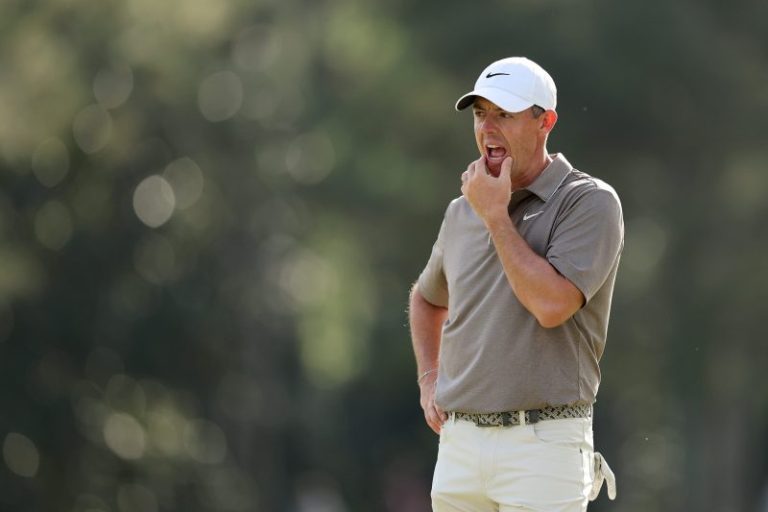
As promised, Jim Trotter is paying it forward.

Months after settling his racial discrimination lawsuit against the NFL, the retired Hall of Fame journalist has launched a program with Howard University to support aspiring sports journalists. Through his recently established Work, Plan, Pray Foundation, Trotter has gifted $300,000 for a five-year program at his alma mater.

“I’m trying to make a difference,” Trotter told USA TODAY Sports.

The funds will be disbursed with three distinct purposes. First, to subsidize travel and housing expenses for students working on unpaid internships in the industry.

Second, to sponsor travel and lodging expenses for students to attend networking events, such as the annual convention for the National Association of Black Journalists.

Third, to establish fellowships that will contribute money for tuition and school expenses for two high-achieving students each year.

Trotter, who in 2023 received the prestigious Bill Nunn Memorial Award from the Pro Football Hall of Fame for career achievement in covering pro football and was the NABJ’s Journalist of the Year, can relate to the impact of supporting students. He received financial assistance while studying journalism at Howard during the 1980s.

“It helped me concentrate on school,” he recalled. “This is a way for me to try to help that next generation.”

Trotter, who retired earlier this year as senior NFL columnist at The Athletic, sued the NFL in 2023 for retaliation after his contract as a reporter with NFL Media was not renewed.

In the lawsuit, Trotter maintained that the NFL refused to address his concerns about institutional discrimination – reflected with zero Black senior editors in a newsroom for a league media operation covering predominantly Black players – and was embarrassed when he challenged Commissioner Roger Goodell about it during two Super Bowl press conferences. Trotter, whose role at NFL Media included extensive exposure on the NFL Network, also cited alleged racially insensitive comments by two NFL owners, Jerry Jones of the Dallas Cowboys and Terry Pegula of the Buffalo Bills in the lawsuit. The NFL denied Trotter’s allegations.

“The only thing I was doing was trying to make sure the NFL’s actions reflected its word,” Trotter said, alluding to diversity, equity and inclusion commitments.

Terms of the settlement Trotter reached with the NFL in October were undisclosed, although he maintained it included a donation from the league to his scholarship foundation supporting journalism students at HBCUs.

He said fundraising efforts are underway for his foundation to support more students. For more information, visit: www.workplanprayfoundation.org.

Retired or not, his work is not done. That much hit home as he spoke to students this week in journalism classes at Howard.

“They are so bright, so energetic, so smart,” Trotter said. “It gives me hope, moving forward.”

Follow Jarrett Bell on social media: @JarrettBell

This post appeared first on USA TODAY