Archive

2025

Browsing

The newest class of WNBA rookies has arrived.

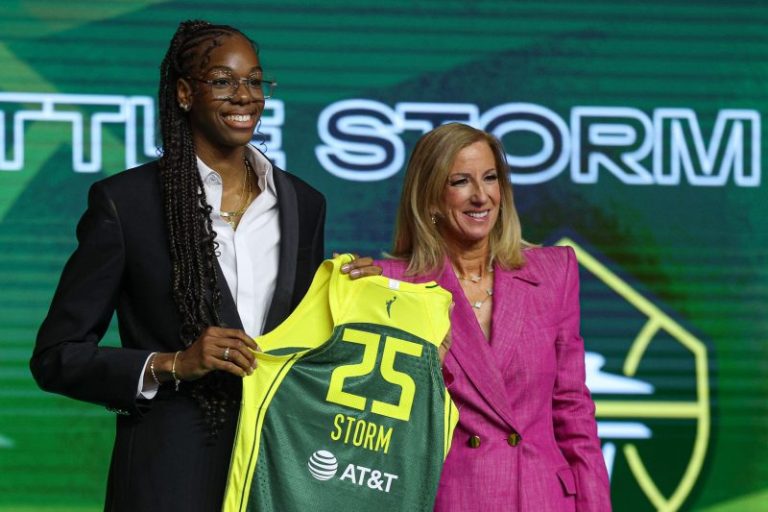
Paige Bueckers was selected with the No. 1 overall pick by the Dallas Wings at the 2025 WNBA Draft on Monday in New York City, followed by Dominique Malonga of France going to the Seattle Storm at No. 2 overall and Notre Dame’s Sonia Citron being selected by the Washington Mystics with the No. 3 overall pick.

‘Just an overwhelming sense of gratitude,’ Bueckers said after her selection. ‘It’s super surreal just being here with other draft invitees. My teammates are here. My family’s here. Just super grateful. Been focusing on staying present. Staying where my feet are. And to be here right now I’m just extremely blessed.’

Bueckers and Malonga highlight the winners of the night. Here’s a look at the full list of winners and losers of the 2025 WNBA Draft.

Winner: Dallas Wings

Any team that lands a generational talent like Paige Bueckers is considered a winner in our book. Bueckers’ shot-making and playmaking abilities are one-of-one as she showcased in UConn’s title run. She climbed up to the third spot on UConn women’s all-time leading scoring list (2,439 points) behind Maya Moore (3,036) and Breanna Stewart (2,676), who have both done great things in the league and have a combined seven WNBA titles. Will Bueckers be next? She will team up with Arike Ogunbowale to form a dangerous backcourt in Dallas. The Wings also picked up Aziaha James out of NC State in the first round.

Winner: UConn

It was no surprise that Buckers was first off the board. After she was drafted No. 1 overall by the Wings, Bueckers turned the spotlight back onto her Huskies teammates who were pivotal in UConn’s title run.

‘They’ve change my life. Those are my sisters. Just extremely grateful for them. Two teams or one team would be genius to add Kaitlyn Chen and Aubrey Griffin to their team. I think they should get drafted tonight,’ Bueckers said.

Add clairvoyant to her resume. Chen was drafted No. 30th overall by the Golden State Valkyries and Aubrey Griffin was selected No. 37th overall by the Minnesota Lynx in the third round. Chen and Griffin were on hand at The Shed in New York City to cheer on Bueckers, alongside the entire UConn squad fresh off a championship celebration, and ended up hearing their names called. That marked three Huskies off the board.

Loser: Las Vegas Aces

You usually won’t find the ‘Aces’ and ‘losers’ in the same sentence as Las Vegas has won two of the last three WNBA titles, but the Aces landed themselves on this list after missing out on the first-round talent due to violating league rules regarding player benefits. The Aces’ 2025 first-round draft pick was rescinded by the WNBA in May 2023 following an investigation into allegations a player was bullied for being pregnant. Aces coach head Becky Hammon also was suspended two games without pay as a result of the probe.

Winner: International players

As the global game continues to grow, so do the number of international players in the WNBA and NBA. It was a big night for overseas superstars. Three of the top 10 picks in the 2025 WNBA Draft were international players. French teen sensation Dominique Malonga was the first international player off the board at No. 2 overall to the Storm, becoming only the fifth player from France to be selected in the first round of the WNBA draft. Justė Jocytė of Lithuania — Malonga’s teammate on France’s Lyon ASVEL Feminin — was drafted No. 5 overall to the Valkyries. Ajša Sivka of Slovenia was picked up by the Chicago Sky at No. 10 overall.

Anastasiia Olairi Kosu of Russia (No. 15; Minnesota Lynx) and Adja Kane of France (No. 38; New York Liberty) were also drafted in the second and third rounds, respectively.

Winner: Washington Mystics

After a relatively quiet offseason, the Mystics’ new GM Jamila Wideman and head coach Sydney Johnson took their first steps toward rebuilding their future with three first-rounders yes, you read that right. Washington is stockpiling talent and drafted Sonia Citron (No. 3), Kiki Iriafen (No. 4) and Georgia Amoore (No. 6) in the first-round alone.

Loser: South Carolina

The Gamecocks had to wait a little longer to hear their name. Despite being projected first-round picks, South Carolina’s Sania Feagin and Te-Hina Paopao both dropped to the second round. Paopao was selected by the Atlanta Dream with the 18th overall pick. Bree Hall went to the Indiana Fever with the 20th overall pick, followed by Feagin’s selection by the Los Angeles Sparks at No. 21. It’s worth noting that a draft number does not equate to one’s success and Hhad coach Dawn Staley was on hand at the draft in New York City to cheer on her players.

‘Trust your process, everyone’s process is different,’ Feagin said.

Winner: Coach

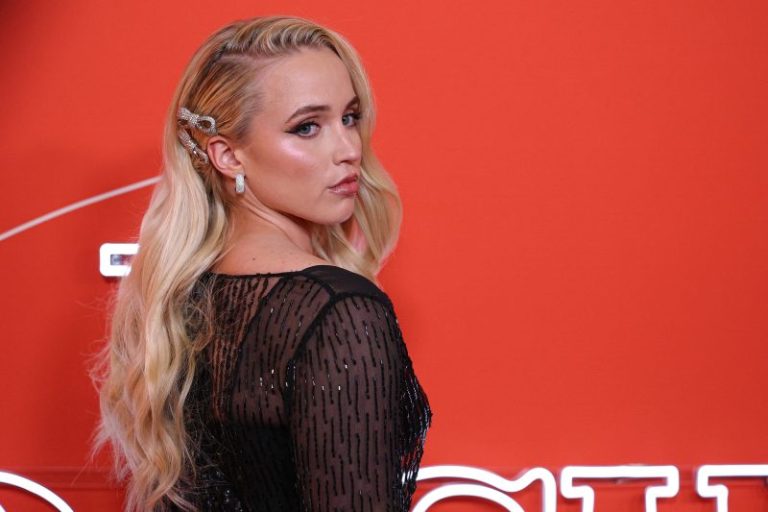
The only thing bigger than Paige Bueckers’ bag of basketball skills is the actual Coach bag she wore on the WNBA Draft’s Orange Carpet. The WNBA announced a multiyear partnership with Coach on Monday and the luxury brand kicked off their collaboration by dressing WNBA draftees for the night, including Bueckers, Hailey Van Lith, Sonia Citron and Aneesah Morrow.

The USA TODAY app gets you to the heart of the news — fastDownload for award-winning coverage, crosswords, audio storytelling, the eNewspaper and more.

This post appeared first on USA TODAY

The first Mexico-born female member of Congress is launching her comeback bid on Tuesday, setting her sights on a Democrat who Republicans view as one of the most vulnerable House incumbents of 2026.

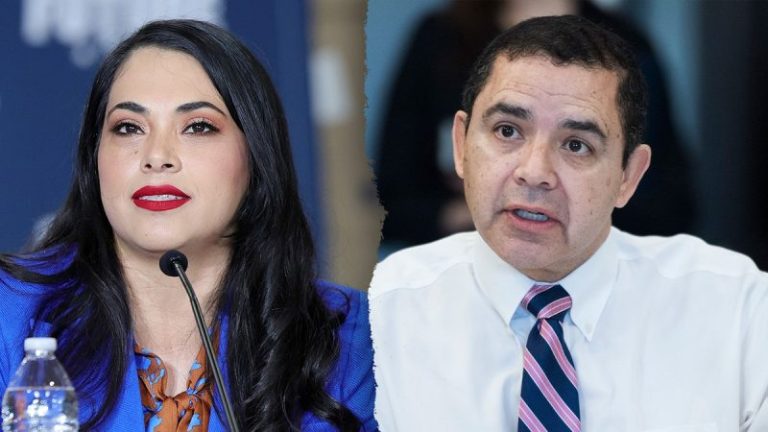
‘Unfortunately, we don’t have that many voices in the Spanish-speaking community — in Telemundo, in television — talking to the Spanish-speaking community about the amazing work President Trump is doing, and his administration,’ former Rep. Mayra Flores, R-Texas, told Fox News Digital in an interview prior to her announcement.

‘And that’s something that I feel I’m obligated to do, because there’s a lot of misinformation being spread from the left, and they’re trying to instill fear and hate in the Hispanic community.’

Flores served in Congress for roughly six months, from late June 2022 until early January 2023, having flipped Texas’ 34th Congressional District from blue to red after winning a special election to replace ex-Rep. Filemon Vela Jr., D-Texas.

She lost re-election to Rep. Vicente Gonzalez, D-Texas, twice, though their rematch saw Flores come within less than 3% of Gonzalez’s victory.

Flores’ 2026 bid is aimed at challenging a different Democrat, however. The former GOP lawmaker told Fox News Digital that she intends to run in Texas’ Laredo-anchored 28th Congressional District, which is currently represented by Rep. Henry Cuellar, D-Texas.

Cuellar is a moderate known to break from his own party on issues like border security, crime and abortion. 

He’s served in Congress since 2005, with victories spanning from a few thousand votes to margins as high as 30%.

Cuellar most recently won last November by less than 6% – or roughly 13,000 votes – amid a federal indictment accusing him of an array of corruption charges.

‘It’s not about what Mayra Flores wants. It’s what this country needs me to do. And this country needs me to run in Texas 28 and win this seat,’ Flores said. ‘This is a seat that can be flipped in 2026. Right now we need a much bigger majority. It makes it very difficult for President Trump to get anything across with such a small majority.’

Flores said she was deeply familiar with the district and has familial ties to it.

In addition to the seat being a viable opportunity for the GOP, she pointed to the criminal indictment as an argument for taking on Cuellar, and she noted he had been in office since she was a 1-year-old, having first served in the Texas State House in 1986.

‘At the end of the day, I don’t care what party he is, whether you’re a Republican or you’re a Democrat,’ Flores said. ‘Being a member, it’s … a position where you can help so many people, and you are able to represent an entire district. And yet he threw it all away. And no amount of money is worth you doing that to your country.’ 

Cuellar denied any wrongdoing on his or his wife’s part in a statement when the indictment was announced.

‘I want to be clear that both my wife and I are innocent of these allegations. Everything I have done in Congress has been to serve the people of South Texas,’ Cuellar said in May 2024.

‘Before I took any action, I proactively sought legal advice from the House Ethics Committee, who gave me more than one written opinion, along with an additional opinion from a national law firm,’ he said. ‘The actions I took in Congress were consistent with the actions of many of my colleagues and in the interest of the American people. Furthermore, we requested a meeting with the Washington D.C. prosecutors to explain the facts, and they refused to discuss the case with us or to hear our side.’

Flores signaled she intended to focus heavily on the issues of agriculture and the economy when asked what she wanted to make another stint in Congress look like.

‘At the end of the day, you know, money’s important. Without money, you can’t have a shelter, you can’t have a car, you can’t provide for your children. So the economy is a top priority for me,’ Flores said. ‘And of course, agriculture is a passion of mine. I was a farmworker. My parents were migrant workers. We traveled a lot. I believe our farmworkers need to be prioritized.’

She compared her push on agriculture to the Republican stance on U.S. energy independence.

‘We talk about being independent, right, on oil and gas, which I agree, 100%. But we need to be food-independent as well,’ Flores said.

This post appeared first on FOX NEWS

In the nearly three decades since Major League Baseball has turned April 15 into a de facto industry holiday, there have been years in which celebrating Jackie Robinson has felt downright paradoxical.

You could say 2025 qualifies.

The game is right to celebrate its most impactful participant, an American civil rights hero whose courage in breaking baseball’s color line at its highest level should always be taught even if his example and his message are subject, like Martin Luther King, to bad faith actors co-opting and twisting it beyond recognition.

Within baseball, it has been a complex dynamic. Noble gestures such as retiring his No. 42 throughout MLB and all players donning it each April 15 are juxtaposed against backsliding Black representation in the big league player population and inconsistent organizational commitments to front office diversity.

The events of the past month-plus, when MLB scrubbed references to “diversity” from its careers home page, and the Department of Defense deleted references to Robinson’s military service before restoring it under pressure, and Robinson’s Dodgers franchise uncritically visited the president who made all of the above possible, create an unsettling reality that resonates even more on Jackie Robinson Day.

We simply can’t count on our institutions to save us.

The voters of this country have opted for what they believe to be rugged individualism, so long as it doesn’t hit home too hard for them. The man they elected to lead them wants us to believe the proverbial playing field has long been leveled for everyone, even as his family’s legacy was built on virulent discrimination.

And even as his hand-picked choices for crucial leadership positions err in a manner that suggests fealty and cronyism and not qualifications drove their hiring, private entities have felt compelled to fall in line.

Yet this is where MLB can do better than Target, which loudly ditched DEI and is now paying the price for it, and other corporations who once touted diversity wins yet are deserting hiring practices that enhance the chances their company reflects the people it aims to serve.

In short: MLB needs to keep it pushing.

The league has come relatively far since 1987, when Dodgers GM Al Campanis found he couldn’t use his late friend Robinson as a human shield when he claimed Blacks lacked the “necessities” to lead a front office or manage a ballclub.

The question posed by Ted Koppel that led to Campanis’s downfall simply asked why there were no Black GMs, managers or owners in the game.

In the years since, Black managers Cito Gaston, Dave Roberts and Dusty Baker have won World Series championships, as have Latino skippers Alex Cora, Dave Martinez and Ozzie Guillen. Ken Williams constructed the White Sox team that, with Guillen, ended an 88-year championship drought.

Yet today’s landscape reveals just one Black GM, Dana Brown, and three managers – Roberts, the White Sox’s Will Venable and the Angels’ Ron Washington.

The future offers mixed signals. Black player participation peaked, according to various estimates sometime in the late 1970s and early ‘80s; Washington, now 72, might represent the last of that group of former players in the managerial ranks.

There are nine Black assistant GMs, along with five Latino AGMs and four of Middle Eastern, Indian American or Asian descent. Almost all are what one might consider “baseball lifers,” entering the industry at the ground level and working their way closer to the executive suite, even if some have specific concentrations in international scouting or finance, say.

And none were products of MLB’s Diversity Pipeline Program, which those obsessed with purging the “D-word” from society might find surprising.

That fact proves a couple of interesting points. One, that diverse execs in baseball not only got there on merit but almost certainly did, in fact, have to grind harder than their counterparts.

And two, that inclusion efforts take time.

It’s been a decade since MLB initiated the Diversity Pipeline Program, which came at a time when franchise obsession with Ivy League analytics robots was arguably at its peak and front offices took on a largely monochromatic sheen. The diversity program has produced more than 400 hires within organizations.

Even as front offices aim to outflank their rivals, upward mobility remains challenging. Yet it seems inevitable program grads will eventually crack the c-suite, even if nepotism and cronyism will always provide obstacles.

Nurturing Black prospects on the field is similarly challenging. The league operates nine youth academies in urban areas and touts its myriad baseball development programs. Yet the former feels like a Band-Aid in an era when the cost of entry to the sport only gets higher, while the latter groups together players who have already demonstrated proficiency in the game.

Still, they are important efforts, if only to gather dozens of kids who likely are the only Black players on their own teams back home and introduce them to peers going through similar experiences. Many of those bonds will likely last well into adulthood.

Meanwhile, relief could come in the Wild West of amateur ball. Name, Image and Likeness opportunities have changed the calculus for athletes aiming to continue their careers collegiately. Onerous NCAA scholarship limits often served to push away the athlete who could not afford cost of attendance at a baseball power if they received, say, a one-quarter share of a scholarship.

While MLB’s truncated 20-round draft and smaller minor league system might narrow the talent pool, NIL may very well keep the young athlete playing baseball – especially if it pays more to be the leadoff man than the second-string quarterback.

It is a complex ecosystem, all of it under fire from a grievance-addled culture that despite its occasional platitudes fails to recognize the Sisyphean efforts to get in – and stay in – the game in the decades since Robinson broke the game’s color barrier.

Scrubbing language from a web site might enable the legal department to sleep better at night, but that’s just part of the equation. It’s incumbent on MLB to cheerfully refuse compromising what it might call its “values,” to be a Harvard and not a Columbia, to put it in terms the modern franchise can appreciate.

Paying homage to Robinson is always the right thing. Heeding his words is even better, such as when he wrote to President Eisenhower in 1958 after Ike urged “patience” in the battle for civil rights:

“Seventeen million Negroes cannot do as you suggest and wait for the hearts of men to change. We want to enjoy now the rights that we feel we are entitled to as Americans. This we cannot do unless we pursue aggressively goals which all other Americans achieved over 150 years ago.”

It is clear certain hearts will never change. In 2027, MLB will mark the 80th anniversary of Robinson boldly erasing much of its exclusionary shame. The celebration will resonate a little more if, in the interim, the industry does not further squander the gains made over decades of starts and stops.

The USA TODAY app gets you to the heart of the news — fastDownload for award-winning coverage, crosswords, audio storytelling, the eNewspaper and more.

This post appeared first on USA TODAY

Jackie Robinson is the ultimate American hero in a class by himself of not only athletes, but of all Americans.

He was a four-sport athlete with high academic success and he served our country in WWII with great honor. This resonates with me because my grandfather Jefferson Vincent, who raised me, also served during that time—a time of segregation even in the military. In our household, Jackie was considered the standard of athleticism, service, dedication, courage and perseverance. 

He stood against the hate and prejudice of segregation in the Jim Crow era. Standing up and showing up each day, his resolve brought an end to the color line in Major League Baseball at a time when it was illegal for Black Americans to play professional ball.

It is said that we all drink of wells from which we have not dug. We all are drinking from Jackie’s well. It is said that we all stand on the shoulders of giants. Jackie was and still is that giant upon whose shoulders we stand. His legacy is immortal.

His efforts gave us the courage to lean into the Civil Rights Movement. He challenged what was normal with dignity and respect. We know what we can be by what we see. Jackie exemplified that. 

Robinson has not only inspired my participation in social justice and racial equality initiatives at the local, state and national levels, as I studied and learned more about Jackie and his corporate and business aptitude, he, John Wooten and Junior Bridgeman created paths I wanted to follow during and after my playing experience.

Most are unaware of Jackie’s post-baseball playing experience and the success he had in corporate America. Jackie owned Black banks and he supported under-resourced families for decades. His success off the field was parallel to what he demonstrated on the field.

My post-playing career is a parallel to Robinson’s, taking inspiration from his approach to civil rights, business and life. As an executive, my career has been aimed at eliminating bias, promoting trust and fairness, developing skills and providing opportunity for women and people of color. Like Jackie and Rachel Robinson, my wife Tommi and I, also chose to make a lifetime commitment to the community at large. 

Our contribution to society through our Love Thy Neighbor Community Development and Opportunity Corporation seeks to provide equitable access to education, leadership development, safe environments, and essential resources, empowering individuals and families to achieve their fullest potential. We also work globally to prevent domestic violence and sexual assault. These life-long efforts are inspired and influenced by men like Jackie Robinson. 

Jackie was a devoted Christian, dedicated husband, served in WWII, an extraordinary athlete, business executive, and one who stood for what is just and right. He was an iconic figure both on the field and in society.

For me, he is a beacon of light, hope, faith, and inspiration, exemplifying the definition of integrity and respect, providing a road map for living a meaningful life of impact.

This post appeared first on USA TODAY

As it aims to defend its razor-thin majority in the House of Representatives in next year’s midterm elections, the National Republican Congressional Committee (NRCC) is off to a fast fundraising start.

The NRCC, which is the House GOP’s campaign arm, announced on Tuesday that it ‘shattered records’ with a $21.5 million fundraising haul last month, which it says was the committee’s best month of an off-year and the best March in NRCC history.

Last month’s fundraising fueled an overall $36.7 million haul during the January-March first quarter of 2025. The NRCC showcased that its fundraising in the past three months was its strongest off-year first quarter, outpacing by nearly $11 million what it brought in during the same period in the 2024 election cycle.

The NRCC also highlighted that it had $23.9 million cash on hand heading into April and that it had paid down its debt to $4.5 million, which it said was ahead of its pace in the 2024 cycle.

‘The NRCC is on offense and fueled by unstoppable momentum and widespread support,’ NRCC spokesman Mike Marinella emphasized.

Marinella claimed that ‘while out of touch House Democrats are fighting amongst themselves, we’re charging toward 2026 with unmatched energy, ready to grow our House majority and continue delivering results for the American people.’

The NRCC’s first-quarter haul does not include the eye-popping $35.2 million it says it brought in at a fundraiser earlier this month in the nation’s capital that was headlined by President Donald Trump. Those funds will be included in the committee’s second quarter figures.

The rival Democratic Congressional Campaign Committee (DCCC) had yet to announce its first quarter fundraising at the time this report was posted. The DCCC outraised the NRCC $11.1 million to $9.2 million in February fundraising.

Republicans currently control the House with a fragile 220-213 majority, with two blue-leaning vacant seats likely to be back in the hands of Democrats when special elections in those districts are held later this year.

Fundraising is a crucial component to the GOP’s game plan to keep control.

When asked what concerns him the most when it comes to defending the House majority, NRCC Chair Rep. Richard Hudson said in a Fox News Digital interview earlier this month that ‘Democrats have a structural advantage when it comes to fundraising. They always seem to have just mountains of money. So I think the amount of money the Democrats raise is probably the only thing that really concerns me.’

‘We have to raise enough money to keep up with the Democrats and make sure that our candidates can get their message out,’ Hudson emphasized.

Hudson, a North Carolina Republican and 12-year veteran of the House, said that ‘the President understands that he’s got to keep the House majority in the midterm so that he has a four-year runway, instead of a two-year runway to get his agenda enacted.’

Pointing to the House Democratic leader, Hudson added, ‘Speaker Hakeem Jeffries would fight President Trump on every front, and it would be really difficult for him to achieve his agenda. President Trump understands it’s important to hold the House and he’s, he’s been extremely helpful to us and we appreciate it.’

The DCCC is taking aim at nearly three dozen Republican-held seats in the chamber as it aims to win back the majority. Earlier this month, the House Democrats’ campaign arm released its initial 2026 target list, which included 35 GOP-controlled seats, and launched an effort to fundraise for the party’s eventual nominees in each of the districts.

The DCCC emphasized that their moves signal that ‘Democrats are on offense and poised to win the majority in 2026.’

This post appeared first on FOX NEWS

The Department of Transportation (DOT) is working through a backlog of roughly 3,200 grant awards that did not have signed agreements to go with them, which Secretary Sean Duffy said was inherited from when former Secretary Pete Buttigieg oversaw the department.

‘Since coming into office, my team has discovered an unprecedented backlog of grants leftover from the previous administration,’ Duffy revealed a couple of weeks ago in a statement.

Most recently, one of these backlogged grants was the Washington Bridge in Rhode Island, which has been closed since 2023 on its westbound side until proper repairs are made, according to the Rhode Island state government.

‘This backlog, along with ridiculous DEI and Green New Deal requirements, prevented real infrastructure from being built and funded. Under the Trump Administration, we’ve ripped out this red tape and are getting back to what matters,’ Duffy said. ‘As part of our work to deliver real results, we are pleased to announce $221 million in grants for Rhode Island’s Washington Bridge — a critical link that carries thousands of vehicles a day.’

A DOT spokesperson told Fox News Digital on background that the backlog totals $43 billion and that 1,000 grant winners were selected by the Biden administration after Trump won but before then-President Joe Biden left office, which made up for $9 billion of the total needing to be made official. 

However, the department said that ‘nothing was done to actually get these grant agreements signed and sent to projects.’

The DOT further noted that they are ‘quickly reviewing’ the grants and looking at ‘executive grant agreements’ when it comes to major infrastructure projects like roads and bridges.

When it comes to the grant awards for roads and bridges, Duffy noted in an April 10 Cabinet meeting with President Donald Trump that ‘most of them are good’ but said that while the Biden administration announced the grants, many of those agreements did not end up getting signed and dealt with.

Duffy also reiterated that the projects also had ‘green and social justice requirements.’

‘Take it out,’ Trump said.

‘We’re pulling all that out and putting the money toward the infrastructure and not the social movement from the last administration,’ the secretary responded.

‘Good steel, as opposed to green paper mache,’ the president quipped to laughs in the room.

The Trump administration has been adamant overall about scrutinizing federal funds that were doled out through grants, especially if they were believed to have ideological strings attached. Shortly after Duffy’s confirmation, he scrapped the DOT Equity Council and other ‘environmental justice’ related measures.

The DOT has also notably placed the California high-speed rail project under federal investigation for its funds, as the cost of the project continues to rise, as critics of the project say little results have emerged so far. 

This post appeared first on FOX NEWS

NEW YORK — Paige Bueckers, who overcame two serious knee injuries during her career at Connecticut and ultimately led the Huskies to their first national championship in eight years, was selected with the No. 1 overall pick in the 2025 WNBA draft by the Dallas Wings on Monday night. 

The 23-year-old guard is the sixth UConn player to be drafted No. 1 overall in the draft’s 30th edition, following Sue Bird (2002, Seattle), Diana Taurasi (2004, Phoenix), Tina Charles (2010, Connecticut), Maya Moore (2011, Minnesota) and Breanna Stewart (2016, Seattle).

Bueckers was emotional when asked about her Huskies teammates.

‘They mean everything to me, all they’ve helped me get through, all the ups and downs, the highs and lows, they’ve seen every side of me, and the love there is unconditional, so forever grateful for them,’ Bueckers said. ‘I want to cherish that relationship for the rest of my life, and I wouldn’t be here without them. I just want to show a state of gratitude to them.

Bueckers, a three-time first-team AP All-American, is not only a walking bucket — she averaged 19.9 points, 4.4 rebounds, and 4.6 assists last season — but she is a walking advertisement with some of the nation’s most recognizable brand names vying for her services.

She already has endorsement deals with Gatorade, Bose, Dunkin’ Donuts, Verizon and Nike, where she has her own signature shoe called the Paige Bueckers G.T. Hustle 3, becoming the first college athlete under the new name, image, and likeness rules to design and release a Nike basketball shoe.

Stardom has been destined for Bueckers since she laced up sneakers for Hopkins High School in Minnetonka, Minnesota, and by the time she left in 2020, she had a high school championship and was named the Gatorade National and Naismith Prep Player of the Year.

‘Paige Buckets’ didn’t stop once she stepped foot on the Storrs campus, leading UConn to the Final Four her freshman season and winning AP Player of the Year, Naismith College Player of the Year, and the Wooden Award after averaging 20 points, 5.8 assists, 4.9 rebounds and 2.3 steals per game.

But the momentum quickly stopped after she had ankle surgery before her sophomore year and had surgery to repair a tibial plateau fracture and a lateral meniscus tear in her left knee during the season. She returned to action, but UConn fell to South Carolina in the national championship game.

Before the 2022 season, Bueckers tore the ACL in her left knee, wiping out her junior season.

Her five years in college prepared her for professional basketball as she joins a league with young stars, such as Caitlin Clark and Angel Reese.

Since Dallas won the draft lottery last November, the Wings have been preparing for change. Teams are no longer waiting around to develop players. They want to compete for championships now as a future of uncertainty looms as the players have already opted out of the league’s current collective bargaining agreement, which expires Oct. 31, despite a new 11-year media rights deal, worth $2.2 billion, set to commence at the start of the 2026 season.

Dallas was one of four WNBA teams that replaced their head coaches during the offseason, as Latricia Trammell was replaced with Chris Koclanes after the Wings finished 9-31 after making the second round of the playoffs the season before

Former Los Angeles Sparks coach Curt Miller was named the Wings’ executive vice president and general manager, and job one is to replace massive holes in the roster.

Former All-WNBA performer Satou Sabally was traded to the Phoenix Mercury in a four-team deal, and Natasha Howard signed with the Fever in free agency, leaving the team to rebuild around All-Star guard Arike Ogunbowale, who averaged 22.2 points, 4.6 rebounds, 5.1 assists, and 2.1 steals per game last season.

‘Dallas is a sports city, so I’m super excited for the support, the new wave of being there, being in a new city, being with a new team and conquering those challenges as a group,’ Bueckers said. ‘But super excited to be there. We’ve got great pieces, a great ownership, great GMs, great coaches. So the entire organization from up to down, I’m extremely excited for it.’

DiJonai Carrington, Ty Harris, and NaLyssa Smith signed with Dallas during the offseason, adding a much-needed veteran presence to go along with returnees guard Maddy Siegrist and center Teaira McCowan.

“All of us are looking to add dawgs to our locker room,” Miller said. Those ‘dawgs’ will have to start on the defensive end, where the Wings allowed a league-worst 92.1 points per game on nearly 48% shooting.

With Bueckers on the roster for the new-look Wings, the mission might have been accomplished.

This post appeared first on USA TODAY

NEW YORK ― Hailey Van Lith’s reunion with Angel Reese is seemingly a gift from the basketball gods.

When Van Lith left LSU after a tumultuous tenure, it was evident that the Tigers weren’t a fit for her. She often appeared visibly lost on the court, and her production showed that the chemistry with the team left a lot to be desired. Still, when Van Lith transferred to TCU and her journey became one of the best stories in college basketball, she never lost contact with her former teammate.

Fittingly, Reese publicly supported Van Lith with multiple social media posts over the last several months, often with three simple letters: H-V-L. On Monday night, after the Chicago Sky drafted Van Lith No. 10 overall, she couldn’t help but seemingly blush (and flash her megawatt smile) speaking about Reese.

‘Angel has maintained contact with me this whole past year she’s been in the league, and I transferred,’ Van Lith said. ‘I really appreciate her.’

The former Horned Frog explained that the two have a very mature relationship with mutual respect for both the character and the people they are off the court. Van Lith revealed that she and Reese are on the same page with what’s important to them before flashing her signature smile again and saying what many in the league and the room knew.

‘She’s a dawg, man.’

‘She turns up the intensity of everyone around her,’ Van Lith reflected. ‘So, I’m excited to be in that environment with her again where she can pull more out of me than I think I have.’

Van Lith likely has an uphill battle to make the Chicago Sky roster ― they are loaded with guards ― but having Reese in her corner gives her a significant foundation to work with. Additionally, last season, the on-court chemistry between Chicago’s guards and its post players was painful to watch. Often, there was little synergy, and the paint production and pick-and-roll action suffered. Reese and Van Lith together again, at minimum, puts a band-aid on a visible eyesore. At its best, it opens up a world of possibilities.

Reese gets a reliable guard that she’s comfortable with and can work with to build their connection again. Van Lith gets a familiar face in a new environment and will also learn from one of the league’s best veteran point guards, Courtney Vandersloot.

Also, lost in the hoopla of Reese and Van Lith running the floor again is that Van Lith also will benefit from having head coach Tyler Marsh. Marsh is a developmental wizard, who found success while working with Las Vegas Aces guard Jackie Young. He improved her overall game as one of the top guards in the league, working on her 3-point shot, a main staple of her career.

Van Lith should thrive under Marsh, and with Reese in her corner, the sky ― pun intended ― is the limit. What happens now once she arrives in Chicago, is completely up to her. However, if her final season in college is any indication, Van Lith should settle into the Windy City. She exudes confidence and happiness despite every obstacle (including mental health struggles) in her path, and that has seemingly guided her to this moment.

‘I feel so much joy,’ she said shortly after being drafted. ‘When you persevere through the things that I’ve had to persevere from, you’re just glad to walk around every day.’

The message in that simple thought likely reaches far beyond what anyone likely knows. But for now, it’s Reese and Van Lith, back together again, for more joy and more smiles, and of course, more basketball ― just the way the universe drew it up.

The USA TODAY app gets you to the heart of the news fast. Download for award-winning coverage, crosswords, audio storytelling, the eNewspaper and more.
This post appeared first on USA TODAY

The principal parties to the proposed settlement of three athlete-compensation antitrust cases against the NCAA and Power Five conferences late Monday night Pacific Time (early Tuesday morning Eastern Time) filed a revised version of their agreement that did not include any changes to roster limits that would take effect July 1 — one of the most discussed issues of a final-approval hearing U.S. District Judge Claudia Wilken held last week in Oakland, California.

The new filing also attempts to further clarify the rights of future athletes under the 10-year period that the settlement seeks to cover. This was another issue on which Wilken spent considerable time during last week’s hearing. She also covered it during the preliminary-approval hearing in September.

In addition, the new filing attempts to address issues that some athletes said they had in submitting information via an online portal set up by the third-party administrator that is helping the plaintiffs’ attorneys handle claims for payments from what is set to be a $2.8 billion damages pool. Under the presumptive revisions, athletes would be given additional time to file claims — until May 16. In addition, the plaintiffs’ lawyers said they and the administrator would continue to work with athletes regarding claims and that updates to damages allocations are still being made.

In a smaller matter, the filing attempts to clarify the College Football Playoff’s role in — and future coverage from —the settlement. That clarification was sought by one set of objectors.

Based on instructions that Wilken provided at the end of last week’s hearing, objectors now have until 11:59 p.m., Pacific Time, on Tuesday to file a response.

Emphasizing the small number of objectors and athletes who have opted out, among a group of roughly 390,000 current and former athletes, the new filing argues: ‘These revisions further confirm what over 99.9% of the class members have apparently realized — the Settlement Agreement is fair and reasonable, and should be approved so that its benefits can fully flow to the classes.’

The presumptive agreement’s pillars are the $2.8 billion in damages by the NCAA and the conferences that would go to current and former athletes — and their lawyers — over 10 years, and Division I schools would be able to start paying athletes directly for use of their name, image and likeness (NIL) starting July 1, subject to a per-school cap that would increase over time and be based on a percentage of certain athletics revenues.

The roster limits — which would be implemented in combination with the end of the NCAA’s current system of team-by-team scholarship limits — are a major target of several objectors to the settlement. Thousands of current walk-on athletes stand to lose their places on Division I teams if the settlement is approved. Some objectors have told Wilken in writing, as well as in-person at last week’s hearing, that they and other athletes already have been told by coaches that they will be losing their spots. Or, in the case of high school recruits, they have been told that spots they were going to receive will no longer exist.

In an order issued prior to last week’s hearing, Wilken specified that she “cannot order changes to the agreement.’

During last week’s hearing, though, Wilken specifically said about roster limits: “My idea is … grandfathering.’ (That is, allowing current athletes to keep their roster spots.) ‘It’s not that many people. It’s not that much money.’ She added that it would be a ‘goodwill’ move that would resolve a lot of ‘sturm und drang.’

However, in the new filing, the principals wrote:

‘The Parties appreciate the perspective and heartfelt stories that the student-athletes who objected shared, including those shared at the hearing. Defendants have evaluated — and discussed with numerous member institutions — the Court’s suggestion to ‘grandfather’ in the roster limits. Defendants, however, have informed (the plaintiffs’ lawayers) that those discussions revealed no practicable way to do so, because ‘grandfathering’ roster limits would cause significant disruption. The Parties are both independently aware that member institutions and student-athletes have been making decisions in anticipation of the roster limits being immediately effective if the Settlement is approved.’

Although roster limits received no attention during the preliminary-approval hearing, the principals noted that written objections were made about that aspect of the settlement prior to that hearing, and Wilken granted preliminary approval.

The principals also contend that courts have ‘recognized the ability of sports organizations to have reasonable rules regulating their sports, which includes roster sizes.’

In addition, they said, the imposition of roster limits being acccompanied by the elimination of scholarship limits, creates a setup ‘under which more student-athletes can receive athletic aid’ and ‘is a move towards a less restrained market — the stated goal of the antitrust lawsuits the Parties have settled.’

As for the interests of future athletes over the 10-year settlement period, Wilken raised questions during last week’s hearing about whether the proposed agreement protects those athletes’ due-process rights. The settlement, as it stood going into the hearing, would give athletes in each new class the opportunity to raise objections in court. But Wilken still seemed less than fully convinced about whether that was sufficient and she asked for further explanation.

Plaintiffs’ attorney Jeff Kessler was involved with a prior labor case against the NFL that also ended in an agreement covering a future group of athletes. He said during the hearing that the NFL case and others provided legal precedent for the type of arrangement that has been negotiated in this case, and he said that if a judge found merit in future objections, the judge would have the ability to terminate the settlement.

The principals cited that and other cases in the new filing. They added that the settlement agreement has been adjusted ‘to clarify that future Division I athletes will not release their injunctive relief claims until they have received notice and an opportunity to object to the continuation of the Settlement.’ These athletes will have 60 days from the time they have received this notice to object.

‘… it is important to emphasize that future class members are not without rights. First, no future class members are releasing their right to pursue future damages claims. Second, every future class member will receive notice and have the right to object to the Injunctive Relief Settlement — and have any objection adjudicated—before her release takes effect.’

They added: ‘… to the Parties’ knowledge, (the revisions create) the most robust and protective process ever devised to safeguard the rights of future Injunctive Relief Settlement Class members.’

This post appeared first on USA TODAY

The NBA Play-In Tournament gets underway Tuesday night with a pair of matchups that will send two teams directly into the playoffs and set the stage for more drama over the next few nights.

Although the tournament has been in place for several seasons, the rules and format may still be confusing to some fans. It takes the teams ranked seventh through 10th in each conference and has them face off in what’s essentially a playoff before the playoffs.

The format was launched before the 2021 postseason and has injected some competition and excitement to the bottom quarter of the respective brackets in the Eastern and Western conferences.

What NBA games are tonight?

Tuesday’s slate features the No. 7 and No. 8 teams in their respective conferences playing for the right to fill the No. 7 seeds when the NBA playoffs officially begin Saturday.

Atlanta Hawks (40-42) at Orlando Magic (41-41)

Where: Kia Center, Orlando, Florida
Time: 7:30 p.m. ET
TV: TNT

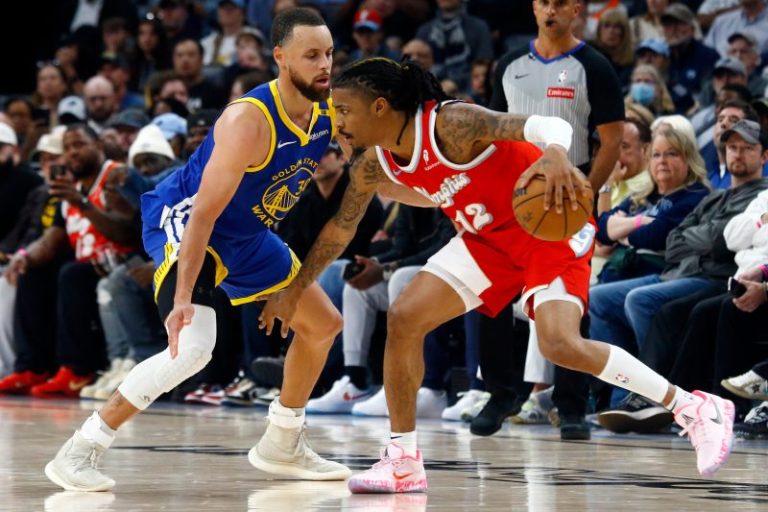
Memphis Grizzlies (48-34) at Golden State Warriors (48-34)

Where: Chase Center, San Francisco, California
Time: 10 p.m. ET
TV: TNT

What NBA games are up next?

The winner of tonight’s games will advance to face the No. 2 seeds in their respective conferences in a best-of-seven series that will begin Sunday.

The Hawks-Magic winner will take on the Boston Celtics, while the loser will host the winner of tomorrow’s game between the No. 9 Chicago Bulls and No. 10 Miami Heat.

The Grizzlies-Warriors winner will take on the Houston Rockets, while the loser will host the winner of tomorrow’s game between the No. 9 Sacramento Kings and the No. 10 Dallas Mavericks.

This post appeared first on USA TODAY