Archive

2025

Browsing

Rep. Alexandria Ocasio-Cortez, D-N.Y., told rally attendees not to let Republicans ‘trick’ them into thinking they ‘can be separated’ by race or into stoking ‘deep divisions along race, identity and culture,’ despite President Donald Trump’s recent efforts to rid identity politics from public and private spaces.

The progressive ‘Squad’ lawmaker’s comments came at a ‘Fighting Oligarchy’ rally Monday night in Idaho alongside Sen. Bernie Sanders, I-Vt. It was the pair’s latest stop in a tour of appearances across the country. 

‘The only chance they have to get away with such an unpopular and hurtful agenda is to stoke deep divisions along race, identity and culture to keep us fighting and distracted. It’s not going to work anymore,’ AOC told rally goers. ‘Don’t let them trick us into thinking we are enemies. Don’t let them trick us into being weak and being into thinking we can be separated into rural and urban, black and white and Latino.’

The rally with AOC and Sanders was largely centered around criticizing ‘billionaire’ oligarchs like Elon Musk, Jeff Bezos, Mark Zuckerberg and President Donald Trump, who, as president, has been leading an anti-DEI push that is aimed at ridding identity politics from public and private spaces.

In fact, per political analyst and regular MSNBC contributor Eddie Glaude, identity politics was ‘at the heart’ of former Vice President Kamala Harris’ election loss to Trump. 

‘The only thing that was woke or representational about [Kamala Harris’] campaign was her, her body, the fact that she was a woman of color. So I think that the concern, the so-called backlash, to tending to the diversity of the nation actually proves the point,’ Glaude said in an interview with NPR shortly after Republican’s November election victories. 

Meanwhile, since being inaugurated, Trump has implemented executive actions explicitly targeting ‘identity politics.’

‘Prior to harmful changes introduced by the Obama and Biden administrations, the United States military offered equality of opportunity to every American capable of and interested in serving their country. Yet these two administrations exploited the military in favor of identity politics—harming our national defense, undermining the non-political nature of our military, and eroding morale and recruitment,’ Trump wrote in one of his first Executive Orders after being sworn in. ‘Due to this ‘woke’ assault, the Services together logged their lowest recruiting records since 1940 with a 41,000-troop shortfall in 2023.’

Trump has also taken steps to rid DEI from universities, the federal government and even the private sector. 

According to Trump, it was Democrat President Joe Biden who implemented ‘illegal and immoral discrimination programs,’ which often tied individual success to immutable factors like race, sex and ethnicity. 

‘President Trump is restoring fairness and accountability in federal hiring, and terminating DEI across the federal government,’ reads a March fact sheet from the White House.
This post appeared first on FOX NEWS

A new White House memo highlighting the top 10 Supreme Court rulings federal agencies must follow has legal experts optimistic about reining in the administrative state, while some litigators remain skeptical the directive will be enforced.

‘Any administration that really cares about making sure that they were following the law should be reviewing regulations,’ Carrie Severino, president of Judicial Crisis Network, told Fox News Digital. ‘We want a government that isn’t just taking every bit of power that it can get away with, but one that wants to make sure the constitutional limits are guarded as well, which is why this memorandum is refreshing and novel in a good way.’

The administration issued a memorandum on April 9 requiring agencies to rescind regulations not in line with 10 recent Supreme Court opinions on proper administrative agency functions. 

The memo, titled, ‘President Donald J. Trump Directs Repeal of Regulations That Are Unlawful Under 10 Recent Supreme Court Decisions,’ says it is in line with a February executive order seeking to rein in the administrative state. 

The memo lists various Supreme Court cases aligned with Trump’s deregulatory agenda as well as the administration’s efforts to get rid of DEI initiatives. Among the cases listed are Loper Bright Enterprises v. Raimondo, West Virginia vs. EPA, and Students for Fair Admissions, Inc. v. President and Fellows of Harvard College. 

Both Loper Bright and West Virginia notably narrowed executive agencies’ authority in issuing rules and regulations affecting the American public. Likewise, Students for Fair Admissions rejected the use of affirmative action in university admissions. 

‘The President is right: agencies must repeal regulations that the Supreme Court has deemed unlawful. The President continues to deliver on his promises to roll back regulations and government overreach crippling American enterprise,’ White House spokesperson Taylor Rogers told Fox News Digital in a statement. 

Several of the cases listed are not retroactive, meaning regulations issued prior to these decisions being handed down will not be disturbed as a result of the opinions. However, experts say agencies can re-evaluate previous rules and regulations under the new standards imposed by the Supreme Court opinions.

‘I think that that is good fodder, a good basis for a lot of agencies to go back and look, ‘Where have we created massive regulatory compliance burdens and structures that massively impact the economy or society on the basis of a very thin thread and where can we undo it?” Daniel Huff, senior legal fellow at the American Path Initiative, told Fox News Digital. ‘And we can point to these elephants in mouse holes and when it’s reviewed in the future, they will say ‘Yes, that is a good rationale’ and it will be upheld.’

Kara Rollins is a lawyer for the New Civil Liberties Alliance, the nonprofit organization that argued Relentless Inc. v. Dept. of Commerce in front of the high court – Loper’s companion case that sought to scale back the reach of the administrative state. Rollins told Fox News Digital the ‘retrospective look’ these agencies will take toward previous regulations is not ‘misplaced.’ 

However, Rollins raised concerns about the administration’s enforcement of the directive, noting that several related cases were already underway before the Supreme Court issued its rulings.

‘What happens to these cases that are currently active where DOJ or the agency is just taking the wrong position?’ Rollins said. ‘Who’s looking at that? Who’s clearing out those cases and saying, in light of this memorandum, we’ve looked at our litigation position and we can no longer sustain it? And that’s the real sort of open question, particularly for litigators right now.’

Rollins said that, as a litigator, her concern is agencies have yet to change positions when it comes to these Supreme Court opinions: ‘That sort of signals that there is a problem between what the president is saying he wants to have happen and what’s being effectuated on the ground.’

In the memo, Trump directs agencies to employ the Administrative Procedure Act’s ‘good cause’ exception ‘where appropriate,’ which allows agencies to do away with the usual notice-and-comment rulemaking process in the interest of the public. The usual process requires time for public input on the proposed rule. 

Huff said there is ‘less of a need’ to impose the regular notice-and-comment rulemaking process given that agencies will likely be reviewing previous rules rather than passing new ones. 

‘They’re not adding new burdens. This isn’t new to people,’ Huff said. ‘People already sort of know what’s there and it was there before. And we’re just turning back the clock. We’re putting it back to the way it was. We’re restoring the original status quo.’

Severino said there could be litigation over the use of the exception despite the fact that the language is ‘very broad.’ 

‘But I do think there are strong arguments for it because the laws must keep with the constitutional limits on government, and, of course, be in the public interest.’

This post appeared first on FOX NEWS

Senate Minority Leader Chuck Schumer, D-N.Y. called on the head of President Donald Trump’s Social Security Administration to resign on Tuesday.

Schumer declared a ‘Social Security Day of Action’ during a press conference in New York on Tuesday, accusing Trump, Elon Musk and the Department of Government Efficiency (DOGE) of cutting Americans’ social security. Schumer called on acting SSA Administrator Leland Dudek to resign.

‘Dudek is bad medicine for our seniors,’ Schumer said from the podium.

‘Donald Trump and Elon Musk have a hatchet man in Leland Dudek, an acting Commissioner with an emphasis on the ‘acting,’ because his real role is to dismantle the very office he is supposed to lead, make better, and protect,’ he continued. ‘We have seen his audition and his work on the stage, and it is clear: Dudek is incapable of doing this job in the way it needs to be done. He won’t protect seniors. He will hurt them. Leland Dudek should resign.’

‘Republicans are trying to kill Social Security from the inside – it is a cut by another name – and we won’t let that happen,’ Schumer said in another statement.

The press conference comes after Schumer feuded with Musk on social media. The Tesla founder reacted to Schumer’s criticism of DOGE by suggesting the lawmaker was ‘getting a piece of the action with the government fraud.’

‘Another Elon lie. He wants you to think anyone who dares to stand up to him is committing fraud, meanwhile he’s taking tens of billions from the government,’ Schumer declared in a post last week.

Musk also fired off a response to a post in which Schumer suggested that Musk is slashing Social Security benefits.

‘Make no mistake: What Elon Musk is doing at Social Security is cutting benefits,’ Schumer said.

‘The intern running Schumer’s social media account is lying,’ Musk shot back.

During a Senate speech, Schumer claimed that ‘Elon Musk is cutting Social Security benefits.’

‘When offices close down, when websites crash, when phone lines shut off, that’s no different than cutting benefits,’ Schumer said.

This post appeared first on FOX NEWS

Last year’s Philadelphia Flyers regular-season finale featured an oddity in which they pulled their goalie for an extra skater late in the third period, even though their game with the Washington Capitals was tied.

The move didn’t work. Washington scored an empty-net goal, the Capitals clinched a playoff spot and the Flyers, Detroit Red Wings and Pittsburgh Penguins were eliminated.

Why did it happen? Because of the NHL’s tiebreaker procedures, the Flyers needed a regulation win that would allow them to match the Capitals on the first four tiebreakers and win the fifth one on goal differential.

Tuesday night, the Columbus Blue Jackets are in a similar situation in Philadelphia. They need to win in regulation in order to keep their slim playoff hopes alive.

Here’s a look at the NHL’s tiebreaker procedure and what it means for three playoff races:

NHL tiebreakers: What is the first tiebreaker in NHL standings?

If two teams are tied in points at the end of the regular season, here are the tiebreakers:

Regulation wins
Regulation and overtime wins (ROW)
Total wins
Most points earned in head-to-head competition: If teams had an uneven number of meetings, the first game played in the city that has the extra game is excluded.
Goal differential
Total goals

How tiebreakers affect Eastern Conference wild-card race

The Montreal Canadiens (89 points, after Monday’s shootout loss) and Blue Jackets (85) are in the running. If Columbus wins its final two games and Montreal loses its final game in regulation, the teams would be tied with 89 points. The Canadiens currently lead in regulation wins 29-28 and have an insurmountable lead in ROW. The Blue Jackets would have to win both of their games in regulation (giving them a 30-29 edge in the first tiebreaker) in order to make the playoffs.

Upcoming schedule: The Blue Jackets visit the Flyers on Tuesday and host the New York Islanders on Thursday. The Canadiens host the Carolina Hurricanes on Wednesday.

How tiebreakers affect Western Conference wild-card race

The Minnesota Wild (95), St. Louis Blues (94) and Calgary Flames (92) are in the hunt for the first and second wild-card seed. Minnesota and St. Louis have one game left and Calgary, with two games left, potentially could pass both teams in points to make the playoffs. All three teams play Tuesday.

If Calgary wins out and Minnesota loses in overtime or a shootout to be tied at 96, Minnesota would have the edge in regulation wins and make the playoffs.

If St. Louis and Calgary end up tied at 94 or 95 points, the Blues would advance. Even if the Flames pick up a regulation win to give the teams 31 each, the Blues would have the edge in ROW.

If all three teams end up with 95 points, Minnesota and St. Louis would advance.

Calgary’s best bet to make the playoffs is to win its final two games and hope Minnesota loses in regulation or that St. Louis loses its finale. The Flames would also make it if they pick up three points in their last two games and the Blues lose in regulation.

The Blues can’t pass the Wild in regulation wins. St. Louis would have to top Minnesota in points to finish ahead of that team.

Upcoming schedule: The Wild host the Anaheim Ducks on Tuesday. The Blues host the Utah Hockey Club on Tuesday. The Flames host the Vegas Golden Knights on Tuesday and visit the Los Angeles Kings on Thursday.

How tiebreakers affect Atlantic Division title race

The No. 1 Toronto Maple Leafs (104) lead the No. 2 Tampa Bay Lightning (100), and each team has two games left. They’re tied in regulation wins at 40 and the Maple Leafs have an insurmountable lead in ROW. The Lightning’s only chance for a division title is to win their final two games and the Maple Leafs to lose theirs in regulation, leaving them tied at 104. Assuming one Lightning win in that scenario is in regulation, Tampa wins the division.

Upcoming schedule: The Maple Leafs visit the Buffalo Sabres on Tuesday and host the Detroit Red Wings on Thursday. The Lightning host the Florida Panthers on Tuesday and visit the New York Rangers on Thursday.

This post appeared first on USA TODAY

Milwaukee Bucks star Giannis Antetokounmpo can’t forget ‒ and won’t forget ‒ his first NBA playoff series against Chicago, in 2015.

“I learned what it felt like to be in a playoff atmosphere,” Antetokounmpo told USA TODAY Sports. “I learned how it was to get ejected in the playoffs. I learned how it felt to be emotional in the playoffs. I felt how it was to have a great game in the playoffs.”

He remembers his first playoff series victory against Detroit, in 2019.

“I felt something new that I’ve never felt before,” he said. “It was an incredible feeling. I always remember the way I felt at the time.”

Antetokounmpo takes all those experiences, including an NBA championship and Finals MVP in 2021, into this season’s playoffs.

Antetokounmpo and the fifth-seeded Bucks open the Eastern Conference playoffs against the fourth-seeded Indiana Pacers in Game 1 on Saturday (1 p.m. ET, ESPN).

“I love competing,” he said. “I love the feeling of being nervous before the game, the feeling of your team depending on you, the feeling of an organization and the city that you represent depending on you – that weight that you feel on your shoulders because the moment that you win, you feel incredible.

“And for me, playing in the playoffs is always (a) win-win situation. That’s how I view it because even when I lose, I always try to look back and see things that I could do better, try to improve in the offseason and come back and be stronger. So, I always have a great perspective in both ways.”

That perspective has served Antetokounmpo, who is the face of a new playoff ad campaign from Castrol as part of brand ambassador partnership, well because he knows how difficult it is to win a series let alone a championship.

“You can never get too high or never get too low in the playoffs,” he said. “Teams know exactly your strengths, and they will prepare to the best of their ability to stop you. And you just got to go out there and do things harder.

‘When I mean do things harder, you’ve got to be more vocal. You’ve got to be more physical, you’ve got to play with more intensity. You’ve just got to be more mentally prepared than them. You’ve just got to do all the dirty work that some people are not willing to do.”

The Bucks enter the playoffs as the lower seed for the first time since 2018 when they were the seventh seed. Milwaukee was 48-34 this season – two games behind the Pacers and three games behind the third-seeded New York Knicks ‒ and finished on an eight-game win streak.

A team with Antetokounmpo, a two-time regular-season MVP, is always dangerous and capable of making a deep run. Antetokounmpo had a tremendous season, too. While the MVP race is considered a two-man contest between Oklahoma City’s Shai Gilgeous-Alexander and Denver’s Nikola Jokic, Antetokounmpo’s performance should not be a footnote.

His statistics measure favorably compared to his MVP seasons. He averaged 30.4 points and shot 60.1% from the field – both numbers the second-highest of his career. He matched a career-high in assists at 6.5 per game and averaged 11.9 rebounds. And he had a career-high 11 triple-doubles.

He is a lock for his ninth All-NBA selection.

Now, he will try to help the Bucks advance past the Pacers, who eliminated them in the second round of last season’s playoffs. And it won’t be easy.

The Bucks likely will be without star guard Damian Lillard, who was diagnosed with a blood clot in his right calf on March 25.

The Bucks won the season series, 3-1 against the Pacers, but Lillard was available for those games. Antetokounmpo will need help from younger players, like Ryan Rollins and Kevin Porter Jr., who have played well in Lillard’s absence but have never been in a playoff game.

“We’re playing good basketball. We’re competing,” he said. “I feel like everybody’s approach towards the game is in the right place and hopefully we can keep it up. We know what it takes to win and we know obviously when we don’t show up and we don’t have the right approach to the game that we can lose. Any team can beat us, but we also believe that we can beat any team.”

Follow NBA reporter Jeff Zillgitt on social media @JeffZillgitt

This post appeared first on USA TODAY

Jalen Ramsey’s time with the Miami Dolphins may be coming to an end after two seasons.

Ramsey and the Dolphins are ‘are mutually set to explore trade options,’ per NFL Network’s Ian Rapoport and Tom Pelissero.

There is no timetable for a potential trade. That said, Rapoport noted executing one before the 2025 NFL draft – which begins on April 24 – ‘would make sense,’ as it would allow Miami to use any draft assets it acquires for Ramsey to help replace him.

Ramsey has twice been traded during his NFL career. He was dealt from the Jacksonville Jaguars to the Los Angeles Rams ahead of the 2019 NFL trade deadline in a package including two future first-round picks. Following the 2022 NFL season, the Rams traded Ramsey to the Dolphins for a third-round pick and tight end Hunter Long.

Ramsey spent the last two seasons with the Dolphins. He played 27 games for the team, racking up 82 tackles, five interceptions and 16 pass defenses. He was named to the Pro Bowl following the 2023 season and graded as Pro Football Focus’ 10th-best cornerback during the 2024 campaign.

The Dolphins gave Ramsey a three-year, $72.3 million contract extension ahead of the 2024 NFL season. He is due to make $25.1 million fully guaranteed for the 2025 campaign; the Dolphins have already paid him a $4 million roster bonus, so any team acquiring Ramsey would owe him just $21.1 million.

Miami has already lost two key veterans – left tackle Terron Armstead and defensive end Calais Campbell – during the offseason. The team’s reported willingness to move Ramsey, 30, could be a sign that the team is trying to retool its roster and get younger after missing the playoffs in 2024.

If Miami does trade Ramsey, it would intensify the team’s need for cornerback depth and talent. Kader Kohou, Storm Duck and Cam Smith represent the Dolphins’ top returning options at the position beyond Ramsey while journeyman Artie Burns was the team’s only notable free-agent addition at cornerback.

This post appeared first on USA TODAY

Don Hasselbeck, the father of former NFL quarterbacks Matt and Tim Hasselbeck, who played tight end for nine NFL seasons, died Monday. He was 70.

Matt Hasselbeck said his father suffered cardiac arrest, and thanked neighbors and medical professionals who came to his aid.

‘He was a great husband, father, grandfather, friend, coach, player, coworker, artist, mentor and storyteller,’ Matt Hasselbeck tweeted. ‘Despite being an All-American at Colorado and a Super Bowl Champion with the Raiders, what we are most proud of is the leader he was for our family. … There is a 6’’’ 7′ hole in our hearts. He will be so missed by so many. We are beyond grateful that he was our dad and look forward to Heaven and being all together again.’

Don Hasselbeck, a Cincinnati native who starred in football and basketball at La Salle High School, had 107 catches for 1,542 yards and 18 touchdowns in 123 regular-season NFL games.

Hasselbeck, who starred in college at Colorado, was drafted in the second round of the 1977 NFL draft by the New England Patriots. He played six seasons in New England.

His best season as a pro was 1981, when he started all 14 games in which he played for the Patriots and led the team in receptions with 46 and receiving yards with 808 yards, scoring six touchdowns.

Traded to the Los Angeles Raiders in 1983, Hasselbeck blocked an extra-point attempt in the team’s 38-9 win in Super Bowl 18 against Washington.

Hasselbeck played the 1984 season for the Minnesota Vikings and the 1985 season for the New York Giants before retiring.

Hasselbeck and long-time Xavier broadcaster Joe Sunderman were part of the 1972-73 La Salle basketball team that won the school’s first Greater Cincinnati League (now Greater Catholic League) outright championship in any varsity sport.

This post appeared first on USA TODAY

The Centers for Disease Control and Prevention’s (CDC’s) vaccine advisory committee will meet on Tuesday for a two-day session to lay out new recommendations, including a proposal to scale back current COVID-19 vaccine guidelines.

Dr. Lakshmi Panagiotakopoulos of the CDC is expected to present guidance on COVID-19 vaccine use for 2025–2026 and suggest the department adopt a ‘narrow’ recommendation for it, ‘and only maintain this series for certain populations within these groups who we determine should be vaccinated.’

When polled on April 3, a majority of advisors – 76% – expressed support for a risk-based, rather than universal, COVID-19 vaccination recommendation for the 2025–2026 schedule, up 10% higher from February polling.

The 70-page presentation outlines three possible policy options for COVID-19 vaccines, including a shift away from recommending annual shots for everyone over 6 months old.

Currently, annual COVID-19 shots are recommended for ages 6 months and older. One proposed policy option would continue the current universal policy, while another would recommend vaccines only for people at higher risk of severe illness, such as older adults, those with underlying health conditions, pregnant women and healthcare workers. 

A third option would blend the two, keeping universal recommendations for people 65 and older but limiting shots for younger groups to those at higher risk.

‘When initially presented with 2025–2026 COVID-19 vaccine policy options in November 2024, the Work Group appreciated pros and cons of both risk-based and universal vaccine recommendations,’ Panagiotakopoulos wrote. ‘At that time, there was not yet a consensus on what the recommendation for the 2025–2026 COVID-19 vaccine should be. The Work Group requested additional information to help inform the decision-making process on risk-factors for severe COVID-19, transmission and immunity, vaccine implementation and access, and cost-effectiveness.’

The presentation will also propose how to define ‘increased risk,’ looking at both health factors and increased exposure, like living in long-term care facilities or working in high-contact jobs.

The two-day meeting of the Advisory Committee on Immunization Practices will examine information for members to vote on as official recommendations, which will then be passed on to the CDC for consideration in June.

The end of the presentation will include discussion questions about the pros and cons of a universal vs. risk-based COVID-19 vaccine recommendation for 2025 to 2026. Key discussion points include whether any groups should be excluded from vaccination, what data is still needed to guide decisions, and whether a risk-based approach makes sense if most people are already considered ‘at risk.’

According to the CDC, the vaccine committee’s agenda will also include a session about the measles outbreak and an update ‘on literature related to reduced number of doses for HPV vaccine.’

Members of the committee will vote on Wednesday on recommendations for the Meningococcal Vaccines, Meningococcal Vaccines VFC, RSV Adult and the Chikungunya Vaccines.

The meeting comes as Health and Human Services Secretary Robert F. Kennedy Jr. is overseeing a major reorganization of the CDC. Plans include transferring non-infectious disease-related divisions to the Administration for a Healthy America to focus on chronic disease management. This move follows significant downsizing under President Donald Trump’s directive, which has already reduced the CDC workforce by roughly 4,000 people.

This post appeared first on FOX NEWS

The chairman of the largest House GOP caucus is using Tax Day to send a warning about the financial strain American families could face next year if Republicans fail in their plans for a massive conservative policy overhaul.

Republican Study Committee (RSC) Chairman August Pfluger, R-Texas, told Fox News Digital that millions of Americans could see their taxes increase by as much as one-fifth if Congress does not pass a budget reconciliation bill extending President Donald Trump’s 2017 Tax Cuts and Jobs Act (TCJA).

‘If Democrats get their way and let these tax cuts expire, Americans will be crushed by the largest tax hike in history – a 22% increase hitting 40 million families and 26 million small businesses,’ Pfluger said. 

‘It’s time to lock in these historic tax cuts permanently to boost job creation, fuel America’s economic engine, and protect family budgets from the Left’s tax-and-spend agenda.’

The RSC acts as the House GOP’s de facto conservative think tank and has more than 175 members. Pfluger reiterated that the group is ‘fighting to make President Trump’s historic Tax Cuts and Jobs Act permanent, so families can keep more of their hard-earned money instead of sending it to the IRS.’

Rep. Beth Van Duyne, R-Texas, chair of the RSC budget task force, said extending the TCJA and enacting Trump’s other tax policy initiatives would help the U.S. become ‘the most advantageous country in which to invest, relocate, or expand a business’ as well as helping families and businesses domestically.

‘These vital, pro-growth tax reforms will work alongside our efforts to slash federal regulations and bureaucracy to empower economic expansion and financial security for the American people and our job creators,’ she said.

Tax reform is a cornerstone of Republicans’ efforts on reconciliation, a mechanism that allows the party controlling the major levers of government to enact sweeping fiscal and budgetary changes. It does so by lowering the Senate’s threshold for advancing legislation from 60 votes to 51, provided the matters in the bill deal with taxes, spending and the national debt.

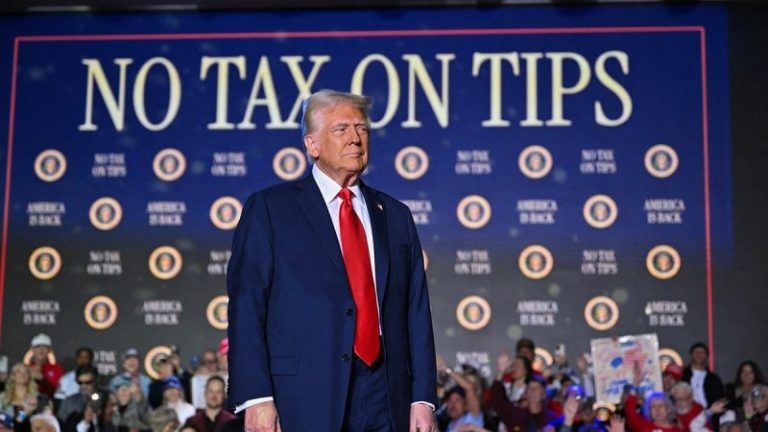
In addition to extending the TCJA tax cuts, Trump also wants Republicans to eliminate taxes on tipped and overtime wages, as well as on Social Security benefits for retirees.

House Republicans passed a framework last week to sync up with the Senate on its budget reconciliation bill, which now allows the relevant congressional committees to begin work filling out that framework with policy.

But congressional Republicans have a long road ahead to get a bill passed in both the House and Senate, where their majorities are currently three seats each. The House version calls for at least $1.5 trillion in spending cuts, while the Senate’s baseline is $4 billion – though Republicans there vowed to strive for more.

Extending TCJA alone would decrease federal revenues by $4.5 trillion, according to the Tax Foundation, and House conservatives are leading the charge in demanding steep government funding cuts to offset that.

The RSC steering group, the group’s leadership arm, released an official position earlier this year calling for reconciliation legislation to be deficit-neutral. 

At the same time, however, failing to extend Trump’s tax cuts ahead of the 2026 midterm elections could have politically devastating consequences, while stoking fears of an economic downturn when compounded with the added cost of Trump’s sweeping tariffs.

‘If the tax cuts expire, the median family would lose about $1,000,’ Kimberly Clausing, nonresident senior fellow at the Peterson Institute for International Economics, told Fox News Digital earlier this month, citing a model from the Urban-Brookings Tax Policy Center. 

And if the recently unveiled tariffs continued unabated at the time, ‘that would generate an average per household consumer loss of $3,800,’ she added, pointing to the Yale Budget Lab’s estimate. Trump has since walked back much of his reciprocal tariff policy. 

The House Ways and Means Committee, the House’s tax-writing panel, released a memo late last year with a similar warning to Pfluger’s on a potential tax hike if TCJA is not extended.

‘Congress needs to act swiftly to take this threat of a tax hike off the table and give the American people assurances that the relief they have been demanding has arrived,’ the December memo said.

This post appeared first on FOX NEWS

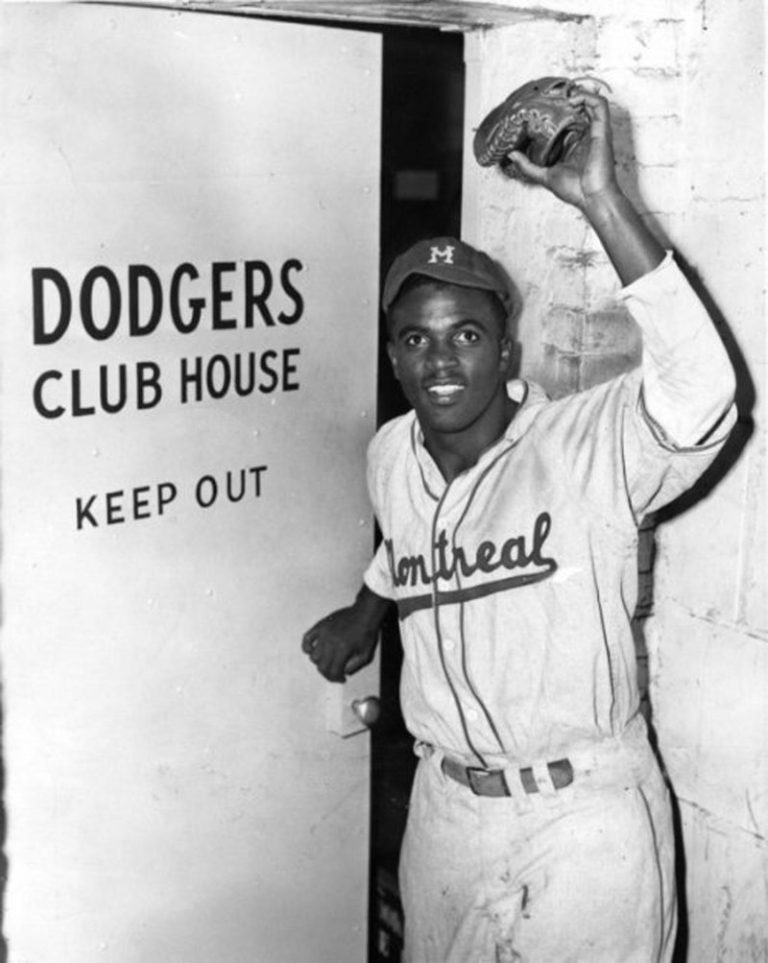
Do not be fooled by the Jackie Robinson jersey giveaway the Los Angeles Dodgers are doing or any of the empty platitudes they and Major League Baseball spout.

Their lionizing of Robinson this year is the epitome of rank hypocrisy given their actions, or rather inaction, of recent weeks. Never forget that these same people who will claim to treasure Robinson and his sacrifices Tuesday were conspicuously silent when the Trump administration was trying mightily to erase them both.

When the Department of Defense removed a page about Robinson from its series on sports stars who served in the military, not a word was heard publicly from either MLB or the Dodgers. Instead, it fell to people who cover the sport and the general public to create a great enough outcry that Trump’s minions were forced to back off.

To compound that cowardly compliance, the Dodgers went to the White House and yukked it up with Trump, as if he hadn’t just disrespected the greatest player to ever wear their uniform and all he stood for.

Moral courage is in short supply these days, especially by people who can afford to have it. But standing up for Jackie Robinson should not be a subversive or controversial stance, especially for the Dodgers and MLB.

Robinson is more than a baseball icon. He’s an American hero. By breaking MLB’s color barrier, as he did on April 15, 1947, Robinson changed the course of this country’s history.

Baseball was the national pastime then, as big as the NFL is today. It was played and followed everywhere, providing common ground between the Jim Crow South and the rest of the country. If baseball could accept a Black man, it proved anyone could. If Robinson could make it to the big leagues, it showed nothing was out of reach.

That’s not to say racism melted away that day Robinson took the field with the Dodgers. It would be another two decades before the Civil Rights and Voting Rights acts were passed, and the fight for equality cost the Rev. Martin Luther King Jr., Medgar Evers and too many others their lives. Even now, there are daily reminders that the poisonous hate from our country’s original sin still festers.

But Robinson gave us a glimpse of what is possible when we let go of fear and ignorance. He shattered the stereotypes used to deny and demean Black and brown people. He was living proof that diversity, equity and inclusion make us stronger, not weaker.

The Dodgers had made the World Series five times in their first 60-plus years of existence. With Robinson, they made the World Series six times in a decade and won their first title, in 1955.

Robinson, meanwhile, was Rookie of the Year in 1947 and the NL MVP two years later. In his 10 years in the majors, he was either an All-Star or an MVP candidate, or both, in all but one season.

Robinson did all this with unflinching dignity, too. Despite routinely being subjected to death threats, hate mail and abuse — including by others in baseball — he never once buckled.

“He set the path for changes not only in sports, but in society. He didn’t fail, although most people wanted him to fail, and so we celebrate all this as we should,” Bud Selig, who as commissioner decided Robinson’s No. 42 would be retired across baseball, told MLB.com in 2001.

“Why do we celebrate? Because no generation should ever forget what Jackie Robinson did.”

That’s what the Trump administration wants, though. It is trying to rewrite this country’s history, removing Black and brown people from current positions of influence and erasing or attaching asterisks to the accomplishments of past trailblazers.

When a story about Robinson was removed from a Department of Defense website, “DEI” was inserted into the error message so there would be no doubt of the reason for its absence. His biography was initially included on a list of books flagged for removal for promoting themes of diversity, equity and inclusion.  

Besides minimizing what Robinson did, this pettiness insults his character. Robinson was the equal of any white player in skill, and had far more courage than any of the wannabe segregationists in the Trump administration.

But instead of sounding an alarm and raising objections, as they should have, the Dodgers and MLB simply … acquiesced. Instead of telling Trump officials it knows what’s best for the business of baseball, MLB caved.

Instead of defending Robinson and everything he stood for, the Dodgers and MLB sold him out.

It’s commendable that MLB and the Dodgers continue to honor Robinson on the day he integrated baseball. It would be even better if they did it the other 364 days of the year, too.

Follow USA TODAY Sports columnist Nancy Armour on social media @nrarmour.

This post appeared first on USA TODAY