Archive

2025

Browsing

The grandfather of the game is walking away, which is sort of apropos in these vapid and vacuous times.

It’s not your grandfather’s college football anymore, and now the old guy will make it official by exiting the building.

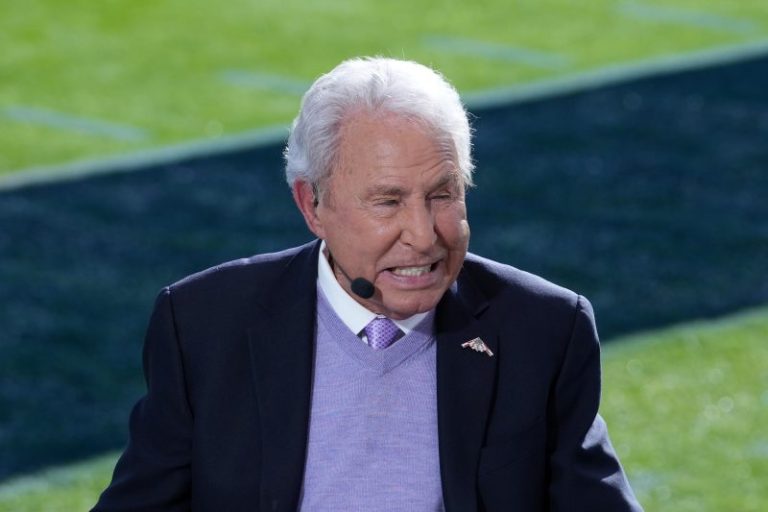
Lee Corso, the unintended glorious gift to America’s obsession with televised football, will retire from ESPN’s ‘College GameDay’ after the first week of the 2025 season. 

Maybe we can get him to turn off the lights on the way out, too.

Am I the only one who sees this surreal irony? While social media is flush with memories of Corso from days gone by, let’s not undersell the obvious final connection of out with the old and in with the new.

Maybe it’s just a coincidence that the sport’s ambassador will be leaving after the first week of a season where players are likely paid to play, earning a shared percentage of media-rights revenue. 

Back when Corso made Thursday Night football electric – literally, electric – and long after the NFL commandeered the night, the idea of pay for play was the NCAA’s mortal sin. Players receive plenty with a scholarship and room and board, thank you. 

And if they’re lucky, they’ll get a few, wink-wink, hundred-dollar handshakes along the way. 

There was a time two decades ago – I’m not making this up – when Steve Spurrier offered the idea of coaches pooling together some extra cash to give players money. You know, walking-around cash.

He was so adamant about it, he threatened to release the names of the coaches in the SEC who refused to pay their part.

Now, we had a marginally successful quarterback holding up a storied program days before the opening of something called the “transfer portal.” Now, it’s a player’s right to play when and where he wants, and for how much money he can get on the open market. 

And anyone who tries to stop them will get a friendly subpoena from somewhere in the United States judicial system, where every attorney is welcome to argue any case they wish.

It wasn’t that long ago when you signed with a program and played with that program — and if you didn’t, and left for another school, you were the outlier who couldn’t cut it. And you better believe if you couldn’t make it there, what in the world made you think you could make it here? The whole, “Those who stay will be champions,” thing. 

You know, developing productive, valuable adults. 

But when the NCAA opened the doors on free agency in 2021, The Team, The Team, The Team became the teams, the contracts, the leverage. This beautiful symphony of a sport has become the land of independent contractors — even in the best of times. 

Ohio State doesn’t win the national title last season without four critical free-agent signings: Will Howard, Quinshon Judkins, Seth McLaughlin and Caleb Downs. 

One played lights-out in the postseason, one led the team in rushing and scored three touchdowns in the national title game, one was an All-America lineman and the other the most complete defensive player in the nation. 

Other than that, how did Ohio State lose to Michigan? Again.

Player empowerment has drastically changed the landscape of the game, leaving university presidents and administrators and coaches scrambling to respond to an extinction event of their own making. Not of the game itself, but of the game they knew and loved. 

Of the game that grew from a regional sport to a national behemoth with the rocket engine of cable giant ESPN, and frankly, the gregarious yet gracious personality of Corso. 

The laughter and the tears. The unintended mishaps and the unforgettable slips. 

And now, with the sport hurtling through an uncontrollable metamorphosis, Corso is leaving and a carnival barker is taking center stage. How fitting. 

From your lovable grandfather, to crazy cousin Pat McAfee trying to give away hundreds of thousands of his dollars every single week. Because he can.

Hey, why shouldn’t everyone get in on the money grab? If the Power Four conference schools are making more than $7 billion annually through media-rights deals and revenue generation, and players will likely be paid from a salary pool of at least $20 million-$23 million, why not throw some cash at the fans?

The loyal, unwavering fans who for decades bought tickets and apparel, and spent uncontrollably on cable television, and then on streaming and premium apps — because those precious four months of the season come and go so quickly, they just can’t get enough. 

Fall Saturdays were (and to some, still are) a religious rite of passage. So yeah, excuse them if they feel a little melancholy about their grandfather saying goodbye.

They’ve watched the game they love grow into a mini version of the NFL, full of contracts and salary caps and now holdouts. The only difference is there isn’t some dork at the top of the food chain making $40 million annually to act as the purveyor of all things — when he’s really just a mouthpiece for 32 billionaires.   

I’d give a billion to have Corso forever. 

Instead, it won’t cost a penny to have him flip off the lights when he leaves. 

Matt Hayes is the senior national college football writer for USA TODAY Sports Network. Follow him on X at @MattHayesCFB.

This post appeared first on USA TODAY

LAS VEGAS — Some of WWE’s greats will be put into wrestling immortality during WrestleMania 41 weekend with the 2025 WWE Hall of Fame.

A grand tradition that takes place the night before WrestleMania, the Hall of Fame ceremony serves as a time to honor those that made tremendous contributions to wrestling and became popular stars in the process. It’s an emotional night, from the people getting to induct their friends to those soaking in the honor of being part of the class. Five stars will be inducted and, for the first time, a match gets put into the class.

USA TODAY Sports will provide the highlights from the 2025 WWE Hall Of Fame ceremony, which will begin late in Las Vegas and early morning in the East Coast. Here’s what to know before the event kicks off.

When is WWE Hall of Fame 2025 ceremony?

The 2025 WWE Hall Of Fame ceremony takes place Friday, April 19 at the Fontainebleau Las Vegas hotel.

WWE Hall of Fame 2025 start time

The WWE Hall Of Fame 2025 ceremony begins at 10 p.m. PT (1 a.m. ET).

How to watch WWE Hall of Fame 2025 ceremony

Date: April 18
Location: Fontainebleau Las Vegas
Time: 1 a.m. ET (10 p.m. PT)
Stream: Peacock (U.S.) | Netflix (International)

WWE Hall of Fame 2025 class

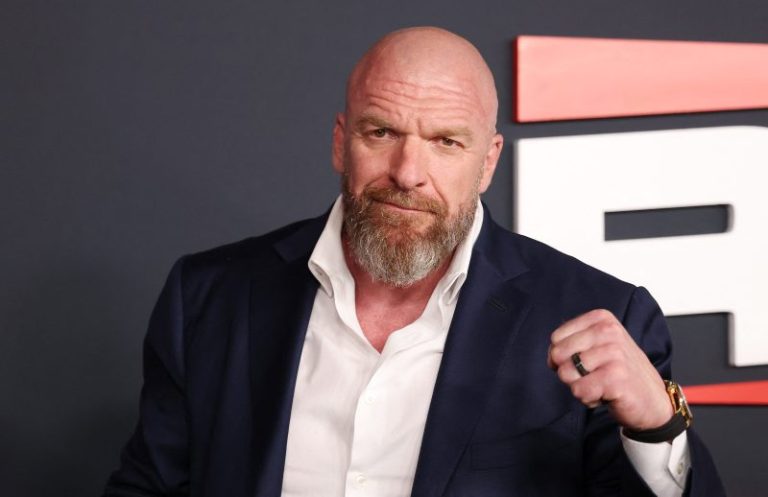
Paul ‘Triple H’ Levesque
Lex Luger
Michelle McCool
The Natural Disasters (Earthquake and Typhoon) 
WWE Immortal Moment: Bret ‘The Hitman’ Hart vs. ‘Stone Cold’ Steve Austin (WrestleMania 13)

Who is inducting WWE Hall of Fame 2025 class?

Here is who will be inducting each person in the 2025 class:

Paul ‘Triple H’ Levesque: Shawn Michaels
Lex Luger: Diamond Dallas Page
Michelle McCool: The Undertaker
The Natural Disasters (Earthquake and Typhoon): TBD
WWE Immortal Moment: Bret “The Hitman” Hart vs. “Stone Cold” Steve Austin (WrestleMania 13): CM Punk

This post appeared first on USA TODAY

Another James will soon grace college basketball.

LeBron James’ youngest son, Bryce James, officially signed with Arizona basketball on Thursday. Bryce is the second of LeBron’s sons to play college basketball, as LeBron’s oldest son, Bronny James, played one season at USC in 2023-24.

Bronny James, of course, was drafted by the Lakers and is in the same organization as his dad.

Bryce James, a 6-foot-4 shooting guard, is the No. 257-ranked player nationally and No. 45 shooting guard, according to 247Sports’ Composite rankings. The Sierra Canyon High School product is also the No. 30 player in California.

Bryce James also held reported offers from Duquesne, who’s coached by LeBron James’ former high school teammate Dru Joyce III, and Ohio State, a school LeBron James is a massive fan of given his ties to Ohio.

Bryce James signed alongside two five-star prospects in Arizona’s 2025 recruiting class, as he joined Koa Peat and Brayden Burries. Arizona also signed high-end four-star forward Dwayne Aristode.

LeBron James, the NBA’s all-time leading scorer, is a four-time NBA Finals champion and four-time MVP. Known as one of the greatest players ever, LeBron James, 40, is the oldest player in the NBA and still averaged 24.4 points with 7.8 rebounds and 8.2 assists per game this season.

This post appeared first on USA TODAY

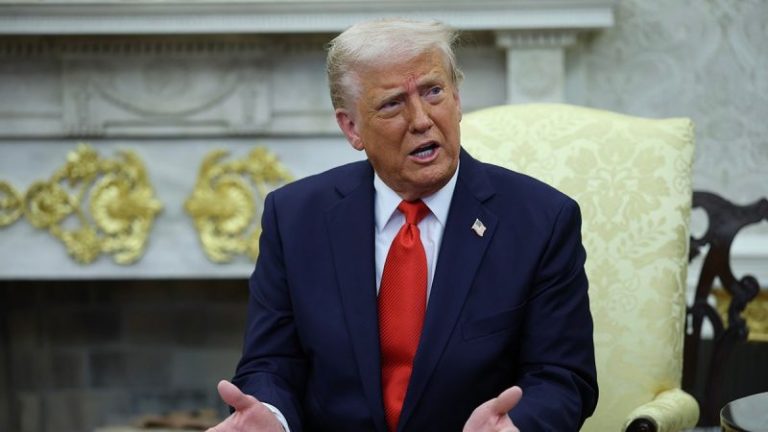
President Trump on Friday said that career government employees working on policy matters for the administration will be reclassified ‘Schedule Policy/Career,’ – or at will employees – and will be fired if they don’t adhere to his agenda.

‘Following my Day One Executive Order, the Office of Personnel Management will be issuing new Civil Service Regulations for career government employees,’ the president wrote on Truth Social Friday afternoon. 

He added, ‘Moving forward, career government employees, working on policy matters, will be classified as ‘Schedule Policy/Career,’ and will be held to the highest standards of conduct and performance.’

This comes as the Trump administration continues to fire federal employees in an effort to shrink the government. 

The administration’s Office of Personnel Management (OPM) estimated the rule change in Trump’s executive order ‘Restoring Accountability to Policy-Influencing Positions Within the Federal Workforce’ would affect around 50,000 employees or 2% of the federal workforce, the White House said in a Friday memo. 

The regulations for civil service employees ‘with important policy-determining, policy-making, policy-advocating, or confidential duties’ will now be considered ‘at-will’ employees, ‘without access to cumbersome adverse action procedures or appeals, overturning Biden Administration regulations that protected poor performing employees.’ 

Trump added in his post: ‘If these government workers refuse to advance the policy interests of the President, or are engaging in corrupt behavior, they should no longer have a job. This is common sense, and will allow the federal government to finally be ‘run like a business.’ We must root out corruption and implement accountability in our Federal Workforce!’ 

The White House said the ‘rule empowers federal agencies to swiftly remove employees in policy-influencing roles for poor performance, misconduct, corruption, or subversion of Presidential directives, without lengthy procedural hurdles.’

The employees aren’t required to personally support the president, but ‘must faithfully implement the law and the administration’s policies.’

The proposed rule won’t change the status of affected employees’ jobs until another executive order is issued, the White House said. 

This post appeared first on FOX NEWS

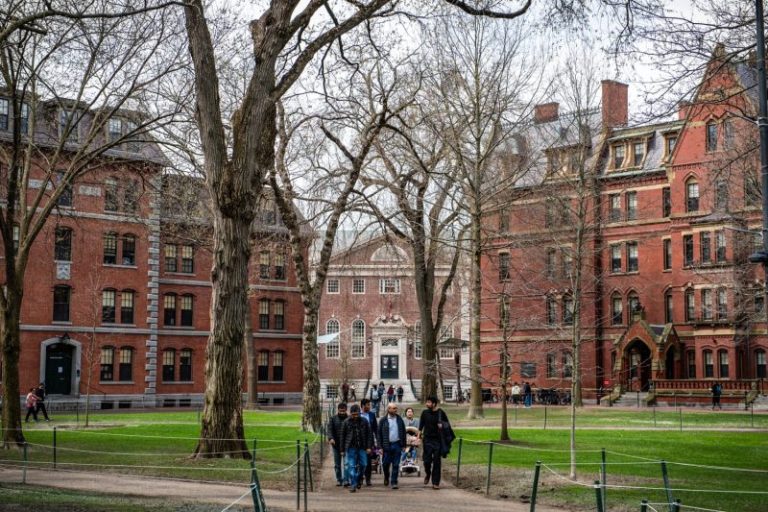
Harvard’s brewing conflict with the Trump administration could come at a steep cost — even for the nation’s richest university.

On April 14, Harvard University President Alan Garber announced the institution would not comply with the administration’s demands, including to “audit” Harvard’s students and faculty for “viewpoint diversity.” The federal government, in response, froze $2.2 billion in multi-year grants and $60 million in multi-year contracts with the university.

According to CNN and multiple other news outlets, the Trump administration has now asked the Internal Revenue Service to revoke Harvard’s tax-exempt status. If the IRS follows through, it would have severe consequences for the university. The many benefits of nonprofit status include tax-free income on investments and tax deductions for donors, education historian Bruce Kimball told CNBC.

Bloomberg estimated the value of Harvard’s tax benefits in excess of $465 million in 2023.

Nonprofits can lose their tax exemptions if the IRS determines they are engaging in political campaign activity or earning too much income from unrelated activities. Few universities have lost their non-profit status. One of the few examples was Christian institution Bob Jones University, which lost its tax exemption in 1983 for racially discriminatory policies.

White House spokesperson Harrison Fields told the Washington Post that the IRS started investigating Harvard before President Donald Trump suggested on Truth Social that the university should be taxed as a “political entity.” The Treasury Department did not reply to a request for comment from CNBC.

A Harvard spokesperson told CNBC that the government has “no legal basis to rescind Harvard’s tax exempt status.”

“The government has long exempted universities from taxes in order to support their educational mission,” the spokesperson wrote in a statement. “Such an unprecedented action would endanger our ability to carry out our educational mission. It would result in diminished financial aid for students, abandonment of critical medical research programs, and lost opportunities for innovation. The unlawful use of this instrument more broadly would have grave consequences for the future of higher education in America.” 

The federal government has challenged Harvard on yet another front, with the Department of Homeland Security threatening to stop international students from enrolling. The Student and Exchange Visitor Program is administered by Immigration and Customs Enforcement, which falls under the DHS.

International students make up more than a quarter of Harvard’s student body. However, Harvard is less financially dependent on international students than many other U.S. universities as it already offers need-based financial aid to international students in its undergraduate program. Many other universities require international students to pay full tuition.

The Harvard spokesperson declined to comment to CNBC on whether the university would sue the administration over the federal funds or any other grounds. Lawyers Robert Hur of King & Spalding and William Burck of Quinn Emanuel are representing Harvard, stating in a letter to the federal government that its demands violate the First Amendment.

Harvard, the nation’s richest university, has more resources than other academic institutions to fund a long legal battle and weather the storm. However, its massive endowment — which has raised questions during the recent developments — is not a piggy bank.

Harvard has an endowment of nearly $52 billion, averaging $2.1 million in endowed funds per student, according to a study by the National Association of College and University Business Officers, or NACUBO, and asset manager Commonfund.

That size makes it larger than than the GDP of many countries.

The endowment generated a 9.6% return last fiscal year, which ended June 30, according to the university’s latest annual report.

Founded in 1636, Harvard has had more time to accumulate assets as the nation’s oldest university. It also has robust donor base, receiving $368 million in gifts to the endowment in 2024. While the university noted that more than three-quarters of the gifts averaged $150 per donor, Harvard has a history of headline-making donations from ultra-rich alumni.

Kimball, emeritus professor of philosophy and history of education at the Ohio State University, attributes the outsized wealth of elite universities like Harvard to a willingness to invest in riskier assets.

University endowments were traditionally invested very conservatively, but in the early 1950s Harvard shifted its allocation to 60% equities and 40% bonds, taking on more risk and creating the opportunity for more upside.

“Universities that didn’t want to assume the risk fell behind,” Kimball told CNBC in March.

Other universities soon followed suit, with Yale University in the 1990s pioneering what would become the “Yale Model” of investing in alternative assets like hedge funds and natural resources. Though it proved lucrative, only universities with large endowments could afford to take on the risk and due diligence that was needed to succeed in alternative investments, according to Kimball.

According to Harvard’s annual report, the largest chunks of the endowment are allocated to private equity (39%) and hedge funds (32%). Public equities constitute another 14% while real estate and bonds/TIPs make up 5% each. The remainder is divided between cash and other real assets, including natural resources.

The university has made substantial portfolio allocation changes over the past seven years, the report notes. The Harvard Management Company has cut the endowment’s exposure to real estate and natural resources from 25% in 2018 to 6%. These cuts allowed the university to increase its private equity allocation. To limit equity exposure, the endowment has upped its hedge fund investments.

University endowments, though occasionally staggering in size, are not slush funds. The pools are actually made up of hundreds or even thousands of smaller funds, the majority of which are restricted by donors to be dedicated to areas including professorships, scholarships or research.

Harvard has some 14,600 separate funds, 80% of which are restricted to specific purposes including financial aid and professorships. Last fiscal year, the endowment distributed $2.4 billion, 70% of which was subject to donors’ directives.

“Most of that money was put in for a specific purpose,” Scott Bok, former chairman of the University of Pennsylvania, told CNBC in March. “Universities don’t have the ability to break open the proverbial piggy bank and just grab the money in whatever way they want.”

Some of these restrictions are overplayed, according to former Northwestern University President Morton Schapiro.

“It’s true that a lot of money is restricted, but it’s restricted to things you’re going to spend on already like need-based aid, study abroad, libraries,” Bok said previously.

Harvard has $9.6 billion in endowed funds that are not subject to donor restrictions. The annual report notes that “while the University has no intention of doing so,” these assets “could be liquidated in the event of an unexpected disruption” under certain conditions.

Liquidating $9.6 billion in assets, nearly 20% of total endowed funds, would come at the cost of future cash flow, as the university would have less to invest.

Harvard did not respond to CNBC’s queries about increasing endowment spending. Like most universities, it aims to spend around 5% of its endowment every year. Assuming the fund generates high-single-digit investment returns, spending just 5% allows the principal to grow and keep pace with inflation.

For now, Harvard is taking a hard look at its operating budget. In mid-March, the university started taking austerity measures, including a temporary hiring pause and denying admission to graduate students waitlisted for this upcoming fall.

Harvard is also issuing $750 million in taxable bonds due September 2035. This past February, the university issued $244 million in tax-exempt bonds. A slew of universities including Princeton and Colgate are also raising debt this spring.

So far, Moody’s has not updated its top-tier AAA rating for Harvard’s bonds. However, when it comes to higher education as a whole, the ratings agency isn’t so optimistic, lowering its outlook to negative in March.

This post appeared first on NBC NEWS

Alphabet’s Google illegally dominated two markets for online advertising technology, a judge ruled Thursday, dealing another blow to the tech giant and paving the way for U.S. antitrust prosecutors to seek a breakup of its advertising products.

U.S. District Judge Leonie Brinkema in Alexandria, Virginia, found Google liable for “willfully acquiring and maintaining monopoly power” in markets for publisher ad servers and the market for ad exchanges, which sit between buyers and sellers. Websites use publisher ad servers to store and manage their ad inventories.

Antitrust enforcers failed to prove a separate claim that Google had a monopoly in advertiser ad networks, she wrote.

Lee-Anne Mulholland, Google’s vice president of regulatory affairs, said Google will appeal the ruling.

“We won half of this case and we will appeal the other half,” she said in a statement, adding that the company disagrees with the decision about its publisher tools. “Publishers have many options and they choose Google because our ad tech tools are simple, affordable and effective.’

Google’s shares were down around 2.1% at midday.

The decision clears the way for another hearing to determine what Google must do to restore competition in those markets, such as sell off parts of its business at another trial that has yet to be scheduled.

The Justice Department has said Google should have to sell off at least its Google Ad Manager, which includes the company’s publisher ad server and ad exchange.

However, a Google representative said Thursday that Google was optimistic it would not have to divest part of the business as part of any remedy, given the court’s view that its acquisition of advertising tech companies like DoubleClick were not anticompetitive.

Google still faces the possibility that two U.S. courts will order it to sell assets or change its business practices. A judge in Washington will hold a trial next week on the Justice Department’s request to make Google sell its Chrome browser and take other measures to end its dominance in online search.

Google has previously explored selling off its ad exchange to appease European antitrust regulators, Reuters reported in September.

Brinkema oversaw a three-week trial last year on claims brought by the Justice Department and a coalition of states.

Google used classic monopoly-building tactics of eliminating competitors through acquisitions, locking customers in to using its products and controlling how transactions occurred in the online ad market, prosecutors said at trial.

Google argued the case focused on the past, when it was still working on making its tools able to connect to competitors’ products. Prosecutors also ignored competition from Amazon.com, Comcast and other technology companies as digital ad spending shifted to apps and streaming video, Google’s lawyer said.

The ruling was issued as a district court in Washington, D.C., held its fourth day of an antitrust trial between Meta and the Federal Trade Commission, in which the government similarly accused the company then known as Facebook of monopolizing the social networking market through its acquisitions of Instagram and WhatsApp.

A Google representative said the partially favorable ruling in its case Thursday could point to success for Meta, as well, in defending its acquisitions from the government’s antitrust allegations.

This post appeared first on NBC NEWS

The NHL is rolling out its playoff schedule slowly with two Western Conference games on Saturday and the 2024 champion Florida Panthers not starting their Stanley Cup defense until Tuesday.

The Panthers will face the cross-state rival Tampa Bay Lightning in what could be one of the best series of the first round. The 2024 Western Conference champion Edmonton Oilers will try to make it four years in a row of beating the Los Angeles Kings in the first round.

Which eight teams will make it to the second round?

USA TODAY’s Jason Anderson, Mike Brehm and Jace Evans give their predictions for the first round of the 2025 Stanley Cup playoffs:

Washington Capitals vs. Montreal Canadiens

Jason Anderson: Capitals in 6. The Caps have had some ugly losses in recent weeks to teams that missed the playoffs, including dropping a recent back-to-back pair of games to Columbus by a combined 11-1 score. I’m taking Washington, but with the Habs holding opponents to just 2.4 goals per game over their final 10 regular-season outings, this might be closer than a No. 1-vs.-No. 8 series ought to be.

Mike Brehm: Capitals in 6. The Canadiens are in the same position as the Capitals were last season: clinching on the last game of the season and facing one of the best teams in the league. Those Capitals were swept. These Canadiens won’t be, but they are facing a Washington team that has improved in every aspect of the game, even with its late-season issues.

Jace Evans: Capitals in 6. Most of the focus on Washington lately has been on Alex Ovechkin’s historic goal chase. While epic, it also obscured the fact that the Caps haven’t been playing all that well. Still, the NHL’s most surprising team this season should have enough to win this series, particularly if goalie Logan Thompson can return (and return to form).

Carolina Hurricanes vs. New Jersey Devils

Jason Anderson: Hurricanes in 5. Neither of these teams is coming into the playoffs on a hot streak, with ho-hum goaltending and more recent losses than wins. However, Carolina skates too well and is too deep for a Devils team that hasn’t figured out how to replace Jack Hughes (shoulder).

Mike Brehm: Hurricanes in 5. The Devils are more than Jack Hughes, but New Jersey will miss his game-breaking ability against a Hurricanes team that doesn’t give you much free space.

Jace Evans: Hurricanes in 4. The season-ending injury to Jack Hughes was so deflating for the Devils. It’s just hard to imagine them mustering much of a fight without one of the game’s top players.

Toronto Maple Leafs vs. Ottawa Senators

Jason Anderson: Maple Leafs in 6. Toronto is clearly the better team here, and is built for playoff hockey. However, no team enters the postseason with a more anxious fanbase thanks to how many times the Leafs have crashed out of the first round (it’s eight times in nine postseason trips since the 2004-05 lockout, if you’re counting). The Leafs will make it hard on themselves, but they have too much of an edge to pick against them in this series.

Mike Brehm: Maple Leafs in 6. This is when we’ll find out how much the coaching change to Craig Berube will help. The Maple Leafs have been good in the regular season and not so good in the playoffs. But Berube has them playing the right way.

Jace Evans: Maple Leafs in 5. Not to be hyperbolic but if the Maple Leafs somehow manage to lose in the first round this year they should fold the franchise. Jokes aside, Toronto is the superior team and has its best opportunity to make a deep run since 2021 … when it collapsed in the first round against another Canadian team.

Tampa Bay Lightning vs. Florida Panthers

Jason Anderson: Lightning in 7. This one feels like it could be a classic. It’s hard to pick against the defending champions, but Florida has been too inconsistent down the stretch to make another long playoff run. Tampa Bay has the edge in goal with Andrei Vasilevskiy, Nikita Kucherov has been spectacular, and that’s enough to make the home-ice edge in this series count.

Mike Brehm: Lightning in 6. The Panthers will have to play two games on the road without suspended Aaron Ekblad. And they’re facing a Lightning team that made some smart pickups at the trade deadline. The Panthers were busy, too, adding Seth Jones and Brad Marchand, but they also have had injury issues.

Jace Evans: Lightning in 6. Beyond questions about Matthew Tkachuk’s health (and effectiveness after so much time away), Florida has just played an awful lot of hockey the last two years. It’s very hard to make three consecutive runs to the Stanley Cup Final and it’s an even bigger ask to begin that journey on the road against a team as good as Tampa.

Winnipeg Jets vs. St. Louis Blues

Jason Anderson: Jets in 6. The Presidents’ Trophy has been a bit of a curse, but it’s hard to pick against Winnipeg in this series. The Blues have played the Jets close this season, but St. Louis gives away too many chances in front and has too much trouble killing penalties to convert that into a major upset.

Mike Brehm: Jets in 5. The Jets play a strong defensive game and Connor Hellebuyck is heading toward a second consecutive Vezina Trophy. That didn’t help him in last season’s playoffs, when he was blown out by Colorado, but the Blues aren’t the Avalanche and don’t have their firepower.

Jace Evans: Blues in 6. Connor Hellebuyck is the best goalie in the world. But he’s been a disaster the prior two postseasons. The Jets were the best team in the league this year. But no Presidents’ Trophy winner has made the Stanley Cup Final since 2013 and only two since then have even made the conference finals (2015 and 2024 Rangers). I’m picking the upset.

Dallas Stars vs. Colorado Avalanche

Jason Anderson: Avalanche in 6. Plenty of data points suggest the Avs’ record isn’t quite as good as it should be, and that Dallas has had a bit of luck on its side. It’s also impossible to ignore that the Stars enter the playoffs on a shocking seven-game losing streak. Despite Dallas having home ice, Colorado’s scoring depth should be able to wear the Stars down.

Mike Brehm: Avalanche in 5. I had toyed with picking the Stars to reach the Stanley Cup Final. But that was before they cratered down the stretch. If Miro Heiskanen remains out and Jason Robertson misses time, Dallas will have a tough time.

Jace Evans: Avalanche in 7. The Stars are deep and seem like a title contender once again … but they don’t have the same level of star-power Colorado has. Nathan MacKinnon and Cale Makar will help the Avs find a way.

Vegas Golden Knights vs. Minnesota Wild

Jason Anderson: Golden Knights in 5. Vegas won all three regular-season meetings, and while the Wild have the best goalie in the series in Filip Gustavsson, Minnesota is also one of two teams to get into the playoffs despite a negative goal difference (-11) on the season. The Golden Knights are the stronger team top to bottom.

Mike Brehm: Golden Knights in 6. The Golden Knights lost key players to free agency but are a deeper team because of the emergence of players such as Pavel Dorofeyev. They didn’t even make a stunning move at the deadline, just bringing back Reilly Smith. The Golden Knights have plenty of leftovers from the 2023 Stanley Cup champions and could go far.

Jace Evans: Golden Knights in 6. Minnesota has gotten healthy at the right time, but Vegas is a deep, balanced group that is loaded with championship experience. The Wild haven’t won a playoff series since 2015.

Los Angeles Kings vs. Edmonton Oilers

Jason Anderson: Kings in 6. It’s NHL tradition at this point for the Kings and Oilers to play in the first round, but this year Los Angeles finally gets one over on Edmonton. Darcy Kuemper gives the Kings an edge between the pipes, and it’s impossible to assume the Oilers’ long list of dinged-up players can be at their best.

Mike Brehm: Kings in 7. The Kings are dominant at home and they have home-ice advantage in this series. The Oilers will miss injured Mattias Ekholm.

Jace Evans: Oilers in 7. The Oilers were hit by the injury bug about as hard as any team in the playoffs, and there remains eternal questions about their goaltending. And yet, if the big guns are in the lineup, I just trust they’ll find a way to score goals and beat the Kings — as they have the prior three years.

This post appeared first on USA TODAY

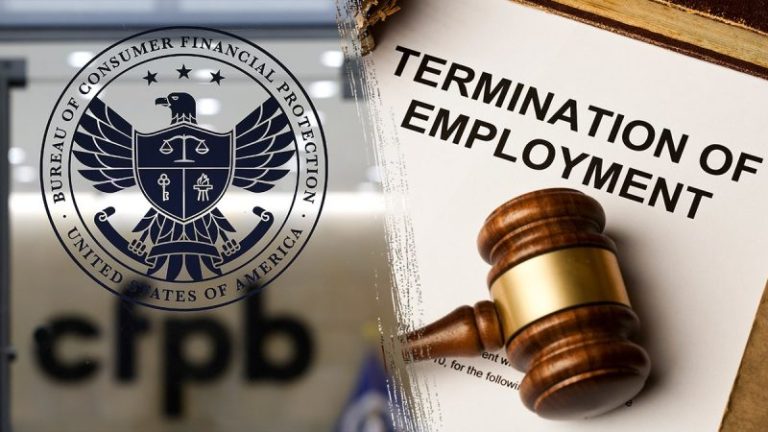
A Washington, D.C.-based federal judge on Friday temporarily halted the Trump administration’s planned mass layoffs at the Consumer Financial Protections Bureau (CFPB), shortly after an appeals court narrowed her earlier injunction.

U.S. District Judge Amy Berman Jackson’s order temporarily blocks the terminations, which would have slashed the bureau’s workforce by roughly 90%, as she weighs whether the planned layoffs violate her earlier injunction. 

Her order comes after plaintiffs in the case, which include the CFPB Employee Association and other labor entities, accused the government of violating her earlier injunction. The plaintiffs alleged these layoffs would take place on Friday evening.

Jackson noted on Friday that the agency was slated to carry out a reduction in force, or RIF, of roughly 1,400 employees — which would have left just several hundred in place. 

Jackson said that within several days of an appeals order narrowing her initial injunction, CFPB employees were told the agency would do ‘exactly what it was told not to do,’ which was to carry out a RIF. 

‘I’m willing to resolve it quickly, but I’m not going to let this RIF go forward until I have,’ she said during the Friday hearing, noting that she is ‘deeply concerned, given the scope and scope of action.’

Justice Department lawyers had sought to appeal Jackson’s order earlier this year, arguing in a filing that the injunction ‘improperly intrudes on the executive [branch’s] authority’ and goes ‘far beyond what is lawful.’

Jackson blocked the administration from moving forward with any layoffs or from cutting off employees’ access to computers at the bureau until she has time to hear from the officials in question later this month.

‘We’re not going to disperse’ more than 1,400 employees ‘into the universe… until we have determined that is lawful or not,’ Jackson said.

She proceeded to then set an April 28 hearing date to hear testimony from officials slated to carry out the RIF procedures. 

The plaintiffs in the suit filed their legal challenge in D.C. district court in early February seeking a temporary restraining order after the Trump administration moved to severely downsize the bureau. 

The court issued a preliminary injunction in late March, finding that the plaintiffs would likely succeed on the merits.

The order directed the government to ‘rehire all terminated employees, reinstate all terminated contracts, and refrain from engaging in reductions-in-force or attempting to stop work through any means.’ 

The Trump administration appealed the order shortly thereafter.

The Court of Appeals for the D.C. Circuit stayed Jackson’s order only in part, staying the provision dictating that the government must rehire the terminated employees. 

The appeals court also stayed the provision of the order prohibiting the government from ‘terminating or issuing a notice of reduction’ to employees the administration deemed ‘to be unnecessary to the performance of defendant’s statutory duties.’

This post appeared first on FOX NEWS

Days of highly publicized departures at the Pentagon appear to have come from weeks – if not months – of simmering tensions and factional infighting, Fox News Digital can reveal. 

According to multiple defense officials, the three employees put on leave this week were never told what they were accused of leaking, were not read their rights and were given no guidance on who they could or couldn’t speak to. They were also not asked to turn over their cellphones as part of the leak probe.

At least one of the former employees is consulting with legal counsel, but none have been fired and all are awaiting the outcome of the investigation.

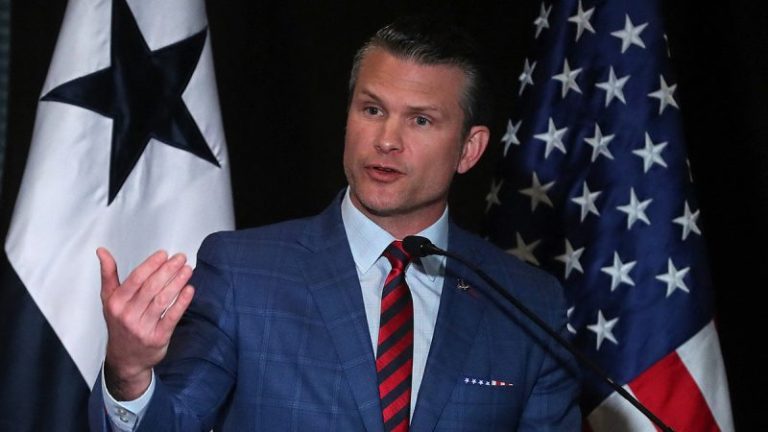
Top aides to Defense Secretary Pete Hegseth were placed on leave and escorted out of the building this week as the Pentagon probes unauthorized leaks: senior adviser Dan Caldwell, deputy chief of staff Darin Selnick and Colin Carroll, chief of staff to Deputy Secretary of Defense Stephen Feinberg.

Another press aide, John Ullyot, parted ways with the Pentagon because he did not want to be second-in-command of the communications shop. 

Officials denied that the three men were placed on leave because of their foreign policy views and said they saw no connection to their positions on Iran and Israel – even as reports surfaced that President Donald Trump told Israeli Prime Minister Benjamin Netanyahu the Pentagon would not intervene if Israel attacked Iran.

Selnick was focused on operations, administration and personnel matters; Carroll was focused largely on acquisitions; and Caldwell advised mostly on the Europe portfolio. 

But the trio were united, according to one defense official with knowledge of the situation, in the fact that Hegseth’s chief of staff, Joe Kasper, had a ‘deep vendetta’ against them. Kasper issued a memo in late March directing the Pentagon to investigate unauthorized disclosures to reporters and to go so far as using lie detector tests if necessary. 

The three had raised concerns to Hegseth about Kasper’s leadership, and Kasper believed they were trying to get him fired, according to the official. 

Those tensions had boiled into ‘shouting matches in the front office,’ the official said. 

Another Pentagon official disputed those claims and insisted that any accusation the firings had to do with anything other than the unauthorized leak investigation was ‘false.’ 

‘This is not about interpersonal conflict,’ that official said. ‘There is evidence of leaking. This is about unauthorized disclosures, up to and including classified information.’ 

Legal experts say the employees don’t need to be notified of what they’re accused of doing until the investigation is concluded.

‘Being placed on paid leave is not considered a disciplinary decision. It’s considered a preliminary step to conduct an investigation, so if they think they’re being railroaded or hosed, they’ll have some due process opportunity to respond when there’s a formal decision,’ said Sean Timmons, a legal expert in military and employment law. 

‘They’ve been humiliated in the media to some extent. However, this happens every day in the federal government. Generally speaking, what’s happened so far is not necessarily considered discipline. It’s just considered a security protocol step to suspend their authorization, suspend their access to their emails, and a full, thorough independent investigation can be conducted.’

The three aides are civilian political appointees, meaning they could be fired at-will regardless of the investigation. But if they are found to have engaged in unauthorized leaking, they could have their security clearances yanked away.

‘There are very few protections when it comes to political appointees versus career civilian staff,’ said Libby Jamison, an attorney who specializes in military law. ‘For appointees, there is very broad discretion to be placed on administrative leave or reassigned.’ 

If employees are accused of leaking, a report is sent to the Defense Information System for Security, and then there is an independent review of their eligibility for access to sensitive information.

‘They’ll get a chance, potentially, to try to keep their clearance and show that they didn’t violate any security clearance protocols when it comes to handling sensitive information,’ said Timmons. ‘If it is found they were leaking information in violation of the rules, and then there’s a guideline violation for personal misconduct and for breaching of sensitive information. So they could be possibly criminally prosecuted and certainly terminated from their employment and have their clearance stripped and revoked.’

Or, if the independent officer does not find sufficient evidence to tie them to the leaks, they could return to their positions and maintain clearances. 

Ullyot, meanwhile, said that he had made clear to Hegseth from the beginning that he was ‘not interested in being number two to anyone in public affairs.’

Ullyot ran the public affairs office on an acting basis at the start of the administration, leading a memo that yanked back workspaces for legacy media outlets and reassigned them to conservative networks. Ullyot also took a jab at former chairman of the Joint Chiefs of Staff Mark Milley, saying his ‘corpulence’ set a bad example for Pentagon fitness standards. 

But as his temporary chief role came to a close and Sean Parnell took the Pentagon chief spokesperson job, Ullyot said he and Hegseth ‘could not come to an agreement on another good fit for me at DOD. So I informed him today that I will be leaving at the end of this week.’

Ullyot said he remains one of Hegseth’s ‘strongest supporters.’ 

The office of the secretary of defense and the three aides who were placed on leave this week either declined to comment or could not be reached for this story. 

This post appeared first on FOX NEWS

President Donald Trump on Friday said the U.S. will ‘just take a pass’ at peace efforts for Ukraine if Russian President Vladimir Putin refuses to agree to ceasefire terms. 

‘If for some reason, one of the two parties makes it very difficult, we’re just going to say ‘you’re foolish, you’re fools, you’re horrible people,’ and we’re going to just take a pass,’ Trump told reporters. ‘But hopefully we won’t have to do that.’

The president’s comments echoed those made by Secretary of State Marco Rubio early Friday morning following a meeting in Paris with special envoy Steve Witkoff and French President Emmanuel Macron, as well as officials from Ukraine, Germany and the U.K. — the first meeting of its kind, which signaled greater European involvement in U.S. efforts to secure a Ukraine-Russia ceasefire.

While Ukraine has agreed to both full and interim ceasefire proposals, Russia has delayed any agreement for weeks, though it is for the most part still believed to be adhering to a 30-day ceasefire on Ukraine’s energy infrastructure.

‘If we’re so far apart this won’t happen, then the president is ready to move on,’ Rubio told reporters in Paris following his talks, which he described as ‘very positive.’

‘We’re not going to continue to fly all over the world and do meeting after meeting after meeting if no progress is being made,’ Rubio said. ‘We’re going to move on to other topics that are equally if not more important in some ways to the United States.’

It remains unclear where the U.S. would stand in not only aiding Ukraine, should Russia refuse to end its illegal invasion, but whether Trump would go through with his previous threats to enact more sanctions on Russia. 

Last month, during an interview with NBC News, Trump said he was ‘very angry’ and ‘pissed off’ after Putin first showed signs of being unwilling to engage in a ceasefire with Ukrainian President Volodymyr Zelenskyy.

‘If Russia and I are unable to make a deal on stopping the bloodshed in Ukraine, and if I think it was Russia’s fault — which it might not be — but if I think it was Russia’s fault, I am going to put secondary tariffs on oil, on all oil coming out of Russia,’ he said.

‘That would be that if you buy oil from Russia, you can’t do business in the United States,’ he added. ‘There will be a 25% tariff on all oil, a 25- to 50-point tariff on all oil.’

Trump would not comment on the ‘specific number of days’ Russia has before he determines whether it’s serious about ending the war, but he told reporters on Friday it needs to happen ‘quickly — we want to get it done.’

This post appeared first on FOX NEWS