Archive

2025

Browsing

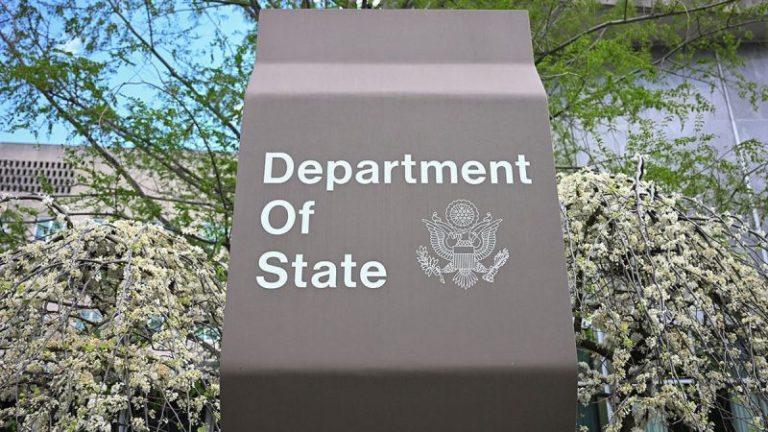
The State Department is pushing back against criticism of its changes to the process of reporting human rights abuses. 

NPR reported last week that the Trump administration was scaling back annual reports meant to inform congressional decisions on allocating foreign aid to countries, claiming the State Department was ‘changing its mind on what it calls human rights.’ 

Fox News Digital is told the 2024 Human Rights Report has been restructured to remove redundancy, increase readability, and return the focus to human rights abuses – instead of a ‘laundry list of politically biased demands and assertions.’ 

‘NPR’s report that the State Department is scaling back the Human Rights Report is misleading and misguided,’ a senior State Department official told Fox News Digital. ‘This year’s modifications are critical for removing report redundancy, increasing readability, maintaining consistency to U.S. statutes, and returning focus to human rights issues rather than political bias.’

Fox News Digital is told the restructuring of the reports ‘will be more responsive to legislative mandates that underpin the report’ and ‘does not reflect a change in U.S. policy on promoting respect for human rights around the globe or in any particular country.’ The State Department notably has attempted to streamline the reports to better align with statutory requirements under both Republican and Democratic administrations.

NPR and Politico reported on an internal memo that purportedly showed the 2024 Human Rights Report, which was finished in January but has been adjusted under the new administration, will no longer include references to diversity, equity and inclusion (DEI) or sections on discrimination or abuse against the LGBTQ+ community. 

The annual reports – known as ‘Country Reports on Human Rights Practices’ – normally come out in March or April. NPR said sections that called out countries for ‘forcibly returning a refugee or asylum-seeker to a home country’ or the ‘serious harassment of human rights organizations’ would be absent this year. NPR also stressed that prior reports had sections detailing countries’ ‘involuntary or coercive medical or psychological practices,’ ‘arbitrary or unlawful interference with privacy,’ ‘serious restrictions to internet freedom,’ ‘extensive gender-based violence,’ and ‘violence or threats of violence targeting people with disabilities,’ but the new report would not.

Paul O’Brien, executive director of Amnesty International, USA, criticized the changes under the Trump administration. He told NPR: ‘What this is, is a signal that the United States is no longer going to [pressure] other countries to uphold those rights that guarantee civic and political freedoms – the ability to speak, to express yourself, to gather, to protest, to organize.’ 

During President Donald Trump’s first term, former Secretary of State Mike Pompeo cited what he categorized as a ‘proliferation of human rights’ on the global stage. 

‘We wanted to go back to first principles, back to our founding documents, our Declaration of Independence, our Bill of Rights to focus on those things that are central to the understanding of rights here in America,’ he said in July 2020. 

Secretary of State Marco Rubio is overseeing changes at the department during Trump’s second term. Last week, he announced the closure of the State Department’s Counter Foreign Information Manipulation and Interference (R/FIMI), formerly known as the Global Engagement Center (GEC), which he accused of costing taxpayers more than $50 million per year and spending ‘millions of dollars to actively silence and censor the voices of Americans they were supposed to be serving.’ 

This post appeared first on FOX NEWS

Secretary of Homeland Security Kristi Noem’s announcement that REAL IDs will be required to fly starting May 7 has forced Americans to finally get compliant – 20 years after Congress passed the law. 

On May 11, 2005, President George W. Bush signed the REAL ID Act into law to enhance national security in the aftermath of the Sept. 11, 2001, terrorist attacks. Passed by the U.S. Congress, the act set federal standards for issuing identification cards, like driver’s licenses.

Starting next month, REAL ID will be required to access federal facilities, enter nuclear power plants and board commercial aircraft. REAL ID’s rollout has faced nearly two decades of political pushback, setbacks and delays. 

In the two years after it was passed, the National Governors Association (NGA), the National Conference of State Legislatures (NCSL) and the American Association of Motor Vehicle Administrators (AAMVA) called for delaying its implementation, citing logistical concerns. 

Since its passing, states and advocacy groups have rejected its implementation. The American Civil Liberties Union (ACLU) – a longtime opponent of REAL ID implementation – called it ‘discriminatory, expensive, burdensome, invasive, and ultimately counterproductive’ in 2007 as disapproval grew nationwide. By 2009, at least 25 states had enacted legislation opposing the REAL ID Act.

States rejected REAL ID for a range of reasons, including costs, states’ rights and privacy concerns. Three years after the law was passed, REAL ID’s first deadline was set for May 11, 2008. But in the face of opposition, DHS extended the deadline to May 11, 2011, under President Barack Obama’s administration. 

DHS later implemented a four-phase plan that extended beyond the 2011 deadline. By 2016, 23 states were fully compliant with the REAL ID Act, 27 states and territories were granted extensions, and six were noncompliant without extensions, according to a DHS letter. 

By Jan. 22, 2018, travelers would no longer be allowed to use a state-issued ID for domestic travel, and by Oct. 1, 2020, REAL ID ‘or another acceptable form of identification’ would be required for domestic air travel. 

Due to the COVID-19 pandemic, President Donald Trump extended the REAL ID deadline to Oct. 1, 2021. That deadline was later extended to May 3, 2023, by President Joe Biden’s administration ‘due to circumstances resulting from the ongoing COVID-19 pandemic.’

The Biden administration finally extended the deadline to May 7, 2025, to give states ‘additional time to ensure their residents have driver’s licenses and identification cards that meet the security standards established by the REAL ID Act.’

Noem announced the May 7, 2025, deadline would hold as the Trump administration seeks to prevent illegal immigrants from traveling within the United States.

‘Starting May 7, you will need a REAL ID to fly. REAL IDs make identification harder to forge, thwarting criminals and terrorists. If you plan to fly, make sure you get a REAL ID so you won’t be denied from your flight or face travel delays!’ Noem said. 

This post appeared first on FOX NEWS

NEW YORK — When it came time to explain how the Knicks contained Cade Cunningham — what their game plan was — Josh Hart was concise.

“Yeah, OG Anunoby,” the Knicks guard said Saturday night after New York blew past Detroit in Game 1 of their first-round series. “OG Anunoby, man.”

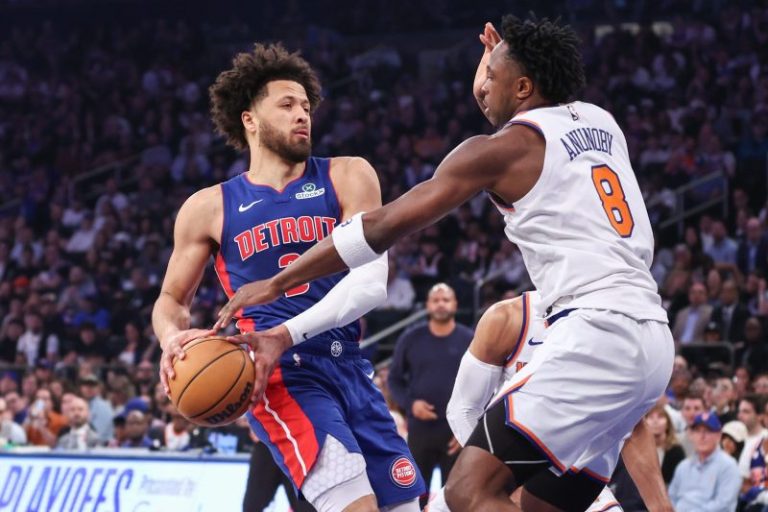
It was, of course, more nuanced than that. But in New York’s 123-112 victory, which was fueled by a 21-0 Knicks run in the fourth quarter, Anunoby did indeed take the lead on Cunningham, Detroit’s first-time NBA All-Star who is the Pistons’ motor.

The Knicks held Cunningham to 21 points on 8-of-21 (38.1%) shooting. He did dish out a game-high 12 assists, though the flip-side to those assists was Cunningham’s six turnovers, half of which came in the fourth quarter, and many of which were prompted by Anunoby.

From the tip, New York matched up Anunoby, a 6-foot-7 wing stopper in his second season in New York, on Cunningham. Known as a premier defender, Anunoby leaned on his length and physicality to front Cunningham every time he touched the ball.

“Just trying to make it as difficult as possible,” Anunoby told reporters after the game. “Make his catches difficult, pressure him, be aggressive and just try to force him into tough shots.”

Then, when Detroit tried to shake Anunoby off of Cunningham with screens along the perimeter to get more favorable matchups, the Knicks directed the other defender to linger at the mesh point, turning their coverage into a soft double-team. The tactic essentially forced the ball out of Cunningham’s hands.

Cunningham, throughout the first half, was more than happy to comply. And the move, at least initially, appeared to backfire on New York. As the Knicks dared other Pistons players to be the ones to beat them, Detroit’s veteran role players showed up.

Forward Tobias Harris poured in 22 points in the first half, going 7-of-10 before intermission. That marked the most points he had scored in any half this season. Backup guard Malik Beasley chipped in another 12 headed into the locker room.

The Knicks, however, threw in another wrinkle when play resumed. New York deployed forward Mikal Bridges, another plus-defender with length, to match up with Harris. Bridges pressured Harris at the perimeter every time he touched the ball; in the second half, Harris would score just three points.

But as New York faced a deficit entering the fourth, it tightened up its defense, sparking a massive 21-0 run. The Knicks limited Detroit to just 21 points in the final period, and it was Anunoby who smothered Cunningham throughout the quarter.

“He’s a hell of a player,” Hart said of Anunoby. “Defensively we have faith in him to guard anybody. So obviously we’re all locked in and dialed in on (Cunningham). He’s a good player, but OG loves those kinds of matchups, especially in the playoffs when you can be physical. (Anunoby) is a physical guy, able to get through screens and those kinds of things. We need his offense, obviously, but more importantly his defense.”

So, can the Knicks replicate this formula in Game 2 of the series and beyond?

Presumably, until Detroit shows it can sustain its offense with Cunningham as a secondary scorer, New York won’t alter its plan too much.

Cunningham, for his part, called Game 1 fun and said he was looking forward to Game 2 Monday night. In his mind, it’s all about finishing.

“They sent bodies at me more than anything,” Cunningham told reporters after the game. “They made sure that every time I came off, they were checking me, they were sending bodies at me all the time, trying to get the ball out of my hands. They were on the same accord. I just wasn’t able to pick them apart enough. But for three-and-a-half quarters of the game, we were comfortable. We were getting the shots we wanted.

“We’ve just got to close out the game.”

This post appeared first on USA TODAY

MIAMI GARDENS, Fla. — Formula One returns to South Florida for the fourth annual Miami Grand Prix May 2-4, and race organizers are providing a new way for aspiring F1 fans to experience the event.

F1 Miami is offering one-day tickets for the first time – allowing ticket buyers to attend the race either Friday, Saturday or Sunday at the Miami International Autodrome surrounding Hard Rock Stadium.

Fans can attend Friday for $65, $75, $100 or $125 – depending on the grandstand they select – to watch the first practice session and qualifying for Saturday’s Sprint race.

Those prices increase to $200-$315 for the F1 Sprint race Saturday, and $505 to $910 for Sunday’s main event. Miami is also offering a Sunday campus pass for $350 for the first time, while a campus pass for the entire weekend is $430. A campus pass gets you into the race to walk around and enjoy the event, but it does not provide a seat or access to grandstands.

The one-day ticket offering is a result of feedback Miami race organizers received from fans who attended the last three races, where buying three-day ticket packages was the only option. It allows fans to adjust financially or just from a scheduling perspective.

“It really stems for us on our responsibility to continue to be a key pillar of growing the sport,” F1 Miami race president Tyler Epp told USA TODAY Sports. “There are certainly fans within the United States who’ve been following Formula One for decades. But there’s also a new crop of fans that have come on board here in the last couple of years. I think our role as a promoter is to make sure that we create an accessible environment.”

Miami has already seen immediate results from one-day ticket sales: 81% of single-day grandstand buyers will be first-time attendees, including 39% coming from out of state.

F1 Miami one-day tickets will remain on sale until they are sold out, and Epp expects the Miami race to have another sellout weekend. The race had weekend attendances of 242,955 in 2022; 270,000 in 2023; and 275,000 last year.

The Porsche Carrera Cup series and F1 Academy will also hold practice sessions Friday, with races on Saturday and Sunday, adding to the weekend experience.

“We really try to make sure that heading into Year 4, we’ve been very customer centric – like really, actually listening to the people who are supporting us, the fans who’ve been here since the first year, but also the fans who are considering coming for the first time,” Epp said.

“Our opportunity is to create a fan for life and get them to come back for our Formula One weekend, but get to know us in a more unique way … for them to fall in love with the experience.”

In February, F1 named South Florida Motorsports – led by Miami Dolphins owner Stephen Ross and CEO Tom Garfinkel – Promoter of the Year.

The Miami Grand Prix was uniquely recognized by F1 for delivering “the best all-round event in 2024” that “embodied the F1 mission statement to deliver the world’s greatest sports and entertainment spectacle.”

Musical artists Pitbull, Kygo, DJ Tiësto, Kaskade, Sofi Tukker, Cedric Gervais, Maffio and Justin Quiles will perform during this F1 Miami weekend, while the National Anthem before the race will be sung by King Bell, a 14-year-old artist from Fort Lauderdale.

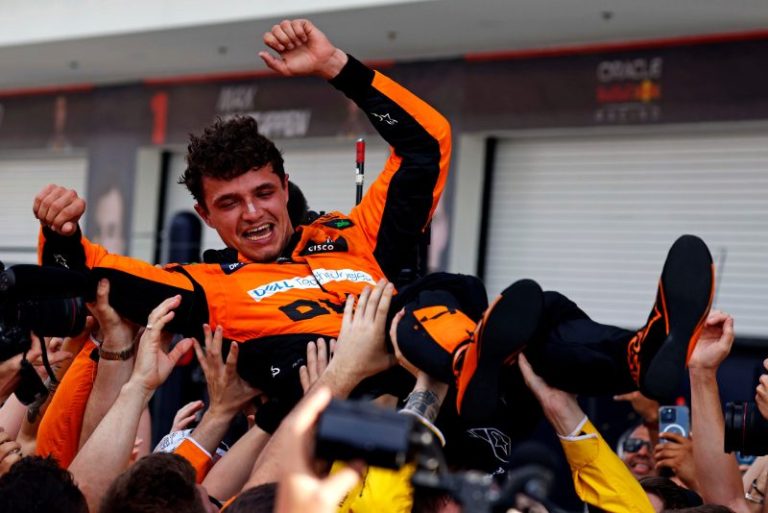
McLaren’s Lando Norris won his first F1 race at Miami last year, creating some parity in the sport last season despite Red Bull’s Max Verstappen (who won the first two Miami races) winning the F1 driver’s championship for the fourth consecutive year.

Verstappen and Norris have already won F1 races this season, while McLaren’s Oscar Piastri is in the lead for the driver’s championship after winning three of the five races already this season.

Seven-time F1 champion Lewis Hamilton’s move from Mercedes to Ferrari also adds to the intrigue during the 2025 season.

Single-day tickets have also been available at other F1 races around the world in Australia, China and Saudi Arabia earlier this year.

They will be offered at Emilia-Romagna (May 16-18), Monaco (May 23-25), Canada (June 13-15), Netherlands (Aug. 29-31), Monza (Sept. 5-7), Azerbaijan (Sept. 19-21), and the two remaining U.S. races in Austin (Oct. 17-19) and Las Vegas (Nov. 20-22).

Las Vegas race organizers already sold out of their first release of one-day tickets, which began at $50, but more one-day tickets will be available later this summer.

They hope to cater to locals working on the Las Vegas Strip who may not be able to attend all three race days, as well as fans from nearby states California, Arizona and Utah wanting to make a day trip to experience the action.

“People know the excitement around the race, and people want to see that,’ F1 Las Vegas Grand Prix vice president of premium sales and service Alli England told USA TODAY Sports. ‘And that’s when we see the demand for those single days.’

This post appeared first on USA TODAY

We’re less than a week out from the 2025 NFL Draft. On April 24, the Tennessee Titans are poised to make their first No. 1 pick in decades to kick off the three-day event in Green Bay, Wis.

Holding the No. 1 overall pick gives a team all of the power in the most critical round of the draft. Round 1 features the majority of the future stars and All-Pros at their positions. There are some exceptions, but more often than not it’s the players selected in the first 32 picks who make the difference in the long term.

That can go in the right direction for some teams. Cincinnati’s hardly complaining with 2020 No. 1 overall pick Joe Burrow at quarterback. That position has been the standard for No. 1 overall picks in recent years. Eight of the last 10 top overall picks have been quarterbacks.

However, not all No. 1 picks are created equal. Some may have not panned out for reasons or paled in comparison to other players taken in the first round. Some just never quite lived up to the hype.

That’s who we’re discussing today. Here are the 10 worst No. 1 overall picks in the NFL draft since 2000:

Worst No. 1 overall picks in NFL draft since 2000

10. DE Travon Walker (2022)

Walker’s been an impactful player for the Jaguars over the last two seasons with 20.5 total sacks in that time span. He’s developing into a difference-maker off the edge for Jacksonville opposite Josh Hines-Allen.

The problem for Jacksonville is the No. 2 overall pick in the class, Aidan Hutchinson, has been far more productive and impactful so far at the same position. Hutchinson missed 12 games in 2024 but still has more career sacks (28.5) than Walker (24). This could end up looking foolish in a few years as Walker potentially continues his ascent but for now is one of the 10 worst picks.

9. QB Bryce Young (2023)

Young is lower on this list because of how early it is and his turnaround in the second half of 2024. If he can keep that up, things will look up for the former Heisman Trophy winner. Things were rough to start as he went 2-16 as a starter over his first 18 games. After being benched, Young came back in and went 4-6 as a starter to close the season. That’s still not ideal but an improvement from what was seen up until that point.

What hurts Young is how good the other top quarterback in the class, C.J. Stroud, has looked already. He’s led Houston to consecutive division titles and earned Offensive Rookie of the Year. The two will be linked forever after going 1-2 in the 2023 draft.

8. QB Baker Mayfield (2018)

Mayfield’s done a lot to recover his standing in the league since signing with the Buccaneers in 2023. He’s been a reliable starter and made his second consecutive Pro Bowl in 2024. He was a highly touted prospect coming into the draft after winning the Heisman Trophy in 2017 and had some good returns early. He set the record for touchdowns by a rookie quarterback in 2018. Two years later, he quarterbacked the Browns to their first playoff win since 1994.

But what hurts him in this exercise is the talent that went after him in the 2018 NFL Draft. Two other quarterbacks in the first round – Josh Allen (No. 7) and Lamar Jackson (No. 32) – have combined for three MVPs and are considered in the top five of the position league-wide. It’s hard to get past that in retrospect.

7. DE Jadeveon Clowney (2014)

Clowney has had a solid career and is still a productive player off the edge more than a decade after being the No. 1 overall pick to Houston. The college phenom was expected to be a force given his elite mix of size and athleticism. NFL Network analyst Bucky Brooks called Clowney a ‘meaner, nastier version of Julius Peppers.’

That’s high praise, and Clowney has had a solid career. He’s made three Pro Bowls and was a second-team All-Pro in 2016. He dealt with injuries early on in his career and has still never tallied double-digit sacks in a season. He’s at 58 for his career entering 2025.

Despite that solid track record, Clowney’s on this list because of the other talent in the 2014 NFL draft. Future Hall of Famers Aaron Donald (No. 13) and Zack Martin (No. 16) went in the first round. No. 5 overall pick Khalil Mack has nearly double Clowney’s sack total and a Defensive Player of the Year award.

6. OT Eric Fisher (2013)

The 2013 NFL Draft didn’t have many standout talents in the first round. The best player in the class was third-round pick Travis Kelce, making this class look a little rosier for Chiefs fans in hindsight.

Analysts pointed to the decision at No. 1 being between Fisher and fellow tackle Luke Joeckel. Fisher ended up being the right choice as he played longer and started 132 games for the Chiefs and Colts. He was reliable and made two Pro Bowls, in 2018 and 2020.

What makes this pick look worse in hindsight is future Hall of Fame tackle Lane Johnson who went No. 4 overall to the Philadelphia Eagles.

5. QB Jameis Winston (2015)

Winston racked up accolades at Florida State, including the Heisman Trophy in 2013. He was considered a Pro Bowl talent right away with his mix of elite traits at prototypical size for the position.

Winston went 28-42 as a starter with the Buccaneers as a productive but inconsistent passer. In 2019, he became the first quarterback in NFL history to throw for 30 or more touchdowns and 30 or more interceptions. Tampa Bay let him go in 2020, signed Tom Brady and immediately won a Super Bowl. Since then, Winston’s had stops in New Orleans and Cleveland and gone 8-9 as a starter.

Tampa Bay went with Winston, who was the best quarterback in a down year for the position, in a relatively weak class. The best players from the 2015 draft were late-round picks Danielle Hunter (third round, No. 88 overall) and Stefon Diggs (fifth round, No. 146). The best first-round picks were Amari Cooper (No. 4), Leonard Williams (No. 6) and Marcus Peters (No. 18). Only Peters made more than one All-Pro team.

4. QB Sam Bradford (2010)

Bradford was a highly-touted prospect in 2010 with a Heisman Trophy award in 2008 behind a record-setting year at Oklahoma. He backed those expectations by winning Offensive Rookie of the Year in 2010.

But after that, Bradford struggled with injuries. He missed most of the 2013 season and all of 2014 with knee injuries. He led the league in completion percentage in 2016 with the Vikings but never stuck as a long-term starter at any of his stops in the NFL.

Bradford ended up as the best quarterback in the class, but there were some All-Pro and future Hall of Fame talents in the class that the Rams missed out on. Trent Williams went No. 4 overall to Washington and is still playing at a high level. Ndamukong Suh was a three-time All-Pro at the No. 2 overall pick. Earl Thomas, the No. 14 overall pick, was the linchpin of the best defenses of the 2010s in Seattle.

3. QB David Carr (2002)

The expansion Houston Texans made Carr their first draft pick in franchise history, but he wasn’t set up for early success. The Fresno State star was sacked 76 times in 16 games as a rookie, a record that stands more than 20 years later. Things didn’t improve with time; Carr was the most-sacked quarterback in three of his first four NFL seasons.

His best season came in 2006 when he led the Texans to a 6-10 record with a league-high 68.3% completion percentage. After that, he was a backup at multiple stops, winning a Super Bowl with the Giants in 2012 as a backup.

The downside to this pick is that the No. 2 selection in the draft was a future Hall of Fame defensive end, Julius Peppers. Additionally, down the board in Round 1 you also had Hall of Famer Ed Reed (No. 24) and star defensive end Dwight Freeney (No. 11). There weren’t any good quarterbacks in the class but plenty of pieces to build around.

2. DE Courtney Brown (2000)

The NFL kicked off the new millennia with a relatively down draft. The top seven picks in the 2000 draft were out of the league by 2010. Brown lasted six years in the league and played a full season just once as he was plagued by injuries throughout his time in Cleveland. He had a career-high six sacks in 2003 but that was the height of his production.

Down the board, No. 9 overall pick Brian Urlacher stands out as the best first-round pick that year. He’s the lone Hall of Fame player from that draft class at the moment but that will change with time; Tom Brady is a lock for Canton once he’s eligible.

1. QB JaMarcus Russell (2007)

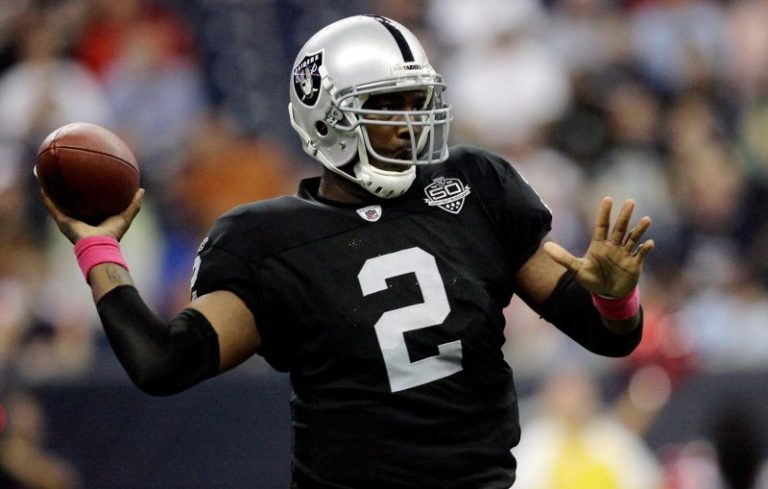
Russell’s often considered the worst No. 1 overall pick of all time, not just in the last 25 years. The then-Oakland Raiders spent the first overall pick on the LSU passer who was considered a physical marvel at 6-foot-6 and 265 pounds with a rocket arm and elite athleticism for that size.

He played one full season as a starter in 2008 and went 5-10. He started 25 games over three years and went 7-18. He was benched mid-season in 2009 and ended the year last in most statistics among qualifying quarterbacks.

What makes this pick especially tough is how great the players taken after Russell at No. 1 panned out in the NFL. The following two players selected after him – Calvin Johnson at No. 2 and Joe Thomas at No. 3 – both are in the Hall of Fame. Adrian Peterson (No. 7) is likely heading there as soon as he’s eligible. Even farther down the board, Patrick Willis (No. 11) and Darrelle Revis (No. 14) are enshrined in Canton.

This post appeared first on USA TODAY

The No. 1 seeds took care of business with not much of a worry, and stars – some new, some old – showed up as the NBA playoffs opened with eight Game 1s Saturday and Sunday.

The Oklahoma City Thunder, the No. 1 seed in the Western Conference, and the Cleveland Cavaliers, the top seed in the East, were impressive.

Denver’s Nikola Jokic, Indiana’s Pascal Siakam, New York’s Jalen Brunson and Karl-Anthony Towns, Minnesota’s Anthony Edwards, Oklahoma City’s Shai Gilgeous-Alexander and Jalen Williams, Boston’s Derrick White, Cleveland’s Darius Garland and Donovan Mitchell all showed why they are All-Star caliber players.

And of course, several teams, including the Los Angeles Lakers, need to improve in Game 2.

Here are the winners and losers from Game 1 of the first-round series as the NBA playoffs began:

NBA playoffs Game 1 winners

Boston Celtics’ depth

This is how good the Celtics are: They can absorb substandard offensive games from Jayson Tatum and Kristaps Porzingis. Tatum was 4-for-13 (0-for-3 on 3s) and 0-for-2 with eight points and Porzingis was 1-for-6 with five points nearing the end of the third quarter and the Celtics were still ahead 72-59. That’s because they’re deep – Sixth Man of the Year favorite Payton Pritchard scored 19 points, Derrick White scored 30 and Jaylen Brown had 16. And it’s because Tatum, who finished with 17 points, and Porzingis contribute in other ways – 14 rebounds, four assists, one steal and one block for Tatum and six rebounds and four steals for Porzingis.

Oklahoma City Thunder

The Thunder were dominant in a complete, two-way victory against Memphis: 131-80. And it’s quite possible it was worse than the score looks. Six Thunder players reached double figures, including all five starters. It was the perfect start to the playoffs for the Thunder.

Playoff Ty Jerome

On the day he was named a finalist for the NBA’s Sixth Man of the Year award, Cavaliers guard Ty Jerome erupted for 28 points in 26 minutes and 17 seconds. It was efficiency encapsulated. Jerome attacked mismatches when Tyler Herro was guarding him and went 10-of-15 (66.7%) from the field and 5-of-8 (62.5%) from beyond the arc. Jerome’s 28 points was fourth-most since 1971 for a bench player making his postseason debut, four off of Malik Monk’s 32.

Warriors close behind Jimmy Butler and Stephen Curry

It wasn’t just Stephen Curry’s improbable 3-pointers or Jimmy Butler’s mastery in the mid-range — the Warriors stole Game 1 on the road in large part because of the veteran savvy of their closers. In Butler’s case, don’t focus on his 25 points in the box score; look at his game-high five steals, seven boards and six assists. In Curry’s case, it was his slashes to the rim that opened up the spacing for Butler and others to execute. You might as well throw in Draymond Green, whose defensive pressure and intensity often forced the Rockets into mistakes.

David Adelman

Interim Nuggets coach David Adelman got his first playoff victory in a 112-110 Game 1 overtime victory against the Los Angeles Clippers. Of course, he relied on Nikola Jokic, but he also put Russell Westbrook in in opportunities to be effective, and Jamal Murray (21 points, nine rebounds, seven assists) and Aaron Gordon (25 points, eight rebounds) know what to do in the playoffs. It’s a good start for Adelman who could end up with the full-time job in Denver.

The Knicks’ Big 3

Jalen Brunson (34 points), Karl-Anthony Towns (23 points) and OG Anunoby (23 points) combined for 80 points and shot 50.8% from the field. But it just wasn’t their scoring. Brunson had eight assists, Towns added 11 rebounds, five assists, four steals and two blocks and Anunoby contributed seven rebounds, five steals and two blocks. New York’s experience took over the in fourth. That’s exactly what the Knicks needed to start the playoffs, and that’s what they need for a long playoff run.

Timberwolves’ 3-point shooting

The Timberwolves made a playoff franchise-record 21 3-pointers in their victory against the Lakers and shot 50% from that range. At one point in the third quarter, they were 16-for-27 on 3s and owned an 80-54 lead. Four players (Jaden McDaniels, Julius Randle, Anthony Edwards and Naz Reid) made at least three 3s, led by Reid’s 6-for-9, Randle’s 4-for-6 and Edwards’ 4-for-9. The Timberwolves were one of the best 3-point shooting teams this season – fifth in 3s made per game (15) and fourth in 3-point shooting percentage (.377). Edwards led the league in made 3s (320).

* Special mention for McDaniels. He had 25 points on 11-for-13 shooting (3-for-3) on 3s and delivered nine rebounds and outstanding defense.

NBA playoffs Game 1 losers

Houston’s brutal second quarter

Frankly, the whole first half was an offensive struggle for the young Rockets, who had three starters — Alperen Şengün, Jalen Green and Amen Thompson — making their playoff debuts. Houston posted its lowest-scoring half (34) of the season and scored just 13 points in the second quarter. Şengün showed up and was the lone bright spot in Houston, leading the team with 26. But Green (seven points on 3-of-15 shooting) appeared to play rushed and out of rhythm. Houston, whose 85 points was also a season low, will need Green and its young players to learn from this early setback.

Milwaukee’s starting five

The Bucks’ starters scored 50 points – 36 by Giannis Antetokounmpo and two starters (Kyle Kuzma and Taurean Prince did not score). The Bucks had some ugly stats, including 9-for-37 on 3-pointers and just one 3-pointeer from the starters, and Kuzma was 0-for-5 from the field with no rebounds, no assists, no blocks and no steals in 21 minutes, 34 seconds on the court. Plus-minus in one game isn’t always a definitive measure, but the Bucks were outscored by 24 points in Kuzman’s plus-21 minutes The Bucks need Damian Lillard, who is recovering from deep vein thrombosis in his right calf, back in the lineup, and he could return in either Game 2 or Game 3.

Pistons’ fourth-quarter performance

The Pistons were outscored 40-21 in the fourth quarter, including a 21-0 stretch in which the Pistons’ 98-90 lead evaporated and turned into a 111-98 Knicks lead. The Pistons shot 31.8% from the field and 25% on 3s and committed eight of their 19 turnovers in the final quarter. Cade Cunningham had three of his six turnovers in the fourth, including two on back-to-back possessions. Detroit made strides this season in closing out games in the fourth quarter. But the young Pistons players received a lesson in what’s required to close out a game in the fourth quarter of a playoff game.

Luka Doncic and LeBron James

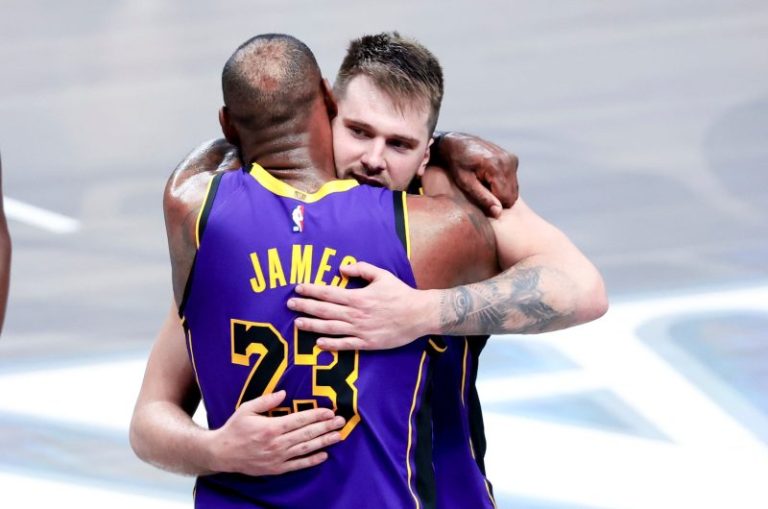
If Luka Doncic and LeBron James combine for 56 points, you probably think the Los Angeles Lakers were in the game. That wasn’t the case in the Lakers’ 117-95 Game 1 loss with Doncic scoring 37 points and James just 19. They combined for just four assists – three for James, one for Doncic – and that’s just not the offensive production that can get the Lakers a victory. First-time NBA head coach JJ Redick needs to help those two and help those two help their teammates. Giving up nearly 120 points isn’t great but scoring 95 isn’t getting it done in today’s NBA.

Memphis Grizzlies

You don’t need many stats to illustrate how bad the game was for the Grizzlies in a 131-80 loss to Oklahoma City. Struggling to score and defend, Memphis trailed by as many as 56, and the 51-point loss was the fifth-largest deficit in a playoff game.

Miami needs more from Andrew Wiggins

Heat All-Star Tyler Herro has carried Miami’s offense since Jimmy Butler was traded in February. Herro scored 21 on Sunday night, but had a quiet second half. When Cleveland focused on halting Herro, Bam Adebayo picked up his production and finished with a team-high 24 points. But Andrew Wiggins, the team’s third option, was far too passive, relegated to standing in the corner late in the game; Wiggins scored just four of his 14 points and took 4 of his 11 attempts in the second half. Going up against Cleveland, the NBA’s No. 1 rated offense, one that averaged 121.9 points per game, the Heat cannot afford to have Wiggins — who posted a game-low plus-minus of -22 — be a bystander in the second half.

Magic’s offense

Eighty-six points won’t win many games in the NBA, and it definitely won’t win many, if any, against the Boston Celtics in a seven-game series. It’s known the Magic aren’t great offensively (fourth-worst in the regular season), but three quarters with 19 or fewer points isn’t close to good enough against the Celtics – even if the Celtics finished fourth defensively. A short series is on its way if Orlando doesn’t find some answers.

This post appeared first on USA TODAY
A recently departed top Pentagon aide goaded President Donald Trump to remove Defense Secretary Pete Hegseth from his Cabinet, describing ‘total chaos’ and ‘dysfunction’ within the top brass of the military. 

‘The dysfunction is now a major distraction for the president – who deserves better from his senior leadership,’ John Ullyot, a former senior communications official for the Pentagon, wrote in an op-ed for Politico published on Sunday. 

‘Trump has a strong record of holding his top officials to account. Given that, it’s hard to see Defense Secretary Pete Hegseth remaining in his role for much longer.’

Ullyot departed the Pentagon’s public affairs office last week because he did not want to be second-in-command to chief spokesperson Sean Parnell. 

On Friday, the Pentagon fired three Hegseth aides – Dan Caldwell, Colin Carroll and Darin Selnick – three of the secretary’s ‘most loyal’ advisers, according to Ullyot. He called the purge ‘strange’ and ‘baffling.’

Following them out the door is chief of staff Joe Kasper, who the three men frequently found themselves at odds with, three defense officials confirmed to Fox News Digital. 

‘In short, the building is in disarray under Hegseth’s leadership.’

He called himself a ‘strong backer’ of Hegseth, but admitted: ‘The last month has been a full-blown meltdown at the Pentagon – and it’s becoming a real problem for the administration.’

The shake-ups came just as reports broke about a second Signal chat where Hegseth discussed plans to strike Houthis in Yemen, this one allegedly including his wife, brother and personal lawyer.

That chat reportedly discussed flight schedules for the F/A-18 Hornets targeting the Houthis in Yemen – similar information to that shared in the chat of Trump Cabinet members where national security advisor Mike Waltz unintentionally added The Atlantic editor-in-chief Jeffrey Goldberg. 

‘Another day, another old story,’ Parnell said in a statement after the latest Signal chat reporting. ‘There was no classified information in any Signal chat, no matter how many ways they try to write the story.’

‘Unfortunately, after a terrible month, the Pentagon focus is no longer on warfighting, but on endless drama,’ Ullyot wrote. 

‘The president deserves better than the current mishegoss at the Pentagon. Given his record of holding prior Cabinet leaders accountable, many in the secretary’s own inner circle will applaud quietly if Trump chooses to do the same in short order at the top of the Defense Department.’

Trump allies eviscerated Ullyot on social media after the op-ed was published. 

‘This guy is not America First,’ Donald Trump Jr. wrote on X. ‘I’ve been hearing for years that he works his ass off to subvert my father’s agenda. That ends today. He’s officially exiled from our movement.’

‘If you’re echoing Democrat talking points, you no longer support President Trump or his administration. There’s no gray area here,’ added Trump advisor Jason Miller. 

The White House, meanwhile, ‘stands strongly’ behind Hegseth, press secretary Karoline Leavitt told Fox News on Monday. 

‘The President stands strongly behind Secretary Hegseth, who is doing a phenomenal job leading the Pentagon,’ she said. This is what happens when the entire Pentagon is working against you and working against the monumental change that you are trying to implement.’

Hegseth also brushed off the reporting on the Signal chat Monday, blaming it on ‘disgruntled employees’ and ‘anonymous smears.’

‘This is why we’re fighting the fake news media,’ he said when pressed on the chat by reporters at the White House Easter Egg roll. ‘This group right here is full of hoaxsters.’

This post appeared first on FOX NEWS

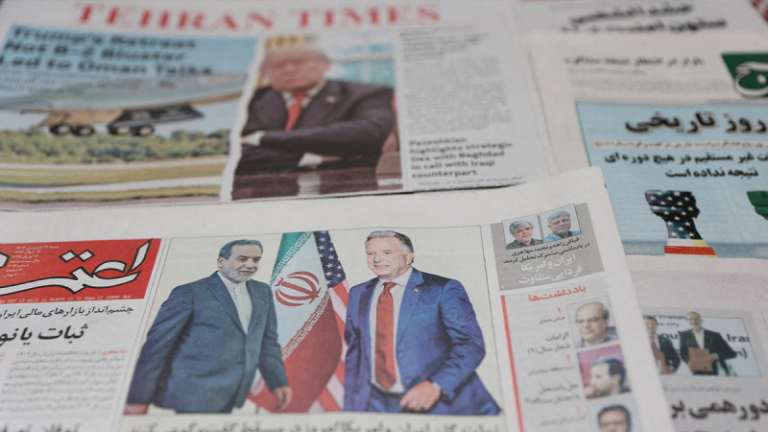
The U.S. and Iran have agreed to meet for a third round of talks later this week in Muscat, Oman, after they met in Italy with Omani intermediaries to discuss Iran’s nuclear program on Saturday.

Details of the negotiations have not been released and any concrete progress in ending Iran’s nuclear program remains unclear, though a senior administration official told Fox News that ‘very good progress’ had been made.

‘Today, in Rome, over four hours in our second round of talks, we made very good progress in our direct and indirect discussions,’ the official said Saturday. ‘We agreed to meet again next week and are grateful to our Omani partners for facilitating these talks and to our Italian partners for hosting us today.’

Reports suggested that Middle East envoy Steve Witkoff and Iranian Foreign Minister Abbas Araghchi at some point in the negotiations spoke face-to-face, the second time in as many weeks.

But the negotiations have not solely been ‘direct’ between Washington and Tehran as President Donald Trump earlier this month insisted they would be, which Iran flatly rejected – suggesting some form of compromise was reached regarding the format of the discussions.

What Witkoff discussed directly with his Iranian counterpart remains unknown.

Araghchi also expressed some optimism in his review of the negotiations from Italy, though his perspective appeared slightly more muted.

‘Relatively positive atmosphere in Rome has enabled progress on principles and objectives of a possible deal,’ he wrote in a post on X. ‘We made clear how many in Iran believe that the [Joint Comprehensive Plan of Action] JCPOA is no longer good enough for us. To them, what is left from that deal are ‘lessons learned.’ Personally, I tend to agree.’ 

‘The initiation of expert level track will begin in coming days with a view to hammer out details,’ Araghchi said. ‘After that, we will be in a better position to judge. For now, optimism may be warranted but only with a great deal of caution.’

It remains unclear how this round of negotiations to end Iran’s nuclear program will differ from the original JPCOA, an Obama-era nuclear deal which Trump abandoned during his first term, though the president and other security experts have voiced a sense of urgency in finding a solution in the very near future. 

But experts have warned these talks need to be far more encompassing than the JCPOA given the current advanced state of Iran’s nuclear program, and they need to happen very soon.

‘The speed with which technical talks have been agreed to is worrying for those who hope to avoid a repeat of 2013 and 2015, as are allegations of Iran’s offer of a three-step interim or phased proposal for a deal,’ Iran expert and senior fellow at the Foundation for Defense of Democracies, Behnam Ben Taleblu told Fox News Digital. 

‘It would be the height of strategic malpractice and a political own goal to allow the Islamic Republic to force America under the Trump administration into a deal that only slightly modified the accord that Trump rightly criticized and walked away from in 2018,’ he added.

Similarly, retired Gen. Jack Keane, a Fox News senior strategic analyst, many security experts are watching these negotiation attempts with ‘real concern’ because ‘Iran in 2025 is not the Iran in 2015 when that first nuclear deal was made.’

‘The difference is that Iran has the capability to manufacture advanced centrifuges which can enrich uranium from zero to weapons grade in just a matter of weeks,’ Keane said.

Essentially, this means the U.S. must not only persuade Iran to get rid of its near-weapons-grade enriched uranium – enough to produce five nuclear weapons if further enriched – but also dismantle its manufacturing capabilities.

‘The other thing that is different in 2025 – they have ballistic missiles that can deliver the weapon,’ Keane added. ‘It remains to be seen what’s going to be in the deal.’

This post appeared first on FOX NEWS

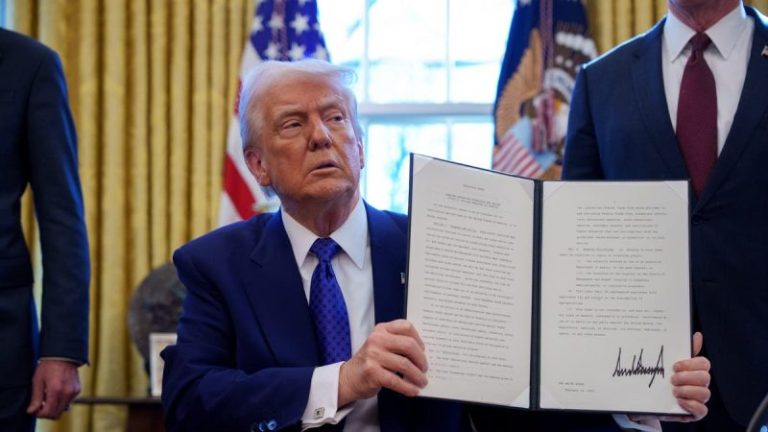
President Donald Trump is turning his attention to the U.S. shipbuilding industry, which is leagues behind its near-peer competitor China, and recently signed an executive order designed to reinvigorate it. 

Trump’s April 10 order instructs agencies to develop a Maritime Action Plan and orders the U.S. trade representative to compile a list of recommendations to address China’s ‘anticompetitive actions within the shipbuilding industry,’ among other things.

Additionally, the executive order instructs a series of assessments regarding how the government could bolster financial support through the Defense Production Act, the Department of Defense Office of Strategic Capital, a new Maritime Security Trust Fund, investment from shipbuilders from allied countries and other grant programs. 

But simply throwing money at the shipbuilding industry won’t solve the problem, according to Bryan Clark, director of the Hudson Institute think tank’s Center for Defense Concepts and Technology.

‘It is unlikely that just putting more money into U.S. shipbuilding – even with foreign technical assistance – will make U.S. commercial shipbuilders competitive with experienced and highly-subsidized shipyards in China, Korea, or Japan,’ Clark said in a Monday email to Fox News Digital. ‘In the near to mid-term, the government will need to also drive higher demand for U.S.-built ships.’


Clark also said the executive orders appear to complement the SHIPS for America Act, a series of legislative measures introduced in December 2024 in both the House and Senate aimed at fostering growth within the U.S. shipbuilding industry and strengthening the U.S. Merchant Marine fleet that is capable of transporting military materials during times of conflict. 

Specifically, the SHIPS Act includes provisions establishing a Strategic Commercial Fleet Program, which would seek to develop merchant vessels that could operate internationally, but are American-built, owned and operated. The legislation would also seek to beef up the U.S.-flag international fleet by roughly 250 ships in 10 years. 

‘If we implement the EO and the SHIPS Act together, the government would create incentives to flag and build ships in the U.S. and provide capital to the shipbuilding industry so it could meet the increased demand with greater efficiency and lower costs,’ Clark said. ‘This will not result in the U.S. surpassing China, Korea or Japan as shipbuilders, but it would provide the U.S. more resilience.’

The U.S. is drastically behind near-peer competitors like China in shipbuilding. China is responsible for more than 50% of global shipbuilding, according to the Center for Strategic and International Studies, compared to just 0.1% from the U.S. 

However, Trump has indicated interest in working with other nations on shipbuilding, and suggested working with Congress to pass legislation authorizing the purchase of ships from foreign countries when signing the orders. Specifics were not provided. 


But doing so could upend a century-old law known as the Jones Act – a controversial law fundamental to the current U.S. shipbuilding environment that requires that only U.S. ships carry cargo between U.S. ports and stipulates that at least 75% of the crew members are American citizens. It also requires that these ships are built in the U.S. and that U.S. citizens own them.

Proponents of the Jones Act assert it is key to national security and prevents foreigners from gaining entry to the U.S. But experts claim the law has significantly hampered U.S. shipbuilding, and is undercutting competition while keeping shipbuilding costs high. 

Efforts to repeal the legislation have failed amid bipartisan support in Congress. But some experts claim eradicating the law is a first step in changing the shipbuilding industry in the U.S. 

‘Anyone who is serious about reviving the shipping industry should basically start by getting rid of the Jones Act,’ Veronique de Rugy, a senior research fellow at the Mercatus Center at George Mason University, told Fox News Digital Thursday. ‘It’s not everything, but it’s a start.’ 

Colin Grabow, an associate director at the Cato Institute’s Center for Trade Policy Studies, said shipbuilding issues in the U.S. are multifaceted, but the Jones Act is a major part of the problem. Still, he doubts efforts to repeal it will prove successful. 

‘I think the bar has been set so low, it is hard not to think that, absent the Jones Act, that we’d be doing any worse,’ Grabow said. ‘And in fact, I think we’d do better. And why do I think we’d do better? It’s because… fundamentally, I think an industry that doesn’t have to compete will become uncompetitive. I think it’s just kind of axiomatic.’ 

This post appeared first on FOX NEWS

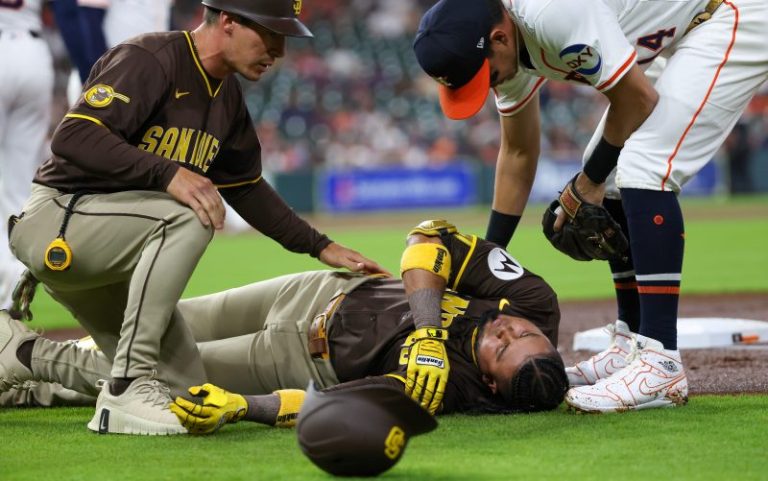
San Diego Padres designated hitter Luis Arráez was taken by stretcher from the Daikin Park field in Houston and to an area hospital after a collision at first base with the Astros’ Mauricio Dubón in the first inning of Sunday night’s game.

Arráez later returned to the stadium after the Padres had defeated the Astros, 3-2.

Arráez, the second batter of the game, hit a ground ball wide of first base, where Christian Walker fielded it and tossed to Dubón covering the bag. Dubón’s footwork led him into the middle of the base and as Arráez hit the bag at full speed, his neck struck Dubón’s upper body and forearm.

Arráez, a three-time batting champion, immediately fell to the ground without breaking his fall.

The game was delayed for 11 minutes as trainers and medical staff examined Arráez, and his upper body was stabilized as they moved him from the ground to a cart that transported him off the playing surface.

The Padres announced Arráez was taken by ambulance to Houston Methodist Hospital, where he was alert and responsive, and had movement in his extremities.

Arráez, 28, was batting .287 entering Sunday with three home runs, nearly equaling his 2024 output of four. He was acquired by the Padres in trade from the Miami Marlins last May and won the AL batting title in 2022 with the Minnesota Twins before winning the NL title the past two seasons with the Marlins and Padres.

All the players and the plays: Sign up for USA TODAY’s Sports newsletter.

(This story was updated to add new information.)

This post appeared first on USA TODAY