Archive

2025

Browsing

Oh, he had plenty of advance billing, as a two-way prep superstar drafted second overall in 2017, one year before Shohei Ohtani ever graced a major league field. Yet even as he always possessed the sport’s most eye-opening currency – a 100-mph fastball – fate seemed to intercede.

Just one pro season into ditching shortstop and embracing pitching full time, he required Tommy John surgery, deleting him from competitive pitching for the 2019 and 2020 seasons.

And even as he got his professional sea legs, the command that comes with a polished product eluded him, resulting in too many home run balls as Ohtani and the indomitable Paul Skenes dominated the discourse.

Yet the non-linear path to fulfilling potential isn’t just for longshot prospects or slumping hitters. Sometimes the can’t-miss flamethrower, the bluest chip in the stack, needs a minute to get there.

“But you know, there’s beauty in that,” Greene tells USA TODAY Sports, “in being able to figure out ways to become a better player and a better person and be able to grow. To add to your development and process.

“I was able to do that. I was able to come back better in a lot of different ways. And it’s made me better as a person, too.”

And it’s clear the Greene that the Reds and baseball fans dreamed on has arrived.

In an era of unprecedented velocity, Greene checks pitching boxes that so many throwers cannot: He throws harder and longer than anyone and, since the beginning of last season, has dominated opposing hitters as much as any starting pitcher.

He’s held opposing batters to a league-low .179 batting average since 2024, with only Skenes (.541) and reigning AL Cy Young winner Tarik Skubal (.566) producing a lower OPS against than Greene’s .578. Greene leads the NL in WHIP this season, at 0.78, and joins an eye-popping quintet of All-Stars atop the leaderboard over the past two seasons: Logan Gilbert, Skenes, Skubal, Zack Wheeler and Greene.

Yes, he belongs in that conversation. But it’s also the manner in which he dominates that gives pause.

Keeping it 100

In Greene’s second start of the season at Texas, he began an 18 ⅔-inning scoreless streak that included several career-high water marks.

An April 7 start in San Francisco marked the first time in his career he pitched into the ninth inning, falling just one out shy of completing a four-hit shutout.

It wasn’t for lack of stuff: In the ninth inning, on his 88th pitch, Greene’s fastball was clocked at 100.7 mph. In his previous start, 56 of his 59 four-seam fastballs were at least 99 mph.

“A lot of guys can touch 100. Hunter throws 100,” says Reds closer Emilio Pagan. “There’s a lot of guys that can throw 98, 99 and hit 100 a couple times in a game. If you look up at Hunter, that game in San Fran, he was 101 in the ninth. That’s ridiculous. He’s kind of on another level with that.

“Obviously Skenes is a name that pops up. I feel like Hunter’s fastball is even more consistent than his. No disrespect to Skenes. But it’s fun to watch, man.”

Like any flamethrower, Greene’s ascendance truly began when he combined power with pitchability. He gave up a combined 53 home runs over 237 innings in his first two seasons, yet cut that number to 12 over 150 1/3 last year.

He’s taken another big step forward so far in 2025. His walk rate ranged from 9% to 9.6% his first three seasons but he’s cut that nearly in half, to 5.1%, and has a 35-6 strikeout-walk ratio through five starts.

Those numbers start with conviction.

“Being able to trust in yourself, believe in yourself, be aggressive in the zone,” says Greene. “And just play the odds. Play the odds of being able to come out on top in an at-bat and just believe in yourself.

“Being able to fill up the zone, you’ll find yourself in a deeper part of the game by getting ahead, getting quick outs.”

Indeed, Greene has completed at least seven innings in three of his five starts, coming off a 2024 in which he did so in seven of his 26 outings. Possessing a fastball ranked in the 99th percentile by Statcast is both a gift and an asset to be nurtured.

The lengthier starts add significant value for the Reds. For Greene, it remains a work in progress, a tool both to elicit chase from opposing hitters and use to either set up his burgeoning split-finger pitch or vice versa.

“It comes with time,” he says of harnessing heat. “It was a process for me. I’m still working on it. Some guys just throw it. But being able to know how to use it in certain counts, to certain hitters, and moving the ball around – I feel like that’s a process. Being able to figure that out and find that and use it for you .

“Taking mental notes. The biggest thing is being able to make adjustments.”

The process never ends. Greene’s scoreless streak did not last another pitch on Saturday, when he gave up consecutive homers to Baltimore’s Cedric Mullins and Gunnar Henderson to start the first inning.

He needed 77 pitches to complete three innings, and manager Terry Francona surmised that was enough for this day. Greene’s takeaway?

“That this game is full of failure,” he says. “I wouldn’t be in this position I’m in if I weren’t able to do that.”

‘A real joy to watch him’

That mentality distills the sense of security Greene possesses. He has financial security in the form of a six-year, $53 million deal signed when he was coming off a 5-13, 4.44 ERA campaign in his first full season.

With each dominant start, the pact looks a little more team-friendly, yet Greene will hit the free agent market no later than 30, plenty of time to approach the $40 million per annum pitchers of that age and pedigree have attained.

It’s just as likely he hasn’t neared his performance apex, either.

“Shoot, I hope we haven’t seen it yet,” says Francona. “With good young players, they get to a certain point where they start to get better. They learn there’s another gear. They’re not just trying to survive. They’re trying to thrive.

“I think he saw that he had another gear and came into shape ready to go. He’s got a split-finger now that I think is becoming a weapon. He holds his velocity because he’s in good shape.”

Longevity is important to Greene. He understands the significance that comes with being the preeminent Black pitcher in the game, and the symbolic heft of joining the Black Aces, the informal fraternity of pitchers who have won 20 games in a season.

In this era of bullpen specialization, wins are harder to come by, but Greene keeps that goal close at hand.

 “Being able to be in position to where it’s a goal of mine, and also obtainable, is special,” he says. “Hopefully I’m able to obtain that one day.”

That kind of sums up Greene’s station in life: He has an All-Star appearance and a long-term contract under his belt yet doesn’t turn 26 until August, young enough still to dream on the future.

It’s a sweet spot, to be sure – the gifted athlete now able to harness their gift, not at all worried about being the next big thing but embracing the now, with the promise of more very much in front of them.

“You could tell he was not only confident, but super-comfortable with who he is on the mound,” says Pagan, in his second season with the Reds. “That’s a really dangerous combination for an athlete, because he knows he’s good, but he’s also very aware of who he needs to be in order to be the best version of him on any given day.

“It’s been a real joy to watch him, man. Obviously, I knew about his natural ability when I signed here, but to see him grow as fast as he has since I’ve been here, into being a guy who was supposed to be really good and who showed flashes of it to where, when he takes the mound, I feel like he’s going to go nine every time. It just looks like that.

“I know he hasn’t done that yet. But they’re coming, for sure.”

The USA TODAY app gets you to the heart of the news — fastDownload for award-winning coverage, crosswords, audio storytelling, the eNewspaper and more.
This post appeared first on USA TODAY

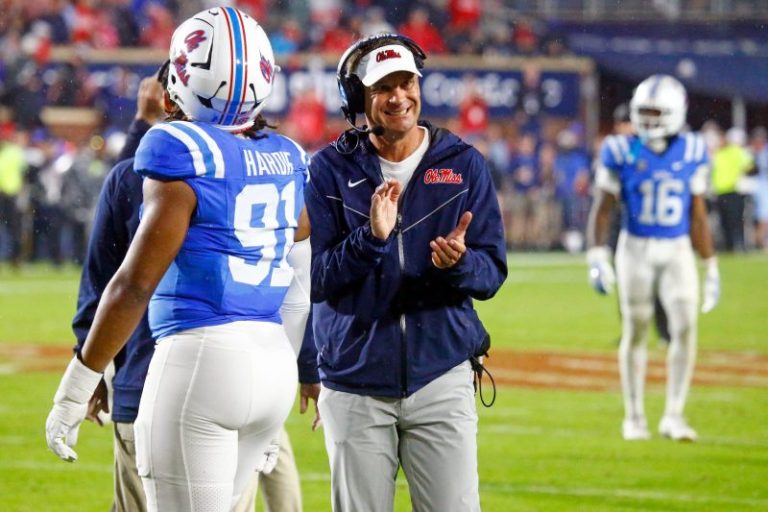
Lane Kiffin once craved a statue. Now, the Ole Miss football coach quests for peace and emotional sobriety. But, can his career also reach new heights? ‘What’s to say you can’t do both,’ he says.
Lane Kiffin’s dad was his hero. Monte died last July. His legacy inspires Lane, but his passing left a void.
Lane Kiffin describes 2024 as a harsh year for him, but having so much of his family nearby helps him progress.

Kiffin has been thinking since we last spoke 12 days previously. Among the topics on his mind: rocking chairs. They’re a symbol for the evolution he sees in his life.

In Kiffin’s five years coaching Mississippi football, he’s changed his views on these quintessential furniture pieces that populate Southern verandas and living rooms. When Kiffin arrived in charming and cozy Oxford, he considered the idea of rocking in place maddening.

Like, why would someone sit and do nothing but rock back and forth?

“That seems miserable and a waste of time,” Kiffin remembers thinking, “sitting in a rocking chair and just having a conversation with somebody and watching people drive by.”

Kiffin, 49, spent much of his career speeding toward what’s next. Next opponent, next job, next big move.

Kiffin says his years coaching Ole Miss have changed him – that he needed this place more than it needed him, that he needed to slow down, recalibrate, find some peace and relish the moment.

He credits former girlfriend Sally Rychlak, with whom he enjoyed a four-year relationship that ended last fall, for teaching him the ways of Mississippi and how to be more caring and engaged with fans he encountered. The outpouring of remembrances after his dad, Monte, died last summer showed Kiffin that a man is remembered more for the lives he affects than his win-loss record.

Kiffin absorbs all of this as he continues the evolution of “becoming the higher version of myself.”

Kiffin is a former hotshot wunderkind, turned Tennessee renegade, turned fired coach in need of a Nick Saban life raft.  

At Ole Miss, he found sobriety, improved his diet and prioritized his health and wellness. He also attained a professional peak, notching 21 wins the past two seasons after he eschewed Auburn and stayed at Ole Miss.

Oh, and he got some rocking chairs, too. Two rockers reside on his Ole Miss office balcony. Kiffin and his son, Knox, rocked for a spell in the sunshine on a recent Friday.

“People slow down, and they have an appreciation for what they have, instead of always chasing,” Kiffin says. “That has really hit me of where you can find some peace. You can find some rhythm and some peace.”

Peace, though, does not always exist uninterrupted.

Lane Kiffin’s highs of 2023, followed by painful 2024

Kiffin counts 2023 “one of the best years in my life,” personally and professionally. He won a career-high 11 games, and Ole Miss attained its best season since 1962. His family life was going strong, and he was in “a wonderful relationship” with Rychlak.

As the calendar rolled to 2024, the hype for Ole Miss cooked to a boil after Kiffin meticulously assembled his best roster. He had a proven quarterback, skilled wide receivers and the best defense the Rebels had seen in many years.

Could Ole Miss qualify for the College Football Playoff? Contend for a national championship, even? All of it was on the table – until it wasn’t.

Throughout a painful year, Kiffin experienced personal loss, plus one too many football defeats to qualify for the playoff.

“This last (year),” Kiffin said, “was really maybe the worst.”

In July, Kiffin’s dad – his hero – died. In September, he and Rychlak decided to end their relationship. In November, Ole Miss suffered a third loss by one score, a result that revoked the Rebels’ playoff spot.

“They say things come in threes,” Kiffin mused.

By missing the playoff, Kiffin said, he felt like he “let down the whole city.”

I asked Kiffin how long it took him to get over last season. He corrected me.

“I wouldn’t say I fully am (over it),” Kiffin said.

Kiffin views life as a journey through various seasons. He describes 2024 as a harsh, bitter winter.

Seasons come and go. A temperate spring can follow a ruthless winter.

“I remind myself it’ll be OK,” Kiffin said. “It will pass.”

Once upon a time, Kiffin desired a statue. Something like the ones outside Bryant-Denny Stadium that honor Alabama’s five coaches who have won national championships.

“I wouldn’t have said that publicly,” Kiffin said, “but it was like, ‘I want to win enough where they build a statue of you. … That means you made it in life.’

“Now, I just want to be a really good neighbor, dad, brother, co-worker, boss. I look at life completely different.”

That begs the question, can this version of Kiffin – the dad who dances in TikTok videos with his daughters, the mentoring boss, the coach who plays pickleball with his players, the guy who tells himself to slow down and embrace the moment and sit in rocking chairs – accelerate his career to unattained heights?

“You know,” Kiffin said, “what’s to say you can’t do both?”

Anyway, he says there’s no turning back. He’s come too far.

Monte Kiffin’s legacy inspires Lane Kiffin

Kiffin tells good stories, and he’s got some doozies about his dad, but the words at first refused to come as he stood at the mic last July. Kiffin exhaled a deep breath, tapped his fingers on the lectern, cleared his throat, bowed his head and wiped each eye. After a minute, he collected himself, ready to speak about his hero.

Kiffin started his eulogy by rattling off the 16 moves Monte made, many with the family in tow, throughout a legendary career coaching in college and the NFL.

“I remember thinking, why are we moving again?” Kiffin said at his dad’s celebration of life. “Why do I have to change friends again, and my mom has to pack?”

After Monte died, Kiffin received calls, texts and letters from people tucked into every corner who wanted to share stories about his dad’s positive effect on their life. He heard from a guy who met his dad at a gas station. Monte chatted with the fella like he’d known him for years. One of Kiffin’s former Little League teammates – Monte coached the team – wrote that Monte was “a special kind of person” who “brought out the best of people,” including the Little League player who struggled to put bat to ball.

Kiffin arrived at a realization.

“We moved,” Kiffin said at the celebration of life, “so that this man could impact people not in one town or one city, but 16 different ones.”

Kiffin subscribes to the belief that you must choose between the pain of discipline or the pain of regret. Monte preached and practiced discipline. As part of his routine, he’d buy a gas station doughnut, take one bite, and throw the rest away – his way of showing discipline, instead of experiencing the caloric regret of eating the full doughnut.

Kiffin lost his dad and a valued co-worker when Monte died. In 11 of Kiffin’s first 12 seasons as a head coach, his dad worked as either an assistant coach, or, later, in an off-field analyst or player personnel role.

“All of a sudden, (before the 2024) season, he’s just gone,” Kiffin said, “and there’s his office that I walk by.”

That office remains filled with Monte’s things.

Monte Kiffin saw son attain ‘emotional sobriety’

As Texas coach Steve Sarkisian put it, Monte “cared for all of those that nobody cared about.”

“That was him,” Kiffin agrees.

Is Kiffin that man? Kiffin is smart and witty and sarcastic. In a profession filled with boring people, he’s a breath of something interesting. But, he’d struggle in a Mr. Congeniality contest. He can be aloof.

Kiffin admits he can’t be his dad, but, he can aspire to be the best version of himself – and he’s grateful his dad lived long enough to see him succeed in those aspirations and achieve “emotional sobriety,” as Kiffin puts it.

“If I wouldn’t have changed, he wouldn’t have seen that higher version of myself,” Kiffin said. “He would have seen me doing well (as a coach), but not being the best that I could be, the best version, and he would say that often. He would say, … ‘I’m so proud of you.’”

Monte, his son says, would appreciate seeing the family together and thriving.

Kiffin’s brother, Chris, is a defensive analyst on his staff. Their backyards butt against each other, creating a space for cousins to play. Landry, Kiffin’s oldest daughter, is an Ole Miss sophomore. Kiffin credits Landry’s urging him to stay at Ole Miss as a reason why he’s coaching the Rebels and not Auburn. Middle child Presley will play volleyball for Southern California. Kiffin’s son, Knox, lived with his mom, Layla, in California, but Knox and Layla will move to Oxford this summer.

Kiffin and Layla were once college football’s “it” couple. They divorced in 2016. Tabloids have speculated about Kiffin and Layla possibly being back together. Kiffin shares these tabloid articles on social media, but, when asked about this subject, Kiffin declines to elaborate. He’ll say plenty, though, about his family life at Ole Miss.

“That helps me, that they’re here, that my family is here now,” Kiffin said, “and then Chris being here with his four kids. That helps a lot.”

Lane Kiffin on growing his Ole Miss appreciation

If you fed Kiffin truth serum several years ago, he probably wouldn’t have spoken so fondly about being at Ole Miss. He’d coached in the NFL and at Tennessee. He’d worked for Saban. He’d lived on each coast. Mississippi stood in contrast.

“At first I was like, man, everybody is slow,” Kiffin said. “It’s like, can we just get through this conversation? Get to the point? And, I was very frustrated.”

Rychlak helped Kiffin see the light. Maybe, the problem wasn’t them.

“She said, ‘You’re looking at this all wrong.’ Why don’t you look at this as, ‘That’s a little thing for you, and a big thing for them when you stop and take some time with them?’” Kiffin said.

She told him, is it so bad to coach where fans care more about college football than they do in Los Angeles or Boca Raton? Also, who says big cities are right about the pace at which life should operate?

The penny dropped for Kiffin.

“They are slowing down,” Kiffin said, “because they are present in their relationships … versus everybody going so fast, moving around.”

Kiffin’s success is undeniable. He’s Mississippi’s best coach since Johnny Vaught. But, has he hit his ceiling there?

“I would say: Maybe,” Kiffin said.

If this answer surprises you, consider the source. Kiffin prides himself in avoiding coach-speak. He’s not saying he’s at his ceiling. He’s not saying he’s not. He’s saying he doesn’t know.

The Rebels went 4-0 in one-score games in 2023. Last year, they lost one-score games to LSU, Kentucky and Florida by 13 combined points.

Kiffin’s latest roster seems built for another winning season, but the talent doesn’t appear to match what he had last season. Maybe.    

Now, Kiffin wants to tell me the parable of the Chinese farmer. The gist is this: The farmer keeps answering “maybe” when told about a series of circumstances that most people would judge to be definitively good or bad. The moral of the story is to reserve judgment on whether something is good or bad. Time will tell. Let it play out.

That parable would be well told from a rocking chair, while the storyteller takes his time with the tale and enjoys some peace.

Blake Toppmeyer is the USA TODAY Network’s national college football columnist. Email him at BToppmeyer@gannett.com. Follow him on X @btoppmeyer.

This post appeared first on USA TODAY

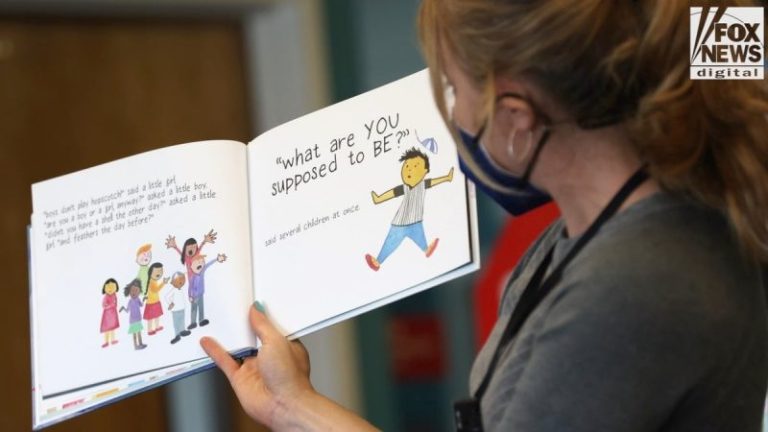
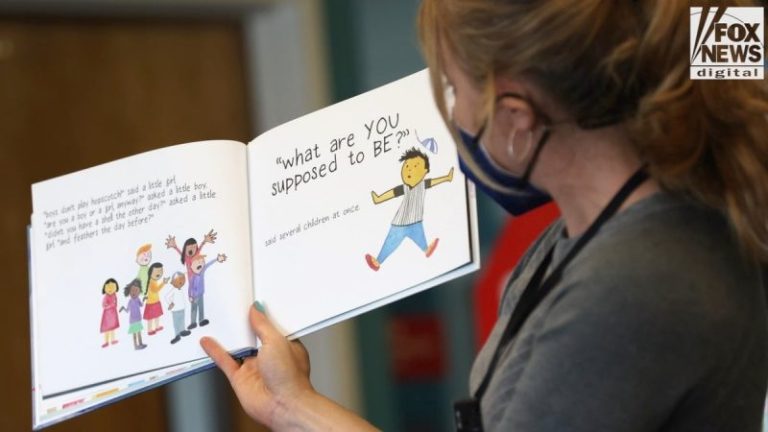
The Supreme Court heard arguments on Tuesday from religious parents who say young children can’t be expected to separate a teacher’s moral messages from their family’s beliefs – raising the question of whether exposure to LGBTQ-themed storybooks in elementary classrooms constitutes ‘coercion.’

Eric S. Baxter, the attorney representing Maryland parents in Mahmoud v. Taylor, told the justices that Montgomery County Public Schools violated the First Amendment by denying opt-out requests for books that ‘contradict their religious beliefs,’ even while allowing exemptions for other religious objections – such as books depicting the Muslim Prophet Muhammad.

‘There’s no basis for denying opt-outs for religious reasons,’ Baxter said during oral arguments. ‘Parents, not school boards, should have the final say on such religious matters.’

Justice Clarence Thomas asked Baxter about whether children were merely ‘exposed’ to the books or actively instructed by them. 

‘Are the books just there and no more, or are they actually being taught out of the books?’ he asked.

Baxter said teachers were required to use the materials in class. ‘When the books were first introduced in August of 2022, the board suggested they be used five times before the end of the year. One of the schools, Sherwood School, in June for Pride Month said that they were going to read one book each day.’

Parents, supported by religious freedom organizations, argue that this policy infringes upon their First Amendment rights by compelling their children to engage in instruction that contradicts their religious beliefs. The Fourth Circuit Court, a federal appeals court, ruled last year that there was no violation of religious exercise rights, stating that the policy did not force parents to change their religious beliefs or conduct and that parents could still teach their children outside of school.

Justice Sonia Sotomayor asked Baxter whether exposure to same-sex relationships in children’s books could be considered religious coercion. 

‘Is looking at two men getting married… is that the religious objection?’ she asked, referencing the book, ‘Uncle Bobby’s Wedding.’ ‘The most they’re doing is holding hands.’

Baxter maintained that it depends on the family’s faith. ‘Our parents would object to that,’ he said. ‘Their faith teaches… they shouldn’t be exposed to information about sex during their years of innocence without being accompanied by moral principles.’

Justice Samuel Alito inquired about the developmental capacity of young children as young as 4 to question classroom teachings and moral instruction.

‘Would you agree that there comes a point when a student is able to make that distinction?’ he asked. ‘That my teacher… isn’t necessarily going to be correct on everything. It is possible for me to disagree with him or her on certain subjects?’

Baxter agreed.

‘That’s right,’ he said. ‘And many of our clients’ objections would be diminished as their children got older.’

But Baxter stood strong on the point that age matters, especially in this case. He argued even Montgomery County school officials had acknowledged some books were not age-appropriate and criticized their attitude toward religious perspectives.

‘In a situation where Montgomery County’s own principals objected that these books were inappropriate for the age, they were dismissive of religion and shaming toward children who disagree,’ Baxter said. ‘The board itself withdrew two of the books for what it said were content concerns, because it finally agreed that what parents and petitioners – and its own principals – are saying was accurate.’

Mahmoud v. Taylor is one of three major religious cases the Supreme Court has on the docket for this year.  

Earlier this month, the high court heard a case brought by a Wisconsin-based Catholic charity group’s bid for tax relief, which could alter the current eligibility requirements for religious tax exemptions. 

At issue in that case is whether the Wisconsin branch of Catholic Charities, a social services organization affiliated with Catholic dioceses across the country, can successfully contest the state’s high court determination that it is ineligible for a religious tax exemption because it is not ‘operated primarily for religious purposes.’

The third case is about whether a Catholic online school can become the first religious charter school in the U.S. 

This post appeared first on FOX NEWS

Iran has carried out 1,051 state executions since President Masoud Pezeshkian took office on July 8, 2024 – a surge that security experts say the U.S. must weigh as it resumes nuclear negotiations with Tehran.

The figure, reported to Fox News Digital by the National Council of Resistance of Iran (NCRI), represents a more than 20% increase from the number of Iranians killed in 2023, which saw 853 Iranians executed by the regime. 

In his race for the presidency, Pezeshkian aligned himself with moderates and reformists angry with the regime following the 2022 death of Mahsa Amini and the subsequent protests.

In a 2024 televised debate just days before he won the election in a record-low turnout, he reportedly said, ‘We are losing our backing in the society, because of our behavior, high prices, our treatment of girls and because we censor the internet.’

‘People are discontent with us because of our behavior,’ he added, prompting hope that Pezeshkian – who has also expressed a willingness to engage with the U.S. in nuclear negotiations – might bring some reform Iranians had long pushed for from the oppressive regime. 

But executions targeting those arrested for drug-related offenses, dissents and those involved in the 2022 protests have only increased – including the increased killings of women and those who were minors at the time of their alleged offense.

‘Such levels of savagery and brutality reflect the deadly deadlock in which the ruling religious fascism in Iran is trapped,’ the NCRI said in a statement on Monday. ‘[Supreme Leader of Iran Ali] Khamenei is desperately trying to prevent a nationwide uprising and the inevitable overthrow of his regime through executions and killings.’

Amnesty International reported earlier this month that girls as young as 9 years old can be sentenced to execution, while for boys it starts at age 15. 

‘At least 73 young offenders were executed between 2005 and 2015. And the authorities show no sign of stopping this horrific practice,’ the organization added, noting that the U.N. reports there are at least 160 people facing death row for crimes they committed while under the age of 18, though it also notes that that number is likely a low representation of the actual figures. 

The human rights atrocities come as the U.S. is looking to secure a nuclear deal with Tehran, and officials are calling on the international community to consider Iran’s record of abuse in its negotiations with the regime.

Maryam Rajavi, president-elect of the NCRI, has ‘urged the international community to condition any dealings with the regime on the cessation of torture and executions, refer Iran’s human rights violations file to the U.N. Security Council, and, as requested by the U.N. special rapporteur in the July 2024 report, bring Ali Khamenei and other regime leaders to justice for crimes against humanity and genocide.’

‘After suffering irreparable setbacks in the region and facing the growing threat of an uprising and overthrow, the regime has brutally accelerated executions and massacres,’ she said in a statement to Fox News Digital. 

She has also called on the Iranian people, ‘especially the youth,’ to protest the executions by joining the ‘No to Execution’ movement.

However, students across Iran face a real threat in opposing the regime, as Pezeshkian and Iran’s minister of education, Alireza Kazemi, have reportedly dispatched State Security Forces to tamp down on what Khamenei has deemed ‘cultural infiltration, the enemy’s lifestyle, and hostile temptations’ targeting Iran’s youth. 

This post appeared first on FOX NEWS

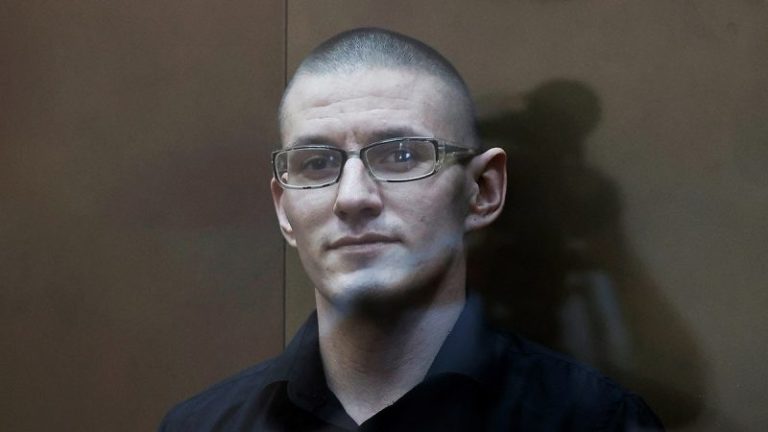
A Russian court reportedly slashed the sentence of an American who has been held overseas following a drug trafficking conviction. 

The sentence of Robert Woodland was reduced from 12.5 years to 9.5 years on Tuesday, his attorney, Stanislav Kshevitsky, told Reuters. 

It’s unclear why Woodland’s sentence was shortened. The State Department did not immediately respond to a request for comment from Fox News Digital. 

Woodland was found guilty last July of attempting to sell drugs after he was arrested and found to be in possession of 50 grams of mephedrone, Reuters reported, citing prosecutors. 

Woodland, born in Russia in 1991, was adopted by American parents at the age of 2. He returned to Russia at the age of 26 in order to meet his birth mother, he claimed. 

At the time of Woodland’s arrest in January 2024, the U.S. State Department stated it ‘has no greater priority than the safety and security of U.S. citizens overseas.’

Kshevitsky said Woodland has partially admitted guilt, according to Reuters. 

Woodland remains held in Russia despite a number of recent prisoner releases during the Trump administration. 

Russian-American ballerina Ksenia Karelina, who was wrongfully detained in Russia for more than a year, was released earlier this month as part of a prisoner swap.

Karelina was sentenced to 12 years in a Russian penal colony after pleading guilty to treason for donating $51.80 to a Ukrainian charity in early 2024. 

In February, Trump brought American history teacher Marc Fogel, who had been detained in Russia since 2021, back to the U.S. 

Fox News’ Jasmine Baehr, Elizabeth Pritchett and Alex Hogan contributed to this report. 

This post appeared first on FOX NEWS

The House GOP’s elections arm is offering to foot the bill for any future Democratic lawmakers’ trips to El Salvador after multiple progressive lawmakers traveled there in protest of the Trump administration’s deportation policies.

The National Republican Congressional Committee (NRCC) made the public offering on Monday – but any takers have to provide real-time video evidence of the visit.

‘If out-of-touch House Democrats are so desperate to cozy up to violent gang members, the least they can do is let Americans watch the show,’ NRCC spokesman Mike Marinella said. 

‘We’ll pay for the plane tickets, they just can’t forget to smile for the camera while they sell out their constituents.’

Progressive Sen. Chris Van Hollen, D-Md., was in El Salvador last week, where he met with Kilmar Abrego Garcia, an illegal immigrant married to an American citizen. The administration says Abrego Garcia is an MS-13 gang member with a violent history.

Democrats, in contrast, have painted him as a Maryland father and husband wrongfully deported under the Trump administration’s sweeping immigration plans. 

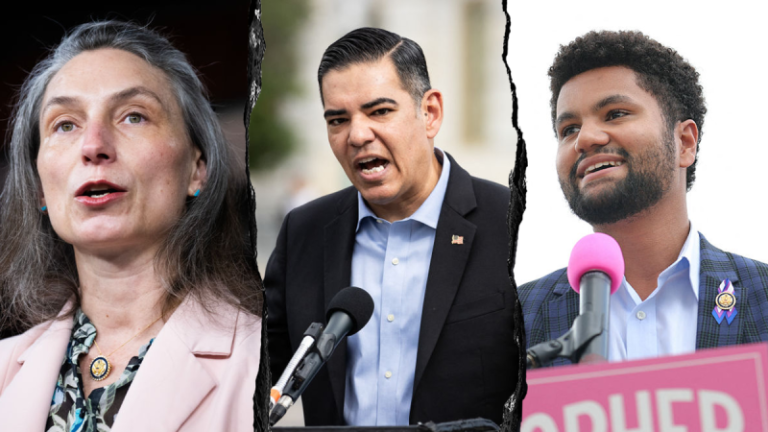
Four House Democrats – Reps. Maxwell Frost, D-Fla., Robert Garcia, D-Calif., Yassamin Ansari, D-Ariz., and Maxine Dexter, D-Ore. – are currently in El Salvador with Abrego Garcia’s family lawyer in an effort to secure his release. 

Frost told Fox News host Will Cain on Monday that they had not been able to meet with him.

In their press release announcing the trip, the group said it was not funded by taxpayer dollars, though it did not say how it was funded.

It comes amid President Donald Trump’s standoff with the courts over his administration’s deportation of suspected Tren de Aragua and MS-13 gang members to El Salvador.

Democrats and human rights groups argue that the White House is denying due process rights to deported individuals, while supporters say the illegal immigrants’ hearings and deportation orders are sufficient evidence of due process.

The Supreme Court upheld a lower court’s decision earlier this month that ordered the Trump administration to arrange Abrego Garcia’s return to the U.S. The court ordered the U.S. ‘to ‘facilitate’ Abrego Garcia’s release from custody in El Salvador and to ensure that his case is handled as it would have been had he not been improperly sent to El Salvador.’

Republicans, meanwhile, are eager to tie Democrats to suspected criminals being deported to an El Salvador prison – particularly after border security and immigration proved potent issues for the GOP in the 2024 elections.

The NRCC’s Senate counterpart, the National Republican Senatorial Committee (NRSC), released a video on X with a message to Democrats: ‘¡Bienvenidos a El Salvador Senate Dems! Democrats should feel free to make their trip to hang out with MS-13 gangbangers one-way.’

The 40-second video is a vacation-style clip advertising El Salvador as ‘the destination for Democrats seeking the thrill of bringing violent criminal illegal aliens back to America.’

‘Come witness Trump Derangement Syndrome in its purest form,’ the voiceover says. ‘So, what are you waiting for, Senate Democrats?’

This post appeared first on FOX NEWS

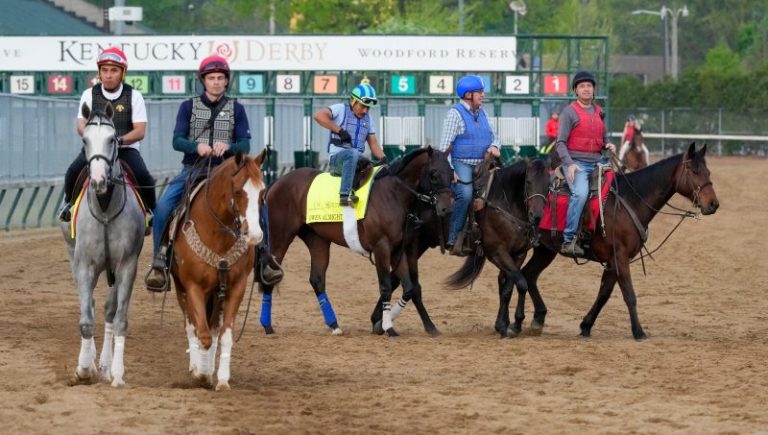
The top contenders for the 151st Kentucky Derby are awaiting the post-position draw Saturday, April 26 at Churchill Downs.

The Kentucky Derby features the top 20 point earners on the leaderboard. Japan and Europe-Middle East have their own ‘Road to the Kentucky Derby,’ which allows one horse from each region to secure a spot in the Run for the Roses.

Here are the top 5 Kentucky Derby contenders as of Monday, April 21:

Five contenders for 151st Kentucky Derby

Burnham Square

Owner: Whitham Thoroughbreds
Trainer: Ian Wilkes
Jockey: Brian Hernandez Jr.
Road to Derby points: 130
Prep race results: Blue Grass Stakes (1st), Holy Bull Stakes (1st) and Fountain of Youth Stakes (4th)
Career earnings: $977,755
Kentucky Derby odds, futures: 15-1

Sandman

Owners: D.J. Stable LLC, St. Elias Stable, West Point Thoroughbreds and CJ Stables
Trainer: Mark Casse
Jockey: Jose Ortiz
Road to Derby points: 129
Prep race results: Arkansas Derby (1st), Southwest Stakes (2nd), Rebel Stakes (3rd), 2024 Street Sense Stakes (3rd) and Iroquois Stakes (5th)
Career earnings: $1,254,595
Kentucky Derby odds, futures: 8-1

Journalism

Owners: Bridlewood Farm, Don Alberto Stable, Eclipse Thoroughbred Partners, Elayne Stables 5 LLC, Robert LaPenta
Trainer: Michael McCarthy
Jockey: Umberto Rispoli
Road to Derby points: 122.5
Prep race results: Santa Anita Derby (1st), San Felipe Stakes (1st), 2024 Los Alamitos Futurity (1st)
Career earnings: $638,880
Kentucky Derby odds, futures: 3-1

Rodriguez

Owners: SF Racing, Starlight Racing, Madaket Stables, Stonestreet Stables, Dianne Bashor, Determined Stables, Robert Masterson, Tom Ryan, Waves Edge Capital and Catherine Donovan
Trainer: Bob Baffert
Jockey: Mike Smith
Road to Derby points: 121.25
Prep race results: Wood Memorial Stakes (1st), Robert B. Lewis Stakes (2nd) and San Felipe Stakes (3rd)
Career earnings: $522,800
Kentucky Derby odds, futures: 10-1

Tiztastic

Owner: Winchell Thoroughbreds LLC, Mrs. John (Susan) Magnier, Michael Tabor and Derrick Smith
Trainer: Steve Asmussen
Jockey: Joel Rosario
Road to Derby points: 119
Prep race results: Louisiana Derby (1st), 2024 Street Sense Stakes (2nd), Southwest Stakes (3rd), 2024 Kentucky Jockey Club Stakes (3rd) and Rebel Stakes (5th)
Career earnings: $1,549,800
Kentucky Derby odds, futures: 20-1

How to watch 2025 Kentucky Derby

Last May, NBC Sports announced a partnership with Churchill Downs to present the Kentucky Derby on NBC and Peacock through 2032.

The extension includes multiplatform rights to the Kentucky Derby, Kentucky Oaks and Derby and Oaks Day programming, which will be presented on NBC, Peacock, USA Network and additional NBCU platforms.

You can stream the 2025 Kentucky Derby on Fubo and Peacock.

What time is the Kentucky Derby?

Post time for the 151st Kentucky Derby is set for 6:57 p.m. on Saturday, May 3.  

Reach sports reporter Prince James Story atpstory@gannett.com and follow him on X at @PrinceJStory.

Our team of savvy editors independently handpicks all recommendations. If you make a purchase through our links, we may earn a commission. Prices were accurate at the time of publication but may change.

Gambling involves risk. Please only gamble with funds that you can comfortably afford to lose.  While we do our utmost to offer good advice and information we cannot be held responsible for any loss that may be incurred as a result of gambling.  We do our best to make sure all the information that we provide on this site is correct. However, from time to time mistakes will be made and we will not be held liable. Please check any stats or information if you are unsure how accurate they are. No guarantees are made with regards to results or financial gain. All forms of betting carry financial risk and it is up to the individual to make bets with or without the assistance of information provided on this site and we cannot be held responsible for any loss that may be incurred as a result of following the betting tips provided on this site.  Past performances do not guarantee success in the future and betting odds fluctuate from one minute to the next. The material contained on this site is intended to inform, entertain and educate the reader and in no way represents an inducement to gamble legally or illegally or any sort of professional advice.

Gannett may earn revenue from sports betting operators for audience referrals to betting services. Sports betting operators have no influence over nor are any such revenues in any way dependent on or linked to the newsrooms or news coverage. Terms apply, see operator site for Terms and Conditions. If you or someone you know has a gambling problem, help is available. Call the National Council on Problem Gambling 24/7 at 1-800-GAMBLER (NJ, OH), 1-800-522-4700 (CO), 1-800-BETS-OFF (IA), 1-800-9-WITH-IT (IN). Must be 21 or older to gamble. Sports betting and gambling are not legal in all locations. Be sure to comply with laws applicable where you reside. It is your sole responsibility to act in accordance with your local laws.

This post appeared first on USA TODAY

An Indiana lawmaker is celebrating an American bicycle company opening a new manufacturing plant in her district after President Donald Trump launched his aggressive tariff campaign against China.

Rep. Erin Houchin, R-Ind., told Fox News Digital that Guardian Bikes is starting with a new $19 million investment in Seymour, Indiana to expand their operations there – which she said will create new local jobs.

‘The number of job opportunities that are available, the investment right here in southern Indiana, that’s money that’s staying right here at home and not going outside the country. And certainly away from China,’ Houchin said in her first interview on the topic.

The Indiana Republican, now in her second term, said she first visited Guardian Bikes shortly after being elected to Congress. At the time, they had just 16 employees, she said.

‘At the time, they talked to us about their desire to become a 100% made in the USA bicycle factory,’ Houchin said. ‘Currently, over 97% of bicycles are made outside of the United States. Many are assembled in the United States, but their component parts mostly come from China.’

Guardian Bikes specifically relied on Chinese imports for 70% of its production, she said.

After Trump’s election in November 2024, however, she said ‘they have been slowly working toward being 100% made in the USA.’

‘They just announced $19 million in financing with JPMorgan Chase to launch the first large-scale bicycle frame manufacturing operation in the United States,’ Houchin said. ‘This has been made possible by President Trump’s trade policies…it’s just pretty incredible that we have a president right now that is focused so much…on creating a level playing field for American companies.’

Houchin said the company is aiming to increase its ‘mass market’ bicycles manufactured in the U.S. from 100,000 to over 1 million.

‘That’s just very, very exciting,’ she said.

Guardian Bikes also currently has locations in California and Pennsylvania, with two more expected in Texas and Georgia this year, according to the company’s website.

The site also touts the company’s plans to manufacture its bike frames in Indiana, and vows to be ‘rapidly’ moving toward being made entirely within the United States.

‘We brought Guardian Bikes production to the U.S., because we believe the future of manufacturing is local, fast, and data-driven. Indiana, and specifically Seymour, offers the perfect combination of workforce, infrastructure, and proximity to our customer base,’ Guardian Bikes CEO Brian Riley told Fox News Digital. ‘It’s not just about making bikes – it’s about building a new model for American manufacturing.’

It comes as critics of Trump’s sweeping tariff plans have accused him of upending the global economy.

Supporters of the plan, however, have hailed it as both a potent negotiating strategy and a long-needed solution to jobs moving overseas.

A cornerstone of Trump’s policy has been a 10% tariff on all imports to the U.S. Plans for additional reciprocal tariffs, which Trump announced earlier this month, were dropped against countries that have not retaliated against the U.S.

However, Trump has levied a massive 145% base tariff across all of Beijing’s exports in a bid to crack down on the U.S.’s growing reliance on Chinese manufacturing.

When reached for comment by Fox News Digital, White House spokesman Kush Desai told Fox News Digital, ‘Trillions in historic investment commitments from industry leaders – now including Guardian Bikes – since Election Day only reinforces what President Trump has been saying all along: if you make your product in America, you don’t have to worry about tariffs.’

This post appeared first on FOX NEWS

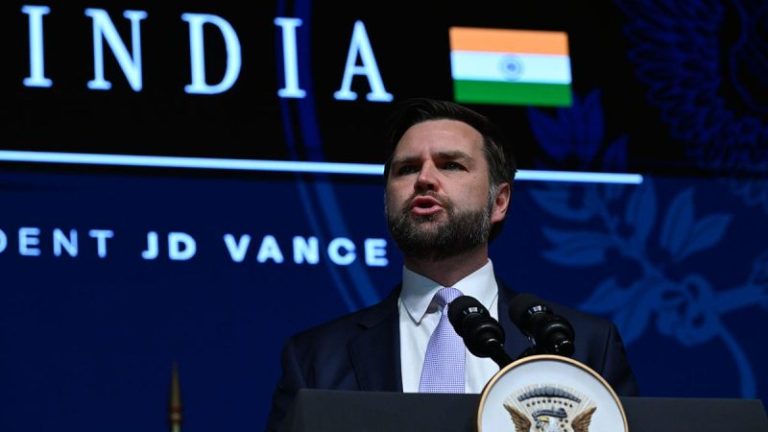
Vice President JD Vance touted progress made toward a U.S.-India trade deal on Tuesday, saying a partnership between the Trump administration and Indian Prime Minister Narendra Modi would ensure a 21st century that’s ‘prosperous and peaceful.’ 

Speaking in the northwestern Indian city of Jaipur, Vance also warned of ‘dire’ consequences in the Indo-Pacific and a ‘dark time’ for the world should the partnership between the U.S. and India fail. 

‘Critics have attacked my president, President Trump, for starting a trade war in an effort to bring back the jobs of the past, but nothing could be further from the truth,’ Vance said, referring to Trump’s aggressive tariff policies and commitment to revitalize U.S. manufacturing. ‘He seeks to rebalance global trade so that America, with friends like India, can build a future worth having for all of our people together.’ 

President Donald Trump and Modi announced in February that the U.S. and India aim to double bilateral trade to $500 billion by the end of the decade. 

‘Both of our governments are hard at work on a trade agreement built on shared priorities, like creating new jobs, building durable supply chains and achieving prosperity for our workers,’ Vance said on Tuesday. ‘In our meeting yesterday, Prime Minister Modi and I made very good progress on all of those points, and we’re especially excited to formally announce that America and India have officially finalized the terms of reference for the trade negotiations. I think this is a vital step toward realizing President Trump and Prime Minister Modi’s vision because it sets a roadmap toward a final deal between our nations. I believe there is much America and India can accomplish together.’ 

Vance noted that his trip to India was the first time he had visited the birthplace of the parents of his wife, Usha Vance. The vice president, the second lady and their three children visited Modi for dinner on Monday. 

In his speech Tuesday, Vance said his children have only built a rapport with two world leaders – Trump and Modi, who the second family first met in February at the AI Action Summit in Paris. 

‘Our kids just like him,’ Vance said, arguing that children are ‘brutally honest’ and typically good judges of character. ‘I just like Prime Minister Modi too. And I think it’s a great foundation for the future of our relationship.’ 

‘President Trump and I know that Prime Minister Modi is a tough negotiator. He drives a hard bargain. It’s one of the reasons why we respect him. And we don’t blame Prime Minister Modi for fighting for India’s industry,’ Vance said. ‘But we do blame American leaders of the past for failing to do the same for our workers. And we believe that we can fix that to the mutual benefit of both the United States and India.’ 

Vance appeared to reference China – though not directly – in addressing the high-stakes nature of trade negotiations between the U.S. and India. 

‘This audience knows better than most: neither Americans nor Indians are alone and looking to scale up their manufacturing capacity,’ Vance said. ‘The competition extends well beyond cheap consumer goods and into munitions, energy infrastructure and all sorts of other cutting-edge technologies. I believe that if our nations fail to keep pace, the consequences for the Indo-Pacific, but really the consequences for the entire world will be quite dire.’ 

‘We believe a stronger India means greater economic prosperity. But also greater stability across the Indo-Pacific, which is, of course, a shared goal for all of us in this room,’ the vice president continued. ‘I believe that if India and the United States work together successfully, we are going to see a 21st century that is prosperous and peaceful. But I also believe that if we fail to work together successfully, the 21st century could be a very dark time for all of humanity.’ 

In the past, Vance argued, Washington has approached Modi with an ‘attitude of preachiness or even one of condescension,’ using India ‘as a source of low-cost labor’ while criticizing the prime minister’s government. 

Vance said the Trump administration recognizes that’cheap, dependable energy is an essential part of making things and is an essential part of economic independence for both of our nations.’ He said America isblessed with vast natural resources and an unusual capacity to generate energy,’ arguing that India would benefit from purchasing expanding U.S. energy exports by being able ‘to build more, make more, and grow more, but at much lower energy costs.’

‘We also want to help India explore its own considerable natural resources, including its offshore natural gas reserves and critical mineral supplies,’ he said. ‘We believe that American energy can help realize India’s nuclear power production goals, and this is very important as well as its AI ambitions, because as the United States knows well, and I know that India knows well there is no AI future without energy security and energy dominance.’ 

‘Americans want further access to Indian markets. This is a great place to do business, and we want to give our people more access to this country,’ Vance said. ‘And Indians, we believe, will thrive from greater commerce in the United States. This is very much a win-win partnership. It certainly will be far into the future.’ 

This post appeared first on FOX NEWS

The Supreme Court will hear oral arguments Tuesday in Mahmoud v. Taylor, a closely watched case that could reshape the role of parental rights and religious freedom in public education. 

At issue is whether a Maryland school district violated the First Amendment by requiring elementary school students to engage with LGBTQ+ storybooks that include topics about gender transitions and same-sex relationships, without allowing parents to opt out. 

The policy was implemented to disrupt ‘cisnormativity’ and promote inclusivity, according to Supreme Court documents. Initially, the school allowed parents to opt their children out of these lessons, but later reversed this decision, eliminating the opt-out option and not notifying parents when such content was being taught.

Parents, supported by religious freedom organizations, argue that this policy infringes upon their First Amendment rights by compelling their children to engage in instruction that contradicts their religious beliefs. The Fourth Circuit Court, a federal appeals court, ruled last year that there was no violation of religious exercise rights, stating that the policy did not force parents to change their religious beliefs or conduct and that parents could still teach their children outside of school.

Thomas More Society attorney Michael McHale told Fox News Digital in a previous interview that ‘while there is an opt-out statute in state law, the school initially abided by it.’

‘The school decided to yank the opt-out exception, so to speak, and it really triggered the issue of whether the Constitution requires an opt-out in that circumstance,’ McHale said. 

‘For the Fourth Circuit to say there was no religious burden, it really seems radical, and given how pressing that issue of school curriculum on sexual orientation, gender identity is, I think it raises an issue worth the Supreme Court’s attention,’ he said.

Earlier this year, President Donald Trump signed several executive orders related to gender policies in federal institutions. McHale said these actions could reduce legal conflicts involving religious rights, such as disputes over whether teachers must use students’ preferred pronouns in schools.

Mahmoud v. Taylor is one of three major religious cases the Supreme Court has scheduled oral arguments for this year.  

Earlier this month, the high court heard a case brought by a Wisconsin-based Catholic charity group’s bid for tax relief, which could alter the current eligibility requirements for religious tax exemptions. 

At issue in that case is whether the Wisconsin branch of Catholic Charities, a social services organization affiliated with Catholic dioceses across the country, can successfully contest the state’s high court determination that it is ineligible for a religious tax exemption because it is not ‘operated primarily for religious purposes.’

The third case is about whether a Catholic online school can become the first religious charter school in the U.S. 

This post appeared first on FOX NEWS