Archive

2025

Browsing

A federal judge ordered the restoration of Voice of America (VoA) on Tuesday, the federally-funded state media network that the White House dismantled earlier this spring.

Judge Royce Lamberth ruled in favor of the plaintiff’s request for a preliminary injunction, though the Trump administration is allowed to appeal the decision.

The plaintiffs asked the court to ‘cancel the orders putting approximately 1,300 VOA employees on administrative leave’ and to ‘cancel the termination of contracts with approximately 500 personal service contractors (PSCs) with VOA, cease dismantling VOA, and restore VOA’s personnel and operating capacities.’

President Donald Trump dismantled the news agency through an executive order (EO) in March, claiming that VoA promoted biased reporting.

‘The non-statutory components and functions of the following governmental entities shall be eliminated to the maximum extent consistent with applicable law, and such entities shall reduce the performance of their statutory functions and associated personnel to the minimum presence and function required by law,’ the EO stated. 

The EO also dismantled VoA’s parent company, the United States Agency for Global Media, as well as Radio Free Europe/Radio Liberty. 

‘Voice of America has been out of step with America for years. It serves as the Voice for Radical America and has pushed divisive propaganda for years now,’ a senior White House official told Fox News Digital at the time.

On Mar. 22, VoA employees filed a lawsuit against the Trump administration and Kari Lake, who serves as the special advisor to the United States Agency for Global Media.

‘In many parts of the world, a crucial source of objective news is gone, and only censored state-sponsored news media is left to fill the void,’ the lawsuit reads.

‘The second Trump administration has taken a chainsaw to the agency as a whole in an attempt to shutter it completely,’ the suit stated.

Fox News Digital’s Emma Colton and Hanna Panreck contributed to this report.

This post appeared first on FOX NEWS

As of Tuesday morning – two days and change before the 2025 NFL draft commences in Green Bay, Wisconsin – all 32 of the league’s teams own their first-round picks.

Don’t presume that will remain the case.

Yet don’t necessarily expect movement prior to Thursday, either, given the general lack of star power among this year’s incoming college prospects.

“Quarterbacks really drive a lot of pre-draft trades,” says former Giants vice president of player personnel Marc Ross, who’s now an analyst for NFL Network.

“Since there isn’t this great group of quarterbacks, there aren’t these teams doing that now – trading up and (going to) get your guy or trying to secure a place to get a quarterback. And then after the quarterbacks, don’t see a ton of other impact players.”

Still, clubs and general managers will likely get trigger-happy at some point Thursday night. Never during the common draft era (since 1967) have all of the league’s teams used their organic Round 1 selections in a single draft – and the wheels that would keep that streak intact are doubtless already in motion.

“What you do is strategize throughout the week (of the draft) and say, ‘Here’s a group of players that we really like, we have them rated high. If the board starts falling to us, if the draft starts falling to us,’” said Ross, “then you start making moves on draft day. But you talk about all these things prior to the draft.”

All NFL news on and off the field. Sign up for USA TODAY’s 4th and Monday newsletter.

Then it simply becomes a matter of supply and demand, though it seems the league’s personnel bosses generally prefer to trade back.

“You pick up extra choices, I think that’s the way to do it – stockpiling picks, having extra resources, even next year,” longtime ESPN draft guru Mel Kiper Jr. told USA TODAY Sports.

“If you have a group of players bunched together, and you feel like you can get one of that group by moving down, you can do it. I’m always an advocate for moving down.’

The personal philosophy of Kiper, who’s covered the draft for more than four decades, is to try and amass 10 to 12 picks – more rolls of the dice that might produce a late-round gem like Tom Brady or Brock Purdy. Conversely, trading up not only strips a team of current or future draft capital, it puts a spotlight on the GM making the deal as well as the player he’s targeting … though that can work out, too – if you climb for, say, Patrick Mahomes instead of Paxton Lynch.

“Trading up – hey, it’s worked for a lot of teams. When you see a guy sliding, go get him – be aggressive and just go get him,” says Kiper, who cites Philadelphia EVP/GM Howie Roseman and Baltimore’s Eric DeCosta as masters of manipulating the board. “Don’t let somebody else just take him.

“Moving up, moving down – when the situation’s right, either way, you’ve got to be aggressive.”

Kiper cites the Bears and Falcons – for different reasons – as teams that could be active Thursday. He also opined that TEs Tyler Warren (Penn State) and Michigan’s Colston Loveland as players who could spark transactions.

NFL mock draft: Projecting where players go in first round

Here are 12 teams to keep an eye on, in terms of movement potential, ahead of Thursday’s first round as well as a few NFL veterans who might also help facilitate a deal:

Cleveland Browns and New York Giants

Two teams very much in the same boat. They select second and third overall, respectively, both in need a new franchise quarterback … yet neither is likely to overdraft one that high given the presence of Colorado WR/CB Travis Hunter and Penn State OLB/DE Abdul Carter – both considered among this draft’s few premium talents. However the Browns and Giants are also slotted atop the second round – 33rd and 34th overall, respectively – which means either (or both) can very easily jump back into Round 1, presumably to target a quarterback like Colorado’s Shedeur Sanders or Ole Miss’ Jaxson Dart.

New Orleans Saints

They’re in a comparable, if less desirable, position to New York’s and Cleveland’s. The Saints, who initially select ninth overall, also need a quarterback – apparently an even more prominent issue given the sudden deterioration of 34-year-old incumbent Derek Carr’s shoulder. Yet if GM Mickey Loomis passes with his first opportunity, he still owns five subsequent picks between Rounds 2 and 4 with multiple in the third and fourth – meaning he can also feasibly pick a second time Thursday and maybe even skip the Browns and/or Giants if a QB scramble ensues later in the proceedings.

New England Patriots

They would doubtless love it if the Browns or Giants opted for a QB early – meaning Carter or, especially, Hunter and his dual-threat abilities would be sitting there when the Pats pick fourth overall. The talent deficiency in Foxborough makes it unlikely the Patriots would trade out of the fourth spot otherwise – particularly given the need to better support second-year QB Drake Maye, both in terms of weaponry and protection. Yet with four of the top 77 selections, might the Pats come up for another prime blocker or receiver?

Chicago Bears

While no club currently has multiple first-rounders, perhaps no one presently owns more premium ammunition than GM Ryan Poles – he has a pair of early Round 2 slots, 39th and 41st overall, in addition to the No. 10 overall selection. He’s been busy remaking second-year QB Caleb Williams’ supporting cast this offseason and, if nothing else, has the flexibility to continue doing so in a significant manner – whether that’s coming up for a specific player or maybe spinning off one of these picks for a top-shelf choice in 2026.

Seattle Seahawks

They have multi-direction flexibility similar to Chicago’s, GM John Schneider armed with five of the draft’s top 92 slots following the offseason trades of WR DK Metcalf and QB Geno Smith. Seattle needs help in the trenches and might even consider a quarterback despite the recent signing of Sam Darnold … and/or could try to spin some of these assets into future drafts.

Dallas Cowboys

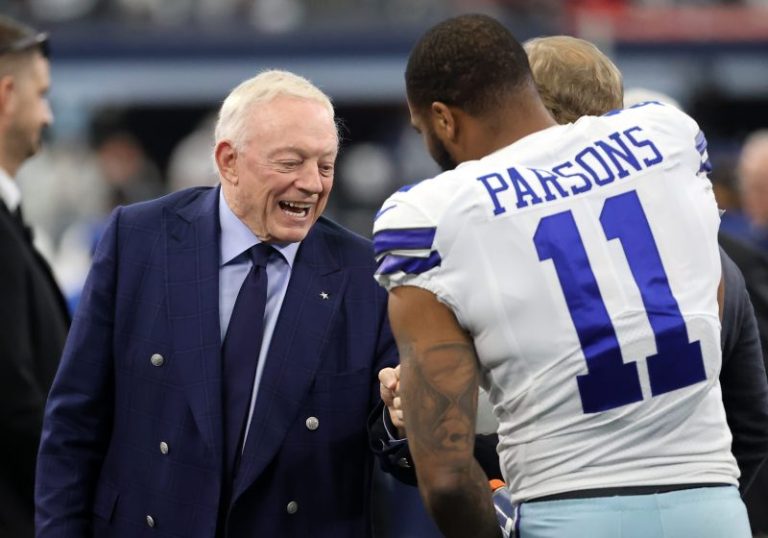
As much flash as this franchise generates and the overexposure it gets, owner (and de facto general manager) Jerry Jones is often pretty conservative during the draft, where “America’s Team” has generally performed rather well in recent years. (Jones, of course, is more inclined to trade his mid-rounders for backup quarterbacks, but that’s a discussion for another time.) Yet coming off a 7-10 season that led to former HC Mike McCarthy’s departure – and another pretty quiet approach to free agency – could Jones get a little nutty later this week, especially as much as the Cowboys have been linked to Boise State RB Ashton Jeanty, who played his high school ball near Dallas’ Frisco, Texas, training facility? The Cowboys have 10 picks, though seven come after Round 4. But they might have the ultimate bargaining chip in All-Pro DE Micah Parsons, who’s entering the final year of his contract and is due $24 million in 2025. Just sayin’ … food for thought, especially for a team careening dangerously toward what Jones hates most – irrelevance.

Atlanta Falcons and Washington Commanders

Each team has five picks – tied for second fewest in this draft – neither with a third-rounder. It’s self-evident why each club might want to add inventory, and Washington’s spot near the back of Round 1 (29th overall) could be especially attractive to clubs desiring to move back in for a quarterback or other player.

Minnesota Vikings

They have the fewest selections (4) of any club this year and aren’t scheduled to participate in Rounds 2 or 4. Yet given how many bodies they added via free agency, it could make sense to part with the 24th overall pick in order to diversify the overall portfolio.

Los Angeles Rams

HC Sean McVay and GM Les Snead have never been afraid of wheeling and dealing, whether it pertains to picks, established veterans or a combination thereof. This year’s second-rounder was spent last year to move up for DE Braden Fiske in Round 2 of the 2024 draft. Yet the Rams, scheduled to pick 26th Thursday, now find themselves as the likely favorites to win the NFC West in 2025 as the 49ers and Seahawks recalibrate. Might that mean Snead and McVay are proactively on the move Thursday?

Philadelphia Eagles

It’s Roseman, y’all. He’ll be playing chess, and his contemporaries know it. Doesn’t mean he won’t find trade partners and/or won’t chase a player like DB Cooper DeJean in the second round and/or a pair of University of Georgia defenders in the first. The defending champs will pick at or near the bottom of the first four rounds but then have their final four selections in Round 5, providing a nice means to consummate prospective negotiations, and could also use TE Dallas Goedert as a carrot.

Players who could be traded during 2025 NFL draft?

Here are 10 veterans who might find themselves on the move, whether as part of draft deals or post-draft cost-cutting measures:

Green Bay Packers CB Jaire Alexander: The two-time Pro Bowler has missed at least 10 games in three of the past four seasons, has occasionally been a locker room distraction and is owed $37 million over the final two years of his contract. Don’t be surprised if the Pack try to replace and displace the 28-year-old.

Baltimore Ravens TE Mark Andrews: Will his disastrous performance in last season’s playoff loss at Buffalo also be the three-time Pro Bowler’s final one in a Baltimore uniform? DeCosta has equivocated about Andrews’ future – understandable, to a degree, given he’s owed $11 million in the final year of his contract (a $4 million bonus already paid) – and at a time when fellow TE Isaiah Likely, who’s nearly four years younger, needs an extension of his own.

Atlanta Falcons QB Kirk Cousins: Trading their highly compensated backup quarterback would mean $37.5 million in dead cap money this season for Atlanta. The alternative is paying him $27.5 million to sit behind Michael Penix Jr. Seems like there’s some kind of financial and compensatory compromise to find here so Cousins, 36, can play elsewhere. But don’t expect the Falcons to dump him for nothing or eat a ton of cash so he can simply leave.

Jacksonville Jaguars RB Travis Etienne: He had a career-low 812 yards from scrimmage in 2024. He’s due $6.1 million going into the final year of his rookie contract – at a time when the Jags are entering a draft rich in running backs, including Jeanty and Omarion Hampton. Something might have to give here.

Eagles TE Dallas Goedert: He’s owed $15.5 million in the final year of his contract, much of it tied up in a bonus Philly could decline to pay. And similar to Etienne’s situation, a tight end-heavy draft could make Goedert eminently replaceable.

Cincinnati Bengals DE Trey Hendrickson: It’s pretty clear the Bengals don’t want to trade the 2024 sack leader and Defensive Player of the Year runner-up. Of course, they don’t want to pay him what he’s worth, either, given he’s owed a bargain-basement $16 million in the final year of his deal. Doesn’t really seem like Hendrickson, 30, will get moved for anything less than a first-round pick, but stranger things have happened … like the Bengals ponying up for a pair of star wideouts on the same day.

Cowboys DE Micah Parsons: Again, highly improbable Jones lets his best defender get away – especially in a buyer’s market given all the talented edge rushers available in this draft. Still, paying QB Dak Prescott, WR CeeDee Lamb and, apparently, Parsons at or near the top of their positional markets simultaneously is tantamount to salary cap malpractice. But Jones will almost surely commit it – and negotiations with Parsons are in the nascent stages – barring a ridiculous offer for him that would somehow restore Dallas as an immediate contender.

Pittsburgh Steelers WR George Pickens: You could argue his game and volatility are a little too similar to Metcalf, his new teammate. Yet Pickens’ salary – $3.7 million in the final year of his rookie deal – is completely dissimilar to Metcalf’s bag and might make the sometimes immature 24-year-old enticing trade bait from a team currently scheduled to pick once in the draft’s first 82 spots.

Miami Dolphins CB Jalen Ramsey: The seven-time Pro Bowler, 30, is apparently headed toward a mutual divorce with his third NFL team. Ramsey is signed through 2028. However, he doesn’t have any guarantees beyond the upcoming season – a contractual parameter that might make him easier to move if the Fins can find the right dance partner. And while Ramsey is a decade older than this draft’s best corners, none of the young players project to have his lockdown capabilities.

Detroit Lions WR Jameson Williams: Three years into his NFL career, he’s developed into quite a deep-strike weapon on the field. Off of it, he continues to have too many missteps – especially for a player who’s the fourth or fifth offensive option overall. And with other extension-eligible players such as DE Aidan Hutchinson slotted for financial priority in Detroit, this could be the ideal time to move a guy who has two years left on his rookie deal, including his fifth-year option.

This post appeared first on USA TODAY

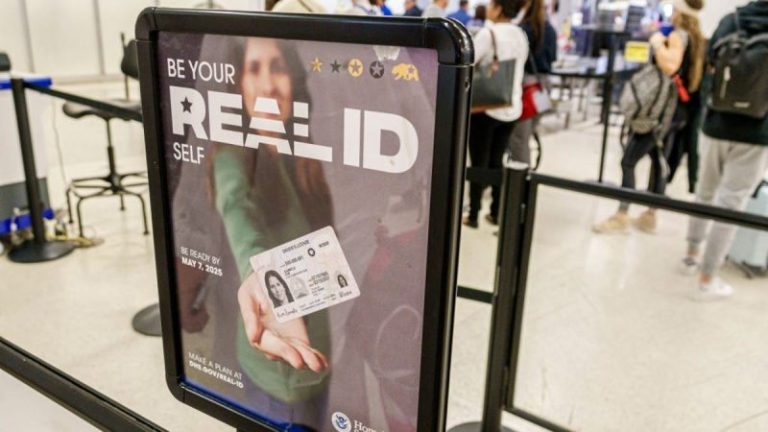
With President Donald Trump back in the White House and the final rollout of federal REAL ID requirements set to take effect in May, many of the loudest privacy advocates in Washington have been largely silent.

While privacy-minded lawmakers on both sides of the aisle have spent years blasting voter-ID laws and TSA facial recognition tools, among other measures, few are raising alarms over the Trump administration’s looming implementation of the REAL ID Act — a law passed in 2005 that critics describe as a national identification system.

Some of the privacy-hawk lawmakers remaining silent on REAL ID were very vocal when another expansion of the national security surveillance apparatus came about – the Patriot Act of 2001 – but not so when the U.S. is only days away from REAL ID implementation.

Sens. Edward Markey, D-Mass., Ron Wyden, D-Ore., and Jeff Merkley, D-Ore., were all in Congress when the Patriot Act faced ultimately-successful renewal in 2010s and when the 2020 bill amending and reauthorizing the related Foreign Intelligence Surveillance Act (FISA) court came up for a vote.

‘Congress has a duty to safeguard Americans’ privacy, but the USA Freedom Reauthorization Act fails to adequately limit the types of information that the government can collect about Americans, and it fails to adequately limit how long the government can keep the information it collects about us,’ Markey said in a 2020 statement objecting to the FISA renewal.

‘I am unwilling to grant any president surveillance tools that pose such a high risk to Americans’ civil liberties,’ he said.

In 2011, Merkley was one of eight senators who voted to prevent the Patriot Act renewal from even coming to the floor for debate, according to Oregon Live.

His Beaver State colleague, Wyden, ultimately voted to allow debate, but said on the Senate floor during such discourse that it needs to be potentially reconsidered.

‘The Patriot Act was passed a decade ago during a period of understandable fear,’ Wyden said at the time.

‘Now is the time to revisit this… and ensure that a better job is done of striking that balance between fighting terror and protecting individual liberty.’

Merkley expressed concern at the time about the Patriot Act’s ability to let law enforcement collect many types of personal data like emails and phone records.

In order to get a REAL ID, licensees must provide their Social Security number and other documentation.

While the REAL ID implementation was delayed 20 years by several factors including COVID-19, Merkley cast a ‘protest vote’ at the time of the Patriot Act renewal that a four-year extension of the post-9/11 act was being put forth without sufficient time for debate.

In 2005, Wyden also gave a Senate floor speech opposing the first reauthorization of the Patriot Act.

Markey did not respond to multiple requests for comment, left at his Washington and Boston offices. Merkley also did not respond to a request for comment.

A representative for Wyden acknowledged Fox News Digital’s comment request, but said the Oregonian was traveling and holding town halls with constituents back home and could not be immediately reached.

On his senatorial webpage, Wyden offered a rundown of all his comprehensive actions in favor of privacy, as well as ‘le[ading] the fight to address the Intelligence Community’s reliance on secret interpretations of surveillance law.’

‘When the American people find out how their government has secretly interpreted the Patriot Act, they will be stunned and they will be angry,’ he said in 2011.

Wyden was also outraged in 2013 when the NSA was found to be secretly interpreting the act to collect personal data of millions of Americans without a warrant.

In a statement to Fox News Digital on privacy concerns with REAL ID, Assistant DHS Secretary Tricia McLaughlin said REAL IDs rightly ‘make identification harder to forge, thwarting criminals and terrorists.’

‘Eighty-one percent of air travelers [already] hold REAL ID-compliant or acceptable IDs,’ McLaughlin said.

‘DHS will continue to collaborate with state, local, and airport authorities to inform the public, facilitate compliance, curb wait times and prevent fraud.’

Fox News also reached out for comment to a bipartisan series of lawmakers who have been party to pro-privacy bills or taken pro-privacy stances in the past, including Sens. Rand Paul, R-Ky., and Bernie Sanders, I-Vt.

This post appeared first on FOX NEWS

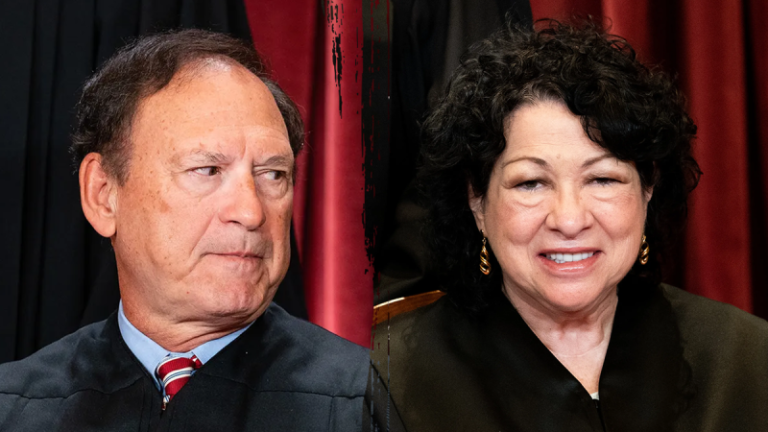
Justices Samuel Alito and Sonia Sotomayor snapped at each other during Tuesday’s arguments over parental rights in LGBTQ curriculum after the liberal justice attempted to jump back into the questioning as Alito was speaking. 

The short quarrel happened as the high court listened to arguments in Mahmoud v. Taylor, in which a coalition of parents sought to solidify the right to be informed about and opt their children out of reading LGBTQ-related material in elementary schools — which they argue conflicts with their faith.

‘There is a growing heat to the exchanges between the justices. Sotomayor just tried to disagree with Alito’s portrayal and Alito pushed back and asked to allow him to finish,’ Fox News contributor Jonathan Turley observed on X.  

Sotomayor initially asked Mahmoud attorney Eric Baxter about a particular book titled ‘Uncle Bobby’s Wedding’ that included a same-sex relationship storyline and whether exposure to same-sex relationships in children’s books could be considered coercion.

‘Our parents would object to that,’ Baxter responded. 

Sotomayor continued with her line of questioning to further clarify Baxter’s objection to the books. Baxter stated, ‘Our objections would be even to reading books that violate our client’s religious beliefs.’

Alito then jumped in with additional questions related to the book.

‘I’ve read that book as well as a lot of these other books,’ Alito began. ‘Do you think it’s fair to say that all that is done in ‘Uncle Bobby’s Wedding’ is to expose children to the fact that there are men who marry other men?’

Baxter objected to Alito’s question. Alito then said that while the book ‘has a clear message and a lot of people think it’s a good message,’ some with ‘traditional religious beliefs don’t agree with’ it.

As Alito continued with his explanation, Sotomayor jumped in.

‘What a minute. The reservation is—’ Sotomayor began. 

‘Can I finish?’ Alito said. 

‘It has a clear moral message, and it may be a good message. It’s just a message that a lot of religious people disagree with,’ Alito finished.

As arguments wrapped, the Supreme Court appeared inclined to agree with the parents.

A coalition of Jewish, Christian and Muslim parents with elementary school children in Montgomery County Public Schools in Maryland brought suit against the school board after it introduced new LGBTQ books into the curriculum as part of the district’s ‘inclusivity’ initiative. 

The curriculum change came after the state of Maryland enacted regulations seeking to promote ‘educational equity,’ according to the petitioner’s brief filed with the high court.

The parents lost both at the district court and the appellate level. The Fourth Circuit held that the parents had not shown how the policy violated the First Amendment.

The case comes at a time when President Donald Trump and his administration have prioritized educational and DEI-related reform upon starting his second term. The Supreme Court has notably also heard oral arguments this past term in other religious liberty and gender-related suits. 

The high court heard oral arguments earlier this month in a suit brought by a Wisconsin-based Catholic charity group’s bid for tax relief. The decision could alter the current eligibility requirements for religious tax exemptions. 

Fox News’ Bill Mears, Shannon Bream, and David Spunt contributed to this report. 

This post appeared first on FOX NEWS

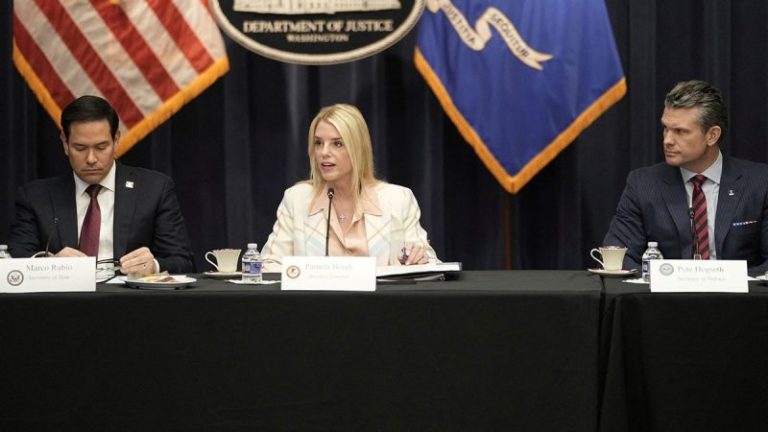
U.S. Attorney General Pam Bondi on Tuesday hosted Cabinet officials from across the Trump administration for the first meeting of a new interagency task force aimed at eradicating ‘anti-Christian bias’ within the federal government. 

During Tuesday’s meeting, Bondi described the task force as one aimed at remedying the ‘abuse’ under the Biden-led Justice Department and at other federal agencies prior to Trump’s second presidential term.

‘As President Donald Trump has stated, the Biden administration engaged in an egregious pattern of targeting peaceful Christians while ignoring violent, anti-Christian offenses,’ Bondi told a small group of reporters. ‘The president is right.’ 

Bondi was joined Tuesday by a long list of senior Cabinet officials from across the federal government, including Secretary of State Marco Rubio, Defense Secretary Pete Hegseth, FBI Director Kash Patel, Homeland Security Secretary Kristi Noem, and HHS Secretary Robert F. Kennedy, Jr.

Other senior agency officials were also present. 

Bondi also used the meeting to highlight some of the actions the Trump administration has taken to crack down on anti-Christian biases.

To date, the Justice Department has dropped three ongoing cases against pro-lifers and ‘redefined the FACE Act’ to help protect against what Bondi and others have described as the weaponization of pro-life groups and others.

Ultimately, ‘the First Amendment isn’t just the line in the Constitution. It’s the cornerstone of our American memory,’ Bondi said. ‘It guarantees every citizen the right to speak freely, worship freely, and live according to their conscience without government interference. Protecting Christians from bias is not favoritism. It’s upholding the rule of law and fulfilling the constitutional promise.’

Deputy Attorney General Todd Blanche said the group planned to use the meeting to hear from individuals who had been harmed as a result of ‘anti-Christian sentiment’ under the Biden administration, and the various ways this bias may have shown up in their departments or agencies. 

That part of the meeting was closed to the press.

Shortly before reporters were escorted from the room, Fox News asked the Department of Justice officials and other members of the task force whether they would share any examples of the anti-Christian bias within their agencies or any of the personal stories that they planned to touch on in the closed-door portion of the meeting.

The officials in attendance did not immediately answer the question, and Justice Department officials told Fox News and other reporters present that they would circulate more information after the meeting.  

Trump first created the task force via an executive order in February, with the goal of rooting out ‘anti-Christian targeting and discrimination’ within the government.

The president also selected Bondi to head up the task force — whom he praised as someone he trusted to ‘fully prosecute anti-Christian violence and vandalism in our society.’

The task force’s first meeting comes just days after Politico reported that the Trump administration sent an internal cable to State Department employees ordering them to report any instances of coworkers displaying ‘anti-Christian bias’ as part of the task force initiative.

The internal cable encouraged employees to share information via a tip form, noting that their responses could be kept anonymous, and was reportedly sent to embassies around the world, as well as the department headquarters in D.C.

‘Biden’s Department of Justice abused and targeted Christians,’ Trump said earlier this year. ‘Pro-life Christians were arrested and imprisoned for peacefully praying outside abortion clinics… NO MORE!’

This post appeared first on FOX NEWS

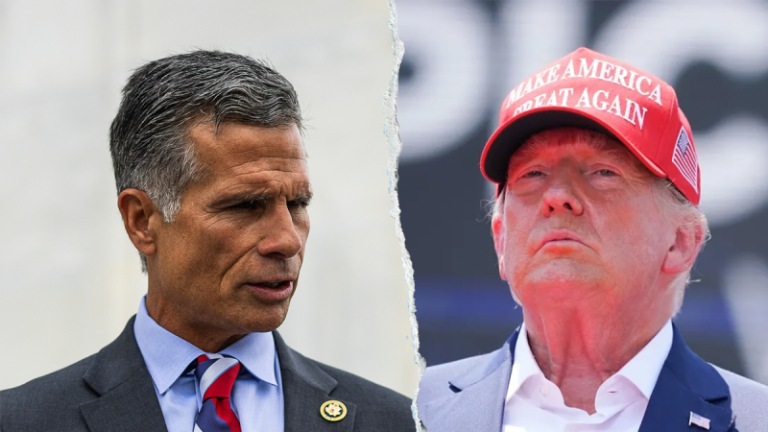
Rep. Dan Meuser, a Pennsylvania Republican, is supporting the White House’s proposed tax hike for people making more than $1 million. 

‘I believe we must help the President deliver on his promise of a tax and regulatory plan that supports pro-American economic and manufacturing growth, and delivers for the vast majority of Americans – while creating savings and promoting fiscal responsibility. Any adjustments in taxes to accomplish these goals should be considered,’ Meuser told Fox News Digital in a statement on Tuesday. 

Last week, White House aides began quietly floating a proposal to House Republicans that would raise the tax rate to 40% for Americans making more than $1 million, sources told Fox News Digital about the preliminary discussions. The plan would shore up income to fund President Donald Trump’s ambitious campaign promises to eliminate taxes on overtime, tips and Social Security.

On Thursday, Meuser said on ‘Mornings with Maria’ that he suggested a less than 2% tax hike for the ‘wealthy, high-end income’ tax bracket months ago. He noted that Trump’s 2017 Tax Cuts and Jobs Act lowered the top tax rate from 39.6% to 37%, so raising it to 38.6% would still keep it below the pre-TCJA level by nearly one percentage point.

‘We’re fighting for small business. We’re fighting for all of America and for the job creators that might be in those categories. So, if you were to bring it up by 1 point, it brings $15 billion in revenues, right? Without any elasticity, which could take place. So, if it did come up to 39[%], it’s almost $25 billion,’ Meuser said, touting the billions in revenue that a small tax hike could reap for the economy. 

The Pennsylvania Republican, who joined Trump on the 2024 campaign trail and is considered a potential candidate to challenge Gov. Josh Shapiro in 2026, stressed Trump’s all-of-the-above tax approach.

‘The president is determined not to have a standard – and this is my view, from what I’ve based upon him, I’m not putting in words in his mouth – a standard Republican-style budget. What he wants to see is something that is in the interest of all America, middle-income America, small businesses, and by the way, we would be talking about an exemption for pass-through small businesses so they would not be paying at the higher rate, as they do now, at their income level rate,’ Meuser said. 

While Meuser has indicated his warmth to the idea of tax hikes for the ultra-wealthy, other conservatives have remained steadfast in their rejection of any tax increases. 

Sen. Josh Hawley, R-Mo., told Fox News Digital last week that tax cuts are ‘what Republicans are good at’ as he urged his fellow Republicans to protect tax cuts for working-class Americans who fuel Trump’s base. More Republicans, including Sen. Mike Rounds of South Dakota and Rep. Tom Tiffany of Wisconsin are pushing to make Trump’s 2017 tax cuts permanent, which is considered a Republican priority during budget negotiations. 

Former Vice President Mike Pence, who refers to the 2017 tax cuts as the ‘Trump-Pence tax cuts,’ last week urged House Republicans to stand firm against raising taxes on the country’s top earners and make the 2017 tax cuts permanent. 

Advancing American Freedom, Pence’s conservative policy advocacy group, sent a letter to congressional Republicans, including House Ways and Means Committee Chair Rep. Jason Smith, R-Mo., and Senate Finance Committee Chair Sen. Mike Crapo, R-Idaho, last week, urging Congress to ‘stand firm against tax hikes.’

Fox News Digital’s Elizabeth Elkind contributed to this report.

This post appeared first on FOX NEWS

RTX and GE Aerospace expect a more than $1 billion impact combined from President Donald Trump’s tariffs on imported goods and materials, the latest sign of higher prices for major U.S. manufacturers that rely on a global supply chain.

Neil Mitchill, chief financial officer of defense contractor and commercial aerospace supplier RTX, said on an earnings call Tuesday that the company will likely take a $850 million hit this year from tariffs, including the sweeping 10% levies that Trump imposed earlier this month alongside higher duties on countries like China and separate taxes on imported steel and aluminum.

That estimate doesn’t include RTX’s own tariff mitigation measures, Mitchill said.

GE Aerospace, which makes engines for popular Boeing and Airbus planes, kept its 2025 earnings outlook in place during its quarterly report Tuesday and said it would seek to save about $500 million by cutting costs and raising prices.

GE Aerospace CEO Larry Culp said on Tuesday’s analyst call that he recently met with Trump and discussed the U.S. aerospace sector’s trade surplus. GE has a joint venture with France’s Safran to make popular airplane engines.

The new tariffs are a shift for a global industry that has enjoyed mostly duty-free trade for decades.

“All we have suggested is the administration works through a myriad of issues, is they can consider the position of strength that the country enjoys as a result of this tariff-free regime,” Culp said.

The White House didn’t immediately comment.

Boeing, a major customer of both companies and the top U.S. exporter, is scheduled to report quarterly results before the market opens on Wednesday.

Airlines have recently announced cuts to U.S. domestic capacity plans this year because of softer demand, but executives have emphasized it is hard to predict the direction of the economy or future trade policies. United last week provided two earnings outlooks for 2025, one in the event of a recession, one assuming status quo.

“There is uncertainty,” Culp said Tuesday. “None of us, I think, know for sure how this plays out.”

This post appeared first on NBC NEWS

After attempting to explain – unconvincingly in many people’s eyes – the reasons for trading away all-star guard and fan favorite Luka Doncic earlier this season, Dallas Mavericks general manager Nico Harrison continues to take hits in the court of public opinion.

Even from some of his friends.

Harrison admitted in his April 21 end-of-season news conference, ‘I did know that Luka was important to the fan base. I didn’t quite know it to what level.’

That raised the ire of one Charles Barkley, who responded to Harrison’s comments later that evening on TNT’s ‘Inside the NBA.’

‘Listen man, I consider you a friend of mine … I wish you nothing but the best,’ Barkley said, turning to the camera and addressing Harrison directly. ‘Man, don’t do no more press conferences … I’ve got sympathy and love for you, but I have zero idea what you’re trying to do. This war is over, brother. You’ve taken the L.

‘I hope you keep your job. I hope the team gets healthy. But man, don’t do any more interviews. Please don’t.’

Harrison has acknowledged hearing chants of ‘Fire Nico’ ever since making the Feb. 2 trade that sent Doncic to the Los Angeles Lakers for Anthony Davis, Max Christie and a first-round draft pick.

‘(M)y job is to make decisions that are in the best interest of this organization and I got to stand by the decision,’ he said. ‘Some of them are going to be unpopular and this was clearly one that’s unpopular.’

The Mavericks had their season end with a 120-106 loss to the Memphis Grizzlies in the NBA Play-In Tournament. The Lakers, with Doncic playing a starring role, claimed the No. 3 seed in the Western Conference and are currently facing the Minnesota Timberwolves in the first round of the playoffs.

This post appeared first on USA TODAY
Parents spend $3,000 annually on their children’s sports, the majority of them taking action elsewhere to manage rising costs, according to New York Life’s Insurance’s latest Wealth Watch survey.

The results of the poll of U.S. adults with children aged 7 to 18 who participate on youth sports, conducted March 1 to 6, also indicates parents are pouring in money believing they are investing in an ultimate payoff.

‘Our research suggests that parents are deeply committed to supporting their children’s athletic potential – not just for the joy of sport, but as a pathway to higher education and future success,’ Jessica Ruggles, corporate vice president of financial wellness at New York Life, said in a release shared with USA TODAY Sports prior to Tuesday’s publication of its results.

According to the nationally representative online survey of 1,036 participants whose kids play school, community and travel sports, 83% of parents believe their child or children have the skills to play at the collegiate level, while 49% are confident that their child will receive an athletic scholarship and 75% believe they have the skills to play professionally despite long odds that suggest otherwise.

According to 2024 NCAA data, supplemented by data from the National Federation of State High School Associations, about 6% of high school athletes play collegiately (a lower percentage play Division 1), while less than 1% of NCAA athletes are drafted into a professional sport.

‘Many families are counting on athletic scholarships to ease the cost of college, yet those opportunities are limited and uncertain, especially in the face of injury or shifting priorities,’ Ruggles says.

According to the New York Life data, parents are adjusting household budgets and dipping into savings to support their kids’ sports, with 76% taking some kind of action to manage costs, usually by reducing spending in other areas (38%). Twenty percent report that they had to reduce or stop their children’s participation due to financial constraints.

The Wealth Watch survey, which tracks Americans’ financial goals, progress toward those goals and feelings about their ability to secure their financial futures, reflects other statistical and anecdotal evidence of a national mania over prioritizing, and even monetizing, kids sports.

Parents spent 46% more on their child’s primary sport in 2024 than in 2019, according to another recent survey conducted by the Aspen Institute in partnership with Utah State University and Louisiana Tech University. That’s twice the rate of price inflations in the U.S. economy during the same period, according the Aspen Institute.

According to Aspen, which regularly collects and distributes research and the latest trends in youth sports, parents spend more than $40 billion annually on their children’s sports.

‘It all starts with, I think, the college admissions process, plus big time money in college sports; it creates this signal that goes all the way down to eight years old, probably even earlier,’ bestselling author and father Michael Lewis said in March at Aspen’s Project Play Summit in Berkeley, California. Project Play is Aspen’s initiative to build healthy communities through sports and develop nationwide access to them.

‘The parents can tell themselves, ‘We’re doing this because you get this advantage in college,’ either you get free tuition or now it’s for even more, like they’re going to get NIL deals and all that,’ said Lewis, a former coach of his daughter’s softball team who has written two books about the youth sports experience. ‘It’s kind of like the way people respond way too strongly to lottery-like temptation.

‘Most kids are not going to get any of that, and the parents are going to spend a lot more money than they should spend chasing this dream; sometimes the kids don’t even want to be there. When you have this prize that’s dangled on the other end, and very poor education all the way through about the likelihood of getting a prize, you’re going to get a lot of distortion in people’s behavior.’

According NCSA College Recruiting, a website that helps connect high school athletes with collegiate coaches, fewer than 2% of high school athletes are offered athletic scholarships in college.

COACH STEVE: Reality check: What do you really get from youth sports?

While the number of scholarships could increase with the House vs. NCAA settlement, thousands of current walk-on athletes stand to lose their places on Division I teams if it is approved.

‘The pursuit of athletic goals can also place a real financial and emotional strain on families,’ New York Life’s Ruggles said. ‘As parents make meaningful sacrifices to nurture their children’s passions, it’s essential to prioritize both performance and well-being. Building a trusted team – including athletic mentors and financial coaches – can give families clarity and confidence to champion their child’s growth without compromising their own stability, maintaining confidence in their broader financial future.’

Sports parents surveyed by New York Life had an average of $30,787 saved for their children’s higher education. If you’re a parent with goals of your kid playing collegiately, you may know that, in some cases, annual family sports dues even approach that figure.

COACH STEVE: Is it worth it? 10 questions teen athletes need to ask if they play on a travel team

‘This kind of long-term investment reflects a belief in hard work and opportunity,’ Ruggles says. ‘But while hope and effort are essential, so is planning.’

And perhaps a shift in our priorities. Sixty-four percent of parents in the New York Life survey reported rising costs for kids sports in recent years. Nearly all of them (99%) are actively involved in their kids’ sports, attending games, practices, or managing transportation.

‘I think the system does not work for working families,’ Jennifer Siebel Newsom, the first partner of California Gov. Gavin Newsom and co-chair of the governor’s council on physical fitness and mental well-being, said at the Project Play Summit. She is also a sports mom.

‘The cost of entering and being a part of these clubs are increasing (and it’s) an obstacle for too many families,’ she said. ‘It’s also disruptive, because, as kids are playing at higher and more competitive levels, they have pressure at school academically if they’re traveling all these weekends. … That’s not healthy for family dynamics.

‘I just think we need a real pattern interrupt. We need to go back to local. We need to go back to kids playing rec sports, but like skilled rec sports, play-based where they’re building confidence, building skills, growing as a team player at their school or at their local rec center, so that it works for local families, isn’t highly exorbitant, highly expensive.’

Steve Borelli, aka Coach Steve, has been an editor and writer with USA TODAY since 1999. He spent 10 years coaching his two sons’ baseball and basketball teams. He and his wife, Colleen, are now sports parents for two high schoolers. His column is posted weekly. For his past columns, click here.

This post appeared first on USA TODAY
Colorado cornerback Travis Hunter Jr.’s father, Travis Hunter Sr., did not see his son win the Heisman Trophy at the December ceremony. But he plans to be in Green Bay for the 2025 NFL Draft.

Hunter Sr. is serving a three-year probation period with one year of mandated home confinement after pleading guilty to three counts, including a felony, related to a 2023 arrest. He has received court permission to attend the draft, though he will be restricted to his hotel grounds and the draft event location at Lambeau Field in Green Bay.

The Colorado star’s father received a 90-day sentence in late September related to the same arrest but was released on Dec. 5, three weeks early and nine days before the Heisman Trophy ceremony. He ultimately could not make the trip to New York to see his son win college football’s most prestigious award.

Hunter Jr. thanked his father in his Heisman acceptance speech in December.

‘He’s not here and wasn’t able to make it but I know you’re watching on TV,’ he said at the time. ‘Dad, I love you. For all the stuff you went through man… Now look at your oldest son. I did it for you, man.

‘All the times that you didn’t get to see me, or the times you did come to see my games. From not seeing probably two games in high school to seeing me on TV every weekend and coming to see me. That means so much to me.

‘I know you wanted to be here and you can’t, but trust me, I got you. I’m bringing the trophy home. I love you.’

The two-way star out of Colorado is expected to be drafted with one of the first three picks in the 2025 NFL Draft. When Hunter Jr. hears his name called this time, his father will be there to hear it and celebrate with him.

Tom D’Angelo and Eric J. Wallace of The Palm Beach Post contributed to this story.

This post appeared first on USA TODAY