Archive

2025

Browsing

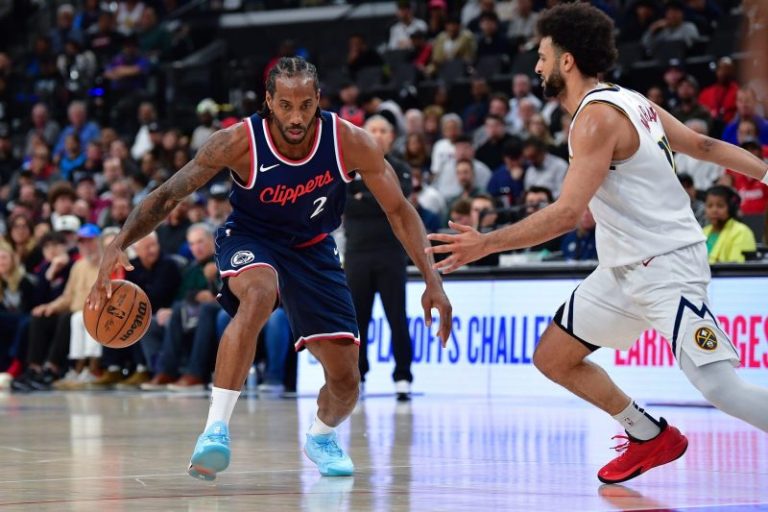
INGLEWOOD, Calif. − The Los Angeles Clippers trailed for most of the first quarter against the Denver Nuggets before turning things around and giving the home fans something to cheer about after securing a 117-83 victory in the Intuit Dome’s playoff debut.

After a slow start from Kawhi Leonard, he found a rhythm and helped the Clippers pull away with the Game 3 win to take a 2-1 lead in the Western Conference first-round series.

Leonard produced a double-double with 21 points and 11 rebounds. He also had six assists.

“That was like opening night stuff,” Clippers veteran Nicolas Batum said. “We kind of messed up our (regular season) opening night in October against Phoenix. … (The fans) were amazing, expecting them to be even better on Saturday.”

Coach Tyronn Lue and Leonard were among those who also spoke highly about the fan support from the Wall, which is the Clippers-only fan section at the Intuit Dome, and its location near the Nuggets’ bench.

“Everybody came out,” Leonard said. “The Wall was great and cheering all night.”

The Nuggets led the Clippers for the first 10:30 of the opening period before James Harden’s two-point shot from four feet put the Clippers ahead of the Nuggets. 

The shot put the Clippers ahead 29-28 against the Nuggets with 1:30 left first quarter.

It was a lead they wouldn’t give up for the rest of the game and used a 13-0 scoring run to bolster a 42-28 lead.

Harden had 20 points, nine assists and six rebounds and Norman Powell added to the scoring attack with 20 points of his own.

David Adelman comments on Clippers’ fan section

Fans of the Clippers rallied Wednesday following comments made by Denver Nuggets interim head coach David Adelman.

Adelman spoke to the reporters regarding “the Wall” and the arena’s sound.

“They have the crowd toward our bench,” Adelman said Wednesday. “It’s like a high school crowd, which is actually really cool. And the other thing is they pump sound in the place. That place is so loud… so that building, it’s very loud whether the crowd is cheering or not.’

Members of the Wall found a horse hat at their seats to wear before the game. Nuggets star Nikola Jokić is known to have a love and passion for horses and harness racing.

Adelman was asked during his pregame media availability on Thursday about the horse hat.

“That could be a motivational factor. Hopefully, not to go home,” Adelman said. “I do think it’s unique that they’re trying this. I think it’s really cool. I know people got out of sorts because I said ‘pumping noise’ or whatever. It’s just really loud… I love what they’re doing here. 

“The NBA needs more of that. More creativity. That’s what we used to know when I grew up… I miss that, so it will be cool to be a part of it.”

Westbrook injury update

Russell Westbrook was a limited participant for Thursday’s game after being injured during pregame warmups.

Westbrook scored three points, a rebound and an assist in nine minutes of play. 

Westbrook had left foot inflammation and was considered questionable after rolling his ankle. He shot 1-for-5 from the field (all attempts from the three-point line).

This post appeared first on USA TODAY

The 2025 NFL draft is finally upon us, taking place this year at Lambeau Field in Green Bay, Wisconsin – Titletown – home of the Green Bay Packers, the league’s all-time winningest franchise. It’s also the first time the ‘Cheese State’ has hosted the league’s marquee offseason event in the common draft era (since 1967) and first overall since Milwaukee staged it in … 1940.

The league’s 90th annual ‘Player Selection Meeting’ didn’t feature much mystery with its No. 1 pick, but things got awfully interesting immediately afterward in what was a highly intriguing first round.

USA TODAY Sports analyzed each pick, one through 32, as it was made Thursday night:

2025 NFL draft tracker: First-round picks

1. Tennessee Titans – QB Cam Ward, Miami (Fla.)

A franchise that’s never drafted a quarterback with the No. 1 overall pick (and nobody at the very top since Hall of Famer Earl Campbell in 1978) clearly hopes to have its new face – and, at minimum, its first star behind center since former league MVP Steve McNair. Ward (6-2, 219), who played for three collegiate programs in five years, turns 23 next month – but his experience and, more importantly perhaps, leadership should greatly benefit a Titans team in need of an identity following consecutive last-place finishes in the AFC South.

Ward isn’t a dynamic runner but is certainly a capable athlete who often makes plays with his arms and legs outside of the pocket. But the 2024 All-American and ACC Player of the Year is being selected here because of an alpha personality and a dynamic arm, one that produced a Division 1 record 158 TD passes. He’ll need to leverage all of his estimable abilities on and off the field to turn around a franchise that needs him to stop its free fall. Interesting to note, too, that Ward’s 2,329 passes attempted in college are at least 1,000 more than highly erratic Will Levis, Tennessee’s primary starter the past two seasons, has thrown since he entered college in 2018 – Ward’s results typically much better, too, if not skewed by Levis’ NFL mishaps (26 turnovers in 21 NFL games).

This is the culmination of an astronomical rise for Ward, a zero-star recruit while playing in a Wing-T offense in high school who played at FCS-level Incarnate Word for two years before transferring to Washington State and then Miami. He enters the NFL with 57 college starts. And given his gunslinger proclivity – which does sometimes put Ward and his team into hairy spots – good bet he could join Warren Moon as this franchise’s second 4,000-yard passer. However Ward’s impeccable timing should also be noted relative to what are sure to be outsized expectations in Nashville – but if he’d been drafted in last year’s draft rather than this one, Ward might have been the sixth or seventh quarterback off the board instead of the first.

2. Jacksonville Jaguars from Browns – WR/CB Travis Hunter, Colorado

In a blockbuster trade that includes a Round 1 pick swap and the Jags’ second-rounder and 2026 first-rounder going to Cleveland – the initial trade of first-round picks in this draft – rookie GM James Gladstone moves up for the ultra-talented 2024 Heisman Trophy winner. An ultra-rare two-way player whom Browns GM Andrew Berry described as a ‘unicorn’ while also invoking multi-talented baseball superstar Shohei Ohtani, it seems likely the Jags will also be open to allowing Hunter to fulfill his dream of playing offense and defense in the NFL – as he did so well while dominating college football. It seemed Hunter’s primary desire is to play offense after exclusively running routes at the Buffs’ recent pro day showcase and spotlighting himself at the position that’s likely to pay better at the pro level – though he quite obviously has the skill set to carve out a signature paycheck down the road.

Hunter could start out as the No. 2 receiver here behind 2024 first-round WR Brian Thomas Jr., operating in an offense where QB Trevor Lawrence clearly needed some help. On the flip side, with CB Tyson Campbell doing the heavy lifting, Hunter could tag in to help cover the AFC South’s secondary receivers or in selective situations at the start of his career. 

Yet it is worth wondering how much load a 6-foot, 188-pounder can and should shoulder in the NFL, which obviously features a far more physical brand of football than the Southwest Athletic Conference – Hunter’s freshman year was spent at Jackson State – Pac-12 or Big 12. Hunter played 2,625 snaps over the past two seasons, leading the FBS in both the 2023 and ’24 seasons, including 1,483 last year. Put another way, he averaged nearly 112 snaps per game since coming to Boulder. No NFL player has had a 100-snap game since 2012. Hunter led the Big 12 with 96 catches and 15 TDs in 2024 while racking up 1,258 receiving yards, four interceptions and 11 pass breakups. His elite athleticism, instincts and ball skills are major assets on both sides of the ball. Quite a statement from Duval County.

3. New York Giants – OLB/DE Abdul Carter, Penn State

Regarded in some quarters as this draft’s most talented player, he didn’t do much physically during the pre-draft process while recovering from shoulder and foot issues (neither required surgery) – though they hardly slowed the Big Ten’s Defensive Player of the Year in 2024. Carter is such an exceptional athlete, the Giants couldn’t bypass him despite their glaring need for a long-term answer at quarterback plus the fact they already have two highly capable pass rushers in two-time Pro Bowler Brian Burns and 2022 first-rounder Kayvon Thibodeaux.

With 12 sacks, 61 pressures (second in FBS) and an FBS-leading 23½ tackles for losses last season, Carter’s numbers suggest he’ll quickly push Burns and Thibodeaux for snaps. The Giants are 13 years removed from their last championship, when they reigned supreme thanks to their NASCAR defensive packages, so don’t be surprised to see all three on the field simultaneously, either.

Carter isn’t lacking for confidence, consistently declaring himself the best player in the draft – he may not be wrong – and recently tweeted a photo of Giants legend Lawrence Taylor for what it’s worth. However Carter, a lifelong Eagles fan to this point who also draws instant comparisons to Cowboys DE Micah Parsons (also Penn State alum), will have to instantly change that viewpoint. And while no one should presume he’s the next LT, Carter has a similar frame (6-3, 250) and the ability to bend it and leverage an array of moves and counters plus elite get-off. A needed weapon in a division that includes QBs Jalen Hurts and Jayden Daniels.

4. New England Patriots – OT Will Campbell, LSU

A few weeks ago, the Pats might have thought another quarterback would force Hunter or Carter down to them. No such luck, but Campbell is hardly a consolation prize – especially given the mandate to better support second-year QB Drake Maye. A consensus All-American, Campbell (6-6, 319) will be charged with safeguarding Maye’s blind side – he was sacked on nearly 10% of his dropbacks as a rookie – and will have to do so despite his highly scrutinized arm length, which is shy of 33 inches (depending on who measures them). Regardless, those have hardly impacted his punch, sweet feet or ability to handle the SEC’s best pass rushers – he allowed just four sacks during three seasons (38 starts) as the Tigers’ starter. As for intangibles, he was the first offensive lineman to wear the treasured No. 7 at LSU – like Derek Stingley, Tyrann Mathieu, Leonard Fournette and Patrick Peterson, among others, before him – albeit as a patch above Campbell’s No. 66. Worst case, it seems he’ll be an All-Pro guard in the NFL – and New England could use one of those, too. Oh, and he’s got some serious swag.

5. Cleveland Browns from Jaguars – DT Mason Graham, Michigan

Cleveland drops three spots in the Hunter deal but still comes away with a unanimous All-American in 2024 and All-Big Ten performer the past two seasons. Graham (6-4, 296) isn’t a massive space eater but is a relentless interior penetrator who uses his strength, quickness and background as a wrestler to maximize his leverage. Is he the next Aaron Donald? (Well, who is?) The point is, Graham has a high floor and should be an outstanding pro even if he’s not necessarily a flashy, 10-sacks-per-year player – though he might become exactly that while playing alongside perennial All-Pro DE Myles Garrett for a team that’s effectively loading up for 2026 and beyond.

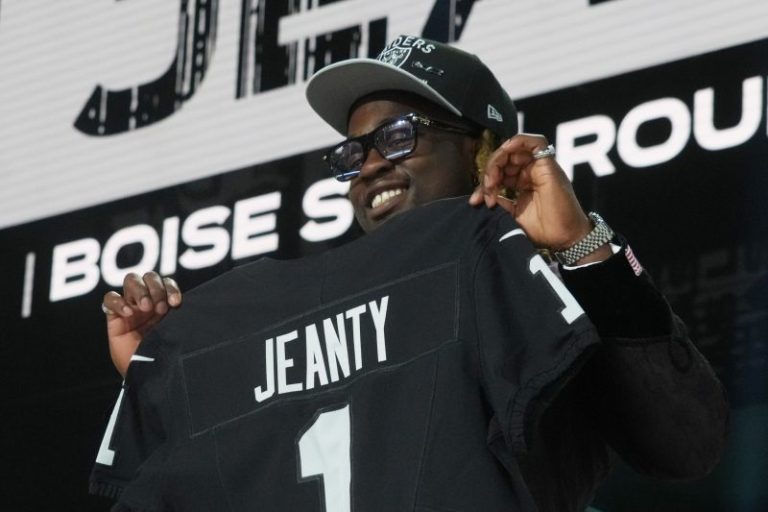
6. Las Vegas Raiders – RB Ashton Jeanty, Boise State

Despite his obvious talent, the 2024 Heisman runner-up becomes just the second tailback picked in the top 10 in the past seven drafts (Bijan Robinson is the other) – basically by virtue of his position. Jeanty rushed for 2,601 yards last season – 28 shy of breaking Barry Sanders’ single-season NCAA record – and will definitely be an upgrade from anything that was on the Silver and Black’s depth chart.

Production has been no issue for Jeanty, who’s rushed for nearly 4,000 yards over the past two seasons, scoring 49 touchdowns during that time frame (including 30 in 2024). A compact package (5-9, 211) of muscle and speed, Jeanty is an explosive, powerful runner – he broke an FBS-leading 88 tackles in 2024 and racked up 1,733 yards after contact (which also would’ve been enough rushing yards to top the FBS). And while he had 12 runs exceeding 50 yards last season, he’s also a solid receiver – his 569 receiving yards in 2023 the most among FBS backs.

With 660 touches since 2023, Jeanty’s usage has been ridiculous, and he does need to clean up a minor fumbling issue. But QB Geno Smith and TE Brock Bowers will at least draw some of the focus from Jeanty, who could become Marshawn Lynch 2.0 for run-loving head coach Pete Carroll.

7. New York Jets – OT Armand Membou, Missouri

Exclusively a right tackle during three years as a starter for Mizzou, he should stay there with the Jets, who picked LT Olu Fashanu in Round 1 a year ago. Membou, a powerful run blocker, didn’t allow a sack in 2024 in more than 400 pass-blocking snaps. At 6-4, 332 pounds, he flashed his athleticism with a 4.9 40-yard dash and 34-inch vertical leap at this year’s scouting combine. He should be perfectly fine at guard if it turns out he struggles outside in the NFL. But if he lives up to his potential, it seems the Jets’ new regime – led by former Lions DC Aaron Glenn – is already following Detroit’s blueprint by laying its foundation first on the offensive line.

8. Carolina Panthers – WR Tetairoa McMillan, Arizona

He’s become something of a polarizing prospect in recent months given questions about his speed and, perhaps, commitment to the game. But there’s no denying his size (6-4, 219) or production (174 grabs for more than 2,700 yards since 2023). And third-year QB Bryce Young, who righted his personal ship in the second half of last season, now has a nice group of complementary wideouts to work with – McMillan joining veteran Adam Thielen and explosive 2024 first-rounder Xavier Legette. And big as he is, McMillan is perfectly comfortable working out of the slot.

9. New Orleans Saints – OT Kelvin Banks Jr., Texas

The 2024 Outland Trophy winner was nearly airtight for the Longhorns, allowing just two sacks in nearly 1,100 pass-block snaps over the past two seasons. And with battered RT Ryan Ramczyk finally retiring, Banks’ arrival could lead to an O-line shuffle, Banks perhaps going to his customary left tackle post and 2024 first-rounder Taliese Fuaga reverting to the right side, which he played at Oregon State. Trevor Penning, who’s struggled outside, might finally find a home at guard.

10. Chicago Bears – TE Colston Loveland, Michigan

And second-year QB Caleb Williams gets yet another weapon, Loveland set to pair with incumbent TE Cole Kmet. A 6-6, 248-pounder, Loveland averaged nearly 15 yards per catch during his first two years in Ann Arbor when J.J. McCarthy was throwing to him. Loveland is recovering from shoulder surgery − the wing hampered him throughout 2024 – but said at the combine he should be fully ready for training camp. His work up the seams could really open up the field for WRs DJ Moore and Rome Odunze, a first-rounder last year along with Williams.

11. San Francisco 49ers – DE Mykel Williams, Georgia

He could be a phenomenal value at this spot and a very nice backfill for a badly depleted Niners line, formerly the foundation of their defense. Williams’ numbers for the Bulldogs (14 sacks and 57 hurries in three seasons) are actually unusually good given the depth of that defense and how rarely it had to be on the field. He’s also tough, playing through a high-ankle sprain most of last season. Williams could make quite a tandem with 2022 Defensive Player of the Year Nick Bosa.

12. Dallas Cowboys – G Tyler Booker, Alabama

The All-American’s combination of leadership and nastiness could be made to order for a flashy organization that might need a kick in the pants on the heels of a 7-10 season that led to HC Mike McCarthy’s departure. Booker didn’t test well athletically at the combine (5.38 40-yard dash), but his intangibles apparently made him too enticing – and a logical fit given the recent retirement of All-Pro G Zack Martin. The Cowboys will now have three starting offensive linemen with the first name Tyler (LT Tyler Guyton, LG Tyler Smith).

13. Miami Dolphins – DT Kenneth Grant, Michigan

The Fins go for some needed toughness in the trenches, enlisting a massive (6-4, 331) and nimble man who might have far more upside than former Wolverines teammate Graham. Grant, who had 6½ sacks the past two seasons, effectively replaces DT Christian Wilkins, who left in free agency a year ago. Throwing around his weight inside, Grant had 23 hurries last season.

14. Indianapolis Colts – TE Tyler Warren, Penn State

He’s quite the throwback, wearing No. 44 for the Nittany Lions as a tribute to Hall of Fame RB John Riggins … and maybe he’ll get the number from former Indy TE Dallas Clark. And if we’re going to cite Hall of Fame-caliber tight ends, Warren (6-6, 256) is more Rob Gronkowski than Travis Kelce – both a devastating receiver and physical blocker. He might be exactly what a team likely to have spotty quarterback play needs.

The 2024 Mackey Award winner as college football’s top tight end, Warren led the Big Ten (and set a Penn State single-season record) with 104 receptions, which produced 1,233 yards and eight touchdowns. He was also a Wildcat quarterback option and red-zone weapon, rushing for four additional scores. Warren played basketball in high school, and his hops produced some thunderous dunks. He should be a more versatile weapon in the NFL than your typical tight end.

15. Atlanta Falcons – LB Jalon Walker, Georgia

The Butkus Award winner in 2024 as the country’s best college linebacker, that seems apropos given Walker’s ability to line up all over the field. He can certainly get into an opposition backfield, posting career best with 6½ sacks and 11 tackles for loss last season. Yet he basically split his time between the line of scrimmage and off the ball, versatility that should serve him well in the NFL despite his ‘tweener size (6-1, 243). His basketball and track background speaks to his athleticism. The local product would seem to be an ideal selection for a defense that hasn’t had a double-digit sack guy since 2016.

16. Arizona Cardinals – DT Walter Nolen, Mississippi

A 2024 All-American, the 6-4, 296-pounder who was high school’s prize recruit with Hunter three years ago can cause mayhem up the gut (10½ sacks and 23 TFLs since 2023). And the Cards can certainly use the fresh legs after adding old-timer Calais Campbell and Dalvin Tomlinson up front earlier this offseason. Nolen and 2024 first-rounder Darius Robinson should be the anchors moving forward.

17. Cincinnati Bengals – DE Shemar Stewart, Texas A&M

His talent suggests top-five pick, particularly after he tested just about off the charts at the combine – 4.59 40-yard dash and 40-inch vertical leap at 6-5, 267 pounds. His production (4½ sacks total in three seasons with the Aggies) suggests Day 3 pick. But dig a bit deeper and you’ll find Stewart had 33 hurries in 2024 and was a hellacious run defender. This team may not only lose DE Trey Hendrickson to a contract impasse – probably not at this point since he’s still on the roster – but it’s already taken a hit at the position following Sam Hubbard’s retirement.

18. Seattle Seahawks – OL Grey Zabel, North Dakota State

The 6-6, 312-pound Senior Bowl standout can play every position on the offensive line … and Seattle seems to have an opening at every spot save LT Charles Cross’. Zabel’s arrival dovetails with a team that’s been recalibrating toward toughness and what will likely be a more run-centric offensive approach in 2025.

19. Tampa Bay Buccaneers – WR Emeka Egbuka, Ohio State

High character, high production – his 205 catches the most ever by a Buckeyes player. Egbuka, an accomplished outfielder as well, should give the Bucs quite a wideout trifecta as he teams with WRs Mike Evans and Chris Godwin moving forward – especially since he and Godwin can work interchangeably from the slot.

20. Denver Broncos – DB Jahdae Barron, Texas

The 2024 Jim Thorpe Award winner’s ability to flex between outside corner, the slot and safety should make him quite a weapon in a secondary that already features reigning Defensive Player of the Year Patrick Surtain II. Barron led the SEC with five INTs in 2024 and didn’t surrender a TD pass. Barron flashed sub-4.4 speed at the combine, and his 5-11, 194-pound frame should enable him to hold up well physically.

21. Pittsburgh Steelers –  DL Derrick Harmon, Oregon

22. Los Angeles Chargers – RB Omarion Hampton, North Carolina

The two-time All-American rushed for 15 TDs and at least 1,500 yards each of the past two seasons for the Tar Heels to go along with 67 total catches. Big (6-0, 221) and fast (4.4 speed), Hampton is also durable and used to carrying a heavy load if asked – though he probably won’t be right away given the Bolts signed RB Najee Harris in free agency. Hampton recently revealed new UNC coach Bill Belichick tried to convince him to stay in Chapel Hill for another year.

23. Green Bay Packers – WR Matthew Golden, Texas

And the draft’s home team breaks its infamous 23-year streak of not drafting a wideout in Round 1, Javon Walker the last one. Golden glittered at the combine, his 4.29 40 the fastest among offensive players. He’s not the biggest guy (5-11, 191), but his burst and ability to come up big in the clutch – watch the Longhorns’ CFP defeat of Arizona State – could make him the best of this year’s receivers. Pack HC Matt LaFleur has said he wants to “vomit” at the notion of No. 1 receivers … but he might finally have one. And Golden’s home-run ability should give WR Christian Watson more breathing room as he recovers from a torn ACL.

24. Minnesota Vikings – G Donovan Jackson, Ohio State

One of the most valuable members of the Buckeyes’ run to the 2024 championship will be protecting former Michigan QB J.J. McCarthy moving forward. Jackson (6-4, 315) split last season between guard and left tackle after teammate Josh Simmons tore his patellar tendon in October.

25. Giants from Houston Texans – QB Jaxson Dart, Mississippi

Big Blue deals back into the first round to take Dart, the apparent quarterback of the future … but also now a member of a very crowded room with recently signed vets Russell Wilson and Jameis Winston plus local favorite Tommy DeVito. An all-SEC selection last season after leading the conference in passing yards (4,279) and efficiency, Dart (6-2, 223) might still need a bit of time to get acclimated to the NFL and will have time to do so here. Dart is a much better athlete than the other QBs on the Giants depth chart, if not exactly Josh Allen, whom HC Brian Daboll coached in Buffalo. Houston picks up the Giants’ second-rounder tomorrow night (34th overall) and two thirds in the deal.

26. Falcons from Los Angeles Rams – OLB/DE James Pearce Jr., Tennessee

Atlanta supercharges its pass rush, adding Pearce after previously taking Jalon Walker. Pearce had 17½ combined sacks over the past two seasons and has exceptional athleticism. He also has precisely the right build (6-5, 245) and traits for a 3-4 defense that suddenly looks much more fearsome than it has in years. Maturity questions have dogged Pearce during the pre-draft process, so this is clearly a roll of the dice by Atlanta, which gives up its 2026 first-round pick as part of the deal to get back into Round 1 tonight.

27. Baltimore Ravens – S Malaki Starks, Georgia

A cagey DB who can play deep, near the line or in the slot – think Derwin James or Brian Branch. Pairing the two-time All-American with All-Pro Kyle Hamilton instantly gives a defense too often torched by big plays in 2024 what might well be the league’s best safety tandem in 2025.

28. Detroit Lions – DT Tyleik Williams, Ohio State

The reigning NFC North champs opt for defensive reinforcements after getting wiped out by injuries on that side of the ball by the end of last season. And with DT Alim McNeill recovering from a torn ACL that could shelve him for part of the upcoming campaign, taking Williams – maybe a little earlier than some draft observers expected – makes sense here.

29. Washington Commanders – OT Josh Conerly Jr., Oregon

After springing for veteran LT Laremy Tunsil in a trade last month, GM Adam Peters adds another bodyguard for QB Jayden Daniels, last season’s Offensive Rookie of the Year. Conerly (6-5, 311) allowed just two sacks in two years as a starter for the Ducks.

30. Buffalo Bills – CB Maxwell Hairston, Kentucky

Christian Benford recently landed an extension, but this defense needed another outside corner. Not only was Hairston (4.28 40 time) the only player to outrun Golden at the combine, he’s a playmaker – pilfering five passes in 2023 before struggling with injuries last season.

31. Philadelphia Eagles from Chiefs – LB Jihaad Campbell, Alabama

Is he an edge rusher? Is he an off-ball backer? Does it matter given the champs could use help at both spots after the departure of OLB Josh Sweat during free agency and the knee injury LB Nakobe Dean suffered in the playoffs? A first-team All-SEC standout in 2024, Campbell is recovering from recent shoulder surgery himself, but EVP/GM Howie Roseman surrendered a fifth-rounder to get him in a pick swap with the Chiefs anyway, adding another SEC stud to his roster.

32. Kansas City Chiefs from Eagles – OT Josh Simmons, Ohio State

They couldn’t keep winging it at left tackle. Eventually, QB Patrick Mahomes was going to get supremely frustrated – or worse. Simmons, a large (6-5, 317) and very strong man, likely would have been a top-10 selection had he not suffered a torn patellar tendon last season. He seems on track to be ready for the upcoming campaign but should easily be worth the wait if not – and that could mean productive time for recently signed OT Jaylon Moore to prove he can hold down a spot on the left or right side of K.C.’s evolving O-line.

How to watch the NFL draft:

The 2025 draft will be broadcast on NFL Network, ESPN, ESPN2 and ABC and streamed on NFL+, ESPN+ or Fubo, which comes with a free trial over the next three days:

Thursday, April 24 (Round 1 starts 8 p.m. ET): NFL Network, ESPN, ABC (Watch FREE on Fubo)
Friday, April 25 (Rounds 2-3 start 7 p.m. ET): NFL Network, ESPN2, ABC (Watch FREE on Fubo)
Saturday, April 26 (Rounds 4-7 start 12 p.m. ET): NFL Network, ESPN, ABC (Watch FREE on Fubo)

EXCLUSIVE: Deion Sanders weighs in on criticism of son, QB Shedeur Sanders

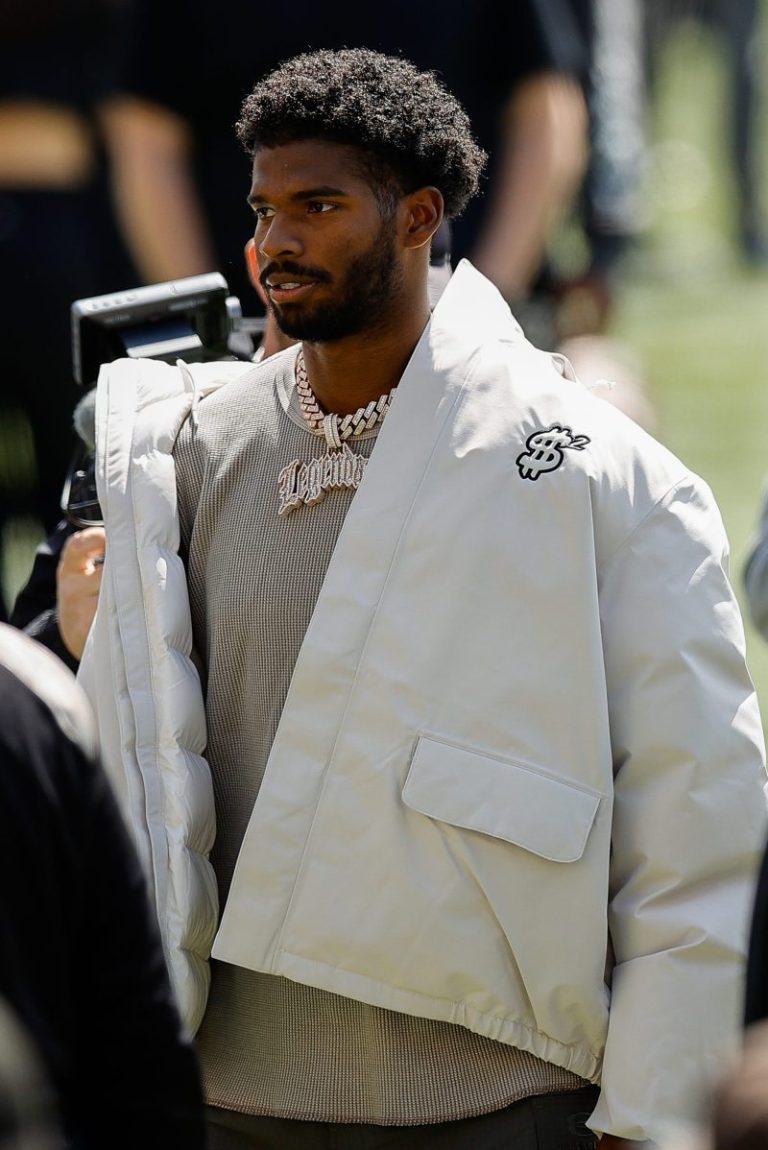
USA TODAY Sports columnist Jarrett Bell recently went to Boulder, Colorado, and discussed several topics with Hall of Famer and University of Colorado football coach, Deion Sanders – among them the pre-draft criticism of his son, former Buffs QB Shedeur Sanders, who wasn’t picked in Round 1.

“It’s silly to us,” Deion told USA TODAY Sports during an expansive interview. “Most of it is laughable. What I told him, too, is, ‘Son, what I’ve learned in my life is when it don’t make sense, it’s God. Because some of this stuff is so stupid it don’t make sense. That means God is closing doors and opening doors to make sure you get to where you’re supposed to go.”

Is Jets RB Breece Hall among NFL vets on trade block?

The NFL draft inherently causes job security issues for veteran players as teams constantly seek younger, cheaper talent. And that might mean New York Jets RB Breece Hall is one who might be on the move, according to league reporter Josina Anderson. After finishing second to San Francisco’s Christian McCaffrey among running backs with 1,585 yards from scrimmage in 2023, Hall produced 1,359 yards in 2024. He’s now heading into the final season of his rookie contract, yet new NYJ HC Aaron Glenn has already suggested the offense could go to more of a running back by committee approach.

50* biggest NFL draft busts of last 50 years

The asterisk because I couldn’t limit this list of names, which will take you down memory lane, to just 50. One reason? Rewind four years to the 2021 draft, supposedly chock full of quarterback talent … that mostly has yet to materialize.

‘Flat-out loaded’ class of running backs?

Boise State’s Ashton Jeanty could be the first running back selected in the top five picks since the Giants tabbed Saquon Barkley second overall in 2018. Yet while Jeanty may be the headliner of this year’s RB class, there’s quite a bit of talent – and depth – behind him. Longtime draft analyst Todd McShay USA TODAY Sports: “This class is just flat-out loaded with talent. In 25 years of doing this, I haven’t seen this much high-end talent.” How much and why?

NFL draft prospect rankings

NFL draft expert Mike Middlehurst-Schwartz has been evaluating and ranking players ahead of the 2025 NFL draft. Take a dive into his overall assessment plus those of the best offensive weapons:

Top 50 big board (Feb. 25) | Top 200 big board (April 24)

All NFL news on and off the field. Sign up for USA TODAY’s 4th and Monday newsletter.

This post appeared first on USA TODAY

Did they or didn’t they?

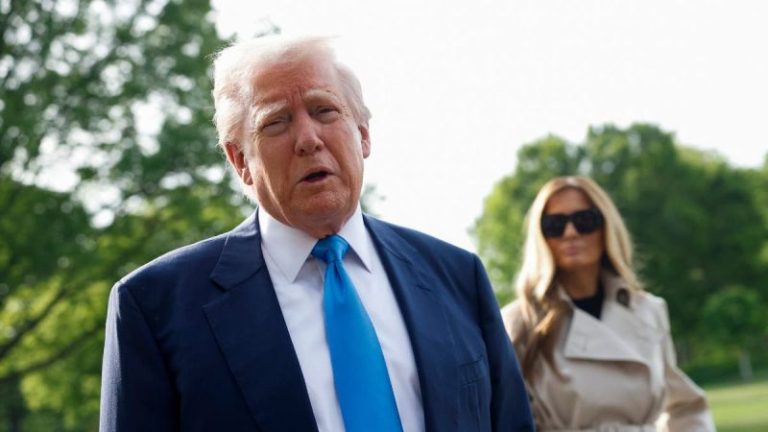
President Donald Trump told reporters at the White House on Friday that he has spoken to Chinese President Xi Jinping ‘many times’ but did not say if any of those communications took place since he imposed stiff tariffs on the communist nation. 

Asked for details about those communications, Trump responded by saying ‘I’ll let you know at the appropriate time.’

Trump’s latest comments, which took place before he boarded Marine One to travel to Rome for Pope Francis’ funeral, come after days of back and forth between the countries over whether they are in direct talks about reducing the tariffs – and whether Trump and Xi have spoken directly to one another since the tariffs were rolled out. 

Trump’s tariffs on China, which have rattled global stock markets and upended supply chains, have ballooned to 145% while China has responded by slapping a 125% tariff on its U.S. imports. 

In a newly published TIME article published Friday morning, Trump is quoted as saying that Xi personally called him to discuss trade matters. 

‘. And I don’t think that’s a sign of weakness on his behalf,’ Trump is quoted as saying, without providing specifics about the timing or content of the call.

When asked what Xi said, Trump sidestepped his response by saying ‘We all want to make deals. But I am this giant store. It’s a giant, beautiful store, and everybody wants to go shopping there. And on behalf of the American people, I own the store, and I set prices, and I’ll say, if you want to shop here, this is what you have to pay.’

‘You have to understand, I’m dealing with all the companies, very friendly countries,’ he said, when asked about trade adviser Peter Navarro, saying 90 deals in 90 days is possible. ‘We’re meeting with China. We’re doing fine with everybody. But ultimately, I’ve made all the deals.’

The TIME interview took place on Tuesday, with Trump saying publicly on the same day that things were going ‘fine with China’ and that the final tariff rate on Chinese exports would come down ‘substantially’ from the current 145%.

Trump also told reporters earlier in the week that ‘everything’s active’ when asked if he was engaging with China, although his treasury secretary had said there were no formal negotiations.

Those comments led to Beijing on Thursday denying any suggestion that it was in active negotiations with the administration.

Guo Jiakun, a spokesperson for China’s Foreign Ministry, said during a daily briefing on Thursday that, ‘For all I know, China and the U.S. are not having any consultation or negotiation on tariffs, still less reaching a deal.’

‘China’s position is consistent, and we are open to consultations and dialogues, but any form of consultations and negotiations must be conducted on the basis of mutual respect and in an equal manner,’ Commerce Ministry spokesperson He Yadong said.

Asked Thursday about China denying there were any conversations ongoing with the United States, Trump said, ‘We may reveal it later, but they had meetings this morning, and we’ve been meeting with China,’ before adding, ‘it doesn’t matter who they is.’

Trump said Tuesday that the hefty tax rate of 145% Americans must currently pay for Chinese imports will likely be reduced significantly.  

While Trump said the rate ‘won’t be zero,’ he expressed optimism over a potential trade deal with China. 

‘One hundred forty-five percent is very high, and it won’t be that high,’ Trump said to reporters in the Oval Office. ‘It will come down substantially, but it won’t be zero.’ 

Fox News’ Greg Norman, Bonny Chu and Stephen Sorace contributed to this report.

This post appeared first on FOX NEWS

A federal judge in Washington, D.C., blocked a portion of President Donald Trump’s executive order on election integrity that is popular among Americans, according to a Gallup poll.

The portion of the order that Judge Colleen Kollar-Kotelly of the U.S. District Court for the District of Columbia struck down included provisions related to requiring proof of citizenship to register to vote.

Less than two weeks before the 2024 election, Gallup found that 84% of U.S. adults were in favor of requiring voters to show identification and 83% supported requiring proof of citizenship when registering for the first time. 

When broken down by party, 67% of Democrats, 84% of Independents and 98% of Republicans were in favor of mandating voter ID. The party breakdown over proof of citizenship was similar, with 66% of Democrats, 84% of Independents and 96% of Republicans supporting the idea.

Kollar-Kotelly, however, argued that Trump did not have the authority to issue such an order, as the Constitution delegates control of election regulations to Congress and states.

‘Consistent with that allocation of power, Congress is currently debating legislation that would affect many of the changes the President purports to order,’ Kollar-Kotelly, a Clinton appointee, wrote in her order. ‘No statutory delegation of authority to the Executive Branch permits the President to short-circuit Congress’s deliberative process by executive order.’

Earlier this month, the House passed the Safeguard American Voter Eligibility (SAVE) Act, which would require states to obtain proof of citizenship for those registering to vote in a federal election. Additionally, the act mandates that all non-citizens be removed from voter rolls. The Senate still needs to pass the measure before it can reach Trump’s desk.

Rep. Chip Roy, R-Texas, who sponsored the bill in the House, wrote, ‘In order to preserve this republic, we must uphold what it means to be able to vote in a U.S. election. I am grateful that my colleagues answered the call and passed the SAVE Act, as this serves as a critical first step to ensure that we maintain election integrity throughout our country.’

So far in 2025, five states have enacted voter ID requirements, and one has mandated proof of citizenship for registration, according to Voting Rights Lab. Additionally, 25 states are considering bills that would mandate proof of citizenship, while 40 are mulling legislation requiring voter ID.

This post appeared first on FOX NEWS

President Donald Trump’s message for Russian President Vladimir Putin to ‘STOP!’ airstrikes on Ukraine echoes a comment made by former President Joe Biden in 2022 in which he repeatedly warned Putin against using chemical or nuclear weapons in the conflict. 

‘I am not happy with the Russian strikes on KYIV. Not necessary, and very bad timing. Vladimir, STOP! 5,000 soldiers a week are dying. Let’s get the peace deal DONE,’ Trump wrote on Truth Social on Thursday as Russian airstrikes rocked Kyiv. 

Three years ago, during an interview with CBS News, Biden was asked, ‘As Ukraine succeeds on the battlefield, Vladimir Putin is becoming embarrassed and pushed into a corner — And I wonder Mr. President what you would say to him if he is considering using chemical or tactical nuclear weapons?’ 

‘Don’t. Don’t. Don’t,’ Biden responded. ‘It will change the face of war unlike anything since World War II.’ 

The Thursday attack on Ukraine killed at least 10 and injured at least 90, including children, Ukraine said. 

Trump’s message to Putin to ‘STOP!’ was criticized on the Friday cover of the New York Post, which featured the headline ‘Words aren’t enough.’

On Friday morning, as Trump was leaving the White House to fly to Rome for the funeral of Pope Francis, he told reporters ‘I think Russia and Ukraine — I think they’re coming along, we hope. It’s very fragile.’

‘We’re working on plenty of things that shouldn’t be worked on, because none of this stuff should have happened. This should have been taken place by Biden. It should have been fixed by Biden. But he couldn’t do it. Nor could he come close to doing,’ Trump added.

He also said he has ‘no deadline’ to resolving the war in Ukraine, but that he just wants to do it ‘as fast as possible.’

Trump administration officials claimed they had productive talks with Putin, but they have yet to secure a deal that would end the war that has been raging since Russia’s February 2022 invasion. 

Recently, several members of the administration suggested that the U.S. could end its efforts to secure a peace deal if Ukraine and Russia do not start making significant moves toward ending the war. 

White House envoy Steve Witkoff is in Moscow on Friday to meet with Putin. 

Russian Foreign Minister Sergei Lavrov also told CBS News that the Kremlin is ‘ready to reach a deal’ to end the war. In an excerpt of an interview that is set to air in full on Sunday, Lavrov said he agreed with Trump’s assertion that talks between Ukraine and Russia were ‘moving in the right direction.’ 

However, Lavrov added there were ‘some specific points, elements of the deal, which need to be fine-tuned,’ but did not explain what was being negotiated.

Lavrov also apparently made it clear to CBS News that Russia would not give up Crimea, which the country seized from Ukraine in 2014. Ukrainian President Volodymyr Zelenskyy said this week that his country would not recognize Russian control of Crimea, as it would go against Ukraine’s constitution. Trump slammed Zelenskyy over the ‘inflammatory’ remark and said in a post on Truth Social that the comment was ‘very harmful’ to peace efforts.

Fox News Digital’s Rachel Wolf contributed to this report. 

This post appeared first on FOX NEWS

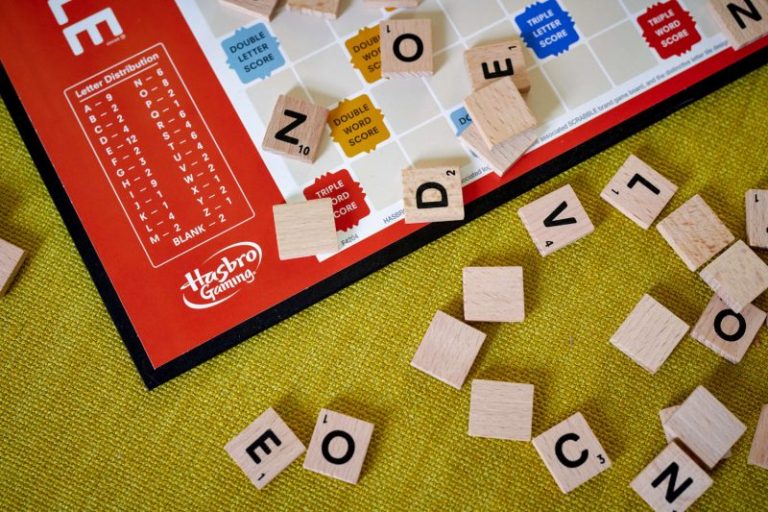
If President Donald Trump’s 145% levy against imports from China holds, Hasbro estimates it could see as much as a $300 million hit to its bottom line.

The toy maker posted better-than-expected earnings on Thursday, but investors and analysts were more focused on the ongoing trade war Trump’s White House has waged against the toy industry’s biggest manufacturer.

Hasbro maintained the full-year guidance it issued last quarter, citing the uncertainty of the current tariff environment.

“Our forecast assumes various scenarios for China tariffs, ranging from 50% to the rate holding at 145% and 10% for the rest of world,” said Gina Goetter, chief financial officer and chief operating officer at Hasbro, during Thursday’s earnings call. “This translates to an estimated $100 million to $300 million gross impact across the enterprise in 2025. Before any mitigation.”

CEO Chris Cocks said during the company’s earnings call that “while no company is insulated, Hasbro is well positioned,” noting the company’s unchanged guidance is “supported by our robust games and licensing businesses and our strategic flexibility.”

“Prolonged tariff conditions create structural costs and heighten market unpredictability,” he said, adding, “ultimately tariffs translate into higher consumer prices.”

Cocks also warned of “potential job losses as we adjust to absorb increased costs and reduced profit for our shareholders.”

The company’s U.S. games business benefits from digital and domestic sourcing, as many of its board games are made in Massachusetts. Its Wizards of the Coast division, which includes Magic: The Gathering and Dungeons & Dragons, has a tariff exposure of less than $10 million, Cocks said, as much of the domestic product is made in North Carolina, Texas and Japan.

The company’s toy segment faces higher exposure, as a larger portion of those goods are made in China. Cocks said the company is exploring options for moving its supply chain to other countries.

“Some of that, though, comes with the cost,” he said. “When we manufacture board games in the U.S., it is significantly more expensive to manufacture here than it is in China.”

He added that the company can shift the sourcing of Play-Doh, for example, from China to its factory in Turkey. Under that scenario, Turkey manufacturers would redirect shipments from Europe to the U.S. and Chinese factories could fill in to supply the European market.

Other products are more difficult to triage, especially those that include electronics, high end deco and foam components, Cocks said.

“China will continue to be a major manufacturing hub for us globally, in large part due to specialized capabilities developed over decades,” he said.

Goetter said that much of the manufacturing changes would be seen in 2026 and are dependent on if those countries already have the capabilities and infrastructure in place to make certain products.

Hasbro is also accelerating its $1 billion cost savings plan in an effort to offset tariff pressures, but noted that price hikes are unavoidable.

“We are going to have to raise prices inside of 145% tariff regime with China,” Cocks said. “We’re just trying to do it as selectively as possible and minimize the burden to the fans and families that we serve.”

Both Goetter and Cocks admitted that Hasbro’s plans are flexible and will change as the tariff situation evolves. The company is hopeful for a “more predictable and favorable U.S. trade policy environment.”

“We’re trying to play both defense and offense at the same time,” Goetter said.

This post appeared first on NBC NEWS

A lot can change during the pre-draft season.

Colorado quarterback Shedeur Sanders once seemed to be a lock for the first round of the 2025 NFL Draft. He even appeared to be as high as being selected with a top-five pick to a quarterback-needy squad.

But that wasn’t meant to be. Instead, two quarterbacks heard their name called during the first round this year: No. 1 overall pick Cam Ward, and No. 25 selection Jaxson Dart, whom the Giants traded back into the first round to pick.

That leaves Sanders as one of the best available players on the board entering Day 2, and he should still have plenty of suitors entering the second day of the draft. Here’s who they could be:

Shedeur Sanders mock draft

Cleveland Browns

Pick: Round 2, No. 33

The Browns made a stunning trade on Thursday night, when they opted not to take Travis Hunter and instead trade down and select Mason Graham. Sanders to the Browns seems like a solid pick on paper: Sanders comes from a pro-ready offense where he operated under offensive coordinator Pat Shurmur. Shurmur has crossed paths with Browns head coach Kevin Stefanski, so the fit makes sense. With Deshaun Watson likely out for the 2025 season, the Browns roster features just Kenny Pickett and Joe Flacco. That room doesn’t exactly inspire confidence moving forward, and lacks a true long-term answer.

Las Vegas Raiders

Pick: Round 2, No. 37

Could the Raiders and Sanders be on a collision course after all?

The Raiders were another hotly rumored team to want to pick the passer in the first round in recent months, but they opted for running back Ashton Jeanty instead. Even though Pete Carroll and Geno Smith are reunited in Sin City, having Sanders as a potential successor to Smith could make sense for a few reasons: Carroll’s reputation boasts offenses that rely heavily on the running game, and Sanders sitting on the bench for a year or two could provide enough time for the passer to get acclimated to the NFL game.

While Smith signed an extension with the Raiders, Vegas can get out of the deal in a few years’ time. That could provide a convenient window to turn the keys over to the most pro-ready passer in the draft.

New Orleans Saints

Pick: Round 2, No. 40

Another team that faces major quarterback questions after Round 1 of the draft, the Saints have the Derek Carr shoulder casting a shadow over the QB room. With Spencer Rattler showing modest returns in limited action in 2024, Sanders could come in as a passer of new head coach Kellen Moore’s choosing.

Some rumors connected the Saints to quarterbacks in recent months, but they left Round 1 instead with offensive tackle Kelvin Banks.

Indianapolis Colts

Pick: Round 2, No. 45

The Anthony Richardson-Colts marriage took more than a few left turns this past season, and the seeming distrust led to a one-year, $14 million contract for quarterback Daniel Jones. That’s not exactly backup quarterback money, and the desire to bring in competition for the 2023 first-round pick means patience might be wearing a little thin for Richardson.

If Indianapolis is still so unsure of the passer they took No. 3 overall just two years ago, it might benefit head coach Shane Steichen and Co. to just rip the Band-Aid off and give Sanders the opportunity to be a long-term answer. It would ruffle feathers, but the Richardson tenure has seemed to do just that, anyway.

All the NFL news on and off the field. Sign up for USA TODAY’s 4th and Monday newsletter.

This post appeared first on USA TODAY
NEWYou can now listen to Fox News articles!

On April 22, 2025, the U.S. Department of Health and Human Services (HHS) and U.S. Food and Drug Administration (FDA) announced their bold initiative to remove eight petroleum-based synthetic dyes in our nation’s food supply over the next two years, putting us more in line with our friends in the European Union, who have had many of these petroleum-based synthetic dyes banned for years. 

And all I can say is – it’s about time!

From M&Ms to Doritos, many of the foods we snack on contain one or more of the artificial food dyes now on the ‘chopping block’ in the U.S. In fact, a recent Wall Street Journal analysis discovered that 1 out of every 10 food products contains at least one synthetic dye. This means that foods we may not even expect to contain synthetic dyes – such as certain pickles or pre-made pie crusts – include them. 

But does it matter for our health and the health of our children?

In full transparency, the research is not conclusive. There are no clear causal studies showing that these petroleum-based artificial food dyes directly lead to cancer, mental health issues or obesity, among other health conditions. However, as U.S. FDA Commissioner, Dr. Marty Makary, and other health experts have highlighted, the growing body of scientific literature shows a clear correlation. 

For example, a report released by the state of California in 2021 suggested that synthetic food dyes are associated with hyperactivity and neurobehavioral issues in some children. Additionally, scientific research examining FD&C Red No. 3 found that it can cause cancer in rats; with no high-quality, human-based studies on the topic, do we really want to ignore this finding and risk FD&C Red No. 3 being a cancer-causing agent in family and friends?

It’s important to remember that a lack of causal studies does not mean these artificial food dyes are safe. The shortage of this level of scientific literature is not because of limited interest, but because such studies are incredibly challenging to conduct, with many environmental and other confounding factors at play that are extremely hard to account for appropriately in a robust way. 

So, while we may only have preliminary studies demonstrating a correlation between synthetic food dyes and health conditions, we must use common sense.

Petroleum-based synthetic food dyes offer no nutritional value. No one can argue they add a health benefit to food products, and – in fact – they are often used in ultra-processed foods that may be addictive and negatively impact an individual’s health and well-being. 

The goal of synthetic food dyes is to draw in customers to the attractive, long-lasting vibrant colors not found in nature. The use of these dyes may drive up sales for corporate America but – it seems – at the expense of our health and the health of the next generation of Americans.

While the process to remove petroleum-based synthetic food dyes from our food products has commenced officially in full force, we will not wake up tomorrow with grocery store shelves rid of these concerning chemicals. In the interim, we must work to be more educated and thoughtful consumers. 

By making it a habit to look at the ingredient list on food packages, we can know which foods have these artificial dyes and seek alternative products or forgo them altogether. I would urge all of us reduce our intake of products that include these synthetic dyes and focus on adding more whole foods and natural herbs to our diets.

The leadership shown by addressing this problem at the national level with clear guidelines and expectations provides much-needed clarity to all stakeholders, including not just companies who make food products but families as well. 

Importantly, the policy doesn’t ban foods or reduce choice; it simply works to make us a healthier nation. We will still have Froot Loops, for example, but the colors we have come to love will need to be created using natural alternatives like turmeric for yellow, beetroot for red, spirulina for blue-green, and carrots for orange, among others.

The Trump administration should be applauded for this important step forward in their ongoing effort to Make America Healthy Again, but there remains much to do to ‘fix’ our nation’s health and healthcare system. 

The opinions, thoughts, and ideas expressed in this article are those of the authors only and not necessarily those of any employers or institutions of which they are affiliated.

This post appeared first on FOX NEWS

U.S. spirit exports reached a record $2.4 billion in 2024, driven in large part by tariff concerns and ongoing global trade disputes.

That is according to the American Spirits Exports report published by trade association the Distilled Spirits Council of the United States on Thursday.

“U.S. spirits exports hit a new high in 2024, recapturing lost market share since the UK and EU lifted retaliatory tariffs that were applied between 2018-2021,” said DISCUS President and CEO Chris Swonger. “Unfortunately, ongoing trade disputes unrelated to our sector have caused uncertainty, keeping many U.S. distillers on the sidelines and curtailing sales growth.”

U.S. spirits exports to the EU surged by 39%, fueled by concerns over the potential return of a 50% tariff on American whiskey imports in 2025, which was suspended in 2022.

In March, Trump threatened to put 200% tariffs on French Champagne and other EU spirits, which led European world leaders — specifically from Ireland, France and Italy — to advocate for bourbon tariffs not to return as part of retaliatory measures.

The threat of that specific tariff has faded somewhat as the U.S. and EU continue trade negotiations.

Approximately 50% of U.S. spirits were exported to the EU — totaling $1.2 billion — making it the largest export market.

Exports to the rest of the world, however, declined by nearly 10%, the report found, which reflects the broader softening alcohol category.

Suntory Beam, the Japanese maker of Jim Beam bourbon whiskey, said in December it was preparing for tariffs by stockpiling supply in Europe. The company is already heavily reliant on France and the United Kingdom, which make up over 50% of its global exports market over the last eight years, according to global trade data from Panjiva.

Several of the top states for exports in 2024 are significant bourbon economies, according to the report.

Still, American whiskey exports, which accounted for 54% of all U.S. spirits exports, dipped 5.4% to $1.3 billion.

Swonger said that while outlook for spirits remains highly unpredictable with ongoing trade disputes, one fact rings true in the data: Exports go to countries that have eliminated tariffs.

“We are thankful for President Trump’s early success in securing India’s reduction of its tariff on Bourbon from 150% to 100%,” Swonger said. “It’s our hope that the administration builds on this positive momentum by securing additional tariff reductions in India and reducing trade barriers in other countries.”

Headwinds remain for the industry. Canada, the second largest market for U.S. spirits exports, imposed a 25% tariff in on alcohol coming over the border in March, and several provinces have removed product from shelves.

Distiller and brewers also face steel and aluminum tariffs that impact materials costs for brewers like Constellation Brands, which lowered long-term 2027 and 2028 guidance significantly around “the anticipated impact of tariffs.”

This post appeared first on NBC NEWS

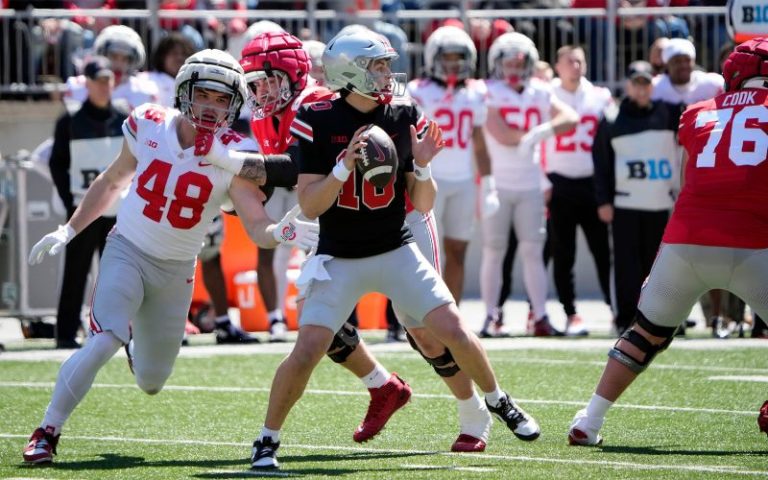
While college football adopted offseason workouts not long after Rutgers beat Princeton — Harvard claims to have conducted the first out-of-season practice on March 14, 1889 — the spring game truly flourished this century, as programs began to stage largescale recruiting spectacles around what had evolved into one of the tentpole events on the sport’s annual calendar.

Steadily, the traditional end-of-spring scrimmage began to adopt a far less essential on-field purpose. One contributing factor was the increase in overall interest in these showcases. In response to ESPN and conference-branded networks starting to broadcast dozens of games every spring, many programs opted for an overly narrow glimpse at personnel and the playbook so as not to provide any insight for opponents on that season’s schedule.

That represented a deviation from the spring game’s original intent: to provide a game-like atmosphere as a way to evaluate a larger roster and specific position-by-position competitions.

Now, amid similar concerns stemming from dramatic changes to the NCAA model, spring games are approaching the territory of leather helmets, wishbone offenses and the four-team playoff — former college football hallmarks that have drifted into antiquity.

“What I think is happening with spring games is a consequence of what is happening in college football in general,” said Baylor coach Dave Aranda.

Conventional spring games have gone from a luxury to a liability because of NIL and the transfer portal, which have combined to turn roster management and retention into a free-for-all frenzy. With very little to gain but much to lose by mirroring a realistic game-day environment, many coaches who once embraced the positives of the spring showcase have shifted toward a closed-door approach as a way to combat widespread player movement.

“There’s more potential downside than upside for us,” said SMU coach Rhett Lashlee.

Said Illinois coach Bret Bielema, “I always worry about outside voices. I’m not oblivious to the fact that our guys were probably contacted by college programs that want their services.”

Twenty-five Power Four teams have decided against the traditional spring scrimmage, including nearly half of the Big Ten. Among the programs opting for something more closely resembling a practice-like setting are Nebraska, Florida State, Southern California, Oklahoma, LSU and Texas.

The reasoning is simple: Coaches and programs have become openly wary of having their rosters poached by teams that see potential contributors on tape and, because of NIL enticements and the ease of the portal, have the wherewithal to sway players through unofficial channels.

“The word ‘tampering’ doesn’t exist anymore,” Nebraska coach Matt Rhule said. “It’s just an absolute free, open, common market. I don’t necessarily want to open up to the outside world and have people watch our guys and say, ‘He looks like a pretty good player. Let’s go get him.’

“Honestly, to me, it’s about protecting the roster and protecting through that portal period.”

This weekend is the final weekend where a significant portion of the Power Four schools will wrap up spring practice and look toward offseason preparations.

Texas coach Steve Sarkisian said the Longhorns will conduct NFL-style training sessions in lieu of a normal game. Arizona State is more focused on situational gameplay such as red-zone offense, coach Kenny Dillingham said. Nebraska will hold skills competitions and 7-on-7 games involving current and former players, among other events, and then a scrimmage featuring backup players battling for spots on the Cornhuskers’ roster.

Concerns that holding a spring game could influence roster makeup isn’t reserved for the Power Four. While major-conference teams might worry about the loss of depth and young talent not quite ready for larger roles, those on the Group of Five fear that starting-caliber players could be lured away by programs with much deeper pockets and ample NIL offerings.

“My primary intent is both to protect and retain our current roster and to keep our schemes and strategies unknown from our opponents for as long as possible,” Utah State coach Bronco Mendenhall said in announcing the Aggies will not hold a spring game and will close all spring practices to the public.

Overall, thousands of players have entered the portal since the first transfer window opened in December. The spring window closes on Friday, though players are only required to enter the portal during this period in order to be immediately eligible this season.

Canceling these spring games may have a minimal impact on the overwhelming amount of roster turnover every Bowl Subdivision program has encountered since the portal and NIL legislation went into effect earlier this decade.

“Listen, whether you have a spring game or not, it’s going to be tampering,” Clemson coach Dabo Swinney said.

A largely unregulated landscape has been intensified by the potentially seven-figure payouts handed out to college football’s best players at key positions such as quarterback, to the point where even starters at high-profile programs are evaluating their options in advance of the expected House settlement that will set an annual cap on athletics department spending on NIL.

In the most glaring example, former Tennessee quarterback Nico Iamaleava decided to transfer this month amid a dispute over his NIL contract. But Iamaleava’s departure for UCLA came before the Volunteers’ spring game; there was already plenty of tape establishing the sophomore as one of the most promising young passers in the FBS.

“People are going to tamper with our players whether we like it or not,” Sarkisian said. “That’s fine. Hopefully, we’ve built a culture and they believe in the development of the other guys before them in the program and feel this is the best place for them.”

Yet many programs have stayed the course and closed spring drills with an intrasquad scrimmage, accepting the tradeoff between the clear positives behind conducting a game-like setting — player development and the chance to evaluate the competition for a starring role — and the potential fallout of losing players into the portal.

“We have enough players that will benefit from the work that we think that offsets any of the other implications,” Utah coach Kyle Whittingham said. “You can’t be scared to do everything. We have to get guys better. That’s our number one objective.”

Even as these holdouts cling to tradition, the concept of a realistic, game-like scrimmage to close spring practices seems destined to be replaced by either modified jamborees or, as with the Longhorns, types of offseason training sessions designed to maximize development away from prying eyes.

One option raised this spring by Colorado coach Deion Sanders was a controlled scrimmage between two teams, which would mirror the NFL model. While Sanders’ call for an opponent was answered by Syracuse coach Fran Brown, the waiver was denied by the FBS oversight committee.

“Under current NCAA Bylaws, teams cannot play another school in the spring,” an NCAA spokesperson told USA TODAY Sports.

With no ready solution for balancing the need for development with the chance of largescale player movement, traditional spring games face an increasingly high likelihood of being erased from the college football schedule.

“To each his own,” said Florida coach Billy Napier. “I’m either going to have coaches tampering with my players, or I’m going to have a fanbase that’s pissed off at not having a spring game. It’s pick your poison.”

This post appeared first on USA TODAY