Archive

2025

Browsing

The NFL draft is nearly complete, and there are a few of the top college football players in the country still on the board.

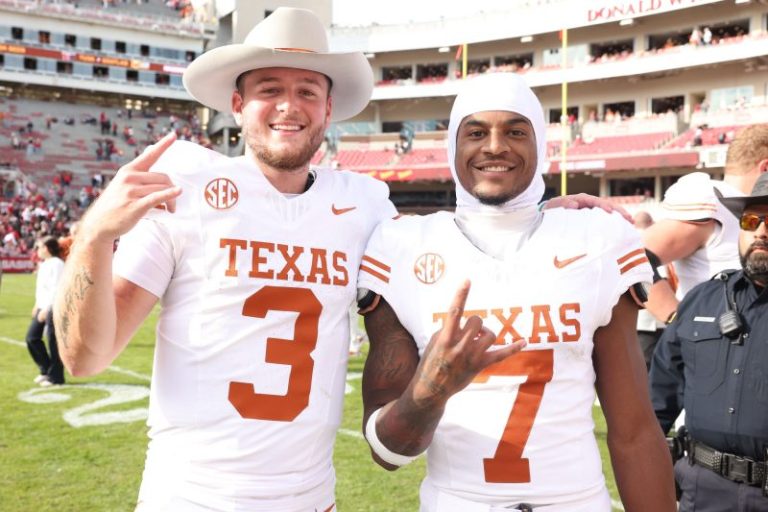
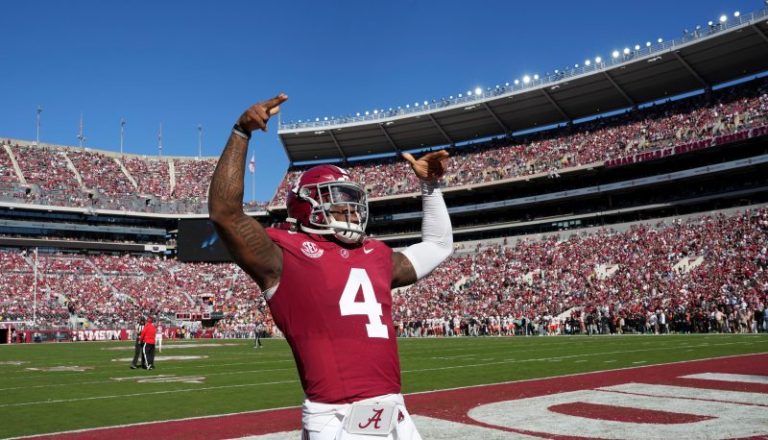
One of those is former Texas quarterback Quinn Ewers.

The former No. 1 overall player in the 2021 recruiting class, who led the Longhorns to back-to-back College Football Playoff appearances the last two seasons, was originally projected to go on Day 2 of the 2025 NFL Draft, according to several mock drafts

Here’s what you need to know on whether Ewers has been taken yet in the 2025 NFL Draft:

Has Quinn Ewers been drafted yet in NFL draft?

Yes, Ewers was drafted in the seventh and final round of the 2025 NFL Draft. He went to the Miami Dolphins with the No. 231 overall pick.

There was some belief heading into Saturday’s final round of the NFL draft that Ewers might have heard his name called during the earlier rounds, but his slide has continued with just a handful of picks remaining in the seventh round.

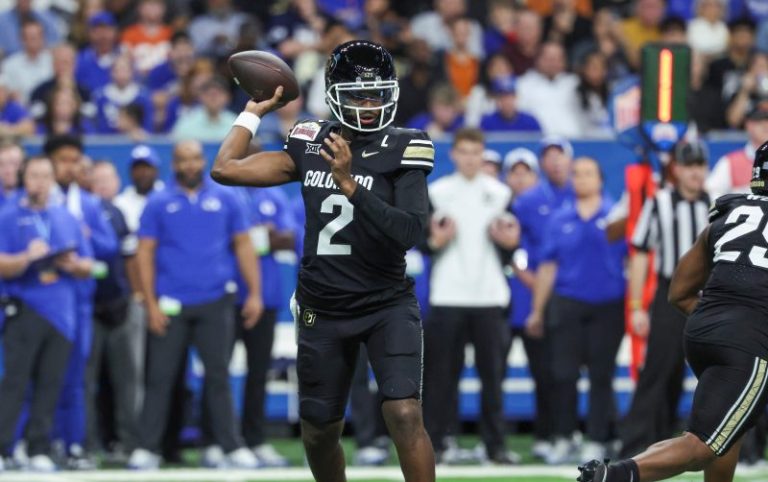
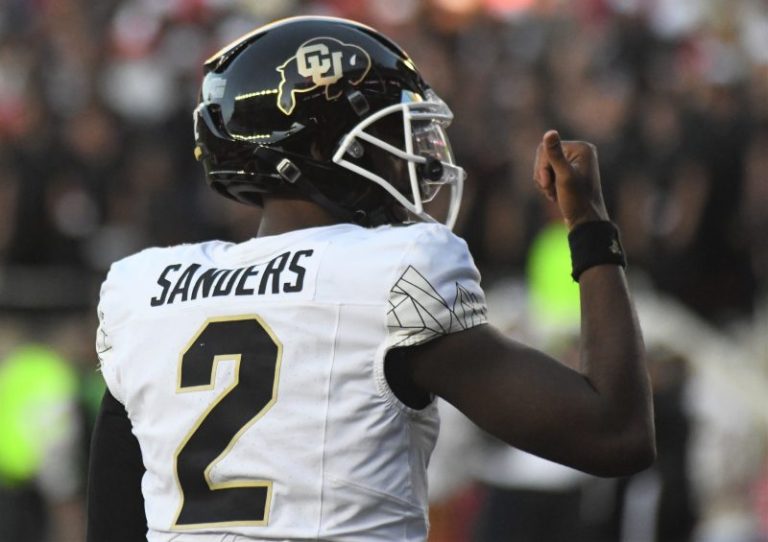
At one point on Saturday, Ewers had his name linked with Colorado quarterback Shedeur Sanders as two of the more polarizing and surprising names not taken yet by an NFL team. However, all of that shifted to just Ewers after Sanders was taken in the fifth round with the No. 144 overall pick by the Cleveland Browns.

The Las Vegas Raiders and Dallas Cowboys appeared to be a potential landing spots late in the sixth round and early in the seventh round for Ewers, but both NFL franchises went a different direction with their picks.

Quinn Ewers stats

Here’s a breakdown of Ewers’ stats at Texas:

2022: 172 of 296 (58.15) passing for 2,177 yards and 15 touchdowns; one rushing touchdown
2023: 272 of 394 (69%) passing for 3,479 yards and 22 touchdowns; five rushing touchdowns
2024: 293 of 445 (65.8%) passing for 3,472 yards and 31 touchdowns; two rushing touchdowns

This post appeared first on USA TODAY

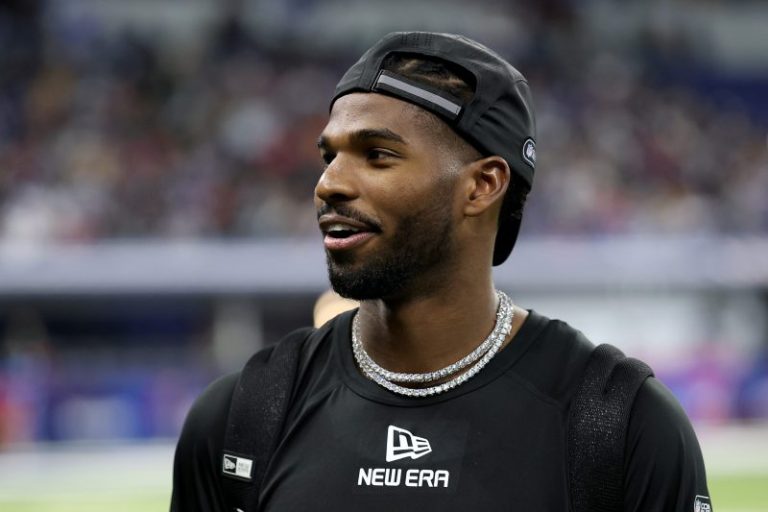
The NFL dream of Shedeur Sanders began with a bit of a nightmare. 

The son of Hall of Famer Deion Sanders had to wait until the third day of the 2025 draft to hear his name called from the stage in Green Bay, Wisconsin, which finally happened when the Cleveland Browns selected him with the sixth pick of the fifth round (144th overall), making him the sixth quarterback taken in the draft.

Sanders, who played for his father “Coach Prime” at Jackson State and Colorado and has been coached by him for his entire life, was the sixth quarterback taken in the class. Miami’s Cam Ward (first overall, Tennessee Titans), Mississippi’s Jaxson Dart (25th, New York Giants) and Louisville’s Tyler Shough (40th overall, New Orleans Saints) were selected ahead of Sanders. The Cleveland Browns, thought to be a landing spot for Sanders, didn’t use either of their early picks in the second round on Sanders.

The Browns selected quarterback Dillon Gabriel in the third round (94th overall) after the Seattle Seahawks picked Jalen Milroe two picks earlier.

Sanders started his college career at Jackson State and transferred to Colorado to continue playing for his father. Over two seasons, he posted a 13-11 as a starter in the Big 12. He set a Colorado single-season record with 4,134 passing yards last season – having No. 2 overall pick and Heisman Trophy winner Travis Hunter as a target certainly helped – and accounted for 41 touchdowns (37 passing) with 10 interceptions.

Shedeur Sanders pranked during NFL draft by caller pretending to be general manager

That Sanders was not taken during Thursday’s first round became a lightning rod in spaces that ranged from sports talk shows to the President of the United States. Sanders had been forecasted as a first-round pick, while others classified him as a second-round talent. ESPN’s Mel Kiper Jr. pounded the table for Sanders throughout the first round and continued to do so as the second round started. President Donald Trump wrote on social media that Sanders should be drafted “IMMEDIATELY.” 

The Browns also have Deshaun Watson on the roster, who is currently rehabilitating a torn Achilles. The owner of the team, Jimmy Haslam, recently said the team ‘took a big swing and miss’ on Watson.

Sanders felt he was worthy of a first-round pick and told a group gathered at the Sanders family home in Texas “this shouldn’t have happened.” Many wondered whether the presence of “Coach Prime” and the hype surrounding his son affected Shedeur Sanders’ evaluation within NFL front offices and coaching staffs. Sanders does not possess the same athleticism as his father, a defensive back who also played Major League Baseball. Rather, he’s a pure pocket passer who is polished mechanically and takes care of the football. 

Shedeur Sanders drafted by Browns: Reaction from the football world

The Browns also have Deshaun Watson on the roster, who is currently rehabilitating a torn Achilles. The owner of the team, Jimmy Haslam, recently said the team ‘took a big swing and miss’ on Watson.

Prior to the draft, Sanders had been linked to the Browns and Steelers, in addition to the Giants and Raiders. Sanders and Hunter both had their Colorado jerseys retired earlier in April. 

This post appeared first on USA TODAY

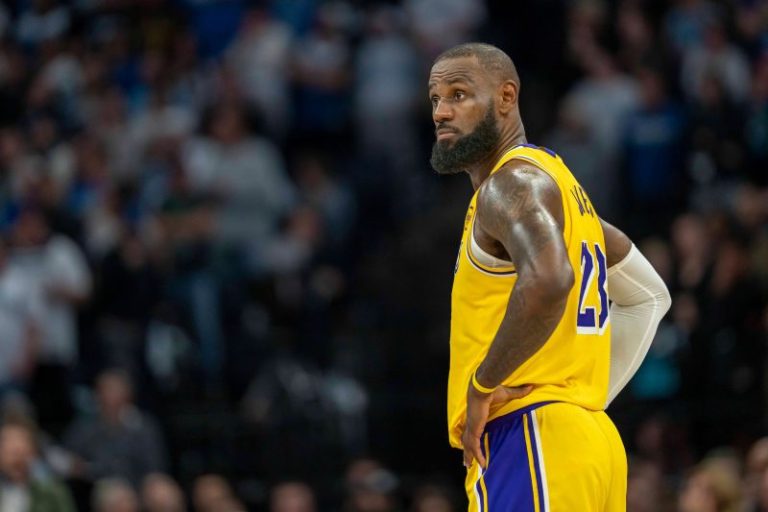
The Los Angeles Lakers, all series long, had been waiting for vintage LeBron James to show up.

He arrived Friday night, but it didn’t matter. Los Angeles wasted another playoff classic from the King.

On a night when Luka Dončić struggled through a stomach bug, James set the record for most points by a 40-year-old player in a single playoff game with a 38-point masterclass of efficiency. Yet, L.A.’s 116-104 loss against the Timberwolves that set the Lakers down 2-1 in the series showed individual greatness will not be enough to carry Los Angeles through to the second round — at least if the Lakers continue to self-destruct.

Turnovers have been an issue all series; in Games 1 and 2, Los Angeles combined to give the ball away 27 times. The difference with Friday night’s 19 total turnovers was that Minnesota — a very competent defensive team, to be clear — turned those miscues into easy buckets in fastbreak opportunities. The Lakers conceded 28 points off those 19 total turnovers and attempted just 78 field goals, compared to 91 from the Timberwolves.

The Lakers also missed free throws. In Games 1 and 2, Los Angeles converted 34 of its 36 (94.4%) free throws. On Friday, the Lakers went 13-of-20 (65%) from the line, with James missing three attempts.

They failed to contain Timberwolves attackers at the perimeter, allowing Anthony Edwards, Jayden McDaniels and Julius Randle to push into the paint for high-percentage shots.

It’s no surprise, then, that the Lakers lost the battle of points in the paint by 30, a 56-26 margin.

“When we’ve been at our best, we’ve been able to be physical on the ball,” Lakers coach JJ Reddick told reporters after the game. “And not allow blow-bys and also have sort of a cover mentality, multiple effort. And it was there at times — it’s not to say our guys, they exerted a lot of effort. They played hard. But the early throw-aheads, the offensive rebounds … those things really, really accumulate, especially when you’re turning the ball over.”

Still, James has been dealing with groin and hip injuries suffered late in the regular season, which perhaps explained his pedestrian production in the first two games of the series.

But on Friday, understanding that Dončić would not be his typical self, James shot 13-of-21 (61.9%) from the field, including 5-of-9 (55.6%) from beyond the arc, while adding 10 rebounds and four assists in 41:10 minutes. Only Edwards (42:18) played more than James.

It’s stunning, frankly, given Los Angeles’ mistake-prone play, that this was a close game late.

The Timberwolves opened a seven-point lead with seven-and-a-half minutes to play, but the Lakers were able to tie the score at 103 with 4:37 left. It’s a testament to James, who hit two massive 3s to start that run.

Game 4 on Sunday now becomes crucial. Reddick said before the game that Dončić had been throwing up all day and had been dealing with the stomach bug for 24 hours. Presumably, he should be better by the time tipoff rolls around.

A 3-1 deficit in the series would put an immense amount of pressure on James, Dončić, and Reddick to save the season. As a duo, James and Dončić might be the most gifted in the NBA.

The pair are generational scorers and passers.

If Los Angeles, however, falls into bad habits — low effort, lazy passing, lack of concentration — it will all go to waste.

“We’ve got to control the controllables,” James told reporters after the game. “If we do that, we give ourselves a good chance to win.”

This post appeared first on USA TODAY

DENVER — Cincinnati Reds bench coach Freddie Benavides was a minor-league coordinator when Walt Jocketty left the St. Louis Cardinals to join a Reds front office in 2008 for an organization that hadn’t seen the playoffs in more than a decade.

Benavides knew what was next.

“He comes in from winning a World Series with the Cardinals (in 2006), stepping in with instant credibility,” Benavides said. “He started putting those teams together. Signing guys. And wasn’t afraid to trade.”

Two years later, the Reds won their first division title since 1995 — the first of three playoff teams in four years.

“Great man. Great person,” said Benavides, who first worked with Jocketty when Benavides was a player with the Rockies in the 1990s and stayed in touch over the years.

“It was tough to hear the news today.”

Jocketty, one of the most respected front office figures in baseball for decades, died Friday night after a long illness. He was 74.

The Colorado Rockies, who brought Jocketty as an assistant general manager in 1993, planned a moment of silence before Saturday’s game against the Reds.

“He came in here and we won. We were in a drought and he brought us the playoffs,” longtime clubhouse manager Rick Stowe said. “He was a great boss. He’d take us out to dinner, wanted to get to know us better, knew everybody’s families. 

“He could really read people. He knew people. He was great.”

Jocketty served as the Reds’ president of baseball operations from 2008-2016 and has been an executive advisor to the owner since.

One of his first moves with the Reds was hiring future Hall of Fame manager Dusty Baker. A year later he traded for future Hall of Fame third baseman Scott Rolen. He signed homegrown slugger Jay Bruce to a six-year extension as he reached arbitration. And made Joey Votto the highest-paid player in franchise history with a 10-year deal, all but assuring Votto would spend his entire career as a Red.

“When I got here Walt was still pretty involved,” said pitching coach Derek Johnson, who joined  the staff from Milwaukee after the 2018 season. “Just a guy that everyone had a ton of respect for.

“As I got to know him, it was pretty clear the guy had seen a lot, done a lot, and really meant a lot to the Reds. He’s definitely going to be missed.”

Jocketty, who was born in Minneapolis and went to the University of Minnesota, began his professional baseball career in 1980 as owner Charlie Finley’s director of minor league operations and scouting for the Oakland A’s. He’s credited with overhauling the farm system that produced much of the talent on Tony La Russa’s Bash Brothers playoff teams later in the decade.

After joining the Cardinals as general manager during the 1994-95 labor shutdown, he brought La Russa to St. Louis and built teams that won seven division titles, two NL pennants and a World Series during a 13-year run in St. Louis – assuring his place in baseball history.

“If you’ve been around baseball at all for the last 30 or 40 years, you know Walt’s had a pretty big impact on the game,” Johnson said. 

With the Reds, he earned The Sporting News’ Major League Baseball Executive of the Year award in 2010, his third time earning that honor (also 2000, 2004).

“He was a good solid guy and a good baseball guy,” said Reds bench coach Brad Mills, who had known Jocketty since managing in the Rockies minor-league system, and who stayed in touch over the years, including recent phone conversations.

“He loved the game,” Mills said. “He loved watching guys improve. He loved signing guys and getting them in to play.

“I really thought the world of Walt.”

This post appeared first on USA TODAY

While the last day of action will feature teams rounding out their rosters with some expected role players, special teams contributors and developmental options, the talent still available shouldn’t be overlooked. This section of the draft regularly provides several surprises, with the likes of Tampa Bay Buccaneers running back Bucky Irving and Los Angeles Chargers cornerback Tarheeb Still just last year making an immediate splash as Day 3 rookies. And even as the event moves into the middle and late rounds, several players who ranked highly on our top 200 big board are still unaccounted for.

USA TODAY Sports will be providing live updates on the top options waiting to be taken, so stay tuned for the latest throughout Saturday:

2025 NFL draft best available players live updates

102. Jared Ivey, DE, Mississippi

112. Logan Brown, OT, Kansas

139. Seth McLaughlin, C, Ohio State

143. Cobee Bryant, CB, Kansas

154. Isaiah Bond, WR, Texas

169. Zy Alexander, CB, LSU

173. Fadil Diggs, DE, Syracuse

175. Tommi Hill, CB, Nebraska

179. Jacory Croskey-Merritt, RB, Arizona

185. Xavier Restrepo, WR, Miami (Fla.)

187. Nazir Stackhouse, DT, Georgia

190. Joshua Gray, C, Oregon State

196. Jah Joyner, DE, Minnesota

Players who have been selected

1. Travis Hunter, CB/WR, Colorado (No. 2 to Jaguars)

Without hyperbole, football hasn’t seen a player like Hunter in quite some time. The Heisman Trophy winner was downright heroic in pulling double duty at cornerback and wide receiver, excelling at each spot despite a workload that would leave almost anyone else winded. While Hunter maintains he wants to keep that up, working primarily at one spot should serve not only his development but also assist with his stamina. His scintillating ball skills could make him a premier talent at either position. He still has plenty to fine tune, but he’s one of the few legitimate game-breaking talents to come through the draft in recent years.

2. Abdul Carter, DE, Penn State (No. 3 to Giants)

If anyone else has a claim to the top spot at this point, it might be Carter. The 6-3, 250-pounder moved from linebacker to defensive end last season and unlocked something special. He gets off the line in an instant and slithers past blockers to close in on the ball carrier. Unlike many other edge rushers with his athleticism, he’s not afraid to get physical or work back inside. His bend and burst put him in position to leave quarterbacks with little hope for escaping his clutches. As is typical for college edge rushers, he can improve with by expanding his set of pass-rush moves. But the overall package is that of an All-Pro talent.

3. Ashton Jeanty, RB, Boise State (No. 6 to Raiders)

As the debate about running back value rages on, Jeanty promises to be a fascinating litmus test. The Heisman Trophy runner-up strung together one of the most dominant seasons in college football history with 2,601 rushing yards and 29 touchdowns on the ground. A sublimely patient runner, he regularly slips past would-be tacklers in tight spaces and often manages to bounce off those who do make contact with him. The only ceiling on his stock might be the all-important question of how teams should properly invest at his position.

4. Cam Ward, QB, Miami (Fla.) (No. 1 to Titans)

After backing out of his initial decision to declare for last year’s draft, Ward transferred to Miami and blossomed into college football’s most dynamic passer. The 6-2, 219-pounder dazzles with off-platform throws and an ease operating out of structure. The biggest challenge for him, however, will be to take the easier gains in the short and intermediate areas rather than holding out for higher-difficulty throws that could become turnovers. Dialing back that daredevil mentality while still allowing Ward to embrace his playmaking streak could prove tricky for his future coaching staff, but his poise in the pocket and comfort working through his progressions should provide some level of assurance that he can grow in this area.

5. Tyler Warren, TE, Penn State (No. 14 to Colts)

The Nittany Lions deployed the former high school quarterback creatively as the focal point of their offense, and it was easy to see why they did so. The 6-6, 256-pounder can do almost anything asked of him in the passing game, from hauling in contested catches to turning upfield and racking up yards after a quick throw. He has room to grow as a run blocker, but he has the disposition and skills to leave his imprint on every phase of the game.

6. Will Johnson, CB, Michigan (No. 47 to Cardinals)

The comparisons to Pat Surtain II – the Denver Broncos cornerback and reigning NFL Defensive Player of the Year – are lofty but not outlandish. The 6-2, 194-pounder puts together the size, fluidity and instincts to handle any coverage assignment. Johnson isn’t a true burner and saw his 2024 season go sideways due to a toe injury, but he otherwise projects as a sticky corner who should have excellent ball production.

7. Colston Loveland, TE, Michigan (No. 10 to Bears)

A shoulder injury and shaky quarterback play last season obscured just what a threat Loveland can be as part of an NFL offense. The 6-6, 248-pounder should regularly create mismatches as an athletic target who is comfortable breaking free from slower defenders or snagging passes over the heads of smaller ones.

8. Armand Membou, OT, Missouri (No. 7 to Jets)

At 6-4 and 332 pounds, he doesn’t look the part of a bookend tackle. But Membou is equally comfortable pushing opponents around in the run game as he is keeping pass rushers at bay, though his build might leave him somewhat susceptible to being beaten by rangier defensive linemen.

9. Mason Graham, DT, Michigan (No. 5 to Browns)

As a square and squat interior disruptor, Graham will challenge some teams’ notions of what a defensive tackle should look like. But his ability to create havoc is readily evident, as he slips past guards thanks to his quick feet and crafty hand usage. He might not win in typical fashion for a defensive tackle and could need to generate a better bull rush, but he has several different answers for whatever offenses throw at him.

10. Tetairoa McMillan, WR, Arizona (No. 8 to Panthers)

The 6-4, 219-pounder has made a habit out of making the spectacular look routine. McMillan is content to pluck jump balls out of the air downfield, but he also thrives working underneath and immediately turning into a run-after-catch threat. Like many bigger receivers, he’ll face questions of whether he has the pure long speed to create separation downfield, and his route tree is fairly rudimentary at this stage. But if he demonstrates more precision and urgency, he can become a formidable threat for any passing attack.

11. Will Campbell, OT, LSU (No. 4 to Patriots)

Steadiness is the hallmark of three-year starter and consensus All-American’s play. Campbell stays composed and collected in pass protection, though he has some trouble with edge defenders comfortable working back inside. The 6-6, 319-pounder lacks ideal length for a blindside protector, but he should be a fixture of his future team’s offensive line, whether at tackle or guard.

12. Jalon Walker, LB, Georgia (No. 15 to Falcons)

At 6-1 and 243 pounds, he’ll require creative utilization from his future defensive coordinator, especially if he’s to be deployed off the edge frequently. But his playmaking prowess is undeniable, as he can knife past blockers with his length and slippery style, and he’s a missile once he locks onto a ball carrier. He’s still developing as an off-ball linebacker, but he could become a major asset in coverage as well.

13. Mike Green, DE/OLB, Marshall (No. 59 to Ravens)

The Football Bowl Subdivision leader in sacks (17 in 2024) employs a far more physical approach than one might expect from a 6-3, 251-pound edge rusher. He risks stalling out if he doesn’t continue to fill out his frame, but his relentless style and elasticity as a rusher should position him to make plenty of plays in the backfield.

14. Josh Simmons, OT, Ohio State (No. 32 to Chiefs)

Simmons’ stock likely will be linked to how comfortable teams are with his recovery from the torn patellar tendon he suffered in October. But the 6-5, 317-pounder checks many boxes of an upper-echelon pass protector, though he’s not as forceful as some of his blocking peers in this class.

15. Walter Nolen, DT, Mississippi (No. 16 to Cardinals)

The former No. 1 overall recruit didn’t fully find his form in his first two years at Texas A&M before transferring, but he broke out in his lone season in Oxford. Nolen excels at shooting the gap, though he’s also adept at pushing linemen backward. He’s too often guilty of taking himself out of plays with an overaggressive approach, but proper coaching should help him harness his attacking mentality.

16. Jahdae Barron, CB, Texas (No. 20 to Broncos)

In a breakout season for the Longhorns, the Thorpe Award winner exhibited preternatural sense for finding the football, recording five interceptions and 11 pass breakups. He might not size up as a true outside corner to some teams, but he can be a versatile asset in coverage who thrives working downhill.

17. James Pearce Jr., DE, Tennessee (No. 26 to Falcons)

His blistering initial burst off the line is often enough to give him a runway to the backfield, and he can leverage his rangy frame and formidable punch to take advantage of blockers who are thrown off balance by his speed. But it’s unclear whether he can hold up against the run and be an every-down defender, and his ability to finish off plays is still a concern.

18. Derrick Harmon, DT, Oregon (No. 21 to Steelers)

Transferring from Michigan State paid off in a major way for Harmon, who had the most pressures of any interior defensive lineman last season with 55, according to Pro Football Focus. The 6-5, 313-pounder can create disruption from anywhere along the line, though he’s likely a long shot to end up as a prolific sack artist.

19. Jihaad Campbell, LB, Alabama (No. 31 to Eagles)

A former edge rusher, Campbell is still somewhat finding his way as an off-ball linebacker, as his recognition skills are underdeveloped. But a 6-3, 235-pound defender with extensive playmaking range, a proven track record as a blitzer and untapped coverage potential is the kind of project any defensive coordinator would gladly take on.

20. Mykel Williams, DE, Georgia (No. 11 to 49ers)

Like Travon Walker before him, Williams represents a gamble on a package of outstanding traits that never coalesced into the fully dominant from many expected from him. The 6-5, 260-pounder can beat blockers in a variety of ways thanks to his rare combination of speed and power, though he likely will need to figure out additional moves for shedding opponents who do manage to lock in on him.

21. Matthew Golden, WR, Texas (No. 23 to Packers)

With Xavier Worthy and Adonai Mitchell off to the NFL, the Houston transfer stepped in and established himself as the Longhorns’ next standout pass-catching prospect. Golden enjoyed some of his best performances against top competition down the stretch in Texas’ College Football Playoff push. If he is able to beat press coverage consistently, he can challenge cornerbacks downfield with his acceleration or shake them with his crisp footwork.

22. Donovan Ezeiruaku, DE/OLB, Boston College (No. 42 to Cowboys)

After notching 16 ½ sacks last season, Ezeiruaku already seems to have a master’s degree in pass-rushing, as he has a full toolkit of moves he is prepared to wield at just the right moment. His 6-3, 248-pound build still will likely result in him being erased by bigger blockers, particularly in the run game, but he compensates for it by leveraging his length, agility and smarts.

23. Kelvin Banks, OT/G, Texas (No. 9 to Saints)

The Outland Trophy winner is one of the more battle-tested prospects in this class after three years of starting experience. It remains to be seen whether teams will entrust the 6-5, 315-pounder to hang at tackle, but his savvy and composure as a blocker should serve him well in whatever spot he ends up in.

24. Malaki Starks, S, Georgia (No. 27 to Ravens)

Starks has been a difference-maker ever since starting as a freshman in Athens, rising to the role of team leader for one of college football’s most dominant defenses. There are some volatile moments in coverage, as he too frequently takes the bait and can be shaken by quicker receivers. But if he can iron out those issues, he could be a staple of any secondary as a versatile and heady playmaker.

25. Shavon Revel Jr., CB, East Carolina (No. 76 to Cowboys)

If not for a torn anterior cruciate ligament suffered in September, he might be firmly entrenched as a first-rounder, as the 6-2, 194-pounder marries an ultra-competitive demeanor at the line of scrimmage with impressive recovery speed and improving ball skills. His health outlook will no doubt loom large in his evaluation, but if he can find the right fit with a defensive coordinator patient enough to bring him along – his style of play might make him prone to early penalties, and there will be a significant leap in quality of competition – he could be a highly productive starter.

26. Shemar Stewart, DE, Texas A&M (No. 17 to Bengals)

There might not be a more imposing defensive prospect in this class than the 6-5, 267-pound edge rusher with a rapid burst off the line. Those impressive physical tools should allow Stewart to keep creating pressure consistently while helping shut down the run game, but it remains to be seen whether he can develop a reliable pass-rush plan and finishing touch after netting just 4 ½ sacks in college.

27. Emeka Egbuka, WR, Ohio State (No. 19 to Buccaneers)

The 6-1, 202-pounder is far from the most explosive pass catcher in this year’s class, but he routinely creates separation thanks to his savvy rather than his athleticism. He has an advanced feel for route-running and shedding coverage in tight quarters, which should help him become a fast favorite of his future quarterback as a high-volume underneath target.

28. Shedeur Sanders, QB, Colorado (No. 144 to Browns)

Despite operating in a spotlight that might blind other passers, Sanders somehow managed to exceed outsized expectations by establishing himself as a precise and poised distributor. How he handles pressure at the next level could be one of the biggest determining factors in the trajectory of his career, but he could be a more than capable starter for an offense that asks him to conduct more often than create.

29. Josh Conerly Jr., OT, Oregon (No. 29 to Commanders)

He ended up on the wrong end of a Senior Bowl viral highlight against Green, but that shouldn’t define Conerly’s pre-draft process. The 6-5, 311-pounder came into his own last season as a smooth mover, though he could be victimized by power rushers in the early going.

30. Luther Burden III, WR, Missouri (No. 39 to Bears)

At a time when other receivers shined, his 2024 season ended up quite turbulent, with the dynamic slot target averaging just 11.1 yards per game. Expanding his route tree in the pros could be the key to whether he remains primarily a threat on quick hitters underneath or becomes a more well-rounded target capable of threatening defenses downfield, though he likely will require a heavy dose of schemed touches early on.

31. Donovan Jackson, G, Ohio State (No. 24 to Vikings)

Shifting to left tackle during the Buckeyes’ title run helped highlight just how far the former five-star recruit has come in his career, as Jackson locked down an array of top-notch edge rushers. The 6-4, 315-pounder figures to move back inside at the next level, where his viselike grip should help him clamp down on defenders both in pass protection and the run game.

32. Omarion Hampton, RB, North Carolina (No. 22 to Chargers)

The 6-0, 221-pounder is perfectly content to run through defenders rather than around them, something he frequently did en route to racking up 30 rushing touchdowns over the last two years. Hampton might have to rely on that strength even more at the next level, however, as he isn’t elusive enough to force many missed tackles in the open field.

33. Grey Zabel, G/C, North Dakota State (No. 18 to Seahawks)

After Graham Barton made the switch from collegiate left tackle to standout center as a rookie for the Tampa Bay Buccaneers, Zabel likely is looking at a similar trajectory. The 6-6, 312-pounder has experience at every other position along the line, but his superlative work at center during the Senior Bowl should have teams envisioning his long-term future there.

34. Kenneth Grant, DT, Michigan (No. 13 to Dolphins)

Don’t pigeonhole the 6-4, 331-pounder as a mere space eater, even though he can command double teams and plug holes against the run. Grant is perhaps this class’ most athletic big man, though his nimble movements have yet to translate to much of anything in the pass rush.

35. Tyler Booker, G, Alabama (No. 12 to Cowboys)

There might not be a more powerful blocker in this year’s class, as the 6-5, 321-pounder looks to punish anyone in his path. He’s not the most fleet-footed lineman, but he should be coveted by any team looking to ramp up a physical rushing attack.

36. Nick Emmanwori, S, South Carolina (No. 35 to Seahawks)

At 6-3 and 220 pounds with the speed of a cornerback, he seems perfectly suited to match up with tight ends and bigger receivers. Emmanwori is a bit wild when working downhill against the run and may lack the fluidity to handle work in the slot, but his excellent ball skills and physical tools should prove plenty alluring to many teams.

37. Landon Jackson, DE, Arkansas (No. 72 to Bills)

The LSU transfer is the kind of player any offensive tackle hates to see lining up across from him, as the 6-6, 264-pounder boasts daunting length, an impressive arsenal of pass-rush moves and a never-say-die mentality. Jackson might be too big for his own good, however, as his rigidity severely limits him in several phases of the game.

38. Trey Amos, CB, Mississippi (No. 61 to Commanders)

Test the 6-1, 195-pound cover man at your own peril, as Amos can close in on any throw in his area in a hurry. He’s better suited for zone work than man coverage right now, but he could become a significant asset in press looks if he improves his ability to recover.

39. TreVeyon Henderson, RB, Ohio State (No. 38 to Patriots)

Once he gets to the corner, watch out. The 5-10, 202-pounder can’t always fight his way through to daylight on inside runs, but Henderson has the burst to break long gains whenever he’s given a crease. Already a comfortable pass protector and reliable receiver, he should be a three-down option from Day 1.

40. Azareye’h Thomas, CB, Florida State (No. 73 to Jets)

The Senior Bowl standout has given evaluators reason to go back and take a closer look at one of the few bright spots in a disappointing season for the Seminoles. The 6-2, 197-pounder has a strong claim to be the premier pest of this defensive class, as he regularly smothers receivers at the line of scrimmage with his length and hyperphysical approach. He might not generate a ton of plays on the ball and won’t be a fit for every scheme, but any team looking for an in-your-face coverage presence has to give him strong consideration.

40. Maxwell Hairston, CB, Kentucky (No. 30 to Bills)

A 183-pound cornerback might be seen by some as a liability more than an asset at the line of scrimmage. While it remains to be seen whether Hairston can hold up against more physical receivers in the pros, he certainly has the disposition to hang with any wideout he finds himself across from, as he relishes working in close quarters.

41. Nic Scourton, DE, Texas A&M (No. 51 to Panthers)

The 6-4, 257-pounder can be a load for any lineman to handle, as he embraces contact with active hands, a high-energy approach and plenty of knowhow. Though his hustle and expansive set of pass-rush moves could take him a good distance, he might not have the upside of other edge rushers in the class given his mostly unremarkable physical traits.

43. Kaleb Johnson, RB, Iowa (No. 83 to Steelers)

Johnson single-handedly invigorated Iowa’s long dormant offense with his smooth running style, averaging 6.4 yards per carry. The 6-0, 225-pounder is patient yet decisive in his approach, snaking around would-be tacklers to find the open field. His limited comfort level in the passing game – particularly in protection – could box him in somewhat during the early portion of his career.

44. Jaxson Dart, QB, Mississippi (No. 25 to Giants)

It’s hard to tell exactly what a team is getting in a signal-caller who feasted in a scheme that afforded him so many chunk gains off initial reads. But if he can hone his processing and clean up his footwork, Dart stands out as a particularly intriguing prospect to bring along how readily he can beat defenses as an intermediate thrower.

45. Carson Schwesinger, LB, UCLA (No. 33 to Browns)

The walk-on who became an All-American is more than just a feel-good story. Schwesinger’s rapid recognition skills often enable him to find his way to the ball carrier faster than blockers can reach him, though he does have trouble disengaging opponents when they do beat him to the spot.

46. Mason Taylor, TE, LSU (No. 41 to Jets)

The son of Hall of Famer Jason Taylor has made a name for himself on the other side of the ball, proving to be a fluid pass catcher comfortable operating both in space and in traffic. He’s not as dynamic as this year’s top tier tight ends and is more likely to be a complementary piece than a go-to target, but he can still be a highly effective weapon for the right offense.

47. Bradyn Swinson, DE, LSU (No. 146 to Patriots)

He hasn’t enjoyed the widespread recognition of some other edge rushers in this draft class, but he deserves a higher profile. The 6-4, 250-pounder is extremely explosive, with the speed-to-power move to jolt offensive linemen when he’s not simply dipping past them.

48. Jayden Higgins, WR, Iowa State (No. 34 to Texans)

The appeal of trotting out a 6-4, 214-pound wideout doesn’t require explanation. Higgins poses a major problem in the red zone and contested-catch scenarios, though he might be relegated to a big slot role until he refines his game a little further.

49. JT Tuimoloau, DE, Ohio State (No. 45 to Colts)

His impact at the next level is likely to be measured more in pressures than sacks, but his disruption still comes in handy. The 6-5, 269-pound Tuimoloau lacks diversity as an edge rusher who relies almost entirely on his ability to push back opposing linemen, but his one trick is plenty good.

50. Aireontae Ersery, OT, Minnesota (No. 48 to Texans)

At 6-6 and 331 pounds, Ersery is nimble enough to corral speedy edge threats yet strong enough to lock down anyone who tries to engage him. Things can get dicey when he has to recover or face a counter move, but his tools are worth developing.

51. Tre Harris, WR, Mississippi (No. 55 to Chargers)

52. Tyleik Williams, DT, Ohio State (No. 28 to Lions)

53. Princely Umanmielen, DE, Mississippi (No. 77 to Panthers)

54. Alfred Collins, DT, Texas (No. 43 to 49ers)

55. Tate Ratledge, G, Georgia (No. 57 to Lions)

56. Xavier Watts, S, Notre Dame (No. 96 to Falcons)

57. Jalen Milroe, QB, Alabama (No. 92 to Seahawks)

58. Tyler Shough, QB, Louisville (No. 58 to Saints)

59. Jonah Savaiinaea, G, Arizona (No. 37 to Dolphins)

60. Elic Ayomanor, WR, Stanford (No. 136 to Titans)

61. Jared Wilson, C, Georgia (No. 95 to Patriots)

62. Terrance Ferguson, TE, Oregon (No. 46 to Rams)

63. Jaylin Noel, WR, Iowa State (No. 79 to Texans)

64. Jalen Royals, WR, Utah State (No. 133 to Chiefs)

65. Jordan Burch, DE, Oregon (No. 78 to Cardinals)

66. Billy Bowman Jr., S, Oklahoma (No. 118 to Falcons)

67. Quinshon Judkins, RB, Ohio State (No. 36 to Browns)

68. Ozzy Trapilo, OT, Boston College (No. 56 to Bears)

69. Jack Sawyer, DE, Ohio State (No. 123 to Steelers)

70. Kevin Winston Jr., S, Penn State (No. 82 to Titans)

71. Marcus Mbow, G, Purdue (No. 154 to Giants)

72. Darius Alexander, DT, Toledo (No. 65 to Giants)

73. T.J. Sanders, DT, South Carolina (No. 41 to Bills)

74. Jacob Parrish, CB, Kansas State (No. 84 to Buccaneers)

75. Darien Porter, CB, Iowa State (No. 68 to Raiders)

76. Tory Horton, WR, Colorado State (No. 166 to Seahawks)

77. Joshua Farmer, DT, Florida State (No. 137 to Patriots)

78. Kyle Williams, WR, Washington State (No. 69 to Patriots)

79. Oluwafemi Oladejo, DE, UCLA (No. 52 to Titans)

80. Devin Neal, RB, Kansas (No. 184 to Steelers)

81. Jack Bech, WR, TCU (No. 58 to Raiders)

82. Damien Martinez, RB, Miami (Fla.) (No. 223 to Seahawks)

83. Charles Grant, OT, William & Mary (No. 99 to Raiders)

84. Elijah Arroyo, TE, Miami (Fla.) (No. 50 to Seahawks)

85. Andrew Mukuba, S, Texas (No. 64 to Eagles)

86. Nohl Williams, CB, Cal (No. 85 to Chiefs)

87. Smael Mondon Jr., LB, Georgia (No. 161 to Eagles)

88. Shemar Turner, DT, Texas A&M (No. 62 to Bears)

89. Benjamin Morrison, CB, Notre Dame (No. 53 to Buccaneers)

90. Ashton Gillotte, DE, Louisville (No. 66 to Chiefs)

91. Dylan Sampson, RB, Tennessee (No. 126 to Browns)

92. Quincy Riley, CB, Louisville (No. 131 to Saints)

93. Demetrius Knight Jr., LB, South Carolina (No. 49 to Bengals)

94. Anthony Belton, OT, North Carolina State (No. 54 to Packers)

95. Wyatt Milum, G, West Virginia (No. 89 to Jaguars)

96. Danny Stutsman, LB, Oklahoma (No. 112 to Saints)

97. Sai’vion Jones, DE, LSU (No. 101 to Broncos)

98. Josaiah Stewart, OLB, Michigan (No. 90 to Rams)

99. Jamaree Caldwell, DT, Oregon (No. 86 to Chargers)

100. Harold Fannin Jr., TE, Bowling Green (No. 67 to Browns)

101. Miles Frazier, G, LSU (No. 171 to Lions)

103. Jeffrey Bassa, LB, Oregon (No. 156 to Chiefs)

104. Cameron Williams, OT, Texas (No. 207 to Eagles)

105. Dylan Fairchild, G, Georgia (No. 81 to Bengals)

106. Cam Skattebo, RB, Arizona State (No. 105 to Giants)

108. Emery Jones Jr., G, LSU (No. 91 to Ravens)

109. C.J. West, DT, Indiana (No. 113 to 49ers)

110. Bhayshul Tuten, RB, Virginia Tech (No. 104 to Jaguars)

111. Quinn Ewers, QB, Texas (No. 231 to Dolphins)

113. Ty Robinson, DT, Nebraska (No. 111 to Eagles)

114. D.J. Giddens, RB, Kansas State (No. 151 to Colts)

115. Isaac TeSlaa, WR, Arkansas (No. 70 to Lions)

116. Jonas Sanker, S, Virginia (No. 93 to Saints)

117. Lathan Ransom, S, Ohio State (No. 121 to Panthers)

118. Chris Paul Jr., LB, Mississippi (No. 172 to Rams)

119. Dorian Strong, CB, Virginia Tech (No. 177 to Bills)

120. Barryn Sorrell, DE, Texas (No. 124 to Packers)

121. Omarr Norman-Lott, DT, Tennessee (No. 63 to Chiefs)

122. Jalen Rivers, G, Miami (Fla.) (No. 153 to Bengals)

123. Aeneas Peebles, DT, Virginia Tech (No. 210 to Vikings)

124. David Walker, DE, Central Arkansas (No. 121 to Buccaneers)

125. Deone Walker, DT, Kentucky (No. 109 to Bills)

126. Tez Johnson, WR, Oregon (No. 235 to Buccaneers)

127. Elijah Roberts, DE, SMU (No. 157 to Buccaneers)

128. Ty Hamilton, DT, Ohio State (No. 148 to Rams)

129. Caleb Ransaw, CB, Tulane (No. 88 to Jaguars)

130. Vernon Broughton, DT, Texas (No. 71 to Saints)

131. Barrett Carter, LB, Clemson (No. 119 to Bengals)

132. Denzel Burke, CB, Ohio State (No. 174 to Cardinals)

133. Tai Felton, WR, Maryland (No. 102 to Vikings)

134. Cody Simon, LB, Ohio State (No. 115 to Cardinals)

135. Kain Medrano, LB, UCLA (No. 205 to Commanders)

136. Cam Jackson, DT, Florida (No. 140 to Panthers)

137. JJ Pegues, DT, Mississippi (No. 180 to Raiders)

138. Savion Williams, WR, TCU (No. 87 to Packers)

140. Trevor Etienne, RB, Georgia (No. 114 to Panthers)

141. Jaylen Reed, S, Penn State (No. 187 to Texans)

142. Craig Woodson, S, Cal (No. 106 to Patriots)

144. Tyrion Ingram-Dawkins, DE, Georgia (No. 139 to Vikings)

145. Kyle Kennard, DE, South Carolina (No. 125 to Chargers)

146. Jaydon Blue, RB, Texas (No. 149 to Cowboys)

147. Chase Lundt, OT, UConn (No. 206 to Bills)

148. Jordan Hancock, CB, Ohio State (No. 170 to Bills)

149. Upton Stout, CB, Western Kentucky (No. 100 to 49ers)

150. Malachi Moore, S, Alabama (No. 130 to Jets)

151. Brashard Smith, RB, SMU (No. 228 to Chiefs)

152. LeQuint Allen, RB, Syracuse (No. 236 to Jaguars)

153. Drew Kendall, C, Boston College (No. 168 to Eagles)

155. Jalen Travis, OT, Iowa State (No. 127 to Colts)

156. Carson Vinson, OT, Alabama A&M (No. 141 to Ravens)

157. Kyle McCord, QB, Syracuse (No. 181 to Eagles)

158. Que Robinson, DE/OLB, Alabama (No. 134 to Broncos)

159. Jaylin Lane, WR, Virginia Tech (No. 128 to Commanders)

160. Antwaun Powell-Ryland, DE, Virginia Tech (No. 209 to Eagles)

161. Oronde Gadsden II, TE, Syracuse (No. 165 to Chargers)

162. Dont’e Thornton Jr., WR, Tennessee (No. 108 to Raiders)

163. Gunnar Helm, TE, Texas (No. 120 to Titans)

164. Teddye Buchanan, LB, Cal (No. 129 to Ravens)

165. Zah Frazier, CB, UTSA (No. 169 to Bears)

166. Jordan James, RB, Oregon (No. 147 to 49ers)

167. Pat Bryant, WR, Illinois (No. 74 to Broncos)

168. Yahya Black, DT, Iowa (No. 164 to Steelers)

170. Will Howard, QB, Ohio State (No. 185 to Steelers)

171. Thomas Fidone II, TE, Nebraska (No. 219 to Giants)

172. Mitchell Evans, TE, Notre Dame (No. 163 to Panthers)

174. Caleb Rogers, G, Texas Tech (No. 98 to Raiders)

176. Ollie Gordon II, RB, Oklahoma State (No. 179 to Dolphins)

177. Ricky White III, WR, UNLV (No. 238 to Seahawks)

178. Jack Kiser, LB, Notre Dame (No. 107 to Jaguars)

180. Jonah Monheim, C, USC (No. 221 to Jaguars)

181. Rylie Mills, DT, Notre Dame (No. 142 to Seahawks)

182. Robert Longerbeam, CB, Rutgers (No. 212 to Ravens)

183. Korie Black, CB, Oklahoma State (No. 246 to Rams)

184. Jarquez Hunter, RB, Auburn (No. 117 to Rams)

186. Nick Martin, LB, Oklahoma State (No. 75 to 49ers)

188. Mac McWilliams, CB, UCF (No. 145 to Eagles)

189. Chimere Dike, WR, Florida (No. 103 to Titans)

191. Kobe King, LB, Penn State (No. 201 to Vikings)

192. Dillon Gabriel, QB, Oregon (No. 94 to Browns)

193. Arian Smith, WR, Georgia (No. 110 to Jets)

194. Shemar James, LB, Florida (No. 152 to Cowboys)

195. Cody Lindenberg, LB, Minnesota (No. 222 to Raiders)

197. Jackson Hawes, TE, Georgia Tech (No. 173 to Bills)

198. Jack Nelson, OT, Wisconsin (No. 218 to Falcons)

199. Collin Oliver, OLB, Oklahoma State (No. 159 to Packers)

200. Hunter Wohler, S, Wisconsin (No. 232 to Colts)

This post appeared first on USA TODAY

The dramatic draft slide of Shedeur Sanders now includes cruelty on the part of the public.

In a video of Day 2 from the Sanders’ draft party at the family’s residence in Texas, posted to the ‘Well Off Media’ YouTube channel of Deion Sanders Jr., Shedeur Sanders received a call from an unknown number.

‘He got that call,’ someone in the background said.

‘What’s going on?’ Sanders greeted the caller. ‘Say that one more time for me?’

Sanders then put the call on speaker phone for those gathered around to hear.

“This is Mickey Loomis here, (general manager) of the (New Orleans) Saints,’ the voice on the other end says.

The two sides exchanged pleasantries before the other party told Shedeur, ‘It’s been a long wait, man. We’re gonna take you with our next pick right here, man.’

‘Yes sir, let’s be legendary,’ Sanders replied.

‘But you’re going to have to wait a little bit longer. Sorry about that.’

Then the phone call ended.

‘What does that mean?’ Sanders asked, appearing confused.

Sanders had recently acquired the phone on which he received the call, according to The Athletic, and the number for it had been given to NFL teams exclusively.

The Saints drafted Tyler Shough from Louisville with the 40th overall pick in Round 2.

‘Wow,’ Deion Sanders, his father and coach at Colorado, reacted to the pick. ‘Wow.’

In the third round, Jalen Milroe went to the Seattle Seahawks (92nd overall) and the Cleveland Browns drafted Dillon Gabriel (94th overall).

‘Thank you GOD for EVERYTHING,’ Shedeur Sanders wrote on social media before Friday night ended.

Shedeur Sanders’ prank callers release video of cruel joke

Video from the perspective of the prank callers hit social media Saturday.

An individual wearing an ‘Ole Miss’ sweatshirt conducted the cruel joke and the perpetrators were seen laughing after they hung up.

This post appeared first on USA TODAY

Attempting to chart the course of the NFL draft even a day out can be a dicey proposition. Attempting to make accurate projections a full year out is an exercise in futility.

The best way to approach a way-too-early 2026 NFL mock draft, then, is as a thought exercise. The coming college football season will inevitably result in great shifts, as the likes of Cam Ward, Jalon Walker and Derrick Harmon were hardly household names at this point a year ago before rocketing into the first round. But the early forecast can provide an informative sketch of where things stand at the moment. And while some of college football’s biggest stars – including Ohio State wide receiver Jeremiah Smith, Alabama wide receiver Ryan Williams and South Carolina defensive end Dylan Stewart – still must wait an additional year before becoming draft-eligible, there are several stars who will prove to be compelling figures for the next 12 months.

One additional note here: Arch Manning’s omission from this forecast is intentional rather an oversight. While the Texas quarterback will no doubt be the focus of draft talk in the coming months, it’s too difficult to peg whether he will be able to deliver on the unprecedented hype after just two starts. Perhaps equally as important, there’s no guaranteeing that a passer who has been uncommonly patient in resisting the transfer portal while remaining a backup will feel any pressure to make the leap after next season.

With a draft order loosely based on where each team’s Super Bowl odds stand, here’s our way-too-early projection for next year’s first round.

2026 NFL mock draft

1. Cleveland Browns – Drew Allar, QB, Penn State

In passing up Travis Hunter to acquire an additional first-round pick for 2026, the Browns sent a clear signal that they’re pinning their hopes for a full relaunch one year from now. A central part of that effort will be getting a clean break from the Deshaun Watson debacle by positioning themselves for a marquee quarterback. Allar isn’t the clearcut front-runner to go No. 1, but the Medina, Ohio, native possesses several qualities that could make him a hometown hero in this scenario. The 6-5, 238-pounder exhibits truly elite arm strength that he can unleash in a moment’s notice, both from the pocket and on the run. While he still has to grow more consistent with his footwork and anticipation, he could claim the top spot on draft boards if he makes another significant leap comparable to the one he took last season.

2. New Orleans Saints – Garrett Nussmeier, QB, LSU

This goes a lot further than the local connection. Not only was Nussmeier’s father, Doug, a fourth-round draft pick of the Saints in 1991, he’s also the team’s newly hired offensive coordinator under first-year coach Kellen Moore. The younger Nussmeier defies the typical characterization of a coach’s son at quarterback, as he whips passes into tight windows with daredevil decision-making. Even though New Orleans took a shot on Tyler Shough in the second round, it might take a superlative performance from the Louisville passer to extend the team’s streak of not taking a first-round quarterback since Archie Manning in 1971. Nussmeier can be the catalyst New Orleans needs as it embarks upon a long-awaited rebuild.

3. New York Jets – Caleb Downs, S, Ohio State

A safety hasn’t been selected in the top three picks since 1991, when Eric Turner went No. 2 overall to the Browns. Yet while Downs inevitably will have trouble warding off players at premium positions to secure a spot this high, he’s unquestionably one of college football’s most electric figures thanks to his outstanding instincts both in coverage and stopping the run. He would be an immediate tone-setter for Aaron Glenn as the coach tries to instill a culture of accountability for Gang Green.

4. New York Giants – Kadyn Proctor, OT, Alabama

Much as John Mara might like another crack at a Manning behind center, Big Blue can instead forge ahead with setting Jaxson Dart up for success. The Giants go big – literally – with the 6-7, 360-pound Proctor, who can pair with left tackle Andrew Thomas to provide the steady protection that the franchise has long lacked.

5. Tennessee Titans – T.J. Parker, DE, Clemson

Addressing the problem behind center was a natural call for Tennessee at the No. 1 overall pick, but it left the franchise ill-equipped to boost a flagging edge rush, with second-rounder Oluwafemi Oladejo only doing so much to reshape the group. The 6-3, 265-pound Parker, who tied for ninth in the Football Bowl Subdivision with 11 sacks while adding six forced fumbles, could serve as the spark to get the defense going.

6. Carolina Panthers – Keldric Faulk, DE, Auburn

Even after taking Nic Scourton and Princely Umanmielen on Day 2, Carolina’s pass rush likely will remain in dire straits for another season. That could leave the Panthers clamoring for someone who can create chaos, and the 6-6, 270-pound Faulk could take over for Jadeveon Clowney as a supersized edge rusher capable of creating a serious jolt.

7. Browns (from Jacksonville Jaguars) – Francis Mauigoa, OT, Miami (Fla.)

Once the Browns have their long-term answer at quarterback in tow, they could turn their attention to safeguarding him. The mountainous Mauigoa (6-6, 315 pounds) still has to rein in his aggressiveness, but it’s rare to find his blockers who boast his quickness and explosiveness, particularly at his size.

8. Las Vegas Raiders – Peter Woods, DT, Clemson

After a stellar debut as a freshman, Woods played out of position on the edge for much of last season before being bumped back inside. That might have obscured just how much of a problem the 6-3, 315-pounder can pose for offenses. Pairing Woods with fellow Clemson product Christian Wilkins would give Las Vegas two matchups problems on the interior.

9. Indianapolis Colts – Suntarine Perkins, LB, Mississippi

After frequently operating as an undersized edge rusher at just 6-1 and 210 pounds, Perkins is bound to be utilized differently at the next level. But the playmaking flair he exhibited in racking up 10 ½ sacks last season can’t be denied, and Indianapolis’ defense looks desperate for difference-makers.

10. New England Patriots – Rueben Bain Jr., DE, Miami (Fla.)

A defense that ranked last in the NFL in sacks (28) still looks likely to have trouble creating pressure despite adding Milton Williams and Harold Landry III in free agency. By adding Bain, who broke out as a true freshman with 7 ½ sacks before being hampered by a soft-tissue injury, New England could rev up its edge rush to the level that Mike Vrabel will demand.

11. Miami Dolphins – Austin Barber, OT, Florida

Patrick Paul is being entrusted to fill the shoes of Terron Armstead at left tackle, but proper protection for Tua Tagovailoa is paramount. If the 2023 second-round pick stumbles, the Dolphins could set their sights on Barber, an ascendant blocker and smooth mover at 6-6 and 314 pounds.

12. Dallas Cowboys – Anthony Hill Jr., LB, Texas

Whether it’s closing in on quarterbacks as a blitzer, thumping in the run game or dropping back in coverage, Hill has a preternatural sense for finding the ball. The 6-3, 237-pound dynamo would be a scintillating figure on the second level of the Cowboys’ defense, and Jerry Jones likely would be willing to shrug off questions of positional value more so than many other general managers.

13. San Francisco 49ers – Isaiah World, OT, Oregon

Replacing Trent Williams is a nearly impossible proposition, not only for San Francisco but also the player tasked with taking over for the 11-time Pro Bowl selection. But a 49ers team in transition has to take on the task, and the 6-8, 303-pound World – who transferred from Nevada this offseason – has the rare blend of size, strength and athleticism that’s worth gambling on.

14. Los Angeles Rams (from Atlanta Falcons) – Jermod McCoy, CB, Tennessee

Patience could pay off for Los Angeles, as the Rams can reap the rewards of this year’s trade back with the Falcons by landing a player who could reshape their secondary. The jump from Oregon State to Tennessee didn’t prove to be too much for McCoy to handle, as the 6-0, 193-pounder snared four interceptions and earned second-team All-American honors after locking down the Southeastern Conference. His placement here could be precarious after he tore his anterior cruciate ligament in January, but if he’s able to bounce back and return to action, he would have a strong case to be the first cornerback selected next year.

15. Seattle Seahawks – Matayo Uiagalelei, DE, Oregon

DeMarcus Lawrence signed a three-year deal this offseason, but the four-time Pro Bowler will be 34 before the 2026 season starts. Uiagalelei would be a formidable addition to Mike Macdonald’s pass rush, and he has plenty of juice to get after the quarterback, as evidenced by his 10 ½ sacks last season.

16. Arizona Cardinals – Evan Stewart, WR, Oregon

In a class that looks to be light on top-flight receivers in the early going – at least ones who are draft-eligible – Stewart has the chance to set himself apart from his peers. The 6-0, 175-pounder consistently creates separation with his quick-twitch movements, making him a fitting running mate for Marvin Harrison Jr. and Trey McBride in the Cardinals’ aerial attack.

17. Chicago Bears – LT Overton, DE, Alabama

With a heavy focus on reworking their offense in recent years, the Bears haven’t taken a defensive player in the first round since selecting Roquan Smith in 2018. That drought could come to an end with Overton, who offers inside-outside versatility at 6-5 and 280 pounds as both a stout run defender and emerging pass rusher.

18. Houston Texans – Jeremiyah Love, RB, Notre Dame

He’s not on Ashton Jeanty’s level yet, but Love looks prepared to seize the title of college football’s most dynamic back – he’s already mastered the art of hurdling defenders – and a ball carrier worthy of a first-round pick. After averaging 7.0 yards per carry last season, the 6-0, 206-pounder can take some strain off C.J. Stroud and serve as a successor to Joe Mixon, who doesn’t have any guaranteed money for the final year of his contract in 2026.

19. Pittsburgh Steelers – Domani Jackson, CB, Alabama

The Steelers managed to patch up the hole at cornerback opposite Joey Porter Jr., but 34-year-old Darius Slay in only on a one-year deal. Jackson stands 6-1 and 195 pounds with speed to burn – he tied the California high school state record for the 100 meters dash at 10.25 seconds – and figures to be the kind of high-end athlete that Omar Khan gravitates toward.

20. Tampa Bay Buccaneers – Tyreak Sapp, DE, Florida

Haason Reddick is only signed to a one-year deal, so Tampa Bay could once again be retooling its pass rush next spring. After notching a team-leading seven sacks and 13 tackles for loss last season, the 6-3, 273-pound Sapp figures to be the type of player who could help Todd Bowles maintain a consistent level of pressure against opposing passers.

21. Denver Broncos – Caleb Banks, DT, Florida

Some high-priced extensions are likely in the pipeline for a Denver defense that broke out in a big way last season, with edge rusher Nik Bonitto and defensive end Zach Allen each due for deals that should be near the top of their respective markets. The Broncos can continue to fortify their front with Banks, a 6-6, 325-pound transfer from Louisville whose length and explosiveness allows him to create havoc for opposing quarterbacks.

22. Los Angeles Chargers – Christen Miller, DT, Georgia

Even with Jalon Walker, Mykel Williams and Malaki Starks – among others – off to the NFL, don’t expect Georgia’s well of defensive talent to dry up anytime soon. Miller might be next in line to be a future first-round pick, as the 6-4, 305-pounder showed plenty of flashes of disruptiveness against both the run and pass before being knocked out for the remainder of the campaign with a shoulder injury.

23. Minnesota Vikings – Darrell Jackson Jr., DT, Florida State

The 6-5, 337-pound nose tackle sat out the 2023 season after transferring from Miami, but he didn’t take long to establish himself as a massive disruptor on the interior. With his ability to command double teams and collapse pockets, Jackson could be a force multiplier on Brian Flores’ defense – so long as the coordinator is still around in 2026 after receiving head-coaching consideration this past cycle.

24. Green Bay Packers – Malik Muhammad, CB, Texas

If the Packers were willing to break from precedent in selecting wide receiver Matthew Golden in the first round on Thursday, why not once more next year? At 6-0 and 178 pounds, Muhammad is significantly lighter than the cornerbacks who typically catch Green Bay’s eye. But if he can bulk up and cut down on some of the deep meltdowns that have marred his otherwise stellar play, the instinctive cornerback could follow former Texas teammate Jahdae Barron into a spot on Day 1.

25. Cincinnati Bengals – Keon Sabb, S, Alabama

If Cincinnati is going to reassert its contender status and account for an investing strategy that tilts heavily toward its offense, it will need to round out its defense with playmakers on rookie contracts. Sabb, a Michigan transfer who started just seven games last year before being sidelined by a foot injury, could patrol the back end of the unit while still making his mark in the run game.

26. Washington Commanders – Nick Singleton, RB, Penn State

With Washington fully embracing its expedited arrival to the NFC’s contending class by making bold moves to support Jayden Daniels while the quarterback is on a rookie contract, why not take another stab at trying to put the offense over the top? While Brian Robinson Jr. – who is entering the final year of his rookie contract – has been reliable, Singleton would change the complexion of the Commanders’ attack with his breakaway speed while still maintaining the power and versatility to be a three-down threat.

27. Buffalo Bills – Dillon Thieneman, S, Oregon

When you have to slow the likes of Patrick Mahomes, Joe Burrow and Lamar Jackson, it never hurts to have a robust group of defensive backs capable of deterring deep shots. Thieneman intercepted six passes as a freshman at Purdue, and his transfer to Oregon might further highlight how much he could aid a defense that doesn’t offer much excitement with its current safety tandem of Taylor Rapp and Damar Hamlin.

28. Detroit Lions – Cayden Green, G, Missouri

Controlling the line of scrimmage will always be paramount for Dan Campbell and Brad Holmes, and Detroit could again address its interior offensive line after taking guard Tate Ratledge in the second round this year. Green isn’t on the same level as his former Missouri linemate Armand Membou, but he’s an ascendant prospect who’s steady in both the pass and run game.

29. Baltimore Ravens – Avieon Terrell, CB, Clemson

With a modest build at 5-11 and 180 pounds, Terrell doesn’t quite size up physically to his older brother, Atlanta Falcons standout cornerback A.J. Terrell. But his route-recognition and ball skills help him play with an urgency that would make him an attractive option for the Ravens, who ranked 31st in passing yards allowed last season and are seemingly always on the hunt for high-end cornerbacks.

30. Rams – LaNorris Sellers, QB, South Carolina

Maybe this seems like a stretch for a team that reached an accord with Matthew Stafford this offseason and now is operating at least somewhat on the veteran’s timeline. But even though Sellers is far from a finished product as a passer, the 6-3, 242-pound dual-threat option offers immensely tantalizing growth potential that could be harnessed if he is allowed to sit and learn behind Stafford before ascending to the top spot.

31. Kansas City Chiefs – Nyck Harbor, WR, South Carolina

A leap of faith is required to make this projection, but let’s have some fun. Despite recording just 26 catches for 376 yards last season, the 6-5, 235-pound target – who has twice taken the No. 1 spot on The Athletic’s ‘Freaks List’ – might stand alone as college football’s best overall athlete. With 10.11-second speed in the 100-meter dash, Harbor could step in alongside fellow downfield dynamo Xavier Worthy to provide another major weapon to help the team prepare for the post-Travis Kelce era.

32. Philadelphia Eagles – Antonio Williams, WR, Clemson

Is this a luxury for a team that already has A.J. Brown and DeVonta Smith in the fold? Sure. But with the Eagles set to decline Jahan Dotson’s third-year option, per multiple reports, Williams can round out the receiving corps as a tertiary threat.

This post appeared first on USA TODAY

The Cleveland Browns are collecting all the quarterbacks.

One day after drafting Dillon Gabriel, the team decided to take the plunge on another signal caller, this time drafting Colorado quarterback Shedeur Sanders in the fifth round of the 2025 NFL Draft.

It brings the total to five in the room, which is getting more crowded with each passing day.

Of course, only one can start and typically two or three make the roster, meaning there are quite a few names on the chopping block this summer in Cleveland.

Here’s a look at where the Browns’ quarterback depth chart stands after the Sanders selection.

Browns QB depth chart

Deshaun Watson
Joe Flacco
Kenny Pickett
Dillon Gabriel
Shedeur Sanders

Watson remains the headliner, but his 2025 season is in doubt after rupturing his right Achilles again in January. It occurred just three months after the initial surgery, clouding Watson’s future not only for 2025, but also as a Brown.

The team opted to bring in some reinforcements by acquiring Pickett from the Philadelphia Eagles and signing Flacco ahead of the draft.

However, once the draft got underway, things started to get funky in Northeast Ohio. They passed on Sanders multiple times, instead opting for Gabriel in the third round. The Oregon prospect projects more as a backup than anything else, but still managed to become the fourth quarterback in the room.

In the fifth round, Cleveland doubled down by taking the sliding Sanders, who was initially considered to be a first-round pick.

It sets off what will be a fascinating competition for Kevin Stefanski’s team during training camp. Any of the quarterbacks can seemingly win the job, so expect plenty of fireworks over the summer.

With the draft capital invested, it would appear Sanders has the longest road ahead of him.

Given the Browns’ history with quarterbacks, perhaps they are looking for quantity in the hopes one becomes a quality starter down the road.

This post appeared first on USA TODAY
Colorado’s record-setting quarterback was selected with the 144th pick in the fifth round by the Cleveland Browns, who traded up to that pick on the NFL Draft’s third day. He was the sixth quarterback taken in this year’s draft, including Dillon Gabriel, who Cleveland selected in the third round with the 94th pick overall on Friday night.

The Browns’ quarterback room entering mini-camps has Deshaun Watson, who is injured, Kenny Pickett, and Joe Flacco, who is 40 years old.

The speculation about why Sanders dropped has run rampant, especially in the draft coverage on television and on social media.

Shedeur Sanders drafted by Browns: Reactions

This post appeared first on USA TODAY
The 2025 NFL Draft has two days and three rounds in the book, but the event hasn’t even reached its true midpoint yet.

On Friday, teams turned their attention to an all-important two-round stretch. This section of the draft can accelerate rebuilds by allowing franchises to stock up on young talent at key spots, and it can also help fuel – or sustain – contenders by equipping them with low-cost talent that allows them to pay top dollar to stars. And while several players atop our big board rankings of the top options available quickly heard their names called, many more – including Colorado quarterback Shedeur Sanders – are still waiting for resolution.

USA TODAY Sports graded each pick in the second and third rounds as they came in, so take a look back at all our the latest analysis for every selection on the night.

2025 NFL draft grades: Every pick in second and third round

Second round

33. Cleveland Browns: Carson Schwesinger, LB, UCLA – Grade: B-

An off-ball linebacker is a bit of a luxury for a team with as many holes as the Browns. Schwesinger could be a hyperactive presence at the second level for Cleveland, but the team is going to have to start attacking premium positions to truly get this rebuild going.

34. Houston Texans (from Giants): Jayden Higgins, WR, Iowa State – Grade: B+

Rounding out the receiving corps made sense for Houston given the departure of Stefon Diggs and Tank Dell’s uncertain status, and the Texans got ahead of a possible run on the position early on Day 2. Higgins has drawn comparisons to new teammate Nico Collins and should be a matchup problem on in-breaking routes and in contested-catch scenarios.

35. Seattle Seahawks (from Titans): Nick Emmanwori, S, South Carolina – Grade: B+

If the Seahawks had taken Emmanwori at 18, it likely wouldn’t have created a stir. Instead, Seattle trades up to secure the singularly athletic playmaker near the top of Round 2. Emmanwori needs to be a more controlled and reliable presence against the run, but he can unlock all sorts of coverage looks for Mike Macdonald and his mad scientist approach to defense.

36. Cleveland Browns (from Jaguars): Quinshon Judkins, RB, Ohio State – Grade: C-

Well, so much for attacking premium positions in a rebuild. The Browns’ backfield is in dire straits, but it’s hard to square taking a workhorse back here, especially given the depth available at the position. It’s also a little surprising to see Judkins taken ahead of his more dynamic former Buckeyes teammate TreVeyon Henderson.

37. Miami Dolphins (from Raiders) – Jonah Savaiinaea, G, Arizona – Grade: B-

Stout and steady, Savaiinaea provides something different and necessary to the Dolphins’ line as a powerful and reliable interior presence. Trading up for the 6-4, 324-pounder warrants some scrutiny given the number of Day 2 options at the position, but Miami has made a serious commitment toward firming up its fronts.

38. New England Patriots: TreVeyon Henderson, RB, Ohio State – Grade: B

Adding more explosiveness for the Drake Maye-led offense was bound to be a priority for New England on Day 2. But many assumed it would come in the form of a receiver rather than a running back. Henderson still ramps up the big-play quotient for the attack, however, and he should also factor heavily into the passing attack as someone who can create mismatches.

39. Chicago Bears (from Panthers): Luther Burden III, WR, Missouri – Grade: A-

No excuses for Caleb Williams in Year 2. Between the addition of Ben Johnson, the overhauling of the offensive line and the addition of dynamic receiving targets in first-round tight end Colston Loveland and Burden, the Bears have weaponized their attack in impressive fashion. Johnson needs to get Burden to lock in, but the electric run-after-catch threat can ignite big plays, though many of his early touches will likely need to be schemed.

40. New Orleans Saints: Tyler Shough, QB, Louisville – Grade: B

Imagine telling someone in January that Shough would be taken ahead of Shedeur Sanders. Shough, a seventh-year senior who was in the same recruiting class as Trevor Lawrence and Justin Fields, has an extensive injury history and only one year of consistent production, but it’s easy to see the appeal of a 6-5, 219-pound passer with a live arm. The uncertainty with Derek Carr’s health could prompt Shough into action in short order, and he won’t have a very promising setup to work with as a rookie. But this is a worthwhile rolling of the dice for a team that could come back to the spot next year if the pick doesn’t work out.

41. Buffalo Bills (from Bears): T.J. Sanders, DT, South Carolina – Grade: C+

Attacking needs is the clear theme of the Bills’ draft, as they follow up a selection for their most pressing shortcoming at cornerback by moving up the board for a defensive tackle. Sanders can be disruptive as someone who can shoot the gap, but his inconsistency will make him hard to count on as an every-down defender early in his career.

42. New York Jets: Mason Taylor, TE, LSU – Grade: B+

After taking Armand Membou over the top tight end options at No. 7, Gang Green circles back to the position to land a player one notch below Colston Loveland and Tyler Warren. Taylor can be an immediate asset to Justin Fields as a reliable target who can thrive operating in traffic.

43. San Francisco 49ers: Alfred Collins, DT, Texas – Grade: B+

The outlook for the 49ers’ defensive interior after the team parted with Javon Hargrave and Maliek Collins was rather shaky, but San Francisco did a nice job of capitalizing on a deep class at defensive tackle. Collins should have no trouble controlling the line of scrimmage and stuffing the run, though you likely won’t find him chasing down quarterbacks with any regularity. But Nick Bosa and first-round pick Mykel Williams can lead the charge there.

44. Dallas Cowboys: Donovan Ezeiruaku, DE, Boston College – Grade: A

Nice bounce-back pick for Jerry Jones after the questionable use of resources in taking Tyler Booker at No. 12. Ezeiruaku was second in the Football Bowl Subdivision with 16 1/2 sacks last season, and he should be able to continue deploying his advanced approach to rushing the passer effectively as he operates opposite Micah Parsons.

45. Indianapolis Colts: JT Tuimoloau, DE, Ohio State – Grade: B

Tuimoloau might not single-handedly jolt the Colts’ edge rush, but he can be an important part of a rotation. The 6-4, 265-pounder reliably creates pressure with his bull rush and sets a firm edge against the run.

46. Los Angeles Rams (from Falcons): Terrance Ferguson, TE, Oregon – Grade: B

Sean McVay and Les Snead really wanted their playmaking tight end. One year after their push for Brock Bowers came up empty, the Rams turn to Ferguson, an impressive athlete who should serve a solid complementary role in the passing attack that will center on Puka Nacua and Davante Adams.

47. Arizona Cardinals: Will Johnson, CB, Michigan – Grade: A

It’s impossible to fully assess this pick without knowing the prognosis for the knee ailment that weighed down Johnson’s stock, according to multiple reports. But his play and coverage tools are otherwise that of a top-10 pick, so he could be a massive boon to Arizona’s rebuilt defense if he can stay on the field.

48. Houston Texans (from Dolphins and Raiders): Aireontae Ersery, OT, Minnesota – Grade: B

Solving the protection problems for C.J. Stroud was bound to be a multipronged approach for Houston. The Texans take another stab at a solution with Ersery, an uneven but promising blocker who should be a good fit in offensive coordinator Nick Caley’s zone-blocking scheme. Bringing him along slowly behind Cam Robinson in his rookie year is probably the right move.

49. Cincinnati Bengals: Demetrius Knight Jr., LB, South Carolina – Grade: C+

Some help at the second level definitely belonged on the Bengals’ to-do list, but perhaps not this high. Knight can be an active presence against the run, but he could be exploited if tasked with too many man coverage looks.

50. Seattle Seahawks – Elijah Arroyo, TE, Miami (Fla.) – Grade: B-

After bringing on Cooper Kupp alongside Jaxon Smith-Njigba and parting with both DK Metcalf and Tyler Lockett, Seattle looked due for a pass catcher who could attack defenses downfield. Arroyo looks promised to take on that role as a player who will split out wide frequently and essentially be a tight end in name only.

51. Carolina Panthers (from Broncos): Nic Scourton, DE/OLB, Texas A&M – Grade: B-

Addressing the edge rush early was a Day 2 necessity for Carolina, which paid off the final part of the Bryce Young deal earlier in the round but traded up from a spot later on to get to this slot. Outside of a wicked spin move, Scourton won’t win on style points, but his high-effort approach to pass-rushing could still pay nice dividends.

52. Tennessee Titans (from Steelers via Seahawks): Oluwafemi Oladejo, DE/OLB, UCLA – Grade: B-

Another team lacking a spark off the edge takes action to find a catalyst. The 6-3, 261-pound Oladejo is an imposing presence thanks to his power, but he has to develop a more diverse array of moves to make a consistent mark as a pass rusher.

53. Tampa Bay Buccaneers: Benjamin Morrison, CB, Notre Dame – Grade: B-

A hip injury knocked Morrison out of his final season in South Bend, and it likely took a toll on his draft stock as well. The 6-0, 193-pounder could have some trouble against more physical receivers who will look to push him around, but his ball skills could position him as a nice staple of the secondary for Todd Bowles.

54. Green Bay Packers: Anthony Belton, OT, North Carolina State – Grade: C+

More help for Jordan Love is on the way, though maybe not immediately. Belton overwhelms opponents when he locks in on them, but he has work to do to become a more controlled presence who can be trusted in the starting lineup.

55. Los Angeles Chargers – Tre Harris, WR, Mississippi – Grade: B

The Bolts found another flavor in the passing game to take the load off of Ladd McConkey. Harris is underdeveloped as a route-runner after coming out of Mississippi’s simplistic scheme, but he can tax defenses downfield while he learns to become a more complete player.

56. Chicago Bears (from Vikings via Texans and Bills): Ozzy Trapilo, OT, Boston College – Grade: B

All offense, all the time for Chicago. The Bears get back to the trenches with Trapilo, a towering blindside blocker who provides some insurance if left tackle Braxton Jones falters or has any trouble staying on the field after he fractured an ankle last season.

57. Detroit Lions (from Rams via Panthers): Tate Ratledge, G, Georgia – Grade: B+

Good marriage of value and need here for Detroit. An interior offensive line on slightly uncertain ground after Kevin Zeitler’s departure in free agency gets revitalized with Ratledge, who is solid to the core in both pass protection and the run game.

58. Las Vegas Raiders (from Texans): Jack Bech, WR, TCU – Grade: B

More skill-position talent is headed to Sin City to invigorate the Silver and Black’s attack. Geno Smith likely will need to trust Bech in jump-ball scenarios to truly take advantage of what he offers, but the 6-1, 214-pounder’s track record suggests he’ll continue to deliver in tight quarters.

59. Baltimore Ravens: Mike Green, DE/OLB, Marshall – Grade: A-

Two sexual assault allegations – one in high school and one at Virginia before his transfer to Marshall – almost assuredly complicated Green’s draft outlook. There’s little question that the Football Bowl Subdivision leader in sacks can electrify the Ravens’ pass rush, but more questions will follow this choice.

60. Denver Broncos (from Lions): RJ Harvey, RB, UCF – Grade: B-

It’s a bit of a surprise to see the 5-8, 205-pound Harvey be selected ahead of some ball carriers who look better equipped to handle a substantial workload, but clearly Sean Payton saw something in the twitchy threat. Though he has substantial upside as a pass catcher who can help fill the ‘Joker’ role, his rocky showings in protection could limit his usage.

61. Washington Commanders: Trey Amos, CB, Mississippi – Grade: A

The arrow is pointing up for Amos, who can make quarterbacks pay for daring to test him. The 6-1, 195-pounder can have some trouble against savvier receivers in man coverage, but his tools are well worth the investment at this point in the draft.

62. Chicago Bears (from Bills): Shemar Turner, DT, Texas A&M – Grade: B-

Defensive line makes a sensible area for Ryan Poles to address after the Bears went heavy on offense early. Turner adds some juice to Chicago’s front, though he’s a bit wild to be entrusted as an every-down entity.

63. Kansas City Chiefs: Omarr Norman-Lott, DT, Tennessee – Grade: C+

Finding another interior disruptor to put next to Chris Jones figured to be a point of interest for Kansas City given the depth of this defensive tackle class. Norman-Lott might be a boom-or-bust kind of player given how much the 6-2, 303-pounder relies on beating players off the ball.

64. Philadelphia Eagles: Andrew Mukuba, S, Texas – Grade: C+

Howie Roseman deserves the benefit of the doubt on secondary picks after he aced last year’s haul of Quinyon Mitchell and Cooper DeJean. But despite his instinctive coverage skills, Mukuba shapes up as a potential liability as a tackler while offering a pedestrian athletic profile.

Third round

65. New York Giants: Darius Alexander, DT, Toledo – Grade: B-

At 6-4 and 305 pounds, Alexander looks the part of a player who can cause problems in the middle. But he’s too often washed out of plays and has to develop more ways to win if he is to make a heavier impact in opponents’ backfields.

66. Kansas City Chiefs (from Titans): Ashton Gillotte, DE, Louisville – Grade: B

There’s not a ton of mystery to Gillotte’s approach, which typically entails him trying to plow through whoever is lined up across from him. But for whatever he lacks in creativity, he still has a way of flustering offenses with his forcefulness.

67. Cleveland Browns: Harold Fannin Jr., TE, Bowling Green – Grade: B

There’s a stark contrast between Fannin’s process, which entails jerky movements, and his prolific receiving results. He figures to max out as a complementary asset, but that’s still something that Cleveland’s eventual quarterback of the future can benefit from.

68. Las Vegas Raiders: Darien Porter, CB, Iowa State – Grade: B

Pete Carroll and John Spytek settle a particularly pressing spot with a pick that Al Davis would have loved. At 6-3 and 195 pounds with 4.3-speed in the 40-yard dash, Porter boasts astonishing athleticism and considerable ball skills at cornerback. But the former receiver is very much not a finished product given his limited experience at the position, and he could be in for some turbulent reps in coverage if he’s forced into a heavy rookie workload.

69. New England Patriots: Kyle Williams, WR, Washingon State – Grade: B+

Drake Maye might be salivating at the prospect of a receiver with the wheels to make things happen downfield. If the undersized Williams can beat press looks, he has the speed to pull away from cornerbacks and bring the big-play element New England’s aerial attack sorely needs.

70. Detroit Lions (from Jaguars): Isaac TeSlaa, WR, Arkansas – Grade: C+

The upside for a 6-4, 214-pounder is immense, as TeSlaa can pluck passes over the heads of smaller defensive backs downfield. But he still has a long way to go on his development, and he might be relegated to a big slot role at the next level.

71. New Orleans Saints: Vernon Broughton, DT, Texas – Grade: C+

Another stout run stuffer goes off the board. Still, this feels like a bit of a stretch, particularly for a team with as much to address as New Orleans.

72. Buffalo Bills (from Bears): Landon Jackson, DE, Arkansas – Grade: A-

Sean McDermott has already shown he can get the most out of a massive edge rusher with Greg Rousseau. The 6-6, 264-pound Jackson is likely too mechanical to match the pass-rush production of the former first-rounder, but he’s still a pain for offensive tackles to keep at bay given his length and power.

73. New York Jets: Azareye’h Thomas, CB, Florida State – Grade: A-

Hard to think of a better place for an ascending cornerback to land than with Aaron Glenn. A Senior Bowl standout, Thomas routinely flusters receivers with his length and determined approach to coverage.

74. Denver Broncos (from Panthers): Pat Bryant, WR, Illinois – Grade: C

Boosting Bo Nix is an understandable aim, but it’s difficult to understand how much adding a possession receiver moves the needle. Bryant was taken ahead of several targets who seemingly possess more upside.

75. San Francisco 49ers: Nick Martin, LB, Oklahoma State – Grade: C

The production and playmaking range – recall that Martin caught up with 40-yard dash record-setter Xavier Worthy to make a tackle – are major pluses. But a missile-like mentality toward finding the ball too often results in misfires for Martin, who also might be engulfed by bigger blockers.

76. Dallas Cowboys: Shavon Revel Jr., CB, East Carolina – Grade: A

Brian Schottenheimer spoke early this month about his desire to build the team outside in. With Revel, Dallas does exactly that, giving itself a smothering coverage presence who likely would have been a first-round talent if not for a torn anterior cruciate ligament suffered in September.

77. Carolina Panthers (from Falcons via Patriots): Princely Umanmielen, DE/OLB, Mississippi – Grade: A-

Doubling up on the edge rush is a reasonable decision to assist a defense that ranked 31st in ESPN’s pass-rush win rate metric. Umanmielen gives Carolina a more dynamic threat than solid second-rounder Nic Scourton, though he’s far less consistent.

78. Arizona Cardinals: Jordan Burch, DE, Oregon – Grade: B+

Monti Ossenfort clearly didn’t want to leave the offseason without a front seven that could pack a punch. Burch might not translate his testing marks into prolific sack stats at the next level, but he can push blockers back and hold the edge.

79. Houston Texans (from Dolphins via Eagles and Commanders): Jaylin Noel, WR, Iowa State – Grade: B

Noel and second-round receiver Jayden Higgins will remain teammates with contrasting styles at their next stop. There’s certainly a redundancy question given Christian Kirk’s presence and the other figures in play here, but Noel is the kind of pass catcher who can further put C.J. Stroud at ease with his ability to uncover.

80. Indianapolis Colts: Justin Walley, CB, Minnesota – Grade: C-

At 5-10 and 190 pounds, Walley is fairly unremarkable in most elements of his game, though he’s experienced and productive. There were more promising options who would have been more appealing here.

81. Cincinnati Bengals: Dylan Fairchild, G, Georgia – Grade: B

Exiting Day 2 with a starting-caliber guard was an important step for the Bengals given their unstable protection for Joe Burrow. Mission accomplished, as Fairchild has the strength to become a fixture with more polish.

82. Tennessee Titans (from Seahawks): Kevin Winston Jr., S, Titans – Grade: B

A torn ACL suffered in September not only complicated Winston’s draft outlook but also robbed him of the opportunity to gain valuable experience. He should be a valuable asset against the run right away, but his work in coverage might be a little more of a roller-coaster.

83. Pittsburgh Steelers: Kaleb Johnson, RB, Iowa – Grade: B+

Not the backfield selection everyone was waiting for with Shedeur Sanders on the board, but there’s plenty to like about this pick. Johnson has drawn some comparisons to Le’Veon Bell for his distinct and patient running style, and he could enjoy a more fruitful career than several of the ball carriers taken ahead of him.

84. Tampa Bay Buccaneers: Jacob Parrish, CB, Kansas State – Grade: B

With two cornerbacks selected on Day 2, change is afoot in the Buccaneers’ secondary. Speedy and smooth, Parrish can hang outside or in the slot, though the latter might be his settling point given his 5-10, 191-pound frame.

85. Kansas City Chiefs (from Denver Broncos): Nohl Williams, CB, Cal – Grade: B

With 14 career interceptions, Williams is a certified ballhawk. He could have trouble translating that playing style to the next level given his pedestrian athleticism, but he should allow Kansas City to be flexible with how it uses Trent McDuffie.

86. Los Angeles Chargers: Jamaree Caldwell, DT, Oregon – Grade: B+

Jim Harbaugh finally gets some bulk to a defensive line that was in a bad way after the departure of Poona Ford. Caldwell can be considered a discount Kenneth Grant, and he should help Los Angeles dictate terms in the run game.

87. Green Bay Packers: Savion Williams, WR, TCU – Grade: B

A second wide receiver going to Green Bay early is a fun subplot, but Williams is more of an all-purpose weapon than a true wideout. He’s been compared to a supersized Cordarrelle Patterson, and he should have sufficient time to hone his approach while still seeing several schemed touches.

88. Jacksonville Jaguars (from Vikings): Caleb Ransaw, CB, Tulane – Grade: B-

Asking Travis Hunter to save the league’s last-ranked pass defense is too much, even for the Heisman Trophy winner. Ransaw might not fully settle the spot opposite Tyson Campbell, but he can be a sticky and versatile piece on the back end for Jacksonville.

89. Jacksonville Jaguars (from Texans): Wyatt Milum, G, West Virginia – Grade: B

If the start of the Jaguars’ class was all about excitement, then the next step might be about stability. Though Milum doesn’t have ideal length or athleticism, he can get the job done for Trevor Lawrence and the Jacksonville run game with his savvy and strength.

90. Los Angeles Rams: Josaiah Stewart, OLB, Michigan – Grade: B

At 6-1 and 249 pounds, Stewart is firmly in outlier territory for an edge rusher. But his burst off the edge will give him a chance to make his way into opponents’ backfields, and he has a better track record against the run than one would expect of a player at his size.

91. Baltimore Ravens: Emery Jones Jr., G, LSU – Grade: B

A sturdy blocker at 6-5 and 315 pounds, Jones can obscure some of his shortcomings by moving inside to guard. His discipline can falter, but he can be a force in the run game.

92. Seattle Seahawks (from Lions via Jets and Raiders) – Jalen Milroe, QB, Alabama – Grade: A-

With the selection Seattle received from the Geno Smith trade, the Seahawks take a shot at shaping their own quarterback future. With a rifle arm and scintillating running ability, Milroe has a ceiling that’s sky-high. It’s unclear if he’ll ever become refined enough as a passer to approach it, but this is the kind of gamble that a team without certainty behind center should be taking on Day 2.

93. New Orleans Saints (from Commanders): Jonas Sanker, S, Virginia – Grade: B-

Aggressive and athletic, Sanker has plenty of promise if he can become a little less volatile, particularly as a tackler. He can match up well against tight ends and bigger slots, though he could have trouble with more nimble targets.

94. Cleveland Browns (from Bills): Dillon Gabriel, QB, Oregon – Grade: C-

Despite his extensive production, Gabriel landing in the third round – and ahead of Shedeur Sanders – is nothing short of a shocker. With the undersized passer seemingly possessing limited developmental upside after a lengthy college career, it’s hard to figure out what Cleveland saw here as it sets itself up for a 2026 QB splash.

95. New England Patriots (from Chiefs): Jared Wilson, C, Georgia – Grade: B+

His one year as a starter proved sufficient to catch teams’ eyes. There’s still plenty of room to grow as a blocker, but New England was wise to give itself an option at center beyond former first-round washout Garrett Bradbury.

96. Atlanta Falcons (from Eagles): Xavier Watts, S, Notre Dame – Grade: B+

No one in this class matches Watts’ ability to put himself in position to make a play in coverage, as evidenced by his 13 interceptions over the last two years. Athletic limitations put a ceiling on his stock, but he can patrol deep so long as he is kept out of unfavorable man matchups.

x – 97. Houston Texans (from Vikings): Jaylin Smith, CB, USC – Grade: C

Cornerback didn’t shape up as a particular area of concern for a secondary that already boasts Derek Stingley Jr., Kamari Lassiter and nickel Jalen Pitre. Smith might be pigeonholed to working inside and sticking underneath, but he can add depth.

x – 98. Las Vegas Raiders (from Dolphins): Caleb Rogers, G, Texas Tech – Grade: B-

Several college offensive tackles in this class are headed inside, and Rogers appears to be one of them. His prowess when pulling should serve Ashton Jeanty well, though he’s well short of a full-on bulldozer.

x – 99. Las Vegas Raiders (from Giants via Texans): Charles Grant, OT, William & Mary – Grade: B+

Traits of a high-end pass protector are difficult to find this late in the draft, and Grant certainly has them. A jump in competition will make for a rocky transition, but there’s the payoff here could be considerable, especially with left tackle Kolton Miller’s future unresolved amid contract questions.

y – 100. San Francisco 49ers: Upton Stout, CB, Western Kentucky – Grade: C+

Stout joins linebacker Nick Martin as the next undersized but extremely active playmaker to join San Francisco’s defense. He has been likened to Amik Robertson, but he might be boxed into a role that emphasizes his quickness and shields him from mismatches.

y – 101. Denver Broncos (from Rams via Falcons): Sai’vion Jones, DE, LSU – Grade: B

Nik Bonitto’s breakout season helped the Broncos’ pass rush reach new heights, but it never hurts to have additional weapons. Jones can be a bully against opposing linemen and spell others.

y – 102. Minnesota Vikings (from Lions): Tai Felton, WR, Maryland – Grade: B-

There’s no shortage of juice in the Vikings’ receiving corps with Justin Jefferson and Jordan Addison leading the way, but now Minnesota can prepare to spread the wealth with J.J. McCarthy at the helm. Felton will strain defenses with his acceleration, though he could be neutralized by physical defensive backs.

x – compensatory selection

y – special compensatory selection

This post appeared first on USA TODAY