Archive

2025

Browsing

With the NHL playoffs underway, the league is rolling out the names of players who stood out during the regular season.

Over the next week, the three finalists will be announced for the following awards: Vezina Trophy (goaltender), Norris Trophy (defenseman), Ted Lindsay Award (MVP as voted by players), Hart Trophy (MVP as voted by writers), Masterton Trophy (perseverance), Selke Trophy (defensive forward), Adams Award (coach), Lady Byng Trophy (sportsmanship) and Calder Trophy (rookie).

The winner of the Willie O’Ree Community Award will be announced on May 12. Finalists for the Jim Gregory General Manager of the Year award will be announced after the end of the second round of the playoffs.

Voting took place at the end of the regular season. No date has been announced yet for when the winners will be revealed.

Here are the finalists for the NHL’s major awards and when the finalists will be announced:

Vezina Trophy finalists

Who votes: General managers

Finalists (listed alphabetically): Connor Hellebuyck, Winnipeg Jets; Darcy Kuemper, Los Angeles Kings, and Andrei Vasilevskiy, Tampa Bay Lightning,

Hellebuyck, last year’s winner, went 47-12-3 with a 2.00 goals-against average, .925 save percentage and eight shutouts to lead the Jets to the league’s best record. The 47 wins tied for second best all-time. He led the NHL in GAA and shutouts and ranked second in save percentage. Hellebuyck, who won in 2020 and 2024, is looking to become the first repeat winner since Hall of Famer Martin Brodeur in 2006-07 and 2007-08.

Kuemper went 31-11-7 with five shutouts in his second stint with the Kings. He finished first in high-danger save percentage (.863), second in goals-against average (2.02) and third in save percentage. He had a stretch of 15 consecutive starts of allowing two or fewer goals from March 5 to April 10. He’s a first-time finalist.

Vasilevskiy went 38-20-5 and ranked second in 38 wins, tied for first in games played (63), was second in saves (1,581) and high-danger save percentage (.853), tied for second in shutouts (six) and ranked fourth in goals-against average (2.18) and save percentage (.921). He became the fastest goaltender in league history to reach 300 wins, doing it in his 490th career game. Vasilevskiy is a finalist for the fifth time and won the award in 2018-19.

NHL awards finalists announcement schedule

Monday, April 28: Vezina Trophy

Tuesday, April 29: James Norris Memorial Trophy

Wednesday, April 30: Ted Lindsay Award

Thursday, May 1: Hart Memorial Trophy

Friday, May 2: Bill Masterton Memorial Trophy, Frank J. Selke Trophy, Jack Adams Award and Lady Byng Memorial Trophy

Monday, May 5: Calder Memorial Trophy

This post appeared first on USA TODAY

Two-time Stanley Cup-winning coach Mike Sullivan and the Pittsburgh Penguins agreed to part ways Monday after the team missed the playoffs for the third consecutive season.

Sullivan won Stanley Cup titles in 2016 and 2017, had a franchise-best 409 regular-season wins and a .602 points percentage in the regular season. But the Penguins haven’t won a playoff series since 2018 and haven’t been to the postseason since 2022.

He leaves with two years left on his contract but will be pursued by NHL teams with coaching vacancies this summer.

Sullivan ‘will forever be an enormous part of Penguins history, not only for the impressive back-to-back Cups, his impact on the core of Sidney Crosby, Evgeni Malkin, Kris Letang and Bryan Rust, but more importantly, for his love and loyalty to the organization,’ Penguins general manager Kyle Dubas said in a statement. ‘This was not a decision that was taken lightly, but as we continue to navigate the Penguins through this transitional period, we felt it was the best course forward for all involved.”

The Penguins changed upper management in the 2023 offseason after the NHL’s then-longest active playoff streak ended at 16 seasons. Dubas kept Sullivan on and took steps to aid the Penguins’ longtime core.

But despite Dubas trading for Norris Trophy winner Erik Karlsson and rebuilding the bottom six forward group, the Penguins never got on track last season until a late run that left them just short. Particularly perplexing was a power play that ranked 30th in the league despite a strong season by Crosby.

The Penguins signed Crosby to a two-year extension, and he broke Wayne Gretzky’s record with a 20th season averaging at least a point per game.

The team didn’t fare any better this season, falling 6-0 to the New York Rangers at home during the opener. Pittsburgh got its record to 3-2, then began a 0-5-1 slide and never got more than one game above .500 during the season. Though the power play improved, the team ranked 29th in the league in five-on-five goal differential and had the fourth-worst goals-against average.

The Penguins were eliminated with 10 days left in the regular season.

Previous GM Ron Hextall had signed Sullivan to a three-year extension that started this season and runs through 2026-27. He had been head coach since replacing Mike Johnston in the middle of the 2015-16 season and leading the team to a title that June.

Sullivan was coach of the USA’s 4 Nations Face-Off team that finished second to Canada and has been named U.S. coach at the 2026 Olympics.

Which NHL teams have coaching vacancies?

The Rangers, Seattle Kraken and Anaheim Ducks have fired their coaches this offseason and the Boston Bruins have begun a coaching search. The Philadelphia Flyers and Chicago Blackhawks finished the season with interim coaches.

This post appeared first on USA TODAY

The Washington Commanders are headed back to D.C.

For almost 30 years, the team has played its home games in Landover, Maryland at Northwest Field (formerly known as FedEx Field). On Monday, the Commanders announced plans to build a new stadium in the District of Columbia with a video narrated by former quarterback Joe Theismann and posted to social media.

According to the video, the team’s plan is to build the stadium on the site of RFK Memorial Stadium, where the team played from 1961 to 1996. The site is located two miles directly east of the U.S. Capitol building.

‘Let’s bring the Commanders home,’ Theismann says in the video. ‘Let’s bring Washington back to D.C.’

Harris and D.C. Mayor Muriel Bowser will share more details for the stadium plans at a news conference Monday morning.

The opportunity to build a new stadium on the RFK Stadium site only became a reality earlier this year.

In early January, former President Joe Biden signed a bill transferring ownership of the land from the federal government to the city of D.C. for the next 99 years. It was a measure that both team principal owner Josh Harris and NFL commissioner Roger Goodell had lobbied for before it was signed.

Multiple city council members, including chairman Phil Mendelson, have already voiced their dissent, saying they oppose the use of taxpayer money to build a new stadium.

‘My position has been that there should not be public dollars – the D.C. treasury should not be paying toward a stadium,’ he told the Washington Post earlier this month.

The team’s ownership group, led by Harris, has long said one of its biggest goals in acquiring the team was to build a new stadium by 2030. The Commanders have a contract with the state of Maryland to play at their current stadium in Landover until 2027 and can continue to play there until the new stadium’s construction is finished.

Washington finished the 2024 season with a 12-5 record, its best mark since 1991. Rookie quarterback Jayden Daniels helped lead the team to the NFC championship game before the Commanders were defeated by the eventual Super Bowl-champion Philadelphia Eagles.

This post appeared first on USA TODAY

Pakistan’s defense minister on Monday said he believes an incursion by India is ‘imminent’ as tensions remain heightened following a militant attack in India’s Kashmir region last week, which saw the killing of 26 people, first reported Reuters. 

India, which has not named any group it suspects of leading the attack but said it believes Pakistan to have backed the militants involved in the assault, has reportedly engaged in an aggressive hunt to find those involved in the deadliest attack in two decades. 

According to a BBC report, Indian authorities have used explosives to demolish properties allegedly linked to the suspects, more than 1,500 people have been detained for questioning and troops from both India and Pakistan have exchanged cross-border small arms fire.

‘We have reinforced our forces because it is something which is imminent now. So in that situation, some strategic decisions have to be taken, so those decisions have been taken,’ Pakistan Defense Minister Khawaja Muhammad Asif told Reuters on Monday from the capital city of Islamabad. 

Asif did not say why he thought a possible incursion from India was imminent, but noted that allies in the Gulf had been informed, who in turn had apparently communicated the situation on the ground with officials in China and the U.S.

The New York Times on Monday similarly reported that India appeared to be building its case for possible military intervention as Prime Minister Narendra Modi had been engaging in mass diplomatic outreach by speaking with more than a dozen world leaders about the situation.

The feud between India and Pakistan predates last week’s attack by nearly 80 years, following Britain’s decision to end its direct rule in the region following World War II and enact the 1947 Partition of British India, which essentially divided modern-day India and Pakistan based on Hindu and Muslim populations — though it caused massive unrest and displacement along religious lines.

The partition also gave the diverse Jammu and Kashmir region the ability to choose if it wanted to join either newly established nation. 

Ultimately, the conflict ongoing today stems from the previous monarch of the region’s initial attempt to seek independence, followed by its decision to join India in exchange for security against invading Pakistani militias.

India and Pakistan have engaged in several wars and cross-border skirmishes in the decades since. 

While President Donald Trump said last week that resolving the decades-old conflict was down to New Delhi and Islamabad to sort out, the State Department said it was working with both sides to encourage a ‘responsible solution.’

This post appeared first on FOX NEWS

The U.S. military has pummeled over 800 targets since mid-March in a campaign aimed at eliminating Houthi terrorists and restoring freedom of navigation in the Red Sea, according to an update from Central Command. 

Since the start of ‘Operation Rough Rider’ on March 15, U.S. forces have executed an ‘intense and sustained campaign’ to dismantle the Iran-backed Houthi terrorist organization’s capabilities, CENTCOM said Monday. The strikes have destroyed critical military infrastructure, including command centers, air defense systems, advanced weapons manufacturing sites and stockpiles of anti-ship missiles and drones.

‘These strikes have killed hundreds of Houthi fighters and numerous Houthi leaders, including senior Houthi missile and UAV officials,’ the statement read. 

The Houthis’ ability to launch attacks on international shipping has taken a major hit. U.S. officials say ballistic missile launches have dropped by 69%, while attacks by one-way suicide drones have fallen by 55% since the operation began.

The Ras Isa Port – previously a key Houthi fueling hub – was also destroyed, cutting off a vital revenue stream the group used to fund its terror activities.

The update came after concerns over the rapid rate at which the offensive campaign has depleted munitions stockpiles, and congressional officials say the campaign has already cost over $1 billion, the New York Times first reported. 

The Houthis have said they will continue to lob projectiles and launch drones toward Western commercial and military ships in the Red Sea in a show of solidarity with the Palestinians in Gaza and Hamas.

Sunday’s update was the first after six weeks of bombing on how many targets had been struck.

It did not reveal how many civilians had been killed or the cost of the campaign. The U.S. now has two aircraft carriers in the region and has sent in new fighter, bomber and air defense units.

‘To preserve operational security, we have intentionally limited disclosing details of our ongoing or future operations. We are very deliberate in our operational approach, but will not reveal specifics about what we’ve done or what we will do,’ the statement read. 

Despite U.S. claims of success, some lawmakers and military analysts have questioned whether the strikes are achieving lasting results. Critics argue that while the campaign has degraded some Houthi capabilities, it has not fully stopped attacks on shipping vessels, U.S. Navy ships, or international maritime traffic.

‘We will continue to ratchet up the pressure until the objective is met, which remains the restoration of freedom of navigation and American deterrence in the region,’ the statement said. 

The Houthi offensive was at the center of a bombshell report on a Signal group of top Trump Cabinet officials who used the chat to discuss details and, in the case of Vice President JD Vance, air complaints about the planned strikes. 

‘I think we are making a mistake,’ Vance wrote in the Signal chat, later published by The Atlantic.

‘I am not sure the president is aware how inconsistent this is with his message on Europe right now.’ The commercial ships being attacked in the Red Sea are largely European. 

This post appeared first on FOX NEWS

House Republicans are rushing to get started on a multitrillion-dollar bill to advance President Donald Trump’s agenda, with their own leader’s self-imposed deadline less than a month away.

Lawmakers on five different committees are huddling within their panels this week to debate and advance specific aspects of what will become one massive piece of legislation

House Speaker Mike Johnson, R-La., has said he wants to get a bill on Trump’s desk by Memorial Day – a goal he’s still optimistic about, despite a host of challenges that Republicans will need to get through before the finish line.

Meanwhile, the Senate and House appear to still be far apart on their expected timelines and how much money they’re aiming to spend.

‘This is not just a preference we have, this is a necessity,’ Johnson told Fox News Digital about the Memorial Day deadline in an interview on Friday. 

‘We have the debt limit X-date approaching, and as everybody knows, border security resources dwindling, we’ve got markets in flux, we’ve got, of course, the living threat of the largest tax increase on working families in history.’

Republicans are seeking to fit Trump’s priorities on energy, defense, border security and taxes into the bill, as well as raise the debt ceiling – another item the president specifically asked GOP lawmakers to deal with.

Johnson pointed out that the U.S. is fast approaching its deadline to act on the debt ceiling or risk a national credit default – which would send financial markets into a tailspin. The federal government is expected to hit that deadline sometime this spring or summer, according to differing projections.

‘I’ve got to work on the assumption that it’ll be sooner, it may be as early as June,’ Johnson said. ‘I can’t control what happens in the Senate, but I think they have the same sense of urgency, so I think that we’re on target to get it by Memorial Day or shortly thereafter.’

A Senate GOP leadership aide appeared less optimistic, however.

They told Fox News Digital that Republicans in the upper chamber shared the goal of moving as quickly as possible but acknowledged ‘the reality’ of differing procedures in the House and Senate.

The House’s framework for the legislation passed first and called for at least $1.5 trillion to $2 trillion in spending cuts to offset a portion of the $4.5 trillion allocated toward Trump’s tax agenda.

The Senate later passed an amended version that called for a minimum of $4 billion in spending cuts.

House Republicans narrowly swallowed that framework to align with the Senate – a key step before the relevant committees noted in the framework can begin crafting policies within their jurisdictions, to later be filled into the final bill.

A revolt against that bill by an unlikely faction of well-known GOP rebels and leaders on the House Budget Committee prompted Senate Majority Leader John Thune, R-S.D., to publicly pledge to have the Senate aim for $1.5 trillion in spending cuts. 

But on paper, they’re still far apart, and there’s a significant contingent in the House and Senate who are wary of cutting funding for critical programs like Medicaid and Medicare.

‘The fight is between the House, that wants to add $2.8 trillion on the debt, and the Senate, that wants to add $5.8 trillion on the debt,’ said Marc Goldwein, senior vice president of the Committee for a Responsible Federal Budget (CRFB). ‘So I’m not optimistic that we’re going to reduce the debt. I am somewhat optimistic that we’re going to get closer to what the House wants, which would be much better.’

But a significant amount – about $880 billion – of spending cuts outlined in the House GOP framework come from the House Energy & Commerce Committee, which has jurisdiction over Medicare and Medicaid.

Estimates have shown that the committee will not be able to complete those cuts without cutting into those programs, but Republican leaders have insisted they’re only looking to root out ‘waste, fraud and abuse.’

Republicans are looking to pass their legislation via the budget reconciliation process. The mechanism allows the party in power to pass massive policy overhauls while entirely sidelining the opposing party by dropping the Senate’s threshold for passage from 60 votes to 51.

The House already operates on a simple majority threshold.

The House committees set to meet this week to mark up their reconciliation bills are the Homeland Security, Oversight, Education & Workforce, and Financial Services.

Issues that are expected to be more divisive – like portions from the Energy and Commerce Committee and the Ways and Means Committee, which writes tax policy – will be visited next week.

This post appeared first on FOX NEWS
NEWYou can now listen to Fox News articles!

I began my journalism career at The Federalist, an outlet that was founded with only one official editorial position; ending the White House Correspondents’ Dinner. I agreed with it at the time, but having grown since, I now see the error of my ways and am calling to disband the entire White House Correspondents’ Association.  

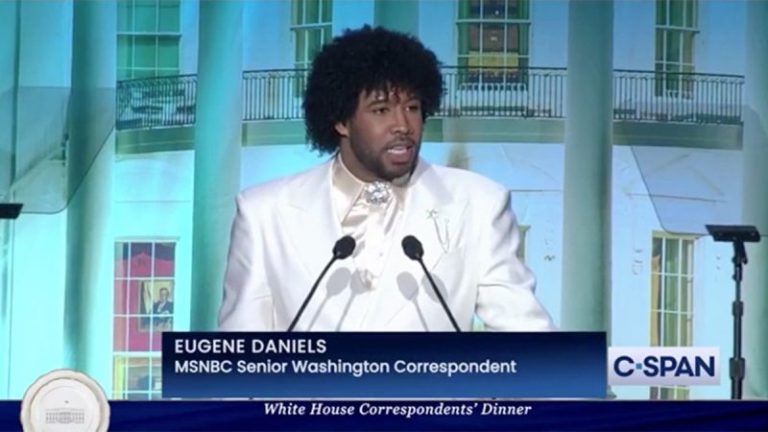
On Saturday, April 26, in Washington, D.C., the WHCA held its annual dinner, once a time-honored tradition of the capital. Now it is a shell of itself that the president does not even attend, and an event for which the organization struggles to find a host who won’t perform a seizure of hatred toward President Donald Trump. 

Of course, this year the entire farce was held under the cloud of the liberal news organizations that cover the presidency having failed to report that President Joe Biden, as commander in chief, was not only not in charge, but often barely awake. 

Look at what WCHA President Eugene Daniels actually said in his opening remarks, I had to read it twice to believe it: ‘I know this has been an extremely difficult year for all of you. It’s been difficult for this association. We’ve been tested, attacked, but every single day our members get up, they run to the White House, plane, train, automobile with one mission, holding the powerful accountable.’ 

Holding the powerful accountable? Where was this H.L. Mencken attitude when Grandpa Joe was dithering away in the West Wing?  

Then there was journalist Alex Thompson, who mused the following, ‘President Biden’s decline and its cover-up by the people around him is a reminder that every White House, regardless of party, is capable of deception. … We, myself included, missed a lot of this story and some people trust us less because of it.’ 

This is the same Thompson hawking a book he wrote with CNN anchor Jake Tapper about the Biden administration. Jake Tapper! That guy not only ignored Biden’s obvious infirmity, he chided as crackpots anyone who did point it out. 

Thomspson, like a sweet, summer child, doesn’t get it, yet. It’s not that many Americans trust the news media ‘less,’ it’s that they don’t trust us at all, about anything.  

Not everything in life comes with second chances. These people covering Biden flat out blew it, and did incredible harm to the nation and the profession of journalism in the process. 

Covering Biden’s presidency for four years and not realizing or reporting that he was not all there is the journalism equivalent of an NFL team going winless all season. That’s something that five teams, starting with the 1960 Dallas Cowboys, have suffered through in the post-war era, but none of them ever threw themselves a party to celebrate their abject failure. 

We all know what happened over the past four years. The liberal media decided that Biden’s team, even if the old man was upstairs watching ‘Matlock’ and complaining his soup wasn’t hot enough, was better than electing Trump.  

With absolute shamelessness and disregard for the people, these charlatans with reporter’s notebooks allowed their hatred of Donald Trump, and his supporters, to drive their coverage. Nobody should ever come back from that. 

If there is still a legitimate purpose to the WHCA, it surely would have been to stand up to the Biden administration, to demand more access and evidence. 

Instead, this gaggle of fools just nodded along like morons while former Press Secretary Karine Jean-Pierre claimed actual, unedited videos were ‘cheap fakes,’ an Orwellian nonsense term, and that they shouldn’t be shown. 

Traditions are good, they are important, and the WHCA, founded in 1914, has a rich tradition. But, traditions can also become mere trappings, a fancy symbolic set of clothes that bestows an appearance of honor on those who don it, deserved or not. 

Thankfully, the Trump White House has taken measures to rein in the WHCA’s monopoly on West Wing coverage, bringing in centrist and conservative new media members, and of course, the ‘professionals,’ are having a fit. 

But while The New York Times and others might mock press room queries from figures like Natalie Winters of ‘War Room,’ or podcasters like Tim Pool, those people are already doing a thousand times better covering Trump than the gentle treatment the venerated WHCA gave Biden. 

It’s always good to be wary of industries where their members heap endless praise on each other and constantly give themselves awards. Hollywood, for instance, and that is what much of journalism has become.  

‘Look at me!’ the establishment journalists all say, ‘I have an official WHCA membership card and a lanyard! So, obviously, I’m a brave warrior for the truth!’ 

Not everything in life comes with second chances. These people covering Biden flat out blew it, and did incredible harm to the nation and the profession of journalism in the process. 

Nobody is buying it anymore. 

Look, if the WHCA wants to continue, fine, it could have fancy lunches and lecture series, maybe get matching sweaters made. But in no way, shape or form should this organization play the slightest role in how the White House actually deals with the media. 

Far better would be to put this dinosaur of the legacy media down. Journalists don’t need a club. They simply need to tell the truth. 

This post appeared first on FOX NEWS

The White House on Monday morning revealed that President Donald Trump wants to do ‘whatever it takes’ to bring Russian President Vladimir Putin to the table for peace talks with Ukraine, including slapping Russia with additional sanctions.

White House deputy chief of staff James Blair joined ‘Fox & Friends’ to discuss the latest on the Trump administration’s effort to broker peace between Russia and Ukraine, including the frustration that Trump is having with both sides. 

‘Obviously, the president feels like we are making progress, but he’s been frustrated at both sides, which he’s made clear,’ Blair said. ‘He said over the weekend that the Ukrainians should have signed the deal with us weeks ago, and he wants them to hurry up and get that done. And Putin, [Trump] is very displeased with the attacks on civilian areas last week, and [Trump’s] put on the table increasing sanctions, secondary tariffs on oil, whatever it takes to make sure that they hurry up and get to the table and create peace.’

Russia launched a deadly missile attack on Kyiv that killed at least 12 people and injured at least 90, including children, on April 24.

When asked whether Trump was angry at the idea that Putin may be stringing him along, Blair pointed to a statement the president posted on his TRUTH Social platform on Saturday. 

‘Well, look, he put out a statement, I think, two days ago on his TRUTH [Social account], where he said he does not want to be tapped along, he won’t accept it.’ Blair said. ‘He’s displeased, again, with the attacks on civilian areas, and the president said it makes him feel like maybe he doesn’t want peace as badly as he says he does. And the president’s not going to stand for that. If that means increasing sanctions, he’s obviously put that on the table.’

Blair spoke to Fox News about one hour before the Kremlin announced a three-day ceasefire with Ukraine from May 8 to May 10 to mark the 80th anniversary of the Soviet Union’s victory over Nazi Germany during World War II. Kyiv did not immediately respond to the announcement.

Putin has previously said that he agrees in principle with a Russia-Ukraine ceasefire deal, though has so far refused to accept a complete unconditional ceasefire.

Over the weekend, U.S. Secretary of State Marco Rubio appeared to temper expectations for a major peace agreement between Ukraine and Russia, telling NBC’s ‘Meet the Press’ that while progress has been made, a deal is ‘still not there.’

Rubio’s Russian counterpart, Foreign Minister Sergei Lavrov, told CBS’ ‘Face the Nation’ in a pre-recorded interview that aired Sunday that Russia won’t discuss any potential negotiations in public, though emphasized that Russia is ‘always available for a dialogue.’

This post appeared first on FOX NEWS

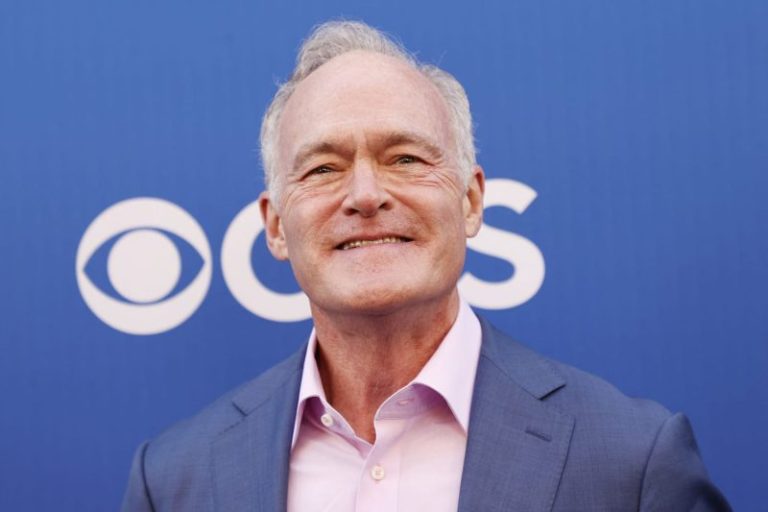
“60 Minutes” correspondent Scott Pelley paid tribute Sunday to Bill Owens, the show’s executive producer who resigned last week, saying on the air that “none of us is happy” about the extra supervision that corporate leaders are imposing.

Pelley made his comments at the end of the evening’s CBS News telecast, saying that in quitting, Owens proved he was the right person for the job.

“It was hard on him and it was hard on us,” Pelley said. “But he did it for us — and you.”

His on-air statement was an unusual peek behind the scenes at the sort of inner turmoil that viewers seldom get the opportunity to see.

Owens, only the third top executive in the 57-year history of television’s most influential newscast, resigned last week, saying he no longer felt he had the independence to run the program as he had in the past, and felt necessary.

CBS News’ parent company, Paramount Global, is in the midst of a merger with Skydance Media that needs the approval of the Trump administration. Trump has sued “60 Minutes” for $20 billion, saying it unfairly edited a Kamala Harris interview last fall to her advantage. Owens and others at “60 Minutes” believe they did nothing wrong and have opposed a settlement.

As a result, Pelley explained to viewers on Sunday, Paramount has begun to supervise “60 Minutes” stories in new ways. Former CBS News President Susan Zirinsky, a longtime news producer, has reportedly been asked to look at the show’s stories before they air.

“None of our stories has been blocked,” Pelley said. “But Bill felt he lost the independence that honest journalism requires. No one here is happy about it. But in resigning, Bill proved he was the right person to lead ‘60 Minutes’ all along.”

Despite this, “60 Minutes” has done tough stories about the Trump administration almost every week since the inauguration in January, many of them reported by Pelley. On Sunday, “60 Minutes” correspondent Sharyn Alfonsi had the latest, interviewing scientists about cutbacks at the National Institutes for Health.

Trump was particularly angered by the show’s telecast two weeks ago, saying on social media that CBS News should “pay a big price” for going after him.

This post appeared first on NBC NEWS

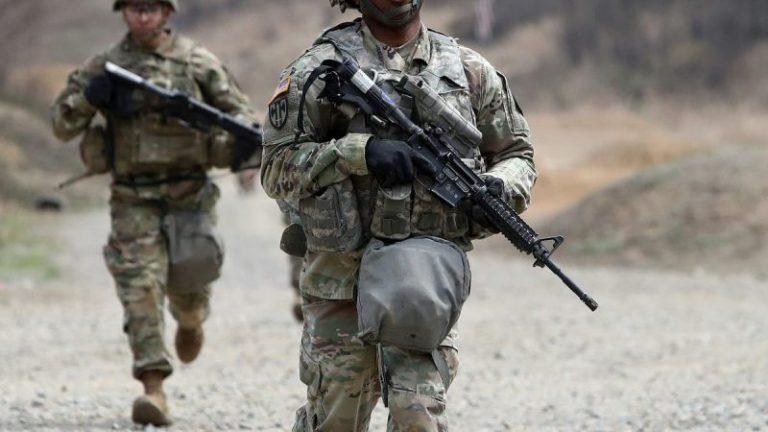
More than two-thirds of Reserve and Guard troops are overweight, a potential threat to readiness and their ability to deploy at a moment’s notice, a new report by the American Security Project (ASP) found. 

Some 68% of the nation’s reserve forces are overweight, ASP researchers estimate. 

‘With the diminished size of the [active-duty] force and increasing demands on the National Guard and reserves, service members separated due to obesity and its comorbidities are vital personnel the Armed Forces cannot afford to lose,’ researchers concluded in the report.

The study calls for new policies to ensure troops’ health and better access to obesity-related healthcare. 

‘Completely unacceptable. This is what happens when standards are IGNORED — and this is what we are changing. REAL fitness & weight standards are here. We will be FIT, not FAT,’ Defense Secretary Pete Hegseth declared in a post on X. 

An ASP report from October 2023 found that two-thirds of active duty service members fell into the overweight to obese category based on body mass index. 

‘These service members experience heightened risk for a wide variety of serious health conditions, such as type 2 diabetes, cardiovascular disease, chronic kidney disease, and osteoarthritis, which may lead to life-threatening health events such as stroke and heart failure,’ the report warned. 

Past studies from ASP have found a similar rate of obesity among active duty forces, based on the controversial BMI scale that does not account for muscle mass. 

However, the report warned, for reserve forces who hold day jobs and often live far away from military bases, ​’commanders and policy makers will not be able to combat these trends with a uniform approach.’

The report recommended further tracking and research of obesity rates within reserve forces, noting the Defense Department’s most recent data is from 2018.

Hegseth launched a review of grooming and physical fitness standards last month after voicing concerns that fitness standards have eroded and questioning whether mismatched standards for men and women are affecting readiness. 

It directed the undersecretary of Defense for Personnel and Readiness to look at ‘existing standards set by the Military Departments pertaining to physical fitness, body composition, and grooming, which includes but is not limited to beards.’

The memo also called for a review to examine how standards have changed since 2015. 

The service branches began making accommodations for recruits who do not meet physical fitness standards in recent years as a way to address the recruiting crisis. The Army and Navy offered pre-boot camp training for those who did not meet physical fitness or testing scores. However, those recruits had to meet the same standards in order to graduate from training courses and serve. 

‘When I was in the Army, we kicked out good soldiers for having naked women tattooed on their arms, and today we are relaxing the standards on shaving, dreadlocks, man buns, and straight-up obesity,’ Hegseth wrote in his book ‘The War on Warriors.’

This post appeared first on FOX NEWS