Archive

2025

Browsing

International Business Machines Corporation on Monday announced it will invest $150 billion in the U.S. over the next five years, including more than $30 billion to advance American manufacturing of its mainframe and quantum computers.

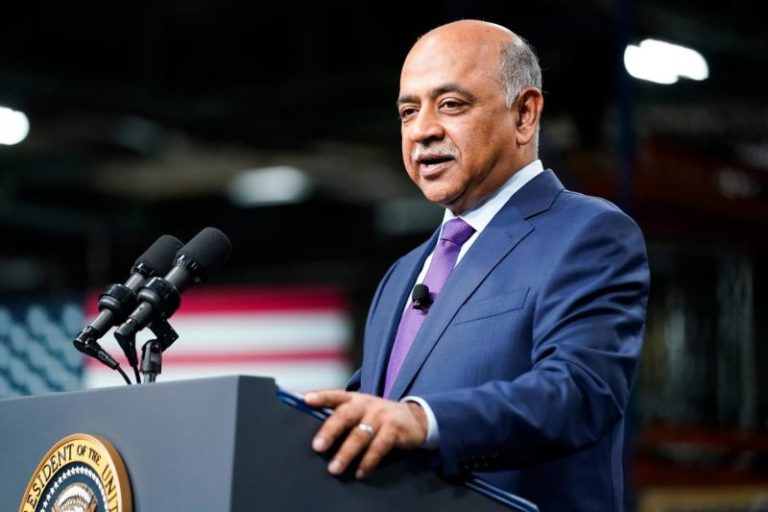
“We have been focused on American jobs and manufacturing since our founding 114 years ago, and with this investment and manufacturing commitment we are ensuring that IBM remains the epicenter of the world’s most advanced computing and AI capabilities,” IBM CEO Arvind Krishna said in a release.   

The company’s announcement comes weeks after President Donald Trump unveiled a far-reaching and aggressive “reciprocal” tariff policy to boost manufacturing in the U.S. As of late April, Trump has exempted chips, as well as smartphones, computers, and other tech devices and components, from the tariffs.

IBM said its investment will help accelerate America’s role as a global leader in computing and fuel the economy. The company said it operates the “world’s largest fleet of quantum computer systems,” and will continue to build and assemble them in the U.S., according to the release.

IBM competitor Nvidia, the chipmaker that has been the primary benefactor of the artificial intelligence boom, announced a similar push earlier this month to produce its NVIDIA AI supercomputers entirely in the U.S. 

Nvidia plans to produce up to $500 billion of AI infrastructure in the U.S. via its manufacturing partnerships over the next four years.

Last week, IBM reported better-than-expected first-quarter results. The company said it generated $14.54 billion in revenue for the period, above the $14.4 billion expected by analysts. IBM’s net income narrowed to $1.06 billion, or $1.12 per share, from $1.61 billion, or $1.72 per share, in the same quarter a year ago.

IBM’s infrastructure division, which includes mainframe computers, posted $2.89 billion in revenue for the quarter, beating expectations of $2.76 billion.

The company announced a new z17 AI mainframe earlier this month.

CNBC’s Jordan Novet contributed to this report.

This post appeared first on NBC NEWS

The Golden State Warriors are not your typical No. 7 seed. Not with Steph Curry, Draymond Green and Jimmy Butler on the court and Steve Kerr coaching.

The Warriors took a 3-1 series lead against the second-seeded Houston Rockets with a 109-106 victory in Game 4 of their first-round Western Conference playoffs matchup Monday.

Butler made three free throws with 58.7 seconds remaining giving Golden State a 107-104 lead, and after Alperen Sengun cut the lead to 107-106 with a driving layup, Butler and Steph Curry missed shots.

Houston called timeout with 13.1 seconds left and ran a play that ended with a missed shot by Sengun with Green defending. Butler collected the rebound, was fouled and made both, putting the Warriors ahead 109-106. Fred VanVleet missed a potential game-tying 3-pointer to end the game.

The Warriors received a great offensive performance from Brandin Podziemski, who scored a playoff career-high 26 points, and Butler contributed 27 points, six assists and five rebounds after missing Game 3 with a left pelvic and deep gluteal muscle contusion. Butler was 12-for-12 on free throws.

Buddy Hield (15 points) and Quinten Post (13 points) helped the Warriors overcome 2-for-8 3-point shooting from Curry (17 points).

The No. 7 seed has toppled the No. 2 seed six times in the NBA playoffs and just twice since the first round moved from best-of-five to best-of-seven in 2003. It happened in 2023 when the Los Angeles Lakers beat the Memphis Grizzlies and in 2010 when the San Antonio Spurs stopped the Dallas Mavericks.

The Rockets shot better than the Warriors from the field (49.4% to 41.9%) and on 3-pointers (47.8% to 37%) but Golden State made six more 3s, and the Rockets shot just 61.3% on 31 free throw attempts.

Sengun scored a game-high 31 points and had 10 rebounds and five assists for the Rockets. VanVleet had 25 points, and teammate Amen Thompson added 17 points and nine rebounds.

Catch up on the highlights from Game 4 between the Rockets and Warriors:

Game 4 highlights: Warriors 109, Rockets 106

3Q: Warriors 82, Rockets 80

The Warriors opened the third quarter with an 18-1 run, took a 68-58 lead and headed into the fourth quarter ahead 82-80 and are 12 minutes from taking a 3-1 series lead against the Rockets.

Golden State’s Brandin Podziemski had eight of his team-high 21 points in the third quarter, and Steph Curry has 14 points for the Warriors but he is just 1-for-5 on 3-pointers. Golden State’s Quentin Post has 13 points off the bench and Buddy Hield has 12 points. Jimmy Butler, who missed Game 3 with an injury, has 13 points, five assists and three rebounds.

Alperen Sengun scored 21 points and Fred VanVleet 19 for the Rockets who are just 17-for-29 on free throws. The Warriors are 15-for-16 from the free throw line but have made four more 3-pointers than Houston.

Halftime: Rockets 57, Warriors 50

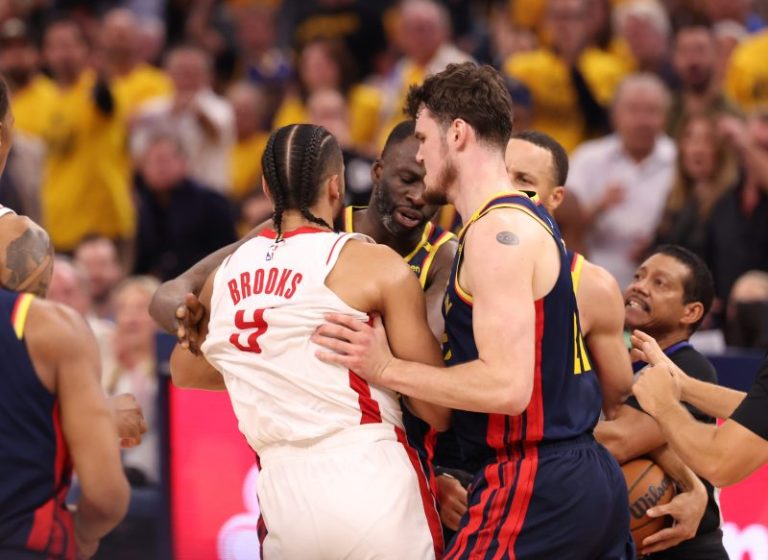
The second quarter was marred by reviews of two minor altercations that resulted in a flagrant foul one for Golden State’s Draymond Green and technical fouls for Green and Warriors star Steph Curry and Houston’s Dillon Brooks and Tari Eason.

In a physical and chippy game with combustible players, the Rockets rebounded from a slow start and 12-point deficit in the first quarter to take a 57-50 lead into halftime.

Each team has three players in double figures in points. Houston’s Fred VanVleet has a team-high 12 points followed by Brooks (11 points, five rebounds) and Alperen Sengun (10 points, six rebounds).

Golden State’s Brandin Podziemski has a game-high 13 points, Quentin Post has 12 and Curry has 10. Green and Jimmy Butler were scoreless in the second quarter for Golden State which is shooing 38.1% from the field and 36% on 3s. Houston has made 54.1% of its shots including 7-for-11 on 3s.

The Rockets have a 24-8 edge in points in the paint and have turned nine Warriors turnovers into 17 points.

Draymond Green picks up flagrant foul one, still eligible to play

Golden State’s Draymond Green was issued a flagrant foul one – and avoided his second technical foul – with 2:44 remaining in the second quarter and the Rockets leading 47-46. Houston’s Tari Eason knocked the ball away from Green and as Eason tried to collect the loose ball, Green fouled him. Both players fell to the court, and a brief tussle ensued. After another review, Green’s foul was upgraded to the flagrant foul one and Eason was given a technical foul for his actions after the foul. Had Green been given his second technical foul, he would’ve been ejected. 

Steph Curry, Draymond Green, Dillon Brooks assessed technicals after dust-up

Houston’s Dillon Brooks, and Golden State’s Draymond Green and Steph Curry were each given technical fouls after Brooks fouled Curry with 7:00 remaining in the second quarter and the scored tied at 36. After the foul, Curry held up two fingers to signify Brooks’ second foul. Brooks — not surprisingly — objected to Curry’s taunt and tried to swipe the ball from Curry who wasn’t happy with that. Nor was Green who got in Brooks’ face. After a video review, the refs issued the technical fouls.

1Q: Warriors 28, Rockets 26

Jimmy Butler retuned to the starting lineup in Game 4 after missing Game 3 with a left pelvic and deep gluteal muscle contusion, and had four points, two rebounds and one block in the first quarter, helping the Warriors to a 28-26 lead.

Brandin Podziemski led Golden State with 10 points, and Draymond Green added six points and three rebounds. Golden State shot just 34.6% from the field and 26.7% on 3s in the opening quarter.

Amen Thompson has a team-high eight points for the Rockets who closed the quarter strongly and are shooting 52.6% from the field.

Rockets starting five

Jalen Green
Amen Thompson
Fred VanVleet
Dillon Brooks
Alperen Sengun

Warriors starting five

Is Jimmy Butler playing?

Yes, Jimmy Butler will start Game 4.

The Golden State Warriors forward remained listed as questionable on the official injury report but will coach Steve Kerr and the Warriors made the game-time decision.

Butler missed Game 3 with a left pelvic and deep gluteal muscle contusion, an injury he sustained in the Warriors’ Game 2 loss against the second-seeded Rockets.

What time is Warriors vs. Rockets?

Game 4 between the Houston Rockets and Golden State Warriors will tip-off at 10 p.m. ET April 28 at the Chase Center in San Francisco, California.

How to watch Warriors vs. Rockets playoff game: TV, stream

Time: 10 p.m. ET/7 p.m. PT
Location: Chase Center (San Francisco, California)
TV: TNT
Stream: Sling TV, Max, YouTube TV

Watch Warriors vs. Rockets Game 4 with Sling TV

Warriors vs. Rockets NBA playoff schedule, results

Warriors lead series 2-1

Game 1: Warriors 95, Rockets 85
Game 2: Rockets 109, Warriors 94
Game 3: Warriors 104, Rockets 93
Game 4: Warriors 109, Rockets 106
Game 5: Warriors at Rockets | Wednesday, April 30, 7:30 p.m. ET | TNT
Game 6: Rockets at Warriors | Friday, May 2, TBD | TBD*
Game 7: Warriors at Rockets | Sunday, May 4, TBD | TBD*

*if necessary

This post appeared first on USA TODAY

The Super Bowl 59 champion Philadelphia Eagles have made the ‘tush push’ play popular for casual and dedicated NFL fans alike over the last few years. Fellow NFC team Green Bay proposed a ban for the play this offseason but the NFL decided to table discussions on it until May.

Until then, the Eagles can count on support from the highest elected official in the country: President Donald Trump.

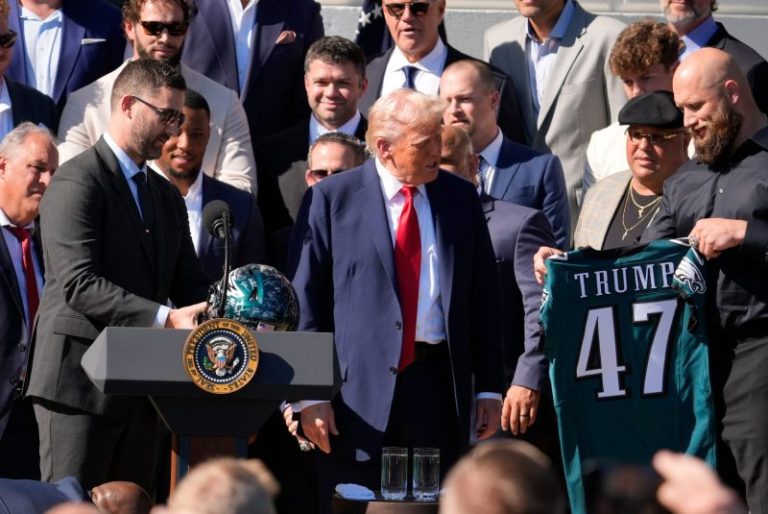
The Eagles visited the White House on Monday, as is the tradition for the Super Bowl winner every year. While speaking in front of the players and coaches, Trump voiced his support for the tush push.

‘I hope they keep that play, Coach,’ Trump said, referring to Eagles head coach Nick Sirianni. ‘They’re talking about getting rid of that play, I understand. They should keep it. … I like it. It’s sort of exciting and different.’

Trump added that he’d like the NFL to revert back to the previous kickoff format, not the one instituted in 2024.

‘We don’t like that kickoff where nobody’s moving,’ he said. ‘The ball’s in the air but nobody’s moving.’

Sirianni spoke after Trump and thanked him for his support.

‘Thank you, Mr. President, for having us here,’ Sirianni said. ‘And we also appreciate the endorsement for the tush push.’

Many of the starters from the Eagles’ Super Bowl-winning team were in attendance at the White House for the event. There was one notable absence: Super Bowl 59 MVP Jalen Hurts.

Hurts was not expected to make the trip and White House officials told USA TODAY that the Eagles quarterback did not attend because of a ‘scheduling conflict.’

All the NFL news on and off the field. Sign up for USA TODAY’s 4th and Monday newsletter.

This post appeared first on USA TODAY
NEWYou can now listen to Fox News articles!

It has been 100 days since the new U.S. administration took office amid a clear policy of ‘America First.’ 

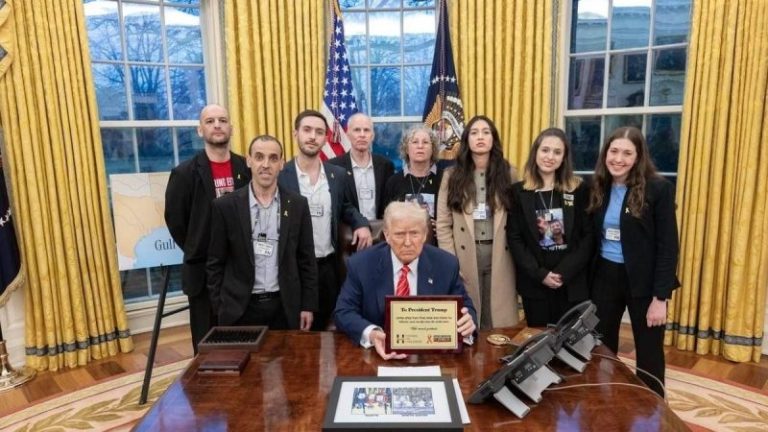
But for American families like mine, families whose loved ones are still held hostage by Hamas for over 560 days, we should have already seen results from this policy. My son, Itay Chen, a dual U.S.-Israeli citizen, remains in captivity. So do four other Americans: Edan Alexander, Omer Neutra, Judy and Gadi Weinstein. Every day that passes without their return is another day of anguish, uncertainty, and pain.

As a father, I wake up every morning hoping this will be the day I get the call from the White House telling me my son is coming home. When President Donald Trump won the election, I felt a renewed sense of hope. I believed that his leadership, strength, and personal concern for American hostages would lead to real movement. And I deeply thank President Trump for demanding the release of all hostages even before his inauguration that led to the release of 33 hostages in Gaza, including two U.S. citizens. 

I believe he cares profoundly, but the truth is, the first 100 days of this administration have not delivered what the president himself demanded – releasing all of the U.S. hostages in Gaza and sending a clear message that holding U.S. hostages anywhere is a liability, not an asset. 

This is not a critique made in anger. It is a plea made in desperation. I understand that diplomacy is complex. I know that the negotiations around hostages—especially in a war zone and involving multiple international actors— require discretion, patience, and nuance. But I also know that time is not on our side. As the weeks pass, the fear grows that the window to bring our loved ones back is narrowing and they will disappear forever.

We have seen this administration act boldly in other arenas to implement the America First policy, particularly when it comes to economic policy. Tariffs and financial pressure have already been deployed as tools of American strength. 

Why not apply similar pressure now to release the U.S. hostages? Instead of the administration being proactive, U.S. families like mine, out of despair, are taking matters into our own hands. We’ve been lobbying Congress to impose direct financial sanctions against Hamas, pressuring banks and financial institutions to freeze assets and urging stricter enforcement of existing measures. Just this month, U.S. families filed a lawsuit against Bashar Masri, an American businessman charging that he provided assistance in constructing infrastructure that allowed Hamas militants to carry out their cross-border rampage, including killing 45 U.S. citizens. We’ve urged the Administration, the Department of Justice and the Treasury to expand these efforts. 

The administration can, and must, do more. Americans – children, fathers, sisters – are all still being held in underground tunnels by a terrorist organization, in conditions we can barely imagine. The previous administration told the American families the way to release our family members would be via Israel as a proxy. Though the plan did not work, the Biden administration kept doubling down on the same plan despite not getting the expected results. 

The Trump administration inherited this policy and should re-evaluate the game plan. President Trump is an extremely gifted negotiator. His team successfully released several U.S. citizens from war zones with direct negotiations. As such, why is President Trump not directly negotiating for the release of U.S. citizens in Gaza, but instead using third parties such as Qatar to negotiate for the release of U.S. citizens? In January, we saw what the president’s direct involvement can do to release hostages. The U.S. has a legal obligation to get its citizens out of harm’s way and if the proxy is not capable of releasing them, then the U.S. must find a different path to release its citizens.  

Trump administration officials have sent a clear message to the world that American lives are not bargaining chips. This administration has the opportunity to reinforce that principle—to lead with strength and show that ‘America First’ means never leaving Americans behind.

I will not lose hope. My faith in America’s power and promise is unbroken. But that hope needs to be matched with action. For Itay. For the other hostages. For the credibility – and the soul – of a nation that is seeking to reset the table with the world based on a true ‘America First’ policy. What a victory it would be if President Trump, in his upcoming visit to the Middle East, will bring on his plane back home the 5 U.S. hostages from Gaza.

This post appeared first on FOX NEWS

Rep. Marie Gluesenkamp Perez, D-Wash., described Rep. Nancy Pelosi, D-Calif., during her 2022 campaign as unrepresentative of American voters, but campaign finance reports revealed she collected at least $31,000 from the former House speaker and her political action committees during her three years in Congress. 

‘I want to make my position clear that I will not vote for Nancy Pelosi as Speaker of the House,’ Perez told The Columbian in 2022. ‘I look around, I look at my community, and I don’t see leadership in Congress looking like that.’

Despite the moderate Democrat rejecting Pelosi’s leadership on the campaign trail, campaign finance reports show that since she took office in 2022, Gluesenkamp Perez and her Super PAC, Marie Gluesenkamp Perez Campaign Defense Fund, have accepted at least $31,000 from Pelosi and her affiliated Super PACs, including PAC to the Future and Nancy Pelosi for Congress.

According to U.S. Census data, the $31,000 represents more than one third of the median household income for residents in Washington’s third congressional district, which includes Clark County and Vancouver, Washington, the district’s largest city.

‘We need more and more normal people to run for Congress. We need more people that work in the trades,’ Gluesenkamp Perez told Politico in 2023, as she described a Democratic Party out of touch with middle-class Americans. 

‘Just like her pal Nancy Pelosi, Marie Gluesenkamp Perez will say and do anything to get elected,’ Congressional Leadership Fund, the super PAC dedicated to maintaining the Republican majority in the U.S. House of Representatives, spokeswoman Torunn Sinclair, told Fox News Digital. 

‘That’s not a quality Washington State families want in their congresswoman.’

Gluesenkamp Perez was first elected to represent Washington in the U.S. House of Representatives in 2022 and won re-election in 2024, narrowly defeating her Republican challenger, Joe Kent, for the second time in two House cycles. 

The Washington congresswoman is considered one of the most vulnerable House Democrats in 2026, just as she was in 2024 after winning her 2022 race by less than two points. Republicans are likely to target her seat as an opportunity to widen their majority in the House. 

While Republicans slam Gluesenkamp Perez for flip-flopping on Pelosi, she is also facing the fury of her own party as hundreds of Democratic constituents protested at her town hall on Thursday. 

According to local reporting, including KGW News, protesters held up signs that read, ‘Shame on you,’ and chanted, ‘Vote her out,’ as Gluesenkamp Perez explained why she voted in support of the Safeguarding American Voter Eligibility (SAVE) Act. 

The SAVE Act, which passed in the House earlier this month, requires voters to obtain proof of citizenship in-person before they register for a federal election and will remove noncitizens from voter rolls. It has been widely rejected by Democrats since its conception, and 208 House Democrats voted against the bill. 

‘I do not support noncitizens voting in American elections – and that’s common sense to folks in Southwest Washington. Voting in our nation’s elections is a sacred right belonging only to American citizens, and my vote for the SAVE Act reflects that principle,’ Gluesenkamp Perez said after voting in support of the SAVE ACT, despite facing vocal opposition from constituents on Thursday for doing so. 

Gluesenkamp Perez also faced disapproval from Washington state Democrats for voting to censure Rep. Al Green, D-Texas, after he shouted and shook his cane during President Donald Trump’s joint address to Congress earlier this year.  

Gluesenkamp Perez’s campaign did not respond to Fox News Digital’s request for comment by deadline. 

This post appeared first on FOX NEWS

President Donald Trump’s second term has taken the world by storm in his first 100 days, leaving allies and adversaries scrambling to respond to new U.S. tariffs, stalled peace negotiations and hardball diplomacy from the White House.

On the campaign trail, he pledged to hit allies and foes alike with massive tariffs, end Russia’s war in Ukraine within 24-hours and threatened that ‘all hell’ would break out if all hostages were not freed from the clutches of Hamas in Gaza by the time he entered the Oval Office.

While Trump has been able to make good on some of his promises, other ambitions remain unmet. Here’s what Trump has accomplished and what challenges remain:

Where Russia’s war in Ukraine stands

Trump last week conceded that his pledge to end the three-year-old war in Ukraine within 24 hours of taking office was ‘figurative,’ acknowledging it was never a realistic goal. The conflict has claimed a reported 1 million casualties.

‘I said that as an exaggeration,’ he told reporters. 

While Trump has faced criticism over his ability to bring Russian President Vladimir Putin to the negotiating table, his team — led by Special Envoy Steve Witkoff and Secretary of State Antony Rubio — has made some headway, securing a 30-day ceasefire protecting Ukraine’s energy infrastructure.

But Putin has so far refused to enter any other brokered agreements, despite Kyiv’s willingness to play ball even after the historic Oval Office blow-up between Trump and Ukrainian President Volodymyr Zelenskyy in February.

Though Trump appeared to hold a grudge against Zelenskyy after Ukraine rejected a proposed mineral deal — even blaming him in part for Russia’s illegal invasion — relations between the two leaders appeared to improve over the weekend. Trump also set a new ultimatum for Putin, issuing a deadline to reach a ceasefire deal.

‘Two weeks or less,’ Trump told reporters Sunday, though he later added a bit more time would be acceptable. ‘We’ll see what happens over the next few days. We’ll probably learn a lot.’

Trump said he was ‘surprised and disappointed’ after Putin last week levied a barrage of missiles at Ukraine’s capital city of Kyiv in a strike that killed 12 civilians and injured nearly 100 more.

‘I want him to stop shooting, sit down and sign a deal,’ Trump said in reference to Putin. ‘We have the confines of a deal, I believe, and I want him to sign it and be done with it and just go back to life.’

Trump has not said how or whether he will hold Putin accountable if he doesn’t agree to a ceasefire and the White House has not responded to Fox News Digital’s repeated questions regarding the issue.

Gaza ceasefire

Before entering office, Trump repeatedly threatened Hamas that ‘all hell’ would break out if they didn’t return all hostages by the time he arrived at the White House. 

But the Palestinian terror group has ignored his threats and rejected Trump’s February proposal to turn the Gaza Strip into the ‘Riviera of the Middle East,’ saying it would adhere to a ceasefire agreement brokered between the terrorist organization and Israel, mediated by the U.S., Qatar and Egypt. 

Trump has not hit Hamas, nor have his negotiations to release hostages looked all that different from his predecessor’s.  

The first phase of what was intended to be a three-phase ceasefire saw the return of 33 hostages taken by Hamas, the majority of whom were abducted in the Oct. 7, 2023 attack on Israel, as well as the release of 1,800 Palestinian prisoners held by Jerusalem. 

But 59 hostages remain in Gaza, including American-Israeli Edan Alexander, and hopes of a second phase collapsed after negotiations stalled on terms surrounding future hostage releases, and in March Israel reignited military operations in the Gaza Strip.

A Qatari official on Sunday said the main hiccup in securing a ceasefire following the latest round of talks last week is that Israel has not presented a clear solution to end the war in exchange for hostage releases, Reuters reported. 

Trump on Friday said he pushed Israeli Prime Minister Netanyahu to reopen aid corridors into Gaza, which have been blocked since March 2, in order to allow food and medicine to reach Palestinians, though humanitarian corridors have not yet been opened. 

Iran nuclear agreement

Trump on Sunday said he believes a deal to end Iran’s nuclear program can be achieved ‘without having to start dropping bombs all over the place.’

Details on nuclear negotiations between the U.S. and Iran in Oman on Saturday, in which the third round of talks were held, remain nil, though Iranian Foreign Minister Abbas Araghchi reportedly told Iranian state media they were ‘very serious and work-focused.’ 

Araghchi described the hours-long talks as having finally ‘entered into deeper and more detailed discussions,’ though no specifics of the negotiations have been released. 

It remains unclear if the Trump administration is pursuing a halt to Tehran’s nuclear advancement or a complete disarmament arrangement, which would see the destruction of Iran’s centrifuge facilities and its stockpiles of near-weapons-grade enriched uranium. 

It also remains unclear how much time the president will allow for the negotiations to carry on. 

Relations with China deteriorate

Relations between the U.S. and China have hit a level of animosity not seen between the two superpowers since Washington normalized ties with the Chinese Communist Party (CCP) in the 1970s. 

The initial U.S.-China trade war started during Trump’s first term, in which he hit China with 25% tariffs on $50 billion in Chinese goods in April 2018.

Beijing responded by slapping reciprocal tariffs on $50 billion worth of U.S. goods, mostly targeting U.S. agricultural products worth some $16.5 billion — a trade war that saw the loss of a quarter of a million U.S. jobs by January 2021, according to the U.S.-China Business Council (USCBC).

From the campaign trail, Trump threatened to hit China with 60% tariffs — which he nearly did in early April when he announced an additional 34% tariff on top of the existing taxes already in place. 

But what had already sent geopolitical shockwaves and sparked near-immediate market concerns was further escalated just over a week later when Trump ratcheted up tariffs on Beijing to 145%. 

China has responded by hitting Washington with its own 125% reciprocal tariffs on U.S. imports and, according to a Bloomberg report on Monday, cargo supply shipments have already dropped by 60%.

Americans are expected to begin feeling the pains of the trade war come mid-May.

Trump said last week he had reached some 200 trade deals with countries affected by his sweeping tariffs — measures that hit nearly every U.S. trading partner, including longtime allies. He paused the tariffs for 90 days earlier this month following intense backlash.

The status of trading relations with U.S. partners remains unclear, along with whether the administration will implement the blanket tariffs on those nations come July.

The 25% tariffs on steel, aluminum and imported vehicles remain in effect.

The White House did not directly respond to Fox News Digital’s questions regarding next steps Trump will takes when it comes to handling thus far unresolved conflict in Ukraine and the Gaza Strip.

A White House spokesman instead said, ‘President Trump inherited widespread foreign conflicts and a weak standing on the world stage from Joe Biden. Now, America is strong again, hostages are free from Gaza, Marc Fogel and Ksenia Karelina are home, hundreds of Houthi and other terrorists have been eliminated, and we are closer to peace than ever before. 

‘This President will never get the credit he deserves for his vast foreign policy accomplishments, but Americans know they are freer and safer under his leadership,’ the spokesman added.

This post appeared first on FOX NEWS

President Donald Trump has spent the first 100 days of his second White House term signing a flurry of executive orders aimed at delivering on his policy priorities: slashing government spending, cracking down on illegal immigration and eliminating many diversity and equity initiatives enacted under the Biden administration.

The more than 150 executive orders Trump has signed far outpace those of his predecessors. But they have also triggered a torrent of lawsuits seeking to block or pause his actions, teeing up a high-stakes showdown over how far Trump can push his Article II powers before the courts can or should intervene. 

It’s a looming constitutional clash spinning like a top through the federal courts; a blink-and-you’ll-miss-it set of hearings and appeals and emergency orders that deal with weighty issues of due process and First Amendment protections guaranteed by the Constitution. 

Trump’s critics argue the fast-paced strategy is meant to confuse and overwhelm his opponents. His supporters counter that it allows him to strike with maximum precision and sidestep a clunky, slow-moving Congress as the president pursues his top priorities.

In his first 100 days, administration lawyers have gone to bat in courtrooms across the country to defend Trump’s early executive orders and halt a wave of lawsuits and emergency restraining orders aimed at blocking them. 

Trump, meanwhile, has steadfastly maintained that he would ‘never defy’ the Supreme Court as recently as in an interview last week. 

‘I’m a big believer in the Supreme Court and have a lot of respect for the justices,’ Trump told Time Magazine.  

Critics say he already has.

‘The second Trump administration has taken the guardrails off of the norms that historically governed the rule of law and is undertaking steps to enhance the perceived power of the executive branch to the detriment of the two other co-equal branches,’ Mark Zaid, an attorney who has gone toe-to-toe with the Trump administration in several court cases this year, told Fox News Digitial.

‘These actions threaten the fundamental notion of our democracy, particularly as the Administration seeks to eliminate due process protections in a quest for power.’

The biggest fights so far have centered around the Trump administration’s use of the Alien Enemies Act, a 1798 wartime law, to deport certain migrants to El Salvador. Another major case to watch will be challenges to Trump’s executive order ending birthright citizenship. 

Two separate federal judges, in D.C. and Maryland, have suggested they could move to begin possible contempt proceedings against some Trump officials for refusing to comply with their orders.

In one case, a judge issued a scathing rebuke against Trump officials for failing to return a Maryland resident and alleged gang member who was wrongfully deported to El Salvador this year. Separately, U.S. District Judge James Boasberg said there was probable cause to find Trump administration officials in criminal contempt for defying his order to return deportation flights to El Salvador on March 15.

The Trump administration has fought back, questioning the authority of lower courts to stop his agenda. The Supreme Court agreed to hear oral arguments on a challenge to some of the nationwide injunctions, beginning with a birthright citizenship case in early May.

Meanwhile, White House officials have railed against the ‘activist’ judges who they say have overstepped and are acting with a political agenda to block Trump’s policies. They’ve blasted judges for pausing Trump’s transgender military ban, reinstating USAID programs and blocking Elon Musk’s Department of Government Efficiency (DOGE) from accessing federal offices.

Some congressional allies have threatened impeachment against judges who defy Trump, but so far Congress has not advanced any impeachment articles.

White House press secretary Karoline Leavitt declined this week to rule out the arrest of federal judges, including Supreme Court justices.

Asked at a press briefing about the hypothetical on Monday, Leavitt referred the matter to the Justice Department but said a judge in New Mexico was arrested in ‘a clear-cut case of obstruction.’

‘And so anyone who is breaking the law or obstructing federal law enforcement officials from doing their jobs is putting themselves at risk of being prosecuted, absolutely,’ she said.

Jonathan Turley, a law professor and Fox News contributor, told Fox News Digital that he sees Trump’s early actions as getting ahead of the 2026 primaries and moving with maximum force to implement his agenda.

Trump ‘knows that he has no alternative but to push ahead on all fronts if he is going to make meaningful progress on his promised reforms,’ Turley told Fox News. 

‘The midterm elections are looming in 2026. If the Democrats retake the House, he knows that he can expect investigations, impeachments and obstruction. That means that he has to expedite these cases and establish his lines of authority in areas ranging from migration to the markets.’

This post appeared first on FOX NEWS
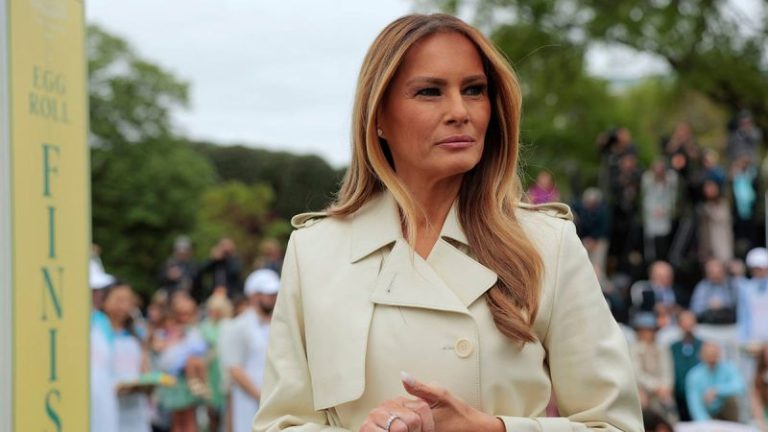
The House on Monday overwhelmingly passed a bill backed by first lady Melania Trump that cracks down on the posting of explicit images, including ‘deep fake’ nudes generated of people by artificial intelligence, without consent. 

The Tools to Address Known Exploitation by Immobilizing Technological Deepfakes on Websites and Networks – known as the TAKE IT DOWN Act – was approved by a 409-2 vote and now heads to President Donald Trump’s desk. 

The measure ‘generally prohibits the nonconsensual online publication of intimate visual depictions of individuals, both authentic and computer-generated, and requires certain online platforms to promptly remove such depictions upon receiving notice of their existence,’ according to the bill summary. 

It specifically prohibits online publication of ‘intimate visual depictions’ of an adult subject ‘where publication is intended to cause or does cause harm to the subject, and where the depiction was published without the subject’s consent or, in the case of an authentic depiction, was created or obtained under circumstances where the adult had a reasonable expectation of privacy,’ as well as ‘a minor subject where publication is intended to abuse or harass the minor or to arouse or gratify the sexual desire of any person.’ 

‘Violators are subject to mandatory restitution and criminal penalties, including prison, a fine, or both,’ according to the bill summary. ‘Threats to publish intimate visual depictions of a subject are similarly prohibited under the bill and subject to criminal penalties.’ 

The legislation also requires platforms to establish a process where victims of revenge porn can notify them of the existence of images and request removal. The bill says platforms then have 48 hours to remove those images.

Sen. Ted Cruz, R-Texas, introduced the TAKE IT DOWN Act in January, and it was approved by the upper chamber in February. It was brought to the House by Rep. Maria Salazar, R-Fla.

Two Republicans – Reps. Thomas Massie of Kentucky and Eric Burlison of Missouri – were the only House members to vote against the legislation on Monday.  

Massie acknowledged that the TAKE IT DOWN Act ‘would impose federal criminal and civil penalties for publishing unauthorized intimate pictures generated with AI.’

‘I’m voting NO because I feel this is a slippery slope, ripe for abuse, with unintended consequences,’ Massie wrote on X. 

House Republicans on Monday praised the first lady, Cruz and Salazar for leading the ‘crucial legislation’ to ‘create a safer digital future and protect our kids from deepfake exploitation.’ 

‘The passage of the TAKE IT DOWN Act is a historic win in the fight to protect victims of revenge porn and deepfake abuse,’ Cruz wrote on X. ‘This victory belongs first and foremost to the heroic survivors who shared their stories and the advocates who never gave up. By requiring social media companies to take down this abusive content quickly, we are sparing victims from repeated trauma and holding predators accountable.’

‘This day would not have been possible without the courage and perseverance of Elliston Berry, Francesca Mani, Breeze Liu, and Brandon Guffey, whose powerful voices drove this legislation forward,’ the senator wrote, adding that he was especially grateful to colleagues, including Melania Trump and Salazar, as well as Democrats Sen. Amy Klobuchar of Minnesota, and Rep. Madeleine Dean of Pennsylvania, ‘for locking arms in this critical mission to protect Americans from online exploitation.’

‘Advancing this legislation has been a key focus since I returned to my role as First Lady this past January,’ Melania Trump wrote on X. ‘I am honored to have contributed to guiding it through Congress. By safeguarding children from hurtful online behavior today, we take a vital step in nurturing our leaders of tomorrow. #BeBest’ 

During President Trump’s first term, the first lady established the BE BEST awareness campaign, which ‘focused on the well-being of children and highlighted the people and programs dedicated to ensuring a better future for the next generation,’ according to the White House. Melania Trump also established Fostering the Future, a BE BEST initiative, ‘which provides college-level scholarships to those aging out of the foster care system.’

This post appeared first on FOX NEWS
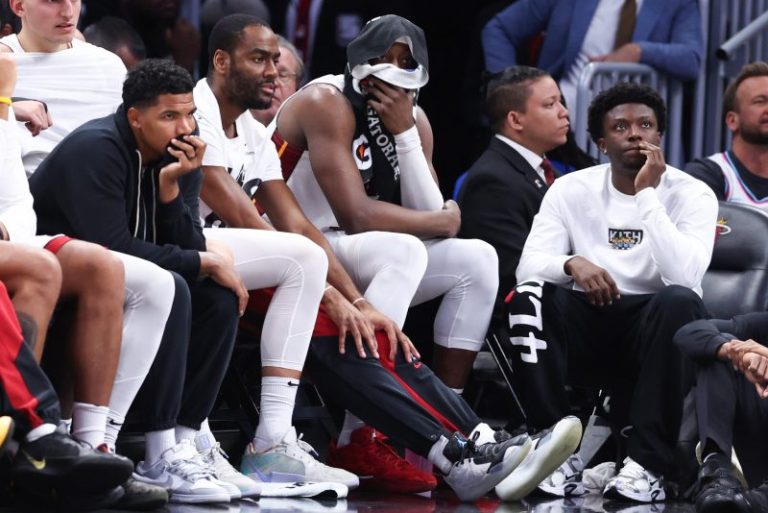
The Cleveland Cavaliers destroyed the Miami Heat on Monday night 138-83 to close out their first-round series in a historic sweep.

The numbers paint a picture of complete dominance.

At a glance, it’s not surprising, with the 64-win Cavaliers facing the 37-win Heat — the No. 10 seed from the regular season — a team that finished 27 games back of Cleveland in the standings.

In particular, Games 3 and 4, both on Miami’s home court, were historically lopsided.

The Cavaliers now will face the winner of the Indiana Pacers-Milwaukee Bucks series in the Eastern Conference semifinals.

Here are 12 mind-blowing stats from the series:

Mind-blowing stats from Cavaliers-Heat series

On Monday, Cleveland scored 73 bench points; the Heat scored 83 points, total.
Cleveland’s overall point differential of +122 across the four games set a record for most lopsided series in NBA playoff history.
Cleveland’s 39-point lead at halftime Monday was the third largest through two quarters in NBA playoff history.
Cleveland’s 48-point lead at the end of the third quarter Monday tied for the second-largest lead headed into the fourth.
The 55-point margin of victory Monday made it the third-most lopsided game in NBA playoff history. At one point in the fourth quarter, the Cavaliers led by 60.
Across the four games, Cavaliers backup Ty Jerome recorded a +88 plus-minus in 92 minutes of play.
Across the four games, Heat guard Tyler Herro recorded a -87 plus-minus in 145 minutes of play.
In Game 4, Herro posted a plus-minus of -44. He shot 1-of-10 from the field, including 1-of-9 from 3, finishing with four points, one rebound and one assist.
Miami’s 37-point loss in Game 3 was its worst in franchise history for a playoff game. The Heat set the new mark in Game 4 two days later with their 55-point defeat.
In Game 3, the Cavaliers outscored Miami in the paint by 30.
The Heat lost Games 3 and 4 by a combined 92 points, setting the record for most lopsided points differential in consecutive games in NBA playoff history. The Grizzlies held the previous mark (91), set April 20, though their consecutive losses came two seasons apart.
This is just the third time in Miami Heat history that the team has been swept in the playoffs, and just the second time under coach Erik Spoelstra.

Follow USA TODAY Sports on Bluesky.

This post appeared first on USA TODAY

The Philadelphia Eagles celebrated their recent Super Bowl championship with President Donald Trump at the White House on Monday, though at least two dozen players – including Super Bowl MVP Jalen Hurts – did not attend.

During a brief ceremony on the South Lawn, Trump lauded the Eagles for a dominant season, which they capped with a 40-22 win over the Kansas City Chiefs in the Super Bowl. He also praised the team’s famed ‘tush push’ play, which some NFL teams are now seeking to ban, and praised running back Saquon Barkley as ‘a handsome guy’ whom he wouldn’t want to tackle.

‘I was with the (New York) Giants, the head coach and some people, and I said, ‘Do anything you have to, but don’t lose Saquon.’ They lost Saquon,’ Trump said to laughter from the crowd. ‘That was not good. I called that one. That was an easy one to call.’

Trump also noted his presence at the Super Bowl, which was rare for a sitting president. And he appeared to take a jab at pop star Taylor Swift, who was also in attendance to support her boyfriend, Chiefs tight end Travis Kelce.

‘I was there along with Taylor Swift. How did that work out? How did that one work out?’ Trump said of Swift.

The ceremonial visit came nearly seven years after the team’s public spat with Trump during his first term in office. The president abruptly disinvited the Eagles on the eve of their planned trip after their first Super Bowl title in 2018, amid reports that they were planning to bring only a small contingent of players to the White House. Trump’s press secretary at the time, Sarah Huckabee Sanders, publicly ripped the team for what she deemed ‘a political stunt.’

Given the previous acrimony between Trump and the Eagles, there were questions about whether Monday’s trip to the White House would happen – or whether the president would even invite the team to visit in the first place. Trump extended an invitation last month, after the team publicly signaled it would accept one if offered.

‘We just felt that this is a time-honored tradition, being invited by the White House,’ Eagles chairman and CEO Jeffrey Lurie told reporters at the NFL owners’ meeting earlier this month. ‘There was no reticence whatsoever. To be celebrated at the White House is a good thing. There were special circumstances back then (in 2018) that were very different.’

Lurie added that ‘it is totally an optional thing’ and would be left up to each player and coach to decide if they wanted to attend. That decision seemed to be easier for some players than others.

Which Eagles players didn’t go to the White House?

Hurts and wide receivers A.J. Brown and DeVonta Smith were among the key players absent from the ceremony. A White House official told USA TODAY that Hurts would be among those not in attendance due to a ‘scheduling conflict.’ When asked by a reporter last week if he would join the team in visiting Trump, Hurts said ‘umm’ and did not otherwise respond.

Ultimately, 54 members of the Eagles’ organization attended the ceremony, including Lurie, general manager Howie Roseman head coach Nick Sirianni and several assistant coaches and support staffers like chief security officer Dom DiSandro, who also got a mention from Trump. Barkley, offensive lineman Lane Johnson and safety Reed Blankenship were among the players in attendance.

Barkley had spent time with Trump at his company’s golf club in New Jersey one day earlier, even traveling to Washington with Trump on Air Force One later in the day. The running back responded to critics on X, formerly known as Twitter, by noting that he had also played golf with former president Barack Obama, who is a Democrat. ‘Maybe I just respect the office, not a hard concept to understand,’ Barkley wrote.

Eagles are rare NFL team to visit Trump White House

The act of celebrating a championship at the White House has become increasingly thorny under Trump, who has repeatedly used the world of sports as a battleground for cultural issues. During his first term, sports teams’ visits were more sporadic than under past administrations, with several championship teams in the NBA and women’s sports leagues either not invited or declining to attend.

So far during his second term, Trump has already hosted several teams, including the NHL’s Florida Panthers and MLB’s Los Angeles Dodgers. But the athletes who have chosen to visit the White House have also faced public criticism – claims that their attendance is a tacit endorsement of Trump’s presidency, which has been mired in controversies.

The Dodgers’ visit, for example, came after the Trump administration had scraped references to legendary former Dodger Jackie Robinson, the first Black player in MLB, from a government website as part of a broader initiative to eliminate references to diversity, equity and inclusion. (The page was later restored after public backlash.) Mookie Betts, the lone Black player on the team, decided to visit the White House after skipping a past visit under Trump in 2019.

‘I just think the politics of today are so polarized that whatever you do, you’re going to be perceived to be supporting a political platform or a position,’ historian Frank Guridy said earlier this year.

The Eagles are just the second NFL team to visit the White House under Trump, who spent part of his first term criticizing the league and some of its players for kneeling during the national anthem to protest racial inequality and police brutality. The 2017 New England Patriots are the only other NFL team to have visited Trump’s White House.

Contact Tom Schad at tschad@usatoday.com or on social media @tomschad.bsky.social.

This post appeared first on USA TODAY