Archive

2025

Browsing

This can’t be what North Carolina believed it was getting. It just can’t. 

How someone, anyone, in that painfully dysfunctional group of misfits making decisions at North Carolina could not have seen this from a country mile is beyond comprehension. 

Now what?

Now you have a 24-year-old running your football program, by proxy.

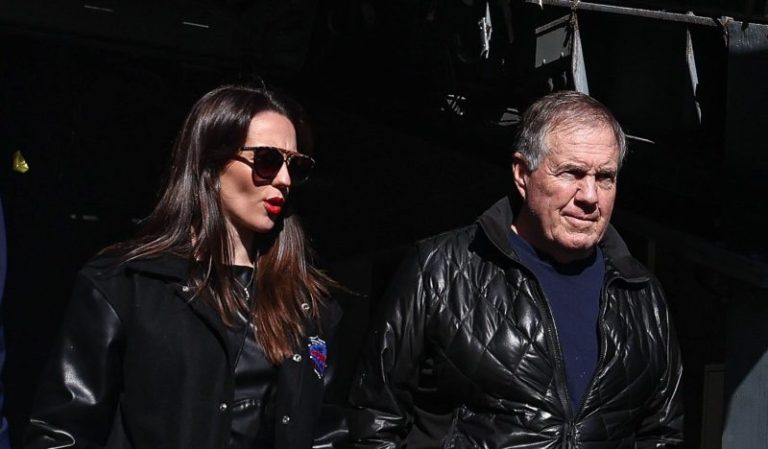
Now you’ve mortgaged your future for Bill Belichick, a coach who may or may not have been the reason the New England Patriots won six Super Bowls. A coach and his 24-year-old girlfriend, Jordon Hudson, who last weekend made it abundantly and awkwardly clear who wears the, um, jersey, in the relationship.

More disconcerting to all things North Carolina: who clearly has Belichick’s ear.

Belichick, 73, calls Hudson his “muse” in a new book – ‘The Art of Winning: Lessons from My Life in Football’ – and she has been running communications on his book tour.

This is where the car drives directly into the ditch. 

A comms director controls everything, making sure no detail too small is missed. You know, like the author of the book and newly hired coach at North Carolina showing up to an interview on ‘CBS Sunday Morning’ wearing a tattered and torn Navy sweatshirt. 

Not a North Carolina sweatshirt. Or a UNC polo or windbreaker or even Belichick’s trademark hoodie. For the love of Dean Smith, something Carolina blue.

All the news, on and off the field: Sign up for USA TODAY’s Sports newsletter.

COACHES RANKINGS: SEC  | Big Ten | Big 12

LOOKING AHEAD: Big Ten leads too-early Top 25 after spring

Belichick shows up in his torn sweatshirt and handles the interview about like you’d think he would. Surly and annoyed at times, short answers and no answers in others. 

Then came the money shot. The exact moment when all of those deep-pocket boosters at North Carolina – who spent tens of millions of dollars on Belichick and his coaching staff, and committed to tens of millions more in NIL funds – realized they may have made a colossal mistake. 

The Belichick persona, the my-way-or-the-highway coaching philosophy getting the most from players, is the foundation of those Super Bowl titles. That’s what you’re getting with Belichick, no questions asked.

Until you don’t — until his 24-year-old girlfriend of two years kneecaps that aura with one uncomfortable interjection. 

Belichick was asked in the interview how he and Hudson met, and Hudson spoke up and said, “We’re not talking about that.”

Belichick, with a blank face, didn’t say a word.

The meanest, toughest, gruffest coach in the history of coaches, the man who built an unassailable reputation as the hardest edge in the history of hard edges, was summarily emasculated on national television by his muse of 50 years the younger. 

What in the wide, wide world of sports did we just watch?

Did Hudson really think CBS wanted Belichick on to talk about his book and X’s and O’s, and how he built a dynasty with the Patriots behind the greatest player to ever play the game? Did Hudson think CBS wouldn’t reach for the low-hanging fruit and ask how a then 22- and 71-year-old met? This is Beli’s muse?

His m-m-m-muse.

For a coach who seemingly has an answer for everything on the field, how could he have not been prepared for this blindside hit? Or maybe he was, and didn’t care. 

Not that there’s anything wrong with that. 

It’s not that Belichick deferred to his girlfriend and refused to answer the question, it’s that he was so unprepared for the interview. Prior to Hudson putting her foot down on how they met – which, shockingly, is raging on social media – Belichick was asked why Patriots owner Bob Kraft was not even mentioned in the book. 

When Belichick stumbled with any semblance of an answer, he was told that Kraft said he fired Belichick — despite Belichick contending to this day it was a mutual agreement. Twice, Belichick was told Kraft said he fired him, and twice Belichick doubled-down on mutual agreement. Maybe the muse should’ve stepped in there, too.

Here’s the overriding problem: young people, specifically young people playing college football, are married to social media. It’s their lifeblood. 

The entire North Carolina locker room has seen the interview, and has seen the muse — who hangs out at practice, once in a sequined robe — kneecap their head coach. Their big, bad, Super Bowl-winning head coach.

If Hudson can do it in that moment, where else can she draw a line? And where else will Belichick defer to her? 

There’s a reason no NFL team, despite Belichick’s remarkable record, wanted any part of him over the last two hiring cycles. Who knows whether it’s a reach to connect the dots.

But it’s easy to see the car in the ditch from here. 

Matt Hayes is the senior national college football writer for USA TODAY Sports Network. Follow him on X at @MattHayesCFB.
This post appeared first on USA TODAY

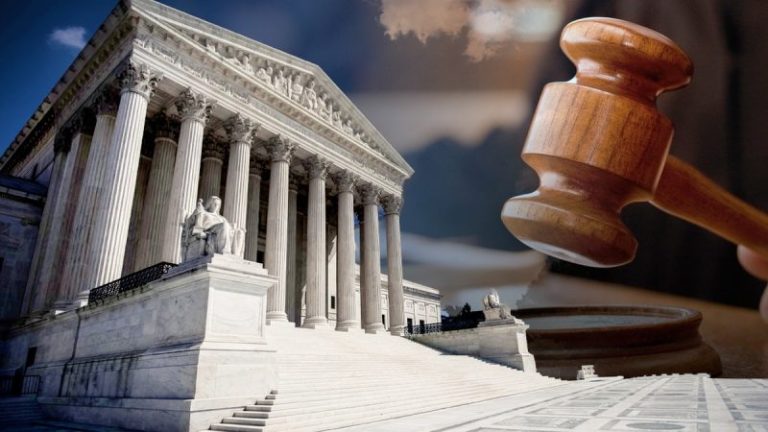
The Supreme Court offered clear divisions Wednesday in a religious liberty case involving public education and whether religious charter schools can receive taxpayer funding.

At issue is whether providing public money to a faith-based educational institution violates the First Amendment’s separation of church and state mandate.

In more than two hours of wide-ranging oral arguments, the high court appeared divided along ideological lines, with a majority prepared to allow St. Isidore of Seville Catholic Virtual School in Oklahoma City to become the first such religious charter school in the country.

The appeal comes amid a renewed pitch in some Republican-led states to bring a greater religious presence to public education.

The conservative high court in recent years has, in select cases, allowed taxpayer funds to be spent on religious organizations to provide ‘non-sectarian services’ like adoption or food banks.

In the courtroom public session, the justices debated what limits on curriculum supervision and control would be placed on the religious charter school, if its contract with the state was allowed to move forward.

‘Our [prior] cases have made very clear,’ said Justice Brett Kavanaugh. ‘You can’t treat religious people and religious institutions and religious speech as second class in the United States. And when you have a program that’s open to all comers except religion, no, we can’t do that. We can do everything else. That seems like rank discrimination against religion. And that’s the concern.’

‘All the religious school is saying is don’t exclude us on account of our religion,’ Kavanaugh added.

But others on the bench worried about government entanglement in approving some religious charter schools, and not others, potentially favoring one faith over another.

‘What you’re saying is the free exercise clause trumps the essence of the establishment clause,’ Justice Sonia Sotomayor told the attorney for the state’s charter school board. ‘The essence of the establishment clause was, ‘We’re not going to pay religious leaders to teach their religion.”

The Constitution’s First Amendment says, ‘Congress shall make no law respecting an establishment of religion, or prohibiting the free exercise thereof.’

Justice Amy Coney Barrett was not on the bench and is recused in the case. She offered no public explanation of why.

If the court divides 4-4, the ruling below holds, with the charter school losing its appeal.

The vote of Chief Justice John Roberts may be key. He asked tough questions of both sides.

At one point, Roberts noted of the current dispute: ‘This does strike me as a much more comprehensive involvement,’ by the state than prior cases dealing with ‘fairly discrete’ public money going to religious groups, such as tax breaks and private school tuition credits.

In an unusual split within the Oklahoma government, the state’s governor, head of public education, and the statewide charter school board are all backing St. Isidore.

But Attorney General Gentner Drummond sued to block the approval of the school’s state charter, calling it an ‘unlawful sponsorship’ of a sectarian institution, and ‘a serious threat to the religious liberty of all four-million Oklahomans.’

He has the backing of some GOP state lawmakers and parents’ groups, who argue that funding parochial charter schools would drain resources from public education – especially in rural areas already struggling with limited funding.

When it signed a contract with the state charter school board in 2023, St. Isidore – formed as a nonprofit corporation by the Archdiocese of Oklahoma City and the Diocese of Tulsa – agreed it would be free and open to all students ‘as a traditional public school,’ and would comply with local, state and federal education laws.

But in its application to the charter board, it also indicated, ‘the School fully embraces the teachings’ of the Catholic Church and participates ‘in the evangelizing mission of the church.’

Shortly after Oklahoma’s highest court ruled against it, the school said it remained ‘steadfast in our belief that St. Isidore would have and could still be a valuable asset to students, regardless of socioeconomic, race or faith backgrounds.’

The Trump administration is supporting the school.

Some Catholic sources note the namesake seventh-century archbishop and scholar is now known as the patron saint of the internet, given the title by Pope John Paul II in 1997.

Much of the high court oral arguments turned on whether St. Isidore – a K-12 online school – is public or private in nature.

The distinction is important, since charter schools in Oklahoma are considered public, free and openly accessible to all. That is true in the 46 states – plus the District of Columbia – where charter schools operate.

The Supreme Court has previously said states may require public schools be secular, but also cannot prevent private religious institutions from public benefits and contracts.

The issue now is whether those precedents apply to charter schools.

Justice Ketanji Brown Jackson said charter schools are ‘a creation and creature of the state.’           

Justice Elena Kagan said contracts signed by schools like St. Isidore have basic requirements to meet state classroom standards, with state oversight.

‘I’ve just got to think that there are religions that are going to have no problems dealing with all the various curricular requirements and religions that are going to have very severe problems dealing with all the curricular requirement,’ she said.

‘I’m suggesting to you is this notion that the state can do this while still maintaining all its various curricular requirements. I mean, either that sort of fantasy land, given the state of religious belief and religious practice in this world or if it’s not, it’s only because what’s going to result is treating, shall we call them majoritarian, religions very differently from minority religions,’ said Kagan.

But Justice Clarence Thomas noted: ‘The argument that St. Isidore and the board are making is that it’s a private entity that is participating in a state [charter] program. It was not created by the state program.’

Justice Samuel Alito was more pointed, telling Gregory Garre, lawyer for the state, ‘This whole position that you’re defending seems to be motivated by hostility toward particular religions.’

Department of Education figures show about 4m illion schoolchildren – or 8% of the total – are enrolled in an estimated 7,800 charter schools, which operate with greater independence and autonomy than traditional public schools. Oklahoma has more than 30 public charter schools serving about 50,000 students.

Last June, Oklahoma’s top education official separately mandated the Bible be incorporated into lesson plans for grades 5-12, and the Holy Scripture be placed in every classroom. And in Louisiana, there is a requirement that the Ten Commandments be posted on public school property. Both policies are facing legal challenges.

Six members of the current Supreme Court attended Catholic schools in their youth, and many of their own children attend or attended private schools, including religious-based institutions of learning. 

The consolidated cases are Oklahoma Statewide Charter School Board v. Drummond (AG OK) (24-394) and St. Isidore of Seville Catholic Virtual School v. Drummond (AG OK) (24-396).

A ruling is expected by early summer.

This post appeared first on FOX NEWS

WASHINGTON — Vice President JD Vance said he feels ‘very empowered’ by President Donald Trump, telling Fox News Digital that there is ‘complete trust across the senior team,’ and ‘good synergies’ in ‘service of a common vision.’ 

Vance sat for an exclusive interview with Fox News Digital Wednesday in his West Wing office inside the White House. 

The vice president reflected on his role as vice president, which, notably, is not limited to a specific portfolio, but rather a broad role touching on foreign and domestic policy issues and more.

‘Obviously, the president makes decisions. And what’s so good about the team that we have, both on the economic side, but also on the foreign policy side, is the president gives directives, and each person has their role in fulfilling those directives, and there is complete trust across the senior team,’ Vance explained to Fox News Digital. ‘It’s kind of empowering, because you don’t have to constantly check in — you don’t have to micromanage some of these things.’  

Vance told Fox News Digital that he spoke to Secretary of State Marco Rubio Tuesday, after not having spoken to him ‘for four or five days before then.’ 

‘It’s kind of nice to just know that you’ve got the secretary of State working on his stuff, the Department of Defense secretary who’s working on his stuff, and I’m, of course, working on my stuff,’ Vance said. ‘And then we all come back; we update the president; we go from there.’ 

But Vance said it is ‘a very fluid and dynamic situation.’ 

‘I think that will certainly continue over the next 100 days — over the next four years,’ Vance said. ‘But I think what enables it — what makes it possible — is that people actually trust one another.’ 

Vance told Fox News Digital that the president ‘has full faith in his team.’ 

‘And it just makes it very easy to actually work successfully when you’re not constantly checking in and you’re not constantly, you know, dealing with the bureaucracy,’ Vance said. ‘You can just go and do your job.’ 

Vance told Fox News Digital that he, as vice president, feels ‘very empowered by the president.’ 

‘I was talking to Secretary Rubio about this yesterday, and I think Marco Rubio feels very empowered, and there’s just this sense that the President both likes and trusts his senior team, and so he’s able to govern effectively,’ Vance explained. ‘The president is dealing with a million different things, but it’s a lot more digestible when you can give directives to your team and say, ‘Go and do this.’ And that’s what’s happening on the economic side. It’s what’s happening on the national on the national security side.’ 

‘And obviously, because I’m the vice president, I have a more global view of this, but it’s really an amazing thing to see, because there’s just a lot of good synergies that, you know, I don’t know if the president had the first administration — I don’t know if any president has had in prior administrations — where there was such great confidence in the team.’ 

‘You read stories about, you know, Kamala Harris’s portfolio, or you read stories about other vice presidents, about, even Dick Cheney’s portfolio, where there was this dynamic of, there were turf battles, and one person was trying to say, ‘This is what I work on, and this is what you work on, and don’t step on my territory,’’ Vance explained. ‘There’s just none of that.’ 

Vance added: ‘Because our territory is what the president has told us that we have to get done, and we don’t mind sharing that territory if it’s in service of a common vision, which it is.’ 

Meanwhile, when asked for highlights of the first 100 days of the Trump administration, Vance pointed to his first foreign trip in February to France to discuss artificial intelligence.

‘A lot of people were very excited about American leadership in AI, but then, of course, we gave a speech heard around the world at Munich where I thought — it’s just one of the things you can do with this office is say things that need to be said,’ Vance told Fox News Digital.

‘And I thought it needed to be said that some of our European allies have gone backward on free speech, on religious expression, on border control, and in the same way that President Trump is trying to change that dynamic in the United States of America, I think it would behoove our European friends to do the same.’

Another highlight, Vance said, was visiting Eagle Pass, Texas.

‘That was another highlight, because there was a sense of — and I don’t mean this negatively — almost boredom at Eagle Pass because the Border Patrol agents were showing me photos of these places that were just overwhelmed by illegal immigrants and now — you can’t see anybody.’

Vance reflected on ‘visualizing the drop in just a few short weeks of a 95% reduction in illegal immigration, and the fact that these guys felt like they didn’t have as much to do.’

‘But if they don’t have that much to do, that means we’re doing the American people’s business,’ Vance said. ‘And just seeing that so crystal clear — a connection between Donald Trump’s policies and the end of the border crisis — just good things for the American people.’

‘It was a very cool day,’ he said. ‘I also got to ride in a helicopter.’

This post appeared first on FOX NEWS

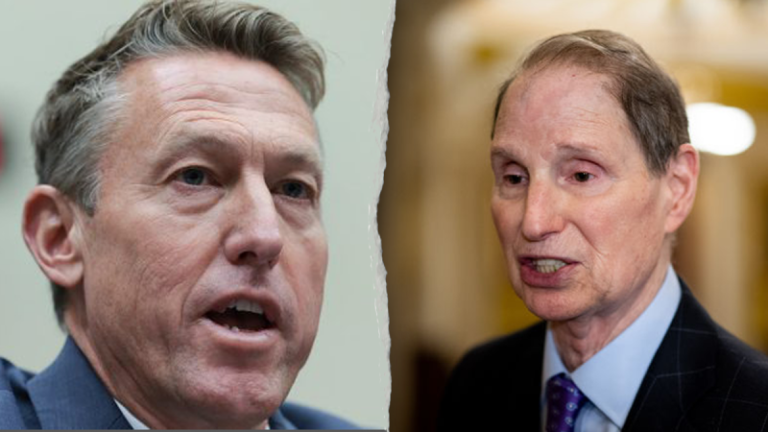
The Senate Finance Committee hearing to consider Rodney Scott’s nomination to be commissioner of Customs and Border Protection began with fireworks from the panel’s top Democrat.

Scott was lambasted by Sen. Ron Wyden of Oregon over a controversy involving a person who died in CBP custody in 2010. The criticisms prompted a Tuesday letter from Homeland Security Secretary Kristi Noem.

‘The Commissioner of U.S. Customs and Border Protection is like the point guard for everything the U.S. government does at our borders,’ Wyden said at the start of the hearing on Wednesday. 

‘A person who holds this job should have deep experience with both customs and with protecting our borders, along with unimpeachable judgment. Today’s hearing is to determine whether Rodney Scott possesses that experience, along with the strength of character to be trusted with one of the most important jobs in the federal government,’ he said, claiming Scott ‘falls short.’

The Democrat then delved into details of the detention and death of Anastasio Hernandez Rojas, who was allegedly beaten while in CBP custody in 2010 when Scott was a top official in the San Diego office.

Wyden claimed Scott’s office ‘taped over the only video copy’ of the man’s death and tampered with evidence, citing court documents.

He then referenced a letter he sent to Noem seeking documents on the Rojas incident.

That request spurred Noem to write a scathing response to the Oregon Democrat, calling out ‘the minority’s uninformed account of Mr. Scott’s alleged role in the 2010 investigation of the death of Mr. Anastasio Hernandez Rojas [which] was infuriating and offensive to read.’

‘This response seeks to correct the record and clarify that Mr. Scott is a dedicated and honorable public servant,’ she said, adding, ‘Your account alludes to the Committee’s erroneous impression that Mr. Scott was present at the unfortunate series of events leading to Mr. Hernandez Rojas’ death, or that Mr. Scott presided over CBP’s investigation into Mr. Hernandez Rojas’ death.’ 

‘Contrary to what your letter describes, Mr. Scott did not impede any investigation, nor did he take steps to conceal facts from investigators.’

‘Mr. Scott’s twenty-nine years of service at the U.S. Border Patrol provides him with the hands-on experience to oversee one of the world’s largest – and most important – law enforcement agencies. 

‘President Trump rightfully prioritizes border security and recognizes the need for effective leadership at CBP. Mr. Scott is highly qualified for the job at hand, and the President made an excellent choice in nominating him for this position.’ 

Senate Finance Committee Chairman Mike Crapo, R-Idaho, later offered Scott an opportunity to respond to Wyden.

Scott said he was not involved in the detention of Rojas, nor was he in the vicinity when it happened. 

Asked about a controversial subpoena in the case, he said it was for information gathering and to seek medical records for Rojas since he died in federal custody.

‘Absolutely not,’ Scott later answered when asked if he interfered in that investigation at all.

‘Secretary… Noem responded to the request and cited official investigations and statutes to note that Mr. Scott’s ministerial work following the death – including authorizing a subpoena to request medical records that were provided to the San Diego police department – was in accordance with his duties, the law and professional standards,’ Crapo said in criticizing the allegations.

This post appeared first on FOX NEWS

Warning: This article contains graphic and disturbing accounts from Russia’s war against Ukraine.

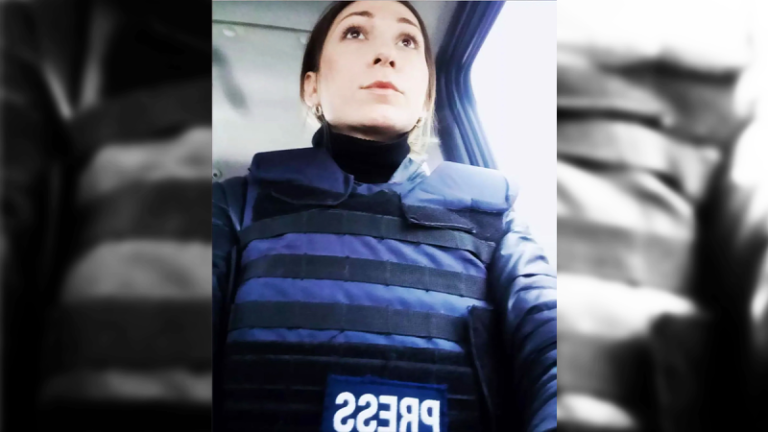
The body of Viktoria Roshchyna, 27, was one of 757 bodies of mostly Ukrainian soldiers returned to Kyiv on Feb. 14, 2025, and reportedly bore unmistakable signs of torture after more than a year in Russian captivity. 

Roshchyna, who was described as a determined journalist, was captured by Russian forces while reporting behind the front lines in a Russian-occupied area of Ukraine in August 2023.

While her body was returned with hundreds of others, she was reportedly one of the few whose name was not provided, instead a tag attached to her shin read ‘unidentified male.’

According to a report by the Washington Post, her head had been shaved, burn marks were evident on her feet, a rib was found to have been broken, and there were possible traces of electric shock. 

An investigation into her detention and death confirmed that some of her organs were missing in what some reports suggested was a move to conceal the extent of her torture, including her brain, eyes and part of the trachea.

Yurii Bielousov, head of the Ukrainian Prosecutor General’s Office war crimes department, which led the investigation into her death, told Ukrainian media outlet Ukrainska Pravda that there were signs she had also been strangled.

Russia did not confirm until April 2024 that it had detained the journalist, and in October 2024 it sent a letter to her father, Volodymyr Roshchyna, telling him she had died in captivity.

Her body was marked by Russian officials with an abbreviation ‘SPAS,’ which reportedly means ‘total failure of the arteries of the heart,’ a designation that Russian authorities may have used to fabricate an official cause of death.

‘The condition of the body and its mummification have made it impossible to establish the cause of death through the forensic examination,’ Bielousov told reporters involved in the investigation.

Roshchyna’s parents have requested additional testing to be carried out.

After her capture, Roshchyna was held at a police station in the city of Energodar near the Zaporizhzhi nuclear power plant, where, according to the investigation, Russian forces set up a ‘torture chamber’ and subjected captives to severe beatings and electric shock.

It is believed Roshchyna endured electric shock applied to her ears. 

Roshchyna was then transferred to Melitopol days later where she was held until the end of 2023 and is also believed to have endured significant torture. 

By the beginning of 2024, she was reportedly transferred along with other prisoners to a pre-trial detention center known as ‘No. 2’ in Taganrog, a city in southwest Russia near the Ukrainian border and which has been likened to a concentration camp. 

The investigation referred to the site ‘as one of the most terrifying for Ukrainian prisoners’ and confirmed that neither lawyers nor international organizations such as the Red Cross or United Nations observers have been allowed into this detention center.

Roshchyna reportedly went on a hunger strike before she was transferred to a hospital, revived to an extent and then sent back to the detention center.

She was intended to be returned to Ukraine in September 2024, but the exchange never happened for unknown reasons. Roshchyna was then reported to have died while in a convoy, but where she was headed remains unclear.

This post appeared first on FOX NEWS

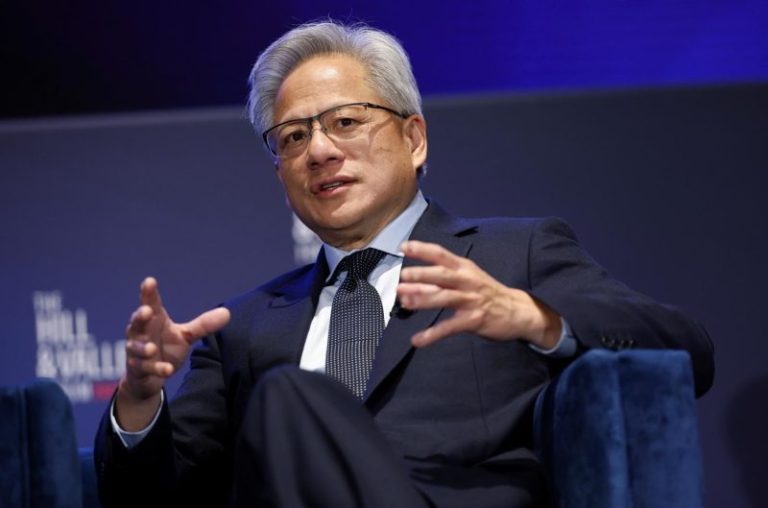
Nvidia CEO Jensen Huang said on Wednesday that China is “not behind” in artificial intelligence, and that Huawei is “one of the most formidable technology companies in the world.”

Speaking to reporters at a tech conference in Washington, D.C., Huang said China may be “right behind” the U.S. for now, but it’s a narrow gap.

“We are very close,” he said. “Remember this is a long-time, infinite race.”

Nvidia has become key to the world economy over the past few years as it makes the chips powering the majority of recent advanced AI applications. The company faces growing hurdles in the U.S., including tariffs and a pending Biden-era regulation that would restrict the shipment of its most advanced AI chips to many countries around the world.

The Trump administration this month restricted the shipment of Nvidia’s H20 chips to China without a license. That technology, which is related to the Hopper chips used in the rest of the world, was developed to comply with previous U.S. export restrictions. Nvidia said it would take a $5.5 billion hit on the restriction.

Huawei, which is on a U.S. trade blacklist, is reportedly working on an AI chip of its own for Chinese customers.

“They’re incredible in computing and network tech, all these central capabilities to advance AI,” Huang said. “They have made enormous progress in the last several years.”

Nvidia has made the case that U.S. policy should focus on making its companies competitive, and that restricting chip sales to China and other countries threatens U.S. technology leadership.

Huang called again for the U.S. government to focus on AI policies that accelerate the technology’s development.

“This is an industry that we will have to compete for,” Huang said.

Trump on Wednesday called Huang “my friend Jensen,” cheering the company’s recent announcement that it planned to build $500 billion in AI infrastructure in the U.S. over the next five years.

Huang said he believes Nvidia will be able to manufacture its AI devices in the U.S. The company said earlier this month that it will assemble AI servers with its manufacturing partner Foxconn near Houston.

“With willpower and the resources of our country, I’m certain we can manufacture onshore,” Huang said.

Nvidia shares are down more than 20% this year, sliding along with the broader market, after almost tripling in value last year. The stock fell almost 3% on Wednesday.

This post appeared first on NBC NEWS

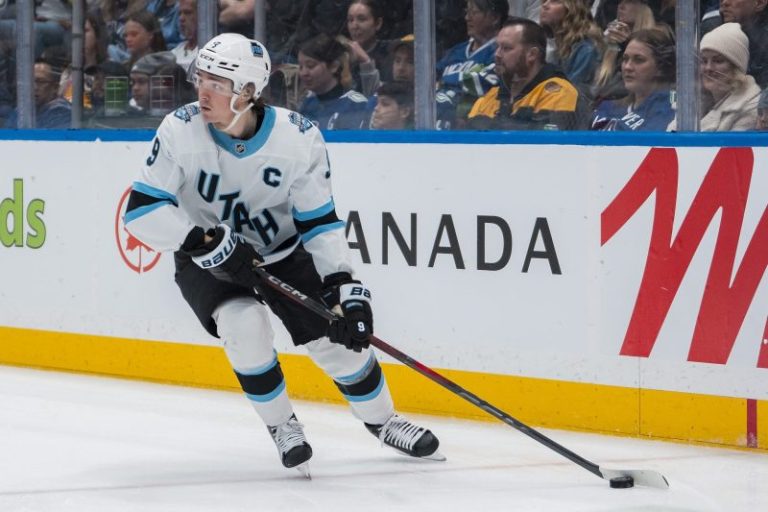
Officials with the Utah Hockey Club are not saying much about the possibility of the team’s pending nickname after one of the names considered was leaked on social media.

The name Utah Mammoth was shown on the team’s official YouTube page, and before it was deleted, internet sleuths had already taken screenshots of the handle, prompting a quick deletion of the entire channel.

The other nicknames under consideration were the current name, the Utah Outlaws, and the Utah Mammoth after the team conducted a fan vote to decide a permanent nickname.

Utah Mammoth team name trademark

According to the  U.S. Patent and Trademark Office, a trademark under the name ‘Utah Mammoth’ has been pending since last April, and an extension on that application was granted in February. That application is for ‘entertainment services, namely, ice hockey exhibitions’ to be used for ‘clothing, namely, shirts, t-shirts, jerseys, sweatshirts, sweatpants’ and other apparel.

The company that filed that application also filed for nine additional trademark applications, including the names Outlaws, Hockey Club, and Mammoth.

The Utah Hockey Club is in its first season based in Salt Lake City after relocating from Phoenix as the Arizona Coyotes. The team finished with a 38-31-13 record this year, good for sixth in the Central Division of the Western Conference.

Team nicknames have been leaked before as a news helicopter in Washington, D.C, in 2022 revealed the nickname Commanders nearly a day before the NFL franchise was set to announce it.  

This post appeared first on USA TODAY

The NFL has announced the disciplinary action it will take toward the Atlanta Falcons and defensive coordinator Jeff Ulbrich for allowing Shedeur Sanders’ phone number to leak during the 2025 NFL Draft.

On Wednesday morning, the league announced a $250,000 fine for the team and an additional $100,000 fine for Ulbrich ‘for failing to prevent the disclosure of confidential information distributed to the club in advance of the NFL Draft,’ it said in a statement.

‘We appreciate the NFL’s swift and thorough review of last week’s data exposure and the event that transpired due to it,’ the Falcons said in a statement. ‘We were proactive in addressing the situation internally and cooperated fully with the league throughout the process, and accept the discipline levied to Coach Jeff Ulbrich and the organization. We are confident in our security policies and practices and will continue to emphasize adherence to them with our staff whether on or off premises. Additionally, the Ulbrich family is working with the organization to participate in community service initiatives in relation to last week’s matter.’

In an Instagram post on Sunday, Ulbrich’s son Jax admitted that he took Sanders’ number off of his father’s iPad and used it to prank call the former Colorado quarterback during Round 1 of this year’s draft.

‘On Friday night I made a tremendous mistake,’ his social media post read. ‘Shedeur, what I did was completely inexcusable, embarrassing, and shameful. I’m so sorry I took away from your moment, it was selfish and childish. I could never imagine getting ready to celebrate one of the greatest moments of your life and I made a terrible mistake and messed with that moment. Thank you for accepting my call earlier today, I hope you can find it in your heart to forgive me.’

The Falcons also apologized to Sanders and his family in a statement of their own.

‘Earlier in the week, Jax Ulbrich, the 21-year-old son of defensive coordinator Jeff Ulbrich, unintentionally came across the draft contact phone number for Shedeur Sanders off an open iPad while visiting his parent’s home and wrote the number down to later conduct a prank call,’ the Falcons said in their statement. ‘Jeff Ulbrich was unaware of the data exposure or any facets of the prank and was made aware of the above only after the fact.

‘The Atlanta Falcons do not condone this behavior and send our sincere apologies to Shedeur Sanders and his family, who we have been in contact with to apologize to, as well as facilitate an apology directly from Jax to the Sanders family.’

Sanders was not the only target of a prank call during the draft. Former Michigan defensive tackle Mason Graham and former Penn State tight end Tyler Warren also reportedly received similar calls from pranksters on Thursday.

Graham’s father, Allen, confirmed the reports to the Detroit Free Press earlier this week.

‘Yeah – that happened,’ Allen Graham told the Free Press via text message. ‘Someone made a TikTok while crank calling him & showed his number on the video … his phone was getting called nonstop.’

The Cleveland Browns selected Sanders on Saturday, in the fifth round of the 2025 NFL Draft, two days after they picked Graham with the No. 5 overall pick.

Warren was selected by the Indianapolis Colts with the No. 14 overall pick.

This post appeared first on USA TODAY

The father of Indiana Pacers star Tyrese Haliburton has apologized for his actions following Indiana’s overtime win over the Milwaukee Bucks on Tuesday night.

John Haliburton was seated on the floor at Gainbridge Fieldhouse in Indianapolis, and after his son Tyrese made the game-winning shot in the final seconds, he ran onto the court and appeared to get into a verbal altercation with Bucks forward Giannis Antetokounmpo.

‘I sincerely apologize to Giannis, the Milwaukee Bucks and the Pacers organization for my actions following tonight’s game,’ John Haliburton posted on social media. ‘This was not a good reflection on our sport or my son and I will not make that mistake again.’

Tyrese Haliburton’s father confronts Giannis

After Haliburton’s layup with 1.3 seconds remaining in overtime gave Indiana a 119-118 victory and eliminated the Bucks, John Haliburton and other Pacers fans stormed onto the court.

Moments later, TV cameras captured an animated discussion between the two before Antetokounmpo was ushered away.

Antetokounmpo’s response to confrontation

Giannis was still a little upset when asked about the exchange in a postgame interview.

“(A)t the moment I thought he was a fan,” Antetokounmpo said. “But then I realize it was Tyrese’s [father]. I love Tyrese. I think he’s a great competitor. [But] it was his dad … Coming in the floor and showing me his son, a towel with his face, [and saying], ‘This is what we do. This is what we F-ing do. This what the F we do.’ I feel like that’s very, very disrespectful.

‘I’m happy for him, I’m happy for his son, and I’m happy that he’s happy for his son,’ Antetokounmpo later added. ‘That’s how you’re supposed to feel. But coming to me and disrespecting me and cursing at me I think is totally unacceptable, totally unacceptable.’

Antetokounmpo did say that their discussion on the floor ended amicably, as evidenced by a thumbs-up gesture he gave as they parted.

‘I talked with him at the end. And I think we’re in a good place.”

This post appeared first on USA TODAY

Another week, another new PWHL team.

Seattle is getting an expansion team that will begin play in the 2025-26 season, the league announced Wednesday. With last week’s announcement of an expansion team in Vancouver, the PWHL will have eight teams next season.

‘The opportunity to start a new chapter of women’s hockey in the Pacific Northwest … has so much meaning for our league,’ Amy Scheer, the executive vice president of PWHL business operations, said in a statement. ‘The (NHL’s Seattle) Kraken already have been unbelievably supportive, and it’s a joy to have PWHL Seattle join the WNBA’s Storm and the NWSL’s Reign, who are skyscrapers in the city’s towering sports landscape.”  

The still-to-be-named Seattle team will play at Climate Pledge Arena, home of both the Kraken and the Storm. Its colors will be emerald green and cream.

The PWHL began play last year, and it quickly became obvious there was room for growth. It’s already passed the 1 million mark in total attendance, and has repeatedly set single-game records for women’s hockey in the United States. Its ‘Takeover Tour’ — games played in potential expansion cities — was wildly successful, drawing 123,601 fans to the nine games.

That included the 12,608 people, then a season high, who turned out for a Jan. 5 game at Climate Pledge Arena.

This post appeared first on USA TODAY