Archive

2025

Browsing

President Donald Trump said Tuesday he still likes ‘Elon a lot,’ despite their high-profile split earlier this year over the One Big Beautiful Bill Act.

At the end of the administration’s monthly Cabinet meeting, FOX Business’ Edward Lawrence asked Trump whether Musk was ‘back in [his] circle of friends’ after their falling-out.

Trump responded: ‘Well, I really don’t know. I mean, I like Elon a lot.’ He praised Musk’s endorsement during the 2024 campaign before noting their disagreement over electric-vehicle policy.

Musk was a fixture in the White House in the early days of the second Trump administration as he took on the role as the Department of Government Efficiency’s de facto leader. He served as a special government employee with the Trump administration to help lead DOGE, frequently attending Cabinet meetings and joining Trump during public events. Musk’s tenure with DOGE wrapped up at the end of May. 

Musk had also championed Trump during the 2024 election cycle, criss-crossing battleground states that ultimately all voted for the Republican candidate over former Vice President Kamala Harris. 

Trump repeatedly celebrated Musk for his efforts at DOGE to remove potential federal overspending, fraud and mismanagement – an effort assailed by government employees and Democrats who protested both the Trump administration and Musk repeatedly earlier this year. 

The cozy friendship fell to pieces in June, however, when Musk began publicly ridiculing the ‘One Big Beautiful Bill,’ which was a massive piece of legislation Trump signed into law in July that advances his agenda on taxes, immigration, energy, defense and the national debt. 

Musk railed against the legislation, which Trump had been rallying Republican lawmakers to pass since the beginning of his second term, posting on X that it would be the ‘BIGGEST DEBT ceiling increase in HISTORY’ and also claimed in a personal attack on Trump that ‘@RealDonaldTrump is in the Epstein files.’ 

Trump previously told the media that his relationship with Musk changed when he began discussing plans to eliminate the electic vehicle mandate, which would affect Musk’s signature electric company, Tesla. Trump signed a trio of congressional resolutions in June ending California’s restrictive rules for diesel engines and mandates on electric vehicle sales, with Trump celebrating that his signature ‘will kill the California mandates forever.’

The pair abruptly parted ways in June, with Musk weeks later offering some support to Trump’s presidential actions on social media, such as praising a ceasefire deal between Israel and Gaza in July.

Musk was seen physically back in Trump’s orbit in September during the memorial service for Charlie Kirk, Turning Point USA’s founder who was assassinated on Sept. 10. The pair was seen sitting next to each other and chatting during the ceremony. 

Musk most recently attended a Trump event on Nov. 18 at the White House for a dinner with Crown Prince Mohammed bin Salman of Saudi Arabia, as well as dozens of high-profile business leaders. 

Trump’s latest remarks on Musk unfolded during his Cabinet meeting, which marked his ninth such meeting since the start of his second administration and matched the total number of full Cabinet meetings former President Joe Biden held across his four-year tenure. 

This post appeared first on FOX NEWS

Senate Republicans are divided on their view of the deadly Sept. 2 strikes in the Caribbean as congressional inquiries into the matter mount, with some arguing that subduing suspected drug boats is the right move while others question the legality of the so-called double-tap attacks.

The Senate and House Armed Services committees are gearing up for hearings into the strikes after reports that Secretary of War Pete Hegseth, later confirmed by the White House, authorized a second strike to eliminate survivors on a suspected drug boat in the Caribbean.

But there is a growing tension among Republicans over what to do. Some support the desire of Senate Armed Services Committee Chair Roger Wicker, R-Miss., for stringent oversight of the incident, while others see the strikes as part of the Trump administration’s crackdown on drugs flowing into the country.

Sen. Bernie Moreno, R-Ohio, told Fox News Digital he was ‘very, very, very supportive of killing drug dealers. I think the more narco-terrorists that we kill, that we save American lives.’

‘I’m not concerned about killing people whose intent was to kill Americans at all,’ Moreno said.

White House press secretary Karoline Leavitt confirmed that Hegseth gave the green light for the second strike, but noted that it was Adm. Frank Bradley, the head of U.S. Special Operations Command, who ordered and directed it.

That confirmation came after a report from The Washington Post claimed Hegseth had ordered to ‘kill them all,’ which some on the Hill have disputed.

Sen. John Kennedy, R-La., said he read the article and charged that there ‘wasn’t an exact quote from Secretary Hegseth. There was an anonymous source paraphrased what the secretary allegedly said.’

‘So, here we’ve got a story in The Washington Post, which is known to hate Trump and Republicans, by a reporter who is citing an anonymous source that supposedly is saying that Hegseth said it before the strike even happened, but they don’t know exactly what he said,’ Kennedy said. ‘That is a waste of your time and mine.’

When pressed about Leavitt’s confirmation of the authorization, Kennedy said, ‘I don’t care what the White House press secretary said.’

Still, some Republicans want answers to what exactly happened.

Senate Majority Leader John Thune, R-S.D., reiterated that he believed that the Senate and House Armed Services committees’ impending probes into the matter was a ‘natural place’ to look at what happened with the strikes, but he stopped short of weighing in on whether a second strike was right or wrong. 

‘Well, I don’t know the particulars yet, and that’s why we’re gonna have the — we’ll look,’ Thune said. 

Sen. Thom Tillis, R-N.C., said that since the report came out, ‘We want to get to the facts.’

‘Obviously, if there was a direction to take a second shot and kill people, that’s a violation of an ethical, moral or legal code,’ Tillis said. ‘We need to get to the bottom of it. But right now, it could be, I think, was it Oxford that the word of the year is ‘rage bait’? Could be rage bait too. So we want to get to the facts.’

Senate Democrats are demanding a fulsome dive into the incident, and toeing the line of whether what transpired was a war crime.

Sen. Jack Reed, D-R.I., the top-ranking Democrat on the Senate Armed Services Committee, said he expected to have a briefing with Bradley this week.

When asked what questions he wanted to be answered, Reed said the top priority was to find out whether the strikes comported with ‘the law of war and [Uniform Code of Military Justice] and international law.’

‘I think one of the easiest ways to begin to dispel the question is to make public the video of the strikes,’ Reed said.

Sen. Tim Kaine, D-Va., has, time and again this Congress, remained a staunch critic of action taken in Iran and in the Caribbean and moved to curtail the administration’s actions through resolutions that would stymie President Donald Trump’s war powers.

He said lawmakers needed to get to the bottom of ‘whether a war crime has been committed.’

Sen. Mark Kelly, D-Ariz., was cautious not to fully paint the incident as a war crime before getting more facts, adding that he hoped the reports of the strikes were ‘not accurate.’

‘I will say, though you know as somebody who has sunk two ships myself, that folks in the military need to understand, you know, the law of the sea, the Geneva Conventions, what the law says,’ Kelly said. ‘And I’m concerned that if there were, in fact, as reported, you know, survivors clinging to a damaged vessel, that could be, you know, over a line. I hope it’s not the case.’

This post appeared first on FOX NEWS

The National Archives and Records Administration (NARA) is seeking to reform the funding structure for presidential libraries in an effort to reduce reliance on taxpayer funding for operational costs and allow NARA to focus more on preserving and providing access to records. 

Fourteen presidential libraries fall under the National Archives system, and that number is expected to jump to 16 for presidential libraries dedicated to Trump and former President Joe Biden. 

While NARA and the presidential foundations have their own individual agreements outlining cost-sharing burdens for these presidential libraries, taxpayer funding is going toward maintenance costs, including mowing lawns, painting walls and cleaning toilets at nearly all these buildings, according to NARA. 

Additionally, the government contracting process for quick repairs like broken door hinges filters through an approval process in Washington and can take weeks or months to be addressed, the agency said. 

As a result, NARA is in the process of negotiating with each presidential foundation on an individual basis so they can take greater ownership of the operational responsibilities for their specific library, Jim Byron, senior advisor to the archivist, told Fox News Digital.

‘Despite decades of well-intentioned oversight and stewardship of America’s presidential libraries by the National Archives, reality now dictates that operational changes can and should be made to ensure the long-term health of these American treasures,’ Byron said in a statement to Fox News Digital Monday. 

‘Presidential libraries have grown in scope and purpose, and with that growth — and with anticipated future additions to the system — comes increased expenditures to be borne by the American taxpayers.’ 

NARA spends $91 million annually on presidential libraries from appropriations, and the deferred maintenance costs across the entire library system total roughly $123 million. 

Under current negotiations that launched in the spring between NARA and the presidential foundations, shifting some of the costs to the presidential foundations is expected to save NARA $27 million. These funds will then be shifted toward NARA’s primary mission of preserving and sharing records, including digitizing and releasing more files, Byron said.

In the event that changes aren’t made to shift more operational costs to presidential foundations, NARA’s ability to focus on its mission will be jeopardized, according to Byron. 

‘The alternative is to do nothing and allow NARA’s appropriations to go to lawn care and toilet cleaning at the expense of FOIA processing, to close all presidential libraries when the government shuts down, to allow a deferred maintenance backlog to grow and to regret that presidential library structures were not addressed,’ Byron said. ‘The National Archives is committed to making sure that doesn’t happen while delivering for the American people.’

Luke Nichter, a history professor at Chapman University who said he averages 100 days annually for research and interviews with former government officials, told Fox News Digital that, given the constraints of the federal budget, it’s necessary for presidential foundations to shoulder more of the cost for upkeep of these presidential libraries.

‘It now takes about as much money to build a presidential library as it does to run for president — about a billion dollars,’ Nichter said in an email to Fox News Digital Tuesday. ‘The American taxpayer should not bear that. The administration deserves credit for starting an important conversation about the future of these cherished institutions.

‘In the future, the National Archives will have to focus more closely on what it does well — the preservation of federal and presidential records — and leave other functions to the presidential foundations.’ 

This most recent effort aligns with other initiatives underway at the National Archives aimed at redirecting efforts to the agency’s mission, including working with other agencies to release the John F. Kennedy, Martin Luther King Jr., and Amelia Earhart files. 

The presidential library structure varies, and NARA and each presidential foundation have their own separate public-private agreements. Typically, though, private funds are used to create a presidential library, which NARA then oversees using federal funding.

But this isn’t always the case. For example, the Obama Foundation is an entirely private entity and did not choose to construct a library for NARA to store documents, instead opting to build a private presidential center and private museum. As a result, NARA digitized and stored Obama presidential records at an existing NARA site and still oversees preserving and providing access to those records. 

Previous efforts to revamp the funding partnership between government and private entities successfully occurred in 2018, when NARA coordinated with each presidential foundation to discuss which operations it could take on amid increased budget constraints. Ultimately, those negotiations led to NARA and the George W. Bush Foundation securing a new deal splitting operational costs. 

This post appeared first on FOX NEWS

Secretary of War Pete Hegseth chastised the press following media reports that he signed off on a second strike against an alleged drug boat after the first one left survivors. 

The Trump administration has come under renewed scrutiny for its strikes in the Caribbean targeting alleged drug smugglers, after the Washington Post reported on Friday that Hegseth verbally ordered everyone onboard the alleged drug boat to be killed in a Sept. 2 operation. The Post reported that a second strike was conducted to take out the remaining survivors on the boat. 

On Monday, the White House confirmed that a second strike had occurred, but disputed that Hegseth ever gave an initial order to ensure that everyone on board was killed, when asked specifically about Hegseth’s instructions.

Hegseth said that he watched the first strike live, but did not see any survivors at that time amid the fire and the smoke — and blasted the press for their reporting.

‘This is called the fog of war. This is what you in the press don’t understand,’ Hegseth told reporters at a Cabinet meeting on Tuesday. ‘You sit in your air-conditioned offices or up on Capitol Hill and you nit pick, and you plant fake stories in the Washington Post about ‘kill everybody’ phrases on anonymous sources not based in anything, not based in any truth at all. And then you want to throw out really irresponsible terms about American heroes, about the judgment that they made.’ 

Hegseth said that after watching the first strike, he left for a meeting and later learned of the second strike. The White House said Monday that Hegseth had authorized Adm. Frank ‘Mitch’ Bradley to conduct the strikes, and that Bradley was the one who ordered and directed the second one. 

At the time of the Sept. 2 strike, Bradley was serving as the commander of Joint Special Operations Command, which falls under U.S. Special Operations Command. He is now the head of U.S. Special Operations Command.

According to Hegseth, carrying out a subsequent strike on the alleged drug boat was the right call. 

‘Admiral Bradley made the correct decision to ultimately sink the boat and eliminate the threat,’ Hegseth said Tuesday. 

Meanwhile, reports of the second strike have attracted even more scrutiny from lawmakers on both sides of the aisle on Capitol Hill and calls for greater oversight, amid questions about the strikes’ legality. 

‘This committee is committed to providing rigorous oversight of the Department of Defense’s military operations in the Caribbean,’ Reps. Mike Rogers, R-Ala., and Adam Smith, D-Wash., who lead the House Armed Services Committee, said in a statement on Saturday. ‘We take seriously the reports of follow-on strikes on boats alleged to be ferrying narcotics in the SOUTHCOM region and are taking bipartisan action to gather a full accounting of the operation in question.’

Hegseth said Tuesday that although there has been a pause in strikes in the Caribbean because alleged drug boats are becoming harder to find, the Trump administration’s campaign against the influx of drugs will continue. 

‘We’ve only just begun striking narco-boats and putting narco-terrorists at the bottom of the ocean because they’ve been poisoning the American people,’ Hegseth said. 

The Trump administration has carried out more than 20 strikes against alleged drug boats in Latin American waters, and has bolstered its military presence in the Caribbean to align with Trump’s goal to crack down on the influx of drugs into the U.S.

This post appeared first on FOX NEWS

Lane Kiffin burned some bridges on his way out of Mississippi, so why not go full scorched earth?

The former Ole Miss coach seemed to send a message to Rebels QB Trinidad Chambliss before Kiffin was introduced as LSU football’s new coach.

Kiffin posted on X a passage from ‘The Pivot Year’ on Monday morning, accompanied by a Trinidad & Tobago flag and tiger emoji.

“Let the seams unravel and reform your entire life the way you really intend for it to be. When you are forced to let go, you are also asked to exhale. What does not is not mean to. If you are not certain, wait. Time reveals all truth, all knowing, all reality that will come to be. It will all become clear.”

While Chambliss is not from Trinidad nor named after the Caribbean Island, Ole Miss fans have flown the nation’s flags around Oxford in support of their starting quarterback.

Chambliss, who transferred in from Division II Ferris State after leading the Bulldogs to a national title, will hope to to do the same for Ole Miss as the Rebels are all but certain to compete in this month’s College Football Playoff. He’s thrown for 3,016 yards with 18 touchdowns to just three interceptions.

A senior, Chambliss has submitted a waiver request in hopes of getting an additional year of eligibility. If granted, would that be back at Ole Miss… or following Kiffin to LSU?

It’s worth noting Kiffin continued to tweet about Tennessee for years after leaving Knoxville. So, maybe it’s just Lane being Lane. Or maybe it’s a hint. Stay tuned to ‘As The Lane Turns.’

This post appeared first on USA TODAY

Serena Williams has opened the door to a comeback.

Williams has rejoined the International Tennis Integrity Agency’s doping pool, a requirement for her to participate in sanctioned tournaments. Her name appears on the latest list of players who are in the International Registered Testing Pool, which was updated Oct. 6.

Williams has to be in the testing pool for six months before she would be eligible to play again.

Williams’ reentry to the doping pool was first reported by The Athletic.

The 23-time Grand Slam champion has not played since the 2022 U.S. Open. She announced in August of that year that she was ‘evolving’ away from tennis, in part because she and husband Alexis Ohanian wanted to have more children.

‘Believe me, I never wanted to have to choose between tennis and a family. I don’t think it’s fair,’ Williams wrote in an Aug. 9, 2022, essay in Vogue. ‘But I’m turning 41 this month, and something’s got to give.’

Williams had her second daughter, Adira, in August 2023.

Williams revealed in August that she had lost 31 pounds after going on a GLP-1 drug, and credited the medication with finally helping relieve the joint pain she’d had since having her first daughter, Olympia, in September 2017.

‘I had a lot of knee issues,’ Williams said during an appearance on the ‘Today’ show. ‘Especially after I had my kid (and) was never able to get to my normal levels of weight. And that, quite frankly, definitely had an effect on maybe some wins that I could have had in my career.’ 

Williams has immersed herself in various business ventures since stepping away from tennis. In an interview with Porter magazine, published Monday, she said not playing tennis was still ‘difficult,’ but she missed it less than she once had.

‘Not as much as this time last year,” she told the magazine. “No matter how prepared you are to retire, and particularly from doing something every day at such a high level, it’s hard. I really prepped myself the best way I could, but it’s something that’s still a little difficult.”

This post appeared first on USA TODAY

Vanderbilt football is in the middle of the best season in program history, with a program-record 10 wins, a leading Heisman Trophy contender in quarterback Diego Pavia and a chance at a spot in the College Football Playoff.

The Commodores’ future may got brighter.

On Tuesday, Rivals reported Jared Curtis, the No. 1 quarterback recruit in the 2026 class, had flipped his commitment from Georgia to Vanderbilt.

However, Curtis posted to X less than an hour later: ‘Don’t know where all this is coming from. Haven’t had a chance to talk to either school yet. I’ll keep y’all posted.’ 

The news came one day before the start of college football’s early signing period. If Curtis were to flip to Vanderbilt he would became the highest-rated recruit in Commodores history.

Curtis has been committed to the Bulldogs since May after previously de-committing from them last fall.

The 6-3, 225-pound Curtis is rated by 247Sports’ composite rankings as the No. 1 overall player in the 2026 class. Last season at Nashville Christian School, about 10 miles from the Vanderbilt campus, Curtis racked up 3,467 yards of total offense, 58 touchdowns and just three interceptions on his way to winning Division II-A Mr. Football and Gatorade Tennessee Player of the Year. This week, he’ll aim to lead his team to its second-consecutive state championship.

Speculation around Curtis and Vanderbilt had intensified the past two months, with even Nashville-based comedian Nate Bargatze offering a pitch to the high-schooler during his appearance on ESPN’s “College GameDay” on Oct. 25 ahead of the Commodores’ game against Missouri.

“It’s hard not to remind Jared Curtis how much I’d love for him to come to Vanderbilt,” Bargatze said. “We’re local kids. We’ll become best friends, bud.”

When asked about Bargatze’s comments, Georgia coach Kirby Smart largely sidestepped the question, saying he and his staff recruit as well as they can and trust the players that have committed to the program and “not get into gimmicks and propaganda stuff.”

In Curtis, Vanderbilt would have a succession plan after Pavia will presumably exhaust his college eligibility after this season. With Pavia at quarterback the past two seasons — and with Pavia’s former New Mexico State coach Jerry Kill on staff — the traditionally woeful Commodores have become an SEC contender, going 17-8 overall and 9-7 in conference play.

With a 45-24 thumping of in-state rival Tennessee last Saturday, Vanderbilt improved to 10-2, the first time it has ever won double-digit games in a season. The Commodores are No. 12 in the latest US LBM Coaches Poll and will see Tuesday night if they improve in the playoff selection committee rankings, which had them No. 14 last week.

This post appeared first on USA TODAY

Woods gave an update on his latest comeback attempt from injury during a news conference on Tuesday, Dec. 2 that covered a wide range of topics ahead of the PGA Tour’s Hero World Challenge in The Bahamas, an annual event in which he serves as host. But the 15-time major winner put no timeline on a return to competitive golf after undergoing back surgery about six weeks ago.

‘Not as fast as I’d like it to be,’ Woods said about his recovery, according to Golfweek.

He is, however, making progress. Woods noted he was cleared by his doctor to begin chipping and putting last week and he is beginning to ramp up work in the gym. But Woods confirmed Tuesday he won’t be ready in time to play with his son, Charlie, in the PNC Championship or when the second season of TGL matches begin later this month.

Woods hasn’t competed on the PGA Tour since the 2024 Open Championship and this will be the second-consecutive year in which he won’t play in the Hero World Challenge. Woods was last scheduled to play in the Genesis Invitational in February 2025, but withdrew from the field before the tournament started after his mother died. He then ruptured his Achilles heel in March while training and practicing at home.

Woods said he hopes to participate at some point during the TGL season, which runs through March, and plans to attend all of the matches for the screen-golf league.

‘It’s been a tough year,’ Woods acknowledged, but he called the back surgery, “a good thing to do, something that needed to happen.’

Woods, who also shed some light on his work helping to revamp the PGA Tour schedule and the potential to be the U.S. team captain at the 2027 Ryder Cup, is also eligible to compete on the PGA Champions Tour for the first time in 2026. He turns 50 years old on Dec. 30.

Woods would not, however, commit to if or how much he might play on the senior circuit, where the use of a cart and only 54 holes at most events could be enticing to him. His goals are more straightforward right now.

‘I’d like to come back to just playing golf again,’ Woods said.

This post appeared first on USA TODAY
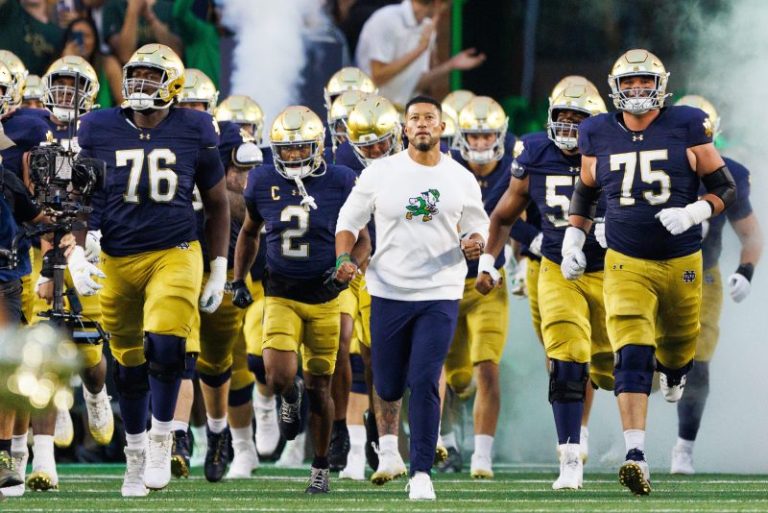
The top five of the USA TODAY Sports women’s basketball coaches poll got a bit of a makeover, thanks to a big week for Texas. But even that wasn’t enough to wrest away the No. 1 spot.

Connecticut stays on top, retaining 28 of 31 first-place votes. The Lady Longhorns, who took the other No. 1 votes, move up to No. 2 after taking down both UCLA and South Carolina at the Players’ Era event in Las Vegas. The voters were kind to the Gamecocks and Bruins, however, as each falls just one position to No. 3 and 4 respectively.

TOP 25: Complete USA TODAY Sports women’s basketball poll

The rest of the top 10 stays mostly the same as LSU, Maryland and TCU stay put in the next three spots. No. 8 Michigan swaps places with No. 9 Oklahoma this week, and North Carolina continues to round out the top 10.

Ohio State joins the poll at No. 24, replacing West Virginia.

This post appeared first on USA TODAY
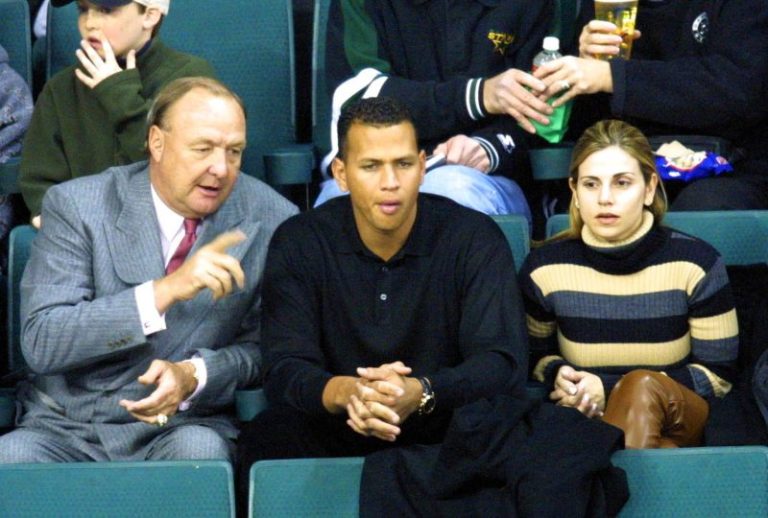
As debates wage across the country over what schools should make the 12-team College Football Playoff field, spirited discussions on the future of college sports are taking place somewhere else — in the hallowed halls of Congress.

And one legislator in particular has an interesting idea about how college athletics can be saved from what he believes is an untenable situation.

During a House Rules Committee meeting on Monday, Dec. 1 to discuss a bill that would provide a federal framework to help regulate college sports, Rep. Chip Roy (R-Texas) suggested that the federal government could “fully intervene” to fix a number of ongoing issues in college athletics, including the size of major conferences.

“I don’t know what we’re doing, what the powers that we have here in engaging and interfering with states, but if we’re going to take a big federal step because the federal court intervened, and we’re going to intervene, well, then maybe we should fully intervene,” Roy said. “Maybe we should fix the damn mess so that we don’t have 16 teams in the SEC and 17 teams in the ACC and 19 teams in the Big Ten and frigging Stanford and Berkeley on the west coast in the Atlantic Coast Conference, all because of money. It’s just laughable that this is anything but a massive money-grab.”

The committee discussion revolved around the SCORE Act, a bipartisan piece of legislation that would allow the NCAA, and potentially other governing bodies like the recently formed College Sports Commission, to create and enforce national rules regulating college sports, some of which have been disputed in court in recent years.

The SCORE Act (Student Compensation And Opportunity Through Rights and Endorsements) would permit the NCAA to set a cap on how much schools can spend on NIL deals and establish rules on player transfers, provided that athletes can transfer at least once and be immediately eligible. If passed, the measure would also allow for the fair-market-value assessment of athletes’ NIL deals with third parties, permit universities to prohibit athletes from having NIL partnerships that conflict with existing school sponsorship deals and, perhaps most notably, shield the NCAA, the Commission, conferences and schools from antitrust and state-court lawsuits.

Roy said the bill is “designed to get through” and get passed, with college athletics’ major conferences like the Big Ten and SEC “pushing it hard.” He offered critiques of the SCORE Act, describing it as “a band-aid on a gunshot wound.”

His criticisms didn’t end there, with Roy taking aim at the current college football coaching carousel, which has seen four of the five largest buyouts in the sport’s history over the past two months, all of which are over $30 million.

“Why in the hell are we allowing coaches to walk out and be paid not to coach for years? It’s insane,” Roy said. “What we just saw unfold with Lane Kiffin is just an absolute abomination. People say, ‘Well, this is the market working, Chip. This is the market forces at play.’ This is not supposed to be a market. Not in that classic sense. Yes, college sports can compete with the NFL for revenue. Yes, college sports can compete with other entertainment dollars. I get that. But this is not supposed to be an NFL light. But yet, that’s how we’re treating it.”

Roy is a former college athlete, a three-year letter winner on the golf team at Virginia. Earlier this year, the fourth-term congressman announced he was running for Texas attorney general, a race in which he’s viewed as the frontrunner.

This post appeared first on USA TODAY