Archive

2025

Browsing

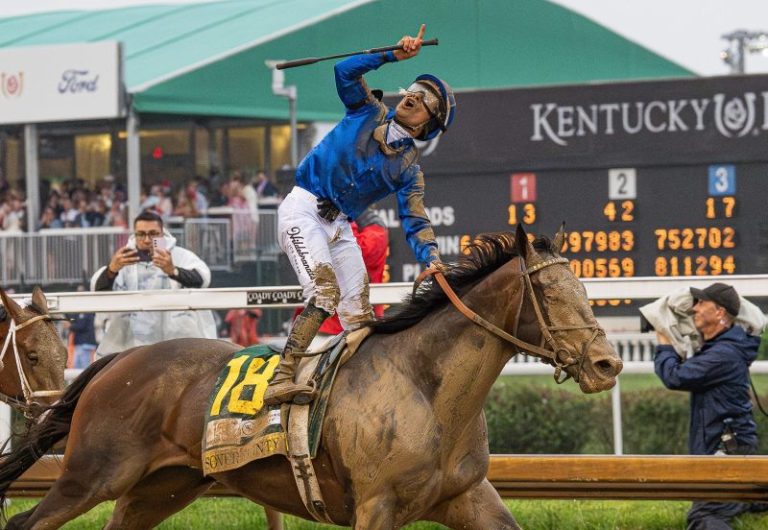
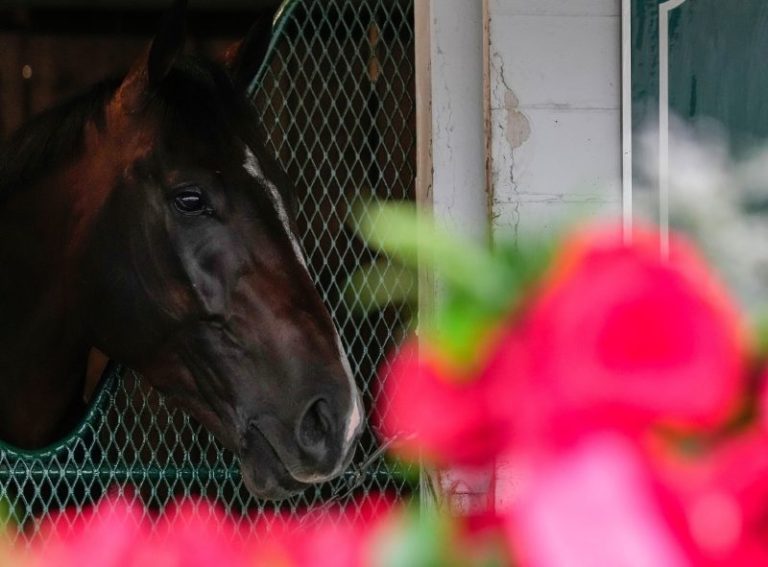
LOUISVILLE, Ky. — Every Kentucky Derby-winning trainer has the same day-after script when it comes to bringing their horse to the Preakness. And the line is usually some non-committal variation of “they’ll tell us” if they’re physically ready to run back just two weeks later in the second jewel of the Triple Crown. 

Well, Bill Mott wasn’t kidding Sunday, the morning after Sovereignty’s victory. You could almost see the thought bubble forming around his words, telling everyone not to be too surprised if he and the management team at Godolphin, which owns the horse, decided to take a pass on Baltimore. 

“It’s good to have that option,” Mott told reporters. “I don’t think we’re dead set on it. I don’t think that’s the only thing we’re thinking about.”

And guess what? A little more than 48 hours later, a news release from Pimlico made it official: Sovereignty isn’t coming to Baltimore.

Uh-oh. Is anyone in horse racing going to listen when the best trainers in the world — and the people responsible for the health and well-being of the animal — tell you over and over again that the Triple Crown is no longer viable in its current format? 

Sorry, traditionalists. But it’s time for the Triple Crown to change. 

It doesn’t have to be anything radical. But the modern racehorse is not bred or built to run three long races in five weeks, and there isn’t a single high-level trainer in the country that would put their horse through that gauntlet unless there was a historic achievement on the line. 

Give credit to Mott, one of the best and most careful horsemen in the world, for putting his principles – and the long-term health of Sovereignty – ahead of his own ambitions and the pressure he undeniably felt to bring the show to Maryland.

Those who have resisted adding some time between the races have long argued that it cheapens the achievement if you remove part of the challenge. But what’s actually been happening over the last several years is that so few horses run in all three races it’s already being cheapened. 

And the ones that do, in general, don’t come out better for it on the other side. 

Last year, Derby winner Mystik Dan ran in all three legs and then disappeared until December. He’s 0-for-3 since then. Mage, the 2023 winner, ran in the Preakness and was never the same, retiring after two more races and several physical issues.

“I think over the years, people realize that spacing these horses out a little bit gives you the opportunity to make them last a little longer,” Mott said. “I think we’re looking at a career, you know, and you want the career to last more than five weeks.”

There could not be a more damning indictment of how the Triple Crown is now perceived. 

Sure, you can argue that breeders – especially those who care more about the price their horse will fetch in the sales ring than what happens on the racetrack – should stop what they’ve been doing for the last couple of decades and breed more soundness and stamina into their horses. But that’s just not realistic, and may not even reverse the increasing fragility of the common racehorse.

This isn’t the 1940s anymore, when it was common for Thoroughbreds to run every couple of weeks and sometimes actually run races in-between the three-week gap separating the Preakness and Belmont. This isn’t the 1980s, when one of the premier Derby preps, the Blue Grass Stakes, was actually held nine days before the run for the roses. It’s not even 2015, when American Pharoah broke the 37-year drought and proved to the racing world that it could still be done. 

And even as modern Thoroughbreds become more injury-prone and less sturdy due to inbreeding and the commercial appeal of speed pedigrees over stamina, it can still be done. 

But at what cost? 

“It’s a long season and he’s had three hard races since February and that takes a lot out of those horses,” Michael Banahan, the director of American bloodstock for Godolphin, told reporters. “It’s a quick turnaround and that’s what makes the Triple Crown so special. He’ll tell us yea or nay, and we’ll do what he tells us to do. There’s lots of great opportunities and really good races to try to compete in and see if we can pad his résumé even more.”

That last part seems significant. 

Because for the connections of a horse like Sovereignty, the Kentucky Derby was the goal, full stop. Everything they did with him in the winter and spring was designed to have him at his peak level of fitness on Saturday to run an incredibly grueling race. 

Often, the horses are so fit after the Derby that they can bounce right back two weeks later and deliver another monster performance. 

But it does grind them up, and the Preakness — for all its tradition and fanfare — is really just another big race. Yeah, running for a $2 million purse is nice. But if you just looked at the fields that the Preakness has been drawing for several years now and judged the race only on its merits, is it really even a Grade 1 quality race anymore? You can argue it’s not even as prestigious these days as winning the Travers and certainly not as lucrative as the $7 million Breeders’ Cup Classic at the end of the season.

So if running all three legs of the Triple Crown results in a tired horse that needs an extended break – at the cost of a chance to win those other big races – is it really worth trying? Sovereignty will be pointed to the Belmont, with a standard five-week break, and most likely be fresh to come back in the summer and fall with a chance to mount a Horse of the Year campaign. If that’s the calculation Mott and Godolphin are making, it’s very easy to understand why they’re taking this path.

“I think the Triple Crown is a huge challenge for any horse,” Mott said. ‘The great thing about it is not many horses are able to do it, and certainly I believe that he’s a big, strong horse and if you’re ever going to look at one and if that’s your goal and the goal of the owner and still in the best interest of the horse, it’s great. Everybody knows that American Pharoah won it and Justify won it (in 2018), but we’re going to look long-term.”

If horse racing had its act together, this wouldn’t even be a debate. There would be three weeks or a month between the Derby and Preakness, then another month to get ready for the Belmont. It would still be extremely hard to win — maybe even harder because the Preakness and Belmont would have better fields. 

And this kind of tweak at the expense of tradition wouldn’t be the end of the world. Though the spacing of the Triple Crown races has been consistent for decades, it has moved around a bit since the early days. There’s nothing sacrosanct about squeezing it into five weeks, and the powers that be should have started a real conversation about changing things when they noticed in the 2010s how few horses anymore were running in all three races. 

After that thrilling Derby on Saturday, what could possibly be better for horse racing than having a Preakness where you get Sovereignty, Journalism and Baeza back for a rematch on a different track with different conditions? Instead, Pimlico will be lucky if one of the three shows up. And if that’s the case, what’s even the point of the Preakness anymore? 

As much as most fans want to see Sovereignty try for the Triple Crown, Mott holding him out of the race might just be the moment of clarity horse racing needs to finally admit that the current format is no longer in the best interests of the sport. 

This column has been updated with new information.

Follow USA TODAY Sports columnist Dan Wolken on BlueSky.
This post appeared first on USA TODAY

With the NFL offseason mostly in the history books, there are only a few mysteries remaining.

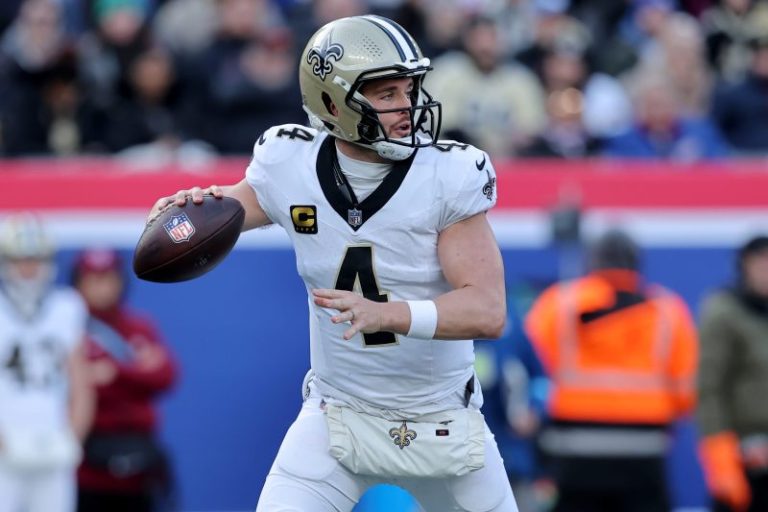
The future of New Orleans Saints quarterback Derek Carr is one of them.

Carr has made headlines recently for a shoulder injury that seemingly came out of nowhere, one that threatens his availability for the 2025 NFL season. Takes have been flying from all over ever since.

Some believe the injury to be legitimate. Others have suggested Carr is faking the injury to get out of New Orleans. The quarterback later appeared at a church, where he spoke on the situation.

‘Yes, I hate I have to say this, yes, I have a shoulder injury,’ Carr said. ‘Despite what ESPN says and what some lady on a podcast might think. Okay? I have the MRI report to prove it. The team knows about it. We’ve been in constant communication. There’s nothing wrong, and we’re going to go forward with that. Is that okay?’

The situation has been far from conventional, with very few concrete answers along the way. On Tuesday, some more news came to light that paints a clearer picture.

Here is the latest on Carr and his shoulder.

Derek Carr injury update

Carr is said to be considering surgery for his shoulder. A decision on that should be coming sooner rather than later, according to NFL Network’s Jane Slater.

‘It’s my understanding that Derek Carr absolutely believes that this shoulder injury took place during the same game that he injured the wrist,’ Slater said on Tuesday.

Carr suffered the wrist injury during the Saints’ Week 14 game against the New York Giants.

Slater added that Carr has been to the Saints’ facility and the quarterback didn’t notice the injury until he began ramping up his throwing program this spring. She said that Carr was only throwing a fake football in walkthroughs with injured players and Alvin Kamara, pointing out that the Saints fell out of contention before the quarterback could push for a return.

She also reported that it sounds like Carr would prefer to avoid surgery, if possible, given he’s already had that arm operated on before. It appears that the quarterback will wait to see if he can play through the issue.

Both sides are working towards a resolution.

In the meantime, the Saints are operating with a new coaching staff led by Kellen Moore and just drafted a quarterback in the second round of the 2025 NFL Draft, taking Tyler Shough out of Louisville.

Shough figures to be the starter next season if Carr is sidelined, but Moore could have options if Carr is healthy enough to play.

All the NFL news on and off the field. Sign up for USA TODAY’s 4th and Monday newsletter. Check out the latest edition: Looking ahead to the 2025 NFL schedule release.

This post appeared first on USA TODAY

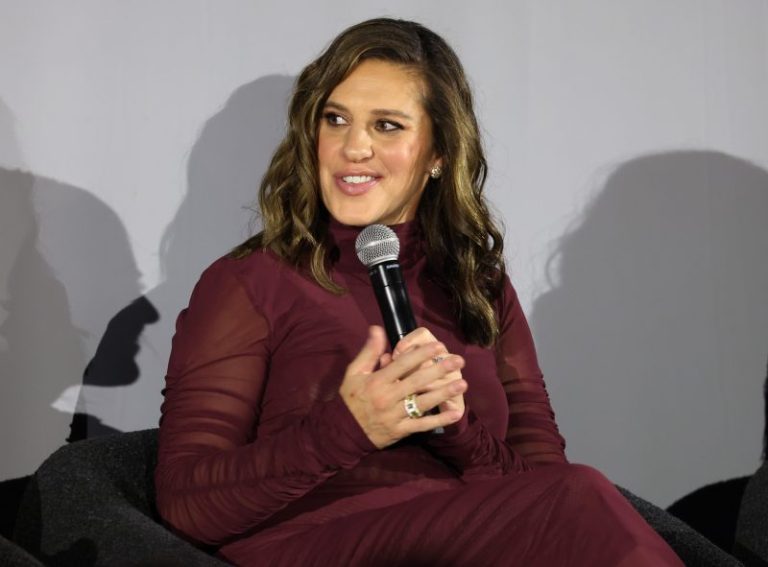
An intense dedication to her craft helped make former U.S. women’s national soccer team star Carli Lloyd a Hall of Famer.

But at her induction speech on Sunday, the two-time World Cup champion also acknowledged the price she paid on a personal level as she single-mindedly pursued her goals.

‘I’m sorry I wasn’t always able to give you all of me,’ Lloyd said, addressing her former teammates. ‘I wouldn’t say I have regrets, but if there’s one thing I do wish, I wish I had let more people understand me over the years. I operated like an emotionless machine. I was intense and I truly believe that the only way for me to survive in such a cut-throat environment was to be that way.’

Lloyd, who retired in 2021 after making 316 appearances for the USWNT, was one of five people inducted into the U.S. Soccer Hall of Fame in Sunday’s ceremony in Frisco, Texas.

Her credentials were impeccable. In addition to being a major part of two World Cup championship teams, she scored the winning goals in the gold-medal game in both the 2008 Olympics in Beijing and the 2012 Games in London. Lloyd was also a two-time FIFA player of the year – only the second American (along with Mia Hamm) to win the international award multiple times.

But Lloyd’s steely intensity ran counter to some of the other free spirits on those teams such as Megan Rapinoe and Alex Morgan.

She admitted that retiring as an active player – and also becoming a mother – have given her a new perspective.

‘I always knew I wanted a child, but I had no idea how this little baby could completely change me as a person,’ Lloyd said. ‘Unlike during my playing career, I have been present. I have allowed myself to be vulnerable, emotional, and fully engaged in every moment I get to spend with her.’

In the end though, Lloyd concluded that all the training, even to the extent that it cut her off from teammates and family members, was worth it.

‘As lonely and difficult as the journey was at times, I would do it all over again,’ she said. ‘There was nothing I loved more than winning, but winning comes at a cost, and I paid that price.’

This post appeared first on USA TODAY

Sovereignty, the Kentucky Derby winner, will not participate in the 2025 Preakness Stakes, the second leg of the Triple Crown.

According to The Courier-Journal, part of the USA TODAY Network, Preakness officials announced Sovereignty would not compete at Pimlico Race Course in Baltimore on May 17.

Sovereignty was the 8-5 favorite leading up to the confirmed field for the Preakness and was obviously expected to be a strong contender. According to The Courier-Journal, Bill Mott, Sovereignty’s trainer, did not provide a reason for the decision to withdraw from the upcoming race. However, he did confirm Sovereignty’s return for the Belmont Stakes, the final race of the Triple Crown, which will take place on June 7 at Saratoga.

When is the 2025 Preakness Stakes?

The 2025 Preakness Stakes, also known as the Middle Jewel, will be held at the Pimlico Race Course in Baltimore, Maryland on Saturday, May 17.

The Preakness is the second leg of the Triple Crown, with the Belmont Stakes being the final race.

When is the 2025 Preakness Stakes Draw?

The 2025 Preakness Stakes Post Position draw is set for Monday, May 12, at 6 p.m. ET. The post position draw determines where the horses will start from.

This post appeared first on USA TODAY

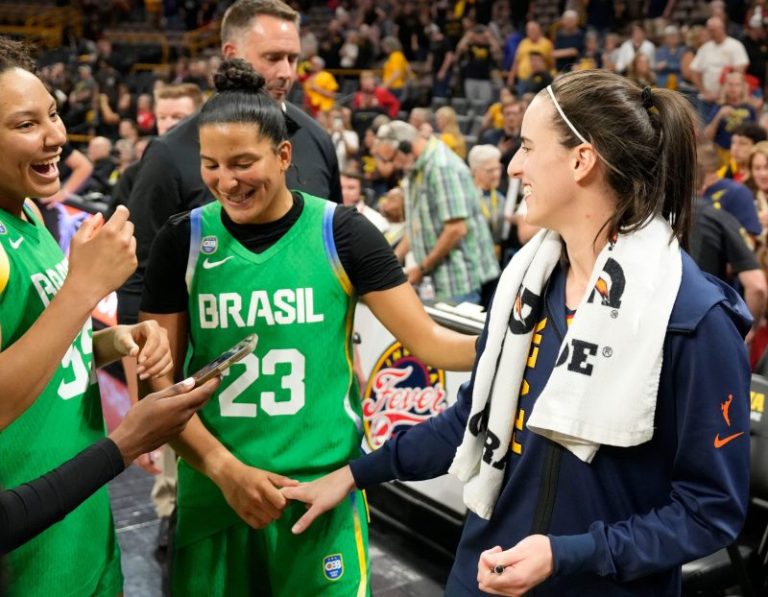
In fact, in the Indiana Fever’s recent preseason game against the Brazilian national team, which saw Clark return to her alma mater Iowa, ESPN averaged 1.3 million viewers throughout the broadcast.

According to Flora Kelly, ESPN’s vice president of research, only two of the 57 NBA games ESPN has televised since 2010 have matched those numbers, both of which featured Los Angeles Lakers’ star LeBron James.

Clark’s pull is undeniable at this point. During her rookie season in the WNBA last year, the league saw 22 of their regular season games average more than 1 million viewers. For perspective, there hadn’t been a WNBA game to average 1 million viewers since 2008.

The question now is whether or not those figures are sustainable.

After all, in order to draw so many viewers for the recent preseason game, ESPN needed Clark’s team to play against a national team at her alma mater. Those scenarios won’t happen during the WNBA regular season. However, it’s arguable that the numbers should only continue to increase during Clark’s career, paving the way for other stars like the Chicago Sky’s Angel Reese or Dallas Wings’ rookie Paige Bueckers to garner more followers as well.

WNBA’s viewership numbers with Clark

In 2024, the WNBA’s most watched games on ESPN, ESPN2, CBS, ABC, Ion, and NBA TV all involved the Indiana Fever, per Yahoo Sports. Twenty of the 23 WNBA games to average more than 1 million viewers last year involved Clark.

Furthermore, both the WNBA Draft and All-Star Game have demolished their previous viewership records, with the 2025 draft averaging 1.25 million viewers, second-most ever, with only Clark’s 2024 class garnering more (1.46 million). The 2024 All-Star Game averaged 3.44 million viewers. The previous record was just 1.44 million in 2003.

It’s undeniable that she is the face of the league in just her second season, and while that may upset some people including longtime fans and/or WNBA veterans, it might be best to jump on board before getting left behind, because she is doing wonders for the league’s fandom and revenue.

When does the WNBA regular season start?

The WNBA regular season begins with three games – Minnesota Lynx vs. Dallas Wings, Atlanta Dream vs. Washington Mystics and Los Angeles Sparks vs. Golden State Valkyries – on Friday, May 16.

The Fever’s season begins a day later with a nationally televised matchup against Angel Reese and the Chicago Sky at 3 p.m. ET in Indianapolis. That games follows a 1 p.m. ET game on ABC, when the defending champion New York Liberty host the Las Vegas Aces.

This post appeared first on USA TODAY

The Big Ten Conference had just over $928 million in total revenue and distributed about $63.2 million to each of its 12 longest-standing schools during its 2024 fiscal year, the conference’s newly released federal tax records show.

Those figures represent a 5.5% increase in total revenue and a 4.5% increase in per-school payouts compared to those for fiscal 2023 due to the beginning of new television agreements.

However, the new records, along with documents and data released by three Big Ten member schools in recent years strongly indicate that the conference’s revenue for its ongoing 2025 fiscal year will increase to somewhere between $1.2 billion and $1.4 billion, with the new TV deals taking full effect and the additions of UCLA, Southern California, Oregon and Washington increasing its membership to 18 schools. The Big Ten’s document was provided by the conference on May 6 in response to a request from USA TODAY Sports.

The Big Ten’s per-school distributions for fiscal 2025 seem likely to be around $75 million for all except Oregon and Washington, whose shares are being phased in over seven years.

All of this keeps – and, at least for now, stands to continue keeping – the Big Ten ahead of the now-16-school Southeastern Conference in terms of total revenue and per-school payouts. The SEC released tax records in February that showed $840 million in total revenue and average per-school distributions of about $52.5 million to the 14 schools other than newcomers Oklahoma and Texas.  The SEC also is on a path toward at least $1 billion in total revenue for its 2024-25 fiscal year.

For comparison, the NCAA reported $1.38 billion in total revenue for fiscal 2024 on its most recent audited financial statement.

BEST OF BEST: Our ranking of college football’s top 25 coaches

Payments to former Big Ten commissioners Kevin Warren, Jim Delany

The Big Ten’s new tax return also showed that now-former commissioner Kevin Warren received a $5.75 million bonus during the 2023 calendar year. He departed in mid-April of that year to become the Chicago Bears’ president and CEO. (IRS reporting rules require disclosure of pay data on a calendar-year basis, rather than a fiscal-year basis.)

Warren, who started with the Big Ten in September 2019, was credited with just over $6.8 million in total compensation for 2023. That included nearly $1.1 million categorized as base compensation, which works out to an annualized total of nearly $2.9 million.

The bonus was awarded by the Big Ten Council of Presidents and Chancellors “for his accomplishments over his full tenure as commissioner, including his contributions to the new TV rights deal,” a conference spokesperson said.

Warren’s time as commissioner included:

– The COVID-19 pandemic, which heavily impacted the 2020-21 school year. Warren became a center of controversy when the conference initially announced it would not play football in fall 2020 but reversed course after other conferences decided to play.

– The conference’s announcement in the summer of 2022 that it was adding UCLA and USC, starting in July 2024.

– Negotiation of seven-year TV contracts with CBS, Fox and NBC that were announced in August 2022, and widely reported at that time to be worth more than $7 billion. (The conference made agreements in August 2023 to add Oregon and Washington.)

While standing as an additional payment for his roughly 3½ years on the job, Warren’s bonus stands as one of the largest such payments in college sports since USA TODAY Sports began tracking pay of coaches and administrators in 2006, not including retention payments in which coaches became vested annually but were not due to be actually paid until the end of a fixed period or unless the coach was fired without cause.

In July 2015, then-Big Ten commissioner Jim Delany became eligible for more than $20 million in bonus payments, based on estimated present value at that time, that he began receiving in 2018. (In 2023, according to the new return, Delany was credited with a net total of nearly $3.05 million that represented the sixth year’s worth of these payments that the conference says he will be receiving over a 10-year span, ending in 2027. So far Delany has received about $18 million worth of these payments. In addition, during the 2023-24 fiscal year, Delany Advisory Inc., received $400,000 for what the new tax record described as consulting services.)

Big Ten current commissioner Tony Petitti salary

Tony Petitti’s started his role as the conference’s commissioner at the beginning of May 2023, so he was on the payroll for eight months and ended up being credited with total compensation of $2.65 million.

According to the new return, the compensation included a $500,000 bonus and pro-rated base pay that, if annualized, was about $3.2 million.

Big Ten revenue projections for 2025 and beyond

While the Big Ten started the new television agreements during a fiscal year that ended June 30, 2024, it did not immediately see the full revenue impact because CBS was still committed to broadcasting SEC games during the 2023 football season. That changed this past season, as did the Big Ten’s membership. So, the conference’s fiscal-year 2025 revenue will increase dramatically.

Iowa state board of regents budget documents from this past July show that the University of Iowa was projecting $75.2 million in “Athletic Conference” revenue for fiscal 2025.

A University of Wisconsin athletics department budget presentation to a university athletic board committee meeting three weeks ago projected “Conference” revenue of $74.7 million for fiscal 2025 and just under $82.6 million for fiscal 2026, according to the Wisconsin State Journal.

The Big Ten generally provides its longest standing members with equal amounts. When Nebraska, Maryland and Rutgers, respectively, joined the conference, their shares were scaled up to full amounts over a period of years. UCLA and Southern California, however, are scheduled to receive full shares immediately while, according to an Oregon athletics budget document for fiscal 2025, Oregon projects $54 million in “NCAA/Big Ten” revenue. (Another Oregon document from September 2023 said the Big Ten’s “media deal with Fox, NBC and CBS will pay both UO and University of Washington each an average of $32.5 million a year for the first six years and that amount should more than double when the two schools receive a full share of Big Ten media rights revenues beginning in the 7th year.” But that TV revenue will be supplemented by money from other Big Ten sources such as the College Football Playoff and Big Ten championships.)

Even using slightly lower amounts as benchmarks — $70 million to each of 16 schools and $50 million apiece to Oregon and Washington, that projects to a little more than $1.2 billion in total Big Ten distributions for fiscal 2025. And, in recent years, the conference has passed on to its schools about 95% of total revenue. That would put its total revenue for fiscal 2025 at just under $1.3 billion.

This post appeared first on USA TODAY

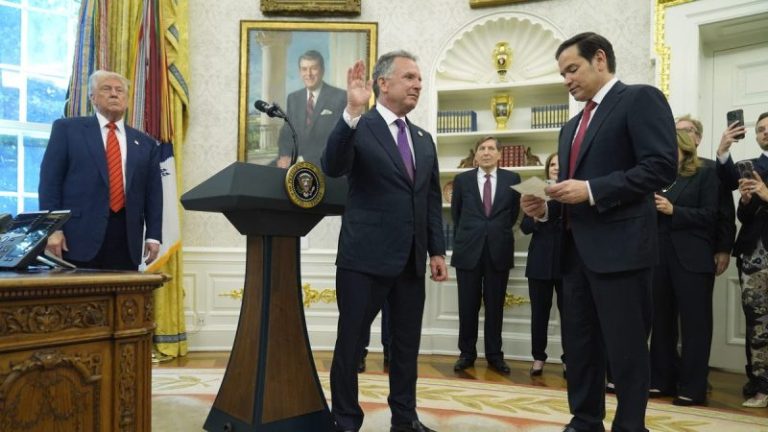
President Donald Trump’s new special envoy to the Middle East was sworn in by Secretary of State Marco Rubio Tuesday in an Oval Office ceremony.

Speaking before the swearing-in, Trump praised Witkoff, who was instrumental in securing an extended ceasefire between Israel and Hamas and the return of 33 hostages, including two Americans, who were being held by Hamas. 

Trump said Witkoff has ‘been with me, more or less, one way or the other, every step of the way,’ adding that he has ‘absolute confidence and support and trust’ in his Middle East envoy’s ability to secure key deals in the realm of foreign diplomacy, such as ceasefire agreements between Israel and Hamas and between Ukraine and Russia. 

Though Witkoff is a real estate businessman by trade, Trump said he ‘quickly established himself as one of the toughest, smartest and best negotiators in the business,’ which is why he chose him for the important role of special envoy to the Middle East.

‘As a businessman, he’s admired and respected by all, and now Steve is putting his talents to work for America’s special envoy to the United States and making a lot of progress. Our country is blessed to have a negotiator of such skill and experience who really selflessly steps up to the plate, puts himself forward all the time,’ the president said.

Trump did note there was somewhat of a learning curve for Witkoff when it came to foreign government relations but said he has been ‘figuring it out’ at a lightning pace. 

‘It takes him about an hour to figure it out,’ Trump said. ‘After that, he’s brutal. He does a great job.’ 

Trump noted Witkoff has already been active over the last several months, meeting with Russian President Vladimir Putin, Israeli Prime Minister Benjamin Netanyahu and leaders from Iran. 

‘He’s working tirelessly to end the bloody and destructive conflicts,’ said Trump, touting Witkoff’s success so far in negotiations with various world leaders.

After the ceremony, Trump took questions from reporters, addressing a range of topics, including the just-announced ceasefire between the U.S. and the Houthis. When asked about conflicting reports indicating the Houthis do not plan to stop attacking Israel, Trump said that the terror group’s surrogates have indicated ‘very strongly’ that ‘they want nothing to do with [the United States].’  

Trump was also asked questions about the ongoing conflict between Israel and Hamas in Gaza, and, in particular, about the release of the remaining 21 living hostages. 

‘This is a terrible situation. We’re trying to get the hostages out. We’ve gotten a lot of them out,’ Trump told reporters, noting it is also just important to find and return the bodies of those already killed by Hamas. 

He shared that two weeks ago a couple whose son died as a hostage came to him and said, ‘Please, sir, my son is dead. Please get us back his body.’ 

‘They wanted his body. He’s dead,’ Trump said from the Oval Office after Witkoff’s confirmation. ‘They know. He said they wanted his body as much as you would want the boy if he was alive. It’s a very sad thing.’

Trump also commented on Iran and its potential development of nuclear weaponry. The president said definitively that ‘they’re not going to have a nuclear weapon.’

‘This is really crunch time. I would tell you, for Iran and for their country, this is a very important time for Iran. This is the most important time in the history of Iran, for Iran, and I hope they do what’s right,’ Trump told reporters. 

‘I’d love to see a peace deal, a strong peace deal. … We want it to be a successful country,’ he added. ‘We don’t want to do anything that’s going to get in the way of that. But they can’t have a nuclear weapon. And if they choose to go a different route, it’s going to be a very sad thing. And it’s something we don’t want to have to do, but we have no choice.’ 

This post appeared first on FOX NEWS

Amazon’s Zoox issued a software recall for 270 of its robotaxis after a crash in Las Vegas last month, the company said Tuesday.

The recall surrounds a defect with the vehicle’s automated driving system that could cause it to inaccurately predict the movement of another car, increasing “the risk of a crash,” according to a report submitted to the National Highway Traffic Safety Administration.

Zoox submitted the recall after an April 8 incident in Las Vegas where an unoccupied Zoox robotaxi collided with a passenger vehicle, the NHTSA report states. There were no injuries in the crash and only minor damage occurred to both vehicles.

“After analysis and rigorous testing, Zoox identified the root cause,” the company said in a blog post. “We issued a software update that was implemented across all Zoox vehicles. All Zoox vehicles on the road today, including our purpose-built robotaxi and test fleet, have the updated software.”

Zoox paused all driverless vehicle operations while it reviewed the incident. It’s since resumed operations after rolling out the software update.

Amazon acquired Zoox in 2020 for over $1 billion, announcing at the time that the deal would help bring the self-driving technology company’s “vision for autonomous ride-hailing to reality.” However, Amazon has fallen far behind Alphabet’s Waymo, which has robotaxi services operating in multiple U.S. markets. Tesla has also announced plans to launch a robotaxi offering in Austin in June, though the company has missed many prior target dates for releasing its technology.

Zoox has been testing its robotaxis in Las Vegas, Nevada, and Foster City, California. Last month, Zoox began testing a small fleet of retrofitted vehicles in Los Angeles.

Last month, NHTSA closed a probe into two crashes involving Toyota Highlanders equipped with Zoox’s autonomous vehicle technology. The agency opened the probe last May after the vehicles braked suddenly and were rear-ended by motorcyclists, which led to minor injuries.

This post appeared first on NBC NEWS

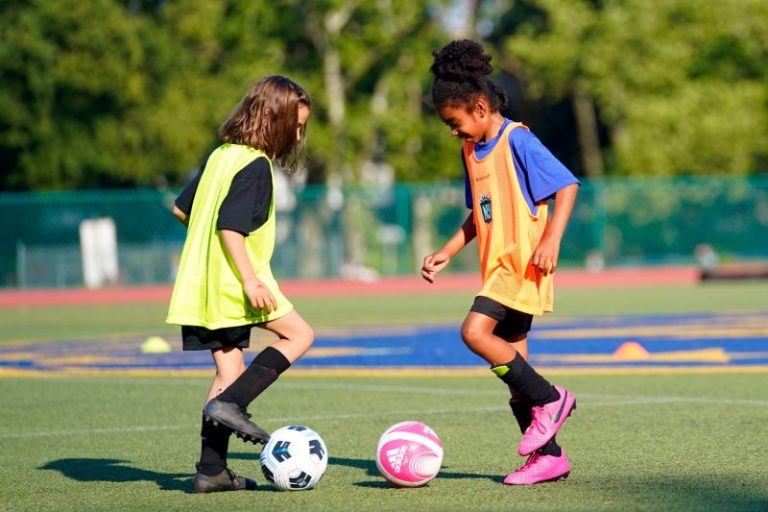
The “crazy sports parents,” Skye Eddy says, have ruined the experience for everyone.

You know them. They live vicariously through their child. They have unrealistic expectations for him or her as an athlete. Or they are simply so unreasonable that there’s little we can do to help them understand us better.

“As a coach, I’ve had an irrational parent on my team, and it has made my season miserable,” says Eddy, a former USWNT hopeful turned sports parent advocate. “They’ve been taking way too much of my time and energy from the children by asking too many questions. And so as coaches, when we’ve been in those experiences, we say, ‘OK, well, we’re just gonna avoid all parents, because that was a really difficult season.’ ”

Even Eddy, a one-time defensive MVP of the NCAA women’s soccer Final Four for George Mason who later coached on the staff at the University of Richmond, found herself labeled as one of them.

She saw a veil come over the organization’s executive director when she wanted to chat. To him, she was “a crazy parent, complaining about my daughter … I’m like, ‘Oh no, no, no, I’m just here to help,” she says.

Then the door shut. It was the ignition that launched her passion project, soccerparenting.com, which today has about 43,000 members nationwide. It offers advice, training and encouragement for coaches and parents and youth sports leaders with a goal of helping us understand each other a little better.

From Eddy’s experience and research, the vast majority of parents are not “crazy,” but level-headed folks who are just stressed.

“Parenting is stressful these days, like society’s stressful,” says Eddy, 53, a mother of two kids put through the athletic wringer. “You add on a sports experience, and there is a lot.”

Eddy spoke with us about how our soccer parenting, and sports parenting, can improve when we take a more introspective look at ourselves. From the discussion, USA TODAY Sports came with ways we can soothe our stress around our kids’ games and improve the environment in which they are playing.

Your child’s sports journey is unique from your own. Maybe you need to care less about it.

Eddy, a former goalie, reached as high as U.S. women’s soccer player could go in the 1990s, barring making the national team. She played professionally in Italy. She pushes back at the notion that she was living out her own athletic experiences when her daughter, Cali, also became an elite soccer player in high school.

“I loved my athletic career,” Eddy says. “I just didn’t know what to say to her to help her, because our mindsets are so different.

“She was like, ‘I want to play D-I, I want to play D-1,’ and she was getting D-1 interest, but she wasn’t pursuing it. She would not pick up a phone and call the coach. She was struggling with her self-esteem, her confidence around herself as an athlete, and so she really needed coaches calling her. She needed to be built up like that.”

Eddy was seeing things from her own point of view, and what she would have done. In more recent years, she came across a term (“Decoupling”) that would have helped her.

It is associated with a romantic relationship, where two people pull back from their emotional connection but remain friends. It can also apply to teenagers growing into their own identities as athletes.

“It’s sort of like not feeling things so deeply, letting our children dictate the path and us really being OK with it,” she says. “That is the learning, the making the mistakes: Not calling the coach, not eating the right food, or going to the sleepover the night before and playing really badly.

“And I think that because as parents, it’s so easy to feel like the stakes are so high, we try to interject too much.”

But how do we redirect ourselves? The process can start with our actions on the sidelines, and often when our kids are very young.

Your sideline behavior may be relieving your stress but stunting your child’s progress

You may not admit you’re stressed at your kids’ games. But perhaps unintentionally, you are projecting it onto them.

You cheer loudly. You jump up and down on the bleachers. You call to them. You interfere.

“That’s stress,” Eddy says.

Soccer Parenting’s Sideline Project, which helps condition parents on game day, identifies three types of sideline behaviors:

We’re “supportive” when we sit in attentive silence, cheer after positive outcomes for our child and his or her teammates, and perhaps even a good play from the other team.

We’re “hostile” when we yell at referees, yell at our child, or even other players. (Keep reading.)

We may not realize when we’re being “distracting.” This means we’re offering specific instructions to a child. Go to the ball! Get rid of it! Run!

“Distracting behavior serves one primary purpose: To alleviate our stress as parents and coaches,” Eddy says in her Sideline Project online course. “Players should be hearing their teammates and reasonable information from their coach, not their parents.”

In the video, she demonstrates the Stroop Effect, named after an American psychologist who measured selective attention, processing speed and how interference affects performance.

She has an interactive exercise using colors to illustrate how your children feel when they are concentrating in a game and adults interrupt them. I hitched when I did it.

“There’s a lag,” Eddy says. “This moment of interruption. That is how your child feels when they are playing, concentrating on the technical skill and what their decision is going to be, and they hear your voice telling them to shoot or pass.’

Instead, a good youth coach won’t distract, but give a subtle cue – a nod, a whistle, a finger point or a closed fist – to trigger something they worked on in practice.

“Whatever it is that we’re screaming, we’re taking away their learning opportunity,” Eddy says.

‘Do you realize I’m 13?’ If we focus on being less distracting, the truly hostile parents stand out

Cali was a tough defender. So tough, apparently, that she once came home from road club soccer tournament and reported: “Another parent from the other team was sitting on the sideline, flicking me off. She just sat there, giving me the finger, staring right at me.

“I said, ‘You do realize I’m 13 and you’re a grown adult, right?” she told her mom.

Eddy estimates that 2% of the youth sports ecosystem, perhaps one parent per team, are these hostile ones. Many of us are merely distracting, a quality we can correct.

Report the abusers and get them thrown out. They are not part of our experience.

I like to sit with the opposing team’s fans when my sons are pitching in their baseball games. While I get a different video angle, I meet new people and feel and hear their emotions. Sometimes I just listen to them. It helps remind me why we are all in this.

‘We care so much about sport because of the connection,’ Eddy says.

We can communicate easier with coaches if both sides respect boundaries

Cali quit soccer for short time when she was eight. She was bored.  

Players were standing in lines. They did the same warmup at every practice. They weren’t even given adequate instruction, Eddy thought. It was labeled as an advanced development program.

When she asked other parents what they thought of the environment, they were fine with it.

“It struck me that until parents understand what a good learning environment looks like, to lead to player inspiration and joy and really giving kids a connection to sport, then we’re really going to be missing a big part of the solution when it comes to improving youth sports,” she says.

‘The last thing we want to do is be perceived as one of these irrational parents, so we’re not curious, we don’t ask questions, we don’t listen to our instincts, we don’t follow up when we when we probably should, because we don’t want to be perceived to care too much when there’s a big difference between being irrational and caring.’

When she tried to speak up and was rebuffed, she became a youth coach. And soccerparenting.com was born.

One of its foundational principles is to encourage coach and parent interaction, with clear and appropriate boundaries.

Some suggested parameters a coach can use:

The door is open to chat … When your kid comes home from practice in a bad mood or doesn’t want to go the next day; if he or she is having trouble playing a particular position; if you don’t fully understand the scoring system or rules of the sport.

The door is closed to chat … If you have a complaint about another player that doesn’t involve a safety issue; if you’re wondering why the coach made a tactical decision; if you don’t respect a coach’s time and want to have a long conversation after practice. (You can schedule one instead.)

“We see the correlation between parents having more understanding and the children’s experience getting better, and then therefore clubs and coaches having to get better,’ Eddy says.

Coach Steve: Three steps to dealing with a ‘bad’ coach

Be proactive, and intentional, about the way you handle stress

Even when we feel we have things under control during games, sometimes we don’t. Eddy laughs about once walking across the field with a plan in her head of what she would say to Cali. It didn’t involve the game. Instead, in the heat of the moment, she said: “You really need to work on your left foot.”

‘Where did that come from?’ she says. ‘I had zero intention of saying that. It just poured right out of me.’

When I posed a question on social media about how we can be better soccer parents, Palmer Neill, of Dallas, told me: “Basically, when you feel like doing something at a game or practice other than cheer or clap … just don’t do it. Let the coach be the coach and let the ref, ref. You don’t have (a) role. Life gets a lot easier when you realize this.’

But we can also recognize that sometimes we slip, too, and take precautions. When Neill barks to his 10-year-old son to get onsides, or about an opponent’s hand ball, he sits back in his chair and doesn’t get up. He tries to stay seated during the game.

‘It seems to give me one extra second to think before I sit up (or stand-up) and yell,’ he says.

Our own education and reflection, Eddy says, can relieve stress.

Know the rules (and recent modifications to them). Know your kid’s goals in sports. Be curious, not upset, when other kids have more skills than yours.

Perhaps it’s the Relative Age Effect, where young athletes born earliest among their age grouping are faster and stronger. Or that those kids move better because they play other sports or have more free play outside with friends and have better functional movement skills.

We can put our own sports paths into better context, too.

Coach Steve: MLS NEXT youth soccer rankings emphasize development over wins

Remember they are still kids, even when they’re creeping toward adulthood. There is satisfaction in watching who they are becoming.

What did you do when you were eight? Twelve? Sixteen?

When Eddy thinks about it, she liked to socialize at the local skating rink.

She only trained twice a week with her soccer team. On off days, she rode to a local park and kicked the ball into a piece of plywood against a fence. She would dive at the rebounds.

She used to wonder if Cali, who came back to soccer on her own terms, was getting enough reps on her own.

“What would I have been doing if I was in intense practices for an hour and a half four days a week, plus traveling to a lot in the games?” Eddy says. “Would I still have been doing that? Likely not.”

In today’s world, it feels like kids sports matter a lot more. Maybe they do when we have more opportunities to play in front of college coaches. Maybe they don’t when we play rec soccer, like Eddy’s son, Davis, did, and parents screamed when he missed a shot.

Davis, now a junior in college, had a better experience playing at a small high school.

“Having that outlet for sport was really important to his development, just as a person, and getting some space and, kind of way to blow off some steam as a student,” she says.

Cali decided to work at a sleepaway camp in Maine during the summer before her junior year, a crucial one for college recruiting. She became a Division III All-American and now works for the Columbus Crew.

“I remember thinking, ‘Oh my gosh, it’s so hard for you,’ but not saying that out loud,’ Eddy says. ‘That was a really important capstone to a really important thing in our life. Yet, she really missed a lot of opportunities, and there were consequences of that. We just need to make sure that it’s our child’s voice that we’re hearing.’

We are when we let them lead the way, to choose friends over sports when they wish, and to have those sleepovers. Well, maybe not the sleepovers.

Steve Borelli, aka Coach Steve, has been an editor and writer with USA TODAY since 1999. He spent 10 years coaching his two sons’ baseball and basketball teams. He and his wife, Colleen, are now sports parents for two high schoolers. His column is posted weekly. For his past columns, click here.

This post appeared first on USA TODAY

With collegiate conference play entering the home stretch and high school playoffs underway or shortly commencing in most states, the window has narrowed for top prospects aiming to improve their position for July’s Major League Baseball draft.

This spring season has largely confirmed the feelings of evaluators on the large pool of players aiming to get chosen in the first round, although there has been significant movement within that group. Once again, this draft feels light on potential franchise players but is plenty deep on difference makers – and features a nearly surefire first-round troika from what could be considered the greatest high school team of all time.

With roughly a month of ball remaining for the majority of players and nearly two months out from the July 13 selection party in Atlanta, USA TODAY Sports throws some darts and takes aim at a mock draft for the first round:

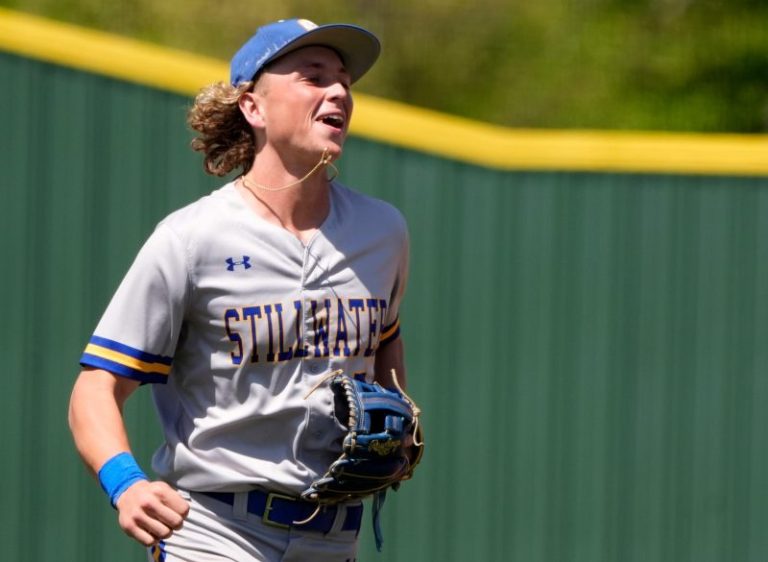
1. Washington Nationals: Ethan Holliday, INF, Stillwater (Okla.) HS

It will be a fascinating home stretch for Holliday, the Nationals and a handful of pitchers bullying their way to the top of draft boards. Washington GM Mike Rizzo’s pitching-first chops will be challenged by the everyday excellence Holliday – bigger and with more projectable power than 2022 1/1 and older brother Jackson – can provide.

2. Los Angeles Angels: Jamie Arnold, LHP, Florida State

The Angels’ ever-dire need for pitching and GM Perry Minasian’s penchant for quick-to-the-majors guys intersects with Arnold, a 6-foot-1 lefty who has dominated ACC competition with a WHIP of less than 1.00 and just three homers allowed in 55 innings. Not your prototypical top five power pitcher, but a lefty who can pitch off his fastball and has the profile of a rotation anchor.

3. Seattle Mariners: Aiva Arquette, SS, Oregon State

This might already be too far for monster prep right-hander Seth Hernandez to fall, but the Mariners have made their bones drafting and promptly developing college pitchers. This time, they roll with Arquette, a 6-foot-5 shortstop with considerable power (16 homers, 1.173 OPS) and discipline. Recently inspired an opponent to play a four-man outfield against him.

4. Colorado Rockies: Seth Hernandez, RHP, Corona (Calif.) HS

Will Hernandez make history and become the first prep right-hander chosen No. 1 overall? It seems unlikely, but the Vanderbilt commit couldn’t have done much more to balloon his stock – and ensure he’s the first of the Corona lads to come off the board. Hernandez gave up one earned run in 42 ⅓ innings, struck out 88, and walked just three. The Rockies will wager that his 98 mph fastball and excellent changeup can tame Coors Field.

5. St. Louis Cardinals: Billy Carlson, SS, Corona (Calif.) HS

Make it back-to-back Panthers as the Cardinals add another impact middle infielder after stealing J.J. Wetherholt with the seventh overall pick last year. Carlson has enviable tools – he hits the mid-90s with his fastball on the mound – and banged out 30 hits this season, 11 going for extra bases. Signed with Tennessee but not likely to get to Knoxville.

6. Pittsburgh Pirates: Eli Willits, SS, Fort Cobb-Broxton (Okla.) HS

7. Miami Marlins: Kruz Schoolcraft, LHP, Sunset (Ore.) HS

The 2024 draft lasted eight picks before a high schooler was selected, an unprecedented run of collegians. This year, the teenagers take the power back. Schoolcraft just turned 18 last month and at 6-8, can touch 97 mph on his fastball. He’s an excellent two-way player but his projectability on the mound is obvious and the Marlins swing big here.

8. Toronto Blue Jays: Jace LaViolette, OF, Texas A&M

LaViolette started the year as 1A to Holliday, but a less than overwhelming SEC campaign has dampened the ceiling a bit. He’s hitting .276 with 48 strikeouts in 47 games – a 21.4% K rate – but has smacked 15 homers and reached base at a .437 clip. That’s all down from a sophomore year where he hit 29 homers, with six multi-homer games, and posted a .449 OBP. But the overall track record for the 6-foot-6 lefty slugger.

9. Cincinnati Reds: Liam Doyle, LHP, Tennessee

The parade of SEC talent continues. Doyle is second in the nation with 15.3 strikeouts per nine innings, thanks to an “invisiball” four-seamer that has helped him punch out 115 in 67 ⅔ innings. The former Coastal Carolina and Ole Miss hurler will need to refine his secondary offerings at the next level, but his fastball is a rare weapon, especially coming from the left hand.

10. Chicago White Sox: Kade Anderson, LHP, LSU

Just a tick behind Doyle statistically – he’s fourth in the nation with 14.5 strikeouts per nine – and could be joined at the hip with his SEC rival on draft day. Anderson is a draft-eligible sophomore – he turns 21 in July – whose polished repertoire could make him a fast mover, giving Chicago a solid pitching foundation on the heels of 2024 first-rounder Hagen Smith.

11. Athletics: Marek Houston, SS, Wake Forest

Make it back-to-back first-round Demon Deacons for the Athletics and Houston could join slugger Nick Kurtz (No. 4 overall in 2024) in Yolo County well before the club’s decampment to Las Vegas. Houston is terrific defensively and has grown stronger with the bat each season, finally pairing elite contact skills with some slug. A middle-infield combo of Houston and Rookie of the Year candidate Jacob Wilson is worth dreaming on.

12. Texas Rangers: Kyson Witherspoon, RHP, Oklahoma

He breaks up the parade of lefties with a fastball that touches 98 mph and sets the stage for his 100 punchouts in 72 innings this season. A 0.89 WHIP – seventh in the nation – against SEC hitters is startling.

13. San Francisco Giants: Daniel Pierce, SS, Mill Creek (Ga.) HS

Pierce, a Georgia commit, fits the profile of the new Giants regime – toolsy but also excelling at attention to detail and the so-called little things. He’s gradually added more slug to his game, although he’s slightly old – turning 19 in August – for his graduating class.

14. Tampa Bay Rays: JoJo Parker, SS, Purvis (Miss.) HS

Perhaps the Rays can draft twin brother Jacob, as well, to keep both away from Mississippi State. Parker brings a physical presence to the middle infield and, if Jacob is any indication, could blossom into further power as he ages.

15. Boston Red Sox: Kayson Cunningham, SS, Johnson (Texas) HS

His 5-9, 175-pound frame produces an excellent hitting profile, both from a bat-to-ball and surprising pop standpoint. Will figure in the middle of the diamond somewhere professionally.

16. Minnesota Twins: Tyler Bremner, RHP, UC Santa Barbara

Like LaViolette, Bremner was in the early spring convo as a top four pick but his first year as a full-time starter has been uneven, with a 4.08 ERA in 12 starts for the Big West Conference school. Still, with a fastball that touches the upper 90s, he’s a moldable talent in the proper pitching program.

17. Chicago Cubs: Wehiwa Aloy, SS, Arkansas

He’s looking remarkably comfortable in his second season in the SEC, ranking second with 17 home runs, fifth with a 1.182 OPS and fourth in average (.376).  At 6-foot-2, 200 pounds, he should stick on shortstop and fits the Cubs’ draft pattern of selecting polished collegians.

18. Arizona Diamondbacks: Steele Hall, SS, Hewitt-Trussville (Ala.) HS

Remarkably fast and incredibly young, Hall reclassified for 2025, his 5-foot-11, 165-pound frame offering plenty of room to grow, given he’ll stil be 17 on draft day. Hall has excellent bat-to-ball skills, and could rise higher in the first round if evaluators trust those skills will translate from three years of Alabama prep ball to the professional ranks.

19. Baltimore Orioles: Ethan Conrad, OF, Wake Forest

The sky is blue, rain is wet, an ACC or SEC lefty-swinging outfielder is headed to Baltimore. Enter Conrad. He underwent season-ending shoulder surgery after an outfield dive yet has been coming on strongly from his sophomore year at Marist to the Cape Cod League to a seven-homer, .372 21-game burst before he got hurt.

20. Milwaukee Brewers: Dean Curley, INF, Tennessee

Will need a little more polish, as the Volunteers moved him from shortstop to third base in his second year in Knoxville. But he has excellent strike zone control and at 6-4, the frame to add more power to an offensive profile that’s produced 11 homers and a .420 OBP.

21. Houston Astros: Sean Gamble, INF-OF, IMG (Fla.) Academy

An extremely versatile player with a strong baseball IQ, Gamble could eventually man one of three infield spots or take his skill set to center field. At 6-1 and 190 pounds, the Vanderbilt signee and Iowa native should add strength and power.

22. Atlanta Braves: Jack Bauer, LHP, Lincoln-Way East (Ill.) HS

Atlanta loves going the pitching route and Bauer gives them plenty to work with: His fastball topped out beyond 100 mph in this, his senior year. Though perhaps it’s destiny he’s chosen at … 24.

23. Kansas City Royals: Cam Cannarella, OF, Clemson

His game fits snugly into Kauffman Stadium, with gap-to-gap power, superior defensive ability and excellent speed; he’s 24-of-29 on steals this year and sports a .462 OBP.

24. Detroit Tigers: Xavier Neyens, INF, Mount Vernon (Wash.) HS

A 6-foot-4 frame that already offers elite power from the left side, and athleticism that produced 24 stolen bases in his team’s first 18 games. Oh, Neyens won’t be a speed merchant on the pro level, but if the team drafting him can cut down on his swing-and-miss, it should unlock significant thump from his bat.

25. San Diego Padres: Quentin Young, 3B/OF, Oaks Christian (Calif.) HS

The nephew of Dmitri and Delmon might be a reach here, but Young, an LSU commit, offers significant raw power and an outstanding arm. Perhaps a longer-term project but with significant upside.

26. Philadelphia Phillies: Luke Stevenson, C, North Carolina

The best catcher available falls here, though Stevenson’s throwing ability is his biggest carrying tool at the moment. Can join Cal Raleigh, Patrick Bailey and Ryan Jeffers as big league backstops grown in the Tar Heel State.

27. Cleveland Guardians: Max Belyeu, OF, Texas

A thumb fracture ended his regular season after 22 games, but Belyeu was putting together a strong junior season – hitting .358 with a 1.107 OPS when he went down at the end of March. But teams certainly saw enough of his hit tool – he produced 18 homers a year ago – and a return in the postseason for the No. 1 team in the land could produce some helium prior to draft day.

28. Kansas City Royals*: Riley Quick, RHP, Alabama

With two picks in six slots, the Royals can roll the dice on some volatility and Quick fills that bill. At 6-6, 255, he offers a massive frame to build upon but also not much of a track record after undergoing Tommy John surgery early in 2024. His results after a relatively short turnaround are fine, averaging more than a strikeout an inning in 11 starts this season.

29. Arizona Diamondbacks**: INF Brady Ebel, Corona (Calif.) HS

The last of the Corona kids will hit the 10 eastbound to Phoenix. Ebel, son of Dodgers third base coach Dino Ebel, has the baseball instincts to match the lineage and a 6-3, 190-pound frame that will likely translate to a future at the hot corner.

30. Baltimore Orioles**: OF Brendan Summerhill, Arizona

More of a “flat-out hit” kind of guy, Summerhill has just 11 homers in 84 games the past two seasons, yet is slashing .414/.504/.697 this year. His ability to play all three outfield positions and the promise of developing power are a nice profile.

31. Baltimore Orioles**: INF Gavin Kilen, Tennessee

A hamstring injury put him out of sight, though he’s never too far out of mind for evaluators. A former shortstop who profiles better defensively at second base, Kilen has nearly as many home runs (11) as strikeouts (14) in 162 plate appearances this season.

32. Milwaukee Brewers**: Gavin Fien, 3B, Great Oak (Calif.) HS

A Texas commit whose 6-3, 200-pound frame portends potentially greater power down the road, Fien has decent athleticism and offers defensive versatility at the next level.

*- Prospect promotion incentive pick

**-Free agent compensation pick

Note: The Dodgers, Mets and Yankees each received a 10-pick penalty on their first picks for exceeding the second threshold of the Competitive Balance Tax, meaning their first picks will occur in Competitive Balance Round A.

The USA TODAY app gets you to the heart of the news — fastDownload for award-winning coverage, crosswords, audio storytelling, the eNewspaper and more.

This post appeared first on USA TODAY