Archive

2025

Browsing

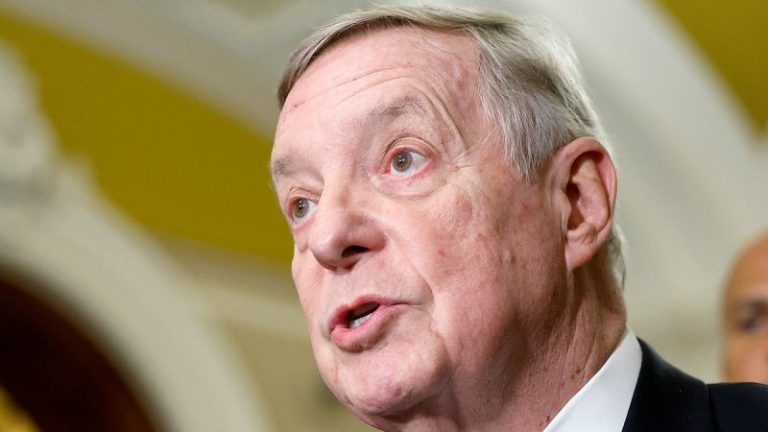
The top Democrat on the Senate Judiciary Committee has called on the Department of Justice and the FBI to ‘immediately investigate’ a string of anonymous pizza deliveries sent to judges’ homes.

In the event that the DOJ and the FBI have already initiated investigations, Senate Judiciary Committee Ranking Member Dick Durbin, D-Ill., also asked Attorney General Pam Bondi and Kash Patel for an update on those efforts. 

‘In recent months, federal judges and their relatives have received anonymous deliveries to their homes,’ Durbin wrote in a letter to Bondi and Patel on Tuesday. ‘These deliveries are threats intended to show that those seeking to intimidate the targeted judge know the judge’s address or their family members’ addresses. The targeted individuals reportedly include Supreme Court justices, judges handling legal cases involving the Administration, and the children of judges. Some of these deliveries were made using the name of Judge Esther Salas’s son, Daniel Anderl, who was murdered at the family’s home by a former litigant who posed as a deliveryman.’

‘These incidents threaten not only judges and their families, but also judicial independence and the rule of law,’ Durbin wrote. ‘It is imperative that the Justice Department (DOJ) and the Federal Bureau of Investigation (FBI) investigate these anonymous or pseudonymous deliveries and that those responsible be held accountable to the full extent of the law.’

Durbin asked that Bondi and Patel provide ‘information on any steps that DOJ or the FBI have taken to protect the judges and their families who have received anonymous or pseudonymous deliveries and to prevent further anonymous or pseudonymous deliveries and other threats.’ His letter also highlighted ‘the essential role that the U.S. Marshals Service (USMS) plays in protecting the federal judiciary and urge you to ensure that the size of the USMS workforce is not reduced.’ 

The Democrat said USMS Acting Director Mark P. Pittella reportedly sent a letter on April 15 to more than 5,000 USMS employees offering them the opportunity to resign. 

‘In the midst of increasing threats of violence against judges, it is inappropriate and unacceptable to reduce the size of the agency tasked with protecting the federal judiciary and the judicial process,’ Durbin wrote. ‘Accordingly, I ask you to commit to fully supporting USMS and to maintaining or increasing its current number of employees.’ 

The letter further asked that Bondi and Patel brief the committee and provide responses to a series of questions by May 20, including how many anonymous pizza deliveries have been sent to judges’ homes or the homes of their family members since Jan. 20 – President Donald Trump’s Inauguration Day; whether each matter prompted an investigation and if not, why; and how many suspects have been identified and if there’s any reason to suspect coordination. 

Durbin said any responses with ‘classified or law-enforcement sensitive material’ should be sent to the committee Democrats under a separate cover.

The letter only named one impacted judge – U.S. District Judge Esther Salas. 

Salas’ 20-year-old son, Daniel Anderl, was murdered on July 19, 2020, at the family’s home in North Brunswick, New Jersey. The gunman, who posed as a FedEx delivery driver, also critically wounded Salas’ husband. The suspect was identified as Roy Den Hollander, a self-proclaimed anti-feminist lawyer who previously appeared in Salas’ courtroom. Authorities said Den Hollander died of a self-inflicted gunshot wound in upstate New York days after killing Daniel. 

Before the shooting, Salas had handled high-profile cases, including those involving Jeffrey Epstein and the Real Housewives of New Jersey stars Teresa and Joe Giudice.

Last month, Salas told news outlets that she and other judges have received strange pizza deliveries at their homes, with at least 10 of them having her son’s name on the order. 

In March, Supreme Court Justice Amy Coney Barrett’s family members reported receiving strange pizza deliveries to separate households, Newsweek reported. Authorities said Barrett’s sister also received a bomb threat. 

J. Michelle Childs of the U.S. Court of Appeals for the District of Columbia Circuit also claimed in a podcast last month that a mysterious pizza delivery had arrived at her door. 

‘Federal judges are receiving anonymous deliveries as an intimidation tactic. It’s an ongoing threat… and it’s increasing,’ Durbin wrote on X. ‘Some deliveries are even using the name of a judge’s son who was murdered by a former litigant posing as a deliveryman. Attorney General Bondi and FBI Director Patel must investigate.’ 

‘Judges are facing ongoing and increasing threats… even against their families,’ Senate Judiciary Democrats said on X. ‘Pam Bondi must commit to fully supporting the Marshals Service and—at minimum—maintaining the current size of its workforce.’ 

Fox News Digital reached out to the Justice Department and the FBI for comment early Wednesday but did not immediately hear back. 
This post appeared first on FOX NEWS

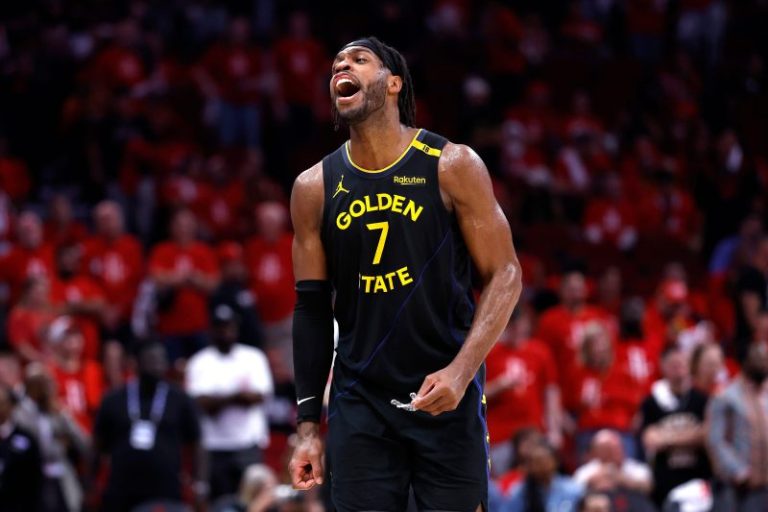
Fresh off his 33-point performance in Golden State’s Game 7 victory against Houston in the first round Sunday, Warriors guard Buddy Hield started Game 1 against Minnesota wearing the wrong shorts.

The Warriors had to call a timeout and were issued a delay of game as Hield rushed to the locker room to put on the correct game shorts.

While it’s not common, it has happened before. LeBron James and Michael Beasley are among players who had the wrong game shorts on before tipoff.

The Timberwolves noticed Hield’s wardrobe malfunction, and the Warriors had to burn a timeout 59 seconds into the game with the score tied at 2.

Hield gets a pass. The Warriors needed his nine 3-pointers, which tied an NBA Game 7 record for most 3s by a player in a single game, to eliminate the Rockets and reach the Western Conference semifinals.

Follow NBA reporter Jeff Zillgitt on social media @JeffZillgitt

This post appeared first on USA TODAY

Indiana Pacers star Tyrese Haliburton had an injury scare during Game 2 against the Cleveland Cavaliers.

In the second quarter of Indiana’s Eastern Conference semifinal matchup against the Cavaliers, Haliburton was awaiting a defensive rebound when he got bumped by Jarrett Allen and Craig Porter Jr. It appeared he got his left hand caught in the the bump and he ran off toward his team’s bench in visible pain.

Haliburton was then holding his left hand as he made his way back down the court.

Haliburton didn’t miss any action, but he got X-rays on his left wrist at halftime, according to TNT sideline reporter Jared Greenberg. His left wrist was taped up as he came out for the second half but he continued to play in Game 2.

The injured wrist turned out not to be a major concern for the rest of Tuesday night’s game. After a pedestrian start to the night, Haliburton picked up his game in the second half as he propelled his team back from an 11-point halftime deficit.

Down two points in the final seconds, Haliburton hit a step back 3-pointer with one second left to stun Cleveland and give the Pacers the victory and a 2-0 series lead. He finished with 19 points, nine rebounds and four assists.

Tyrese Haliburton update on wrist

There wasn’t much concern from Haliburton his left wrist postgame. He told reporters the wrist is sore but indicated he will be good for Game 3.

‘It’s fine,’ Haliburton said. ‘Obviously, a little sore.’

Haliburton will also get some time to rest the left wrist before Indiana’s next contest. Game 3 against Cleveland will be Friday at Gainbridge Fieldhouse.

(This story was updated to add new information.)

This post appeared first on USA TODAY

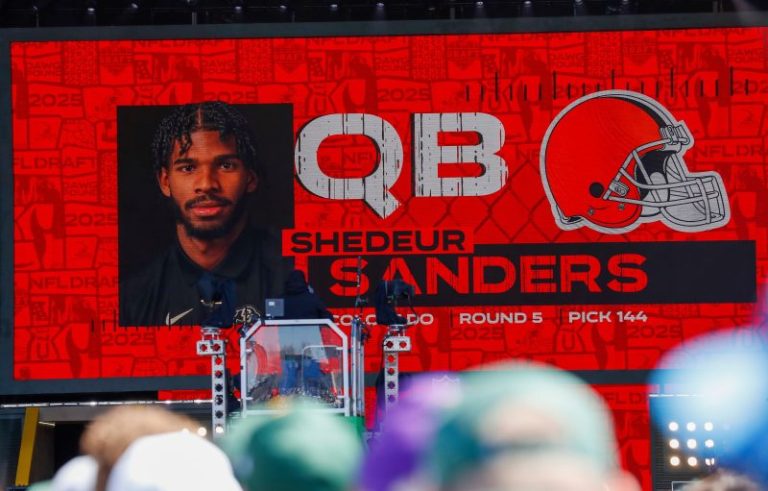
Shedeur Sanders wasn’t the first player in NFL draft history to be taken later than expected and he won’t be the last. At the very least, he won’t be alone.

In some ways, Sanders joined some good company after sliding down the board.

Sanders was selected by the Cleveland Browns with the 144th overall pick in the 2025 NFL Draft. Rumors swirled that the Colorado quarterback could’ve been taken 142 picks earlier by the same team, but landing in the fifth round was clearly a shock.

Tom Brady knows a thing or two about being drafted late in the process after he was famously selected with the 199th pick in the 2000 NFL Draft. The future Hall of Fame quarterback turned NFL on Fox broadcaster and part-owner of the Las Vegas Raiders had some words for the prospect.

During an appearance on the IMPAULSIVE podcast, Brady shared that he spoke with Sanders via text.

‘I actually texted Shedeur because I know him very well,’ Brady said. ‘And I said, ‘Dude, whatever happens, wherever you go, that’s your first day. Day 2 matters more than the draft.’ I was 199. So who can speak on it better than me? Like what that really means. Use it as motivation, you’re going to get your chances and go take advantage of it.’

Brady added that it’s about Sanders’ performance at this point, highlighting some of his teammates that also weren’t picked early in the draft.

‘I was around some of the best players who were undrafted free agents. They were Rodney Harrison. Rodney Harrison wasn’t a high pick. Julian Edelman wasn’t a high pick. Wes Welker wasn’t a high pick. Danny Amendola. All those guys were phenomenal players. So what’s it matter than some overhyped day where a lot of people are selling stories and saying, ‘Alright this is the big day and this is the draft and it’s an important day and it’s fun and I love you know watching it and seeing it?”

The seven-time Super Bowl champion pointed out that he’s been there on Day 2 when those players are tasked with learning a playbook and becoming part of the locker room.

Sanders will have a long road ahead of him in order to compete for the Browns’ starting gig. Heading into training camp, he’s likely the fifth quarterback on the depth chart. He’ll likely slide up to fourth as long as Deshaun Watson remains sidelined.

Still, Sanders will have to leap over Joe Flacco, Kenny Pickett and fellow 2025 draft pick Dillon Gabriel to land a roster spot.

The odds for a fifth-round pick to do that are certainly stacked against him. Of course, Sanders isn’t a normal fifth-round pick.

He also has the greatest quarterback of all time in his corner. It remains to be seen if that will count for something in Cleveland.

All the NFL news on and off the field. Sign up for USA TODAY’s 4th and Monday newsletter. Check out the latest edition: Looking ahead to the 2025 NFL schedule release.

This post appeared first on USA TODAY

Jacob Slavin’s goal 3:06 into overtime gave the Carolina Hurricanes a 2-1 victory Tuesday over the host Washington Capitals in Game 1 of their Stanley Cup Playoff second-round matchup.

The defenseman’s first overtime playoff goal came on the Hurricanes’ 94th shot attempt of the game (their 33rd on net). Logan Stankoven scored his third goal of the postseason and Jesperi Kotkaniemi set it up. Jordan Martinook and Dmitry Orlov assisted on the game-winner.

Frederik Andersen made 13 saves in his first action since leaving in the second period of Game 4 of Carolina’s first-round series with the New Jersey Devils on April 27.

Aliaksei Protas scored his first career playoff goal for the Capitals, with Brandon Duhaime and John Carlson earning assists. Thompson, meanwhile, stopped 31 shots while under pressure all night.

Carolina set the tone in the first period, outshooting the Capitals 12-5. None went past Thompson, though, as just three of those came from near the net. Washington also blocked 15 shot attempts in the period and had 32 for the game.

Despite that control, it was the Capitals who struck first 3:52 into the second. Carlson cleared the puck from the Carolina attack zone and Duhaime was able to spring Protas, who skated along the boards and beat the drawn-out netminder on a wrist shot from the right circle.

Protas scored in just his second game back after recovering from a deep cut he suffered to his left foot in an April 4 game against the Chicago Blackhawks.

The goal did not change the style of play as the Hurricanes continued to pepper shot attempts. They had 70 through the first two periods. However, it took a turnover near the Capitals’ net midway through the third period that allowed the Hurricanes to even the score.

Kotkaniemi got the puck after Capitals defenseman Alexander Alexeyev lost it in the left faceoff circle. The Finnish forward found Stankoven in the slot, and the 22-year-old, acquired in the Mikko Rantanen trade two months ago, capitalized on the Capitals’ mistake with 10:18 left in regulation.

Carolina won despite losing center Mark Jankowski, who sustained an undisclosed injury.

Jankowski, appearing in his third game of this year’s playoffs, was last on the ice with 4:42 remaining in the second period.

Edmonton Oilers rally past Vegas Golden Knights

Zach Hyman scored the go-ahead goal with 3:02 remaining and Connor Brown sealed the win 76 seconds later as the Edmonton Oilers rallied to defeat the Vegas Golden Knights, 4-2, in Game 1 of the Western Conference second round on Tuesday night in Las Vegas.

Hyman buried a wrist shot from the slot past goalie Adin Hill’s glove side for the game-winner — his third tally of the playoffs.

Brown added his fourth goal when he deked defenseman Shea Theodore at the blue line, broke down the slot and fired a wrist shot past Hill’s glove side. That completed the Oilers’ fifth straight comeback victory in the playoffs.

Leon Draisaitl had a goal and an assist, Connor McDavid and Evan Bouchard each had two assists and Corey Perry also scored for Edmonton, which had a four-game playoff winning streak snapped. Calvin Pickard finished with 15 saves.

Mark Stone scored both goals and Hill made 24 saves for Vegas, which had a streak of five Game 1 playoff wins snapped. Stone moved into a tie with Jonathan Marchessault for the franchise record with 36 postseason goals.

Vegas took a 1-0 lead at the 2:13 mark of the first period on a power-play goal by Stone. Vegas took advantage of an early double-minor penalty on Ryan Nugent-Hopkins for high-sticking Tomas Hertl along the end boards.

The score came on a double deflection of Theodore’s point shot, which changed direction off the stick of William Karlsson and then deflected off Stone’s stick, clanged off the left post and went into the net.

Stone made it 2-0 midway through the period with a wrist shot from the low slot five-hole. It came off Jack Eichel’s pass.

The Oilers cut the deficit to 2-1 near the end of the period when Perry took a pass from McDavid by the left side of the crease and then wrapped a wrist shot around Hill’s left pad. It was his third goal of the playoffs.

Edmonton dominated a scoreless second period, outshooting the Golden Knights 12-1, but couldn’t take advantage of two power plays. Adam Henrique had the best chance to tie it, but his wrist shot from the high slot caromed off the crossbar.

The Oilers tied it 2-2 just 57 seconds into the third period when Draisaitl, behind the goal line, backhanded a rebound of Bouchard’s shot that banked in off the back of Hill’s right leg. It was his fourth goal of the playoffs.

The USA TODAY app gets you to the heart of the news fast. Download for award-winning coverage, crosswords, audio storytelling, the eNewspaper and more.

This post appeared first on USA TODAY
NEWYou can now listen to Fox News articles!

Israeli and Turkish warplanes skirmished over Syria this past weekend. 

Israel, in northern Syria, has been bombing militias affiliated with the government of Turkey. According to Turkish media sources, Ankara’s F-16s sent ‘warning messages’ to the Israeli planes. 

Israel denied the reports of the aerial confrontation.

Recep Tayyip Erdogan, Turkey’s president, said that the ‘Israeli attacks compromise the balance in the region since the fall of the Syrian regime.’ Bashar al-Assad fled Syria to Russia as his totalitarian government fell in early December. He has since been granted asylum there.   

The recent aerial confrontation could spark a wider war and put an end to attempts by the former militant and Syria’s current president, Ahmed al-Sharaa, to reestablish stability and move his country closer to the United States. 

Disruptive actors want to take over Damascus. Erdogan, for instance, helped bring down Assad and now hopes to pull Syria into his orbit. China, which supported the horrific Assad regime until the end, is now trying to influence the new government in Damascus so it can eventually dominate that country.

Sharaa is resisting Beijing’s attempts. ‘Syria is now led by a true reformer,’ Jonathan Bass, who had extensive discussions with Sharaa in Damascus last week about religious freedom and other topics, told me. 

‘This is a critical moment in Syria’s transition,’ Dr. Sharvan Ibesh of the Bahar Organization, a humanitarian NGO active in Syria, told me last week.

Ibesh’s assessment is certainly correct. Before Sharaa can achieve anything, he will need to end the conflict in his skies. There is only one person who can separate Israel, America’s long-term partner in the region, and Turkey, an increasingly troublesome NATO ally. That person, of course, is President Donald Trump.

Why would Trump get involved? 

There are two principal reasons. First, Sharaa wants trade and investment. This is an historic opportunity for American business, which has been shut out of that portion of the region. Syria is devastated after decades of misrule and war, and Americans can build, sell, and provide just about everything.

The second reason involves China. ‘Syria is up for grabs,’ Mouaz Moustafa of the Syrian Emergency Task Force, a humanitarian group active in that country, said to me. ‘The Chinese continue to push hard to fill a vacuum, knowing that the longer the U.S. takes to come along the higher the chances are that China will economically occupy Syria.’

‘We do not want to be stuck with China being the only choice for Syria when it comes to rebuilding our liberated country,’ says the Bahar Organization’s Ibesh.

Dr. Haytham Albizem of Global Justice, a U.S.-based NGO, told me that President Sharaa has not accepted Beijing’s persistent offers but ‘eventually he will shake the hand that wants to help him rebuild the country he leads if he does not have any alternative.’

Bass, CEO of Argent LNG, confirms that Beijing has pressured Syrian officials to take its money but the Syrians have held out because of concerns about the long-term effects of Chinese presence. Sharaa in fact told Bass he wants to build a ‘pluralistic society,’ in other words, a nation not like China but like America.

Washington’s sanctions, put in place during the Assad years, prevent American involvement. Trump can lift them.

Trump will be in Saudi Arabia next week. He will visit Riyadh on May 13. Syrian officials are trying to schedule a meeting between the American president and Sharaa in the Saudi capital to discuss U.S. companies entering Syria. 

‘I want to make a deal with Donald Trump,’ Sharaa told Bass. ‘He’s the only man I trust.’ 

‘He is the only man capable of fixing this region, bringing us together, one brick at a time,’ Sharaa added.

‘This is a moment when the United States can, for the first time in decades, establish vibrant commercial and investment ties with Syria and thereby bring peace to the Middle East as a whole,’ Bass says.

If, however, China takes over Syria, which borders Israel in the Golan Heights, there will be no peace. Beijing fully backed Iran’s October 7 assault on the Jewish state with economic, diplomatic, propaganda, and weapons support. China will similarly disrupt the region from Syria if it gains control of Damascus.

‘If China is entrenched in Syria, it means Iran will be entrenched there too,’ Bass says. ‘The stakes are high for America because Israel would be pressured by a China-Iran proxy directly on one of its borders.’ 

That’s true, but America’s continued role in the region raises a broader issue. ‘Does the USA want to be the Policeman of the Middle East, getting NOTHING but spending precious lives and trillions of dollars protecting others who, in almost all cases, do not appreciate what we are doing?’ Trump tweeted in December 2018. 

Obviously not. But Sharaa, as he told Bass, wants to make Syria like America, not with the American military but with American goods, investment, and services. 

The opportunity for the U.S. is historic.

This post appeared first on FOX NEWS
NEWYou can now listen to Fox News articles!

In the world of President Donald Trump, the constant refrain that he ‘needs to do this’ or ‘must pass that’ in the next 200 days misses the point entirely. Trump doesn’t operate within the usual political playbook, and trying to fit him into conventional expectations is a mistake. Advisers often treat him like a typical politician: pass policies, build alliances, show a unified front. Tone it down.  Stop being so…. Well, Trumpian.  But that’s not who he is. And it certainly isn’t what he should do.

Trump’s power lies in owning the story, controlling the narrative’s chaos, and shaking things up in ways no one else can—or would dare to. 

His actions may seem reckless or absurd to some, but they’re often strategic—designed to grab attention, set the agenda, and keep everyone reacting to him. 

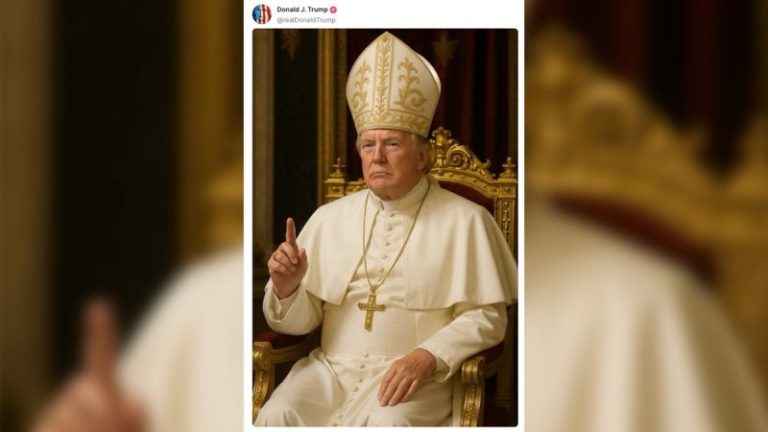
Let’s think about the events over just the last several days. Trump once again seized the digital spotlight, posting AI-generated images of himself as the pope and a ‘Star Wars’ character, musing about reopening Alcatraz, vacillating on tariffs, and even questioning his adherence to the Constitution. 

As expected, the world reacted: some with admiration, others with indignation. His supporters lauded him as a bold disruptor of the status quo, while critics labeled him dangerous, blasphemous, even absurd.

If you take every Donald Trump moment at face value, you’re missing the point.

But here’s the crux: if you take every Trump moment at face value, you’re missing the point.

To truly grasp Donald Trump, you need to step back—not just from the headlines, but from the impulse to interpret every word, post, or proposal literally. 

His approach isn’t straightforward. It’s theatrical, rhetorical, and deeply strategic. Parsing his statements is akin to interpreting religious texts. Some see every word as gospel truth. Others find symbolism, guidance, or metaphor. The same spectrum of interpretation applies to Trump.

If you treat Trump’s words as fixed policy declarations, you’ll find yourself in chaos. But if you view them as part of a broader strategy—to capture attention, steer the conversation, and frame negotiations—you begin to discern the method in the madness.

Consider tariffs. Are they economic policy? Or a pressure tactic? I’d argue they’re the latter—a means to move markets, project toughness, and reset expectations. Or take his musings about running in 2028. Is that a literal campaign launch? Or is he shaping the narrative around leadership, succession, and legacy?

This is Trump’s true power: not in the precision of his plans, but in his ability to control the agenda. He creates noise not to distract, but to dominate. He doesn’t wait to join the conversation—he is the conversation. And in doing so, he forces everyone else to react on his terms.

So, what should Trump do in the next 200 days? The answer is simple: keep doing what he’s doing. The more he challenges conventions, the more he reaffirms his brand as the disruptor who fights for ‘the everyman.’ Policy details don’t necessarily matter as much as the message that he is shaking up the establishment and battling an unfair system. 

Success for him isn’t about passing specific bills; it’s about owning the conversation and proving he’s the only one willing to blow things up to get results.

If Trump can continue this strategy—owning the narrative, showing he’s fighting for the ‘little guy,’ and not over-complicating it—he remains relevant. 

The reality? His core support won’t shift because of policy; it’ll shift if he stops being Trump. So, the next 200 days should be about staying true to his persona, deciding what noise to generate, and letting others scramble to chase his lead.

Ultimately, how you interpret Trump’s actions reveals more about you than about him. If you see him as a menace, every statement becomes a threat. If you see him as a visionary, every statement signals bold change. If you see him as a negotiator, the unpredictability makes perfect sense.

You don’t have to like Trump to understand him. But ignoring the mechanics of how he shapes public discourse is missing the most crucial part of the story.

He’s not just running for office. He’s running the conversation. And in essence, Trump needs to keep doing what he does best—disrupt, distract, and dominate. The rest is just noise.

This post appeared first on FOX NEWS

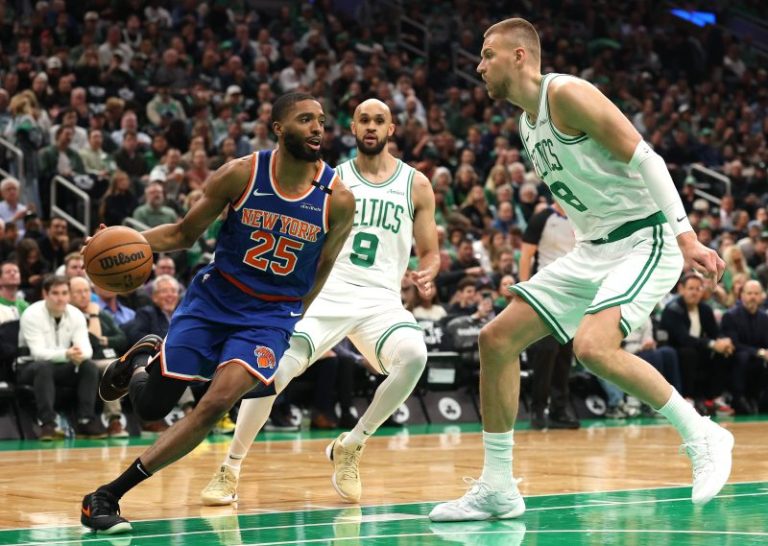
Boston Celtics forward-center Kristaps Porzingis is probable and Celtics forward Sam Hauser is doubtful for Wednesday’s Game 2 against the New York Knicks (7 p.m. ET, TNT).

The 7-2 Porzingis missed most of Boston’s Game 1 108-105 overtime loss with a non-COVID illness, and Hauser sprained his right ankle in the third quarter and did not return to the game.

The Celtics’ depth faces a challenge, and Porzingis’ availability is important to Boston’s success.

“It impacts the game because of his ability on both ends of the floor. … Hopefully, he’s ready for Game 2,’ Celtics coach Joe Mazzulla said after the Game 1 loss. 

Kristaps Porzingis probable for Game 2

Porzingis left Game 1 midway through the second quarter against the Knicks on Monday. While he briefly appeared after halftime, he went back to the locker room, and the Celtics announced he was questionable to return to the game thanks to a non-COVID illness. He did not return, and the Knicks overcame a 20-point deficit to win 108-105 in overtime. He missed all four of his shot attempts and grabbed four rebounds in 13 minutes.

He was not on the injury report before Game 1, but on Tuesday, Mazzulla told reporters that Porzingis was still feeling the effects of a viral infection that sidelined him for a stretch of games in late February and March.

This season, Porzingis averaged 19.5 points and 6.8 rebounds.

Sam Hauser doubtful for Game 2

Hauser played just four minutes in Game 1 – all in the third quarter – and limped to the locker room with assistance. He was scoreless and missed both 3-point shots he attempted. Hauser averaged 8.5 points and 3.2 rebounds and shot 41.6% on 3s during the regular season.

New York Knicks at Boston Celtics, Game 2

When: Wednesday
Where: TD Garden, Boston
Time/TV: 7 p.m. ET, TNT
Streaming: Sling

(This story was updated with additional information.)

This post appeared first on USA TODAY

WASHINGTON – To watch live sports at home in 2025, between all of the apps and channels and streams games air on thanks to billion-dollar rights deals, it can feel like being in a NASA control room. 

Now Congress wants to be involved. 

On Capitol Hill Tuesday, the Senate Commerce Committee – which has jurisdiction over the telecommunications professional sports leagues use to broadcast games – interviewed representatives from the NBA, MLB and the NHL about sports’ embrace of streaming, which creates a segmented market that is pricier for consumers. 

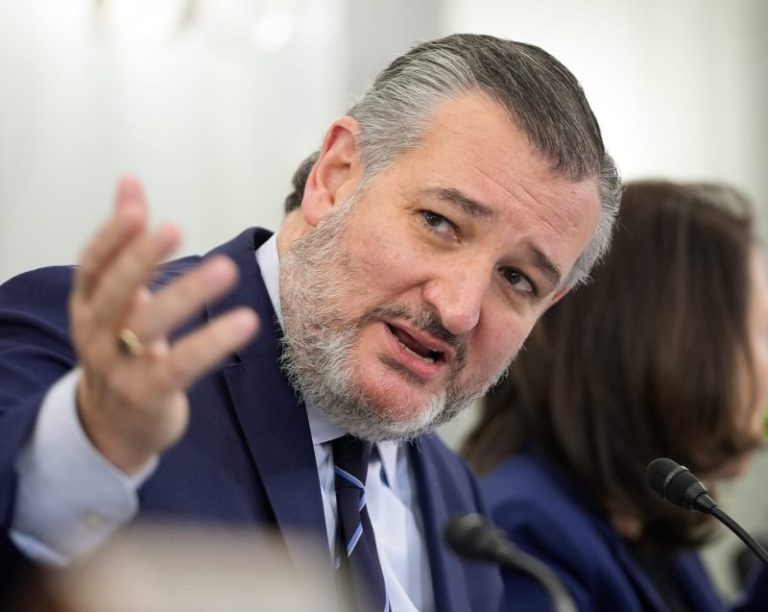
“This is a growing problem,” Committee Chairman Sen. Ted Cruz, R-Texas, said after the hearing. “Fans are understandably upset that it’s really hard to watch your home team, figure out what app or what network, how to watch it. It’s fractured right now. It’s expensive right now.” 

Notably, the NFL did not attend the hearing despite Cruz’s April 17 letter to commissioner Roger Goodell requesting his or a league representative’s presence. The NFL did not respond to a prior request from USA TODAY Sports for comment asking if the league intended to send a representative.

“I wish they had come,” Cruz said. “I think the issues that were discussed apply to them just like they apply to the leagues that were here.” 

The main lines of questioning during the lightly-attended meeting – nine of the 25 committee members showed up and most stayed for only brief periods – revolved around whether the leagues are not taking advantage of the anti-trust legislation afforded to them through the Sports Broadcasting Act of 1961. The leagues said that because they can operate as one entity during media-rights negotiations, they can pool resources to create a cheaper and more accessible model for fans. 

John Bergmayer, the fourth witness and the legal director of the non-profit group Public Knowledge, said fans feel like they finally broke free of the cable bundle only to watch it reform thanks to streaming platforms. 

“Streaming is no longer an afterthought, and policymakers, content creators, tech platforms, and sports leagues need to take steps to ensure that shifts in the media, technology, and sports landscapes benefit viewers, and lead to cheaper and more convenient options,” Bergmayer said during his opening statement. 

The subject of local blackouts came up early, with MLB executive vice president of media and business development Kenny Gersh saying each club has the right to distribute on cable in its market and that 29 of the 30 clubs also have a direct-to-consumer (DTC) option for streamers. But the collapse of the Regional Sports Network (RSN) market has also created an upheaval for leagues. 

“As we continue to have flux in the system, we’re going to have to continue to evaluate,” NHL senior executive vice president of media and international strategy David Proper said. 

Many of the Democratic senators, including ranking member Sen. Maria Cantwell, D-Washington, Sen. Ben Ray Lujan, D-New Mexico and Sen. Ed Markey, D-Massachusetts, used their time to lambast President Donald Trump’s proposed cuts of National Public Radio and PBS. 

Sen. Amy Klobuchar, D-Minnesota, explicitly asked NBA president of global content and media distribution Bill Koenig about the league’s valuation of the WNBA in its media rights negotiations. 

“We’re mindful of the growing popularity of the WNBA,” said Koenig, who added that the new media rights deals – valued at $76 billion – included upside provisions. For example, the revenue sharing that comes from advertising numbers stands to benefit the WNBA, he said. 

Sen. Marsha Blackburn, R-Tennessee, used her five minutes to grill Koenig about the Daryl Morey “Hong Kong” freedom tweet from nearly six years ago and wanted to know what broadcast rights in China are worth. She also inquired about internet piracy and its impact on streaming. 

Sen. Bernie Moreno, R-Ohio, encouraged the leagues to find solutions on their own rather than compelling Congress to be involved and regulate the leagues further, while Sen. Eric Schmitt, R-Missouri, relied on his experience of trying to stream St. Louis Cardinals games as an example of the plight fans go through to watch their teams. 

“People do care about this a lot,” Schmitt said. 

Cantwell was interested in whether the leagues have specific data or metrics about fan complaints. 

“It’s certainly something we hear,” Gersch said. 

Cantwell Cantwell floated a mandate for teams to make their games free in local markets backed by advertising revenue, a more traditional model. She doesn’t want the simple act of watching a sporting event to be hijacked by a larger consumer experience like having to buy an annual subscription to a streaming service such as Prime Video or Peacock. 

“There’s just too much here where they can just think about the dollar instead of thinking about the true consumer experience,” she said. 

“In return for the very public benefits that teams and leagues receive,” Bergmayer said, demonstrating the difference from other entertainment products, “there should be an obligation to make sure that games are widely accessible.” 

Cruz said the hearing was meant to be an informational, fact-finding exercise and he was pleased to that end. 

A specific remedy, despite multiple legislative avenues, Cruz said, remains up in the air. 

“It shouldn’t be insanely complicated or insanely expensive to cheer on your hometown team,” he said. 

This post appeared first on USA TODAY

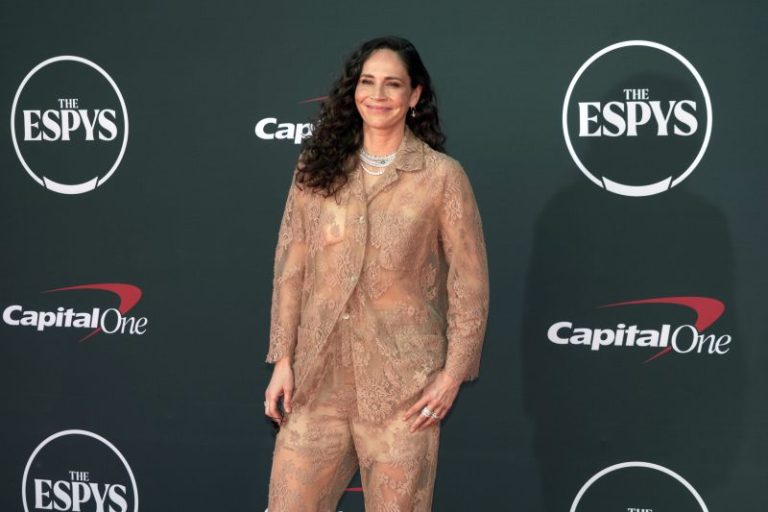
USA Basketball is set to make massive shifts in its structuring later this week, and among some of the most shocking moves includes the introduction of WNBA legend Sue Bird as the new managing director for the women’s national team, according to a person with knowledge of USA Basketball’s decision. The person requested anonymity because they were not authorized to speak publicly until USA Basketball made an announcement.

Bird, 44, is a women’s basketball legend, particularly as a member of the U.S. national team. She won five Olympic gold medals and four World Cup titles on the squad. Now, she’ll be responsible for a hefty chunk of the team’s success, taking on the ‘Grant Hill’ role for the team, making her in charge of things like player roster and coaching staff decisions for events like the Olympics and World Cup.

In previous years, a committee had been used to determine the rosters and coaches for these events. However, Bird’s expertise and respect in the basketball community seemingly has earned her the power to make those decisions on her own moving forward.

Will the men’s national team make the same shift?

The men’s national team does not need to. They’ve operated with a managing director for nearly two decades at this point, dating back to Jeff Colangelo, who took on the role from 2005 to 2021. George Hill took over the role in 2021, hence why Bird’s new position is being referred to as the ‘George Hill role.’

Much like how Hill now reports to the men’s national team day-to-day operations manager Sean Ford, Bird will now report to Briana Weiss in a similar manner.

When does the women’s national team play next?

The next big event for the women’s national team will be the FIBA World Cup in September 2026, with the first qualifying event for the tournament set to take place in November this year.

The short timeframe between now and the qualifying event makes Bird’s life much tougher as she’ll have to navigate a field of worthy candidates for the roster and coaching staff all while meandering through politics in her decisions. It’s hard to forget the drama that ensued ahead of the 2024 Paris Olympics when it was announced that Caitlin Clark had been left off the roster.

Sue Bird making moves as a podcaster as well

Coincidentally, news of Bird’s new position comes at a time when Bird also is announcing the start of a new WNBA podcast with Vox Media titled ‘Bird’s Eye View.’ The podcast is set to debut May 16 and will be available on most major podcast platforms such as Spotify, YouTube and Apple.

The show will cover WNBA news with Bird offering her expert opinions and analysis while speaking with several influential figures from around the league.

‘It’s going to be rooted in the ways in which the conversation that I can have might be different from an analyst or journalist. It’s going to be player to player, in a sense,’ Bird told The Hollywood Reporter.

This post appeared first on USA TODAY