Archive

2025

Browsing

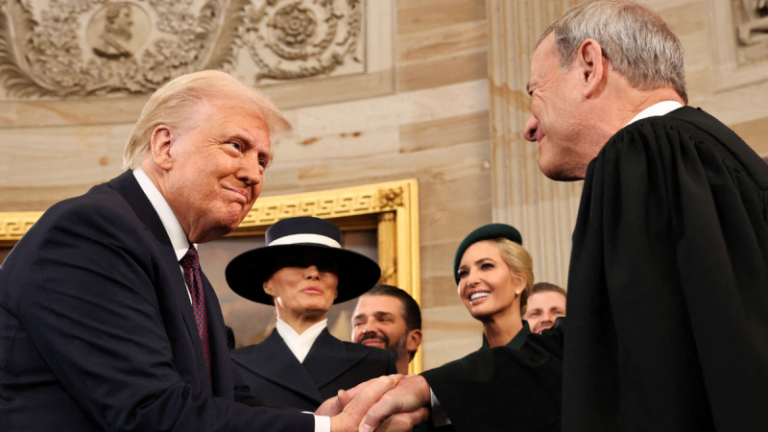
Supreme Court Chief Justice John Roberts used a public appearance Wednesday to stress the importance of an independent judiciary, doubling down on defense of the courts under fire by President Donald Trump and his allies, who have accused so-called ‘activist judges’ of overstepping their bounds.

Asked during a fireside chat event in Buffalo, New York, about judicial independence, Roberts responded in no uncertain terms that the role of the federal courts is to ‘decide cases, but in the course of that, check the excesses of Congress or the executive.’

That role, he added, ‘does require a degree of independence.’

Roberts’ remarks are not new. But they come as Trump and his allies have railed against federal judges who have paused or halted key parts of the president’s agenda. (Some of the rulings they’ve taken issue with came from judges appointed by Trump in his first term.)

The Supreme Court is slated to hear a number of high-profile cases and emergency appeals filed by the Trump administration in the next few months, cases that are all but certain to keep the high court in the spotlight for the foreseeable future.

Among them are Trump’s executive orders banning transgender service members from serving in the U.S. military, restoring fired federal employees to their jobs and a case about whether children whose parents illegally entered the U.S. and were born here should be granted citizenship. Oral arguments for that last case kick off next week.

Just hours before Roberts spoke to U.S. District Judge Lawrence Vilardo, a high-stakes hearing played out in federal court in Washington, D.C.

There, U.S. District Judge James Boasberg spent more than an hour grilling Justice Department lawyers about their use of the Alien Enemies Act to summarily deport hundreds of migrants to El Salvador earlier this year. 

Boasberg’s March 15 order that temporarily blocked Trump’s use of the law to send migrants to a Salvadoran prison sparked ire from the White House and in Congress, where some Trump allies had previously floated calls for impeachment.

Roberts, who put out a rare public statement at the time rebuking calls to impeach Boasberg or any federal judges, doubled down on that in Wednesday’s remarks.

‘Impeachment is not how you register disagreement with a decision,’ Roberts said, adding that he had already spoken about that in his earlier statement.

In the statement, sent by Roberts shortly after Trump floated the idea of impeaching Boasberg, said that ‘for more than two centuries, it has been established that impeachment is not an appropriate response to disagreement concerning a judicial decision,’ he said.

‘The normal appellate review process exists for that purpose,’ he said in the statement. 

This post appeared first on FOX NEWS

President Donald Trump touted his administration’s efforts to rebuild and modernize U.S. air traffic control, as the Department of Transportation rolled out its three-year plan to build a brand-new, ‘state-of-the-art’ system to address critical safety needs, while blasting former Transportation Secretary Pete Buttigieg for having ‘no clue.’ 

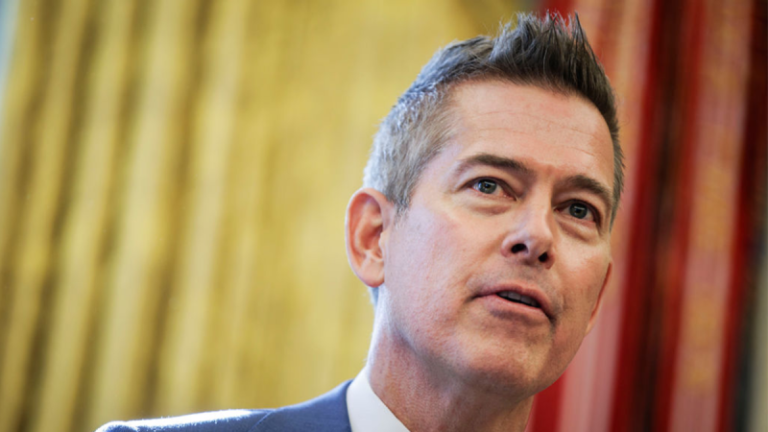
Transportation Secretary Sean Duffy Thursday unveiled the proposal, which would replace the current, antiquated Federal Aviation Administration (FAA) system and ‘enhance safety in the sky, reduce delays and unlock the future of air travel.’ 

‘Under President Trump, America is building again,’ Duffy said Thursday, upon rolling out the new proposal for a ‘once-in-a-generation opportunity to build a brand new, state-of-the-art air traffic control system.’ 

‘Decades of neglect have left us with an outdated system that is showing its age,’ Duffy said, noting that building the new system ‘is an economic and national security necessity, and the time to fix it is now.’

Under the new air traffic control system proposal, the FAA would replace infrastructure, including radar, software, hardware and telecommunications networks, to manage modern travel. 

Officials say the current system was built ‘for the past,’ but the new proposal is to build a system ‘for the future.’ 

The plan would ensure facilities are equipped with better technologies to reduce outages, improve efficiency and reinforce safety. 

‘We’re going to be buying a brand-new, state of the art system that will cover the entire world,’ Trump said earlier Thursday. 

The plan consists of four infrastructure components: communications, surveillance, automation and facilities, according to the Transportation Department. 

Officials plan, by 2028, to replace current telecommunications systems with new fiber, wireless and satellite technologies at more than 4,600 sites, 25,000 new radios and 475 new voice switches. By 2027, 618 radars will also be replaced.  

The plan also would address runway safety by increasing the number of airports with Surface Awareness Initiative to 200. Officials expect this to be complete by 2027. 

The Transportation Department also proposed building six new air traffic control centers for the first time since the 1960s. It also proposes replacing 15 towers and 15 co-located TRACONs, or Terminal Radar Approach Controls, which are facilities that manage air traffic in the airspace surrounding busy airports. 

Officials also proposed the installation of new modern hardware and software for all air traffic facilities, which would create a common platform system throughout all towers, TRACONs and centers. 

The proposal also includes the deployment of additional technologies to the Caribbean and Alaska to provide accurate, real-time surveillance and weather information for air traffic control and pilots to ensure ‘safe and efficient flights for these critical locations.’ 

Officials stressed the need for a new air traffic control system, saying the FAA is grappling with a ‘rapidly growing, complex and demanding aviation sector,’ as commercial air travel returns to pre-COVID levels. Officials also pointed to novel challenges, including drones and advanced air mobility. 

Officials said the FAA’s current systems ‘are showing their age,’ which leads to ‘delays and inefficiencies.’ 

The Department of Transportation stressed that the current National Airspace System is ‘safe,’ but stressed that maintaining safety is necessary. 

The proposal is based on a three-year framework to reinvest in the National Airspace System, and called for an ’emergency supplemental funding increase.’ 

‘Modernization of the NAS can no longer take 10+ years to complete; it must be done now,’ the proposal states. ‘We need an immediate infusion of funding to address critical infrastructure needs.’ 

Duffy, on Thursday, said the project would take three to four years. 

‘I need help, I can’t do it by myself. And it’s going to take the help of the Congress to make that happen,’ Duffy said. ‘We need all of the money up front.’ 

Duffy said requesting the money in ‘small tranches’ over the course of several years would extend the project. 

‘Politics change, leadership changes, presidents change, interest changes, and it never gets built,’ Duffy said. ‘So I’m going to ask the Congress for upfront appropriations to give us all the money. I’ll come before the Congress every, every quarter and give them an update of how far we’ve built, how much money we’ve spent.’ 

Duffy added that if the Department of Transportation is not given the money, it would take ’10 to 15 years to build this.’ 

‘And by the time we get done with it, what we’re going to build is already going to be old technology,’ Duffy said. ‘So we want to build this in three to four years, and we can do it with the help of Congress.’ 

A report issued by the Government Accountability Office (GAO) in March shows that the Trump administration inherited an outdated FAA system from the Biden administration with ‘severe shortcomings’ that resulted in dangerous travel conditions across the country.

After Trump’s return to the White House, the GAO advised the administration that it had made nine recommendations to the FAA under the Biden administration that remain open, and that ‘urgent attention’ is needed to remedy the safety issues left by Biden.

GAO said that under the Biden administration the FAA ‘did not prioritize or establish near-term plans to modernize unsustainable and critical systems.’

The GAO’s 2025 report said the 2023 national airspace prompted an operational risk assessment, which found that of the 138 air traffic control systems, ’51 (37%) were deemed unsustainable by FAA and 54 (39%) were potentially unsustainable.’

Trump, on Thursday, blasted the current ‘ancient infrastructure,’ saying ‘it’s buckling under the weight of more than a billion flying passengers a year and supporting hundreds of billions of dollars.’  

‘Pete Buttigieg, who was the secretary of transportation, had no clue what the problem was,’ Trump said. ‘He had no clue. Zero. Zero.’ 

Trump said Buttigieg ‘wants to run for president.’ 

‘I don’t think he’s going to do too well,’ Trump said. ‘The federal government now pays $250 million annually just to keep up the old equipment and keep it running.’

Meanwhile, Duffy on Thursday said the administration has assembled an ‘unprecedented coalition of support’ from labor to industry, stressing that support is ‘indicative of just how important it is to this administration to get done what no one else could.’  

Duffy added: ‘The American people are counting on us, and we won’t let them down.’

The rollout of the proposal comes just days after the FAA issued a ground delay for Newark Liberty International Airport in New Jersey due to staffing shortages, weather and construction.

‘Our antiquated air traffic control system is affecting our workforce,’ an FAA statement said. ‘As Secretary Duffy has said, we must get the best safety technology in the hands of controllers as soon as possible.’

It also comes after air traffic controller audio was made public from when radar and radio communications with planes were briefly lost at Newark Airport on April 28. 

The April 28 outage lasted roughly 90 seconds. The National Air Traffic Controllers Association confirmed the incident to Fox News Digital, writing that the FAA’s operation in Philadelphia had ‘temporarily lost radar and communications with the aircraft under their control, unable to see, hear, or talk to them.’

Fox Business’ Grady Trimble contributed to this report. 

This post appeared first on FOX NEWS

The White House will unveil a new nominee to serve as U.S. attorney for the District of Columbia, following resistance to the administration’s current pick, according to President Donald Trump. 

Trump had nominated Ed Martin, a former defense attorney who represented Americans charged in the Jan. 6, 2021, riot at the Capitol, for the role. Martin has taken on the responsibilities of the interim U.S. attorney in Washington, D.C., since January. 

However, the Senate has held up confirming Martin, amid concerns from lawmakers. Republican Sen. Thom Tillis of North Carolina, a member of the Senate Judiciary Committee, announced Tuesday he wouldn’t endorse Martin. 


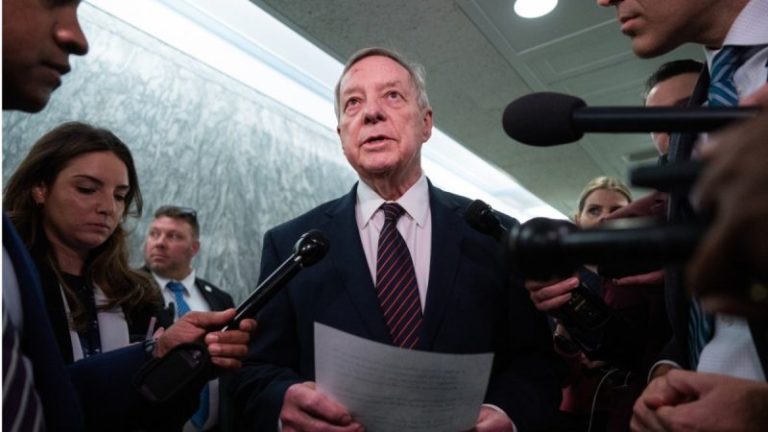
Illinois Sen. Dick Durbin, the top Democrat on the Senate Judiciary Committee, also opposed Martin’s nomination. Specifically, Durbin said Martin provided several false statements to the Senate Judiciary Committee. 

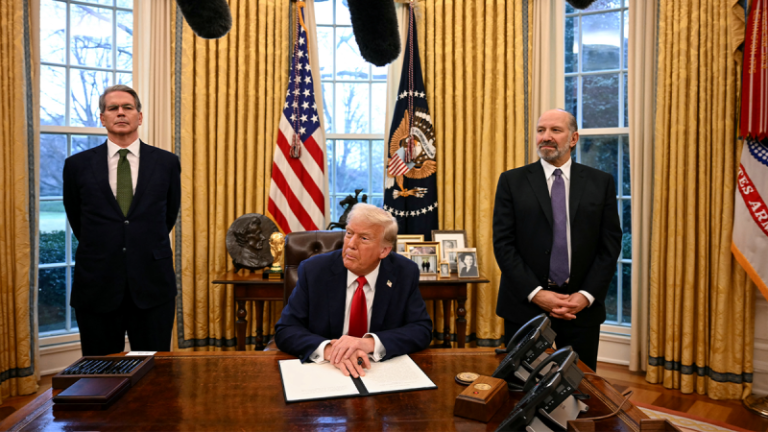
On Thursday, Trump suggested he would put forward another candidate who would receive broader backing than Martin. 

‘He wasn’t getting the support from people that I thought,’ Trump told reporters at the White House Thursday. ‘You know, he’s done a very good job. Crime is down 25% in DC during this period of time… I can only lift that little phone so many times of the day. But we have somebody else.’

‘I have to be straight. I was disappointed,’ Trump said. ‘A lot of people were disappointed. But that’s the way it works. Sometimes, you know, that’s the way it works. And he wasn’t rejected, but we felt it would be very – it would be hard. And we have somebody else that will be announcing over the next two days who’s going to be great.’ 

The White House did not immediately respond to a request for comment from Fox News Digital. 

Trump’s decision to replace Martin came amid a May 20 deadline to confirm the former defense attorney and ‘Stop the Steal’ organizer. That’s because if the Senate fails to confirm a U.S. attorney nominee within 120 days, federal district court judges may select an interim U.S. attorney, according to the Department of Justice. 

Judge James Boasberg is the current chief judge of the U.S. District Court for the District of Columbia. Boasberg has become intertwined in several key cases against the Trump administration and has attracted scrutiny from the White House for blocking deportation flights in March.

Fox News’ Emma Colton contributed to this report. 

This post appeared first on FOX NEWS
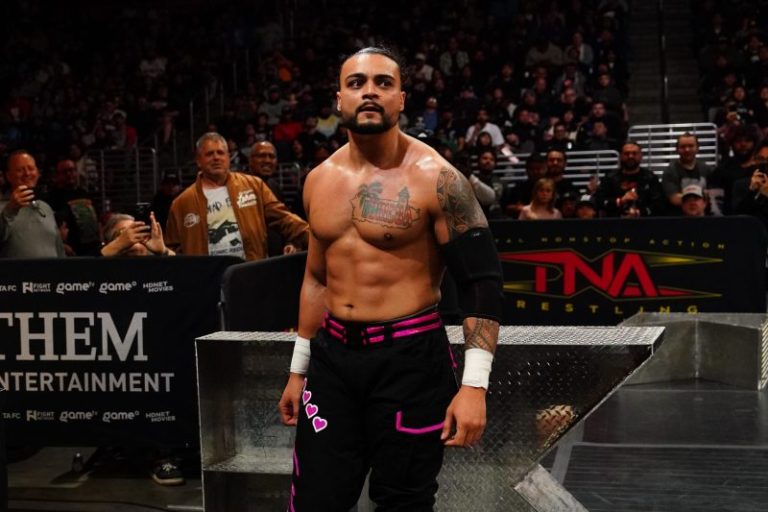
Mike Santana knew he couldn’t go to Los Angeles alone. 

It was going to be a major trip. The TNA Wrestling star was going to have one of the biggest matches of his career – against Mustafa Ali in a ‘falls count anywhere’ match at Rebellion. But it was second fiddle to the real attraction of the West Coast trip: going with his daughter, Ariana.

It had been a few years since Santana wrestled in Los Angeles and the city was a bucket list trip for Ariana. Aside from his match, Santana and Ariana would do all of the touristy things in the City of Angels for some quality father-daughter bonding. The way he saw it, it was a trip he couldn’t do without his daughter.

It was also a trip that wouldn’t be possible without her.

A few years ago, Santana hit rock bottom. He was struggling with drug and alcohol abuse. Not only was his wrestling career in jeopardy, he wasn’t the person he wanted his daughter to look up to.

It was the end of 2022 when he realized the pain he was causing. His daughter made her Christmas list for Santa Claus, and in it, she wrote “please make my dad stop.”

That was enough for Santana to check himself into rehab. He knew the journey was going to be difficult. 

But now, more than two years later, Santana is flourishing, on a run that has him pushing toward great success. Even better, he has his daughter there to witness it. She’s able to see her dad reach new heights, but she also has her dad again – and the two get to soak in the moment together.

“It took a lot to get here, a lot of things that I had to deal with in my personal life,” Santana told USA TODAY Sports. “It’s been an amazing ride.”

TNA Wrestling dominance

Santana’s recovery began as he finished his last year in All Elite Wrestling. His sobriety began in February 2023. He had his last match in October before he entered the realm of the unknown.

Recovery is daunting, and not knowing what was next in his career added extra stress. There were goals, but there was uncertainty on whether they’d be attainable.

“In the beginning, it was a tough ride because I decided to bet on myself,” Santana said. “The one thing that I really knew out of everything, was I knew the work that I was willing to put in, and just hope and pray that it paid off.”

In April 2024, Santana returned to TNA after spending time with the company five years prior. And it’s been nothing but a remarkable comeback to the promotion.

A longtime tag team specialist, Santana has thrived as a solo competitor, able to showcase his talent and toughness while picking up victories against notable names. He defeated Moose at Bound for Glory, Frankie Kazarian at Turning Point and Josh Alexander in an ‘I Quit’ match at Genesis. 

All major wins, but the win over Alexander was extra special for Santana. He recalled thinking “something’s rocking” regarding his career trajectory after the signature win, but then came the part after the match when Alexander shook Santana’s hand and praised him, essentially anointing him TNA’s next superstar as Alexander left the company. 

“For him to have pretty much put me in his position, and pretty much passed that torch in that match and say it publicly and all that, it was a huge deal,” Santana said. 

The momentum didn’t stop there. Santana then entered a heated feud with Ali, culminating with the ‘falls count anywhere’ match at Rebellion. The match stole the show, with both stars putting their bodies on the line with all sorts of signature, brutal spots around the arena. By the end, Santana was bleeding, but he picked up the victory against Ali in what was arguably the best match in TNA this year.

After the momentous victory, Santana now has his eyes set on the TNA World Championship. The title holder, Joe Hendry, believes the challenger is on his way.

“Mike is certainly on the path to be the guy,” Hendry said. “I think having people like that rise up to that main event spot is exciting.”

The sky’s the limit for Santana. While he has executed all of the plans he’s made, he is now trying to not get caught up in what could happen next. But Ariana isn’t afraid to predict her dad’s future. She believes he will be in WWE and make it on the main roster.

Mike Santana inspires fans and daughter

All of the in-ring success has been nice, but the work Santana is really proud of is being an inspiration to those that have, or know someone who has, battled the same issues he dealt with. He could have kept his addiction and recovery a private matter, but Santana chose to be public about it.

He admits being vulnerable isn’t his strong suit since he grew up being protective of himself. But he learned in rehab the greatest gift he could provide is his story and how it’s possible to overcome the darkness. Santana has even shared his journey as part of wrestling promos, not hiding away his past.

Whether it’s during meet-and-greets or out in public, Santana frequently gets told how inspiring he’s been. Santana isn’t just a character or gimmick; what appears in the ring and on TV is his true, authentic self, serving as motivation.

“For me, it’s still not easy. There’s a lot of times that I’m still in that protective state, but at the end of the day, I’ve always said growing up, I want to do something in my life where I’m able to help people. I finally realized wrestling and me being this public figure and sharing my story is my way of helping people,” he said. “At the end of the day, man, I’m a poor Puerto Rican kid from the projects in New York. The fact that I get to do this thing, and I’ve traveled the world and done amazing things and I’m inspiring people is pretty cool.”

One person inspired by Santana is Ariana. It’s a full circle moment for Santana, given the relationship he had with his dad. He said it was up and down as his father dealt with depression, blindness and addiction. The combination of issues had Santana’s dad feeling like he let his son down, even though Santana didn’t see it that way. Santana just wanted his dad to be around, and he was able to convey it to his father before his father’s death in 2020.

Now a father, Santana wants to be present for his daughter, trying to do all the things his dad felt he couldn’t do by paying it forward.

“I know the life that I lived and how I came up as a kid, and the fact that my daughter will never have to experience those things, and the fact that I’m able to give her the life that she has means so much to me,” Santana said. “That’s the icing on the cake. That’s why I do all of this.”

One thing Santana learned in his sobriety journey is to take time to reflect. Always appreciate the accomplishments and where life is at. 

That’s what made the Los Angeles trip so special. After understanding the pain he caused his daughter, Santana made the effort to strengthen their relationship. He got to take her to a place she always wanted to visit for a memorable first daddy-daughter trip, and she saw one of his greatest matches. 

Santana said on Instagram one of the top highlights of the weekend “was having my little girl with me and getting to share amazing time with her.” The two went to Griffith Park to see the Hollywood sign, roamed around Hollywood and went to the Santa Monica Pier.

What makes it even sweeter is Ariana loves her dad’s job. Santana said she has “totally immersed” herself in the wrestling world, having been there from when he performed in small gyms to now sold-out arenas. Seeing her dad’s rise in the business just makes the experience sweeter. 

“The fact that I was able to come from where I come from, have gone through the things that I’ve gone through, but still achieved this dream, is showing her that anything was possible,” Santana said.

It indeed has. Ariana pushed her dad to get back on his feet, and now she gets to be right there to experience all of the glory. 

“Seeing him put in all the work and effort, seeing him work out all the time so he could just be in shape is inspiring,” she said. “It is very special to me.”

This post appeared first on USA TODAY

If you’ve covered (or even followed) the NFL long enough, then you know to never say never. Never ever. Still, trades involving notable players in the immediate aftermath of the draft are pretty rare.

Naturally, we had one Wednesday morning, the Dallas Cowboys and Pittsburgh Steelers agreeing to a swap that will send explosive – a catch-all term – WR George Pickens and a 2027 sixth-round pick to “America’s Team” while a 2026 third-rounder and 2027 fifth-rounder head to the Steel City in exchange.

Big name. Big-name teams. And – likely – big-time ramifications, even if they’re not necessarily cut and dried as we lay out this curious deal’s winners and losers:

WINNERS

George Pickens?

No one emerges from this transaction with a bigger opportunity. Pickens has been a football paradox – talented, mercurial, (occasionally) dominant and temperamental all adjectives you might see readily associated with him. Let’s just say after three seasons with the Steelers, who took Pickens in the second round of the 2022 NFL draft, Pickens has crafted something of a professional reputation. Yet going into the final year of his rookie contract, he has a chance to burnish it – even change the narrative as we say nowadays – and reasonably put up some really nice numbers in a Dallas offense that has skewed pass-heavy in recent seasons…all with countless millions on the line as he angles for his second NFL contract, which is so often the one that truly allows twentysomethings to be set for life if they responsibly manage the money. Pickens is barely 24. If he plays his cards right, he shouldn’t have to worry for much – at least financially – for the rest of his life. He also has a shot to establish himself as one of the leading lights on what is arguably the most high-profile professional sports franchise in the world – a circumstance with the added potential to open so many more doors now and well into the future.

Kaleb Johnson

There’s been a lot of talk in Pittsburgh in recent years about getting back to the franchise’s smashmouth roots – at least those that were largely responsible for bringing six Lombardi Trophies to the confluence of the three rivers. That means an elite defense (the pieces remain in place there) and a physical, run-oriented offense – something that’s been absent all too often in the 16 years since the Steelers last won the Super Bowl. But with Pickens gone and Mason Rudolph listed as the starting quarterback – wink – Johnson, who was taken in the third round of last month’s draft, could legitimately become the focal point of this offense. A 6-1, 224-pounder, all he did last season at Iowa was lead the Big Ten with 1,537 rushing yards and 21 touchdowns on the ground, an effort that earned Johnson All-America honors. If Pittsburgh’s young and talented offensive line comes together in 2025, the NFL Offensive Rookie of the Year trophy might just be the next piece of hardware Johnson picks up.

NFL DRAFT GRADES: Report cards for all 32 teams

Calvin Austin III and Pat Freiermuth

Whether it’s Rudolph or a certain future first-ballot Hall of Famer slinging the rock in Pittsburgh next year, Austin and Freiermuth stand to benefit as it pertains to prominent roles in the pass game. Not only is Pickens’ target share up for grabs, but it seems quite likely that this offense – perhaps from both personnel and philosophical perspectives – will evolve in a way that more heavily favors a slot receiver like Austin and tight end like Freiermuth than it would have an outside deep threat like Pickens.

Dak Prescott?

The NFL’s MVP runner-up in 2023, when he led the league in touchdown passes (36) and completions (410) under then-offensive coordinator Brian Schottenheimer, is coming off a 2024 campaign marred by a serious hamstring injury but will return to the lineup with a shiny new weapon. And given the unsettled state of Dallas’ run game, another playmaker – regardless of position – obviously helps.

CeeDee Lamb?

He was probably the league’s best receiver two years ago, leading the NFL in targets (181) and receptions (135) as Prescott’s main man on a squad that went 12-5 and won the NFC East. Yet sometimes, a little less can mean a lot more – and given the Cowboys’ ground game has no bell cow, Lamb was facing the possibility of constant double-teams (at least) in 2025. The danger Pickens poses as a deep threat will make opposing safeties think twice about cheating too far into Lamb’s area code.

Aaron Rodgers?

Had we mentioned him? No? Is he coming to Pittsburgh? Maybe? For the sake of argument, let’s assume the four-time MVP is – and it’s probably safe to project that Rodgers’ demanding persona and penchant for laying into receivers who don’t run routes to his exacting specifications would have had the oil-and-water effect on Pickens. Rodgers is unlikely to suffer much from this move … assuming he moves to Western Pennsylvania.

Mike Tomlin?

He’s been the Steelers’ top dog for a minute. He’s coached talented receivers like Antonio Brown, Chase Claypool, Diontae Johnson and Pickens. Yet Bruce Springsteen might’ve summarized those situations by saying, “He’s still there, they’re all gone.” Going into his 19th season as Pittsburgh’s head coach, Tomlin is living proof that talent doesn’t always win out in the NFL …

LOSERS

Mike Tomlin?

… but let’s not sweep aside the unavoidable truth that Pickens’ departure needs to mean a whole lot of addition by subtraction – and much of that equation may be determined by its effect on the Steelers locker room and/or other aspects of the operation that reporters and fans parsing this deal may not be privy to. But this much we know – an offense that hasn’t set the league on fire during the post-Ben Roethlisberger era just jettisoned a player who was probably good for 60 catches, 1,000 receiving yards and a half-dozen TDs, not to mention the attention he commands from a game-planning perspective. This trade is also at least a year away from providing Tomlin a warm body who can help keep his résumé free of a losing season in Pittsburgh and, more importantly, might contribute to the Steelers’ first playoff win since the 2016 postseason.

Aaron Rodgers?

Whether or not he’s better off in this steadily morphing offense remains to be seen – though, again, remember how it worked (meaning it didn’t) with Mike Williams last year when he and Rodgers were members of the New York Jets. Pickens is better than Williams yet still a similar player. Regardless, can Rodgers, who will be 42 in December, really look at the Steelers’ roster and determine that he can stack significant wins with a franchise that’s offloading assets for future draft capital that may never help him?

DK Metcalf?

He recently signed a four-year, $132 million extension after being traded from the Seattle Seahawks to the Steelers this offseason. Moving forward? Metcalf now faces the same prospect Lamb might have as the guy opposing defenses won’t allow to beat them and could very well be destined for consecutive seasons being limited to fewer than 1,000 receiving yards.

Dak Prescott?

So what if Pickens wilts under the unwavering media spotlight trained on the Cowboys? What if he doesn’t work out as a hired gun in 2025? What if Dallas’ offense comes to a grinding halt rather than taking off? You can take this to the bank – Pickens won’t be answering those questions every week, but Prescott most definitely will be.

Brian Schottenheimer?

If Tomlin was OK with moving on from Pickens, how is a first-year head coach like Schottenheimer supposed to deal with him? Schottenheimer, 51, has certainly been around the NFL block and worked with big-time wideout personalities like Metcalf, Santonio Holmes, Braylon Edwards and – to a lesser degree – Lamb during multiple stints as an offensive coordinator. But Pickens could represent a whole new level of the infamous NFL receiver diva if this goes off the rails.

Jerry Jones?

The Cowboys owner and de facto general manager doesn’t exactly have a sterling track record when it comes to acquiring veteran receivers. Joey Galloway. Terry Glenn. Keyshawn Johnson. Rocket Ismail. Terrell Owens. Roy Williams. Even last year’s trade with the Carolina Panthers for Jonathan Mingo, who caught all of five passes after his midseason arrival, is still being panned in Dallas. Why not just sign free agent Amari Cooper, one of Jones’ better wideout pickups over the years, and not surrender the draft assets for what may be a one-year roll of the dice on Pickens?

Omar Khan

The Steelers general manager indicated right before last month’s draft that he wouldn’t be trading Pickens during it – and Khan kept his word. And, sure, maybe this is a case of a team unloading a guy one year ahead of free agency and getting something (very slightly) better than a third-round compensatory pick in return. But unless Pickens’ circumstances somehow materially changed over the past week or the Cowboys greatly increased what’s still a fairly modest offer, why not make this move in time to get draft capital – and a player or two – in return this year? Maybe Khan still has a card or two to play – Cooper and Keenan Allen are among veteran wideout options who remain unsigned and could help the Steelers in 2025, though neither is the game-breaker Pickens is at this point in their careers. But from Pickens’ exit to Rodgers’ seeming ambivalence, it’s hard to figure where Khan is steering the 2025 Steelers with training camp not three months away.

George Pickens?

Seriously, man, don’t blow this. Be a professional – on and off the field. Go get your bag. Because if you don’t capitalize now, it may never happen for you.

This post appeared first on USA TODAY

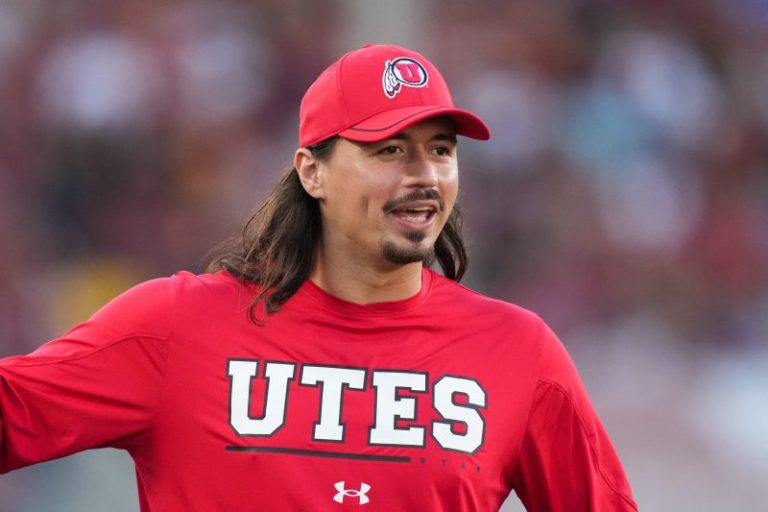
The former Utah Utes quarterback and longtime college football player announced Wednesday he is medically retiring after suffering a hand injury during the 2024 season. He said he was advised by two orthopedic physicians he won’t ever be able to play football and is seeking a third opinion as he will undergo surgery.

‘I will continue to rehab and do all I can to get healthy. In the meantime, I will unfortunately be forced to medical retire from the game I love,’ Rising wrote on social media.

Rising retires from the sports after seven seasons of college football.

Cam Rising’s college career

The decision to medically retire comes after a frustrating end to Rising’s college career.

The No. 22 ranked quarterback in the 2018 recruiting class that included Trevor Lawrence, Justin Fields, Micah Parsons and Amon-Ra St. Brown, Rising committed to Texas out of high school, redshirting his first season in Austin. He then decided to transfer to Utah and sat out the 2019 season. He played his first game during the shortened 2020 season as he suffered a shoulder injury that prematurely ended the campaign for him.

Rising lost the quarterback battle to start the 2021 season, but after a 1-2 start, head coach Kyle Whittingham turned to Rising under center. The Utes found momentum with Rising as the starter, finishing the regular season 8-1 and earning a spot in the Pac-12 championship game. In the contest, Rising led Utah past Oregon for the school’s first Pac-12 title and first Rose Bowl appearance. He was named a Pac-12 first-team selection with 2,493 passing yards with 20 touchdowns and five interceptions, as well as 74 carries for 499 rushing yards and six rushing touchdowns.

The quarterback returned to Utah in 2022 and again led Utah back to the Pac-12 championship game. Against College Football Playoff contender Southern California, Rising led the upset against the Trojans to clinch back-to-back conference titles and Rose Bowl appearances. However, in the Rose Bowl game against Penn State, Rising suffered a devastating knee injury. The injury resulted in him missing the entirety of the 2023 season with a medical redshirt as Utah finished 8-5.

Now in his seventh-season, Rising returned to Utah for the 2024 campaign. He started the first two games of the season before he suffered a lacerated finger on his throwing hand early against Baylor on Sept. 7. He returned more than a month later against Arizona State, but was injured early in that contest. That ended up being the last game he played in as Utah determined he as out for the season as the Utes went 5-7, the program’s worst record in 11 years.

Does Cam Rising still have eligibility left?

It might sound crazy that someone who started college in 2018 can still play at the level, but Rising still technically could have petitioned for another year of eligibility via injury redshirt. However, it became evident his time in Utah was done. Earlier this year, Whittingham alluded to the team moving on from Rising.

‘I’ve talked to Cam a few times, but that is really up to Cam to divulge, when he wants to divulge what his plan is,” Whittingham said. ‘We’ve certainly had communication and you don’t see him on the roster right now, so that should tell you some things there.’

If this is in fact the end, Rising finishes his college career with 6,127 passing yards, 53 passing touchdowns, 986 rushing yards and 12 rushing scores. Rising went 20-8 as a starting quarterback, fifth all-time in career wins at Utah.

This post appeared first on USA TODAY

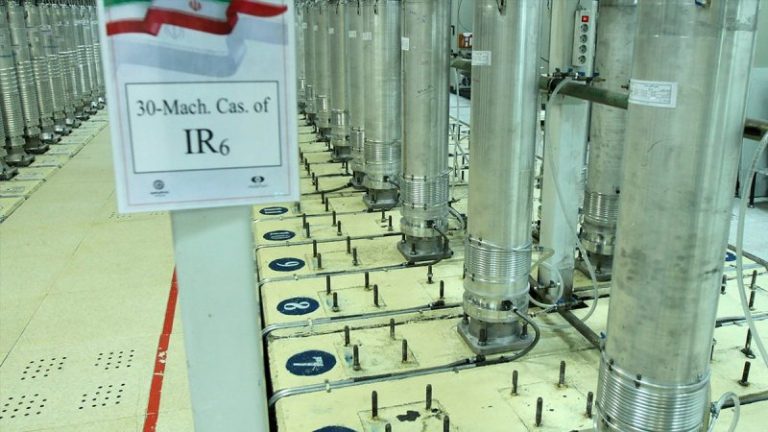
The Trump administration on Thursday targeted Iranian oil with a new slate of sanctions – a move that increases pressure on the Islamic Republic amid talks between U.S. and Iranian officials to make a deal to prevent nuclear proliferation, Fox News Digital has learned. 

The Treasury Department’s Office of Foreign Assets Control increased pressure on Iran’s export of oil Thursday, designating the ‘teapot’ refinery Hebei Xinhai Chemical Group Co., Ltd., and three port terminal operators in Shandong province, China, for their role in purchasing or facilitating the delivery of hundreds of millions of dollars’ worth of Iranian oil. 

The ‘teapot’ refineries purchase the majority of Iranian crude oil exports, according to the Treasury Department. 

The Treasury Department on Thursday is also imposing sanctions on several companies, vessels and captains they say are responsible for facilitating Iranian oil shipments as part of Iran’s so-called ‘shadow fleet.’ The companies and vessels are all China-based. 

‘As part of President Trump’s broad and aggressive maximum pressure campaign, Treasury today is targeting another teapot refinery that imported Iranian oil,’ Treasury Secretary Scott Bessent said. ‘The United States remains resolved to intensify pressure on all elements of Iran’s oil supply chain to prevent the regime from generating revenue to further its destabilizing agenda.’

The sanctions come following President Donald Trump’s executive order, which targets Iran’s petroleum and petrochemical sectors – as well as another executive order targeting those that provide support to the National Iranian Oil Company. 

Thursday’s sanctions are the latest round targeting Iranian oil sales since the president, in early February, issued a national security memorandum that instituted a campaign of ‘maximum economic pressure on Iran.’ 

As for Iran’s ‘shadow fleet,’ Tehran relies on obscure ship management companies to manage its fleet of tankers that ‘mask’ Iran’s petroleum shipments to China using ship-to-ship transfers with sanctioned vessels. 

The Treasury Department on Thursday took action to increase pressure on that ‘shadow fleet’ of actors by designating ships as ‘blocked property.’

Any violation of U.S. sanctions may result in the imposition of civil or criminal penalties on U.S. or foreign persons, the Treasury Department said. 

The imposition of sanctions comes as the United States and Iran prepare for a fourth round of nuclear talks. U.S. and Iranian officials are set for the next round of talks to take place in Oman in the coming days. 

Trump is scheduled to travel to the Middle East, including Saudi Arabia, Qatar and the United Arab Emirates.

Vice President JD Vance recently previewed the next round of talks, saying Wednesday the U.S. was negotiating toward a ‘complete cessation’ of Tehran’s nuclear program. 

The Trump administration has said the flawed 2015 Obama-era Joint Comprehensive Plan of Action (JCPOA), also known as the Iran nuclear feal, did not prevent Iran from building an atomic bomb, with Vance adding that the agreement had ‘incredibly weak’ enforcement regarding inspections. 

Vance said he didn’t believe it ‘actually served the function of preventing the Iranians from getting on the pathway to nuclear weapons.’  

Vance also said the Trump administration believes that there were some elements of the Iranian nuclear program that were actually ‘preserved’ under the JCPOA. 

‘Yes, there weren’t nuclear weapons. Iran doesn’t have a nuclear weapon,’ Vance said, arguing the deal ‘allowed Iran to sort of stay on this glide path toward a nuclear weapon if they flip the switch and press go.’ 

‘We think that there is a deal here that would reintegrate Iran into the global economy,’ Vance said ahead of the talks. ‘That would be really good for the Iranian people, but would result in the complete cessation of any chance that they can get a nuclear weapon. And that’s what we’re negotiating toward. And as the president has said, that’s Option A.’ 

If Option A is ‘very good for the Iranian people,’ Vance said, then Option B ‘is very bad.’ 

‘It’s very bad for everybody,’ Vance said. ‘And it’s not what we want, but it’s better than Option C, which is Iran getting a nuclear weapon. That is what is completely off the table for the American administration. No ifs, ands or buts.’ 

As for Trump, he said during a recent interview on NBC’s ‘Meet the Press’ that he would only accept ‘total dismantlement’ of Iran’s nuclear program. 

This post appeared first on FOX NEWS
China is eager to hash out a trade deal with the U.S., according to President Donald Trump. 

Trump’s remarks come as Treasury Secretary Scott Bessent is poised to launch trade negotiations with China in Switzerland on Saturday amid a steep tariff battle between Washington and Beijing.  

‘Scott’s going to be going to Switzerland, meeting with China,’ Trump told reporters Thursday at the White House. ‘And you know, they very much want to make a deal. We can all play games. Who made the first call, who didn’t make them? It doesn’t matter. Only matters what happens in that room. But I will tell you that China very much wants to make a deal. We’ll see how that works out.’

The Trump administration announced widespread tariffs for multiple countries on April 2, following criticism that other countries’ trade practices are unfair toward the U.S.

The administration later adjusted its initial proposal and announced on April 9 it would immediately impose a 145% tariff on Chinese goods, while reducing reciprocal tariffs on other countries for 90 days to a baseline of 10%. China responded by raising tariffs on U.S. goods to 125%.

Bessent said Tuesday that negotiations between the U.S. and China had not started, after China said Friday that Beijing was open to holding talks if the tariffs were rescinded. 

Trump told reporters on Air Force One Sunday he wants a ‘fair’ trade deal with China, claiming discussions with Beijing were in the works on multiple issues.  

Trump has voiced support for tariffs for decades. The White House has called for tariffs to address the nation’s 2024 record $1.2 trillion trade deficit, and said the tariffs will bring back U.S. manufacturing jobs. 

Bessent cautioned in April that the tariffs could cost China up to 10 million jobs, and said it’s incumbent upon Beijing to remove current tariffs on U.S. imports. 

‘I think that over time we will see that the Chinese tariffs are unsustainable for China. I’ve seen some very large numbers over the past few days that show if these numbers stay on, Chinese could lose 10 million jobs very quickly,’ Bessent told reporters at the White House on April 29. ‘And even if there is a drop in the tariffs that they could lose 5 million jobs.’

‘So remember that we are the deficit country,’ Bessent said. ‘They sell almost five times more goods to us than we sell to them. So the onus will be on them to take off these tariffs. They’re unsustainable for them.’

Bessent also told lawmakers Tuesday that the U.S. has launched discussions with various countries, and indicated that major trade deals could be announced ‘as early as this week.’ 

This post appeared first on FOX NEWS
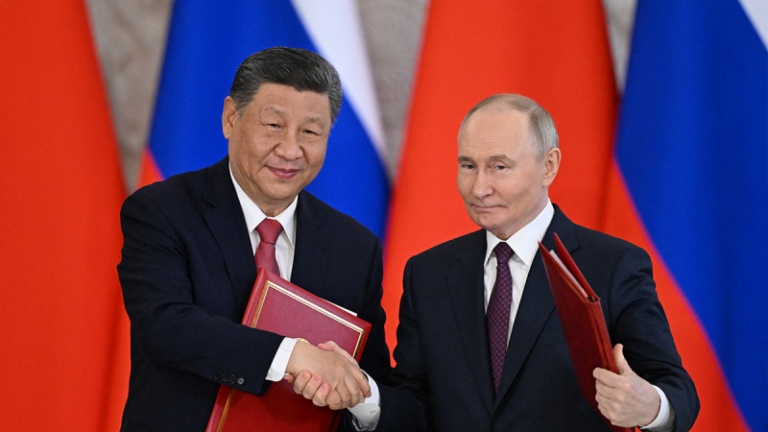
Chinese President Xi Jinping and Russian President Vladimir Putin met for formal talks on Thursday for the first time since President Donald Trump exacerbated the U.S.-China trade war last month. 

In a statement at the top of the meeting, Xi pledged to stand by his anti-Western ally against ‘power politics’ and ‘bullying on the international stage.’

‘Eighty years ago, the peoples of China and Russia made tremendous sacrifices to secure a great victory, contributing an indelible chapter to the cause of world peace and human progress,’ Xi said, according to a report by the South China Morning Post.

‘Today, in the face of unilateralist backflows and acts of power politics and bullying on the international stage, China will join Russia in shouldering our special responsibilities as major countries and permanent members of the U.N. Security Council,’ he added. 

The pair met on what is considered Victory Day in Europe, which marks the beginning of the end of World War II, when the Allied nations accepted the surrender of Nazi Germany on May 8, 1945, though Russia celebrates the anniversary one day later. 

Japan did not surrender until September 1945, though Xi and Putin convened for a joint celebration which will take place in Moscow’s Red Square on Friday and will include a large contingent of Chinese troops. Leaders from 20 nations, including Brazilian President Luiz Inácio Lula de Silva, will also reportedly be in attendance.

While Xi appeared to take direct aim at the U.S., which under Trump has slapped 145% tariffs on all Chinese exports, Putin’s language was more toned down when he said, ‘We are developing our ties in the interests of both our peoples and not aimed against anyone.’

Putin and Xi first expanded their relationship just ahead of Russia’s 2022 invasion of Ukraine, which resulted in the West’s attempt to isolate Moscow in retaliation for the deadly war. 

Russia, China, Iran and North Korea have since deepened ties in an alliance that has increasingly concerned Western partners, though the Trump administration has looked to step away from these divisions in what some have argued could weaken U.S. ties with Washington’s long-standing allies. 

Putin said the ties strengthened during its war years were ‘one of the fundamental foundations of modern Russian-Chinese relations’.

‘Together with our Chinese friends, we firmly stand guard over the historical truth, protect the memory of the events of the war years, and counteract modern manifestations of neo-Nazism and militarism,’ he added in reference to one of his long-debunked claims used to justify his illegal invasion of Ukraine. 

According to Russian news outlet TASS, both Xi and Putin pledged to help play a role in the Trump administration’s push to form a new nuclear agreement with Iran. 

While both were key players in the 2015 Joint Comprehensive Plan of Action (JCPOA), which Trump abandoned in 2018, it remains unclear how they intend to participate in this round of negotiations facilitated by Oman. 

‘The parties intend to play an active creative role in the settlement around the Iranian nuclear program, emphasizing that it will contribute to maintaining the international nuclear non-proliferation regime, peace and stability in the Middle East,’ the readout said. 

The White House did not immediately respond to Fox News Digital’s questions regarding any potential China-Russia involvement in the talks.

This post appeared first on FOX NEWS
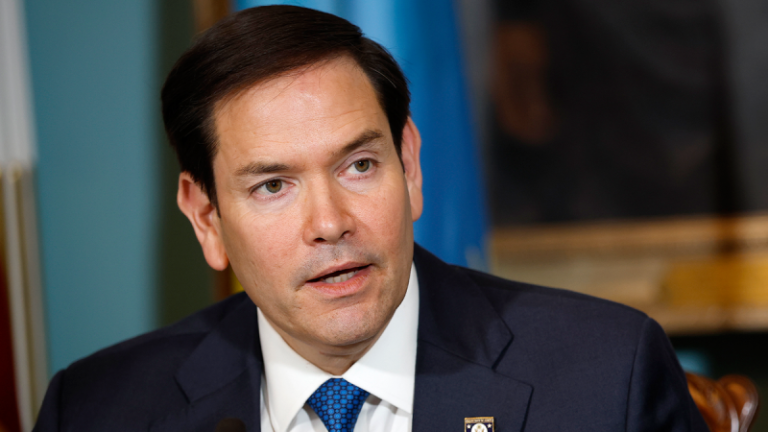
In a surprising twist of fate, Marco Rubio has gone from bitter presidential rival to President Donald Trump’s go-to guy. 

At the start of the new administration, current and former officials speculated Rubio would be one of the first Cabinet officials shown the door, as his America First credentials were called into question given his previously hawkish foreign policy views. 

Instead, Rubio has only continued to find favor with the president – so much so that he now holds an unprecedented four different roles within the administration.

‘When I have a problem, I call up Marco. He gets it solved,’ Trump quipped earlier this month. 

First, Rubio glided into the secretary of state role with a 99-0 Senate confirmation. Then, Trump and his team dismantled USAID and merged it under Rubio’s State Department leadership, naming him acting director. The secretary was subsequently tapped to lead the National Archives in an acting capacity, and as of last week, he’s also replaced Mike Waltz as acting national security advisor.

‘This is an expression of trust,’ said Andrew Tabler, a former senior official at State and the National Security Council (NSC). ‘It’s a sign that the president likes Secretary Rubio, despite the odds.’ 

Trump has suggested the interim arrangement could last up to six months, and while that may be an expression of the president’s confidence in Rubio, some are questioning whether one person can effectively juggle four high-profile roles.

‘Marco Rubio is very talented but no one can do that,’ said Joel Rubin, former senior State Department official. 

Henry Kissinger was the last person to serve as both secretary of state and national security advisor, holding both roles for over two years from 1975 to 1977. But that was half a century ago, and threats facing the nation have only multiplied. 

Rubin, who served under both Democratic and Republican administrations, called the workload ‘not fair to the individual, not fair to the taxpayer, and not fair to President Trump, who needs strong, independent advice from a national security advisor.’

‘The president has assembled an incredibly talented team that is fully committed to putting America and Americans first,’ a senior State Department official said in response to an inquiry on Rubio’s many duties. ‘Secretary Rubio looks forward to serving as his interim national security advisor while ensuring the mission-critical work at the State Department continues uninterrupted.’

The national security advisor is traditionally the president’s closest aide on matters of war, peace and global crisis – physically located near the Oval Office and ready to brief the president at any moment. That proximity is hard to maintain when the same person is flying overseas for diplomatic missions.

‘If he has to fly off to Pakistan to stop a nuclear war, then the president’s national security advisor, who usually is sitting right next to him, is not there.’

The reshuffling follows a broader shake-up inside the National Security Council, which lost Waltz, deputy advisor Alex Wong, and a number of staffers in early April. That thinning of personnel, several sources said, has only compounded the stakes.

‘There are major national security issues in three different theaters. Europe, Middle East and Asia. One’s a hot war, one is a half-hot war, and it’s really getting tense in Asia,’ said one former NSC official. ‘The president’s national security team needs to be filled out, and many people at State and DOD still need to be confirmed.’

National security advisor ‘is one of the president’s closest relationships,’ said Michael Allen, former special assistant to the president and senior director at NSC. ‘The national security advisor needs to be near the president all the time. Or at least able to brief the president all the time. So this is more duties for Rubio and they’re already short-handed.’

Still, Allen said the president’s personal comfort with his top national security aide may outweigh structural concerns – for now.

‘If the president feels like he needs Rubio there, then this is a good solution,’ Allen said. ‘At least for the short to medium term.’

Yet others say Rubio’s promotion might be more symbolic than operational, particularly in a White House where influence doesn’t always match job titles.

‘I think it’s not, ‘Can Marco Rubio do four jobs?’ It’s, ‘Is he allowed to do his one job – which is Secretary of State?’’ said Mark Feierstein, a former senior official at USAID. ‘Foreign counterparts may see him as pleasant in meetings, but they don’t necessarily believe he can deliver.’

Feierstein pointed to the dismantling of USAID, the rise of informal advisors like Stephen Miller, and the proliferation of special envoys like Steve Witkoff who bypass Rubio entirely. ‘You’ve got loads of people who report directly to Trump or others. So now it’s just chaos,’ he said.

Even Rubio’s ideological positioning raises questions. A staunch foreign policy hawk during his time in the Senate, Rubio has in recent months presided over a foreign policy apparatus that includes outreach to Russia and dramatic State Department budget cuts – moves he may once have opposed.

‘He’s decided to accommodate,’ Feierstein said.

But Rubio’s ability to meet voters where they are – and serve as the president’s happy warrior – may be the key to his longevity. Sparring with voices like Director of National Intelligence Tulsi Gabbard and Vice President JD Vance on foreign policy would only cause further headaches for the president. 

Tabler, for his part, remained optimistic. ‘Rubio is energetic, he knows the issues. He’s been working on foreign policy for years,’ he said. ‘It’s a positive sign. But how long one person can do that job – and under what circumstances – is up to him.’

This post appeared first on FOX NEWS