Archive

2025

Browsing

A top federal court official defended Judge James Boasberg’s gag orders that hid subpoenas related to the FBI’s Arctic Frost investigation, saying this week that the chief judge in Washington would likely have been unaware that the subpoenas’ intended targets were members of Congress.

The administrative office for the federal courts indicated that the chief judge in D.C. routinely blindly signed gag orders when the Department of Justice requested them, including during Arctic Frost, the investigation that led to former special counsel Jack Smith bringing election charges against President Donald Trump.

The administrative office’s director, Robert Conrad Jr., provided the explanation on behalf of Boasberg to Senate Judiciary Committee Chairman Chuck Grassley, R-Iowa, in a letter first obtained by Fox News Digital.

The letter came in response to Grassley, Sen. Ron Johnson, R-Wis., and Rep. Jim Jordan, R-Ohio, demanding an explanation from Boasberg about why he authorized the one-year gag orders, which barred phone companies from telling Republican Congress members that their records were subpoenaed by Smith in 2023.

Conrad said he could not address those specific subpoenas and gag orders, in part because some of the material was sealed, but that he could help the lawmakers ‘understand relevant practices’ in place during Arctic Frost.

The DOJ’s requests for gag orders, also known as non-disclosure orders, ‘typically do not attach the related subpoena; rather they identify the subject accounts only by a signifier — e.g., a phone number,’ Conrad wrote. ‘As a result, [non-disclosure order] applications would not reveal whether a particular phone number belonged to a member of Congress.’

Read a copy of the letter below. App users click here.

Grassley reacted to the latest correspondence from the court by faulting the Biden DOJ for seeking the gag orders from Boasberg without notifying the judge that they pertained to Congress members.

Grassley noted that the DOJ’s Public Integrity Section gave Smith’s team the green light to subpoena lawmakers’ phone records but had also told the prosecutors to be wary of concerns lawmakers could raise about the Constitution’s speech or debate clause, which gives Congress members added protections in prosecutorial matters.

‘Smith went ahead with the congressional subpoenas anyway, and it appears he and his team didn’t apprise the court of member involvement,’ Grassley told Fox News Digital. ‘Smith’s apparent lack of candor is deeply troubling, and he needs to answer for his conduct.’

The DOJ revised its policy in response to an inspector general report in 2024 so that prosecutors were required to notify the court if they were seeking a gag order against a Congress member so that judges could take that into consideration when deciding whether to authorize the orders. Smith’s subpoenas pre-dated that policy shift.

The subpoenas, and the gag orders that kept them concealed, have drawn enormous criticism from the targeted lawmakers, who alleged that the Biden DOJ improperly spied on them over their alleged involvement in attempting to overturn the 2020 election and that Boasberg was complicit in allowing it. Among the top critics is Sen. Ted Cruz, R-Texas, who was set to lead a since-postponed hearing Wednesday examining the case for impeaching Boasberg. Impeachment of judges is exceedingly rare and typically has only occurred in response to crimes like corruption and bribery.

Johnson said he remained unsatisfied with Boasberg after the letter from the administrative office.

‘Judge Boasberg’s refusal to answer questions from Congress about his approval of unlawful gag orders is an affront to transparency and an obvious attempt to deflect any responsibility for his awareness of or involvement in Jack Smith’s partisan dragnet,’ Johnson told Fox News Digital. ‘Judge Boasberg must immediately lift the seal that is apparently preventing him from addressing Congress’ questions and provide the public a full explanation for his actions.’

Public documents reveal that as chief judge of the D.C. federal court, Boasberg authorized numerous gag orders that blocked phone companies from telling about a dozen House and Senate lawmakers that Smith had subpoenaed their phone data.

Smith had sought a narrow set of their records, which included details about when calls and messages were placed and with whom the Congress members were communicating. The records did not include the contents of calls and messages. Smith has defended the subpoenas, saying they were in line with department policy and ‘entirely proper.’

This post appeared first on FOX NEWS

On about two dozen occasions, the Supreme Court had to step in during President Trump’s second term because many inferior courts refused to accept that he is the president. The justices must do so again, after lower courts invalidated the appointments of acting U.S. attorneys Alina Habba of the District of New Jersey and Lindsey Halligan of the Eastern District of Virginia.

The Senate has a tradition that is over a century old called the blue slip. Home-state senators have an extraordinary power: the ability to veto U.S. marshals, U.S. attorneys, and U.S. district judges. In order for nominees to proceed, home-state senators must return a blue slip approving the nominations. Senators will never let this power go, so administrations have to bear the consequences. In New Jersey, leftist senators Cory Booker and Andy Kim have refused to allow the nomination of Alina Habba to serve as U.S. Attorney. Likewise, in Virginia, their fellow leftist senators Tim Kaine and Mark Warner will not acquiesce to the nomination of Lindsey Halligan to serve as U.S. Attorney. As such, Attorney General Pam Bondi appointed Habba and Halligan to 120-day terms to serve on an interim basis, as 28 U.S.C. § 546 allows. Halligan replaced another interim prosecutor, Eric Siebert, who departed shortly before his 120 days lapsed.

After 120 days have expired, leftists asserted that Bondi can make no more appointments, only district judges can. The Executive Branch, this argument goes, has no say whatsoever after 120 days. This result would lead to a scheme where leftist senators can block President Trump’s nominees. Then, courts composed mostly of leftist judges in these blue states can install leftist puppet U.S. attorneys, and the Executive Branch must grin and bear it, just as with the blue slip process.

The 120-day limit first appeared in a statute in 1986. During the years of presidents Clinton and Bush, attorneys general made successive 120-day appointments under the statutory scheme in effect from 1986-2006, the same scheme as today. Yet, Clinton Judge Cameron Currie of South Carolina did not view this historical evidence as persuasive when she invalidated Halligan’s appointment. Halligan secured indictments against New York Attorney General Letitia James for mortgage fraud and former FBI Director James Comey for false statements to and obstruction of Congress concerning the Russiagate hoax.

Those indictments are, for the moment, invalid. Currie’s opinion drips with disdain for Halligan, noting Halligan’s lack of prosecutorial experience. This issue is irrelevant to the legal question. Halligan, under Currie’s analysis, could have had three decades of prosecutorial experience, and her appointment would still have violated the Constitution’s Appointments Clause. Currie also quoted another irrelevant piece of evidence: President Trump’s social media post demanding Bondi move faster on prosecutions. Whether Halligan’s appointment is valid has nothing to do with that post. Its inclusion thus has no valid legal purpose.

The Appointments Clause vests appointment power in a president, by and with the advice and consent of the Senate, for principal officers. Congress can also require the advice and consent process to apply to inferior officers, and it did so with respect to U.S. attorneys. As such, presidents nominate U.S. attorneys, and the Senate confirms them. When there are vacancies, attorneys general can fill them for 120 days at a time, and a separate part of Section 546 allows for district courts to make appointments after the 120 days have expired. The Constitution grants department heads and courts the power to appoint inferior officers. District judges, for example, appoint magistrate judges.

Section 546 does not vest the authority to appoint U.S. attorneys exclusively in district courts. Under the reading of the judges who have invalidated the appointments of Habba and Halligan, a future President J.D. Vance’s attorney general could not make a 120-day appointment, either. The text of Section 546 does not specify a 120-day appointment per president. When one president’s attorney general makes a 120-day appointment, these judges absurdly prevent any future president’s attorney general from doing so in that district. District judges therefore have all the power until the Senate confirms a nominee one of these years or decades.

Fortunately, the issue now is ripe for Supreme Court review. This week, a Third Circuit panel ruled that Habba’s appointment is invalid. The justices should decide the cases together, even though the Fourth Circuit has not ruled on the Halligan appeal. There is only one circuit with all states that have Republican senators: the Fifth. This district court control could continue into the terms of a President Vance.

The easiest way to correct the lower court’s error is for the Supreme Court to hold that Section 546 allows attorneys general to make more than one 120-day appointment. Alternatively, the justices could hold that Section 546’s stripping of appointment power from the Executive Branch with respect to its officials violates the separation of powers.

In the face of immense criticism from Democrat politicians, the leftist media, and academic elites, the justices have intervened time and again to thwart unlawful interference by resistance lower courts. Because of the Supreme Court’s intervention on issues ranging from the ability to fire Executive Branch employees to the ability of the president to revoke temporary protected status from illegal immigrants, President Trump has been able to do his job far more effectively.

Bondi, Solicitor General John Sauer, and their team of stellar lawyers have amassed a success rate of over 90% at the Supreme Court. The justices must restore Habba and Halligan to preserve the separation of powers and prevent U.S. attorneys from being servants of district courts instead of presidents.

This post appeared first on FOX NEWS

Secretary of War Pete Hegseth chastised the press following media reports that he signed off on a second strike against an alleged drug boat after the first one left survivors. 

The Trump administration has come under renewed scrutiny for its strikes in the Caribbean targeting alleged drug smugglers, after the Washington Post reported on Friday that Hegseth verbally ordered everyone onboard the alleged drug boat to be killed in a Sept. 2 operation. The Post reported that a second strike was conducted to take out the remaining survivors on the boat. 

On Monday, the White House confirmed that a second strike had occurred, but disputed that Hegseth ever gave an initial order to ensure that everyone on board was killed, when asked specifically about Hegseth’s instructions.

Hegseth said that he watched the first strike live, but did not see any survivors at that time amid the fire and the smoke — and blasted the press for their reporting.

‘This is called the fog of war. This is what you in the press don’t understand,’ Hegseth told reporters at a Cabinet meeting on Tuesday. ‘You sit in your air-conditioned offices or up on Capitol Hill and you nit pick, and you plant fake stories in the Washington Post about ‘kill everybody’ phrases on anonymous sources not based in anything, not based in any truth at all. And then you want to throw out really irresponsible terms about American heroes, about the judgment that they made.’ 

Hegseth said that after watching the first strike, he left for a meeting and later learned of the second strike. The White House said Monday that Hegseth had authorized Adm. Frank ‘Mitch’ Bradley to conduct the strikes, and that Bradley was the one who ordered and directed the second one. 

At the time of the Sept. 2 strike, Bradley was serving as the commander of Joint Special Operations Command, which falls under U.S. Special Operations Command. He is now the head of U.S. Special Operations Command.

According to Hegseth, carrying out a subsequent strike on the alleged drug boat was the right call. 

‘Admiral Bradley made the correct decision to ultimately sink the boat and eliminate the threat,’ Hegseth said Tuesday. 

Meanwhile, reports of the second strike have attracted even more scrutiny from lawmakers on both sides of the aisle on Capitol Hill and calls for greater oversight, amid questions about the strikes’ legality. 

‘This committee is committed to providing rigorous oversight of the Department of Defense’s military operations in the Caribbean,’ Reps. Mike Rogers, R-Ala., and Adam Smith, D-Wash., who lead the House Armed Services Committee, said in a statement on Saturday. ‘We take seriously the reports of follow-on strikes on boats alleged to be ferrying narcotics in the SOUTHCOM region and are taking bipartisan action to gather a full accounting of the operation in question.’

Hegseth said Tuesday that although there has been a pause in strikes in the Caribbean because alleged drug boats are becoming harder to find, the Trump administration’s campaign against the influx of drugs will continue. 

‘We’ve only just begun striking narco-boats and putting narco-terrorists at the bottom of the ocean because they’ve been poisoning the American people,’ Hegseth said. 

The Trump administration has carried out more than 20 strikes against alleged drug boats in Latin American waters, and has bolstered its military presence in the Caribbean to align with Trump’s goal to crack down on the influx of drugs into the U.S.

This post appeared first on FOX NEWS

Apple’s top artificial intelligence executive is stepping down and will retire in 2026, the company announced Monday.

John Giannandrea had been at Apple since 2018, where his official title was senior vice president for machine learning and AI strategy.

He will be replaced by Amar Subramanya, who comes to Apple after a brief stint as corporate vice president of AI at Microsoft and more than a decade at Google.

Subramanya will report to one of CEO Tim Cook’s deputies, Craig Federighi, rather than to Cook directly, as Giannandrea had.

‘AI has long been central to Apple’s strategy, and we are pleased to welcome Amar to Craig’s leadership team and to bring his extraordinary AI expertise to Apple,’ Cook said Monday.

The abrupt change at a company known for its careful succession planning highlights Apple’s challenge as it tries to compete with top AI developers such as Google, ChatGPT owner OpenAI, Meta and Microsoft.

Earlier this year, Apple delayed the release of an upgraded version of Siri with AI powered features. At the time, it said it was going to ‘take us longer than we thought’ to develop the new version.

The company said it anticipated rolling out new features ‘in the coming year,’ but it has not offered any more specifics.

‘We’re making good progress on it, and, as we’ve shared, we expect to release it next year,’ Cook said on the company’s quarterly earnings call in late October.

“With Apple Intelligence, we’ve introduced dozens of new features that are powerful, intuitive, private and deeply integrated into the things people do every day,” Cook said on the Oct. 30 call

The company is targeting the spring to release the upgraded Siri, Bloomberg News recently reported.

When a user grants permission, Siri can tap into ChatGPT’s broad world knowledge and present an answer directly.Apple

While Apple’s iOS and macOS are integrated with ChatGPT, those features are somewhat limited.

In recent weeks, Apple has reportedly neared deals to integrate with Google’s Gemini, as well as AI models from Perplexity and Anthropic.

Apple introduced Apple Intelligence on June 10, 2024.Apple

Apple’s stock has also felt the effect of what some perceive to be its lagging AI services.

This year, Apple shares have returned 13%, which tops both Amazon and Microsoft. But shares of Oracle have popped 20%, Nvidia has surged 34%, and Google parent company Alphabet has soared 65%.

Still, Apple remains the world’s second-largest publicly traded company, with a market value of $4.2 trillion, behind only Nvidia.

Overall, the S&P 500 has risen almost 16% this year.

This post appeared first on NBC NEWS

Starbucks will pay about $35 million to more than 15,000 New York City workers to settle claims it denied them stable schedules and arbitrarily cut their hours, city officials announced Monday.

The company will also pay $3.4 million in civil penalties under the agreement with the city’s Department of Consumer and Worker Protection. It also agrees to comply with the city’s Fair Workweek law going forward.

A company spokeswoman said Starbucks is committed to operating responsibly and in compliance with all applicable local laws and regulations in every market where it does business, but also noted the complexities of the city’s law.

“This (law) is notoriously challenging to manage and this isn’t just a Starbucks issue, nearly every retailer in the city faces these roadblocks,” spokeswoman Jaci Anderson said.

Most of the affected employees who held hourly positions will receive $50 for each week worked from July 2021 through July 2024, the department said. Workers who experienced a violation after that may be eligible for compensation by filing a complaint with the department.

The $38.9 million settlement also guarantees employees laid off during recent store closings in the city will get the chance for reinstatement at other company locations.

The city began investigating in 2022 after receiving dozens of worker complaints against several Starbucks locations, and eventually expanded its investigation to the hundreds of stores in the city. The probe found most Starbucks employees never got regular schedules and the company routinely reduced employees’ hours by more than 15%, making it difficult for staffers to know their regular weekly earnings and plan other commitments, such as child care, education or other jobs.

The company also routinely denied workers the chance to pick up extra shifts, leaving them involuntarily in part-time status, according to the city.

Starbucks Workers United members and supporters picket outside a Starbucks in New York on Nov. 21.Michael Nagle / Bloomberg via Getty Images

The agreement with New York comes as Starbucks’ union continues a nationwide strike at dozens of locations that began last month. The number of affected stores and the strike’s impact remain in dispute by the two sides.

This post appeared first on NBC NEWS

Alabama’s ranking suggests they may secure a playoff spot regardless of the SEC championship outcome.
James Madison entered the rankings, creating a potential path to the playoff for the Sun Belt champion.
The ACC faces a scenario where it could be left out of the playoff entirely if five-loss Duke wins the conference.

The penultimate College Football Playoff rankings set the stage for conference championship weekend and the last gasp of what has been an unpredictable regular season.

All eyes will be on the SEC, where No. 9 Alabama looks to beat No. 3 Georgia in a rematch of the Crimson Tide’s 24-21 win in Athens earlier this year.

An Alabama win and a No. 4 Texas Tech win against No. 11 Brigham Young could maintain the status quo and leave a chalky 12-team bracket. Even then, though, there will be plenty of controversy over the exclusion of No. 12 Miami despite the Hurricanes’ head-to-head win against No. 10 Notre Dame.

No. 1 Ohio State and No. 2 Indiana are set for an unbeaten clash in the Big Ten. And there’s trouble brewing in the ACC, where five-loss Duke looks to pull off an unexpected conference championship by beating No. 17 Virginia. That would be terrible news for the ACC, for reasons we’ll explain.

No. 25 James Madison, Alabama and the ACC lead the winners and losers from Tuesday night’s rankings:

Winners

James Madison

Left for dead as a possible playoff team because of the success of the American, James Madison jumped into the rankings for the first time and suddenly has a second avenue to the tournament thanks to the possibility of chaos in the ACC. Remember, the committee picks the five best conference champions for automatic bids and doesn’t simply tap the Power Four winners and the best team from the Group of Five. In other words, the situation exists where two of the five highest-ranked conference winners come from the Group of Five in the American and the Sun Belt. The Dukes are heavy favorites in the matchup against Troy for the Sun Belt title.

Alabama

By moving up one spot and bumping back Notre Dame, the Crimson Tide can feel confident that they’re in the playoff regardless of what happens in the SEC championship, barring a lopsided, embarrassing blowout. That’s great news for Alabama and for the SEC, too, since No. 13 Texas and No. 14 Vanderbilt have no viable way into the tournament. Whether Alabama deserved this bump after playing average football for the past month is another question.

The American

Tulane rose four spots to No. 20 and North Texas debuted at No. 24, finalizing what we already suspected: The Group of Five’s automatic representative will be the American champion. The matchup has plenty of national impact, but one underlying theme to watch is the fact that both teams will be led by a coach set to take a new job: Jon Sumrall is leaving Tulane for Florida, while Eric Morris is going from North Texas to Oklahoma State.

Mississippi

Not only did the Rebels not drop after Lane Kiffin’s departure for LSU, they actually climbed one spot to No. 6. That tells us the committee still sees this as a team capable of winning the national championship even without Kiffin on the sidelines. Looking ahead to the bracket, to rise one spot secures a home game to start the playoff amid fears the committee would dock the Rebels for Kiffin’s absence and send them on the road in the opening round.

Losers

The ACC

The nightmare has Duke beating Virginia and Alabama either winning the SEC or playing well enough to hold onto that at-large spot, which could potentially keep the ACC out of the playoff altogether. Should the Tide hang on, that would likely prevent the Hurricanes from turning a late-season rebound into an at-large berth after dropping games to Louisville and SMU. This is not a far-fetched scenario: Duke could very well win the rematch against Virginia, Alabama could beat the Bulldogs a second time and JMU could put on a show to take home the Sun Belt. Even if leaving out a major conference would seem unlikely given how the format favors this group, the ACC has been seen all season as the weakest Power Four league.

Notre Dame

Notre Dame should be fine and should draw an at-large berth and a road game in the opening round. But being sent back to No. 10 means the Irish will be the team bumped out should BYU win the rematch with Texas Tech, which would still keep the Red Raiders in the field as an at-large pick. With the regular season complete, all Notre Dame can do is watch and hope for no surprises.

Utah

Since hitting a high of No. 12 two weeks ago, Utah has dropped three spots to No. 15 and no longer has any path to the playoff as an at-large pick. That was made official by closer-than-expected wins against Kansas State and Kansas that saw the Utes’ run defense allow a combined 762 yards. Utah has since been jumped by Miami, No. 13 Texas and No. 14 Vanderbilt.

This post appeared first on USA TODAY

Colorado coach Deion Sanders is expected to sign a small high school recruiting class, ranking near the bottom of the Big 12.
Sanders defends his strategy of relying on the transfer portal over traditional high school recruiting.
Critics argue this approach hinders team chemistry and long-term development after a 3-9 season in 2025.

Colorado football coach Deion Sanders is expected to sign a recruiting class this week of only 10 high school players after some top recruits withdrew their commitment to play for him recently — dropping the Buffaloes to a 69th national ranking and 14th out of 16 teams in the Big 12 Conference, according to On3’s recruiting rankings for 2026, as of Dec. 2.

But signing such a small freshman class is all part of Sanders’ plan, according to him. He doesn’t make off-campus visits to high school recruits and was a pioneer in college football for relying on transfer players instead.

The question is whether this is the right strategy after his team finished 3-9 in 2025. Should he focus more on developing high school players and getting them to stick around in Boulder? Or is his strategy still sensible since players can transfer to a new school every year if they’re not happy with their playing time or compensation?

The debate rages on at the start of the football signing period on Wednesday, Dec. 3.

“Just to go into the (transfer) portal, it becomes like trying to build through free agency,’ former Colorado and NFL linebacker Chad Brown told USA TODAY Sports recently. ‘You can get it done in spots if you’ve got a hole that you need filled, but home-grown talent is always going to be the best to coach up and get up to speed with your offense and defense. 

‘If every year you’re trying to build a new team, you can’t ever get to layer two in your playbook. You’re always operating on the surface, and then these guys don’t get the chance to come together as a team.”

Deion Sanders sees it differently

The high school recruiting class Sanders is expected to sign includes four-star defensive back Preston Ashley and four-star linebacker Carson Crawford. But it’s only a precursor to his bigger roster moves coming when the transfer portal opens Jan. 2. That’s when Sanders will bring in players from other colleges, many of them backups looking for better playing time or income opportunities. Sanders pioneered the portal-heavy strategy during his first year in 2023, when he brought in 47 scholarship transfer players from other four-year colleges to fill a roster limited to 85 scholarship players.

“You want about 15 to 17 high school kids,” Sanders said at a news conference last week in Boulder.  “Why do you say that, coach?’ Well, check the statistics. You get 30. Are they gonna be here in two years? Statistically, check the statistics.”

USA TODAY Sports checked the statistics: He’s signed 43 total high school scholarship recruits during his first three seasons at Colorado, an average of 14 per year, compared to the 25 or 30 that some schools sign. Only 21 of those 43 were still on Colorado’s roster at the end of the 2025 season. The rest transferred out already or left for other reasons.

One was freshman four-star linebacker Mantrez Walker, who signed with Colorado out of high school last year and recently announced his decision to transfer out.

“In Mantrez’s case, he had a situation where his playing time was pretty limited this season and there were opportunities that he believes are going to be a better fit,” said Jacob Piasecki, co-founder of A&P Sports, the agency that represented Walker’s name, image and likeness (NIL) interests for compensation.

Piasecki told USA TODAY Sports it was more about Colorado’s plan for him, not NIL money, per se, but playing time and money are intertwined. “There’s definitely a correlation between how much they pay you and how much they play you,” Piasecki told USA TODAY Sports.

Why didn’t Deion Sanders’ recruiting strategy work in 2025?

Sanders said he mostly “hit” on his high school recruits but missed on his transfer portal recruits. His most high-profile transfer recruit last year was former Liberty quarterback Kaidon Salter, whose record as a starter for Colorado was 3-6 in 2025.

In previous years, Colorado “hit” on transfer recruits that included his quarterback son Shedeur (Jackson State), Heisman Trophy winner Travis Hunter (Jackson State), receiver Jimmy Horn Jr. (South Florida) and receiver LaJohntay Wester (Florida Atlantic). All four were drafted into the NFL in April after leading the Buffaloes to a 9-4 season in 2024.

“Nowadays, if kids aren’t playing by that spring of that second go-round, they out — they jump in the portal,” Deion Sanders said. “You got to figure out the strategy. What do you want to go? How do you want to get it? The strategy a year ago was the same strategy it was last year. And you hit on your portal guys. You hit on your freshman guys. This year, you hit on your freshmen, to me, some of them. And you missed on your portal. So that’s why we’ sitting where we sit. It’s not like you didn’t have a strategic plan. No, you had a strategic plan. You missed. Sometimes it happens. And I’m going to take responsibility. I’m not going to say we missed. I missed.”

The risk of Deion Sanders’ strategy

Sanders’ teams have been up and down since his arrival: a 3-0 start in 2023 followed by a 1-8 finish, then 9-4 in 2024, followed by five straight losses to end the 2025 season at 3-9. It’s arguable that trait is a symptom of the roster churn, with so many new players every year who have no prior chemistry.

By contrast, several top teams today were expected to sign around 25 to 30 high school recruits this week, including Southern California, Georgia and Ohio State. Those schools just hope they can hang on to those players beyond next year.

In Colorado’s case, Sanders also hopes to hang on to his own former high school recruits, including standout offensive tackle Jordan Seaton and quarterback Julian Lewis. Lewis has said he’s staying after redshirting in 2025. Seaton’s future isn’t clear.

“Buffs could have consistently brought in great players from the high school level, but instead, just don’t,” On3 recruiting analyst Josh Newberg recently said on social media site X.  “You’re not finding Jordan Seaton-type players in the portal.”

But Sanders did find NFL-caliber players in the portal before. In 2025, his best defensive player was safety Tawfiq Byard, a transfer from South Florida who led the team in tackles (84). He has two more years of college eligibility but could jump in the portal Jan. 2 just like the rest after the NCAA allowed unrestricted annual player transfers last year.

Follow reporter Brent Schrotenboer @Schrotenboer. Email: bschrotenb@usatoday.com

This post appeared first on USA TODAY
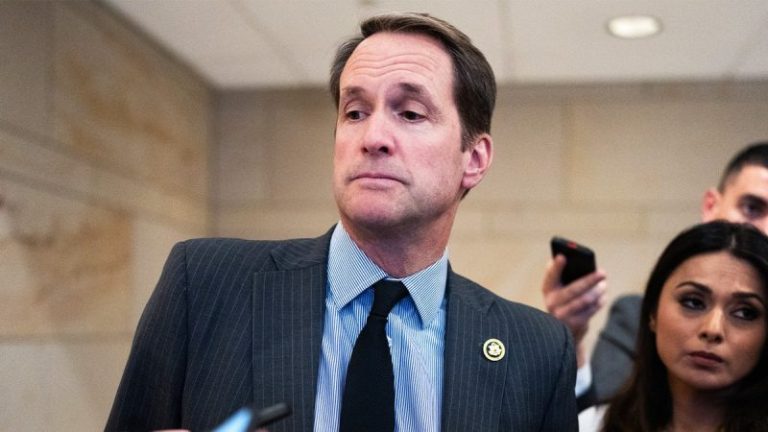
On Sunday, 12 teams will see their national championship hope live on when they hear their name called for the College Football Playoff.

A few days before that, the building blocks for those future championship dreams will be put into place.

The early signing period begins on Wednesday, Dec. 3 and continues through Friday, Dec. 5, with many of the top recruits from across the country putting pen to paper (and, in a rarity in 2025, paper into fax machines) to formalize their relationship with their new college home for the next three or four (or five) years. The three-day stretch has become the primary time for high-school prospects to sign with schools, effectively replacing the once-customary National Signing Day in February.

It will be a frenzied 72 hours, particularly on Wednesday, with hundreds of players signing with schools they’ve been committed to for weeks or months while others unveil their college decisions with news conferences, hats and, if the recent past has taught us anything, live animals.

USA TODAY Sports will be providing live updates from college football’s early signing period. Follow along.

Early signing period live updates

This section will be updated as recruits are announced as signees.

Early signing period: Player rankings for 2026 class

This section will be updated live as players sign.

Here’s the full list of the top 100 players in the 2026 class, according to 247Sports’ composite rankings:

5-star recruits

Jared Curtis (No. 1 QB), Vanderbilt commit
Lamar Brown (No. 1 athlete), LSU commit
Keisean Henderson (No. 2 QB), Houston commit
Jackson Cantwell (No. 1 OT), Miami commit
Zion Elee (No. 1 edge rusher), Maryland commit
Carter Meadows (No. 2 edge rusher), Michigan commit
Faizon Brandon (No. 3 QB), Tennessee commit
Savion Hiter (No. 1 RB), Michigan commit
Dia Bell (No. 4 QB), Texas commit
Chris Henry Jr. (No. 1 WR), Ohio State commit
Tristen Keys (No. 2 WR), Tennessee commit
Rodney Durham (No. 3 edge rusher), Notre Dame commit
Felix Ojo (No. 2 OT), Texas Tech commit
Ezavier Crowell (No. 2 RB), Alabama commit
LaDamion Guyton (No. 4 edge rusher), Texas Tech commit
Immanuel Iheanacho (No. 1 IOL), Oregon commit
Xavier Griffin (No. 1 LB), Alabama commit
Kendre Harrison (No. 1 TE), Oregon commit
Kodi Greene (No. 3 OT), Washington commit
Tyler Atkinson (No. 2 LB), Texas commit
Ian Premer (No. 2 TE), Notre Dame commit
Jalen Lott (No. 3 WR), Oregon commit
Mark Bowman (No. 3 TE), USC commit
Khary Adams (No. 1 CB), Notre Dame commit
Jorden Edmonds (No. 2 CB), Alabama commit
Anthony Jones (No. 5 edge rusher), Oregon commit
Kelvin Obot (No. 4 OT), Utah commit
Richard Wesley (No. 6 edge rusher), Texas commit
Richard Anderson (No. 1 DL), LSU commit
Bralan Womack (No. 1 S), Mississippi State commit
Joey O’Brien (No. 2 S), Notre Dame commit
Jireh Edwards (No. 3 S), Alabama commit
Ekene Ogboko (No. 5 OT), Georgia commit
Brandon Arrington (No. 2 athlete), signs with USC

4-star recruits

35. Kaiden Prothro (No. 4 TE), Georgia commit
36. Jett Washington (No. 4 S), Oregon commit
37. Darius Gray (No. 1 IOL), South Carolina commit
38. Ryder Lyons (No. 5 QB), BYU commit
39. Ethan Feaster (No. 4 WR), USC commit
40. Cederian Morgan (No. 5 WR), Alabama commit
41. Chauncey Kennon (No. 3 S), Florida State commit
42. Khary Wilder (No. 2 DL), Ohio State commit
43. KJ Edwards (No. 3 RB), Texas A&M commit
44. Luke Wafle (No. 7 edge rusher), USC commit
45. Salesi Moa (No. 3 athlete), Tennessee commit
46. Elbert Hill (No. 4 CB), USC commit
47. Davon Benjamin (No. 5 S), Oregon commit
48. Jaimeon Winfield (No. 3 DL), USC commit
49. Davian Groce (No. 6 WR), Florida commit
50. Cincere Johnson (No. 3 LB), Ohio State commit
51. Sam Greer (No. 6 OT), Ohio State commit
52. Jamarion Matthews (No. 4 DL), Alabama commit
53. Nolan Wilson (No. 5 DL), Alabama commit
54. Deuce Geralds (No. 6 DL), LSU commit
55. TJ White (No. 4 LB), Tennessee commit
56. Zyan Gibson (No. 5 CB), Alabama commit
57. Tony Cumberland (No. 7 DL), Oregon commit
58. Justice Fitzpatrick (No. 6 CB), Georgia commit
59. Somourian Wingo (No. 7 WR), Miami commit
60. Bryce Perry-Wright (No. 8 DL), Texas A&M commit
61. Naeem Burroughs (No. 8 WR), Clemson commit
62. Kevin Brown (No. 7 OT), West Virginia commit
63. Devin Jackson (No. 6 S), Oregon commit
64. Jay Timmons (No. 7 CB), Ohio State commit
65. Joel Wyatt (No. 4 athlete), Tennessee commit
66. Jermaine Bishop (No. 5 athlete), Texas commit
67. Trenton Henderson (No. 8 edge rusher), LSU commit
68. Bowe Bentley (No. 6 QB), Oklahoma commit
69. Jett Thomalla (No. 7 QB), Alabama commit
70. Calvin Russell (No. 9 WR), Syracuse commit
71. Blaine Bradford (No. 7 S), Ohio State commit
72. Jake Kreul (No. 9 edge rusher), Oklahoma commit
73. Keenyi Pepe (No. 8 OT), USC commit
74. Jonathan Hatton Jr. (No. 4 RB), Oklahoma commit
75. Caden Harris (No. 8 CB), Georgia commit
76. John Turntine III (No. 9 OT), Texas commit
77. Brian Bonner (No. 5 RB), Washington commit
78. Talanoa Ili (No. 5 LB), USC commit
79. Izayia Williams (No. 6 LB), Florida State commit
80. Tommy Tofi (No. 3 IOL), Oregon commit
81. Ayden Pouncey (No. 8 S), Notre Dame commit
82. J’Zavien Currence (No. 9 S), South Carolina commit
83. Brysten Martinez (No. 10 OT), LSU commit
84. Aaron Gregory (No. 10 WR), Texas A&M commit
85. Kentavion Anderson (No. 10 S), Clemson commit
86. Brayden Rouse (No. 7 LB), Tennessee commit
87. James Johnson (No. 9 DL), Texas commit
88. Jordan Smith (No. 11 S), Georgia commit
89. Jamarion Carlton (No. 10 DL), Texas commit
90. Gabriel Osenda (No. 11 OT), Tennessee commit
91. Aiden Harris (No. 11 DL), South Carolina commit
92. Craig Dandridge (No. 11 WR), Georgia commit
93. Havon Finney (No. 9 CB), LSU commit
94. Chase Campbell (No. 12 WR), Texas Tech commit
95. Jase Mathews (No. 13 WR), Auburn commit
96. Julian Walker (No. 10 edge rusher), Michigan commit
97. Jaquez Wilkes (No. 8 LB), Auburn commit
98. Pierre Dean (No. 11 edge rusher), Georgia commit
99. Derrek Cooper (No. 6 RB), Texas commit
100. Victor Singleton (No. 10 CB), Texas A&M commit

Early signing period: Team rankings 2026 class

This section will be updated live as class rankings shift

Here are the top 10 teams in the 2026 class rankings, according to 247Sports’ Composite rankings:

USC (34 commits)
Alabama (24 commits)
Notre Dame (27 commits)
Oregon (19 commits)
Ohio State (28 commits)
Georgia (28 commits)
Texas (24 commits)
Tennessee (24 commits)
Texas A&M (26 commits)
Miami (29 commits)

To see the full rankings, click here.

This post appeared first on USA TODAY

On about two dozen occasions, the Supreme Court had to step in during President Trump’s second term because many inferior courts refused to accept that he is the president. The justices must do so again, after lower courts invalidated the appointments of acting U.S. attorneys Alina Habba of the District of New Jersey and Lindsey Halligan of the Eastern District of Virginia.

The Senate has a tradition that is over a century old called the blue slip. Home-state senators have an extraordinary power: the ability to veto U.S. marshals, U.S. attorneys and U.S. district judges. In order for nominees to proceed, home-state senators must return a blue slip approving the nominations. Senators will never let this power go, so administrations have to bear the consequences. In New Jersey, leftist Senators Cory Booker and Andy Kim have refused to allow the nomination of Alina Habba to serve as U.S. attorney. Likewise, in Virginia, their fellow leftist Senators Tim Kaine and Mark Warner will not acquiesce to the nomination of Lindsey Halligan to serve as U.S. attorney. As such, Attorney General Pam Bondi appointed Habba and Halligan to 120-day terms to serve on an interim basis, as 28 U.S.C. § 546 allows. Halligan replaced another interim prosecutor, Eric Siebert, who departed shortly before his 120 days lapsed.

After 120 days have expired, leftists asserted that Bondi can make no more appointments; only district judges can. The Executive Branch, this argument goes, has no say whatsoever after 120 days. This result would lead to a scheme where leftist senators can block President Trump’s nominees. Then, courts composed mostly of leftist judges in these blue states can install leftist puppet U.S. attorneys, and the Executive Branch must grin and bear it, just as with the blue slip process.

The 120-day limit first appeared in a statute in 1986. During the years of Presidents Clinton and Bush, attorneys general made successive 120-day appointments under the statutory scheme in effect from 1986-2006, the same scheme as today. Yet, Clinton Judge Cameron Currie of South Carolina did not view this historical evidence as persuasive when she invalidated Halligan’s appointment. Halligan secured indictments against New York Attorney General Letitia James for mortgage fraud and former FBI Director James Comey for false statements to and obstruction of Congress concerning the Russiagate hoax.

Those indictments are, for the moment, invalid. Currie’s opinion drips with disdain for Halligan, noting Halligan’s lack of prosecutorial experience. This issue is irrelevant to the legal question. Halligan, under Currie’s analysis, could have had three decades of prosecutorial experience, and her appointment would still have violated the Constitution’s Appointments Clause. Currie also quoted another irrelevant piece of evidence: President Trump’s social media post demanding Bondi move faster on prosecutions. Whether Halligan’s appointment is valid has nothing to do with that post. Its inclusion thus has no valid legal purpose.

The Appointments Clause vests appointment power in a president, by and with the advice and consent of the Senate, for principal officers. Congress can also require the advice and consent process to apply to inferior officers, and it did so with respect to U.S. attorneys. As such, presidents nominate U.S. attorneys, and the Senate confirms them. When there are vacancies, attorneys general can fill them for 120 days at a time, and a separate part of Section 546 allows for district courts to make appointments after the 120 days have expired. The Constitution grants department heads and courts the power to appoint inferior officers. District judges, for example, appoint magistrate judges.

Section 546 does not vest the authority to appoint U.S. attorneys exclusively in district courts. Under the reading of the judges who have invalidated the appointments of Habba and Halligan, President Trump’s attorney general could not make a 120-day appointment, either. The text of Section 546 does not specify a 120-day appointment per president. When one president’s attorney general makes a 120-day appointment, these judges absurdly prevent any future president’s attorney general from doing so in that district. District judges, therefore, have all the power until the Senate confirms a nominee one of these years or decades.

Fortunately, the issue now is ripe for Supreme Court review. This week, a Third Circuit panel ruled that Habba’s appointment is invalid. The justices should decide the cases together, even though the Fourth Circuit has not ruled on the Halligan appeal. There is only one circuit with all states that have Republican senators: the Fifth. This district court control could continue into the terms of a President Vance.

The easiest way to correct the lower court’s error is for the Supreme Court to hold that Section 546 allows attorneys general to make more than one 120-day appointment. Alternatively, the justices could hold that Section 546’s stripping of appointment power from the Executive Branch with respect to its officials violates the separation of powers.

In the face of immense criticism from Democrat politicians, the leftist media, and academic elites, the justices have intervened time and again to thwart unlawful interference by resistance lower courts. Because of the Supreme Court’s intervention on issues ranging from the ability to fire Executive Branch employees to the ability of the president to revoke temporary protected status from illegal immigrants, President Trump has been able to do his job far more effectively.

Bondi, Solicitor General John Sauer, and their team of stellar lawyers have amassed a success rate of over 90% at the Supreme Court. The justices must restore Habba and Halligan to preserve the separation of powers and prevent U.S. attorneys from being servants of district courts instead of presidents.

This post appeared first on FOX NEWS

Over the course of the next three days, coaching staffs around the country will land commitments from players that they hope are the missing pieces to their national championship puzzle.

The December early signing period has become college football’s de facto signing day, as most, if not all, of the top recruits in the country will sign during the period so they can enroll with their respective programs in the spring semester. The early signing period runs from Wednesday, Dec. 3 through Friday, Dec. 5.

Lincoln Riley and USC football enter the early signing period with the top 2026 recruiting class, headlined by 247Sports’ Composite ranking’s No. 5 overall-ranked prospect, offensive tackle Keenyi Pepe. Defending national champion Ohio State, the top-ranked team in the latest College Football Playoff rankings, currently has the third-best class in the Big Ten, only behind the Trojans and Oregon.

Rankings of the team’s overall recruiting class are expected to change over the next couple of days, as staffs hope to flip commitments to their programs. One early winner of this is Clark Lea and Vanderbilt, which flipped the commitment of five-star quarterback Jared Curtis on Tuesday, Dec. 2 from Georgia.

College football recruiting team rankings 2025

This section will be updated throughout the early signing period. Last updated at 9 a.m. ET on Wednesday, Dec. 3.

1. USC (No. 1 Big Ten)

Top offensive recruit: No. 5 overall recruit Keenyi Pepe (No. 1 ranked OT)
Top defensive recruit: No. 54 overall recruit Jaimeon Winfield (No. 3 ranked DL)
Commits: 34
Five-stars: One
Four-stars: 20
Top 100 players: 8
Points: 304.15

2. Alabama (No. 1 SEC)

Top offensive recruit: No. 29 overall recruit Ezavier Crowell (No. 2 ranked RB)
Top defensive recruit: No. 13 overall recruit Xavier Griffin (No. 1 ranked EDGE)
Commits: 24
Five-stars: 4
Four-stars: 9
Top 100 players: 10
Points: 300.40

3. Notre Dame

Top offensive recruit: No. 21 overall recruit Ian Premer (No. 1 ranked TE)
Top defensive recruit: No. 8 overall recruit Rodney Dunham (No. 2 ranked EDGE)
Commits: 27
Five-stars: 4
Four-stars: 19
Top 100 players: 5
Points: 298.81

4. Oregon (No. 2 Big Ten)

Top offensive recruit: No. 25 overall recruit Immanuel Iheanacho (No. 2 ranked IOL)
Top defensive recruit: No. 19 overall recruit Antony Jones (No. 5 ranked EDGE)
Commits: 19
Five-stars: 4
Four-stars: 12
Top 100 players: 10
Points: 297.08

5. Ohio State (No. 3 Big Ten)

Top offensive recruit: No. 32 overall recruit Chris Henry Jr. (No. 3 ranked WR)
Top defensive recruit: No. 40 overall recruit Cincere Johnson (No. 3 ranked LB)
Commits: 28
Five-stars: 1
Four-stars: 21
Top 100 players: 6
Points: 295.31

6. Georgia (No. 2 SEC)

Top offensive recruit: No. 48 overall recruit Kaiden Prothro (No. 4 ranked TE)
Top defensive recruit: No. 28 overall recruit Valdin Sone (No. 2 ranked DL)
Commits: 28
Five-stars: 1
Four-stars: 21
Top 100 players:
Points: 293.75

7. Texas (No. 3 SEC)

Top offensive recruit: No. 16 overall recruit Jeremaine Bishop (No. 2 ranked ATH)
Top defensive recruit: No. 38 overall recruit Tyler Atkinson (No. 2 ranked LB)
Commits: 25
Five-stars: 3
Four-stars: 13
Top 100 players: 5
Points: 292.12

8. Tennessee (No. 4 SEC)

Top offensive recruit: No. 2 overall recruit Faizon Brandon (No. 2 ranked QB)
Top defensive recruit: No. 41 overall recruit TJ White (No. 4 ranked LB)
Commits: 24
Five-stars: 2
Four-stars: 12
Top 100 players: 7
Points: 289.65

9. Texas A&M (No. 5 SEC)

Top offensive recruit: No. 46 overall recruit KJ Edwards (No. 3 ranked RB)
Top defensive recruit: No. 26 overall recruit Tristan Givens (No. 6 ranked EDGE)
Commits: 26
Five-stars: 1
Four-stars: 22
Top 100 players: 4
Points: 284.11

10. Miami (No. 1 ACC)

Top offensive recruit: No. 7 overall recruit Jackson Cantwell (No. 2 ranked OT)
Top defensive recruit: No. 72 overall recruit Keshawn Stancil (No. 5 ranked DL)
Commits: 29
Five-stars: 1
Four-stars: 19
Top 100 players: 5
Points: 280.25

This post appeared first on USA TODAY