Archive

2025

Browsing

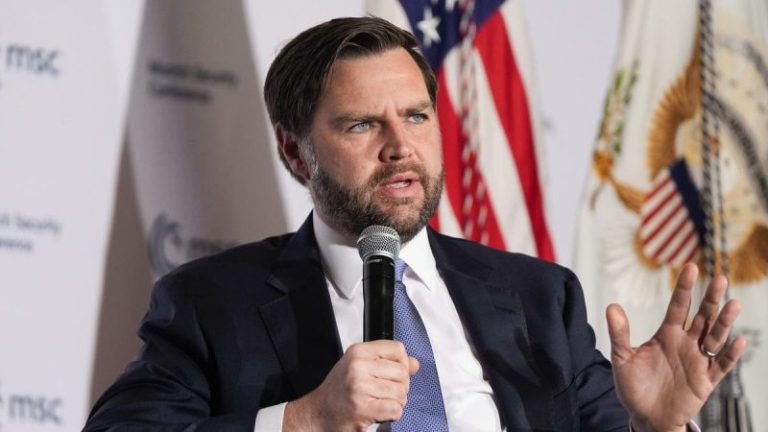
Vice President JD Vance suggested the U.S. will not intervene in the ongoing conflict between India and Pakistan, arguing the dust-up is ‘fundamentally none of our business.’ 

‘We can’t control these countries,’ Vance told Fox News’ Martha McCallum on ‘The Story’ Thursday. ‘We’re not going to get involved in the middle of a war that’s fundamentally none of our business and has nothing to do with America’s ability to control it.’

Vance’s comments came after President Donald Trump offered his help to repair relations between the two neighbors in Asia.

‘Oh, it’s so terrible. My position is, I get along with both,’ Trump told reporters Wednesday. ‘I know both very well, and I want to see them work it out. I want to see them stop. And hopefully they can stop now. They’ve got a tit-for-tat, so hopefully they can stop now. But I know both. We get along with both countries very well. Good relationships with both. And I want to see it stop. And if I can do anything to help I will. I will be there as well.’

Vance, however, said the U.S. does not believe the issue will devolve into a nuclear conflict as he called on both sides to de-escalate. 

‘America can’t tell the Indians to lay down their arms. We can’t tell the Pakistanis to lay down their arms. And so we’re going to continue to pursue this thing through diplomatic channels. Our hope and our expectation is that this is not going to spiral into a broader regional war or, God forbid, a nuclear conflict.’

The vice president’s comments come after India attacked nine sites in longtime foe Pakistan’s territory in response to a terrorist attack that killed 26 mostly Indian tourists in the disputed Kashmir region. 

India said it had intelligence that a terrorist group based in Pakistan was responsible for the attack.

Meanwhile, Pakistan’s military reported that the strikes killed at least 26 people – including women and children – and claimed India’s action amounted to an ‘act of war.’ Pakistan said it shot down five Indian fighter jets in response, claiming that the move was justified given India’s strike. 

India has since launched drones into Pakistan, which its military forces say they shot down. India has also called up its reservists to ready for the potential of a protracted conflict. 

Fox News Digital has reached out to the White House for comment on whether Trump and Vance’s views on the conflict align.

Vance has emerged as the standard-bearer for the Trump administration’s non-interventionist wing, giving voice to an American-first foreign policy that breaks sharply from GOP orthodoxy and has been labeled isolationist by hawkish critics. 

He claimed the U.S. was ‘making a mistake’ when it began the offensive campaign against the Houthis in March. 

‘I think we are making a mistake,’ Vance wrote in a private Signal chat, inadvertently leaked to a journalist and later published by The Atlantic.

‘I am not sure the president is aware how inconsistent this is with his message on Europe right now.’ The commercial ships attacked in the Red Sea are largely European.

Vance has favored diplomatic negotiations with Iran to thwart its nuclear program and was on the attack at a White House meeting with Ukrainian President Volodymyr Zelenskyy in February. 

‘Right now you guys are going around forcing conscripts to the front lines because you have manpower problems,’ Vance told Zelenskyy. ‘You should be thanking the president for trying to bring an end to this conflict,’ he added during a meeting that devolved into a near-shouting match.

Trump, for his part, is seemingly behind Vance and his restraint-minded approach, naming the vice president as a potential successor to the presidency in an NBC interview last week. 

‘You look at Marco, you look at JD Vance, who’s fantastic,’ Trump said on the future of the top of the Republican ticket, referring to Vance and Secretary of State and interim national security advisor Marco Rubio.

‘Certainly you would say that somebody’s the V.P., if that person is outstanding, I guess that person would have an advantage.’

This post appeared first on FOX NEWS

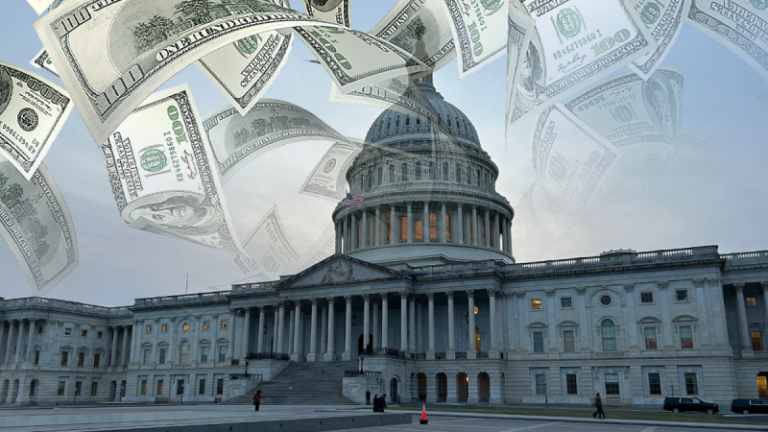
House Republicans are trying to find the right cocktail of tax reductions and new revenue to pass President Donald Trump’s ‘big, beautiful bill’ by Memorial Day. 

No taxes on tips is politically popular and is a key campaign promise of the president, but a coalition of deficit hawks could block that if the GOP fails to find revenue to cover the gap. 

That is why the president pushed House Speaker Mike Johnson, R-La., this week to raise taxes on the super rich. 

Trump is considering allowing the rate on individuals making $2.5 million or more to increase by 2.6%, from 37% to 39.6%, Fox News Digital reported Thursday.

Such a move would resonate with working-class Americans who elected the president. However, many conservatives have signed pledges for years against raising any taxes. 

Trump wrote in a Truth Social post Friday morning, ‘The problem with even a ‘TINY’ tax increase for the RICH, which I and all others would graciously accept in order to help the lower and middle income workers, is that the Radical Left Democrat Lunatics would go around screaming, ‘Read my lips,’ the fabled Quote by George Bush the Elder that is said to have cost him the Election. NO, Ross Perot cost him the Election! In any event, Republicans should probably not do it, but I’m OK if they do!!!’

A deduction for state and local taxes (SALT) also remains unresolved as a group of Republican representatives from New York threaten to vote against the latest proposal. Meantime, a debate rages about health assistance.

House Budget Committee Chairman Jodey Arrington, R-Texas, accused Democrats of trying to ‘paralyze our conference’ and ‘frighten’ Republicans about Medicare and Medicaid cuts. Specifics are key.

‘Until we see what comes out of the committee, I don’t know what’s on and what’s off,’ said Freedom Caucus Chairman Andy Harris, R-Md.

This post appeared first on FOX NEWS

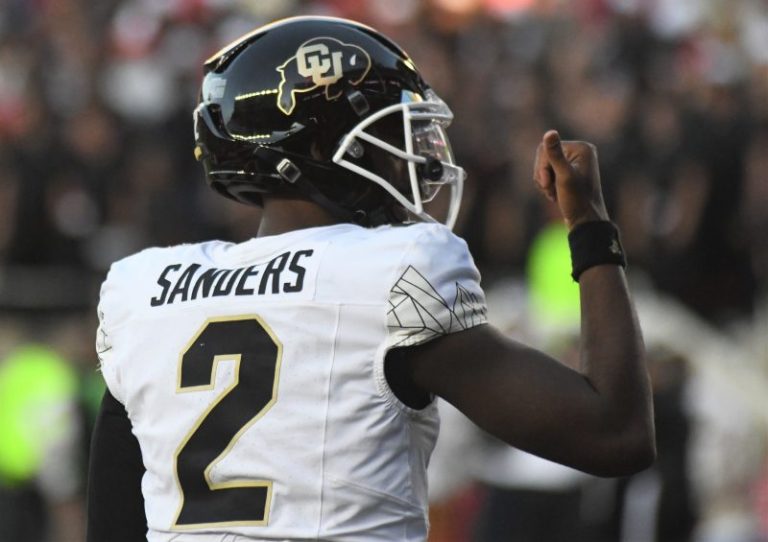
Listen to some of the key voices from inside NFL draft war rooms. Let them tell us why Shedeur Sanders, projected by plugged-in analysts as a surefire first-round pick, became the man with arguably the most precipitous slide in draft history.

What the heck happened?

The former Colorado quarterback, son of Hall of Famer Deion Sanders, lasted until the 5th round, when the Cleveland Browns drafted him 144th overall.

“It’s never strictly football,” contended a high-ranking decision-maker for an NFL team.

“I think his dad’s involvement hurt him,” a high-level executive from another team maintained. “Some of the things his dad said, I think that weighed on people’s minds.”

“It was talent-based,” insisted the top personnel executive from an NFC team. “There were other factors, but you can’t chalk it all up to that.”

The three executives who shared those perspectives were among several who agreed to speak to USA TODAY Sports in the days following the draft, assessing Sanders’ tumble. All spoke on the condition of anonymity, not wanting to be identified due to the sensitivity of the issue – which undoubtedly raises questions about the subjectivity of the NFL draft process and by extension the influence of cultural bias.

“We liked Shedeur,” added the high-ranking decision-maker, whose team was clearly in the market to draft a quarterback. “But you can’t separate the other stuff from the physical abilities.”

“It’s not about being a brand,” the decision-maker added. “It’s about being a teammate and earning a job.”

We knew for months that Sanders, poised to report to the Browns rookie minicamp this weekend, represented one of the draft’s biggest storylines. He was clearly the most polarizing player in the draft, as suggested during and since the three-day event by the barrage of opinions, analysis and yes, conspiracy theories hatched, which followed intense scrutiny and controversy in the weeks leading up to the late-April draft.

Yet even with that, few, if any, in the NFL universe – including some charged to evaluate prospects for NFL teams – suspected that he would last until the third day of the draft.

“I didn’t think ‘first-round,” the decision-maker added. “But I thought higher than fifth.”

‘We never had him as a first-round pick’

Of course, where Sanders ranked on the draft board of any given team reflects the traditional crapshoot nature of the draft and nuances that include variations in standards of evaluation for one team versus another. When it comes to the draft, consensus often is not the ticket after the blue-chip players from any given crop are accounted for.

One high-ranking executive described the marks his team puts on prospects as three separate grades. In addition to grades for pure football and a medical grade (which considers the effect of past injuries), there’s an “intensity” grade that covers intangibles. Standardized cognitive testing used by the NFL, off-the-field issues, culture fit concerns are factors weighed in the latter grade.

Sanders remained on that team’s board, but the executive said, “We never had him as a first-round pick.”

However, another high-ranking executive from an AFC team that was not in the market to draft a quarterback projected Sanders as a possible first-round pick because of the premium on quarterbacks. He said Sanders did not rank among the top 32 players on their board for overall grades but projected as a “capable starter.”

“Usually, that guy goes in the first round,” he said. “As a running back, you’d think second or third round. But it’s different for a quarterback. The quarterback position is more valuable. We expected him to go early.”

Sanders, he added, was clearly rated as the second-best quarterback prospect on their board after Cam Ward, who was drafted No. 1 overall by the Tennessee Titans. As the draft unfolded, though, Ole Miss product Jaxson Dart (Giants, 25th overall), Louisville’s Tyler Shough (Saints, 40th), Alabama’s Jalen Milroe (Seahawks, 92nd) and Oregon’s Dillon Gabriel (Browns, 94th) were all drafted before Sanders.

Interestingly, the Browns passed on Sanders in selecting Gabriel. After Day 2 of the draft, Browns general manager Andrew Berry said “fit comes into play” in explaining why the team passed on Sanders.

The next day, Berry rationalized the decision to draft Sanders in the context of value acquired by taking a quarterback at that point in the draft.

Who knows? If Sanders blossoms into the answer for a franchise that has floundered repeatedly in seeking a franchise quarterback, his bargain-basement price for draft capital and cap dollars (he will count for less than $1 million against the salary cap), it would be quite the counter to the enormous price paid ($254 million guaranteed, three first-round picks) for the bust that is Deshaun Watson, injury mishaps or not.

The AFC team’s executive who saw Sanders as a first-rounder said that his team had no formal interaction with the quarterback during the draft process, opting not to put resources in evaluating a prospect they viewed as a starter rather than backup. Although they were aware of reports from other teams – such as the story that surfaced during the combine when an assistant coach from another team declared that Sanders was “arrogant” during what he rated as the worst interview he ever encountered – there were no knocks to document from first-hand experience.

Conversely, the executive from an NFC team offered a scathing rebuke of Sanders. He said Sanders refused to interview with his team, which has an established quarterback in his prime. He said that in turning down the interview at the combine, Sanders told one of his team’s scouts: “You’ve already got a quarterback and you’re not picking in the top 5.”

Sanders’ representatives did not respond to a request for comment.

An unrealistic view of value

It’s typical for teams to conduct 15-minute, formal interviews with top prospects at the combine or all-star bowl games, even if they have no plans to draft them. It’s an opportunity for teams to become familiar with players and file impressions, perhaps for future reference, such as with free agency or trade talks.

That exchange, though, also underscores something else that multiple voices from teams expressed: Sanders had an unrealistic view of his value.

In any event, in this case the executive said Sanders’ refusal to interview wasn’t a factor in his projection of the quarterback as a third or fourth-round pick. Nor was Sanders’ decision not to work out at the combine a factor, he insisted, while mentioning that in 2024, Caleb Williams didn’t work out at the combine before becoming the No. 1 pick overall.

“We grade the position the same every year,” he said.

While he praised Sanders for his accuracy and toughness, he considered his arm strength as “good, not great” and questioned his process in reading progressions. Sanders led the nation with a 74% completion rate in 2024 and in two seasons at Colorado fired 64 touchdown passes (13 interceptions). The executive said the high number of sacks Sanders absorbed (94 as a junior and senior) couldn’t be blamed solely on a suspect offensive line. Sanders, he maintained, too often held onto the football for too long while locking in on targets.

Although he had reservations about some of the non-football questions, he doubled down on the talent-based assessment by referencing a controversial Cincinnati Bengals pick from the 2017 draft.

The executive said: “Joe Mixon slapped a woman on TV and still got drafted in the second round.”

In other words, the executive underscored the notion that talent so often eclipses other factors when it comes to opportunity.

Still, the standards are typically different for a quarterback pegged to be the face of a franchise. Sanders’ supporters, considering race, will point to Baker Mayfield and Johnny Manziel, as examples in recent years of flashy white quarterbacks who became first-round picks. By the same token, one of the executives pointed to a Black quarterback, Cam Newton, like Mayfield a No. 1 pick overall, as a cautionary example.

The son-of-coach score usually carries weight

Before he was drafted in 2011, Newton raised eyebrows when he maintained that he wanted to become “an entertainer and an icon.”

More recently, Newton fueled buzz by stating that when he got to the Carolina Panthers he arrived to a “locker room of losers.”

It’s a stretch to project that mentality on Sanders. But one team decision-maker contends that the quarterback’s persona rubs him as a “look-at-me” form of selfishness – even in an age where players are more prone to social media exploits and creative on-the-field celebrations.

“The quarterback’s already getting the money and attention,” the decision-maker said. “They don’t have to make more attention. It doesn’t play well with your team.

“All the red flags are there. If it was a different position, it probably wouldn’t have the same level of importance.”

For Sanders, it’s even deeper than being a quarterback. Another layer of standard is attached to his famous father.

This seems a bit sticky. On one hand, you’d think that prospects (Shedeur’s older brother, Shilo, a safety, signed as an undrafted free agent with the Tampa Bay Buccaneers) raised by one of the greatest athletes of his era would have traits instilled in them that would aid in their pursuit of pro football careers. And throughout their lives, they’ve been exposed to resources (like Shedeur calling Tom Brady for advice) that many could only dream of. Also, the father happens to be an immensely successful college coach.

Typically, son-of-coach scores well on the NFL evaluation meter. Yet one NFL executive viewed Coach Prime’s impact on Shedeur’s draft process as a detriment.

Sure, some might fret about the possibility of the Hall of Famer publicly skewering a team if adversity strikes with his son. Deion has spoken in the past about teams he wouldn’t want Shedeur to play for and opined on why some teams repeatedly pick high in the draft.

Yet the team executive maintains that Shedeur’s draft stock suffered because of the approach to the draft process.

“I think he had some bad advice from his father,” the executive said. “He needed a traditional agent like other players. He and his dad, they felt like they didn’t need that. I think that affected him.”

That’s debatable, to some degree. Yet an agent might have urged Shedeur to employ a different strategy for dealing with teams during the draft process.

Shortly after he was drafted, Sanders, without being specific, owned up to regrets.

“I feel like in life, there’s always a way I can improve,” he told Cleveland media during a conference call. “I’m able to improve. And some things that I (did) seemed right at the time. I could’ve went about it in a different way.”

The executive whose team pegged Sanders as a first-round pick said he hopes the young quarterback will learn a valuable lesson about humility from the draft process.

“You’re not your dad,” he added. “You don’t have that type of ability.”

Another key executive also threw some shade at the Hall of Fame father.

“The way he reacted as the draft unfolded, I thought he handled himself well,” he said of Shedeur. “The best thing to happen might be to get away from his father and be on his own.”

Then again, with so many strong opinions about his ability, traits and process, too, Sanders embarks on his NFL journey with no shortage of motivational fuel to prove that some particular NFL power players were so wrong.

Follow Jarrett Bell on social media: @JarrettBell

This story was updated to add new information.

This post appeared first on USA TODAY

So, is he a Cubs or White Sox fan?

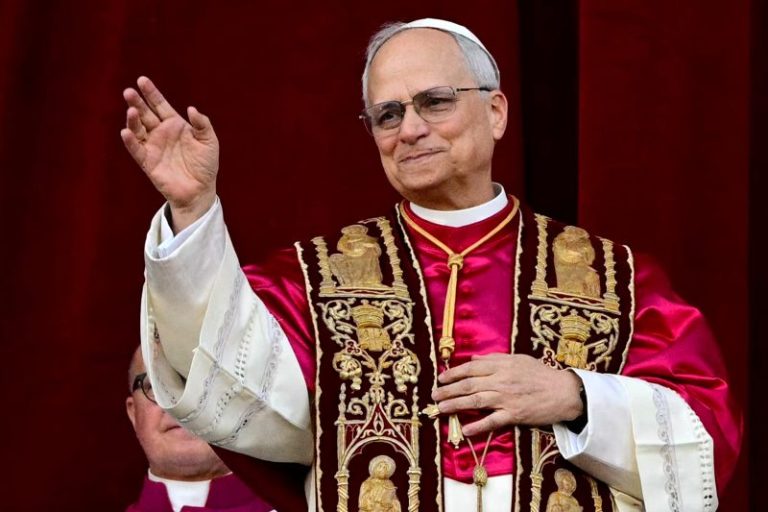
As the world welcomed the first pope from the United States in Robert Prevost on Thursday, Americans have been eagerly looking to find out about the life of one of their own. Pope Leo XIV was born in Chicago, so that naturally begs the question what sports team the new pontiff roots for. It makes sense for him to cheer on his hometown teams, but it’s certainly different in baseball as the city boasts both the Cubs and White Sox.

The pope hails from the South Side of the city − White Sox territory − but the Cubs are a major brand that easily could have swooped him up. There have been some reports of which side Prevost leans, but a family member has given sports fans the answer they’ve been seeking.

Is Pope Leo XIV a Cubs or White Sox fan?

According to his brother, Pope Leo XIV is loyal to the South Side. John Prevost revealed his brother is a White Sox fan in an interview with WGN TV.

“He was never, ever a Cubs fan. So I don’t know where that came from. He was always a Sox fan,” John Prevost said.

The pope’s sibling added they grew up in a split household, but not with the White Sox. His mother was a Cubs fan and his father was a fan of the St. Louis Cardinals.

The Chicago Sun-Times obtained a photo from a family friend of Pope Leo at a World Series game in 2005, a season that saw the club win its first championship since 1917.

White Sox troll Cubs over Pope Leo XIV

The early belief was the pope was a Cubs fan based off a report from ABC News not long after the announcement was made.

However, the initial report was rebuffed, and that makes it kind of awkward for the Cubs. The team seemed to buy in on the belief, and on the iconic Wrigley Field sign, made it known ‘he’s a Cubs fan’ in a congratulatory message.

Yikes. If it’s any consolation for Cubs fans, at least the pope’s favorite team is coming off a historically awful 2024 season and is in last place in the AL Central with the second-worst record in baseball this season.

Of course, the White Sox couldn’t pass up the opportunity to joke about their crosstown rival. The team put up a message on the video board at Rate Field just like the Cubs did, only noting the pope is a Sox fan.

The USA TODAY app gets you to the heart of the news — fastDownload for award-winning coverage, crosswords, audio storytelling, the eNewspaper and more.

This post appeared first on USA TODAY
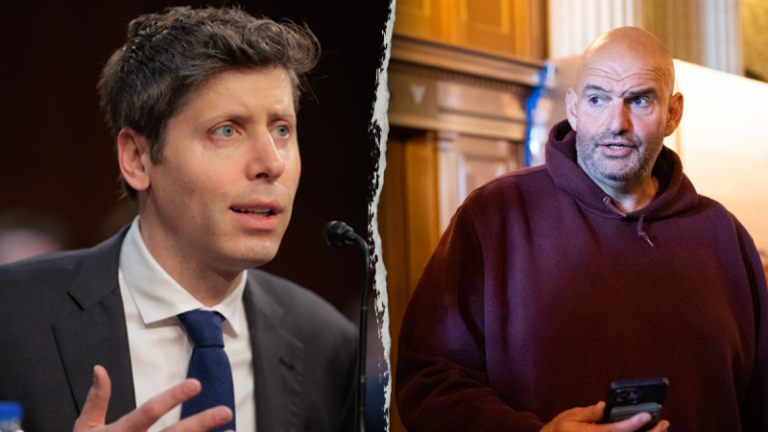
Sen. John Fetterman, D-Pa., was one of the final senators to question OpenAI chief Sam Altman during Thursday’s Senate Commerce Committee hearing, and the subject of both Three Mile Island and the Democrat’s penchant for Carhartt outerwear came up.

Fetterman said that as a senator he has been able to meet people with ‘much more impressive jobs and careers’ and that due to Altman’s technology, ‘humans will have a wonderful ability to adapt.’

He told Altman that some Americans are worried about AI on various levels, and he asked the executive to address it.

In response, Altman said he appreciated Fetterman’s praise.

‘Thank you, Senator, for the kind words and for normalizing hoodies in more spaces,’ he said.

‘I love to see that. I am incredibly excited about the rate of progress, but I also am cautious,’ Altman said about the Democrat’s particular question.

‘I think this is beyond something that we all fully yet understand where it’s going to go. This is, I believe, among the biggest … technological revolutions humanity will have ever produced. And I feel privileged to be here.’

Fetterman also questioned Microsoft Vice Chair Brad Smith on concerns over the proliferation of data centers making utility costs for Pennsylvanians and Americans go up.

‘For me, energy security is national security,’ he said, citing the use of renewable energy and fossil fuels. 

‘My focus is also that I want to make sure that ratepayers in Pennsylvania really hit too hard for throughout all of this,’ he said, as many mid-Atlantic states are seeing an increase in land purchases for data centers that new tech like AI requires.

While the construction of such centers does create jobs, he said, those roles are often temporary.

He went on to note how Microsoft is seeking to revive a reactor on Three Mile Island in Dauphin County, which infamously melted down decades ago, and carbon-neutral means to power data centers and more.

‘I’ve been tracking the plan to reopen TMI (Three Mile Island). My own personal story is I had to grab my hamster and evacuate during the meltdown in 1979,’ he said.

‘You might assume that I was anti-nuclear, and I actually am very supportive of nuclear because that’s an important part of the stack if you really want to address climate change.’

‘But I know that’s to power Microsoft’s data center. And I really appreciate that, but if I’m saying now, if we’re able to commit that, the power purchase agreement, it’s not going to raise electricity for Pennsylvania families.’

Smith replied that in data center construction, Microsoft plans to invest in the power grid an equivalent amount to the electricity it will use so that it is not tapping into constricted supply.

‘No. 2, we’ll manage all of this in a way that ensures that our activity does not raise the price of electricity to the community,’ he said.

This post appeared first on FOX NEWS

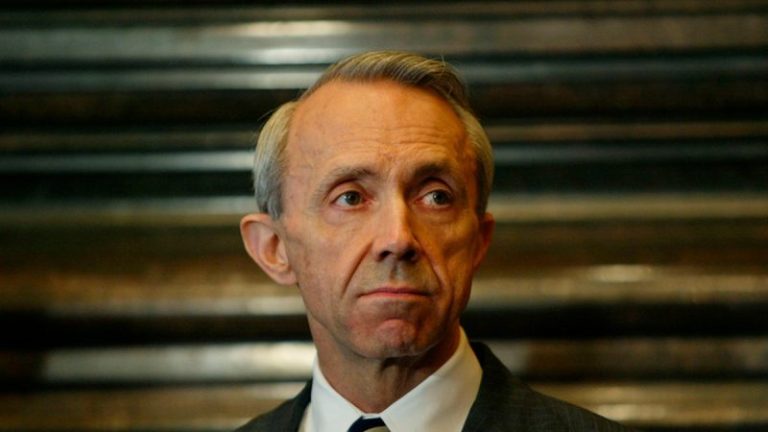
Former Supreme Court Justice David Souter died Thursday at his home in New Hampshire at the age of 85, the Court announced Friday.

‘Justice Souter was appointed to the Court by President George H.W. Bush in 1990, and retired in 2009, after serving more than 19 years on the Court,’ it said in a statement.

‘Justice David Souter served our Court with great distinction for nearly twenty years. He brought uncommon wisdom and kindness to a lifetime of public service. After retiring to his beloved New Hampshire in 2009, he continued to render significant service to our branch by sitting regularly on the Court of Appeals for the First Circuit for more than a decade. He will be greatly missed,’ Chief Justice John Roberts said.

Souter was described by the Associated Press as a ‘reliably liberal vote on abortion, church-state relations, freedom of expression and the accessibility of federal courts.’

Upon his retirement in 2009, President Barack Obama chose Sonia Sotomayor to take his seat.

The Supreme Court said Souter was born in Melrose, Mass., on Sept. 17, 1939. 

He graduated from Harvard College and also received degrees from Oxford University and Harvard Law School.

Souter then rose up the ranks to become Attorney General of New Hampshire in 1976.

‘In 1978, he was named an Associate Justice of the Superior Court of New Hampshire, and was appointed to the Supreme Court of New Hampshire as an Associate Justice in 1983. He became a Judge of the United States Court of Appeals for the First Circuit on May 25, 1990,’ the Supreme Court said Friday.

‘In addition to hearing cases on the First Circuit, Justice Souter participated in civics education curriculum reform efforts in New Hampshire during his retirement,’ it also said. 

Fox News’ Bill Mears and Shannon Bream contributed to this report.

This post appeared first on FOX NEWS

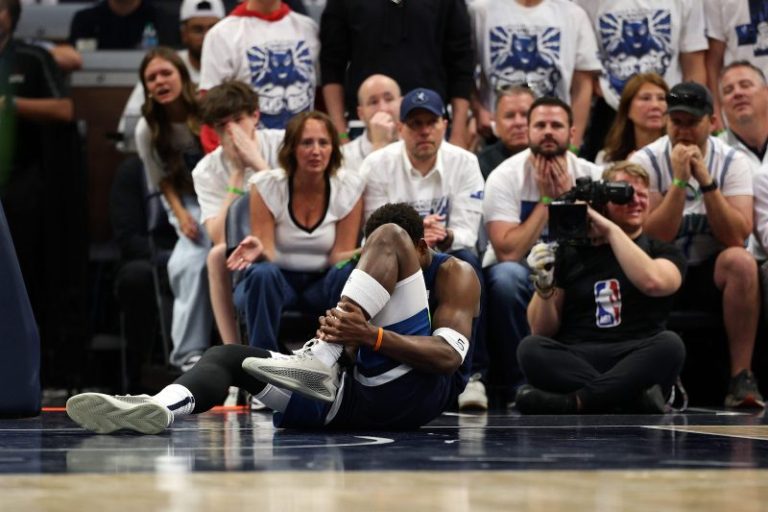
Edwards grabbed the ankle while on the court. The Timberwolves called timeout, and Edwards limped to the locker room with members of the team’s training staff.

Though the team listed Edwards as questionable to return to the game, he tested the ankle at halftime and was in the lineup to start the third quarter. Just before the third quarter began, the team had said he was available to return.

Edwards had seven points, four rebounds, three assists and three steals and the Timberwolves were ahead 37-19 when he left the game. Returning for the second half, he finished the game with 20 points, nine rebounds, five assists and three steals in 34 minutes as the Timberwolves cruised to a 117-93 win.

‘Feeling great, feeling great,” Edwards told TNT after the game when asked about his ankle.

Injuries continue to play a role in the playoffs. The Cleveland Cavaliers were without Darius Garland, Evan Mobley and De’Andre Hunter in their Game 2 loss to the Indiana Pacers, and Golden State Warriors star Steph Curry is out at least a week with a grade 1 left hamstring strain.

This story has been updated with new information.

The USA TODAY app gets you to the heart of the news — fastDownload for award-winning coverage, crosswords, audio storytelling, the eNewspaper and more.

This post appeared first on USA TODAY
The quest for the top prize in collegiate men’s lacrosse is underway. Over the weekend the remaining 16 teams will be in action, with the ultimate aim of lifting the national championship trophy on Memorial Day in Foxborough, Massachusetts.

Regular followers of the sport will notice a few name-brand programs missing from the NCAA tournament field. Long-time powers Virginia and Johns Hopkins as well as past champions Denver and Loyola (Md.) didn’t make the cut. But that doesn’t necessarily mean we’ll add a new member to the first-time champions club. Most of the seeded teams have won titles before, though it’s been a while for some.

Here’s the weekend schedule, with seeded teams playing on their home fields. The winners will advance to quarterfinal sites next weekend in Hempstead, New York, and Annapolis, Maryland.

NCAA lacrosse tournament title contenders

In a parallel with the recently concluded men’s basketball tournament, there is a team seeking a rare three-peat but facing a difficult path to achieving it. Two-time defending champion Notre Dame is seeking a third title in a row, a feat last accomplished by Princeton from 1996-98. As mentioned, however, it will be a tough path for the Fighting Irish, who did enough to make the field but not enough to earn a seed. They’ll start their title defense on the road at Big Ten tournament champ Ohio State, coincidentally the school that kept the Irish from claiming the crown in football. While it’s undoubtedly the most compelling matchup in the round of 16, the committee did neither team a favor with this pairing. The Buckeyes picked up a 10-9 win at Notre Dame back on March 8, but a season-opening loss to Utah damaged OSU’s overall seed. The game in Columbus isn’t the only rematch of the weekend. Harvard picked up a 15-14 win at Syracuse back on Feb. 22, a result that ultimately helped the Crimson edge out Army for the last at-large spot in the field.

NCAA lacrosse tournament top players

The undisputed star of the sport this year is Cornell’s CJ Kirst. The Tewaaraton Award favorite broke the Division I record for career goals earlier in the season. He enters the tournament with 98 points on 68 goals and 30 assists thus far in the campaign, averaging a lofty 6.53 points per contest. With the help of his friends on the Big Red attack unit, Ryan Goldstein and Michael Long, Cornell leads the nation in scoring at 16.47 goals a game. But one shouldn’t overlook reigning Championship Weekend most outstanding player Chris Kavanagh, back in the tournament for Notre Dame. Other names to know include Syracuse attackman Joey Spallina, Maryland goalkeeper Logan McNaney and Duke do-everything midfielder Andrew McAdorey.

Most likely first-time NCAA lacrosse tournament champion

Ohio State and Penn State have both been to Championship Weekend but have yet to bring home the trophy. Unfortunately, at least one of them won’t be in Foxborough, as they’d be slated to meet in the quarterfinal round should they survive this weekend. Like the Buckeyes, however, the Nittany Lions have a tough draw of their own against a high-scoring Colgate squad that got hot at the right time in the Patriot League tournament.

NCAA lacrosse tournament schedule

(All times Eastern)

First round

Saturday, May 10

Richmond (13-3) at North Carolina (10-4), noon

Towson (11-5) at Princeton (12-3), 2:30 p.m.

Colgate (10-7) at Penn State (10-4), 5 p.m.

Georgetown (11-4) at Duke (12-5), 7:30 p.m.

Sunday, May 11

Notre Dame (8-4) at Ohio State (14-2), noon

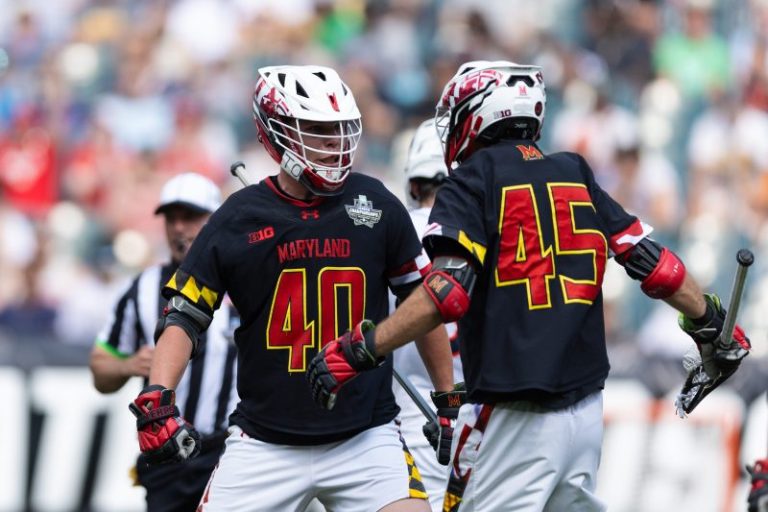
Air Force (9-7) at Maryland (11-3), 2:30 p.m.

Harvard (10-4) at Syracuse (11-5), 5 p.m.

Albany (10-8) at Cornell (14-1), 7:30 p.m.

This post appeared first on USA TODAY
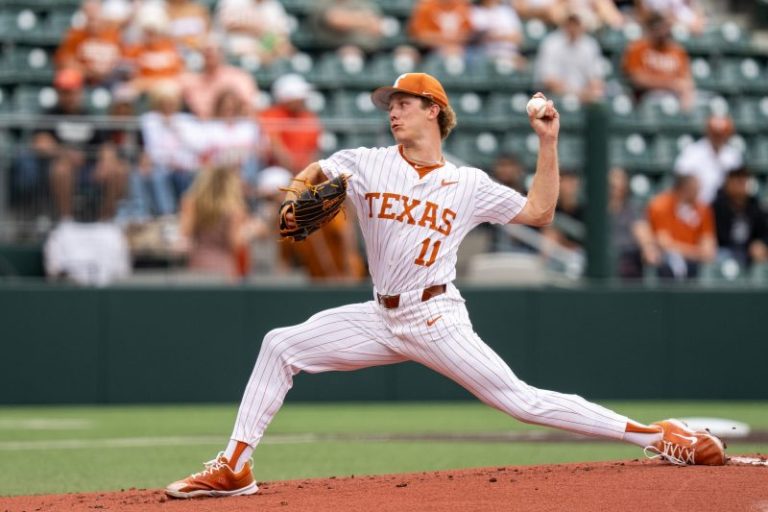
With just a couple of weeks remaining in the college baseball regular season, fans are no doubt beginning to ponder how their favorite team’s path to Omaha might be shaping up. The easiest route, of course, involves being one of the top eight seeds that guarantees regional and super regional hosting rights. It is therefore advantageous if your team happens to be in the upper tier of the SEC standings or very high in the ACC hierarchy.

As of now, we project six of the top eight seeds to go to SEC members, with a couple more also slated to host regionals. Texas holds the top seed, but projected No. 2 Arkansas, seeking the program’s first national title, closed the gap with a sweep of the Longhorns last weekend.

The ACC should be well represented as well with three likely hosts among the top 16 teams. National contenders from the west coast are harder to find, but there should be at least three regionals in the Pacific time zone.

So who will occupy those spots and the rest of the field of 64 when it is revealed? Here’s our NCAA baseball tournament bracket projection with less than three weeks to go before Memorial Day:

(* denotes teams that are automatic qualifiers based on current conference standings.)

Austin region

Texas* (1)
Texas-San Antonio*
Xavier
SIU-Edwardsville*

Fayetteville region

Arkansas (2)
Duke
Northeastern*
Central Connecticut State*

Tallahassee region

Florida State* (3)
Florida
Kansas
Bethune-Cookman*

Athens region

Georgia (4)
Miami (Fla.)
Troy
Sacramento State*

Baton Rouge region

LSU (5)
Southern Mississippi
Texas Rio Grande Valley
Missouri State*

Clemson region

Clemson (6)
Dallas Baptist*
Texas A&M
Holy Cross*

Auburn region

Auburn (7)
Georgia Tech
Connecticut
Kent State*

Knoxville region

Tennessee (8)
Louisville
Cal Poly
Bryant*

Chapel Hill region

North Carolina (9)
Mississippi
East Tennessee State*
George Mason*

Nashville region

Vanderbilt (10)
Wake Forest
Southeastern Louisiana*
Oral Roberts*

Morgantown region

West Virginia* (11)
North Carolina State
Mississippi State
Austin Peay*

Corvallis region

Oregon State (12)
Southern California
Arizona State
San Diego*

Myrtle Beach region

Coastal Carolina* (13)
Alabama
Kansas State
High Point*

Los Angeles region

UCLA (14)
Arizona           
Creighton*
Wright State*

Fort Worth region

TCU (15)
Oklahoma
Iowa*
Columbia*

Irvine region

UC Irvine* (16)
Oregon
Fairfield*
Nevada*

Last four in: Troy, Kansas State, Xavier, Texas Rio Grand Valley.

Last four out: Kentucky, Western Kentucky, Michigan, Virginia.

Team breakdown by conference: SEC (13), ACC (9), Big 12 (6), Big Ten (4), Big East (3), Sun Belt (3), Big West (2), Southland (2).

This post appeared first on USA TODAY
It’s official! The opening and closing ceremonies for the 2028 Olympics and Paralympic Games will be hosted at the Los Angeles Memorial Coliseum and SoFi Stadium in Inglewood, California, LA28 announced on May 8.

The real catch is that for the first time in modern Olympics history, the opening ceremonies will be held at two venues at the same time.

While this is a historic occasion for the city of Los Angeles and the Olympics as a whole, the closing ceremonies will not be given the same luxury, though. Instead, the LA Coliseum will be the sole host for the finale.

This marks the third time that LA Coliseum has hosted the summer games (1932, 1984) and the first time for SoFi Stadium, which opened in 2020.

“For over a century, the Coliseum has been a landmark host to some of the most iconic moments in all of sports history,” said L.A. Mayor Karen Bass. “That story continues in 2028 as our City and our region welcomes the world for what will be the greatest Olympic and Paralympic Games.”

When are the 2028 Olympics?

Well, 2028 of course. The opening ceremony is set for July 14, 2028 with the closing ceremony happening two weeks later on July 30. The paralympics, meanwhile, will start on Aug. 15, 2028 and close August 27.

How has the United States done at Olympics hosted in LA?

The United States dominated the 1932 Olympics winning 110 medals in total, the most of the games. In fact, the United States had more gold medals (44) than any other country had total medals. Italy had the second-most medals with 36. They had exactly 12 gold, 12 silver, and 12 bronze.

At the 1984 Olympics, it was more of the same. The United States won 83 gold medals and 174 total medals. Romania finished second with just 20 gold medals, while West Germany tallied the second-most total medals with 59. The United States’ 83 gold medals in those games is an all-time record.

This post appeared first on USA TODAY