Archive

2025

Browsing

Bergenfield (N.J.) High School football coach Rob Violante was killed in a two-car crash on the Taconic State Parkway in New Castle, N.Y. on the afternoon of May 14.

The New Jersey Football Coaches Association confirmed that Violante was one of the people killed in the crash.

Violante was hired at Bergenfield in 2011 and was about to enter his 15th season tied as the longest-tenured head coach in program history.

He won 61 games with the Bears, reaching the playoffs five times. The Bears finished 2-8 in 2024, ending the season with a win over Tenafly.

Rob’s father, Frank, is the athletic director at Glen Rock High School.

‘He was more than a coach, he was a mentor, father figure, and a source of strength for our students and community,’ Bergenfield mayor Arvin Amatorio posted on Facebook. ‘His impact as Head Football Coach and Dean of Students will never be forgotten.’

”Coach V’ was more than just a teacher and coach—he was a mentor, a father figure, and a true friend to so many,’ Bergenfield Supt. Christopher M. Tully said in a letter sent to school community on the morning of May 15.

‘He always put students first and believed in helping them reach their highest potential. Known for his compassion, dedication, and quiet strength, he instilled discipline through tough love and created lasting bonds with those lucky enough to be in his presence. His heart of gold and unwavering support made him a beloved figure in our schools.’

The letter said that grief counselors would be available at the high school for anyone wishing to speak with someone.

Here is the full letter sent to the Bergenfield school community:

This post appeared first on USA TODAY

Beating the Minnesota Timberwolves with Steph Curry was a challenging task for the Golden State Warriors.

Beating the Timberwolves without Curry proved impossible.

Curry sustained a grade 1 left hamstring strain in the second quarter of Game 1, a Warriors victory. But Curry missed the next four games, and the Timberwolves won all four, eliminating Golden State in their Western Conference semifinal series in a 121-110 win Wednesday in Game 5.

Who knows if Golden State would’ve won the series with Curry. They likely would’ve extended it beyond five games. No chance without him.

The Warriors lacked offense and defense, and while Curry’s importance can’t be overstated, his absence revealed just how important he is to making Golden State a contender.

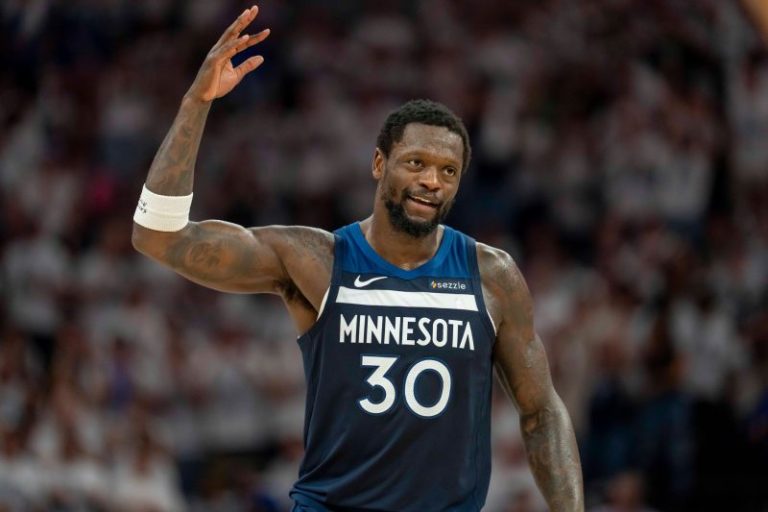
That doesn’t minimize Minnesota’s series victory. It’s the Timberwolves’ second consecutive trip to the West finals, and though officially the No. 6 seed, they could’ve easily been the No. 3 seed. They have the coaching (Chris Finch and staff) and personnel led by Anthony Edwads (All-NBA) and Julius Randle to win the next series and get to the NBA Finals for the first time in franchise history. They will play either Oklahoma City or Denver in the conference finals.

“The playoffs are really about health and just guys stepping up and making big shots and big plays in key games,” Warriors coach Steve Kerr said. “That’s what decides every series. We’ve been on both ends of that (injuries) and it’s just part of it, and there’s no sense in dwelling on it. I don’t want to take away from anything from what Minnesota just accomplished so no sense in even talking about Steph.”

The Warriors’ direction is clear. When they acquired 35-year-old Jimmy Butler at the February trade deadline and signed him to a two-year extension through 2026-27, they went all-in on trying to win another championship with the 37-year-old Curry who is still an All-NBA player, and the 35-year-old Draymond Green who was a finalist for Defensive Player of the Year this season.

Curry and Green are also under contract through 2026-27. The Warriors committed to a championship run this season, next season and in 2026-27. They have two more seasons to get it done.

There’s good reason to believe the Warriors can still make another run at a title with Curry, Green and Butler. Golden State was 25-26 when Butler joined the team. They were 23-8 with Butler to finish the regular season (the best defensive team in that stretch), won a play-in game against Memphis to get the No. 7 seed and beat second-seeded Houston in a seven-game series in the first round.

Then came Curry’s injury, which was unfortunate for the Warriors. As Kerr said, it’s part of the game, and it derailed their pursuit of a title this season.

What about next season? Besides Curry, Green and Butler, Buddy Hield, Moses Moody, Brandin Podziemski and Trayce Jackson-Davis are under contract in 2025-26, and the Warriors have a decision to make on Jonathan Kuminga who is a restricted free agent. An injury interrupted his growth, and Butler’s arrival reduced his role this season.

In a loaded Western Conference that is getting better and deeper, Warriors general manager Mike Dunleavy Jr. will need to get creative to improve the roster. Golden State traded its 2025 first-round pick and does not have significant salary cap space to make a major move in free agency. They have the non-taxpayer mid-level exception ($14.1 million) and bi-annual exception ($5.1 million) to sign free agents, and trades will be an option.

Because it’s the Warriors and an ownership group led by co-executive chairman and CEO Joe Lacob committed to a championship before Curry retires, the Warriors will be mentioned in the Giannis Antetokounmpo pursuit, if Antetokounmpo wants out of Milwaukee.

A four-time champion in the past 11 seasons, Golden State remains fascinating as it chases another championship.

Follow NBA reporter Jeff Zillgitt on social media @JeffZillgitt

This post appeared first on USA TODAY

President Donald Trump’s executive order aimed at slashing U.S. drug prices has divided Democrats on Capitol Hill, with some cautiously optimistic while others dismissed the move as a bluster.

Most Democratic lawmakers who spoke with Fox News Digital about the order noted they had not read into the details, but the reactions were mostly split.

‘It certainly seems more bark than it is bite,’ Rep. Richard Neal, D-Mass., the top Democrat on the House Ways & Means Committee, told Fox News Digital. 

Neal said it ‘strikes me as though it’s another example of the executive order that garners a lot of attention’ with little impact, though he noted he was still looking into the details.

Rep. George Latimer of New York, a first-term Democrat who unseated a former member of the progressive ‘Squad,’ ex-Rep. Jamaal Bowman, D-N.Y., signaled he was hopeful about the initiative.

‘If we can keep drug costs low, that’s a positive thing,’ Latimer said. ‘I don’t, you know, oppose everything the president does, things that help people lower costs. If that’s what this turns into, then yes, it’s a worthwhile idea. But I have to be honest, I’ve got to read it more closely to understand it better.’

Trump announced Monday that he was directing the Department of Health and Human Services to set price targets for pharmaceutical companies.

The president said the order would have pharmaceutical companies set drug prices on par with the lowest prices in other developed countries.

He said, ‘some prescription drug and pharmaceutical prices will be reduced almost immediately by 50 to 80 to 90%.’

Democratic Rep. Lou Correa, D-Calif., told Fox News Digital when asked about the order, ‘It’s always a good thing to reduce drug costs.’

‘I think it’s a move in the right direction, let’s just see the details,’ Correa added.

Rep. Lloyd Doggett, D-Texas, like Neal, told Fox News Digital he was more skeptical.

‘My feeling is that, like his…announcements during his first term, there’s much talk and no meaningful reduction of drug prices,’ Doggett said. ‘It remains to be seen whether any patient in America will see a price reduced on a single drug as a result of this order. So, until I see action, I will not believe that he has truly committed to reducing prices.’

House Democratic Caucus Chair Pete Aguilar, D-Calif., also said he did not believe Trump was ‘serious’ when asked.

‘All of this is just a disingenuous effort…on the part of House Republicans and Donald Trump, to pretend like they were looking out for people,’ Aguilar said. ‘If they were serious about it, the policy would be placed within their reconciliation bill. It’s not. This is just a performance effort by the president.’

Meanwhile, Rep. Ro Khanna, D-Calif., introduced a House bill to make Trump’s order permanent.

‘I rise today, to introduce as legislation, President Trump’s executive order for the most favored nation status on drug pricing,’ Khanna said on the House floor.

‘My legislation will codify President Trump’s executive order, which basically says that Americans should not pay more for drugs than people in other countries and other parts of the world.’

In an exclusive Fox News interview with Sean Hannity, Trump argued that his executive order should offset Democrats’ concerns with his ‘big, beautiful’ budget reconciliation bill being pushed by Republicans.

Democrats have accused Republicans of using the bill to gut critical programs like Medicaid for millions of people who need it, while the GOP has contended it was just trying to eliminate waste and abuse within the system.

‘It’s the Democrats’ fault that people are being ripped off for years and years. And now I hear Democrats saying, ‘Oh, well, we’re going to not go for the bill.’ It’s going to be very hard for them not to approve of the big, beautiful bill that we’re doing,’ Trump said. ‘We’re doing the biggest tax cuts in the history of our country because people are going to be getting a 50 to a 90% reduction on drug prices.’

When reached for comment on Democrats’ responses, White House spokesman Kush Desai told Fox News Digital, ‘Democrats talk; President Trump delivers. Instead of again putting politics over the American people, Democrats should work with the Trump administration to build on the President’s historic action to lower drug prices and end global freeriding off the backs of Americans.’

This post appeared first on FOX NEWS

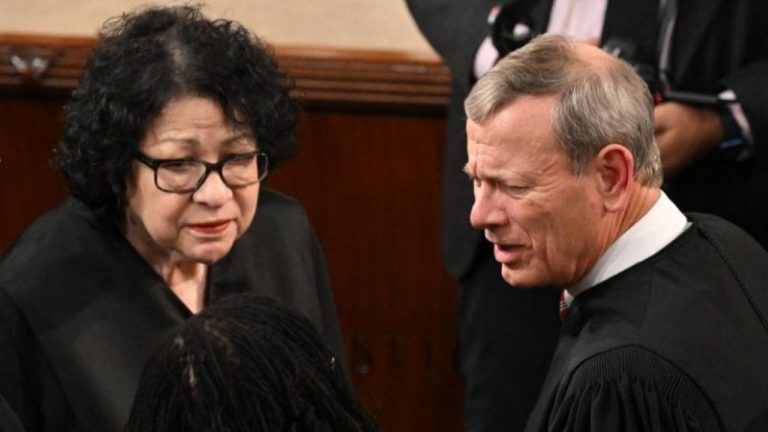
Supreme Court Chief Justice John Roberts reined in Justice Sonia Sotomayor during argument over birthright citizenship and nationwide court injunctions on Thursday.

Sotomayor dominated questioning for several minutes at the outset of Thursday’s argument after taking over from Justice Clarence Thomas. She pressed U.S. Solicitor General John Sauer for President Donald Trump’s administration on several points relating to the authority for federal courts to issue nationwide injunctions, often speaking over the lawyer and interrupting him.

Sotomayor argued that Trump’s order invalidating birthright citizenship violated four Supreme Court precedents, and that it was justified for a federal judge to grant an injunction against such a controversial order.

‘You are claiming that not just the Supreme Court, that both the Supreme Court and no lower court, can stop an executive from universally violating holdings by this court,’ Sotomayor said.

‘We are not claiming that because we’re conceding that there could be an appropriate case only in class only,’ Sauer said.

‘But I hear that–,’ Sotomayor said, beginning to interrupt Sauer.

‘Can I hear the rest of his answer?’ Roberts then interjected.

Sauer then elaborated on his statement, saying the government is arguing that federal courts can intervene on behalf of specific plaintiffs before them, but not nationwide. He said the Supreme Court has the authority to grant nationwide injunctions in certain circumstances.

Sauer used the bulk of his opening arguments Thursday to reiterate the Trump administration’s view that universal injunctions exceeded lower courts’ Article III powers under the Constitution, noting that the injunctions ‘transgress the traditional bounds of equitable authority,’ and ‘create a host of practical problems.’

Universal injunctions ‘require judges to make rushed, high-stakes, low-information decisions,’ he said. ‘They operate asymmetrically, forcing the government to win everywhere,’ and ‘invert,’ in the administration’s view, the ordinary hierarchical hierarchy of appellate review. They create the ongoing risk of conflicting judgments.’

A Supreme Court decision here could have sweeping national implications, setting a precedent that would affect the more than 310 federal lawsuits that have challenged White House actions since Trump’s second presidency began on Jan. 20, 2025, according to a Fox News data analysis.

The consolidated cases before the court are Trump v. CASA, Trump v. the State of Washington, and Trump v. New Jersey.

It’s unclear when the justices will rule, but their decision to fast-track the case means an opinion or order could come within weeks – or even days.

Fox News’ Breanne Deppisch, Shannon Bream and Bill Mears contributed to this report.

This post appeared first on FOX NEWS

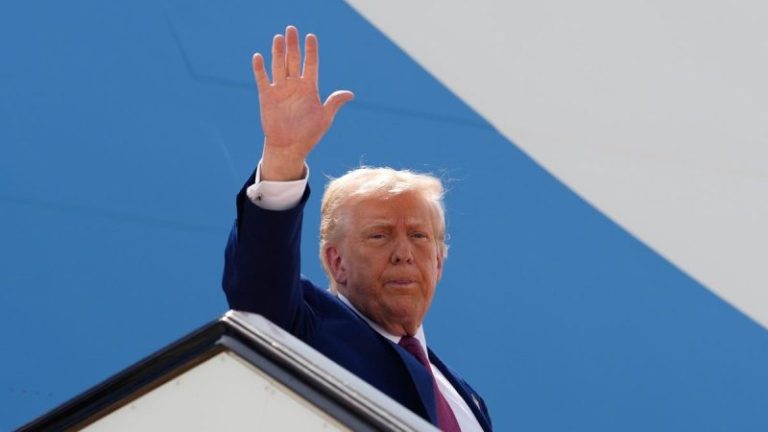
President Donald Trump on Thursday arrived in the United Arab Emirates for his final stop in the Middle East this week in a visit that marked the first time a U.S. president has traveled to the nation in nearly 20 years, following President George W. Bush’s trip in 2008.

Trump, who has secured major business deals first in Saudi Arabia and then Qatar, is expected to announce more agreements with what has long been one of the U.S.’ chief trading partners in the region — though given recently announced trillion-dollar deals, it is unclear what more the Emiratis will agree to. 

In March, the UAE pledged a $1.4 trillion investment in the U.S. economy over the next decade through AI infrastructure, semiconductor, energy and American manufacturing initiatives, including a plan to nearly double U.S. aluminum production by investing in a new smelter for the first time in 35 years. 

On the eve of the president’s visit to the Middle Eastern nation, the State Department also announced a $1.4 billion sale of CH-47 F Chinook helicopters and F-16 fighter jet parts to Abu Dhabi.

However, lawmakers on Wednesday suggested they may block this sale amid concerns over direct personal business ties, as Trump’s crypto venture has also received a $2 billion investment by a UAE-backed investment firm.

‘If I was a betting person, I’d bet that the Emiratis almost certainly kept some things in reserve for President Trump’s actual visit that can be announced when he’s on the ground in Abu Dhabi,’ John Hannah, former national security advisor to Dick Cheney and current Randi & Charles Wax senior fellow at the Jewish Institute for National Security of America (JINSA), told Fox News Digital. ‘I wouldn’t be at all surprised if we see some new items unveiled or some additional details put out on some of the earlier announcements.’ 

‘The UAE has clearly staked its future on being the Middle East leader in a wide range of 21st-century technologies, from AI to chips to space,’ he added. ‘And of course, the shopping list for high-end weapons is almost limitless and always a possible deliverable for a trip like this.’  

Increased scrutiny arose around Trump’s Middle East tour as engagement with all three nations holds personal value to him, given the Trump Organization’s luxury resorts, hotels, golf courses, real estate projects and crypto investment schemes in the region.

But all three nations also hold significant value to Washington, as they have become key players in some of the toughest geopolitical issues facing the U.S. and its allies. 

Saudi Arabia and Qatar have been integral in facilitating U.S. negotiations when it comes to ending Russia’s war in Ukraine and hostage negotiations in the Gaza Strip.

While neither of these issues appeared to be top points of discussion in Trump’s visit to Saudi Arabia or Qatar, he may hit on geopolitical ties more heavily when it comes to the UAE, particularly given that Abu Dhabi is one of the few Middle Eastern nations that holds normalized diplomatic ties with Israel.

The UAE has ardently opposed Israel’s military operations in the Gaza Strip, has called for a two-state solution, and has rejected Trump’s ‘riviera plans,’ instead favoring an Egypt-reconstruction alternative.

But Abu Dhabi has also maintained relations with the U.S.’ biggest adversaries, including China, Russia and Iran, which could be a topic of conversation during Trump’s one-day visit.

‘As everywhere on this trip, the headlines will likely be dominated by the dollar signs and deal-making,’ Hannah said. ‘But I’m personally most interested in the geopolitical angle of trying to reset the U.S.-Emirati strategic partnership, especially in the context of America’s great power competition with China and to a lesser extent Russia, and regionally with Iran.’

Hannah explained that Trump’s visit to the UAE exemplifies a recommitment by the U.S. economically and militarily to support Abu Dhabi’s ‘stability, security, and success in a dangerous neighborhood’ and could ‘pay real dividends going forward.’

 ‘The UAE’s top leadership has come to believe that putting most of its eggs into the American basket was an increasingly risky bet as one president after another decided that the Middle East was a lost cause — nothing but ‘blood and sand’ as President Trump famously said in his first term — and the country needed to pivot its focus toward Asia,’ he continued. ‘With a country as influential and resource-rich as the UAE, correcting that unhelpful perception and putting the strategic relationship back on a much more positive dynamic is an important goal.’   

This post appeared first on FOX NEWS

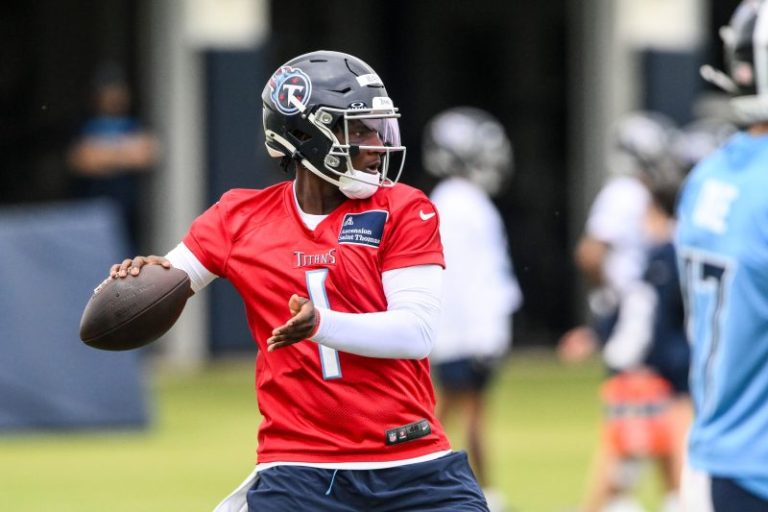
At least that’s the verdict from the NFL’s super-hyped schedule reveal, which didn’t include a single game for the 2025 season on a Sunday night, Monday night or Thursday night featuring the league’s No. 1 pick overall and his rebuilding Tennessee Titans.

Talk about disrespect. Ward, the former Miami Hurricanes quarterback who catapulted to the top of the NFL draft in a remarkable rags-to-riches rise, is pegged to begin his NFL journey 0-for-prime-time.

Shoot, the Titans even had a prime-time game last season when, gulp, Will Levis and Mason Rudolph, took turns at quarterback.

And now they’ve got this electric passer in Ward not getting a single prime-time game?

Go figure.  

Of course, given the NFL’s flexible scheduling option, it’s still possible that we could see Ward in a national showcase game under the lights. That would largely be a case of the Titans – who finished 3-14 last season and picked No. 1 for mighty good reason – exceeding expectations during Ward’s NFL initiation.

Good luck with that, kid.

Ward will debut at Denver, which brings a nasty defense and one of the prized rookie quarterbacks from last year’s class, Bo Nix.

Then comes the unveiling before a home crowd at Nissan Stadium in Week 2 against the Los Angeles Rams, the team that came closest to knocking off the eventual Super Bowl champion Philadelphia Eagles in the playoffs in January.

Two weeks, two of last season’s playoff teams. The stuff about the Titans having one of the NFL’s “easiest” schedules, based on their opponents’ 2024 records, is so circumstantial. I mean, three of the four teams in the AFC South had losing records in 2024 with the Titans bringing up the rear in a division that still has the Houston Texans as favorites.

There’s a test, too, with three straight road games (Weeks 4-6) followed by a matchup on Oct. 19 against the New England Patriots, coached by a fellow, Mike Vrabel, who might have a point to make against the team he used to coach.

Other highlights include two matchups against the Jacksonville Jaguars and Travis Hunter in Week 13 and Week 18, a road finale that is TBD for date and time. In Week 16, Patrick Mahomes comes to town. (Read: Opportunity for a rookie quarterback to take notes.) And circle a Week 14 matchup at Cleveland: Ward vs. Shedeur Sanders?

We’ll see.

Never mind the buzz attached to Ward in the ramp-up to the draft, where he was widely considered the best quarterback in a purportedly marginal class. It led to a big prime-time moment on the stage with Commissioner Roger Goodell to christen the draft in Green Bay.

But that was then already. Maybe the NFL schedule-makers just didn’t get the memo.

As it stands now, the Titans have 11 of their 17 games slotted for noon CT kickoffs on Sundays, which is about as low of a bar as it gets for marquee value.

How rare is this?

Well, the last time a quarterback was chosen No. 1 overall and didn’t have a prime-time showcase game came in 2011 with Cam Newton.

Maybe that’s it. It’s a Cam thing.

Between 2011 Cam and 2025 Cam, nine quarterbacks were taken No. 1 overall. And all nine had at least one prime-time appearance.

And this includes Baker Mayfield, who started the 2018 season on the bench for the Cleveland Browns … but in Week 3 replaced an injured Tyrod Taylor and passed for 201 yards, plus caught a pass to spice a victory against the Jets on ‘Thursday Night Football.’

Sure, you can expect only so much from a rookie quarterback cutting his teeth with a rebuilding team. And it can be so rough. Caleb Williams absorbed 68 sacks and went 5-12 (two prime-time games) for the Chicago Bears last season. The year before, Bryce Young suffered 62 sacks with a Carolina Panthers squad that finished 2-15. In 2021, Trevor Lawrence (17 picks) went 3-14 with the Jacksonville Jaguars.

So, no, there’s not a lot of incentive for the league and networks (and streaming services) to put the growing pains of high-profile rookie quarterbacks in the prime-time windows – even as good as last year’s rookie QB crop (hello, Jayden Daniels) turned out to be – when there are so many star-powered alternatives.

In other words, there’s good reason that five quarterbacks – Mahomes, Jalen Hurts, Lamar Jackson, Josh Allen and Joe Burrow – are slated for a combined 27 prime-time games.

Perhaps the day is coming when Ward will be positioned on such an elite level. The Titans are certainly banking on that. He represents some major hope for second-year coach Brian Callahan and a franchise that is 16-35 in three seasons since it last made the playoffs and won a division title in 2021. But it’s a process. It includes building the supporting cast and certainly involves the impressive prospect flowing on the NFL learning curve.

Maybe it’s a matter of time before Ward forces himself – and his team – into prime-time exposure. The resume speaks. Ward set an NCAA Division I record by firing 156 touchdown passes while playing for three schools. On top of the rocket arm, so many rave about his leadership, grit, football IQ and other intangibles. He should be something to watch.

Want a peek at how he’s progressing on the next level?

Here’s the advice: Get up early.

Follow Jarrett Bell on social media: @JarrettBell

This post appeared first on USA TODAY

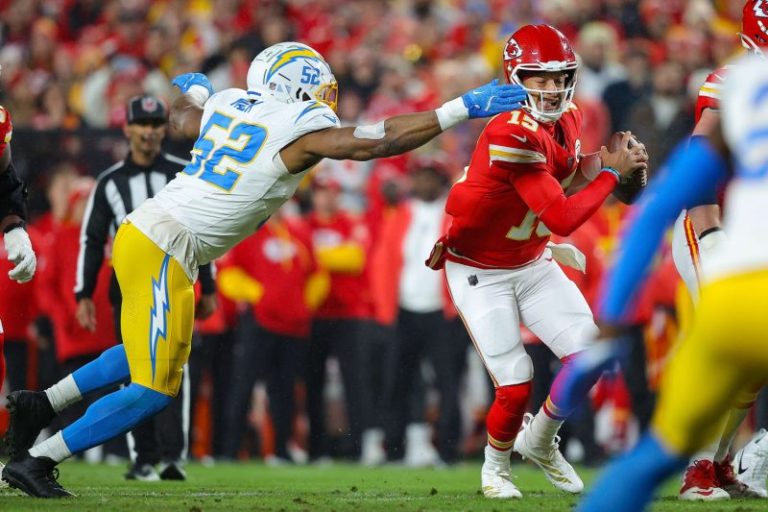
YouTube will stream the National Football League’s Week 1 game on Sept. 5 for free, the first time the dominant streaming platform has ever broadcast a live NFL game in its entirety.

The game, which Front Office Sports first reported will be between the Kansas City Chiefs and the Los Angeles Chargers, will take place in Sao Paulo, Brazil.

“Last year, people spent over 350 million hours watching official NFL content on YouTube, so it’s both fitting and thrilling to continue to build our relationship with our partners at the NFL,” YouTube Chief Business Officer Mary Ellen Coe said in a statement. “Streaming the Friday night game to fans for free around the world will mark YouTube’s first time as a live NFL broadcaster — and we’ll do it in a way that only YouTube can, with an interactive viewing experience and creators right at the center of the experience.”

The game will be available to all YouTube and YouTube TV users globally, except in Canada and certain other countries, and locally on broadcast television in the media markets of the participating teams, YouTube said in a statement.

YouTube is the most-watched streaming platform in the U.S., consisting of 12% of all viewership for March, according to Nielsen.

The NFL has an existing deal with YouTube TV for Sunday Ticket, the league’s out-of-market package of games. Those games require a subscription — either $480 per year without YouTube TV or $378 per year for YouTube TV subscribers. YouTube TV is a collection of linear TV networks that approximates a standard cable bundle.

The full 2025 NFL schedule will be released Wednesday at 8 p.m. ET.

This post appeared first on NBC NEWS

The Winter Olympics are less than a year away and, for the first time in two decades, snowboarding superstar Shaun White is not training to compete.

The retired three-time Olympic gold medalist said he’s not going to sugarcoat it: It definitely feels weird.

‘I’m excited and I’m happy for the next [generation] that’s coming through and what they’re going to do at this next Games,’ he told USA TODAY Sports on Tuesday. ‘But yeah, there will be some part of me that’s a little like ‘ugh’ − wanting to compete and wanting to ride.’

That, of course, doesn’t mean White has thought seriously about a return to competition such as the comeback that one of his contemporaries, Lindsey Vonn, made a few months ago. ‘I’m not contemplating it at all,’ White said.

Instead, as the 2026 Winter Olympics in Milan-Cortina near, the 38-year-old explained that he’s shifted his focus to the future of snowboarding − how the sport will evolve, and the athletes that will be at the center of that evolution. Last year, he founded a new snowboarding and freeskiing league called The Snow League, which held the first of its four events in Colorado in March. And next month, he’ll be on Mount Hood in Oregon to work with top junior athletes as part of Project Gold, a national talent identification program run by U.S. Ski & Snowboard.

‘It’s all elements of the industry becoming more professional and more looked at like a true sport,’ White said. ‘I think that for a long time it was just like ‘oh, this is cool’ (but) people didn’t really take it seriously.’

White grew up attending the High Cascade Snowboard Camp that will serve as the backdrop for Project Gold. He also became a part-owner of the summer camp, and its freeski counterpart, in 2023.

A summer camp for winter sports like snowboarding and skiing might feel like an odd match, but White said off-season training has become critical, especially for elite athletes. It’s why, even though Mount Hood boasts year-round snow, the camp recently also added a dry slope with an adjustable takeoff ramp and airbag-cushioned landing area for training runs.

‘When I talk about the future of the sport and where this next amazing athlete’s going to come from, I always say − and I do believe − that they’ll come from somewhere that doesn’t have any snow,’ White said. ‘They’ll be in a situation where they’re like, ‘Oh yeah, I’ve just been training on this bag year-round, I had access to this facility and I’m just going every day.”

White pointed to Japan, where snowboarders have access to indoor halfpipes and other year-round training facilities, as one example. The country is home to the reigning Olympic gold medalist in men’s halfpipe, Ayumu Hirano, and one of the sport’s recent pioneers in big air, Hiroto Ogiwara. At the Winter X Games in January, the 19-year-old Ogiwara became the first snowboarder to land a 2340 − which, to spare you the math, is a whopping six and a half rotations.

‘It’s wild,’ White said with a laugh when asked about that feat. ‘I was like ‘oh my God, I got out at the right time.”

White announced his retirement from competitive snowboarding after a fourth-place finish at the 2022 Beijing Games. After winning three gold medals across five editions of the Winter Olympics, he said he doesn’t take many runs through full-size halfpipes anymore but he does still spend plenty of time strapped to a board. He’s found new joy in backcountry trips with friends and family, or hitting jumps and rails.

‘I really feel for athletes in the football world and others, where it’s like, how are they going to go enjoy the game in a solo situation? Go throw the ball around in the yard?’ White said. ‘For me, it’s like maybe the band’s no longer together, but I can still play the guitar. And that’s a very enjoyable thing. I can still go ride the mountain.’

At times, White admitted, his mind has also drifted to an all-too-natural question: What if? He’ll watch a video clip of a halfpipe trick and wonder if he could still do it, or see headlines about Vonn returning to the podium after a five-year hiatus and having a passing thought about a similar attempt.

Then, he said, his mind will settle and he’ll ‘come back to reality.’ He’s happy with the decision that he made to walk away.

‘Retirement’s such a kind of ugly word, in a way,’ he said. ‘I’ve definitely just shifted my focus to something else.’

This post appeared first on USA TODAY

Bad football is like bad pizza, right? Sure, comfort food has various degrees of excellence – or lack thereof – but at the end of the day, you’re probably still going to reach for it.

Wednesday night’s complete revelation of the 2025 NFL schedule is similarly metaphoric to savoring something you bought on the Lower East Side … or wolfing down Chuck E. Cheese because the options are limited at that birthday party of 4-year-olds you’re helping to chaperone.

So while we’ll breathlessly anticipate games like Ravens-Bills, Lions-Commanders or the Super Bowl 59 rematch between the Chiefs and Eagles, we’re here to list the five least-appetizing games on the 2025 scheduled in this space – ranked bad to worst – even though we suspect you’ll still grab a slice (or five) anyway:

5. Dallas Cowboys at Philadelphia Eagles, Sept. 4, 2025

How does the matchup initiating the league’s 106th season make the list? Weeelll, it’s the end of summer. No more vacation. School is back in session. The weather is going to turn. The Cowboy Carter Tour will be over while the Cowboys embark on what will surely be a 30th consecutive tour around the league that won’t conclude on Super Sunday.

Stick to football? Fine.

Few matchups are as overanalyzed and overburdened – in terms of their actual importance – as the first of the regular season’s 272 games. And when you add “America’s Team” to the mix? If the Eagles win comfortably, the narrative will be that a team which largely dominated during the 2024 playoffs will be on its way to a successful Super Bowl defense. Any other outcome? Then the Eagles aren’t nearly as good as you thought … and the Cowboys are back in a big way and under the radar no longer … plus, hey, maybe rookie head coach Brian Schottenheimer can become the first to get Jerry Jones a ring since Barry Switzer three decades ago.

You can see where this is going, hot takes just running amok for days until the rest of the league’s teams get out of the gate. Yes, it will be fun to have the NFL back and to ring in its return with one of the league’s better rivalries and two of its most high-profile teams. But just a little bit of dread is baked in here, too.

4. Cleveland Browns at Detroit Lions, Sept. 28, 2025

Why do I include this contest, which is appropriately buried at 1 p.m. ET on a Sunday? On its surface, it shapes up as one of the season’s more lopsided pairings, the home team chasing a third consecutive division title (and much more) while the visitor seemingly remains in its decades-long quarterback – and holistic – purgatory. (Detroit rates seventh in my most recent power rankings, 22 spots ahead of Cleveland.) Yet this game will roughly mark the 16th anniversary of the Lions’ 38-37 defeat of the Browns at Ford Field in 2009, when then-rookie QB Matthew Stafford – playing through a dislocated non-throwing shoulder – outdueled Brady Quinn and Co. (seriously) by throwing the game-winning touchdown pass on the final play in one of the best Alcoa Fantastic Finishes nobody saw or remembers … except me. (And make no mistake, Cleveland and Detroit were typically putrid back in 2009, combining for seven victories.) It’s precisely why all manner of pizza gets consumed. And who knows, maybe Jared Goff vs. Shedeur Sanders – perhaps – is, um … ‘legendary?’ Maybe?

3. Houston Texans at Seattle Seahawks, Oct. 20, 2025

They should be fine teams, each coming off a 10-win effort in 2024 and both stocked with some of the league’s compelling, younger players. But not only is this game in the dreaded 10 p.m. ET time slot that will regrettably return twice to Monday night this season, you’ll also have to hope the WiFi doesn’t blink – this showdown in the Pacific Northwest is exclusive to ESPN+ – or you could miss the next time Sam Darnold or C.J. Stroud gets sacked.

2. Atlanta Falcons vs. Indianapolis Colts, Nov. 9, 2025

If I want to watch this – if – then I have to get up by 9:30 a.m. ET to view the first regular-season game staged in Berlin? Didn’t the NFL foist Daniel Jones off on the Germans last year? (Yes. Yes it did.) Perhaps it’s an unexpected barnburner between teams that could be playoff dark horses. Maybe Atlanta RB Bijan Robinson is even anchoring my fantasy lineup. And perhaps it’s a battle of franchises that have typically been also-rans for the past decade in a game when the ball could quite realistically hit the ground half the time it’s put into the air. Sorry, Deutschland.

1. New York Giants at New England Patriots, Dec. 1, 2025

If you’re potentially feeling grateful after Thanksgiving weekend, you’ll doubtless be over it by Monday night. Tom Coughlin, Eli Manning, Tom Brady and Bill Belichick won’t be walking through that door – well maybe TB12 and BB will (game’s in Foxborough, so never say never) – in what could very likely wind up a showdown between three-win teams with Drake Maye and Jaxson Dart, who might well be making his prime-time debut by that point of the season, at the controls. High degree of skepticism for a tasty meal here … even if leftovers sometimes taste better.

This post appeared first on USA TODAY
NEWYou can now listen to Fox News articles!

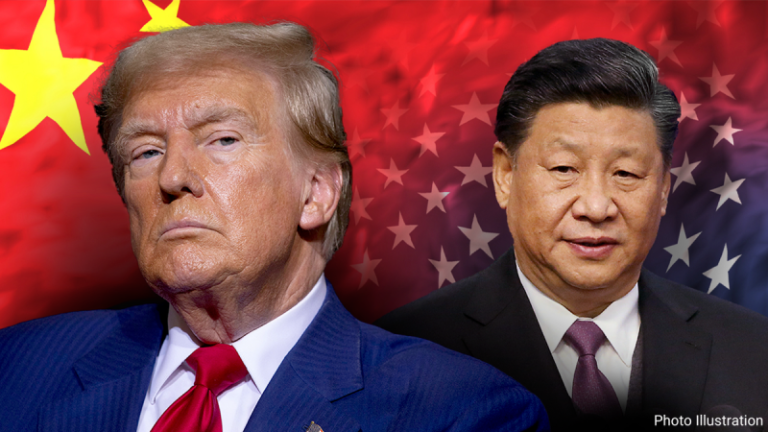
The United States and China recently announced a significant easing of tariffs, with both countries agreeing to reduce duties for a 90-day window. The financial press lauded the move. Stocks rallied. Headlines proclaimed relief in a trade war that has dragged on and weighed heavily on global markets. But while most fixated on the immediate impact of slashed tariffs, the more meaningful development went largely unnoticed.

Quietly, Washington and Beijing agreed to establish a formal ‘trade consultation mechanism,’ a permanent bilateral platform to hold structured talks on currency policies, market access, and non-tariff barriers. While bureaucratic in tone, this institutional move may prove to be the most consequential economic shift in years.

That’s because this isn’t just about trade logistics—it’s about the foundation of the global economic system. The U.S.–China imbalance isn’t simply a matter of bad trade deals or American overconsumption. It’s a structural problem embedded in the international monetary framework, and for the first time in a generation, both countries appear ready to talk about it seriously.

This deeper imbalance is something Stephen Miran—who now serves as chair of the President’s Council of Economic Advisers—laid out in extraordinary detail in a 41-page report published in November 2024. Titled ‘A User’s Guide to Restructuring the Global Trading System,’ the paper explains how the current dollar-centric model locks the United States into persistent trade deficits while encouraging surplus economies like China to underconsume and overproduce. These excess savings are then recycled into U.S. financial assets, particularly Treasuries, which props up the dollar and erodes American manufacturing.

The result? A lopsided economic order where the U.S. acts as consumer of last resort and global debtor-in-chief, while countries like China flood the world with goods but face chronic domestic stagnation.

Miran calls this a ‘Triffin World,’ referencing economist Robert Triffin’s famous dilemma: When a national currency is also a global reserve, it eventually becomes impossible to balance domestic and international obligations. To satisfy global demand for safe assets, the U.S. must run deficits, which hollow out its own economy. Meanwhile, surplus nations avoid necessary reforms at home because the system rewards their export-heavy models.

China’s property crisis and slowing growth show the limits of its export model. The U.S., meanwhile, faces mounting deficits, political polarization, and industrial decline. Neither side can afford to ignore the systemic flaws any longer.

In theory, tariffs are a way to push back against this imbalance. But they’re crude and often counterproductive. What Miran proposes is a structural recalibration—realigning currency values to reflect underlying economic conditions, discouraging excessive reserve accumulation, and encouraging more balanced capital flows.

The fact that this new U.S.–China mechanism explicitly includes discussions on currency and non-tariff measures suggests that Miran’s framework is already influencing policy. This is more than a détente—it’s the first real move to unwind Bretton Woods II.

It’s also important to understand what happens when imbalances like these are allowed to persist. History shows that unresolved economic distortions tend to escalate into geopolitical conflict. In the interwar period, the failure to manage reparations and trade balances led to a deflationary spiral in Europe. Germany’s economy collapsed under the weight of austerity and fixed exchange rates, leading to widespread unemployment, social unrest, and ultimately, war.

We’re not there yet—but the warning signs are clear. China’s property crisis and slowing growth show the limits of its export model. The U.S., meanwhile, faces mounting deficits, political polarization, and industrial decline. Neither side can afford to ignore the systemic flaws any longer.

That’s why the new committee matters. For the first time, Washington and Beijing are signaling a willingness to move beyond tactical measures and engage in structural dialogue. It may not grab headlines, but for those paying attention, it’s a major pivot.

Critics will say that this is just another diplomatic forum. But there’s reason to believe it’s more. Miran’s appointment to the top economic advisory post in the White House indicates that these ideas have currency at the highest levels. And the alignment between his policy prescriptions and the scope of the new committee is hard to ignore.

To be clear, none of this will be easy. The system didn’t get here overnight, and it won’t be unwound quickly. But the creation of this platform is a start. It acknowledges the real root of global trade tensions, not as a battle between exporters and importers, but as a distortion of incentives baked into the architecture of international finance.

The United States must seize this opportunity. Rather than settling for symbolic tariff victories or short-term market gains, we should push for a durable framework that restores balance, rewards production at home, and disincentivizes dependency abroad.

In that sense, this may be one of the clearest examples of President Trump’s ‘Art of the Deal’ approach—firm on leverage, clear-eyed on outcomes, and willing to tackle problems at the root rather than the surface.

So, while the tariff cut got the headlines, the real story lies in this committee—a forum that could, if used wisely, become the place where the next phase of global economic order is quietly drafted.

In the end, America cannot remain strong abroad if it’s structurally weakened at home. This agreement gives us a chance to begin rewriting that script.

And that’s a deal worth making.

This post appeared first on FOX NEWS