Archive

2025

Browsing
NEWYou can now listen to Fox News articles!

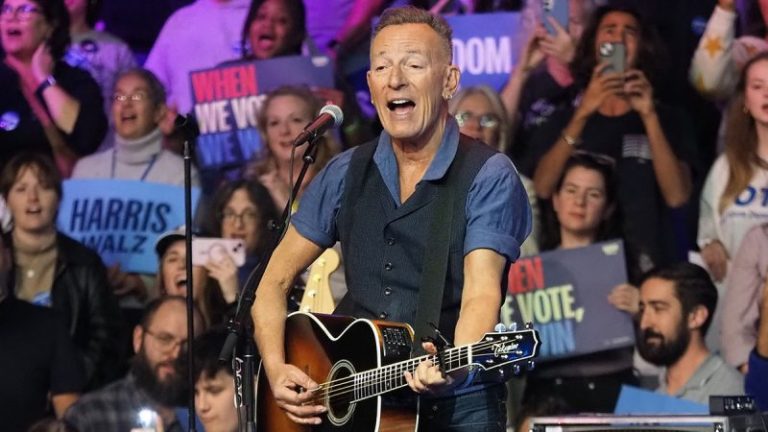
This week, while Bruce Springsteen and Robert De Niro were abroad trashing President Donald Trump in front of wealthy Europeans, everyday Americans were flocking to the Kennedy Center to enjoy fine art. 

It is quite a split screen to consider and, in the end, The Boss and old droopy eyes Bobby come across as looking nothing short of ridiculous.

Let’s start with Springsteen, who kicked off his tour in Manchester on Wednesday night with the message for Brits.

‘My home, the America I love, the America I’ve written about, that has been a beacon of hope and liberty for 250 years, is currently in the hands of a corrupt, incompetent and treasonous administration,’ he said.

Later in the show, during which presumably he also played some music, Springsteen called Trump incompetent and an authoritarian. It seems Bruce wasn’t born to run, he was born to whine.

Across the English Channel, which is not yet the Channel of America, De Niro was at the Cannes Film Festival receiving a lifetime achievement award, because the only thing actors do better than wearing makeup and saying things they didn’t write is giving each other awards for it.

Of course, De Niro could not resist providing plenty of raging bull about Trump.

‘[Artists] are a threat to autocrats and fascists,’ he said. ‘America’s Philistine president has had himself appointed head of one of our premier cultural institutions (the Kennedy Center). He has cut funding and support to the arts, humanities and education.’

This last statement about the Kennedy Center drew a strong rebuke from its controversial new president, Richard Grenell.

‘He’s lying,’ Grenell wrote on X. ‘President Trump hasn’t cut funding for the Kennedy Center. There are a few honest reporters already reporting the massive funding INCREASE request from President Trump for the Kennedy Center. It is De Niro’s political party that is canceling shows and booing people they don’t agree with politically. We haven’t canceled shows.’

The fact of the matter is that Grenell is absolutely right about this. It is actors from a production of ‘Les Misérables’ who are refusing to perform for Trump next month, not Trump refusing to watch them.

It was the producers of ‘Hamilton’ who decided to cancel their Kennedy Center run, not Trump administration officials in arm bands censoring art.

In fact, I don’t know if ‘Hamilton’ composer Lin Manuel Miranda knows this or not, but these days it is conservatives who are far more likely to cherish his patriotic musical. Many on the left now accuse him of whitewashing America’s supposed horrible history.

For the first time in decades, we have leadership at the Kennedy Center that is worried about what the audience, otherwise known as the people, want, not with indoctrinating Americans into progressive ideologies with shows nobody wants to see anyway.

As it turns out, I found myself at the Kennedy Center on Thursday night to catch the National Symphony’s performance of Beethoven’s ‘Missa Solemnis.’ After all, a columnist can’t survive on dive bars and Midwest diners alone.

I know this will come as a deep shock to Springsteen and De Niro, but for the life of me, I could not find the fascism or autocracy. 

Instead, I found Americans of all ages and walks of life sitting stunned as a piece of music that has enthralled audiences for 200 years unfolded under the direction of legendary Maestro Gianandrea Noseda.

It was a packed house on a Thursday night. You could see young people grabbing $10 rush tickets like I did as a student to see the Philadelphia Orchestra decades ago.

Try getting into a Springsteen concert for 10 bucks. 

While the Boss and Bobby were being feted by Euro elites, they were still playing out their sad boomer protest fantasies born under a haze of weed smoke in 1968.

Back in April, the Kennedy Center smashed its attendance record when 11,000 attended a cheesy performance that combined art, science and drones. It is exactly the kind of programming that gives this jewel of the arts back to the people.

For the first time in decades, we have leadership at the Kennedy Center that is worried about what the audience, otherwise known as the people, want, not with indoctrinating Americans into progressive ideologies with shows nobody wants to see anyway.

Maybe Springsteen and De Niro should just stay in Europe and move in near Rosie O’Donnell and Eva Longoria, who already left after Trump’s election. They all think America is awful and they can all get cheering crowds overseas for trashing the red, white and blue.

Here in the United States, we are not going to miss the talents of these naysayers, because we have a wealth of brilliant artists who want to share their gifts with everyone, Republican or Democrat, who know that at its best, art unites, it does not divide.

So, if you find yourself in Washington, swing by the Kennedy Center and check it out. Or, wherever it is that you live, find the artists who want to speak to your soul, not to your politics. Because at long last, we are finally, once again, making space for that ancient pursuit.

This post appeared first on FOX NEWS

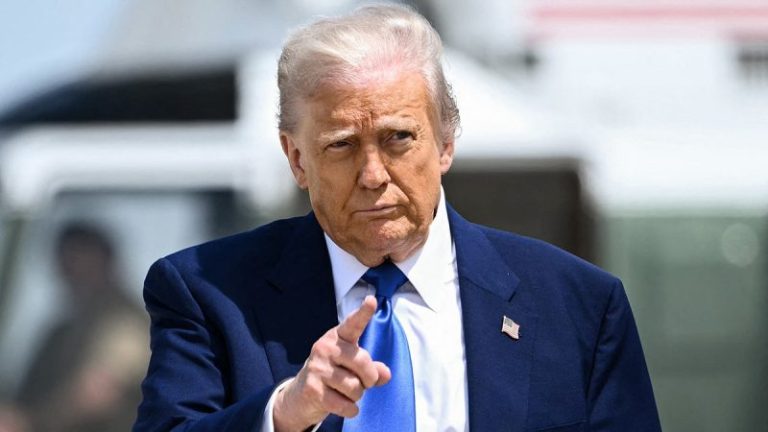
President Donald Trump is in the midst of promoting what he says are commonsense policies that will usher in the ‘golden age’ for America, with his platform bolstered by a handful of traditional Democratic platforms, Fox News Digital found. 

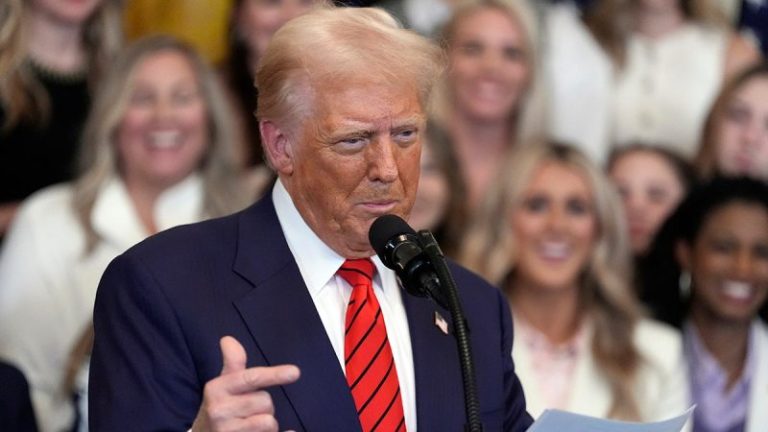
‘In everything we do, we’re putting America first, because the Republican Party is now known as the party of common sense. It’s the party of common sense. Very important. I think it’s a very important phrase for you to use.  It’s all about common sense. We’re conservative, and, you know, we’re a lot of things, but most important thing is we have to use common sense,’ Trump said in February while addressing a conference of the nation’s Republican governors. 

As liberals and media talking heads bashed Trump on the campaign trail as a ‘threat to democracy’ and compared him to Adolf Hitler, roughly four months into his administration, Trump has rolled out policies or made favorable remarks toward issues that Democrats have long rallied around during campaign events or in the chambers of Congress. 

Trump held a press conference flanked by Health and Human Services Secretary Robert F. Kennedy Jr. and other health officials on Monday morning to sign an executive order to lower drug prices by up to 80%. The executive order specifically ‘directs the U.S. Trade Representative and Secretary of Commerce to take action to ensure foreign countries are not engaged in practices that purposefully and unfairly undercut market prices and drive price hikes in the United States.’

‘The principle is simple – whatever the lowest price paid for a drug in other developed countries, that is the price that Americans will pay,’ Trump said at the White House during the executive order signing ceremony. ‘Some prescription drug and pharmaceutical prices will be reduced almost immediately by 50 to 80 to 90%.’ 

‘Starting today, the United States will no longer subsidize the healthcare of foreign countries, which is what we were doing. We’re subsidizing others’ healthcare, the countries where they paid a small fraction of what for the same drug that what we pay many, many times more for and will no longer tolerate profiteering and price-gouging from Big Pharma,’ he added. 

Fox News Digital reported earlier this week that Trump’s executive order effectively amounts to price controls on pharmaceuticals.

‘We see price caps after natural disasters,’ he argued. ‘We call them anti-gouging laws, and they produce shortages. And so that’s what we can expect price controls to produce when it comes to pharmaceuticals as well — that’s if you have a binding price ceiling, you’re going to get a shortage, and I think it’s totally a wrong-headed thing.’ 

Lowering prescription drug prices through control measures and government intervention has been a cornerstone of Democratic platforms, including Vermont Sen. Bernie Sanders vowing during his 2020 presidential campaign to lower such prices by 50% if elected and then-Vice President Kamala Harris issuing a tie-breaking vote in the Senate in 2022 to pass the Inflation Reduction Act, which empowered the Centers for Medicare and Medicaid Services to negotiate prices for certain pharmaceuticals covered by Medicare. 

Trump celebrated during the executive order signing that he was taking on ‘price gouging’ from ‘Big pharma,’ which he argued is an industry that had been protected by Democrats until his administration. 

Kennedy, the son of Democratic Attorney General Robert Kennedy and nephew to former Democratic President John F. Kennedy, celebrated that the Trump administration came through on the promise of lowering drug prices after decades of Democrats vowing they would enact such a plan. 

‘This is an extraordinary day,’ he said from the White House. ‘… I grew up in the Democratic Party and every major Democratic leader for 20 years has been making this promise to the American people. This was the fulcrum of Bernie Sanders’ runs for the presidency, that he was going to eliminate this discrepancy between Europe and the United States. As it turns out, none of them were doing it. And it’s one of these promises that politicians make to their constituents, knowing that they’ll never have to do it. And the reason they’ll never do it is because they know that Congress is controlled in so many ways by the pharmaceutical industry.’

Sanders issued a statement following Trump’s executive order, declaring, ‘I agree with President Trump’ regarding how Americans pay ‘the highest prices in the world for prescription drugs,’ before warning that the executive order would likely be thrown out by the courts and that Trump should support his upcoming legislation to tackle drug prices. 

When asked about Trump promoting policies typically touted by Democrats, the White House celebrated how Trump has transformed the GOP ‘to again become the party of the working class.’

‘President Trump oversaw a historic transformation of the GOP to again become the party of the working class. While Democrats spent decades talking about helping everyday Americans, President Trump is actually delivering – revealing Democrats’ incompetence and corruption in the process,’ White House spokesman Kush Desai said. 

House Republicans released a portion of Trump’s tax agenda late on Friday evening, as Trump continues rallying lawmakers to pass his ‘big, beautiful bill’ that will fund his agenda. Included in the proposal is an expansion of the child tax credit – which has long been featured on Democrats’ policy platforms.

While on the campaign trail, the Trump team said the president would consider a ‘significant expansion of the child tax credit that applies to American families,’ FOX Business reported in August. 

While then-Ohio Sen. JD Vance said during the campaign that he would ‘love to see a child tax credit that’s $5,000 per child,’ he added, ‘but you, of course, have to work with Congress to see how possible and viable that is.’

A portion of the legislation released by the House Ways & Means Committee last week would increase the current maximum child tax credit from $2,000 to $2,500.

Top Democrats from Harris to House Minority Leader Hakeem Jeffries have promoted massive expansions of the child tax credit, including Harris campaigning on a proposal to provide a $6,000 tax credit for parents of newborns.

‘That is a vital, vital year of critical development of a child,’ Harris said during her presidential campaign. ‘And the cost can really add up, especially for young parents who need to buy diapers and clothes and a car seat and so much else.’

Trump also broke with the traditional Republican ideology of not increasing taxes, saying he would ‘love’ to tax wealthier Americans as part of a ‘redistribution’ effort. 

‘People would love to do it. Rich people. I would love to do it, frankly. Giving us something up top in order to make people in the middle income and the lower income brackets [have] more. So, it’s really a redistribution,’ Trump said last week. 

Trump added on Truth Social last Friday that such a tax increase on the wealthy would spark outrage from Democrats and likely comparisons to former President George H.W. Bush increasing taxes during his administration. Trump, however, added that he is open to the move if that is what Republican lawmakers approve. 

‘The problem with even a ‘TINY’ tax increase for the RICH, which I and all others would graciously accept in order to help the lower and middle income workers, is that the Radical Left Democrat Lunatics would go around screaming, ‘Read my lips,’ the fabled Quote by George Bush the Elder that is said to have cost him the Election. NO, Ross Perot cost him the Election!’ Trump wrote.

‘In any event, Republicans should probably not do it, but I’m OK if they do!!!’ he added. 

Swaths of the Democratic Party have touted raising taxes on the wealthy out of an effort to reduce income inequality, including Sanders, Rep. Alexandria Ocasio-Cortez, D-N.Y., and Sen. Elizabeth Warren, D-Mass.

Slogans of ‘tax the rich’ and calls for the wealthy to ‘pay their fair share’ were also a hallmark of the 2020 federal and down-ballot elections, including for former President Joe Biden’s 2020 presidential campaign. 

‘Corporations need to pay their fair share in taxes,’ Biden posted on social media in November 2019. ‘I’ll reverse Trump’s giveaway to the super-wealthy and corporations because it’s time we reward work, not just wealth.’

‘As president, I’ll make sure giant corporations and the super-wealthy pay their fair share in taxes — and then invest that money in growing a stronger, more inclusive middle class,’ he wrote weeks later in December 2019.

Trump, himself, was a registered Democrat for periods of his life, including during the early 2000s, before he switched back to the Republican Party in 2009, New York City election board data show. 

He has also found support from a handful of former Democrats, such as Kennedy and Director of National Intelligence Tulsi Gabbard, with Kennedy registering as an Independent last year during his own presidential campaign and Gabbard registering as a Republican and endorsing Trump during the campaign cycle. Gabbard herself briefly ran for president as a Democrat in the 2020 cycle before dropping out to endorse Biden.

While longtime Democrat voter and tech billionaire Elon Musk also broke with the party and endorsed Trump over the summer before becoming a fixture at rallies and ultimately serving as the public leader of the Department of Government Efficiency as a special government employee. 

‘We actually got a lot of great Democratic support, we just got RFK [Jr.], of course, Tulsi Gabbard, who endorsed the president in just the last couple of days,’ Vance said while on the campaign trail in August. 

Trump has touted that the Republican Party has become the ‘common sense’ party and that his policies are ‘all about common sense.’

‘In everything we do, we’re putting America first, because the Republican Party is now known as the party of common sense.  It’s the party of common sense. Very important. I think it’s a very important phrase for you to use.  It’s all about common sense. We’re conservative, and, you know, we’re a lot of things, but most important thing is we have to use common sense,’ Trump said in February while addressing a conference of the nation’s Republican governors. 

Fox News Digital’s Elizabeth Elkind, Megan Henney, Diana Stancy and Chad Pergram contributed to this report. 

This post appeared first on FOX NEWS

President Donald Trump said Friday that the U.S. has given Iran a proposal for a nuclear deal.

‘Yeah they have a proposal, but more importantly, they know they have to move quickly or something bad, something bad is going to happen,’ Trump said.

Secretary of State Marco Rubio warned this week that the United States is facing a critical moment with Iran to curb its efforts to develop a nuclear weapon and limit its uranium enrichment.

U.S. and Iranian officials have held four rounds of talks, primarily in Oman, since Trump took office to address Tehran’s nuclear program.

The International Atomic Energy Agency, often referred to as the United Nations’ nuclear watchdog, noted in a March report that Iran’s stockpile of 60% enriched uranium had alarmingly grown from 182 kg to 275 kg, approximately 401 pounds to 606 pounds, in early 2025.

‘Once you’re at 60, you’re 90% of the way there. You are, in essence, a threshold nuclear weapons state, which is what Iran basically has become,’ Rubio said Thursday on ‘Hannity’.

‘They are at the threshold of a nuclear weapon. If they decided to do so, they could do so very quickly. If they stockpile enough of that 60 percent enriched, they could very quickly turn it into 90 and weaponize it. That’s the danger we face right now. That’s the urgency here,’ he said.

The president also said Thursday in the United Arab Emirates that the U.S. and Iran have ‘sort of’ agreed to terms on a nuclear deal.

‘Iran has sort of agreed to the terms. They’re not going to make — I call it, in a friendly way — nuclear dust,’ Trump told reporters. ‘We’re not going to be making any nuclear dust in Iran.’

Congressional Republicans are urging Trump to remain committed to a hardline Iran strategy, calling for the complete dismantlement of the regime’s nuclear enrichment capabilities in a letter that drew wide support. 

Fox News Digital’s Ashley Carnahan and Christina Shaw contributed to this report.

This post appeared first on FOX NEWS

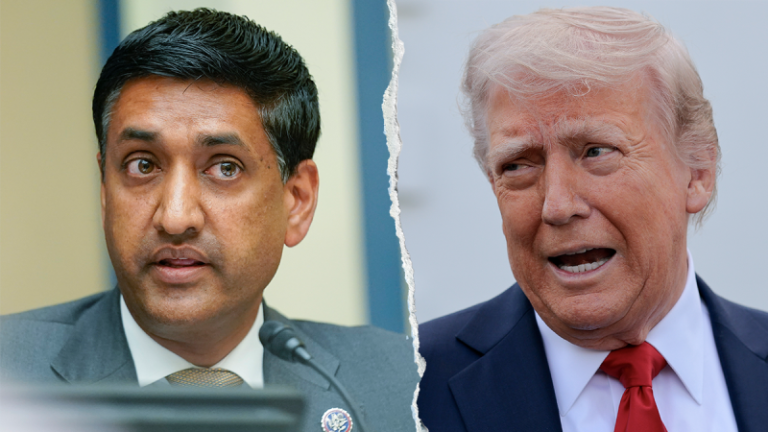
While Rep. Ro Khanna, D-Calif., has been a vocal opponent of President Donald Trump’s tariff and deportation policies, the president’s latest executive order targeting prescription drug prices inspired the Silicon Valley congressman to trade political disses for diplomacy. 

Khanna proposed legislation on Wednesday to codify Trump’s executive order aimed at lowering drug prices, and the Democrat is urging his Republican colleagues to follow his lead, reaching across the aisle to deliver for everyday Americans. 

‘President Trump’s executive order says that Americans should pay the least price. We should not pay any more than people are paying in countries overseas. Then, it gives the Cabinet secretaries the ability to go after Big Pharma companies that are price-gouging. Now, he tried something similar in his previous administration. Big Pharma sued him, it got tied up in courts, nothing happened. That’s why we need Congress to act. I have introduced something that codifies President Trump’s language, and I’m hoping we get a Republican co-sponsor,’ Khanna told Fox News Digital in an exclusive interview. 

As Democrats search for party unity after losing the White House, the Senate and failing to regain the House of Representatives last year, Democrats have gravitated toward an outright rejection of the Trump administration, as depicted through ongoing protests. Khanna, however, said he does not mind if Trump ‘gets a political win’ if it benefits the American people. 

‘If Donald Trump says that’s something that’s good for the American people, I’m not going to oppose it just for political points,’ Khanna said. 

Khanna is considered a potential 2028 presidential candidate and, like many ambitious Democrats, has crisscrossed the United States this year, bringing his vision for America to the national conversation. Gov. Gretchen Whitmer, D-Mich., also expected to harbor 2028 ambitions, faced some flack within the party this year for engaging directly with Trump to deliver for Michiganders. 

‘If Donald Trump has a good idea that’s going to help the American people, we should work with him. If we have a philosophical disagreement, we shouldn’t. But the barometer for me, the test case is, is this helping people? Is this something that I think is going to help this country? Where I have philosophical disagreements, I speak up. But when I think that it is good legislation, I am willing to support him. And I don’t care, like some people, if he gets a political win. So much of politics is, ‘Oh, we don’t want to give the other side a political win.’ For all I care, he can have a great political win if the American public gets lower drug prices,’ Khanna told Fox News Digital. 

While Khanna said he has not communicated with Trump directly about codifying his executive order, he delivered a now-viral House floor speech Wednesday, urging his Republican colleagues to join the bipartisan effort to lower prescription drug prices. 

‘Are you on the side of the people, or are you on the side of the $16 billion in Big Pharma lobbyist money that was spent last year? My legislation, there’s no trick to it. It is President Trump’s idea, President Trump’s executive order, President Trump’s language into law. Every Republican should support this, and every Democrat should,’ Khanna added. 

Ahead of Trump’s executive order signing, Khanna affirmed his support for lowering drug prices, reminding Americans that he proposed similar legislation alongside Sen. Bernie Sanders, I-Vt., with the same goal in mind. 

‘I just don’t understand why any Republican wouldn’t support this. It’s President Trump’s executive order, and every American agrees that prescription drug price costs are too much, that it’s so unfair that Americans are stuck with all these high bills when other countries are paying pennies on the dollar for their drugs. It’s time that Americans be treated fairly,’ Khanna said. 

As Khanna, who was a surrogate for then-President Joe Biden’s re-election campaign in 2024, finds common ground with the current administration, he told Martha MacCallum on ‘The Story’ Wednesday that Biden should not have run in 2024. 

‘I do think it’s important that, given what has come out, that we take accountability,’ Khanna said. ‘Obviously, he should not have run. We should be clear to say that. Obviously, there should have been an open primary. And, I don’t think that’s very difficult that Democrats should just be straight up that he should not have run, now that we have all the facts. There should have been an open primary. I think to move on and move forward, it’s important to take accountability and be straight-forward with the American people.’

While Khanna said he did not have the full picture of Biden’s health and mental acuity when he defended him before the disastrous debate performance, Khanna admitted, ‘We should be honest as a party that we made a mistake.’

This post appeared first on FOX NEWS

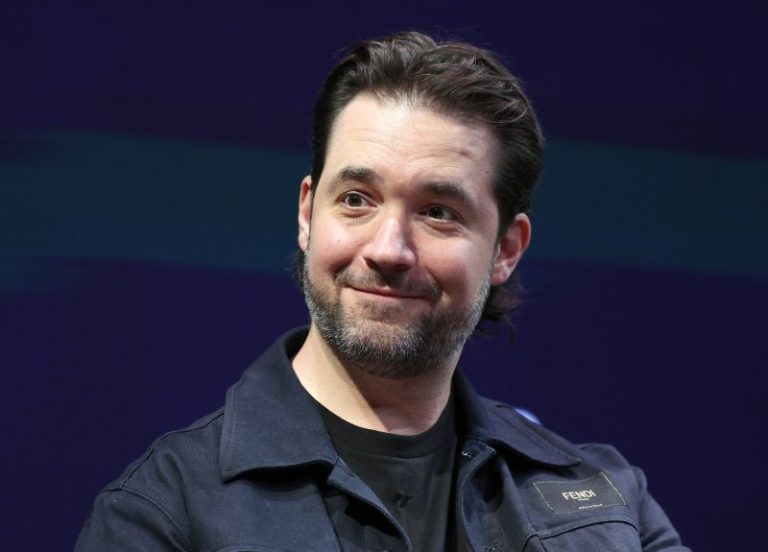
Reddit co-founder Alexis Ohanian has purchased a minority stake in Chelsea FC Women, giving him an ownership stake in two of the most-valuable teams in women’s sports.

The founder of venture capital firm Seven Seven Six and husband of tennis legend Serena Williams paid 20 million pounds for a 10% stake in the English soccer team, according to a person familiar with the deal. Ohanian is also a part owner in the National Women’s Soccer League’s Angel City FC alongside Disney CEO Bob Iger and his wife, Willow Bay.

Ohanian’s Chelsea deal values the women’s club at 200 million pounds, according to the person familiar, making it the most valuable women’s team in the world based on current foreign exchange rates. As part of the deal, Ohanian will be given a seat on the team’s board.

“I’ve bet big on women’s sports before — and I’m doing it again,” Ohanian said in a post on social media site X confirming the stake.

Chelsea FC Women have won six consecutive Women’s Super League titles. Ohanian says he see the opportunity to grow a worldwide brand within women’s football.

“I’m confident Chelsea FC Women is the next global women’s sports brand,” he said.

Ohanian told CNBC’s “Squawk Box” on Thursday that one of the things that drew him to Chelsea was the team’s large social media following. Chelsea FC Women have 4 million followers on Instagram.

“As a social media guy, I look for heat online in the free market of attention,” Ohanian said. “If this were any other type of brand, there is a lot of revenue opportunity there.”

Ohanian also said he believes in the business model and that women’s sports have been undervalued too long. He said brands are only now starting to wake up to that value.

“We will see billion-dollar clubs in women’s soccer one day in the not-too-distant future,” he predicted.

Ohanian left Reddit in 2020 to focus on building a legacy for his two young daughters through sports and other investments.

He said in 2024 he had invested $250,000 from his daughters trust fund into Angel City FC. Ohanian said the investment made them the youngest owners in professional sports and multi-millionaires.

Williams also recently became part owner of WNBA expansion team the Toronto Tempo, and Ohanian has started a women’s track competition.

This post appeared first on NBC NEWS

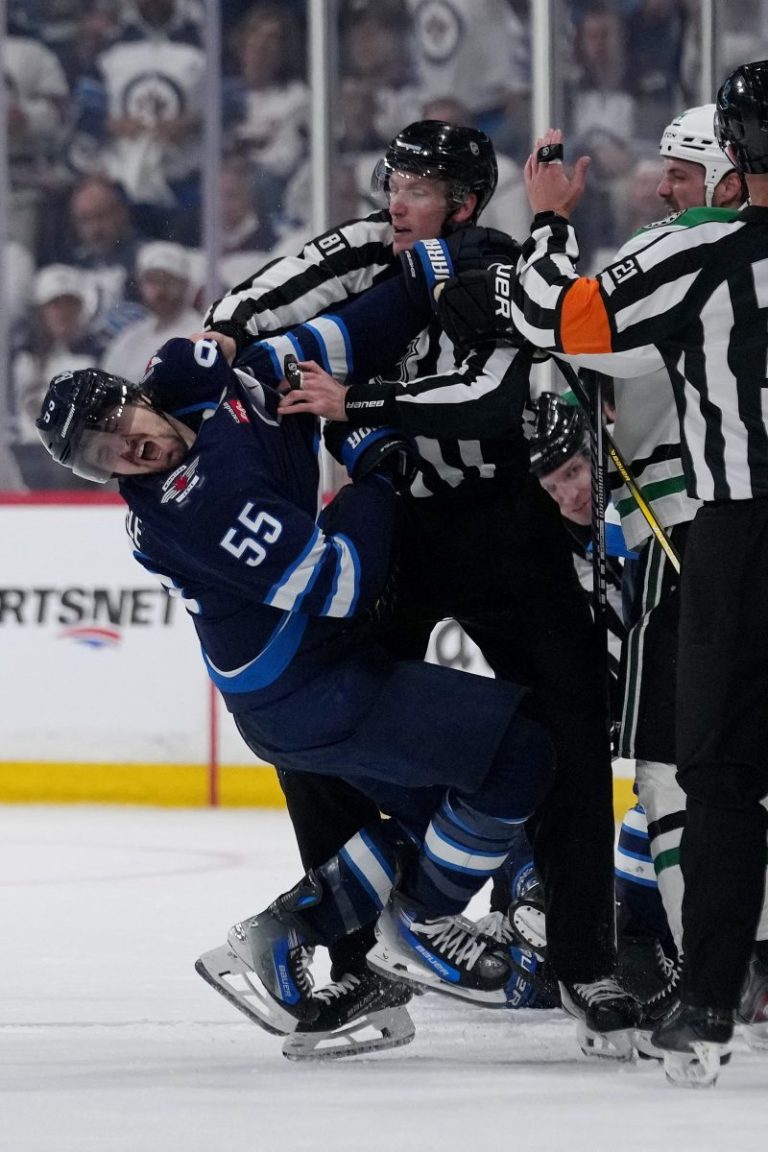
Dallas Stars captain Jamie Benn received a 10-minute misconduct Thursday night after he sucker-punched Winnipeg Jets forward Mark Scheifele during the third period.

With the Jets leading 3-0, Benn and Scheifele started tussling along the boards. Benn pulled Scheifele down and Winnipeg’s Brandon Tanev grabbed Benn from behind, adding to the scrum.

Scheifele appeared to push his skate toward Benn as he was getting up. As Scheifele was held by linesman Ryan Daisy, Benn delivered a punch to Scheifele’s jaw, knocking over both the Jets player and the on-ice official. Scheifele tried to get back at Benn but was kept away.

‘It’s an emotional series,’ Stars coach Peter DeBoer told reporters. ‘You play this time of year against one team and there gets to be a little bit of hate out there. That’s OK.’

Benn received a roughing minor and a misconduct, as did Tanev. Scheifele received two minutes for roughing, leaving the Jets short-handed.

‘I wasn’t real happy with how that came out,’ Jets coach Scott Arniel told reporters. ‘We were the ones who were up in the game. I don’t think we should have come out of that pileup having the extra minor.’

The Jets ended up winning the game 4-0 to stay alive in the second-round series. Connor Hellebuyck made 22 saves to pick up his second consecutive home shutout. Nikolaj Ehlers scored twice, Scheifele opened the scoring and Vladislav Namestnikov added a goal.

The Stars still lead the series 3-2 and can wrap it up in Dallas on Saturday. The No. 1 overall Jets are 0-5 on the road this postseason, with Hellebuyck being pulled three times in the first round.

(This story has been updated with new information.)

The USA TODAY app gets you to the heart of the news — fastDownload for award-winning coverage, crosswords, audio storytelling, the eNewspaper and more.

This post appeared first on USA TODAY

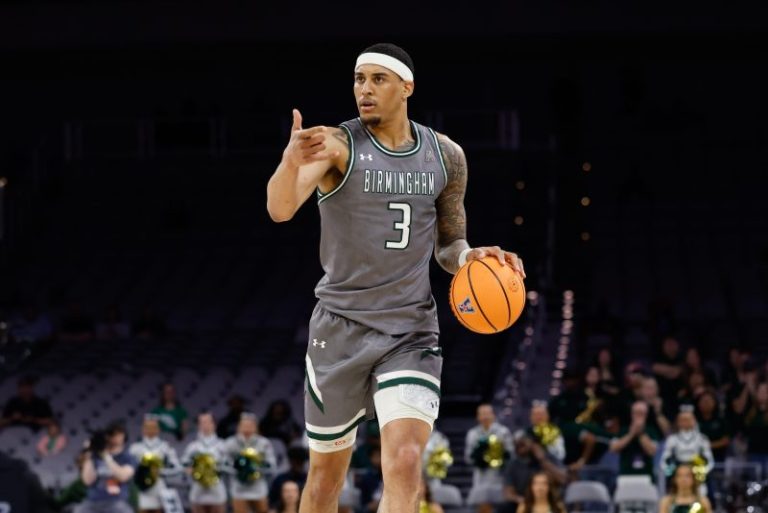
CHICAGO − Yaxel Lendeborg rubbed his hands together seated inside Wintrust Arena, a wave of excitement and anxiety coursing through him as he laid out the options again before his first official NBA audition was set to begin. The former UAB star is an intriguing figure among the group of players taking part in this week’s 2025 NBA Draft Combine. He’s facing the sort of decision prospects invited to this annual league event never did in the past. 

Lendeborg is a potential late first-round draft pick, according to draft experts, who could also slide into the second round – when contracts are not guaranteed – depending on how his pre-draft workouts go. The 6-foot-10 big man also committed to Michigan in April as one of the country’s most coveted transfers amidst an explosion of money being paid to college football and basketball players through name, image and likeness compensation and the anticipated implementation of revenue sharing by the NCAA for the 2025-26 season.    

The 22-year-old has until the NCAA’s May 28 withdrawal date to pull out of the draft and retain his college eligibility. And sounds torn about it right now. More torn than any of the other college hopefuls around him this week.

“The NBA is ultimately the goal for a lot of guys. It’s just college is so tempting because of the money,” Lendeborg told USA TODAY Sports. “I’m 50-50 between the NBA and Michigan, and I just hope that a team can let me know early so I don’t mess anything up.”

How NIL changed the 2025 NBA draft

The dynamics and financial implications of the traditional NBA draft decision tree have changed because of the money players can now make at the college level. There were only 106 early entrants in the 2025 NBA draft, which is the lowest figure in a decade and down from 353 in 2021. There were also more players (18) from the Portsmouth Invitational, a pre-draft event for college seniors, invited to the NBA Draft Combine than recent years.  

The trends are in direct correlation to the rapid increase in NIL money being doled out by college basketball programs. For one season, the starter for a power conference team in college will often make more than an NBA player on the first year of a rookie deal. For many, it might be the most money they ever make in one season playing basketball.

The attempts to thread that needle, of maximizing money made in college and in the NBA, has infused chaos into the college ranks through the transfer portal and constant roster churn. It played out this week in Chicago as numerous college coaching staffs were on hand to both support their participating players at the NBA draft combine, and quietly hope the feedback convinces them to come back to college for another season. 

“A case of food poisoning – nothing serious – would be good for the University of Michigan right now,” Wolverines assistant coach Mike Boynton joked on Tuesday before explaining they always knew there was a chance Lendeborg would go to the NBA.

It’s yet another ripple effect of the power shift within college sports.

“We’ve got the best of both worlds,” said St. John’s star R.J. Luis, who entered the NBA draft and the NCAA’s transfer portal this offseason. “We’re basically like semi-pros. We got like one-year contracts basically (in college). It’s just about trying to find the best opportunity at the right moment.”

‘Good for the basketball ecosystem’

The NBA doesn’t seem to mind this, either.

Five league executives told USA TODAY Sports at the draft combine that the implementation of name, image and likeness at the college level has produced minimal disruptions for the league and its draft process. Some view it as a positive development despite the issues NIL created for college basketball teams. As one NBA general manager put it, “The guys will come into the draft eventually.”

“You’re still getting the top-end guys, but you’re not going to get sophomores and juniors,” said an NBA front office executive who runs his team’s college scouting operation. “You’re going to see a gap in the draft the next couple years, especially in the second round. But most guys choosing to go back (to college) would struggle to stay (in the NBA) anyways. Now these guys can build brands in college. In the long run, it might be better.”

“It’s good for the basketball ecosystem,” added another NBA team executive.  

But there will still be players like Lendeborg placed in a precarious spot, hoping the measurements, scrimmage performances and meetings with NBA officials at the combine and a flurry of workouts the next two weeks provide more clarity. 

The Pennsauken, New Jersey native only played 11 varsity basketball games in high school and had to go the junior college route before arriving at UAB. There is no precedent for what he’s going through because a fringe first-round pick five years ago wouldn’t also be mulling NIL deals worth millions of dollars. 

He doesn’t want to stay in school just because of the money. But he also doesn’t want to go to the NBA and not have a chance to be a rotation player quickly. He only needs one team to promise he will get one to stay in the draft. He just needs to know before May 28.

“If it doesn’t happen by then,’ Lendeborg said, ‘then the decision is going to be really hard to make.”

This post appeared first on USA TODAY

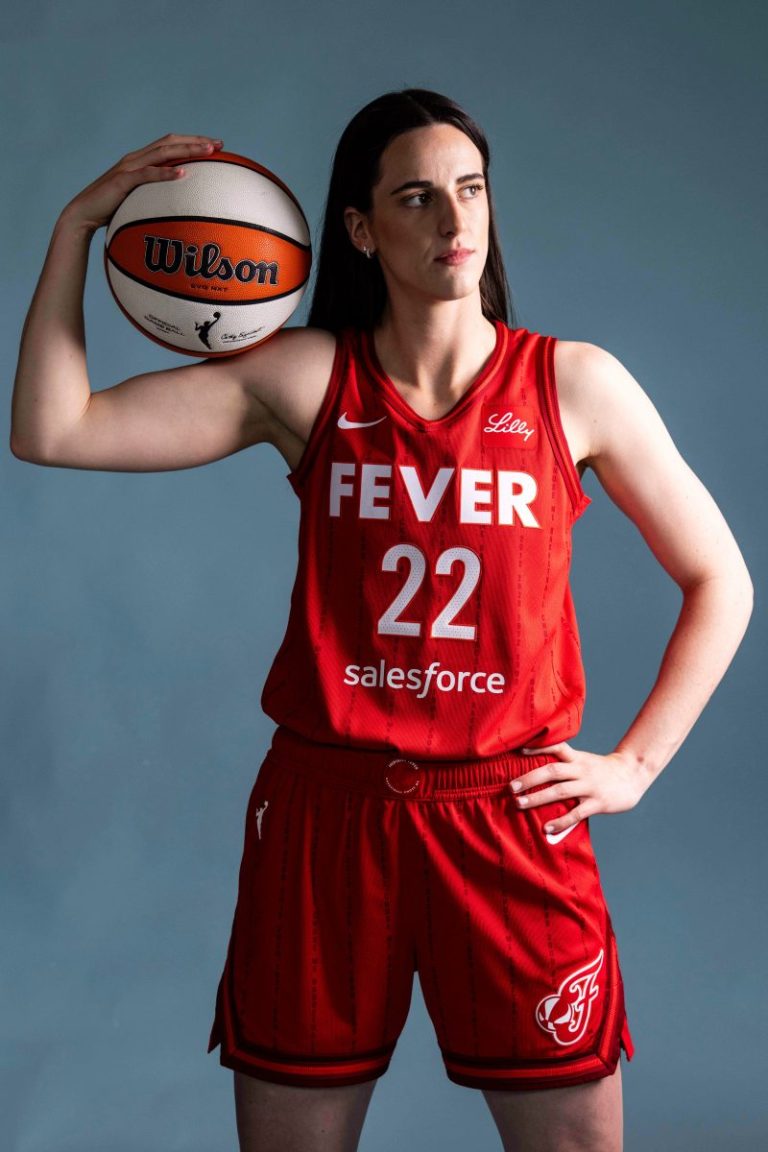
Caitlin Clark’s first season in the WNBA felt like a fever dream.

Clark was named the 2024 WNBA Rookie of the Year after a stellar freshman campaign that saw her shatter numerous records, including the single-season rookie scoring record (769), single-season assists record (337) and single-game assists record (19), while leading the WNBA in assists (8.4 per game) and made 3s (122). Clark earned her first All-Star nod and was the first rookie to make the All-WNBA Team since Candace Parker in 2008.

Despite scorching the league in her first year, Clark has barely scratched the surface and has her eyes on an elusive championship.

‘Being a rookie in the WNBA is so unique … from ending your college career and then your becoming a professional immediately,’ Clark told USA TODAY. ‘Just getting a year under my belt was the best thing for me.’

When asked at media day what success means this season, Clark definitively said ‘a championship.’

CAITLIN CLARK WNBA SCHEDULE: Tickets, times, TV for all Indiana Fever games

2025 WNBA SEASON: One thing to know about every WNBA team before 2025 season tips off

What’s next for Clark? Here’s a look at what to expect in year two:

Caitlin Clark adds strength to repertoire

This offseason provided Clark some much-needed rest. Clark continuously played basketball for nearly a year straight as she transitioned from college to the pros. She wrapped up her collegiate career at Iowa where she set the NCAA’s all-time scoring record in April 2024 after leading the Hawkeyes to their second consecutive national championship game appearance. Clark was selected with the No. 1 overall pick in the 2024 WNBA draft by the Indiana Fever one week later and made her WNBA debut in May 2024. Her team played 11 games in 20 days. 

‘I haven’t really had (an offseason) in a couple years now, because my last year going into Iowa we took our foreign trip,’ Clark told USA TODAY. ‘So that was really nice just to kind of have that reset, get back to working on things I want to get (better at) and add some muscle to my frame. I’m excited for year two.’

Clark opted not to play competitive basketball this offseason, bypassing playing overseas or in the inaugural season of Unrivaled. She hit the gym and weight room to develop her game.

The results have been on display, especially during the Big Ten women’s basketball tournament in March. Clark significantly bulked up and her new muscles became a topic of conversation across social media.

‘I think it’s funny,’ Clark told USA TODAY about the commentary surrounding her biceps. ‘People see one photo and kind of run with it. But I appreciate it. I worked really hard so at least they noticed.’

Clark found herself on the receiving end of a lot of physicality in her rookie season, which opponents used as a means to slow her down and knock her off balance. But Clark’s added strength and muscle mass should help her push off pesky and handsy defenders.

‘I feel like everyone talks about it. I see it on social media. They’ll be like, ‘Caitlin has such strong muscles.’ Don’t tell her I said that,’ Aliyah Boston said, when asked about the biggest difference she sees in Clark this year. ‘I think her strength. She gets in the paint and she’s able to bully her way in and finish strong at the basket. I mean, everyone talks about her 3-point shooting and we’ve all seen her passing, but I think her ability to get downhill and really just stay on balance and score the ball. I think it’s gonna be great this year, too.’

Caitlin Clark has pieces. Expect deep playoff run.

The Fever are legit championship contenders and are positioned to potentially win their first WNBA title since 2012.

The Fever started the 2024 WNBA season 11-15, but Indiana found its groove after the All-Star break and closed the season on a 9-5 run to secure the team’s best record (20-20) and first playoff berth since 2016. Although Indiana was swept in the first round of the WNBA playoffs by the Connecticut Sun, the Fever showed promise and offered a peek at their potential.

The franchise responded by going all in throwing out blueprints for a years-long rebuild and signaling the team’s desire to win now with a series of moves. The Fever upgraded their roster, coaching staff and front office to complement the young core of Clark, Boston (the 2023 Rookie of the Year) and Kelsey Mitchell.

Kelly Krauskopf returned as the Fever’s president in September. Former Sun head coach Stephanie White was hired in November to succeed Christie Sides. The Fever re-signed Mitchell in January and added defensive prowess and depth to their roster with the additions of six-time All-Star DeWanna Bonner, former Defensive Player of the Year Natasha Howard, Sophie Cunningham, Brianna Turner and Sydney Colson.

The improvements will only make it easier for Clark to thrive.

‘It’s up to us to be able to put it all together,’ Clark said.

Bonner added: ‘Being on this side of the ball with (Clark) is a lot more fun than guarding her, that’s for sure. She just put everyone in position. We play off her and her energy.’

Caitlin Clark’s bag got bigger with a floater

Clark is known for her signature 3s she led the league last season with 3.1 made 3-pointers per game and knocked down a WNBA-high 122 3-pointers but her opponents will now have another element to try to defend. Not only did Clark bulk up in the lab, she added a floater to her game.

Alongside Fever athletic performance coach Sarah Kessler, Clark worked with new Indiana player development coach Keith Porter to tune up her game and master her midrange shot. Expect her to use it often.

The USA TODAY app gets you to the heart of the news — fastDownload for award-winning coverage, crosswords, audio storytelling, the eNewspaper and more.

This post appeared first on USA TODAY

AMELIA ISLAND, Fla. — He strolled around the place with a purpose, like a guy who knew something everyone else didn’t. 

Like a guy who got what he wanted all along. 

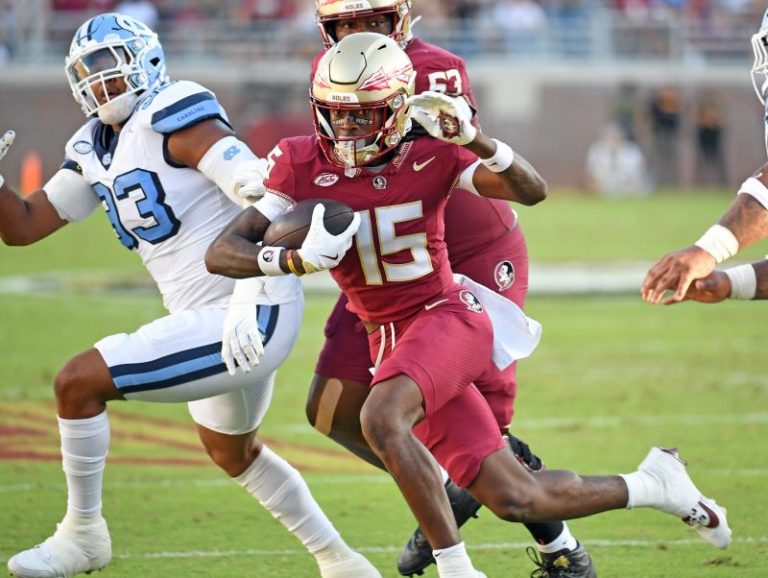
“We’re in a very good position right now,” Florida State athletic director Mike Alford said Wednesday during break in the annual ACC spring meetings. “Everything is moving forward.”

What a strange and eventually fruitful ride it has been.

Florida State was never headed to the Big Ten. Florida State was never negotiating with the Big Ten or having back-channel talks with the Big Ten.

No matter what some clown(s) on social media proclaimed. 

That doesn’t mean FSU wouldn’t have crawled through broken glass for the 1,000 miles from Tallahassee to the Big Ten headquarters in Chicago, it just means the Big Ten wasn’t biting. Ever.

But Florida State was negotiating with the ACC, its home conference since 1991. The school did want a better deal, and did feel as though it brought more to the table than the ACC was giving. 

BEST OF BEST: Our ranking of college football’s top 25 coaches

It did hire attorneys and threaten to leave the conference, and did play a negotiation game that ultimately left it with a clear, self-made path to financially running with the lead pack at the Big Ten and SEC. 

Or as Alford says, “I tell all of our fans now, when you come to the game, be sure to leave your televisions on at home.”

Because those television ratings are not only the lasting takeaway from more than a year of public – and at times, ugly – negotiation with the ACC, they’re critical to Florida State’s survival. 

At least now, the Seminoles have their financial destiny in its hands. The more high-value television games they play, the greater the media rights payout from the ACC. 

How much greater? Maybe as much as $18 million more annually for football. And more for basketball. 

“That’s in the ballpark,” Alford said. “Any school in our conference can go out and earn those numbers.”

And that’s what Florida State wanted all along, anyway. 

Alford’s point to ACC commissioner Jim Phillips (and the rest of the league): it wasn’t fiscally fair for Florida State – and Clemson and Miami – to pull the television weight of the conference, and everyone else benefit from it.

Why should the Seminoles spend top dollar on facilities and recruiting budgets, and do everything within its power to field a nationally competitive team, and receive the same media rights payout as other programs in the ACC who aren’t invested in getting better and spending money to make money? 

Why should Florida State, geographically surrounded by SEC recruiting heavyweights – Florida, Georgia, Alabama and Auburn – eventually making 50-60 percent more in media rights money, be forced to take the eventual fiscal undoing?

You can argue about the process, and if its legal wrangling with the ACC hurt relationships with the league (of course it did). But you can’t argue with survival mode. 

That’s why Alford was adamant during this week’s ACC spring meetings that the ACC should schedule more games of significance between conference members. He wants to play Clemson and Miami and Virginia Tech and North Carolina every year. 

He wants them to play each other, too. He wants the ACC to grow brands and programs within the conference, and win games of significance outside it. 

Like the season opener against Alabama in Tallahassee, and the return game to Tuscaloosa in 2026. Or the home and home series with Georgia in 2027-28.

Or the 2026 schedule that includes non-conference games against Alabama, Florida and Notre Dame.

That’s how Florida State will earn the television numbers to reach the media value initiative in the new deal with the ACC. By reaching those numbers, FSU (and Clemson and any other ACC team) could earn nearly $60 million annually in media rights revenue. 

That’s the clearest path to financial security ― not hoping for a new football division in 2030 when Florida State is now allowed to leave the ACC with a decreased buyout, or hoping ESPN will restructure a better deal after 2036. The money is there for the taking now. Go get it.

The SEC gave its 14 longtime member schools $52.5 million for the 2024 fiscal year, and the Big Ten gave $63.2 million to 12 of its 14 schools. Southern California and UCLA, which joined in July of 2024, will receive full shares in fiscal 2025, where the payout is expected to be around $75 million for 16 of its 18 schools (Washington and Oregon shares are being phased in over seven years.).

The ACC is expected to pay out around $37 million to most member schools (not including California, Stanford and SMU) in fiscal 2025. But with media value and success initiatives, that number could jump $20 million-25 million. 

The success initiative was the first give by the ACC to Florida State and Clemson (and the rest of the league), where teams will receive a greater share of the College Football Playoff payout for postseason success. 

Last December, in the heat of the negotiations and legal wrangling with the ACC, Alford told USA TODAY Sports, “We never said we wanted to leave the ACC” — 16 months after a formal notice of withdrawal. 

Less than three months later, the ACC came to the table with a workable media value initiative that settled lawsuits between Florida State, Clemson and the conference — and put FSU’s financial destiny in its hands.

“We’re going to do everything we can to grow Florida State,” Alford said.

Says the guy who got what he wanted all along, anyway. 

Matt Hayes is the senior national college football writer for USA TODAY Sports Network. Follow him on X at @MattHayesCFB.

This post appeared first on USA TODAY

The men’s lacrosse season has reached the penultimate weekend, and by Sunday evening we will know the four teams headed to championship weekend in Foxborough, Massachusetts. Before that, however, fans will be treated to what should be a compelling quarterfinal round that could take some twists and turns.

A pair of contests in Hempstead, New York, get things started on Saturday, then the action moves to Annapolis, Maryland, on Sunday. Among the eight remaining teams are the two-time defending champion on a quest for a rare three-peat, several of the sport’s long-time powers hoping to end lengthy title droughts, and a few others still hoping to hoist the trophy for the first time.

Who are the NCAA lacrosse tournament title contenders?

Notre Dame, like the men’s basketball squad from Connecticut, is going to be a tough out in its quest for a third consecutive crown. Despite entering this year’s tournament unseeded, the Fighting Irish certainly looked like the two-time defending champs in last week’s dismantling of fourth-seeded Ohio State. They next take on another Big Ten squad in Penn State, which is hoping to reach the semifinals for just the second time in program history.

The Princeton-Syracuse showdown on Long Island has long-time followers of the sport salivating. Those two storied programs staged some epic battles in the postseason in the 1990’s through the aughts, but it’s been over a decade since either team won the whole thing.

The championship drought has been even longer for top-seeded Cornell. The Big Red have come agonizingly close on a couple of occasions, but it’s last title came in 1977. Cornell features the highest-scoring offense in the nation, and its next opponent, Richmond, just won its first NCAA tournament game last week. But the Spiders gave the Big Red all they could handle in a 12-11 loss in the regular season, so they aren’t likely to wilt in the spotlight.

Second-seeded Maryland, meanwhile, has been hard to beat in the quarterfinal round in recent years, and the Terrapins should have the bulk of the home-state crowd on their side in Annapolis. But Georgetown is relishing this opportunity to derail a local rival and reach the semifinals for just the second time. The Hoyas’ Aidan Carroll turned in arguably the top performance of the round of 16 last week with a six-goal, two-assist effort at Duke.

NCAA men’s lacrosse tournament schedule

All quarterfinal games will air on ESPNU and are available for streaming on the ESPN app. Here’s the schedule.

Saturday

At Hempstead, New York

No. 1 Cornell vs. Richmond, noon

No. 3 Princeton vs. No. 6 Syracuse, 2:30 p.m.

Sunday

At Annapolis, Maryland

No. 5 Penn State vs. Notre Dame, noon

No. 2 Maryland vs. Georgetown, 2:30 p.m.

This post appeared first on USA TODAY